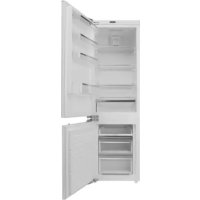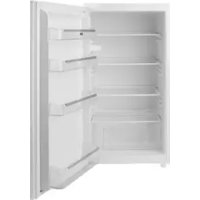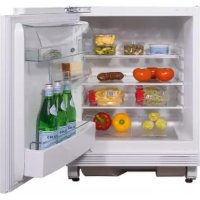
BR83 - Fridge BORETTI - Free user manual and instructions
Find the device manual for free BR83 BORETTI in PDF.


User questions about BR83 BORETTI
0 question about this device. Answer the ones you know or ask your own.
Ask a new question about this device
Download the instructions for your Fridge in PDF format for free! Find your manual BR83 - BORETTI and take your electronic device back in hand. On this page are published all the documents necessary for the use of your device. BR83 by BORETTI.
USER MANUAL BR83 BORETTI
E info.be @ boretti.com
Belgium
Inhoud
VOORDAT U HET APPARAAT IN GEBRUIK NEEMT....2
natural_image
Illustration of three hands performing a rope knotting technique (no text or symbols present)text_image
Illustration showing various types of hazardous substances including an electric plug, a cartoon character in a doorway, a hand holding a 'no litter' sign, a bottle with broken contents, and a no-handled hand symbol.natural_image
Cartoon illustration of a sad, anthropomorphic container with arms and legs (no text or symbols)
natural_image
Cartoon illustration of a smiling refrigerator with arms and legs, accompanied by food items (no text or symbols)natural_image
Simple line drawing of a hand pouring liquid into a container with a small object inside (no text or symbols)natural_image
Technical line drawing of a mechanical component with an inset showing a hand holding a circular object (no text or symbols present)natural_image
Line drawing of a hand holding a tray with food items (no text or symbols)
natural_image
Technical line drawing of two mechanical components: a heat sink and a housing (no text or symbols)text_image
Labeled diagram of an open refrigerator showing interior compartments and doorways with numbered annotationsRecommendations....2
natural_image
Illustration of three hands performing rope knotting techniques (no text or symbols)natural_image
Cartoon illustration of a sad, anthropomorphic container with arms and legs, holding a paper labeled 'K.6' (no text or symbols on the container itself)
natural_image
Cartoon illustration of a smiling refrigerator with thumbs up and a mortar (no text or symbols)PARTIE 2: COMMENT UTILISER L'APPAREIL
natural_image
Cartoon illustration of a smiling refrigerator with hands reaching toward a cup (no text or symbols)

natural_image
Cartoon illustration of a smiling rectangular character with arms and legs, accompanied by two smaller figures (no text or symbols)natural_image
Technical line drawing of a structural component and its magnified cross-section showing hand positioning (no text or symbols)natural_image
Line drawing of a hand holding a rectangular container with food inside (no text or symbols)
natural_image
Technical line drawing of two mechanical components: a coiled spring and a rectangular housing (no text or symbols)text_image
Labeled diagram of an open refrigerator showing interior compartments and storage areasnatural_image
Illustration of three hands performing a knotting technique (no text or symbols present)natural_image
Cartoon illustration of a person standing next to a book, arms outstretched (no text or symbols)
natural_image
Simple line drawing of a smiling face, a crossed-out hand gesture, and a raised arm (no text or symbols)
natural_image
Cartoon illustration of a distressed container with arms and legs, holding a paper labeled 'K.S' (no text or symbols on the container itself)
natural_image
Cartoon illustration of a smiling refrigerator with a bowl of food (no text or symbols)natural_image
Simple line drawing of a hand reaching toward a box with a bird inside (no text or symbols)
natural_image
Cartoon illustration of two anthropomorphic kitchen appliances, one with a smiling face and the other with a smiling face, surrounded by food items (no text or symbols)natural_image
Line drawing of a structural beam or support with a small circular hole at one end (no text or symbols)
natural_image
Diagram showing a hand holding a circular object over a window, with no visible text or symbols.natural_image
Line drawing of a hand holding a tray with a striped pattern (no text or symbols)
natural_image
Technical line drawing of two mechanical components: a coiled spring and a housing (no text or symbols)Climate Class = Klimaklasse
Ambient Temperature = Umgebungstemperatur
Between = zwischen
and = und
WICHTIGE HINWEISE:
text_image
Labeled diagram of an open refrigerator showing interior compartments and doorways with numbered annotationsBEFORE USING THE APPLIANCE....2
Safety Instructions....2
Recommendations....3
Switching On the Appliance....4
HOW TO OPERATE THE APPLIANCE....5
Thermostat Setting....5
FOOD STORAGE IN THE APPLIANCE....6
CLEANING AND MAINTENANCE......6
Defrosting the Refrigerator....7
Replacing the Light Bulb....7
BEFORE CALLING YOUR AFTER SALES SERVICE....8
PARTS OF THE APPLIANCE AND THE COMPARTMENTS....10
PART 1. BEFORE USING THE APPLIANCE
Safety Instructions
- If the model contains R600a-see name plate under refrigerant (the coolant isobutane), naturals gas that, is very environmentally friendly but also combustible. When transporting and installing the unit care must be taken to ensure that none of the refrigeration circuit components become damaged. In the event of damage avoid naked flames or ignition sources and ventilate the room in which the unit is placed for a few minutes.
Warning: Keep ventilation openings in appliance enclosure or in structure for building in, clear of obstruction.
- Do not use mechanical devices or other artificial means to accelerate the defrosting process.
- Do not use electrical appliances in the refrigerator or freezer compartment of the appliance.
- If this appliance is to replace an old refrigerator with a lock; break or remove the lock as a safety measure before storing it, to protect children while playing might lock themselves inside.
- Old refrigerators and freezers contain insulation gases and refrigerant, which must be disposed of properly. Entrust the disposal of a scrap unit categorically to competence of your local waste disposal service and contact your local authority or your dealer if you have any questions. Please ensure that the pipe of work of your refrigerating unit does not get damaged prior to being picked-up by the relevant waste disposal service.
Important note:
Please read this booklet before installing and switching on this appliance. The manufacturer assumes no responsibility for incorrect installation and usage as described in this booklet.
Conformity Information
- Tropical Class is defined for the environment temperatures between 16°C and 43°C in accordance with the TS EN ISO 15502 Standards.
- The appliance is designed in compliance with the EN15502, IEC60335-1 / IEC60335-2-24, 2004/108/EC standards.
Recommendations
Warning: Do not use mechanical devices or other means to accelerate the defrosting process, other than those recommended by the manufacturer. Do not use electrical
appliances inside the food storage compartments of the appliance, unless they are of the type recommended by the manufacturer. Keep ventilation openings, in the appliance enclosure or in the built-in structure, clear of obstruction. Do not damage the refrigerant circuit.
- Do not damage the refrigerant circuit.
- Do not allow children to play with the appliance. Children must never sit in the drawers or hang from the door.
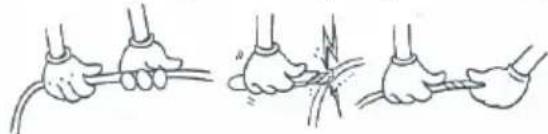
- Do not use adapters or shunts, which could cause overheating or burning.
- Do not plug old, warped power supply cables.
natural_image
Illustration of three hands performing a rope knotting technique (no text or symbols present)- Do not twist and bend the cables, and keep them away from hot surfaces.
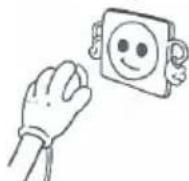
- Do not plug the power supply with wet hands.
- Your old appliances contain insulation gases and refrigerant that must be disposed of properly. Please ensure that the refrigerant circuit is not damaged before the appliance is taken away for disposal.
• After installation make sure that the power cable is not trapped underneath appliance.
- This appliance is not intended for use by persons (including children) with reduced physical, sensory or mental capabilities, or lack of experience and knowledge, unless they have been given supervision or instruction concerning use of the appliance by a person responsible for their safety. Children should be supervised to ensure that they don't play with the appliance.
- If the supply cord is damaged it must be replaced by the manufacturer or service agent or appointed qualified person.
- Do not defrost the appliance with other electrical devices (i.e. hair dryer) or other artificial means.
- Do not operate any electrical appliances inside the refrigerator.
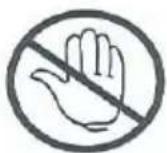
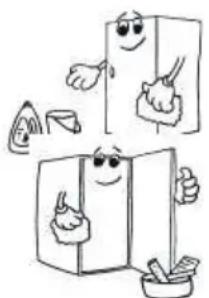
- Do not touch the cooling surfaces while the appliance operates, especially with wet hands, because the skin may stick to cold surfaces.
- The appliance is not intended for use by people (including children) with reduced physical, sensory or mental capabilities, or lack of experience and knowledge, unless they have been given supervision or instruction concerning use of the appliance by a person responsible for their safety. Children should be supervised to ensure that they don't play with the appliance.
- If the supply cord is damaged it must be replaced by the manufacturer or service agent or appointed person.


natural_image
Cartoon illustration of a person standing next to a book, arms outstretched (no text or symbols)
natural_image
Simple line drawing of a smiling face, a crossed-out hand gesture, and a raised fist (no text or symbols)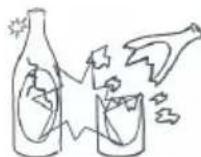

Warning: Do not use mechanical devices or other artificial means to accelerate the defrosting process. Do not use electrical appliances in the food storage of the appliance. Keep the appliance ventilation openings free. Do not damage the refrigerator's refrigerant circuit.
Switching On the Appliance
- Before switching on, place the appliance on upright position and wait at least three hours without moving the appliance. This will give the refrigerant circuit time to settle and operate efficiently.
- Clean the appliance thoroughly, especially in the interior, before use (See Cleaning and Maintenance).
- Installation of the appliance and electrical connections must be carried out by a qualified technician, in accordance with the Installation Manual and local regulations.
- Installation procedure into the kitchen unit is given in the Installation Manual. This product is intended to be used in proper kitchen units only.
- The appliance must be connected with a properly installed fused socket. Power supply (AC) and voltage at the operating point must with the details on the name plate of the appliance (name plate is located on the inside left of the appliance).
- Insert the plug into a socket with an efficient ground connection. If the socket has no ground contact or the plug does not match, we suggest you to call an authorized electrician for assistance.
- Manufacturer is not responsible for failure to complete the ground connection as described in this booklet.
- There can be an odor when you first switch on the appliance. It will disappear after the appliance starts to cool.
- The plug must be accessible after installation.

natural_image
Cartoon illustration of a distressed container with arms and legs, holding a paper labeled 'K.S' (no text or symbols on the container itself)
natural_image
Cartoon illustration of a smiling refrigerator with eyes, holding a pencil and a bowl (no text or symbols)PART 2. HOW TO OPERATE THE APPLIANCE
Thermostat Setting
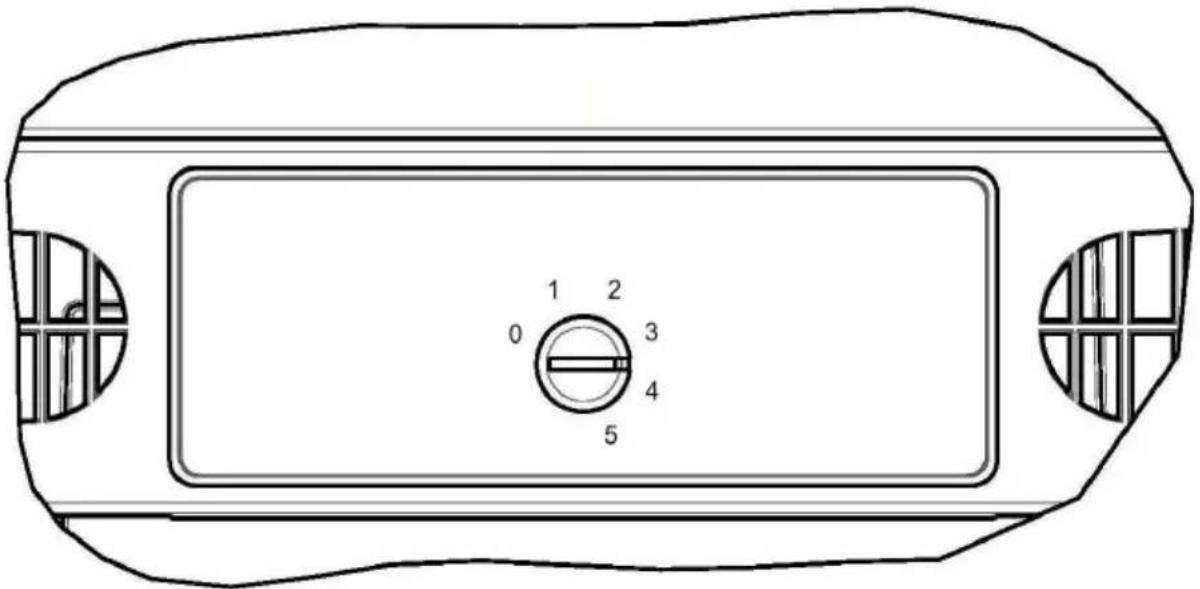
text_image
1 2 0 3 4 5- Thermostat automatically regulates the inside temperature of the refrigerator compartment and freezer compartment. By rotating the knob from position 1 to 5, colder temperatures can be obtained.
- The “0” position shows thermostat is closed and no cooling is available.
- For short-term storage of food in the freezer compartment, you can set the knob between minimum and medium position (1-3).
- For long-term storage of food in the freezer compartment, you can set knob medium position.(3-4)
- Note that; the ambient temperature, temperature of the freshly stored food and how often the door is opened, affects the temperature in the refrigerator and freezer compartments. If required, change the temperature setting.
- When you first switch on the appliance, you should ideally try to run it without any food in for 24 hours and not open the door. If you need to use it straight away, try not to put much food inside.
- If the unit is switched off or unplugged, you must allow at least 5 minutes before restarting in order not to damage the compressor.
PART 3. FOOD STORAGE IN THE APPLIANCE
Refrigerator compartment is used for storing fresh food for few days.
- Do not place food in direct contact with the rear wall of the refrigerator compartment. Leave some space around food to allow circulation of air.
- Do not place hot food or evaporating liquid in the refrigerator.
• Always store food in closed containers or wrapped. - To reduce humidity and avoid formation of frost, never place liquids in unsealed containers in the refrigerator.
- Meat of all types, wrapped in packages, is recommended to be placed on the glass shelf just above the vegetable bin, where the air is colder.
- You can put the fruits and vegetables into crisper without packing.
- To avoid the cold air escaping, try not to open the door too often, and not leave the door open for a long time.
PART 4. CLEANING AND MAINTENANCE
- Disconnect the appliance from the power supply before cleaning.

- Do not pour water over the appliance.
natural_image
Simple line drawing of a hand reaching toward a door with a small object inside (no text or symbols)- The refrigerator compartment should be cleaned periodically using a solution of bicarbonate of soda and lukewarm water.
- Clean the accessories separately with soap and water. Do not put them in the dishwasher.
- Do not use abrasive products, detergents or soaps. After washing, rinse with clean water and dry carefully. When the cleaning operations have been completed, reconnect the plug with dry hands.

natural_image
Illustration of three cartoon kitchen appliances: a refrigerator, a refrigerator with a smiling face, and a refrigerator with a sad face (no text or symbols)Defrosting the Refrigerator
natural_image
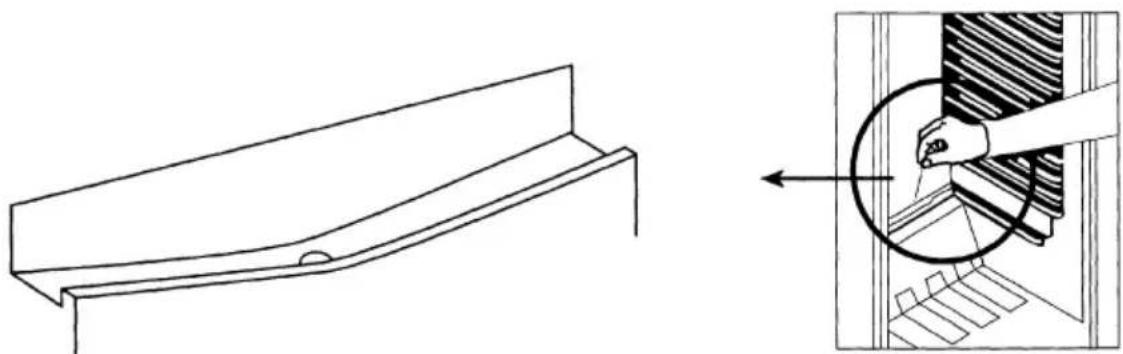
Technical line drawing of a mechanical component with an inset showing a hand holding a circular object (no text or symbols present)- Defrosting occurs automatically in refrigerator during operation; the defrost water is collected by the evaporating tray and evaporates automatically.
- The defrost water drain hole should be cleaned periodically with defrost drain plug to prevent the water from collecting on the bottom of the refrigerator instead of flowing out.
- You can also pour 12 glass of the water to drain hole to clean inside.
Replacing the Light Bulb
natural_image
Line drawing of a hand holding a tray with food items (no text or symbols)
natural_image
Technical line drawing of two mechanical components: a heat sink and a housing (no text or symbols)When replacing the bulb of the refrigerator;
- Unplug the unit from the power supply.
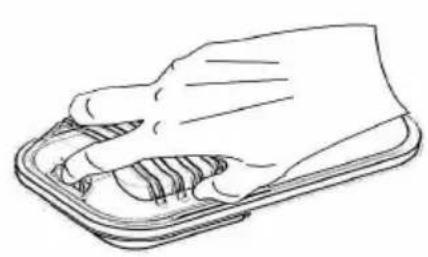
- Press the hook in front of the light cover such as Figure 1 and remove the light cover.
- Change the present light bulb with a new one of not more than 15 W.
- Replace the light cover and after waiting 5 minutes plug the unit.
PART 5. BEFORE CALLING YOUR AFTER SALES SERVICE
If your refrigerator is not working properly, it may be a minor problem, therefore check the following.
The appliance does not operate,
Check if;
• There is a power failure,
- The mains plug is not properly plugged in, or is loose
- The thermostat setting is on position "0",
- The socket is defective. To check this, plug in another appliance that you know which is working into the same socket.
The appliance performs poorly;
Check if;
- You have overloaded the appliance,
- The doors are not closed perfectly,
- There are not enough ventilation ducts on the kitchen unit as mentioned in the Installation Manual.
If there is noise;
The cooling gas which circulates in the refrigerator circuit may make a slight noise (bubbling sound) even when the compressor is not running. Do not worry, this is quite normal. If these sounds are different check if;
- The appliance is installed firmly as described in the Installation Manual.
- The objects on the appliance are vibrating.
If there is water in the lower part of the refrigerator;
Check if;
The drain hole for defrost water is not clogged (use defrost drain plug to clean the drain hole).
If your fridge is not cooling enough;
Your fridge is designed to operate in the ambient temperature intervals stated in the standards, according to the climate class stated in the information label. We do not recommend operating your fridge out of stated temperatures value limits in terms of cooling effectiveness.
| Climate Class Ambient Temperature (°C) | |
| T | Between 16 and 43 (°C) |
| ST | Between 16 and 38 (°C) |
| N | Between 16 and 32 (°C) |
| SN | Between 10 and 32 (°C) |
IMPORTANT NOTES:
- In case of a sudden power loss or disconnecting and reconnecting of the plug to the electrical socket, the compressor protective thermal element will be opened as the pressure of the gas in the cooling system of your refrigerator has not yet been balanced. 4 or 5 minutes later, your refrigerator will start to operate; this is normal.
- If you won't be using your refrigerator for a long time (such as on summer holidays), please disconnect the plug from the socket. Clean your refrigerator as per Part 4 of this document and leave the door open to prevent any humidification or odor formation.
- If there is still a problem with your refrigerator although you have followed the instructions in this book, please consult your nearest authorized service center.
- The life cycle of this product as determined and proclaimed by the Ministry of Industry (the period for making spare parts available for the product to be able to fulfill its functions) is 10 years.
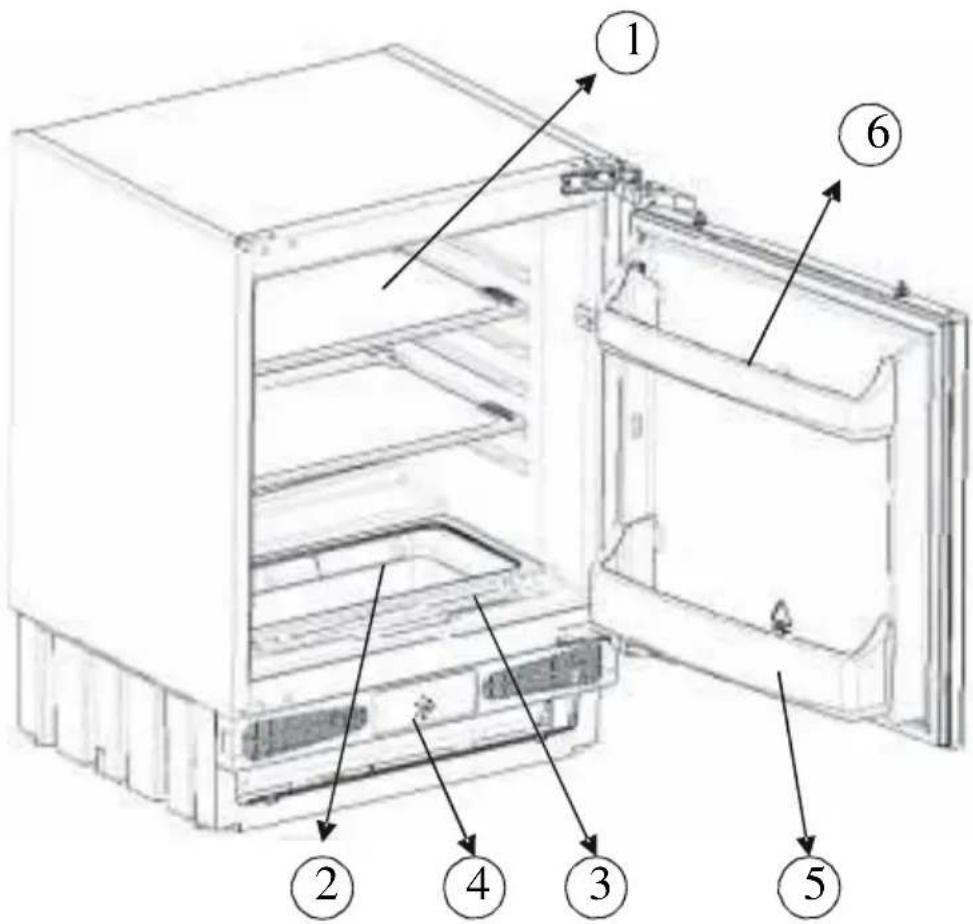
PART 6. PARTS OF THE APPLIANCE AND THE COMPARTMENTS
text_image
Labeled diagram of an open refrigerator showing interior compartments and doorways with numbered annotationsThis presentation is only for information about the parts of the appliance. Parts may vary according to the appliance model.
1) REFRIGERATOR SHELF
2) CRISPER COVER(SAFETY GLASS)
3) CRISPER
4) THERMOSTAT BUTTON
5) BOTTLE SHELF
6) BUTTER SHELF