
BCT 355 RF - Television BEKO - Free user manual and instructions
Find the device manual for free BCT 355 RF BEKO in PDF.



| Product Type | CRT Television |
| Brand | Beko |
| Model | BCT 355 RF |
| Screen Size | 51 cm (20") or 55 cm (21") depending on version |
| Screen Format | 4:3 |
| Picture Tube Type | Conventional or Pure Flat (PF) depending on version |
| Power Supply | 230 V AC, 50 Hz |
| Power Consumption | 55 W (max), 2 W standby |
| Receiving System | PAL/SECAM BG, DK, LL', L depending on country |
| Number of Programs | 100 |
| Audio Power | 2 x 7 W |
| Connections | 1 SCART (AV1), 1 optional SCART (AV2), RCA input (video/audio), optional S-Video, optional headphone jack |
| Main Features | Teletext, Timer, Child Lock, OSD Menu, Picture Format (4:3/16:9/Zoom), Spatial Sound, Dolby Virtual (optional), Equalizer, AVL, Smart Control, Games (optional), TV Guide (optional) |
| Maintenance and Cleaning | Use a damp cloth, no abrasive products, unplug before cleaning |
| Safety | Do not expose to moisture, do not obstruct ventilation, do not place near heat sources |
| Supplied Accessories | Remote control, 2 AAA batteries, user manual |
Frequently Asked Questions - BCT 355 RF BEKO
User questions about BCT 355 RF BEKO
0 question about this device. Answer the ones you know or ask your own.
Ask a new question about this device
Download the instructions for your Television in PDF format for free! Find your manual BCT 355 RF - BEKO and take your electronic device back in hand. On this page are published all the documents necessary for the use of your device. BCT 355 RF by BEKO.
USER MANUAL BCT 355 RF BEKO
COLOUR TELEVISION KLEURENTELEVISIE TELEVISEUR COULEURS
Operating Instructions
Gebruiksaanwijzing
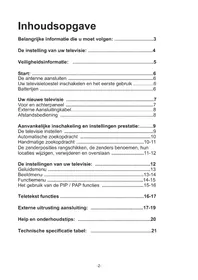
Special features 2
Safety instructions 3
Getting started 4
Aerial connection 4
Switching on 4
Battery tting 4
Control unit 5
Front and rear panel 5
External connections table 6
Remote control 6
Using the TV 7
TV controls 7
Manual tuning. 8
Automatic tuning 9
Child lock 9
Program table 10
TV setup 11
Sound menu 11-12
Picture menu 13
Features menu 14-16
Picture format. 17
Using teletext 18-19
Connecting external equipment 20-24
Help and service tips 25
Technical speci cations table 26
Television
Thank you for buying this television which is designed to give you many years of satisfactory service.
You may already be familiar with using a television but do please take time to read these instructions. They are designed to familiarize you with the unit's many new features and to ensure you get the very best out of your purchase.
Special features
¥ Your TV can receive stereo channels directly (NICAM optional).
¥100ProgrammeMemory
¥ Available for Cable Channels (A decoder may be required).
¥ Manual Fine Tuning
Child Lock
Y Return to the last viewed channel (SWAP)
¥ Spatial Sound effect
¥16:9 picture format
¥ S-Video connection (optional)
¥ Audio/Video RCA sockets (optional)
¥ Normalization system to recall the setting in memory after the colour, contrast or brightness setting have been changed.
¥ Picture adjustment using one button (Smart control).
YSound adjustment using one button (Smart control).
¥ Equalizer Sound Setup
Automatic Volume Limiting
¥ Your TV set is equipped with an On-Screen Display system. This system
enables the user to see the function on-screen and to control them ef cientsly.
¥ Infrared Remote Control
Y Virtual Dolby Surround (optional)
¥ Dynamic Bass (optional)
¥ Multi language menu system
¥OnTimer
¥Off Timer
¥ Stereo headphone socket (optional)
¥ Scart Socket: Video cassette recorder, satellite receiver, video disc player,DVD, TV games or a home computer can be connected to this AV socket with an appropriate connecting cable.
¥ Second scart socket (optional)
Y Channel naming
¥Teletextreception
Automatic recognition of the broadcasting format (4:3, 16-9) via WSS feature.
Dynamic Noise Reduction (Optional)
Y Picture and Text (optional)
¥ Blueback (Optional)
¥ Component input via Scart (optional)
¥ Channel editing
¥ Quick Program Display
¥ Games (Optional)
¥Now&Next(TV Guide),(Optional)
Y Alarm function (Optional)
Safety is important
Your safety and the safety of others is important. Please, therefore, make sure you read the safety instructions before you operate this television.
Safety instructions

Read all the safety instructions before the rst use of your TV.
Y Position the television so that direct light does not fall on the screen. Excessive light will cause a washed out effect.
Y Position the power supply lead and other leads so that they are not likely to be walked on or pinched by things placed on or against them.

Y Do not use the appliance in humid or damp conditions. Do not allow the appliance to get wet, i.e. dripping or splashing, as this may be dangerous. Do not place water lled objects, such as vases and over top on top of the appliance.

Y Make sure that no open ame sources, such as lighted candles, are placed on top of the appliance.
Y Do not place the television near heat sources such as radiators, ovens, stoves, etc.

¥ Do not use the television near any apparatus that produces a magnetic field such as HI-FI speakers or electric motors otherwise colour purity may be affected.

¥ The heat built up in the set escapes through ventilation holes, so do not cover the set by drapes, clothes etc. That may block air circulation. Do not place the television on carpet or soft furnishings.
¥NEVER let children push anything into the holes or slots on the cabinet.

¥ Clean the TV screen using a slightly damp cloth or chamois leather. Never use abrasive cleaning agents like liquid or aerosol cleaners.
¥ Remove the mains plug from the socket outlet while cleaning.

If you wish to place the television on a shelf or in a wall unit always ensure there is a minimum air gap of 8 cm around the top, sides and rear of the television, to assist ventilation.

¥ Your TV set is designed to operate with mains voltages 230V AC; 50Hz. Do not connect your TV set to power sources other than the mains supply.
Getting started
Remove your television carefully from the box. You may wish to store the packaging for future use.
In the box
Inside the package you should have:
¥Television
Remote control
User guide
AAA batteries x 2
Read these instructions before use
Aerial connection
To connect an aerial, plug the aerial lead into the aerial socket on the rear of the TV.
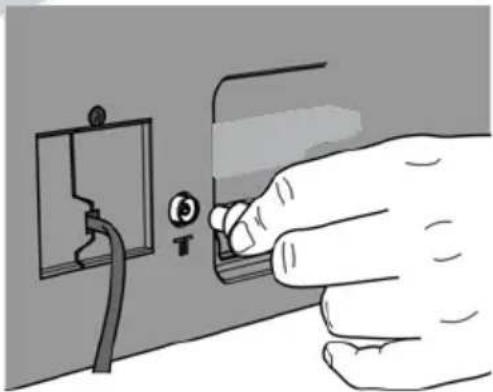
You can use an outdoor or indoor aerial. However, if you use an indoor aerial the quality of the reception may be reduced and adjustment of the aerial may be required when changing programs.
Please note
If you live in a poor reception area or use an indoor aerial you may experience loss or corruption of teletext transmissions.
Switching on
Mains power
Connect the mains plug into the mains socket and switch on.
Connect the TV mains plug into your domestic mains socket outlet (230 V 50 Hz AC).
Please Note
When not in use disconnect the plug from the mains power supply.

Press the Power button on the front of the TV. The standby indicator will illuminate.
Press a Numeric button or the Program up or Program down button on the remote control or Program up or Program down button on the front panel to switch the TV on.
The standby indicator remains on. The picture will appear after a few seconds.
Press the Standby button to switch the TV to standby. The standby indicator will light brighter.

Blueback (optional): When there is no broadcast, the background purely blue instead of noisy picture.

Please Note
Do not leave the television in standby unattended or overnight.
Switching the TV on for the rst time
To install your TV, please read the sections TV controls and Tuning the television.
Battery fitting
Insert the 2 AAA batteries supplied into the compartment on the rear of the remote control, ensure you follow the polarity diagram inside the compartment.
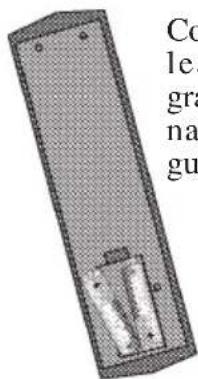
Corrosion, oxidation, battery-leakage and any other gradually acidic defect of this nature will invalidate the guarantee.
Control Unit
Front Panel
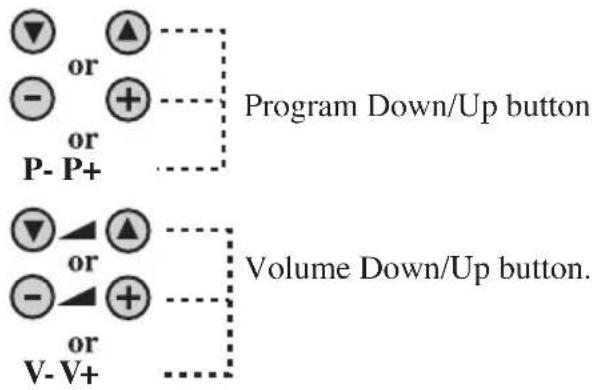
General
Program ON/OFF switch Stand by (Depends on model)

Stand by indicator
External Connections: (Front or side) (External connections: (Rear)
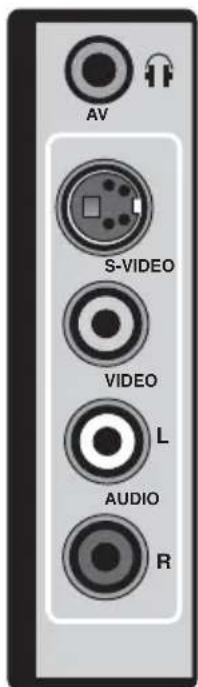
Headphone socket
S-Video connection
Video RCA (Yellow)
Left audio RCA/Mono RCA (White)
Right audio RCA (Red)
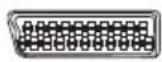
AV1 scart
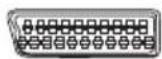
AV2 scart (optional)

Aerial socket

Power cable
Please note
See the external connections table on the next page for available connections depending on the size and model of your TV set.
¥ Do not use Video RCA and S-Video connections at the same time, otherwise they will affect the pictures of each other.
External connections table
| Picture tube size/type | 20☐ 4:3 | 21☐ 4:3 |
| AV1 Scart | STD. | STD. |
| AV2 Scart | OPT. | OPT. |
| Headphone socket | OPT. | OPT. |
| Audio/Video RCA | OPT. | OPT. |
| S-Video socket | OPT. | OPT. |
STD : Standart
OPT : Optional
Please note:
The Audio/Video RCA, S-Video and Headphone socket can be placed on the front panel or on the right-hand side of the cabinet depending on the model of your TV.
Remote control
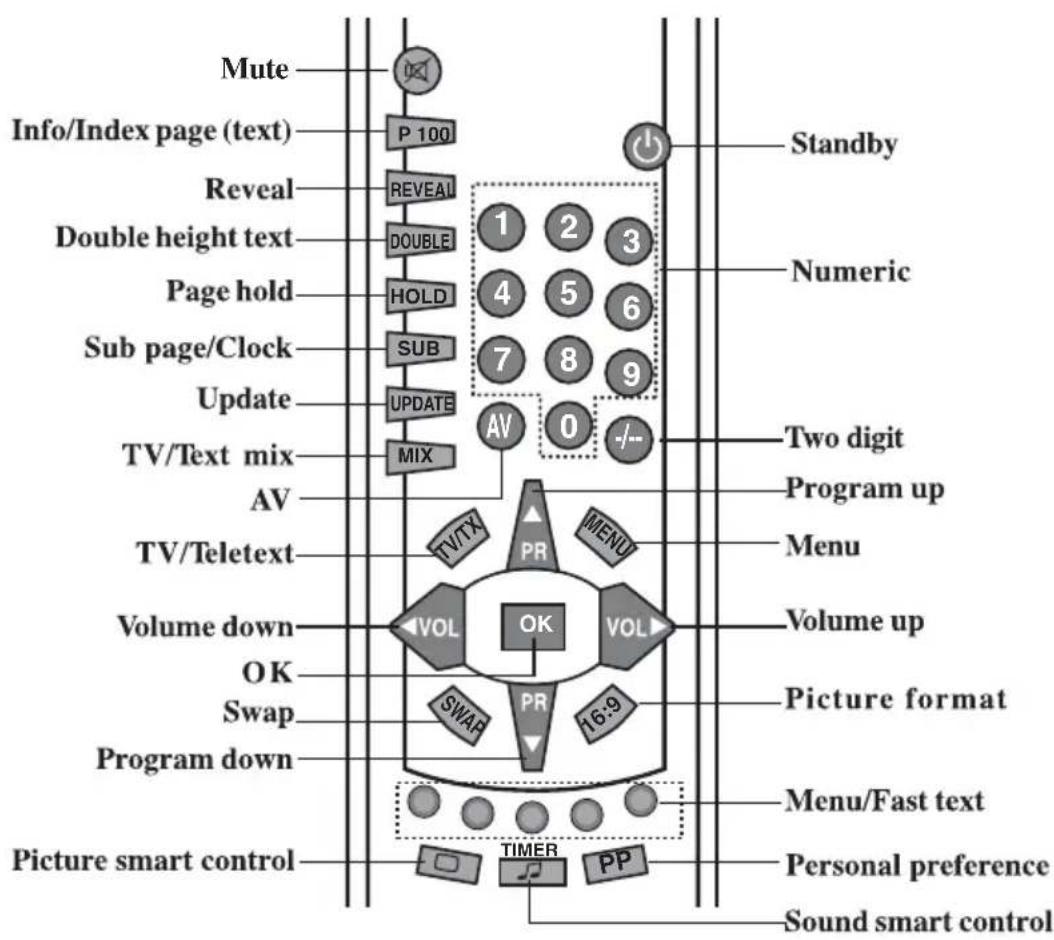
Using the TV
TV controls
Programme selection

Press the Program up or Program down buttons on the TV or remote control or press a Numeric button to select a programme.
To select a programme whose number is greater than 9 using the numeric buttons, press the -- button rst and then press the two Numeric buttons. For example, to select programme 12, press the -- button followed by 1 and then 2. You can also select a program by pressing in the OK button.
Press the OK button and a grey box will appear on the screen with programme numbers on it.
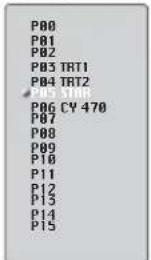

Use the Program up and Program down buttons to scroll through the programme numbers. When you nd the program number you want press theOK button again. Press theTV/TX button to close the grey box.
Volume
Press the Volume + or Volume - button on the TV or the Vol Vol button on the remote control. A sound level bar will appear on the screen.
Mute

To mute the sound press the Mute button on the remote control. A loudspeaker symbol will appear on the screen.

Press the Mute button again to restore the sound. The symbol will disappear.
Pressing Volume down buttons to decrease headphone volume. Pressing the Volume up buttons to increase the headphone volume.

Personal preference. Press the PP button to revert to the default settings for the TV. (See TV setup).

Allows you to swap between the program you are watching and the last selected program. i.e. If you were watching Program 1 and change to Program 11, press the Swap button to go back to Program 1. Press it again to return to Program 11.
AV
For use when you are connecting an external source to your TV (Video recorder, DVD player etc.) via the SCART sockets or RCA sockets.
See [Connecting external equipment].

Press theAV button to select your input as follows:
2 Scart models:
1 AV1 when using SCART socket 1.
2 AV2 when using SCART socket 2.
3 AV2-S for S-Video equipment. (Optional)
4 AV3 when using the RCA sockets of the TV. (Optional)
5 AV3-S when using the S-video socket and RCA audio sockets of the TV. (Optional)
1 Scart models:
1 AV1 when using SCART socket 1.
2 AV2 when using the RCA sockets of the TV. (Optional)
3 AV2-S when using the S-video socket and RCA audio sockets of the TV. (Optional)

Press the AVbutton again to return to TV.
Tuning the television
There are two ways of tuning your television: Manual, where you control the tuning process or
Autoprogram where the television does it all automatically.
Please Note
If the TV is set to a channel with no signal the TV will return to standby after 5 minutes.
The time remaining is displayed on the screen the last 60 seconds.
Manual tuning
Tuning the TV is accessed through the SETUP menu.
There are two ways to access the SETUP menu:

Press the blue Setup button. or
Press the Menu button and use the
Program down button to select SETUP. Press the OK button to enter the SETUP menu.

Please note
The system will be displayed automatically on SYSTEM row i.e.BG, L, I, DK depending on the receiving broadcasting system of the country. In some countries the broadcasting system can be both BG/DK or BG/LL
Only the TV sets produced with Pal Secam BG/DK or Pal Secam BG/LL systems can receive both BG/DK or BG/LL broadcasts. In this case the user can select the required SYSTEM using Volume up/down buttons.
Please note
If you do not press any buttons for 15 seconds the menu will be removed.

In the Setup menu select PROG NO and change to P1 using the Program down button to select it and the Volume up button to change it.
Starting with Program 1, tune in the rst channel as follows:
Use the Program down button to select SEARCH.
Press the Volume up or Volume down button to start the tuning search.
When the search ends a strong channel signal it will stop searching. The picture will appear.
Identify which channel you are watching (BBC 1, ITV 1 etc.) and decide which program number you want it to be.

Use the Program down button to select PROGRAM NO.
Use the Volume up/downbuttons to select the program number.
Use the Program down button to select Store. Press the OK button and STORED will appear on the STORE line.
You have now stored the rst channel.
Use the Program up button to select again SEARCH and continue the tuning procedure until you have tuned in all the programme you want or the television can receive.
Tuning with channel numbers
Enter the SETUP menu by pressing the blue button.

Press the OK button to enter the CHANNEL row.
Use the OK button to select S for cable channels and C for terrestrial broadcast.
Use Volume up button to select the channel number buttons.
Enter the channel number using the Numeric buttons.
Press the Program down/up buttons to exit the channel row.
Use the Program down button to select PROGRAM NO.
Use the Volume up/down buttons to select the program number.
Use the Program down button to select STORE. Press the OK button and STORED will appear on the STORE line.
You have now stored the rst channel.
Use the Program up button to select again SEARCH and continue the tuning procedure until you have tuned in all the programmes you want or the television can receive.

To exit the SETUP menu press the TV/TX button.
Automatic tuning (Autoprogram)
Enter the SETUP menu as before.
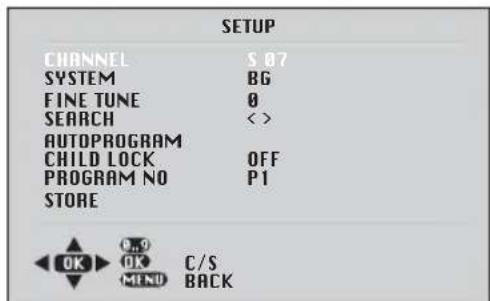

Use the Program down button to select AUTOPROGRAM and press the OK button. A list of countries will appear. Select the desired country using Program and Volume buttons.

When you are sure the aerial is connected properly press the OK button. Autoprogam will start.
To cancel Autoprogram while it is working press the Menu button.
Fine tuning
Although the search and Autoprogram will automatically try and tune to the best reception, in areas of poor reception a bit of ne tuning may be required.
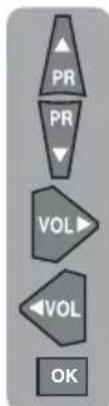
In the SETUP menu use the Program up/down buttons to select FINETUNE.Use the Volume up andVolume down buttons to fine tune.
When you have nished use the Program down button to select STORE and press the OK button.
Child lock
Child lock switches off the programme you are watching when you select it. All other programmes are unaffected. If you go back to the programme with child lock on you will see a black screen with the OSD showing. You can lock as many programs as you want.

Press the Volume up button to switch the Child lock on or off.
Program Table
Once you have tuned in all the channels you want, you can change their program number, if required, and name them.
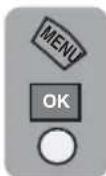
To enter the PROGRAM TABLE menu press the Menu button and select PROGRAM TABLE and press the OK button or press directly the Yellow button.
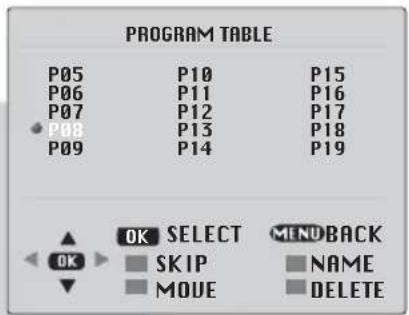
PROGRAM 01 will be selected and the channel stored under PROGRAM 01 will be shown on the screen.
The buttons used to edit the programs are shown at the bottom of the display:
Blue button - Name
Green button - Move
Pink button - Delete
Red button - Skip
To name the program

Press theBlue button, the selected line will turn blue and the CH will turn white.
Use the Program up and Program down buttons to select the letters and numbers and the Volume up and Volume down buttons to move through the name.

Press the Blue button again to store the name.
Repeat this process to name all the program.
To move the program
You can move the programmes around the program list to the order you want

Select the program you want to move and press the Green button. The program will turn to green. Select the number you want to move the program to and press the Green button again and the programme will be moved to that number.
All the following program are shifted down by one place.
To delete a program

To delete a program, select it and press the Pink button. The program will turn pink and the program will be deleted.
All the following program are shifted up by one position.
To skip program

Skipped program will not appear when you move through the program list using the Program up/ Program down buttons. They can still be selected using the numeric buttons or the OK button.
Select the program you want to skip and press the Red button. The program will turn red. To unskip the program press the Red button again.
To exit the PROGRAM TABLE press the TV/TX button or, the Yellow button once or the Menu button twice.
When you select a program, the information you entered in the PROGRAM TABLE menu will appear on the top of the screen i.e. P1 BBC1. This will disappear after about three seconds.
TV set up
The TV set up is accessed through the menu system.
Once you have stored your setup, this is the setup the TV will default to when you switch it on.

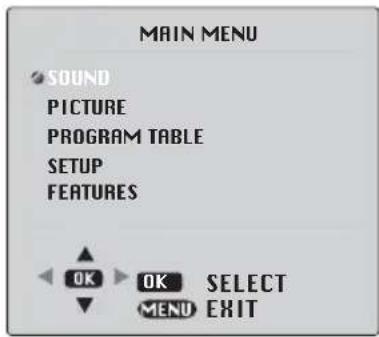
To enter the MAIN menu press the Menu button.
Once in the MAIN menu use the Program up and Program down buttons to select items in the menu and the OK button to access sub menus or use the coloured fastext buttons for quick access.
Red button - SOUND
Green button - PICTURE
Yellow button - PROGRAM TABLE
Blue button -SETUP
Pink button - FEATURES
Please note
If you do not press any buttons for 15 seconds the menu will be removed.
Sound menu (red button)
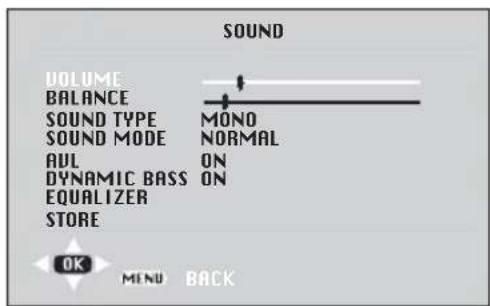
Select the required item in the menu using the Program up/down buttons and make the changes pressing Volume up/down buttons. Use the OK button to enter EQUALIZER sub menu.
Volume
Sets default volume using the Volume up and down buttons.
To save your settings, select STORE and press the OK button. STORED will be displayed. Press the Menu button to go back to the previous menu.
Balance
Sets the sound balance when the TVis in stereo mode using the Volume up and down buttons
To save your settings, select STORE and press the OK button. STORED will be displayed. Press the Menu button to go back to the previous menu.
Sound type
This item shows STEREO when receiving stereo transmission and MONO for mono transmissions.
The TV can be produced to receive the NICAM broadcasts as an optional feature.
If the channel you are watching is in Nicam stereo the On Screen Display will show NICAM STEREO for a while.
Please note
If, while watching a Nicam stereo channel, the signal strength drops and the system cannot receive then Nicam stereo the OSD will show MONO. If then signal strength increases again and nicam stereo can be received again, the OSD will show NICAM STEREO.
Sound mode
You can select NORMAL, SPATIAL or DOLBY VIRTUAL (optional) using the Volume up/down buttons or mix button.
SPATIAL sound is an expanded stereol. It gives the impression that the two speakers in the TV are further apart than they really are.
DOLBY VIRTUAL is based on Dolby Pro Logic decoding for production of the Left, Right, Center and Virtual Surround Sound channels using two loudspeakers.
Manufactured under license from Dolby Laboratories. [Dolby], [Pro Logic] and the double-D symbol are trademarks of Dolby Laboratories.
Please note
To get the surround effects in Dolby Virtual mode, you must apply a Dolby Surround encoded input to the TV.
You can adjust the AVL and EQUALIZER in DOLBY VIRTUAL mode.

To save your settings, select STORE and press theOK button. STORED will be displayed. Press the Menu button to go back to the previous menu.
AVL
TV transmitters have different sound levels. AVL (automatic volume limiting) maintains the same sound level as you switch from program to program.
To apply press Volume up or down button and select ON for AVL.

To save your settings, select STORE and press theOK button. STORED will be displayed. Press the Menu button to go back to the previous menu.
Dynamic Bass (optional)
Set DYNAMIC BASS to ON if you wish to deepen the bass sound speci cally.
Equalizer
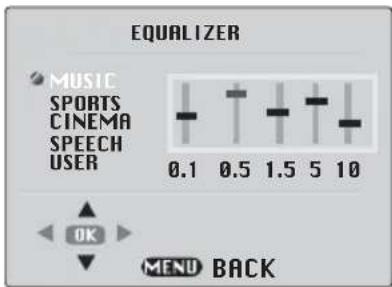
In this menu there is a series of preset equalizer settings for different types of sound output. There are five settings - MUSIC, SPORTS, CINEMA, SPEECH and USER
USER allows you to set your own sound output as follows:

Press the OK button to enter the use EQUALIZER menu.
Use the Program down button to select USER.
Press OK button to adjust the frequency band levels.
Use the Volume up button to select the KHz column you want to change.
Use the Program up/down buttons to make the changes.
To save your settings,press the OK button. Press the Menu button to go back to the previous menu.
You can change the equalizer setting while watching the TV using the sound Smart control.

Press the sound Smart control to page through the different equalizer settings and select the one you want.
Once you have switched the TV off the equalizer setting will revert to the stored setting.
Picture menu (Green button)
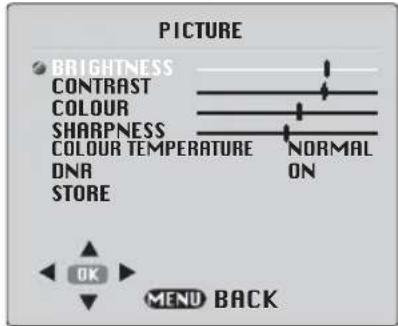
The picture menu allows you to set up the following:
BRIGHTNESS
CONTRAST
COLOUR
SHARPNESS
COLOUR TEMPERATURE

To change, for example, the colour, select it using Program buttons.
Use the Volume up and Volume down buttons to change the setting.
To save your settings, select STORE and press the OK button. STORED will be displayed.
DNR (Optional)
(Dynamic noise reduction)
You can decrease the noise on the picture by selecting DNR os ON.
Smart control
This gives you a choice of picture type:
SOFT, NATURAL, RICH or USER.
Use the button to change this type.

Select BRIGHTNESS, CONTRAST, COLOUR and SHARPNESS using the Program up/down buttons.
Change the settings with the Volume up/down buttons.
To save your settings, select STORE and press the OK button. STORED will be displayed. Press the Menu button to go back to the previous menu.
You can change the picture type while watching the TV using the picture Smart control.
Press the picture Smart control to page through the different picture types and select the one you want.
Once you have switched the TV off the picture type will revert to the stored setting.
IMPORTANT NOTE: Your TV has Digital Comb Filter, DLTI (Digital Luminance Transient Improvement) features to improve picture quality. These features are set ON and they can not be changed by the end user.
Features Menu (Pink button)
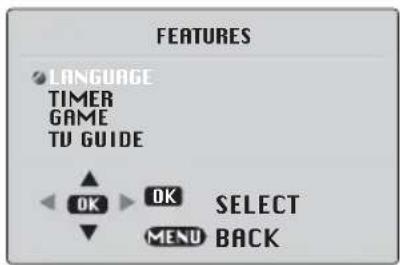
Language
There are many languages available for the On Screen Displays (OSD).

Press the OK button to select the language list.
Press the Program down button to page through all the languages and OK to select.
Timer: Use Program up and down buttons to select Timer in the features menu. Using the Timer fuction, you can switch to a specic programme at a preprogrammed time or you can turn your TV off at the time you want your TV to be turned off.
Press OK to access the Timer menu.
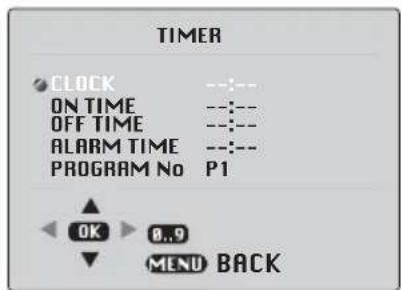
Clock: Use the numeric buttons to set the real time.
On Time: Use the numeric buttons to set the time that you want your TV to be turned on (TV should be on stand-by mode).
Off Time: Use the numeric buttons to set the time that you want your TV to be turned off (Stand-by mode).
Alarm Time (Optional): Use the numeric buttons to set the alarm time that you want your TV to alarm.
Program No: Use the numeric buttons to set the programme number that will be shown when you set the On Time.
GAME (optional)
Use Program up and down buttons to select Games in the features menu. Press OK to access the Game menu.
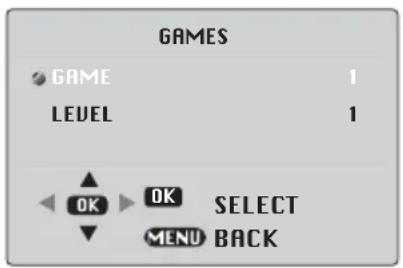
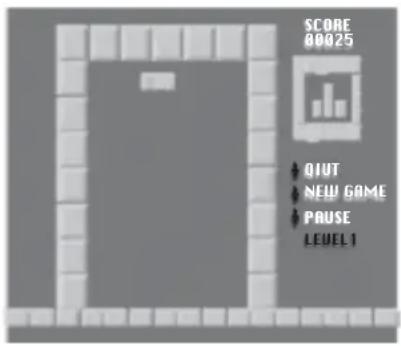
You can select the desirable game via games menu. Picture and sound settings can not be changed in the game mode.
"Mute" function can be used by pressing the Mute button on the remote control. You can also adjust the sound level of the watched channel by pressing Volume up/down buttons before opening the game mode.
GAME 1-TETRIS (optional)
Select the "New Game" option and press the OK button to start the game. You can follow the next shape from the small window which is located at the upper right corner of the screen. You can change the direction of the coming shapes by pressing the OK button. Volume up button is for rotating the coming shapes to the right, Volume down for left and Program up for quick down. You get 1 point, if a line is erased. "Game Over" occurs on the screen if the game finishes. You can pause and restart the game by pressing the Menu button.
You can change the game level by selecting level option on the game menu and pressing the Volume up/down buttons.
Press the Menu button, select the "New Game" option and press the OK button to restart the game. You can press the Menu button again to cancel this menu.
If you want to quit the game mode, press the Menu button, select the "EXIT" option and press the OK button.
GAME 2-PAIRS (optional)
Press the OK button to start the game after selecting "Game 2" on the Game menu. You can move the cursor up, down, left and right by pressing Program up/down and Volume up/down buttons. Press the OK button to see the hidden character located in the box. If the selected characters are the same for the first two choice, these boxes will stay in open position after the third box is selected. Otherwise, they will set to hidden posion again.
After opening all hidden characters "Game Over" OSD will display on the screen.
Press the Menu button, select the "New Game" option and press the OK button to restart the game. You can press the Menu button again to cancel this menu.
If you want to quit the game mode, press the Menu button, select the "EXIT" option and press the OK button.


TV GUIDE (optional)
You can see the TV Guide information on the screen by pressing the DOUB button while a provider channel or a supported channel by provider is selected. The information about the current and next programmes which is sent by provider is displayed on the screen.
Note: TV Guide information may not be available for all programmes. It depends on the broadcasting and determined by broadcasting company.
Note: TV Guide is not displayed on the screen, if there is no provider in the saved channels.
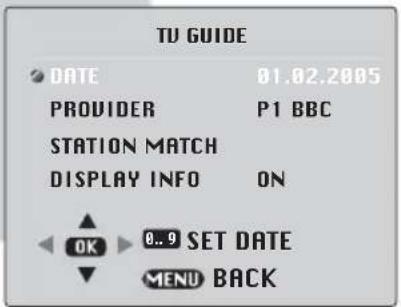
DATE: Date information is supplied by the provider channel. You can use the numeric buttons to change the date.
PROVIDER: Provider is the channel which send the TV Guide information. You can select the provider via this function. Press Volume up/down buttons to select the provider and then press OK.
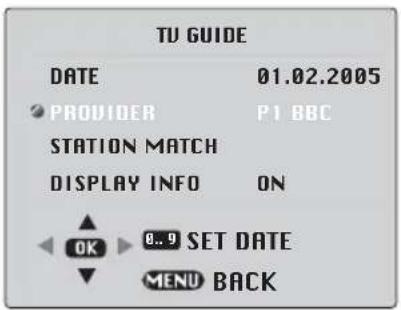
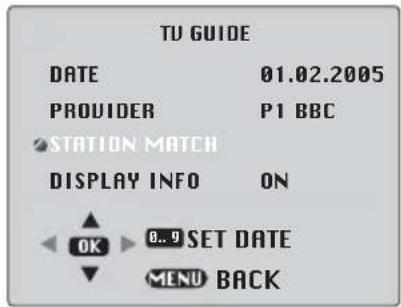
STATION MATCH: The supported channels by provider may not be defined automatically. You can open this menu and define the provider for these channels. Adjusting the provider just one time is enough for these channels.
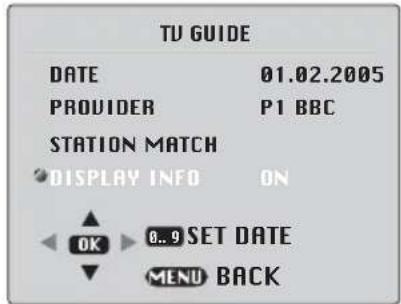
DISPLAY INFO: If you want to see the TV Guide information automatically while changing channels, this option should be open. In this case, if you open the provider channel Mini Guide occurs on the screen.
Note1: If externally connected devices via scarts are turned OFF the provider channel appears on the screen when the television set is opened via remote control or cabinet buttons. EP data download 2 Minutes" message occurs on the screen. It is required to stay at least 2 minutes on this channel to get the tv guide information from provider. However, you can change the channel using numeric buttons or PR▲/PR▼ buttons whenever you want.
Note2: The guide information is erased from memory after the valid time expired if a nonprovider channel is bein watched. The guide information can not be found out by pressing "DOUBLE" button for this case. You should stay on the provider channel for at least 2 minutes to get the new programme information.
Note3: The channel or programme names may contain wrong characters if the provider broadcast is weak or noisy. The date or time information may be wrong. You should check and correct the date and time to get the right information for this case.
Picture format
This allows you to select the picture size corresponding to the screw type of your TV:
Available formats for 4:3 TV sets are 4:3 and 16:9.
The formats of the broadcasts (4:3 or 16:9) you watch by means of aerial input are chosen automatically. This feature is active if the channel you are watching sends WSS (Wide Screen Signalling) information.
Note: The feature mentioned above is relevant for TV sets having teletext.
4:3 Sets:
4:3, is the screen format of 20, 21 TV sets. But you can change the picture format to 16:9 to be able to watch the inputs in 16:9 format, i.e. some broadcasts and DVD's.
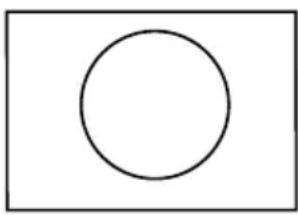
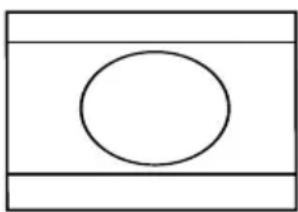

Press the 16:9 button to page through the different picture formats and select the one you want. The selected format will appear on the lower center of the screen for a short while.
Once you have switched the TV off the picture format will revert to the stored setting.
PAT (Picture and Text) (Optional) In the double window function, you can also display the teletext screen in the second window.

TeleText Mode
Using Teletext
Teletext is an information system that displays text on your TV screen. Using the teletext control buttons you can view pages of information that are listed in the teletext index.
Please Note
No on screen display is available in text mode. The contrast, brightness and colour cannot be changed but the volume control is still available.
To enter Text mode Please Note
Make sure the TV channel you are watching transmits teletext.

Press the Tbx. The text page will appear, normally the index page.
To exit Text mode

Press the Bwtbx The TV will return to the channel you were watching.
To select a page of text

Find the number of the page in the index and enter it using the Numeric buttons. The number of the page will appear in the top left hand corner of the screen.
The page counter will search for your page. When it ends it, the page will be displayed.

To move to the next page of text press the Program up
To move to the previous page press the Program down

To return to the index page press the P100 button.
TV/text mix

To view a page of text while watching a TV programme press the Mix button. The text will be superimposed over the TV programme.
Press the Mix button again to return to the text page.
Page search while watching TV

In Text mode press the Update button. The TV will return to TV mode with the text page number in the top left hand corner of the screen.
Enter the page number you want using the Numeric
The top line of the text page will appear while the text searches for your page. When the page is found the number will remain in the top left hand corner of the screen.

Press the Update to view your selected page of text.
Double height text
If you have difficulty reading the text on the TV you can double the height of the text.

Press the Downt. The top half of the page will be displayed in double height text.

Press the button again.
The bottom half of the page will be displayed in double height text.

Press the button again to return to the full page.
Page hold

If the page of text you have selected contains sub pages, these sub pages will automatically be displayed in order with a delay to allow you to read the page.
To stop the move to the next sub page press the Stop button. STOP will appear in the top left hand corner.
To continue moving through the sub pages press the Stop button again.
To select a sub page
If the page of text you are viewing contains sub pages, the number of the sub page you are on and the total number of sub pages is displayed on the right of the screen i.e. 1/7.
To select a sub page press the Sub button. The number in the top left hand corner will be replaced by S followed by 4 asterisks.
Enter the number of the sub page, using the Numeric buttons in the format S0001 for sub page 1.
The teletext will search for the sub page. This may take some time. To return to the TV while the teletext is searching press the Update button.
When the page number is found it will appear in the top left hand corner of the screen.
Press the Update button again to view the text page.
To reveal information

Press the Rev button to reveal concealed information (quiz answers etc.).
Press the Rev button again to conceal the information again.
Clock

Press the Sub button, whilst watching a TV program, to display the time.
Fastext
At the bottom of the teletext screen is a row of subject headings in red, green yellow and blue.
The remote control has a row of coloured buttons corresponding to the row of coloured subjects on the screen.
Pressing one of the coloured buttons will take you directly to the page corresponding to the subject heading.
Toptext (optional)
At the bottom of the teletext screen is a row of subject headings in yellow and blue. Pressing yellow or blue buttons on the remote control, selects the related Subject. Next page can be selected by pressing the red button and previous page can be selected by pressing the green button.
Note: Fastext and Toptext features are not available in every program.
Connecting external equipment
Headphones (optional)
The headphones must have an impedance of between 8 and 32 ohms and have a 3.5mm stereo jack plug.
Plug the headphone jack into the headphone socket of the TV.
Connecting a video recorder
① Via SCART
Make sure the TV and video recorder are both switched off.
Plug one end of the SCART lead (not supplied) into the back of the video recorder and the other end into one of the SCART sockets on the back of the TV.
Switch on the video recorder and the TV.

Press the AV button on the remote control to select AV1 or AV2 (optional) to correspond with SCART socket you are using on the back of the TV.
Please note:
You can connect a RGB external equipment via Scart 1. It is necessary to you use full Scart cable for this purpose.
Select the video outputs of external device by using its menu to RGB if it's available.
② Via RCA lead (optional)
Make sure the TV and video recorder are both switched off.
Plug one end of the RCA lead into the video and audio out sockets on the back of the video recorder and plug the other end into the video and audio in sockets of the TV.
If the sound is in mono use the Audio Input L. In the SOUND menu select MONO.
Press the AV button repetitively and select the AV3 mode by two scart models or select AV2 mode by one scart models.

Via aerial socket
Make sure the TV and video recorder are both switched off.
Unplug the aerial lead from the TV and plug it into the aerial socket on the video recorder (if tted).
Plug a coaxial plug into the RF out socket on the rear of the video recorder and plug the other end into the aerial socket of the TV.
Switch on the video recorder and the TV.
If your video recorder has a test signal, switch it on. (Refer to the video recorder user guide).
See Tuning the TV and carry out the tuning procedure for the video recorder test signal. Select a programme number 0 or between 55 and 99.

S-Video Player
If you have an S-Video player you can connect it to SCART socket 2 (optional) via an adaptor from scart to S-Video/RCA audio (not supplied).
Press the AV button three times to select AV-2S (available by two scart models).

Via RCA lead and S-Video socket
You can also connect it through the S-Video socket of the TV (optional).
Plug the S-Video plug into the S-Video socket and the audio leads into the audio sockets.

Press the AV button repetitively to select AV3-S by two scart models or AV2-S by one scart models.

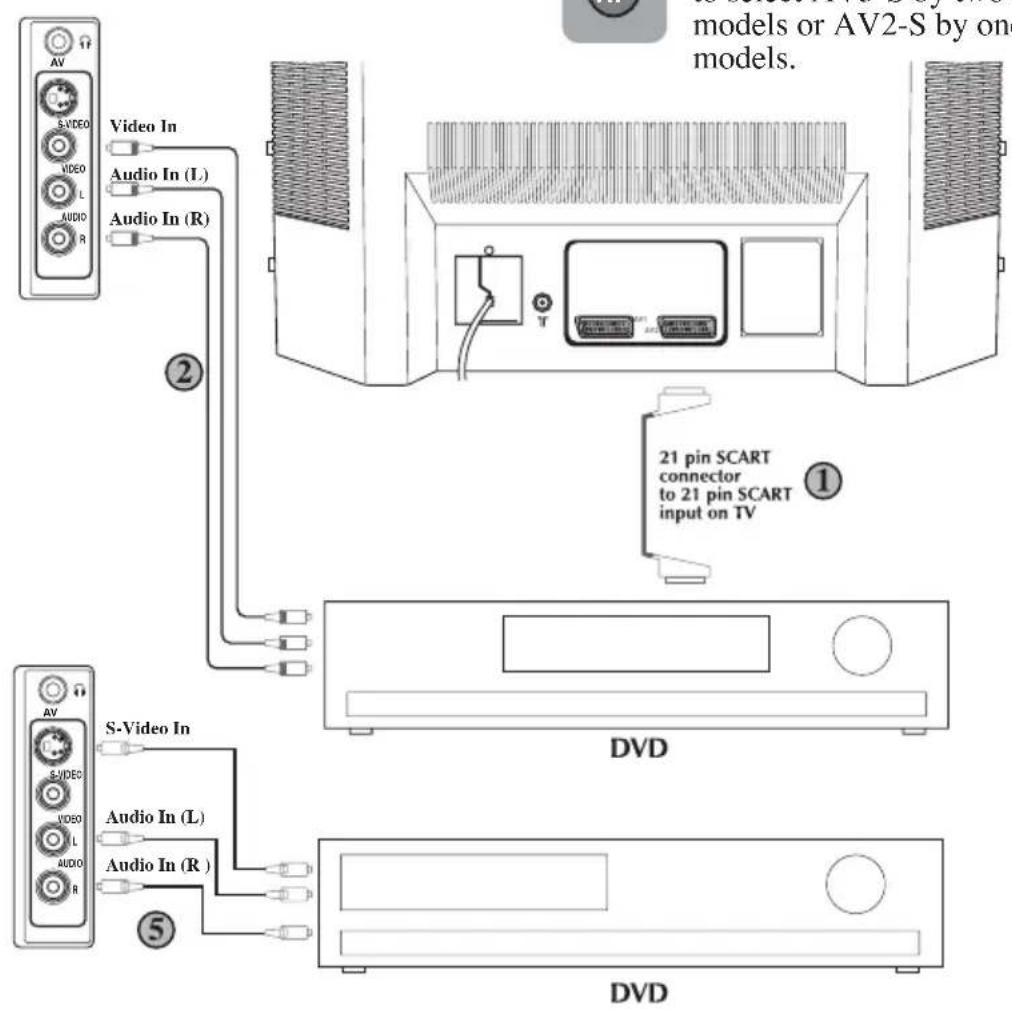
Connecting a DVD player
① Via SCART
Make sure the TV and DVD player are both switched off.
Plug one end of the SCART lead (not supplied) into the back of the DVD player and the other end into one of the SCART sockets on the back of the TV.
Switch on the DVD and the TV.
Press the AV button on the remote control to select AV1 or AV2 (optional) to correspond with SCART socket you are using on the back of the TV.
② Via RCA lead (optional)
Make sure the TV and DVD player are both switched off.
Plug one end of the RCA lead into the video and audio out sockets on the back of the DVD player and plug the other end into the video and audio in sockets of the TV.

Press the AV button repetitively and select the AV3 mode by two scart models or select AV2 mode by one scart models.
③ Via RCA lead and S-Video socket
You can also connect it through the S-Video socket of the TV (optional).
Plug the S-Video plug into the S-Video socket and the audio leads into the audio sockets.
Press the AV button repetitively to select AV3-S by two scart models or AV2-S by one scart models.
Connecting a decoder
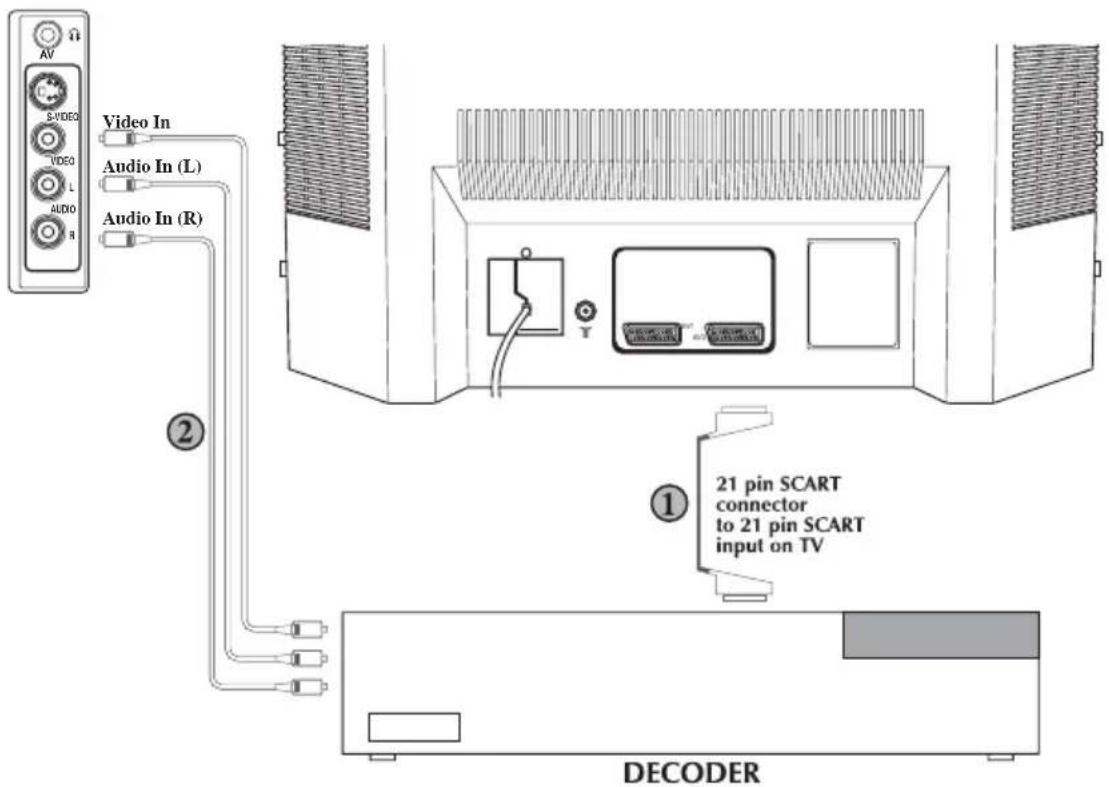
① Via SCART
Make sure the TV and decoder are both switched off.
Plug one end of the SCART lead (not supplied) into the back of the decoder and the other end into the SCART1 on the back of the TV.
Switch on the decoder and the TV.

Press the AV button on the remote control to select AV1.
Plug one end of the RCA lead into the video and audio out sockets on the back of the decoder and plug the other end into the video and audio in sockets on the TV.

Press the AV button repetitively and select the AV3 mode by two scart models or select AV2 mode by one scart models.
Please Note
You can record from one external piece of equipment to another via the TV by connecting the playback to SCART 1 and the recorder to SCART 2 and selecting AV1. You cannot watch the TV.
You can connect NTSC supported equipment to the TV via the SCART sockets and adjusting the colour via the PICTURE menu.
Select TINT by using Program down button and use the adjust the colour wsing Volume up and down buttons.
② Via RCA lead (optional)
Make sure the TV and decoder are both switched off.
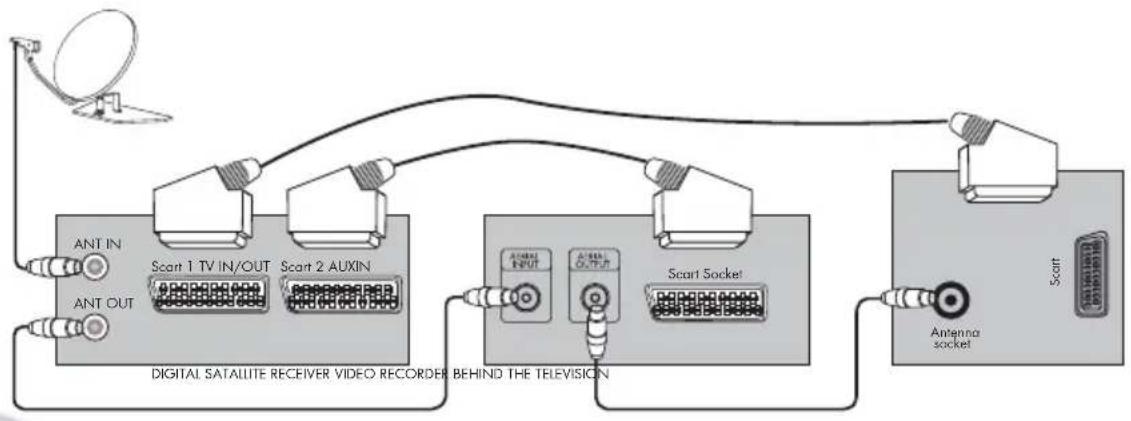
Connecting TV with video and satellite/digital receiver
Connecting TV with camcorder

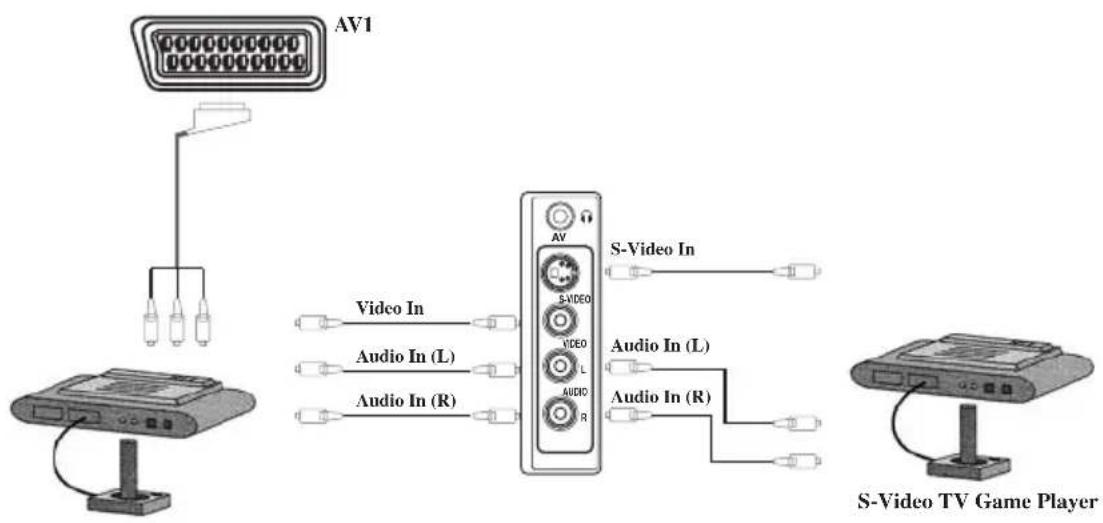
Connecting TV games and computer
Help and service tips
The TV does not work
Make sure it is plugged into the mains supply and switched on.
Poor picture
¥ Is the aerial plugged in?
If you are using a set top aerial is it properly aligned for the best signal.
¥ Make sure the aerial is not too close to neon lights, loudspeakers etc.
Try changing the direction of the outdoor aerial. High buildings and mountains can cause ghost pictures or double images.
The picture quality may be reduced by connecting two external sources at once. Disconnect one of the sources.
¥ Adjust the net tuning.
No picture
¥ Is the aerial plugged in properly?
¥Is the aerial lead damaged?
Y Are all the plugs in the aerial lead tted correctly?
¥ Have you pressed the correct buttons on the remote control?
No sound
Y Is the sound muted? Press the Mute button.
Y Is the volume turned down?
Y Are there headphones connected?
Sound coming from only one speaker
¥ Is the balance set to one side? See the sound menu.
If you have external speakers, has one of them become disconnected?
No response to the remote control
¥Try changing the batteries.
Y Is there an obstruction between the remote control and the sensor on the TV?
If nothing works
If you have tried the above solutions and none seem to work, try switching the unit off and on again.
If this does not work contact your supplier or TV repair technician. Never attempt to repair a defective TV yourself.
| Symptoms | Solutions | Check if on/off switch is "on"Try a different channel, if OK, probably stallion troubleCheck aerial connections the on back of setCheck aerial broken wiresRe orientate aerialProbably local interference, such as an applianceAdjust fine tuning controlAdjust brightness controlAdjust contrast controlCheck if station is broadcasting colourAdjust colour controlCheck batteries in the remote control handsetSwitch the TV set OFF and ON from mainsMove the loudspeakers away from the televisionSwitch off the television set at the mainsand switch on again after 15 minutes | ||||||||||||
| No picture, no sound | ||||||||||||||
| Poor sound, picture OK | ||||||||||||||
| Poor Picture, sound OK | ||||||||||||||
| Weak picture | ||||||||||||||
| Blurred picture | ||||||||||||||
| Double image | ||||||||||||||
| Lines in picture | ||||||||||||||
| Distorted picture | ||||||||||||||
| Weak reception on some channels | ||||||||||||||
| Horizontal bars | ||||||||||||||
| Picture rolls vertically | ||||||||||||||
| Poor colour | ||||||||||||||
| No colour | ||||||||||||||
| Remote control not working | ||||||||||||||
| TV does not accept any command | ||||||||||||||
| Teletext rolling up/down | ||||||||||||||
| Inappropriate colour, color spots | ||||||||||||||
Technical specifications table
| Picture tube size/type | 20☐ 4:3 | 21☐ 4:3 | 21☐ 4:3 PF |
| Screen size | 51 cm | 555cm | |
| Visible screen size | 48 cm | 511cm | |
| Sound output (%10 THD) | 2x7 W | 2x7 W | 2x7 W |
| Power consumption | 55 W | 55 W | 55 W |
| Stand by power consumption | 2 W | 2 W W | |
| Dolby Virtual | optional | optional |
PF : Pureflat picture tube
4:3 : Conventional TV
General technical specifications
Power Supply
AC: 230-240V 50Hz
Number of preset programmes 100
RF Aerial input. 75 ohm (unbalanced)
Speaker impedance 8 ohm
Audio output Stereo/NICAM (optional)
Batteries 2x AAA
Receiving channels. VHF (Band I Channels 2-4)
VHF (Band III Channels 5-12)
UHF (Channels 21-69)
Receiving broadcast system.. PAL BG
PAL SECAM BG
PAL SECAM BG DK/DK
PAL SECAM BG LL
PALI
Please note: Your TV set is produced to receive only one of these colour and sound system options which is based one your countries norms and can not be changed by user except BG/DK and BG/LL if both systems are available to receive (BG or DK and BG or LL ). Please refer to Tuning the TV .

This symbol on the product or in the instructions means that your electrical and electronic equipment should be disposed at the end of its life separately from your household waste. There are separate collection systems for recycling in the EU. For more information, please contact the local authority or your retailer where you purchased the product.
Importer AKAl Benelux - Elmarc B.V.
Information: www.akai.nl
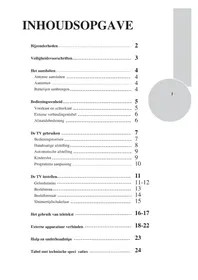
INHOUDSOPGAVE
Bijzonderheden 2
¥ Quick Program Display
Linker audio RCA/mono RCA (wit)
Rechter audio RCA (rood)
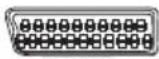
AV1 scart
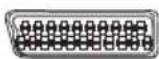
AV2 scart

antenne-ingang
stroomkabel
Let op
Manual, where you control the tuning process or
General technical specifications
Algemene speci caties.
Spci ciations Techniques 26
Tllvision
¥ Dynamic Bass (option)
¥MenuMultilingue.
Dynamic Noise Reduction (Option)
Bouton de programme Down/Up

P-P+

or

or
V-V+
Bouton de volume Down/Up
Günralitus

PRO1 SWAP PR11 SWAP PRO1
AV
(Dynamic noise reduction)



- COLOUR TELEVISION KLEURENTELEVISIE TELEVISEUR COULEURS
- Television
- Special features
- Safety is important
- Safety instructions
- Getting started
- In the box
- Read these instructions before use
- Aerial connection
- Please note
- Switching on
- Mains power
- Switching the TV on for the rst time
- Battery fitting
- Control Unit
- Front Panel
- General
- External Connections: (Front or side) (External connections: (Rear)
- External connections table
- Please note:
- Remote control
- Using the TV
- TV controls
- AV
- Scart models:
- Scart models:
- Tuning the television
- Manual tuning
- Tuning with channel numbers
- Automatic tuning (Autoprogram)
- Fine tuning
- Child lock
- Program Table
- To name the program
- To move the program
- To delete a program
- To skip program
- TV set up
- Sound menu (red button)
- Volume
- Balance
- Sound type
- Sound mode
- AVL
- Dynamic Bass (optional)
- Equalizer
- Picture menu (Green button)
- DNR (Optional)
- (Dynamic noise reduction)
- Smart control
- Features Menu (Pink button)
- Language
- GAME (optional)
- GAME 1-TETRIS (optional)
- GAME 2-PAIRS (optional)
- TV GUIDE (optional)
- Picture format
- 4:3 Sets:
- Using Teletext
- To enter Text mode Please Note
- To exit Text mode
- To select a page of text
- TV/text mix
- Page search while watching TV
- Double height text
- Page hold
- To select a sub page
- To reveal information
- Clock
- Fastext
- Toptext (optional)
- Connecting external equipment
- Headphones (optional)
- Connecting a video recorder
- ① Via SCART
- ② Via RCA lead (optional)
- Via aerial socket
- S-Video Player
- Via RCA lead and S-Video socket
- Connecting a DVD player
- ② Via RCA lead (optional)
- ③ Via RCA lead and S-Video socket
- Connecting a decoder
- Connecting TV with video and satellite/digital receiver
- Connecting TV with camcorder
- Connecting TV games and computer
- Help and service tips
- The TV does not work
- Poor picture
- No picture
- No sound
- Sound coming from only one speaker
- No response to the remote control
- If nothing works
- Technical specifications table
- General technical specifications
- INHOUDSOPGAVE
- Bijzonderheden 2
- Let op
- Spci ciations Techniques 26
- Tllvision
- Günralitus
Brand : BEKO
Model : BCT 355 RF
Category : Television