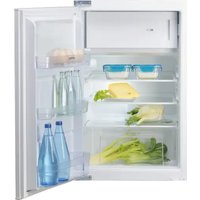
PFV 231W A - Refrigerator PRIVILEG - Free user manual and instructions
Find the device manual for free PFV 231W A PRIVILEG in PDF.



| Product type | Refrigerator with freezer compartment |
| Brand | Privileg |
| Model | PFV 231W A |
| Climate class | SN, N, ST, T (from 10°C to 43°C) |
| Power supply | 220-240 V, 50 Hz |
| Refrigerant | R134a or R600a (isobutane) |
| Freezing capacity | Indicated on the rating plate (kg/24h) |
| Quick freeze function | Yes, with yellow indicator light |
| Ice cube production | Ice cube tray provided |
| Defrosting | Manual (1 to 2 times per year) |
| Maintenance | Interior cleaning with lukewarm water and mild detergent; cleaning of rear condenser |
| Accessories | Bins, shelves, eutectic plates (depending on model) |
| Safety | Automatic shutdown in case of fault; mandatory earth connection |
| Installation | Minimum clearance: 5 cm above, 4 cm at rear, 30 cm from gas/electric cookers |
| Weight | Approximately 50 kg (estimate) |
| Dimensions (approx.) | Width 60 cm, Height 180 cm, Depth 65 cm |
Frequently Asked Questions - PFV 231W A PRIVILEG
User questions about PFV 231W A PRIVILEG
0 question about this device. Answer the ones you know or ask your own.
Ask a new question about this device
Download the instructions for your Refrigerator in PDF format for free! Find your manual PFV 231W A - PRIVILEG and take your electronic device back in hand. On this page are published all the documents necessary for the use of your device. PFV 231W A by PRIVILEG.
USER MANUAL PFV 231W A PRIVILEG
Instructions for use
Mode d'emploi
Gebruiksaanwijzing
TROUBLESHOOTING GUIDE
AFTER-SALES SERVICE
INSTALLATION
ELECTRICAL CONNECTION
BEFORE USING THE APPLIANCE
- Your new appliance is designed exclusively for domestic use.
To ensure best use of your appliance, carefully read the instructions which contain a description of the appliance and advice on storing and preserving food.
Keep this handbook for future reference.
- After unpacking the appliance, make sure it is not damaged and that the door closes properly. Any damage must be reported to the dealer within 24 hours of delivery of the appliance.
- Wait at least two hours before switching the appliance on, in order to ensure that the refrigerant circuit is fully efficient.
- Make sure installation and the electrical connection are carried out by a qualified technician according to the manufacturer's instructions and in compliance with the local safety regulations
- Clean the inside of the appliance before using it.
SAFEGUARDING THE ENVIRONMENT
I.Packing

The packing material is 100% recyclable and bears the recycling symbol. Comply with the local regulations for disposal. Keep the packing materials (plastic bags, polystyrene parts, etc.) out of the reach of children, as they are a potential source of danger.
2. Scrapping/Disposal
The appliance is manufactured using recyclable material.
This appliance is marked in compliance with European Directive 2002/96/EC on Waste Electrical and Electronic Equipment (WEEE). By ensuring the correct scrapping of this appliance, you can help prevent potentially negative consequences for the environment and the health of persons.
The symbol on the appliance, or on the accompanying documents, indicates that this appliance should not be treated as domestic waste but must be taken to a suitable collection centre for the recycling of electrical and electronic equipment.
When scrapping the appliance, make it unusable by cutting off the power cable and removing the doors and shelves so that children cannot easily climb inside.
Scrap the appliance in compliance with local regulations on waste disposal, taking it to a special collection centre; do not leave the appliance unattended even for a few days, since it is a potential source of danger for children. For further information on the treatment, recovery and recycling of this product, contact your competent local office, the household waste collection service or the shop where you purchased the appliance.
Information:
This appliance does not contain CFCs.
The refrigerant circuit contains RI 34a (HFCs) or R600a (HCs), see the rating plate inside the appliance.
Appliances with isobutane (R600a): Isobutane is a natural gas without environmental impact but is flammable. Therefore, make sure the refrigerant circuit pipes are not damaged.
This product contains Fluorinated Greenhouse Gases covered by the Kyoto Protocol, the refrigerant gas being in a hermetically sealed system.
Refrigerant gas: RI 34a has a Global Warming Potential (GWP) I300.
Declaration of conformity
- This appliance is intended for storing food and is manufactured in conformity with European regulation (EC) No. 1935/2004.
C
- This product has been designed, manufactured and marketed in compliance with:
- the safety objectives prescribed in the Low Voltage Directive 2006/95/CE (which replaced Directive 73/23/CEE as amended);
- the protection requirements of the "EMC" 89/336/CEE directive, amended by Directive 93/68/CEE.
- Electrical safety of the appliance is guaranteed only if it is connected to an efficient and approved earthing system.
PRECAUTIONS AND GENERAL RECOMMENDATIONS
- Use the refrigerator compartment only for storing fresh food and beverages and use the freezer compartment only for storing frozen food, freezing fresh food and making ice cubes.
- During installation, make sure the appliance does not damage the power cable.
- Do not store glass containers with liquids in the freezer since they may burst.
- Do not eat ice cubes or ice lollies immediately after taking them out of the freezer since they may cause cold burns.
- Before servicing or cleaning the appliance, unplug it from the mains or disconnect the electrical power supply.
- Make sure that the appliance is not near a heat source.
- Do not store or use petrol, gas or flammable liquids in the vicinity of the appliance or other electrical appliances. The fumes can create a fire hazard or explosion.
- To ensure adequate ventilation, leave a space on both sides and above the appliance and follow the installation instructions.
- Keep the appliance ventilation openings free.
- All appliances equipped with an ice maker or water dispenser must be connected to a mains water supply that delivers potable water only (with water pressure between 1.7 and 8.1 bar (25 and 117 PSI)). Ice makers and/or water dispensers not directly connected to a mains water supply must be filled with potable water only.
- Install and level the appliance on a floor strong enough to take its weight and in an area suitable for its size and use.
- For the water connection, use the pipe supplied with the new appliance and do not use that of the previous appliance.
-
The appliance must be handled and installed by two or more persons.
-
Place the appliance in a dry and well-ventilated place. The appliance is set for operation at specific ambient temperature ranges, according to the climatic class indicated on the data plate: The appliance may not work properly if it is left for a long period at a temperature above or below the indicated range.
| Climatic Class Amb. T. (℃) Amb. T. (℉) | |
| SN From 10 to 32 F | from 50 to 90 |
| N From 16 to 32 F | from 61 to 90 |
| ST From 18 to 38 F | from 64 to 100 |
| T From 18 to 43 F | from 64 to 110 |
- Be careful not to damage the floors when you move the appliance (e.g. parquet flooring).
- Do not use mechanical, electric or chemical means other than those recommended by the Manufacturer to speed up the defrost process.
- Do not damage the refrigerator's refrigerant circuit pipes.
- Do not use or place electrical appliances inside the compartments if they are not of the type expressly authorised by the Manufacturer.
- This appliance is not intended for use by persons (including children) with reduced physical, sensory or mental capabilities, or lack of experience and knowledge, unless they have been given supervision or instruction concerning use of the appliance by a person responsible for their safety. Children should be supervised to ensure that they don't play with the appliance.
- Power cable modification or replacement must only be carried out by qualified personnel.
- Do not use single/multiple adapters or extension cables.
- It must be possible to disconnect the appliance from the mains by unplugging it or by means of a two-pole switch fitted upline of the socket.
- Ensure that the voltage indicated on the appliance data plate corresponds to the domestic supply voltage
- Do not swallow the contents (non-toxic) of the ice packs (if provided).
- The Manufacturer declines any liability if the above recommendations and precautions are not respected.
HOW TO USE THE FREEZER
The freezer can be used for storing already frozen food and for freezing fresh food.
Switching on the freezer for the first time
- There is no need to set the freezer temperature on the thermostat because the appliance is already factory set.
- Plug in the appliance.
- The alarm signal activates, indicating that the freezer has not yet reached a sufficiently cold temperature for storage of foodstuffs.
- Only place food in the freezer once the alarm signal has deactivated (for further details, see the enclosed product sheet).
Adjusting the temperature
For temperature adjustment, see the enclosed product sheet.
Note:
Ambient air temperature, the frequency of door opening and the position of the appliance can affect the freezer internal temperature.
These factors must be taken into account when setting the thermostat.
Freezing
The amount of fresh food (in kg) that can be frozen in 24 hours is indicated on the appliance data plate.
For optimum appliance performance, press the fast freeze button (until the yellow led lights up) 24 hours before placing fresh food in the freezer.
After placing fresh food in the freezer, 24 hours on fast freeze function is generally sufficient; After 24 hours, deactivate the fast freeze function
Important:
In order to save energy, when freezing small amounts of food, the fast freeze function can be deactivated after a few hours.
Tips for freezing and storing fresh food.
- Before freezing, wrap and seal fresh food in: aluminium foil, cling film, air and water-tight plastic bags, polythene containers with lids or freezer containers suitable for freezing fresh food.
- Food must be fresh, mature and of prime quality in order to obtain high quality frozen food.
- Fresh vegetables and fruit should preferably be frozen as soon as they are picked to maintain the full original nutritional value, consistency, colour and flavour.
Some meat, especially game, should be hung before it is frozen.
Note:
- Always leave hot food to cool before placing in the freezer.
Eat fully or partially defrosted foods immediately. Do not refreeze unless the food is cooked after it has thawed. Once cooked, the thawed food can be refrozen.
Freezing and storing fresh food
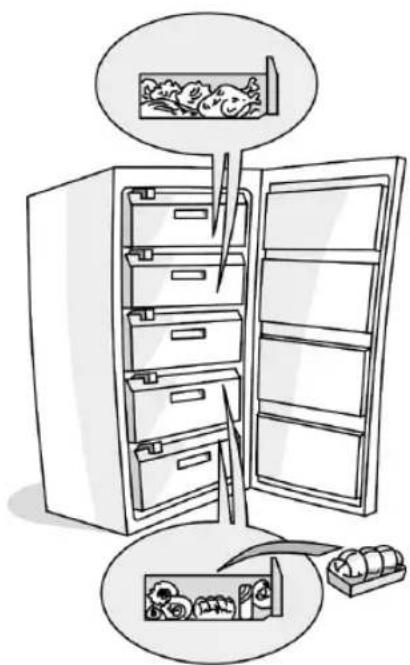
- Place foods to be frozen in the baskets.
- Place the ice packs (if supplied) in the space provided (on the last grid) or above the food stored in the top compartment.
Important:
The table alongside shows the recommended maximum storage time for frozen fresh foods.
Declared performance refers to appliance operation without ice packs, with the exception of the rising time.
Classification of frozen foods
Put the frozen products into the freezer and classify them.
The storage date should be indicated on the packs, to allow use within expiry dates.
Advice for storing frozen food
When purchasing frozen food products:
- Ensure that the packaging is not damaged (frozen food in damaged packaging may have deteriorated). If the package is swollen or has damp patches, it may not have been stored under optimal conditions and defrosting may have already begun.
- When shopping, leave frozen food purchases until last and transport the products in a thermally insulated cool bag.
- Once at home, place the frozen foods immediately in the freezer.
- If food has defrosted even partially, do not re-freeze it. Consume within 24 hours.
- Avoid, or reduce temperature variations to the minimum. Respect the best-before date on the package.
- Always observe the storage information on the package.
MONTHS FOOD
| 1-3 | ||
| 4-7 | ||
| 8-12 |
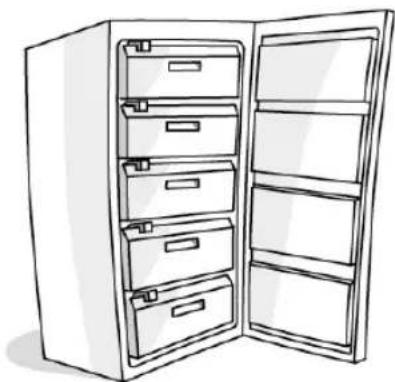
Removing the baskets
- Pull the baskets out fully, then lift them up slightly in order to remove.
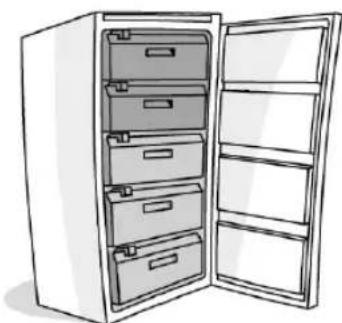
Drawers (except the bottom drawer), runners and the white grid (if provided) may be removed in order to obtain increased storage space (Fig.1)
Ensure that the load does not exceed the limit (if present) indicated on the side walls of the appliance.
Compartment
Use this compartment only for making ice cubes and storing ice packs, as shown in Fig. 2 and 3 (if supplied).
Always observe the storage times given on frozen food packaging.
Making ice cubes
- Fill the ice cube tray 2/3 full and place it in the special freezer compartment.
- Do not use sharp or pointed instruments to detach the tray if it is stuck to the bottom of the freezer.
- Bend the ice tray slightly to remove the cubes.
Note:
The freezer door will not re-open easily immediately after closing (except for models featuring a special valve).
Wait a few minutes before opening again in order to allow for compensation of the vacuum created.

Fig.1
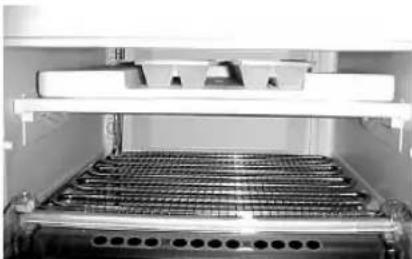
Fig. 2
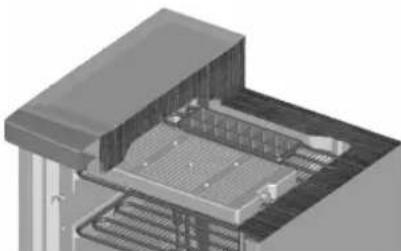
Fig. 3
HOW TO DEFROST AND CLEAN THE FREEZER
Before any cleaning or maintenance operation, unplug the appliance from the mains or disconnect the electrical power supply.
For electronic models, first press the on/off button and then unplug the the appliance.
Defrost the freezer once or twice a year, or when the formation of ice on the refrigeration grilles is excessive. It is perfectly normal for ice to form on the grilles.
The amount of ice which forms and the rate at which it accumulates will depends on room temperature and humidity, and on the frequency with which the door is opened.
If possible, defrost the freezer when it is nearly empty.
- Remove the food from the freezer, wrap in newspaper and group together in a cool place or in a portable cooler.
- Leave the freezer door open to allow the frost to melt.
- Clean the interior of the freezer with a sponge and warm water and/or neutral detergent. Do not use abrasive substances.
- Rinse the interior and dry thoroughly.
- Put the food back into the freezer.
- Close the freezer door.
- Plug in the appliance once again.
- Switch on the freezer.
Note: for electronic models, first insert the power plug into the mains socket and then press the on/off button to switch on the appliance.
For the correct defrosting procedure, refer to the PRODUCT DESCRIPTION SHEET.
CARE AND MAINTENANCE
Before any cleaning or maintenance operation, unplug the appliance from the mains or disconnect the electrical power supply.
For electronic models, first press the on/off button and then unplug the the appliance.
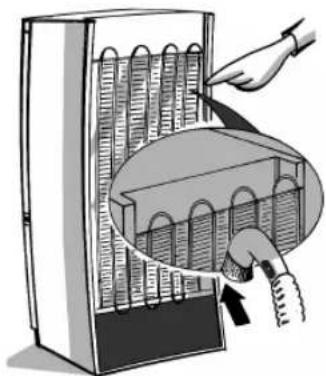
Periodically clean the condenser at the rear of the appliance with a vacuum cleaner or brush.
Periodically clean the inside of the compartment with a sponge dampened in warm water and/or neutral detergent. Rinse and dry with a soft cloth. Do not use abrasive products
Prolonged disuse
Empty the freezer.
- Disconnect the freezer from the mains power supply.
Defrost and clean.
Leave the door open to prevent formation of unpleasant odours and to eliminate any dampness Note: for electronic models, first insert the power plug into the mains socket and then press the on/off button to switch on the appliance.
TROUBLESHOOTING GUIDE
When you hear these noises
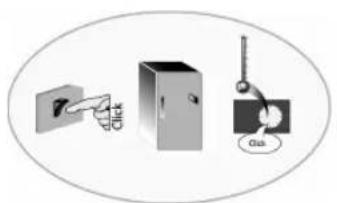
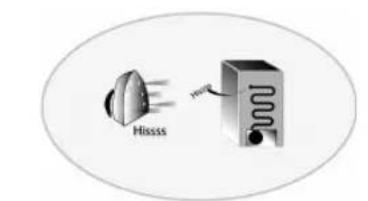
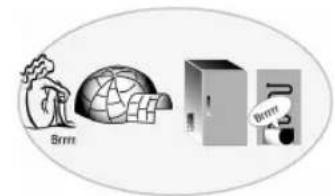
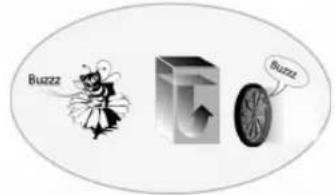
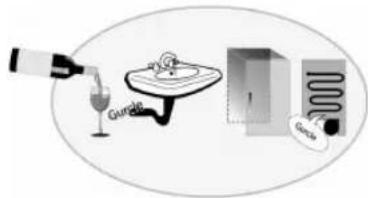
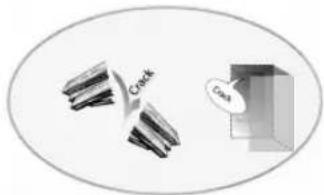
..your appliance is alive!!!
- The appliance is no working.
Is there a power failure?
Is the plug properly inserted in the socket?
Is the double-pole switch on?
- Do the household electrical system protection devices work correctly?
Is the power cord damaged?
-
Excessive frost build-up.
-
Has the defrost water drain been positioned correctly?
Is the door shut properly? -
The yellow, red and green LEDs do not light up. Perform the checks for point I, and then:
-
Contact After Sales Service.
Notes:
- The front edge of the appliance may be hot. This prevents the formation of condensation and is not a defect.
Gurgling and hissing noises due to expansion in the refrigerant circuit are normal.
AFTER-SALES SERVICE
Before contacting After-Sales Service:
- See if you can solve the problem yourself with the help of the Trouble-shooting guide.
- Switch the appliance on again to see if the problem has been solved. If it has not, disconnect the appliance from the power supply and wait for about an hour before switching on again.
- If the problem persists after this course of action, contact After-sales Service.
Specify:
the nature of the problem,
the model,
- the Service number (the number after the word SERVICE on the rating plate on the inside of the appliance),
- your full address,
- your telephone number and area code.
SERVICE 000000000000
Note:
The direction of door opening can be changed. If this operation is performed by After-sales Service it is not covered by the warranty.
The door cannot be reversed on models with front handle.
INSTALLATION
-
Install the appliance away from heat sources. Installation in a hot place, near heat sources (radiators, cookers) or direct exposure to the sun will increase energy consumption and should be avoided.
If this is not possible, respect these minimum distances: -
30 cm from coal or oil stoves;
- 3 cm from electric and/or gas cookers.
For optimum operation, ensure:
- a space of at least 5cm above the appliance;
- a distance of at least 4cm from the rear wall;
-
place other cabinets at a suitable distance from the appliance to allow at least some air circulation
-
Install the appliance level (adjust the front feet if necessary) in a dry and well-aired place.
Clean the inside.
- Insert the accessories supplied.
Electrical connection
The electrical connections must comply with the local regulations.
Voltage and power input are specified on the rating plate inside the appliance.
- Regulations require the appliance to be earthed. The manufacturer declines any liability for injury or damage resulting from failure to observe the above rules.
- If the plug and socket are not of the same type, have the socket replaced by a qualified technician.
- Do not use extension leads or multi-adapters.
Electrical disconnection
It must be possible to electrically disconnect the appliance by unplugging it or by means of a double-pole switch installed ahead of the socket.
ELECTRICAL CONNECTION
I) For Great Britain only
Warning - this appliance must be earthed
Fuse replacement
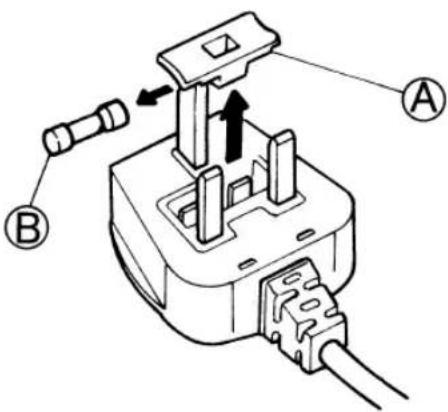
If the mains lead of this appliance is fitted with a BS 1363A I3amp fused plug, to change a fuse in this type of plug use an A.S.T.A. approved fuse to BS 1362 type and proceed as follows:
- Remove the fuse cover (A) and fuse (B).
2.Fit replacement I3A fuse into fuse cover. - Refit both into plug.
Important:
The fuse cover must be refitted when changing a fuse and if the fuse cover is lost the plug must not be used until a correct replacement is fitted.
Correct replacement are identified by the colour insert or the colour embossed in words on the base of the plug.
Replacement fuse covers are available from your local electrical store.
2) For the Republic of Ireland only
The information given in respect of Great Britain will frequently apply, but a third type of plug and socket is also used, the 2-pin, side earth type.
3) Socket outlet / plug (valid for both countries)
If the fitted plug is not suitable for your socket outlet, please contact Whirlpool Service for further instruction. Please do not attempt to change plug yourself. This procedure needs to be carried out by a qualified Whirlpool technician in compliance with the manufactures instructions and current standard safety regulations.
MODE D'EMPLOI
AVANT D'UTILISER L'APPAREIL
CONSEILS POUR LA PROTECTION DE L'ENVIRONMENT
PRECAUTIONS ET RECOMMANDATIONS GÉNÉRALES
COMMENT FAIRE FONCTIONNER LE CONGÉLATEUR
COMMENT DÉGIVRER ET NETTOYER LE CONGÉLATEUR
NETTOYAGE ET ENTRETIEN
DIAGNOSTIC RAPIDE
SERVICE APRES-VENTE
INSTALLATION
AVANT D'UTILISER L'APPAREIL
LIMPEZA E MANUTENÇÂO
GUIDA RICERCA GUASTI
SERVIZIO ASSISTENZA TECHNICA
INSTALLAZIONE
PRIMA DI USARE L'APPARECCHIO
GUIDA RICERCA GUASTI
IPIN XPHSIMOIOIHSETE TH ΣYΣKEYH
IPIN XPHSIMOIOIHSETE TH YZKEYH
Houkeun TIOU ayopaoate TPOOpiZetaaTOKkIOTiKa yia oikiaKn xpnan.
Tia va xpnoiotroinoe Kautepa Tn
oukeun oac, TpeTc va diaafoe T
Tpooxn Tc odnyie cxpono n otou 8a Bpeite
tnv Tepiypao n Tsc oukeunoc kai
xpnaiue c ouuboulac yia tn diatnpan Twv
qayntwv.
ΦuaéTe To Tnapov Exyεipio yia Kaθε μeλλovtikxρση.
1.Apou aTTOOaKEUaoTe Tn OuaKEUn,
BepaiwOeite OTI DEV Exei BaaBeCkai OTIN TIOpta
KLeive TEAia. Tuxov Znmuies TIPETIE VA
avapepvotai oTo kataoTma TTWAnos EVTOS
24 wpwv aTTO nTv Tnapadoon Tou TPOiovTOs.
- NepiEvete TouXiatovduo WpeC TIPV avaTe Tnoukeun, YIA VA ETITpeWETe TIV TAnp aTIOOOn TOU uKTKOU KUKawatoc.
3.BeBaiWteIeOTn EyKaTaoTaon KAI nNtpiKn ouvOeON exouv yivei aTIOEvAV eTIEPO TEXVIKO uMpwva ME TIC OBNYIECS TOU KAATAKEUAOTN KAI TOUC IOXuovTEc TOTIKOUc KAVOVIAOUC aopaaleic.
RENGJØRING OG VEDLIKEHOLD
FEILSKINGSLISTE
SERVICE
INSTALLASJON
FØR APPARATET TAS I BRUK
RENGJØRING OG VEDLIKEHOLD
- BEFORE USING THE APPLIANCE
- SAFEGUARDING THE ENVIRONMENT
- I.Packing
- Scrapping/Disposal
- Information:
- Declaration of conformity
- C
- PRECAUTIONS AND GENERAL RECOMMENDATIONS
- HOW TO USE THE FREEZER
- Switching on the freezer for the first time
- Adjusting the temperature
- Note:
- Freezing
- The amount of fresh food (in kg) that can be frozen in 24 hours is indicated on the appliance data plate.
- Important:
- Tips for freezing and storing fresh food.
- Freezing and storing fresh food
- Classification of frozen foods
- Advice for storing frozen food
- Removing the baskets
- Compartment
- Making ice cubes
- HOW TO DEFROST AND CLEAN THE FREEZER
- CARE AND MAINTENANCE
- Prolonged disuse
- TROUBLESHOOTING GUIDE
- Notes:
- AFTER-SALES SERVICE
- Before contacting After-Sales Service:
- INSTALLATION
- Electrical connection
- Electrical disconnection
- I) For Great Britain only
- Warning - this appliance must be earthed
- Fuse replacement
- 2) For the Republic of Ireland only
- 3) Socket outlet / plug (valid for both countries)
- MODE D'EMPLOI
- AVANT D'UTILISER L'APPAREIL
- PRIMA DI USARE L'APPARECCHIO
- GUIDA RICERCA GUASTI
- IPIN XPHSIMOIOIHSETE TH YZKEYH
- FØR APPARATET TAS I BRUK
- RENGJØRING OG VEDLIKEHOLD
Brand : PRIVILEG
Model : PFV 231W A
Category : Refrigerator