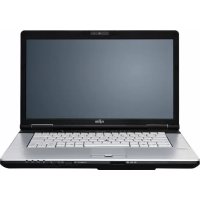
Lifebook E751 - Laptop FUJITSU - Free user manual and instructions
Find the device manual for free Lifebook E751 FUJITSU in PDF.


| Product Type | Laptop (Notebook) |
| Brand | Fujitsu |
| Model | Lifebook E751 |
| Dimensions (L x D x H) | 372 mm x 245 mm x 35 mm |
| Weight | Approximately 2.6 kg (depending on configuration) |
| Display | TFT LCD display, backlit |
| Screen resolution | 1280 x 800 pixels (example, may vary) |
| Memory (RAM) | Up to 8 GB DDR3 SDRAM (2 SO-DIMM slots) |
| Hard drive | Removable SATA hard drive |
| Battery | 6-cell Li-ion, capacities: 67 Wh (main 1), 62.6 Wh (main 2), 41 Wh (optional) |
| Power supply | 80 W AC adapter, 100-240 V (auto) |
| Wired connectivity | Ethernet LAN (RJ-45), 56k modem (RJ-11), serial port, parallel port (depending on model) |
| Wireless connectivity | WLAN, Bluetooth, UMTS (depending on model), switchable radio components |
| Video interfaces | VGA (analog), DisplayPort (digital) |
| Audio interfaces | Headphone jack, microphone jack, built-in speakers, built-in microphone |
| USB ports | Multiple USB ports (one with charging function) |
| Card readers | SD/MS memory card reader, ExpressCard, SmartCard |
| Optical drive | Built-in CD/DVD drive |
| Webcam | Built-in webcam (depending on model) |
| Pre-installed operating system | Windows 7 (or Windows XP depending on configuration) |
| Security | Fingerprint sensor, Kensington Lock, BIOS passwords (admin/user), hard disk password, TPM, SmartCard |
| Main features | Power saving mode, power management, port replicator, simplified maintenance |
| Maintenance and cleaning | Clean with a soft, dry or slightly damp cloth (water and mild detergent). Use a vacuum for ventilation slots. Avoid any liquid inside. |
| Spare parts and repairability | Battery, hard drive, memory, optical drive, radio module, etc. accessible and replaceable. Maintenance manual provided. |
| General information | French manual available. Support via Hotline/Service Desk, Fujitsu website. Manufacturer warranty. |
Frequently Asked Questions - Lifebook E751 FUJITSU
User questions about Lifebook E751 FUJITSU
0 question about this device. Answer the ones you know or ask your own.
Ask a new question about this device
Download the instructions for your Laptop in PDF format for free! Find your manual Lifebook E751 - FUJITSU and take your electronic device back in hand. On this page are published all the documents necessary for the use of your device. Lifebook E751 by FUJITSU.
USER MANUAL Lifebook E751 FUJITSU
FujitsuTec hnologySolutions02/11
Publiépar
Fujitsu Technology Solutions GmbH
http://ts.fujitsu.com/support
Portmicrophone/LineIn.... 72
Portcasque 72
Déclarationsdeconformité(Declarationsof Conformity) ....
MarquageCE....95
Regulatorynotices 95
Regulatoryinformationfornotebookswithoutradiodevice....95
DOC(IndustryCANADA)Notices....97
FCC Regulatory information for notebooks with radio device 99
Index 101
Grâceàunetechnologienovatrice...
1=WebCam(enoption)
2=LEDpourWebCam(enoption)
3=Haut-parleurs
4=TouchStick(enoption)
5=Voyantsd'état
6=Touchesd'application
7 = C a c Ifenceddération
Remarquesimportantes

natural_image
Simple diagram showing a black arrow pointing downward to a circular button with a power symbol (no text or labels)▶ Mettezvotreappareil soustension.
→ LevoyantMarchedunotebooks'allume.
▶ Relevezl'écranLCD.
Mettrelenotebookhorstension

natural_image
Simple diagram showing a downward arrow pointing to a circular button with a power symbol (no text or labels)FujitsuTechnologySolutions.
natural_image
Line drawing of a laptop keyboard with labeled parts (1 and 2), no text or symbols present.natural_image
Line drawing of a laptop with a separate drive module inserted, showing no text or symbols
natural_image
Technical line drawing of a mechanical component with an arrow indicating direction (no text or symbols)natural_image
Simple line drawing of a folded paper or sheet with an arrow indicating compression (no text or symbols)natural_image
Diagram showing a folded paper or sheet with two directional arrows labeled 1 and 2, and a small geometric symbol below (no text or symbols present)natural_image
Diagram of a mechanical component with two directional arrows labeled 1 and 2, showing a cutaway section (no text or symbols beyond labels)natural_image
Simple line drawing of a mechanical component with a black arrow pointing to a section (no text or symbols)▶ Insérezlacar te, contactsversl'avant, dansl'ouvert uredulogement.
natural_image
Diagram of a mechanical component with two directional arrows labeled 1 and 2, showing a cutaway section (no text or symbols beyond labels)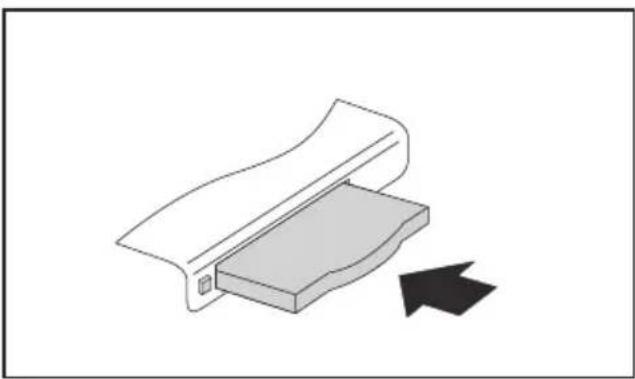
natural_image
Diagram of a mechanical component with a curved blade and a rectangular block, showing an arrow indicating direction (no text or symbols)1=DispositifKensingtonLock
2 = P o r t L A N
3=PortsUSB
4=Interfaceparallèle
5=Interfacesérie
6=PortécranVGA
7=PortmoniteurDVI
8=DisplayPort
9 = P o r t e - S A T A
10=PortsUSB
11=Prisedetensioncontinue(DCIN)
12 =DispositifKensingtonLock
13 = Portécouteurs
14 =Portmicrophone/LineIn
natural_image
Technical line drawing of a mechanical component with labeled part 'a' and arrow indicator (no text or symbols beyond label)natural_image
Pure technical line drawing of a mechanical bracket with a downward arrow and circular hole (no text or symbols)natural_image
Isometric line drawing of a laptop with a base and screen, no text or symbols presentnatural_image
Diagram showing a plug inserted into a socket connected to a padlock (no text or symbols present)▶ MettezleKensingtonMicroSaverenplace surledispositifdevotrenotebook.

natural_image
Line drawing of a laptop with an attached USB drive (no text or symbols)natural_image
Diagram of a USB cable connector with a port, showing cable connection and label P (no text or symbols on the diagram itself)natural_image
Diagram showing a VGA connector with an arrow pointing to a screen icon (no text or symbols present)natural_image
Diagram of a USB cable with a USB symbol indicating data input (no text or labels present)natural_image
Diagram showing a USB plug inserted into a socket with an external cable, symbolizing the connection to a USB (no text or labels present)CeportUSBperm etdechargeroud'alimenterundispositifUSB(parex.chargerunPDAouun téléphonemobi leoubrancherunelampeUSB)mêmesilenotebookesthorstension.
RaccorderundisquedurSATAexterne(eSATA)
Portmicrophone/LineIn
natural_image
Diagram showing a mechanical component being inserted into a threaded rod, with motion indicators (no text or symbols)natural_image
Diagram showing a mechanical component being inserted into a connector with an earpin (no text or symbols present)▶ Retirezlavis(1).

▶ Insérezledisquedurdanssonlogement(1).
Aumoyendelalanguetted'extraction,tirezledisquedurdanslesensdela flèche(2)jusqu'àcequelescontactss'enclenchent.
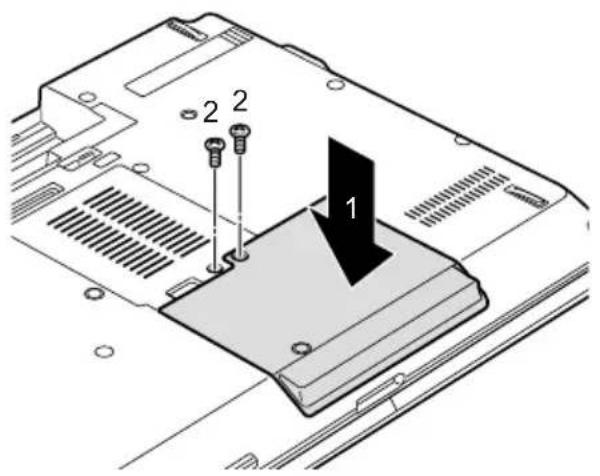
Fixationducouvercle
Déclarationsdeconformité(Declarations of Conformity)
If there is no FCC logo and also no FCC ID on the device then this device is not approved by the Federal Communications Commission (FCC) of the USA. Although it is not explicitly forbidden to travel the US trading area carrying this device, but to avoid trouble at customs clearance Fujitsu Technology Solutions GmbH recommends not to bring this device into the UStrading area.
Regulatory information for notebooks without radio device
NOTICE:
Changes or modifications not expressly approved by Fujitsu Technology Solutions could void this user's authority to operate the equipment.
Notice to Users of Radios and Television
Theselimitsaredesignedtoprovidereasonableprotectionagainsttharmfulinterferenceina residentialinstallation. This equipment generates, uses, and can radiateradiofrequencyenergy and, if not installed and used in accordance with the instructions, may cause harmful interference to radio communications. However, there is no guarantee that interference will not occur in a particular installation. If this equipment does cause harmful interference to radio or television reception, which can be determined by turning the equipment off and on, the user is encouraged to try to correct the interference by one or more of the following measures:
•Reorientorrelocatethereceivingantenna.
- Increase these separation between the equipment and receiver.
- Connecttheequipmentintoanoutletthatisonadifferentcircuitthanthereceiver.
- Consultthedealeroranexperiencedradio/TVtechnicianforhelp.
NoticetoUsersoftheUSTelephoneNetwork
YournotebookmaybesuppliedwithaninternalmodemwhichcomplieswithPart68ofthe FCCrules.OnthisnotebookisalabelthatcontainstheFCCRegistrationNumberandthe RingerEquivalenceNumber(REN)forthisequipmentamongotherinformation.Ifrequested, the user must provide their telephone company with the following information:
- Thetelephonenumbertowhichthenotebookisconnected.
- The Ringer Equivalence Number (REN) forthisequipment.
- The equipment requires a standard modular jack type USOCRJ-11C which is FCC Part 68 compliant.
- The FCCRegistrationNumber.
This equipment is designed to be connected to the telephone network or premises wiring using astandardmodularjacktypeUSOCRJ-11CwhichisFCCPart68compliantandalinecord betweenthemodemandthetelephonenetworkwithaminimumof26AWG.
TheRENisusedtodeterminethenumberofdevicesthatyoumayconnecttoyourtelephone lineandstillhaveallofthosedeVICESringwhenyournumberiscalled.Toomanydevices on one line may result in failure to ring in response to an incoming call. In most, but not all, areas the sum of the RENs of all of the devices should not exceed five (5). To be certain of the number of devices you may connect to your line, as determined by the RENs, contact yourlocaltelephonecompany.Ifthisequipmentcausesharmtothetelephonenetwork,your telephone company may discontinue your service temporarily. If possible, they will notify you inadvance.Ifadvancenoticeisnotpracticaltheywillnotifyyouassoonaspossible.You will also be advised of your right to file a complaint with the FCC.
ThisfaxmodemalsocomplieswithfaxbrandingrequirementsperFCCPart68.
Yourtelephonecompanywillprobablyaskyoutodisconnectthisequipmentfromthetelephone network until the problem is corrected and you are sure that the equipment is not malfunctioning. Thisequipmentmaynotbeusedoncoin-operatedtelephonesprovidedbyyourtelephone company.Connectiontopartylinesissubjecttostatetariffs.Contactyourstate'spublicutility commission,publicservicecommissionorcorporationcommissionformoreinformation.
This equipment includes automatic dialing capability. When programming and/or making test call to emergencies numbers:
- Remainonthelineandbrieflyexplaintothedispatcherthereasonforthecall.
- Performsuchactivitiesinoff-peakhours,suchasearlymorningorlateevening.
FCCrulesprohibittheuseofnon-hearingaidcompatibletelephonesinthe followinglocationsorapplications:
- Allpublicorsemipubliccoin-operatedorcreditcardtelephones.
• Elevators, highways, tunnels (automobile, subway, railroad or pedestrian) where a person with impaired hearing might be isolated in an emergency. - Places where telephones are specifically installed to alert emergency authorities such as fire, police or medical assistance personnel.
• Hospital rooms, residential health care facilities, convalescent homes and prisons.
•Hotel, motelorapartmentlobbies.
- Storeswheretelephonesareusedbypatronstoordermerchandise.
- Public transportation terminals where telephones are used to call taxis or to reservelodging or rental cars.
- In hotel and motel rooms as at least ten percent of the rooms must contain hearing aid-compatibletelephonesorjacksforplug-inhearingaidcompatibletelephoneswhich willbeprovidedtohearingimpairedcustomersonrequest.
DOC(IndustryCANADA)Not ices
NoticetoUsersofRadiosandTelevision
This Class B digital apparatus meets all requirements of Canadian Interference-Causing Equipment Regulations.
This equipment meets the applicable Industry Canada Terminal Equipment Technical Specifications. This is confirmed by the registration number. The abbreviation, IC, before the registration number signifies that registration was performed based on a Declaration of Conformity indicating that Industry Canada technical specifications were met. It does not imply that Industry Canada approved the equipment. Before connecting this equipment to atelephonelin the users should ensure that it is permissible to connect this equipment to the local telecommunication facilities. The users should be aware that compliance with the certification standards does not prevent service degradation in some situations.
RepairstotelecommunicationequipmentsshouldbemadebyaCanadianauthorized maintenancefacility.AnyrepairsoralterationsnotexpresslyapprovedbyFujitsuor anyequipmentfailuresmaygivethetelecommunicationcompanycausetorequestthe usertodisconnecttheequipmentfromthetelephoneline.
NOTICE:
TheRingerEquivalenceNumber(REN)forthisterminalequipmentis0.0.TheRENassigned toeachterminalequipmentprovidesanindicationofthemaximumnumberofterminals allowedtobeconnectedtoatelephoneinterface.Theterminationonaninterfacemay consistofanycombinationofdevicessubjectonlytotherequirementthatthesumofthe Ringer Equivalence Numbers of all the devices does not exceed five.

CAUTION:
Forsafety, users should ensure that the electrical ground of the power utility, the telephone lines and the metallic water pipes are connected together. Users should NOT attempt to make such connection themselves but should contact the appropriate electric inspection authority or electrician. This may be particularly important in rural areas.
flowchart
graph LR
    A[" "] --> B["●"]
    B --> C["+"]

CAUTION:
To reduce the risk of fire, use only 26AWG or larger telecommunications line cord.
For Authorized Repair Technicians Only

CAUTION:
For continued protection against risk of fire, replace only with the sametypeandratingfuse.

WARNING:
DangerofexplosionifLithium(CMOS)batteryisincorrectlyreplaced.Replaceonly withthesameorequivalenttyperecommendedbythemanufacturer.
Disposeofusedbatteriesaccordingtothemanufacturer'sinstruction.
FCCRegulatoryinformationfornotebookswithradiodevice
FederalCommunicationsCommissionstatement
This device complies with Part 15 of FCC Rules. Operation is subject to the following two conditions: (1) this device may not cause interference, and
(2) this device must accept any interference, including interference that may cause undesired operation of this device.
FCCInterferenceStatement
This equipment has been tested and found to comply with the limits for a Class B digital device, pursuant to Part 15 of the FCC Rules. These limits are designed to provide reasonable protection against harmful interference in a residential installation. This equipment generates, uses, and can radiate radio frequency energy. If not installed and used in accordance with the instructions, it may cause harmful interference to radio communications.
However, there is no guarantee that interference will not occur in particular installation.
If this equipment does cause harmful interference or radioortelevision reception, which can be determined by turning the equipment off and, the user is encouraged to try to correct the interference by one or more of the following measures:
- Reorientorrelocatethereceivingantenna.
- Increase the distance between the equipment and thereceiver.
- Connecttheequipmenttoanoutletonacircuitdifferentfromtheonethereceiverisconnectedto.
- Consultthedealeroranexperiencedradio/TVtechnicianforhelp.
Pleasenotethefollowingregulatoryinformationrelatedtotheoptionalradiodevice.
FCCRadioFrequencyExposurestatement
This radiodevice has been evaluated under FCC Bulletin OET65 Cand found compliant with the requirements as set forth in CFR 47 Sections 2.1091, 2.1093, and 15.247 (b) (4) addressing RF Exposure from radio frequency devices. The radiated output power of this radio device is far below the FCC radio frequency exposure limits. Nevertheless, this device shall be used in such a manner that the potential for human contact during normal operation is minimized. When using this device, a certain separation distance between antenna and nearby persons must be maintained to ensure RF exposure compliance. In order to comply with RF exposure limit established in the ANSIC95.1 standards, the distance between the antennas and the users should not be less than 20cm (8 inches).
RegulatoryNotesandStatements
Radiodevice, Health and Authorization for use
Radiofrequencyelectromagneticenergyisemittedfromtheradiodevices.Theenergylevelsof these emissions, however, are far much less than the electromagnetic energy emissions from wirelessdevicessuchasmobilephones.Radiodevicesaresafeforusebyconsumersbecause they operate within the guidelines found in radio frequency safety standards and recommendations.
The use of the radiodevices may be restricted in some situations, such as:
• onboardanairplane, or
•inanexplosiveenvironment,or
•insituationswheretheinterferencerisktootherdevicesorservicesis perceivedoridentifiedasharmful.
In cases in which the policy regarding use of radio devices in specific environments is not clear (e.g., airports, hospitals, chemical/oil/gas industrial plants, private buildings), obtain authorizationousethesedevicespriortooperatingtheequipment.
RegulatoryInformation/Disclaimers
Installation and use of this radiodevicemustbeinstrictaccordancewiththeinstructionsincluded in the user documentation provided with the product. Any changes or modifications made to this device that are not expressly approved by the manufacturer may void the user's authority to operate the equipment. The manufacturer is not responsible for any radio or television interference caused by unauthorized modification of this device, or the substitution or attachment of connecting cables and equipment other than those specified by the manufacturer. It is the responsibility of the user to correct any interference caused by such unauthorized modification, substitution or attachment. The manufacturer and its authorized resellers or distributors will assume no liability for any damage or violation of government regulations arising from failure to comply with these guidelines.
Exportrestrictions
Thisproductorsoftwarecontainsencryptioncodewhichmaynotbeexportedor transferred from the US or Canada without an approved US Department of Commerce export license. This device complies with Part 15 of FCC Rules, as well as ICES 003 B/NMB003B.Operationissubjecttothefollowingtwoconditions:
(1) this device may not cause harmful interference, and
(2) this device must accept any interference received, including interference that may cause undesirable operation.
Modifications not expressly authorized by Fujitsu Technology Solutions may invalidatetheuser'srighttooperatethisequipment.
Index
A
Accumulateur
autodécharge34
étatdecharge34,42
soinetentretien34
stocker34
raccorderleNotebook53
Raccorderunmicrophone72
Regulatoryinformation
Notebookswithradiodevice99
Notebookswithoutradiodevice95
Remarques13
Cartes73
économied'énergie14
écranLCD32
Elimination/recyclage94
Transport14
Remarquesimportantes13
activerlaprotectionsystème60
désactiverlaprotectionsystème60
- Publiépar
- Grâceàunetechnologienovatrice...
- Remarquesimportantes
- Mettrelenotebookhorstension
- RaccorderundisquedurSATAexterne(eSATA)
- Portmicrophone/LineIn
- Fixationducouvercle
- Déclarationsdeconformité(Declarations of Conformity)
- Regulatory information for notebooks without radio device
- NOTICE:
- Notice to Users of Radios and Television
- NoticetoUsersoftheUSTelephoneNetwork
- DOC(IndustryCANADA)Not ices
- NoticetoUsersofRadiosandTelevision
- CAUTION:
- For Authorized Repair Technicians Only
- WARNING:
- FCCRegulatoryinformationfornotebookswithradiodevice
- FederalCommunicationsCommissionstatement
- FCCInterferenceStatement
- FCCRadioFrequencyExposurestatement
- RegulatoryNotesandStatements
- Radiodevice, Health and Authorization for use
- RegulatoryInformation/Disclaimers
- Exportrestrictions
- Index
- A
Brand : FUJITSU
Model : Lifebook E751
Category : Laptop