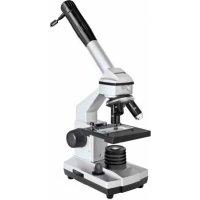
Junior - Microscope BRESSER - Free user manual and instructions
Find the device manual for free Junior BRESSER in PDF.



| Product type | Microscope for children |
| Brand | BRESSER |
| Model | Junior |
| Category | Microscope |
| Power supply | Not powered (manual optical microscope) |
| Main functions | Sample observation, biology experiments, optical magnification |
| Included accessories | Shrimp eggs, seawater, yeast, adhesive paper, prepared slides (bee, tissue, shrimp, butterfly wing), empty small bottles, coverslips, labels, shrimp incubation equipment, slide, pipette, tweezers, preparation needle, scalpel, magnifying glass (2x magnification) |
| Target audience | Children (under adult supervision) |
| Safety | Do not expose to direct sunlight (fire risk); use under supervision; keep out of reach of young children (sharp parts) |
| Care and cleaning | Clean lenses with a soft, lint-free cloth; do not press hard; for stubborn stains, use eyeglass cleaning liquid |
| Materials | Plastic, glass (lenses), metal (accessories) |
| Dimensions | Approx. 15 x 10 x 25 cm |
| Weight | Approx. 500 g |
| Warranty | 2 years (according to legislation) |
| Country of origin | Germany (brand BRESSER) |
Frequently Asked Questions - Junior BRESSER
User questions about Junior BRESSER
0 question about this device. Answer the ones you know or ask your own.
Ask a new question about this device
Download the instructions for your Microscope in PDF format for free! Find your manual Junior - BRESSER and take your electronic device back in hand. On this page are published all the documents necessary for the use of your device. Junior by BRESSER.
USER MANUAL Junior BRESSER
This product is ideal for children wanting to explore their world in a completely new way. The device is as such, easy to use and care for, rugged and good-looking.
More important to you and of course to us is that it is safe to use. During manufacture, we made sure that this product is as safe it can be for children to use. Some residual risk is, however, unavoidable. This product, after all, is not a toy in the usual sense but rather an optical instrument that children can use to experiment, research and discover their world.
That's why we request your cooperation here. These operating instructions were written for children but please read them through together with your child or children and answer his/her/their questions. Don't forget to explain possible risks.
These are summarised under the heading „ warnings". Please adjust/set up the device together with your child or children and never allow any child to use any of our optical products unsupervised.
We hope all users and their parents will enjoy our products.
Your Bresser team

Dear junior researcher,
Congratulations on becoming the proud owner of this product.
You'll be amazed when reading these instructions just how much can be done and explored with your new device.
Take a look and emerge yourself into the adventurous world of nature and discovery.
It really is exciting and a lot of fun discovering the world with this product.
Before you get started, read the operating instructions fully, as there are a few things you need to know to get the best out of your new device.
The „Warnings“ should be read carefully. Use the product exactly as per the operating instructions to avoid any risk or injury. Keep these instructions in
a safe place for later reference. If you give the device away or make a present of it make sure these instructions accompany it.
And now it just remains to say, "Have loads of fun researching and discovering"
Pia

RISK to your child!
Aids with sharp edges and tips are sometimes used with this device. Please store the device and all of its accessories and aids out of the reach of children. There is a risk of INJURY.
Children should only use this device under supervision. Keep packaging materials (plastic bags, rubber bands, etc.) away from children. There is a risk of SUFFOCATION.
The chemicals and liquids provided should be kept out of reach of children. Do not drink the chemicals! Hands should be washed thoroughly under running water after use. In case of accidental contact with the eyes or mouth rinse with water. Seek medical treatment for ailments arising from contact with the chemical substances and take the chemicals with you to the doctor.
Fire/Burning RISK!
Never subject the device - especially the lenses - to direct sunlight. Light ray concentration can cause fires and/or burns.
TIPS on cleaning
Clean the lens (objective and eyepiece) only with the
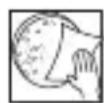
cloth supplied or some other soft lint-free cloth (e.g. micro-fibre). Do not use excessive pressure - this may scratch the lens.
Dampen the cleaning cloth with a spectacle cleaning fluid and use it on very dirty lenses.
DISPOSAL
Dispose of the packaging material/s as legally required. Consult the local authority on the matter if necessary.
Your experiment set is made up of the following components:
1 Shrimp eggs
2 Sea salt
3 Yeast
4 Gum media
5 Prepared slide "Fabric" (material)
6 Prepared slide "Shrimp"
7 Prepared slide "Honeybee"
8-12 Empty vials
13 Prepared slide "Butterfly Wings"
14 Cover slips
15 Adhesive labels
16 Shrimp hatchery
17 Slide
18 Pipette
19 Tweezers
20 Dissecting needle
21 Scalpel
22 Magnifying glass
What you need to know
Caution!

When using your experiment set, wear an apron (or old clothing) and rubber gloves!
Always carry out your experiments under the guidance and with the help of an adult!
Your experiment set includes numerous accessories that help you carry out different experiments.
You can use all the parts independently of the microscope that you use for your research. You'll find a few experiments that you can try out attached to these instructions.
You can do them with the individual parts of your experiment set.
Shrimp eggs
These are special eggs that are capable of survival even when they are dried out. As a result, they are particularly ideal for raising brine shrimp. You can find out how in the appendix to these instructions.

Sea salt
You can observe the sea salt using your microscope. Salt is a crystal that looks very interesting through a microscope.
Apart from that, you will also need the sea salt to make a salt solution, in which you will hatch your brine shrimp.
Yeast
The yeast in your experiment set is included as feed for the brine shrimp. If you feed them regularly, you will be able to watch how they grow.
Gum media
This material is a glue that you can use to make permanent prepared specimens.
Prepared slides „Honeybee," "Fabric" (material), "Shrimp" and "Butterfly Wings"
Different prepared slides that you can investigate using your microscope.
Empty vials
You can keep a few samples in the empty vials (e.g. leaves, and, etc.)
Cover slips
You use the cover slips to cover specimens that you have placed on a slide in order to observe with a microscope.
Adhesive labels
You can use these labels to identify your permanent prepared specimens. You can also use them to label the empty vials.
Shrimp hatchery
You can hatch shrimp in the different chambers and observe the different stages of development.
Slides
You place the specimen on a slide. After you have covered it with some water or gum media, you can place a cover slip on top. Then you place the slide under the clips on the microscope.

Scalpel
The scalpel is a sharp knife that you can use to slice specimens/samples.
Tweezers
These are a type of pincers that you can use to pick up smaller objects.
Dissecting needle
A dissecting needle can be used for many things.
You can use it to scratch the surface of a specimen, to fix objects in place or to stir liquids.
Pipette
You can use this instrument to soak up liquids in small amounts and squirt them out again.
To soak up liquids, push the upper part (head) of the pipette together and put the opening on the lower part in the liquid. Let the head go and the pipette will fill with the liquid.
When you want to release some of the liquid, simply push the head together again. The more carefully you press, the less liquid will come out of the opening.
Magnifying glass
With the magnifying glass, you can observe objects with 2 times the magnification.
After use
To make your experiment set - and the enjoyment of it - last longer, you should make note of the following for after each use.
- Clean the cover slips, slides and the microscope instruments carefully with water and some soap.
Caution! Cover slips, slides and the instruments
have sharp edges and are in some cases pointed. Make sure to always let adults help you when cleaning, so that you don't hurt yourself! Warning! The cover slips are particularly thin and could break. It is best to place them on a piece of paper on a hard surface for cleaning.
- Close all the vials tightly after use. Some containers have liquids that evaporate very easily, and could dry up.

Chers parents,
Meade Instruments Europe
GmbH & Co. KG
Gutenbergstr. 2
DE-46414 Rhede
Germany
www.bresser.de

- Dear junior researcher,
- RISK to your child!
- Fire/Burning RISK!
- TIPS on cleaning
- DISPOSAL
- Your experiment set is made up of the following components:
- What you need to know
- Caution!
- You can do them with the individual parts of your experiment set.
- Shrimp eggs
- Sea salt
- Yeast
- Gum media
- Empty vials
- Cover slips
- Adhesive labels
- Shrimp hatchery
- Slides
- Scalpel
- Tweezers
- Dissecting needle
- Pipette
- Magnifying glass
- After use
- Chers parents,
Brand : BRESSER
Model : Junior
Category : Microscope