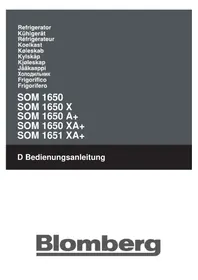
SOM 1651 XA - Refrigerator BLOMBERG - Free user manual and instructions
Find the device manual for free SOM 1651 XA BLOMBERG in PDF.


| Product type | Refrigerator |
| Brand | Blomberg |
| Model | SOM 1651 XA |
| Power supply | 220-240 V ~ 50 Hz |
| Refrigerant | R600a (isobutane) |
| Insulation | Cyclopentane |
| Ambient operating temperature | +10°C to +32°C |
| Thermostat setting | Positions 1 to 5 |
| Defrost | Automatic |
| Interior lighting | Bulb E14 15W max |
| 0°C compartment | Yes |
| Number of shelves | Multiple, removable and tiltable |
| Vegetable drawer | Yes |
| Door bins | Adjustable |
| Egg tray | Yes |
| Bottle holder | Yes |
| Adjustable feet | Front |
| Maintenance | Cleaning with bicarbonate, vacuuming the condenser |
| Grounding | Mandatory |
| Door reversal | Possible (see manual) |
| Transport | Vertical only, otherwise wait 4 hours |
Frequently Asked Questions - SOM 1651 XA BLOMBERG
Note: use only a 15W maximum bulb.
User questions about SOM 1651 XA BLOMBERG
0 question about this device. Answer the ones you know or ask your own.
Ask a new question about this device
Download the instructions for your Refrigerator in PDF format for free! Find your manual SOM 1651 XA - BLOMBERG and take your electronic device back in hand. On this page are published all the documents necessary for the use of your device. SOM 1651 XA by BLOMBERG.
USER MANUAL SOM 1651 XA BLOMBERG
Electrical requirements/2
Transportation instructions/2
Installation instructions/2
Suggested arrangement of food in the larder fridge/3
Temperature control and adjustment/4
Before operating/4
Getting to know your appliance/5
Defrosting/5
Replacing the interior light bulb/6
Cleaning and care/6
Repositioning the door/7
Do's and don'ts/7-8
Trouble - shooting/8
D
Inhalt
09-17
HnCTpyKuNN no yCTaHOBe/70
PekomEnyemoe paonoloxhen npoaykToB xonnoHnke/71
KoHTpObnHnHaCTpoKaTeMnepepatpyb/72
Neped Hauanom 3KcnjnyatauW/72
O3HaKOMJIeHnC npH6p0m/73
Pa3mopaxWahHe/73
3aMeHa nAmnoK BHyTpHHeRo OcBeHn/74
YnCTKa n yxo/75
NepecTaHOBKa DBePm/75
Hryxho Heryo Henb3a denatb/75
YctpaHHeHHeHnonaoK/76
PT Indice 77-84
Congratulations on your choice of a Blomberg
Appliance, designed to give you many years of service.
Safety first!
Do not connect your appliance to the electricity supply until all packing and transit protectors have been removed.
-
Leave to stand for at least 4 hours before switching on, to allow compressor oil to settle, if transported horizontally.
-
If you are discarding an old appliance with a lock or latch fitted to the door, ensure that it is left in a safe condition to prevent the entrapment of children.
-
This appliance must only be used for its intended purpose i.e. the storing and freezing of edible foodstuff.
-
Do not dispose of the appliance on a fire. Your appliance contains non CFC substances in the insulation which are flammable. We suggest you contact your local authority for information on disposal and available facilities.
-
We do not recommend use of this appliance in an unbeated, cold room. (e.g. garage, conservatory, annex, shed, out-house etc.)
To obtain the best possible performance and trouble free operation from your appliance it is very important to read these instructions carefully. Failure to observe these instructions may invalidate your right to free service during the guarantee period.
Please keep these instructions in a safe place for easy reference.
Electrical requirements
Before inserting the plug into the wall socket make sure that the voltage and the frequency shown in the rating plate inside the appliance corresponds to your electricity supply. Ensure that the plug remains readily accessible. Do not use multiple adapter bar or extension cable.
Warning! This appliance must be earthed.
Repairs to electrical equipment should only be performed by a qualified technician. Incorrect repairs carried out by an unqualified person are carry risks that may have critical consequences for the user of the appliance.
- Do not dispose of the appliance on a fire.
At Blomberg, the care and protection of our environment is an ongoing commitment. This appliance which is among the latest range introduced is particularly environment friendly. Your appliance contains non CFC/HFC natural substances in the cooling system (called R600a) and the insulation (called cyclopentane) which are potentially flammable if exposed to fire. Therefore, take care not to damage, the cooling circuit/ pipes of the appliance in transportation and in use. In case of a damage do not expose the appliance to fire, potential ignition source and immediately ventilate the room where the appliance is situated.
- We suggest you contact your local authority for disposal information and facilities available.
WARNING- Keep ventilation openings, in the appliance enclosure or in the built-in structure, clear of obstruction.
WARNING- Do not use mechanical devices or other means to accelerate the defrosting process, other than those recommended by the manufacturer.
WARNING- Do not damage the refrigerant circuit.
WARNING- Do not use electrical appliances
inside the food storage compartments of the appliance, unless they are of the type recommended by the manufacturer.
Transportation instructions
- The appliance should be transported only in upright position. The packing as supplied must be intact during transportation.
- If during the course of transport the appliance has been positioned horizontally, it must not be operated for at least 4 hours, to allow the system to settle.
- Failure to comply with the above instructions could result in damage to the appliance, for which the manufacturer will not be liable for.
- The appliance must be protected against rain, moisture and other atmospheric influences.
Important!
- Care must be taken while cleaning/carrying the appliance not to touch the bottom of the condenser metal wires at the back of the appliance, as this could cause injury to fingers and hands.
- Do not attempt to sit or stand on top of your appliance as it is not designed for such use. You could injure yourself or damage the appliance.
Make sure that the mains cable is not caught under the appliance during and after moving, as this could damage the cable. - Do not allow children to play with the appliance or tamper with the controls.
Installation instructions
- Do not keep your appliance in a room where the temperature is likely to fall below 10°C (50°F) at night and/or especially in winter, as it is designed to operate in ambient temperatures between +10 and +32°C (50 and 90°F ). At lower temperatures the appliance may not operate, resulting in a reduction in the storage life of the food.
- Do not place the appliance near cookers
or radiators or in direct sunlight, as this will cause extra strain on the appliance's functions. If installed next to a source of heat or freezer, maintain the following minimum side clearances: From Cookers 30 mm From Radiators 300 mm From Freezers 25 mm
3. Make sure that sufficient room is provided around the appliance to ensure free air circulation.
- Put the back airing lid to the back of your refrigerator to set the distance between the refrigerator and the wall.
- The appliance should be positioned on a smooth surface. The two front feet can be adjusted as required. To ensure that your appliance is standing upright adjust the two front feet by turning clockwise or anti-clockwise, until firm contact is secured with the floor. Correct adjustment of feet prevents excessive vibration and noise.
-
Refer to "Cleaning and Care" section to prepare your appliance for use.
-
Bottles can be kept in the door section.
- By the help of 0°C compartment you can keep your meat, fish and wrapped food 2-3 times longer than a standard fridge compartment. Air inside this compartment is drier than other zones.
The average temperature inside this compartment is around 0°C
Do not store fruits and vegetables in this compartment.
- The shelves are fitted with rear stops and tilting for storing bottles. Lift shelf clear of grooves when adjusting.
- To tilt a shelf, place the back of the shelf one level below the front of the shelf. To remove a tilted shelf, first release the back from the grooves and then pull.
- Do not keep vegetable oil on door shelves. Keep food packed, wrapped or covered. Allow hot food and beverages to cool before refrigerating. Do not store explosive substances in the refrigerator. High proof alcohol must be stored upright in sealed containers. Leftover canned food should not be stored in the can.
- Some fruit and vegetables suffer damage if kept at temperatures near 0 degrees centigrade. Therefore wrap pineapples, melon, cucumbers, tomatoes and similar produce in polythene bags.
Suggested arrangement of food in the larder fridge
Guidelines for obtaining optimum storage and hygiene:
- This appliance for the short-term storage of fresh food and drinks.
- Dairy products should be stored in the special compartment provided in the door liner.
- Cooked dishes should be stored in airtight containers and are best kept on either of the removable shelves.
- Fresh wrapped produce can be kept on the shelf. Fresh fruit and vegetables should be cleaned and stored in the crisper bins.
Temperature control and adjustment
Operating temperatures are controlled by the thermostat knob (Fig. 2) and may be set between 1 and 5, the coldest position.
When the appliance is switched on for the first time, the thermostat should be adjusted so that, after 24 hours, the average fridge temperature is no higher than +5°C (+41°F) .
We recommend setting the thermostat half-way between the 1 and 5 setting and monitoring to obtain the desired temperature i.e. towards 5 you will obtain a lower temperature and vice versa. Some sections of the fridge may be cooler or warmer ( such as the salad crispers and the top part of the cabinet ) which is quite normal.
In ambient temperatures above 25°C (77°F) especially in summer, turn the thermostat knob towards 5. In ambient temperatures below 25°C (77°F) turn the thermostat knob to a half way position.
Frequent door opening causes internal temperatures to rise, so it is advisable to close as soon as possible after use.
Before operating
Final Check
Before you start using the appliance check that:
- The feet have been adjusted for perfect levelling.
- The interior is dry and air can circulate freely at the rear.
- The interior is clean as recommended under "Cleaning and care."
- The plug has been inserted into the wall socket and the electricity is switched on. When the door is open the interior light will come on.
And note that:
- You will hear a noise as the compressor starts up. The liquid and gases sealed within the refrigeration system may also make some (noise), whether the compressor is running or not. This is quite normal.
- Slight undulation of the top of the cabinet is quite normal due to the manufacturing process used; it is not a defect.
- We recommend setting the thermostat knob midway and monitor the temperature to ensure the appliance maintains desired storage temperatures (See section Temperature Control and Adjustment).
- Do not load the appliance immediately it is switched on. Wait until the correct storage temperature has been reached. We recommend checking the temperature with an accurate thermometer (see; Temperature Control and Adjustment).
Getting to know your appliance
(Fig. 1)
- Front plastic trim
- Interior light
- Thermostat knob
- Movable shelves
5.Wine rack - 0°C Compartment cover
7.0 ° C Compartment - Crisper
- Air grille
- Adjustable front feet
- Dairy compartment
- Adjustable door shelves
- Egg compartment
- Bottle shelves
- Bottle holder
- Wire frame
Defrosting
The larder refrigerator defrosts automatically. The defrosting water runs to the drain tube via a collection channel and is evaporated in a special container at the back of the appliance. During defrosting, water droplets may form at the back of the larder refrigerator where a concealed evaporator is located. Some droplets may remain on the liner and refreeze when defrosting is completed. Do not use pointed or sharp-edged objects such as knives or forks to remove the droplets which have refrozen. If, at any time, the defrost water does not drain from the collection channel, check that no food particles have blocked the drain tube. The drain tube can be cleared by pushing the special plastic plunger provided down the drain tube (Fig. 3).
Replacing the interior light bulb
Should the light fail, switch off at the socket outlet and pull out the mains plug.
Then ensure the bulb is screwed securely in the bulb holder. Replace the plug and switch on. If the light still fails, obtain a replacement E14 screw-cap type 15 Watt (Max) bulb from your local electrical store and then fit it
(Fig. 4). Carefully dispose of the burnt-out light bulb immediately.
Cleaning and care
- We recommend that you switch off the appliance at the socket outlet and pull out the mains plug before cleaning.
- Never use any sharp instruments or abrasive substances, soap, household cleaner, detergent or wax polish for cleaning.
- Use lukewarm water to clean the cabinet of the appliance and wipe it dry.
- Use a damp cloth wrung out in a solution of one teaspoon of bicarbonate of soda to one pint of water to clean the interior and wipe it dry.
- Make sure that no water enters the temperature control box.
- If the appliance is not going to be used for a long period of time, switch it off, remove all food, clean it and leave the door ajar.
- We recommend that you polish the metal parts of the product (i.e. door exterior, cabinet sides) with a silicone wax (car polish) to protect the high quality paint finish.
- Any dust that gathers on the condenser, which is located at the back of the appliance, should be removed once a year with a vacuum cleaner.
- Check door seals regularly to ensure they are clean and free from food particles.
10. Never:
-
Clean the appliance with unsuitable material; e.g. petroleum based products.
-
Subject it to high temperatures in any way,
-
Scour, rub etc., with abrasive material.
-
Removal of dairy cover and door tray :
-
To remove the dairy cover, first lift the cover
up by about an inch and pull it off from the side where there is an opening on the cover.
-
To remove a door tray, remove all the contents and then simply push the door tray upwards from the base.
-
Make sure that the special plastic container at the back of the appliance which collects defrost water is clean at all times. If you want to remove the tray to clean it, follow the instructions below:
-
Switch off at the socket outlet and pull out the mains plug
- Gently uncrimp the stud on the compressor, using a pair of pliers, so that the tray can be removed
- Lift it up.
- Clean and wipe it dry
- Reassemble, reversing the sequence and operations
Repositioning the door
Proceed in numerical order (Fig. 5).
Do's and don'ts
Do- Clean your larder refrigerator regularly.
Do- Keep raw meat and poultry below cooked food and dairy products.
Do- Keep food for as short a time as possible and adhere to 'Best Before' and "Use By" dates.
Do- Take off any unusable leaves on vegetables and wipe off any soil.
Do-Leave lettuce, cabbage, parsley and cauliflower on the stem.
Do- Wrap cheese firstly in greaseproof paper and then in a polythene bag, excluding as much air as possible. For best results, take out of the refrigerator compartment an hour before eating.
Do- Wrap raw meat and poultry loosely in polythene or aluminium foil. This prevents drying.
Do- Wrap fish and offal in polythene bags.
Do- Wrap food with a strong odour or which may dry out, in polythene bags or aluminium foil or place in airtight container.
Do- Wrap bread well to keep it fresh.
Do- Chill white wines, beer, lager and mineral water before serving.
Don't- Store bananas in your fridge.
Don't- Store melon in your fridge. It can be chilled for short periods as long as it is wrapped to prevent it flavouring other food.
Don't- Leave the door open for long periods as this will make the larder refrigerator more costly to run.
Don't- Cover the shelves with any protective materials which may obstruct air circulation.
Don't- Store poisonous or any dangerous substances in the larder refrigerator. Your larder refrigerator has been designed for the storage of edible foodstuffs only.
Don't- Consume food which has been refrigerated for an excessive length of time.
Don't- Store cooked and fresh food together in the same container. They should be packaged and stored separately.
Don't- Let defrosting food or food juices drip onto food in your larder refrigerator.
Trouble - shooting
If the appliance does not operate when switched on, check;
- That the plug is inserted properly in the socket and that the power supply is on. (To check the power supply to the socket, plug in another appliance)
- Whether the fuse has blown/circuit breaker has tripped/main distribution switch has been turned off.
- That the temperature control has been set correctly.
- That the new plug is wired correctly, if you have changed the fitted, moulded plug.
If the appliance is still not operating at all after above checks, contact the dealer from whom you purchased the unit.
Please ensure that above checks have been done, as a charge will be made if no fault is found.
Bestilling of reservedele
Fax servicebestilling
Fax reservedelsbestilling
E-mail servicebestilling
E-mail reservedelsbestilling
Ipeed hauanom 3KcnpyaatauN
3aknouHTeHna npoBepKa
IpeH hauJOM 3KcNpyatauIN np6opa y6eNTecb, YTO:
1.HoxKn OtperynpoBaHbI IJIyIealbHorOBbipaBHHBaHn.
2.BHytpn np6opa cyxo, IN BO3dyx MoXeT CBO6oHNOUHPKyIINPOBaTb C3aDn.
3.BHytpn xoJOnHbHnK OuHcH B COOTBeTCTBnC peKOMeHdaunma pa3deNa "NCTKa n yxO".
4. BnIka BCTaBneHa B po3eTKy, I NOdkHoyeHO 3JIeKTPoNITaHHe. PpN OTKpbTIN DBePn 3aropaetc BHyTppeHHraJAMNoUka.
06paTHTe BHIMAHHe, YTO:
- Korda kompeccop hahe pa60taB, Bby ycbiWnte Wym. XnKoCTb n ra3bl, HaxOJaUneCBAHTPN XOIOINbHO CNCTEmbl, TaXKe MOryT RAJIaTBcR NCTOCHKOM WyMa, He3aBNCmO OT TORo, pa60TaET KOMpeccop nn Het. 3TO He YBnReTCR HeCNpabHOCtBIO.
- JIeRka HepOBHocTb BepxHeu qactn Kopnyca RJIeTcHOPMaJIbHbIM pe3yJIbTaTOM Ipon3BODCTBeHHORo npoucecca; 3TO He DepeKT.
- PekomeHdyetc yctaHOBntb pyky TepMocTaTb CpeiHee noIOXKeHne n IpoBepNTb TempepaTypy, YTO6bl y6eINtbcR, yTO np6Op nOdEprKnBaet XeNaemyo TemnepaTypy xpaHEnn (cm. pa3dJe "KoHTpOJIb HAcTPOKa TemnepaTypbI).
8.He 3arpykaTe npOyKbI B npi6op cpa3y Je nocJe BKIOUeHn. DoXINTEcB DOCTNXeHn HxHNOI TempeatypbIXpAHENr. PeKOMEHdyETc npOBepNTb TempeatypC NOMOUsbTOuHOro TepMometpa (CM. pa3dEn "KoHTpoJI hAcTPOJka Tempeatypbl).
O3HaKOMJIeHne c np6Opom (Pnc.1)
- NpeHnnaTkoBaa nHaKa
- JAmnoUka BHyTppeHHero OCBeUeHnA
- Pyka Tepmoctata
- NpeepBnKhIe noJouKn
- NOKKa nra BnH
- KpbIka KaMepbIc TemnepaTpyo0 ° C
- Kamepa TemnepaTpyo0 0°C
-
OTdeneHne IJRA pkyKTOB N OBOUe
9.Bo3dyxopacnpedeHnTeIbHapeWetKa -
PerynpemybIe nepdHne HOKKN
- OTdeneHne dna MOIOuHbIX npOdyKTOB
- Perynipyemble DBebphe IonoouKn
13.OTdJIeHHeIINrIINu
14.ПОLOКДЯ 6yTBINOK - DepeKaTeJIb 6yTbIOK
- Kapkac
Pa3MopaxnBaHne
XoIodnIbHnK pa3MopaxkNBAeTcA aBTOMaTuYeCKn. TaIa BODa cTeKaet K dpehAxHoN Tpy6Ke uepe3 KaHAn KOJIeKTopa N IcnapaTeCBA CneuaJIbHOM KOHTeHHepe B 3aDHeY qactn 3JeKTPoPnp6opa.
B npouecce pa3mopaxnBaHna Ha 3aHne cTeHKe KaMepbI xoIOJNbHnKa, rpe paONOxKe HCKpbITbI NcnapnteIb, MoryT 6pa3OBaTbcra KanelbKn BObl.
KanebKn Moryt ocTaTbcHa BHyTpehHei 06WnBKe n 3aMep3HyTb, KOrJa Ipocecc pa3MopaxHBaHn8 6yTe 3aBepWeH. He nCnoJb3yIte ocTpokoHeHbIe nnocTpbl E npEdMeTbI (HOxN Nn BNkN) dIy ydaJeHn8 3aMep3uX KanEJIb.
Ecn TaJb B0a nepeTana cTeKaTb no KOnJIeKToPcHOMy KaHany, npOBepbTe, He 3a6nta Jn DpeHaxHnA Tpy6ka KycOuKaMn NnU. DpeHaxHyo Tpy6ky MoXHO IpOuHCTNtB C NOMOUsbO CNEuaJIbHO rnnactIKOBOrO nOpShra, BXoJaIeRo B KOMJIeKT NoCTaBKn (pnc.3).
3ameHa lamnockn BHyTpeHHeRo OCBeueHn
EcnI Iamnoka neperopena, oTKIOUHTe np6Op Ha po3eTke N BbIHbTe BNkky.
Iocne 3TOrO y6eHntEcB, yTO IaMnOuKa npaBnIbHo BkpyueHa B natoH. BcTaBbTe BnKy N BKnHouHte npn6op.
EcnOcBeueHHe Bce JKe OTCyTCTByeT, KynTe B MaRa3nHe 3neKtpoTOBapOB IN BKpyTnte B NaIPOH HOByIO IamnoKy Tnna E14 c MmHaTIOpHbIM 6aIIHOHOM mAKCImaJIbHoM MoUHocTbIO 15 BT.
(Pnc.4).HemeJeHNO yTnIn3npyTe cropeBwyo lamnooy, co6IIOda MepbI npedocTopoxHoCTN.
Ynctka n yxoA
1.перд haayanom yncTk n cneyet 683aTeNbHO OTKIOHTb np60p Ha po3eTke N BblTaunTB BNkky.
2.ДЯчNTKNHKOrdaHeNCNoJIb3yIteOCTpbie HNCTpyMeHTbI NIN abpa3nBHBie BeUeCTBa,MbIIO, CpeDCTBa IJRA ydaJIeHnI PTeH,MOUSe cpeDCTBa INI NII npIpyUOUIe CpeDCTBa Ha OCHOBE BOCKa.
- Ounchte Kopnyc npnbopa Tepno BdoN 3aTeM BbITpnte Hacyxo.
4.ДЯ OUHCTKN OTDeJIeHn BHyTpN XOJODINbHNKa NCNoJIb3yIte TpIKy,CMoYeHHyIOBpaCTBope, COcTOnIeM N3 YaHHOJ IooKKn 6NKap6oHaTa HaTpna (NTbeBOO coDbI) Ha NOJ-NHTPa BOdbI, IN 3aTeM pOToPntE NOBepxHOCTN HAcYxo.
5.He onyckaTe nonadaHnB OdbI B Kopo6ky perynpoBKn TemnepaTypbl.
- EcnBbI He co6npaTeEc bncnoB3oBaTb np6op Ha npotXKeHnn DnITeNbHO nepNoDa BpeMeHN, OTKnHouHTe erO, n3BneKnte BCE npOdyKTbl, npOBeDNTe YNCTky N OCTaBBte DBep npnotKpbItOn.
7.уTo6bI 3aunTntb BbICOKOKaueCTBeHHyIO OKpacky, peKOMeHdyEtCn NOIpOBAtB MeTaIIuYeCKne YactN XOIoDnJIbHnka (HapxHyIO YAcTb DBePn, NaHeJN KOpnyca), npIMeHra CNIInKOHObBI BOCK (cpeDCTBO dJIr NOIpOBKn ABTomO6nJe).
8.Пьл,СКОПИБУHOCHA KOHDeHCATope,KOTOpbI HaxODITcHa 3aДнe ПаHelen np6opa,HaO pa3В rOd ydaJIrTc NOMOUbIO nbJIeCocca.
- Perynphno npoBepaTe, He 3arp3HeH nI H3OJIauHOHHbI CIOI Ha DBePN KycOyKaMn NIIuN.
10. Hnkorda:
He nCTnTe np6Op C NOMOuB HeNoDxOaNX MaTePnaIOB, HApPmEp, BeueCTb Ha OCHOBe HeFTEnpoDyKTOB.
- He noDBepraTe npi6op Bo3deIcTBnIO BbICOKNX Tempepatyp.
He cko6nnte, He TpuTe n T.d. npnbop a6pa3NBbIMMaTePnaJAmN.
11.CHrTHe KpbIiKn OTdEJIeHnA DnA MOnOuHbIX npOdyKTOB n DBepHO rO NotKa:
-ДЯСНТЯКрБИKKN OTДЕЛЕHЯДЯ MONOуньIX npODYKTOB CHaHaNoIHNMITE ee npIMePHO HaIOHM (OKOJI 2,5cm)и NOTAHNTe CO CTOpOHbI,гд ecTb OTBepCTne.
-Дя Chяпя Дверно ЛOTka NonHOCbHpo pa3rpy3nte erO,И 3aTeM npocTo TOnKHInTe y OCHOBaHnB BBepx.
12.Y6eHITecb,HTO CNEUHaBHyI NIIaCTNKOBbi KOHTeHep IINcBopA TaIOB BObI C3aIN Ha npBope BCERda HnCT.HTo6bI CHrTB JOTOK IOn OCHTK, CNeDyIte HIXKePNBEHeHHbIM IHCTpyKUNM:
- OTKIIOUHTe npH6Op Ha po3EKe N BbITaUNTe BUNKy.
MraKo OcBo6OAnTe WTHa KOMnpeccope C NOMouHIO NIOCKORY6ueB, YTO6bIMOXHO 6blIO CHrTb JOTOK
-ПОДНМITE erO.
-ПочиТЕ И ВБITРЕ HAcyxo.
- PpOn3BeDnTe c6OpKy, BbINOJIHb DeIcTBnB O6paTHOM nOPaKe.
HTO HxHNo u yero HeIb3a DeJaTb
Hyxho-peyrnapno pOBoNTb uCTky xOIOJbHnka.
Hyxho- xpaHnTb cbipoe MRCO INNTNUy HNXe npiroTOBNEHHo NINMOJIOYhIX npodyKTOB.
Hyxho- XpaHnTb npOdykTbI KAK MOXHO MeHbWee KOINueCTBO BpeMeHH I npIDepKXBaTbcr Yka3aHHbIX CPOKOB XpaHeHra.
Hyxho- ydaTb HeHyXHbIe JnCTbI N OCTaTKI rpyHTa C OBOUeI.
Hyxho- octabnTb canaT-natYk, KanycTy, netpyuKy, UBETHYO KANYCTV Ha CTe6JI.
Hyxho- chaana 3abopauHBaTb cbip B KInpoHepoHnuaemyO 6ymary, a 3aTeM B IIOIN3TNHeHOBbI NaKeT, TEMcMbIM MaKcImaJIbHo npepaXdAdoCTyn BO3dyxy. IpyyUweHnBkycOBbIX KaueCTB CneDyET BbIHMMaTb npOyKTbI N3 XOIOINbHnka 3a Yac Do ebl.
Hyxho-cbipoe MRCO 3aBopauHBaTb HENIOTHOB IIN3TNHeH NIn aIOMHHeByo FOJbry. 3TNMBi PpeDTBpaaaete erO Bbcixhne.
Hyxho- 3aBopayBaTb pb6y nNoTpoxa B NOIN3TNHeHOBbl NaKeTbl.
Hyxho- 3aBopayBaTb npOyKtbl CnIbHbIM 3aIaxom N npOyKtbl, KOTOpbl MEY TnepeCXHyTB, B NOIN3TNJIeHOBBle NaKeTb INI aIOMHHeByo FOJbry INI NOMeuaTb INB RepMeTHHbIK KOHTeHep.
HyxhoXopo0o 3aBopauBaTb Xne6, YTO6bI OH COXPaHJI CBOIO CBExeCTb.
Hyxho-oxnaKdaTb 6eIOe BnHO, NIBO IN MInHepaIbHyo BOy nepei nOaey Ha cToI.
IpectaHOBkaDbepn
IeHCTByIte B yka3aHHOM npraKe (Pnc. 5).
HEnb3r-XpaHHTb 6aHaHbI B XoNoDnJIbHOH Kamepe.
HEnb3xpaHHTb DbIHn B XOJOnuHbHO Kamepe. Hx MOXHO IOMeCTNTb DJIaOXJaXDeHN Ha KOpOTKn PpOMexyTOK BpemeHN B 3aBepHyTOM BnDE, YTo6bl 3aIax He nepeJanc npOdyKTam.
Helenb38- OCTaBnTb DBepb HAdoNro OTKpbIToi, TaK KaK 3TO npuBeTeK NOBbIeHIO pacxOIOB Ha 3KcNpyaTaUHO XOJOnDnBnKa.
HEnb3a-NOKpbIBaTb NOLKNIIO6bIM MaTePnaJOM, KOToPbI npenrTCTByET UnpKpyLnU BO3dyxa.
HEnb3x-xpaHTb BXOIOINbHNke AIOBNTbIe ININ Dpyrne ONaChIbe BeueCTBa. XoIOINbHNK PpeHa3HaueH ToIbKO Ira XpaHeHn IpoDyKTOB NITAHN.
Heb3-ecTbpOdyKtbl,KOTOpbIe XpaHnncB BXoIOINbHKe CmNJKOM DOJIO.
Helenb3xpaHTb 06pa6oTaHHbIe n CBexne npOdyKtbl BmecTe B ODHOM KOHTeHpe. Ix CneDyeT ynaKOBaTb XpaHTb OTdEJIbHO.
Helenb3a- donyckatb, yTo6bTaiouaa nnua nnnnneBle cokn kaan Ha npOdykTBI BXoJOnlbHnke.
YcTpaHHe HEnoJaOK
Ecn np6op He pa6oTaet nocne BknHoueHnna, npOBepbTe:
-ПраВиьно Ль Вставлеса ВИнka B po3eTKy, И ecTь Ль В сети habрженье. (Дя поверки налични habрженья подкючпК Той Хe po3eТke Друто npибор.)
- He neperopen Jn npedoxpaHnte/He cpa6oTal Jn 3aunTHbBbIKIOUaTe/He BbIKIOUeH Jn rnaBBbI paCnpedeJIte/He bHpy6uJbHNK.
-ПраиьнглпнНЯн HabТpoЕНa TemпepaТура.
- PpaBnIbHO nnpcoeHHeHa HOBa BnIka, eCnB bbl 3ameHnIcneuaJIbHyIO, NITyIO BNIKy.
Ecnnoocne 3TOro np6op BCE JHe pa60tae, CBXNTecb C npOaBcOm np6opa.
He 3a6ydbTe BbINONHHTb ONncaHHyO BblIe npOBepKy, TaK KaK eCNI HeNCnPpABHOCTb He 6yTe O6HApYKeHa, Bam pNIDTCB BO3MeCTNb N3dEpxkN.
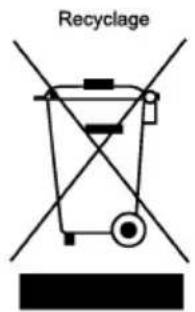
This product bears the selective sorting symbol for waste electrical and electronic equipment (WEEE).
This means that this product must be handled pursuant to European Directive 2002/96/EC in order to be recycled or dismantled to minimize its impact on the environment.
For further information, please contact your local or regional authorities.
Electronic products not included in the selective sorting process are potentially dangerous for the environment and human health due to the presence of hazardous substances.
- D
- INHALT
- 09-17
- PT INDICE 77-84
- SAFETY FIRST
- ELECTRICAL REQUIREMENTS
- WARNING! THIS APPLIANCE MUST BE EARTHED
- TRANSPORTATION INSTRUCTIONS
- IMPORTANT
- INSTALLATION INSTRUCTIONS
- SUGGESTED ARRANGEMENT OF FOOD IN THE LARDER FRIDGE
- TEMPERATURE CONTROL AND ADJUSTMENT
- BEFORE OPERATING
- AND NOTE THAT
- GETTING TO KNOW YOUR APPLIANCE
- DEFROSTING
- REPLACING THE INTERIOR LIGHT BULB
- CLEANING AND CARE
- NEVER
- REPOSITIONING THE DOOR
- DO'S AND DON'TS
- TROUBLE - SHOOTING
- IPEED HAUANOM 3KCNPYAATAUN
- 06PATHTE BHIMAHHE, YTO
- O3HAKOMJIEHNE C NP6OPOM (PNC.1)
- PA3MOPAXNBAHNE
- 3AMEHA LAMNOCKN BHYTPEHHERO OCBEUEHN
- YNCTKA N YXOA
- HNKORDA
- HTO HXHNO U YERO HEIB3A DEJATB
- IPECTAHOBKADBEPN
- YCTPAHHE HENOJAOK
Brand : BLOMBERG
Model : SOM 1651 XA
Category : Refrigerator