ManualGo.com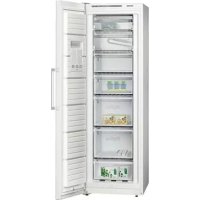
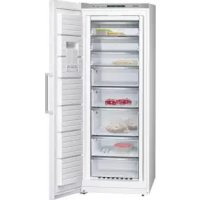
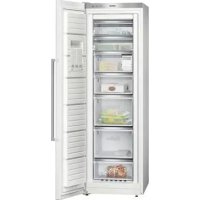
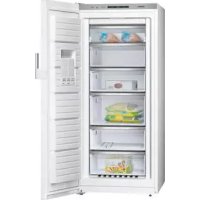
GS36VVW30 - Freezer SIEMENS - Free user manual and instructions
Find the device manual for free GS36VVW30 SIEMENS in PDF.


Download the instructions for your Freezer in PDF format for free! Find your manual GS36VVW30 - SIEMENS and take your electronic device back in hand. On this page are published all the documents necessary for the use of your device. GS36VVW30 by SIEMENS.
USER MANUAL GS36VVW30 SIEMENS
Safety and warning information 22
Information concerning disposal 25
Scope of delivery 26
Installation location 26
Connecting the appliance 27
Getting to know your appliance 28
Switching the appliance on 28
Setting the temperature 29
Freezer compartment 30
Max. freezing capacity 30
Freezing and storing food 31
Freezing fresh food 31
Thawing frozen food 33
Interior fittings 33
Switching off and disconnecting
Cleaning the appliance 34
Tips for saving energy 35
Operating noises 35
Eliminating minor faults yourself 36
Appliance self-test 37
Customer service 37fr Table des matières
electrical and electronic
enInstruction for Use
Before you switch ON the
Please read the operating and
installation instructions carefully!
They contain important
information on how to install,
use and maintain the appliance.
The manufacturer is not liable if
you fail to comply with the
instructions and warnings.
Retain all documents for
subsequent use or for the next
The appliance contains a small
quantity of environmentally
friendly but flammable
refrigerant R600a. Ensure that
the tubing of the refrigerant
circuit is not damaged during
transportation and installation.
Leaking refrigerant may cause
eye injuries or ignite.
If damage has occurred
■ Keep naked flames and/or
ignition sources away from the
■ thoroughly ventilate the room
for several minutes,
■ switch off the appliance and
pull out the mains plug,
■ inform customer service.
The more refrigerant an
appliance contains, the larger
the room must be in which the
appliance is situated. Leaking
refrigerant can form a
flammable gas-air mixture in
rooms which are too small.
The room must be at least 1 m³
per 8 g of refrigerant. The
amount of refrigerant in your
appliance is indicated on the
rating plate inside the appliance.
If the power cord of this
appliance is damaged, it must
manufacturer, customer service
or a similarly qualified person.
Improper installations
and repairs may put the user
at considerable risk.en
Repairs may be performed by
the manufacturer, customer
service or a similarly qualified
Only original parts supplied by
the manufacturer may be used.
The manufacturer guarantees
that only these parts satisfy the
safety requirements.
A extension cable may be
purchased from customer
■ Never use electrical
appliances inside the
appliance (e.g. heater, electric
ice maker, etc.). Explosion
■ Never defrost or clean the
appliance with a steam
cleaner! The steam may
penetrate electrical parts and
cause a short-circuit. Risk
■ Do not use pointed or sharp-
edged implements to remove
frost or layers of ice. You
could damage the refrigerant
tubes. Leaking refrigerant may
cause eye injuries or ignite.
■ Do not store products which
contain flammable propellants
(e.g. spray cans) or explosive
substances in the appliance.
■ Do not stand on or lean
heavily against base
of appliance, drawers
■ For defrosting and cleaning,
pull the mains plug out or
switch off the fuse. Do not pull
out the mains plug by tugging
■ Store high-percentage alcohol
tightly closed and standing up.
■ Keep plastic parts and the
door seal free of oil and
grease. Otherwise, parts and
door seal will become
■ Never cover or block the
ventilation openings of the
■ Avoiding placing children
and vulnerable people at
At risk are children, people
who have limited physical,
mental or sensory abilities, as
well as people who have
inadequate knowledge
concerning safe operation of
Ensure that children and
vulnerable people have
understood the hazards.
A person responsible for
safety must supervise or
instruct children and
vulnerable people who are
using the appliance.
Only children from 8 years
and above may use the
Supervise children who are
cleaning and maintaining the
Never allow children to play
■ Do not store bottled or
canned drinks (especially
carbonated drinks) in the
freezer compartment. Bottles
■ Never put frozen food straight
from the freezer compartment
Risk of low-temperature burns!
■ Avoid prolonged touching of
frozen food, ice or the
evaporator pipes, etc.
Risk of low-temperature burns!
Children in the household
■ Keep children away from
packaging and its parts.
Danger of suffocation from
folding cartons and plastic
■ Do not allow children to play
■ If the appliance features a
keep the key out of the reach
The appliance is suitable ■ for freezing food,■ for making ice. This appliance is intended for
use in the home and the home
The appliance is suppressed
according to EU Directive
The refrigeration circuit has
been checked for leaks.
This product complies with
the relevant safety regulations
for electrical appliances
This appliance is intended for
use up to a maximum height of
2000 metres above sea level.
Information concerning
* Disposal of packaging
The packaging protects your appliance
from damage during transit. All utilised
materials are environmentally safe and
recyclable. Please help us by disposing
of the packaging in an environmentally
Please ask your dealer or inquire at your
local authority about current means of
* Disposal of your old
Old appliances are not worthless
rubbish! Valuable raw materials can be
reclaimed by recycling old appliances.
Redundant appliances
1. Pull out the mains plug.
2. Cut off the power cord and discard
with the mains plug.
3. Do not take out the trays
and receptacles: children are
therefore prevented from climbing in!
4. Do not allow children to play with
the appliance once it has spent its
useful life. Danger of suffocation!
Refrigerators contain refrigerant
and gases in the insulation. Refrigerant
and gases must be disposed
of professionally. Ensure that tubing
of the refrigerant circuit is not damaged
prior to proper disposal.
This appliance is labelled in
accordance with European
Directive 2012/19/EU concerning
used electrical and electronic
appliances (waste electrical and
electronic equipment - WEEE).
The guideline determines the
framework for the return and
recycling of used appliances as
applicable throughout the EU.
After unpacking all parts, check for any
If you have any complaints, please
contact the dealer from whom you
purchased the appliance or our
The delivery consists of the following
■ Free-standing appliance
■ Interior fittings (depending on model)
■ Bag containing installation materials
■ Operating instructions
■ Installation manual
■ Customer service booklet
■ Warranty enclosure
■ Information on the energy
consumption and noises
Installation location
A dry, well ventilated room is suitable as
an installation location. The installation
location should not be exposed to direct
sunlight and not placed near a heat
source, e.g. a cooker, radiator, etc. If
installation next to a heat source is
unavoidable, use a suitable insulating
plate or observe the following minimum
distances from the heat source:
■ 3 cm to electric or gas cookers.
■ 30 cm to an oil or coal-fired cooker.
The floor of the installation location must
not give way; if required, reinforce floor. If
the floor is uneven, compensate with
A gap is not required between the
appliance and side wall. The containers
and shelves are still fully extendable.
If required, we recommend that you have
the door hinges changed over by our
customer service. You can find out the
costs for changing over the door hinges
from your appropriate customer service.
While changing over the door hinges,
ensure that the appliance is not
connected to the power supply. Pull out
the mains plug beforehand. To prevent
damaging the back of the appliance,
place adequate padding underneath.
Carefully place the appliance on its
If the appliance is placed on its back,
ensure that the wall spacer is not fitted.en
The appliance is designed for a specific
climate class. Depending on the climate
class, the appliance can be operated at
the following temperatures.
The climate class can be found on
the rating plate. Fig. *
The appliance is fully functional within
the room temperature limits
of the indicated climatic class. If
an appliance of climatic class SN
is operated at colder room temperatures,
the appliance will not be damaged up to
a temperature of +5 °C.
panel of the appliance heats up.
Conduction of the heated air must
not be obstructed. Otherwise,
the refrigerating unit must work harder.
This increases power consumption.
Therefore: Never cover or block
the ventilation openings!
After installing the appliance, wait at least
1 hour until the appliance is switched on.
During transportation the oil in
the compressor may have flowed into
the refrigeration system.
Before switching on the appliance for
the first time, clean the interior of
the appliance (see chapter “Cleaning
Electrical connection
The socket must be near the appliance
and also freely accessible following
installation of the appliance.
The appliance complies with the
protection class I. Connect the appliance
to 220–240 V/50 Hz alternating current
via a correctly installed socket with
protective conductor. The socket must
be fused with a 10 to 16 A fuse.
For appliances operated in non-
European countries, check whether the
stated voltage and current type match
the values of your mains supply. This
information can be found on the rating
Never connect the appliance
to electronic energy saver plugs.
Our appliances can be used with mains
and sine-controlled inverters. Mains-
controlled inverters are used
for photovoltaic systems which
are connected directly to the national
grid. Sine-controlled inverters must be
used for isolated applications (e.g. on
ships or in mountain lodges) which are
not connected directly to the national
SN +10 °C to 32 °C N +16 °C to 32 °C ST +16 °C to 38 °C T +16 °C to 43 °Cen
Getting to know your
Please fold out the illustrated last page.
These operating instructions refer
The features of the models may vary.
The diagrams may differ.
Switch on the appliance with the On/Off
A warning signal sounds. Temperature
display 2 is flashing.
Press the temperature setting button 4.
The warning signal switches off.
When the freezer compartment has
reached the set temperature, the
temperature display 2 is lit.
We recommend a factory setting of
-18 °C in the freezer compartment.
5 Freezer compartment flap
6 Frozen food container (small)
8 Frozen food container (large)
10 Height-adjustable feet
Serves to switch the whole
appliance on and off.
2 Temperature display
Indicates the set temperature of
the freezer compartment.
3 Display super freezing
Illuminates when super freezing is
4 Temperature selection button
The required temperature is set
■ When the appliance has been
switched on, it may take several hours
until the set temperatures have been
Do not put any food in the appliance
■ The sides of the housing are
sometimes heated slightly. This
prevents condensation in the area of
■ If the freezer compartment door
cannot be immediately re-opened after
it has been closed, wait until the
resulting low pressure has equalised.
The temperature can be set from
Keep pressing temperature setting
button 4 until the required freezer
compartment temperature is set.
The value last selected is saved. The set
temperature is indicated on temperature
The door alarm (continuous sound)
switches on if the appliance door is open
for longer than one minute. Close
the door to switch off the warning signal.
The temperature alarm switches on if the
freezer compartment is too warm and the
frozen food is at risk of thawing.
Temperature display, Fig. "/2, is
The alarm may switch on without any risk
■ when the appliance is switched on,
■ when large quantities of fresh food are
placed in the appliance,
■ if the freezer compartment door is
Do not refreeze thawing or thawed food.
Only ready meals (boiled or fried) may
No longer store the frozen produce for
the max. storage period.
Switching off the alarm
Press the temperature setting button 4 to
Information on the usable capacity can
be found inside your appliance on
the rating plate. Fig. *
Fully utilising the freezer
The maximum amount of food
can be placed in the freezer by removing
several fittings. The food can be stacked
directly on the freezer shelves.
To comply with the values
indicated on the rating plate, the fittings
at the very top and bottom should
remain in the appliance.
Removing the fittings
■ Pull out the frozen food container all
the way, lift at the front and remove.
■ Freezer compartment flap
1. Open freezer compartment flap
2. detach holder from one side
3. pull freezer compartment flap
forwards and remove from
4. detach holder from the other side
Use the freezer compartment
■ To store deep-frozen food.
■ To make ice cubes.
Ensure that the freezer compartment
door has been closed properly. If
the door is open, the frozen food will
thaw. The freezer compartment will
become covered in thick ice. Also: waste
of energy due to high power
Max. freezing capacity
Information about the max. freezing
capacity within 24 hours can be found
on the rating plate. Fig. *
Prerequisites for max. freezing
■ Switch on super freezing before
placing fresh products
in the compartment (see chapter
entitled “Super freezing”).
■ Remove the fittings. The food can be
stacked directly on the shelves and in
the bottom of the freezer
■ Freeze large quantities of food
preferably in the very top
compartment where food freezes
particularly quickly and therefore also
Freezing and storing
Purchasing frozen food
■ Packaging must not be damaged.
■ Use by the “use by” date.
■ Temperature in the supermarket
freezer must be -18 °C or lower.
■ If possible, transport deep-frozen food
in an insulated bag and place quickly
in the freezer compartment.
Note when loading products
■ Preferably freeze large quantities
of food in the top compartment, where
food freezes particularly quickly
and therefore also gently.
■ Place the food over the whole area
of the compartments or the frozen
Food which is already frozen must not
come into contact with the food which
is to be frozen. If required, move
the frozen food to the frozen food
■ To ensure air circulation in
the appliance, insert frozen food
container all the way.
Freeze fresh and undamaged food only.
To retain the best possible nutritional
value, flavour and colour, vegetables
should be blanched before freezing.
Aubergines, peppers, zucchini and
asparagus do not require blanching.
Literature on freezing and blanching
can be found in bookshops.
Keep food which is to be frozen away
from food which is already frozen.
■ The following foods are suitable for
Cakes and pastries, fish and seafood,
meat, game, poultry, vegetables, fruit,
herbs, eggs without shells, dairy
products such as cheese, butter and
quark, ready meals and leftovers such
as soups, stews, cooked meat and
fish, potato dishes, soufflés and
■ The following foods are not suitable
Types of vegetables, which are usually
consumed raw, such as lettuce or
radishes, eggs in shells, grapes,
whole apples, pears and peaches,
hard-boiled eggs, yoghurt, soured
milk, sour cream, crème fraîche and
To prevent food from losing its flavour
or drying out, place in airtight containers.
1. Place food in packaging.
3. Seal the wrapping.
4. Label packaging with contents
and date of freezing.
Plastic film, tubular film
made of polyethylene, aluminium foil,
These products are available
from specialist outlets.
Unsuitable packaging:
Wrapping paper, greaseproof paper,
cellophane, bin liners and used
Items suitable for sealing packaged
Rubber bands, plastic clips, string, cold-
resistant adhesive tape, etc.
Bags and tubular film
made of polyethylene can be sealed
with a film heat sealer.
Shelf life of frozen food
Storage duration depends on the type
At a temperature of -18 °C:
■ Fish, sausage, ready meals and cakes
■ Cheese, poultry and meat:
Food should be frozen solid as quickly
as possible in order to retain vitamins,
nutritional value, appearance and flavour.
Several hours before placing fresh food
in the freezer compartment, switch on
super freezing to prevent an unwanted
This appliance runs constantly
and the freezer compartment drops to
a very low temperature.
If the max. freezing capacity is to be
used, super freezing must be switched
on for 24 hours before the fresh produce
is placed in the freezer compartment.
Smaller quantities of food (up to 2 kg)
can be frozen without “super freezing”.
When super freezing is switched on,
increased operating noises may occur.
Switching on and off
Keep pressing the temperature selection
button 4 until the Super display 3 is lit.
Super freezing automatically switches off
after approx. 2½ days.en
Depending on the type and application,
select one of the following options:
■ at room temperature
■ in the refrigerator
■ in an electric oven, with/without fan
Do not refreeze thawing or thawed food.
Only ready meals (boiled or fried) may
No longer store the frozen produce for
the max. storage period.
For the storage of large frozen items,
e.g. turkey, duck and goose.
Fig. &/A To prevent the quality of the frozen food
from deteriorating, do not exceed the
storage duration. The storage period
depends on the type of produce. The
figures next to the symbols indicate
the permitted storage period of
the produce in months. In the case
of commercially available frozen food
observe the date of manufacture or use-
Fig. &/B If a power failure or malfunction occurs,
the ice packs can be used to slow down
the thawing process. The longest
storage time is obtained by placing
the ice pack on the food in the top
To save space, the ice pack can be
stored in the door compartment.
The ice packs can also be used to cool
food temporarily, e.g. in a cold bag.
1. Fill the ice cube tray ¾ full of drinking
water and place in the freezer
2. If the ice tray is stuck to the freezer
compartment, loosen with a blunt
implement only (spoon-handle).
3. To loosen the ice cubes, twist the ice
tray slightly or hold briefly under
Press the On/Off button 1.
Temperature display 2 goes out,
refrigeration unit switches off.en
Disconnecting the appliance
If you do not use the appliance
for a prolonged period:
1. Switch off the appliance.
2. Pull out mains plug or switch off fuse.
3. Clean the appliance.
4. Leave the appliance door open.
Approx. 4 hours before defrosting
the appliance, switch on super freezing
so that the food drops to a very low
temperature and can therefore be stored
at room temperature for a longer period.
1. Switch off appliance to defrost it.
2. Pull out mains plug or switch off fuse.
3. Place the freezer drawers containing
the food in a cool location. Place
the ice pack (if enclosed) on the food.
4. To collect the defrost water, place
a flat tray under the condensation
5. Open condensation outlet. Fig. )
place two pans of hot water on a trivet
7. When the freezer compartment has
defrosted, pour the water out
of the freezer drawer. Wipe any
remaining water off the bottom
of the freezer compartment with
8. Close condensation outlet.
9. When defrosting is complete, connect
and switch on the appliance again.
Cleaning the appliance
■ Do not use abrasive, chloride or acidic
cleaning agents or solvents.
■ Do not use scouring or abrasive
The metallic surfaces could corrode.
■ Never clean shelves and containers
The parts may become deformed!
Approx. 4 hours before cleaning
the appliance, switch on super freezing
so that the food drops to a very low
temperature and can therefore be stored
at room temperature for a longer period.
1. Before cleaning: Switch the appliance
2. Pull out the mains plug or switch off
3. Take out the frozen food and store
in a cool location. Place the ice pack
(if enclosed) on the food.
4. Clean the appliance with a soft cloth,
lukewarm water and a little pH neutral
5. Wipe the door seal with clear water
only and then wipe dry thoroughly.
6. After cleaning reconnect and switch
the appliance back on.
7. Put the frozen food back in the freezer
Tips for saving energy
■ Install the appliance in a dry, well
ventilated room! The appliance should
not be installed in direct sunlight
or near a heat source (e.g. radiator,
If required, use an insulating plate.
■ Do not block the ventilation openings
■ Allow warm food and drinks to cool
down before placing in the appliance.
■ Thaw frozen food in the refrigerator
compartment and use the low
temperature of the frozen food to cool
■ Open the appliance as briefly as
■ Ensure that the freezer compartment
door is always closed properly.
■ To avoid increased power
consumption, occasionally clean the
back of the appliance.
Fit wall spacers to obtain the indicated
energy rating of the appliance (see
Installation instructions). A reduced
wall gap will not restrict the function
of the appliance. The energy rating
may then increase slightly. The gap
of 75 mm must not be exceeded.
■ The arrangement of the fittings does
not affect the energy rating of the
Motors are running (e.g. refrigerating
Bubbling, humming or gurgling noises
Refrigerant is flowing through the tubing.
Motor, switches or solenoid valves are
The appliance is not level
Please align the appliance with a spirit
level. Use the height-adjustable feet
or place packing underneath them.
The appliance is not free-standing
Please move the appliance away
from adjacent units or appliances.
Containers or storage areas wobble
Please check the removable parts
and re-insert them correctly if required.en
Eliminating minor faults yourself
Before you call customer service:
Please check whether you can eliminate the fault yourself based on the following
Customer service will charge you for advice – even if the appliance is still under
Fault Possible cause Remedial action
Temperature differs greatly
In some cases it is adequate to switch off
the appliance for 5 minutes.
If the temperature is too high wait a few hours
and check whether the temperature has
approached the set value.
If the temperature is too low check
the temperature again the next day.
Displays do not illuminate. Power failure; the fuse has
been switched off; the mains
plug has not been inserted
Connect mains plug. Check whether the power
is on, check the fuses.
Warning signal sounds.
Temperature display flashes.
compartment is too warm!
Frozen food is at risk.
To switch off the warning signal, press the
temperature setting button, Fig. "/4.
Appliance is open. Close the appliance.
Ventilation openings have
Ensure that there is adequate ventilation.
Too much food was placed in
the freezer at once.
Do not exceed max. freezing capacity.
When the fault has been rectified, the
temperature display stops flashing.
Appliance is not cooling,
temperature display and light
Hold down temperature selection button
fig. "/4 for 10 seconds until
an acknowledgement signal sounds.
After a short time check whether your
appliance is cooling.en
Your appliance features an automatic
self-test program which shows you
sources of faults which may be repaired
by customer service only.
Starting the appliance self-test
1. Switch off the appliance and wait
2. Switch on the appliance and hold
down the temperature selection
button, Fig. "/4, for 3-5 seconds
within the first 10 seconds until
-26 °C is lit on the temperature
The self-test programme starts, when
the temperature displays lit up
When after a short time the appliance
displays the set temperature prior
to the self-test, everything is ok.
If the super display flashes for
10 seconds, an error has occurred.
Inform customer service.
Ending the appliance self-test
When the programme has ended, the
appliance switches over to normal
Your local customer service
can be found in the telephone directory
or in the customer-service index. Please
provide customer service
with the appliance product number
(E-Nr.) and production number (FD).
These specifications
can be found on the rating plate. Fig. *
To prevent unnecessary call-outs, please
assist customer service by quoting
the product and production numbers.
This will save you additional costs.
Repair order and advice
Contact information for all countries can
be found on the enclosed customer
electrical and electronic
electronic equipment - WEEE).
sode, yogurt, latte cagliato, panna
electronic equipment - WEEE).
yoghurt, dikke zure melk, zure room,