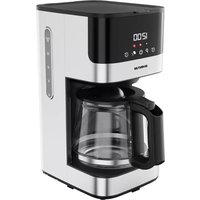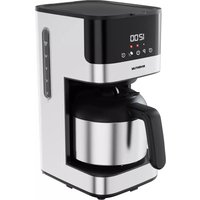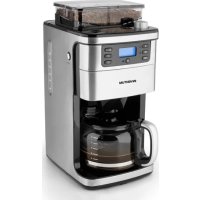
HK2B - Coffee machine INVENTUM - Free user manual and instructions
Find the device manual for free HK2B INVENTUM in PDF.



User questions about HK2B INVENTUM
0 question about this device. Answer the ones you know or ask your own.
Ask a new question about this device
Download the instructions for your Coffee machine in PDF format for free! Find your manual HK2B - INVENTUM and take your electronic device back in hand. On this page are published all the documents necessary for the use of your device. HK2B by INVENTUM.
USER MANUAL HK2B INVENTUM
natural_image
Green and black electric cream maker with white sugar cubes, accompanied by a glass of coffee and a plate of food items (no text or symbols visible)HK2
GEBRUIKSAANWIJZING - GEBRAUCHSANLEITUNG
MODE D'EMPLOI - INSTRUCTION MANUAL
NEDERLANDS

Legislation requires that all electrical and electronic equipment must be collected for reuse and recycling. Electrical and electronic equipment marked with the symbol indicating separate collection of such equipment must be returned to a municipal waste collection point.
DESCRIPTION OF THE APPLIANCE PAGE 19
- SAFETY INSTRUCTIONS PAGE 19
- BEFORE FIRST USE PAGE 20
- SAFETY VALVES PAGE 20
- OPENING AND CLOSING PAGE 20
- MAKING COFFEE PAGE 21
- PROBLEMS & SOLUTIONS PAGE 22
- CLEANING & MAINTENANCE PAGE 22
DESCALING PAGE 23
GUARANTEE & AFTER SALES SERVICE
PAGE 26
NEDERLANDS
text_image
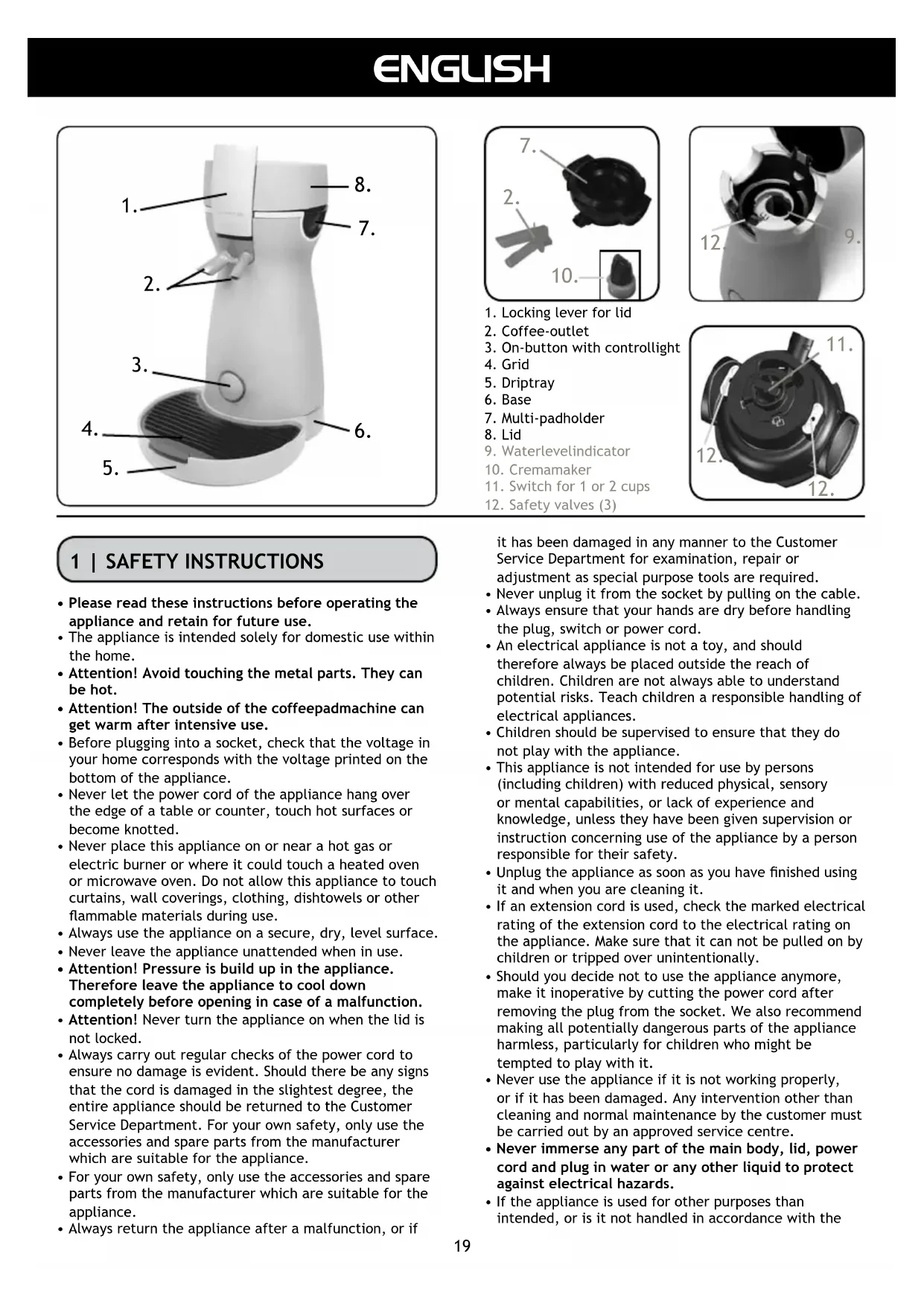
1. 2. 3. 4. 5. 6. 7. 8.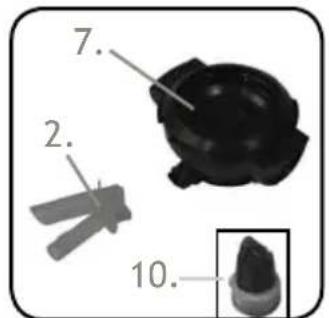
text_image
7. 2. 10.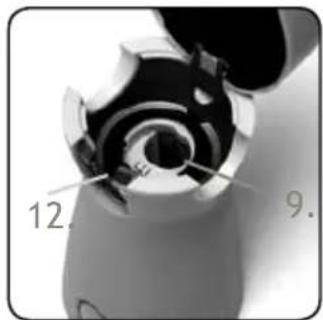
natural_image
Close-up of a mechanical component with numbered annotations (12 and 9), no readable text or symbols beyond labelsnatural_image
Close-up of a black cylindrical object with a rectangular clip, surrounded by white speech bubbles (no text or symbols)natural_image
Close-up of a hand using a tool to clean or adjust a black appliance (no visible text or symbols)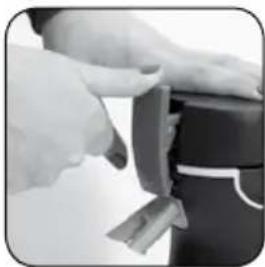
natural_image
Close-up of a hand using a tool to adjust or install a mechanical component (no visible text or symbols)natural_image
Close-up of a hand pouring liquid from a black bottle into a container (no text or symbols visible)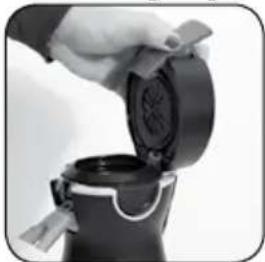
natural_image
Close-up of a hand opening a black cylindrical container with a lid, no visible text or symbolsnatural_image
Close-up of a hand interacting with a small electronic device (no visible text or symbols)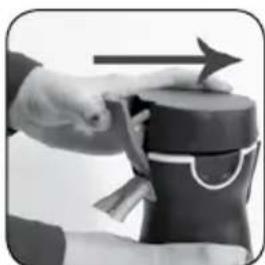
natural_image
Close-up of a hand pressing down on a black mechanical device with an arrow indicating motion (no text or symbols visible)natural_image
Close-up of a white mechanical component with a black X mark and a circular opening, no visible text or symbols.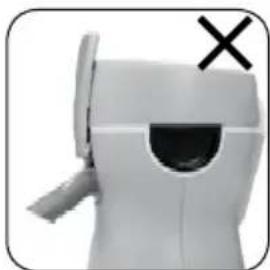
natural_image
Close-up of a white industrial machine with a black X mark indicating a defect or warning symbol (no text or symbols present)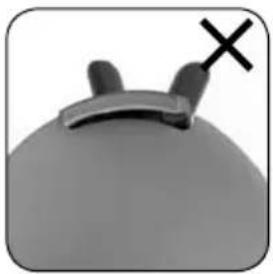
natural_image
Close-up of a gray dome-shaped object with a black X mark and two small protrusions on top (no text or symbols)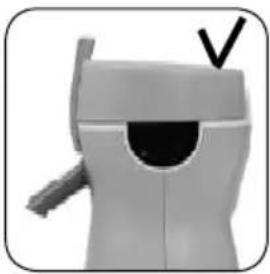
natural_image
3D rendered object resembling a stylized character or icon with a checkmark (no text or symbols)5 | KOFFIE ZETTEN
natural_image
Close-up of hands performing a massage or cleaning operation on a bottle (no visible text or symbols)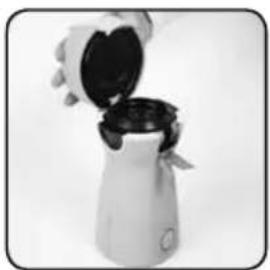
natural_image
White kitchen mixer with open lid and side panel, no visible text or symbolsnatural_image
Hand holding a black object with a white lid, possibly a kitchen or blender (no visible text or symbols)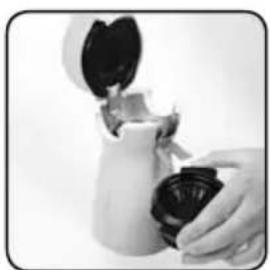
natural_image
Close-up of hands pouring liquid from a container into a bottle (no visible text or symbols)natural_image
Close-up of a hand holding a mechanical component with a curved pipe or rod inserted (no visible text or symbols)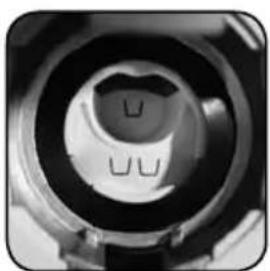
natural_image
Close-up of a mechanical component with concentric circular features and a central knob (no text or symbols visible)natural_image
Top-down view of a black plastic mechanical component with two side ports and a central hub (no text or symbols visible)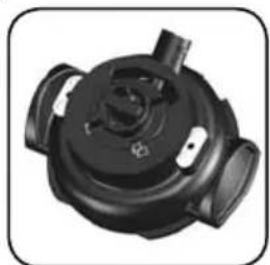
natural_image
Black plastic mechanical component with three ports and a central hub (no visible text or symbols)natural_image
Black and white photo of a small container with a cloth, next to a dark container (no visible text or symbols)natural_image
Hand pouring liquid into a white cylindrical container (no text or symbols visible)natural_image
Close-up of hands holding a white object with a dark circular opening, possibly a device or device (no visible text or symbols)natural_image
White and black product pump device with handle and base (no visible text or symbols)natural_image
White portable milk dispenser with a small cup on a black base (no visible text or symbols)natural_image
Close-up of a mechanical component with a circular flange and central shaft (no visible text or symbols)natural_image
Close-up of a black mechanical component with a white handle, shown in a simple view (no text or symbols visible)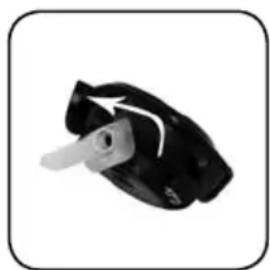
natural_image
Close-up of a black mechanical component with a white arrow pointing to its tip (no text or symbols visible)natural_image
Close-up of a black mechanical component with a circular feature and an arrow pointing to it (no visible text or symbols)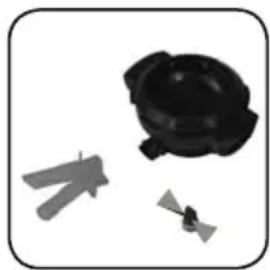
natural_image
Three small mechanical components or parts, one with a triangular tip and two others with arrows (no text or symbols visible)natural_image
Close-up of a black cylindrical object with a rectangular cutout and cloud-like annotations (no text or symbols)natural_image
Close-up of a hand using a kitchen tool to clean or prepare food (no visible text or symbols)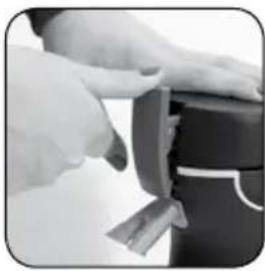
natural_image
Close-up of a hand using a tool to press down a black object (no visible text or symbols)natural_image
Close-up of a hand opening a black wristband device (no visible text or symbols)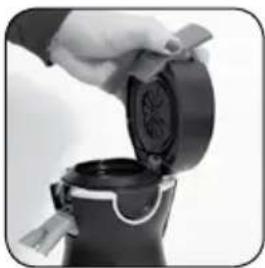
natural_image
Close-up of a hand inserting a small object into a black container (no visible text or symbols)natural_image
Close-up of a hand inserting a small object into a container (no visible text or symbols)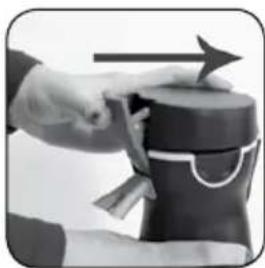
natural_image
Close-up of a hand pressing down on a black cylindrical object with an arrow indicating motion (no text or symbols visible)natural_image
Close-up of a white plastic container with a black X mark and a circular opening, no visible text or symbols.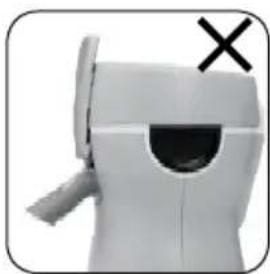
natural_image
Close-up of a white toilet with a black X mark on the lid, no visible text or symbols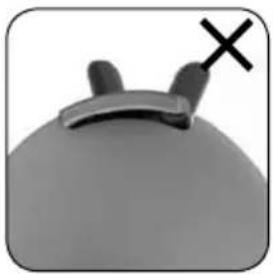
natural_image
Close-up of a gray dome-shaped object with a black X mark and a small protrusion on top (no text or symbols)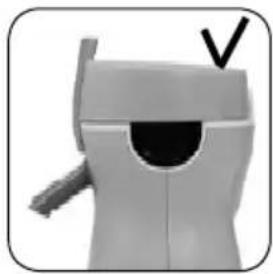
natural_image
Close-up of a mechanical component with a black checkmark and a V symbol (no text or labels)natural_image
Close-up of hands holding a small object with a black handle, no visible text or symbols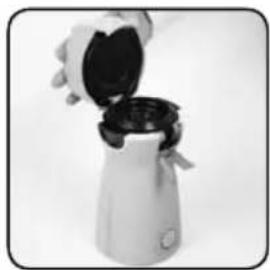
natural_image
White kitchen appliance with open lid and lid removed, no visible text or symbolsnatural_image
Hand holding a small container with a lid, no visible text or symbols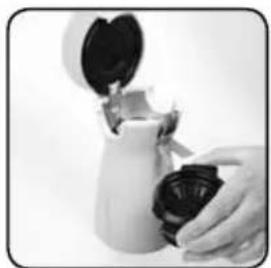
natural_image
Close-up of hands pouring liquid from a container into a white bottle (no text or symbols visible)natural_image
Close-up of a hand holding a transparent plastic bottle with a handle, against a tiled background (no text or symbols visible)
natural_image
Close-up of a circular mechanical component with internal markings (no readable text or symbols)natural_image
Close-up of a black mechanical component with three ports and a central hub, labeled '1 Tasse 2 Tassen' below (no other text or symbols)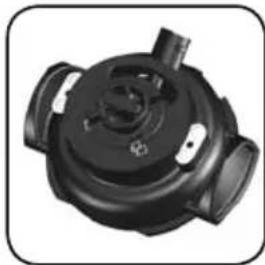
natural_image
Top-down view of a black plastic mechanical component with handles and central hub (no visible text or symbols)natural_image
Black and white photo of a small container with a cloth, next to a cylindrical container (no text or symbols visible)natural_image
Close-up of hands holding a small object, possibly a tool or device, with no visible text or symbols.natural_image
White kitchen brush with a black base and handle, no visible text or symbolsnatural_image
White portable milk dispenser with a small cup on a black base (no visible text or symbols)natural_image
Close-up of a black circular mechanical component with a metallic rim and flange (no text or symbols visible)natural_image
Close-up of a black mechanical component with a white protrusion, possibly part of a tool or device (no visible text or symbols)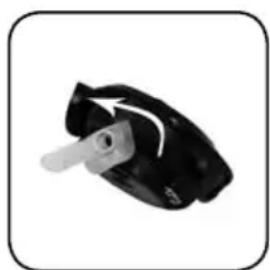
natural_image
Black and white photo of a handheld device with a white arrow pointing to its tip (no text or symbols visible)natural_image
Close-up of a black mechanical component with an arrow pointing to a small circular feature (no text or symbols visible)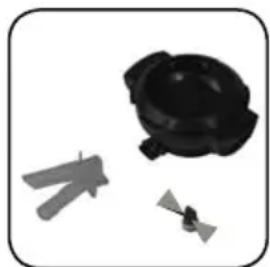
natural_image
Three mechanical components: a black circular component, a gray arrow icon, and a small triangular component (no text or symbols)natural_image
Close-up of a black cylindrical object with a rectangular clip, surrounded by white speech bubbles (no text or symbols)natural_image
Close-up of a hand using a tool to cut a black cylindrical object (no visible text or symbols)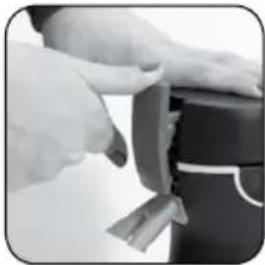
natural_image
Close-up of a hand holding a small mechanical component, possibly a tool or device (no visible text or symbols)natural_image
Close-up of a hand opening a black cylindrical device with a tassel, no visible text or symbols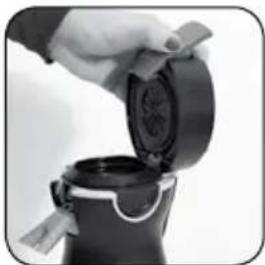
natural_image
Close-up of a hand pouring liquid into a black container (no visible text or symbols)natural_image
Close-up of a hand inserting a small object into a container (no visible text or symbols)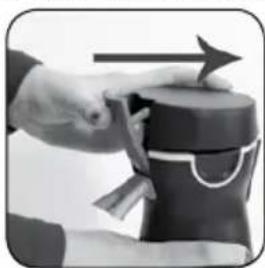
natural_image
Close-up of a hand holding a black object with an arrow indicating direction (no visible text or symbols)natural_image
White mechanical component with a black X mark and a circular opening, no visible text or symbols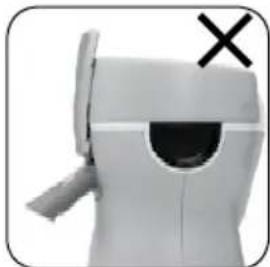
natural_image
Close-up of a white industrial machine with a black X mark and circular opening, no visible text or symbols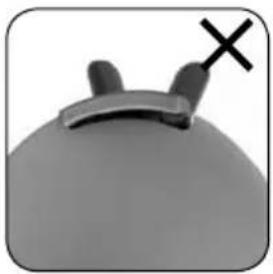
natural_image
Close-up of a gray dome-shaped object with a black X mark and two protruding clips (no text or symbols visible)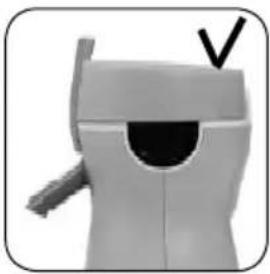
natural_image
3D rendered object resembling a toilet or sink with a checkmark and arrow (no text or symbols)5 | FAIRE DU CAFÉ
natural_image
Close-up of hands operating a small mechanical device with a black clip (no visible text or symbols)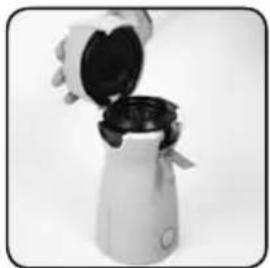
natural_image
White kitchen pot with lid open, showing interior contents (no text or symbols visible)natural_image
Hand pouring liquid into a small container (no visible text or symbols)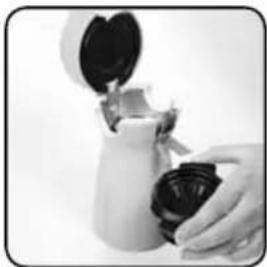
natural_image
Close-up of hands pouring liquid from a bottle into a container (no visible text or symbols)natural_image
Close-up of a hand washing a stainless steel sink with a pipe, no visible text or symbols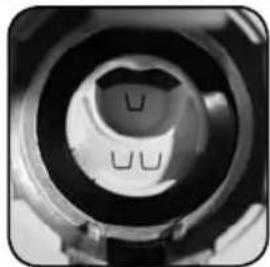
natural_image
Close-up of a mechanical component with concentric circular features and two U-shaped cutouts (no text or symbols visible)natural_image
Close-up of a black mechanical component with two side slots and a central hub (no text or symbols visible)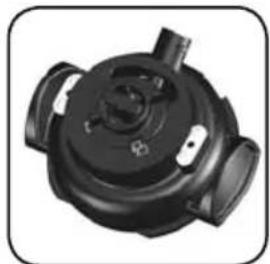
natural_image
Black mechanical component with three ports and a central hub (no visible text or symbols)natural_image
Black-and-white photo of a ceramic jar with a lid and a cloth, no visible text or symbolsnatural_image
Hand pouring liquid into a white kettle (no text or symbols visible)natural_image
Close-up of hands holding a white object with a black circular opening, no visible text or symbolsnatural_image
White and black product photo of a small hand mixer (no visible text or symbols)natural_image
White portable milk dispenser with a small cup, no visible text or symbols6 | PROBLÈMES & SOLUTIONS
natural_image
Close-up of a mechanical component with a black circular rim and reflective surface (no visible text or symbols)natural_image
Close-up of a black mechanical component with a white plastic tip, shown in a rounded corner (no text or symbols visible)
natural_image
Close-up of a black mechanical component with a white arrow pointing to its side (no text or symbols visible)natural_image
Close-up of a black mechanical component with a white arrow pointing to a circular feature (no text or symbols visible)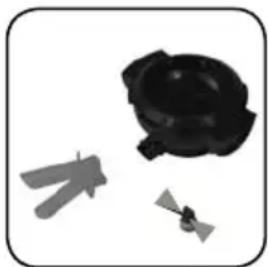
natural_image
Three abstract mechanical components or parts, one large black object with a curved top, two small gray arrows and one small triangular component (no text or symbols)-
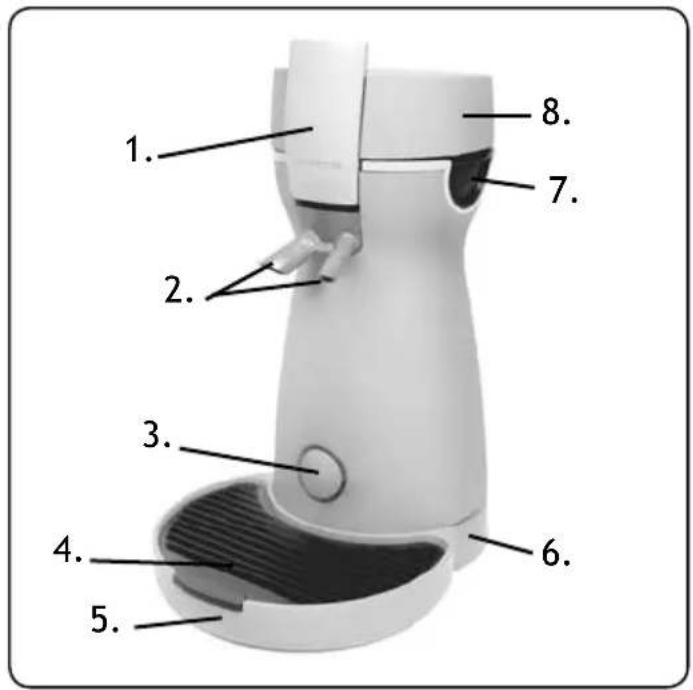
Locking lever for lid
-
Coffee-outlet
-
On-button with controllight
-
Grid
-
Driptray
-
Base
-
Multi-padholder
-
Lid
-
Waterlevelindicator
-
Cremamaker
-
Switch for 1 or 2 cups
-
Safety valves (3)
text_image
11. 12. 12.1 | SAFETY INSTRUCTIONS
- Please read these instructions before operating the appliance and retain for future use.
- The appliance is intended solely for domestic use within the home.
- Attention! Avoid touching the metal parts. They can be hot.
- Attention! The outside of the coffeepadmachine can get warm after intensive use.
- Before plugging into a socket, check that the voltage in your home corresponds with the voltage printed on the bottom of the appliance.
- Never let the power cord of the appliance hang over the edge of a table or counter, touch hot surfaces or become knotted.
- Never place this appliance on or near a hot gas or electric burner or where it could touch a heated oven or microwave oven. Do not allow this appliance to touch curtains, wall coverings, clothing, dishtowels or other flammable materials during use.
• Always use the appliance on a secure, dry, level surface. - Never leave the appliance unattended when in use.
- Attention! Pressure is build up in the appliance. Therefore leave the appliance to cool down completely before opening in case of a malfunction.
- Attention! Never turn the appliance on when the lid is not locked.
- Always carry out regular checks of the power cord to ensure no damage is evident. Should there be any signs that the cord is damaged in the slightest degree, the entire appliance should be returned to the Customer Service Department. For your own safety, only use the accessories and spare parts from the manufacturer which are suitable for the appliance.
- For your own safety, only use the accessories and spare parts from the manufacturer which are suitable for the appliance.
• Always return the appliance after a malfunction, or if
it has been damaged in any manner to the Customer Service Department for examination, repair or adjustment as special purpose tools are required.
- Never unplug it from the socket by pulling on the cable.
• Always ensure that your hands are dry before handling the plug, switch or power cord.
- An electrical appliance is not a toy, and should therefore always be placed outside the reach of children. Children are not always able to understand potential risks. Teach children a responsible handling of electrical appliances.
• Children should be supervised to ensure that they do not play with the appliance.
- This appliance is not intended for use by persons (including children) with reduced physical, sensory or mental capabilities, or lack of experience and knowledge, unless they have been given supervision or instruction concerning use of the appliance by a person responsible for their safety.
- Unplug the appliance as soon as you have finished using it and when you are cleaning it.
- If an extension cord is used, check the marked electrical rating of the extension cord to the electrical rating on the appliance. Make sure that it can not be pulled on by children or tripped over unintentionally.
- Should you decide not to use the appliance anymore, make it inoperative by cutting the power cord after removing the plug from the socket. We also recommend making all potentially dangerous parts of the appliance harmless, particularly for children who might be tempted to play with it.
- Never use the appliance if it is not working properly, or if it has been damaged. Any intervention other than cleaning and normal maintenance by the customer must be carried out by an approved service centre.
- Never immerse any part of the main body, lid, power cord and plug in water or any other liquid to protect against electrical hazards.
- If the appliance is used for other purposes than intended, or is it not handled in accordance with the
instruction manual, the full responsibility for any consequences will rest with the user. Any damages to the product or other things are not covered by the warranty.
2 | BEFORE FIRST USE
Before you use the appliance for the first time, please do as follows: Carefully unpack the appliance and remove all the packaging material. Keep the material (plastic bags and cardboard) out of reach of children. Check the appliance after unpacking for any damage, possible from transportation. Place the appliance on a flat and stable surface.
Clean the outside of the appliance with only a damp cloth and dry it with a dry cloth. Clean the parts: the multi-padholder, the grid and the driptray with warm water and some washing up liquid. Make sure the parts are dry before use. For an extended explanation please read the instructions in chapter: Cleaning & Maintenance. Before plugging into a socket, check that the voltage in your home corresponds with voltage printed on the appliance.
3 | SAFETY VALVES
CAUTION: It is essential that the lid is properly closed.
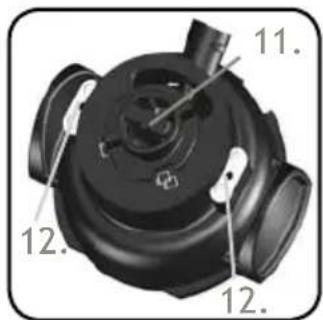
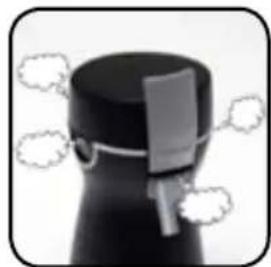
The Cafémezzo makes coffee by means of steam pressure, which builds up by boiling water within the metal boiler. This steam pressure presses the water through the coffee. However, when the crema maker is clogged, the steam pressure cannot release itself. To ensure a safe product in any situation, the Cafémezzo is executed with three individual safety valves. The safety valves are all located in the pad holder. The pictures on page 19 indicate the location of the three safety valves.
When the crema maker is clogged by for example loose coffee grind, the appliance will expel the steam through the three safety valves. You will recognize this, because of a whistling sound and steam expelling from different places under the lid.
natural_image
Close-up of a black cylindrical object with a rectangular clip, surrounded by white speech bubbles (no text or symbols)Please remove the appliance from its base or remove the plug from its socket. The appliance will cool down and the steam pressure extinguishes. When the pressure is gone, you can open the appliance and clean the crema maker as described on page 22 and 23.
Caution: the appliance has a safety lock. The safety lock will only release and therewith the machine can only be opened after all the steam pressure has extinguished.
4 | OPENING AND CLOSING
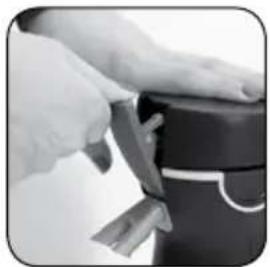
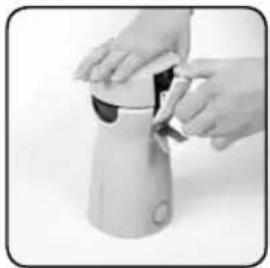
Take note of the following pictures for easy opening and closing your coffeepadmachine.
natural_image
Close-up of a hand using a tool to clean or adjust a black appliance (no visible text or symbols)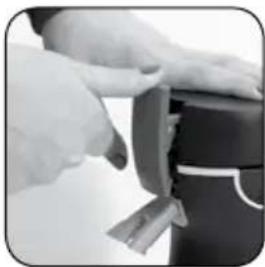
natural_image
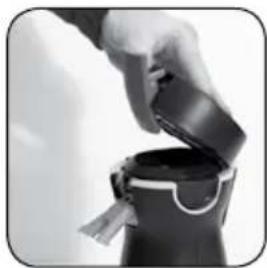
Close-up of hands using a tool to adjust or install a mechanical component (no visible text or symbols)Pull the locking lever towards you. Push the locking lever down to unlock it completely.
natural_image
Close-up of a hand opening a black cylindrical device with a handle, no visible text or symbols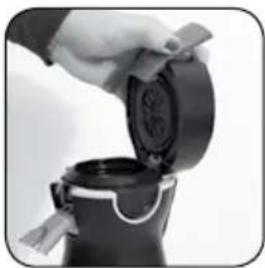
natural_image
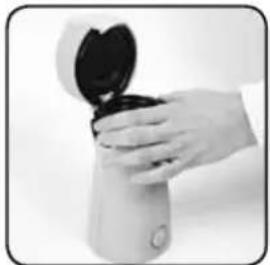
Close-up of a hand opening a black cylindrical device with a lid, no visible text or symbolsNow open the lid and push it straight up. A hard click indicates that you have opened the lid completely. The lid will now stay open without you having to hold it. You can now easily fill the coffeepadmachine under the tap.
natural_image
Close-up of a hand inserting a small object into a container (no visible text or symbols)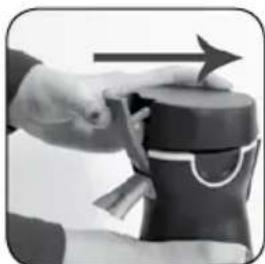
natural_image
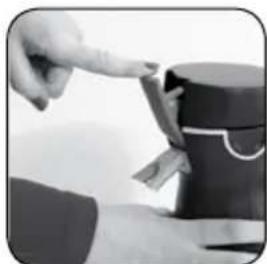
Close-up of a hand pressing down on a black cylindrical object with an arrow indicating motion (no text or symbols visible)To close the coffeepadmachine, push the lid downwards. Lock the lid by pushing the locking lever downwards. Make sure the snap of the locking lever is engaged correctly. Now push the locking lever towards the coffeepadmachine to lock the lid completely. Attention! Check whether the lid is properly locked. Otherwise steam can escape through the lid.
See the pictures below how NOT to close the lid.

natural_image
Close-up of a white mechanical component with a black X mark and a circular cutout, no visible text or symbols.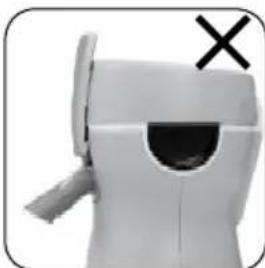
natural_image
White toilet with a double-headed X mark and a handle, no visible text or symbols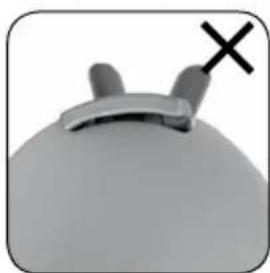
natural_image
Close-up of a metallic clip with a black X mark on the top edge (no text or symbols)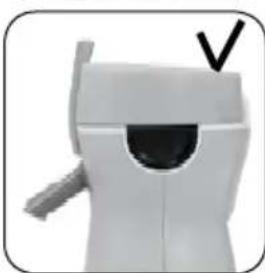
natural_image
Close-up of a white mechanical component with a black checkmark and a curved handle (no text or symbols visible)5 | MAKING COFFEE
WARNING! Throw away the very first cup of coffee. It may contain residue from the production process.
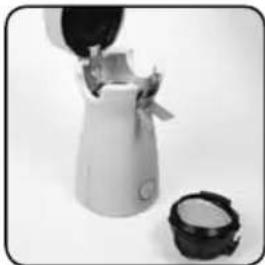
Take the coffeepadmachine from the base and place it on a stable surface.
natural_image
Close-up of hands operating a small black device with a handle, no visible text or symbols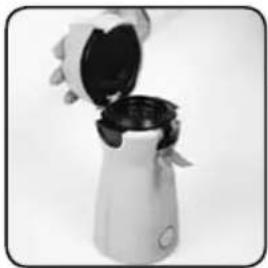
natural_image
White kitchen blender with open lid and black interior (no text or symbols visible)Open the lid. When you open the lid completely you will hear a click!
natural_image
Hand holding a small white object with a lid, possibly a kitchen or blender (no visible text or symbols)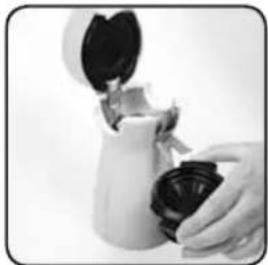
natural_image
Close-up of hands pouring liquid from a bottle into a container (no visible text or symbols)Take the multi-padholder out of the coffeepadmachine.
natural_image
Close-up of a hand holding a water dispenser with a glass arc, no visible text or symbols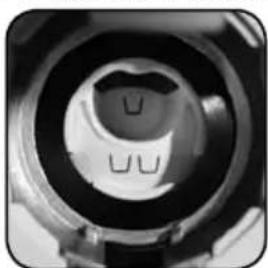
natural_image
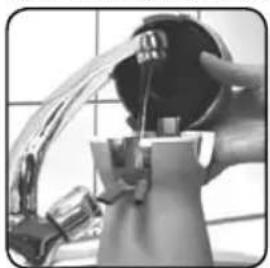
Close-up of a circular mechanical component with internal markings (no readable text or symbols)Fill the coffeepadmachine slowly under the tap with cold water. Check the waterlevel in the reservoir. Put, if necessary, extra water in.
until mark = 125 ml for 1 cup until mark = 250 ml for 2 cups or a large mug or as much as you wish - max. 250 ml
natural_image
Top-down view of a black plastic cup with handles and a central vent (no text or symbols visible)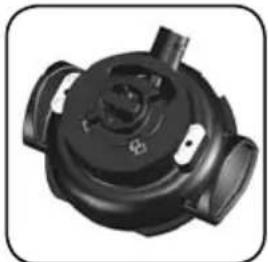
natural_image
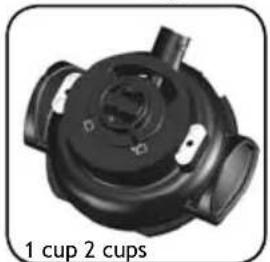
Top-down view of a black plastic mechanical component with three ports and a central hub (no visible text or symbols)Turn the switch on the bottom of the padholder to the number of cups you wish to make.
For 2 cups turn the switch to the left (locked). For 1 cup turn the switch loose to the right. An opening in the knob will show you which position the padholder has.
natural_image
Close-up of a white blender being poured into a black cup (no text or symbols visible)Place 1 coffeepad for 1 cup with the round side downwards in the multi-padholder or 2 coffeepads for 2 cups.
Do not use holders for grounded coffee or tea.

natural_image
Hand holding a white container with a black lid, no visible text or symbolsPlace the multi-padholder in the coffeepadmachine.
natural_image
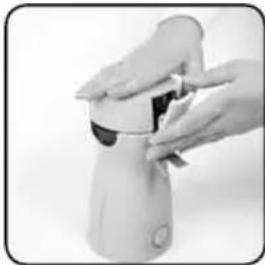
Close-up of hands holding a small object, possibly a device or tool, with no visible text or symbols.Close the lid and lock it tight. WARNING! Check if the lid is properly locked. Otherwise steam can escape through the lid.

text_image
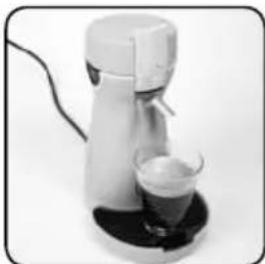
Place the coffeepadnmachine on the base and plug it into a socket. Press it on with the On-button. The controllight will light up.
natural_image
White and black electric shaver with a small glass cup, no visible text or symbolsPlace 1 or 2 cups on the grid under the coffee-outlet, depending on the numbers of pads you have placed in the multi-padholder.
The coffeepadmachine will now heat up the water. When it is ready, it will make the coffee. This works automatically and cannot be stopped. Unless the coffeepadmachine is taken from the base or unplugged. ATTENTION! Pressure is build up in the appliance. Therefore leave the appliance to cool down completely before opening in case of a malfunction.
As soon as the coffee making is finished, the coffeepadmachine will automatically shut off. Attention! Rinse the pad holder after each cup of coffee you make before you make another cup of coffee.
In this coffeepadmachine it is also possible to use not only the regular coffeepads, but also regular teapads. With the multi-padholder you can also choose 1 or 2 teapads. If you wish to make tea with this coffeepadmachine, we advise to remove the cremamaker from the multi-padholder and rinse the multi-padholder with warm water. If you don't do this, you will get foam on your tea.
After using pads which contain milk(powder), for instance cappuccino-pads, you must thoroughly clean the cremamaker to prevent clogging.
Because of its low voltage of 800 Watts and compact shape, this coffeepadmachine is extremely suited to take along on a holiday.
When something unexpected happens while making coffee (e.g. because the pads are not placed correctly), take the coffeepadmachine of the base and the device will immediately shut off. Attention: if you place the device back on the base it will restart. You can leave the appliance on the base because the light will automatically go out. You can also place the device next to the base until the next use.
6 | PROBLEMS & SOLUTIONS
When a problem occurs with the coffeepadmachine, read the following instructions for a solution.
Attention! Pressure is build up in the appliance. Therefore leave the appliance to cool down completely before opening in case of a malfunction.
| Problem |
| Steam comes through the rim of the lid. |
| Causes |
| 1. The lid is not properly locked. |
| 2. The pads are not placed correctly. |
| 3. The cremamaker is clogged. |
| Solutions |
| Take the appliance from the base and leave it to cool down. ATTENTION! Pressure is build up in the appliance. Therefore leave the appliance to cool down completely before opening in case of a malfunction. After cooling, open the lid, refill the water and if necessary replace a pad.Check the cremamaker for obstructions. Pierce the holes in the cremamaker with a needle. For extended instructions read the chapter CLEANING & MAINTENANCE.Lock the lid properly. Read chapter MAKING COFFEE for more instructions. |
| Problem |
| No crema (foam) on the coffee. |
| Causes |
| The cremamaker is not placed on the multi-padholder. |
| The cremamaker is clogged. |
| Solutions |
| Place the cremamaker on the multi-padholder. |
| Check the cremamaker for obstructions. Pierce the holes in the cremamaker with a needle. For extended instructions read the chapter CLEANING & MAINTENANCE. |
| Problem |
| The coffeepadmachine doesn’t work. |
| Causes |
| 1. The appliance is not plugged in. |
| 2. The appliance is not placed correctly on the base. |
| 3. The fuse in the fuse box has blown. |
| Solutions |
| 1. Plug the appliance in. |
| 2. Place the appliance correctly on the base. |
| 3. Check the fuses in the fuse box. |
| Problem |
| Too small amount of coffee. |
| Causes |
| The reservoir was not filled with enough water. |
| Solutions |
| Fill the reservoir slowly with water. Because of the divided reservoir the water will sink slowly to the bottom of the reservoir. Therefore wait after the first time you have filled the reservoir and always check a second time that the reservoir is filled with sufficient water for the number of cups you want to make. Fill, if necessary, the reservoir with the needed amount of water. |
If your problem is not solved, please contact our technical department or return the coffeepadmachine to your supplier.
7 | CLEANING & MAINTENANCE
We advise to clean the coffeepadmachine on a regular bases. Regular cleaning will prolong the life of your appliance and will guarantee optimal brewing results.
Please do as follows:
Check before cleaning if the appliance is unplugged.
natural_image
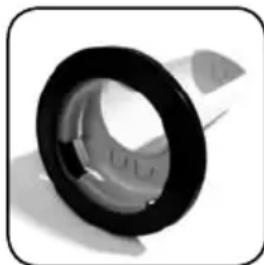
Close-up of a mechanical component with a circular opening and flange (no visible text or symbols)Clean the outside of the appliance with only a damp cloth and dry it with a dry cloth. Take the coffeepadmachine from the base. Open the lid and take the multi- padholder and if necessary the waterlevelindicator (see: picture) out of the coffeepadmachine.
Take the grid from the driptray and remove the driptray from the base. Clean the multi-padholder, the grid, the driptray with warm water and some washing up liquid. These parts can also be cleaned in the dishwasher.
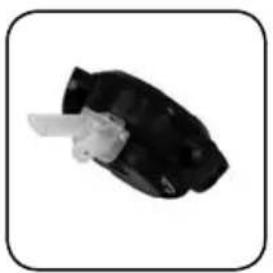
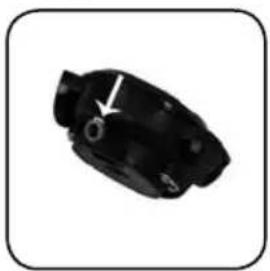
To prevent the cremamaker on the multi-padholder from getting clogged, pierce the holes regularly with a needle.
natural_image
Close-up of a black mechanical component with a white protrusion, possibly part of a tool or connector (no visible text or symbols)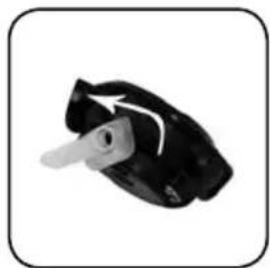
natural_image
Close-up of a black mechanical component with a white arrow pointing to a specific part (no text or symbols visible)Twist the coffee outlet left and remove it from the multi-padholder. Remove the creamamaker from the multi-padholder.
natural_image
Close-up of a black mechanical component with a white arrow pointing to a circular feature (no text or symbols visible)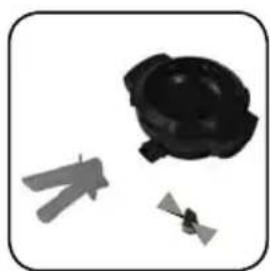
natural_image
Simple diagram showing a black mechanical component with an arrow pointing to it and a small gray object below (no text or symbols)On the back of the cremamaker you will see two small holes (◀) which you can pierce with a needle. See the pictures. Place the cremamaker with the nodge on top back into the multi-padholder. Place and twist the coffee outlet back onto the multi-padholder.
After using pads which contain milk(powder), for instance cappuccino-pads, you must thoroughly clean the cremamaker to prevent clogging.
Make sure that all the separate parts are dry before use. Place the parts back in the coffeepadmachine and on the base.
Never use any abrasives for cleaning the appliance and the parts. Never immerse any part of the main body, the base, power cord and plug in water or any other liquid to protect against electrical hazards.
DESCALING
We advise to descale your coffeepadmachine on a regular bases. The period depends on the condition of your water and the frequency of use. We advise to descale the coffeepadmachine approx. every three months. You can use a special descalingproduct for coffeemachines.
When you use a descalingproduct especially for coffeemachines, you will have to follow the instructions on the package of the descalingproduct accordingly.
- Fill the waterreservoir of the coffeepadmachine according the instructions on the package of the descalingproduct and leave it to soak for 5 minutes.
- Place if necessary a new or used coffeepad in the multi-padholder with the bulging side down and press it lightly. The coffeepad machine will be better descaled when you do this and it cannot be clogged with descalingbits.
- Close and lock the lid properly.
- Place the coffeepadmachine on the base and press it on with the On-button.
- Place a large mug or bowl under the coffee-outlet to hold the descalingmixture.
• The coffeepadmachine will now heat up and the descalingmixture will flow through the machine out of the outlet. - The coffeepadmachine will automatically shut off when the waterreservoir is empty.
• After the descaling you will have to rinse the machine upto 3 times with 250 ml of fresh cold water to make sure that there is no descaling product left behind in the coffeepadmachine to avoid a bad taste to the coffee.
Attention! If you haven't used the coffeepadmachine for a while, for instance if you have been away on a holiday, you should remove all the separate parts for cleaning and rinse the coffeepadmachine with fresh water. Place the cleaned parts in the machine. This prevents an additional taste.
GARANTIE & SERVICE
- This product is guaranteed for a period of 2 years from the date of purchase against mechanical and electrical defect.
-
Guarantee can only be given if proof of purchase (e.g. till receipt) can be shown. Therefore keep it in a safe place. The guarantee period starts at date of purchase.
• Guarantee is not valid in case of: -
normal wear;
- damage through misuse use or when the instructions were not followed correctly;
- lack of maintenance;
- not following the operation- and safety instructions;
- incompetent montage or repairs made by yourself or others;
- using accessories and spare parts which are not suitable for the appliance; for assessment by our technical department.
• The guarantee is not valid for:
- normal wear;
- external cables;
- (interchangeable) signal- and controllamps for assessment by our technical department.
Return to your supplier of send the appliance, including a copy proof of purchase and description of the complaint, stamped to:
Inventum Holland BV
new E.T.P. bvba
Generatorstraat 17
Passtraat 121
3903 LH VEENENDAAL
9100 Sint Niklaas
THE NETHERLANDS
BELGIUM
AVC Service GmbH
Höhenstrasse 24
70736 Fellbach
GERMANY
- Pack it carefully (preferably in the original carton). Ensure unit is clean.
- Enclose your name and address and quote model number on all correspondence.
When the guarantee is no longer valid or when the period of guarantee has passed, we will charge any costs that flow out of an assessment and/or repairing.
On request we will supply a statement before repairing. Without requesting a statement, we assume that you, by sending the appliance, automatically order to repair the appliance.
A guarantee period of two months is valid for repairs done by our technical department and the used spare parts, counting from the repairdate. When a malfunction occurs within this period which directly flows out of the repairs and the used spare parts, the consumer has the right of repairs without any costs.
Inventum Holland BV