
GHW67BK - Range hood GLEM - Free user manual and instructions
Find the device manual for free GHW67BK GLEM in PDF.



| Product type | Extractor hood |
| Brand | GLEM |
| Model | GHW67BK |
| Installation | Wall-mounted above a cooking hob |
| Operating modes | External extraction or internal recirculation (with charcoal filters) |
| Number of speeds | 3 |
| Lighting | LED bulbs (2 W) |
| Power supply | 220-240 V, 50-60 Hz (check the rating label) |
| Minimum safety distance | 40 cm (electric hob), 50 cm (gas/mixed), 65 cm for grease filter |
| Grease filters | Metal, washable every 3-4 weeks (dishwasher safe) |
| Charcoal filters | For recirculation version, not washable, replace every 3 months |
| Connection diameter | 150 mm (150/120 mm reducer provided) |
| Maintenance | Clean with a damp cloth and mild detergent; avoid solvents, alcohol, abrasives |
| Safety | Disconnect before any operation; do not flambé under the hood; monitor deep fryers |
| Material | Stainless steel |
| Compliance | WEEE Directive 2002/96/EC |
| Manual available | French, English, German, Spanish, Italian (PDF format) |
Frequently Asked Questions - GHW67BK GLEM
User questions about GHW67BK GLEM
0 question about this device. Answer the ones you know or ask your own.
Ask a new question about this device
Download the instructions for your Range hood in PDF format for free! Find your manual GHW67BK - GLEM and take your electronic device back in hand. On this page are published all the documents necessary for the use of your device. GHW67BK by GLEM.
USER MANUAL GHW67BK GLEM
Carefully read the following important information regarding installation safety and maintenance. Keep this information booklet accessible for further consultations.
INSTALLING INSTRUCTIONS
This hood is prepared to be installed above a hob by fixing it to the wall. It can be installed in two ways:
- EXHAUST MODE: the kitchen vapours are purified by the metal anti-grease filters and carried outside through a ducting system.
- RECIRCULATING MODE: the kitchen vapours are purified by the metal anti-grease filters and an activated carbon filter, then conveyed back into the kitchen.
We suggest to have installation carried out by qualified personnel, in compliance with all the current regulations and in particular with the ones concerning air exhaust. The manufacturer cannot be held liable for damages caused by improper installation or if it has not been carried out according to the state-of-the-art.
SAFETY
The minimum distance between the supporting surface for the cooking equipment on the hob and the lowest part of the range hood must be not less than 40cm from electric cookers and 65cm from gas or mixed cookers. It is possible to install the hood so that the distance between the cooking top and the fats filter is not less than 65cm in the case of gas or mixed cookers. If the instructions for installation for the gas hob specify a greater distance, this must be adhered to. (Fig.10).
- If a connection tube composed of two parts is used, the upper part must be placed outside the lower part.
- Do not connect the cooker hood exhaust to the same conductor used to circulate hot air or for evacuating fumes from other
appliances generated by other than an electrical source.
- Take care when the cooker hood is operating simultaneously with an open fireplace or burner that depend on the air in the environment and are supplied by other than electrical energy, as the cooker hood removes the air from the environment which a burner or fireplace need for combustion. The negative pressure in the environment must not exceed 4 Pa (4x10 -5 bar).
- Provide adequate ventilation in the environment for a safe operation of the cooker hood. Follow the local laws applicable for external air evacuation.
- Use screws and screw anchors suitable for wall (e.g. reinforced cement, plasterboard) for the mounting of the cooker hood. Where screws and screw anchors are supplied ensure that they are suitable for the type of wall where the cooker hood is to be mounted.
COMPONENTS LIST > see Fig.2
MOUNTING THE COOKER HOOD TO THE WALL
- Drill holes A-B-C according to indications quoted in (fig.3).
- Hang the cooker hood on the wall using the drill holes A (Fig.5).
- Fasten the cooker hood using the fastening drill holes B (Fig.6).
- Connect the flange Y of 0150 mm (fig.2) to the discharge opening with a connecting tube.
If the apartment is equipped with an external 0120mm air duct, apply the reduction fitting provided. (do not carry out the above instructions for recirculating mode).
- Thread the upper chimney E to the inside of the lower chimney F; Insert them vertically on of the cooker hood body (Fig.7A).
- Affix the bracket Z (Fig.8) to the wall via the drill holes C.
- Slide the upper chimney E towards the top, locking it in with the appropriate screws in
the drill holes of the bracket Z previously affixed to the wall (fig.9).
RECIRCULATING MODE INSTALLATION
In order to transform your cooker hood from the exhaust version to the recirculating version, put the active carbon filters on each side of the motor, in the middle and turn them till the stop (fig.4).
ELECTRICAL CONNECTION
Check that the mains voltage complies with the one required by the hood. This is indicated on the plate that is applied inside the appliance.
OPERATING CHECKS
Check lights and motor start-up on all 3 speeds.
USE INSTRUCTIONS
Touch control on inox (Fig.1)
| ○ | Fan-off |
| First suction speed (minimum) | |
| Second suction speed (medium) | |
| Third suction speed (maximum) | |
| Light ON/OFF |
SAFETY INSTRUCTIONS
In certain circumstances electrical appliances may be a danger hazard.
- The hood has been designed to remove the kitchen smells; any other additional use
shall be regarded as non-intended.
- Aerate the room if other appliances that are not supplied by electrical power are being used while the hood is on.
- Do not leave the cooker on if it is not being used.
- Do not flambé food directly under the cooker hood to prevent the grease filter catching fire due to flames.
- Constantly check food frying to avoid that the overheated oil may become a fire hazard.
- Do not check the status of the filters while the cooker hood is operating.
- Do not touch the light bulbs after or during appliance use.
USE AND MAINTENANCE
It is recommended to switch on the appliance before cooking. It is also recommended to leave the appliance in operation for 10 minutes after cooking is terminated in order to completely eliminate cooking vapours and odours. The proper function of the cooker hood is conditioned by the regularity of the maintenance operations, in particular, the active carbon filter and the grease filter.
Clean the fan and other surfaces of the cooker hood regularly using a cloth moistened with denatured alcohol or non abrasive liquid detergent.
WARNING: unplug the appliance or switch off the circuit breaker before carrying out maintenance operations.
METAL ANTI-GREASE FILTERS (Fig.2M)
The metal anti-grease filters capture the grease particles of the vapours that develop during cooking, therefore they are subject to clogging according to the frequency of the use of the appliance.
In order to prevent fire hazard, it is recommended to clean the filter every 2 months by carrying out the following instructions:
- Remove the filters from the cooker hood and wash them in a solution of water and neutral liquid detergent, leaving to soak.
- Rinse thoroughly with warm water and
leave to dry.
The filters may also be washed in a dishwasher.
The aluminium panels may alter in colour after several washes. This is not cause for customer complaint nor replacement of panels.
ACTIVATED CARBON FILTERS (Fig.2L)
Recirculating mode only
The activated carbon filters purify the kitchen vapours, the air is then conveyed back into the kitchen.
The saturation of the active carbon filter depends on the frequency of use of the appliance, by the type of cooking and the regularity of cleaning the anti-grease filters. The filters are not washable nor re-useable and must be replaced at maximum every four months.
To assemble the carbon filter it is necessary to:
- remove the metal anti-grease filters (Fig.2M)
- rotate the 2 carbon filters to remove them (Fig.4)
REPLACING LAMPS
The hood is equipped with a lighting system based on LED technology. The LEDs guarantee an optimum lighting, a duration up to 10 times as long as the traditional lamps and allow to save 90% electrical energy.
For replacement, contact the technical service.
TECHNICAL SPECIFICATIONS
- STAINLESS STEEL STRUCTURE
- HOOD WITH TELESCOPIC FLUE WITH
ADJUSTABLEHEIGHT
-ELECTRICAL SYSTEM ACCORDING TO THE
INTERNATIONAL REGULATIONS
-3 OPERATING SPEEDS
-LIGHTING: 2 LED lamps (2W)
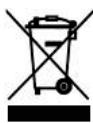
The European Directive 2002/96/EC on Waste Electrical and Electronic Equipment (WEEE), requires that old household electrical appliances must not be disposed of in the
normal unsorted municipal waste stream. Old appliances must be collected separately in order to optimise the recovery and recycling of the materials they contain and reduce the impact on human health and the environment. The crossed-out dustbin symbol on the product reminds you of your obligation regarding separated waste collection. Consumers should contact their local public service or their local dealer for more information on the correct disposal of exhausted household appliances.
THE MANUFACTURER DECLINES ALL RESPONSIBILITY FOR EVENTUAL DAMAGES CAUSED BY BREAKING THE ABOVE WARNINGS. THE WARRANTY IS NOT VALID IN THE CASE OF DAMAGE CAUSED BY FAILURE TO COMPLY WITH THE ABOVE WARNINGS.
ITALIANO
IT
GENERALITA
FILTRES AU CHARBON ACTIF (Fig.2L)
- INSTALLING INSTRUCTIONS
- SAFETY
- COMPONENTS LIST > SEE FIG.2
- MOUNTING THE COOKER HOOD TO THE WALL
- RECIRCULATING MODE INSTALLATION
- ELECTRICAL CONNECTION
- OPERATING CHECKS
- USE INSTRUCTIONS
- SAFETY INSTRUCTIONS
- USE AND MAINTENANCE
- METAL ANTI-GREASE FILTERS (FIG.2M)
- ACTIVATED CARBON FILTERS (FIG.2L)
- REPLACING LAMPS
- TECHNICAL SPECIFICATIONS
- ITALIANO
- IT
- GENERALITA
- FILTRES AU CHARBON ACTIF (FIG.2L)
Brand : GLEM
Model : GHW67BK
Category : Range hood