
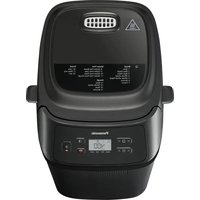
SD-R2530KXC - Bread maker PANASONIC - Free user manual and instructions
Find the device manual for free SD-R2530KXC PANASONIC in PDF.
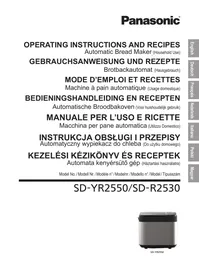


| Product type | Automatic bread machine |
| Brand | Panasonic |
| Model | SD-R2530KXC |
| Usage | Household |
| Dimensions (L x D x H) | 30 x 35 x 40 cm |
| Weight | 6.5 kg |
| Power supply | 220-240 V ~ 50/60 Hz, 600 W |
| Maximum bread capacity | 1.5 kg (large format) |
| Number of programs | 12 |
| Bread types | White, whole wheat, gluten-free, brioche, quick, etc. |
| Delay timer | Yes, up to 13 h |
| Keep warm | Up to 1 hour after baking |
| Knead only function | Yes |
| Jam function | Yes |
| Pizza dough function | Yes |
| Non-stick pan | Yes, PTFE coating |
| Viewing window | Yes |
| Automatic shut-off | Yes |
| Cleaning | Pan and kneading paddles dishwasher safe |
| Safety | Lid lock, overheat protection |
| Included accessories | Baking pan, kneading paddle, measuring cup, spoon, manual |
| Repairability | Repairability index 7.9/10 (estimate) |
Frequently Asked Questions - SD-R2530KXC PANASONIC
User questions about SD-R2530KXC PANASONIC
0 question about this device. Answer the ones you know or ask your own.
Ask a new question about this device
Download the instructions for your Bread maker in PDF format for free! Find your manual SD-R2530KXC - PANASONIC and take your electronic device back in hand. On this page are published all the documents necessary for the use of your device. SD-R2530KXC by PANASONIC.
USER MANUAL SD-R2530KXC PANASONIC
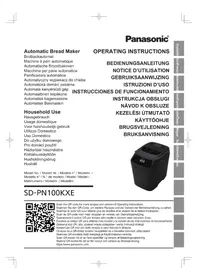
OPERATING INSTRUCTIONS AND RECIPES
Automatic Bread Maker (Household Use)
Thank you for purchasing the Panasonic product.
- For this product, there are 2 instructions. This is "OPERATING MANUAL AND RECIPES", the other one is "OPERATING INSTRUCTIONS" which includes content of Safety Precautions, Cleaning & Care and so on.
Please read 2 instructions carefully to use the product correctly and safely. - Before using this product please give your special attention to "Safety Precautions" and "Important Information" of "OPERATING INSTRUCTIONS". (P. GB2-GB5).
- This product is intended for household use only.
- Please keep 2 instructions for future use.
- Panasonic will not accept any liability if the appliance is subject to improper use, or failure to comply with these instructions.
Contents
Parts Names and Instructions. GB2
- Main Unit. GB2
- Accessories . GB2
Control Panel and Display . GB2
Bread-making Ingredients . GB3
Menu Charts and Baking Options.. .GB4
Handling Instructions . . . . . . . . . . . . . . . . . . . . . . . . . . . . . . . . . . . . . . . . . . . . . . . . . . . . . . . . . .
Before Use. .GB6
Preparations. .GB6
Baking Bread. GB7
Making Dough . GB7
Additional Ingredients . . . . . . . . . . . . . . . . . . . . . . . . . . . . . . . . . .
- Bread Mix & Bread Mix Raisin. GB8
Baking Brioche . GB9
- Sourdough & Sourdough Dough . . . . . . . . . . . . . . . . . . . . . . . . . . . . . . . . . . . . . . . . . . . . . . . . . . . . . . . . . . . . . . .
- Gluten Free Information. GB10
Baking Gluten Free Bread.. .GB10
Baking Gluten Free Cake . GB10
- Making Gluten Free Pizza / Gluten Free Pasta...GB11
Baking Cake . GB11
- Bake Only. GB12
- Making Jam / Compote. GB12
- Cake Kneading............GB13
- Bread Kneading ..... GB13
Rise . GB13
Recipes.. GB14
- Bread Recipes. GB14
- Gluten Free Recipes. GB16
Dough Recipes.. .GB16
Sweet Recipes.. .GB18 - Manual Recipes. GB19
Troubleshooting .GB20
Parts Names and Instructions
Main Unit

Kneading blade

Kneading blade (rye menu)
(SD-YR2550 only)
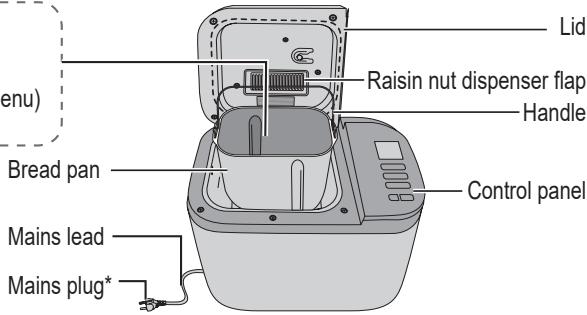
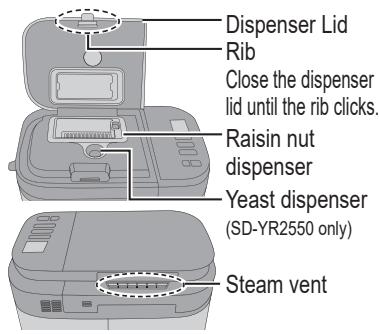
- The shape of mains plug may be different from illustration.
Accessories
Sourdough cup
To measure out liquids or make sourdough starter.
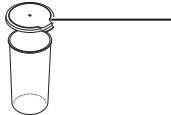
LIO
(max. 550 mL
- 10mL increments
Measuring spoon
To measure out sugar, salt, dry yeast, etc.
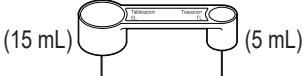
Tablespoon
1 / 2 marking
Teaspoon
1/4, 1/2, 3/4 markings
Sourdough starter spoon
To measure out sourdough starter yeast.

approx. 0.1g
Control Panel and Display
- Picture shows all words and symbols, but only those relevant will be displayed during operation.
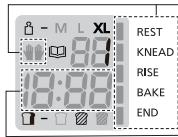

Operation status Displayed for the current stage of the program except Provide an indication of doing manual operation. (See P.GB4 - GB5 for menu number.)
Time showing Time remaining until ready.
- Menu required some manual steps, display will show the remaining time until starting its process after press ① button.
Menu Press or once to be a setting mode.
- Press or again to change Menu number.
(To advance more quickly, hold the button.) (See P. GB4 - GB5 for menu number.)
Size To choose the size.
Crust To choose the crust colour.
Timer Set delay timer (time until bread is ready).
For available menu, it can be set up to 13 hours (except menu sourdough only set up to 9 hours).
- Setting time for Sweet Menus.
Start To start the program.
Stop To cancel the setting / stop the program.
(Hold for approximately 1 second.)
Bread-making Ingredients
It is extremely important to use the correct measure of ingredients for best results.
Liquid ingredients
Use the sourdough cup or measuring spoon provided.
If the recipes indicate a mixture (the liquid plus egg), should be weighted on scales. Using digital scale is recommended.
Dry ingredients
Should be weighed on scales or measured with measuring spoon provided for the small amounts. Using digital scale is recommended.
Flour
Main ingredient of bread. The protein in flour forms gluten during kneading. Gluten provides structure and texture and helps the bread to rise.
Use strong flour. Strong flour is milled from the wheat and has a high content of protein which is necessary for the development of gluten.
Carbon dioxide produced during fermentation is trapped within the elastic network of gluten, thus making the dough rise.
White flour
Made by grinding wheat kernel, excluding bran and germ. The best kind of flour for baking bread is a flour marked "for bread baking". Do not use plain or self-raising flour as a substitute for bread flour.
Whole wheat flour
Made by grinding entire wheat kernel, including bran and germ. Makes very health-giving bread. This bread is lower in height and heavier than bread baked with white flour.
Rye flour
Made by grinding rye kernel. Contains more iron, magnesium and potassium, which contribute to good health.
Due to the low gluten content, it makes a dense, heavier bread.
Do not use more than stated quantity (could overload motor).
Dry yeast
Enables the bread to rise.
Be sure to use dry yeast that does not require pre-fermentation. Do not use yeast that requires preliminary fermentation. Dry yeast which has "Easy blend", "Fast Action" or "Easy Bake" written on the packet is recommended.
When using dry yeast from sachets, seal the sachet again immediately after use. To store, follow the Manufacturer's instructions and discard after 48 hours of opening. It is recommended on most yeast packets to keep in a cool dry place.
Dairy products
Add flavour and nutritional value.
- If you use milk instead of water, the nutritional value of the bread will be higher, but do not use in timer setting as it may not keep fresh overnight.
→ Reduce the amount of water proportionally to the amount of milk.
Sugar (granulated sugar, brown sugar, honey, treacle, etc.)
Food for the dry yeast, sweetens and adds flavour to the bread, changes the colour of the crust.
- Use less sugar if using raisins or other fruits, which contain fructose.
Water
Use normal tap water.
When room temperature is low, use tepid water for menu "Basic Rapid",
"Bread Mix", "Bread Mix Raisin", "Whole Wheat Rapid", "Rye", "Gluten
Free Bread" or "Gluten Free Pasta".
When room temperature is high, use chilled water for menu "Rye", "French" or "Brioche".
Always measure out liquids using the sourdough cup provided.
Salt
Improves the flavour and strengthens gluten to help the bread rise. The bread may lose size / flavour if measuring is inaccurate.
Fat
Adds flavour and softness to the bread.
Use butter (unsalted), margarine or oil.
You can make your bread taste better by adding other ingredients.
Eggs
Improve the nutritional value and colouring of the bread. (Water amount must be reduced proportionally.) Beat eggs when adding eggs. Do not use the timer for the recipe with egg.
(Eggs go rotten quickly if your room temperature is high.)
■ Bran
Increases the bread's fibre content.
- Use max. 50g (5 tbsp).
Wheat germ
Gives the bread a nuttier flavour.
- Use max. 50g (4 tbsp).
Spices, herbs
Enhance the flavour of the bread.
- Only use a small amount (max. 1 tbsp).
If using a bread mix...
Bread mixes including dry yeast
① Place the mix in the bread pan, then add water. (Follow instructions on the packet for the quantity of water)
② Select menu 5 or 6.
- With some mixes, it is not clear how much dry yeast is included, so some trial and error may be required to obtain optimum results.
Bread mix with separate dry yeast sachet
① First place the bread mix in the bread pan, then the water. Then place the measured dry yeast in the yeast dispenser.
(For SD-R2530, place the dry yeast in the bread pan first, then the bread mix, then the water.)
② Set the machine according to the type of flour included in the mix, and start the baking.
- White flour - recommended for menu 5, 6.
- Brown flour - menu 1
Whole wheat - menu 7 - Rye flour - menu 12 (SD-YR2550 only)
Baking brioche with brioche mix
Select the menu 10 or 2 - "Medium" size - "Light" crust colour.
Tips: The outcome differs depending on the type of mixed flour.
Menu Charts and Baking Options
Function Availability and Time Required
The machine stops or moves during process based on the operating program. Time required for each process will differ according to room temperature.
| Menu Number | Menu | Options | Processes | Remark | Refer. Page | ||||||||
| SD-YR2550 | SD-R2530 | Size | Crust | Timer | Rest | Knead | Rise | Bake | Total | ||||
| Bread | 1 | 1 | Basic | ✓ | ✓ | ✓ | 30-60 min | 20-30 min *4 | 1 h 50 min - 2 h 20 min | 50-55 min | 4 h - 4 h 5 min | — | P.GB6-GB7 |
| 2 | 2 | Basic Rapid | ✓ | ✓ | — | — | 15-20 min | 1 h 50 min - 2 h 20 min | 35-40 min | 1 h 55 min - 2 h | — | P.GB6-GB7 | |
| 3 | 3 | Basic Raisin | ✓ | ✓*1 | ✓ | 30-60 min | 15-30 min *4 | 1 h 50 min - 2 h 20 min | 50 min | 4 h | — | P.GB6-GB7 | |
| 4 | 4 | Basic Stuffed | ✓ | ✓ | ✓ | 30-60 min | 25-30 min *4 | 1 h 45 min - 2 h 10 min | 50-55 min | 4 h - 4 h 5 min | ✓ | P.GB6-GB7 | |
| 5 | 5 | Bread Mix | — | ✓ | — | — | 30 min *4 | 1 h 15 min | 45 min | 2 h 30 min | — | P.GB6, GB8 | |
| 6 | 6 | Bread Mix Raisin | — | ✓ | — | — | 30 min *4 | 1 h 15 min | 45 min | 2 h 30 min | — | P.GB6, GB8 | |
| 7 | 7 | Whole wheat | ✓ | — | ✓ | 1 h-1 h 40 min | 15-25 min *4 | 2 h 10 min - 2 h 50 min | 50 min | 5 h | — | P.GB6-GB7 | |
| 8 | 8 | Whole wheat Rapid | ✓ | — | — | 15-25 min | 15-25 min *4 | 1 h 30 min - 1 h 40 min | 45 min | 3 h | — | P.GB6-GB7 | |
| 9 | 9 | Whole wheat Raisin | ✓ | — | ✓ | 1 h-1 h 40 min | 15-25 min *4 | 2 h 10 min - 2 h 50 min | 50 min | 5 h | — | P.GB6-GB7 | |
| 10 | 10 | Brioche | — | ✓*1 | — | 20 min | 30-60 min *4 | 1 h 20 min-1 h 30 min | 45 min | 3 h 30 min | ✓ | P.GB6, GB9 | |
| 11 | 11 | French | — | — | ✓ | — | 20 min | 4 h 30 min | 50 min | 5 h 40 min | — | P.GB6-GB7 | |
| 12 | — | Rye | — | — | ✓ | 45-60 min | approx. 10 min | 1 h 20 min - 1 h 35 min | 1 h | 3 h 30 min | — | P.GB6-GB7 | |
| 13 | 12 | Sourdough | — | — | ✓*3 | 0-55 min | 45-55 min *5 | 2 h 25 min - 3 h 10 min | 55 min | 5 h | — | P.GB9 | |
| Gluten Free | 14 | 13 | Gluten Free Bread | — | ✓*2 | — | — | 20-25 min *7 | 35-40 min | 50-55 min | 1 h 50 min - 1 h 55 min | ✓ | P.GB6, GB10 |
| 15 | 14 | Gluten Free Cake | — | — | — | — | 20 min *6 | — | 1 h 30 min | 1 h 50 min | ✓ | P.GB6, GB10 | |
| 16 | 15 | Gluten Free Pizza | — | — | — | — | 20-25 min *7 | 5-10 min | — | 30 min | ✓ | P.GB6, GB11 | |
| 17 | 16 | Gluten Free Pasta | — | — | — | — | 15 min *7 | — | — | 15 min | ✓ | P.GB6, GB11 | |
- Abbreviations used in this instructions, a full name written as follows: min = minute (s); h = hour (s); approx. = approximately.
- Remark (): The menu is available to do manual operation such as adding extra ingredients and scraping the flour from sidewall of bread pan, when the beep sounds.
| Menu Number | Menu | Options | Processes | Remark | Refer. Page | ||||||||
| SD-YR2550 | SD-R2530 | Size | Crust | Timer | Rest | Knead | Rise | Bake | Total | ||||
| Dough | 18 | 17 | Basic | - | - | - | 30 - 50 min | 15 - 30 min *4 | 1 h 10 min - 1 h 30 min | - | 2 h 20 min | - | P.GB6 - GB7 |
| 19 | 18 | Basic Raisin | - | - | - | 30 - 50 min | 15 - 30 min *4 | 1 h 10 min - 1 h 30 min | - | 2 h 20 min | - | P.GB6 - GB7 | |
| 20 | 19 | Whole wheat | - | - | - | 55 min - 1 h 25 min | 15 - 25 min *4 | 1 h 30 min - 2 h | - | 3 h 15 min | - | P.GB6 - GB7 | |
| 21 | 20 | Whole wheat Raisin | - | - | - | 55 min - 1 h 25 min | 15 - 25 min *4 | 1 h 30 min - 2 h | - | 3 h 15 min | - | P.GB6 - GB7 | |
| 22 | 21 | Sourdough Dough | - | - | - | 0 - 40 min | 45 - 55 min *5 | 1 h 5 min - 1 h 35 min | - | 2 h 30 min | - | P.GB9 | |
| 23 | 22 | Sourdough Starter | - | - | - | - | - | 24 h | - | 24 h | - | P.GB9 | |
| 24 | 23 | Pizza | - | - | ✓ | (Knead) 10 - 18 min | (Rise) 7 - 15 min | (Knead) approx. 10 min | (Rise) approx. 10 min | 45 min | - | P.GB6 - GB7 | |
| Sweet | 25 | 24 | Cake | - | - | - | - | 20 min *6 | - | 1 h 35 min | 1 h 55 min | ✓ | P.GB6, GB11 |
| 26 | 25 | Bake Only | - | - | - | - | - | - | 30 min- 1 h 30 min | 30 min- 1 h 30 min | - | P.GB12 | |
| 27 | 26 | Jam | - | - | - | - | - | - | - | 1 h 30 min- 2 h 30 min | - | P.GB12 | |
| 28 | 27 | Compote | - | - | - | - | - | - | - | 1 h - 1 h 40 min | - | P.GB12 | |
| Manual | 29 | 28 | Cake Kneading | - | - | - | - | 20 min (default) | - | - | 1 - 20 min | - | P.GB13 |
| 30 | 29 | Bread Kneading | - | - | - | - | 20 min (default) | - | - | 1 - 20 min | - | P.GB13 | |
| 31 | 30 | Rise | - | - | - | - | - | 30 min (default) | - | 10 min - 2 h | - | P.GB13 | |
1 Only "Light" or "Medium" are available.
2 Only "Medium" or "Dark" are available.
3 Can be set up to 9 hours.
4 There is a period of rise during the knead period.
5 There is a period of rest during the knead period.
6 There is a period of scraping or molding during the knead period.
*7 There is a period of scrape off the flour.
Before Use
- For the first time use, remove packing material and clean the machine. (See P. GB8 of "OPERATING INSTRUCTIONS")
- Clean the machine when you have not used for a long time. (See P. GB8 of "OPERATING INSTRUCTIONS")
Preparations
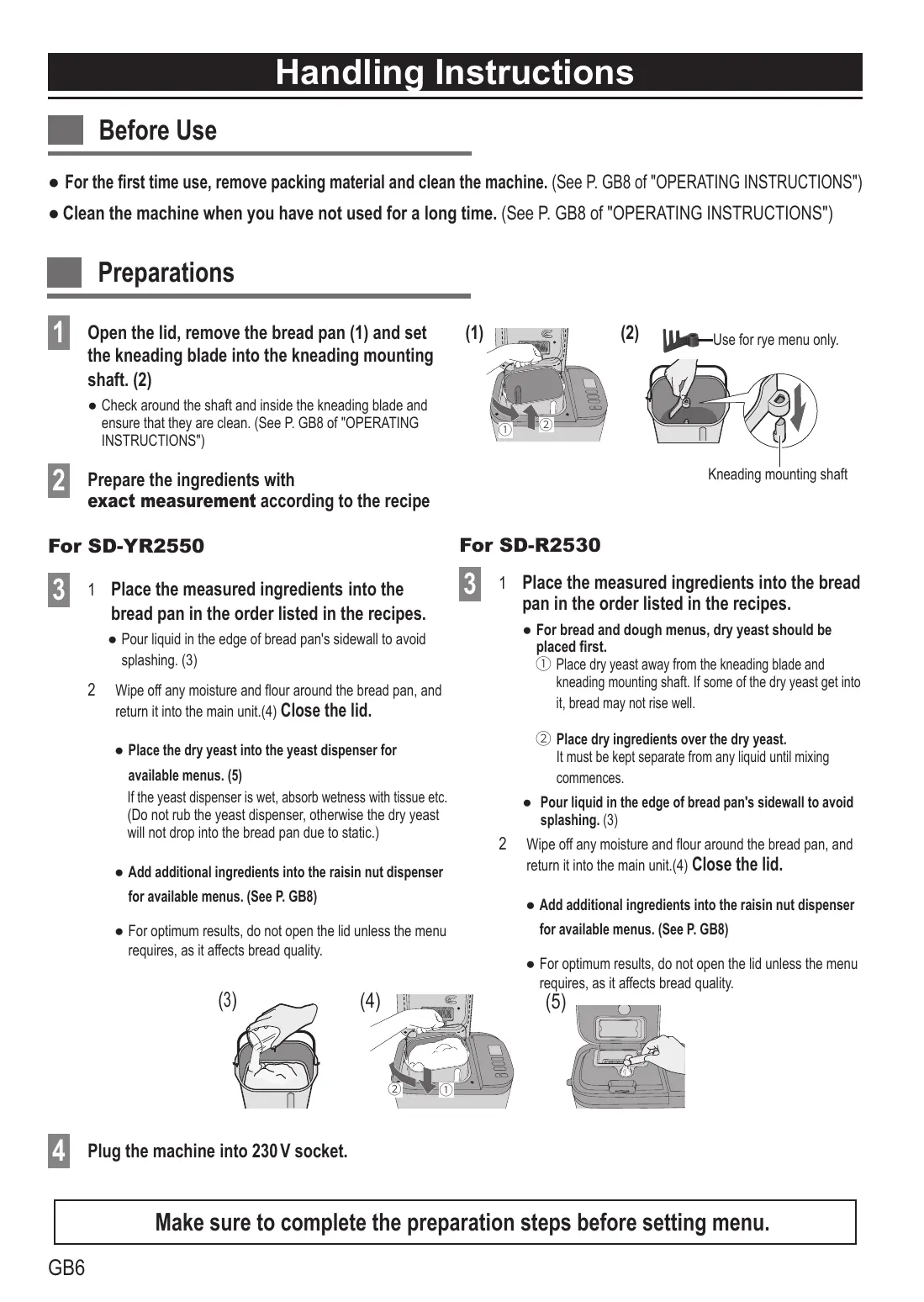
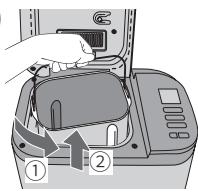
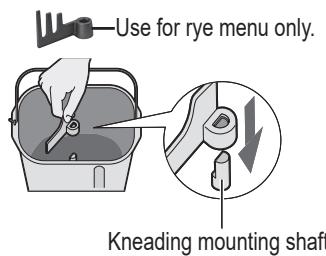
1 Open the lid, remove the bread pan (1) and set the kneading blade into the kneading mounting shaft. (2)
- Check around the shaft and inside the kneading blade and ensure that they are clean. (See P. GB8 of "OPERATING INSTRUCTIONS")
2 Prepare the ingredients with exact measurement according to the recipe
For SD-YR2550
3 1 Place the measured ingredients into the bread pan in the order listed in the recipes.
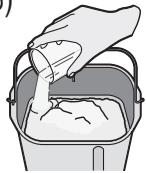
- Pour liquid in the edge of bread pan's sidewall to avoid splashing. (3)
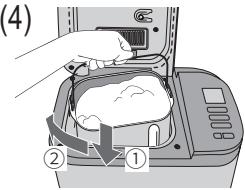
2 Wipe off any moisture and flour around the bread pan, and return it into the main unit.(4) Close the lid.
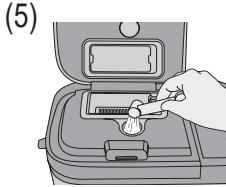
- Place the dry yeast into the yeast dispenser for available menus. (5)
If the yeast dispenser is wet, absorb wetness with tissue etc. (Do not rub the yeast dispenser, otherwise the dry yeast will not drop into the bread pan due to static.)
- Add additional ingredients into the raisin nut dispenser for available menus. (See P. GB8)
- For optimum results, do not open the lid unless the menu requires, as it affects bread quality.
(3)
(4)
(1)
(2)
For SD-R2530
3 1 Place the measured ingredients into the bread pan in the order listed in the recipes.
- For bread and dough menus, dry yeast should be placed first.
① Place dry yeast away from the kneading blade and kneading mounting shaft. If some of the dry yeast get into it, bread may not rise well.
② Place dry ingredients over the dry yeast. It must be kept separate from any liquid until mixing commences. - Pour liquid in the edge of bread pan's sidewall to avoid splashing. (3)
2 Wipe off any moisture and flour around the bread pan, and return it into the main unit.(4) Close the lid.
- Add additional ingredients into the raisin nut dispenser for available menus. (See P. GB8)
- For optimum results, do not open the lid unless the menu requires, as it affects bread quality.
4 Plug the machine into 230V socket.
Make sure to complete the preparation steps before setting menu.
Press or button in the Menu (☑) bar to select a bread menu.
- Choose the options for selected menu. (See P. GB4 - GB5)
Bread Size
Crust colour
Delay timer
6 Press Start (◇) button to start the machine.
(The display shows when menu "1" is selected.)
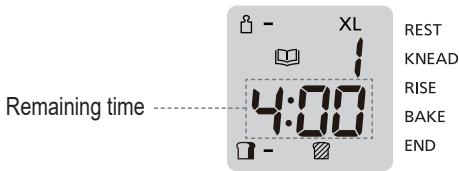
- Display shows the remaining time until the selected program is complete.
- The remaining time is changed depending on the room temperature.
- Do manual operation when the beep sounds if you select the certain menus.
(See P. GB4 - GB5, menus with icon.)
After that, then press button again.
- Complete the works while is flashing on the display. When stop flashing, display shows the remaining time.
- Do not add ingredients after display shows remaining time.
- Kneading will continue after a certain time without press
button.
When bread is ready (machine beeps 8 times and the cube ( ) near End flashes), press Stop ( ⊙ ) button and unplug.
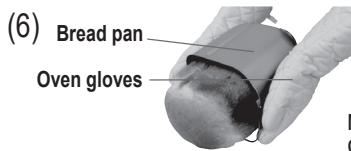
8 Remove the bread immediately by using dry oven gloves and place it on a wire rack. (6)
- Hold the handle with oven gloves and shake the bread out.
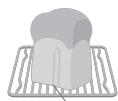
Make sure the blade has not come out with the bread.
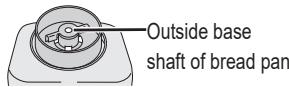
- Moving the outside base shaft may damage the bread shape. (7)
(7) (Bottom of bread pan)
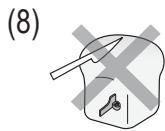
Always remove the kneading blade before slicing bread. (8)
Making Dough

Turn to P. GB16 - GB17 for recipes.
1 - 4 See P. GB6 of Preparations
Press or button in the Menu (□) bar to select a dough menu.
Press button to start.
- Display shows the remaining time until the program is complete.
When dough is ready (machine beeps 8 times and the cube ( ) near End flashes), press button and unplug.
Tips: Timer is not available on doughs menus except Pizza.
Bread Dough
Shape the finished dough to your favourite shape and allow it to rise until double size, then bake in the oven.
Pizza Dough
8 Divide the dough with scraper and shape them into balls.
9 Cover them with damp kitchen towel and leave it for 10 minutes.
10 Shape into a flat round and make holes with a fork.
11 Spread your favourite sauce and desired topping then bake it in the oven.
Additional Ingredients
(Dried fruits, nuts, bacon, cheese etc.)
Available Menu
| Bread | Dough | |||||
| Basic Raisin | Basic Stuffed | Bread Mix Raisin | Whole Wheat Raisin | Basic Raisin | Whole Wheat Raisin | |
| SD-YR2550 | Menu 3 | Menu 4 | Menu 6 | Menu 9 | Menu 19 | Menu 21 |
| SD-R2530 | Menu 18 | Menu 20 | ||||
To make your flavoured bread, simply place additional ingredients in the raisin nut dispenser or bread pan.
Attention of ingredients
Follow the recipe/menu instructions for the quantities of each ingredients.
Otherwise, The ingredients may scatter from bread pan to cause unpleasant smells and smoke.
- The bread may not rise well.
Dry/insoluble ingredients (Using raisin nut dispenser - add automatically)
→Place the extra ingredients in the raisin nut dispenser and set the machine.
→ Do not overfill the raisin nut dispenser.
Dried fruits
- Cut up roughly into approximate 5mm cubes.
- Sugar-coated ingredients may stick to the raisin nut dispenser and not fall into the bread pan.
Nuts, seeds
- Chop finely.
- Nuts impair the effect of gluten, so avoid using too much.
- Using large, hard seeds may scratch the coating of the dispenser and bread pan.
Herbs
- Use up to 1 - 2 tbsp of dried herbs. For fresh herbs, follow the instructions in the recipe.
Bacon, salami, olives, dry tomato
- Sometimes oily ingredients may stick to the raisin nut dispenser and not fall into the bread pan.
- Cut the bacon and the salami into 1 cm cubes.
Cut the olives into quarters.
Moist / viscous / soluble ingredients* (Adding into the bread pan by hand - cannot be placed in the raisin nut dispenser)
→Place these ingredients together with the others into the bread pan.
■ Fresh fruits, fruits pickled in alcohol, vegetables
- Only use quantities as in the recipe, as the water content in the ingredients will affect bread.
Cheese, chocolate
- Cut the cheese into 1 cm cubes.
- Chop chocolate finely.
- These ingredients cannot be placed in the raisin nut dispenser as they would stick to it and not fall into the bread pan.
Bread Mix & Bread Mix Raisin

Turn to P. GB14 for recipes.
1-4 See P. GB6 of Preparations
5 Select the menu.
| Bread Mix | Bread Mix Raisin | |
| SD-YR2550 | Menu 5 | Menu 6 |
| SD-R2530 | Menu 5 | Menu 6 |
Press button to start.
- Display shows the remaining time until the program is complete.
Press button and remove bread when machine beeps 8 times and the cube ( ) near End flashes.
Tips: The final outcome may differ depending on the actual bread mix used. (There may be greater variation with wheat free bread mixes.)
1-4 See P. GB6 of Preparations
5 Select menu 10, choose crust colour.
Press 1 button to start. Display shows the remaining
7 After about 55 minutes - 1 hour 5 minutes. Open the lid when you hear the beep sound. Add the additional butter while is flashing. Close the lid and restart.
- Kneading will continue after 5 minutes without press 1 button.
Sourdough & Sourdough Dough
Press button and remove bread when machine beeps 8 times and the cube ( ) near End flashes.
Tips: Timer is not available on this menu.
- Do not add butter or extra ingredients after display shows remaining time.
- When adding extra ingredients such as raisins, add them with the butter in step 7. (Use max. 150g for ingredients)
To bake brioche in simple way.
- Cut butter into 1 - 2 cm cubes and keep them in refrigerator.
- Place butter with other ingredients in the beginning and follow step 5.
- Skip step 7 process in this way. This Brioche is a little different from the others.
STAGE 1 Making Sourdough Starter
Preparations:
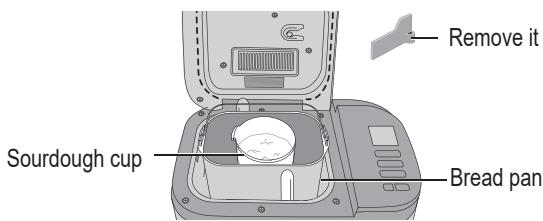
① Mix all the ingredients well in the sourdough cup.
(Removethekingblade)
② Put the lid on the sourdough cup.
③ Place the sourdough cup in the bread pan.
④ Set the bread pan into the main unit, and plug the machine into the socket.
1 Select the menu
| Sourdough Starter | |
| SD-YR2550 | Menu 23 |
| SD-R2530 | Menu 22 |
Press button to start.
- Display shows the remaining time until the program is complete. (Take SD-YR2550 display as an example)
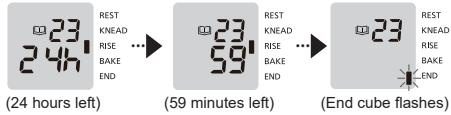
Press button and remove the sourdough cup immediately when machine beeps 8 times and the cube ( ) near End flashes.
- When you do not use it immediately, store it in the refrigerator, but use up within 1 week.
STAGE 2 Baking/Making Sourdough
Preparations:
① Set the kneading blade into the bread pan.
② Pour a cup of sourdough starter into the bread pan.
③ SD-YR2550
1) Place the ingredients in the bread pan according to the order of recipe.
2) Place the dry yeast in the yeast dispenser.
SD-R2530
1) Place the ingredients in the bread pan in the following order: flour → salt → dry yeast (keep away from the salt) → water (keep away from the dry yeast, pour water around flour).
④ Set the bread pan into the main unit, and plug the machine into the socket.
1 Select the menu
| Sourdough | Sourdough Dough | |
| SD-YR2550 | Menu 13 | Menu 22 |
| SD-R2530 | Menu 12 | Menu 21 |
Press button to start.
- Display shows the remaining time until the program is complete.
Press button and remove bread/dough, when machine beeps 8 times and the cube ( ) near End flashes.
Tips: Timer is available for baking sourdough bread (up to 9 hours).
- Shape the finish dough and allow it to rise until doubled in size, then bake in the oven. (Menu: Sourdough Dough)
To make or storage sourdough starter without failure.
- Do not select a wrong menu.
- Do not take out the sourdough cup until the program is complete.
- Do not mix the new sourdough starter with old one.
- If the sourdough starter is made well, it smells sour and like alcohol.
- When the room temperature is over 30°C , the sourdough starter goes bad, and the bread does not turn out well.
Gluten Free Information
Making gluten free bread is very different from the normal way of producing bread.
It is very important if you are making gluten free bread for health reasons that you have consulted your doctor and follow the guidelines below.
This program has been developed especially for certain gluten free ingredients, therefore using your own mix may not produce such good results.
- Gluten free bread cannot rise as much as a traditional bread. It will be of a denser consistency and lighter colour than normal bread.
- When "gluten free" is selected, the details for each recipe must be followed carefully. (Otherwise, the bread may not turn out well.)
There are two types of gluten-free baking mixtures; mixtures with low content of gluten and mixtures which do not consist of wheat and contain no gluten. If you have to pick one out using this baking program, please consult your doctor beforehand.
- The baking results and bread's appearance may differ according to the type of mix. Occasionally a bread may have some flour remaining on the side. The wheat free mixes can produce more variable results.
- Wait for the bread to cool before slicing it for the better performance.
- The bread should be stored in a cool dry place and used within 2 days. If you will not be able to use up all the bread within that time it can be put into freezer bags, in convenient sized portions, and frozen.
Warning for the users who use this program for health reasons:
When using the gluten free program, make sure to consult your doctor or the Coeliac Association and only use the ingredients which are suitable for your health conditions.
Panasonic will not be responsible for any consequences resulting from ingredients that have been used without professional consultation.
It is very important to avoid cross contamination with flours that contain gluten if bread is being made for dietary reasons. Particular attention must be paid to the cleaning of the bread pan and kneading blade as well as any utensils that are used. You must also ensure that the yeast used contains no gluten.
Baking Gluten Free Bread

Turn to P. GB16 for recipes.
1 - 4 See P. GB6 of Preparations
5 Select the menu
| Gluten Free Bread | |
| SD-YR2550 | Menu 14 |
| SD-R2530 | Menu 13 |
Press button to start.
- Display shows the remaining time until the beep sounds.
Baking Gluten Free Cake
1 - 4 See P. GB6 of Preparations
5 Select the menu
| Gluten Free Cake | |
| SD-YR2550 | Menu 15 |
| SD-R2530 | Menu 14 |
Press button to start.
- Display shows the remaining time until the beep sounds.
7 After about 2 minutes, open the lid when you hear the beep sound. Scrape off the flour within 3 minutes while is flashing. Close the lid and restart.
- Kneading will continue after 3 minutes without press button.
After about 6 minutes, open the lid when you hear the beep sound. Scrape off the flour within 3 minutes while is flashing. Close the lid and restart.
- Kneading will continue after 3 minutes without press button.
Press button and remove bread when machine beeps 8 times and the cube ( ) near End flashes.
Tips: Use a rubber spatula to avoid damaging the bread pan. Do not use the metal spatula.

Turn to P. GB16 for recipes.
After about 12 minutes, open the lid when you hear the beep sound. Scrape off the dough on the sidewall of bread pan while is flashing. Close the lid and restart.
- Baking will start after 3 minutes without press button.
Press button and remove cake when machine beeps 8 times and the cube ( ) near End flashes.
Tips
- Use a rubber spatula to avoid damaging the bread pan. Do not use metal spatula.
- If you shake hard to remove cake from the bread pan, it will lose shape.
1-4 See P. GB6 of Preparations
5 Select the menu
| Gluten Free Pizza | Gluten Free Pasta | |
| SD-YR2550 | Menu 16 | Menu 17 |
| SD-R2530 | Menu 15 | Menu 16 |
Press button to start.
- Display shows the remaining time until the beep sounds.
7 After about 5 minutes for gluten free pizza, 2 minutes for gluten free pasta, open the lid when you hear the beep sound. Scrape off the flour within 3 minutes while is flashing. Close the lid and restart. - Kneading will continue after 3 minutes without press button.
Press button and remove dough when machine beeps 8 times and the cube ( ) near End flashes.
Gluten Free Pizza
9 Divide the dough into 2 parts with scraper, and roll them into a circle of about 20 cm diameter.
10 Spread your favourite sauce and desired topping then bake it in the oven.
Gluten Free Pasta
9 Wrap the dough in a cling film and rest for 1 hour in the refrigerator.
10 Lightly flour the dough surface, and shape it to your desired shapes.
11 Boil them and enjoy it with your favourite sauce.
Tips: Use the rubber spatula to avoid damaging the bread pan. Do not use the metal spatula.
Baking Cake

Turn to P. GB18 for recipes.
1 - 4 See P. GB6 of Preparations
Select the menu
| Cake | |
| SD-YR2550 | Menu 25 |
| SD-R2530 | Menu 24 |
Press button to start.
- Display shows the remaining time until the beep sounds.
7 After about 12 minutes, open the lid when you hear the beep sound. Scrape off the flour within 5 minutes while is flashing. Close the lid and restart.
- Kneading will continue after 5 minutes without pressing button.
Press button and remove cake when machine beeps 8 times and the cube ( ) near End flashes.
Additional Baking
- If baking is not complete, follow the following method. (Additional baking time can be made up to twice within 20 minutes while the machine is still hot. The timer will start again from 1 minute by pressing the button as required.)
① Select the menu (Skip it if you have not pressed button in step 8)
② Set the baking time
It can be set to 1 - 20 minutes.
③ Press button to start.
- To discontinue baking, hold button.
Tips:
- Timer is not available on this menu. It only sets the duration of the baking time.
- Use a rubber spatula to avoid damaging the bread pan. Do not use metal spatula.
- If you shake hard to remove cake from the bread pan, it will lose shape.
Bake Only

Turn to P. GB18 for recipes.
Preparations:
①Prepare the mixed ingredients in the bowl according to the recipe.
② Remove the kneading blade and line the greaseproof paper around the bread pan, then pour in the mixed ingredients.
③Set the bread pan into the main unit, and plug the machine into the socket.
1 Select the menu
| Bake Only | |
| SD-YR2550 | Menu 26 |
| SD-R2530 | Menu 25 |
2 Set the baking time
Press button to start.
- Display shows the remaining time until the program is complete.
Making Jam / Compote
Press button and remove cake when machine beeps 8 times and the cube ( ) near End flashes.
Additional Baking
- If baking is not complete, repeat step 1-4. (Additional baking time can be made up to twice within 50 minutes while the machine is still hot. The timer will start again from 1 minute by pressing the j button as required.)
Tips: Timer is not available on this menu. It only sets the duration of the baking time.
Preparations for Jam-making
① Prepare the ingredients according to the recipe.
② Put the kneading blade into the bread pan.
③ Place the ingredients into the pan in following order. half of fruits → half of sugar → remainder of fruits → remainder of sugar.
④ Set the bread pan into the main unit, and plug the machine into the socket.
Preparations for Compote-making
① Prepare the ingredients according to the recipe. (Remove the kneading blade.)
(2) Place the ingredients into the bread pan according to the order of recipes, pour water over ingredients.
③ Set the bread pan into the main unit, and plug the machine into the socket.
Select the menu
| Jam | Compote | |
| SD-YR2550 | Menu 27 | Menu 28 |
| SD-R2530 | Menu 26 | Menu 27 |
2 Set the cooking time, then start the machine.
Press button and remove Jam/Compute when machine beeps 8 times and the cube (■) near End flashes.

Turn to P. GB18 for recipes.
Additional Cooking
- If the cooking is not complete → repeat step 1 - 3.
(Additional cooking time can be made up to twice within
10 - 40 minutes while the machine is still hot. The timer will start again from 1 minute by pressing (i) button as required.)
Tips:
- Timer is not available on these menus. It only sets the duration of the cooking time.
- Strictly follow the recipe for the amount of each ingredients. Otherwise, the jam does not set firm, to be boiled over or scorched as well as the compote.
Tips for Jam-making
- It's necessary to have an adequate amount of sugar, acid and pectin to make firm set jam.
Fruits with a high level of pectin set easily. Fruits with less pectin do not set well. - Use freshly ripened fruits. Over or under ripe fruits do not set firmly.
- The recipes in this instructions make soft set jams due to using less sugar.
- When cooking time is short, fruit bits can remain partially and the jam may become watery.
- Jam will continue to set as it cools. Be careful not to over cook.
- Put the finished jam into the container as soon as possible. Take care not to burn when you take out jam.
- Jam can be burned if it is left in the bread pan.
- Store the jam in a cool, dark place. Due to the lower levels of sugar the shelf life is not as long as shop bought varieties. Once open, refrigerate and consume shortly after opening.
Cake Kneading
Preparations:
① Remove the bread pan and set the kneading blade.
② Place the measured ingredients in the bread pan.
③ Return the bread pan to the main unit. Close the lid and plug in.
1
Select the menu
| Cake Kneading | |
| SD-YR2550 | Menu 29 |
| SD-R2530 | Menu 28 |
2
Set the kneading time
Bread Kneading
Preparations:
① Remove the bread pan and set the kneading blade.
② Place the measured ingredients in the bread pan.
③ Return the bread pan to the main unit. Close the lid and plug in.
1
Select the menu
| Bread Kneading | |
| SD-YR2550 | Menu 30 |
| SD-R2530 | Menu 29 |
2
Set the kneading time
- Please set the time according to the bread dough which is used for primary fermentation.
Rise
Preparations:
① Remove the kneading blade and place the dough into the bread pan.
② Return the bread pan to the main unit. Close the lid and plug in.
1
Select the menu
| Rise | |
| SD-YR2550 | Menu 31 |
| SD-R2530 | Menu 30 |
2
Set the time (use the primary fermentation of kneaded dough. Set the time according to the bread dough.)
3
Press button to start.
- Display shows the remaining time until the program is complete.
4
Press button and remove the dough when machine beeps 8 times and the cube ( ) near End flashes.
5
Put it into cake mold, then bake in a preheated oven.
Tips: Use a rubber spatula to avoid damaging the bread pan. Do not use metal spatula.

Turn to P. GB19 for recipes.
3
Press button to start.
- Display shows the remaining time until the program is complete.
4
Press button and remove the dough when machine beeps 8 times and the cube ( ) near End flashes.
Tips:
Rest for over 20 minutes before the next kneading starts.
- For the case of hard dough or much amount of dough, "U50" may appear on the display. Leave a little time to restart the next kneading. The amount of flour that can be used is up to 400 - 600g .

Turn to P. GB19 for recipes.
3
Press button to start.
- Display shows the remaining time until the program is complete.
4
Press button and remove the dough when machine beeps 8 times and the cube ( ) near End flashes.
5
Shape the finished dough and allow it to rise in the oven, then bake.
Recipes
Example
Recipe Name
Menu No.+Total process time + Option icon
| M | L | XL | ||
| ★ | Dry yeast | 2 tsp | 2 tsp | 2½ tsp |
| Strong white bread flour | 400 g | 500 g | 600 g | |
| Egg (L), beaten | 1 | 1 | 2 | |
| Sunflower seeds | 50 g | 65 g | 75 g | |
| Cheese | 50 g | 65 g | 75 g | |
Abbreviation:
tsp = tea spoon; tbsp = table spoon
Egg (L) = Egg in large size; Egg (M) = Egg in medium size.
The options of each recipe and necessary operation are indicated as the following icons.
Option icon

Light crust Medium crust Dark crust Delay timer
Necessary operation icon
SD-YR2550: Place measured dry yeast into yeast dispenser.
SD-R2530: Place measured dry yeast into bread pan first.

Place the measured ingredients into bread pan in the order listed in the recipe.

Add additional ingredients into raisin nut dispenser.

Do manual operation (such as adding extra ingredients, scraping the flour from sidewall of bread pan) when the beep sounds.
Bread Recipes

Turn to P. GB6 - GB9 for handling instructions.
Basic
White Bread
Menu 1 (4 h - 4 h 5 min)
| M | L | XL | ||
| ★ | Dry yeast | 1 tsp | 1 tsp | 1¼ tsp |
| Strong white bread flour | 400 g | 500 g | 600 g | |
| Butter | 20 g | 30 g | 40 g | |
| Sugar | 1 tbsp | 1½ tbsp | 2 tbsp | |
| Salt | 1½ tsp | 1½ tsp | 2 tsp | |
| Water | 280 mL | 340 mL | 400 mL | |
Milk Bread
Menu 1 (4 h - 4 h 5 min)
| M | L | XL | ||
| ★ | Dry yeast | 1 tsp | 1 tsp | 1¼ tsp |
| Strong white bread flour | 400 g | 500 g | 600 g | |
| Butter | 20 g | 30g | 40 g | |
| Sugar | 1 tbsp | 1½ tbsp | 2 tbsp | |
| Salt | 1½ tsp | 1½ tsp | 2 tsp | |
| Milk | 290 mL | 360 mL | 430 mL | |
Basic Rapid
Rapid White Bread
Menu 2 (1 h 55 min - 2 h)
| M | L | XL | ||
| ★ | Dry yeast | 2 tsp | 2 tsp | 2 1/2 tsp |
| Strong white bread flour | 400 g | 500 g | 600 g | |
| Butter | 20 g | 30 g | 40 g | |
| Sugar | 1 tbsp | 1 1/2 tbsp | 2 tbsp | |
| Salt | 1 1/2 tsp | 1 1/2 tsp | 2 tsp | |
| Water | 280 mL | 350 mL | 420 mL | |
Italian Bread
Menu 2 (1 h 55 min)
M
★
Dry
Stro
Olive oil
Salt
Water
ast
:
hour
1 + u/7 = 70%
11
12 ts
sp
mL
1 + u/7 = 70%
1 + u/7 = 70%
1 + u/7 = 70%
29
mL
Basic Raisin
Raisin Bread
Menu 3 (4 h)
| M | L | XL | ||
| ★ | Dry yeast | 1 tsp | 1 tsp | 1¼ tsp |
| Strong white bread flour | 400 g | 500 g | 600 g | |
| Butter | 20 g | 30 g | 40 g | |
| Sugar | 1 tbsp | 1½ tbsp | 2 tbsp | |
| Salt | 1½ tsp | 1½ tsp | 2 tsp | |
| Water | 280 mL | 340 mL | 400 mL | |
| Raisins *1 | 80 g | 100 g | 120 g | |
5 Seeded Bread
Menu 3 (4 h)
()
| M | L | XL | ||
| ★ | Dry yeast | 1 tsp | 1 tsp | 1¼ tsp |
| Strong white bread flour | 400 g | 475 g | 550 g | |
| Butter | 20g | 30 g | 40 g | |
| Sugar | 1 tbsp | 1½ tbsp | 2 tbsp | |
| Salt | 1 tsp | 1½ tsp | 2 tsp | |
| Sesame seeds | 1 tbsp | 1½ tbsp | 2 tbsp | |
| Poppy seeds | 1 tbsp | 1½ tbsp | 2 tbsp | |
| Water | 280 mL | 330 mL | 380 mL | |
| Linseeds | 1 tbsp | 1½ tbsp | 2 tbsp | |
| Pumpkin seeds | 1 tbsp | 1½ tbsp | 2 tbsp | |
| Sunflower seeds | 1 tbsp | 1½ tbsp | 2 tbsp | |
Basic Stuffed
Stuffed Bread
Menu 4 (4 h - 4 h 5 min)
| M | L | XL | ||
| ★ | Dry yeast | 1 tsp | 1 tsp | 1¼ tsp |
| Strong white bread flour | 400 g | 500 g | 580 g | |
| Butter | 20 g | 30 g | 40 g | |
| Sugar | 1 tbsp | 1½ tbsp | 2 tbsp | |
| Salt | 1½ tsp | 1½ tsp | 2 tsp | |
| Water | 280 mL | 350 mL | 400 mL | |
| Cooked bacon *1 | 50 g | 65 g | 75 g | |
| Cheese *1 | 50 g | 65 g | 75 g | |
Stuffed Tomato, Olive and Tomato Juice
Menu 4 (4 h - 4 h 5 min)
| M | L | XL | ||
| ★ | Dry yeast | 1 tsp | 1 tsp | 1¼ tsp |
| Strong white bread flour | 400 g | 500 g | 580 g | |
| Butter | 20 g | 30 g | 40 g | |
| Sugar | 1 tbsp | 1½ tbsp | 2 tbsp | |
| Salt | 1½ tsp | 1½ tsp | 2 tsp | |
| Water | 140 mL | 175 mL | 200 mL | |
| Tomato juice | 140 mL | 175 mL | 200 mL | |
| Olive | 70 g | 80 g | 100 g | |
| Sundried tomatoes in oil, chopped | 30 g | 40 g | 50 g | |
Bread Mix
Bread Mix
Menu 5 (2 h 30 min)


Bread mix flour *2
Water *3
x flour *2
500 g
300 mL
Vegetable Juice Bread
Menu 5 (2 h 30 min)

| Bread mix flour *2 | 500 g |
| Water *4 | 150 mL |
| Vegetable juice *4 | 150 mL |
Bread Mix Raisin
Bread Mix Raisin
Menu 6 (2 h 30 min)

| Bread mix flour *2 Water *3 | 500 g 300 mL |
| Raisins *1 | 100 g |
Matcha Chestnut Bread
Menu 6 (2 h 30 min)

| Bread mix flour *2 | 500 g |
| Matcha | 10 g |
| Water *3 | 300 mL |
| Sweet chestnut *1 | 100 g |
Whole Wheat
Whole Wheat Bread
Menu 7 (5 h)

| M | L | XL | ||
| ★ | Dry yeast | 1 tsp | 1 tsp | 1¼ tsp |
| Strong whole wheat bread flour | 400 g | 500 g | 600 g | |
| Butter | 20 g | 30 g | 40 g | |
| Sugar | 1 tbsp | 1½ tbsp | 2 tbsp | |
| Salt | 1½ tsp | 1½ tsp | 2 tsp | |
| Water | 280 mL | 350 mL | 420 mL | |
Oat and Bran Bread
Menu 7 (5 h)
| L | ||
| ★ | Dry yeast | 1 tsp |
| Strong white bread flour | 400 g | |
| Bran | 50 g | |
| Porridge oats | 50 g | |
| Oil | 2 tbsp | |
| Sugar | 1½ tsp | |
| Salt | 1¼ tsp | |
| Water | 350 mL | |
Whole Wheat Rapid
Whole Wheat Bread Rapid
Menu 8 (3 h)
| M | L | XL | ||
| ★ | Dry yeast | 1½ tsp | 1½ tsp | 2 tsp |
| Strong whole wheat bread flour | 400 g | 500 g | 600 g | |
| Butter | 20 g | 30 g | 40 g | |
| Sugar | 1 tbsp | 1½ tbsp | 2 tbsp | |
| Salt | 1½ tsp | 1½ tsp | 2 tsp | |
| Water | 280 mL | 350 mL | 420 mL | |
Rapid Whole Wheat Bread 50%
Menu 8 (3 h)
| M | L | XL | ||
| ★ | Dry yeast | 1½ tsp | 1½ tsp | 2 tsp |
| Strong whole wheat bread flour | 200 g | 250 g | 300 g | |
| Strong white bread flour | 200 g | 250 g | 300 g | |
| Butter | 20 g | 30 g | 40 g | |
| Sugar | 1 tbsp | 1½ tbsp | 2 tbsp | |
| Salt | 1½ tsp | 1½ tsp | 2 tsp | |
| Water | 300 mL | 370 mL | 430 mL | |
Whole Wheat Raisin
Whole Wheat Raisin Bread
Menu 9 (5 h)
| M | L | XL |
| ★ | Dry yeast | 1 tsp | 1 tsp | 1¼ tsp |
| Strong whole wheat bread flour | 400 g | 500 g | 600 g | |
| Butter | 20 g | 30 g | 40 g | |
| Sugar | 1 tbsp | 1½ tbsp | 2 tbsp | |
| Salt | 1½ tsp | 1½ tsp | 2 tsp | |
| Water | 280 mL | 350 mL | 420 mL | |
| Raisins *1 | 80 g | 100 g | 120 g |
Maple and Pecan Nut Bread
Menu 9 (5 h)
| M | ||
| ★ | Dry yeast | 1 tsp |
| Strong whole wheat bread flour | 200 g | |
| Strong white bread flour | 200 g | |
| Butter | 20 g | |
| Maple syrup | 3 tbsp | |
| Salt | 1 1/2 tsp | |
| Water | 280 mL | |
| Pecan nuts *1 | 75 g | |
Brioche
Basic Brioche
Menu 10 (3 h 30 min)
| ★ | Dry yeast | 1¼ tsp |
| Strong white bread flour | 400 g | |
| Butter *5 | 60 g | |
| Sugar | 50 g | |
| Skimmed milk powder | 2 tbsp | |
| Salt | 1½ tsp | |
| Mixture / beat 2 eggs (M) + 2 egg yolk + water | 270 mL | |
| Butter *6 | 80 g |
Panettone
Menu 10 (3 h 30 min)
| ★ | Dry yeast | 1½ tsp |
| Strong white bread flour | 400 g | |
| Butter *5 | 60 g | |
| Sugar | 50 g | |
| Salt | 1½ tsp | |
| Mixture / beat 2 eggs (M) + 2 egg yolk + water | 290 mL | |
| Butter *6 | 60 g | |
| Candied orange peel *1 | 50 g | |
| Sultanas *1 | 50 g | |
| Currants *1 | 50 g |
French
French Bread
Menu 11 (5 h 40 min)
| ★ | Dry yeast | 1 tsp |
| Strong white bread flour | 400 g | |
| Salt | 1½ tsp | |
| Water | 290 mL |
Pain de Campagne
Menu 11 (5 h 40 min)
| ★ | Dry yeast | 1 tsp |
| Strong white bread flour | 320 g | |
| Strong whole wheat bread flour | 80 g | |
| Salt | 1½ tsp | |
| Cold water (5 °C) | 300 mL |
Rye (SD-YR2550 only)
Rye 100%
Menu 12 (3 h 30 min)
| ★ | Dry yeast | 2½ tsp |
| Rye flour | 500 g | |
| Oil | 2 tbsp | |
| Sugar | 2 tsp | |
| Salt | 2 tsp | |
| Water | 440 mL |
- Use kneading blade for rye menu
Rye and White
Menu 12 (3 h 30 min) (i)
| ★ | Dry yeast | 2 tsp |
| Rye flour | 250 g | |
| Strong white bread flour | 250 g | |
| Oil | 2 tbsp | |
| Sugar | 2 tsp | |
| Salt | 2 tsp | |
| Water | 360 mL |
- Use kneading blade for rye menu
Sourdough
Sourdough
Stage 1: Sourdough Starter: Menu 23
(SD-R2530: 22) (24 h)
Turn to P. GB17 for the recipe.
Stage 2: Menu 13 (SD-R2530: 12) (5 h)
| Sourdough starter | 1 cup |
| Strong white bread flour | 400 g |
| Salt | 1 tsp |
| Water | 150 mL |
| Dry yeast | 3/4 tsp |
1 Cut into approx. 5 mm cubes.
2 Bread mix for white loaf only. Follow the recipes on the package of bread mix.
3 As shown on packet needs to be added.
4 Half the specified amount of water for bread mix.
5 Cut into 2 - 3 cm cubes and keep in refrigerator.
6 Cut into 1 - 2 cm cubes and keep in refrigerator.
Gluten Free Recipes

Turn to P. GB6. GB10 -
GB11 for handling
instructions.
Gluten Free Bread
The outcome differs depending on the recipes or using type of bread mix.
- Follow the recipes on the package of your gluten free bread mix.
Gluten Free Bread
Menu 14 (SD-R2530: 13)
(1h50min-1h55min)
| Water | 430 mL |
| Oil | 1 tbsp |
| Gluten free bread mix | 500 g |
| Dry yeast | 2 tsp |
Gluten and Wheat Free Bread
Menu 14 (SD-R2530: 13)
(1h50min-1h55min)
| Milk | 310 mL |
| 2 eggs (medium), beaten | 100 g |
| Cider vinegar | 1 tbsp |
| Oil | 2 tbsp |
| Honey | 60 g |
| Salt | 1¼ tsp |
| Brown rice flour | 150 g |
| Potato starch | 300 g |
| Xanthan gum | 2 tsp |
| Dry yeast | 2½ tsp |
Flavoured Gluten Free Bread
Use one quantity of chosen mix and add the following ingredients to your bread pan to produce the bread of your choice.
Spicy Fruit Bread
(1h50min)
| Mixed fruits | 100 g |
| Cinnamon | 2 tsp |
Maple & Pecan Bread
(1h55min)
| Maple syrup | 2 tbsp |
| Pecans | 50 g |
Five Seeds Bread
(1h55min)
| Linseeds | 1 tbsp |
| Sesame seeds | 2 tbsp |
| Pumpkin seeds | 1 tbsp |
| Poppy seeds | 1 tbsp |
| Sunflower seeds | 1 tbsp |
Sundried Tomato & Parmesan Bread (1 h 55 min)
| Parmesan cheese grated | 50 g |
| Sundried tomatoes in oil, drained and chopped | 50 g |
Gluten Free Cake
Gluten Free Chocolate Cake
Menu 15 (SD-R2530: 14)
(1 h 50 min)
| Butter *2 | 150 g |
| Sugar | 150 g |
| Eggs (L), beaten | 3 (180 g) |
| Dark chocolate, melted | 120 g |
| White rice flour | 120 g |
| Cacao powder | 30 g |
| Baking powder | 10 g |
Gluten Free Tea Cake
Menu 15 (SD-R2530: 14)
(1 h 50 min)
| Butter *2SugarEggs (L), beatenWhite rice flourGround almondsTea leaves, choppedBaking powder | 80 g160 g3 (180 g)160 g80 g2 tsp10 g |
Gluten Free Banana Cake
Menu 15 (SD-R2530: 14)
(1 h 50 min)
| Butter *1 | 80 g |
| Sugar | 120 g |
| Eggs (L), beaten | 3 (180 g) |
| White rice flour | 160 g |
| Ground almonds | 50 g |
| Banana *2 | 80 g |
| Baking powder | 10 g |
Gluten Free Pizza
Gluten Free Pizza
Menu 16 (SD-R2530: 15)
(30 min)
| Water | 380 mL |
| White rice flour | 475 g |
| Vegetable oil | 1¾ tbsp |
| Salt | 1 tsp |
| Dry yeast | 1 tsp |
Gluten Free Pasta
Gluten Free Pasta
Menu 17 (SD-R2530: 16)
(15 min)
| Mixture / beat 2 egg (M) + water | 260 g |
| White rice flour | 220 g |
| Potato starch | 80 g |
| Corn starch | 100 g |
| Xanthan gum | 1½ tbsp |
| Oil | 2 tbsp |
| Salt | 1 tsp |
- Be sure to whisk eggs and water together until very smooth.
- Place flour, starch and gum into another bowl and mix well.
1: Cut into 1 cm cubes.
2: Cut into 1 - 2 cm.
Dough Recipes
Basic
Basic Dough
Menu 18 (SD-R2530: 17)
(2 h 20 min)
| ★ | Dry yeast | 1 tsp |
| Strong white bread flour | 500 g | |
| Butter | 30 g | |
| Sugar | 1½ tbsp | |
| Salt | 1½ tsp | |
| Water | 310 mL |
Soft Rolls / Baps
Menu 18 (SD-R2530: 17)
(2 h 20 min)
| ★ | Dry yeast | 1¼ tsp |
| Strong white bread flour | 450 g | |
| Butter | 30 g | |
| Sugar | 1 tbsp | |
| Salt | 1 tsp | |
| Egg (M), beaten | 1 (50 g) | |
| Water * | 250 mL |
- For a slightly denser roll try 125 mL water and 125 mL milk.

Turn to P. GB6-
GB9 for handling
instructions.
- Place the ingredients into the bread pan in the order listed above.
2 Select the menu.
3 Divide dough into 8 - 10 pieces and shape into baps.
4 Place on a greased baking tray and allow to prove at 40°C until doubled in size. (approx. 20 minutes).
5 Dust with flour.
6 Bake in a preheated oven at 220° for 15 minutes or until golden brown.
Basic Raisin
Basic Raisin Dough
Menu 19 (SD-R2530:18)
(2 h 20 min)
| ★ | Dry yeast | 1 tsp |
| Strong white bread flour | 500 g | |
| Butter | 30 g | |
| Sugar | 1½ tbsp | |
| Salt | 1½ tsp | |
| Water | 310 mL | |
| Raisins *1 | 100 g |
*1 Cut into approx. 5 mm cubes.
Hot Cross Buns
Menu 19 (SD-R2530:18)
(2 h 20 min)
| ★ | Dry yeast | 1/2 tsp |
| Strong white bread flour | 250 g | |
| Butter | 25 g | |
| Sugar | 1 tsp | |
| Skimmed milk powder | 1 tbsp | |
| Salt | 1/2 tsp | |
| Cinnamon | 1 tsp | |
| Mixed spice | 1/2 tsp | |
| Egg (M), beaten | 1 (50 g) | |
| Water | 100 mL | |
| Mixed dried fruits | 100 g |
- Divide mixture into 8 balls. Place on a lightly greased baking tray and allow to prove at 40°C until doubled in size (approx. 20 minutes). Make a paste with approx. 2 tbsp flour mixed with 2 tbsp water and pipe a cross over the buns, or top with thin slices of short crust pastry.
2 Bake in a preheated oven at 220°C for 15-20 minutes or until golden brown.
3 While still HOT, brush with a sugar glaze — 40g sugar in 4 tbsp water, boiled until a syrup is reached - (approx. 5 minutes).
Whole Wheat
Whole Wheat Dough
Menu 20 (SD-R2530:19)
(3 h 15 min)
| ★ | Dry yeast | 1½ tsp |
| Strong whole wheat bread flour | 500 g | |
| Butter | 30 g | |
| Sugar | 1½ tbsp | |
| Salt | 2 tsp | |
| Water | 340 mL |
Whole Wheat Dough 70%
Menu 20 (SD-R2530:19)
(3 h 15 min)
| ★ | Dry yeast | 1½ tsp |
| Strong whole wheat bread flour | 350 g | |
| Strong white bread flour | 150 g | |
| Butter | 30 g | |
| Sugar | 1½ tbsp | |
| Salt | 2 tsp | |
| Water | 330 mL |
Whole Wheat Dough 50%
Menu 20 (SD-R2530:19)
(3 h 15 min)
| ★ | Dry yeast | 1½ tsp |
| Strong whole wheat bread flour | 250 g | |
| Strong white bread flour | 250 g | |
| Butter | 30 g | |
| Sugar | 1½ tsp | |
| Salt | 2 tsp | |
| Water | 320 mL |
Whole Wheat Raisin
Whole Wheat Raisin Dough
Menu 21 (SD-R2530: 20)
(3 h 15 min)
| ★ | Dry yeast | 1 1/2 tsp |
| Strong whole wheat bread flour | 500 g | |
| Butter | 30 g | |
| Sugar | 1 1/2 tbsp | |
| Salt | 2 tsp | |
| Water | 340 mL | |
| Raisins *1 | 100 g |
*1 Cut into approx. 5 mm cubes.
Whole Wheat Walnut Rolls 70%
Menu 21 (SD-R2530: 20)
(3 h 15 min)
| ★ | Dry yeast | 1½ tsp |
| Strong whole wheat bread flour | 350 g | |
| Strong white bread flour | 100 g | |
| Medium oatmeal | 50 g | |
| Oil | 2 tbsp | |
| Maple syrup | 2 tbsp | |
| Salt | 1½ tsp | |
| Water | 320 mL | |
| Walnuts *1 | 100 g |
*1 Cut into approx. 5 mm cubes.
1 Divide dough into 12 large rolls or 20 dinner rolls.
2 Place on a greased baking trays and sprinkle with flour. Allow to prove at 40°C until doubled in size (approx. 20 minutes).
3 Bake in a preheated oven at 220°C for 12-15 minutes or until golden brown.
Sourdough Dough
Sourdough Dough (Rye)
Stage 1: Sourdough Starter Menu 23
(SD-R2530: 22) (24 h)
Turn to P. GB9 for handling instructions.
Stage 2: Menu 22 (SD-R2530: 21)
(2 h 30 min)
| Sourdough starter | 1 cup |
| Strong white bread flour | 360 g |
| Rye flour | 40 g |
| Salt | 1 tsp |
| Dry yeast * | ¾ tsp |
| Water | 150 mL |
- For SD-YR2550, place dry yeast into the yeast dispenser
Sourdough Starter
Sourdough Starter
Menu 23 (SD-R2530: 22) (24 h)
The amount for a sourdough cup
| Rye flour | 80 g |
| Salt | 1/2 tsp |
| Plain yogurt | 60 g |
| Water (20 °C) | 80 mL |
| Dry yeast * | 1 (0.1 g) |
*Use the sourdough starter spoon provided.
Pizza
Pizza Dough
Menu 24 (SD-R2530: 23)
(45 min)
| ★ | Dry yeast | 1 tsp |
| Strong white bread flour | 450 g | |
| Oil | 4 tbsp | |
| Salt | 2 tsp | |
| Water | 240 mL |
Doughnut (using failed unfermented bread dough)
1 Divide the dough into small pieces that are 35g each and shape them into balls. Cover them with a small towel and place them still for 10 - 20 minutes.
2 Roll them into thin round shape and press the dough with the doughnut mold.
3 Allow the dough to ferment for 20 - 30 minutes (till it rises to double its original size) at a temperature of 30 - 35 °C.
4 Deep-fry them at an oil temperature of 170°C and sprinkle them with cinnamon and refined white sugar.
Focaccia
Menu 24 (SD-R2530: 23)
(45 min)
| ★ | Dry yeast | 1/2 tsp |
| Strong white bread flour | 300 g | |
| Olive oil | 1 tbsp | |
| Salt | 1 tsp | |
| Water | 170 mL |
1 Roll and pat the dough into a 30 cm x 25 cm rectangle on a greased baking tray.
2 Make indentations over the whole dough using your fingertips.
3 Add your favourite toppings such as olives and tomatoes.
4 Allow to prove at 40°C until doubled in size (approx. 30 minutes).
5 Drizzle with olive oil and bake in a preheated oven at 190°C for 20 - 30 minutes or until golden at the edges and cooked well in the centre.
- Serve warm with pasta dishes.
Sweet Recipes

Turn to P.GB11-GB12 for handling instructions.
Cake
Butter Cake
Menu 25 (SD-R2530: 24) (1 h 55 min)
| Butter (cut into 1 cm cubes) Sugar Milk 4 eggs (medium), beaten Plain flour mixed and) Baking powder sifted | 200 g 180 g 2 tbsp 200 g 300 g 13 g |
Tea Cake
Menu 25 (SD-R2530: 24) (1 h 55 min)
| Butter (cut into 1 cm cubes) | 200 g |
| Sugar | 180 g |
| Milk | 2 tbsp |
| 4 eggs (medium), beaten | 200 g |
| Plain flour (mixed and) | 300 g |
| Baking powder (sifted) | 13 g |
| Earl gray tea (Tea leaf) | 1 tbsp |
| Dried fruits * | 100 g |
- Add it when scraping off the flour in step 7.
Bake Only
Fruit Cake
Menu 26 (SD-R2530: 25)
Timer: 1 h 20 min
| Butter | 150 g |
| Sugar | 130 g |
| Eggs (M), beaten | 3 (150 g) |
| Milk | 1 tbsp |
| Plain flour mixed and Baking powder sifted | 250 g |
| 10 g | |
| Mixed dried fruits | 70 g |
1 In a large bowl, cream butter and sugar until light and fluffy. Add eggs, one at a time, beating well.
2 Add milk, sifted A and mix dried fruits, beating well after addition.
3 Remove the kneading blade and line the greaseproof paper around the bread pan, then pour in the mixed ingredients.
4 Set the bread pan into the main unit, and plug the machine into the socket.
5 Select the menu and set the baking time : 1 hour and 20 minutes.
6 Press button to start.
7 Press button and remove cake when machine beeps 8 times and the cube ( ) near END flashes.
Cherry & Marzipan Cake
Menu 26 (SD-R2530: 25)
Timer: 1 h
| Golden caster sugar | 50 g |
| Butter | 175 g |
| Eggs (M), beaten | 3 (150 g) |
| Self raising flour | 225 g |
| Glace cherries, chopped | 100 g |
| Marzipan, grated | 75 g |
| Milk | 60 mL |
| Topping (flaked almonds, roasted) | 15 g |
1 In a large bowl, cream butter and sugar until light and fluffy. Add eggs, one at a time, beating well.
2 Add the flour with the cherries and grated marzipan, mix well with the milk to a soft consistency.
3 Remove the kneading blade and line the greaseproof paper around the bread pan, then pour in the mixed ingredients.
4 Set the bread pan into the main unit, and plug the machine into the socket.
5 Carefully sprinkle the toasted almonds on top of the mixture.
6 Select the menu and enter 1 hour on the timer.
7 After baking test with a skewer to see if the cake is cooked. If the cake does require extra time, select the menu again and enter a further 3 - 5 minutes on the timer. If it is still just slightly sticky, this will cook through during the stand period.
8 Take the bread pan out of the machine using oven gloves. Leave to stand for 5 - 10 minutes before removing from the bread pan and allowing to cool.
Jam
Strawberry Jam
Menu 27 (SD-R2530: 26)
Timer: 1 h 40 min
| Strawberries, finely chopped | 600 g |
| Sugar | 400 g |
| Powdered pectin * | 13 g |
Apricot Jam
Menu 27 (SD-R2530: 26)
Timer: 1 h 30 min
| Apricots, finely chopped | 500 g |
| Sugar | 250 g |
| Powdered pectin * | 6 g (1¼ tsp) |
- Sprinkle the pectin on the ingredients in the bread pan before setting the bread pan into the main unit.
Compute
Apple Sauce
Menu 28 (SD-R2530: 27) Timer: 1 h 20 min
| Bramley apples, peeled, cored and diced | 1000 g |
| Water | 2 tbsp |
- Stir after cooking is completed.
Peach in Vanilla Syrup
Menu 28 (SD-R2530: 27) Timer: 1 h
| Peaches, stone removed and cut into 1/8 Sugar Vanilla pod Water | 1000 g 100 g 1/2 125 mL |
- When cooking is complete, remove the peaches with a slotted spoon.
Carefully pour the syrup over the fruit.
Leave to cool.
Cake Kneading
Cake Dough
Menu 29 (SD-R2530: 28)
Timer: 20 min
| Butter (cut into 1 cm cubes) | 200 g |
| Sugar | 180 g |
| Milk | 2 tbsp |
| Eggs (M), beaten | 4 (200 g) |
| Plain flour mixed and Baking powder sifted | 300 g |
| 13 g |
Poppy Seed Gluten Free Cake
Menu 29 (SD-R2530: 28)
Timer: 10 min
| Vegetable oil | 150 g |
| Eggs (M), beaten | 3 (150 g) |
| Milk | 110 mL |
| Sugar | 180 g |
| White rice flour | 210 g |
| Ground almond | 75 g |
| Baking powder | 1½ tbsp |
| Lemon juice | 1½ tbsp |
| Poppy seeds | 23 g |
- Icing as you like. Mix 15g of lemon juice with 75g of icing sugar and sprinkle on the baked gluten free cake.
Bread Kneading & Rise
Bread Dough
Stage 1 Bread Kneading: Menu 30 (SD-R2530: 29)
Stage 2 Rise: Menu 31 (SD-R2530: 30)
(Kneading temperature condition: 28°C )
| Dry yeast | 1½ tsp |
| Strong white bread flour | 500 g |
| Sugar | 1 tbsp |
| Salt | 1½ tsp |
| Eggs, beaten | 25 g |
| Water | 320 mL |
| Butter | 15 g |
Stage 1
1 See step 1 - 4 of Bread Kneading. (P. GB13)
(Kneading time setting: 20 minutes)
2 After kneading is complete, put the butter into the bread pan and close the lid.
3 Rest for 5 minutes.
4 Repeat the step 1-4 of Bread Kneading. (P. GB13)
(Kneading time setting:12 minutes)
Stage 2
Option 1:
1 Shape the finish dough to your favourite shape and allow it to rise in the oven.
Option 2 :
1 See step 1 - 5 of Rise. (P. GB13)
Rice Flour English Muffin Dough
Stage 1 Bread Kneading: Menu 30 (SD-R2530: 29)
Stage 2 Rise: Menu 31 (SD-R2530: 30)
(Kneading temperature condition: 28°C )
- Making the English Muffin in 9 cm diameter (10 inches). (Divided into 10 pieces)
| Dry yeast | 1 tsp |
| Mixture / beat 1 egg + 1 egg white + warm water | 430 g |
| Butter, melted | 60 mL |
| Cider vinegar | 1 tsp |
| Brown rice flour | 300 g |
| Potato starch | 100 g |
| Skimmed milk powder * | 50 g |
| Xanthan gum | 1 tbsp |
| Sugar | 1 tbsp |
| Salt | 1 tsp |
- The milk powder may be omitted.
Topping
| Cornmeal | Appropriate amount |
Stage 1
1 See step 1 - 4 of Bread Kneading. (P. GB13) (Kneading time setting: 5 minutes)
2 After kneading is complete, open the lid, scrape off the flour.
3 Rest for 5 minutes.
4 Repeat the step 1 - 4 of Bread Kneading. (P. GB13) (Kneading time setting: 10 minutes)
Stage 2
1 See step 1 - 5 of Rise. (P. GB13)
(Rise time setting: 20 minutes)
2 Put about 90g of dough into the mold and sprinkle the cornmeal for finishing.
3 Ferment it to 80% of the size in an oven at 40°C for about 30 minutes.
4 Sprinkle cornmeal on its surface and cover the mold.
5 Bake in an oven at 180°C for about 15 minutes.
Troubleshooting
Before calling for service, please check through this section.
Problem
Cause and Action
During or after cooking
| My bread does not rise well. The top of my bread is uneven. | [All bread] ● Your flour gluten quality is poor, or you have not used strong flour. (Gluten quality can vary depending on temperature, humidity, how the flour is stored, and the season of harvest). → Try another type, brand or another batch of flour. ● The dough becomes too firm as you haven't used enough liquid. → Stronger flour with higher protein content absorbs more water than others, try adding an extra 10 - 20 mL. ● You are not using the right type of dry yeast. → Use a dry yeast from a sachet, which has "Easy blend", "Fast Action" or "Easy Bake" written on it. This type does not require pre-fermentation. ● You are not using enough dry yeast, or your dry yeast is old. → Use the measuring spoon provided. Check the dry yeast's expiry date. (Keep dry yeast in refrigerator) ● The dry yeast has touched liquid before kneading. → Check that you have put the ingredients in the correct order according to the instructions. (P. GB6) ● You have used too much salt, or not enough sugar. → Check the recipe and measure out the correct amounts using the measuring spoon provided. → Check that salt and sugar are not included in other ingredients. |
| Can failed dough be used again? E.g: The dough hasn't been baked...etc. | ● It can be used to make doughnut, pizza and others. Please confirm at which status baking stopped and resumed the subsequent operations. ● When there is still dry yeast in the yeast dispenser (SD-YR2550 only). →Re-start making dough using the "Pizza" dough procedure to make doughnut or pizza (P. GB7, GB17). ● When dry yeast had been mixed with other ingredients. →Take out the dough and make doughnut or pizza (P. GB7, GB17). ● When the bread dough is halfway fermented or baked. →Take out the dough and start baking for 40 minutes at 170 °C in the oven. While observing the situation while baking. |
| My bread has not risen at all. My bread is pale and sticky. | ● You did not use dry yeast. → Place the correct amount of dry yeast. ● You are not using enough dry yeast, or your dry yeast is old. → Use the measuring spoon provided. Check the dry yeast's expiry date. (Keep dry yeast in refrigerator.) ● There has been a power failure, or the machine has been stopped during bread making. →You will need to remove the bread from the bread pan and start again with new ingredients. |
| Dry yeast does not drop into the bread pan. (SD-YR2550 only) | ● The timing of yeast dispenser activation is different depending on the menu program and room temperature. ● Yeast dispenser is wet, or there may be a static build up. → Wipe with a damp cloth and dry naturally. ● Dry yeast is damped. →Use new dry yeast. |
| My bread is sticky and slices unevenly. | ● It was too hot when you sliced it. →Allow your bread to cool on rack before slicing to release the steam. |
| My bread has risen too much. | ● You have used too much dry yeast/water. →Check the recipe and measure out the correct amount using the measuring spoon (dry yeast)/sourdough cup (water) provided. →Check that excess water amount is not included in other ingredients. ● You have used too much flour. →Carefully weigh the flour using scales. |
| My bread is full of air holes. | ● You have used too much dry yeast. →Check the recipe and measure out the correct amount using the measuring spoon provided. ● You have used too much liquid. →Some types of flour absorb more water than others, so try using 10 - 20 mL less water. |
Problem
Cause and Action
During or after cooking
My bread seems to have collapsed after rising.
The quality of your flour isn't very good. → Try using a different brand of flour.
- You have used too much liquid.
→ Try using 10 - 20mL less water.
The crust creases and goes soft on cooling.
- The steam remaining in the bread after baking can pass into the crust and soften it slightly. → To reduce the amount of steam, try using 10 - 20mL less water.
The sides of my bread have collapsed and the bottom is damp.
- You have left the bread in the bread pan for too long after baking. → Remove the bread promptly after baking.
- There has been a power failure, or the machine has been stopped during bread making.
→ The machine switches off if it is stopped for more than 10 minutes.
How can I keep my crust crispy?
- To make your bread more crispy, you could use the 'Dark' crust colour option, or even bake it in the oven at 200°C for an extra 5 - 10 minutes.
There is excess oil on the bottom of brioche.
The crust is oily.
My bread has big holes.
- Did you add butter within 5 minutes of the beep? → Do not put butter when display show remaining time until ready. (P. GB9) Butter flavour might be weak, but it can bake.
My brioche did not turn out well when using bread mix.
Try following things.
→ It might be baked better if dry yeast is decreased a little when using menu 10. (If adding dry yeast separately).
→ Follow the recipe on the bread mix, but the bread mix should be between 350 - 500g
→ Place the ingredients in the order described in the recipe. When adding the extra ingredients, add them later. (P. GB9)
→ The completion is different according to recipe on the bread mix.
Why has my bread not mixed properly?
- You haven't put the kneading blade in the bread pan. → Make sure the kneading blade is in the bread pan before you put in the ingredients.
Extra ingredients are not mixed properly.
- Did you add extra ingredients to the raisin nut dispenser before the beep or add it into the bread pan while “ ” is flashing? →Extra ingredients must be added to the raisin nut dispenser before the beep or put it into the bread pan during “ ” is flashing on the display.
Extra ingredients are not mixed properly in Brioche.
- Did you add additional ingredients within 5 minutes of the beep?
- Extra ingredients must be added while “ ” is flashing in the dis
- Some of the bread mix dough is harder to mixed extra ingredients in or to flick out some of them. → Decrease the extra ingredients into half.
Extra ingredients do not fall into the bread pan from the raisin nut dispenser.
- Is the surface of the extra ingredients higher than the edge of the raisin nut dispenser? → Put the extra ingredients so that its surface is lower than the edge of the raisin nut dispenser. (P. GB8) The capacity of the raisin nut dispenser is 150g , however depending on the state and the type of ingredients, they may overflow.
There is excess flour around the bottom and sides of my bread.
- You have used too much flour, or you are not using enough liquid. → Check the recipe and measure out the correct amount using scales for the flour or the sourdough cup provided for liquids.
Troubleshooting
Before calling for service, please check through this section.
| Problem | Cause and Action |
| During or after cooking | |
| My bread has not been baked. | The dough menu was selected. → The dough menu does not include a baking process. There has been a power failure, or the machine has been stopped during bread making. → You can try baking the dough in your oven if it has risen and proved. There is not enough water and the motor protection device has been activated. This only happens when the machine is overloaded and excessive force is applied to the motor. → Visit place of purchase for a service consultation. Next time, check the recipe and measure out the correct amount using the sourdough cup provided. You have forgotten to attach the kneading blade. → Make sure you attach the kneading blade first. (P. GB6) The kneading mounting shaft in the bread pan is stiff and does not rotate. → If the kneading mounting shaft does not rotate when the kneading blade is attached, you will need to replace the kneading mounting shaft unit. (Consult the place of purchase or a Panasonic service centre.) |
| The bread does not come out. | If the bread cannot be easily removed from the bread pan, leave the bread pan for 5–10 minutes to cool, making sure that it is not left unattended where somebody or something may get burnt. After that, shake the bread pan several times using oven gloves. (Hold the handle down so that it does not get in the way of bread.) |
| The kneading blade stays in the bread when I remove it from the bread pan. | The dough is a little stiff. → Allow the bread to cool completely before removing the kneading blade carefully. Some types of flour absorb more water than others, so try adding an extra 10–20 mL of water next time. Crust has built up underneath the kneading blade. → Wash the kneading blade and its spindle after each use. |
| My gluten free pasta did not turn well. | Your dough was too soft. → Decrease the water volume or increase the amount of xanthan gum. Your dough was too hard. → Decrease the amount of xanthan gum or increase the water volume. |
| When cooking jam, it has scorched or the kneading blade fixes and it doesn't come off. | The amount of the fruit is too little, or the amount of sugar is too much. → Place the bread pan in the sink and half fill the bread pan with warm water. Leave the bread pan to soak until the cooked on mixture or kneading blade loosens. After scorching is relieved, wash it with a soft sponge etc. |
| The jam has boiled over. | Too much fruit or sugar has been used. → Only use the amounts of fruit and sugar specified in the recipes on P. GB18. |
| Jam is too runny and not firmly set. | The fruit was under or over ripe. Sugar was decreased too much. Cooking time was insufficient. Fruit with a low pectin content was used. → Leave the jam to cool completely. The jam will continue to set as it cools. → Use the runny jam as a sauce for desserts. |
| What kinds of sugar can we use on jam? | White caster and granulated can be used. Do not use brown sugar, diet sugar, and low calorie sugar or artificial sweetener. |
| Can frozen fruits be used? | It can be used for only jam and compote. |
Problem
Cause and Action
During or after cooking
When making jam, can we use fruits are pickled in alcohol?
- Do not use them. The quality is not satisfactory.
The fruit has collapsed when making compote.
The cooking time was too long. The fruit may have been over ripe.
Puzzle
The kneading blade rattles.
- This is because the kneading blade fits loosely on the kneading mounting shaft. (This is not a fault.)
I can smell burning while the bread is baking.
- Ingredients may have been spilt on the heating element.
Smoke is coming out of the steam vent.
- Sometimes a little flour, raisins or other ingredients may be flicked out of the bread pan during mixing. Simply wipe the heating element gently after baking once the machine has cooled down.
- Remove the bread pan from the main unit to place ingredients.
Dough leaks out from bottom of the bread pan.
- A small amount of dough will escape through the ventilation holes (so that it does not stop the rotating parts from rotating). This is not a fault, but check occasionally that the kneading mounting shaft rotate properly.
→ If the kneading mounting shaft does not rotate when the kneading blade is attached, you will need to replace the kneading mounting shaft unit. (Consult the place of purchase or Panasonic service centre.)
(Bottom of bread pan)

Ventilation holes (4 in total)
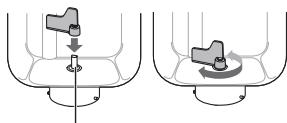
Kneading mounting shaft
Kneading
mounting shaft
Kneading
mounting shaft unit
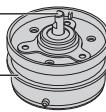
Part no. ADA29E226
Display exception
"1" appears on the display and operation has been stopped.
- When the power supply to machine is interrupted for a certain time, the display shows "1" after recovered. (It is standby mode and machine could not continue the program.)
→ Remove the bread, dough or ingredients and start again using new ingredients.
"H01", "H02" appears on the display.
- The display indicates a problem with the machine.
→ Consult the place of purchase or a Panasonic service centre.
"U50" appears on the display.
- The machine is hot (above 40°C ). This may occur with repeated use.
→ Allow the machine to cool down to below 40°C before using it again (U50 will disappear).
Representative in EU :
Panasonic Marketing Europe GmbH
Panasonic Testing Centre
Winsberging 15, 22525 Hamburg, Germany
Panasonic Taiwan Co., Ltd.
http://www.panasonic.com
© Panasonic Taiwan Co., Ltd. 2021

DZ50B228
MX0321L0

Printed in China

- OPERATING INSTRUCTIONS AND RECIPES
- CONTENTS
- PARTS NAMES AND INSTRUCTIONS
- MAIN UNIT
- ACCESSORIES
- SOURDOUGH CUP
- MEASURING SPOON
- SOURDOUGH STARTER SPOON
- CONTROL PANEL AND DISPLAY
- BREAD-MAKING INGREDIENTS
- IT IS EXTREMELY IMPORTANT TO USE THE CORRECT MEASURE OF INGREDIENTS FOR BEST RESULTS
- LIQUID INGREDIENTS
- DRY INGREDIENTS
- FLOUR
- WHITE FLOUR
- WHOLE WHEAT FLOUR
- RYE FLOUR
- DRY YEAST
- DAIRY PRODUCTS
- WATER
- SALT
- FAT
- YOU CAN MAKE YOUR BREAD TASTE BETTER BY ADDING OTHER INGREDIENTS
- EGGS
- BRAN
- WHEAT GERM
- SPICES, HERBS
- IF USING A BREAD MIX
- BREAD MIXES INCLUDING DRY YEAST
- BREAD MIX WITH SEPARATE DRY YEAST SACHET
- BAKING BRIOCHE WITH BRIOCHE MIX
- MENU CHARTS AND BAKING OPTIONS
- FUNCTION AVAILABILITY AND TIME REQUIRED
- BEFORE USE
- PREPARATIONS
- FOR SD-YR
- FOR SD-R
- PRESS OR BUTTON IN THE MENU (☑) BAR TO SELECT A BREAD MENU
- PRESS START (◇) BUTTON TO START THE MACHINE
- WHEN BREAD IS READY (MACHINE BEEPS 8 TIMES AND THE CUBE ( ) NEAR END FLASHES), PRESS STOP ( ⊙ ) BUTTON AND UNPLUG
- REMOVE THE BREAD IMMEDIATELY BY USING DRY OVEN GLOVES AND PLACE IT ON A WIRE RACK. (6)
- MAKING DOUGH
- SEE P. GB6 OF PREPARATIONS
- PRESS OR BUTTON IN THE MENU (□) BAR TO SELECT A DOUGH MENU
- PRESS BUTTON TO START
- WHEN DOUGH IS READY (MACHINE BEEPS 8 TIMES AND THE CUBE ( ) NEAR END FLASHES), PRESS BUTTON AND UNPLUG
- BREAD DOUGH
- SHAPE THE FINISHED DOUGH TO YOUR FAVOURITE SHAPE AND ALLOW IT TO RISE UNTIL DOUBLE SIZE, THEN BAKE IN THE OVEN
- PIZZA DOUGH
- DIVIDE THE DOUGH WITH SCRAPER AND SHAPE THEM INTO BALLS
- COVER THEM WITH DAMP KITCHEN TOWEL AND LEAVE IT FOR 10 MINUTES
- SHAPE INTO A FLAT ROUND AND MAKE HOLES WITH A FORK
- SPREAD YOUR FAVOURITE SAUCE AND DESIRED TOPPING THEN BAKE IT IN THE OVEN
- ADDITIONAL INGREDIENTS
- AVAILABLE MENU
- ATTENTION OF INGREDIENTS
- DRY/INSOLUBLE INGREDIENTS (USING RAISIN NUT DISPENSER - ADD AUTOMATICALLY)
- DRIED FRUITS
- NUTS, SEEDS
- HERBS
- BACON, SALAMI, OLIVES, DRY TOMATO
- MOIST / VISCOUS / SOLUBLE INGREDIENTS* (ADDING INTO THE BREAD PAN BY HAND - CANNOT BE PLACED IN THE RAISIN NUT DISPENSER)
- FRESH FRUITS, FRUITS PICKLED IN ALCOHOL, VEGETABLES
- CHEESE, CHOCOLATE
- BREAD MIX & BREAD MIX RAISIN
- SELECT THE MENU
- PRESS BUTTON AND REMOVE BREAD WHEN MACHINE BEEPS 8 TIMES AND THE CUBE ( ) NEAR END FLASHES
- SOURDOUGH & SOURDOUGH DOUGH
- STAGE 1 MAKING SOURDOUGH STARTER
- STAGE 2 BAKING/MAKING SOURDOUGH
- GLUTEN FREE INFORMATION
- BAKING GLUTEN FREE BREAD
- BAKING GLUTEN FREE CAKE
- AFTER ABOUT 2 MINUTES, OPEN THE LID WHEN YOU HEAR THE BEEP SOUND. SCRAPE OFF THE FLOUR WITHIN 3 MINUTES WHILE IS FLASHING. CLOSE THE LID AND RESTART
- AFTER ABOUT 6 MINUTES, OPEN THE LID WHEN YOU HEAR THE BEEP SOUND. SCRAPE OFF THE FLOUR WITHIN 3 MINUTES WHILE IS FLASHING. CLOSE THE LID AND RESTART
- AFTER ABOUT 12 MINUTES, OPEN THE LID WHEN YOU HEAR THE BEEP SOUND. SCRAPE OFF THE DOUGH ON THE SIDEWALL OF BREAD PAN WHILE IS FLASHING. CLOSE THE LID AND RESTART
- PRESS BUTTON AND REMOVE CAKE WHEN MACHINE BEEPS 8 TIMES AND THE CUBE ( ) NEAR END FLASHES
- TIPS
- GLUTEN FREE PIZZA
- GLUTEN FREE PASTA
- BAKING CAKE
- ADDITIONAL BAKING
- BAKE ONLY
- SET THE BAKING TIME
- MAKING JAM / COMPOTE
- PREPARATIONS FOR JAM-MAKING
- PREPARATIONS FOR COMPOTE-MAKING
- SET THE COOKING TIME, THEN START THE MACHINE
- ADDITIONAL COOKING
- TIPS FOR JAM-MAKING
- CAKE KNEADING
- SET THE KNEADING TIME
- BREAD KNEADING
- RISE
- RECIPES
- EXAMPLE
- RECIPE NAME
- ABBREVIATION
- OPTION ICON
- NECESSARY OPERATION ICON
- BREAD RECIPES
- BASIC
- WHITE BREAD
- MILK BREAD
- BASIC RAPID
- RAPID WHITE BREAD
- ITALIAN BREAD
- BASIC RAISIN
- RAISIN BREAD
- SEEDED BREAD
- BASIC STUFFED
- STUFFED BREAD
- STUFFED TOMATO, OLIVE AND TOMATO JUICE
- BREAD MIX
- VEGETABLE JUICE BREAD
- BREAD MIX RAISIN
- MATCHA CHESTNUT BREAD
- WHOLE WHEAT
- WHOLE WHEAT BREAD
- OAT AND BRAN BREAD
- WHOLE WHEAT RAPID
- WHOLE WHEAT BREAD RAPID
- RAPID WHOLE WHEAT BREAD
- WHOLE WHEAT RAISIN
- WHOLE WHEAT RAISIN BREAD
- MAPLE AND PECAN NUT BREAD
- BRIOCHE
- BASIC BRIOCHE
- PANETTONE
- FRENCH
- FRENCH BREAD
- PAIN DE CAMPAGNE
- RYE (SD-YR2550 ONLY)
- RYE
- RYE AND WHITE
- SOURDOUGH
- GLUTEN FREE RECIPES
- GLUTEN FREE BREAD
- GLUTEN AND WHEAT FREE BREAD
- FLAVOURED GLUTEN FREE BREAD
- SPICY FRUIT BREAD
- MAPLE & PECAN BREAD
- FIVE SEEDS BREAD
- SUNDRIED TOMATO & PARMESAN BREAD (1 H 55 MIN)
- GLUTEN FREE CAKE
- GLUTEN FREE CHOCOLATE CAKE
- GLUTEN FREE TEA CAKE
- GLUTEN FREE BANANA CAKE
- DOUGH RECIPES
- BASIC DOUGH
- SOFT ROLLS / BAPS
- BASIC RAISIN DOUGH
- HOT CROSS BUNS
- WHOLE WHEAT DOUGH
- WHOLE WHEAT RAISIN DOUGH
- WHOLE WHEAT WALNUT ROLLS
- SOURDOUGH DOUGH
- SOURDOUGH DOUGH (RYE)
- SOURDOUGH STARTER
- PIZZA
- DOUGHNUT (USING FAILED UNFERMENTED BREAD DOUGH)
- FOCACCIA
- SWEET RECIPES
- CAKE
- BUTTER CAKE
- TEA CAKE
- FRUIT CAKE
- CHERRY & MARZIPAN CAKE
- JAM
- STRAWBERRY JAM
- APRICOT JAM
- COMPUTE
- APPLE SAUCE
- PEACH IN VANILLA SYRUP
- CAKE DOUGH
- POPPY SEED GLUTEN FREE CAKE
- BREAD KNEADING & RISE
- STAGE
- RICE FLOUR ENGLISH MUFFIN DOUGH
- TROUBLESHOOTING
- PROBLEM
- CAUSE AND ACTION
- DURING OR AFTER COOKING
- PUZZLE
- DISPLAY EXCEPTION
Brand : PANASONIC
Model : SD-R2530KXC
Category : Bread maker