
GALLERY - Home Appliances FRIGIDAIRE - Free user manual and instructions
Find the device manual for free GALLERY FRIGIDAIRE in PDF.


| Product Type | Electric Ceramic Glass Cooktop |
| Brand | FRIGIDAIRE |
| Model | GALLERY |
| Surface Type | Ceramic Glass |
| Number of Burners | 4 |
| Burner Types | Radiant, Halogen, Variable Surface (depending on model) |
| Power Supply | 240 V, 60 Hz, 30 A |
| Dimensions (W x D x H) | 76 x 52 x 5 cm (estimated) |
| Weight | 18 kg (estimated) |
| Total Power | 7200 W (estimated) |
| Controls | Push-to-turn rotary knobs |
| Indicators | Operation indicator, hot surface indicator |
| Heat Settings | HI, MED, LOW, MIN (10 positions on halogen) |
| Daily Maintenance | Ceramic glass cleaning cream and damp cloth |
| Cleaning Burnt-on Residue | Razor blade scraper (on warm surface with caution) |
| Safety | Hot surface indicator, circuit breaker |
| Warranty | 5 years parts (2 years labor included) |
| Replacement Parts | Heating elements, halogen lamps, ceramic glass top, knobs |
| Repairability | Requires qualified technician |
Frequently Asked Questions - GALLERY FRIGIDAIRE
User questions about GALLERY FRIGIDAIRE
0 question about this device. Answer the ones you know or ask your own.
Ask a new question about this device
Download the instructions for your Home Appliances in PDF format for free! Find your manual GALLERY - FRIGIDAIRE and take your electronic device back in hand. On this page are published all the documents necessary for the use of your device. GALLERY by FRIGIDAIRE.
USER MANUAL GALLERY FRIGIDAIRE
Product Registration
Register Your Product
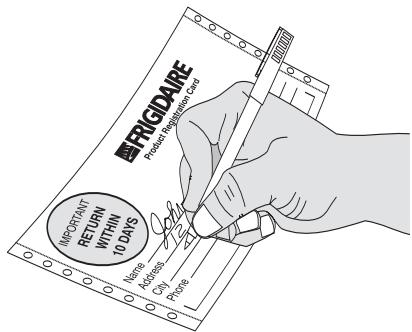
The PRODUCT REGISTRATION CARD should be filled in completely, signed and returned to the Frigidaire Company.
This Owner's Guide contains general operating instructions for your cooktop and feature information for several models. Your cooktop may not have all the described features.
Version en español
Spanish Owner's Guides
Frigidaire Home Products
Consumer Relations
P.O.Box 212378
Augusta, Georgia 30917-2378
Contents
Thank you for choosing this appliance. The information contained within this Owner's Guide will instruct you on how to properly operate and care for your cooktop. Please read through the information contained in your literature pack to learn more about your new appliance.
Record Your Model and Serial Numbers
Record in the space provided below the model and serial numbers found on the serial plate located on the burner box under the cooktop or inside the burner box.
Model Number:
Serial Number:
Date Purchased:
Note: The instructions appearing in this Owner's Guide are not meant to cover every possible condition and situation that may occur. Common sense and caution must be practiced when installing, operating and maintaining any appliance.
Product Registration 2
Important Safety Instructions 3-4
Selecting Surface Cooking Utensils 4
Setting Surface Controls 5
Ceramic Glass Cooktop Types of Heating Units Used 5-6
Hot Surface Indicator Light 6
Special Caution for Aluminum Foil and Aluminum Cooking Utensils 6
Things to Remember 7
Use and Care of Glass surface 7-8
General cleaning 9
Avoid service Checklist 10
Warranty 11-12
This guide contains important safety symbols and instructions. Please pay special attention to these symbols and follow all instructions given. Here is a brief explanation of the use of these symbols.
WARNING
This symbol will help alert you to situations that may cause serious bodily harm, death or property damage.
CAUTION
This symbol will help alert you to situations that may cause bodily injury or property damage.
- Remove all tape and packaging wrap before using the appliance. Destroy the carton and plastic bags after unpacking the appliance. Never allow children to play with packaging material.
- Proper Installation. Be sure your appliance is properly installed and grounded by a qualified technician in accordance with the National Electrical Code ANSI/NFPA No. 70 - latest edition in the United States, or CSA C22.1, Part 1 in Canada, and local code requirements. Install only per installation instructions provided in the literature package for this appliance.
Ask your dealer to recommend a qualified technician and an authorized repair service. Know how to disconnect the electrical power to the appliance at the circuit breaker or fuse box in case of an emergency.
- User Servicing. Do not repair or replace any part of the appliance unless specifically recommended in the manuals. All other servicing should be done only by a qualified technician to reduce the risk of personal injury and damage to the appliance.
- Never modify or alter the construction of an appliance by removing panels, wire covers or any other part of the product.
- Storage on Appliance. Flammable materials should not be stored near surface units. This includes paper, plastic and cloth items, such as cookbooks, plasticware and towels, as well as flammable liquids. Do not store explosives, such as aerosol cans, on or near the appliance. Flammable materials may explode and result in fire or property damage.
CAUTION
Do not store items of interest to children in the
cabinets above the appliance.
- Do not leave children alone. Children should not be left alone or unattended in the area where an appliance is in use. They should never be allowed to sit or stand on any part of the appliance.
- DO NOT TOUCH SURFACE UNITS OR AREAS NEAR THESE UNITS. Surface units may be hot even though they are dark in color. Areas near surface units may become hot enough to cause burns. During and after use, do not touch, or let clothing or other flammable materials touch these areas until they have had sufficient time to cool. Among these areas are the cooktop and areas facing the cooktop.
- Wear Proper Apparel. Loose-fitting or hanging garments should never be worn while using the appliance. Do not let clothing or other flammable materials contact hot surfaces.
WARNING
Never use your appliance for warming or cooling.
- Do Not Use Water or Flour on Grease Fires. Smother the fire with a pan lid, or use baking soda, a dry chemical or foam-type extinguisher.
- When heating fat or grease, watch it closely. Fat or grease may catch fire if allowed to become too hot.
- Use Only Dry Pot holders. Moist or damp pot holders on hot surfaces may result in burns from steam. Do not let the pot holders touch hot heating surface units. Do not use a towel or other bulky cloth instead of a pot holder.
- Do Not Heat Unopened Food Containers. Buildup of pressure may cause the container to burst and result in injury.
IMPORTANT INSTRUCTIONS FOR USING YOUR COOKTOP
- Know which knob controls each surface unit.
- Clean the appliance regularly to keep all parts free of grease that could catch fire. Exhaust fan ventilation hoods and grease filters should be kept clean. Do not allow grease to accumulate on hood or filter. Greasy deposits in the fan could catch fire. When flaming food under the hood, turn fan on. Refer to hood manufacturer's instructions for cleaning.
- Use Proper Pan Size. This appliance is equipped with one or more surface units of different sizes. Select utensils having flat bottoms large enough to cover the surface unit. The use of undersized utensils will expose a portion of the surface heating unit to direct contact and may result in ignition of clothing. Proper relationship of utensil to the surface unit will also improve efficiency.
- Utensil Handles Should Be Turned Inward and Should Not Extend Over Adjacent Surface Units. To reduce the risk of burns, ignition of flammable materials, and spillage due to unintentional contact with the utensil.
- Never Leave Surface Units Unattended. Boilovers cause smoking and greasy spillovers that may ignite, or a pan that has boiled dry may melt.
- Protective Liners. Do not use aluminum foil to line any part of the appliance. Only use aluminum foil as recommended for baking if used as a cover placed on the food. Any other use of protective liners or aluminum foil may result in a risk of electric shock or fire or short circuit.
IMPORTANT SAFETY INSTRUCTIONS (continued)
- Glazed Cooking Utensils. Only certain types of glass, glass/ ceramic, ceramic, earthenware, or other glazed utensils are suitable for range top service without breaking due to the sudden change in temperature. Check the manufacturer's recommendations for cooktop use.
FOR GLASS COOKTOP ONLY
-
Do Not Clean or Operate a Broken Cooktop. If cooktop should break, cleaning solutions and spillovers may penetrate the broken cooktop and create a risk of electric shock. Contact a qualified technician immediately.
-
Clean Cooktop with Caution. If a wet sponge or cloth is used to wipe spills on a hot cooking area, be careful to avoid a steam burn. Some cleaners can produce harmful fumes if applied to a hot surface.
- Do Not Place Hot Cookware on Cold Cooktop Glass. This could cause glass to break.
SAVE THESE INSTRUCTIONS
Selecting Surface Cooking Utensils
For best results and energy conservation, choose cooking utensils that have these characteristics:
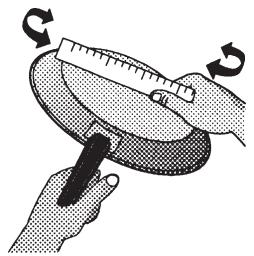
Pans should have flat bottoms that make good contact with the entire surface element. Check for flatness by rotating a ruler across the bottom. There should be no gaps between the pan and ruler.
Note: Always use a utensil for its intended purpose. Follow manufacturer's instructions. Some utensils were not made to be used in the oven or on the cooktop.
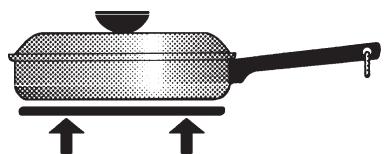
*GOOD
- Flat bottom and straight sides.
- Tight fitting lids.
- Weight of handle does not tilt pan. Pan is well balanced.
-
Pan sizes match the amount of food to be prepared and the size of the surface element.
Made of material that conducts heat well.
Easy to clean. -
Specialty pans such as lobster pots, griddles and pressure cookers may be used but must conform to the above recommended cookware requirements.
POOR
- Curved and warped pan bottoms.
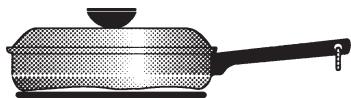
- Pan overhangs unit by more than 2.5 cm ( 1'' ).
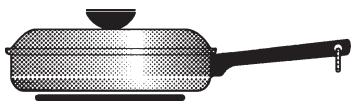
- Heavy handle tilts pan.
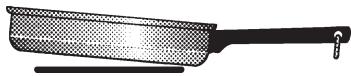
Pan is smaller than element.
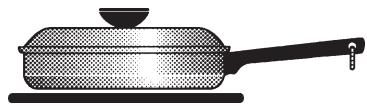
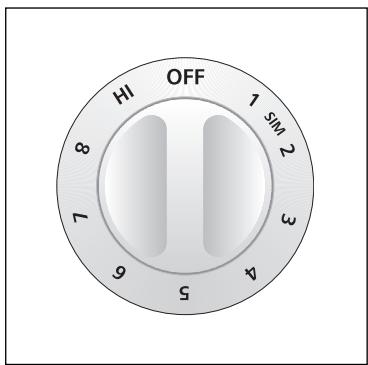
- Place the pan on the surface element.
- Push in and turn the surface element control knob to desired setting.
- The surface signal light will glow when one or more elements are turned on. Always turn the element off before removing the pan.
The suggested settings found in the chart below are based on cooking in medium-weight aluminum pans with lids. Settings may vary when using other types of pans.
| Setting | Type of Cooking |
| MAX or HI | Start most foods, bring water to a boil, pan broiling. |
| MEDIUM | Maintain a slow boil, thicken sauces and gravies, steam vegetables. |
| MEDIUM LOW | Keep foods cooking, poach, stew. |
| MIN or 1 | Keep warm, melt, simmer. |
Note: The size and type of utensil used, and the amount and type of food being cooked will influence the setting needed for best cooking results.
CAUTION Do not place plastic items such as salt and pepper shakers, spoon holders or plastic wrappings on top of the cooktop when it is in use. These items could melt or ignite. Pot holders, towels or wood spoons could catch fire if placed too close to the element.
Ceramic Glass Cooktop (some models)
The ceramic-glass cooktop has electric heating coils located below the ceramic glass surface. The design of the glass cooktop outlines the area of the surface heating unit below. Most importantly, make sure the diameter of the pan matches the diameter of the surface unit. Heat is transferred up through the surface of the cooktop. Only flat-bottomed pans should be used. The type and size of the cookware, number of surface units in use and the settings of the surface units are factors that will affect the amount of heat that will spread to areas surrounding the units. The areas surrounding the units may become hot enough to cause burns.
The cooktop should not be used as a cutting board or work surface. Dropping heavy or hard objects on the cooktop may crack it. Pans with rough bottoms may scratch the cooktop surface. Placing foods directly on the smoothtop surface (without cooking utensils) is not recommended as difficult cleaning will result and foods may smoke and cause a potential fire hazard. Never use the griddle or similar cooking sheet on the ceramic glass cooktop.
TYPES OF HEATING UNITS USED
Depending on model, two types of heating units may be found under the ceramic glass cooktop:
- regular (single coil) radiant elements of various diameters or shapes, plus expandable type (double coils) radiant elements of various diameters or shapes.
halogen elements of various diameters or shapes.
REGULAR RADIANT HEATING UNITS (some models)
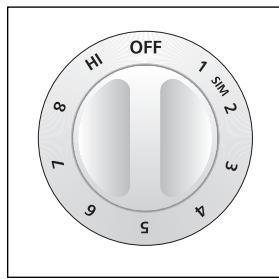
The ceramic glass design shows the location of the heating surfaces.
Control knobs are used to set the heat power levels; knobs need first to be pressed in when at OFF position, then turned to the desired heat settings.
A glowing red surface unit extending beyond the bottom edge of the cooking utensil indicates the utensil is too small for the unit. The control knob does not have to be set exactly on a particular mark. Use the marks as a guide and adjust the control knob as needed. The hot surface and surface indicator lights will glow.
TYPES OF HEATING UNITS USED (continued)
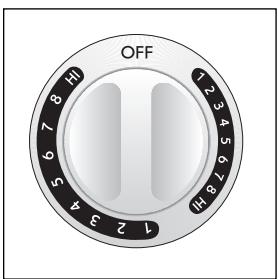
EXPANDABLE RADIANTHEATINGUNITS (some models)
This heating unit combines the characteristics of a small and a large regular radiant heating unit. Its principal advantage is to allow small and large utensils to be used on the same heating unit, therefore increasing the cooktop flexibility.
Heat power levels are adjusted by a special control knob that has a dual set of graduations; for small utensils use the small graduations; the inner surface only will be heating. For larger utensils use the larger graduations; the whole surface will be heating.
The hot surface and surface indicator lights will glow when the heating unit is turned ON.
HALOGEN HEATING UNITS (some models)
The halogen element is similar to the radiant element with the addition of a halogen lamp to the heating coil. The lamp immediately heats up and glows bright red when the element is turned on. Cook time is improved.
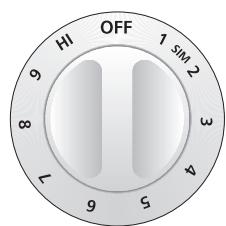
10-Step
Halogen Control Knob
10-Step Halogen Element (some models)
The control for this type of element can be set in 10 different heating positions. Each position causes the element to operate continuously at a fixed power output "MIN or 1" is the lowest setting, "MAX or HI" is the highest.
Infinite Step Halogen Element (some models)
The control for this type of element can be set anywhere between positions "MIN or 1" and "MAX or HI".
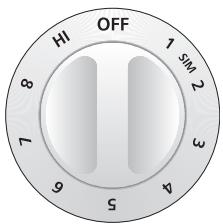
Infinite Step Halogen Control Knob
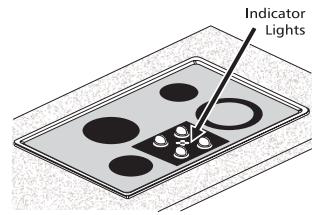
(Typical 30" cooktop shown)
HOT SURFACE INDICATOR LIGHT (some models)
Some models have an indicator light located on the ceramic glass cooktop that glows as soon as the glass begins to warm up. When the heating unit is tuned off, it will continue to glow as long as the glass remains warm enough to cause burns. Other models have 4 hot surface indicators (one per element) arranged in a cluster. Their location is as shown in the illustration.
SPECIAL CAUTION FOR ALUMINUM FOIL AND ALUMINUM COOKING UTENSILS
1) Aluminum foil
Use of aluminum foil will damage the cooktop. Do not use under any circumstances.
2) Aluminum utensils
The melting point of aluminum being much lower than that of other metals, care must be taken when aluminum pots or pans are used. If allowed to boil dry, not only will the utensil be ruined, but also permanent damage in the form of breakage, fusing or marking may affect the ceramic glass surface.
Ceramic Glass Cooktop (continued)
THINGS TO REMEMBER
-
AVOID using bleach and do not use ammonia to clean the ceramic surface.
-
Do not put plastic items on warm cooking areas.
-
Never slide oven racks across cooktop surface. They may scratch or metalmark the cooktop.
-
If cooktop should break, do not use cooktop or attempt to clean it. Call your authorized service technician immediately.
-
Never use a trivet or metal stand between the cooking utensil and the ceramic cooktop. The ceramic surface may be scratched, metal marked or etched by such items.
-
Sugary spills can cause pitting of your cooktop surface. Therefore, you must begin cleaning the spills while the cooktop is still hot. Use caution when following the steps below.
a) Turn off all surface units and remove all pans immediately.
b) Wearing an oven mitt, use a razor blade scraper to scrape the hot spill out of the cooking zone to a cooler area on the cooktop.
c) Allow the cooktop to cool.
USE AND CARE OF GLASS SURFACE
| Problem | Cause | To Prevent | To Remove |
| Fine "brown lines" (tiny scratches or abrasions which have collected soil) | Coarse particles (salt, sand, sugar or grit) between bottom of cookware and cooktop that are not removed before cooking. Using incorrect cleaning materials. | Clean cooktop after every use. | Tiny scratches are not removable. They can be minimized by continual use of cleaner cream. Such scratches do not affect cooking. |
| Metal marking (mark or black marks). | Sliding or scraping metal utensils or oven shelves across cooktop. | Daily use of cleaner cream. | |
| Brown streaks and specks. | Cleaning with a sponge or dishcloth that has been used for other kitchen tasks. | Do not slide cookware across cooktop. | Apply cleaner cream with dampened paper towel to a cooled surface. |
| Use cleaner creme with clean, damp paper towel. | Use a small amount of cleaner cream with clean, damp paper towel. |
NOTE: Due to the high intensity of heat generated by the surface elements, the glass surface will turn green when the element will be turned off. This phenomenon is normal and the glass will come back to its original white color after it has completely cooled down. (White glass cooktops only).
CLEANING MATERIALS FOR CERAMIC GLASS COOKTOP
Some cleaning materials may contain an ingredient which can damage the cooktop. Use recommended materials only (see below). Cleaner cream should be used regularly. First use recommended products listed below, then use cleaner cream.
Use only recommended cleaning products and follow these basic cleaning suggestions.
- BEFORE THE COOKTOP IS USED. Thoroughly clean and saturate the cooktop with cleaner cream.
a) Dampen clean paper towel and clean unit.
b) Wipe off with another clean, damp paper towel; then wipe dry.
- For normal daily cleaning, apply a dab of cleaner cream in the center of each unit-area to be cleaned. Start with approximately 1/8 teaspoon. (Apply more if needed). Then, proceed as stated above in (a and b).
- Make sure bottom of cookware and cooking areas are clean and dry.
- Select heat settings and cookware large enough for food and liquid. This stops boilovers and spattering.
- Wipe up food spills and spatters before they burn into surface.
IMPORTANT: Regularly use cleaner cream. If you run out of cleaner cream, use one of the cleansers listed. Be sure to get a new supply of cleaner cream.

Never mix cleaning products! Mixtures may interact, with damaging or hazardous results.
Ceramic Glass Cooktop (continued)
USE AND CARE OF GLASS SURFACE (continued)
APPROVED CLEANER FOR CERAMIC GLASS COOKTOP
- Baking soda.
- Non-impregnated plastic and nylon pads.
- For burned on material, scrape with single-edged razor blade, held at a 30^ angle.
- Ceramic glass cleaning cream.
DO NOT USE ON CERAMIC GLASS COOKTOP
- Avoid pads, that can leave marks and scratches.
- Avoid heavy-duty cleansing powders, these can scratch, depending on their abrasiveness and cleaning pressure applied.
- Avoid chemical oven cleaners. These can etch the cooktop surface and are caustic.
- Avoid rust stain removers containing hydrofluoric acid.
- Avoid using bleach and do not use ammonia.
SPECIAL CLEANING INSTRUCTIONS FOR MINERAL DEPOSITS AND DISCOLORATIONS
Problem: A gray brown stain that is not removed when using cleaner cream.
Cause: Condensation, when cooking, often collects and drips from cookware. The minerals found in water supply and foods may cause a gray or brown film to develop on cooktop. This film is so thin that it cannot be felt and appears to be under cooktop.
To Prevent: Daily and proper use of cleaner cream.
To Remove:
Wet surface with water and sprinkle on cleaner cream.
- Scrub with clean, damp paper towel until stain disappears.
Clean remaining paste away with damp paper towel.
- Apply dab of cleaner cream and polish with a clean paper towel.
WARNING
- Do not use cleansers on a heated surface. Fumes could be hazardous. Wait for area to cool before cleaning.
- Do not use cleaner cream to clean porcelain, paint or aluminium.
General Cleaning
Cleaning Various Parts of Your Cooktop
Before cleaning any part of the cooktop, be sure all controls are turned OFF and the cooktop is COOL. REMOVE SPILLOVERS AND HEAVY SOILING AS SOON AS POSSIBLE. REGULAR CLEANING WILL REDUCE THE NUMBER OF MAJOR CLEANING LATER.
| Surfaces | How to Clean |
| Glass, Painted and Plastic Control Knobs, Body Parts, and Decorative Trim | For general cleaning, use hot soapy water and a cloth. For more difficult soils and built-up grease, apply a liquid detergent directly onto the soil. Leave on soil for 30 to 60 minutes. Rinse with a damp cloth and dry. DO NOT use abrasive cleaners on any of these materials; they can scratch or dull the finish. Commercial glass cleaners recommended for glass cooktops may also be used. |
| Control Panel | Wipe the control panel clean after each use. Before cleaning the control panel, turn all controls to OFF and remove the control knobs. To remove, pull each knob straight off the shaft. Clean using hot, soapy water and a cloth. Be sure to squeeze excess water from the cloth before wiping the panel; especially when wiping around the controls. Excess water in or around the controls may cause damage to the appliance. To replace knobs after cleaning, line up the flat sides of both the knob and the shaft; then push the knob into place. |
| Stainless Steel, Chrome Decorative Trim | Cover stubborn spots with an ammonia-soaked paper towel for 30-40 minutes. Rinse with clean water and a cloth. Cleaners made especially for stainless steel, chrome or copper are also recommended. Rinse all cleaners before operating cooktop. Bluish stains may result due to heat combining with the cleaning material and they cannot be removed. |
| Ceramic -Glass Cooktop | See Ceramic-Glass Cooktop in this Owner's Guide. |
Avoid Service Checklist
Before you call for service, review this list. It may save you time and expense. The list includes common occurrences that are not the result of defective workmanship or materials in this appliance.
| OCCURRENCE | POSSIBLE CAUSE/SOLUTION |
| Entire cooktop does not operate. | House fuse has blown or circuit breaker has tripped. Check/reset breaker or replace fuse. If the problem is a circuit overload, have this situation corrected by a qualified electrician. |
| Service wiring not complete. Contact installation agent or dealer. | |
| Power outage. Check house lights to be sure. Call local electric company. | |
| Surface element does not heat. | No power to appliance. Check/reset breaker or replace fuse. If the problem is a circuit overload, or improper connection of the armored cable supplied with the appliance, have this situation corrected by a qualified electrician. |
| Too low heat setting. Turn control to a slightly higher setting until element comes on. | |
| Incorrect control is on. Be sure to use correct control for the element to be used. | |
| Surface element too hot or not hot enough. | Incorrect control setting. Raise or lower setting until proper amount of heat is obtained. Dial markings are an indicator of relative heat settings and will vary slightly. |
| Lightweight or warped pans being used. Use only flat, evenly balanced, medium or heavyweight cookware. | |
| Voltage is incorrect. Be sure appliance is properly connected to the specified power source. Use only flat bottom, evenly balanced, medium or heavyweight cookware. Pans having a flat bottom heat better than warped pans. Cookware material affects heating. Heavy and medium weight pans heat evenly. Because lightweight pans heat unevenly, foods may burn easily. | |
| Food not heating evenly. | Improper cookware. Select flat-bottomed cookware of a proper size to fit element. |
| Incorrect control setting. Raise or lower setting until proper amount of heat is obtained. | |
| Scratches or abrasions on ceramic glass cooktop surface. | Coarse particles (such as salt or sand) are between cooktop and utensil. Be sure cooktop surface and bottom of utensils are clean before use. Small scratches do not affect cooking and will become less visible with use. |
| Cleaning materials not recommended for glass ceramic cooktop have been used. See Ceramic-Glass Cooktop section in this Owner's Guide. | |
| Cookware with rough bottom has been used. Use flat-bottomed, smooth utensils. See Selecting Surface Cooking Utensils in this Owner's Guide. | |
| Metal marks on ceramic glass cooktop surface. | Sliding or scraping of metal utensils on cooktop surface. Do not slide metal utensils on cooktop surface. Use a mildly abrasive cleanser to remove marks. |
| Brown streaks and specks on ceramic glass cooktop surface. | Boilovers have cooked onto surface. Use razor blade scraper to remove soil. See Ceramic-Glass Cooktop section in this Owner's Guide. |
| Cleaning materials not recommended for ceramic-glass cooktop have been used. Use recommended cleaners and cleaning method. See Ceramic-Glass Cooktop section in this Owner's Guide. | |
| Areas of discoloration on ceramic glass cooktop surface. | Mineral deposits from water and food. Wet surface with water and sprinkle on a cooktop cleaning creme. Scrub with a clean damp paper towel until the stain disappears. Wipe remaining paste away, then apply a small amount of cooktop cleaning creme and polish with a clean paper towel. Use cookware with clean, dry bottoms. See Ceramic-Glass Cooktop section in this Owner's Guide. |
FRIGIDAIRE GALLERY SMOOTHTOP COOKTOP WARRANTY
Your Frigidaire product is protected by this warranty (for United States)
| WARRANTY PERIOD | FRIGIDAIRE, THROUGHITS AUTHORIZATION SERVICERS, WILL: | THE CONSUMER WILL BE RESPONSIBLE FOR: | |
| FULLONE-YEAR WARRANTY | One year from original purchase date. | Pay all costs for repairing or replacing any parts of this apppliance which prove to be defective in materials or workmanship. | Costs of service calls that are listed under NORMAL RESPONSIBILITIES OF THE CONSUMER.* |
| LIMITED 2ND - 5TH YEARWARRANTY (Glass Smoothtop) | Secondthrough fifty years from original purchase date. | Provide a replacement for any defective surface heating element or glass smoothtop that breaks due to thermal breakage. | Diagnostic costs and any transportation and labor costs which are required because of service. |
| LIMITED WARRANTY (Applicable to the State of Alaska) | Time periods listed above. | All of the provisions of the full and limited warranties above and the exclusions listed below apply. | Costs of the technician's travel to the home and any costs for pick up and delivery of the appliance required because of service. |
Your appliance is warranted by Frigidaire Home Products, a division of White Consolidated Industries, Inc. We authorize no person to change or add to any of our obligations under this warranty. Our obligations for service and parts under this warranty must be performed by Frigidaire Home Products Consumer Services or an authorized Frigidaire servicer.
*NORMAL RESPONSIBILITIES OF THE CONSUMER
This warranty applies only to products in ordinary household use, and the consumer is responsible for the items listed below:
- Proper use of the appliance in accordance with instructions provided with the product.
- Proper installation by an authorized servicer in accordance with instructions provided with the appliance and in accordance with all local plumbing, electrical and/or gas codes.
- Proper connection to a grounded power supply of sufficient voltage, replacement of blown fuses, repair of loose connections or defects in house wiring.
- Expenses for making the appliance accessible for servicing, such as removal of trim, cupboards, shelves, etc., which are not a part of the appliance when it was shipped from the factory.
- Damages to finish after installation.
- Replacement of light bulbs and/or fluorescent tubes (on models with these features).
EXCLUSIONS
This warranty does not cover the following:
- CONSEQUENTIAL OR INCIDENTAL DAMAGES SUCH AS PROPERTY DAMAGE AND INCIDENTAL EXPENSES RESULTING FROM ANY BREACH OF THIS WRITTEN OR ANY IMPLIED WARRANTY.
Note: Some states do not allow the exclusion or limitation of incidental or consequential damages, so this limitation or exclusion may not apply to you. - Service calls which do not involve malfunction or defects in workmanship or material, or for appliances not in ordinary household use. The consumer shall pay for such service calls.
- Damages caused by services performed by persons other than authorized Frigidaire servicers; use of parts other than Frigidaire Home Products Genuine Renewal Parts; obtained from persons other than such servicers; or external causes such as abuse, misuse, inadequate power supply or acts of God.
- Products with original serial numbers that have been removed or altered and cannot be readily determined.
IF YOU NEED SERVICE
Keep your bill of sale, delivery slip, or some other appropriate payment record. The date on the bill establishes the warranty period should service be required. If service is performed, it is in your best interest to obtain and keep all receipts. This written warranty gives you specific legal rights. You may also have other rights that vary from state to state. Service under this warranty must be obtained by following these steps, in order:
- Contact Frigidaire Home Products Consumer Services or an authorized Frigidaire servicer.
- If there is a question as to where to obtain service or parts, call or write our Consumer Relations Department at:
Frigidaire Home Products Consumer Relations
P.O.Box 212378
Augusta, Georgia 30917-2378
(800) 944-9044
FRIGIDAIRE
COMPANY
Consumer Services
Product features or specifications as described or illustrated are subject to change without notice. All warranties are made by White Consolidated Industries, Inc. This warranty applies only in the 50 states of the U.S.A. and Puerto Rico.
FRIGIDAIRE
Gallery
WARRANTY (for Canada)
ELECTRIC COOKTOP
WARRANTOR:
FRIGIDAIRE HOME PRODUCTS
7075 Ordan Drive
Mississauga, Ontario
L5T 1K6
This cooktop is a branded product of Frigidaire Home Products.
WARRANTY PERIOD:
For the first and second year after purchase by the original owner.
For the third, fourth and fifth year after purchase by the original owner.
For service under this warranty, contact your local dealer/retailer, authorized FRIGIDAIRE PARTS AND SERVICE depot or:
FRIGIDAIRE PARTS AND SERVICE
7075 Ordan Drive
Mississauga, Ontario L5T 1K6
Tel: (905) 565-9200
Fax: (905) 565-0937
WARRANTOR WILL, THROUGH ITS AUTHORIZATION DEPARTMENT:
Pay all costs to repair or replace defective parts.
Pay all costs (excluding service and labour charge) to repair or replace defective heating elements and halogen lamps. Pay all costs (excluding service and labour charge) to replace the ceramic glass that breaks due to thermal breakage.
WARRANTY APPLIES TO:
a) Products purchased and installed in Canada for personal single family household use.
b) Defects resulting or arising out of the manufacturing process.
c) Products bearing legible manufacturer's model and serial numbers.
d) Replacements parts only for the remainder of the original warranty.
WARRANTY DOES NOT APPLY TO:
a) Transportation damage.
b) Supply and replacement of fuses and glass.
c) Parts and service supplied or obtained from other than FRIGIDAIRE PARTS AND SERVICE or FRIGIDAIRE PARTS AND SERVICE authorized depots.
d) Damage or failure as the result of the abuse, improper or commercial use.
CONSUMER/OWNER RESPONSIBILITY:
a) To provide proof of the original date of purchase by means of a bill of sale verifying purchase date.
b) To pay all costs to make the appliance readily accessible for service.
c) To ensure proper power supply and connection of the appliance to the same.
d) Proper installation, control setting and care of finish.
This warranty is in addition to any statutory warranties contained in any applicable legislation. The terms and conditions of this warranty are not intended to exclude or limit your rights under those statutes. The warrantor however reserves the right to charge transportation and travelling costs for distances in excess of 48 kilometers (30 miles) from the nearest FRIGIDAIRE PARTS AND SERVICE authorized service depot.
This warranty plus the statutory warranties mentioned are the only warranties given to the consumer/owner for this product.
LA GARANTIE S'APPLIQUE :
LA GARANTIE NE S'APPLIQUE PAS :
- Product Registration
- Register Your Product
- Version en español
- Contents
- Record Your Model and Serial Numbers
- IMPORTANT INSTRUCTIONS FOR USING YOUR COOKTOP
- IMPORTANT SAFETY INSTRUCTIONS (continued)
- FOR GLASS COOKTOP ONLY
- SAVE THESE INSTRUCTIONS
- Selecting Surface Cooking Utensils
- POOR
- Ceramic Glass Cooktop (some models)
- TYPES OF HEATING UNITS USED
- REGULAR RADIANT HEATING UNITS (some models)
- TYPES OF HEATING UNITS USED (continued)
- EXPANDABLE RADIANTHEATINGUNITS (some models)
- HALOGEN HEATING UNITS (some models)
- 10-Step Halogen Element (some models)
- Infinite Step Halogen Element (some models)
- HOT SURFACE INDICATOR LIGHT (some models)
- SPECIAL CAUTION FOR ALUMINUM FOIL AND ALUMINUM COOKING UTENSILS
- 1) Aluminum foil
- 2) Aluminum utensils
- Ceramic Glass Cooktop (continued)
- THINGS TO REMEMBER
- USE AND CARE OF GLASS SURFACE
- CLEANING MATERIALS FOR CERAMIC GLASS COOKTOP
- USE AND CARE OF GLASS SURFACE (continued)
- APPROVED CLEANER FOR CERAMIC GLASS COOKTOP
- DO NOT USE ON CERAMIC GLASS COOKTOP
- SPECIAL CLEANING INSTRUCTIONS FOR MINERAL DEPOSITS AND DISCOLORATIONS
- To Remove:
- WARNING
- General Cleaning
- Cleaning Various Parts of Your Cooktop
- Avoid Service Checklist
- FRIGIDAIRE GALLERY SMOOTHTOP COOKTOP WARRANTY
- Your Frigidaire product is protected by this warranty (for United States)
- *NORMAL RESPONSIBILITIES OF THE CONSUMER
- EXCLUSIONS
- IF YOU NEED SERVICE
- FRIGIDAIRE
- Gallery
- WARRANTY (for Canada)
- ELECTRIC COOKTOP
- WARRANTOR:
- WARRANTY PERIOD:
- FRIGIDAIRE PARTS AND SERVICE
- WARRANTOR WILL, THROUGH ITS AUTHORIZATION DEPARTMENT:
- WARRANTY APPLIES TO:
- WARRANTY DOES NOT APPLY TO:
- CONSUMER/OWNER RESPONSIBILITY:
- LA GARANTIE S'APPLIQUE :
- LA GARANTIE NE S'APPLIQUE PAS :
Brand : FRIGIDAIRE
Model : GALLERY
Category : Home Appliances