
5511, MAP 5511 - Washing machine BRANDT - Free user manual and instructions
Find the device manual for free 5511, MAP 5511 BRANDT in PDF.
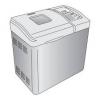

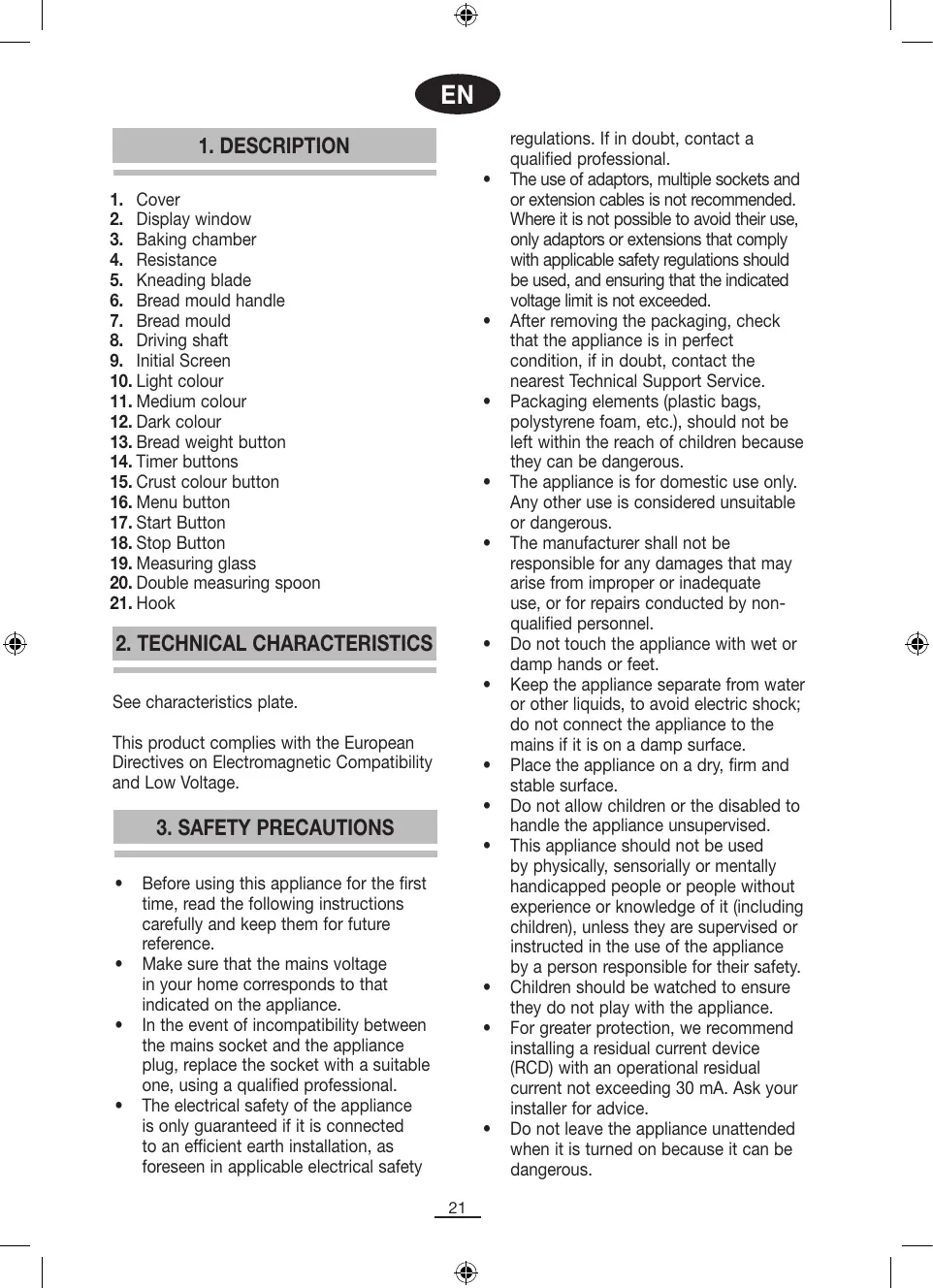


| Product type | Bread machine |
| Brand | BRANDT |
| Model | 5511, MAP 5511 |
| Bread weight | 500 g / 700 g / 1000 g depending on program |
| Number of programs | 11 (Normal bread, whole wheat, French, rapid, sweet, cake, bake only, pasta, dough, butter, jam) |
| Settings | Crust color (light, medium, dark), bread weight, delay timer |
| Special features | Keep warm (60 min), power outage memory (6 min) |
| Pan type | Non-stick, removable with handle |
| Kneading paddle | Drive shaft, removable, hook included |
| Display | LCD with time display |
| Power supply | 220-240 V, 50/60 Hz (check rating plate) |
| Power | Approximately 600 W (estimated) |
| Dimensions (approx.) | 30 x 30 x 35 cm (W x D x H) |
| Weight (approx.) | 5 kg |
| Maintenance | Clean exterior and interior with a damp cloth; pan and paddle washed with soapy water (not dishwasher safe for the pan) |
| Safety | Automatic shutdown, overheat protection, lid closed required |
| Included accessories | Measuring cup, double measuring spoon, hook |
| General information | Household use; compliant with EU directives |
Frequently Asked Questions - 5511, MAP 5511 BRANDT
User questions about 5511, MAP 5511 BRANDT
0 question about this device. Answer the ones you know or ask your own.
Ask a new question about this device
Download the instructions for your Washing machine in PDF format for free! Find your manual 5511, MAP 5511 - BRANDT and take your electronic device back in hand. On this page are published all the documents necessary for the use of your device. 5511, MAP 5511 by BRANDT.
USER MANUAL 5511, MAP 5511 BRANDT
Program 11: MARMALADE
11. WHAT DO I DO IF...
- Cover
- Display window
- Baking chamber
- Resistance
- Kneading blade
- Bread mould handle
- Bread mould
- Driving shaft
- Initial Screen
- Light colour
- Medium colour
- Dark colour
- Bread weight button
- Timer buttons
- Crust colour button
- Menu button 17. Start Button
- Stop Button
- Measuring glass
- Double measuring spoon
- Hook
2. TECHNICAL CHARACTERISTICS
See characteristics plate.
This product complies with the European Directives on Electromagnetic Compatibility and Low Voltage.
3. SAFETY PRECAUTIONS
- Before using this appliance for the first time, read the following instructions carefully and keep them for future reference. Make sure that the mains voltage in your home corresponds to that indicated on the appliance.
- In the event of incompatibility between the mains socket and the appliance plug, replace the socket with a suitable one, using a qualified professional.
- The electrical safety of the appliance is only guaranteed if it is connected to an efficient earth installation, as foreseen in applicable electrical safety regulations.
If in doubt, contact a qualified professional. - The use of adaptors, multiple sockets and or extension cables is not recommended. Where it is not possible to avoid their use, only adaptors or extensions that comply with applicable safety regulations should be used, and ensuring that the indicated voltage limit is not exceeded. After removing the packaging, check that the appliance is in perfect condition, if in doubt, contact the nearest Technical Support Service. - Packaging elements (plastic bags, polystyrene foam, etc.), should not be left within the reach of children because they can be dangerous. - The appliance is for domestic use only. Any other use is considered unsuitable or dangerous. - The manufacturer shall not be responsible for any damages that may arise from improper or inadequate use, or for repairs conducted by nonqualified personnel. - Do not touch the appliance with wet or damp hands or feet. - Keep the appliance separate from water or other liquids, to avoid electric shock; do not connect the appliance to the mains if it is on a damp surface. - Place the appliance on a dry, firm and stable surface. - Do not allow children or the disabled to handle the appliance unsupervised. - This appliance should not be used by physically, sensorially or mentally handicapped people or people without experience or knowledge of it (including children), unless they are supervised or instructed in the use of the appliance by a person responsible for their safety. Children should be watched to ensure they do not play with the appliance. - For greater protection, we recommend installing a residual current device (RCD) with an operational residual current not exceeding 30 mA. Ask your installer for advice. - Do not leave the appliance unattended when it is turned on because it can be dangerous.
- When removing the plug, never pull on the cable.
- Unplug the appliance before cleaning or maintenance.
- In the event of a fault or malfunction where the appliance is not to be used, turn off the appliance and do not attempt to repair it. If a repair is required, contact a Technical Assistance Service authorized by the manufacturer and request the use of original spare parts.
- If the cable for this appliance is damaged, contact an authorized Technical Assistance Service for it to be replaced.
- Do not leave the appliance exposed to the elements (rain, sun, ice, etc.).
- Do not use or let any part of the appliance come into contact with or near hot surfaces (kitchen gas or electric hobs or ovens).
- Do not use detergents or abrasive sponges to clean the appliance.
- Do not touch the hot surfaces. Use the handles.
- Do not let the cable come into contact with the hot parts of the appliance. Use gloves to protect from burning.
- Leave the oven to cool before cleaning.
- Do not immerse the appliance in water or any other liquid.
- To add ingredients, always remove the bread mould from the baking chamber.
- Do not use the Breadmaker when empty, as this could cause it serious damage.
- Do not use the baking chamber for storage purposes.
- Do not cover the steam vents and ensure that there is sufficient ventilation around the Breadmaker while running. Place the appliance at least 5 cm from the wall.
4. PREPARATION
- Before using the machine for the first time, carefully clean all the parts (see "Cleaning" section).
- Place the breadmaker on a flat, stable surface.
- Open the cover, remove the bread mould, and fit the kneading blade on the mould driving shaft (Fig. B).
- Choose the recipe for the type of bread required.
- Measure and pour the ingredients as in the following section.
- Place the bread mould into the baking pan and push down to ensure that the mould is well fixed into position (Fig. C).
- Lower the handle and close the cover.
- Plug in the machine. A beep sound will be heard and the LCD screen (9) will flash "0:00".
5. MEASURING INGREDIENTS
It is essential to carry out the preparation very carefully to obtain the best results. Allow sufficient time to carefully read the recipes and measure and weigh the ingredients exactly. The order and the measurements for the ingredients should be used as indicated in the recipes to maintain the best results. After the machine has been used a few times, the ingredients can be altered to suit your taste.
- Always measure liquid ingredients (e.g., water or milk) in the transparent measuring glass (19) which has measuring marks. The level of the liquids must coincide with the marks on the measuring glass, neither above nor below (Fig. D).
- Use an accurate kitchen scale or double measuring spoon (20) to measure ingredients such as flour, yeast, sugar, etc. (Fig. E & F). For the recipes, the smallest part of the spoon corresponds to a teaspoon and the large part to a tablespoon.
Measure and pour the liquid ingredients into the bread mould (Fig. G). Measure and mix all the dry ingredients before adding them to the liquid. Add the mix to the liquid (Fig. H).
Tip: add the yeast at the end, so that the dough rises in the best conditions. Make a small hole in the middle of the mix and add the yeast.
6. STARTING UP
- MENU SELECTION: Push the Menu button (16) to select the required programme in accordance with the type of bread required. The screen will show (9) the selected menu number.
Menu 1 → Basic bread: White wheat or rye flour.
Menu 2 → Wholemeal bread: Recipe with wholemeal or rye flour, oats or bran flour.
Menu 3 → French bread: Recipe with finely milled flour. Makes a crispy crust and is ideal for loaves with a low sugar and fat content.
Menu 4 → Quick bake bread: Makes bread in just over half an hour.
Menu 5 → Sweet bread: Recipes with fruit juice, additional sugar and other ingredients such as coconut flakes, raisins, dried fruit and nuts or chocolate.
Menu 6 → Cake: Recipe for baking cakes without fresh yeast or yeast preparation, but with powdered yeast or sodium bicarbonate.
Menu 7 → Baking: Programme to bake bread mix requiring no mixing or yeast, or for example if there is an electricity supply outage half way through the menu and the bread has not finished baking.
Menu 8 → Pasta mix: Recipe for making pasta mix.
Menu 9 → Mix: Recipe for making bread mix to mould and bake manually.
Menu 10 → Butter: Recipe for making homemade butter.
Menu 11 → Jam: Recipe for making homemade jam.
2. COLOUR/DEGREE OF BROWNING:
Select menus 1 to 6, for the bread or cake to have a light, medium, or dark crust. The breadmaker is set at the medium level. To select the level of browning, choose the crust colour button (15). The luminous indicator corresponding to the crust colour selected (10/11/12) will light up. The programme time on screen will also change at the same time.
- BREAD WEIGHT: Choosing the menus from 1 to 6, enables bread weight from 500/700 grams or 1,000 grams to be selected and baked. To do so push weight button (13). The luminous indicator corresponding to the weight will light up on the LCD screen (9). At the same time the programme time on screen will change.
- Timer: To increase or decrease the delay time for the start up in ten minute periods press «▲» and «▼». The timer should not be activated if ingredients which are easily spoiled have been added for example, eggs, milk or cream. For menu no. 8 pasta mix, the timer may not be used.
7. OPERATION
- Once the crust colour and bread weight menu have been chosen press the Start button (17) and the machine will start the selected programme. The following points will (:) flash and the machine will start with the programme. If the timer has been activated, the delayed start function will start to countdown. To stop or cancel the programme, push the "Stop" (18) button. DURING BAKING: On certain recipes some recipes should be added after the initial mix (e.g. nuts). When it comes to adding the ingredients, the breadmaker will stop and emit 8 short bleeps to indicate that an additional ingredient should be added.
- KEEPING THE BREAD WARM: When the timer reaches 0:00, baking has finished. The breadmaker emits three long bleeps and three short alternating ones. The bread can then be removed. The bread can be left warm for 60 minutes automatically if we don't want to remove it and this will keep it from going soft. During this time the following will flash (:). To stop this warming process, press stop button (18) until a bleep can be heard and unplug the breadmaker.
- REMOVING THE BREAD: Open the cover (1) and remove the bread mould (Fig. 1).
Important: The handle (6) and the mould (7) are very warm. Use a cloth or oven gloves.
Turn the mould and place it upside down, shaking a little to remove the bread (Fig. J); it will pop out easily due to the non-stick surface of the mould. Never use a metal object to remove it should it become difficult to remove. The non-stick surface can be scratched and the mould will rust. Use a flat rubber or plastic spatula to separate the edges from the bread mould and thus remove the bread.
Leave the bread to cool for at least 30 minutes before cutting and eating.
- REMOVE THE KNEADING BLADE: Check if the kneading blade (5) has become encrusted in the bread. Remove the blade with the help of the hook (21), once the bread has cooled. Insert the hook in the blade hole and pull (Fig. K). Never use metal objects to remove the blade from the dough.
8. PROTECTION and SAFETY
MEMORY RETENTION: The breadmaker
is fitted with 6 minutes protection against power cuts. Should the machine be accidentally disconnected while working, the appliance will continue with the programme if connected within 6 minutes. However, with some recipes, the programme may need to be restarted, as even a slight interruption may spoil the recipe.
If the power cut has exceeded the 6 minute period, and if the bread only needs to bake the dough, follow the steps from the next section.
Menu 7, BAKING: This programme will bake the bread without kneading or rising. Recipes where the dough is mixed in a kneading bowl before cooking can be used, (e.g. cake) or to finish menus which have been interrupted by a power cut or by accidentally switching off the machine.
- If you wish to bake the dough beforehand, remove the kneading
blade (5) and place the dough in the bread mould (7)
- Place the bread mould into the baking pan and push down to ensure that the mould is well fixed into position (Fig. C). Lower the handle and close the cover.
- Push the Menu button (16) to select menu 7.
- The delay time can be adjusted pushing the "▲" and "▼" buttons.
- Press the Start button (17) for the machine to start the programme.
To ensure ideal baking time, check the consistency of the dough from time to time with a kebab spike or similar. The cake is ready when no dough remains on the spike.
Important: This menu is not suitable for melting butter. The temperature reached by this menu is too high and may spoil the butter. Menu 10 is suitable for making homemade butter.
9. RECIPES
TIPS:
- Temperature: All the ingredients used should be at room temperature.
- Baking at high altitude: At altitudes of more than 1,000 meters above sea level, flour is drier and absorbs less liquid. A balance can be achieved by adding a little more liquid.
- At 1,000 meters: approx. 5-10% more liquid.
- At 1,500 meters: approx. 15% more liquid.
- At 2,000 meters: approx. 15-20% more liquid.
As the dough rises more at higher altitudes, the amount of yeast should be slightly reduced.
- At 1,000 meters: approx. 15% less yeast.
- At 1,500 meters: approx. 20% less yeast.
- At 2,000 meters: approx. 25% less yeast.
- Weight: Cooked bread weighs less than the total weight of the ingredients as the water evaporates. The total weight of the ingredients must not exceed 1,000g.
- Measuring spoon 1 small spoon = 1 level teaspoon 1 large spoon = 1 level tablespoon
- Prepared mixtures: If you wish to use pre-prepared mixes follow the manufacturer's instructions. We recommend you start with a small 500g loaf. You may have to vary the quantity of the ingredients to obtain the perfect result. Bear in mind that the total weight of the ingredients must not exceed 1000g.
RECIPES:
Here are some recipes. The order and the measurements indicated should be used for the ingredients as indicated in the recipes to maintain the best results. After the machine has been used a few times, the ingredients can be altered to suit your taste.
Tip: Add the yeast to the dry ingredients (flour) and not to the liquid ones.
Menu 2: WHOLEMEAL BREAD 500g / medium colour
220ml of water
1 tablespoon of sunflower oil (10g) 1/2 level teaspoon of sugar (1.5g) 1 1/2 teaspoons of salt (7.5g) 340g wholemeal flour 1 1/2 teaspoons of dry yeast (5g)
Menu 3: French bread 1000g / light colour
360ml of milk
45g of butter
1 level teaspoon of sugar (3g)
3 teaspoons of salt (15g)
620g finely milled flour
Nearly 3 teaspoons of dry yeast (9g)
Menu 5: SWEET BREAD
500g (750g / 1000g) / light colour
230ml (350/450ml) of warm milk
4 (8/12) tablespoons of sugar
2 (3/4) teaspoons of salt
340g (500/680g) finely milled wheat flour
1 (2/3) teaspoons of dry yeast
Menu 6: CAKE
Almond cake / 500g / medium colour
3 eggs
40g of smooth butter
115g. of sugar
1 packet of vanilla sugar (1 teaspoon)
1 pinch of salt
160g of finely milled wheat flour
100g chopped almonds
Menu 8: PASTA DOUGH
This programme will take 13 minutes to mix the ingredients and finish the programme.
Do not bake the dough
500 g
3 eggs
3 Tbs. water
1 tsp salt
300 g finely milled flour
750g
5 eggs
5 Tbs. water
1 ½ tsp salt
500 g finely milled flour
1.000 g
6 eggs
6 Tbs. water
2 tsp salt
600 g finely milled flour
Menu 9: YEAST DOUGH
With this menu you can make a yeast mix using your own recipe, adding the ingredients you wish. The programme does not cook the bread and finishes the processes in 1 and a half hours. Then bake the bread in your oven or with menu 7 (bake) on this breadmaker.
Menu 10 BUTTER
With this recipe you can make your own butter with whipped cream.
The higher the percentage of fat in the cream the larger the amount of butter you will obtain. You may have to repeat the process if the fat content is relatively low
(32 - 36%). Low fat or diet ingredients are not suitable for this recipe.
The machine should be at ambient temperature.
Place 250ml of cold double cream (at least 32% of fat content) in the bread mould. If you require salted butter, add 1/4 of a teaspoon of salt.
The process will take 30 minutes. 15 minutes is needed to make whipped cream. The cream will separate into whey and butter. Knobs of butter can be seen. When the menu finishes:
- Remove the whey and pour a cup of cold water into the bread mould to rinse out the remains of the whey.
- Discard this liquid and repeat steps 1 and 2.
- Remove the butter from the bread mould with a rubber spatula and conserve it in a container which can be closed to stop the butter losing its taste.
Menu 11 JAM
Make your own homemade jams with strawberries, oranges or other fruits. 500g of fresh or frozen fruit 500g of sugar (1:1) When the menu has finished and while the jam is still warm, pour into jars and carefully close the lids.
10. PROGRAMME TABLE
- The two dots (:) flash and the machine does nothing. The bread dough may need more time to rise.
- The result is not as good as it should be e.g, the bread did not rise or has not been baked. Ensure that the correct quantities of ingredients have been used, that the yeast is not off and the amounts stated in the recipe have been used.
- The bread has not been baked consistently. The next time ensure that the kneading blade is well fitted onto the driving shaft.
- The bread is black. The machine is faulty; contact your nearest Technical Service Centre for repair.
- Flour fallen into the inside of the machine. Switch off the Machine: Unplug the machine and leave to cool. Do not attempt to clean the resistance coil Send the appliance to an authorised Technical Service Centre
- "E:01" appears on the screen. The breadmaker temperature is too high. Open the cover and remove the bread mould. The message will disappear when the appliance cools down
- Any of the following messages appear on screen "E:02", "E:03", "E:04", "E:05" or "E:08". Your breadmaker is faulty. Contact your nearest Technical Service Centre for repair.
12. TROUBLESHOOTING
| Shaped rises and then sinks | The sides of the bread sinks | Mushroom shaped bread. The bread rises too much | The bread does not rise enough | Flat Bread. The bread does not rise, small and heavy | Colour too Dark | Colour too light | Baked only partially or not at all | Hard | Ingredients only partially mixed or not at all | The bread not finished, unbaked inside | Surface of the bread is pitted and irregular | The bread breaks | The bread is too heavy and dense | Burning smell while cooking | Established for high latitudes (above sea level sea) | The menu cannot be started or selected | The bread turns black | |||
| QUANTITY | Water /milk | More | ● | ● | ● | |||||||||||||||
| Less | ● | ● | ● | ● | ● | ● | ||||||||||||||
| Salt | More | ● | ● | ● | ● | |||||||||||||||
| Less | ● | ● | ● | ● | ||||||||||||||||
| Sugar / Honey | More | ● | ● | ● | ● | |||||||||||||||
| Less | ● | ● | ● | ● | ||||||||||||||||
| Flour | More | ● | ||||||||||||||||||
| Less | ● | ● | ● | |||||||||||||||||
| Yeast | More | ● | ● | ● | ||||||||||||||||
| Less | ● | ● | ● | ● | ● | |||||||||||||||
| Water /milk | Not enough | ● | ● | ● | ● | |||||||||||||||
| Too hot /cold | ● | |||||||||||||||||||
| Salt | Forgotten | ● | ● | |||||||||||||||||
| too much | ● | ● | ● | |||||||||||||||||
| Sugar / Honey | Forgotten | ● | ● | |||||||||||||||||
| too much | ● | ● | ● | |||||||||||||||||
| Flour | too much | ● | ● | ● | ||||||||||||||||
| too much | ● | |||||||||||||||||||
| Yeast | Forgotten | ● | ||||||||||||||||||
| too old | ● | |||||||||||||||||||
| Other reasons | Ingredients not weighed correctly | ● | ● | ● | ● | ● | ● | ● | ● | ● | ● | ● | ● | ● | ||||||
| Appliance disconnected or power cut | ● | ● | ● | |||||||||||||||||
| Ingredients inside the appliance or on the resistance | ● | |||||||||||||||||||
| Bread/mushroom shaped - Bread rose over the edges of the mould and/or fell onto the resistance | ● | |||||||||||||||||||
| Mould placed incorrectly | ● | |||||||||||||||||||
| Kneading blade placed incorrectly | ● | ● | ● | ● | ||||||||||||||||
| Wrong menu selected | ● | |||||||||||||||||||
| Appliance malfunction | ● | |||||||||||||||||||
13. CLEANING AND MAINTENANCE
Before starting to clean the appliance, unplug the breadmaker from the mains and leave to cool.
Do not immerse the appliance in water or any other liquid.
Do not use sharp or metal objects on the appliance.
Do not use detergents or abrasive products for cleaning.
Do not put the bread mould (7) into the dishwasher, in water or any other liquid as it may damage the non-stick properties of the mould, and cause the bread to stick during baking.
- Clean the outside and the inside of the machine with a soft damp cloth and dry well with a dry cloth.
- Clean the bread mould (7) immediately after use with a damp cloth and dry well.
- Clean the kneading blade (6) with soapy water.
Before storing the appliance, ensure that all the parts are well dried.
14. INFORMATION FOR THE CORRECT DISPOSAL OF ELECTRICAL AND ELECTRONIC APPLIANCES
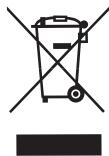
At the end of its working life, the product must not be disposed of as urban waste. It must be taken to a special local authority differentiated waste collection centre or
to a dealer providing this service. Disposing of a household appliance separately avoids possible negative consequences for the environment and health deriving from inappropriate disposal and enables the constituent materials to be recovered to obtain significant savings in energy and resources.
To remind you that you must collaborate with a selective collection scheme, the symbol shown appears on the product warning you not to dispose of it in traditional refuse containers.
For further information, contact your local authority or the shop where you bought the product.
1. DESCRIPTION

- PROGRAM 11: MARMALADE
- WHAT DO I DO IF
- TECHNICAL CHARACTERISTICS
- SAFETY PRECAUTIONS
- PREPARATION
- MEASURING INGREDIENTS
- STARTING UP
- COLOUR/DEGREE OF BROWNING
- OPERATION
- PROTECTION AND SAFETY
- MEMORY RETENTION: THE BREADMAKER
- RECIPES
- TIPS
- MENU 2: WHOLEMEAL BREAD 500G / MEDIUM COLOUR
- MENU 3: FRENCH BREAD 1000G / LIGHT COLOUR
- MENU 5: SWEET BREAD
- G (750G / 1000G) / LIGHT COLOUR
- MENU 6: CAKE
- ALMOND CAKE / 500G / MEDIUM COLOUR
- MENU 8: PASTA DOUGH
- G
- MENU 9: YEAST DOUGH
- MENU 10 BUTTER
- MENU 11 JAM
- PROGRAMME TABLE
- TROUBLESHOOTING
- CLEANING AND MAINTENANCE
- INFORMATION FOR THE CORRECT DISPOSAL OF ELECTRICAL AND ELECTRONIC APPLIANCES
- DESCRIPTION
Brand : BRANDT
Model : 5511, MAP 5511
Category : Washing machine