
A10 - Audio Amplifier ROTEL - Free user manual and instructions
Find the device manual for free A10 ROTEL in PDF.



| Product Type | Integrated Stereo Amplifier |
| Brand | Rotel |
| Model | A10 |
| Output Power (8 ohms, 20-20 kHz, <0.03%) | 40 watts per channel |
| Total Harmonic Distortion (20 Hz - 20 kHz) | < 0.03% |
| Frequency Response - Phono Input | 20 Hz - 15 kHz, ± 0.3 dB |
| Frequency Response - Line Inputs | 10 Hz - 40 kHz, ± 1 dB |
| Signal-to-Noise Ratio (A-weighted) - Phono Input | 80 dB |
| Signal-to-Noise Ratio (A-weighted) - Line Inputs | 100 dB |
| Input Sensitivity - Phono | 2.5 mV / 47 kΩ |
| Input Sensitivity - Line | 150 mV / 24 kΩ |
| Audio Inputs | Phono, CD, Tuner, Aux, Media Player (front), Tape |
| Audio Outputs | Preamp (1 V / 470 Ω), Speakers A/B, Headphone 3.5 mm, Trigger 12 V (2) |
| Tone Control - Bass | 100 Hz, ± 6 dB |
| Tone Control - Treble | 10 kHz, ± 6 dB |
| Power Supply | 120 V / 60 Hz (USA) or 230 V / 50 Hz (Europe), 220 W |
| Dimensions (W x H x D) | 430 x 72 x 342 mm |
| Net Weight | 5.9 kg |
| Maintenance and Cleaning | Clean with a dry cloth or vacuum cleaner; do not use liquid |
| Protection Functions | Thermal and overload protection (red LED) |
| Warranty and Repairability | Contact an authorized Rotel dealer; do not open the device |
| Included Accessories | Power cord, user manual, packaging carton |
Frequently Asked Questions - A10 ROTEL
User questions about A10 ROTEL
0 question about this device. Answer the ones you know or ask your own.
Ask a new question about this device
Download the instructions for your Audio Amplifier in PDF format for free! Find your manual A10 - ROTEL and take your electronic device back in hand. On this page are published all the documents necessary for the use of your device. A10 by ROTEL.
USER MANUAL A10 ROTEL
Stereo Integrated Amplifier
Important Safety Instructions
WARNING: There are no user serviceable parts inside. Refer all servicing to qualified service personnel.
WARNING: To reduce the risk of fire or electric shock, do not expose the unit to moisture or water. Do not expose the unit to dripping or splashing. Do not place objects filled with liquids, such as vases, on the unit. Do not allow foreign objects to get into the enclosure. If the unit is exposed to moisture, or a foreign object gets into the enclosure, immediately disconnect the power cord from the wall. Take the unit to a qualified service person for inspection and necessary repairs.
Read all the instructions before connecting or operating the component.
Keep this manual so you can refer to these safety instructions.
Heed all warnings and safety information in these instructions and on the product itself. Follow all operating instructions.
Clean the enclosure only with a dry cloth or a vacuum cleaner.
Do not use this unit near water.
You must allow a minimum 10 cm or 4 inches of unobstructed clearance around the unit.
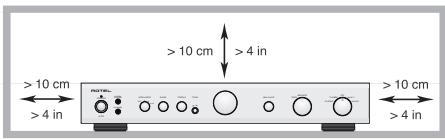
text_image
>10 cm >4 in >10 cm >4 in >10 cm >4 in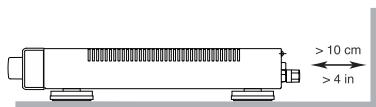
text_image
>10 cm >4 inDo not place the unit on a bed, sofa, rug, or similar surface that could block the ventilation openings. If the unit is placed in a bookcase or cabinet, there must be ventilation of the cabinet to allow proper cooling.
Keep the component away from radiators, heat registers, stoves, or any other appliance that produces heat.
WARNING: The rear panel power cord connector is the mains power disconnect device. The device must be located in an open area that allows access to the cord connector.
The unit must be connected to a power supply only of the type and voltage specified on the rear panel. (USA: 120 V/60Hz, EC: 230V/50Hz)
Connect the component to the power outlet only with the supplied power supply cable or an exact equivalent. Do not modify the supplied cable. A polarized plug has two blades, with one wider than the other. A grounding plug has two blades plus a third grounding prong. These are provided for your safety. Do not defeat grounding and/or polarization safety provisions. If the supplied plug does not fit your outlet, please consult an electrician for replacement of the obsolete outlet. Do not use extension cords.
The mains plug is the disconnect of the unit. In order to completely disconnect the unit from the supply mains, remove the main plug from the unit and the AC power outlet. This is the only way to completely remove mains power from the unit.
Do not route the power cord where it will be crushed, pinched, bent, exposed to heat, or damaged in any way. Pay particular attention to the power cord at the plug and where the cord exits the back of the unit.
The power cord should be unplugged from the wall outlet during a lightning storm or if the unit is to be left unused for a long period of time.
Use only accessories specified by the manufacturer.
Use only with a cart, stand, rack, bracket or shelf system strong enough to support the unit. Use caution when moving the unit in a stand or rack to avoid injury or damage to the unit.
Use Class 2 wiring for speaker connections to ensure proper installation and minimize the risk of electrical shock.
Immediately stop using the component and have it inspected and/or serviced by a qualified service agency if:
- The power supply cord or plug has been damaged.
- Objects have fallen or liquid has been spilled into the unit.
• The unit has been exposed to rain. - The unit shows signs of improper operation.
- The unit has been dropped or damaged in any way.

CAUTION
RISK OF ELECTRIC SHOCK DO NOT OPEN

WARNING : SHOCK HAZARD-DO NOT OPEN AVIS:RISQUE DE CHOC ÉLECTRIQUE-NE PAS OUVRIR
APPLICABLE FOR USA, CANADA OR WHERE APPROVED FOR THE USAGE
CAUTION: TO PREVENT ELECTRIC SHOCK, MATCH WIDE BLADE OF PLUG TO WIDE SLOT. INSERT FULLY.
ATTENTION: POUR EVITER LES CHOCS ELECTRIQUES, INTRODUIRE LA LAME LA PLUS LARGE DE LA FICHE DANS LA BORNE CORRESPONDANTE DE LA PRISE ET POUSSER JUSQU AU FOND.
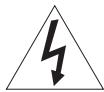
This symbol is to alert the user to the presence of uninsulated dangerous voltages inside the product's enclosure that may constitute a risk of electric shock.
This symbol is to alert the user to important operating and maintenance (service) instructions in this manual and literature accompanying the product.

Rotel products are designed to comply with international directives on the Restriction of Hazardous Substances (RoHS) in electrical and electronic equipment and the disposal of Waste Electrical and Electronic Equipment (WEEE). The crossed wheelie bin symbol indicates compliance and that the products must be appropriately recycled or processed in accordance with these directives.

This symbol means that this unit is double insulated. An earth connection is not required.

Place the unit on a fixed, level surface strong enough to support its weight. Do not place it on a moveable cart that could tip over.
CE
Figure 1: Controls and Connections
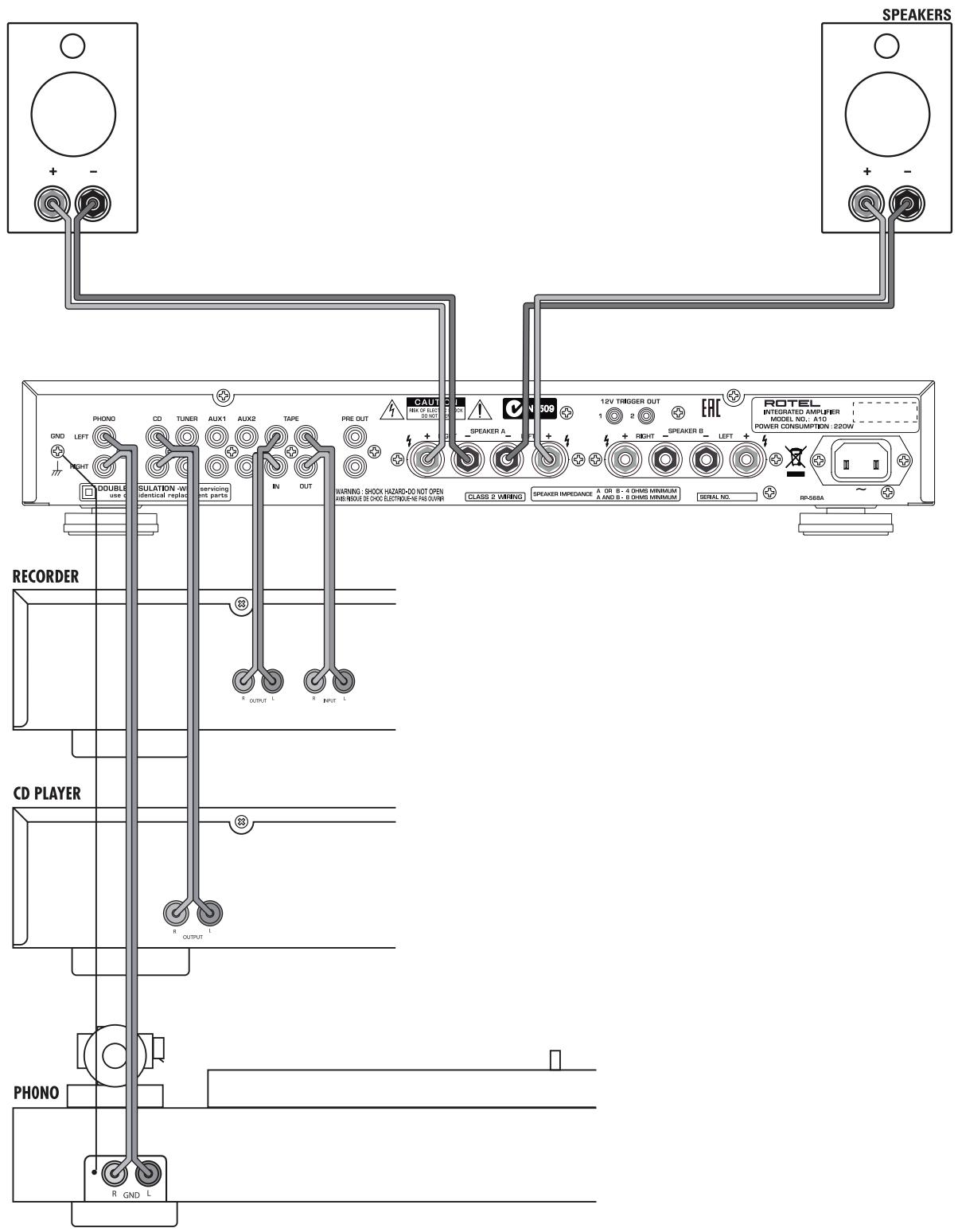
Figure 2: Preamp Input and Speaker Output Connections
Branchements en entrées et sorties enceintes acoustiques Anschlussdiagramm Conexiones de Entrada al Preamplificador y de Salida a las Cajas Acústicas De aansluitingen voor de voorversterker en de luidsprekers Collegamenti ingresso preamp ed uscita per diffusori Anslutningar för förförstärkare och högtalare Подсоединение предусилителя на вход и акустических систем на выход
text_image
SPEAKERS INTIGRATED AMPUER MODEL NO.: A10 POWER CONSUMPTION : 220W ROTEL INTEGRATED AMPUER MODEL NO.: A10 POWER CONSUMPTION : 220W SEAKER A 12V THIGGER OUT RIGHT SEAKER B LEFT WARNING: SHOCK HAZARD-DO NOT OPEN AIR ROUTE RE CHOC ELECTROKE-RE PAS OUTPER CLASS 2 WIRING SPREADER IMPEDANCE A OR B - 4 OHMS MINIMUM A AND B - 8 OHMS MINIMUM SERIAL NO. RR-088A RECORDER CD PLAYER PHONO R GND LImportant Notes
When making connections be sure to:
√ Turn off all the components in the system before hooking up any components, including loudspeakers.
√ Turn off all components in the system before changing any of the connections to the system.
√ Turn the volume control of the amplifier all the way down before the amplifier is turned on or off.
It is also recommended that you:
Remarques importantes
Figure 1: Controls and Connections 3
Figure 2: Signal Input and Speaker Output Connection
Important Notes 5
About Rotel....6
Getting Started 7
A Few Precautions 7
Placement 7
Cables 7
AC Power and Control 7
AC Power Input 21 7
Power Switch 1 and Power Indicator 2 7
12 Volt Trigger Out 13 8
Input Signal Connections....8
Phono Input 15 and Ground Connection 14 8
Line Level Inputs 16 8
Recorder Connections 17 8
Preamp Outputs 18 8
Speaker Outputs 19 20 8
Speaker Selector Switch 4 8
Speaker Selection 8
Speaker Wire Selection 8
Polarity and Phasing 8
Speaker Connection 8
Headphone Output 12 9
Media Player 3 9
Audio Controls....9
Volume Control ☐ 9
Balance Control 9
Tone On/Off Switch 7 9
Bass and Treble Controls 5 6 9
Function Control 9
Monitor Control 10 9
Protection Circuit 9
Troubleshooting 10
Power Indicator Is Not Illuminated 10
Fuse Replacement 10
No Sound 10
Specifications....10
About Rotel
Our story began over 50 years ago. Over the decades, we have received hundreds of awards for our products and satisfied hundreds of thousands of people who take their entertainment seriously – like you.
Rotel was founded by a family whose passionate interest in music led them to manufacture high-fidelity components of uncompromising quality.
Through the years, that passion has remained undiminished and the family goal of providing exceptional value for audiophiles and music lovers, regardless of their budget, is shared by all Rotel employees.
Rotel's engineers work as a close team, listening to, and fine tuning, each new product until it reaches their exacting musical standards. They are free to choose components from around the world in order to make that product the best they can. You are likely to find capacitors from the United Kingdom and Germany, semiconductors from Japan or the United States, while toroidal power transformers are manufactured in Rotel's own factory.
We all have concerns about our environment. And, as more and more electronics are produced it is especially important for a manufacturer to do all it can to engineer products that have a minimum impact on the environment.
At Rotel, we are proud to do our part. We have reduced the lead content in our products by using special lead-free ROHS solder and components. Our engineers continually strive to improve power supply efficiency without compromise to quality. When in standby mode Rotel products use minimal power to meet global Standby Power Consumption requirements.
The Rotel factory is also doing their part to help the environment through constant improvements to product assembly methods for a cleaner and greener manufacturing processes.
All of us at Rotel thank you for buying this product. We are sure it will bring you many years of enjoyment.
Getting Started
Thank you for purchasing the Rotel A10 Stereo Integrated Amplifier. When used in a high-quality music audio system, it will provide years of musical enjoyment.
The amplifier is a full featured, high performance component. All aspects of the design have been optimized to retain the full dynamic range and subtle nuances of your music. The unit has a highly regulated power supply incorporating a Rotel custom-designed toroidal power transformer. This low impedance power supply has ample power reserves, which enables the unit to easily reproduce the most demanding audio signals. This type of design is more expensive to manufacture, but it is better for the music.
The printed circuit boards (PCB) are designed with Symmetrical Circuit Traces. This insures that the precise timing of the music is maintained and faithfully recreated. The circuitry uses metal film resistors and polystyrene or polypropylene capacitors in important signal paths. All aspects of this design have been examined to ensure the most faithful music reproduction.
The main functions of the A10 are easy to install and use. If you have experience with other stereo systems, you shouldn't find anything perplexing. Simply plug in the associated components and enjoy.
A Few Precautions
WARNING: To avoid potential damage to your system, turn off ALL the components in the system when connecting or disconnecting the loudspeakers or any associated components. Do not turn the system components back on until you are sure all the connections are correct and secure. Pay particular attention to the speaker wires. There must be no loose strands that could contact the other speaker wires, or the chassis of the amplifier.
Please read this manual carefully. It provides information on how to incorporate the unit into your system as well as information that will help you get optimum sound performance. Please contact your authorized Rotel dealer for answers to any questions you might have. In addition, all of us at Rotel welcome your questions and comments.
Save the unit shipping carton and all enclosed packing material for future use. Shipping or moving the Unit in anything other than the original packing material may result in severe damage to your amplifier.
If included in the box please fill out and send in the owner's registration card. Also be sure to keep the original sales receipt. It is your best record of the date of purchase, which you will need in the event warranty service is ever required.
Placement
Like all audio components that handle low level signals, the amplifier can be affected by its environment. Avoid placing the Unit on top of other components. Also avoid routing audio signal cables near power cords. This will minimize the chance it will pick up hum or interference.
The unit generates heat as part of its normal operation. The heat sinks and ventilation openings in the amplifier are designed to dissipate this heat. The ventilation slots in the top cover must be open. There should be 10 cm (4 inches) of clearance around the chassis, and reasonable airflow through the installation location, to prevent the amplifier from overheating.
Remember the weight of the amplifier when you select an installation location. Make sure that the shelf or cabinet can support it. We recommend installing the unit in furniture designed to house audio components. Such furniture is designed to reduce or suppress vibration which can adversely affect sound quality. Ask your authorized Rotel dealer for advice about component furniture and proper installation of audio components.
Cables
Be sure to keep the power cords, digital signal cables and regular audio signal cables in your installation away from each other. This will minimize the chance of the regular audio signal cables picking up noise or interference from the power cords or digital cables. Using only high quality, shielded cables will also help to prevent noise or interference from degrading the sound quality of your system. If you have any questions see your authorized Rotel dealer for advice about the best cable to use with your system.
AC Power and Control
AC Power Input ☐21
Your unit is configured at the factory for the proper AC line voltage in the country where you purchased it (either 120 volts AC or 230 volts AC with a line frequency of either 50 Hz or 60 Hz). The AC line configuration is noted on a decal on the back panel.
NOTE: Should you move your amplifier to another country, it is possible to reconfigure it for use on a different line voltage. Do not attempt to perform this conversion yourself. Opening the enclosure of the unit exposes you to dangerous voltages. Consult a qualified service person or the Rotel factory service department for information.
NOTE: Some products are intended for sale in more than one country and as such are supplied with more than one AC cord. Please only use the one appropriate for your country/region.
The unit does not draw high levels of current from the power outlet. However, whenever possible, it should be plugged directly into a 2-pin polarized wall outlet. Do not use an extension cord. A heavy duty multi-tap power outlet strip may be used if it (and the wall outlet) can handle the current demanded by the Unit and all the other components connected to it.
If you are going to be away from home for an extended period of time such as a month-long vacation, it is a sensible precaution to unplug your amplifier (as well as other audio and video components) while you are away.
Power Switch 1 and Power Indicator 2
Press the front panel Power Switch button, to turn the Unit on. The Power Indicator light is illuminated when the Unit is on. Press Power Switch button again to turn the Unit off.
See the "12V Trigger Outlet" section for more information on ways you may be able to turn on and off other components in your system along with the Unit.
12V Trigger Out 13
Some audio components can be turned on automatically when they receive a 12V turn on "signal". The two 12V Trigger Outputs of the amplifier provide the required signal. Connect compatible components to the amplifier with a conventional 3.5mm mini plug cable. When the unit is turned off, the trigger signal is interrupted, and the components controlled by it are turned off.
Input Signal Connections
See Figure 2
NOTE: To prevent loud noises that neither you nor your speakers will appreciate, make sure the system is turned off when you make any signal connections.
Phono Input 15 and Ground Connection 14
Plug the cable from the turntable into the appropriate left and right phono inputs. If the turntable has a "ground" wire, connect it to the screw terminal to the left of the Phono inputs. It will help prevent hum and noise.
Line Level Inputs 16
The CD, Tuner, and Aux inputs of the amplifier are "line level" inputs. These are for connecting components such as CD players or other audio playback devices with an analog audio output.
The Left and Right channels are labeled and should be connected to the corresponding channels of the source component. The Left connectors are white, the Right connectors are red. Use high quality RCA cables for connecting input source components to the Unit. Ask your authorized Rotel dealer for advice about cables.
Recorder Connections 17
See Figure 2
The Tape inputs and outputs can be connected to any record playback device that accepts standard line level analog input and output signals. Typically that will be a conventional tape recorder.
When connecting a recorder to the Unit remember that the outputs of the recorder must be connected to the tape inputs of the Unit. Similarly the tape outputs of the Unit must be connected to the inputs of the recorder. As with other sources be sure to connect the Left and Right channels of each device to the proper channels on the associated components. Use high quality connecting cables to prevent loss of sound quality.
NOTE: The Tape Outputs are not affected by the Volume, Balance or Tone controls. They supply a fixed level signal.
Preamp Outputs 18
The unit has a set of preamp outputs. The signal from the source selected with the Function Selector is always available from these outputs. Typically these outputs are used to provide a signal to another integrated amplifier or power amplifier, which is used to drive remote speakers.
NOTE: Changes to the settings of the Volume, Balance or Tone controls affect the signal from the Preamp Outputs.
Speaker Outputs 19 20
See Figure 2
Speaker Selector Switch 4
The unit has two sets of speaker outputs, labeled "A" 19 and "B" 20. The speaker outputs are controlled by the switch 4 on the front panel.
Speaker Selection
If only one set of speakers will be used at any given time, the speakers may have an impedance as low as 4 ohms. If there are times when both the A and B speakers will be used, all the speakers should have an impedance of 8 ohms or more. Speaker impedance ratings are less than precise. In practice, very few loudspeakers will present any problems for the unit. See your authorized Rotel dealer if you have any questions.
Speaker Wire Selection
Use insulated two-conductor stranded wire to connect the Unit to the speakers. The size and quality of the wire can have an audible effect on the performance of the system. Standard speaker wire will work, but can result in lower output or diminished bass response, particularly over longer distances. In general, heavier wire will improve the sound. For best performance, you may want to consider special high-quality speaker cables. Your authorized Rotel dealer can help in the selection of cables for your system.
Polarity and Phasing
The polarity – the positive/negative orientation of the connections – for every speaker and amplifier connection must be consistent so all the speakers will be in phase. If the polarity of one connection is reversed, bass output will be very weak and stereo imaging degraded. All wire is marked so you can identify the two conductors. There may be ribs or a stripe on the insulation of one conductor. The wire may have clear insulation with different color conductors (copper and silver). There may be polarity indications printed on the insulation. Identify the positive and negative conductors and be consistent with every speaker and amplifier connection.
Speaker Connection
Turn off all the components in the system before connecting the speakers. The Unit has color-coded binding post type speaker connectors on the back panel (except in European Community countries where their use is not permitted). These connectors accept bare wire, connector lugs, or dual banana type connectors.
Route the wire from the unit to the speakers. Give yourself enough slack so you can move the components to allow access to the speaker connectors. If you are using dual banana plugs, connect them to the wires and then plug into the backs of the binding posts. The thumbscrews of the binding posts should be screwed in all the way (clockwise).
If you are using terminal lugs, connect them to the wires. If you are attaching bare wires directly to the binding posts, separate the wire conductors and strip the insulation from the end of each conductor. Be careful not to cut into the wire strands. Unscrew (turn counterclockwise) the binding post thumbscrews. Place the connector lug or wire around the binding post shaft. Turn the thumbscrews clockwise to clamp the connector lug or wire firmly in place.
NOTE: Be sure there are no loose wire strands that could touch adjacent wires or connectors.
Headphone Output 12
The headphone output allows you to connect headphones for private listening. This output accepts a standard 3.5 mm (1/8") mini stereo headphone connector. Plugging in a set of headphones does not cut off the signal to the outputs. Use the Speaker Selector to turn off the speakers. The settings of the Function Selector and the Tape Monitor Control determines which source is heard. To listen to or monitor the component connected to the Tape input set the Monitor Control to the Tape position. For all other inputs leave the Monitor Control in the Source position and select the source you want to listen to with the front panel Function Selector.
NOTE: Because the sensitivity of speakers and headphones can vary widely, always reduce the volume level before connecting or disconnecting headphones.
Media Player 3
A 3.5 mm (1/8") stereo input socket for a "Media Player" is provided on the front of the amplifier and is selected by setting the function control to (AUX2). Any portable stereo cassette, compact disc player or hard disc playback device can be connected via this input. If the device you are connecting has its output via the headphone socket then note that you must adjust the volume control on the player for sound to be heard. Should the sound be loud and distorted turn down the volume on the player and if it is only just audible through the speakers even when the amplifier volume control is turned up fairly high then adjust the volume control on the player.
NOTE: When the 3.5mm (mini jack) is inserted into the Media Player socket the rear input called AUX2 is disconnected. Removing the 3.5mm plug from the Media player socket will allow the rear AUX2 input to function.
Audio Controls
Volume Control ☐
Turn the controls clockwise to increase the volume, or counter clockwise to decrease the volume.
Balance Control 9
The Balance Control adjusts the left-to-right balance of the sound output. Normally the control should be left in the center position. In some situations, typically when the main listening position is not ideally centered between the speakers, it may be necessary to adjust the control to achieve proper left-to-right balance. Turning the control counter-clockwise shifts the sound balance to the left. Turning the control clockwise shifts the sound balance to the right.
Tone On/Off Switch 7
When the Tone Switch is in the Off position the Bass and Treble Control (Tone Control) circuits are bypassed to ensure the purest possible sound. Leave the Tone Switch in the Off position unless you want to use the Tone Controls. Turn the Tone Switch to the On position if you want to adjust the Tone Controls.
Bass and Treble Controls 5 6
When the Tone Switch is in the On position, turning the Bass and Treble Controls adjusts the tone balance of the sound. Turn the Controls clockwise to increase the bass or treble output. Turn the Controls counterclockwise to decrease the bass or treble output.
A properly setup high-performance audio system produces the most natural sound with little or no adjustment of the tone controls. Use these controls sparingly. Be particularly careful when turning the controls up (clockwise). This increases the power output in the bass or treble range, increasing the load on the amplifier and speakers.
Function Control 11
The Function control selects the input signal source. The signal selected by the Function control is the one you hear, as long as the Monitor control is set to the Source position. (See the following section.) The signal selected by the Function control also goes to Preamp Outputs and the Tape Outputs. Turn the front panel Listening Selector to the source you want to listen to.
Monitor Control 10
When the Monitor Control is set to the Source position, the signal you hear, and which goes to the Preamp Outputs, is selected by the Function Control. To listen to the signal from a recorder connected to the Tape Inputs, set the Monitor Control to the Tape position. When the Monitor Control is in the Tape position, the signal from the Tape Input also goes to the Preamp Outputs.
The signal that goes to the Tape Output is always selected by the Function Control. When you are recording with a unit that has monitoring capabilities, you can listen to the sound just recorded by setting the Monitor Control to the Tape position.
Protection Circuit
The unit has both thermal and over-current protection circuitry that protects the amplifier against damage in the event of extreme or faulty operating conditions. The protection circuits are independent of the audio signal and have no impact on sonic performance. Instead, the protection circuits monitor the temperature of the output devices and shut down the amplifier if temperatures exceed safe limits.
Most likely, you will never see this protection circuitry in action. However, should a faulty condition arise, the amplifier will stop playing and the POWER indicator 2 on the front panel will turn red.
If this happens, turn the amplifier off. Let it cool down for several minutes, and attempt to identify and correct the problem that caused the protection circuitry to engage. When you turn the amplifier back on, the protection circuit will automatically reset and the POWER indicator 2 should turn blue.
In most cases, the protection circuitry activates because of a fault condition such as shorted speaker wires, or inadequate ventilation leading to an overheating condition. In very rare cases, highly reactive or extremely low impedance speaker loads could cause the protection circuit to engage.
If the protection circuitry triggers repeatedly and you are unable to isolate and correct the faulty condition, contact your authorized Rotel dealer for assistance in troubleshooting.
Troubleshooting
Most difficulties in audio systems are the result of incorrect connections, or improper control settings. If you encounter problems, isolate the area of the difficulty, check the control settings, determine the cause of the fault and make the necessary changes. If you are unable to get sound from the unit, refer to the suggestions for the following conditions:
Power Indicator Is Not Illuminated
The Power Indicator should be illuminated whenever the unit is plugged into the wall power outlet and the Power button is pushed in. If it does not light, test the power outlet with another electrical device, such as a lamp. Be sure the power outlet being used is not controlled by a switch that has been turned off.
Fuse Replacement
If another electrical device works when plugged into the power outlet, but the Power Indicator of the unit does not light when plugged into the same outlet and the Power Switch is pushed in, it indicates that the internal power fuse may have blown. If you believe this has happened, contact your authorized Rotel dealer to get the fuse replaced.
No Sound
Check the signal source to see if it is functioning properly. Make sure the cables from the signal source to the unit inputs are connected properly. Be sure the Listening Selector is set to the proper input. Check the wiring between the Unit and the speakers.
Specifications
| Continuous Power Output(20 - 20k Hz, < 0.03%, 8 ohms) | 40 watts/ch |
| Total Harmonic Distortion (20 Hz - 20k Hz) | < 0.03% at rated power,1/2 power or 1 watt |
| Intermodulation Distortion (60 Hz : 7k Hz, 4:1) | < 0.03% at rated power,1/2 power or 1 watt |
| Frequency Response | |
| Phone input | 20 Hz-15k Hz, ±0.3 dB |
| Line Level Inputs | 10 Hz - 40k Hz, ±1 dB |
| Damping Factor (20 - 20,000 Hz, 8 ohms) | 180 |
| Input Sensitivity / Impedance | |
| Phone input | 2.5 mV / 47 k Ohms |
| Line Level Inputs | 150 mV / 24 k Ohms |
| Input Overload | |
| Phone input | 180 mV |
| Line Level Inputs | 5 V |
| Preamp Output / Impedance | 1 V / 470 Ohms |
| Tone Controls - Bass / Treble | ± 6 dB at 100 Hz / 10k Hz |
| Signal to Noise Ratio (IHF “A” weighted) | |
| Phone input | 80 dB |
| Line Level Inputs | 100 dB |
| Power Requirements | 120 V, 60 Hz (USA)230 V, 50 Hz (Europe) |
| Power Consumption | 220 Watts |
| Dimensions (W, H, D) | 17" x 2 7/8" x 13 1/2"430 x 72 x 342 mm |
| Panel Height | 60 mm / 2 3/8". |
| Weight (net) | 5.9 kg, 13 lbs. |
All specifications are accurate at the time of printing.
Rotel reserves the right to make improvements without notice.
Rotel and the Rotel Hi-fi logo are registered trademarks of The Rotel Co., Ltd. Tokyo, Japan.
text_image
>10 cm >4 in >10 cm >4 in >10 cm >4 in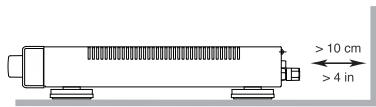
text_image
>10 cm >4 intext_image
>10 cm >4 in >10 cm >4 in >10 cm >4 in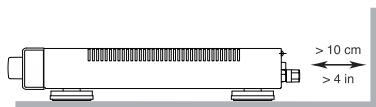
text_image
>10 cm >4 intext_image
>10 cm >4 in >10 cm >4 in >10 cm >4 in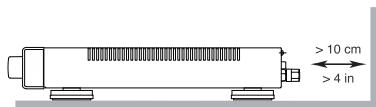
text_image
>10 cm >4 intext_image
>10 cm >4 in HOTEL >10 cm >4 in >10 cm >4 in
text_image
>10 cm >4 in >10 cm >4 in HOTEL >10 cm >4 in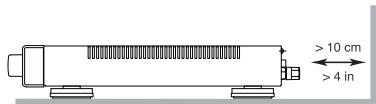
text_image
>10 cm >4 inControlli audio....41
Volume 41
Bilanciamento 9 41
text_image
>10 cm >4 in >10 cm >4 in >10 cm >4 in >10 cm >4 intext_image
>10 cm >4 in HOTEL >10 cm >4 in >10 cm >4 in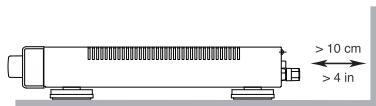
text_image
>10 cm >4 in2-11-4, Nakane, Meguro-ku,
Tokyo, 152-0031
Japan
Rotel of America
54 Concord Street
North Reading, MA 01864-2699
USA
Phone: +1 978-664-3820
Fax: +1 978-664-4109
Rotel Europe
Dale Road
Worthing, West Sussex BN11 2BH
England