USER MANUAL PX-712UF PLEXTOR
INSTALLATION AND USERS MANUAL

PLEXTOR
JUNE 2004
Plextor reserves the right to make improvements in the products described in this manual at any time without prior notice.
Plextor makes no representation or warranties with respect to the contents hereof and specifically disclaims any implied warranties of merchantability or fitness for any particular purpose. Further, Plextor Corp. reserves the right to revise this manual and to make changes in its content without obligation to notify any person or organization of such revision or change.
This manual is copyrighted, all rights reserved. It may not be copied, photocopied, translated, or reduced to any electronic medium or machine-readable form without Plextor's prior permission.
Manual copyright ©2004 Plextor Corp. First edition, June 2004.
Licenses and Trademarks
Plextor and the Plextor logo are registered trademarks of Plextor Corp. All other licenses and trademarks are property of their respective owners.
Record Your Serial Number
For future reference, record the serial number and the TLA code (found on your drive's label) in the space provided below.
TLA/Firmware Revision Number
FEDERAL COMMUNICATIONS COMMISSION STATEMENT
This device complies with Part 15 of the FCC Rules. Operation is subject to the following two conditions:
(1) This device may not cause harmful interference, and
(2) this device must accept any interference received, including interference that may cause undesired operation.
CAUTION: Any changes or modifications not expressly approved by the party responsible for compliance could void the user's authority to operate the equipment.
CANADIAN DEPARTMENT OF COMMUNICATIONS STATEMENT
This digital apparatus does not exceed the Class B limits for radio noise emissions from digital apparatus set out in the Radio Interference Regulations of the Canadian Department of Communications.
This class B digital apparatus complies with Canadian ICES-003.
These products have been designed and manufactured according to IEC 60825-1 on the Safety of Laser products. This product comes under "Class 1 Laser Products."
CAUTION: Use of controls or adjustments or performance of procedures other than those specified herein may result in hazardous radiation exposure.
A Laser Caution Label is attached on the bottom of the external drive model.
The laser beam emitted from the optical pickup is visible and invisible. Accordingly:
- Do not open the optical pickup housing.
- Obtain service only from Plextor-authorized personnel.
CAUTION: To disconnect the external DVD/CD drive from electrical current, pull out the drive's power cable.
Bottom View of External Drive, Showing Caution Label Location
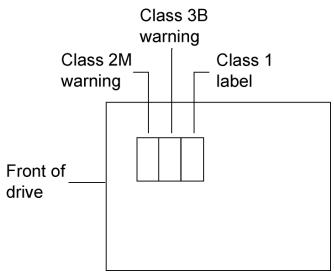
Detail of PX-712UF Laser Caution Labels
CAUTION -CLASS 2M VISIBLE LASER RADIATION WHEN OPEN. DO NOT STARE INTO THE BEAM OR VIEW DIRECTLY WITH OPTICAL INSTRUMENTS
CLASS I LASER PRODUCT
TO IEC 60825-1
LASER KLASSE I PRODUKT
NACHIEC60825-1
Table of Contents
1. Getting Started 1
About this Manual 1
Meet Your PX-712UF 2
What the PX-712UF Does. 2
Features of the PX-712UF 3
Minimum Configuration to Use the PX-712UF 6
What You Can Do with the PX-712UF. 7
About Software 8
Precautions 9
Where to Go From Here 9
2. Installing the PX-712UF External USB/FireWire Drive............11
PX-712UF Drive Features and Controls 11
Front Panel-PX-712UF External Drive 11
Rear Panel—PX-712UF External Drive 13
What Else Is In the PX-712UF Box 15
Save Your Box! 15
Mount the PX-712UF Drive 16
Determine Your Computer's Operating System 17
Determine What Interface to Use 17
Connect the PX-712UF Drive 18
Record the Serial Number and TLA Code 18
Install the Drive in Your Windows Computer. 18
Identifying Cables and Ports 20
If You Have Windows 98SE and FireWire 21
If You Have Windows 98SE and USB. 21
Switching Between USB and IEEE 1394 Interfaces 22
If You're Using FireWire 22
If You Have a Macintosh 23
3. Using Your PX-712UF 25
What Media to Use 25
DVD Media 25
CD-ROM Media 25
Tray Loading and Operation 27
Handling DVD and CD Media 27
Cleaning Discs. 28
Mounting Position 29
Playing DVDs 29
Writing to DVD Media 30
Specifying +R / RW or -R/RW 30
Writing to CD-R and CD-RW Media 30
Using the Disc/Busy Indicator 31
Switching to SpeedRead for Video Playback 32
Loading PlexTools Professional Software 33
Using Silent Mode 34
Turning On Silent Mode 34
Important Facts about Silent Mode 36
Using SecuRec 37
Password-Protecting a Disc with SecuRec 37
Reading a Password-Protected Disc 39
Important Facts about SecuRec 39
Using VariRec 40
How the Default VariRec Setting Is Determined 40
Changing the VariRec Setting 41
Important Facts about VariRec 43
UsingGigaRec 43
Burning a Disc with GigaRec 44
How GigaRec Works 45
Important Facts about GigaRec 45
Testing Your CDs and DVDs 46
Measuring Read Transfer Rate 46
Measuring Write Transfer Rate 49
Measuring Q-Check C1/C2/CU Errors 51
Measuring Tracking and Focus Error 56
Making Q-Check Jitter/Beta Measurements 59
Measuring Q-Check PI/PO Errors 62
Advantages of Buffer Underrun Proof Technology 64
5. Maintenance and Troubleshooting 65
Cleaning the PX-712UF Drive 65
Upgrading Firmware 66
Emergency Eject 67
Troubleshooting 67
Make Sure the Drive Is Recognized 67
Using the PX-712UF Self-Test Diagnostics. 69
What You'll Need 69
Performing the Self-Test 69
What the Self-Test Results Indicate 70
6. Frequently Asked Questions 71
Appendix A: PX-712UF Specifications. 73
Appendix B: Technical Support. 85
How to Contact Plextor Technical Support. 86
Before You E-mail/Log On/FAX/Call for Support. 86
Returns 87
Contacting Plextor's RMA Department 87
Packing Your Drive. 88
Shipping Your Drive to Plextor 88
Appendix C: Warranty. 89
If You're Outside the U.S. or Canada 90
Index. 91
This page intentionally left blank.
1. Getting Started
Congratulations! Thank you for purchasing the Plextor® PX-712UF, a reliable, high-performance recordable DVD and CD writer, rewriter, and player. We appreciate the confidence you have shown in us. Our goal is to put you—and keep you—on the leading edge of DVD and CD technology.
About this Manual
Please read this manual carefully and keep it handy for easy reference. Use the manual for installation, operation and troubleshooting. If your drive needs service, see your dealer or call Plextor's Technical Support Department.
In this manual you should find all the information you need to successfully install, operate and troubleshoot your drive. If you run into a problem that doesn't seem to be covered, however, please contact us. (See "Appendix B: Technical Support" for the different ways you can reach us.) You will be connected to our friendly, helpful band of tech support engineers. What might seem like an uncooperative drive to you could very well be a 30-second fix to them. But we will never know unless you contact us.
Meet Your PX-712UF
The PX-712UF is a DVD ReWritable/CD ReWritable drive that provides professional quality DVD and CD performance for writing, rewriting and reading.
What the PX-712UF Does
For DVDs, the PX-712UF:
- Writes DVD+R (recordable DVD, "plus" format) media at up to 12X speed on recommended 8X media.
- Writes DVD-R (recordable DVD, "dash" format) media at up to 8X speed.
- Writes DVD+RW (rewritable DVD, "plus" format) media at up to 4X speed.
- Writes DVD-RW (rewritable DVD, "dash" format) media at up to 4X speed.
Supports DVD+VR and DVD-VR real time editing.
- Reads DVD discs at up to 16X (depending on USB or IEEE 1394 host controller).
- Reads DVD-Video discs with CSS at up to 2X CLV.
Supports DVD-RW DRT-DM (Distributed Real Time Defect Management)
For CDs, the PX-712UF:
- Writes to CD-R (recordable CD) media at up to 48X speed.
- Writes to CD-RW (rewritable CD) media at up to 24X speed.
- Reads all CD-ROM, CD-RW, and CD-R data media at a maximum of 48X speed.
- Reads CD-DA (audio) and CD-R audio media at up to 40X speed.
- Reads CD-RW audio media at up to 32X speed.
Features of the PX-712UF
- USB 2.0 and FireWire interface: Features both USB 2.0 and FireWire® (IEEE 1394), to connect to a PC or Macintosh computer with either of these high-speed interfaces. Supports both Hi-Speed USB 2.0 (480 megabits per second) and Full-Speed USB 1.1 (12 megabits per second).
- PoweRec: Plextor Optimized Writing Error Reduction Control (PoweRec) adjusts laser power and writing speed so they're at the optimum settings for that particular disc. (For example, when you're writing a DVD, PoweRec checks to see if the maximum 12X speed is possible, and sets the optimum write speed.) You can enable and disable PoweRec.
- VariRec: Lets you change the write strategy to record at highest quality on different types of discs. Also provides user adjustment of the recording power above or below a default level. This adjustment lets you customize the optimum laser power to your own needs.
- Silent Mode: Unique technology that sets the drive for super-silent operation. By controlling access speed, read/write speed, and tray opening and closing speed, you reduce drive noise to a whisper.
- MMC compliance: Supports the MMC-4 command set.
- Flash memory: Allows upgrading the PX-712UF to the latest firmware revision (available from the Plextor web site) without opening the computer or physically accessing the drive.
- Black tray: Reduces the effect of optical distortion by absorbing reflections from the laser beam, enhancing read quality.
- Plug and Play: Supports Windows Plug and Play.
-
Self-test diagnostics: The PX-712UF has a self-test diagnostic function for easy troubleshooting.
-
Q-Check tests: The Plextor PX-712UF achieves high-quality recording on virtually any DVD or CD media. To see for yourself, use the Q-Check features to check laser operation, or measure and display characteristics of the media you're using.
DVD Features
- Lossless linking for DVD+R/RW: Allows DVD+RW discs to be edited and still play on DVD-ROM players.
- Zero Link for DVD-R/RW: Has 0 byte gap between sessions so the discs are compatible with all players. This allows DVD-RW discs to be edited and still play on DVD-ROM players.
- Wide DVD+R/RW and DVD-R/RW media compatibility: Compatible with a wide range of DVD±R and DVD±RW media.
- Multiple DVD types: Supports DVD-ROM, DVD-Video, multi-border, multi-session, DVD± VR , for read and write.
- Versatile recording modes for DVD + R / RW : Including disc-at-once (DAO), multi-session, and incremental write for DVD + R ; random access write and sequential write for DVD + RW .
- Recording versatility for DVD-R/RW, too: Including DAO, incremental recording, multi-border recording for DVD-R; and multi-border recording, incremental recording, restricted overwriting, DRT-DM for DVD-RW.
- SpeedRead: For DVD-Video discs equipped with CSS copy protection, you can enable fast playback (SpeedRead) or leave at the factory default for quiet video playback.
CD-R and CD-RW Features
- Variety of recording modes: Supports track-at-once, disc-at-once, session-at-once, multi-session, variable and fixed packet writing, and CD-MRW (Mount Rainier).
- Buffer Underrun Proof Technology: Eliminates buffer underrun errors, so you can safely use your computer for other tasks while you're writing to a CD-R or CD-RW disc.
- Wide compatibility: Wide CD-R and CD-RW media compatibility.
- Orange Book compatibility: Compatible with Orange Book, Parts II and III.
- OPC and ROPC: Optimum Power Control and Running Optimum Power Control, which adjust the laser power for the optimum write strategy.
- CD -TEXT, CD + G : Supports CD-TEXT and CD + G writing.
- GigaRec: Variable capacity recording that lets you change CD-R disc capacity over a range from 60 percent to 130 percent of the rated value. GigaRec lets you get much more data onto a CD, or decrease disc capacity while gaining improved audio quality.
SecuRec: Security protection that lets you make your CDs readable only by persons with the correct password.
- Overburn: Another way of burning more information onto a CD—audio up to 99 minutes 59 seconds in length, or a data disc up to 875 megabytes in capacity.
Minimum Configuration to Use the PX-712UF
Here's what you'll need in order to install and use the PX-712UF drive.
- Computer: Pentium III, 800-MHz CPU or faster. (Pentium 4, 1.6-GHz or faster recommended.)
Minimum RAM: 128 MB. (256 MB recommended.)
- Interface: USB (2.0 or 1.1) or IEEE 1394 (FireWire) interface. (Onboard USB 2.0 or IEEE 1394 host controller recommended.)
- Hard disk size: To write to a CD in image mode (that is, to write an image of a CD to your hard disk), you need 1 GB of free space. For a DVD, 6–10 GB of free space is recommended. (For more accurate guidelines, see the help files or documentation for the recording software you're using.)
- Operating System:
PC: Windows XP, 2000, Me, 98SE.
Macintosh: For FireWire and USB 1.1, OS 9.1 or higher recommended. For USB 2.0, OS X is required.
NOTE: You cannot use the PX-712UF with early versions of Windows 98; if you are using Windows 98, it must be Windows 98SE (Second Edition). Also, Windows 98SE must be updated with the latest Microsoft patch.
NOTE: The built-in USB ports on older computers (and even on inexpensive new ones) provide only USB 1.1—that is, Full-Speed (12 Mbps) USB. This limits the CD-RW drive performance to 4X write, 4X rewrite, and 6X read, while DVD performance with USB 1.1 is 0.7X. For optimum performance if your PC or Macintosh does not have built-in USB 2.0, use the FireWire port, if available. Or, for PCs (and Macs with expansion capability), you can purchase and install a third-party PCI USB 2.0 or FireWire plug-in host adapter card.
What You Can Do with the PX-712UF
Just look at some of the things you can do with your PX-712UF:
- Record slide shows or digital video onto DVD+R, -R, +RW or -RW discs.
- Play DVD+R, DVD+RW, DVD-R, and DVD-RW discs.
- Record data or audio onto WRritable or Rewritable CD media.
- Play music CDs.
- Save photos and other images on rewritable or writable CDs.
- Create a CD or DVD "sneakernet" to share information with colleagues—just use software such as Roxio's DirectCD to drag and drop files onto DVD+R, DVD+RW, CD-R or CD-RW media, then continue adding files and sharing the same disc.
- Archive images and video to DVD or CD.
- Master new software programs on DVD or CD.
About Software
In order to record on DVD±R/RW and CD-R/RW discs you will need to have mastering, packet writing, or duplication software installed on your computer system. If you purchased a retail kit from Plextor, you'll get this software on a disc in the box.
PlexTools® Professional is a powerful application software package that lets you take full advantage of the CD/DVD functions of the PX-712UF drive. PlexTools Professional lets you use your Plextor PX-712UF to burn CD-R, CD-RW, and DVD discs, and it also lets you take advantage of all the unique new features found in the Plextor PX-712UF drive.
Roxio's Easy CD Creator™ 6 Basic DVD Edition also lets you burn DVDs and CDs. You can burn and share anything on CD or DVD, including music, photos, and videos; and you can also back up your critical data to a CD or DVD. One component of Easy CD Creator is Drag-to-Disc, which makes the Plextor PX-712UF drive as easy to use as a hard disk drive. (For more information, install Easy CD Creator and examine its help files.)
For details on other software that is available for writing to DVDs or CDs, please visit the web sites of the companies whose software you are interested in, refer to their user's manuals, or look at the help option within the software. A list of various software that you can use with your Plextor drive can be found in the Support/Compatibility section of www.plextor.com.
Precautions
Like the rest of your computer system, your PX-712UF requires reasonable care in its installation and use.
- Keep the area around your drive clean from dust, smoke, and other contaminants. Also, do not allow moisture or liquids, including water or cleaning fluids, to touch the drive. Thinner, benzene, or alcohol-based solvents can mar your drive's surface.
- Do not drop or jolt the drive.
- Do not move, carry or transport a disc in the drive, because this can cause damage.
- Do not attempt to open the drive and service it yourself. Removing the cover may expose you to harmful electrical voltages or the laser beam. For your safety, entrust service to experienced service personnel only.
- Keep your DVDs and CDs free of dirt or other contaminants, by storing them in jewel cases. Use only industry-standard discs. Do not insert dirty, warped, poorly balanced, or cracked discs into the drive.
- Do not clean discs using a circular motion. Instead, using a soft, dry cloth, wipe gently in a radial motion; start at the center of the disc and proceed to the outer edge.
- Do not attempt to clean your drive using solvent-based cleaners or an air compressor.
- Do not attempt to clean your drive using a CD cleaning disc. These discs can damage your drive permanently.
Where to Go From Here
- See Chapter 2, beginning on page 11, to install your drive.
This page intentionally left blank.
2. Installing the
PX-712UF External USB/FireWire Drive
This chapter explains how to physically connect your PX-712UF external drive to your computer.
PX-712UF Drive Features and Controls
Before proceeding, you should become familiar with the controls and features of your Plextor drive. Match the parts of your drive to the illustrations below.
Front Panel—PX-712UF External Drive
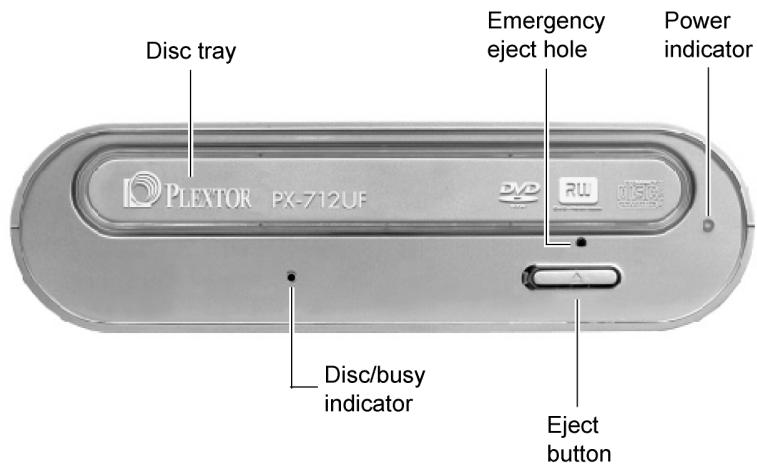
Figure 1: Front panel of the PX-712UF external drive
- Disc/busy indicator: Illuminated yellow for disc initializing, reading, and ejecting. Illuminated amber for writing. (Blink rate indicates writing speed.) Illuminated green during standby and when Buffer Underrun Proof Technology is operational.
- Disc tray: Slides out to allow you to insert a disc.
- Emergency eject hole: If the automatic eject button does not work, turn the power switch to OFF, then insert the emergency eject tool, paper clip, or other thin, rigid object in this hole to eject the disc tray manually.
- Power indicator: Illuminated blue when the PX-712UF drive power is ON.
- Eject button: Push once to eject the tray. Push again to load the tray back into the PX-712UF. To prevent wear on the drive, always use the eject button to load the tray.
This button also controls SpeedRead and silent operation for DVD-Video discs with CSS protection. To enable SpeedRead, with the disc tray empty, press and hold the eject button for 3 seconds, then insert a DVD-Video disc. The disc is played back at an accelerated speed.
Rear Panel—PX-712UF External Drive
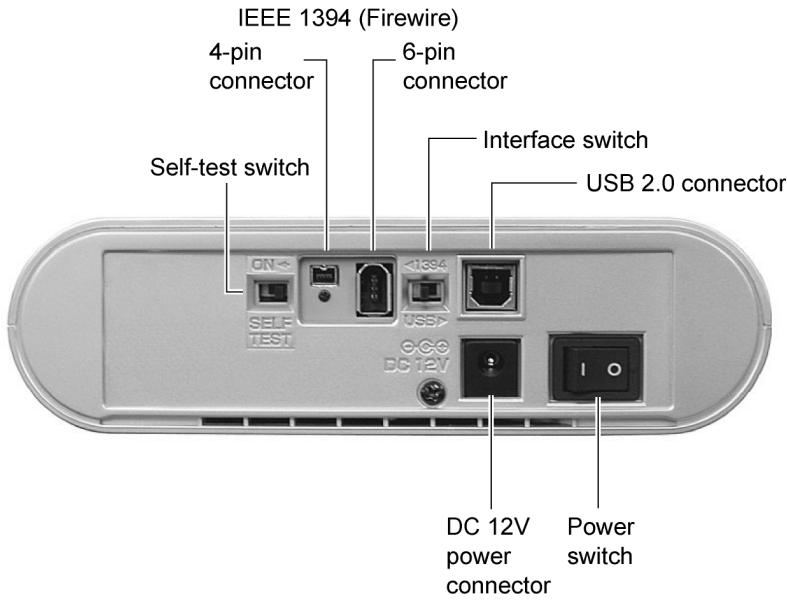
Figure 2: Rear panel of the PX-712UF external drive
- SELF TEST switch: Set switch to the right (off) for normal operation, or set it to the left (ON) to execute the self-test diagnostic routine. To execute a self-test: 1) Disconnect the USB or FireWire cable, 2) turn the drive power switch OFF, 3) set the SELF-TEST switch ON (left), 4) press and hold the eject button while turning the power switch ON, and 5) insert a blank CD or DVD disc.
-
IEEE 1394 4-pin connector: Connect an IEEE 1394 (also known as FireWire) cable with a 4-pin connector here.
-
IEEE 1394 6-pin connector: Connect an IEEE 1394 (FireWire) cable with a 6-pin connector here.
NOTE: The PX-712UF does not get its power from the IEEE 1394 bus or the USB bus. It must be connected to the AC adapter.
CAUTION: Use only the IEEE 1394 (FireWire) cable shipped with your PX-712UF.
- Interface switch: Switch the PX-712UF drive to operate with a different interface (USB, IEEE 1394). This allows you to connect the drive to either interface, depending on the requirements of your computer. If you change interfaces with this switch, you must also cycle the PX-712UF power. (That is, turn the rear-panel power switch off, then on again.)
- USB 2.0 connector: Connect the USB cable here. You can use a USB 2.0 or USB 1.1 interface.
CAUTION: Use only the USB cable shipped with your PX-712UF.
DC 12 V power connector: Connect the AC adapter here.
CAUTION: Use only the AC adapter shipped with your PX-712UF.
- Power switch: Press this switch to turn the power on or off. Press the "0" down to turn power off. Press the "1" down to turn power on.
What Else Is In the PX-712UF Box
What you find in your Plextor box depends on what the company that sold you the box put in—or took out—while the Plextor drive was in their possession. Plextor currently sells the PX-712UF drive in this configuration:
- PX-712UF DVD±R/RW and CD-R/RW drive
- USB 2.0 cable
- IEEE 1394 (FireWire) cable
- AC adapter and power cord
Emergency eject tool
- Cradle for vertical operation
1 piece of approved DVD+R media
- Plextor DVD with bundled software for writing DVDs and CDs
- PX-712UF Installation and Users Manual
Save Your Box!
Be sure to save the box after you have installed your drive. The box and its packaging material were designed and drop tested to ensure your drive can endure rough treatment and still arrive in working order. If you have to ship your drive back to Plextor, you'll want to send it in the original box. (For more details about returning your drive to Plextor, see page 87.)
If the security sticker on top of your box is cut, there may be a good reason: for example, a dealer may have added other components or software. Carefully check the contents to ensure nothing has been removed. If something is missing, contact the party from whom you purchased the box for an explanation.
NOTE: This applies to the Plextor retail box. Your drive may have been shipped in a different box with other contents, depending on whom you purchased the drive from and what they included inside the box.
If your drive came pre-installed, some or all of the items above may have been installed and may not be separately available. See the Plextor web site for locations to purchase additional or replacement accessories.
Mount the PX-712UF Drive
This section explains how to physically connect the PX-712UF external drive to your computer. In general, this is what you'll do:
- Determine what operating system your computer is running:
If your computer is running the Windows XP, 2000 or Me, or the Macintosh operating system, you can install right away.
If you have Windows 98SE, and you are using the FireWire (IEEE 1394) interface, you'll need to go to the Microsoft Windows web site to bring your system up to date.
If you have Windows 98SE, and you are using USB, you'll need to install a set of Plextor-provided drivers to bring your system up to date.
- Determine which interface you want to use: FireWire (IEEE 1394) or USB.
- Set the PX-712UF interface switch for IEEE 1394 or USB.
- Connect the AC adapter to an electrical outlet and to the PX-712UF.
- Turn the drive's power switch ON (the "1" position).
- Connect the USB or FireWire cable (corresponding to the setting of the interface switch) from your PX-712UF drive to the computer.
That's all there is to it! We'll go over the procedure in more detail in the next few pages.
If you have a PC, start here. If you have a Macintosh, go to "If You Have a Macintosh" on page 23.
Determine Your Computer's Operating System
To determine which operating system your personal computer uses:
- In Windows, select the Start menu, then select Settings, then Control Panel, and choose the System icon. You see the System Properties window.
- In the System Properties window, make sure the General tab is selected. The System line shows details about your operating system. (For example, "Windows 2000.")
NOTE: Your computer must be running Windows 98SE, Windows 2000, Windows Me or Windows XP or the Macintosh operating system. If you are not running one of these operating systems you cannot use the PX-712UF. You cannot use the PX-712UF with early versions of Windows 98; it must be Windows 98SE (Second Edition).
Determine What Interface to Use
You can use either USB 2.0 or FireWire. The built-in USB ports on older computers (and even on inexpensive new ones) provide only USB 1.1—that is, Full-Speed (12 Mbps) USB.
For optimum performance:
- If your PC does not have built-in USB 2.0, use the FireWire port, if available.
- If you have neither USB 2.0 or FireWire, you can purchase and install a third-party PCI USB 2.0 or FireWire plug-in host adapter card.
- If you don't want to purchase a separate card, you can use your PC's built-in USB 1.1 port. However this limits the CD-RW drive performance of the Plextor PX-712UF to 4X write, 4X rewrite, and 6X read. DVD performance with USB 1.1 is 0.7X.
Connect the PX-712UF Drive
This section explains how to install your drive (that is, how to connect it to your computer).
Record the Serial Number and TLA Code
Before proceeding to connect the Plextor PX-712UF drive to your personal computer, record the serial number and TLA number of your drive on the inside front cover of this manual.
Install the Drive in Your Windows Computer
If you have a computer with Windows XP, Windows 2000 or Windows Me, use the following procedure to install your PX-712UF drive. (Windows 98SE users, see page 21, then come back here after you have updated your Windows installation.)
To install the PX-712UF drive in a Windows-based computer:
- Turn ON your computer system.
- Set the interface switch at the rear of the PX-712UF drive to USB (switch to the right) if you are using a USB cable; or to 1394 (switch to the left) if you are using IEEE 1394 (FireWire).
- Connect the AC adapter to your PX-712UF as shown in Figure 3.
- Turn the drive's power switch ON (the "1" side is down).
- Connect the USB or IEEE 1394 (FireWire) cable from your PX-712UF drive to the computer.
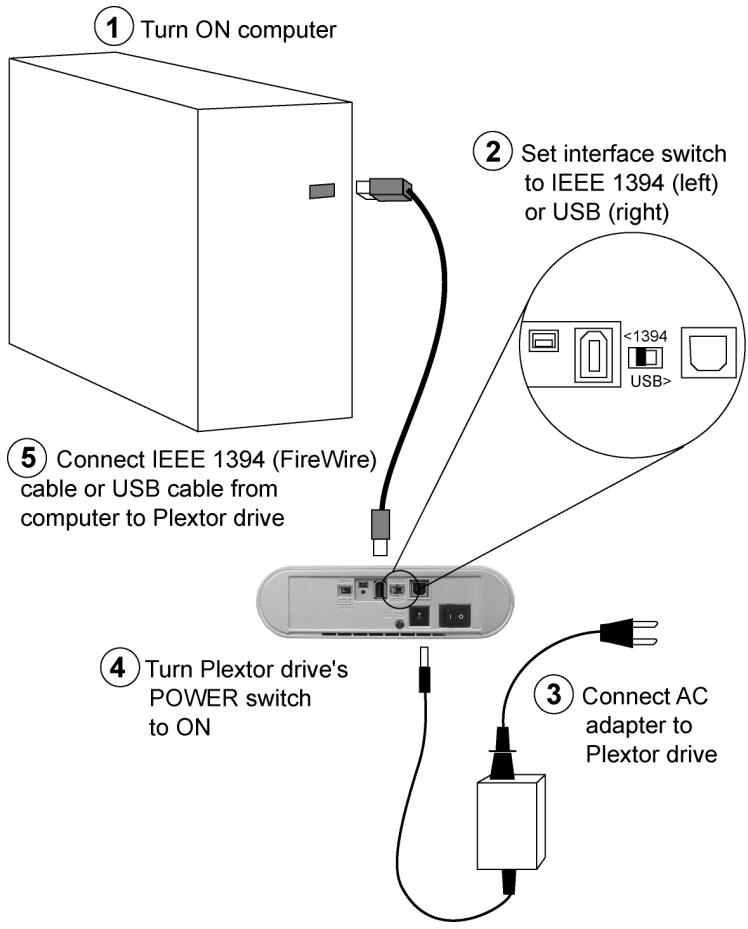
Figure 3: Connecting the AC adapter and USB or FireWire cable
The drive should be automatically recognized by the computer. In some cases, you may have to reboot (turn the computer off, then on again) for the PX-712UF to be recognized.
CAUTION: The PX-712UF should be the only device on the cable. Do not daisy-chain the PX-712UF with other IEEE 1394/FireWire devices or connect to a USB hub.
Identifying Cables and Ports
This illustration will help you identify the cables and computer ports and make the necessary connections.
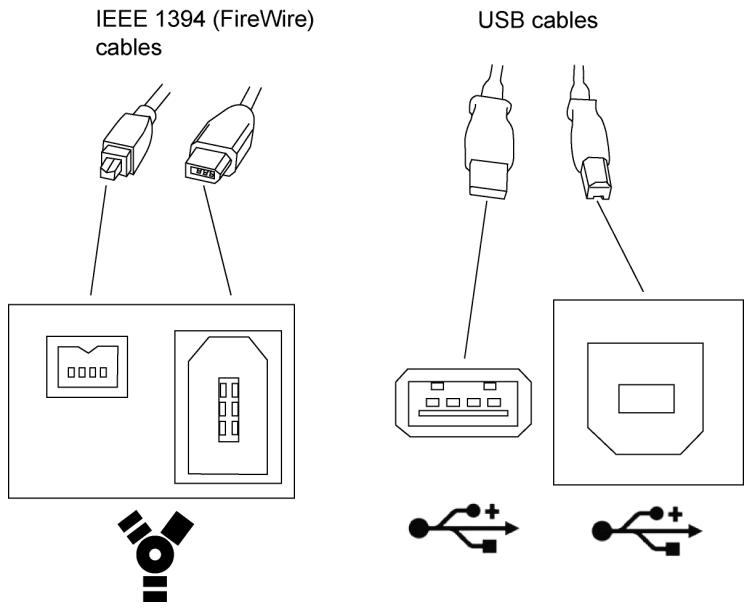
Figure 4: Identifying cables and ports on your computer
If You Have Windows 98SE and FireWire
If you have a computer with Windows 98SE, to ensure stable operation when using the FireWire (IEEE 1394) interface, you'll need to update Windows with a patch file from Microsoft. You must do this before you can install the PX-712UF drive.
To update your Windows 98SE operating system:
- With your web browser, go to the Microsoft web site to download the appropriate patch file. The URLs are:
English: http://support.microsoft.com/default.aspx?scid=kb,en;242975
Japanese: http://support.microsoft.com/default.aspx?scid=kb;ja:242975
- Install the Windows patch according to the instructions provided with it.
- Install the PX-712UF drive as detailed on page 18.
If You Have Windows 98SE and USB
If you have a computer with Windows 98SE and are using the USB interface, you'll need to update Windows with the Plextor driver before you can install the PX-712UF.
To update your Windows 98SE operating system:
- Install the Plextor drivers:
If you have a DVD Player, insert the Plextor disc and install from the button labeled "98SE USB Driver."
If you do not have the Plextor disc or do not have a DVD player, download the PX-712UF drivers from: http://www.plextor.com/english/support/drivers /drivers.html#usb
- Install the PX-712UF drive as detailed on page 18.
Switching Between USB and IEEE 1394 Interfaces
You can connect any or all of the interface cables (USB, IEEE 1394 4-pin, and IEEE 1394 6-pin) and switch between them. You can even have different cables attached at the same time, allowing more than one computer to share the PX-712UF.
To switch between interfaces attached to the PX-712UF:
- Ensure the interface cable for the desired USB or IEEE 1394 interface is attached to the PX-712UF and to the computer.
- At the rear of the PX-712UF, set the interface switch to the desired interface.
- Cycle the PX-712UF power. (That is, turn the PX-712UF's power switch off, then on again.)
If You're Using FireWire
If you are using FireWire (IEEE 1394), remember these hints for better operation:
- Do not daisy-chain the PX-712UF with other FireWire devices.
- The PX-712UF is not bus powered—that is, it doesn't get its power from the IEEE 1394 cable—so you have to use the bundled AC adapter.
If You Have a Macintosh
If you have a Macintosh, use the following procedure to install your PX-712UF drive:
- Turn on the Macintosh.
- Ensure you are running Macintosh OS 9.1 or higher (for FireWire and USB 1.1) or OS X (for USB 2.0).
- On the PX-712UF, set the rear-panel interface switch to USB or IEEE 1394, corresponding to the interface you will be using.
- Connect the AC adapter to your PX-712UF.
- Turn the drive's power switch ON (the "1" is depressed).
- Connect the USB or IEEE 1394 cable from your PX-712UF drive to the Macintosh computer.
The Macintosh automatically recognizes the PX-712UF (if the base extensions are loaded), and you should be ready to use the drive as a CD-ROM. To use the recording capabilities of the drive, a recording application must be installed.
NOTE: Most Macintosh USB built-in ports provide USB 1.1 Full-Speed (12 Mbps). This limits the CD-RW drive performance to 4X write, 4X rewrite, and 6X read. DVD read performance is 0.7X. For optimum performance, if your Macintosh computer does not have built-in USB 2.0, use the FireWire port. Or you can install a third-party PCI USB 2.0 plug-in host adapter card.
ANOTHER NOTE: For optimum performance if you use the USB interface, you will also need Mac OS X. If you use OS 8.6.x or 9.x with a built-in USB port or a PCI adapter, your PX-712UF will achieve only USB 1.1 performance.
This page intentionally left blank.
This chapter explains how to use your PX-712UF drive and how to load, handle and care for your DVDs and CDs.
Use the right media! Your PX-712UF drive's capabilities change depending on which type of compact disc you use.
DVD recordable media is available in two different, non-compatible formats:
DVD+R and DVD+RW
DVD-R and DVD-RW
Your PX-712UF can read and write either media format. That is, it supports all these types of DVD media:
- Digital Video Discs: You can immediately play pre-recorded DVD discs, including movies and other DVDs.
- DVD+R, DVD-R: Recordable DVD. You can record on these discs, but only once. You can also read them.
- DVD+RW, DVD-RW: ReWritable DVD. You can record and re-record (up to 1,000 times) on these discs. You can also read them.
In addition, you can use these types of CD media:
- CD-ROM: You can immediately play or read prerecorded compact discs, such as audio CDs and data discs.
- CD-R: Recordable CD. You can record on these discs, but only once. You can also read them.
- CD-RW: Normal Speed, High Speed, and Ultra Speed ReWritable CD. These discs support recording and re-recording (up to 1,000 times). You can also read them.
To achieve a certain writing speed, you must use the appropriate media. To achieve 48X CD-R writing speed you must use certified 48X media; and to achieve 24X CD-RW writing speed you must use Ultra Speed CD-RW media.
Remember:
- Using Normal Speed CD-RW discs (that is, NS-RW media) you can rewrite at 4X.
- Using High Speed CD-RW discs (HS-RW media), you can rewrite at 10X.
- Using Ultra Speed CD-RW discs (US-RW media) in this drive, you can rewrite at up to 24X.
You can write to Ultra Speed CD-RW discs only on drives that support this media. Drives that are capable of writing to Ultra Speed ReWritable media, such as the Plextor PX-712UF, are identified by a "Compact Disc ReWritable Ultra Speed" logo.

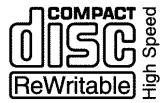
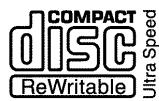
Figure 5: The logo identifies the type of CD-RW media
See "Recommended Media" on page 73 for a list of Plextor-approved media at the time this manual was printed, and see the Plextor web site at www.plextor.com for an updated list.
Tray Loading and Operation
To load and unload the tray:
- While the drive is powered up, push the eject button on the front panel. The tray drawer slides out in 3-4 seconds.
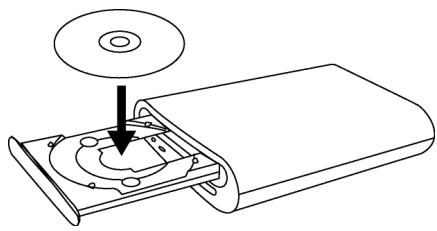
Figure 6: Loading the tray
- Lay a CD or DVD disc in the depression in the tray, label side up.
- Press the eject button again and the tray will slide shut within seconds.
NOTE: Always use the eject button to close the tray in a smooth and secure manner. Closing the tray by pressing the front of the drawer using your hand is not recommended and risks damage or premature wearing of the mechanism.
Take care when handling blank CD and DVD media. Dust, scratches, and fingerprints on either side of the disc can cause write errors during recording. When picking up or holding blank media you can either place your fingers along the outer edge of the disc, or place one finger through the center hole and one finger on the outer edge. Once you have finished creating a disc, label it by writing on the top using permanent ink.
CAUTION: We recommend using a "non-toxic" marker, such as a Sharpie® pen, that conforms to the ASTM D-4236 standard. Some permanent markers will damage the media. Also, do not press too hard when writing on the disc.
NOTE: We do not recommend placing self-sticking CD-R labels on the disc. The weight of the label may unbalance the disc and cause write errors during recording or read errors during reading. Also, attempting to remove the label may permanently damage the disc.
Cleaning Discs
For proper read and write performance, your discs must be clean. Trying to record on a dirty disc may result in a failed session and ruin the disc.
To clean the disc, wipe the disc using a clean, soft cotton cloth to remove surface dirt such as fingerprints. Use a straight-line motion, wiping from the center out. Do not wipe the disc in a circular motion.
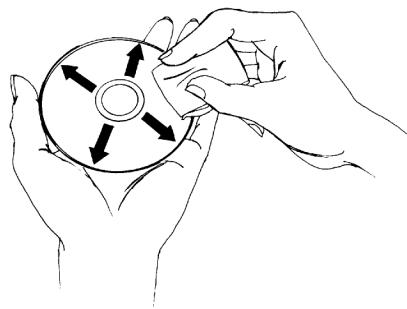
Figure 7: Wipe the disc from the center outward
HINT: Keep your frequently used discs in jewel cases at all times to prevent them from becoming dirty or damaged.
Mounting Position
You can operate your PX-712UF drive in either a horizontal or a vertical position. If you are operating it in a vertical position, use the cradle to stabilize the drive.
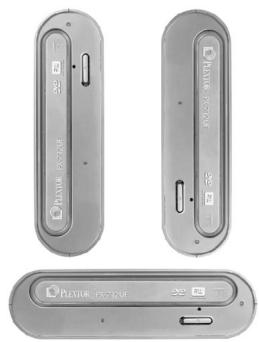
Figure 8: You can operate the PX-712UF horizontally or vertically
CAUTION: Take special care not to shock or disturb the external drive when it is operated in a vertical position. Even in the cradle, the drive can accidentally be knocked over.
Playing DVDs
To play a digital video disc, insert the DVD as you would any other disc. The drive plays both single-layer and dual-layer discs.
The first time: A code on each DVD allows it to be played only on players designed for a certain regional area, such as North America, Europe, etc. When the drive ships from the factory there is no region code set. The first time a DVD that has a region setting is inserted into the drive, the drive is automatically set to that region code.
If you later insert a DVD with a different region code, you are prompted to either accept changing the new region code or not. If you don't accept the change, then that DVD will not play. If you do accept the change, then the region code setting is changed. But remember: you can change the drive's region code only 5 times. After that, you can't change it any more.
You need special software that supports writing to DVD+R and DVD+RW discs: or to DVD-R and DVD-RW discs. The Roxio Easy CD Creator DVD Edition on the CD that accompanies your PX-712UF contains this software.
Specifying +R/RW or -R/RW
You don't need to specify whether to write to +R / RW or -R/RW. The selection is automatically made for you, based on the media you insert in the drive.
In conjunction with your drive, mastering and packet writing software such as Easy CD Creator and DirectX allow you to write audio, video, data, or other information to writable (CD-R) or rewritten (CD-RW) media. The PX-712UF writes to all types of CD-RW media.
Using the Disc/Busy Indicator
The color and blink rate of the front-panel disc/busy indicator give you information about the drive's operation.
When you are writing to a CD or DVD disc, the color and blink rate of the front-panel disc/busy indicator shows the speed of writing, as follows:
| Operation | Indicator color | On/Off/Blink | Blinking interval |
| No disc | - | Off | - |
| Eject | Amber | On | - |
| Loading | - | Off | - |
| Initialize | Amber | On | - |
| Standby | Green | On | - |
| Read | Amber | On | - |
| DVD write, 8X and higher | Amber | Blink | 40ms |
| DVD write, 4-7X | Amber | Blink | 80ms |
| DVD write, less than 4X | Amber | Blink | 150ms |
| CD-R write, 32X and higher | Amber | Blink | 40ms |
| CD-R write, 16-31X | Amber | Blink | 80ms |
| CD-R write, less than 16X | Amber | Blink | 150ms |
| CD-RW write, 24X | Amber | Blink | 40ms |
| CD-RW write, 10-23X; 10X CLV | Amber | Blink | 80ms |
| CD-RW write, 4X | Amber | Blink | 150ms |
| Buffer Underrun Proof / DVD linking active | Green | On | - |
Switching to SpeedRead for Video Playback
When you are playing a DVD-Video disc that has CSS (copy protection via the Content Scrambling System), the PX-712UF normally plays at a slow speed with a maximum of 2X CLV speed to reduce drive noise. You can speed up DVD playback by turning on SpeedRead.
To manually enable SpeedRead and speed up DVD playback:
- Make sure the PX-712UF disc tray is closed and empty.
- Press and hold the PX-712UF's eject button for at least 3 seconds. The disc/busy indicator blinks green three times to indicate SpeedRead will be active for DVD-Video discs with CSS copy protection.
- Release the eject button. The disc tray opens.
- Insert a DVD-Video disc that is equipped with CSS copy protection.
- Begin playing the disc.
SpeedRead changes the default DVD read speed to 6X-16X CAV for single layer DVD discs, or 3X-to 8X CAV for dual layer DVD discs.
To manually disable SpeedRead:
You can manually disable SpeedRead and return to normal video playback operation (for DVD-Video discs with CSS) in either of two ways:
Eject the disc.
-or-
- Turn off power to the drive.
NOTE: You can also enable and disable SpeedRead with PlexTools Professional software. Go to Drive Settings | Advanced and enable or disable SpeedRead with the check box.
The Plextor PX-712UF has a number of advanced features that set it apart from other drives. For instance, you can operate in Silent Mode, display and analyze disc errors, password protect an entire disc, increase a disc's capacity beyond its rated value, and more. To use these features, you need to install software that supports them.
PlexTools Professional, available on the Plextor CD, gives you access to all these advanced features, along with many other tools for controlling and monitoring your drive's operation.
- Insert the Plextor disc into the Plextor PX-712UF drive or another drive that can read the Plextor software disc.
- On the screen, choose the PlexTools Professional installation. (If the installation doesn't start right away, use Windows Explorer to navigate to the drive, and double-click the PlexTools Professional .exe file.) You see the InstallShield Wizard for PlexTools Professional.
- Accept the license agreement, and accept the default installation settings.
- When prompted, click Finish to complete the InstallShield Wizard.
- When prompted, restart your computer.
After installation, PlexTools Professional is launched automatically, unless you disable automatic running. (To disable automatic running at startup, choose Options | Preferences, go to the General tab, and uncheck the Automatic run box.) Even if PlexTools Professional is not set to run automatically, you can launch it from the Start | Programs menu in Windows.
Using Silent Mode
Although the Plextor PX-712UF drive is quiet in normal operation, its Silent Mode is ideal for use in environments where "silence is golden." Silent Mode reduces sound from the drive in several ways:
- Slows writing speed
- Slows reading speed
- Slows access (spinup and spindown) speeds
- Reduces tray speed (that is, the opening and closing of the disc tray). You can actually control the tray speed directly.
Turning On Silent Mode
You can turn on Silent Mode with software applications that have been written to make use of this technology. One of these applications is the PlexTools Professional software.
- In the PlexTools Professional menu bar, select Drive Settings. You see the tabs for drive settings.
- Select the Silent Mode tab. You see the Silent Mode window.
- To enable Silent Mode, check the Enable Silent Mode box.
- To slow writing speed, making this process quieter, select the Max. Write Speed drop-down menu and make a new selection. Smaller numbers mean quieter operation, but take longer to write a disc.
- To slow reading speed, making this process quieter, select the Max. Read Speed drop-down menu and make a new selection. Smaller numbers mean quieter operation, but slow disc reading.
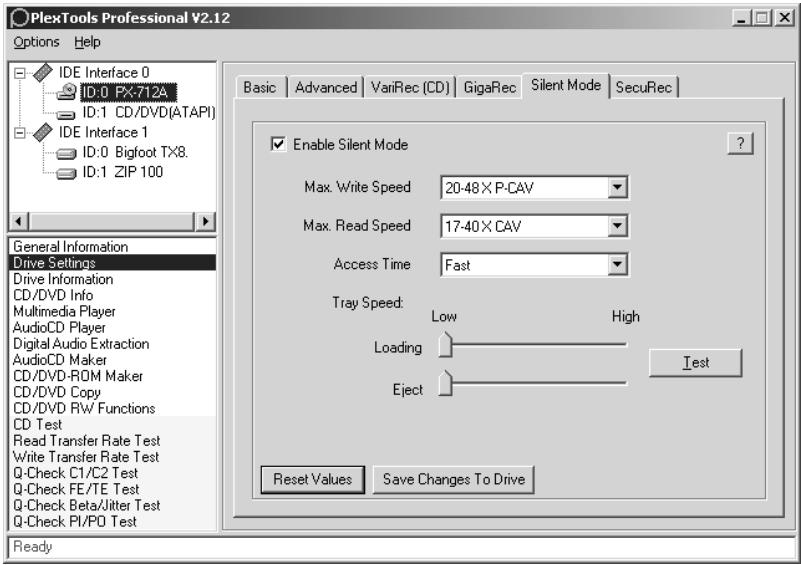
Figure 9: Silent Mode options in PlexTools Professional
- To slow disc access by the drive, making spinup and spindown slower and quieter, select the Access Time drop-down menu and make a new selection. Choose Fast for a rapid access time (60 milliseconds), Middle for a medium access time (80 milliseconds), and Slow for a low access time (120 milliseconds). The quietest setting is Slow.
- Use the Tray Speed Loading and Eject sliders to adjust the loading and eject speed. Set a slider to the left to reduce the speed, making the drive quieter. Set the slider to the right to increase the speed.
- To test the tray speed, click the Test button.
- Select Save Changes to Drive to save any Silent Mode changes to the drive.
- To return Silent Mode to the factory defaults (maximum speed), click the Reset Values button. This also turns Silent Mode off.
Important Facts about Silent Mode
- When first started, the Plextor PX-712UF drive is set with Silent Mode off.
- When Silent Mode is active, the drive's maximum speed is always restricted. Any speed settings specified by other applications will be overridden.
- When saved into the drive's flash memory, Silent Mode remains active even if you power down the computer or the drive. To clear Silent Mode settings, select the Reset Values button.
- If SpeedRead is enabled with Silent Mode on, default read speed is 40X speed maximum.
- If you are playing a digital audio (CD-DA) disc using an application such as Windows Media Player, playback is at 4X CLV, no matter the Silent Mode setting.
- During DVD-video playback of CSS discs, playback is automatically slowed down for quieter video playback. (This is different from the control you have with Silent Mode.) To enable SpeedRead for DVD-Video discs with CSS, press the eject button for 3 seconds. (For more details, see page 32.)
Using SecuRec
The Plextor PX-712UF's SecuRec function lets you write on a CD-R disc and protect the data with a password.
To view the contents of password-protected disc—or even to see a catalog of files—the user must enter the correct password. The password can be entered via PlexTools Professional software, or with SecuViewer software. (SecuViewer software is easily available to any user simply by downloading it from the Plextor web site at http://www.plextor.com/english/support/downloads/reader.html.)
Password-Protecting a Disc with SecuRec
You can choose to password-protect a disc so it is readable by any Plextor PX-712UF drive (assuming the user enters the correct password), or by any drive using the SecuViewer.
To password-protect a disc with SecuRec:
- Insert a blank CD-R disc in the Plextor PX-712UF drive.
- In the PlexTools menu bar, select Drive Settings. You see the tabs for drive settings.
- Select the SecuRec tab. You see the SecuRec window.
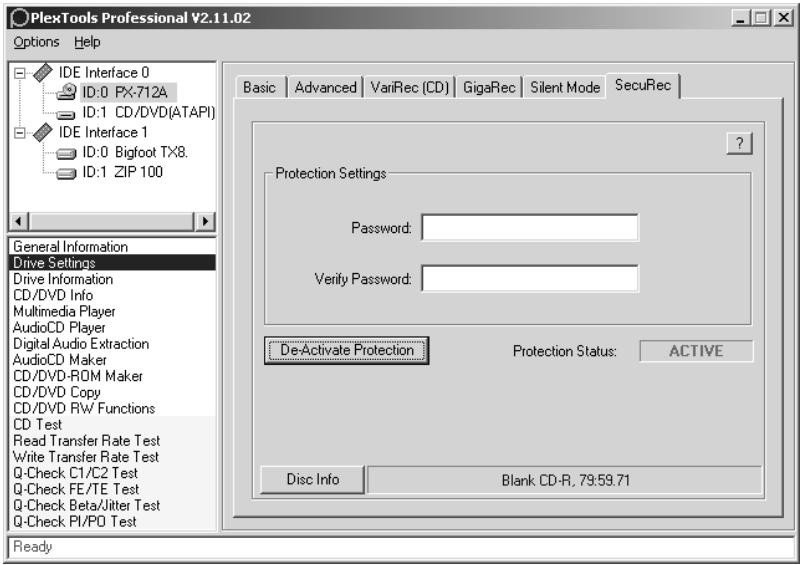
Figure 10: Password-protecting a disc with SecuRec
- Enter the desired password in the Password field.
- Retype your password in the Verify Password field.
- Click the Activate Protection button. The Protection Status field shows that protection is Active.
- Use a disc-at-once (DAO) recording application (such as CD/DVD-ROM Maker in PlexTools Professional, or any other DAO recording application) to record your data onto a CD-R disc.
Once protected with SecuRec, the disc can't be read by a non-SecuRec drive unless the correct password is entered.
Reading a Password-Protected Disc
To read a disc that has been password-protected with SecuRec:
- Make sure you have PlexTools Professional or SecuViewer on your computer.
- Insert the password-protected CD-R disc into a PX-712UF or Plextor Premium drive. (You only need these drives if you are using PlexTools Professional software. With SecuViewer, you can use any drive.)
- In PlexTools Professional, choose Drive Settings and choose the SecuRec tab. You see the SecuRec window. -or- Launch SecuViewer.
- Enter the password in the Password field.
- Click the Activate Protection button. The Protection Status field shows that protection is Active. You can now read the contents of the disc using Windows Explorer.
Important Facts about SecuRec
- SecuRec burning is applicable to data (ISO 9660) CDs only.
- SecuRec supports data CD-R discs written by disc-at-once (DAO) techniques.
- If you are distributing a SecuRec disc to others, please remember to provide them the reader driver on another disc, or have them download the reader driver from the Plextor web site at: http://www.plextor.com/english/support/downloads/reader.html.
- Only data CD-R discs recorded in DAO mode can be password-protected with SecuRec. DVD discs, audio (CD-DA) discs, or data CDs written by track-at-once (TAO) or multi-session cannot be protected.
-
Discs protected with SecuRec using older versions of PlexTools Professional may not be readable with the current version.
-
Remember your password! Plextor has no way to retrieve data from discs for which the password has been lost or forgotten. For this reason Plextor assumes no responsibility for lost passwords or data.
NOTE: Use of this function is at your own risk. If you forget your password, your data will not be retrievable. Plextor cannot be held liable for any damage, unreadable discs, or loss of data. If you do not agree, please do not use this function.
Using VariRec
This drive is equipped with VariRec (Variable Recording) technology, a unique feature offered by Plextor that allows you to manually adjust the drive's laser power during the recording process. VariRec operates both for DVD and CD recording.
NOTE: In order for you to actually perform the adjustment, VariRec must be supported by the recording software you're using. PlexTools Professional is one recording application that supports VariRec.
Being able to adjust the laser power during the recording process can have some definite advantages. For instance, depending on the capabilities of your specific audio equipment, you may be able to change the sound quality of your recordings to suit the equipment. Or you may be able to correct compatibility problems that occur when playing discs on certain audio players or older CD-ROM drives.
How the Default VariRec Setting Is Determined
In most cases you don't have to worry about setting VariRec. The setting is 0 (zero) by default, and this usually works best. This default setting is determined by a combination of steps:
- First, we test many types of recordable DVD±R and CD-R media in our factory to determine the best write strategy (laser power and other factors) for that media.
-
We include a table of the tested media and their write strategy in your drive's firmware. (This table is updated when you update your drive by downloading new firmware from the Plextor web site.)
-
When you insert a recordable disc into your drive, Plextor's PoweRec technology automatically identifies the manufacturer, model, and special features of the media, then adjusts the laser power and writing speed so they're at the optimum settings for that disc.
- The drive uses OPC (Optimum Power Control) to further fine-tune the laser power setting to the specific disc that is in your drive.
- The combined values of the pre-defined write strategies, along with the OPC test results, create the default VariRec setting of zero.
Changing the VariRec Setting
VariRec lets you increase or decrease the laser power setting by up to 4 degrees in either the positive or negative direction. You can make these changes for DVD+R 4X and 2.4X, DVD-R 4X and 2X, and CD-R 4X and 8X CD-DA/data writing. VariRec also lets you change the write strategy to match the dye profile of your disc. You can make these changes to do comparison testing with your DVD or CD player to find the setting that best suits you.
Changing the laser power and write strategy changes the characteristics of the audio or data being written. For audio, you can hear these changes during playback, although what you hear will depend on speaker quality, audio settings, and environment.
- Place a blank DVD±R or CD-R disc in the PX-712UF.
- In the PlexTools menu bar, select Drive Settings. You see the tabs for drive settings.
- Select the VariRec tab. You see the VariRec window.
- To turn VariRec on for recording, place a check mark in the Enable VariRec box.
-
Move the slider to adjust the laser power in either the plus or minus direction.
-
Click the Recording Speed drop-down menu to choose the recording speed: for example, 8X or 4X for a CD-R.
- Click the Recording drop-down menu to choose the recording strategy: for example, Default, Azo, Cyanine, Phthalocyanine A, B, C, or D.
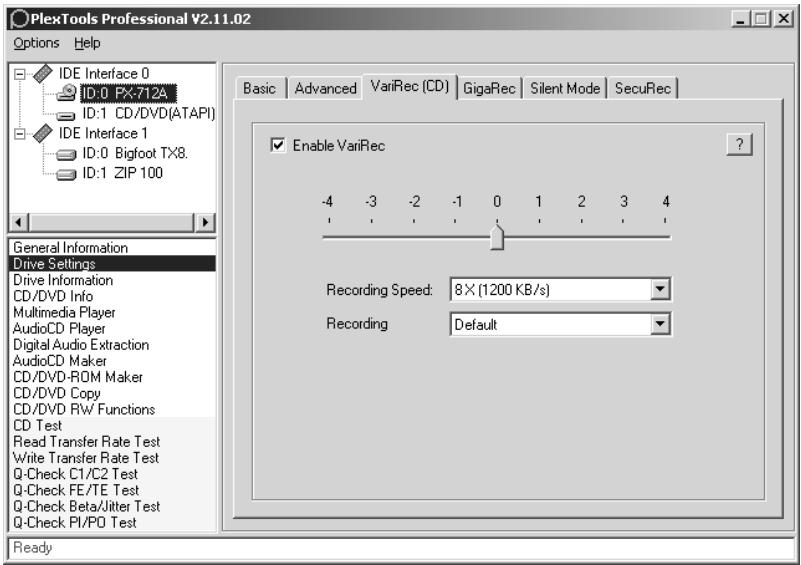
Figure 11: Changing the VariRec parameters
- Use AudioCD Maker or CD/DVD-ROM Maker from PlexTools Professional to create a disc layout.
- If necessary, in the list of recording options, make sure the Enable VariRec box is checked and continue recording.
Your disc is recorded with the new laser strategy.
Important Facts about VariRec
- Use VariRec with DVD±R or CD-R discs.
- VariRec writes in either Track-at-One (TAO) or Disc-at-One (DAO) mode.
- VariRec writes data or CD-DA (digital audio) on recordable media at lower speeds (for example, 4X or 8X for CD-R), rather than at the full speed of the drive. For this reason, data or audio recording using VariRec takes substantially longer than a standard audio recording.
Using GigaRec
GigaRec lets you change the capacity of a standard CD-R disc from 60 percent up to 130 percent of its standard capacity. You can use GigaRec for CD-DA or data writing at 4X and 8X disc-at-once (DAO).
The most obvious advantage of GigaRec is that it extends the capacity of a standard CD-R disc. For instance, a Type 80 CD normally allows 700 megabytes of data and 80 minutes of recording. But with GigaRec, you can get up to 913 megabytes of data on a single Type 80 CD.
GigaRec also lets you burn a disc at lower-than-rated capacity. Say you're making an audio master that is only 490 megabytes in size. By using GigaRec to record at 0.7x normal capacity, you "stretch" that data to utilize the same physical space that 700 megabytes would normally occupy on the disc. This changes the actual length of the pits and lands used for data bits, increasing the accuracy and response of the data, and resulting in a truer burn.
In order to use the GigaRec feature, you need:
- CD-R drive (such as the Plextor PX-712UF) that supports GigaRec.
- Recording software, such as PlexTools Professional, that supports GigaRec.
- Player software that recognizes the GigaRec disc.
Remember, even if you can burn a disc with GigaRec, your player software must be able to recognize the disc, or you will not be able to play it back.
Burning a Disc with GigaRec
- Insert a blank CD-R disc in the Plextor PX-712UF drive. (You can't use DVD±R/RW or CD-RW discs with GigaRec.)
- In the PlexTools menu bar, select Drive Settings. You see the tabs for drive settings.
- Select the GigaRec tab. You see the GigaRec window. At the bottom of the GigaRec window you can see information about the disc currently in the drive. The disc capacity and recording time are shown.
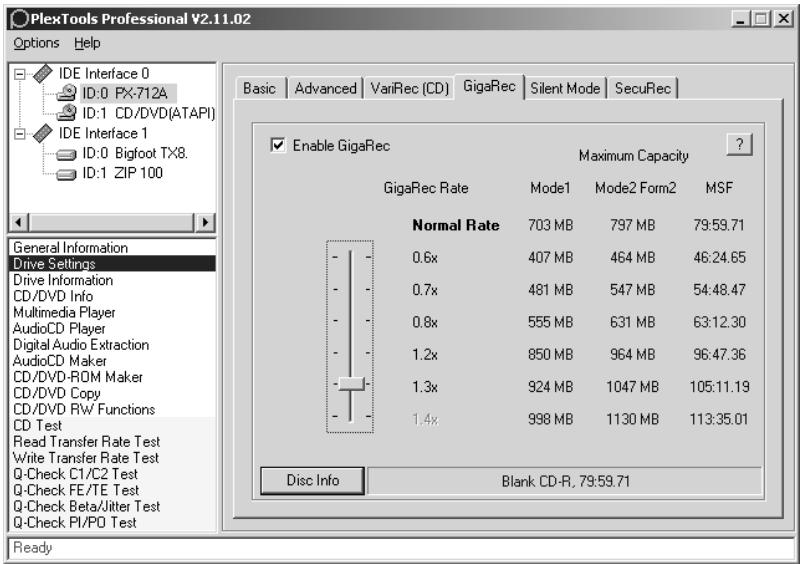
Figure 12: Selecting the GigaRec writing capacity
- To enable GigaRec, place a check mark in the Enable GigaRec box.
- Move the slider to one of the GigaRec Rate numbers to select the capacity. For example, choosing 1.2x increases the disc's writing capacity by 20 percent. So the capacity of a 703-MB disc is increased to 850 megabytes (Mode 1), or about 96 minutes.
NOTE: MSF stands for minutes, seconds, frames. This is the structure of the CD: 2048 bytes per frame, 75 frames per second, 60 seconds per minute.
- Using a disc-at-once (DAO) recording application such as PlexTools Professional CD/DVD-ROM Maker or AudioCD Maker, record data on the CD-R disc.
- To disable GigaRec and return to normal writing, clear the Enable GigaRec check box.
How GigaRec Works
CD-R and CD-RW discs are manufactured with special information about manufacturer, model name, disc features, and maximum write capacity written to a narrow strip along the inner margin of the disc. The Plextor PX-712UF can ignore and even overwrite this information, which extends the disc capacity.
Important Facts about GigaRec
- When you enable GigaRec, it is active for all recording functions.
- With GigaRec, writing speed is fixed at 4X or 8X.
- You can use only CD-R discs with GigaRec.
- Only disc-at-once (DAO) recording, in which all tracks are written in a single operation, is supported. GigaRec does not support session-at-once (SAO) recording.
- Buffer Underrun Proof Technology is turned off during GigaRec operation. Writing stops if a buffer underrun occurs.
-
A disc recorded with GigaRec is playable in all Plextor PX-712UF drives. However, because GigaRec is out of the limits for Orange Book and Red Book recording, the recorded disc many not be playable in all CD players. For a list of players that are compatible with GigaRec discs, see www.plextor.com.
-
The PX-712UF also supports "overburn," which is different from GigaRec. When you overburn a disc, the drive reads the disc's information, then writes to the disc vendor's stated maximum capacity and a little beyond. Overburn provides smaller increases in disc capacity than are capable with GigaRec.
Testing Your CDs and DVDs
The Plextor PX-712UF achieves high-quality recording on virtually any media. To confirm operation, you can use the PlexTools Professional software to measure and display characteristics of the drive and media you're using. You can also check the operation of the drive's laser.
Among the measurements and tests available are:
- Read transfer rate (for CD and DVD)
Write transfer rate (for CD and DVD)
C1/C2/CU errors (for CD)
- Laser tracking and focus errors (for CD and DVD)
- Beta and jitter (for CD and DVD)
PI and PO errors (for DVD)
This section illustrates how to perform some of these measurements with PlexTools Professional.
Measuring Read Transfer Rate
The Read Transfer Rate selection lets you test the transfer rate of data read from a disc. This function reports the read response of the Plextor PX-712UF drive, and is for use on a CD or DVD that contains content—that is, a commercial pressed disc, or a disc recorded on a DVD or CD burner.
To measure read transfer rate response:
- Place a recorded disc in the PX-712UF. You can use a pre-recorded, commercially stamped CD or DVD disc; or you can use a recorded DVD+R/RW disc, DVD-R/RW disc, or CD-R/RW disc.
- From the PlexTools menu bar, select Read Transfer Rate Test. You see the Read Transfer Rate Test window with a graph for read speeds.
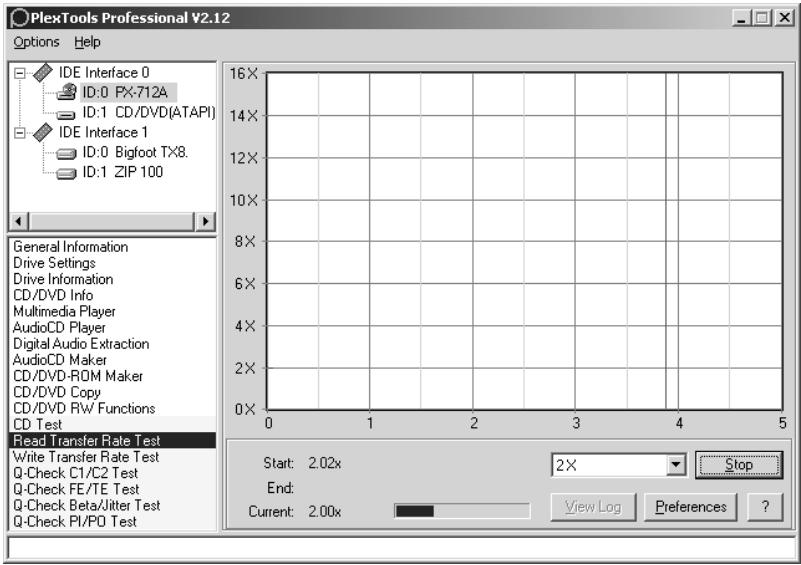
Figure 13: Read Transfer Rate Test window
- Select the speed pulldown menu and choose the desired transfer speed.
- Click the Preferences button to view or change the preferences. You can change the Read Test Options and the Read Test Graph Options.
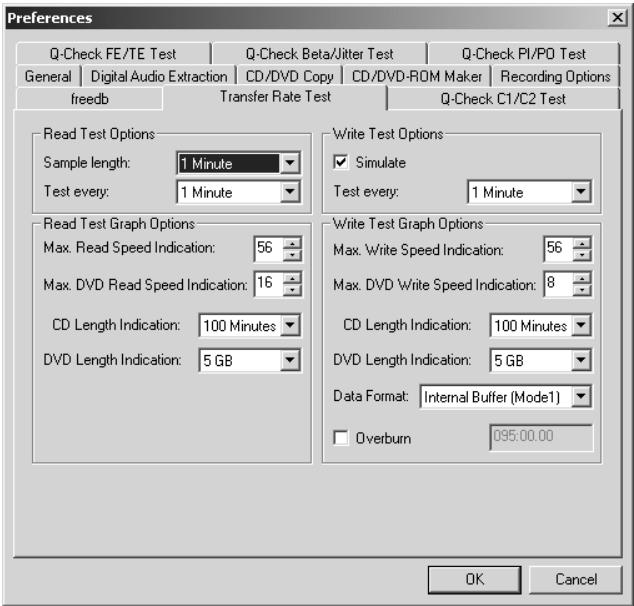
Figure 14: Transfer Rate Test Preferences window
- Click OK to exit the Preferences window and return to the Read Transfer Rate Test window.
- To begin measurement, in the test window, click the Start button. You see the amount of recorded data represented in minutes, the start speed, and current speed.
- To end measurement, click the Stop button, or wait for the measurement to stop by itself. You see a graph representing the drive read response.
- To see the results, select View Log. You see the Test Results window that shows what color corresponds to what test. You can clear all or selected tests, then run more tests for comparison.
What the Measurement Means
This function reports the read response of the Plextor PX-712UF drive. The graph should display a smooth linear curve up to the limit of the recorded data. If the curve is not linear or smooth, repeat the test with another piece of recorded media. Most read transfer failures are caused by poor quality or damaged media.
Measuring Write Transfer Rate
The Write Transfer Rate selection lets you test the transfer rate of data written to a disc. The function reports the writing response of the Plextor PX-712UF drive. This test is conducted on blank media to determine the capabilities of the drive/media combination.
To measure write response:
- Place a blank recordable or rewrites disc in the Plextor PX-712UF drive. You can use a blank DVD+R or +RW disc, a DVD-R or -RW disc, or a CD-R or CD-RW disc.
- From the PlexTools menu bar, select Write Transfer Rate Test. You see the Write Transfer Rate Test window with a graph for write speeds.
- Select the speed pulldown menu and choose the desired transfer speed.
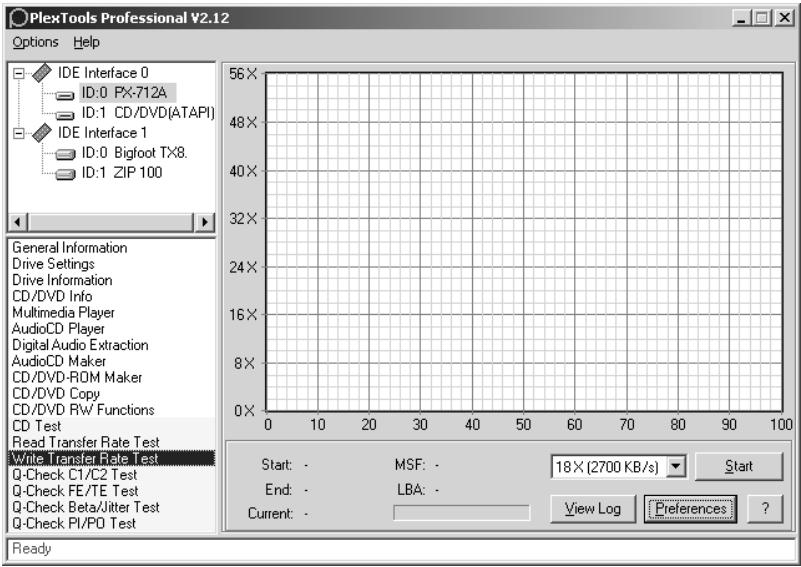
Figure 15: Write Transfer Rate Test window
- Click the Preferences button to view or change the preferences. You see the Transfer Rate Preferences window.
-
In the Preferences window, you can change the Write Test Options and the Write Test Graph Options:
-
Uncheck the Simulate box to write to the recordable CD or DVD disc, or leave it checked to simulate writing. (If you simulate, the blank disc is preserved.)
- Set the CD or DVD length to the capacity of your blank disc; for example, 5 GB for a DVD.
-
Specify the Data Format: CD-DA or Mode 1 data.
For a CD you can select Overburn to overburn the disc.
-
Click OK to exit the Preferences window and return to the Write Transfer Rate Test window.
-
To begin measurement, in the test window, click the Start button. You see the start and current write speed.
-
To end the measurement, click the Stop button, or wait for the measurement to stop by itself. You see a graph representing the drive write response.
- To see the results, select View Log. You see the Test Results window that shows what color corresponds to what test. You can clear all or selected tests, then run more tests for comparison.
What the Measurement Means
This test reports the writing response of the Plextor PX-712UF drive. The graph should display a smooth linear curve up to the limit of the disc capacity. If the curve is not linear or smooth, repeat the test with another piece of media or media from a different vendor. Most write transfer failures are caused by poor quality media or media that is not rated for the maximum speed of the drive.
Measuring Q-Check C1/C2/CU Errors
This function reports on the C1, C2, and CU errors on the current CD in the Plextor PX-712UF drive. This test is for use on a CD that contains content—that is, a commercial pressed CD or a CD recorded on a CD-R/RW drive. (It's not for DVD discs.)
To measure C1/C2/CU error:
- Place a pressed CD-ROM disc, or a recorded CD-R or CD-RW disc, in the PX-712UF.
- From the PlexTools menu bar, select Q-Check C1/C2 Test. You see the Q-Check window with a graph for C1, C2, and CU errors.
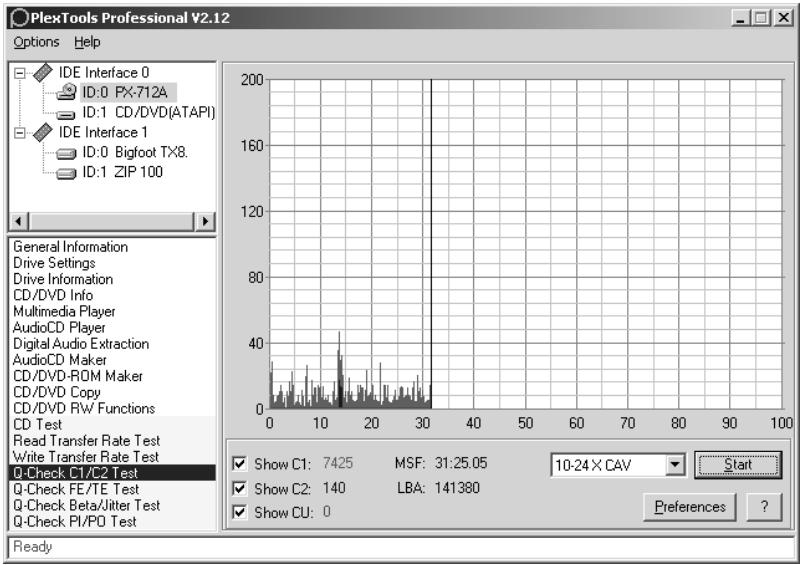
Figure 16: Q-Check C1/C2 Test window
- Click the Preferences button to view or change the preferences. You can change the scale limit and the time length indication, and you can choose to include all tracks on the disc or only selected tracks.
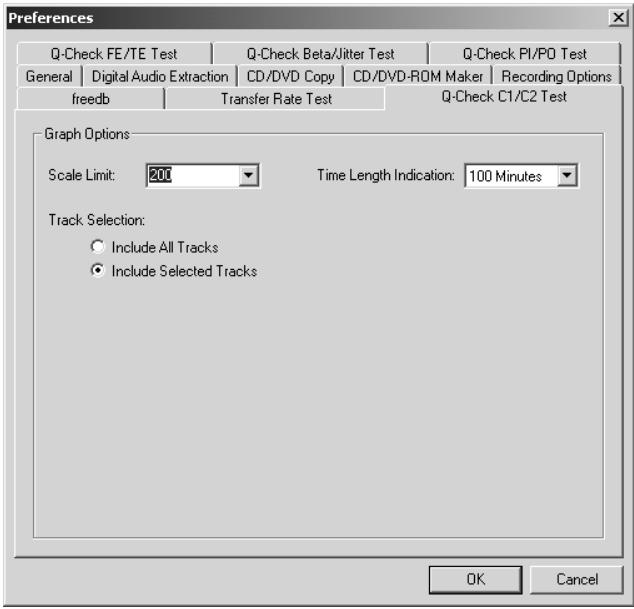
Figure 17: Changing preferences for graphing C1/C2 errors
- Click OK to exit the Preferences window and return to the Q-Check C1/C2 Test window.
- To begin measurement, in the C1/C2 Test window, click the Start button. You see the error counts representing the result of C1 error measurement (BLER) and C2 error measurement (E22). If the disc is defective, you may also see a trace for CU error. The test halts if a CU error is detected.
- To end measurement, click the Stop button, or wait for the measurement to stop by itself. Your window shows the test results, and a graph of the error counts recorded by the application.
What the Measurements Mean
CDs are written via a non-contact optical technology, resulting in errors on the written disc. Error correction is therefore an important component of drive quality.
Audio written to a disc contains no major error correction. Missing audio bytes are interpolated (replaced by an approximate value) in the drive, and the reproduced output is generally very close to the original. (Differences are usually detectable only by an audiophile.) If there are large numbers of missing bytes due to poor media, scratches, fingerprints, etc., these are reproduced as pops or crackles in the audio output, but the media will still play.
Data (non-audio) content is much more sensitive to errors. The data blocks on the recorded disc contain extensive embedded error correction as part of the data stream. This error correction is derived from the actual content of the original computer data, and is used to reconstruct the original data, if needed, when the disc is read.
Every CD has two layers of error correction, called C1 and C2:
- C1 is error correction for the block error rate (BLER), which consists of bit errors at the lowest level. BLER is normally given in errors per second. The typical maximum BLER for quality recording is 220 errors per second.
- C2 error correction applies to bytes in a frame (24 bytes per frame, 98 frames per block) and is an indication of the drive's attempt to use extended error correction to recover the data. Even a few C2 errors can be an indication of poor media quality or a drive's inability to write or read correctly.
- CU error correction applies to uncorrectable errors, or errors that are present after C2 level correction. No CU errors are allowed in a recorded disc. CU errors are usually a result of damage to a disc and represent unrecoverable data. Discs with CU errors quite often cannot be read at all.
The quantity of these errors are a measure of media and drive quality. High quality media, combined with a high quality drive, will have recorded data with some C1 errors and no C2 errors. Poor quality media, or media with scratches, fingerprints or other defects in the disc surface, or written on a drive that has poor write quality, will show a higher number of C1 errors and perhaps some C2 errors.
The best method to determine media quality is to compare your media against media from Plextor's list of recommended media vendors. (See page 74.) If your discs consistently show a high number of C1/C2 errors, you should try another brand of media. If the graph reports CU errors, the disc is defective and should be discarded.
Because the Plextor PX-712UF can report the number of C2 errors, audio extraction applications can use this reporting to guarantee that the extracted audio matches the original.
NOTE: This function measures C1/C2 errors in all kind of discs and recording modes, even if they were recorded on another drive. It is, however, recommended to use this measurement on CD-R media recorded by DAO (Disc-at-once).
Measuring Tracking and Focus Error
Supported in PlexTools Professional software, this function reports on the mechanical characteristics of the DVD or CD you're using in the Plextor PX-712UF drive. It actually measures the amplitude of the laser focus error and tracking error, and displays the results. (This function tests blank CDs and DVDs.)
- Place a blank DVD+R/RW, a DVD-R/RW, or a CD-R or CD-RW disc in the PX-712UF. (Don't use a pre-recorded, commercially stamped disc.)
- From the PlexTools menu bar, select Q-Check FE/TE Test. You see the Q-Check window with a graph for focus error and tracking error.
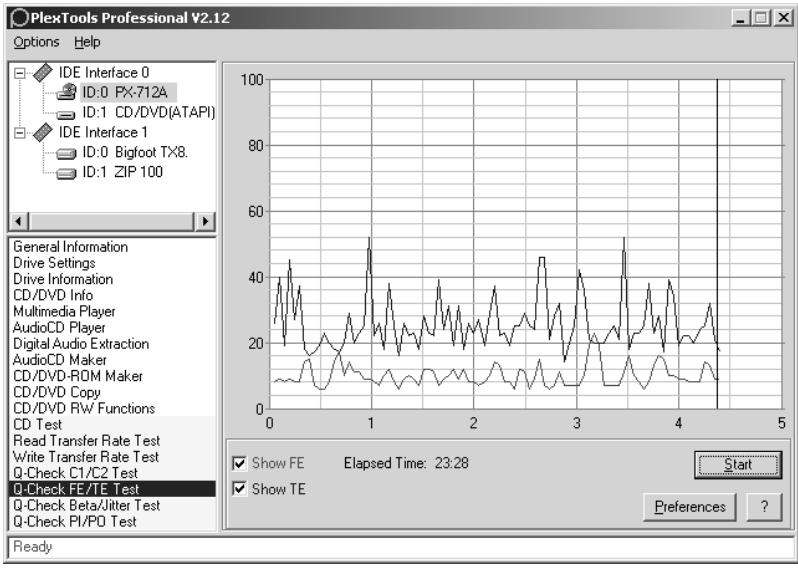
Figure 18: Q-Check FE/TE Test window
- Click the Preferences button to view or change the preferences. You can change the scale, the start position, and the end position.
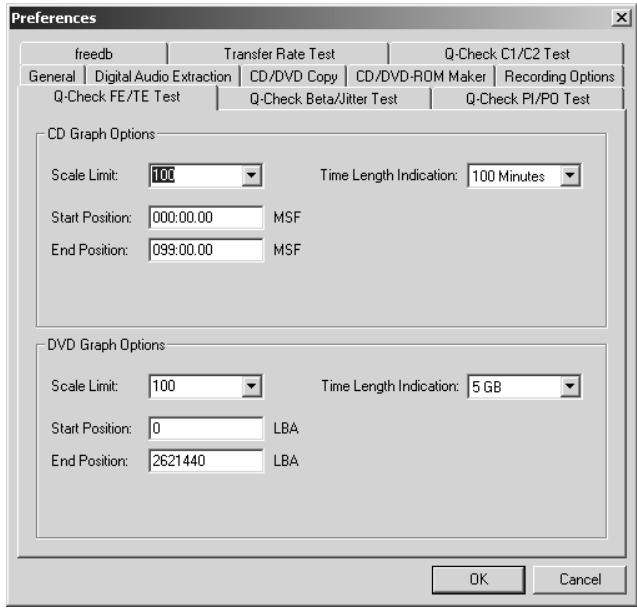
Figure 19: Changing preferences for graphing focus error and tracking error
- Click OK to exit the Preferences window and return to the Q-Check FE/TE Test window.
- To begin measurement, in the FE/TE Test window, click the Start button. You see the traces representing focus error (FE) and tracking error (TE).
- To end measurement, click the Stop button, or wait for the measurement to stop by itself. You see a graph of the errors recorded by the application. PlexTools Professional also tells you if the media is safe to write at highest speed, or if you need to reduce speed to write safely.
What the Measurements Mean
Recordable and rewritable discs can be manufactured with widely varying quality, and a failure to write a disc without errors can be caused by either the drive or by the media. Variations in the reflective layer, polycarbonate thickness, eccentricity (that is, if the spindle hole is not in the exact center of the disc), and the quality and thickness of the dye layer are all factors that determine if the laser accurately burns the data on to the disc.
PoweRec can reduce the drive speed during recording to ensure a higher quality recording, but the reduction in speed may be perceived as a problem with the drive when compared against a drive without PoweRec.
The FE/TE graphing capability of the Plextor PX-712UF drive displays the mechanical characteristics of the disc by indicating how consistently the laser tracks across the surface of the disc, and how accurately the focus is maintained on the recording dye layer.
To be specific:
- Focus error is a measure of how accurately the laser is focused on the disc surface. (That is, how round the laser dot is.) A good disc will show a low number of focus errors across the graph. A bad disc will show a high number of focus errors across the graph, or high points where the drive cannot focus the laser correctly because of poor disc quality.
- Tracking error is a measure of how accurately the laser tracks in the disc's pre-groove area of the disc—that is, how well the laser follows the spiral. A good disc will show low tracking error across the graph, showing a fairly consistent track at all rotational speeds. A bad disc will show high tracking error, which is caused by eccentricity or poor quality of the manufactured media.
The FE/TE test result shows maximum writing speed for each media. However this maximum writing speed is specific for a particular drive; you cannot assume this speed applies to any other drive. If your discs consistently show high rates of focus error or tracking error, you should probably try a disc from a different vendor.
NOTE: The TE/FE measurements are accurate only for a blank recordable or rewritable DVD or CD. If you attempt to measure a recorded or pre-recorded, commercially pressed DVD or CD, the measurements have no meaning.
Making Q-Check Jitter/Beta Measurements
This function reports on the degree of beta and jitter on the CD or DVD in the Plextor PX-712UF drive. This test is for use on a disc that contains content—that is, a commercial pressed CD or DVD, or a disc recorded on a CD or DVD drive.
To measure jitter and beta:
- Place a pressed or recorded CD or DVD in the PX-712UF.
- From the PlexTools menu bar, select Q-Check Beta/Jitter Test. You see the Q-Check window with a graph for beta and jitter.
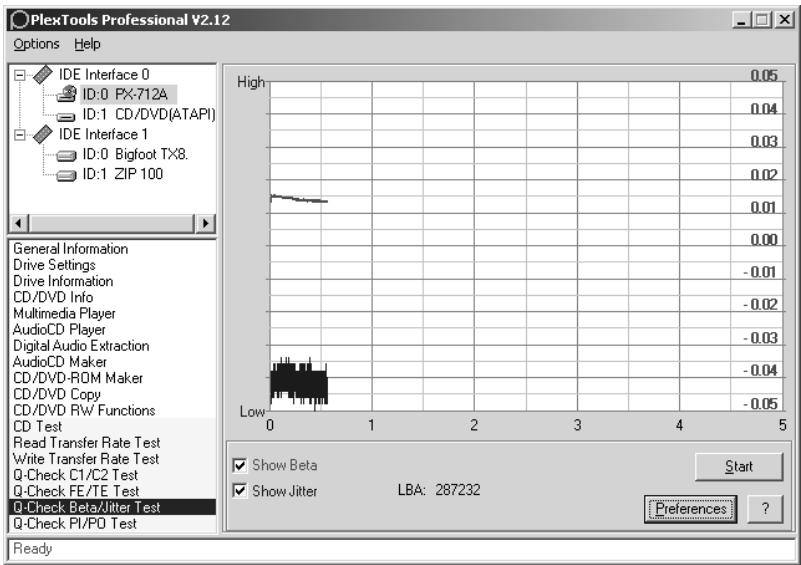
Figure 20: Q-Check Beta/Jitter Test window
- Click the Preferences button to view or change the preferences. You can change the sample length (the length of one sample), the time length indication of the graph, and the limit of the beta measurement scale.
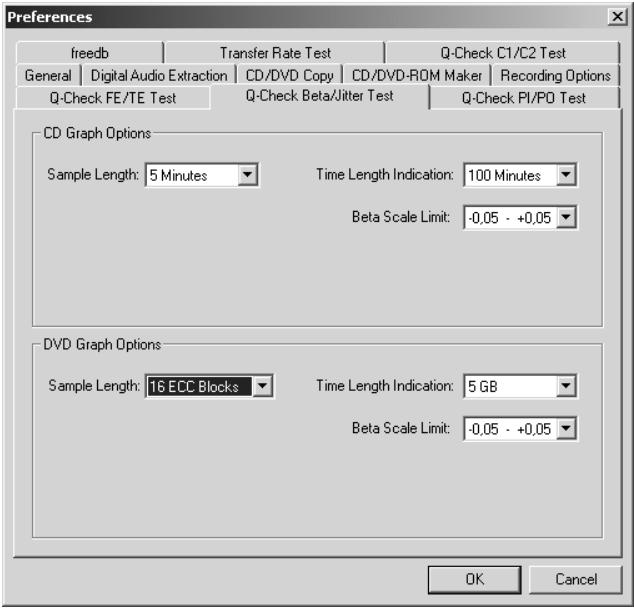
Figure 21: Changing preferences for graphing beta and jitter
- Click OK to exit the Preferences window and return to the Q-Check Beta/Jitter Test window.
- To begin measurement, in the Beta/Jitter Test window, click the Start button. You see the error counts representing the result of beta error measurement jitter measurement.
- To end measurement, click the Stop button, or wait for the measurement to stop by itself. Your window shows the test results, and a graph of the error counts recorded by the application.
What the Jitter Measurement Means
The data on the surface of a CD or DVD disc is expressed by "pits" burned into the recording dye, and by unburned areas, or "lands," which represent the "0" and "1" binary bits of the computer data. The CD book standards prescribe these 0 and 1 pits and lands as a series of 3 to 11 pieces in sequence (described as 3T to 11T). The millions of 3T data segments on the recorded media actually contain minute variations in length, with practically no individual 3T segment matching another. This variation distribution is called the "jitter ratio," and is a measurement of the variation of the prescribed length of the 3T segment against what is actually written on the disc. A lower jitter value indicates better uniformity of 3T data, which means the recording is of a higher quality. The book standard regulates jitter value at no more than 35 nanoseconds.
Using PlexTools Professional and the Plextor drive, you can use the Q-Check Beta/Jitter Test to determine the quality of writing on a disc. The test graph displays an average rate for jitter occurring between 3T and 11T. When you select the sample length, you actually specify a range of addresses that represent anywhere from 15 seconds to 5 minutes on the disc. This test lets you check for the relative amounts of jitter in different media brands, or compare a specific media brand recorded on different drives.
What the Beta Measurement Means
Beta is a representation of the balance between pit and land. If the laser power is too high, the pit becomes too pronounced. If power is too low, the land becomes too pronounced. In either case, data will not be accurately reproduced.
In the Beta/Jitter Test window, the beta measurement is displayed as a red line on the graph, and also reported as an absolute value.
When the Plextor PX-712UF controls its write strategy using VariRec, the resulting strategy will be the best balance of the lowest jitter and the appropriate laser power for a quality recording.
Measuring Q-Check PI/PO Errors
This function reports on the PI (parity inner) and POF (parity outer fails) on the current DVD disc in the Plextor PX-712UF drive. This test is for use on a DVD that contains content—that is, a commercial pressed DVD or a disc recorded on a DVD burner.
To measure PI/PO error:
- Place a pressed DVD disc, or a recorded DVD+R, DVD+RW, DVD-R, or DVD-RW disc, in the PX-712UF.
- From the PlexTools menu bar, select Q-Check PI/PO Test. You see the Q-Check window with a graph for PI and POF errors.
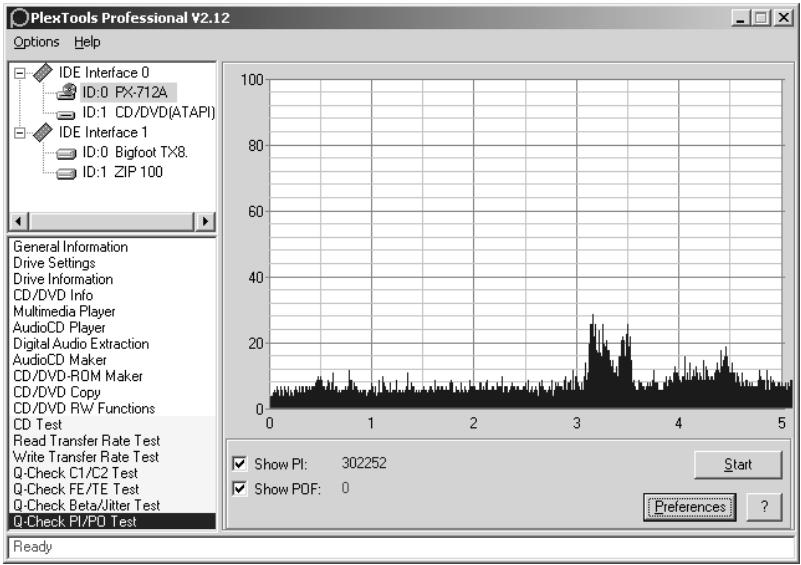
Figure 22: Q-Check PI/PO Test window
-
Place check marks in the boxes for the parity errors you want to check.
-
To begin measurement, in the PI/PO Test window, click the Start button. You see the error counts representing the result of PI error measurement and POF error measurement.
- To end measurement, click the Stop button, or wait for the measurement to stop by itself. Your window shows the test results, and a graph of the error counts recorded by the application.
What the PI/PO Measurements Mean
This test measures the quality of the written or pressed media by counting the number of low-level errors. Most of these errors are correctable by the drive.
PI/PO is basically the DVD equivalent of C1/C2 error measurement for a CD. PI indicates the number of bytes that are corrected during PI stage, while POF indicates the number of uncorrectable blocks. Each sector on a DVD disc has 2,366 bytes of data. For error correction on a DVD, the drive places 16 sectors of data into a series of rows and columns that form an error correction (ECC) matrix. The drive checks the rows of the matrix for "parity inner," or PI; and it checks the columns for "parity outer fails," or POF.
The existence of PI errors on a DVD is perfectly normal, since they can be corrected by the drive's CIRC logic. However, these numbers should not be too high, because they can create uncorrectable errors when the disc's playability decreases (for instance, because of dust, fingerprints, scratches, etc). With POF errors, there is a chance that the data will become unreadable.
Advantages of Buffer Underrun Proof Technology
PlexTools Professional software lets you enable or disable Buffer Underrun Proof Technology on the Plextor PX-712UF (via Drive Settings | Advanced). But you'll usually want to leave this feature enabled, because Buffer Underrun Proof Technology guarantees that you can write discs at high speed, and still use your computer for other tasks while you're writing.
To prevent the interruption of data during writing, every CD-R/RW drive has a buffer, a memory chip that acts as a kind of "holding area." (Typically, the buffer size is 2 to 8 megabytes.) However, this buffer can be emptied quickly when you write at high speeds, or if you use other applications (like surfing the Internet or playing games or watching movies) while writing.
Buffer Underrun Proof Technology compensates for any interruption in data flow to the disc. It "remembers" where writing stopped on the disc when the data flow was interrupted, then restarts writing in the same place once the data is available again. Buffer Underrun Proof
Technology in your drive means you can safely use your computer for other things while you're writing to a CD-R or CD-RW disc. It lets you multitask freely and easily, and lets you successfully create CDs on the first attempt.
5. Maintenance and Troubleshooting
This chapter explains maintenance and troubleshooting procedures for your PX-712UF drive.
With proper maintenance, you can prevent problems. If trouble arises, you can often solve many simple problems on your own, rather than wait for assistance from a Plextor representative.
Cleaning the PX-712UF Drive
Plextor drives are sealed against external contamination, so in a normal computer environment and with normal use, your drive should not require internal cleaning. However, if your drive has been in use for some time and has just recently started to exhibit read/write problems, it is possible that dust has accumulated on the laser lens. In this case:
- If your drive is still in warranty and you are experiencing problems, send the drive to Plextor. (See "Returns" on page 87.)
- If your drive is out of warranty, before returning the drive for repair you may want to try a short blast of canned air aimed at the center of the drive. Use only electronics-grade canned air: sterile, filtered, and moisture-free. If you notice no improvements after this step, you will need to return the drive for repair.
CAUTION: Do not attempt to clean your drive using any solvent-based cleaners. Also, do not use an air compressor, because the high-pressure blast can damage the drive.
ANOTHER CAUTION: Do not use a CD cleaning disc. Cleaning discs that use a felt pad can scratch the laser lens surface and render the drive inoperable. Cleaning discs with brushes may also scratch the lens. Moreover, these cleaning discs are often out of balance, making their operation very noisy.
Upgrading Firmware
Plextor creates firmware revisions to meet the particular needs of large computer manufacturers. It is rare that these will impact the performance or operation of your drive. However, we advise that our customers always update drives with the latest available firmware. Before troubleshooting a possible problem with your PX-712UF drive please visit our web site at www.plextor.com to check if you have the latest firmware.
To obtain new firmware for your drive:
- Go to the Plextor web site at www.plextor.com.
- Look for firmware upgrades in the Support area, on the Downloads page. There is a description of the latest firmware revision and its intended use.
- Download the firmware to your computer.
To upgrade firmware in your drive's flash memory:
- Run the executable file that you downloaded from Plextor's web site.
- Accept all defaults by continuing to click on the "Next" button until you see the message:
Firmware update has completed.
- Restart your system.
Emergency Eject
If the computer power is turned off or the automatic eject button at the front of the drive does not work, use this procedure to open the drive.
To use the emergency eject hole to open the drive:
- Make sure the PX-712UF drive's rear-panel power switch is OFF (so the "0" is depressed).
- At the front of the drive, insert the emergency eject tool, or a paper clip or other thin, rigid object, into the emergency eject hole.
- Push the tool or other object straight in, until the disc tray clicks open.
- Carefully continue to slide the disc tray open.
- Remove the CD from the disc tray.
- Carefully push the disc tray shut.
Troubleshooting
If you have problems during or right after installation of your drive, first make sure the drive is recognized. If you still have problems, visit the Plextor web site for tips and troubleshooting help.
Make Sure the Drive Is Recognized
If you're having trouble after installation, make sure the PX-712UF drive is recognized by your computer. To check whether the drive is recognized:
To see if the drive is recognized in Windows:
-
Turn the computer ON. After the computer boots up, you should see the Windows display.
-
Open Windows Explorer or My Computer and ensure there is an icon for the Plextor drive. The Plextor icon may be D: or E: or another designator.
-
In Windows 98SE, or Me, once the computer starts click the Start button, then Settings, then Control Panel, then double-click on System icon, then click on the Device Manager tab. Click the + sign next to the CD-ROM heading and look at the PLEXTOR DVDR PX-712UF device entry underneath.
-or-
In Windows XP or 2000, right-click on the My Computer icon and select Properties. Click on the Hardware tab, then click on the Device Manager button. Click the + sign next to the DVD/CD-ROM drives heading and look at the PLEXTOR DVDR PX-712UF device entry underneath.
- If you have a PX-712UF drive that is not recognized in Windows: a) If your USB or IEEE 1394 controller has a yellow diamond with an exclamation point (!), contact your PC or motherboard manufacturer for help, and to troubleshoot your controller for driver compatibility or conflicts. It may just be a matter of obtaining the latest driver, or a motherboard BIOS update, from the manufacturer.
b) If the USB or IEEE 1394 controller is listed and does not have a yellow diamond with an excclamation point, but the Plextor drive is listed as a "USB" or "IEEE 1394 Storage device," select the "Storage device" and then select the "Remove" button. Reboot your system. The system will do another hardware scan and should install the driver properly.
- If you still have problems, or if the USB or IEEE 1394 controller is listed and does not have a yellow diamond with an exclamation point, but you do not see the Plextor drive listed as one of the devices, contact Plextor Technical Support. (See "Appendix B: Technical Support" for the different ways you can contact us.)
Using the PX-712UF Self-Test Diagnostics
The PX-712UF contains a set of self-test diagnostics that can help isolate trouble and determine if a problem is in the drive or elsewhere.
What You'll Need
To perform the tests you'll need a blank piece of Plextor-recommended DVD+R, DVD-R, or CD-R media. (See "Recommended Media" on page 74, or visit our web site.) The self-test will write to this media, so you won't be able to use this disc again.
This tests three functions of the drive: writing at maximum speed, continuous playback at maximum speed, and random access.
- Unplug the USB or FireWire cable from the rear of the Plextor PX-712UF drive.
CAUTION: Failure to disconnect the USB or FireWire cable before starting the test could result in system data loss.
- Set the PX-712UF drive's power switch to OFF (so the "0" is depressed).
- Slide the SELF TEST switch to the left (ON) position. Use a pen point, paper clip, or other similar object.
-
While pressing the eject button, set the PX-712UF's power switch to ON (the "1" is depressed). The front-panel disc/busy indicator blinks green and amber, and the disc tray opens.
-
Insert a blank Plextor-certified DVD+R, DVD-R, or CD-R disc. Be sure to use only media of the type recommended by Plextor. Then close the disc tray.
If the disc/busy indicator blinks amber three times, the loaded disc is not a blank DVD+R, DVD-R, or CD-R disc. Remove the disc and insert a blank, Plextor-certified recordable disc.
- The drive begins the diagnostic routine. Upon completion of the diagnostic, you see the results:
If there was no problem, the disc is ejected automatically. (That is, the disc tray opens, allowing you to remove the disc.)
If there was a problem, the disc is not ejected, and you see the disc/busy indicator blink green. One green blink indicates a write or read error. Two green blinks indicate an initialization error.
- If the disc was not ejected automatically, press the eject button to eject the disc.
- Turn the PX-712UF power switch to OFF, and set the self-test switch to the right (OFF) position.
- Turn the PX-712UF's power switch to ON (so the "1" is depressed).
- Reconnect the USB or FireWire cable from your PX-712UF drive to the computer.
What the Self-Test Results Indicate
- If a drive passes the self-test, then the drive's operation is OK.
- If the drive fails the self-test, in some cases the problem may be caused by the media. Try the self-test again using a different brand of DVD±R or CD-R media; if the drive passes the self-test this time, the drive is OK.
Q: Which is better, DVD+R and DVD+RW? Or DVD-R and DVD-RW?
A: Neither is "better" or "worse." They're just different standards, like English versus metric measurement.
Different manufacturers support different standards. The DVD+R and DVD+RW formats are supported by Plextor, Philips, Sony, Hewlett-Packard, Dell, Ricoh, Yamaha and other manufacturers. DVD-R, DVD-RW and DVD-RAM are also supported by Plextor, as well as Panasonic, Toshiba, Apple Computer, Hitachi, NEC, Pioneer, Samsung and Sharp.
No matter which format a DVD disc is recorded in, it can be read by most commercial DVD-ROM players.
A: Recommended media are recordable or rewrites CD and DVD media that have been tested by Plextor and found to operate well consistently, from one manufacturing lot to another. For each drive, Plextor engineers test media from many different manufacturers and manufacturing facilities, creating a recommended media list and determining the optimum write strategy for that particular media type. The results are listed as "recommended media," and are also assembled into a media catalog and stored in firmware in Plextor drives. (See page 74 for a list of recommended media for the PX-712UF at the time this manual was printed, and see the Plextor web site at www.plextor.com for an updated list.)
From time to time, the media catalog is updated with new manufacturers and part numbers as Plextor tests additional media. When this happens, Plextor makes new drive firmware available. You can download this new firmware and update your drive.
How do I know if my camcorder has FireWire?
A: Sony built FireWire into equipment such as digital camcorders, calling it iLink. So an iLink device has FireWire, and you can use it with the PX-712UF.
Q: What are the transfer rates for the different interfaces?
A: Different interfaces have different maximum transfer rates. The following table compares the transfer rates for the different interfaces.
| Interface | Maximum Transfer Rate |
| USB 2.0 (Hi-Speed) | 480 Mbps max. |
| USB 1.1 (Full-Speed) | 12 Mbps max. |
| IEEE 1394 (FireWire) | 400 Mbps max. |
Actual transfer rates in the real world depend on the type of media and software you're using, and on the type of data being transferred.
Q: Can I get USB 2.0 on a Macintosh?
A: The Macintosh currently has USB 1.1 built in. If your Macintosh has a PCI slot, you can purchase and install a USB 2.0 interface card. However, any OS below OS X does not have USB 2.0 support, so you may also have to upgrade your Mac operating system. If your Macintosh lacks a PCI slot, you should use the FireWire port, if available.
Appendix A: PX-712UF Specifications
Minimum System Requirements
Computer Pentium III, 800-MHz CPU or equivalent (minimum) (Pentium 4, 1.6-GHz or equivalent suggested)
Minimum RAM 128 MB (256 MB suggested)
Hard Disk Size 1 GB of free space to write to a CD in image mode, or 6-10 GB of free space to create DVD images. (For more accurate guidelines, see the help files or documentation for the recording software you're using.)
Interface USB 1.1 or 2.0 supported IEEE 1394/FireWire supported (On-board USB 2.0 or IEEE 1394/FireWire controller suggested)
Operating PC: Windows XP, 2000, Me, or 98SE System Macintosh: (For FireWire and USB 1.1, OS 9.1 or higher recommended. For USB 2.0, OS X.)
Special considerations for Windows 98SE:
- To ensure stable IEEE 1394 operation with Windows 98SE, update Windows with Microsoft patch file before installing the PX-712UF.
- For Windows 98SE and USB, use the Plextor USB drivers.
| Logical DVD Read/Write | DVD-ROM, DVD-Video, multi-border, multi-session, DVD+VR, DVD-VR |
| Logical CD Read/Write | CD-DA, CD-Extra, CD-ROM Mode-1, CD-ROM Mode-2, CD-ROM XA, Photo CD, Video CD, multi-session, CD-TEXT, CD-I, CD+G, UDF |
| Write Methods, DVD+R/RW | DVD+R: Disc-at-once (DAO), multi-session, incremental |
| DVD+RW: Random access write, sequential write |
| Write Methods, DVD-R/RW | DVD-R: DAO, incremental recording, multi-border recording |
| DVD-RW: DAO, multi-border recording, incremental recording, restricted overwriting, DRT-DM |
| Write Methods, CD-R/RW | Track-at-once (TAO), DAO, packet write (variable and fixed), session-at-once (SAO), CD-MRW (Mount Rainier) |
Supported
Media, DVD
- Stamped DVDs: Single layer / Dual layer
DVD-R: For general version 2.0
DVD-RW: Version 1.1 / 1.2
DVD+R: Version 1.2
DVD+RW: Version 1.2
Supported
Media, CD
- Stamped CDs: Red/Yellow Book-compliant discs
- CD-R: Orange Book Pt II-compliant discs (Type 74, Type 80)
- CD-RW: Orange Book Pt III-compliant discs
Supported
Media Size
CD: 12 cm
DVD: 12 cm
DVD+R: 12X Taiyo Yuden, Ricoh, Maxell
NOTE: This media is rated at 8X. PoweRec determines if 12X speed is possible, and sets the optimal write speed. (12X writing may not be possible on media other than this recommended media.)
DVD+R: Mitsubishi Chemical/Verbatim, Taiyo Yuden, Ricoh, 8X, 6X, Maxell
4X, 2.4X
DVD+RW: Mitsubishi Chemical/Verbatim, Ricoh
4X, 2.4X
NOTE: All DVD+RW media are rewritable up to 1,000 times.
DVD-R: 8X, Mitsubishi Chemical/Verbatim, Taiyo Yuden, Maxell, 6X, 4X, 2X TDK
DVD-RW: 4X Victor, Mitsubishi Chemical/Verbatim
DVD-RW: Victor, Mitsubishi Chemical/Verbatim, TDK
1X-2X
NOTE: All DVD-RW media are rewritable up to 1,000 times.
CD-R: 4X-48X Maxell, Mitsubishi Chemical/Verbatim, Taiyo Yuden
CD-R: 4X-16X Maxell, Mitsubishi Chemical/Verbatim, Taiyo Yuden, Ricoh
NOTE: You can disable PoweRec. With PoweRec disabled, you can write at any speed (although your results may be poor).
CD-RW: 24X Mitsubishi Chemical/Verbatim
CD-RW: Ricoh, Mitsubishi Chemical/Verbatim
4X-10X
NOTE: All CD-RW media are rewritable up to 1,000 times.
Read Speed DVD
| Speed | Stamped DVD | DVD+R, DVD-R Disc | DVD+RW, DVD-RW Disc |
| 6-16X CAV | Yes (Single-layer disc) | - | - |
| 5-12X CAV | Yes (Single or dual-layer disc) | Yes | Yes |
| 3-8X CAV | Yes (Single or dual-layer disc) | Yes | Yes |
| 2-5X CAV | Yes (Single or dual-layer disc) | Yes | Yes |
| 2X CLV | Yes (Single or dual-layer disc) | Yes | Yes |
NOTE: When a DVD-Video with CSS (copy protection via the Content Scrambling System) is loaded, the PX-712UF slows its playback speed to reduce drive noise.
Read Speed, CD
| Speed | Mode-1
Discs | Mode-2
Discs | CD-DA
Discs |
| 20-48X
CAV | Stamp,R
(CD-ROM
Mode 1)
(48X with
SpeedRead;
default is
40X) | - | - |
| 17-40X
CAV | Stamp,R,
RW | Stamp,R,
RW | Stamp,R |
| 14-32X
CAV | Stamp,R,
RW | Stamp,R,
RW | Stamp,R,
RW |
| 10X-24X
CAV | Stamp,R,
RW | Stamp,R,
RW | Stamp,R,
RW |
| 8X CLV | Stamp,R,
RW | Stamp,R,
RW | Stamp,R,
RW |
| 4X CLV | Stamp,R,
RW | Stamp,R,
RW | Stamp,R,
RW |
NOTE: "Stamp" indicates commercially pressed "silver" discs.
Write Speed, DVD+R/RW
| Speed | DVD+R | DVD+RW |
| 12X PCAV | Yes | - |
| 6-8X PCAV | Yes | - |
| 6X CLV | Yes | - |
| 4X CLV | Yes | Yes |
| 2.4X CLV | Yes | Yes |
Write Speed, DVD-R/RW
| Speed | DVD-R | DVD-RW |
| 6-8X PCAV | Yes | - |
| 6X CLV | Yes | - |
| 4X CLV | Yes | Yes |
| 2X CLV | Yes | Yes |
| 1X CLV | - | Yes |
Performance Specifications (continued)
| Write Speed, CD-R/RW | Speed | CD-R | Ultra Speed CD-RW Media | High Speed CD-RW Media | Normal Speed CD-RW Media |
| 48X CAV | Yes | - | - | - |
| 32X PCAV | Yes | - | - | - |
| 24X PCAV | - | Yes | - | - |
| 16X CLV | Yes | - | - | - |
| 10X CLV | - | - | Yes | - |
| 8X CLV | Yes | - | - | - |
| 4X CLV | Yes | - | - | Yes |
DVD Transfer Rate
| Speed | Write (Kbps) | Read (Kbps) |
| 16X | — | 9280-22160 (CAV) |
| 12X | 8310-16620 (PCAV) | 6925-16620 (CAV) |
| 8X | 8310-11080 (PCAV) | 4709-11080 (CAV) |
| 6X | 8310 (CLV | — |
| 5X | — | 2909-6925 (CAV) |
| 4X | 5540 (CLV) | — |
| 2.4X | 3324 (CLV) | — |
| 2X | 2770 (CLV) | 2770 (CLV) |
| 1X | 1385 (CLV) | — |
| CD Transfer Rate | Speed | Write (Kbps) | Read (Kbps) |
| 48X | 3180-7200 (CAV) | 3180-7200 (CAV) |
| 40X | — | 2710-6000 (CAV) |
| 32X | 3180-4800 (PCAV) | 2170-4800 (CAV) |
| 24X | 3000-3600 (PCAV) | 1600-3600 (CAV) |
| 16X | 2400 (CLV) | — |
| 10X | 1500 (CLV) | — |
| 8X | 1200 (CLV) | 1200 (CLV) |
| 4X | 600 (CLV) | 600 (CLV) |
| Initialization Time | Time measured from power on until disc is available to read:
■ DVD: < 13 sec. (typical), < 15 sec. (max.)
■ CD: < 13 sec. (typical), < 15 sec. (max.) |
| Access Time | Time measured from command phase until bus free (no disconnect):
■ DVD: < 150 msec. (typical), < 180 msec (max.)
■ CD: < 100 msec. (typical), < 130 msec (max.) |
| Sleep Mode | Entered after 2 minutes of no access to drive (default setting) |
| Wake Mode | < 5.5 sec. (max.) to start drive after sleep |
| Front Panel Eject | Eject button; manual emergency eject; software eject. |
| Disc/Busy Indicator | ■ Yellow when initializing, reading, or ejecting disc.
■ Green during standby and when Buffer Underrun Proof Technology or Lossless Linking/Zero Link is active.
■ Blinking amber when writing to disc. Blink rate indicates writing speed. |
| Power Indicator | Illuminated blue when PX-712UF drive power is ON. |
| Disc Loading | Auto |
Rear Panel
DC 12V AC 100~240V, 50/60 Hz Connector (Power Supply)
Power 21W Consumption (Typical)
Current
| USB Interface | IEEE 1394 Interface |
| Typical standby current | 450 mA | 450 mA |
| Typical DVD read current (DVD 16X) | 1.6A | 1.6A |
| Typical CD read current (CD 48X) | 1.6A | 1.6A |
| Typical DVD write current (DVD+R 12X) | 1.6A | 1.6A |
| Typical CD write current (CD-R 48 X) | 1.7A | 1.7A |
| Typical pause current | 1.3A | 1.3A |
| Peak current | 2.6A | 2.6A |
Power Switch
Turns power on and off. Power OFF is O; power ON is 1.
1394-USB Switch
Interface switch: switches the PX-712UF drive to operate with a different interface (USB or IEEE 1394)
IEEE 1394 Connectors
4-pin and 6-pin connectors for attaching an IEEE 1394 (FireWire) cable. Use only the IEEE 1394 (FireWire) cable shipped with your PX-712UF.
USB Connector
Connector for attaching USB cable. Use only the USB cable shipped with your PX-712UF You can connect to a USB 2.0 or USB 1.1 interface.
SELF TEST Switch
For normal operation, leave the switch to the right (off) position. For self-test, slide the SELF-TEST switch to the left-hand (ON) position.
DVD Regional Setting
Compatibility RPC phase-2-compatible
Changing Max. 5 times
regional
setting
Other Features
Data Buffer 8 MB
Dimensions and Weight
Dimensions 7.24" x 2.05" x 10.43"
(W/H/D) 184mm× 52mm× 265mm
(excluding
front panel)
Weight < 3.8 lbs. (1.7kg)
Host Interface
Type USB:B-type
IEEE 1394:6pin/4pin
Data USB:B-type
Connector IEEE 1394:6pin/4pin
USB 2.0 Hi-Speed; 480 Mbps (max)
Transfers
USB 1.1 Full-Speed; 12 Mbps (max)
Transfers
IEEE 1394 IEEE Std 1394-1995, IEEE 1394a-2000
Transfers 400 Mbps (max)
Inquiry String PLEXTOR sp DVDR sp sp sp PX-712UF sp sp
(where "sp" is one space)
ATAPI Refer to Plextor ATAPI command manual
Commands
| Environmental Conditions |
| Mounting Position | Horizontal or vertical orientation:
• Horizontal: ±15 degrees
• Vertical: Front side up or down, ±15 degrees |
| Operating Temperature | 5 to 35 degrees Celsius |
| Operating Humidity | 20 to 80% (non-condensing) |
| Storage Temperature | -40 to 60 degrees Celsius |
| Storage Humidity | 20 to 95 % (non-condensing) |
| Acoustic Noise | Playing balanced disc: Maximum 45dB
Playing unbalanced disc: Maximum 45dB
Tray ejecting: Maximum 50dB |
| Vibration, Operating | Sine sweep 5 minutes:
• CD/DVD read: 0.15G0-Pk (5-300Hz)
• CD-R write: 0.15G0-Pk (5-300Hz
• CD-RW rewrite: 0.10G0-Pk (5-300Hz)
• DVD write: 0.10G0-Pk (5-300Hz) |
| Vibration, Non-Operating | Sine sweep 5 minutes: 2.0G0-Pk (5-300Hz)
(Power off, without disc) |
| Shock, Operating | 11msec half sine, 10 sec interval:
• CD read: 5.0G0-Pk (5-300Hz)
• CD read (vertical orientation): 2.5G0-Pk (5-300Hz)
• DVD read: 5.0G0-Pk (5-300Hz)
• DVD read (vertical orientation): 2.5G0-Pk (5-300Hz)
• CD-R write: 1.5G0-Pk (5-300Hz)
• CD-RW rewrite: 0.5G0-Pk (5-300Hz)
• DVD+R/RW write: 0.5G0-Pk (5-300Hz) |
Environmental Conditions (continued)
Shock, Non- Permissible velocity: Minimum 62G operating Permissible velocity change: Minimum 220cm/sec (Power off, without disc)
Electrostatic ±8KV aerial discharge Discharge ±4KV contact discharge Both with no hard errors, no damage
Reliability MTBF 60,000 hours
Tray Loading 50,000 load/unload cycles
Read Error CD-ROM Mode 1: 1 block/10 ^12 bits
Rate CD-ROM Mode 2: 1 block/10 ^9 bits
Safety, Laser, and EMC Standards
| Country/ Region | Type | Agency | Standard |
| USA | Safety | UL | UL 60950 |
| Laser | FDA | FDA 21 CFR 1040.10 and 1040.11 |
| EMC | FCC | FCC Part15B-Class B |
| Canada | Safety | UL (C-UL) | CSA 22.2 No. 60950 |
| EMC | IC | ICES-003 Class B |
| Europe | Safety | CE (CB) | EN60950 (AC adapter) |
| Laser | CE (CB) | EN60825-1 (internal drive) |
| EMC | CE | EN55024, EN50022 Class B |
| Taiwan | EMC | BSMI | CNS13438 Class B |
| Korea | EMC | MIC | |
| Australia/NZ | EMC | C-Tick | EN55022 Class B |
This page intentionally left blank.
Store Plextor's e-mail, web site, phone, and fax numbers in a convenient location. Keep your drive's serial number and a copy of your sales receipt handy as well.
If you experience a problem while installing or operating your drive, please refer first to the relevant sections of this manual regarding setup and installation (Chapters 1-3). If you do not uncover the solution there, please refer next to the maintenance and troubleshooting chapter that begins on page 65. You may also wish to refer to the Frequently Asked Questions (FAQ) section of our web site to assist you in troubleshooting the problem on your own.
NOTE: We encourage you to go the Plextor web site (www.plextor.com) before attempting to contact Technical Support. The answers to the most common questions callers ask can be found quickly in the support area. Select PlexHelper for online troubleshooting or FAQs for answers to common questions.
If you have not been successful in your quest, our Technical Support Department will help you solve problems that relate specifically to your PX-712UF drive. In many cases, a problem that appears to be caused by your Plextor drive actually originates in another part of your computer. In such instances, our technical support staff will try to help you identify the part at fault and will refer you to the manufacturer of that part for further assistance.
There are several ways for you to contact Plextor's Technical Support Department:
- Visit our web site (www.plextor.com) for answers to Frequently Asked Questions.
- Send us e-mail at support@plextor.com. Include your telephone number and the hours during which you can be reached. Be as detailed as possible in describing your problem. Please include system configuration, hardware and software, as well as versions of drivers used.
- Call 800-886-3935 and select the tech support option.
Before You E-mail/Log On/FAX/Call for Support
Please gather as much of the following information as possible before contacting us.
- The serial number and TLA (top level assembly) number of your PX-712UF drive. Your serial number and TLA number appear on the drive label.
- The latest version of firmware you loaded onto the drive, if applicable.
- The version of the Windows operating system you are using.
- The brand name and model number of your computer (e.g., Dell 466/NP, Hewlett-Packard Pavilion 752n, etc.).
- The type of VGA, Super VGA, or other graphics board you use.
- Brand name and model number of any other peripherals you have installed or connected to your computer (e.g., CD-ROM, scanner, fax board, network board).
Returns
In the unlikely event that you need to return a drive to Plextor, you need an RMA (Returned Materials Authorization) number. You need this number before any Plextor drive can be returned for repair or replacement. Here's how you get an RMA number and return your drive:
- Contact Plextor Technical Support. You will receive assistance in troubleshooting your system. If the drive is determined to be defective, you will receive a Tech Support Ticket Number.
- Locate the RMA request form at: https://www.plextor.com/english/support/rma_request_form.htm. Complete the form, providing the Technical Support Ticket number and details of the drive failure. After completing the form, click the Submit button.
IMPORTANT NOTE: The RMA form will NOT be processed without the Tech Support Ticket Number.
- Plextor will then return the RMA form to you via e-mail, with the RMA number and shipping information included.
- When you receive the RMA number, pack the Plextor drive securely in a box, and include the RMA form as a packing slip.
- Write the RMA number in large letters on the outside of the box, and ship the box and the drive to Plextor.
You can contact our RMA Department and request RMA forms at:
- rmasupport@plextor.com
Or by fax at 510-651-9765
Or by calling us at 800-886-3935
Packing Your Drive
Check the drive to make sure there is no disc inside, and if possible, pack your drive in the original box. Some of our customers have not held on to their boxes and have had to resort to less-than-secure methods to get drives back to us.
CAUTION: Never ship the drive with a CD or DVD disc inside it.
If you did not receive a box (for example, your drive came pre-installed in a computer), we recommend you pay a packaging store (such as Mail Boxes Etc.) to ship your drive. If you don't have a packaging store in your area, ask for packaging pointers when you contact us to get an RMA number before returning any drive.
Shipping Your Drive to Plextor
Be sure to write the RMA number on the outside of the shipping box. Any drive sent to Plextor without an RMA number will not be accepted.
NOTE: The RMA number must be clearly visible on the outside of the shipping box.
Drives must be sent postage prepaid. We recommend that you insure your shipment, as Plextor cannot be held responsible for any damage that may occur during shipment.
PLEXTOR CORP. ("Plextor") warrants your PX-712UF drive against any defect in material and workmanship, under normal use, for a period of one year following its date of purchase. In the event this product is found to be defective within the warranty period, PLEXTOR will, at its option, repair or replace the defective unit.
This warranty is void: a) if the unit is operated or stored under abnormal use and/or conditions; b) if the unit is repaired, modified or altered, unless such repair, modification or alteration is expressly authorized in writing by PLEXTOR;
c) if the unit is subjected to abuse, neglect, lightning strike, electrical fault, improper packaging, or accident; d) if the unit is installed improperly; or e) if the serial number of the unit is defaced or missing.
PLEXTOR will not, under any circumstances, be liable for direct, special, or consequential damages such as, but not limited to, damage or loss of property or equipment, loss of profits or revenues, cost of replacement goods, or expense or inconvenience caused by service interruptions. Under no circumstances will any person be entitled to any sum greater than the purchase price paid for the unit.
To obtain warranty service, you must contact PLEXTOR's Technical Support Department by e-mail (support@plextor.com) or by calling 800-886-3935. The Technical Support Department will attempt to diagnose and correct your problem. If the unit does not function properly, they will give you instructions on obtaining a Return Material Authorization (RMA) number. You may be asked to furnish proof of purchase to confirm that the unit is still under warranty.
All product returns must be authorized in advance by PLEXTOR. Authorization is confirmed by issuance of the RMA number, which must be written prominently on the outside of the box in which the defective unit is returned to PLEXTOR.
All drives returned to PLEXTOR must be securely packaged and shipped postage prepaid.
The drive will be returned to the customer at Plextor's expense when originating within the United States. For a drive originating outside of the United States, the customer is responsible for shipping costs in both directions.
NOTE: Warranty validity is limited to that applicable in the location where the drive was originally purchased.
If You're Outside the U.S. or Canada
Note that the warranty and RMA policy only apply to the United States and Canada. If you are in South America, contact your dealer or reseller for all warranty and RMA claims.
A
AC adapter
connecting·14
using with PX-712UF · 14
access time · 79
silent mode and · 34
B
beta measurement · 46 59,61
black tray·3
BLER · See block error rate
blink rate, disc/busy indicator · 12 31
block error rate · 54
box contents, PX-712UF · 15
buffer · 5 ,64,81
Buffer Underrun Proof technology 5,64
disc/busyindicatorand·12,79
GigaRec and 45
C
C1/C2/CU error measurement · 46 51, 54
cable
identifying·20
IEEE 1394·15, 20
USB·14,15,20
CD
formatssupported·74
reading speed·77
recording modes · 5 ,74
write methods · 5 ,74
CD cleaning disc, don't use · 9
CD reading speed · 77
CD + G· 5
CD-DA reading speed · 2
CD-R
compatibility · 5
media·25,75
reading speed · 2
writing · 30
writing speed · 2 ,78
CD-R/RW software · 8
CD-ROM, playing · 25
CD-RW
compatibility · 5
high speed·78
media·25,75
normal speed·78
reading speed · 2
ultra speed·78
writing 30
writing speed · 2 ,78
CD-TEXT·5
cleaning disc·28
cleaning your drive 65
precautions 9,65
closing tray·27
color, disc/busy indicator · 31
compatibility
CD-R·5
CD-RW·5
DVD·4
DVD+R·71
DVD+RW·71
computer, minimum · 6 , 73
configuration, minimum · 6 , 73
connecting multiple IEEE
1394/FireWire devices · 19 ,22
connecting multiple USB devices 19
connector
IEEE 1394·13, 14
power·14,80
USB·14,80
connectors and jumpers, rear-panel 13,80
content scrambling system · 4 ,12, 32,76
contents of box · 15
controls · 11
front-panel · 11, 79
cradle, PX-712UF · 15, 29
CSS · See content scrambling system
D
daisy-chain, don't · 19, 22
data buffer · 64 ,81
data connector · 81
DC 12V connector · 14, 80
diagnostics·3,4,69
dimensions, PX-712UF · 81
disc
cleaning·28
labels·28
loading·79
password-protecting with
SecuRec·37
testing · 4 ,46
testing with Q-Check 51
disc capacity
changing·5,43
GigaRec·44
disc tray·12
controlling speed with silent mode · 34
silent mode and 34
disc/busyindicator·12,79
blink rate · 31
Buffer Underrun Proof technology and · 79
color·31,79
self-test and · 70
distributed real time defect
management, DVD-RW · 2
drive, recognizing in Windows · 67
drivers, USB, for Windows 98SE·21, 73
DVD
compatibility · 4
formats compared · 71
formatsupported·4,74
media·25,75
playing·29
reading speed · 2 ,76,77
recording modes · 4 ,74
regional setting 29, 81
write methods · 4 ,74
writing speed·77
DVD+R
compatibility·71
media·25,75
software · 8
writing·30
writing speed · 2 ,77
DVD+RW
compatibility·71
editing·4
media·25,75
software · 8
writing·30
writing speed·77
DVD+VR·2
DVD-R·71
drive capabilities · 25
media·75
writing speed · 2 ,77
DVD-RW·71
drive capabilities · 25
DRT-DM · See distributed real time defect management
media·75
writing speed·77
zero link · 4
DVD-Video · 4
reading speed · 2,4,32,76
E
Easy CD Creator 8
editing DVD+RW · 4
eject
emergency·67
methods for · 79
eject button · 12
closing tray · 27
SpeedRead and 32, 36
electrostatic discharge
specification · 83
EMC standards · 83
emergency eject hole 12, 67
emergency eject tool · 12 15,67
environmental conditions · 82
error rate specification · 83
F
FAQs·71
FE · See focus error measurement
features · 3 ,11
CD-R·5
DVD·4
FireWire · See also IEEE 1394
hits·22
switching to USB·22
Windows 98SE and · 21
firmware·40
obtaining·66
upgrading·3,66,71
flash memory · 3 ,66
focus error measurement 46, 56, 58
forms · 74
CD· 5 ,74
DVD·4,71,74
frequently asked questions · 71
front-panel controls · 11 ,79
G
GigaRec·5,43
Buffer Underrun Proof
technology and 45
compared to overburn · 46
disc compatibility 45
operation of 45
requirements for 43, 45
selecting writing capacity with 44
writing speed and 45
H
hard disk size · 6 , 73
high speed CD-RW
media·25
write speed·78
host interface, PX-712UF · 81
hub, USB, don't use · 19
humidity
specification · 82
storage 82
1
IEEE 1394·See also FireWire
cable·20
connector · 13, 14
not bus powered · 14
PX-712UF interface switch · 14
Sony iLink and · 71
transfer rate · 72
transfer speed · 81
iLink·71
indicator
disc/busy · 12,31
power·12,79
initialization time · 79
inquiry string · 81
installation
PlexTools Professional · 33
PX-712UF·11
interface · 6
host·81
PX-712UF·73
switch·14
transfer rates · 72
J
jitter measurement · 46 ,59,61
L
label, disc · 28
laser
adjusting power with VariRec 40, 41
testing · 4 ,46,56
laser standards · 83
lossless linking · 4
M
Macintosh
installing the PX-712UF · 23
USB and 72
maintenance·65
media·25
care and handling 27
CD-R·25,75
CD-RW·25,75
DVD·25,75
DVD+R·75
DVD + RW· 25,75
DVD-R·75
DVD-RW·75
recommended·71,75
size·74
supported·5,74
memory, minimum 6, 73
minimum computer · 6 ,73
minimum configuration · 6 , 73
minimum RAM·6,73
MMC-4 command set · 3
Mount Rainier·5,74
mounting position 29, 82
MSF·45
MTBF·83
N
noise specification · 82
normal speed CD-RW
media·25
write speed·78
0
OPC · 41 .See optimum power control
operatingsystemrequirement, PX712UF·6,73
operatingsystem,Windows98SE 6,16,17,18
optimum power control · 5
orange book · 5
overburn·5
compared to GigaRec · 46
P
packing for shipment 88
password protection · 5, 37
password, lost · 40
performance specifications·76, 77,78,79
PI/PO error measurement · 46 , 62
playing DVD·29
PlexTools Professional · 8
beta measurement · 46 ,59
C1/C2/CU error measurement 46,51
focus error measurement · 46 56
GigaRec·43
installing 33
jitter measurement · 46 ,59
PI/PO error measurement · 46 62
read transfer rate test · 46
SecuRec·37
silent mode · 34
tracking error measurement · 46 56
VariRec · 40
write transfer rate test · 49
plug and play, support for 3
position, mounting · 29, 82
power
connector · 14,80
indicator · 12,79
requirements·80
supply·80
switch·14
PoweRec·3,41
precautions · 9
PX-712UF installation
Macintosh·23
Windows·18
PX-712UF operating system
requirement·6,73
Q
Q-Check · 4 ,46,51
questions, frequently asked · 71
R
RAM, minimum · 6 , 73
read response, measuring 49
read specification
CD·77
DVD·76,77
read transfer rate test · 46
reading speed
CD-R·2
CD-RW·2
controlling for video playback 4
controlling with silent mode · 34
digital audio·77
DVD·2
DVD-Video · 2 4,32,76
silent mode and · 34
SpeedRead and 32
rear-panel connectors · 13 ,80
recognizing the PX-712 drive in
Windows·67
recommended media · 75
definition·71
recording modes
CD·5,74
DVD·4,74
red book · 74
region code · 29 81
regional setting · 29, 81
reliability·83
returns · 15,87
RMA number · 15 ,87,88
ROPC · See running optimum
power control
running optimum power control · 5
S
safety standards · 83
SecuRec·5,37
lost password · 40
security sticker · 15
self-test diagnostics · 3 ,69
self-test switch · 13 ,69,80
shipping your drive·15,87,88
shock specification · 82
silentmode·3,34
SpeedRead and 36
silent operation · 12
sleep mode · 79
software · 8
CD-R/RW·8
DVD + R· 8
DVD+RW·8
Easy CD Creator · 8
PlexTools Professional · 8
specifications·73
speed
monitoring 31
reading CD-R · 2
reading CD-ROM 77
reading CD-RW 2
reading digital audio · 77
readingDVD·2,76,77
reading DVD-Video · 2,4,32 76
writing CD-R · 2
writing DVD·77
writing DVD + R· 2
writing DVD+RW·2
writing DVD-R · 2
writing DVD-RW · 2
SpeedRead·4,12,32
disabling·32
enabling·32
silent mode and 36
spindown, controlling with silent
mode·34
spinup, controlling with silent
mode·34
support·85
system requirements·73
T
TE·See tracking error
tech support ticket number · 87
technical support · 85, 86
temperature
specification · 82
storage·82
testing
laser operation · 4 , 46, 56
media·4,46
ticket number, tech support 87
tracking error measurement · 46 56, 58
transfer rate
CD·79
DVD·78
interface·72
transfer speed · 81
tray·12
closing·27
loading and unloading · 27
loading specification 83
silent mode and 34
troubleshooting·67
U
ultra speed CD-RW
media·25
write speed·78
upgrading firmware·3,66,71
USB
cable·14,20
connector · 14,80
Macintosh and · 72
ports · 6
switching to FireWire 22
transfer rate · 72
transfer speed · 81
Windows 98SE and · 21
USB cable shipped with PX-
712UF·14
USB hub, don't use · 19
V
VariRec · 3,40
changing setting · 41
default setting · 40
write speed and 43
vibration specification · 82
video playback speed · 4 ,32,76
W
wake mode · 79
warranty · 89
web site, Plextor · 85
weight, PX-712UF · 81
Windows 98SE · 6, 16, 17, 18
FireWire and · 21
Plextor USB drivers for 21, 73
updating for FireWire · 21
USB and 21
write methods
CD· 5 ,74
DVD·4,74
write transfer rate test · 49
simulating · 50
writing a CD image 6, 73
writing response, measuring 51
writing speed
achieving·26
CD-R·2,78
CD-RW·2,78
DVD + R· 2,77
DVD+RW·77
DVD-R·2,77
DVD-RW·77
GigaRec and 45
monitoring·31
silent mode and · 34
VariRec and 3, 43
writing to CD-R · 30
writing to CD-RW 30
writing to DVD + R· 30
writing to DVD+RW · 30
Y
yellow book · 74
Z
zero link · 4
This page intentionally left blank.
Notes
Plextor CORP.
48383 Fremont Blvd.
Suite 120
Fremont CA 94538-6509
Phone: 510-440-2000
800-886-3935
Fax: 510-651-9755
E-mail: info@plextor.com