
3FE2530B - Dishwasher BALAY - Free user manual and instructions
Find the device manual for free 3FE2530B BALAY in PDF.


| Product type | Built-in dishwasher |
| Brand | BALAY |
| Model | 3FE2530B |
| Width | 60 cm |
| Height | 86.5 cm (adjustable) |
| Depth | 55 cm |
| Net weight | Approximately 45 kg |
| Power supply | 220-240 V, 50 Hz, 10 A |
| Power consumption | 2100 W |
| Water pressure | 4-10 bar (0.4-1 MPa) |
| Capacity | 12 place settings |
| Number of programs | 6 wash programs |
| Main programs | Intensive, Eco, Auto, Quick, Glass, Pre-wash |
| Water consumption (Eco cycle) | 9.5 L |
| Energy consumption (Eco cycle) | 0.92 kWh |
| Energy class | E (formerly A++) |
| Noise level | 44 dB(A) |
| Drying type | Condensation drying with heat exchanger |
| Special functions | Delay start, Half load, AquaStop, Child safety |
| Tub material | Stainless steel |
| Filter | Self-cleaning 3-mesh filter |
| Maintenance | Regular cleaning of filter and spray arms |
| Spare parts availability | Available via Balay after-sales service |
| Repairability | Estimated repairability index 8.5/10 |
Frequently Asked Questions - 3FE2530B BALAY
User questions about 3FE2530B BALAY
0 question about this device. Answer the ones you know or ask your own.
Ask a new question about this device
Download the instructions for your Dishwasher in PDF format for free! Find your manual 3FE2530B - BALAY and take your electronic device back in hand. On this page are published all the documents necessary for the use of your device. 3FE2530B by BALAY.
USER MANUAL 3FE2530B BALAY
| Page | Page | |
| Information concerning (waste) disposal | 4 | Example of arranging food in the appliance |
| Disposal of your old appliance | 4 | Interior fittings |
| Disposal of packaging from your new appliance | 4 | Freezing, storing food, making ice cubes |
| Safety information | 5 | Freezer compartment |
| Requirements | 6 | Purchasing deep-frozen food |
| Getting to know your appliance | 6 | Freezing food yourself |
| Packing food | ||
| Freezing capacity | ||
| Fast freezing | ||
| Making ice cubes | ||
| Storage duration | ||
| Siting the appliance | 7 | Defrosting frozen foods |
| Ambient temperature | 7 | Defrosting |
| Site | 7 | Refrigerator compartment |
| Siting the appliance | 7 | Defrosting the freezer compartment |
| Electrical connection | 7 | Defrosting aids |
| Ventilation | 7 | |
| Following delivery ... | 7 | Cleaning |
| Changing over door hinges | 65-66 | Tips for saving energy |
| Switching ON/OFF the appliance | 8 | Operating noises |
| Switching ON the appliance | 8 | Eliminating minor faults yourself |
| Setting the temperature | 8 | What to do if ... |
| Switching OFF the appliance | 8 | Customer service |
| Disconnecting the appliance | 8 | Rating plate |
| Arranging food in the appliance | 9 | Note refrigeration zones in the refrigerator compartment! |
| Instructions on arranging food in the appliance | 9 | |
Information concerning (waste) disposal
Disposal of your old appliance
When replacing your old appliance with a new one, please comply with the following:
Immediately render your old appliance unusable. Pull out the mains plug and cut off the power cord. To prevent children from locking themselves in the refrigerator and suffocating, remove or destroy spring locks and deadlocks.
Refrigerators and freezers contain insulation gases and refrigerant which must be disposed of properly. They also contain valuable raw materials which can be recycled. Therefore, enlist the aid of your municipal disposal centre. Please enquire at your local authority or ask your dealer about current means of disposal. Please ensure that the refrigeration tubing is not damaged prior to its proper disposal.
Disposal of packaging from your new appliance
All packaging materials are environmentally friendly and recyclable. The cardboard packaging consists of 80 - 100% waste-paper. Wooden components have not been chemically treated.
The plastic film is made of polyethylene (PE), the tapes are made of polypropylene (PP) and the CFC-free packing is made of foamed polystyrene (PS). These materials are pure hydrocarbon compounds and are recyclable.
Reclaiming and recycling packaging conserves raw materials and the volume of waste.
In the Federal Republic of Germany you can return the packaging for recycling to the dealer from whom you purchased the appliance. Addresses of recycling centres which dispose of old appliances can be obtained from your local authority. Please contribute to a better environment by disposing of packaging materials in an environmentally-friendly manner.
Safety information
Before switching ON the appliance, please read the operating and installation instructions carefully. They contain important information on how to install, use and maintain the appliance.
Please retain these operating and installation instructions as they may be required by a subsequent appliance user.
The manufacturer is not liable if you fail to comply with the following information:
This appliance contains a small quantity of isobutane refrigerant (R 600 a). This is a natural gas which is very
environmentally-friendly but flammable. Ensure that the refrigeration tubing is not damaged during transportation and installation. If the tubing is damaged, avoid naked flames and ignition sources and ventilate the room in which the appliance is situated.
NEVER use a steam cleaner to defrost or clean the appliance. Steam may come into contact with live components in the appliance and cause a short-circuit or an electric shock.
NEVER use electrical appliances inside the appliance.
- Do NOT switch on a damaged appliance. If in doubt, contact the supplier.
- Connect and install the appliance according to the installation manual. Electrical supply conditions must correspond with the specification on the rating plate.
The electrical safety of the appliance is not guaranteed unless the earthing system in the building electrical system has been correctly installed.
- If a fault occurs while the appliance is being serviced or cleaned, disconnect the appliance from the power supply. Remove the mains plug or switch OFF the fuse. Do NOT pull out the mains plug by the cable.
- Repairs may only be performed by qualified customer-service technicians. Improper repairs may put the user in considerable danger.
- Bottles which contain a high percentage of alcohol must be sealed and placed vertically in the refrigerator. NEVER store products which contain flammable propellant gases (e.g. cream dispensers, aerosols, etc.) or explosive substances in the appliance - Explosion hazard!
- Do NOT damage the refrigeration circuit, e.g. by puncturing the refrigerant tubing on the evaporator with a sharp object, kinking tubes, scratching surface coatings, etc. Spurting refrigerant may cause eye injuries.
- Do NOT cover or block the ventilation slots.
- Do NOT stand or support yourself on the base, drawers or doors, etc.
- Do NOT allow children to play with the appliance. Children must NEVER sit on drawers or hang from the door.
- If the appliance features a lock, keep the key out of the reach of children.
- Do NOT put ice lollies or ice cubes directly from the freezer compartment into your mouth. Risk of burns from very low temperatures.
- Bottled or canned drinks (especially carbonated beverages) must NEVER be stored in the freezer compartment. Bottles and tins will explode!
NEVER touch frozen food with wet hands. Your hands could freeze to the food!
en
Requirements
Requirements
The appliance is suitable for cooling and freezing food and for making ice cubes.
The appliance is designed specifically for use in the house.
If the appliance is used in the commercial sector, the relevant regulations must be observed.
The appliance corresponds to the Regulations for the Prevention of Accidents for Refrigeration Appliances (VBG 20).
The refrigeration circuit has been checked for leaks.
This product corresponds to the relevant safety regulations for electrical appliances.
This unit is produced for free standing applications. It can not be built-in.
Getting to know your appliance
Getting to know your appliance
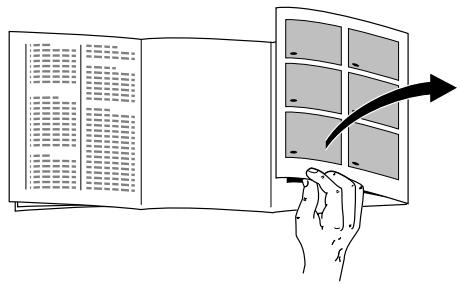
Before reading the instructions, please fold out the back pages.
This operating manual refers to several models. Diagrams may vary.
Overall view
Figure 1a / 1b / 1c
1 Ice cube tray
2 Interior light and temperature selector
3 Shelves
4 Condensation drainage channel
5 Vegetable and fruit container (1-2 containers depending on the model)
6 Door shelf (*Egg rack)
7 Storage compartments for small bottles, tins
8 Storage compartments for large bottles, milk cartons
9 Door seal
10 Temperature and humidity regulator
A Freezer compartment
B Refrigerator compartment
- Not all models
Siting the appliance
Note the ambient temperature
The appliance can be operated at the following ambient temperatures depending on the "climatic category" (see rating plate). (The rating plate can be found inside the appliance at the upper left-hand side.
Fig. 14).
| Climatic category | Ambient temperature from ... to |
| SN | +10 °C to +32 °C |
| N | +16 °C to +32 °C |
| ST | +18 °C to +38 °C |
| T | +18 °C to +43 °C |
If the ambient temperature drops below the lower ambient-temperature range, the running time of the refrigerating unit is reduced. As a result, the freezer compartment does not drop to a sufficiently low temperature. In extreme cases frozen foods can thaw.
Appliances which feature an ambient-temperature switch (Fig. 2/A) can be operated below an ambient temperature of +18^ when the switch is ON.
When the switch is ON, the red mark is visible. (Fig. 2/A)
Site
Site the appliance in a dry, well ventilated room, but NOT in direct sunlight and NOT near a heat source, e.g. cooker, radiator, etc. If installation next to a heat source is unavoidable, use a suitable insulating plate or comply with the following minimum distances to the heat source.
3 cm to an electric cooker.
30 cm to a coal-fired cooke
If the appliance is installed next to another refrigerator or freezer, observe a minimum distance of 2cm to prevent condensation.
Siting
The appliance must be stand firmly and level on the floor. Use the two front height-adjustable feet to compensate for an uneven floor.
Electrical connection
Connect the appliance only to 220-240 V/50 Hz alternating current via a correctly installed earthed socket. The socket must be fused with a fuse ≥ 10A
If the appliance is to be operated in a non-European country, check on the rating plate whether the supply voltage and current type correspond with the values of your mains supply. The rating plate is located in the upper left-hand side of the refrigerator compartment (Figure 14).
The mains connection cable may be replaced only by an electrician.
Ventilation
The heated air must be able to escape through the rear of the appliance. If the air flow is obstructed, the refrigerating unit must work harder which increases the power consumption. Therefore, NEVER cover the ventilation slots (Fig. 8).
Following delivery ...
The appliance can be switched ON immediately.
Switching ON/OFF the appliance
Switching ON the appliance
Turn the temperature selector in the refrigerator compartment to "O". The appliance begins to cool. The interior light switches on when the door is opened (Fig 2/2).
Setting the temperature
To set the temperature, turn the temperature selector to a setting (Fig. 2/2).
The temperature can be adjusted steplessly.
Higher settings result in lower temperatures in the refrigerator and freezer compartments.
We recommend the following temperature settings:
- A low setting for short-term storage of food in the freezer compartment (energy-saving mode).
- A medium setting for long-term storage of food in the freezer compartment and for freezing fresh food.
Notes
- The temperature in the refrigerator compartment is influenced by the ambient temperature, quantity and temperature of the freshly stored food and how often the door is opened. If required, change the temperature setting.
- While the refrigerating unit is running, beads of water or hoar frost form on the rear of the refrigerator compartment; this is quite normal. It is NOT necessary to scrape off the hoar frost or wipe off the beads of water. The rear panel defrosts automatically. The condensation is conveyed down the drainage channel (Fig. 6/4) to the refrigerating unit where it evaporates.
- To prevent condensation in the area of the freezer-compartment door seal, the sides of the housing are partially heated.
Switching OFF the appliance
To switch OFF the refrigeration and light, turn the temperature selector (Fig. 2/2) to "O".
Disconnecting the appliance
If the appliance is not to be used for a prolonged period, pull out the mains plug, clean the appliance and leave the doors open.
Arranging food in the appliance
Important information concerning food arrangement
- Allow food and drinks to cool down properly before you place them inside the refrigerator.
- Whenever possible, food should be wrapped or covered over before it is placed in the refrigerator. This ensures that aroma, colour, moisture and freshness are retained. In addition, no flavours are transferred to or from other items. The only items to remain unpacked should be vegetables, fruit and salad in the vegetable containers.
Make sure that no oil or fat comes into contact with those parts of the appliance that are made from plastic or the door seal (otherwise they could become porous). - Do not store any substance that could explode inside the appliance and ensure that high-proof alcohol is kept upright in tightly closed containers - explosion hazard!
- The coldest parts of the main refrigerator compartment are up against the rear panel and on the lowest shelf. Place delicate foodstuffs in either of these areas.
- Bottles containing liquids that could freeze should not be placed inside the freezer compartment. The bottles could explode when the contents have frozen.
Example of food arrangement
Figure 1
In the freezer compartment (A)
Freezing and storing food, making ice-cubes.
On the shelves (3)
From top to bottom: cakes and pastries, ready-to-eat items, dairy products, meat and salami.
In the vegetable tray (5)
Vegetables, fruit, lettuce.
*In the trays (6)
Eggs.
*In the storage tray (7)
Small bottles.
In the storage shelves (8)
Large bottles.
Interior fittings
*Temperature and humidity regulator for vegetable container (Fig. 6/10)
For long-term storage of vegetables, lettuce, fruit; slide the regulator all the way to the left - Ventilation aperture is open -
Temperature drops.
For short-term storage slide the regulator all the way to the right. Ventilation aperture is closed - high humidity -
Temperature rises.
The shelves can be re-arranged when the door is opened at a 90^ angle. Pull the shelf forwards, lower, pull out and re-insert in the desired position (Fig. 7,8).
All storage compartments and containers in the door can be removed for cleaning.
To remove containers and storage compartments, lift and pull out (Fig. 10).
Bottle holder (Fig. 7)
The bottle holder prevents bottles from falling over when the door is opened and closed.
- Not all models
Freezing and storing food, making ice cubes
Freezer compartment
The freezer compartment is suitable for storing frozen food, freezing fresh products and making ice cubes.
Note
If the ambient temperature drops below +18^ , the time that the refrigerating machine remains in operation is reduced. The result is that the freezer compartment is not chilled sufficiently. In extreme cases, this could lead to frozen food starting to thaw.
Appliances which feature an ambient-temperature switch (Fig. 2/A) can be operated below an ambient temperature of +18^ when the switch is ON.
When the switch is ON, the red mark is visible. (Fig. 2/A)
Notes on buying frozen food
- Inspect the packaging; it should not be damaged in any way.
- Make sure that the "Best before ..." date has not expired.
- The thermometer on the vendor's freezer should read -18^ or colder.
- Ensure that frozen foods are the last items to be bought. Wrap them in several layers of newspaper or place them in a thermo-insulated bag, take them home at once and place them in the freezer compartment.
Freezing food at home
If you are going to freeze food yourself, use only fresh products that are in perfect condition.
These items are suitable for freezing: Meat and salami, poultry and venison, fish, vegetables, herbs, fruit, baked goods, pizza, ready-to-eat dishes, cooked left-overs, egg yolks and egg-whites.
These items are not suitable for freezing: Whole eggs in their shells, sour cream and mayonnaise, green salads, radishes, horse-radish and onions.
Blanching vegetables and fruit Vegetables and fruit should be blanched before they are frozen, in order to preserve their colour, taste, aroma and vitamin C content. (Vegetables and fruit are blanched by immersing them briefly in boiling water. There are many books available in good book shops that describe blanching techniques.)
Wrapping food
Divide the products into portions of suitable size for your household before you place them in the freezer compartment. Individual portions of vegetables and fruit should not weigh more than 1kg . Portions of meat can be up to 2.5kg . Smaller amounts freeze all the way through more quickly, so that the best quality is retained when they are subsequently thawed out and cooked.
Seal food airtight so that it does not lose its flavour or dehydrate.
Suitable wrapping materials: Plastic foil, polyethylene tubular film, aluminium foil and containers suitable for use in freezers. These products can be bought from your local retailer.
Unsuitable wrapping materials: Wrapping paper, greaseproof paper, cellophane, bin bags and used carrier bags.
Place food in the wrapping, squeeze out any air and seal it airtight.
Suitable sealing materials: Rubber bands, plastic clips, string, adhesive tape or similar items that are resistant to freezer temperatures. Polyethylene bags and tubular film can be heat-sealed using a special sealing press.
Freezing and storing food, making ice cubes
Before placing food in the freezer, label each package clearly with the contents and date of freezing.
Freezing capacity
Food should be frozen right through to the centre as quickly as possible. This is the only way to preserve the vitamins, nutritional value, appearance and flavour. Do not, therefore, exceed the max. freezing capacity of your appliance.
(The freezing capacity is 4 - 7kg depending on the appliance model.
The exact freezing capacity of your appliance is indicated on the rating plate, Fig. 14).
Place the food which is to be frozen over the whole area of the freezer compartment shelf. Ensure that food that has already been frozen does not come into contact with fresh food about to be frozen.
Setting the temperature control for freezing and storing frozen food
Turn the temperature control to one of the numbered marks at mid-range. (Equates to -18^ or colder inside the freezer compartment).
Note
- When fresh food is placed in the freezer compartment, the refrigerating machine continues to operate until the food is completely frozen. Under certain circumstances, this can also cause the temperature to drop inside the main refrigerator compartment. It should not normally be necessary, however, to alter the setting of the temperature control.
Making ice cubes
Fill the ice tray 3 / 4 -full with cold water and place it on the bottom of the freezer compartment. When the ice-cubes are ready they can easily be removed by simply twisting the tray (Fig. 9).
Storage times
In order to avoid any reduction in the quality of the frozen food, it is important that the maximum permissible storage times are not exceeded. The max. storage time depends upon the type of foodstuff.
At -18^ , fish, salami, ready-to-eat dishes and bakery products can be stored for up to 4 months, cheese, poultry, meat up to 6 months, and vegetables and fruit up to 8 months.
Thawing frozen food
The following methods can be used to thaw frozen food, depending on the type of food and how you intend to use it:
- at room temperature
- inside the main refrigerator compartment
- in an electric oven
- with/without circulating hot air
- in a microwave oven.
Partially or totally thawed products can be frozen again, provided that the temperature of meat or fish has not been higher than 3^ for longer than one day, and that of other frozen products for longer than 3 days.
Otherwise, if the flavour, smell and appearance have remained unchanged, cook the products thoroughly and then freeze them again.
Do not apply the max. storage time on the second occasion.
en
Defrosting
Refrigerator compartment
The refrigerator compartment defrosts fully automatically. The condensation collects in the condensation drainage channel (Fig. 6/4) and is conveyed to the refrigerating unit where it evaporates. ALWAYS keep the drainage channel and drain hole clean, otherwise the condensation flow may be obstructed.
Defrosting the freezer compartment
The freezer compartment does not defrost automatically, as the frozen food must not thaw. A thick layer of hoarfrost or ice will impair refrigeration of the frozen food and increase power consumption.
NEVER scrape off hoarfrost or ice with a knife, as the freezer-compartment evaporator could be punctured (Fig. 12).
Spurting refrigerant may cause eye injuries or ignite.
If the freezer compartment is covered in thick ice, defrost.
Proceed as follows:
- Remove the frozen food, wrap in newspaper and store in a cool location.
- Remove the mains plug.
- Leave the door open, wipe up the condensation with a cloth or sponge.
- Dry the freezer compartment, switch ON the appliance again and re-insert the frozen food.
Defrosting aids
To accelerate the defrosting process, place a pan of hot water on a base on the floor of the freezer compartment.
NEVER use electric heaters, steam cleaners, candles or kerosene lamps to defrost the freezer compartment.
Caution when using defrosting sprays, as these may form explosive gases and may contain solvents or propellants which attack plastic or which are a health hazard.
Cleaning
Before cleaning the appliance, ALWAYS remove the mains plug or switch OFF or unscrew the fuse.
NEVER clean the appliance with a steam or steam pressure cleaner. The hot steam may damage the surfaces and the electrics.
The electrical safety of the appliance will be impaired.
Clean the refrigerator compartment once a month. It is recommended to clean the freezer compartment after each defrosting process.
Cleaning water must NOT drip onto the control fitting or light. Clean the whole appliance, except the door seal, with tepid water and a mild, slightly disinfecting cleaning agent, e.g. liquid soap. Abrasive and acidic cleaning agents and chemical solvents are NOT suitable.
To prevent dull areas, non-abrasive cleaning agents should not be used either.
Wipe the door seal with water only and then dry thoroughly.
To ensure that the condensation flow is not obstructed, clean the collection channel (Fig. 6/4) and drain hole more frequently. Try to prevent cleaning water from dripping through the drainage aperture into the evaporation tray.
Tips on how to save energy
Install the appliance in a cool, well ventilated room, but NOT in direct sunlight and NOT near a heat source (radiator, etc.).
- Do NOT block the ventilation slots on the appliance.
- Allow warm food to cool down before placing in the refrigerator.
- To defrost frozen products, place them in the refrigerator compartment. The low temperature of the frozen products is then used to cool the food in the refrigerator compartment.
- Defrost the freezer compartment when ice forms. A thick layer of ice will impair refrigeration of the frozen food and increase power consumption.
- When inserting or removing food from the appliance, open and close the doors as quickly as possible. The briefer the freezer-compartment door remains open, the lower the formation of ice in the freezer compartment.
en
Information on operating noises
Eliminating minor faults yourself
Operating noises
To keep the selected temperature constant, your appliance occasionally switches ON the compressor.
The resulting noises are quite normal.
As soon as the appliance has reached the operating temperature, the noises automatically reduce in volume.
The humming noise is emitted by the motor (compressor). When the motor switches ON, the noise may briefly increase in volume.
The bubbling, gurgling or whirring noise is emitted by the refrigerant as it flows through the pipes.
The clicking noise can always be heard when the thermostat switches ON/OFF the motor.
An appliance with a fan may cause a low hissing noise emitted by the air flow inside the appliance.
If these noises are excessively loud, the causes are probably not serious and are usually very easy to eliminate.
The appliance is not level
Please level the appliance with the aid of a spirit level. Use the height-adjustable feet or place packing under the feet.
The appliance is not free-standing
Please move the appliance away from kitchen units or other appliances.
Drawers, baskets or storage compartments are loose or s
Please check the removable components and, if required, refit them.
Bottles and/or receptacles are touching each other
Please move the bottles and/or receptacles away from each other.
Before you call customer service, please check whether you can eliminate the fault yourself based on the following information.
A technician who is called out for consultation purposes will charge the customer, even if the appliance is still under guarantee.
What to do if ...
... the interior light does not function, but the refrigerating unit is operating?
Check whether the light switch can be moved. If it can be moved the incandescent bulb is defective.
Replacing the incandescent bulb
Remove the mains plug or switch OFF the fuse for the building electrical system.
Pull the grid forwards (Fig. 18/a).
Change the incandescent bulb: 220-240 V, max. 25 W, E14
If the light switch is jammed, call customer service (Fig. 18/b).
... the frozen food is frozen solid?
Loosen the frozen food with a blunt instrument, e.g. a spoon.
... the freezer compartment is covered in a thick layer of ice?
Defrost and clean the freezer compartment. When re-inserting the frozen food, ensure that the freezer-compartment door is closed properly.
... the floor of the refrigerator compartment is wet?
The drain hole of the condensation collection channel (Fig. 6/4) is probably blocked. Clear the drain hole with a cotton bud.
Eliminating minor faults yourself / Customer Service
What to do if …
... the temperature in the refrigerator compartment is too cold?
Move the temperature selector to a lower setting (Fig. 2/2).
Too much fresh food may have been placed in the freezer compartment. As a result, the refrigerating unit runs for a very long time and reduces the temperature in the refrigerator compartment.
Do NOT exceed the max. freezing capacity; see rating plate, Fig. 14.
... the refrigerating unit is switching ON more frequently and for longer?
The door was opened frequently or large quantities of fresh food were placed in the appliance.
Check whether the ventilation holes in the base are blocked.
... it is too warm in the freezer compartment and the frozen food is thawing?
The temperature of the room in which the appliance is situated may be colder than +18^ . As a result, the refrigerating unit operates less frequently.
Heat the room to a temperature above +18^
If appliance feature an ambient-temperature switch (Fig. 2/A), press this switch (When the switch is ON, the red mark is visible. (Fig. 2/A)
... the refrigerator has no refrigerating capacity?
Check that the temperature selector (Fig. 2/2) is set between "1" and "5". If this is the case and the interior light does not function, check
-
whether the fuse for the building electrical system has been switched OFF,
-
that the mains plug is in the socket properly.
If you are unable to eliminate the fault yourself, having consulted the trouble-shooting chapter, please call customer service. Do NOT attempt to repair the appliance, in particular the electrical components! To prevent the temperature from increasing inside the appliance, do not open the appliance door unless absolutely necessary.
The telephone number of customer service can be found in the enclosed customer-service index or in the telephone directory.
Rating plate
When calling customer service, please quote the product number (E number) and the production number (FD number). This information can be found on the rating plate situated inside the refrigerator compartment at the upper left-hand side (Fig. 14).
en
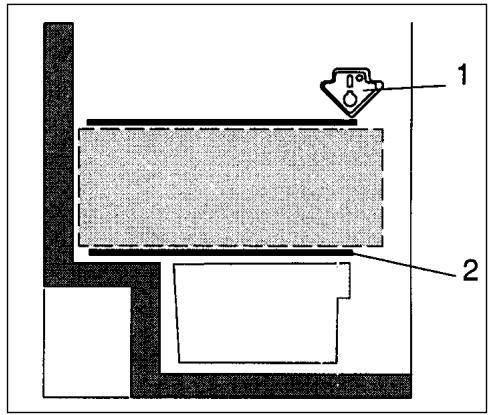
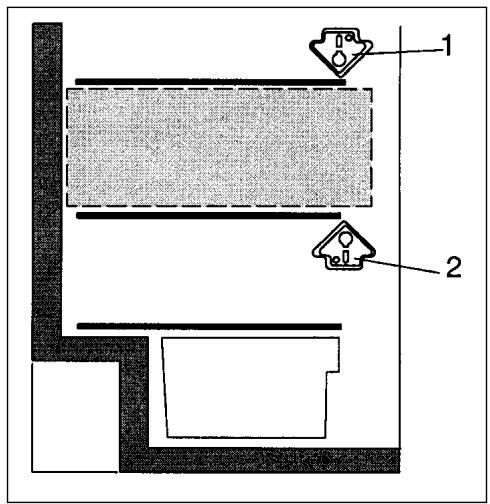
Note refrigeration zones in the refrigerator compartment!
The air circulation in the refrigerator compartment means that there are zones at different temperatures.
Depending on the model, the zone for sensitive foods is right at the bottom between the arrow on the side and the
glass surface below (fig. 1/1 and 2) or between the two arrows (fig. 2/1 and 2).
Ideal for storing meat, fish, sausage and salad mixtures, etc.
1
2
Sommaire
Enclenchement, coupure
Le compartmentengélateur
Los aparatos equipados con un interruptor para la temperatura del entorno (Fig. 2/A)SEOSEOSEOSEOSEOSEOSEOSEOSEOSEOSEOSEOSEOSEOSEOSEOSEOSEOSEOSEOSEOSEOSEOSEOSEOSEOSEOSEOSEOSEOSEOSEOSEOSEOSEOSEOSEOSEOSEOSEOSEOSEOSEOSEOSEOSEOSEOSEOSEOSEOSEOSEOSEOSEOSEOSEOSEOSEOSEOSEOSEOSEOSEOSEOSEOSEOSEOSEOSEOSEOSEOSEOSEOSEOSEOSEOSEOSEOSEOSEOSEOSEOSEOSEOSEOSEOSEOSEOSEOSEOSEOSEOSEOSEOSEOSEOSEOSEOSEOSEO SEOEO SEOEO SEOEO SEOEO SEOEO SEOEO SEOEO SEOEO SEOEO SEOEO SEOEO SEOEO SEOEO SEOEO SEOEO SEOEO SEOEO SEOEO SEOEO SEOEO SEOEO SEOEO SEOEO SEOEO SEOEO SEOEO SEOEO SEOEO SEOEO SEOEO SEOEO SEOEO SEOEO SEOEO SEOEO SEOEO SEOEO SEOEO SEOEO SEOEO SEOEO SEOEO SEOEO SEOEO SEOEO SEOEO SEOEO SEOEO SEOEO SEOEO SEOEQ
Changing over door hinges
Steps in numerical sequence
Changing over door hinges
Steps in numerical sequence


- Information concerning (waste) disposal
- Disposal of your old appliance
- Disposal of packaging from your new appliance
- Safety information
- en
- Requirements
- Getting to know your appliance
- Overall view
- Siting the appliance
- Note the ambient temperature
- Site
- Siting
- Electrical connection
- Ventilation
- Following delivery ...
- Switching ON/OFF the appliance
- Switching ON the appliance
- Setting the temperature
- Notes
- Switching OFF the appliance
- Disconnecting the appliance
- Arranging food in the appliance
- Important information concerning food arrangement
- Example of food arrangement
- Interior fittings
- Freezing and storing food, making ice cubes
- Freezer compartment
- Note
- Notes on buying frozen food
- Freezing food at home
- Wrapping food
- Freezing capacity
- Setting the temperature control for freezing and storing frozen food
- Making ice cubes
- Storage times
- Thawing frozen food
- Defrosting
- Refrigerator compartment
- Defrosting the freezer compartment
- Defrosting aids
- Cleaning
- Tips on how to save energy
- Information on operating noises
- Eliminating minor faults yourself
- Operating noises
- What to do if ...
- Eliminating minor faults yourself / Customer Service
- What to do if …
- Rating plate
- Note refrigeration zones in the refrigerator compartment!
- Sommaire
- Enclenchement, coupure
- Le compartmentengélateur
Brand : BALAY
Model : 3FE2530B
Category : Dishwasher