
GI7FVCXWY - Combined refrigerator BAUKNECHT - Free user manual and instructions
Find the device manual for free GI7FVCXWY BAUKNECHT in PDF.


| Product Type | Combined Refrigerator |
| Brand | BAUKNECHT |
| Model | GI7FVCXWY |
| Estimated Dimensions | Height: 177.8 cm (70"), Width: 91.4 cm (36"), Depth: 86.4 cm (34") |
| Estimated Weight | 150 kg |
| Power Supply | 115 V, 60 Hz, 15-20 A AC, grounded |
| Main Features | Water and ice dispenser, touch screen, automatic ice maker, freezer drawer, LED lighting, door open alarm, power failure indicator |
| Refrigerator Temperature Range | 0 °C to 7 °C (33 °F to 45 °F) |
| Freezer Temperature Range | -21 °C to -15 °C (-5 °F to 5 °F) |
| Ice Maker Capacity | Approximately 40 batches per 24 hours |
| Water Filter | Model UKF8001AXX-200, replace every 6 months |
| Required Water Pressure | 35 to 120 psi (241 to 827 kPa) |
| Maintenance and Cleaning | Monthly interior cleaning, condenser cleaning every 2-3 months, stainless steel cleaner recommended |
| Safety | Plug into a grounded 3-prong outlet, do not use an adapter or extension cord, automatic defrost |
| Spare Parts and Repairability | Light bulb 40 W max, water filter UKF8001AXX-200, Whirlpool customer service 1-800-253-1301 (US) / 1-800-807-6777 (Canada) |
| General Information | Manual 58 pages, manufactured by Whirlpool under license from BAUKNECHT, limited 1-year warranty |
Frequently Asked Questions - GI7FVCXWY BAUKNECHT
User questions about GI7FVCXWY BAUKNECHT
0 question about this device. Answer the ones you know or ask your own.
Ask a new question about this device
Download the instructions for your Combined refrigerator in PDF format for free! Find your manual GI7FVCXWY - BAUKNECHT and take your electronic device back in hand. On this page are published all the documents necessary for the use of your device. GI7FVCXWY by BAUKNECHT.
USER MANUAL GI7FVCXWY BAUKNECHT
THANK YOU for purchasing this high-quality product. If you should experience a problem not covered in TROUBLESHOOTING, please visit our website at www.whirlpool.com for additional information. If you still need assistance, call us at 1-800-253-1301. In Canada, visit our website at www.whirlpool.ca or call us at 1-800-807-6777.
You will need your model and serial number, located on the inside wall of the refrigerator compartment.
Table of Contents / Índice/Table des matières
REFRIGERATOR SAFETY ......1
INSTALLATION INSTRUCTIONS......2
REFRIGERATOR USE......8
REFRIGERATOR CARE....13
TROUBLESHOOTING....14
WATER FILTER CERTIFICATIONS......16
PERFORMANCE DATA SHEET ......17
WARRANTY....18
Your safety and the safety of others are very important.
We have provided many important safety messages in this manual and on your appliance. Always read and obey all safety messages.

This is the safety alert symbol.
This symbol alerts you to potential hazards that can kill or hurt you and others.
All safety messages will follow the safety alert symbol and either the word “DANGER” or “WARNING.”
These words mean:
! DANGER
WARNING
You can be killed or seriously injured if you don't immediately follow instructions.
You can be killed or seriously injured if you don't follow instructions.
All safety messages will tell you what the potential hazard is, tell you how to reduce the chance of injury, and tell you what can happen if the instructions are not followed.
IMPORTANT SAFETY INSTRUCTIONS
WARNING: To reduce the risk of fire, electric shock, or injury when using your refrigerator, follow these basic precautions:
■ Plug into a grounded 3 prong outlet.
■ Do not remove ground prong.
■ Do not use an adapter.
■ Do not use an extension cord.
■ Disconnect power before servicing.
■ Replace all parts and panels before operating.
■ Remove doors from your old refrigerator.
■ Use nonflammable cleaner.
- Keep flammable materials and vapors, such as gasoline, away from refrigerator.
■ Use two or more people to move and install refrigerator.
■ Disconnect power before installing ice maker (on ice maker kit ready models only).
■ Use a sturdy glass when dispensing ice (on some models).
■ Do not hit the refrigerator glass doors (on some models).
SAVE THESE INSTRUCTIONS
Proper Disposal of Your Old Refrigerator
WARNING
Suffocation Hazard
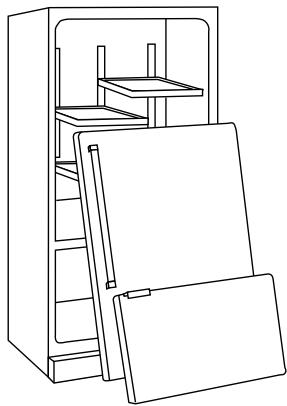
Remove doors from your old refrigerator.
Failure to do so can result in death or brain damage.
IMPORTANT: Child entrapment and suffocation are not problems of the past. Junked or abandoned refrigerators are still dangerous – even if they will sit for “just a few days.” If you are getting rid of your old refrigerator, please follow these instructions to help prevent accidents.
Before You Throw Away Your Old Refrigerator or Freezer:
■ Take off the doors.
■ Leave the shelves in place so that children may not easily climb inside.
natural_image
Line drawing of a cabinet with multiple shelves and a door, no text or symbols presentINSTALLATION INSTRUCTIONS
Unpack the Refrigerator
WARNING
Excessive Weight Hazard
Use two or more people to move and install refrigerator.
Failure to do so can result in back or other injury.
Remove the Packaging
■ Remove tape and glue residue from surfaces before turning on the refrigerator. Rub a small amount of liquid dish soap over the adhesive with your fingers. Wipe with warm water and dry.
- Do not use sharp instruments, rubbing alcohol, flammable fluids, or abrasive cleaners to remove tape or glue. These products can damage the surface of your refrigerator. For more information, see “Refrigerator Safety.”
■ Dispose of/recycle all packaging materials.
When Moving Your Refrigerator:
Your refrigerator is heavy. When moving the refrigerator for cleaning or service, be sure to cover the floor with cardboard or hardboard to avoid floor damage. Always pull the refrigerator straight out when moving it. Do not wiggle or “walk” the refrigerator when trying to move it, as floor damage could occur.
Clean Before Using
After you remove all of the packaging materials, clean the inside of your refrigerator before using it. See the cleaning instructions in "Refrigerator Care."
Important information to know about glass shelves and covers:
Do not clean glass shelves or covers with warm water when they are cold. Shelves and covers may break if exposed to sudden temperature changes or impact, such as bumping. Tempered glass is designed to shatter into many small, pebble-size pieces. This is normal. Glass shelves and covers are heavy. Use both hands when removing them to avoid dropping.
Location Requirements
WARNING
Explosion Hazard
Keep flammable materials and vapors, such as gasoline, away from refrigerator.
Failure to do so can result in death, explosion, or fire.
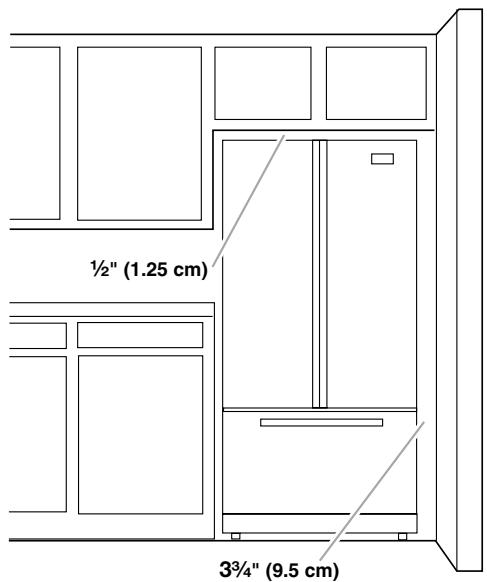
To ensure proper ventilation for your refrigerator, allow for a 12 " (1.25 cm) of space on each side and at the top. Allow for a 1" (2.54 cm) space behind the refrigerator. If your refrigerator has an ice maker, allow extra space at the back for the water line connections. When installing your refrigerator next to a fixed wall, leave a 334 " (9.5 cm) minimum space between the refrigerator and wall to allow the door to swing open.
NOTE: It is recommended that you do not install the refrigerator near an oven, radiator, or other heat source. Do not install the refrigerator in a location where the temperature will fall below 55^ F ( 13^ C).
Electrical Requirements
WARNING
Electrical Shock Hazard
Plug into a grounded 3 prong outlet.
Do not remove ground prong.
Do not use an adapter.
Do not use an extension cord.
Failure to follow these instructions can result in death, fire, or electrical shock.
Before you move your refrigerator into its final location, it is important to make sure you have the proper electrical connection.
Recommended Grounding Method
A 115 Volt, 60 Hz., AC only 15- or 20-amp fused, grounded electrical supply is required. It is recommended that a separate circuit serving only your refrigerator be provided. Use an outlet that cannot be turned off by a switch. Do not use an extension cord.
NOTE: Before performing any type of installation, cleaning, or removing a light bulb, turn Cooling OFF, and then disconnect the refrigerator from the electrical source. When you are finished, reconnect the refrigerator to the electrical source and turn Cooling ON. See “Using the Controls.”
Water Supply Requirements
Gather the required tools and parts before starting installation. Read and follow the instructions provided with any tools listed here.
TOOLS NEEDED:
■ Flat-blade screwdriver
■ 14 " Nut driver
■ 716 " and 12 " Open-end or two adjustable wrenches
■ 14 " Drill bit
■ Cordless drill
IMPORTANT:
■ All installations must meet local plumbing code requirements.
■ Do not use a piercing-type or 316 " (4.76 mm) saddle valve which reduces water flow and clogs more easily.
■ Use copper tubing and check for leaks. Install copper tubing only in areas where the household temperatures will remain above freezing.
■ For models with water filters, the disposable water filter should be replaced at least every 6 months.
Water Pressure
A cold water supply with water pressure of between 35 and 120 psi (241 and 827 kPa) is required to operate the water dispenser and ice maker. If you have questions about your water pressure, call a licensed, qualified plumber.
Reverse Osmosis Water Supply
IMPORTANT: The pressure of the water supply coming out of a reverse osmosis system going to the water inlet valve of the refrigerator needs to be between 35 and 120 psi (241 and 827 kPa).
If a reverse osmosis water filtration system is connected to your cold water supply, the water pressure to the reverse osmosis system needs to be a minimum of 40 to 60 psi (276 to 414 kPa). If the water pressure to the reverse osmosis system is less than 40 to 60 psi (276 to 414 kPa):
■ Check to see whether the sediment filter in the reverse osmosis system is blocked. Replace the filter if necessary.
- Allow the storage tank on the reverse osmosis system to refill after heavy usage.
If your refrigerator has a water filter, it may further reduce the water pressure when used in conjunction with a reverse osmosis system. Remove the water filter. See “Water Filtration System.”
If you have questions about your water pressure, call a licensed, qualified plumber.
Connect the Water Supply
Read all directions before you begin.
IMPORTANT: If you turn the refrigerator on before the water line is connected, turn the ice maker OFF.
Connect to Water Line
- Unplug refrigerator or disconnect power.
- Turn OFF main water supply. Turn ON nearest faucet long enough to clear line of water.
- Find a 12 " to 114 " (12.7 mm to 31.8 mm) vertical cold water pipe near the refrigerator.
IMPORTANT:
■ Make sure it is a cold water pipe.
■ Horizontal pipe will work, but the following procedure must be followed: Drill on the top side of the pipe, not the bottom. This will help keep water away from the drill. This also keeps normal sediment from collecting in the valve.
-
Determine the length of copper tubing you need. Measure from the connection on the lower right rear of the refrigerator to the water pipe. Add 7 ft (2.1 m) to allow for cleaning. Use 14 " (6.35 mm) O.D. (outside diameter) copper tubing. Be sure both ends of copper tubing are cut square.
-
Using a cordless drill, drill a 14 " hole in the cold water pipe you have selected.
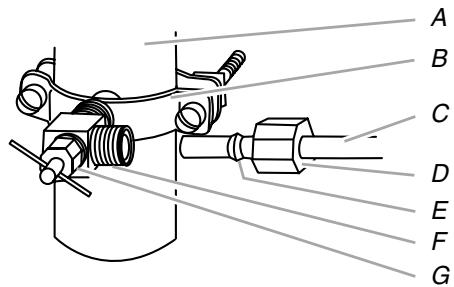
A. Cold water pipe
B. Pipe clamp
C. Copper tubing
D. Compression nut
E. Compression sleeve
F. Shutoff valve
G. Packing nut
- Fasten the shutoff valve to the cold water pipe with the pipe clamp. Be sure the outlet end is solidly in the 14 " drilled hole in the water pipe and that the washer is under the pipe clamp. Tighten the packing nut. Tighten the pipe clamp screws slowly and evenly so the washer makes a watertight seal. Do not overtighten.
- Slip the compression sleeve and compression nut on the copper tubing as shown. Insert the end of the tubing into the outlet end squarely as far as it will go. Screw compression nut onto outlet end with adjustable wrench. Do not overtighten, or you may crush the copper tubing.
- Place the free end of the tubing in a container or sink, and turn ON the main water supply. Flush the tubing until water is clear. Turn OFF the shutoff valve on the water pipe.
Connect to Refrigerator
- Remove plastic cap from water valve inlet port. Attach the copper tube to the valve inlet using a compression nut and sleeve as shown. Tighten the compression nut. Do not overtighten. Confirm copper tubing is secure by pulling on copper tubing.
- Create a service loop with the copper tubing. Avoid kinks when coiling the copper tubing. Secure copper tubing to refrigerator cabinet with a "P" clamp.
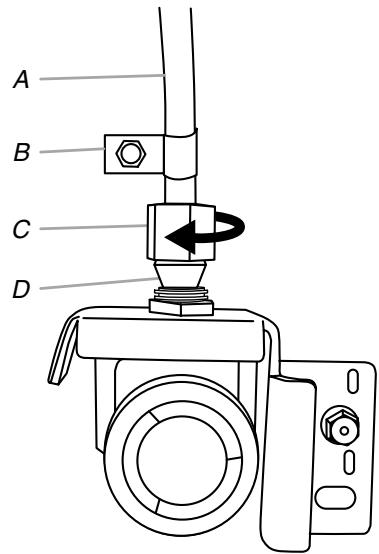
A. Copper tubing
B. "P" clamp
C. Compression nut
D. Compression sleeve
- Turn on water supply to refrigerator and check for leaks. Correct any leaks.
WARNING
Electrical Shock Hazard
Plug into a grounded 3 prong outlet.
Do not remove ground prong.
Do not use an adapter.
Do not use an extension cord.
Failure to follow these instructions can result in death, fire, or electrical shock.
- Plug into a grounded 3 prong outlet.
NOTE: Allow 24 hours to produce the first batch of ice. Discard the first three batches of ice produced. Allow 3 days to completely fill the ice container.
Refrigerator Doors and Drawer
All graphics referenced in the following instructions are included later in this section after “Final Steps.”
Remove and Replace Handles
To Remove Handles:
- Grasp the lower part of the handle firmly, slide the handle up and pull the handle straight out from the door. See Handle graphics 1 and 2.
To Replace Handles:
-
Position the handle so that the large holes in the mounting clips are down and align the holes with the door studs.
-
Rotate the handle so that the mounting clips are flat against the door and slide the handle down to engage. See Handle graphics 1 and 2.
Remove Doors and Hinges
IMPORTANT:
■ Remove food and any adjustable door or utility bins from doors.
- Keep the refrigerator doors closed until you are ready to lift them free from the cabinet.
NOTE: Provide additional support for the refrigerator door while the hinges are being removed. Do not depend on the door gasket magnets to hold the door in place while you are working.
TOOLS NEEDED: 516 ", 38 ", 14 " hex head socket wrench, Torx ^ T20 screwdriver, #2 Phillips screwdriver, and a flat-blade screwdriver.
- Unplug refrigerator or disconnect power.
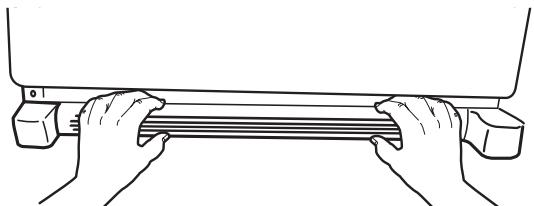
- Remove the base grille. Grasp the grille firmly and pull it toward you.
natural_image
Line drawing of hands holding a flexible object with a roller, no text or symbols present- Starting with the right-hand side door, remove the parts for the top hinge as shown in Top Hinge graphic. Lift the refrigerator door from the bottom hinge pin.
- Remove the hinge pin cover from the bottom hinge pin and keep it for later use. See Bottom Hinge graphic.
- Remove top hinge cover from left side refrigerator door.
- Remove the façade from the front of the top of the cabinet. Remove the screw on the backside of the center of the façade, then slide the façade forward and out from under the hinge.
- Disconnect the wiring plug located on top of the hinge by wedging a flat-blade screwdriver or your fingernail between the two sections.
- Disconnect the water line by pulling back on the locking collar while pulling the water line out of the water line connector.
- Remove the parts for the top hinge as shown in Top Hinge graphic. Lift the left-hand side door from the bottom hinge pin. NOTE: On some models, remove the hinge pin cover from the bottom hinge pin and keep it for later use. See Bottom Hinge graphic.
- Using a 38 " hex wrench, remove the leveling leg brackets from the bottom of the cabinet. Keep screws for later use.
Replace Doors and Hinges
- Assemble the parts for the top hinges as shown in Top Hinge graphic. Do not tighten the screws completely.
- Replace the parts for the bottom hinge as shown in Bottom Hinge graphic. Tighten screws. Replace the refrigerator door. NOTE: Provide additional support for the refrigerator door while the hinges are being moved. Do not depend on the door gasket magnets to hold the door in place while you are working.
- Align the door so that the bottom of the refrigerator door aligns evenly with the top of the freezer drawer. Tighten all screws.
- Reconnect the wiring plug on top of the left-hand side refrigerator door.
- Reconnect the water line by pulling back the locking collar ring while firmly pushing the water line into the connector.
- Check for leaks. Replace the façade and top hinge covers.
Remove and Replace Freezer Drawer
IMPORTANT: Two people may be required to remove and replace the freezer drawer. Graphics are included later in this section.
Remove Drawer Front
- Open the freezer drawer to full extension.
-
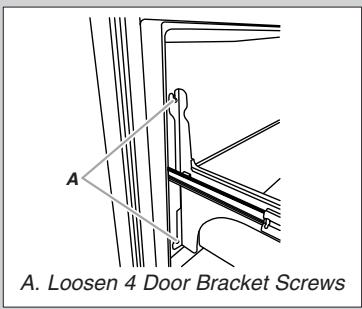
Loosen the four screws attaching the drawer glides to the drawer front. See Drawer Front Removal graphic.
NOTE: Loosen screws three to four turns. Keep the screws in the drawer front. -
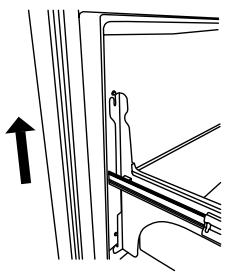
Lift drawer front upward and off the screws. See Drawer Front Removal graphic.
Replace Drawer Front
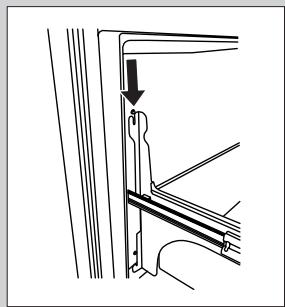
- Slide the drawer glides out of the freezer compartment. Insert the screws in the top of the drawer front into the slots in the drawer brackets. See Drawer Front Replacement graphic.
- Pull the drawer brackets toward you to position the two screws in the bottom of the drawer front into the brackets. See Drawer Front Replacement graphic.
- Completely tighten the four screws.
Adjust the Doors
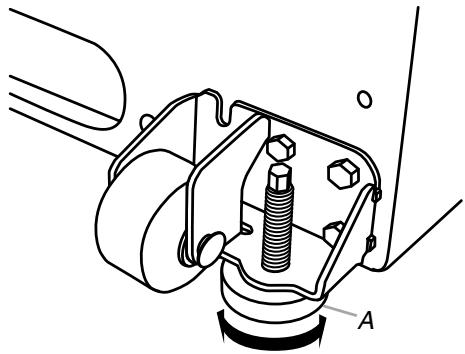
There are two leveler foot screws located at the base of the refrigerator. If your refrigerator seems unsteady or you want the door to close more easily, use the following instructions.
- Using a 14 " hex driver, turn the leveling screw on each side to raise or lower that side of the refrigerator.
NOTE: Having someone push against the top of the refrigerator takes some weight off the leveling screws which makes them easier to turn. It may take several turns of the leveling screw to adjust the tilt of the refrigerator.
■ To raise, turn the leveling screw clockwise.
■ To lower, turn the leveling screw counterclockwise.
natural_image
Mechanical assembly diagram showing a bolted joint with threaded shaft and mounting bracket (no text or symbols)A. Leveling screw
-
Open the door again to make sure that it closes as easily as you like. If not, tilt the refrigerator slightly more to the rear by turning both leveling screws clockwise. It may take several more turns, and you should turn both screws the same amount.
-
Replace the base grille.
Final Steps
- Replace the base grille.
WARNING
Electrical Shock Hazard
Plug into a grounded 3 prong outlet.
Do not remove ground prong.
Do not use an adapter.
Do not use an extension cord.
Failure to follow these instructions can result in death, fire, or electrical shock.
- Plug into a grounded 3 prong outlet.
- Return all removable parts to doors and drawer and food to refrigerator and freezer.
Door Removal & Replacement
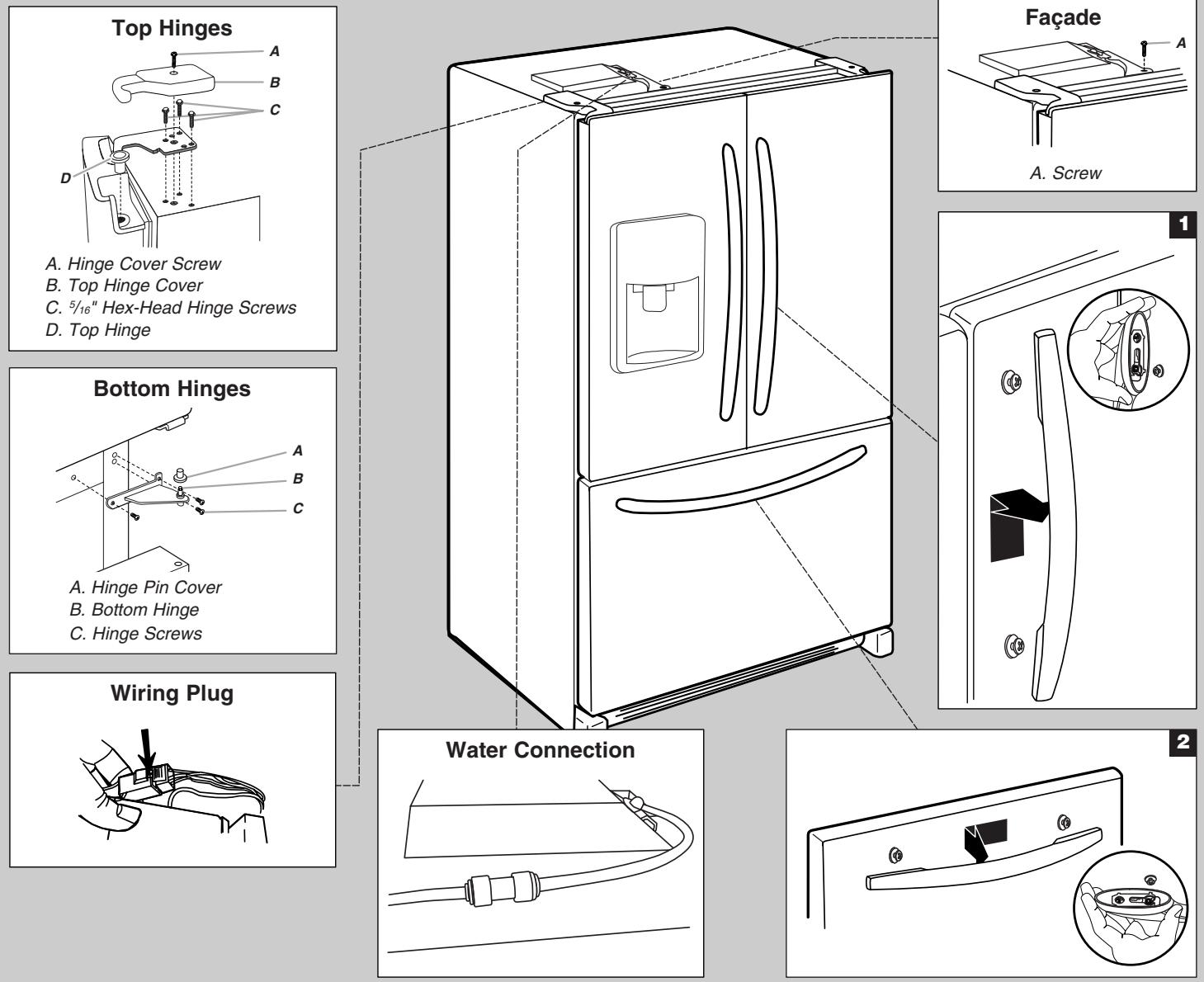
A. Hinge Cover Screw
B. Top Hinge Cover
C. 516 " Hex-Head Hinge Screws
D. Top Hinge
A. Hinge Pin Cover
B. Bottom Hinge
C. Hinge Screws
Drawer Front Removal
natural_image
Pure mechanical diagram showing a bracket with arrows indicating direction (no text or symbols)Drawer Front Replacement
natural_image
Technical line drawing of a mechanical bracket assembly with an arrow indicating direction (no text or symbols)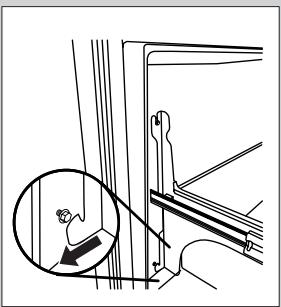
natural_image
Line drawing of a door handle assembly with an inset showing a person climbing a rope (no text or symbols)REFRIGERATOR USE
Opening and Closing Doors
There are two refrigerator compartment doors. The doors can be opened and closed either separately or together.
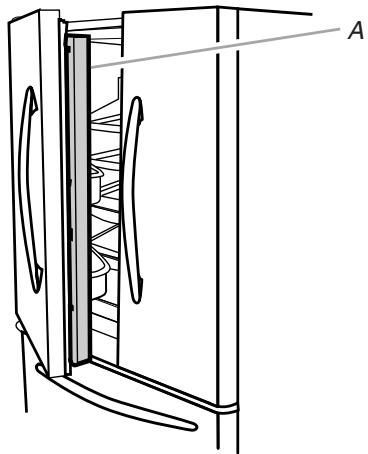
There is a vertically-hinged seal on the left refrigerator door.
■ When the left side door is opened, the hinged seal automatically folds inward so that it is out of the way.
■ When both doors are closed, the hinged seal automatically forms a seal between the two doors.
natural_image
Technical line drawing of a door with internal structure and labeled point A (no text or symbols beyond label)A. Hinged seal
Using the Controls
The refrigerator and freezer controls are located on the dispenser panel and display screen.
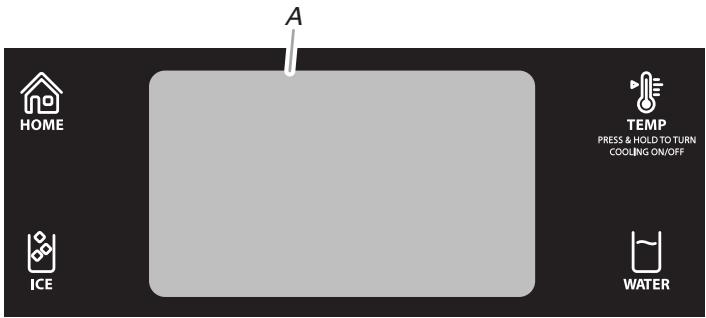
A. Display screen
Language Selection
The language of the text on the display screen can be set to English, Spanish or French.
■ To change the display screen text from English to Spanish or French, press the HOME button on the dispenser panel. On the display screen, press OPTIONS, then PREFERENCES, then LANGUAGE. Select ESPAÑOL (Spanish) or FRANÇAIS (French), wait 15 seconds or press BACK, and the screen text will be changed.
■ To change the display screen text from Spanish to English, press the HOME button on the dispenser panel. On the display screen, press OPCIONES, then PREFERENCIAS, then IDIOMA. Select INGLÉS, wait 15 seconds or press ATRÁS, and the screen text will be changed.
■ To change the display screen text from French to English, press the HOME button on the dispenser panel. On the display screen, press OPTIONS, then PRÉFÉRENCES, then LANGUE. Select ANGLAIS, wait 15 seconds or press RETOUR, and the screen text will be changed.
Temperature Controls
For your convenience, your refrigerator and freezer controls are preset at the factory. When you first install your refrigerator, make sure that the controls are still set to the “mid-settings.”
To view set points, press the TEMP button on the dispenser panel. The factory recommended set points are 0^ F ( -18^ C) for the freezer and 38^ F ( 3^ C) for the refrigerator.
IMPORTANT:
■ Wait 24 hours before you put food into the refrigerator. If you add food before the refrigerator has cooled completely, your food may spoil.
NOTE: Adjusting the set points to a higher (colder) than recommended setting will not cool the compartments any faster.
If the temperature is too warm or too cold in the refrigerator or freezer, first check the air vents to be sure they are not blocked before adjusting the controls.
■ The preset settings should be correct for normal household usage. The controls are set correctly when milk or juice is as cold as you like and when ice cream is firm.
■ Wait at least 24 hours between adjustments. Recheck the temperatures before other adjustments are made.
The display screen on the dispenser control panel has a backlight, which will turn off automatically when the controls have not been used for 2 minutes or more. When the backlight is off, the first press of a control button or the display screen will only reactivate the backlight, without changing any settings. Within 2 minutes after the backlight has been reactivated, additional presses of control buttons or the display screen will change the applicable settings.
Adjusting the Controls
To adjust the set points, press the TEMP button on the dispenser panel. Set points and adjusting information will appear on the display screen.
Refrigerator Controls
Make sure REFRIGERATOR is selected. The up and down arrows on the display screen allow you to adjust the refrigerator compartment temperature. The set point range for the refrigerator is 33^ F to 45^ F ( 0^ C to 7^ C).
■ Press the down arrow to lower the set point.
■ Press the up arrow to raise the set point.
NOTE: To view Celsius temperatures, press UNITS. To return the display setting to Fahrenheit, press UNITS again.
Freezer Controls
Make sure FREEZER is selected. The up and down arrows on the display screen allow you to adjust the freezer compartment temperature. The set point range for the freezer is -5^ F to 5^ F ( -21^ C to -15^ C).
■ Press the down arrow to lower the set point.
■ Press the up arrow to raise the set point.
NOTE: To view Celsius temperatures, press UNITS. To return the display setting to Fahrenheit, press UNITS again.
| CONDITION: | TEMPERATURE ADJUSTMENT: |
| REFRIGERATOR too cold | REFRIGERATOR Setting 1° higher |
| REFRIGERATOR too warm | REFRIGERATOR Setting 1° lower |
| FREEZER too cold | FREEZER Setting 1° higher |
| FREEZER too warm/too little ice | FREEZER Setting 1° lower |
■ Press BACK to exit adjust mode.
Cooling On/Off
To turn cooling off, press and hold the TEMP button on the dispenser panel for 3 seconds. Your refrigerator and freezer will not cool when cooling is off.
To turn cooling back on, press and hold the TEMP button for 3 seconds again.
Power Outage Indicator (on some models)
The power outage indicator lets you know if the power supply to your refrigerator is cut off for more than 1 hour.
When power is restored, a power outage alert will appear on the display screen. The display shows how long the refrigerator was without power, using exact times if the clock has been set.
When the indicator is on, all other dispenser functions are disabled. To use the dispenser, you must reset the power outage indicator.
■ Press RESET on the display screen, then press YES to confirm that you want to reset the indicator.
■ From the Home screen, you can view the power outage history for the refrigerator. Press OPTIONS, then OUTAGE.
Additional Features
Fast Cool
The Fast Cool feature assists with periods of heavy ice usage, full grocery loads, or temporarily warm room temperatures.
On the display screen, press OPTIONS, then FAST COOL. The display screen indicates whether the feature is on or off. Press the FAST COOL icon to toggle between settings.
Once activated, the Fast Cool setting will remain on for 24 hours unless manually turned off. The display will continue to show your normal temperature set points.
NOTE: If increased ice production is desired at all times, change the freezer control to a lower setting. Setting the freezer to a colder temperature may make some foods, such as ice cream, harder.
Kitchen Timer
To assist with general kitchen activities, the controls include a timer feature.
- On the display screen, press OPTIONS, then TIMER.
- Use the up and down arrows to adjust the hours and minutes as desired.
- To start the timer countdown, press START. The timer will not initiate if you exit the timer screen without pressing START.
■ When the timer is counting down, press PAUSE to pause the countdown. Press START again to restart the countdown.
■ To reset the timer to zero, press RESET at any time.
■ Press MAXIMIZE to increase the size of the countdown on the display screen. When the countdown reaches zero, the display will return to the previous screen.
IMPORTANT: When using the timer, you can also use other control and dispenser features. Press the HOME button on the dispenser panel. The timer countdown will be shown at the top of the display screen.
- When the countdown reaches zero, the timer clock will blink and a tone will sound, repeating every 30 seconds. Press RESET to turn off the tone and reset the timer feature.
Door Ajar Alarm
The Door Ajar Alarm feature sounds an alarm when the refrigerator or freezer door is open for 5 minutes and the product cooling is turned on. The alarm will repeat every 2 minutes.
■ Close both doors to turn it off. The feature then resets and will reactivate when either door is left open again for 5 minutes.
If you need to keep the doors open and wish to silence the alarm for up to 5 minutes, press SNOOZE on the display screen.
If you need to keep the doors open and wish to silence the alarm for longer than 5 minutes, press RESET on the display screen. The alarm will remain off until both doors are closed, then will reactivate when either door is left open again for 5 minutes.
Additional Settings
Time and Date
■ To change the time and date displayed, press OPTIONS, then SETTINGS, then TIME & DATE.
To change the time, use the up and down arrows.
To change the date, press CHANGE DATE, then use the arrows to adjust the setting as desired.
Sound Volume
■ To adjust the volume of all dispenser and control sounds, press OPTIONS, then SETTINGS, then VOLUME. Select the desired volume, then wait 15 seconds or press BACK.
NOTE: Selecting MUTE will not disable the Door Ajar Alarm.
Screen Brightness
■ To adjust the brightness of the display screen, press OPTIONS, then SETTINGS, then BRIGHTNESS. Select the desired brightness, then wait 15 seconds or press BACK.
Factory Reset
■ To reset all system settings and preferences to the factory defaults, press OPTIONS, then SETTINGS, then FACTORY RESET. On the next screen, press YES to confirm. If you unintentionally press YES instead of NO, you will have 3 seconds to press CANCEL and retain your custom settings.
IMPORTANT: When choosing to return to the default settings, all customized preferences will be lost - including temperature set points, dispensing preferences and presets, language selection, volume and brightness settings, and time and date.
Touch Screen Care
IMPORTANT: Do not use sharp objects when using the touch screen. Doing so could damage the screen.
For information about cleaning the touch screen, see “Cleaning.”
Crisper Humidity Control
You can control the amount of humidity in the moisture-sealed crisper. Depending on your model, adjust the control to any setting between FRUIT and VEGETABLES or LOW and HIGH.
FRUIT/LOW (open) for best storage of fruits and vegetables with skins.
VEGETABLES/HIGH (closed) for best storage of fresh, leafy vegetables.
Water and Ice Dispensers (on some models)
Depending on your model, you may have one or more of the following options: the ability to select crushed or cubed ice; a rotating water dispenser faucet and pull-out tray; a special light that turns on when you use the dispenser; a lock option to avoid unintentional dispensing; or an indicator that tells you when there has been a power outage.
IMPORTANT:
■ After connecting the refrigerator to a water source or replacing the water filter, flush the water system. Use a sturdy container to depress and hold the water dispenser pad for 5 seconds, then release it for 5 seconds. Repeat until water begins to flow. Once water begins to flow, continue depressing and releasing the dispenser pad (5 seconds on, 5 seconds off) until a total of 4 gal. (15 L) has been dispensed. This will flush air from the filter and water dispensing system, and prepare the water filter for use. Additional flushing may be required in some households. As air is cleared from the system, water may spurt out of the dispenser.
- Allow 24 hours for the refrigerator to cool down and chill water.
- Allow 24 hours to produce the first batch of ice. Discard the first three batches of ice produced.
■ The dispensing system will not operate when the refrigerator door is open.
The display screen on the dispenser control panel has a backlight, which will turn off automatically when the controls have not been used for 2 minutes or more. When the backlight is off, the first press of a control button or the display screen will only reactivate the backlight, without changing any settings. Within 2 minutes after the backlight has been reactivated, additional presses of control buttons or the display screen will change the applicable settings.
The language of the text on the display screen can be set to English, Spanish or French. For information about changing the language, see “Using the Controls.”
Water Dispenser
IMPORTANT: Dispense enough water every week to maintain a fresh supply.
The default display unit for water dispensing is ounces. The units can be changed to cups or liters.
To Dispense Water (Standard):
- Press a sturdy glass against the water dispenser pad OR place the glass below the water dispenser and press the water dispenser button.
- Remove the glass OR release the button to stop dispensing.
To Dispense Water (Measured Fill):
Measured Fill allows you to dispense a specified amount of water with the touch of a few buttons.
NOTE: The amount of water you select will be dispensed. Be sure that the container is empty and can hold the entire volume. If ice is in the container, you may need to adjust your selection.
- Press WATER on the display screen to turn the feature on.
NOTE: The dispenser will automatically exit the Measured Fill screen after 15 seconds of inactivity.
- You can dispense water by the ounce, cup, or liter. Press UNITS to select your desired setting. Minimum and maximum volumes are listed below.
| Units | Minimum | Maximum |
| Ounces | 1 | 128 |
| Cups | 1/4 | 16 |
| Liters | 0.05 | 4 |
- Press the up and down arrows to adjust the volume as desired.
NOTE: Most coffee cups (commonly 4 to 6 oz [118 to 177 mL] per cup) are not the same size as a measuring cup (8 oz [237 mL]). You may need to adjust the volume to avoid unintentionally overfilling coffee cups. The Measured Fill feature is based on standard household water pressure of 60 psi. Users with low water pressure may need to adjust the volume selection accordingly.
- To dispense water, press a sturdy glass against the water dispenser pad OR place the glass below the water dispenser and press the water dispenser button.

NOTE: While dispensing water, the digital display will count down how much water remains to be dispensed, according to the volume you selected. The flow of water will automatically stop once the desired volume has been dispensed.
- To stop dispensing before the selected volume has been dispensed, remove the glass from the dispenser pad OR press the water dispenser button a second time.
NOTE: If you stop dispensing before the desired volume has been dispensed, the digital display will continue to show how much water remains to be dispensed. The display will exit the Measured Fill screen after 15 seconds of inactivity.
To select a new volume or select the same volume again, you must first finish dispensing the selected volume, or turn off the Measured Fill feature and then turn it back on.
Preset Volumes
The dispenser can store up to three preset water volumes, for easy dispensing into commonly used containers.
■ To store presets, press WATER, then PRESET. Locate a blank or unwanted preset on the display screen. Press and hold that preset for 3 seconds, and the preset adjustment menu will appear on the display screen. Adjust the units and volume of water as desired, as instructed in steps 2 and 3 of the previous section. Press PRESET to save the preset.
■ To use presets, press WATER, then PRESET, then press and release the desired preset. Dispense water as instructed in steps 4 and 5 of the previous section.
Rotating Faucet and Pull-out Tray (on some models)
On some models, the dispenser has a rotating water faucet and a pull-out tray at the bottom.
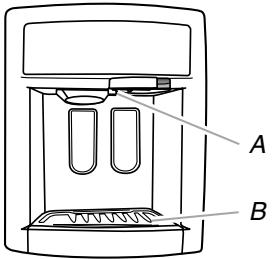
A. Faucet rotated
B. Pull-out tray
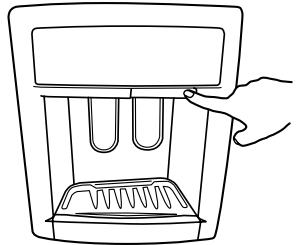
■ The faucet rotates to the center to allow for easy dispensing into large containers. To rotate it, push in on the right-hand side of the faucet as shown.
natural_image
Line drawing of a hand inserting a buffer into a digital water dispenser (no text or symbols)Push in on the left-hand side to rotate the faucet back into place.
NOTE: When using the dispenser with the faucet rotated, do not use the water dispenser pad. Only use the water dispenser button to dispense. Dispensing by pressing the container against the water dispenser pad may result in unintentional spilling.
■ The tray can be pulled out a bit in order to better support large containers. It is designed to catch small spills and allow for easy cleaning. There is no drain in the tray.
NOTE: The tray can be removed from the dispenser and carried to the sink to be emptied or cleaned. Pull the tray out until it hits the stop, then gently lift up on the back of the tray and slide it out the rest of the way.
Ice Dispenser
Ice dispenses from the ice maker storage bin in the freezer when the dispenser pad is pressed. The dispensing system will not operate when the refrigerator door is open. To turn off the ice maker, see “Ice Maker and Storage Bin.”
Your ice maker can produce crushed and cubed ice. Before dispensing ice, press ICE on the display screen to select which type of ice you would like to dispense.
The display screen indicates which type of ice is selected.
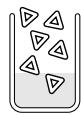
CRUSHED
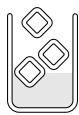
CUBED
For crushed ice, cubes are crushed before being dispensed. This may cause a slight delay when dispensing crushed ice. Noise from the ice crusher is normal, and pieces of ice may vary in size. When changing from crushed to cubed, a few ounces of crushed ice will be dispensed along with the first cubes.
To Dispense Ice:
- Select the desired type of ice.
WARNING
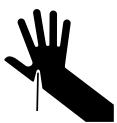
Cut Hazard
Use a sturdy glass when dispensing ice.
Failure to do so can result in cuts.
- Press a sturdy glass against the ice dispenser pad OR place the glass below the ice dispenser and press the ice dispenser button.

ICE
Hold the glass close to the dispenser opening so ice does not fall outside of the glass.
IMPORTANT: You do not need to apply a lot of pressure to the pad or button in order to activate the ice dispenser. Pressing hard will not make the ice dispense faster or in greater quantities.
- Remove the glass OR release the button to stop dispensing.
NOTE: Ice may continue to dispense for up to 10 seconds after removing the glass from the pad or releasing the button. The dispenser may continue to make noise for a few seconds after dispensing.
Dispenser Light
When you use the dispenser, the light will automatically turn on. If you want the light to be on continuously, press LIGHT on the display screen to toggle between the ON and OFF settings. The display screen indicates which mode is selected.
ON: The dispenser light will remain on at a consistent brightness.
OFF: The dispenser light will remain off except when dispensing water or ice.
The dispenser lights are LEDs that cannot be changed. If it appears that your dispenser lights are not working, see “Troubleshooting” for more information.
Dispenser Lock
The dispenser can be turned off for easy cleaning or to avoid unintentional dispensing by small children and pets.
NOTE: The lock feature does not shut off power to the refrigerator, to the ice maker, or to the dispenser light. It simply deactivates the dispenser controls and levers. To turn off the ice maker, see “Ice Maker and Storage Bin.”
■ To lock the dispenser, press OPTIONS, then LOCK, then YES. The display screen will confirm when the dispenser is locked.
■ To unlock the dispenser, press OPTIONS, then LOCK, then YES. The display screen will confirm when the dispenser is unlocked.
Ice Maker and Storage Bin
IMPORTANT:
- Flush the water system before turning on the ice maker. See "Water and Ice Dispensers."
■ The ice maker and storage bin are located in the upper left-hand side of the refrigerator compartment.
Turning the Ice Maker On/Off
Your ice maker has an automatic shutoff. When the ice maker is on, sensors will automatically stop ice production when the storage bin is full. The ice maker will remain set to ON, and ice production will resume when the bin is no longer full.
To manually turn off the ice maker, press the ice maker icon or OPTIONS on the main display screen, then ICE MAKER. On the next screen, press ICE MAKER again to toggle between ON and OFF. When the ice maker is set to OFF, it will stop producing ice.
Removing and Replacing Ice Storage Bin
To Remove the Ice Storage Bin:
NOTE: It is not necessary to turn off the ice maker when removing the storage bin.
- Pull the handle to unlock the ice storage bin.
- Hold both sides of the ice storage bin, tilt the bin forward and lift slightly to remove.
To Replace the Ice Storage Bin:
IMPORTANT: The ice storage bin must be locked in place for proper ice dispensing.
- Replace the ice storage bin on the door.
- Pivot the bin so that it is firmly in place, and push back to assure that it is secure.
Ice Production Rate
- Allow 24 hours to produce the first batch of ice. Discard the first three batches of ice produced.
■ The ice maker should produce approximately 40 batches of ice in a 24-hour period.
■ To increase ice production, lower the freezer and refrigerator temperature. See “Using the Controls.” Wait 24 hours between adjustments.
Remember
The quality of your ice will be only as good as the quality of the water supplied to your ice maker. Avoid connecting the ice maker to a softened water supply. Water softener chemicals (such as salt) can damage parts of the ice maker and lead to poor quality ice. If a softened water supply cannot be avoided, make sure the water softener is operating properly and is well maintained.
■ Do not use anything sharp to break up the ice in the bin. This can cause damage to the ice bin and dispenser mechanism.
■ Do not store anything on top of the ice maker or in the ice storage bin.
Water Filter Status Light
The water filter status light will help you know when to change your water filter. When the water filter status display changes from "NORMAL" to "ORDER," this tells you that it is almost time to change the water filter cartridge. Replace the water filter cartridge when the water filter status display changes to "REPLACE."
If water flow to your water dispenser or ice maker decreases noticeably, change the filter sooner. The filter should be replaced at least every 6 months depending on your water quality and usage. To change the filter, see “Water Filtration System.”
| INDICATOR: | STATUS: |
| NORMAL (green) | New filter installed |
| ORDER (yellow) | Order filter |
| REPLACE (red) OR when water flow decreases | Replace water filter |
After changing the water filter, reset the status light. On the display screen, press OPTIONS, then WATER FILTER, then RESET, then YES. The status light will change from REPLACE (red) to NORMAL (green) when the system is reset.
Water Filtration System
The water filter is located in the upper right-hand corner of the refrigerator compartment.
Do not use with water that is microbiologically unsafe or of unknown quality without adequate disinfection before or after the system. Systems certified for cyst reduction may be used on disinfected waters that may contain filterable cysts.
IMPORTANT: The disposable water filter should be replaced at least every 6 months. If the water flow to the water dispenser or ice maker decreases noticeably before 6 months have passed, replace the water filter more often.
Replacing the Water Filter
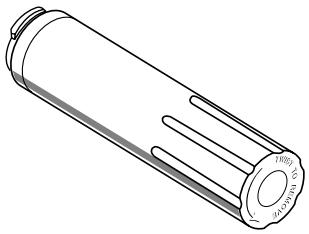
To purchase a replacement water filter, Part Number UKF8001AXX-200, contact your dealer or call 1-800-253-1301 in the U.S.A. or 1-800-807-6777 in Canada.
IMPORTANT: Air trapped in the water system may cause water and filter to eject. Always dispense water for at least 2 minutes before removing the filter or blue bypass cap.
- To access the filter, press upward on the ribbed section of the water filter cover.
- Turn filter counterclockwise to remove.
- Remove sealing label from replacement filter and insert the filter end into the filter head.
- Turn the filter clockwise until it stops. Snap the filter cover closed.
- Flush the water system. See "Water and Ice Dispensers."
NOTE: The dispenser feature may be used without a water filter installed. Your water will not be filtered. If this option is chosen, replace the filter with the blue bypass cap.
REFRIGERATOR CARE
Cleaning
WARNING
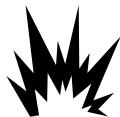
Explosion Hazard
Use nonflammable cleaner.
Failure to do so can result in death, explosion, or fire.
Both the refrigerator and freezer sections defrost automatically. However, clean both sections about once a month to avoid odor buildup. Wipe up spills immediately.
IMPORTANT:
Because air circulates between all compartments, any odors formed in one compartment will transfer to the other. You must thoroughly clean all compartments to eliminate odors. To avoid odor transfer and drying out of food, wrap or cover foods tightly.
■ Do not use abrasive or harsh cleaners such as window sprays, scouring cleansers, flammable fluids, cleaning waxes, concentrated detergents, nail polish remover, bleaches or cleansers containing petroleum products. Do not use paper towels, scouring pads, or other harsh cleaning tools that may scratch or damage the materials.
Clean the Interior
- Unplug refrigerator or disconnect power.
- Using a clean sponge or soft cloth and a mild detergent in warm water, hand wash, rinse, and dry removable parts and interior surfaces thoroughly.
- Plug in refrigerator or reconnect power.
Clean the Touch Screen Display on the Dispenser Panel
- Make sure the refrigerator is unplugged or the power is disconnected before wiping the screen, to avoid unintentionally changing the settings.
- Mix a solution of mild detergent in warm water. Dampen a soft, lint-free cloth with the solution and gently wipe the screen.
NOTE: Do not spray or wipe liquids directly onto the screen, or over-saturate the cloth. - Plug in refrigerator or reconnect power.
Clean the Exterior Surfaces
- Unplug refrigerator or disconnect power.
- Using a clean sponge or soft cloth and a mild detergent in warm water, wash, rinse and thoroughly dry stainless steel and painted metal exteriors.
To keep your stainless steel refrigerator looking like new and to remove minor scuffs or marks, it is suggested that you use the manufacturer's approved Stainless Steel Cleaner and Polish, Part Number 4396095. To order the cleaner, call 1-800-253-1301 U.S.A. or 1-800-807-6777 Canada.
IMPORTANT: This cleaner is for stainless steel parts only!
Do not allow the Stainless Steel Cleaner and Polish to come into contact with any plastic parts such as the trim pieces, dispenser covers or door gaskets. If unintentional contact does occur, clean plastic part with a sponge and mild detergent in warm water. Dry thoroughly with a soft cloth. - Plug in refrigerator or reconnect power.
Clean the Condenser
There is no need for routine condenser cleaning in normal home operating environments. If the environment is particularly greasy or dusty, or there is significant pet traffic in the home, the condenser should be cleaned every 2 to 3 months to ensure maximum efficiency.
To clean the condenser:
- Unplug refrigerator or disconnect power.
- Remove the base grille.
- Use a vacuum cleaner with a soft brush to clean the grille, the open areas behind the grille and the front surface area of the condenser.
- Replace the base grille when finished.
- Plug in refrigerator or reconnect power.
Changing the Light Bulb
NOTE: Not all appliance bulbs will fit your refrigerator. Be sure to replace the bulb with an appliance bulb of the same size, shape, and wattage (no greater than 40 watts).
■ The dispenser lights are LEDs that cannot be changed.
■ On some models, the interior lights are LEDs that cannot be changed.
■ Some models may have LEDs in one compartment and an appliance bulb in another compartment.
To Replace an Appliance Bulb:
- Unplug refrigerator or disconnect power.
- Replace burned-out bulb(s) with appliance light bulb(s) no greater than 40 watts.
- Plug in refrigerator or reconnect power.
TROUBLESHOOTING
First try the solutions suggested here or visit our website and reference FAQs (Frequently Asked Questions) to possibly avoid the cost of a service call.
In the U.S.A., www.whirlpool.com In Canada, www.whirlpool.ca
Refrigerator Operation
The refrigerator will not operate
WARNING
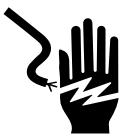
Electrical Shock Hazard
Plug into a grounded 3 prong outlet.
Do not remove ground prong.
Do not use an adapter.
Do not use an extension cord.
Failure to follow these instructions can result in death, fire, or electrical shock.
■ Power cord unplugged? Plug into a grounded 3 prong outlet.
■ Is outlet working? Plug in a lamp to see if the outlet is working.
■ Household fuse blown or circuit breaker tripped? Replace the fuse or reset the circuit breaker. If the problem continues, call an electrician.
■ Are controls on? Make sure the refrigerator controls are on. See “Using the Control(s).”
■ New installation? Allow 24 hours following installation for the refrigerator to cool completely.
NOTE: Adjusting the temperature controls to coldest setting will not cool either compartment more quickly.
The motor seems to run too much
Your new refrigerator may run longer than your old one due to its high-efficiency compressor and fans. The unit may run even longer if the room is warm, a large food load is added, doors are opened often, or if the doors have been left open.
The refrigerator seems noisy
Refrigerator noise has been reduced over the years. Due to this reduction, you may hear intermittent noises from your new refrigerator that you did not notice from your old model. Below are listed some normal sounds with explanations.
■ Buzzing - heard when the water valve opens to fill the ice maker
■ Pulsating - fans/compressor adjusting to optimize performance
■ Hissing/Rattling - flow of refrigerant, movement of water lines, or from items placed on top of the refrigerator
■ Sizzling/Gurgling - water dripping on the heater during defrost cycle
■ Popping - contraction/expansion of inside walls, especially during initial cool-down
■ Water running - may be heard when ice melts during the defrost cycle and water runs into the drain pan
■ Creaking/Cracking - occurs as ice is being ejected from the ice maker mold.
The doors will not close completely
■ Door blocked open? Move food packages away from door.
■ Bin or shelf in the way? Push bin or shelf back into the correct position.
The doors are difficult to open
WARNING
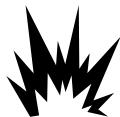
Explosion Hazard
Use nonflammable cleaner.
Failure to do so can result in death, explosion, or fire.
■ Gaskets dirty or sticky? Clean gaskets and contact surfaces with mild soap and warm water. Rinse and dry with soft cloth.
Temperature and Moisture
Temperature is too warm
■ New installation? Allow 24 hours following installation for the refrigerator to cool completely.
■ Door(s) opened often or left open? Allows warm air to enter refrigerator. Minimize door openings and keep doors fully closed.
■ Large load of food added? Allow several hours for refrigerator to return to normal temperature.
■ Controls set correctly for the surrounding conditions?
Adjust the controls a setting colder. Check temperature in 24 hours. See “Using the Control(s).”
Temperature is too cold in refrigerator
■ Refrigerator air vent blocked? If the air vent located in the top, left, rear corner of the refrigerator compartment is blocked by items placed directly in front of it, the refrigerator will get too cold. Move items away from the air vent.
■ Ice storage bin in correct position? See “Ice Maker and Ice Storage Bin.”
■ Controls set correctly for the surrounding conditions?
Adjust the controls a setting warmer. Check temperature in 24 hours. See “Using the Control(s).”
There is interior moisture buildup
NOTE: Some moisture buildup is normal.
■ Humid room? Contributes to moisture buildup.
■ Door(s) opened often or left open? Allows humid air to enter refrigerator. Minimize door openings and keep doors fully closed.
Ice and Water
The ice maker is not producing ice or not enough ice
■ Refrigerator connected to a water supply and the supply shutoff valve turned on? Connect refrigerator to water supply and turn water shutoff valve fully open.
■ Kink in the water source line? A kink in the line can reduce water flow. Straighten the water source line.
■ Ice maker turned on? Make sure ice maker is on. See “Ice Maker and Ice Storage Bin.”
■ New installation? Wait 24 hours after ice maker installation for ice production to begin. Wait 72 hours for full ice production.
■ Refrigerator door closed completely? Close the door firmly. If it does not close completely, see “The doors will not close completely.”
■ Large amount of ice recently removed? Allow 24 hours for ice maker to produce more ice.
■ Ice cube jammed in the ice maker ejector arm? Remove ice from the ejector arm with a plastic utensil.
■ Water filter installed on the refrigerator? Remove filter and operate ice maker. If ice volume improves, then the filter may be clogged or incorrectly installed. Replace filter or reinstall it correctly.
■ Reverse osmosis water filtration system connected to your cold water supply? This can decrease water pressure. See “Water Supply Requirements.”
The ice cubes are hollow or small
NOTE: This is an indication of low water pressure.
■ Water shutoff valve not fully open? Turn the water shutoff valve fully open.
■ Kink in the water source line? A kink in the line can reduce water flow. Straighten the water source line.
■ Water filter installed on the refrigerator? Remove filter and operate ice maker. If ice quality improves, then the filter may be clogged or incorrectly installed. Replace filter or reinstall it correctly.
■ Reverse osmosis water filtration system connected to your cold water supply? This can decrease water pressure. See “Water Supply Requirements.”
■ Questions remain regarding water pressure? Call a licensed, qualified plumber.
Off-taste, odor or gray color in the ice
■ New plumbing connections? New plumbing connections can cause discolored or off-flavored ice.
■ Ice stored too long? Discard ice. Wash ice bin. Allow 24 hours for ice maker to make new ice.
■ Odor transfer from food? Use airtight, moisture proof packaging to store food.
■ Are there minerals (such as sulfur) in the water? A water filter may need to be installed to remove the minerals.
■ Water filter installed on the refrigerator? Gray or dark discoloration in ice indicates that the water filtration system needs additional flushing. Flush the water system before using a new water filter. Replace water filter when indicated. See “Water Filtration System.”
The water and ice dispenser will not operate properly
■ Refrigerator connected to a water supply and the supply shutoff valve turned on? Connect refrigerator to water supply and turn water shutoff valve fully open.
■ Kink in the water source line? Straighten the water source line.
■ New installation? Flush and fill the water system. See “Water and Ice Dispensers.”
Is the water pressure at least 35 psi (241 kPa)? The water pressure to the home determines the flow from the dispenser. See “Water Supply Requirements.”
■ Water filter installed on the refrigerator? Remove filter and operate dispenser. If water flow increases, the filter may be clogged or incorrectly installed. Replace filter or reinstall it correctly.
■ Refrigerator door closed completely? Close the door firmly. If it does not close completely, see “The doors will not close completely.”
■ Recently removed the doors? Make sure the water dispenser wire/tube assembly has been properly reconnected at the top of the refrigerator door. See “Refrigerator Doors and Drawer.”
■ Reverse osmosis water filtration system connected to your cold water supply? This can decrease water pressure. See “Water Supply Requirements.”
Water is leaking from the dispenser system
NOTE: One or two drops of water after dispensing is normal.
■ Glass not being held under the dispenser long enough? Hold the glass under the dispenser 2 to 3 seconds after releasing the dispenser lever.
■ New installation? Flush the water system. See “Water and Ice Dispensers.”
■ Recently changed water filter? Flush the water system. See "Water and Ice Dispensers."
Water from the dispenser is warm
NOTE: Water from the dispenser is only chilled to 50^ F ( 10^ C).
■ New installation? Allow 24 hours after installation for the water supply to cool completely.
■ Recently dispensed large amount of water? Allow 24 hours for water supply to cool completely.
■ Water not been recently dispensed? The first glass of water may not be cool. Discard the first glass of water.
■ Refrigerator connected to a cold water pipe? Make sure the refrigerator is connected to a cold water pipe. See “Water Supply Requirements.”
WATER FILTER CERTIFICATIONS
State of California
Department of Public Health
Water Treatment Device
Certificate Number
09 - 1979
Date Issued: May 8, 2009
Date Revised: 6/22/2010
Trademark/Model Designation
UKF8001AXX-200
Kenmore 46 9006-200
Replacement Elements
UKF8001
46 9006
Manufacturer: 3M Purification
The water treatment device(s) listed on this certificate have met the testing requirements pursuant to Section 116830 of the Health and Safety Code for the following health related contaminants:
Microbiological Contaminants and Turbidity
Cvsts
Turbidity
Inorganic/Radiological Contaminants
Asbestos
Lead
Mercury
Organic Contaminants
Atrazine
Benzene
Carbofuran
Chlorobenzene
Endrin
Ethylbenzene
Lindane
More Organic Contaminants
o-dichlorobenzene
p-dichlorobenzene
Tetrachloroethylene
Toxaphene
2.4-D
Rated Service Capacity: 200 gal
Rated Service Flow: 0.55 gpm
Conditions of Certification:
Do not use where water is microbiologically unsafe or with water of unknown quality, except that systems certified for cyst reduction may be used on disinfected waters that may contain filterable cysts.
PERFORMANCE DATA SHEET
Interior Water Filtration System
Model UKF8001AXX-200 Capacity 200 Gallons (757 Liters)

System tested and certified by NSF International against NSF/ANSI Standard 42 for the reduction of Chlorine Taste and Odor, Particulate Class I*; and against NSF/ANSI Standard 53 for the reduction of Lead, Mercury, Atrazine, Benzene, p-Dichlorobenzene, Carbofuran, Toxaphene, Cysts, Turbidity, Asbestos, O-Dichlorobenzene, Ethylbenzene, Chlorobenzene, Endrin, Tetrachloroethylene and Lindane.
This system has been tested according to NSF/ANSI Standards 42 and 53 for the reduction of the substances listed below. The concentration of the indicated substances in water entering the system was reduced to a concentration less than or equal to the permissible limit for water leaving the system, as specified in NSF/ANSI Standards 42 and 53.
| Substance Reduction Aesthetic Effects | NSF Reduction Requirements | Average Influent | Influent Challenge Concentration | Maximum Effluent | Average Effluent | Minimum% Reduction | Average% Reduction |
| Chlorine Taste/Odor Particulate Class I* | 50% reduction85% reduction | 2.00 mg/L14,000,000 #/mL | 2.0 mg/L ± 10%At least 10,000 particles/mL | 0.06 mg/L370,000 #/mL** | 0.050625 mg/L196,666 #/mL | 97.00%97.40% | 97.52%99.00% |
| Contaminant Reduction | NSF Reduction Requirements | Average Influent | Influent Challenge Concentration | Maximum Effluent | Average Effluent | Minimum% Reduction | Average% Reduction |
| Lead: @ pH 6.5Lead: @ pH 8.5 | 0.010 mg/L0.010 mg/L | 0.150 mg/L†0.150 mg/L† | 0.15 mg/L ± 10%0.15 mg/L ± 10% | < 0.001 mg/L< 0.001 mg/L | < 0.001 mg/L< 0.001 mg/L | >99.30%>99.30% | >99.30%>99.30% |
| Mercury: @ pH 6.5Mercury: @ pH 8.5 | 0.002 mg/L0.002 mg/L | 0.006 mg/L0.0059 mg/L | 0.006 mg/L ± 10%0.006 mg/L ± 10% | 0.0005 mg/L0.0018 mg/L | 0.0003 mg/L0.00073 mg/L | 91.70%69.20% | 95.00%88.10% |
| Benzene | 0.005 mg/L | 0.0133 mg/L | 0.015 mg/L ± 10% | 0.0005 mg/L | 0.0005 mg/L | 96.10% | 96.30% |
| p-Dichlorobenzene | 0.075 mg/L | 0.210 mg/L | 0.225 mg/L ± 10% | < 0.0005 mg/L | < 0.0005 mg/L | >99.80% | >99.80% |
| Carbofuran | 0.040 mg/L | 0.0753 mg/L | 0.08 mg/L ± 10% | 0.027 mg/L | 0.008 mg/L | 64.60% | 73.45% |
| Toxaphene | 0.003 mg/L | 0.015 mg/L | 0.015 ± 10% | < 0.001 mg/L | < 0.001 mg/L | >93.3% | >93.3% |
| Atrazine | 0.003 mg/L | 0.0102 mg/L | 0.009 mg/L ± 10% | 0.0027 mg/L | 0.00105 mg/L | 76.30% | 89.40% |
| Asbestos | >99% | 126.5 MF/L | 10^7 to 10^8 fibers/ L^+ | < 0.17 MF/L | < 0.17 MF/L | >99.99% | >99.99% |
| Live Cysts†Turbidity | >99.95%0.5 NTU | 122,500 #/L10.5 NTU | 50,000/L min.11 ± 1 NTU | < 1 #/L‡0.30 NTU | < 1 #/L‡0.125 NTU | >99.99%97.30% | >99.99%98.80% |
| Lindane | 0.0002 mg/L | 0.0019 mg/L | 0.002 ± 10% | < 0.00016 mg/L | 0.000035 mg/L | 91.80% | 97.90% |
| Tetrachloroethylene | 0.005 mg/L | 0.015 mg/L | 0.015 mg/L ± 10% | < 0.0005 mg/L | < 0.0005 mg/L | >96.6% | >96.6% |
| O-Dichlorobenzene | 0.6 mg/L | 1.7 mg/L | 1.8 mg/L ± 10% | < 0.5 mg/L | < 0.5 mg/L | >99.9% | >99.9% |
| Ethylbenzene | 0.7 mg/L | 2.2 mg/L | 2.1 mg/L ± 10% | 0.0048 mg/L | 0.11 mg/L | 99.80% | 99.90% |
| Chlorobenzene | 0.1 mg/L | 2.0 mg/L | 2.0 mg/L ± 10% | 0.0038 mg/L | 0.0008 mg/L | 99.80% | 99.90% |
| Endrin | 0.002 mg/L | 0.007 mg/L | 0.006 mg/L ± 10% | 0.0004 mg/L | 0.0002 mg/L | 94.30% | 96.80% |
Test Parameters: pH = 7.5 ± 0.5 unless otherwise noted. Flow = 0.55 gpm (2.08 Lpm). Pressure = 60 psig (413.7 kPa). Temp. = 68°F ± 5°F (20°C ± 3°C).
It is essential that operational, maintenance, and filter replacement requirements be carried out for the product to perform as advertised.
■ The disposable water filter should be replaced at least every 6 months.
The filter monitor system measures the amount of water that passes through the filter and alerts you to replace the filter. When 90% of the filter's rated life is used, the yellow (Order) light comes on. When 100% of the filter's rated life is used, the red (Replace) light comes on, and it is recommended that you replace the filter. For models without filter status lights, replace the filter every 6 months. Use replacement filter model UKF8001AXX-200. 2010 suggested retail price of \44.99 U.S.A./\49.95 Canada. Prices are subject to change without notice.
■ The product is for cold water use only.
■ Do not use with water that is microbiologically unsafe or of unknown quality without adequate disinfection before or after the system. Systems certified for cyst reduction may be used on disinfected waters that may contain filterable cysts.
■ Refer to the “Water Filtration System” section for the Manufacturer’s name and telephone number.
■ Refer to the “Warranty” section for the Manufacturer’s limited warranty.
Application Guidelines/Water Supply Parameters
| Water Supply | City or Well |
| Water Pressure | 35 - 120 psi (241 - 827 kPa) |
| Water Temperature | 33° - 100°F (1° - 38°C) |
| Service Flow Rate | 0.55 gpm (2.08 L/min.) @ 60 psi |
natural_image
Technical line drawing of a cylindrical mechanical component with three protruding slots (no text or symbols)*Class I particle size: >0.5 to <1 um
**Test requirement is at least 100,000 particles/mL of AC Fine Test Dust.
^† These contaminants are not necessarily in your water supply. Performance may vary based on local water conditions.
^++ Fibers greater than 10 um in length
^ Based on the use of Cryptosporidium parvum oocysts
® NSF is a registered trademark of NSF International.
WHIRLPOOL CORPORATION MAJOR APPLIANCE WARRANTY
LIMITED WARRANTY
For one year from the date of purchase, when this major appliance is operated and maintained according to instructions attached to or furnished with the product, Whirlpool Corporation or Whirlpool Canada LP (hereafter “Whirlpool”) will pay for Factory Specified Parts and repair labor to correct defects in materials or workmanship that existed when this major appliance was purchased. Service must be provided by a Whirlpool designated service company. YOUR SOLE AND EXCLUSIVE REMEDY UNDER THIS LIMITED WARRANTY SHALL BE PRODUCT REPAIR AS PROVIDED HEREIN. This limited warranty is valid only in the United States or Canada and applies only when the major appliance is used in the country in which it was purchased. Proof of original purchase date is required to obtain service under this limited warranty.
ITEMS EXCLUDED FROM WARRANTY
This limited warranty does not cover:
- Replacement parts or repair labor if this major appliance is used for other than normal, single-family household use or when it is used in a manner that is inconsistent to published user or operator instructions and/or installation instructions.
- Service calls to correct the installation of your major appliance, to instruct you on how to use your major appliance, to replace or repair house fuses, or to correct house wiring or plumbing.
- Service calls to repair or replace appliance light bulbs, air filters or water filters. Consumable parts are excluded from warranty coverage.
- Damage resulting from accident, alteration, misuse, abuse, fire, flood, acts of God, improper installation, installation not in accordance with electrical or plumbing codes, or use of products not approved by Whirlpool.
- Cosmetic damage, including scratches, dents, chips or other damage to the finish of your major appliance, unless such damage results from defects in materials or workmanship and is reported to Whirlpool within 30 days from the date of purchase.
- Any food or medicine loss due to refrigerator or freezer product failures.
- Pickup and delivery. This major appliance is intended to be repaired in your home.
- Repairs to parts or systems resulting from unauthorized modifications made to the appliance.
- Expenses for travel and transportation for product service if your major appliance is located in a remote area where service by an authorized Whirlpool servicer is not available.
- The removal and reinstallation of your major appliance if it is installed in an inaccessible location or is not installed in accordance with Whirlpool's published installation instructions.
- Replacement parts or repair labor on major appliances with original model/serial numbers that have been removed, altered or cannot be easily determined.
- Discoloration, rust, or oxidation of stainless steel surfaces.
DISCLAIMER OF IMPLIED WARRANTIES
IMPLIED WARRANTIES, INCLUDING ANY IMPLIED WARRANTY OF MERCHANTABILITY OR IMPLIED WARRANTY OF FITNESS FOR A PARTICULAR PURPOSE, ARE LIMITED TO ONE YEAR OR THE SHORTEST PERIOD ALLOWED BY LAW. Some states and provinces do not allow limitations on the duration of implied warranties of merchantability or fitness, so this limitation may not apply to you. This warranty gives you specific legal rights, and you also may have other rights that vary from state to state or province to province.
LIMITATION OF REMEDIES; EXCLUSION OF INCIDENTAL AND CONSEQUENTIAL DAMAGES
YOUR SOLE AND EXCLUSIVE REMEDY UNDER THIS LIMITED WARRANTY SHALL BE PRODUCT REPAIR AS PROVIDED HEREIN. WHIRLPOOL SHALL NOT BE LIABLE FOR INCIDENTAL OR CONSEQUENTIAL DAMAGES. Some states and provinces do not allow the exclusion or limitation of incidental or consequential damages, so these limitations and exclusions may not apply to you. This warranty gives you specific legal rights, and you also may have other rights that vary from state to state or province to province.
If outside the 50 United States and Canada, contact your authorized Whirlpool dealer to determine if another warranty applies. 6/08
For additional product information, in the U.S.A., visit www.whirlpool.com In Canada, visit www.whirlpool.ca
If you do not have access to the Internet and you need assistance using your product or you would like to schedule service, you may contact Whirlpool at the number below.
Have your complete model number ready. You can find your model number and serial number on the label, located on the inside wall of the refrigerator compartment.
For assistance or service in the U.S.A., call 1-800-253-1301. In Canada, call 1-800-807-6777.
If you need further assistance, you can write to Whirlpool with any questions or concerns at the address below:
In the U.S.A.:
Whirlpool Brand Home Appliances
Customer eXperience Center
553 Benson Road
Benton Harbor, MI 49022-2692
In Canada:
Whirlpool Brand Home Appliances
Customer eXperience Centre
200 - 6750 Century Ave.
Mississauga, Ontario L5N 0B7
Please include a daytime phone number in your correspondence.
Please keep these User Instructions and the model number information for future reference.
natural_image
Line drawing of a cabinet with open doors and shelves (no text or symbols)natural_image
Line drawing of two hands holding a corrugated metal object (no text or symbols)natural_image
Technical line drawing of a mechanical assembly with labeled component A (no text or symbols beyond label)natural_image
Technical line drawing of a mechanical assembly with an inset showing a detail of a component (no text or symbols present)natural_image
Technical line drawing of a mechanical assembly with internal components and labeled section A (no text or symbols beyond label)A. Pantalla
Selección de idioma
natural_image
Line drawing of a hand inserting a buffer into a digital device (no text or symbols)natural_image
Technical line drawing of a cylindrical mechanical component with flanges and a circular end (no text or symbols)Customer eXperience Centre
200 - 6750 Century Ave.
Mississauga, Ontario L5N 0B7
natural_image
Line drawing of a cabinet with multiple drawers and shelves (no text or symbols)INSTRUCTIONS D'INSTALLATION
natural_image
Line drawing of two hands holding a coiled spring or tube on a surface (no text or symbols)natural_image
Mechanical assembly diagram showing a bolted joint with threaded shaft and mounting bracket (no text or symbols)natural_image
Technical line drawing of a mechanical bracket assembly with an upward arrow indicating direction (no text or symbols)natural_image
Technical line drawing of a mechanical assembly with no visible text or symbols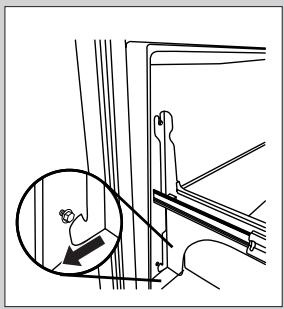
natural_image
Technical line drawing of a mechanical assembly with an inset showing a person interacting with a bracket (no text or symbols present)UTILISATION DU RÉFRIGÉRATEUR
natural_image
Technical line drawing of a door with internal structure and labeled point A (no text or symbols beyond label)natural_image
Line drawing of a hand inserting a buffer into a tray (no text or symbols)natural_image
Technical line drawing of a cylindrical mechanical component with three protruding slots (no text or symbols)GARANTIE DE GROS APPAREIL MÉNAGER WHIRLPOOL CORPORATION
GARANTIE LIMITÉE
© 2010 Whirlpool Corporation.
All rights reserved.