
A-MSR9000 - Router HP - Free user manual and instructions
Find the device manual for free A-MSR9000 HP in PDF.


| Product Type | Multi-Service Router |
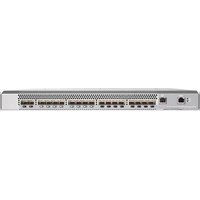
| Brand | HP |
| Model | A-MSR9000 |
| Category | Router |
| Form Factor | Rack-mountable (3U) |
| Dimensions | 440 x 480 x 130 mm (W x D x H) |
| Weight | Approximately 18 kg |
| Power Supply | 100-240 V AC, 50/60 Hz |
| Power Consumption | 150 W typical |
| Interfaces | 4 x Gigabit Ethernet ports, 2 x SFP+ 10G slots, 1 x Console port |
| Routing Protocols | Supports static routing, RIP, OSPF, BGP, and MPLS |
| Security Features | Integrated firewall, IPsec/SSL VPN, ACL filtering, and DDoS protection |
| Management | Web-based GUI, CLI, SNMP, and remote management |
| Cooling | Internal fan with variable speed control |
| Operating Temperature | 0°C to 45°C |
| Certifications | CE, FCC, UL, RoHS |
| Package Contents | HP A-MSR9000, power cable, rack mount kit, quick start guide |
| Warranty | 1-year limited hardware warranty |
| Maintenance and Cleaning | Use a soft dry cloth to clean the exterior. Avoid liquid cleaners. |
| Safety | Follow ESD precautions; disconnect power before servicing. |
| Spare Parts and Repairability | Replacement parts available through HP; modular design for easy repair. |
| General Information | Designed for enterprise branch offices and service provider edge deployments. |
Frequently Asked Questions - A-MSR9000 HP
User questions about A-MSR9000 HP
0 question about this device. Answer the ones you know or ask your own.
Ask a new question about this device
Download the instructions for your Router in PDF format for free! Find your manual A-MSR9000 - HP and take your electronic device back in hand. On this page are published all the documents necessary for the use of your device. A-MSR9000 by HP.
USER MANUAL A-MSR9000 HP
Key featuresKey features
- WAN, LAN, wireless, and firewall all in one box
- Integrated 2 Fast Ethernet WAN, 4/8 LAN on board
• Support for 11b/g and 3G access - Embedded encryption, firewall, security feature
• Unified and ease management
Product overviewProduct overview
Featuring advanced software and an industry-leading hardware platform, the HP A-MSR 900 Series Multi-Service routers with IEE 802.11b/g provide enhanced performance, security, and reliability for enterprise networks. The perfect appliance for delivering converged network solutions, including data, voice and video, IPv6 support, and robust quality of service (QoS), help ensure that these routers can not only handle the enterprise networking applications of today, but future connectivity and capacity demands well. Additionally, a standards-based design provides complete interoperability in multivendor environments.
Features and benefits Features and benefits
Quality of Service Quality of Service
- Traffic policing Supports Committed Access Rate (CAR) and line rate
- Congestion management Congestion FIF and Management, WFQ, CBQ, and RTPQ
- Congestion avoidance CoeigestionRavdianEarly Detection (WRED)/RED
- Other QoS technologiesSuperQoSfftechnologiesFR QoS, MPLS QoS, and MP QoS/LFI
Management Management
- Industry-standard CLI with a hierarchical structure: industry-standard m€Land/texpenses, arhinal increases, reproductivity in multivendor installations
- Management security measures, with password protection, restrict access to critical configuration commands; ACLs provide telnet and SNMP access; local and remote syslog capability allow logging of all access
- SNMPv1, v2, and v3SNMPv1 contains support of SNMP; SNMPv3 supports increased security using encryption; provide full support of industry-standard MIBs plus private MIB extensions
- Remote monitoring(RMON)monitor standard SNMP to monitor essential network functions; supports events, alarm, history, air statistics group plus a private alarm extension group
- FTP, TFTP, and SFTP supportFTP, Transfer and SFTP Path post-directional transfers over a TCP/IP network and is used for configuration updates; Trivial FTP is a simpler method using UDP
- Debug and sampler utility Dppogtsapingsampleracetiyote for both IPv4 and IPv6
- NetworkkTimeProtod(NTP): synchronizes timekeeping among distributed time servers and clients; keeps consistent timekeeping among all clock-dependent devices within the network so that the devices can provide diverse applications based on the consistent time
- Info center provides a central information center for system and network information; aggregates all logs, traps, and
Overview
debugging information generated by the system and maintains them in order of severity; outputs the network information t multiple channels based on user-defined rules
- Network Quality Analyzer Network Quality Analyzer performance and service quality by sending test packets, and provides network performance and service quality parameters such as jitter, TCP, or FTP connection delays; allows network manage determine overall network performance and diagnose and locate network congestion points or failures
ConnectivityConnectivity
- Packet storm protection: Packet's attack to protect the dust, multicast, or unicast storms with user-defined thresholds
- LoopbackLoopsocks internal loopback testing for maintenance purposes and an increase in availability; loopback detection protects against incorrect cabling or network configurations and can be enabled on a per-port or per-VLAN basis for add flexibility
- 3G access support3G access support 3G module for high reliability; supports popular USB 3G modem
PerformancePerformance
- Excellent forwarding performance Exclides forwarding performance up to 100 Kpps; meets today's and future bandwidth-intensive application demands for enterprise businesses
- Embedded encryption supported up to 20% VPN tunnels and 8 Mbps encryption throughput
Resiliency and high availability Resiliency and high availability
- Virtual Router Redundancy Protocol (VRPP) Blower Redundancy Protocol dynamically back each other up to create highly available routed environments
- Backup CentreBackupCentre part of the management and backup function to provide backup for interfaces on your device delivers reliability by switching traffic over to a backup interface when the primary one fails
Layer 2 switchingLayer 2 switching
- Spanning TreeSpdly supporting standard IEEE 802.1D Spanning Tree Protocol, IEEE 802.1w Rapid Spanning Tree Protocol faster convergence, and IEEE 802.1s Multiple Spanning Tree Protocol
- IGMP and MLD snoopingGADPveldcovMtB1 snobpingage the flooding of multicast packets in a Layer 2 network
- Port mirroringPouplinatesimport traffic (ingress and egress) to a local or remote monitoring port
- Port isolationPortreaccess Security by isolating ports within a VLAN while still allowing them to communicate with other VLAN
• VLANs: support IEEE 802.1Q-based VLANs
Ldwyer33services
- AddressResolutionProtocol(ARP): determines the MAC address of another IP host in the same subnet; supports static ARP gratuitous ARP allows detection of duplicate IP addresses; proxy ARP allows normal ARP operation between subnets or which subnets are separated by a Layer 2 network
- Dynamic Hosts Configuration Protocol (DHCP): simplifies the management of large IP networks and supports client and server; DHCP Relay enables DHCP operation across subnets
Ldlayer33rootingg
- StaticIPv44 routing provides simple, manually configured IPv4 routing
- Routing Information Protocol(RIP): uses a distance vector algorithm with UDP packets for route determination; supports RIP and RIPv2 routing; includes loop protection
- OSPF: Interior Gateway Protocol (IGP) using link-state protocol for faster convergence; supports ECMP, NSSA, and MD5 authentication for increased security and graceful restart for faster failure recovery
- BodeleG, GeveyaPr, Protocol(BGP-4): Exterior Gateway Protocol (EGP) with path vector protocol uses TCP for enhanced reliability for the route discovery process, reduces bandwidth consumption by advertising only incremental updates, and
Overview
supports extensive policies for increased flexibility, as well as scales to very large networks
- Intermediate system to intermediate system (IS-IS) mediator system to Protocoled (TCP) system path-vector protocol, which is defined by the ISO organization for IS-IS routing and extended by IETF RFC 1195 to operate in both TCP/IP and the O reference model (Integrated IS-IS)
- Static IPv6 routingStandardIPv6 simple, manually configured IPv6 routing
- Dual stackDmaintainstack separate stacks for IPv4 and IPv6 to ease transition from an IPv4-only network to an IPv6-only network design
- Routing Information Protocol next generation(RR)ngexhefodmRtRv2 ProtsupportextPvgendrddessing
- OSPFv3.0xPEnds OSPFv2 to support IPv6 addressing
- BGP+BGPends BGP-4 to support Multiprotocol BGP (MBGP), including support for IPv6 addressing
- IS-IS for IPv6ExtEndor ISPIS6 to support IPv6 addressing
- IPv6 tunnelingIPv6a unimportant element for the transition from IPv4 to IPv6; allows IPv6 packets to traverse IPv4-only network by encapsulating the IPv6 packet into a standard IPv4 packet; supports manually configured, 6to4, and Intra-Site Automati Tunnel Addressing Protocol (ISATAP) tunnels
- Policy routingPallowsroutsham filters for increased performance and security; supports ACLs, IP prefix, AS paths, community lists, and aggregate policies
SecuritySecurity
- Access control list(ACLs supports powerful ACLs for both IPv4 and IPv6; ACLs are used for filtering traffic to prevent illegal users from accessing the network, or for controlling network traffic to save resources; rules can either deny or permit traffic be forwarded; rules can be based on a Layer 2 header or a Layer 3 protocol header; rules can be set to operate on s dates or times
- TACACS+:TACACS authentication tool using TCP with encryption of the full authentication request that provides added secu
- MAC authentication
MAC provides the entire authentication based on a user's MAC address; supports local or RADIUS-based authentication
• Network loginNetmodrdlogEE 802.1x allows authentication of multiple users per port - RADIUSRADIUS security access administration by using a password authentication server
- Network address translation, Network support, and NAT, many-to-many NAT, and NAT control, enabling NAPT to support multiple connections; supports backlist in NAT/NAPT, a limit on the number of connections, session log, and mult instance
- Secure Shell(SSHv2): uses external servers to securely login into a remote device or securely login into MSR from a remote location; with authentication and encryption, it protects against IP spoofing and plain text password interception; increases security of SFTP transfers
- UnicastsReversePathForwarding(URPF): allows normal packets to be forwarded correctly, but discards the attaching packet due to lack of reverse path route or incorrect inbound interface; prevents source spoofing and distributed attacks
Convergence
- InterneheGroup ManagementPrBtoCode(IGMP): is used by IP hosts to establish and maintain multicast groups; supports v1, and v3; utilizes Any-Source Multicast (ASM) or Source-Specific Multicast (SSM) to manage IPv4 multicast networks
- Protocol/Independent Multicast(PIM): is used for IPv4 and IPv6 multicast applications; supports PIM dense mode (PIM-DM) sparse mode (PIM-SM), and source-specific mode (PIM-SSM)
- MultisostosSourceDiscoveryPrBtoColl(MDP): is used for inter-domain multicast applications, allowing multiple PIM-SM domains to interoperate
- MyMultisas BorderG (BegwayaPr) Protocol(BGP): allows multicast traffic to be forwarded across BGP networks, separate from unicast traffic
IntegrationIntegration
- Embedded NetStream local and global server load balancing module improves traffic distribution using powerful scheduling algorithms, including Layer 4 to 7 services; monitors the health status of servers and firewalls
Overview
- Embedded VPN firewall provided on VPN fireswatelful packet inspection and filtering; provides advanced VPN services with Triple DES (3DES) and Advanced Encryption Standard (AES) encryption at high performance and low latency, Web content filtering, and application prioritization and enhancement
Additional information Additional information
- Green initiative supportpredeinitiSupportsuffpRoHS and WEEE regulations
- OPEX savings OPEX savings operating system simplifies and streamlines deployment, management, and training, thereby cutting costs, as well as reducing the chance for human error associated with having to manage multiple operating systems across different platforms and network layers
- Faster time to market Engineering efficientes allow new and custom features to be brought rapidly to the market with bet initial and ongoing stability
Warranty and support Warranty and support
- 1-year warranty wide-trad warranty replacement and 30-calendar-day delivery (available in most countries)
- Electronic and telephone support: United telephlete support is available from HP; refer to: www.hp.com/networking/warranty for details on the support provided and the period during which support is available
- Software releasesSoftwarereleases.com/networking/warranty for details on the software releases provided and the period during which software releases are available for your product(s)
Technical Specifications
HP A-MSR900 Router(HP8A2A)SR900 Router
| PortsPorts | 2 RJ-45 autosensing 10/100 WAN ports (IEEE 802.3 Type 10BASE-T, IEEE 802.3u Type 100BASE-TX), Duplex: half or full4 RJ-45 autosensing 10/100 LAN ports (IEEE 802.3 Type 10BASE-T, IEEE 802.3u Type 100BASE-TX); Duplex: half or full | |
| Physical characteristics | Dispersions | 6.3(d) x 9.06(w) x 1.74(h) in. (16 x 23 x 4.42 cm) |
| Weight | 3.97 lb. (1.8 kg) | |
| Memory and processor | Processor | RISC @ 266 MHz, 256 MB DDR SDRAM, 256 MB flash |
| Performance Performance | Throughput | up to 70 Kpps (64-byte packets) |
| Routing table size | Routing 10000 series | |
| Environment Environment | Operating temperature | Operating temperature (0°C to 45°C)Operating relative Operating % relative humidity |
| Nonoperating/Storage | Operating Temperature (-40°C to 70°C)temperature temperature | |
| Nonoperating/Storage | Operating Temperature relative humidity | |
| Electrical characteristics | Maximum heat dissipation | 20 BTU/hr (21.1 kJ/hr) |
| DC Voltage | 12 V | |
| Maximum power rating | Maximum power rating and maximum heat dissipation are the worst-case theoretical maximum numbers provided for planning the infrastructure with fully loaded PoE (if equipped), 100% traffic, all ports plugged in, and all modules populated. | |
| Safety | UL 60950-1; CAN/CSA 22.2 No. 60950-1; AS/NZS 60950; EN 60825-1 Safety of Laser Products-Pc 1; EN 60825-2 Safety of Laser Products-Part 2; IEC 60950-1; CAN/CSA-C22.2 No. 60950-1-03; EN 60950-1/A11; FDA 21 CFR Subchapter J | |
| Emissions Emissions | ANSI C63.4; EN 55022 Class B; ICES-003 Class B; ETSI EN 300 386 V1.3.3; EN 61000-4-2; EN 61000-4-3; EN 61000-4-4; EN 61000-4-5; EN 61000-4-6; EN 61000-3-2:2006; EN 61000-3-3:1995 +A1:2001+A2:2005; EMC Directive 2004/108/EC; EN 55024:1998+ A1:2001 +A2:2003; EN 61000-4-11:2004; EN 61000-4-8:2001; AS/NZS CISPR22 Class B; FCC (CFR 47, Part 15) Class B | |
| Telecom | FCC part 68 | |
| Management | IMC - Intelligent Management Center; command-line interface; Web browser; SNMP Manager; Telnet; RMON1; FTP; IEEE 802.3 Ethernet MIB | |
| Services | 3-year, parts only, global next-day advance exchange (UY865E)3-year, 4-hour onsite, 13x5 coverage for hardware (UY866E)3-year, 4-hour onsite, 24x7 coverage for hardware (UY869E)3-year, 4-hour onsite, 24x7 coverage for hardware, 24x7 software phone support (UY872E)3-year, 24x7 SW phone support, software updates (UY875E)4-year, 4-hour onsite, 13x5 coverage for hardware (UY867E)4-year, 4-hour onsite, 24x7 coverage for hardware (UY870E)4-year, 4-hour onsite, 24x7 coverage for hardware, 24x7 software phone (UY873E)4-year, 24x7 SW phone support, software updates (UY876E)5-year, 4-hour onsite, 13x5 coverage for hardware (UY868E)5-year, 4-hour onsite, 24x7 coverage for hardware (UY871E) | |
Technical Specifications
5-year, 4-hour onsite, 24x7 coverage for hardware, 24x7 software phone (UY874E)
5-year, 24x7 SW phone support, software updates (UY877E)
3 Yr 6 hr Call-to-Repair Onsite (UY878E)
4 Yr 6 hr Call-to-Repair Onsite (UY879E)
5 Yr 6 hr Call-to-Repair Onsite (UY880E)
Refer to the HP website at www.hp.com/networking/services for details on the service-level descriptions and product numbers. For details about services and response times in your area, please contact your local HP sales office.
Standards and protocols SBGPBCP and protocols
(applies to all products inRFC 1163 Border Gateway Protocol (BGP)
series) RFC 1267 Border Gateway Protocol 3 (BGP-3)
RFC 1657 Definitions of Managed Objects for BGPv4
RFC 1771 BGPv4
RFC 1772 Application of the BGP
RFC 1773 Experience with the BGP-4 Protocol
RFC 1774 BGP-4 Protocol Analysis
RFC 1965 BGP4 confederations
RFC 1997 BGP Communities Attribute
RFC 1998 PPP Gandalf FZA Compression Protoc(6R-LDP)
RFC 2385 BGP Session Protection via TCP MD5RFC 3214 LSP Modification Using CR-LDP
RFC 2439 BGP Route Flap Damping
Device management Device management
RFC 1305 NTPv3
RFC 1945 Hypertext Transfer Protocol -- HTTP/1
RFC 2271 FrameWork
RFC 2452 MIB for TCP6
RFC 2454 MIB for UDP6
General protocols General protocols
IEEE 802.1D MAC Bridges
IEEE 802.1p Priority
IEEE 802.1Q VLANs
IEEE 802.1s Multiple Spanning Trees
IEEE 802.1w Rapid Reconfiguration of Spanning Tree
RFC 768 UDP
RFC 783 TFTP Protocol (revision 2)
RFC 791 IP
RFC 792 ICMP
RFC 793 TCP
RFC 826 ARP
RFC 854 TELNET
RFC 855 Telnet Option Specification
RFC 856 TELNET
RFC 858 Telnet Suppress Go Ahead Option
RFC 894 IP over Ethernet
RFC 925 Multi-LAN Address Resolution
RFC 950 Internet Standard Subnetting Procedure
RFC 3032 MPLS Label Stack Encoding
RFC 3036 LDP Specification
RFC 3046 DHCP Relay Agent Information Option
RFC 3063 MPLS Loop Prevention Mechanism
RFC 3065 Support AS confederation
RFC 3137 OSPF Stub Router Advertisement
RFC 3209 RSVP-TE Extensions to RSVP for LSP
Tunnels
RFC 3210 Applicability Statement for Extensions to
RSVP for LSP-Tunnels
RFC 3212 Constraint-Based LSP setup using LDP
(6)R-LDP)
RFC 3214 LSP Modification Using CR-LDP
RFC 3215 LDP State Machine
RFC 3268 Advanced Encryption Standard (AES)
Ciphersuites for Transport Layer Security (TLS)
RFC 3277 IS-IS Transient Blackhole Avoidance
RFC 3279 Algorithms and Identifiers for the Internet
X.509 Public Key Infrastructure Certificate and
Certificate Revocation List (CRL) Profile
RFC 3280 Internet X.509 Public Key Infrastructure
Certificate and Certificate Revocation List (CRL) Profile
RFC 3392 Support BGP capabilities advertisement
RFC 3526 More Modular Exponential (MODP)
Diffie-Hellman groups for Internet Key Exchange (IKE)
RFC 3564 Requirements for Support of
Differentiated Services-aware MPLS Traffic Engineering
RFC 3602 The AES-CBC Cipher Algorithm and Its
Use with IPsec
RFC 3706 A Traffic-Based Method of Detecting
Dead Internet Key Exchange (IKE) Peers
RFC 3784 ISIS TE support
RFC 3786 Extending the Number of IS-IS LSP
Fragments Beyond the 256 Limit
RFC 3811 Definitions of Textual Conventions (TCs)
for Multiprotocol Label Switching (MPLS)
Management
RFC 3812 Multiprotocol Label Switching (MPLS)
Traffic Engineering (TE) Management Information
Technical Specifications
| RFC 959 File Transfer Protocol (FTP) | Base (MIB) |
| RFC 1006 ISO transport services on top of the Version 3 | RFC:3847 Restart signaling for IS-IS |
| RFC 1027 Proxy ARP | IP multicastIP multicast |
| RFC 1034 Domain Concepts and Facilities | RFC 1112 IGMP |
| RFC 1035 Domain Implementation and Specification | RFC 2236 IGMPv2 |
| RFC 1042 IP Datagrams | RFC 2283 Multiprotocol Extensions for BGP-4 |
| RFC 1058 RIPv1 | RFC 2362 PIM Sparse Mode |
| RFC 1071 Computing the Internet Checksum | RFC 2934 Protocol Independent Multicast MIB for IPv4 |
| RFC 1091 Telnet Terminal-Type Option | RFC 3376 IGMPv3 |
| RFC 1122 Host Requirements | |
| RFC 1141 Incremental updating of the Internet checksum | IPv6IPv6 |
| RFC 1142 OSI IS-IS Intra-domain Routing Protocol | RFC 1981 IPv6 Path MTU Discovery |
| RFC 1144 Compressing TCP/IP headers for low-speed serial links | RFC 2080 RIPng for IPv6 |
| RFC 1195 OSI ISIS for IP and Dual Environment | RFC 2292 Advanced Sockets API for IPv6 |
| RFC 1256 ICMP Router Discovery Protocol (IRD) | RFC 2373 IPv6 Addressing Architecture |
| RFC 1293 Inverse Address Resolution Protocol | RFC 2460 IPv6 Specification |
| RFC 1315 Management Information Base for Configuration | RFC 2461 IPv6 Neighbor Discovery |
| Frame | RFC 2462 IPv6 Stateless Address Auto- |
| Relay DTEs | RFC 2464 Transmission of IPv6 over Ethernet Networks |
| RFC 1332 The PPP Internet Protocol Control | RFC 2472 IP Version 6 over PPP |
| Protocol | RFC 2473 Generic Packet Tunneling in IPv6 |
| (IPCP) | RFC 2529 Transmission of IPv6 Packets over IPv4 |
| RFC 1333 PPP Link Quality Monitoring | RFC 2545 Use of MP-BGP-4 for IPv6 |
| RFC 1334 PPP Authentication Protocols (PAP) | RFC 2553 Basic Socket Interface Extensions for IPv6 |
| RFC 1349 Type of Service | |
| RFC 1350 TFTP Protocol (revision 2) | RFC 2740 OSPFv3 for IPv6 |
| RFC 1377 The PPP OSI Network Layer Control Protocol (OSINLCP) | RFC 2893 Transition Mechanisms for IPv6 Hosts and Routers |
| RFC 1381 SNMP MIB Extension for X.25 LAPB | RFC 3056 Connection of IPv6 Domains via IPv4 |
| RFC 1471 The Definitions of Managed Objects | Clouds |
| the Link Control Protocol of the Point-to-Point Protocol | RFC 3513 IPv6 Addressing Architecture |
| RFC 1472 The Definitions of Managed Objects for the Security Protocols of the Point-to-Point Protocol | RFC 3596 DNS Extension for IPv6 |
| RFC 1490 Multiprotocol Interconnect over Frame | MIBsMIBs |
| Relay | RFC 1213 MIB II |
| RFC 1519 CIDR | RFC 1229 Interface MIB Extensions |
| RFC 1534 DHCP/BOOTP Interoperation | RFC 1286 Bridge MIB |
| RFC 1542 Clarifications and Extensions for the Bootstrap Protocol | RFC 1493 Bridge MIB |
| RFC 1552 The PPP Internetworking Packet Exchange | RFC 1573 SNMP MIB II |
| Control Protocol (IPXCP) | RFC 1724 RIPv2 MIB |
| RFC 1577 Classical IP and ARP over ATM | RFC 1757 Remote Network Monitoring MIB |
| RFC 1613 Cisco Systems X.25 over TCP (XOT) | RFC 1850 OSPFv2 MIB |
| RFC 1624 Incremental Internet Checksum | RFC 2011 SNMPv2 MIB for IP |
| RFC 1631 NAT | RFC 2012 SNMPv2 MIB for TCP |
| RFC 1638 PPP Bridging Control Protocol (BCP) | RFC 2013 SNMPv2 MIB for UDP |
| RFC 2233 Interfaces MIB | |
| RFC 2454 IPv6-UDP-MIB | |
| RFC 2465 IPv6 MIB |
Technical Specifications
| RFC 1661 The Point-to-Point Protocol (PPP) | RFC 2466 ICMPv6 MIB |
| RFC 1662 PPP in HDLC-like Framing | RFC 2618 RADIUS Client MIB |
| RFC 1695 Definitions of Managed Objects for Management Version 8.0 using SMIv2 | RFC 2620 RADIUS Accounting MIB |
| RFC 1701 Generic Routing Encapsulation | RFC 2674 802.1p and IEEE 802.1Q Bridge MIB |
| RFC 1702 Generic Routing Encapsulation over IPv4 | RFC 2737 Entity MIB (Version 2) |
| networks | RFC 2863 The Interfaces Group MIB |
| RFC 1721 RIP-2 Analysis | |
| RFC 1722 RIP-2 Applicability | Network management Network management |
| RFC 1723 RIP v2 | IEEE 802.1D (STP) |
| RFC 1795 Data Link Switching: Switch-to-Switch Protocol AIW DLSw RIG: DLSw Closed Pages, Standard Version 1 | RFC 1155 Structure of Management Information |
| RFC 1812 IPv4 Routing | RFC 1157 SNMPv1 |
| RFC 1829 The ESP DES-CBC Transform | RFC 1905 SNMPv2 Protocol Operations |
| RFC 1877 PPP Internet Protocol Control Protocol | RFC 2272 SNMPv3 Management Protocol |
| Extensions for Name Server Addresses | RFC 2273 SNMPv3 Applications |
| RFC 1944 Benchmarking Methodology for Network Interconnect Devices | RFC 2274 USM for SNMPv3 |
| RFC 1973 PPP in Frame Relay | RFC 2275 VACM for SNMPv3 |
| RFC 1974 PPP Stac LZS Compression Protocol | RFC 2575 SNMPv3 View-based Access Control |
| RFC 1990 The PPP Multilink Protocol (MP) | Model (VACM) |
| RFC 1994 PPP Challenge Handshake | RFC 3164 BSD syslog Protocol |
| Authentication | OSPFOSPF |
| Protocol (CHAP) | RFC 1245 OSPF protocol analysis |
| RFC 2091 Trigger RIP | RFC 1246 Experience with OSPF |
| RFC 2131 DHCP | RFC 1587 OSPF NSSA |
| RFC 2132 DHCP Options and BOOTP Vendor (MIB), traps | RFC 1765 OSPF Database Overflow |
| Extensions | RFC 1850 OSPFv2 Management Information Base |
| RFC 2166 APPN Implementer's Workshop Closed Pages Document DLSw v2.0 Enhancements | RFC 2370 OSPF Opaque LSA Option |
| RFC 2205 Resource ReSerVation Protocol (RSVP) - Version 1 Functional Specification | RFC 3101 OSPF NSSA |
| RFC 2280 Routing Policy Specification Language (RPSL) | RFC 2328 OSPFv2 |
| RFC 2284 EAP over LAN | RFC 2370 OSPF Opaque LSA Option |
| RFC 2338 VRRP | RFC 3101 OSPF NSSA |
| RFC 2364 PPP Over AAL5 | RFC 3168 The Addition of Explicit Congestion |
| RFC 2374 An Aggregatable Global Unicast Address Format | Notification (ECN) to IP |
| RFC 2451 The ESP CBC-Mode Cipher Algorithms | |
| RFC 2453 RIPv2 | Security Security |
| RFC 2510 Internet X.509 Public Key Infrastructure Certificate Management Protocols | RFC 2474 DS Field in the IPv4 and IPv6 Headers |
| RFC 2511 Internet X.509 Certificate Request Message Format | RFC 2475 DiffServ Architecture |
| RFC 2516 A Method for Transmitting PPP Over Ethernet (PPPoE) | RFC 2597 DiffServ Assured Forwarding (AF) |
| RFC 2644 Directed Broadcast Control | RFC 2598 DiffServ Expedited Forwarding (EF) |
| RFC 2661 L2TP | RFC 3168 The Addition of Explicit Congestion |
| RFC 2663 NAT Terminology and Considerations | RFC 2104 Keyed-Hashing for Message |
Technical Specifications
| RFC 2684 | Multiprotocol Encapsulation over ATM | RFC 2865 | RADIUS Authentication |
| Adaptation | Layer 5 | RFC 2866 | RADIUS Accounting |
| RFC 2694 | DNS extensions to Network Address | RFC 3567 | Intermediate System (IS) to IS |
| Translators | (DNS_ALG) | Cryptographic | Authentication |
| RFC 2702 | Requirements for Traffic Engineering | ||
| Over MPLS | VPNVPN | ||
| RFC 2747 | RSVP Cryptographic Authentication | RFC 2403 | - HMAC-MD5-96 |
| RFC 2763 | Dynamic Name-to-System ID mapping | RFC 2404 | - HMAC-SHA1-96 |
| support | RFC 2405 | - DES-CBC Cipher algorithm | |
| RFC 2765 | Stateless IP/ICMP Translation Algorithm | RFC 2547 | BGP/MPLS VPNs |
| (SIIT) | RFC 2796 | BGP Route Reflection - An Alternative to | |
| RFC 2766 | Network Address Translation - Protocol | Full Mesh | IBGP |
| Translation | (NAT-PT) | RFC 2842 | Capabilities Advertisement with BGP-4 |
| RFC 2784 | Generic Routing Encapsulation (GRE) | RFC 2858 | Multiprotocol Extensions for BGP-4 |
| RFC 2787 | Definitions of Managed Objects for VRRP | RFC 2918 | Route Refresh Capability for BGP-4 |
| RFC 3107 | Carrying Label Information in BGP-4 | ||
| RFC 2961 | RSVP Refresh Overhead Reduction | ||
| Extensions | IPsecIPsec | ||
| RFC 2966 | Domain-wide Prefix Distribution with Two-Level IS-IS | RFC 1828 | IP Authentication using Keyed MD5 |
| RFC 2401 | IP Security Architecture | ||
| RFC 2973 | IS-IS Mesh Groups | RFC 2402 | IP Authentication Header |
| RFC 2993 | Architectural Implications of NAT | RFC 2406 | IP Encapsulating Security Payload |
| RFC 3022 | Traditional IP Network Address Translator (Traditional NAT) | RFC 2407 | - Domain of interpretation |
| RFC 2410 | - The NULL Encryption Algorithm and its use with IPsec | ||
| RFC 3027 | Protocol Complications with the IP Network Address Translator | RFC 2411 | IP Security Document Roadmap |
| RFC 3031 | Multiprotocol Label Switching Architecture | RFC 2412 | - OAKLEY |
| RFC 2865 | - Remote Authentication Dial In User Service (RADIUS) |
HP A-MSR920 Router(11P8A3A)SR920 Router
| PortsPorts | 2 RJ-45 autosensing 10/100 WAN ports (IEEE 802.3 Type 10BASE-T, IEEE 802.3u Type 100BASE-TX)Duplex: half or full8 RJ-45 autosensing 10/100 LAN ports (IEEE 802.3 Type 10BASE-T, IEEE 802.3u Type 100BASE-TX);Duplex: half or full |
| Physical characteristics | Dimensions Dimensions 6.3(d) x 9.06(w) x 1.74(h) in. (16 x 23 x 4.42 cm)Weight Weight 3.97 lb. (1.8 kg) |
| Memory and processor | Processor Processor RISC @ 333 MHz, 256 MB DDR SDRAM, 256 MB flash |
| Performance Performance | Throughput Throughput up to 100 Kpps (64-byte packets)Routing table sizeRouting 10000 sizeries |
| Environment Environment | Operating temperature Operating temperature (0°C to 45°C)Operating relative operating relative humidity humidityNonoperating/Storage Nonoperating/Storage -40°C to 70°C)temperatureNonoperating/Storage Nonoperating relative humidity |
| Electrical characteristics | Maximum throughput 29 BTU/hr (30.6 kJ/hr) |
Technical Specifications
| DC VoltageDC Voltage 12 VMaximum power ratingMax5mWm power ratingNotesNotes Maximum power rating and maximum heat dissipation are the worst-case theoretical maximum numbers provided for planning the infrastructure with fully loaded PoE (if equipped), 100% traffic, all ports plugged in, and all modules populated. | ||
| SafetySafety | UL 60950-1; CAN/CSA 22.2 No. 60950-1; AS/NZS 60950; EN 60825-1 Safety of Laser Products-Pc 1; EN 60825-2 Safety of Laser Products-Part 2; IEC 60950-1; CAN/CSA-C22.2 No. 60950-1-03; EN 60950-1/A11; FDA 21 CFR Subchapter J | |
| EmissionsEmissions | ANSI C63.4; EN 55022 Class B; ICES-003 Class B; ETSI EN 300 386 V1.3.3; EN 61000-4-2; EN 61000-4-3; EN 61000-4-4; EN 61000-4-5; EN 61000-4-6; EN 61000-3-2:2006; EN 61000-3-3:1995 +A1:2001+A2:2005; EMC Directive 2004/108/EC; EN 55024:1998+ A1:2001 + A2:2003; EN 61000-4-11:2004; EN 61000-4-8:2001; AS/NZS CISPR22 Class B; FCC (CFR 47, Part 15) Class B | |
| TelecomTelecom | FCC part 68 | |
| ManagementManagement | IMC - Intelligent Management Center; command-line interface; Web browser; SNMP Manager; Telnet; RMON1; FTP; IEEE 802.3 Ethernet MIB | |
| ServicesServices | 3-year, parts only, global next-day advance exchange (UY881E)3-year, 4-hour onsite, 13x5 coverage for hardware (UY882E)3-year, 4-hour onsite, 24x7 coverage for hardware (UY885E)3-year, 4-hour onsite, 24x7 coverage for hardware, 24x7 software phone support (UY888E)3-year, 24x7 SW phone support, software updates (UY891E)4-year, 4-hour onsite, 13x5 coverage for hardware (UY883E)4-year, 4-hour onsite, 24x7 coverage for hardware (UY886E)4-year, 4-hour onsite, 24x7 coverage for hardware, 24x7 software phone (UY889E)4-year, 24x7 SW phone support, software updates (UY892E)5-year, 4-hour onsite, 13x5 coverage for hardware (UY884E)5-year, 4-hour onsite, 24x7 coverage for hardware (UY887E)5-year, 4-hour onsite, 24x7 coverage for hardware, 24x7 software phone (UY890E)5-year, 24x7 SW phone support, software updates (UY893E)3 Yr 6 hr Call-to-Repair Onsite (UY894E)4 Yr 6 hr Call-to-Repair Onsite (UY895E)5 Yr 6 hr Call-to-Repair Onsite (UY896E)Refer to the HP website www.hp.com/networking/services for details on the service-level descriptions and product numbers. For details about services and response times in your area, please contact your local HP sales office. | |
| Standards and protocols | BGPv4 and protocols RFC 1163 Border Gateway Protocol (BGP) RFC 1267 Border Gateway Protocol 3 (BGP-3) RFC 1657 Definitions of Managed Objects for BGPv4 RFC 1771 BGPv4 RFC 1772 Application of the BGP RFC 1773 Experience with the BGP-4 Protocol Tunnels RFC 1774 BGP-4 Protocol Analysis RFC 1965 BGP4 confederations RFC 1997 BGP Communities Attribute RFC 1998 PPP Gandalf FZA Compression Protoc(GR-LDP) | RFC 3032 MPLS Label Stack Encoding RFC 3036 LDP Specification RFC 3046 DHCP Relay Agent Information Option RFC 3063 MPLS Loop Prevention Mechanism RFC 3065 Support AS confederation RFC 3137 OSPF Stub Router Advertisement RFC 3209 RSVP-TE Extensions to RSVP for LSP Tunnels RFC 3210 Applicability Statement for Extensions to RSVP for LSP-Tunnels RFC 3212 Constraint-Based LSP setup using LDP |
Technical Specifications
| RFC 2385 BGP Session Protection via TCP MD | RFC 3214 LSP Modification Using CR-LDP |
| RFC 2439 BGP Route Flap Damping | RFC 3215 LDP State MachineRFC 3268 Advanced Encryption Standard (AES) |
| Device managementDevice management | Ciphersuites for Transport Layer Security (TLS) |
| RFC 1305 NTPv3 | RFC 3277 IS-IS Transient Blackhole Avoidance |
| RFC 1945 Hypertext Transfer Protocol -- HTTP/1 | RFC 3279 Algorithms and Identifiers for the Internet |
| RFC 2271 FrameWork | X.509 Public Key Infrastructure Certificate andCertificate Revocation List (CRL) Profile |
| RFC 2452 MIB for TCP6 | RFC 3280 Internet X.509 Public Key InfrastructureCertificate and Certificate Revocation List (CRL) |
| RFC 2454 MIB for UDP6 | |
| General protocolsGeneral protocols | Profile |
| IEEE 802.1D MAC Bridges | RFC 3392 Support BGP capabilities advertisement |
| IEEE 802.1p Priority | RFC 3526 More Modular Exponential (MODP) |
| IEEE 802.1Q VLANs | Diffie-Hellman groups for Internet Key Exchange |
| IEEE 802.1s Multiple Spanning Trees | (IKE) |
| IEEE 802.1w Rapid Reconfiguration of Spanning Tree | RFC 3564 Requirements for Support ofDifferentiated Services-aware MPLS Traffic |
| RFC 768 UDP | Engineering |
| RFC 783 TFTP Protocol (revision 2) | RFC 3602 The AES-CBC Cipher Algorithm and Its |
| RFC 791 IP | Use with IPsec |
| RFC 792 ICMP | RFC 3706 A Traffic-Based Method of Detecting |
| RFC 793 TCP | Dead Internet Key Exchange (IKE) Peers |
| RFC 826 ARP | RFC 3784 ISIS TE support |
| RFC 854 TELNET | RFC 3786 Extending the Number of IS-IS LSP |
| RFC 855 Telnet Option Specification | Fragments Beyond the 256 Limit |
| RFC 856 TELNET | RFC 3811 Definitions of Textual Conventions (TCs) |
| RFC 858 Telnet Suppress Go Ahead Option | for Multiprotocol Label Switching (MPLS) |
| RFC 894 IP over Ethernet | Management |
| RFC 925 Multi-LAN Address Resolution | RFC 3812 Multiprotocol Label Switching (MPLS) |
| RFC 950 Internet Standard Subnetting Procedure | Traffic Engineering (TE) Management Information |
| RFC 959 File Transfer Protocol (FTP) | Base (MIB) |
| RFC 1006 ISO transport services on top of the Version 3 | RFC:3847 Restart signaling for IS-IS |
| RFC 1027 Proxy ARP | IP multicastIP multicast |
| RFC 1034 Domain Concepts and Facilities | RFC 1112 IGMP |
| RFC 1035 Domain Implementation and Specification | RFC 2236 IGMPv2 |
| RFC 1042 IP Datagrams | RFC 2283 Multiprotocol Extensions for BGP-4 |
| RFC 1058 RIPv1 | RFC 2362 PIM Sparse Mode |
| RFC 1071 Computing the Internet Checksum | RFC 2934 Protocol Independent Multicast MIB for IPv4 |
| RFC 1091 Telnet Terminal-Type Option | RFC 3376 IGMPv3 |
| RFC 1122 Host Requirements | |
| RFC 1141 Incremental updating of the Internet checksum | IPv6IPv6 |
| RFC 1142 OSI IS-IS Intra-domain Routing Protocol | RFC 1981 IPv6 Path MTU Discovery |
| RFC 1144 Compressing TCP/IP headers for low-speed serial links | RFC 2080 RIPng for IPv6 |
| RFC 1195 OSI ISIS for IP and Dual Environment | RFC 2292 Advanced Sockets API for IPv6 |
| RFC 1256 ICMP Router Discovery Protocol (IRDR) | RFC 2373 IPv6 Addressing Architecture |
| RFC 1293 Inverse Address Resolution Protocol | RFC 2460 IPv6 Specification |
| RFC 1315 Management Information Base for Frame | RFC 2461 IPv6 Neighbor Discovery |
| RFC 2462 IPv6 Stateless Address Auto-configuration | |
| RFC 2464 Transmission of IPv6 over Ethernet |
Technical Specifications
| Relay DTEs | Networks |
| RFC 1332 The PPP Internet Protocol Control | RFC 2472 IP Version 6 over PPP |
| Protocol | RFC 2473 Generic Packet Tunneling in IPv6 |
| (IPCP) | RFC 2529 Transmission of IPv6 Packets over IPv4 |
| RFC 1333 PPP Link Quality Monitoring | RFC 2545 Use of MP-BGP-4 for IPv6 |
| RFC 1334 PPP Authentication Protocols (PAP) | RFC 2553 Basic Socket Interface Extensions for |
| RFC 1349 Type of Service | IPv6 |
| RFC 1350 TFTP Protocol (revision 2) | RFC 2740 OSPFv3 for IPv6 |
| RFC 1377 The PPP OSI Network Layer Control | RFC 2893 Transition Mechanisms for IPv6 Hosts and Routers |
| Protocol (OSINLCP) | |
| RFC 1381 SNMP MIB Extension for X.25 LAPB | RFC 3056 Connection of IPv6 Domains via IPv4 |
| RFC 1471 The Definitions of Managed Objects | Clouds |
| the Link Control Protocol of the Point-to-Point Protocol | RFC 3513 IPv6 Addressing Architecture |
| RFC 3596 DNS Extension for IPv6 | |
| RFC 1472 The Definitions of Managed Objects for the Security Protocols of the Point-to-Point Protocol | MIBsMIBs |
| RFC 1490 Multiprotocol Interconnect over Frame | RFC 1213 MIB II |
| Relay | RFC 1229 Interface MIB Extensions |
| RFC 1519 CIDR | RFC 1286 Bridge MIB |
| RFC 1534 DHCP/BOOTP Interoperation | RFC 1493 Bridge MIB |
| RFC 1542 Clarifications and Extensions for the Bootstrap Protocol | RFC 1573 SNMP MIB II |
| RFC 1724 RIPv2 MIB | |
| RFC 1552 The PPP Internetworking Packet Exchange | RFC 1757 Remote Network Monitoring MIB |
| RFC 1850 OSPFv2 MIB | |
| Control Protocol (IPXCP) | RFC 2011 SNMPv2 MIB for IP |
| RFC 1577 Classical IP and ARP over ATM | RFC 2012 SNMPv2 MIB for TCP |
| RFC 1613 Cisco Systems X.25 over TCP (XOT) | RFC 2013 SNMPv2 MIB for UDP |
| RFC 1624 Incremental Internet Checksum | RFC 2233 Interfaces MIB |
| RFC 1631 NAT | RFC 2454 IPv6-UDP-MIB |
| RFC 1638 PPP Bridging Control Protocol (BCP) | RFC 2465 IPv6 MIB |
| RFC 1661 The Point-to-Point Protocol (PPP) | RFC 2466 ICMPv6 MIB |
| RFC 1662 PPP in HDLC-like Framing | RFC 2618 RADIUS Client MIB |
| RFC 1695 Definitions of Managed Objects for Management Version 8.0 using SMIv2 | RFC 2620 RADIUS Accounting MIB |
| RFC 2674 802.1p and IEEE 802.1Q Bridge MIB | |
| RFC 1701 Generic Routing Encapsulation | RFC 2737 Entity MIB (Version 2) |
| RFC 1702 Generic Routing Encapsulation over IPv4 | RFC 2863 The Interfaces Group MIB |
| RFC 2933 IGMP MIB | |
| networks | RFC 3813 MPLS LSR MIB |
| RFC 1721 RIP-2 Analysis | |
| RFC 1722 RIP-2 Applicability | Network managementNetwork management |
| RFC 1723 RIP v2 | IEEE 802.1D (STP) |
| RFC 1795 Data Link Switching: Switch-to-Switch Protocol AIW DLSw RIG: DLSw Closed Pages, Standard Version 1 | RFC 1155 Structure of Management Information |
| RFC 1157 SNMPv1 | |
| RFC 1812 IPv4 Routing | RFC 1905 SNMPv2 Protocol Operations |
| RFC 1829 The ESP DES-CBC Transform | RFC 2272 SNMPv3 Management Protocol |
| RFC 1877 PPP Internet Protocol Control Protocol | RFC 2273 SNMPv3 Applications |
| Extensions for Name Server Addresses | RFC 2274 USM for SNMPv3 |
| RFC 1944 Benchmarking Methodology for Network Interconnect Devices | RFC 2275 VACM for SNMPv3 |
| RFC 2575 SNMPv3 View-based Access Control Model (VACM) | |
| RFC 1973 PPP in Frame Relay | RFC 3164 BSD syslog Protocol |
| RFC 1974 PPP Stac LZS Compression Protocol |
Technical Specifications
| RFC 1990 The PPP Multilink Protocol (MP) | OSPFOSPF |
| RFC 1994 PPP Challenge Handshake | RFC 1245 OSPF protocol analysis |
| Authentication | RFC 1246 Experience with OSPF |
| Protocol (CHAP) | RFC 1587 OSPF NSSA |
| RFC 2091 Trigger RIP | RFC 1765 OSPF Database Overflow |
| RFC 2131 DHCP | RFC 1850 OSPFv2 Management Information Base |
| RFC 2132 DHCP Options and BOOTP Vendor (MIB), traps | |
| Extensions | RFC 2328 OSPFv2 |
| RFC 2166 APPN Implementer's Workshop Closed | RFC 2370 OSPF Opaque LSA Option |
| Pages Document DLSw v2.0 Enhancements | RFC 3101 OSPF NSSA |
| RFC 2205 Resource ReSerVation Protocol (RSVP) - | |
| Version 1 Functional Specification | QoS/CoSQoS/CoS |
| RFC 2280 Routing Policy Specification Language | IEEE 802.1P (CoS) |
| (RPSL) | RFC 2474 DS Field in the IPv4 and IPv6 Headers |
| RFC 2284 EAP over LAN | RFC 2475 DiffServ Architecture |
| RFC 2338 VRRP | RFC 2597 DiffServ Assured Forwarding (AF) |
| RFC 2364 PPP Over AAL5 | RFC 2598 DiffServ Expedited Forwarding (EF) |
| RFC 2374 An Aggregatable Global Unicast | RFC 3168 The Addition of Explicit Congestion |
| Address Format | Notification (ECN) to IP |
| RFC 2451 The ESP CBC-Mode Cipher Algorithms | |
| RFC 2453 RIPv2 | SecuritySecurity |
| RFC 2510 Internet X.509 Public Key Infrastructure | IEEE 802.1X Port Based Network Access Control |
| Certificate Management Protocols | RFC 1321 The MD5 Message-Digest Algorithm |
| RFC 2511 Internet X.509 Certificate Request | RFC 2082 RIP-2 MD5 Authentication |
| Message Format | RFC 2104 Keyed-Hashing for Message |
| RFC 2516 A Method for Transmitting PPP Over | Authentication |
| Ethernet (PPPoE) | RFC 2138 RADIUS Authentication |
| RFC 2644 Directed Broadcast Control | RFC 2209 RSVP-Message Processing |
| RFC 2661 L2TP | RFC 2246 Transport Layer Security (TLS) |
| RFC 2663 NAT Terminology and Considerations | RFC 2716 PPP EAP TLS Authentication Protocol |
| RFC 2684 Multiprotocol Encapsulation over ATM | RFC 2865 RADIUS Authentication |
| Adaptation Layer 5 | RFC 2866 RADIUS Accounting |
| RFC 2694 DNS extensions to Network Address | RFC 3567 Intermediate System (IS) to IS |
| Translators (DNS_ALG) | Cryptographic Authentication |
| RFC 2702 Requirements for Traffic Engineering | |
| Over MPLS | VPNVPN |
| RFC 2747 RSVP Cryptographic Authentication | RFC 2403 - HMAC-MD5-96 |
| RFC 2763 Dynamic Name-to-System ID mapping | RFC 2404 - HMAC-SHA1-96 |
| support | RFC 2405 - DES-CBC Cipher algorithm |
| RFC 2765 Stateless IP/ICMP Translation Algorithm | RFC 2547 BGP/MPLS VPNs |
| (SIIT) | RFC 2796 BGP Route Reflection - An Alternative to |
| RFC 2766 Network Address Translation - Protocol | Bull Mesh IBGP |
| Translation (NAT-PT) | RFC 2842 Capabilities Advertisement with BGP-4 |
| RFC 2784 Generic Routing Encapsulation (GRE) | RFC 2858 Multiprotocol Extensions for BGP-4 |
| RFC 2787 Definitions of Managed Objects for | RFC 2918 Route Refresh Capability for BGP-4 |
| VRRP | RFC 3107 Carrying Label Information in BGP-4 |
| RFC 2961 RSVP Refresh Overhead Reduction | |
| Extensions | IPsecIPsec |
| RFC 2966 Domain-wide Prefix Distribution with | RFC 1828 IP Authentication using Keyed MD5 |
| Two-Level IS-IS | RFC 2401 IP Security Architecture |
| RFC 2973 IS-IS Mesh Groups | RFC 2402 IP Authentication Header |
| RFC 2993 Architectural Implications of NAT | RFC 2406 IP Encapsulating Security Payload |
Technical Specifications
| RFC 3022 Traditional IP Network Address Translator (Traditional NAT)RFC 3027 Protocol Complications with the IP Network Address TranslatorRFC 3031 Multiprotocol Label Switching Architecture | RFC 2407 - Domain of interpretationRFC 2410 - The NULL Encryption Algorithm and its use with IPsecRFC 2411 IP Security Document RoadmapRFC 2412 - OAKLEYRFC 2865 - Remote Authentication Dial In User Service (RADIUS) | |
| HP A-MSR900-W Router(JP8A-MSR900-W Router | ||
| PortsPorts | 2 RJ-45 autosensing 10/100 WAN ports (IEEE 802.3 Type 10BASE-T, IEEE 802.3u Type 100BASE-TX)Duplex: half or full4 RJ-45 autosensing 10/100 LAN ports (IEEE 802.3 Type 10BASE-T, IEEE 802.3u Type 100BASE-TX);Duplex: half or full | |
| AP characteristicsAP characteriosRadios | Single (b/g)Radio operation modesRdclient operation modesAP operation modesAP operation modesWi-Fi AllianceWi-Fi Alliantag Wi-Fi CertifiedCertificationCertification* HP access points and access devices are Wi-Fi Certified, providing our customers with the assurance that these products have met and passed the rigorous interoperability testing preformed by the Wi-Fi Alliance Organization. See the Specifications section of this series for more information. | |
| Physical characteristicsPhysDialerationsDenisions | 6.3(d) x 9.06(w) x 1.74(h) in. (16 x 23 x 4.42 cm)WeightWeight | 3.97 lb. (1.8 kg) |
| Memory and processorMnProcessorRepressor | RISC @ 266 MHz, 256 MB DDR SDRAM, 256 MB flash | |
| PerformancePerformance ThroughputThroughput | up to 70 Kpps (64-byte packets)Routing table sizeRouting table sizes | |
| EnvironmentEnvironment | Operating temperature 32°F to 113°F (0°C to 45°C)Operating relative humidity 5% to 90%Nonoperating/Storage temperature -40°F to 158°F (-40°C to 70°C)Nonoperating/Storage relative humidity 5% to 90% | |
| Electrical characteristics | Maximum heat dissipation 20 BTU/hr (21.1 kJ/hr)DC Voltage 12 VMaximum power rating 15 WNotes Maximum power rating and maximum heat dissipation are the worst-case theoretical maximum numbers provided for planning the infrastructure with fully loaded PoE (if equipped), 100% traffic, all ports plugged in, and all modules populated. | |
| Safety | UL 60950-1; CAN/CSA 22.2 No. 60950-1; AS/NZS 60950; EN 60825-1 Safety of Laser Products-Pc 1; EN 60825-2 Safety of Laser Products-Part 2; IEC 60950-1; CAN/CSA-C22.2 No. 60950-1-03; EN 60950-1/A11; FDA 21 CFR Subchapter J | |
Technical Specifications
| EmissionsEmissions | ANSI C63.4; EN 55022 Class B; ICES-003 Class B; ETSI EN 300 386 V1.3.3; EN 61000-4-2; EN 61000-4-3; EN 61000-4-4; EN 61000-4-5; EN 61000-4-6; EN 61000-3-2:2006; EN 61000-3-3:1995 +A1:2001+A2:2005; EMC Directive 2004/108/EC; EN 55024:1998+ A1:2001 + A2:2003; EN 61000-4-11:2004; EN 61000-4-8:2001; AS/NZS CISPR22 Class B; FCC (CFR 47, Part 15) Class B |
| TelecomTelecom | FCC part 68 |
| ManagementManagement | IMC - Intelligent Management Center; command-line interface; Web browser; SNMP Manager; Telnet; RMON1; FTP; IEEE 802.3 Ethernet MIB |
| ServicesServices | 3-year, parts only, global next-day advance exchange (UY865E)3-year, 4-hour onsite, 13x5 coverage for hardware (UY866E)3-year, 4-hour onsite, 24x7 coverage for hardware (UY869E)3-year, 4-hour onsite, 24x7 coverage for hardware, 24x7 software phone support (UY872E)3-year, 24x7 SW phone support, software updates (UY875E)4-year, 4-hour onsite, 13x5 coverage for hardware (UY867E)4-year, 4-hour onsite, 24x7 coverage for hardware (UY870E)4-year, 4-hour onsite, 24x7 coverage for hardware, 24x7 software phone (UY873E)4-year, 24x7 SW phone support, software updates (UY876E)5-year, 4-hour onsite, 13x5 coverage for hardware (UY868E)5-year, 4-hour onsite, 24x7 coverage for hardware (UY871E)5-year, 4-hour onsite, 24x7 coverage for hardware, 24x7 software phone (UY874E)5-year, 24x7 SW phone support, software updates (UY877E)3 Yr 6 hr Call-to-Repair Onsite (UY878E)4 Yr 6 hr Call-to-Repair Onsite (UY879E)5 Yr 6 hr Call-to-Repair Onsite (UY880E)Refer to the HP website www.hp.com/networking/services for details on the service-level descriptions and product numbers. For details about services and response times in your area, please contact your local HP sales office. |
| Standards and protocols SBGPBGP and protocols(applies to all products in series) | RFC 1163 Border Gateway Protocol (BGP) | RFC 3032 MPLS Label Stack Encoding |
| RFC 1267 Border Gateway Protocol 3 (BGP-3) | RFC 3036 LDP Specification | |
| RFC 1657 Definitions of Managed Objects for BGPv4 | RFC 3046 DHCP Relay Agent Information Option | |
| RFC 3063 MPLS Loop Prevention Mechanism | ||
| RFC 3065 Support AS confederation | ||
| RFC 1771 BGPv4 | RFC 3137 OSPF Stub Router Advertisement | |
| RFC 1772 Application of the BGP | RFC 3209 RSVP-TE Extensions to RSVP for LSP | |
| RFC 1773 Experience with the BGP-4 Protocol | Tunnels | |
| RFC 1774 BGP-4 Protocol Analysis | RFC 3210 Applicability Statement for Extensions to | |
| RFC 1965 BGP4 confederations | RSVP for LSP-Tunnels | |
| RFC 1997 BGP Communities Attribute | RFC 3212 Constraint-Based LSP setup using LDP | |
| RFC 1998 PPP Gandalf FZA Compression Protoc (GR-LDP) | ||
| RFC 2385 BGP Session Protection via TCP MD | RFC 3214 LSP Modification Using CR-LDP | |
| RFC 2439 BGP Route Flap Damping | RFC 3215 LDP State Machine | |
| RFC 3268 Advanced Encryption Standard (AES) | ||
| Device managementDevice management | Ciphersuites for Transport Layer Security (TLS) | |
| RFC 1305 NTPv3 | RFC 3277 IS-IS Transient Blackhole Avoidance | |
| RFC 1945 Hypertext Transfer Protocol -- HTTP/1 | RFC 3279 Algorithms and Identifiers for the Internet | |
| RFC 2271 FrameWork | X.509 Public Key Infrastructure Certificate and | |
| RFC 2452 MIB for TCP6 | Certificate Revocation List (CRL) Profile | |
| RFC 2454 MIB for UDP6 | RFC 3280 Internet X.509 Public Key Infrastructure Certificate and Certificate Revocation List (CRL) |
Technical Specifications
| General protocolsGeneral protocols | Profile |
| IEEE 802.1D MAC Bridges | RFC 3392 Support BGP capabilities advertisement |
| IEEE 802.1p Priority | RFC 3526 More Modular Exponential (MODP) |
| IEEE 802.1Q VLANs | Diffie-Hellman groups for Internet Key Exchange |
| IEEE 802.1s Multiple Spanning Trees | (IKE) |
| IEEE 802.1w Rapid Reconfiguration of Spanning Tree | RFC 3564 Requirements for Support of Differentiated Services-aware MPLS Traffic |
| RFC 768 UDP | Engineering |
| RFC 783 TFTP Protocol (revision 2) | RFC 3602 The AES-CBC Cipher Algorithm and Its Use with IPsec |
| RFC 791 IP | RFC 3706 A Traffic-Based Method of Detecting |
| RFC 792 ICMP | Dead Internet Key Exchange (IKE) Peers |
| RFC 793 TCP | RFC 3784 ISIS TE support |
| RFC 826 ARP | RFC 3786 Extending the Number of IS-IS LSP |
| RFC 854 TELNET | Fragments Beyond the 256 Limit |
| RFC 855 Telnet Option Specification | RFC 3811 Definitions of Textual Conventions (TCs) |
| RFC 856 TELNET | for Multiprotocol Label Switching (MPLS) |
| RFC 858 Telnet Suppress Go Ahead Option | Management |
| RFC 894 IP over Ethernet | RFC 3812 Multiprotocol Label Switching (MPLS) |
| RFC 925 Multi-LAN Address Resolution | Traffic Engineering (TE) Management Information |
| RFC 950 Internet Standard Subnetting Procedure | Base (MIB) |
| RFC 959 File Transfer Protocol (FTP) | RFC:3847 Restart signaling for IS-IS |
| RFC 1006 ISO transport services on top of the Version 3 | |
| RFC 1027 Proxy ARP | IP multicastIP multicast |
| RFC 1034 Domain Concepts and Facilities | RFC 1112 IGMP |
| RFC 1035 Domain Implementation and Specification | RFC 2236 IGMPv2 |
| RFC 1042 IP Datagrams | RFC 2283 Multiprotocol Extensions for BGP-4 |
| RFC 1058 RIPv1 | RFC 2362 PIM Sparse Mode |
| RFC 1071 Computing the Internet Checksum | RFC 2934 Protocol Independent Multicast MIB for IPv4 |
| RFC 1091 Telnet Terminal-Type Option | RFC 3376 IGMPv3 |
| RFC 1122 Host Requirements | |
| RFC 1141 Incremental updating of the Internet checksum | IPv6IPv6 |
| RFC 1142 OSI IS-IS Intra-domain Routing Protocol | RFC 1981 IPv6 Path MTU Discovery |
| RFC 1144 Compressing TCP/IP headers for low-speed serial links | RFC 2080 RIPng for IPv6 |
| RFC 1195 OSI ISIS for IP and Dual Environment | RFC 2292 Advanced Sockets API for IPv6 |
| RFC 1256 ICMP Router Discovery Protocol (IRDP) | RFC 2373 IPv6 Addressing Architecture |
| RFC 1293 Inverse Address Resolution Protocol | RFC 2460 IPv6 Specification |
| RFC 1315 Management Information Base for Frame | RFC 2461 IPv6 Neighbor Discovery |
| Relay DTEs | RFC 2462 IPv6 Stateless Address Auto-configuration |
| RFC 1332 The PPP Internet Protocol Control Protocol (IPCP) | RFC 2464 Transmission of IPv6 over Ethernet Networks |
| RFC 1333 PPP Link Quality Monitoring | RFC 2472 IP Version 6 over PPP |
| RFC 1334 PPP Authentication Protocols (PAP) | RFC 2473 Generic Packet Tunneling in IPv6 |
| RFC 1349 Type of Service | RFC 2529 Transmission of IPv6 Packets over IPv4 |
| RFC 1350 TFTP Protocol (revision 2) | RFC 2545 Use of MP-BGP-4 for IPv6 |
| RFC 1377 The PPP OSI Network Layer Control Protocol (OSINLCP) | RFC 2553 Basic Socket Interface Extensions for IPv6 |
| RFC 2740 OSPFv3 for IPv6 | |
| RFC 2893 Transition Mechanisms for IPv6 Hosts and Routers |
Technical Specifications
| RFC 1381 SNMP MIB Extension for X.25 LAPB | RFC 3056 Connection of IPv6 Domains via IPv4 |
| RFC 1471 The Definitions of Managed Objects Clouds | |
| the Link Control Protocol of the Point-to-Point Protocol | RFC 3513 IPv6 Addressing Architecture |
| RFC 3596 DNS Extension for IPv6 | |
| RFC 1472 The Definitions of Managed Objects for the Security Protocols of the Point-to-Point Protocol | MIBsMIBs |
| RFC 1490 Multiprotocol Interconnect over Frame | RFC 1213 MIB II |
| Relay | RFC 1229 Interface MIB Extensions |
| RFC 1519 CIDR | RFC 1286 Bridge MIB |
| RFC 1534 DHCP/BOOTP Interoperation | RFC 1493 Bridge MIB |
| RFC 1542 Clarifications and Extensions for the Bootstrap Protocol | RFC 1573 SNMP MIB II |
| RFC 1724 RIPv2 MIB | |
| RFC 1552 The PPP Internetworking Packet Exchange | RFC 1757 Remote Network Monitoring MIB |
| RFC 1850 OSPFv2 MIB | |
| Control Protocol (IPXCP) | RFC 2011 SNMPv2 MIB for IP |
| RFC 1577 Classical IP and ARP over ATM | RFC 2012 SNMPv2 MIB for TCP |
| RFC 1613 Cisco Systems X.25 over TCP (XOT) | RFC 2013 SNMPv2 MIB for UDP |
| RFC 1624 Incremental Internet Checksum | RFC 2233 Interfaces MIB |
| RFC 1631 NAT | RFC 2454 IPv6-UDP-MIB |
| RFC 1638 PPP Bridging Control Protocol (BCP) | RFC 2465 IPv6 MIB |
| RFC 1661 The Point-to-Point Protocol (PPP) | RFC 2466 ICMPv6 MIB |
| RFC 1662 PPP in HDLC-like Framing | RFC 2618 RADIUS Client MIB |
| RFC 1695 Definitions of Managed Objects for Management Version 8.0 using SMIv2 | ATHC 2620 RADIUS Accounting MIB |
| RFC 2674 802.1p and IEEE 802.1Q Bridge MIB | |
| RFC 1701 Generic Routing Encapsulation | RFC 2737 Entity MIB (Version 2) |
| RFC 1702 Generic Routing Encapsulation over IPv4 | RFC 2863 The Interfaces Group MIB |
| RFC 2933 IGMP MIB | |
| networks | RFC 3813 MPLS LSR MIB |
| RFC 1721 RIP-2 Analysis | |
| RFC 1722 RIP-2 Applicability | Network managementNetwork management |
| RFC 1723 RIP v2 | IEEE 802.1D (STP) |
| RFC 1795 Data Link Switching: Switch-to-Switch Protocol AIW DLSw RIG: DLSw Closed Pages, Standard Version 1 | RFC 1155 Structure of Management Information |
| RFC 1157 SNMPv1 | |
| RFC 1812 IPv4 Routing | RFC 1905 SNMPv2 Protocol Operations |
| RFC 2272 SNMPv3 Management Protocol | |
| RFC 1829 The ESP DES-CBC Transform | RFC 2273 SNMPv3 Applications |
| RFC 1877 PPP Internet Protocol Control Protocol | RFC 2274 USM for SNMPv3 |
| Extensions for Name Server Addresses | RFC 2275 VACM for SNMPv3 |
| RFC 1944 Benchmarking Methodology for Network Interconnect Devices | RFC 2575 SNMPv3 View-based Access Control Model (VACM) |
| RFC 1973 PPP in Frame Relay | RFC 3164 BSD syslog Protocol |
| RFC 1974 PPP Stac LZS Compression Protocol | |
| RFC 1990 The PPP Multilink Protocol (MP) | OSPFOSPF |
| RFC 1994 PPP Challenge Handshake | RFC 1245 OSPF protocol analysis |
| Authentication | RFC 1246 Experience with OSPF |
| Protocol (CHAP) | RFC 1587 OSPF NSSA |
| RFC 2091 Trigger RIP | RFC 1765 OSPF Database Overflow |
| RFC 2131 DHCP | RFC 1850 OSPFv2 Management Information Base |
| RFC 2132 DHCP Options and BOOTP Vendor (MIB), traps | |
| Extensions | RFC 2328 OSPFv2 |
| RFC 2166 APPN Implementer's Workshop Closed | RFC 2370 OSPF Opaque LSA Option |
| Pages Document DLSw v2.0 Enhancements | RFC 3101 OSPF NSSA |
Technical Specifications
| RFC 2205 Resource ReSerVation Protocol (RSVP) - | |
| Version 1 Functional Specification | QoS/CoSQoS/CoS |
| RFC 2280 Routing Policy Specification Language | IEEE 802.1P (CoS) |
| (RPSL) | RFC 2474 DS Field in the IPv4 and IPv6 Headers |
| RFC 2284 EAP over LAN | RFC 2475 DiffServ Architecture |
| RFC 2338 VRRP | RFC 2597 DiffServ Assured Forwarding (AF) |
| RFC 2364 PPP Over AAL5 | RFC 2598 DiffServ Expedited Forwarding (EF) |
| RFC 2374 An Aggregatable Global Unicast | RFC 3168 The Addition of Explicit Congestion |
| Address Format | Notification (ECN) to IP |
| RFC 2451 The ESP CBC-Mode Cipher Algorithms | |
| RFC 2453 RIPv2 | SecuritySecurity |
| RFC 2510 Internet X.509 Public Key Infrastructure | IEEE 802.1X Port Based Network Access Control |
| Certificate Management Protocols | RFC 1321 The MD5 Message-Digest Algorithm |
| RFC 2511 Internet X.509 Certificate Request | RFC 2082 RIP-2 MD5 Authentication |
| Message Format | RFC 2104 Keyed-Hashing for Message |
| RFC 2516 A Method for Transmitting PPP OverAuthentication | |
| Ethernet (PPPoE) | RFC 2138 RADIUS Authentication |
| RFC 2644 Directed Broadcast Control | RFC 2209 RSVP-Message Processing |
| RFC 2661 L2TP | RFC 2246 Transport Layer Security (TLS) |
| RFC 2663 NAT Terminology and Considerations | RFC 2716 PPP EAP TLS Authentication Protocol |
| RFC 2684 Multiprotocol Encapsulation over ATM | RFC 2865 RADIUS Authentication |
| Adaptation Layer 5 | RFC 2866 RADIUS Accounting |
| RFC 2694 DNS extensions to Network Address | RFC 3567 Intermediate System (IS) to IS |
| Translators (DNS_ALG) | Cryptographic Authentication |
| RFC 2702 Requirements for Traffic Engineering | |
| Over MPLS | VPNVPN |
| RFC 2747 RSVP Cryptographic Authentication | RFC 2403 - HMAC-MD5-96 |
| RFC 2763 Dynamic Name-to-System ID mapping | RFC 2404 - HMAC-SHA1-96 |
| support | RFC 2405 - DES-CBC Cipher algorithm |
| RFC 2765 Stateless IP/ICMP Translation Algorithm | RFC 2547 BGP/MPLS VPNs |
| (SIIT) | RFC 2796 BGP Route Reflection - An Alternative to |
| RFC 2766 Network Address Translation - Protocol | Full Mesh IBGP |
| Translation (NAT-PT) | RFC 2842 Capabilities Advertisement with BGP-4 |
| RFC 2784 Generic Routing Encapsulation (GRE) | RFC 2858 Multiprotocol Extensions for BGP-4 |
| RFC 2787 Definitions of Managed Objects for | RFC 2918 Route Refresh Capability for BGP-4 |
| VRRP | RFC 3107 Carrying Label Information in BGP-4 |
| RFC 2961 RSVP Refresh Overhead Reduction | |
| Extensions | IPsecIPsec |
| RFC 2966 Domain-wide Prefix Distribution with | RFC 1828 IP Authentication using Keyed MD5 |
| Two-Level IS-IS | RFC 2401 IP Security Architecture |
| RFC 2973 IS-IS Mesh Groups | RFC 2402 IP Authentication Header |
| RFC 2993 Architectural Implications of NAT | RFC 2406 IP Encapsulating Security Payload |
| RFC 3022 Traditional IP Network Address | RFC 2407 - Domain of interpretation |
| Translator (Traditional NAT) | RFC 2410 - The NULL Encryption Algorithm and its use with IPsec |
| RFC 3027 Protocol Complications with the IP | |
| Network Address Translator | RFC 2411 IP Security Document Roadmap |
| RFC 3031 Multiprotocol Label Switching | RFC 2412 - OAKLEY |
| Architecture | RFC 2865 - Remote Authentication Dial In User Service (RADIUS) |
HP A-MSR920-W Router(HP8A5A)SR920-W Router
Technical Specifications
| PortsPorts | 2 RJ-45 autosensing 10/100 WAN ports (IEEE 802.3 Type 10BASE-T, IEEE 802.3u Type 100BASE-TX), Duplex: half or full8 RJ-45 autosensing 10/100 LAN ports (IEEE 802.3 Type 10BASE-T, IEEE 802.3u Type 100BASE-TX); Duplex: half or full | |
| AP characteristicsAP character | Radio/D radios | Single (b/g) |
| Radio operation modes | Radio operation modes | |
| AP operation modes | AP operation modes | |
| Wi-Fi Alliance | Wi-Fi Alliance | |
| Certification | Certification Certification | |
| * HP access points and access devices are Wi-Fi Certified, providing our customers with the assurance that these products have met and passed the rigorous interoperability testing preformed by the Wi-Fi Alliance Organization. See the Specifications section of this series for more information. | ||
| Physical characteristics | Dimensions Dimensions | 6.3(d) x 9.06(w) x 1.74(h) in. (16 x 23 x 4.42 cm) |
| Weight Weight | 3.97 lb. (1.8 kg) | |
| Memory and processor | Processor | RISC @ 333 MHz, 256 MB DDR SDRAM, 256 MB flash |
| Performance Performance | Throughput Throughput | up to 100 Kpps (64-byte packets) |
| Routing table size | Routing 10000 series | |
| Environment Environment | Operating temperature | Operating temperature (°C to 45°C) |
| Operating relative humidity | 5% to 90% | |
| Nonoperating/Storage temperature | -40°F to 158°F (-40°C to 70°C) | |
| Nonoperating/Storage relative humidity | 5% to 90% | |
| Electrical characteristics | Maximum heat dissipation | 9 BTU/hr (30.6 kJ/hr) |
| DC Voltage | 12 V | |
| Maximum power rating | Maximum power rating | |
| Notes | Maximum power rating and maximum heat dissipation are the worst-case theoretical maximum numbers provided for planning the infrastructure with fully loaded PoE (if equipped), 100% traffic, all ports plugged in, and all modules populated. | |
| Safety | UL 60950-1; CAN/CSA 22.2 No. 60950-1; AS/NZS 60950; EN 60825-1 Safety of Laser Products-Pc 1; EN 60825-2 Safety of Laser Products-Part 2; IEC 60950-1; CAN/CSA-C22.2 No. 60950-1-03; EN 60950-1/A11; FDA 21 CFR Subchapter J | |
| Emissions Emissions | ANSI C63.4; EN 55022 Class B; ICES-003 Class B; ETSI EN 300 386 V1.3.3; EN 61000-4-2; EN 61000-4-3; EN 61000-4-4; EN 61000-4-5; EN 61000-4-6; EN 61000-3-2:2006; EN 61000-3-3:1995 +A1:2001+A2:2005; EMC Directive 2004/108/EC; EN 55024:1998+ A1:2001 + A2:2003; EN 61000-4-11:2004; EN 61000-4-8:2001; AS/NZS CISPR22 Class B; FCC (CFR 47, Part 15) Class B | |
| Telecom | FCC part 68 | |
| Management | IMC - Intelligent Management Center; command-line interface; Web browser; SNMP Manager; Telnet; RMON1; FTP; IEEE 802.3 Ethernet MIB | |
| Services | 3-year, parts only, global next-day advance exchange (UY881E)3-year, 4-hour onsite, 13x5 coverage for hardware (UY882E)3-year, 4-hour onsite, 24x7 coverage for hardware (UY885E) | |
Technical Specifications
3-year, 4-hour onsite, 24x7 coverage for hardware, 24x7 software phone support (UY888E)
3-year, 24x7 SW phone support, software updates (UY891E)
4-year, 4-hour onsite, 13x5 coverage for hardware (UY883E)
4-year, 4-hour onsite, 24x7 coverage for hardware (UY886E)
4-year, 4-hour onsite, 24x7 coverage for hardware, 24x7 software phone (UY889E)
4-year, 24x7 SW phone support, software updates (UY892E)
5-year, 4-hour onsite, 13x5 coverage for hardware (UY884E)
5-year, 4-hour onsite, 24x7 coverage for hardware (UY887E)
5-year, 4-hour onsite, 24x7 coverage for hardware, 24x7 software phone (UY890E)
5-year, 24x7 SW phone support, software updates (UY893E)
3 Yr 6 hr Call-to-Repair Onsite (UY894E)
4 Yr 6 hr Call-to-Repair Onsite (UY895E)
5 Yr 6 hr Call-to-Repair Onsite (UY896E)
Refer to the HP website at www.hp.com/networking/services for details on the service-level descriptions and product numbers. For details about services and response times in your area, please contact your local HP sales office.
Standards and protocols SBGBGP and protocols
(applies to all products inRFC 1163 Border Gateway Protocol (BGP)
series) RFC 1267 Border Gateway Protocol 3 (BGP-3)
RFC 1657 Definitions of Managed Objects for BGPv4
RFC 1771 BGPv4
RFC 1772 Application of the BGP
RFC 1773 Experience with the BGP-4 Protocol
RFC 1774 BGP-4 Protocol Analysis
RFC 1965 BGP4 confederations
RFC 1997 BGP Communities Attribute
RFC 1998 PPP Gandalf FZA Compression Protoc(6R-LDP)
RFC 2385 BGP Session Protection via TCP MD
RFC 2439 BGP Route Flap Damping
Device management Device management
RFC 1305 NTPv3
RFC 1945 Hypertext Transfer Protocol -- HTTP/1
RFC 2271 FrameWork
RFC 2452 MIB for TCP6
RFC 2454 MIB for UDP6
General protocols General protocols
IEEE 802.1D MAC Bridges
IEEE 802.1p Priority
IEEE 802.1Q VLANs
IEEE 802.1s Multiple Spanning Trees
IEEE 802.1w Rapid Reconfiguration of Spanning Tree
RFC 768 UDP
RFC 783 TFTP Protocol (revision 2)
RFC 791 IP
RFC 792 ICMP
RFC 793 TCP
RFC 3032 MPLS Label Stack Encoding
RFC 3036 LDP Specification
RFC 3046 DHCP Relay Agent Information Option
RFC 3063 MPLS Loop Prevention Mechanism
RFC 3065 Support AS confederation
RFC 3137 OSPF Stub Router Advertisement
RFC 3209 RSVP-TE Extensions to RSVP for LSP
Tunnels
RFC 3210 Applicability Statement for Extensions to
RSVP for LSP-Tunnels
RFC 3212 Constraint-Based LSP setup using LDP
(6IR-LDP)
RFC 3214 LSP Modification Using CR-LDP
RFC 3215 LDP State Machine
RFC 3268 Advanced Encryption Standard (AES)
Ciphersuites for Transport Layer Security (TLS)
RFC 3277 IS-IS Transient Blackhole Avoidance
RFC 3279 Algorithms and Identifiers for the Internet
X.509 Public Key Infrastructure Certificate and Certificate Revocation List (CRL) Profile
RFC 3280 Internet X.509 Public Key Infrastructure
Certificate and Certificate Revocation List (CRL) Profile
RFC 3392 Support BGP capabilities advertisement
RFC 3526 More Modular Exponential (MODP)
Diffie-Hellman groups for Internet Key Exchange (IKE)
RFC 3564 Requirements for Support of
Differentiated Services-aware MPLS Traffic Engineering
RFC 3602 The AES-CBC Cipher Algorithm and Its
Use with IPsec
RFC 3706 A Traffic-Based Method of Detecting
Dead Internet Key Exchange (IKE) Peers
Technical Specifications
| RFC 826 ARP | RFC 3784 ISIS TE support |
| RFC 854 TELNET | RFC 3786 Extending the Number of IS-IS LSP |
| RFC 855 Telnet Option Specification | Fragments Beyond the 256 Limit |
| RFC 856 TELNET | RFC 3811 Definitions of Textual Conventions (TCs) |
| RFC 858 Telnet Suppress Go Ahead Option | for Multiprotocol Label Switching (MPLS) |
| RFC 894 IP over Ethernet | Management |
| RFC 925 Multi-LAN Address Resolution | RFC 3812 Multiprotocol Label Switching (MPLS) |
| RFC 950 Internet Standard Subnetting Procedure | Traffic Engineering (TE) Management Information |
| RFC 959 File Transfer Protocol (FTP) | Base (MIB) |
| RFC 1006 ISO transport services on top of the Version 3 | RFCP:3847 Restart signaling for IS-IS |
| RFC 1027 Proxy ARP | IP multicastIP multicast |
| RFC 1034 Domain Concepts and Facilities | RFC 1112 IGMP |
| RFC 1035 Domain Implementation and Specification | RFC 2236 IGMPv2 |
| RFC 1042 IP Datagrams | RFC 2283 Multiprotocol Extensions for BGP-4 |
| RFC 1058 RIPv1 | RFC 2362 PIM Sparse Mode |
| RFC 1071 Computing the Internet Checksum | RFC 2934 Protocol Independent Multicast MIB for IPv4 |
| RFC 1091 Telnet Terminal-Type Option | RFC 3376 IGMPv3 |
| RFC 1122 Host Requirements | |
| RFC 1141 Incremental updating of the Internet checksum | IPv6IPv6 |
| RFC 1142 OSI IS-IS Intra-domain Routing Protocol | RFC 1981 IPv6 Path MTU Discovery |
| RFC 1144 Compressing TCP/IP headers for low-speed serial links | RFC 2080 RIPng for IPv6 |
| RFC 1195 OSI ISIS for IP and Dual Environment | RFC 2292 Advanced Sockets API for IPv6 |
| RFC 1256 ICMP Router Discovery Protocol (IRDR) | RFC 2373 IPv6 Addressing Architecture |
| RFC 1293 Inverse Address Resolution Protocol | RFC 2460 IPv6 Specification |
| RFC 1315 Management Information Base for Frame | RFC 2461 IPv6 Neighbor Discovery |
| Relay DTEs | RFC 2462 IPv6 Stateless Address Auto-configuration |
| RFC 1332 The PPP Internet Protocol Control Protocol | RFC 2464 Transmission of IPv6 over Ethernet Networks |
| (IPCP) | RFC 2472 IP Version 6 over PPP |
| RFC 1333 PPP Link Quality Monitoring | RFC 2473 Generic Packet Tunneling in IPv6 |
| RFC 1334 PPP Authentication Protocols (PAP) | RFC 2529 Transmission of IPv6 Packets over IPv4 |
| RFC 1349 Type of Service | RFC 2545 Use of MP-BGP-4 for IPv6 |
| RFC 1350 TFTP Protocol (revision 2) | RFC 2553 Basic Socket Interface Extensions for IPv6 |
| RFC 1377 The PPP OSI Network Layer Control Protocol (OSINLCP) | RFC 2740 OSPFv3 for IPv6 |
| RFC 1381 SNMP MIB Extension for X.25 LAPB | RFC 2893 Transition Mechanisms for IPv6 Hosts and Routers |
| RFC 1471 The Definitions of Managed Objects | RFC 3056 Connection of IPv6 Domains via IPv4 |
| the Link Control Protocol of the Point-to-Point Protocol | RFC 3513 IPv6 Addressing Architecture |
| RFC 1472 The Definitions of Managed Objects for the Security Protocols of the Point-to-Point Protocol | RFC 3596 DNS Extension for IPv6 |
| RFC 1490 Multiprotocol Interconnect over Frame | RFC 1213 MIB II |
| Relay | RFC 1229 Interface MIB Extensions |
| RFC 1519 CIDR | RFC 1286 Bridge MIB |
| RFC 1534 DHCP/BOOTP Interoperation | RFC 1493 Bridge MIB |
| RFC 1542 Clarifications and Extensions for the Bootstrap Protocol | RFC 1573 SNMP MIB II |
| RFC 1724 RIPv2 MIB |
Technical Specifications
| RFC 1552 The PPP Internetworking Packet Exchange | RFC 1757 Remote Network Monitoring MIB |
| RFC 1850 OSPFv2 MIB | |
| Control Protocol (IPXCP) | RFC 2011 SNMPv2 MIB for IP |
| RFC 1577 Classical IP and ARP over ATM | RFC 2012 SNMPv2 MIB for TCP |
| RFC 1613 Cisco Systems X.25 over TCP (XOT) | RFC 2013 SNMPv2 MIB for UDP |
| RFC 1624 Incremental Internet Checksum | RFC 2233 Interfaces MIB |
| RFC 1631 NAT | RFC 2454 IPV6-UDP-MIB |
| RFC 1638 PPP Bridging Control Protocol (BCP) | RFC 2465 IPv6 MIB |
| RFC 1661 The Point-to-Point Protocol (PPP) | RFC 2466 ICMPv6 MIB |
| RFC 1662 PPP in HDLC-like Framing | RFC 2618 RADIUS Client MIB |
| RFC 1695 Definitions of Managed Objects for Management Version 8.0 using SMIv2 | RFC 2620 RADIUS Accounting MIB |
| RFC 2674 802.1p and IEEE 802.1Q Bridge MIB | |
| RFC 1701 Generic Routing Encapsulation | RFC 2737 Entity MIB (Version 2) |
| RFC 1702 Generic Routing Encapsulation over IPv4 | RFC 2863 The Interfaces Group MIB |
| RFC 2933 IGMP MIB | |
| networks | RFC 3813 MPLS LSR MIB |
| RFC 1721 RIP-2 Analysis | |
| RFC 1722 RIP-2 Applicability | Network managementNetwork management |
| RFC 1723 RIP v2 | IEEE 802.1D (STP) |
| RFC 1795 Data Link Switching: Switch-to-Switch Protocol AIW DLSw RIG: DLSw Closed Pages, Standard Version 1 | RFC 1155 Structure of Management Information |
| RFC 1157 SNMPv1 | |
| RFC 1812 IPv4 Routing | RFC 1905 SNMPv2 Protocol Operations |
| RFC 2272 SNMPv3 Management Protocol | |
| RFC 1829 The ESP DES-CBC Transform | RFC 2273 SNMPv3 Applications |
| RFC 1877 PPP Internet Protocol Control Protocol | RFC 2274 USM for SNMPv3 |
| Extensions for Name Server Addresses | RFC 2275 VACM for SNMPv3 |
| RFC 1944 Benchmarking Methodology for Network Interconnect Devices | RFC 2575 SNMPv3 View-based Access Control Model (VACM) |
| RFC 1973 PPP in Frame Relay | RFC 3164 BSD syslog Protocol |
| RFC 1974 PPP Stac LZS Compression Protocol | |
| RFC 1990 The PPP Multilink Protocol (MP) | OSPFOSPF |
| RFC 1994 PPP Challenge Handshake | RFC 1245 OSPF protocol analysis |
| Authentication | RFC 1246 Experience with OSPF |
| Protocol (CHAP) | RFC 1587 OSPF NSSA |
| RFC 2091 Trigger RIP | RFC 1765 OSPF Database Overflow |
| RFC 2131 DHCP | RFC 1850 OSPFv2 Management Information Base |
| RFC 2132 DHCP Options and BOOTP Vendor (MIB), traps Extensions | RFC 2328 OSPFv2 |
| RFC 2166 APPN Implementer's Workshop Closed Pages Document DLSw v2.0 Enhancements | RFC 2370 OSPF Opaque LSA Option |
| RFC 3101 OSPF NSSA | |
| RFC 2205 Resource ReSerVation Protocol (RSVP) - Version 1 Functional Specification | QoS/CoSQoS/CoS |
| RFC 2280 Routing Policy Specification Language (RPSL) | IEEE 802.1P (CoS) |
| RFC 2474 DS Field in the IPv4 and IPv6 Headers | |
| RFC 2284 EAP over LAN | RFC 2475 DiffServ Architecture |
| RFC 2338 VRRP | RFC 2597 DiffServ Assured Forwarding (AF) |
| RFC 2364 PPP Over AAL5 | RFC 2598 DiffServ Expedited Forwarding (EF) |
| RFC 2374 An Aggregatable Global Unicast Address Format | RFC 3168 The Addition of Explicit Congestion Notification (ECN) to IP |
| RFC 2451 The ESP CBC-Mode Cipher Algorithms | |
| RFC 2453 RIPv2 | SecuritySecurity |
| RFC 2510 Internet X.509 Public Key Infrastructure | IEEE 802.1X Port Based Network Access Control |
Technical Specifications
| Certificate Management Protocols | RFC 1321 The MD5 Message-Digest Algorithm |
| RFC 2511 Internet X.509 Certificate Request | RFC 2082 RIP-2 MD5 Authentication |
| Message Format | RFC 2104 Keyed-Hashing for Message |
| RFC 2516 A Method for Transmitting PPP OverAuthentication | |
| Ethernet (PPPoE) | RFC 2138 RADIUS Authentication |
| RFC 2644 Directed Broadcast Control | RFC 2209 RSVP-Message Processing |
| RFC 2661 L2TP | RFC 2246 Transport Layer Security (TLS) |
| RFC 2663 NAT Terminology and Considerations | RFC 2716 PPP EAP TLS Authentication Protocol |
| RFC 2684 Multiprotocol Encapsulation over ATM | RFC 2865 RADIUS Authentication |
| Adaptation Layer 5 | RFC 2866 RADIUS Accounting |
| RFC 2694 DNS extensions to Network Address | RFC 3567 Intermediate System (IS) to IS |
| Translators (DNS_ALG) | Cryptographic Authentication |
| RFC 2702 Requirements for Traffic Engineering | |
| Over MPLS | VPNVPN |
| RFC 2747 RSVP Cryptographic Authentication | RFC 2403 - HMAC-MD5-96 |
| RFC 2763 Dynamic Name-to-System ID mapping | RFC 2404 - HMAC-SHA1-96 |
| support | RFC 2405 - DES-CBC Cipher algorithm |
| RFC 2765 Stateless IP/ICMP Translation Algorithm | RFC 2547 BGP/MPLS VPNs |
| (SIIT) | RFC 2796 BGP Route Reflection - An Alternative to |
| RFC 2766 Network Address Translation - Protocol | Full Mesh IBGP |
| Translation (NAT-PT) | RFC 2842 Capabilities Advertisement with BGP-4 |
| RFC 2784 Generic Routing Encapsulation (GRE) | RFC 2858 Multiprotocol Extensions for BGP-4 |
| RFC 2787 Definitions of Managed Objects for | RFC 2918 Route Refresh Capability for BGP-4 |
| VRRP | RFC 3107 Carrying Label Information in BGP-4 |
| RFC 2961 RSVP Refresh Overhead Reduction | |
| Extensions | IPsecIPsec |
| RFC 2966 Domain-wide Prefix Distribution with | RFC 1828 IP Authentication using Keyed MD5 |
| Two-Level IS-IS | RFC 2401 IP Security Architecture |
| RFC 2973 IS-IS Mesh Groups | RFC 2402 IP Authentication Header |
| RFC 2993 Architectural Implications of NAT | RFC 2406 IP Encapsulating Security Payload |
| RFC 3022 Traditional IP Network Address | RFC 2407 - Domain of interpretation |
| Translator (Traditional NAT) | RFC 2410 - The NULL Encryption Algorithm and its |
| RFC 3027 Protocol Complications with the IP | use with IPsec |
| Network Address Translator | RFC 2411 IP Security Document Roadmap |
| RFC 3031 Multiprotocol Label Switching | RFC 2412 - OAKLEY |
| Architecture | RFC 2865 - Remote Authentication Dial In User Service (RADIUS) |
To learn more, visit www.hp.com/networking
© Copyright 2010-2011 Hewlett-Packard Development Company, L.P. The information contained herein is subject to change without notice. The only warranties for HP products and services are set forth in the express warranty statements accompanying products and services. Nothing herein should be construed as constituting an additional warranty. HP shall not be liable for technical or editorial errors or omissions contained herein.


Brand : HP
Model : A-MSR9000
Category : Router