6001 - Sewing machine ELNA - Free user manual and instructions
Find the device manual for free 6001 ELNA in PDF.


User questions about 6001 ELNA
0 question about this device. Answer the ones you know or ask your own.
Ask a new question about this device
Download the instructions for your Sewing machine in PDF format for free! Find your manual 6001 - ELNA and take your electronic device back in hand. On this page are published all the documents necessary for the use of your device. 6001 by ELNA.
USER MANUAL 6001 ELNA
IMPORTANT SAFETY INSTRUCTIONS
Your Elna model 6001 sewing machine is designed and constructed for HOUSEHOLD use only. Read all instructions before using this machine.
DANGER – To reduce the risk of electric shock:
- Your sewing machine should never be left unattended when plugged in. Always unplug the machine from the electrical outlet immediately after using and before cleaning.
- Always unplug before replacing light bulb. Replace bulb with same type rated 12 Volts, 5 watts.
- Do not reach for the machine if it has fallen into water. Unplug immediately.
- Do not place or store machine where it can fall or be pulled into a tub or sink. Do not place it in or drop it into water or other liquid.
WARNING – To reduce the risk of burns, fire, electrical shock or injury:
- Do not allow machine to be used as a toy. Supervision is necessary when this machine is used by or near children.
- Use this sewing machine only for its intended use as described in this manual. Only use attachments recommended by the manufacturer as described in this manual.
- Never operate this machine if it has a damaged cord or plug, is not working properly, has been dropped or damaged or dropped into water. Return the machine to the nearest authorized dealer or service center for examination, repair, electrical or mechanical adjustment.
- This machine is equipped with a special connection cord which, if damaged, must be replaced by an identical cord. This can be obtained from your dealer.
- Never operate the sewing machine with any air opening blocked. Keep ventilation openings of the sewing machine and foot control free from the accumulation of lint, dust and fibers.
- Never drop or insert any object into any opening.
- Do not use outdoors.
- Do not operate where aerosol (spray) products are being used or where oxygen is being administered.
- To disconnect, turn machine off and remove plug from outlet.
- Do not unplug by pulling on cord. To unplug, grasp the plug, not the cord.
- Keep fingers away from all moving parts, especially the needle.
- Always use the proper needle plate. The wrong plate can cause the needle to break.
- Do not use bent needles.
- Do not pull or push fabric while stitching. This may deflect the needle causing it to break.
- Switch the sewing machine off when making any adjustment in the needle area, such as threading needle, changing needle, threading bobbin, changing presser foot, etc.
- Always unplug the sewing machine from the electrical outlet when removing covers, lubricating or making any other servicing adjustments mentioned in the instruction manual.
SAVE THESE INSTRUCTIONS
IMPORTANT
Be sure to keep machine away from static electricity, heat sources, humidity and direct sunlight.
USA only
Your machine comes equipped with a polarized plug (one prong wider than the other). A polarized plug reduces the risk of electrical shock. This plug is intended to fit into a polarized outlet. If the plug does not fit fully into the outlet, reverse the plug. If it still does not fit, contact a qualified electrician to install the proper outlet. Do not modify the plug in any way.
Use only foot control 21249 (UL, CSA).
TABLE OF CONTENTS
SECTION I - Machine Parts and Functions
Part Names 3
Accessory Storage 4
Presser Foot Definitions 5
Extension Table and Free Arm 6
Using the Fine Adjustment Dial. 6
How to Drop the Feed Dog 7
Foot Pressure Dial. 7
Attaching and Removing Presser Feet 7
Attaching and Removing Shank 7
Additional Presser Foot Clearance 8
Seam Allowance Lines 8
Controlling Sewing Speed 8
Adjusting Needle Thread Tension 9
SECTION II - Getting Ready to Sew
Selecting the Correct Needle and Thread 10
Changing Needles 10
Needle Definitions 11
Connecting Machine to Power Supply 12
Main Function of Keys 13-15
Winding a Bobbin 16-17
Additional Spool Pin 17
Inserting the Bobbin 18
Threading the Machine 19
Built-in Needle Threader 20
Drawing Up the Bobbin Thread 21
SECTION III - Sewing
Example of How to Read the Machine Set-up
Information 22
StraightStitch 22
Starting to Sew 22
Finishing Off a Seam 23
Changing Sewing Direction 23
Sewing on Heavy Fabrics 23
Gathering 24
Zipper Insertion 25-26
Pintucks 27
Quilt Guide 27
Rolled Hem (optional foot) 28
Twin Needle Hem 29
ZigzagStitch 30
Overcasting 30
Whip and Roll Hem 31
SatinStitchApplique 31
How to Sew on a Button 32
3-Step Zigzag 33
Mending a Tear 33
Blind Hem Stitches 34
Shell Tuck 35
BoxStitch 35
Triple Seam 36
SaddleStitch 36
Stretch Seam 36
Decorative Stretch Stitches 37
Super Stretch Stitch 37
Super Overlock Stitch 38
Double Overlock Stitch 38
Buttonhole Variations 39-42
Cored Buttonhole 43
Buttonhole Applique 44
Fringing 45
Hemstitches 45
Drawn Work 46
PicotStitch 46
Patchwork 47
Twin Needle Decorative Stitches 47
Single Pattern - Auto-Lock Key 47
Scallop Edges 48
Complete Pattern - Auto-Lock Key 48
Combining Patterns 48
Smocking 49
SECTION IV - Exclusive Optional Elna Accessories
Elastic Gatherer Plate 50
Fagoting (Bridging) Plate 50
SECTION V - Taking Care of Your Machine
Cleaning the Bobbin Area 51
Cleaning the Hook Area and Feed Dog 51-52
Replacing the Bobbin Case 52
Changing the Light Bulb 52
TROUBLESHOOTING 53
INDEX 54
NOTE: Information found in this instruction manual is current at the time of printing. Elna reserves the right to change and update specifications and information as needed.
SECTION I
Machine Parts and Functions
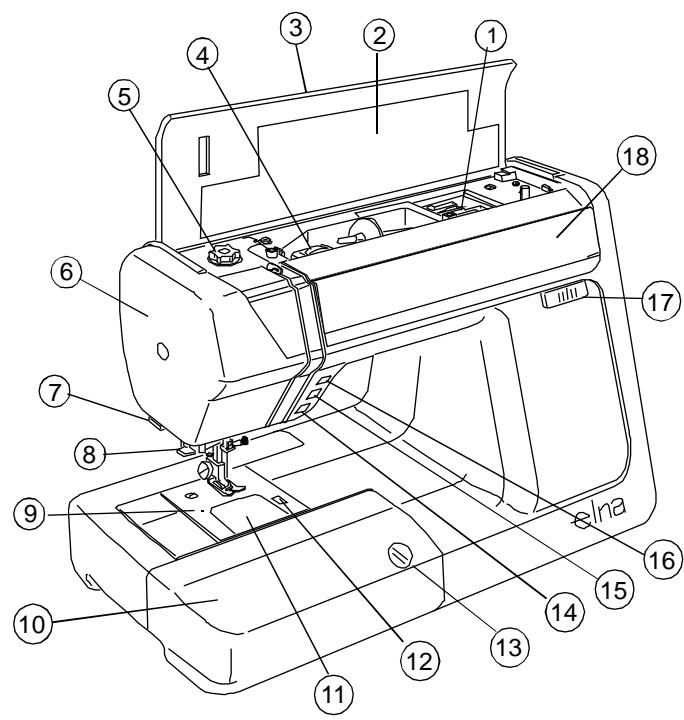
Part Names
- Foot compartment
- Stitch charts
- Top cover
- Thread tension dial
- Foot pressure dial
- Face plate
- Thread cutter
- Needle threads
- Needle plate
- Extension table (accessory storage box)
- Bobbin cover plate
- Bobbin cover plate release button
- Fine adjustment dial
- Reverse key
- Auto-lock key
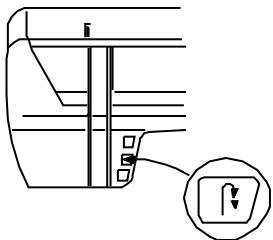
- Up-down needle key
- Speed control lever
- Front cover (lift cover to access selection keys)
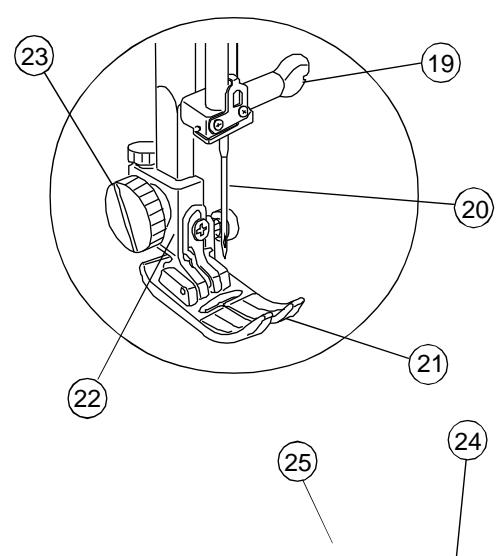
- Needle clamp screw
- Needle
- Presser foot
- Shank
- Thumbscrew
- Thread take-up lever
- Carrying handle
- Flywheel (always turn towards you)
- Power switch
- Machine sockets
- Feed dog lever
- Free arm
- Buttonhole lever
- Presser foot lever
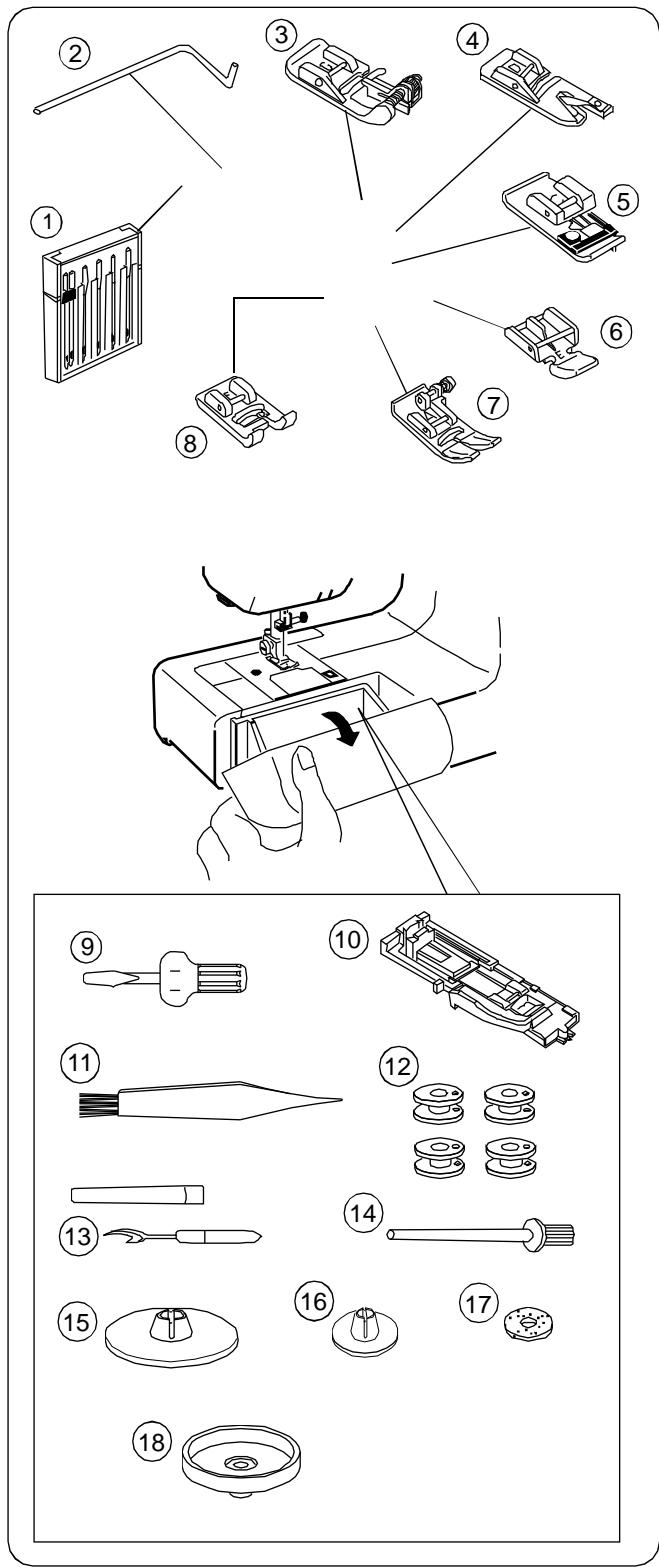
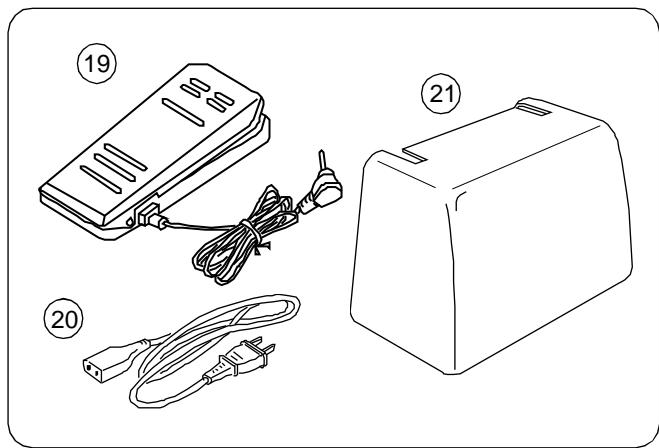
Accessory Storage Foot Compartment
- Set of needles
- Quilt guide
- G: Blind hem foot
- D: Hemmer foot (optional)
- C: Overlock foot (optional)
- E:Zipper foot
- A: Standard metal foot
- F: Satin stitch foot
Extension Table (Accessory Storage Box)
Many sewing accessories are stored in the extension table. Pull lid towards you to open the storage box.
- Screwdriver
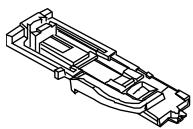
- R: Automatic buttonhole foot
- Lint brush
- Bobbins (5 total)
- Seam ripper
- Large spool holder
- Small spool holder
- Additional spool pin
- Spool pin felt
-
Spool stand
-
Foot control
- Power supply cord
- Carrying case
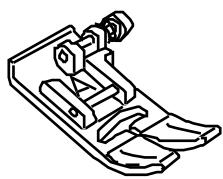
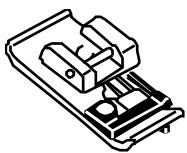
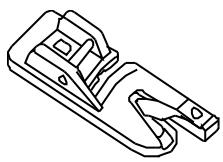
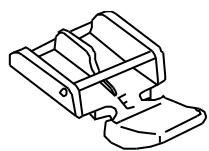
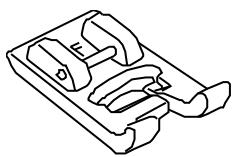
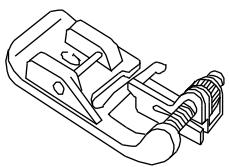
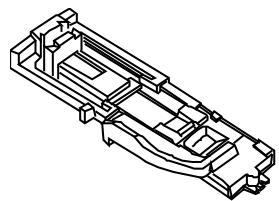
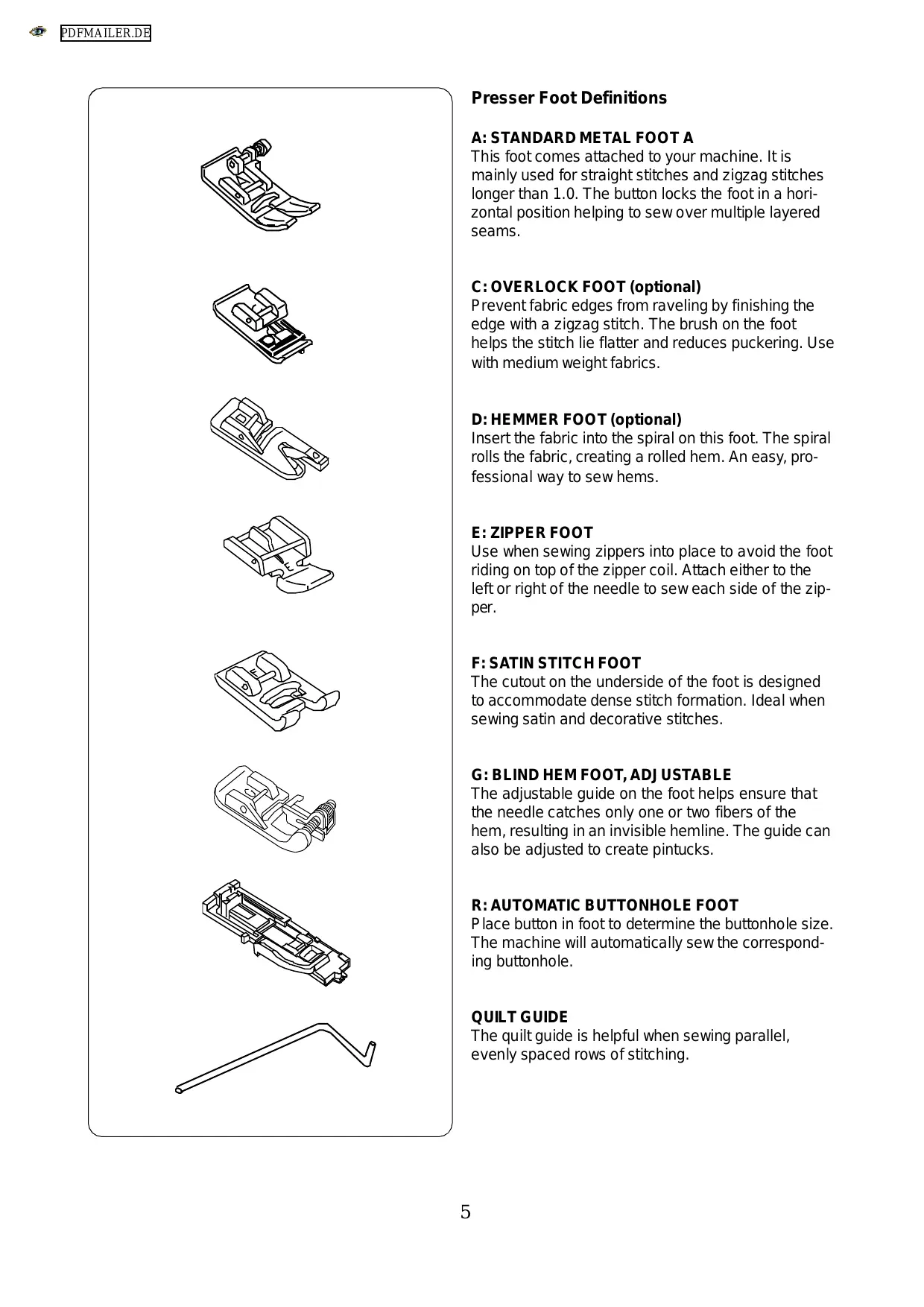
Presser Foot Definitions
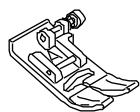
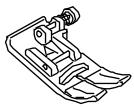
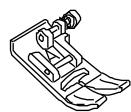
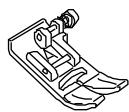
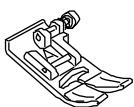
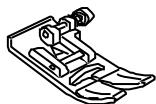
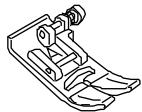
A: STANDARD METAL FOOT A
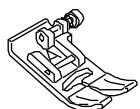
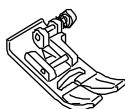
This foot comes attached to your machine. It is mainly used for straight stitches and zigzag stitches longer than 1.0. The button locks the foot in a horizontal position helping to sew over multiple layered seams.
C: OVERLOCK FOOT (optional)
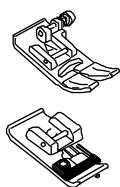
Prevent fabric edges from raveling by finishing the edge with a zigzag stitch. The brush on the foot helps the stitch lie flatter and reduces puckering. Use with medium weight fabrics.
D: HEMMER FOOT (optional)
Insert the fabric into the spiral on this foot. The spiral rolls the fabric, creating a rolled hem. An easy, professional way to sew hems.
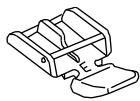
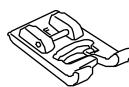
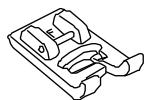
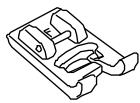
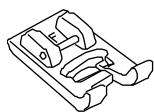
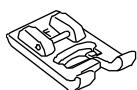
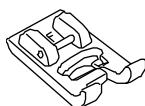
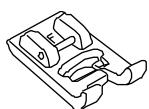
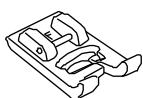
E: ZIPPER FOOT
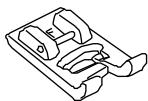
Use when sewing zippers into place to avoid the foot riding on top of the zipper coil. Attach either to the left or right of the needle to sew each side of the zipper.
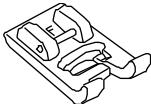
F: SATIN STITCH FOOT
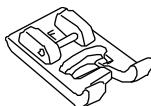
The cutout on the underside of the foot is designed to accommodate dense stitch formation. Ideal when sewing satin and decorative stitches.
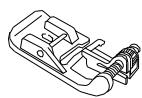
G: BLIND HEM FOOT, ADJUSTABLE
The adjustable guide on the foot helps ensure that the needle catches only one or two fibers of the hem, resulting in an invisible hemline. The guide can also be adjusted to create pintucks.
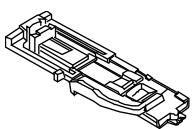
R: AUTOMATIC BUTTONHOLE FOOT
Place button in foot to determine the buttonhole size. The machine will automatically sew the corresponding buttonhole.
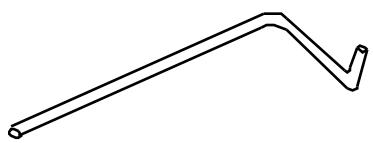
QUILT GUIDE
The quilt guide is helpful when sewing parallel, evenly spaced rows of stitching.
Extension Table (Accessory Storage Box) and Free Arm
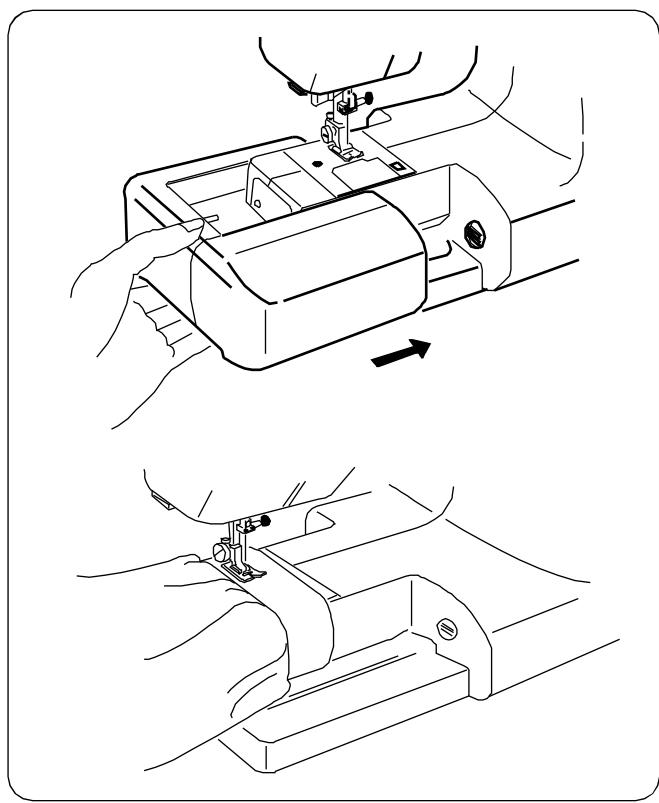
Extension Table
The extension table provides more sewing space to make sewing easier. The extension can be easily removed for free arm sewing.
Free arm sewing is good for circle areas like sleeves, waistbands and pant legs. If socks, knee or elbow areas need mending, the free arm will be best to use.
Pull the end of the extension table away from the machine, as shown in the drawing.
Push the table back into place to reattach the extension table.
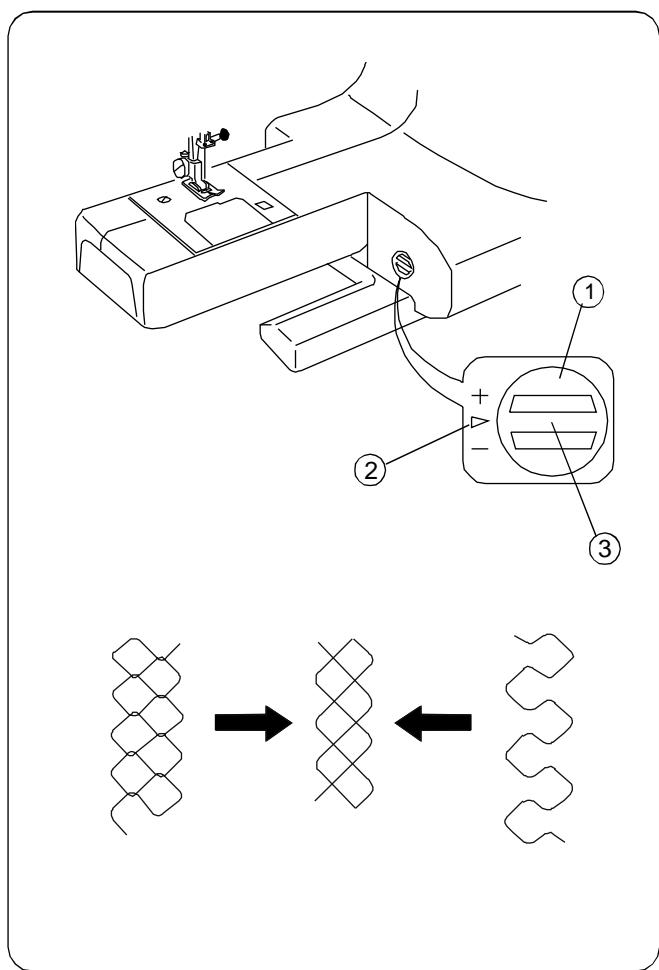
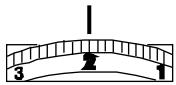
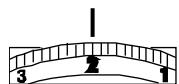
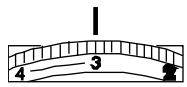
Using the Fine Adjustment Dial
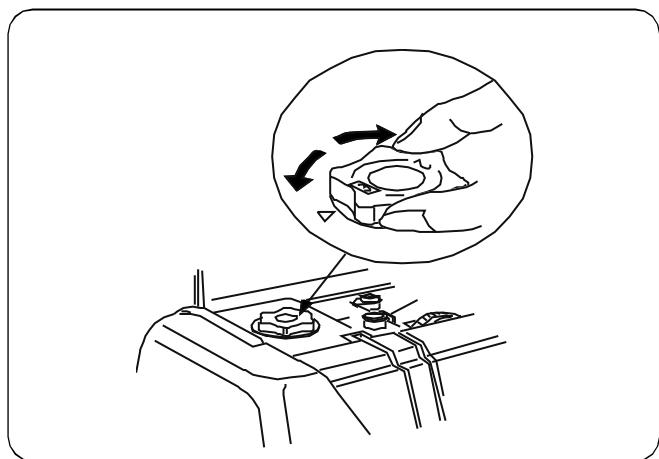
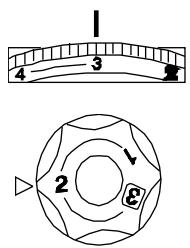
Choice of fabrics and threads may affect the stitch formation when sewing decorative stitches or buttonholes. The fine adjustment dial can be used to either lengthen or shorten the stitch.
① Fine adjustment dial
(2) Standard mark
③ Settingmark
To fine tune, use a screwdriver to move the setting mark.
- If stitches are too short ④ , correct by turning the dial in the direction of “+”.
- If stitches are too short ⑤ , correct by turning the dial in the direction of “-.”
- If left side of buttonhole is less dense ⑥ than right side, correct by turning dial in direction of “+”.
- If right side of buttonhole is less dense ⑦ than left side, correct by turning dial in direction of “-.”
How To Drop the Feed Dog
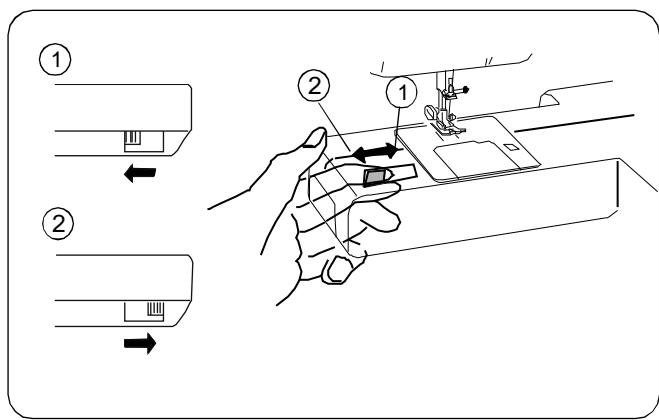
The feed dog drops out of position for special sewing techniques: free motion embroidery, button sewing, etc.
The feed dog must always be up for regular sewing. Locate the feed dog lever on the back of the free arm. Slide the lever either to the right (down) ① or to the left (up) ② . To bring up the feed dog, hand turn the flywheel after sliding lever to the left.
Foot Pressure Dial
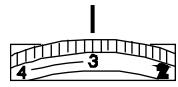
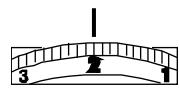
Set the pressure dial ① at "3" for regular sewing.
Reduce the pressure to "2" for applique, cutwork, drawn work, basting and embroidery.
Velours and knits with a lot of stretch may require a "1" setting.
Attaching and Removing Presser Feet
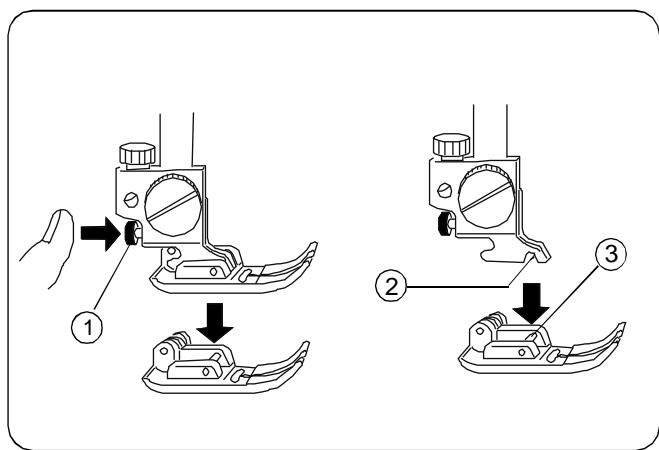
Press the key until the needle is in the raised position. Raise the presser foot and press the red button ① on back of the shank. The presser foot will drop off. Place the selected presser foot so the pin ③ on the foot lies just under the groove ② of the shank. Lower the presser bar to attach the foot.
Attaching and Removing Shank
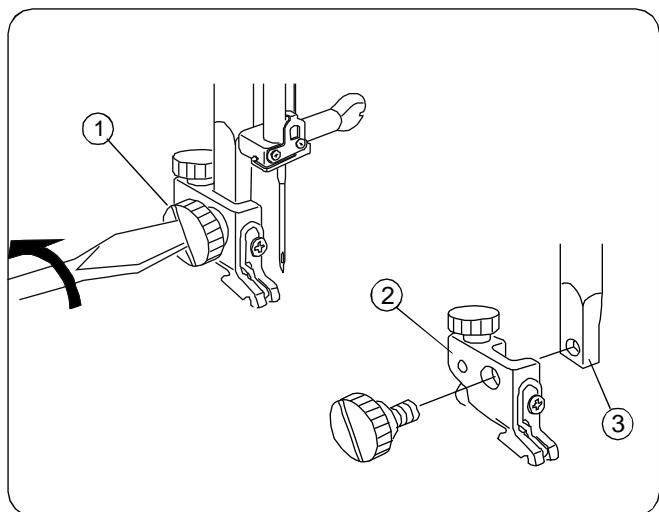
Turn the thumbscrew ① counterclockwise with the screwdriver to remove the shank.
To attach, match the hole in the shank ② with the hole in the presser bar ③ . Put thumbscrew in hole and turn clockwise to tighten.

Additional Presser Foot Clearance
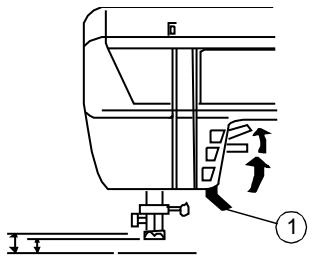
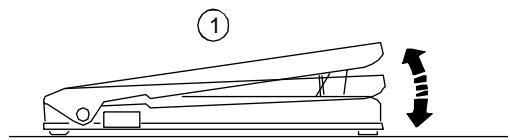
You can raise the presser foot about 6.5 ~mm (1/4") higher than the normal up position for easy removal of the presser foot or to place heavy fabrics under the presser foot. Pull the presser foot lever ① up beyond the normal up position.
Seam Allowance Lines
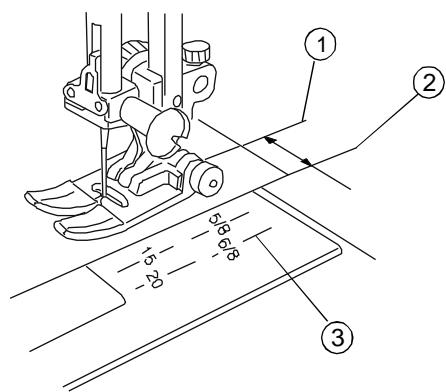
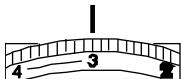
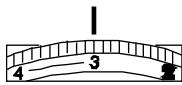
The lines on the needle plate and bobbin cover plate help you measure seam width.
The number indicates the distance between the center needle position 3.5 and the seam allowance line.
| Millimeters | Inches | ||||
| Lines on needle plate | 15 | 20 | (1/2") 4/8" | 5/8" | (3/4") 6/8" |
① Center needle position
② Edge of fabric
③ Needle plate guidelines
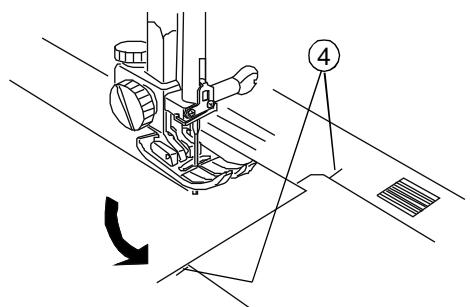
④ 90^ pivot angle guideline for 5/8"
Controlling Sewing Speed
Sewing speed can be varied with the foot control ①. The harder you press on the foot control, the faster the machine runs.
The maximum sewing speed can be varied by sliding the speed control lever ②. For a faster speed ③, slide it to the right; for a slower speed ④, slide it to the left.
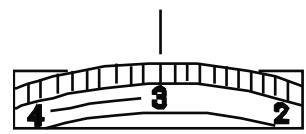
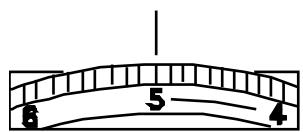
Adjusting the Needle Thread Tension
Choosing the Correct Tension - Straight Stitch
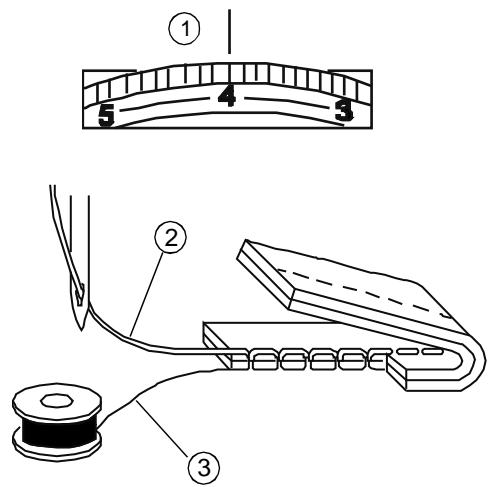
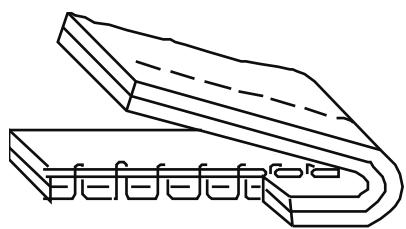
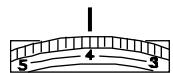
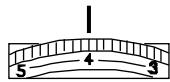
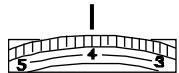
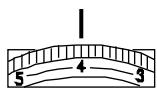
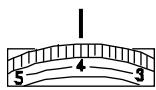
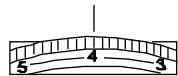
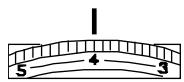
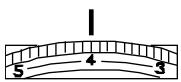
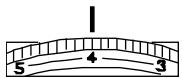
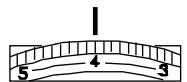
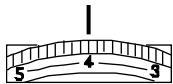
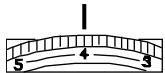
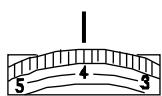
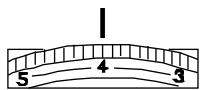
The ideal straight stitch will have threads locked between the two layers of fabric, as shown left (magnified to show detail). Needle thread tension can range from 3 - 5 and is normally set on 4 ①
If you look at the needle thread ② (top thread) and bobbin thread ③ (bottom thread), you will notice that there are no gaps. Each stitch is smooth and even.
Occasionally the needle thread tension needs to be adjusted. Examples:
- stiff or heavy fabric
- sewing more than two layers of fabric
type of stitch - thread
When adjusting needle thread tension, the higher numbers tighten, the lower numbers loosen.
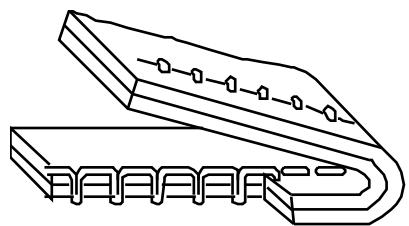
Tension is too tight
The bobbin thread shows through on the topside of the fabric and it will feel bumpy.
Turn the dial to a lower number to loosen the needle thread tension.
- Tension is too loose
The needle thread shows through on the underside of the fabric and it will feel bumpy.
Turn the dial to a higher number to tighten the needle thread tension.
- Adjusting Tension for Zigzag and Satin Stitches
The upper thread tension should be slightly looser when sewing a zigzag or a satin stitch. The upper thread should appear slightly on the underside of the fabric.
| Weight | Fabric | Needle Type | Needle Size |
| Very Light | Chiffon, Fine Lace, Organdy | UniversalBall Point | 9 (65)9 (65) |
| Light | Batiste, Lawn, Crepe de Chine, Challis Handkerchief Linen, Crepe, Taffeta, Satin | StretchUniversal | 11 (75)11 (75)12 (80) |
| Single Knits, Jersey, Swimwear, Tricot | StretchBall Point | 11 (75)11 (75) | |
| Leather, Suede | Leather | 11 (75) | |
| Medium | Flannel, Velour, Velvet, Velveteen, Corduroy, Linen, Gabardine, Wool, Terry, Burlap | Universal | 14 (90) |
| Double Knits, Stretch Velour, Stretch Terry, Sweater Knits | Ball Point | 14 (90) | |
| Leather, Vinyl, Suede | Leather | 14 (90) | |
| Heavy | Denim, Sailcloth, Ticking | Denim | 16 (100) |
| Coating, Polar Fleece, Drapery and Upholstery Fabrics | Universal | 16 (100) | |
| Leather, Suede | Leather | 16 (100) | |
| Very Heavy | Canvas, Duck, Upholstery Fabrics | Universal | 18 (110) |
| Topstitching for Special Finish | Topstitching | 11 (75)14 (90) |
1.
2.
3.
SECTION II
Getting Ready to Sew
Selecting the Correct Needle and Thread
There are many kinds of fabrics, threads and needles. It is important to use the correct ones together.
Always purchase good quality thread. It should be strong, smooth and even in thickness. Use the same thread for needle and bobbin. Always test thread and needle size on a scrap piece of fabric.
In general, fine threads (the larger the number, the finer the thread) and needles (the smaller the number, the finer the needle) are used for sewing lightweight fabrics and heavier threads and larger needles are used for sewing heavyweight fabrics. There are many specialty needles available from your sewing machine dealer.
Check your needles frequently for rough or blunt tips. Snags and runs in knits, fine silks and silk-like fabrics are permanent and are often caused by damaged needles.
Changing Needles
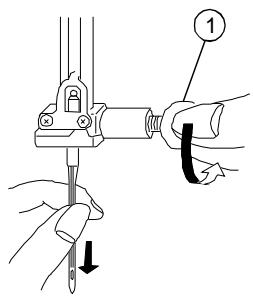
- Press the needle key to raise the needle. Lower the presser foot. Turn off the power switch. Turn the needle clamp screw ① counterclockwise to loosen.
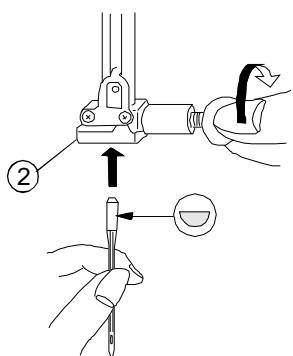
- Remove the needle from the clamp. Insert the new needle into needle clamp ② with the flat side to the back, pushing it up as far as it will go. Tighten the clamp screw firmly.
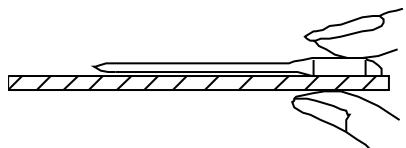
- To determine if the needle is defective, place the flat side of the needle on something flat (a needle plate, piece of glass, etc.). The gap between the needle and the flat surface should be consistent.
Never use a bent or blunt needle, as it may cause skipped stitches or thread breakage. Defective needles can ruin the fabric. Always purchase good quality needles. Change needles often.
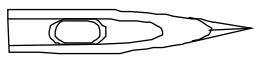
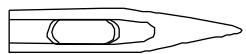
Needle Definitions
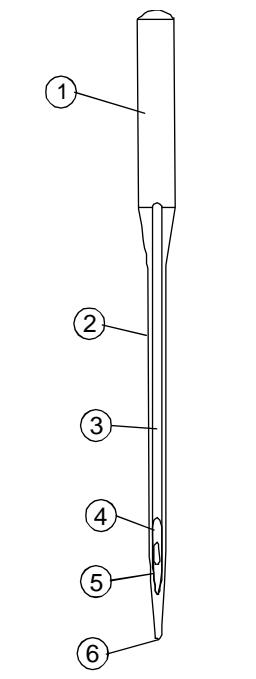
The illustration identifies the main parts of a sewing machine needle.
- Body
- Shaft
- Long groove (round side of needle)
- Short groove (flat side of needle)
- Eye
- Point
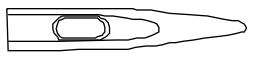
Universal – an all-purpose needle that handles most woven and knit fabrics. A universal needle size 14/90 comes inserted in your machine.
Ball point – the point spreads the fibers, preventing tears and is especially suited for knit fabrics. Not recommended for embroidery.
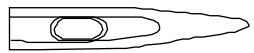
Denim – the sharp point effectively pierces densely woven fabrics such as denim and canvas.
Stretch - specially designed to prevent skipped stitches in synthetic suedes and elasticized knits (swimwear).
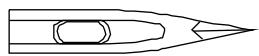
Leather – the cutting point creates small holes in leather and suede.
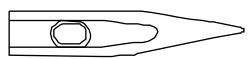
Topstitching – the extra sharp point penetrates layers of fabrics; extra large eye and large groove accommodate heavyweight topstitching thread.
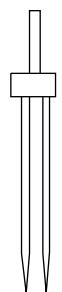
Twin/Double - 2 needles are joined on a crossbar and share a single shaft. Sews two parallel rows of stitching. Available in universal and ballpoint.
Connecting Machine To Power Supply
Before connecting the power cord, make sure the voltage and frequency shown on the machine are identical to your electrical power.
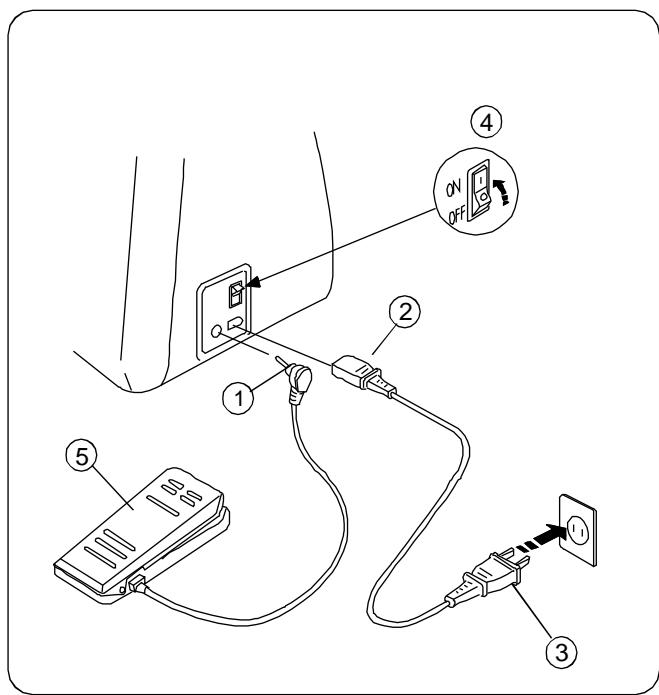
To connect the foot control ⑤ , turn off the power switch ④ . Insert the foot control plug ① and machine plug ② into the machine and the power supply plug ③ into the wall socket.
Your machine may come equipped with a polarized plug (one prong wider than the other). A polarized plug reduces the risk of electrical shock. This plug is intended to fit into a polarized outlet. If the plug does not fit fully into the outlet, reverse the plug. If it still does not fit, contact a qualified electrician to install the proper outlet. Do not modify the plug in any way.
IMPORTANT: When using your sewing machine the first few times, place waste fabric under the presser foot and run the machine without thread for a few minutes. Wipe away excess oil.
For Your Safety
Do not use extension cords or plug adapters.
Do not touch plug with wet hands.
Always turn off the power/light switch first and then unplug from the electrical outlet. Examples:
- when leaving the machine unattended
- when cleaning the machine
Always turn off the power/light switch:
- when attaching or removing parts such as needle, presser foot, needle plate
- when threading needle or bobbin
Do not place anything on the foot control.
Do not place heavy items on cords. Do not subject cords to heat. Do not use damaged cords. Have the cord repaired immediately.
While the machine is in operation, always keep your eye on the sewing area and do not touch any moving parts such as the thread take-up lever, flywheel or needle.
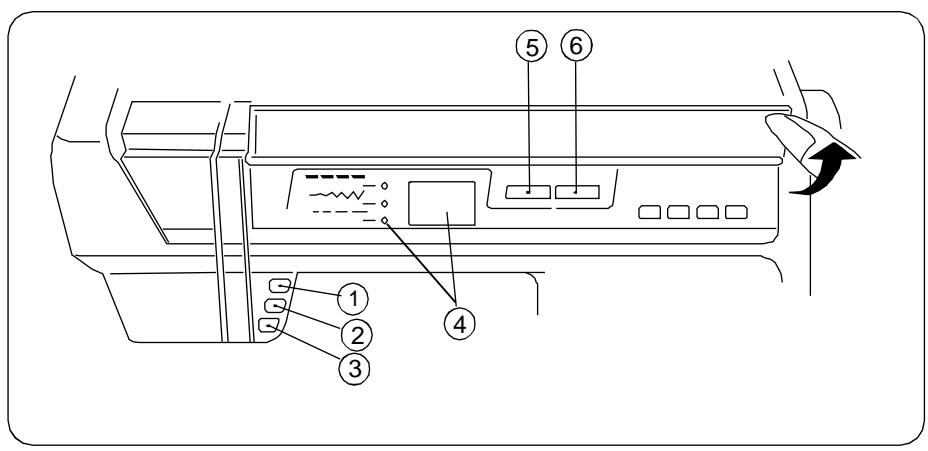
Main Function
Lift front cover up and away to reveal the Selection Keys and LED readout.
Switch on the machine. (Test lights run in LED readout.)
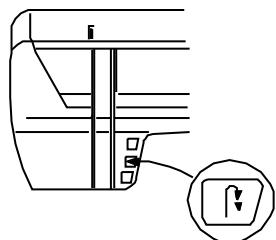
1. Up/Down Needle Key
If the needle is up when you press this key, the needle will go down to its lowest position. The needle will continue to stop in the down position.
If the needle is down when you press this key, the needle will go to its highest position. The needle will continue to stop in the up position.
2. Auto-Lock Key
Press this key while sewing a straight stitch, zig-zag stitch or 3-step zigzag stitch and the machine will sew a few stitches in place and stop automatically.
- Press this key while sewing utility or decorative stitches and the machine will complete the stitch, lockstitch and stop.
a
b
C
3. Reverse Key
If you are sewing a straight stitch, zigzag stitch or 3-step zigzag stitch, press and hold this key. The machine will sew in reverse until you release the key.
- If you are sewing utility or decorative stitches, the machine will immediately stop and sew a locking stitch when you press this key.
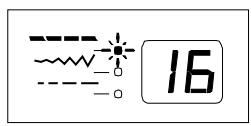
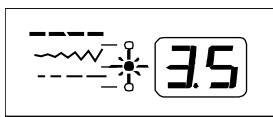
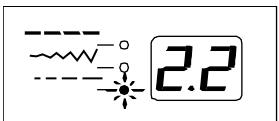
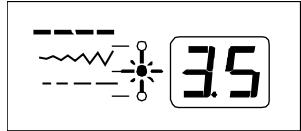
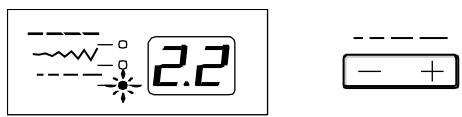
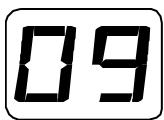
4. Indicator Lights and LED Readout
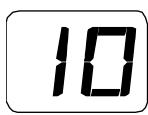
a. When this light is lit, the readout displays the selected stitch.
b. When this light is lit, the readout displays the selected stitch width/needle position.
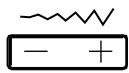
c. When this light is lit, the readout displays the selected stitch length.
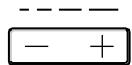
5. Stitch Width and Needle Position Key
Press this key to display pre-programmed stitch width or needle position.
To decrease stitch width or move needle position to the left, press - side of key.
To increase stitch width or move needle position to the right, press + side of key.
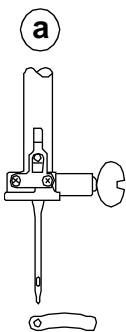
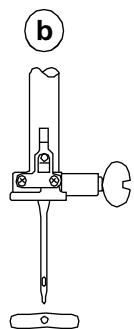
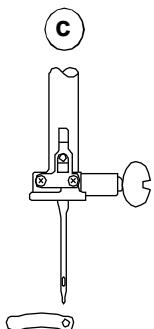
The stitches listed below allow you to move the needle to any position by pressing the - or + side of the key. There are 15 needle positions for straight stitches (0.0 - 7.0).
a Left position
b Center position
c Right position
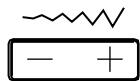
6. Stitch Length Key
Press this key to display pre-programmed stitch length.
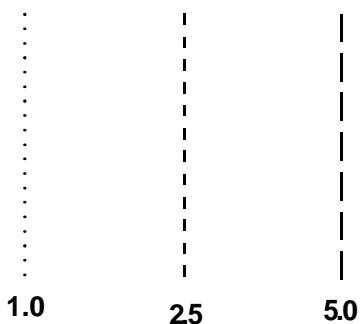
Depending on the stitch selected, stitch length can be set between 0.0 and 5.0.
To decrease stitch length, press - side of key.
To increase stitch length, press + side of key.
- The reverse stitch length will not sew any longer than 2.5 ~mm (approx. 1 / 8 ).
NOTE: Fine fabrics should have a stitch length between 1.5 and 2.5, medium fabrics between 2.0 and 3.0 and heavier fabrics between 3.0 and 4.0.
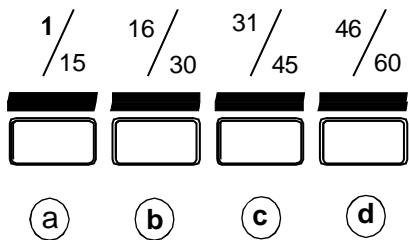
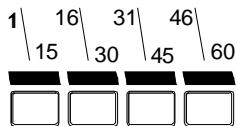
7. Stitch Selection Keys
a. Press and hold this key to access stitches 1 - 15.
b. Press and hold this key to access stitches 16 - 30.
c. Press and hold this key to access stitches 31 - 45.
d. Press and hold this key to access stitches 46 - 60.
Winding a Bobbin
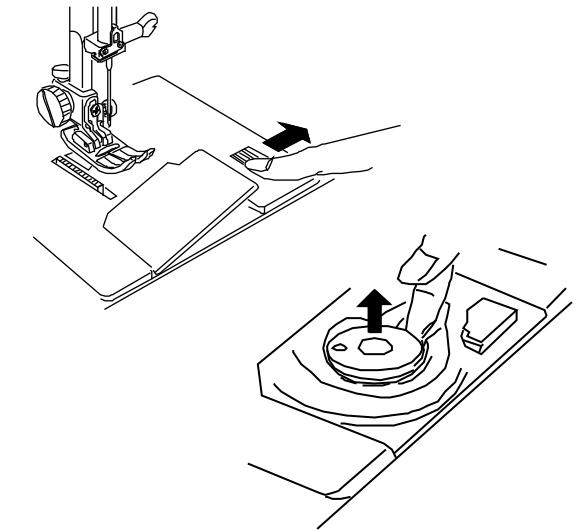
To remove bobbin, slide bobbin cover plate release button to the right and lift away the bobbin cover plate.
Lift out the bobbin.
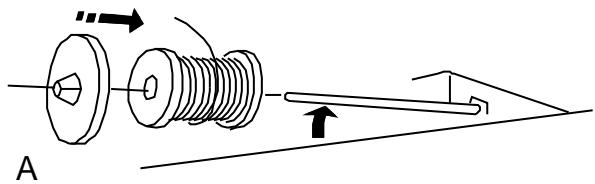
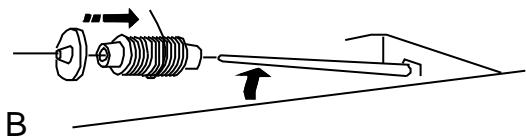
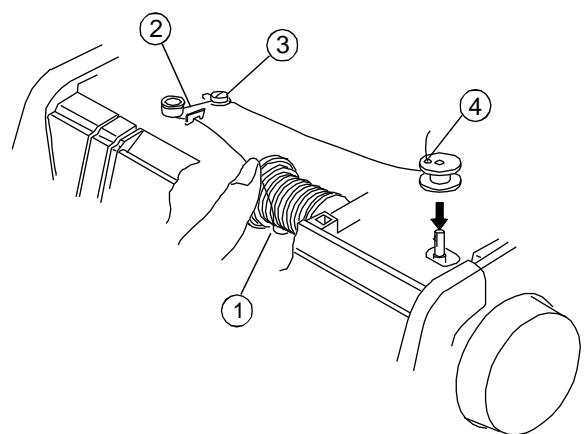
① Lift up the spool pin. Place the spool of thread on the spool pin with the thread coming off the spool as shown. Attach the spool holder and press it firmly against the spool of thread.
NOTE: Spool holder needs to be changed according to the type of thread spool
A. Large spool
B. Small spool
②Pull the thread towards the thread guides, under the hook and wrap it around the guide as shown.
③Pull the thread back around the bobbin winder thread guide.
(4) Pass the thread through the hole in the bobbin from inside to the outside.
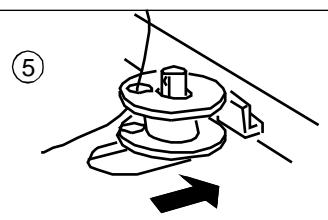
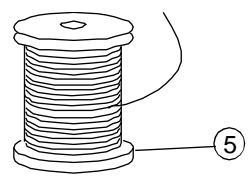
⑤ Place the bobbin on the bobbin winder spindle and push it to the right. The LED readout will display "SP."
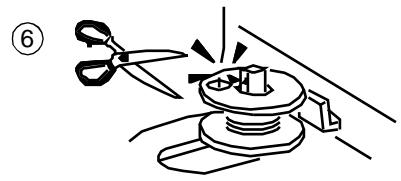
^6 Holding the free end of the thread, press the foot control. Stop the machine when it has made a few turns and cut the thread tail close to the hole in the bobbin. Press the foot control again. When the bobbin is fully wound, it will stop automatically.
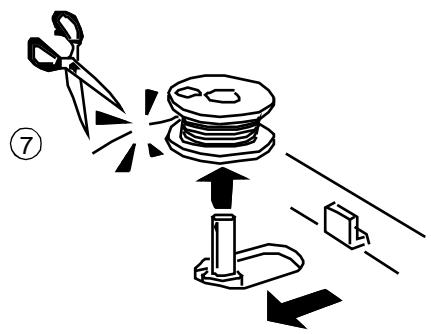
⑦ Move the spindle to the left to return the bobbin winder to its original position. Cut the thread as shown.
Additional Spool Pin
The additional spool pin can be used to wind an extra bobbin without unthreading the machine.
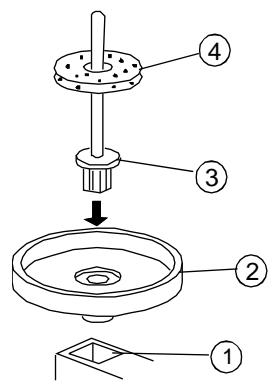
PROcedure: Insert the spool stand ② and the additional spool pin ③ in the hole ① . Place the felt ④ and spool ⑤ on the pin with the thread coming off the spool as shown.
Inserting the Bobbin
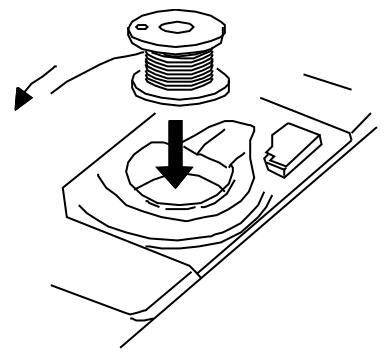
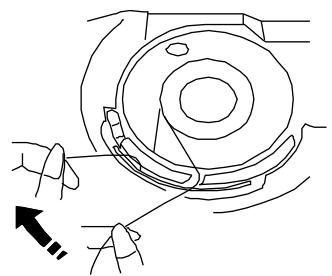
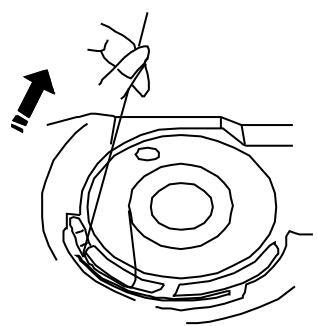
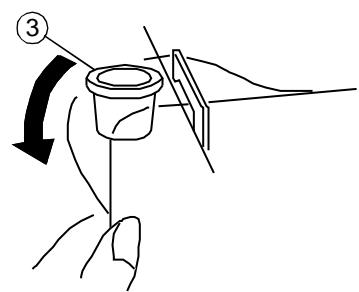
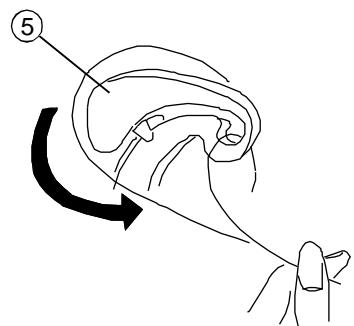
Place the bobbin in the bobbin case with the thread running counterclockwise.
Guide the thread into notch A on the front side of the bobbin case.
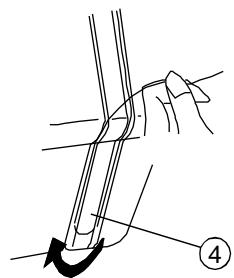
Hold the bobbin with your right hand and pull the thread to the left, through the tension spring blades.
Continue pulling the thread lightly until the thread slips into notch B.
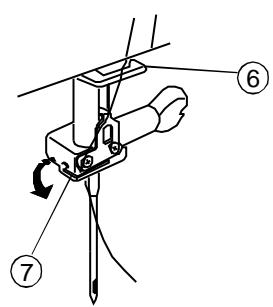
Pull out about 15 cm (6") of thread.
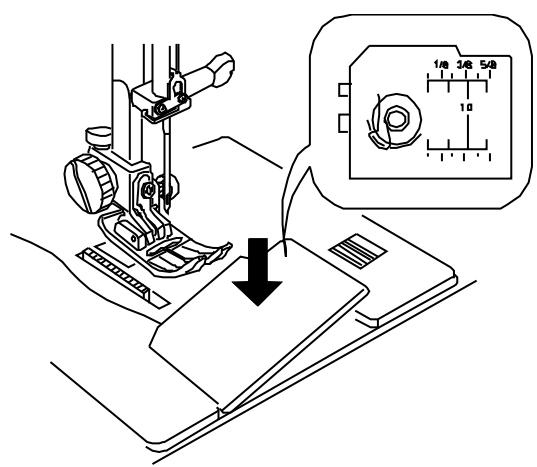
Replace the bobbin cover plate.
Refer to the chart shown on the bobbin cover plate to check the threading.
Threading the Machine
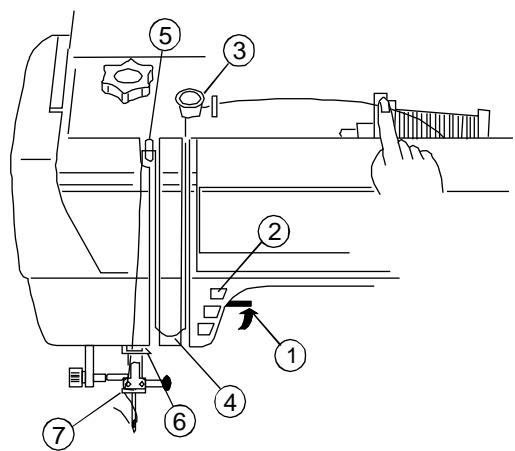
① Raise the presser foot.
(2) Press the key until the needle is in an up position.
③ Pull the thread around the upper thread guide.
④ Guide the thread down and around the check spring holder.
(5) Firmly pull the thread from right to left, over the take-up lever and down into the take-up lever eye.
⑥ Proceed down through the lower thread guide.
⑦ Slide the thread to the left behind the needle bar thread guide.
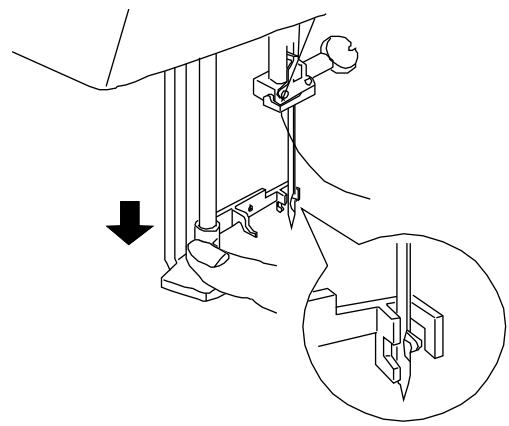
Thread the needle from front to back manually or use the built-in needle threads.
Built-in Needle Threader
Press the key until the needle is in an up position.
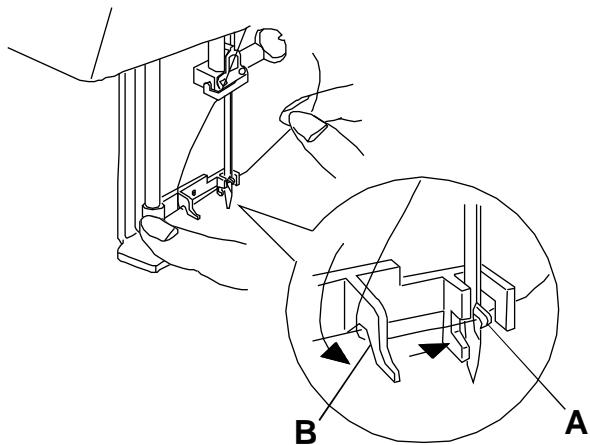
Lower the needle threads lever as far as it will go. Hook A is automatically inserted into the needle eye.
Bring the thread around Guide B and under Hook A.
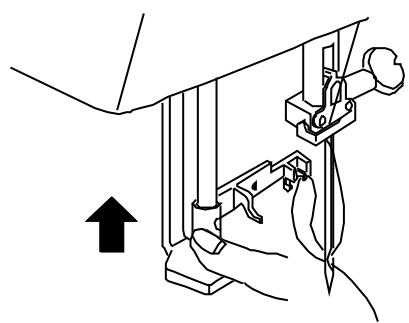
Release the lever and let the needle threads return to its original position.
Pull the thread loop to the back to manually bring the thread through the needle eye.
- The needle threads can be used with #11 to #16 size needles. Thread weight may vary from 30 to 100.
NOTE: Needle threads cannot be used with a twin needle or wing needle.
Drawing Up the Bobbin Thread
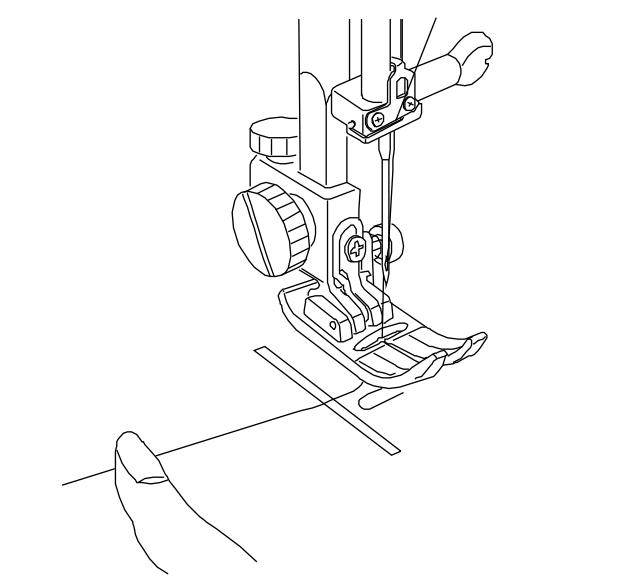
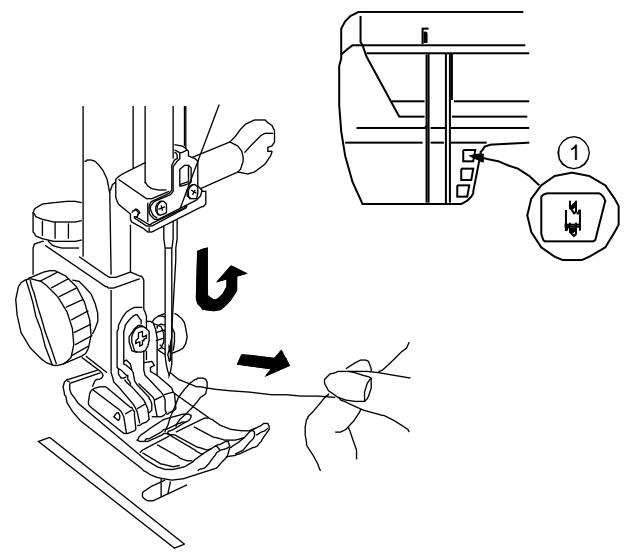
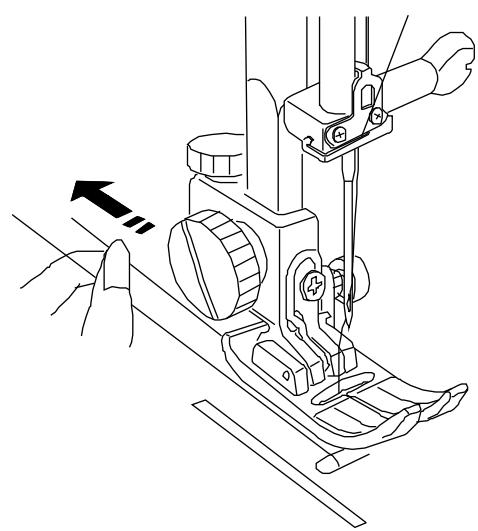
Raise the presser foot and hold the needle thread lightly with your left hand.
Press the 1 twice to pick up the bobbin thread. Draw up the needle thread together with a loop of bobbin thread.
Slide 10cm(4^ ) of both threads to the back under the presser foot.
01
SECTION III Sewing
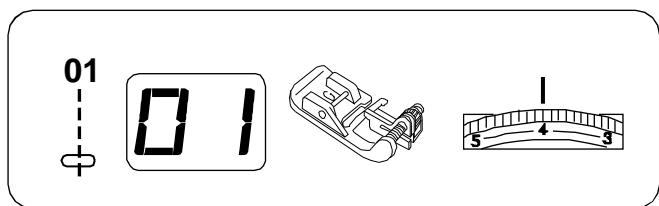
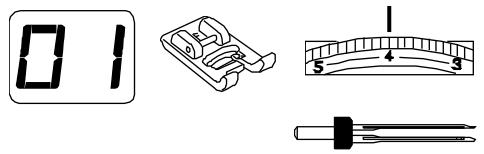
Example of How To Read the Machine Set-Up Information
Select Stitch
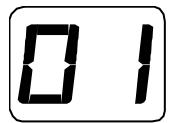
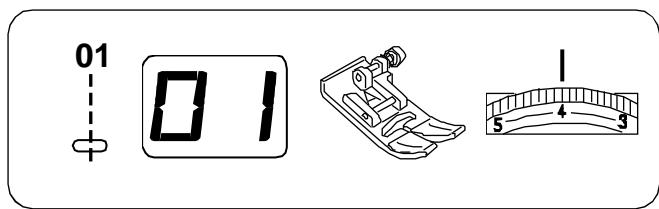
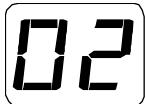
① Press 1-15 key to select stitch 01. LED readout shows 01.
Which Presser Foot to Use
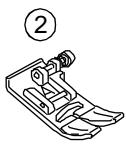
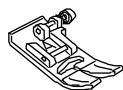
(2) Use presser foot shown (A: Metal foot) for the best sewing result. See page 5 for presser foot definitions.
Set Thread Tension
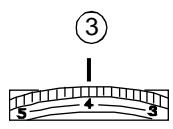
③ Set thread tension to 4. See page 9. Each stitch has a pre-programmed length and/or width. Some techniques require other settings. These will indicate when necessary.
Straight Stitch
When the machine is turned on, it is automatically set to sew a straight stitch in the center needle position.
The straight stitch is used to sew a seam in woven fabrics. The straight stitch can also be used for gathering, basting, sewing in a zipper, pintucks, rolled hems and twin needle hems.
Starting To Sew
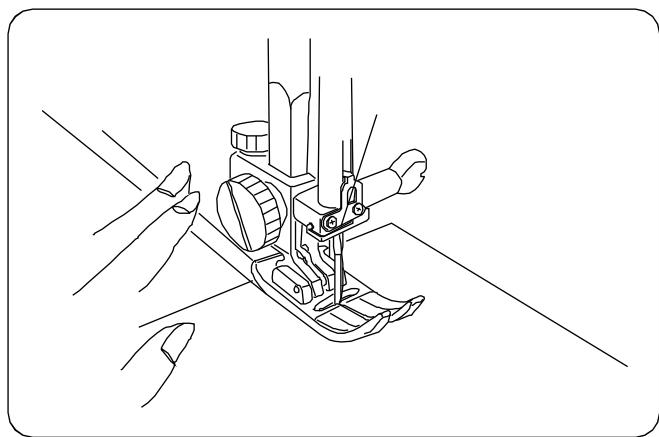
Raise the presser foot and position the fabric next to a seam allowance line on the needle plate. Lower the needle to the point where sewing is to begin.
Pull the threads under the foot towards the back and lower the presser foot.
Press the foot control. Gently guide the fabric along the seam allowance line letting the fabric feed naturally.
Finishing Off a Seam
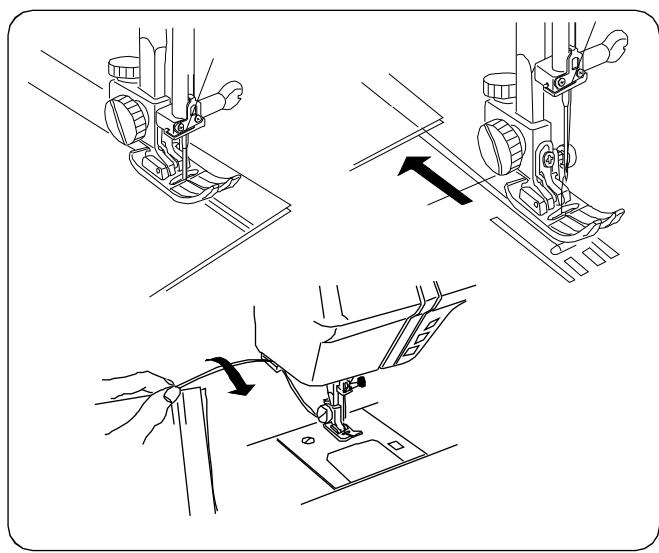
To fasten the threads at the end of a seam, press and hold the key while sewing.
Raise the presser foot. Remove the fabric; pull the threads to the back and cut threads using the thread cutter. (The threads are cut the proper length to start the next seam.)
Changing Sewing Direction
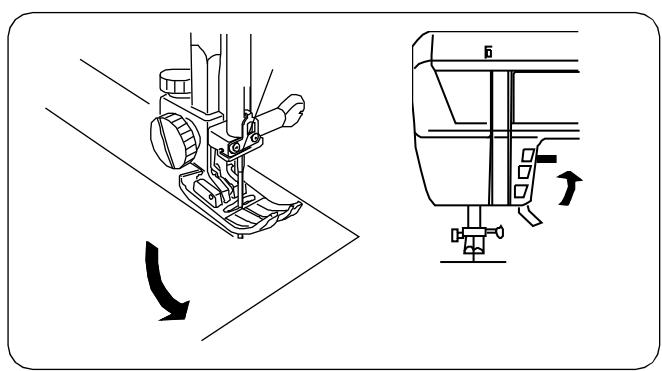
Stop the machine and press the key to bring the needle down into the fabric. Raise the presser foot. Pivot the fabric around the needle to change sewing direction. Lower the presser foot. Press the key to bring the needle up.
Sewing On Heavy Fabrics
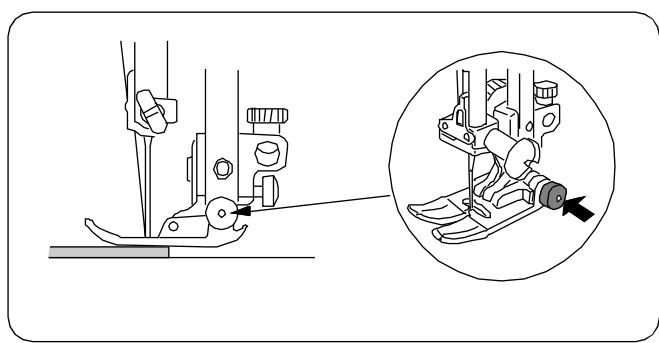
The black button on presser foot A locks the foot in a horizontal position when pushed in before lowering the presser foot. This ensures even feeding at the beginning of seams and helps when sewing many layers of fabric such as welt seams used to hem jeans.
When the point of an increased thickness is reached, lower the needle and raise the presser foot. Press in the black button. Lower the foot and continue sewing.
This button releases automatically after a few stitches have been sewn.


Gathering
Gathering with straight stitches works best on light to medium weight fabrics.
Decrease tension to between 1 and 3. Increase stitch length to 5.0.
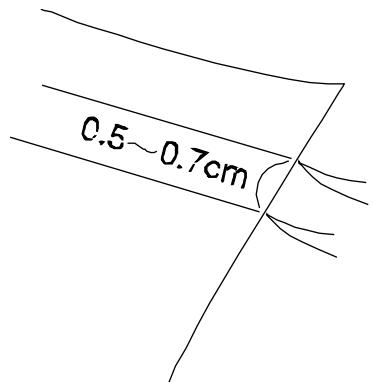
Sew two rows of parallel stitches. Sew first row next to raw edge using foot A as guide. Sew second row next to first row using foot A as guide. Leave long thread tails at beginning and end of each row.
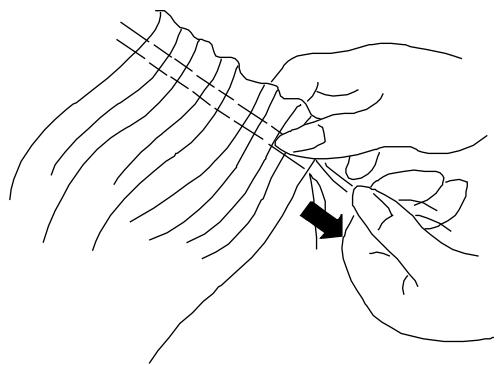
Pull on the bobbin threads simultaneously from each end of the fabric until the desired amount is gathered.
Knot the threads at each end and distribute the gatherers evenly.
Increase tension to 4 and decrease stitch length to 2.4.
Sew between two rows of stitching to secure gathering.
OR
Lay gather fabric over flat fabric and sew the two fabrics together directly on the second row of gathering stitches.
Zipper Insertion
Lapped Application
Lapped zippers are usually inserted into a side seam of skirts or pants, for example.
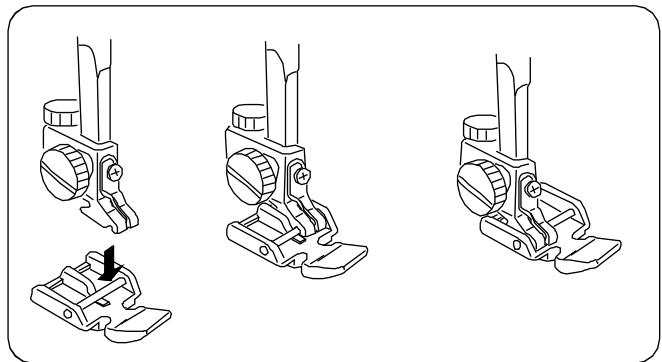
Attach the pin on zipper foot E to the groove on the shank.
- To sew the left side of the zipper, attach the zipper foot on the right-hand side.
- To sew the right side of the zipper, attach the zipper foot on the left-hand side.
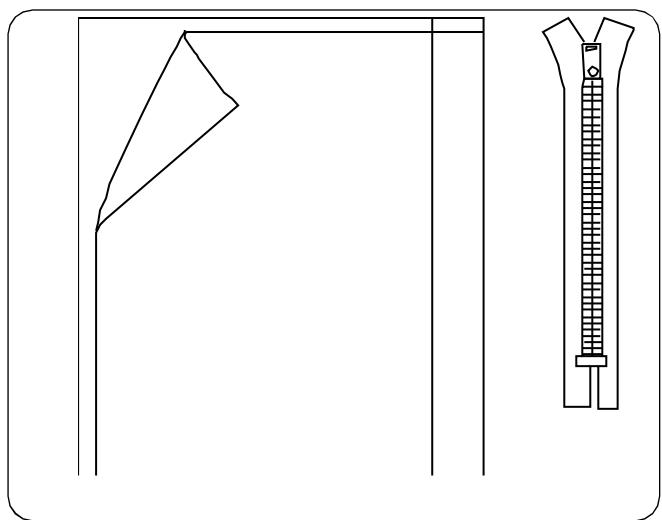
Fabric Preparation
Add 1 cm (3/8") to the zipper size. Use this measurement and mark the opening for the zipper.
Place right sides of fabric together and sew the seam located below zipper placement. (Make sure to reverse sew the stitches directly below the zipper placement.)
Increase stitch length to 5.0 and baste the zipper opening closed. Press the seam and basting seam open.
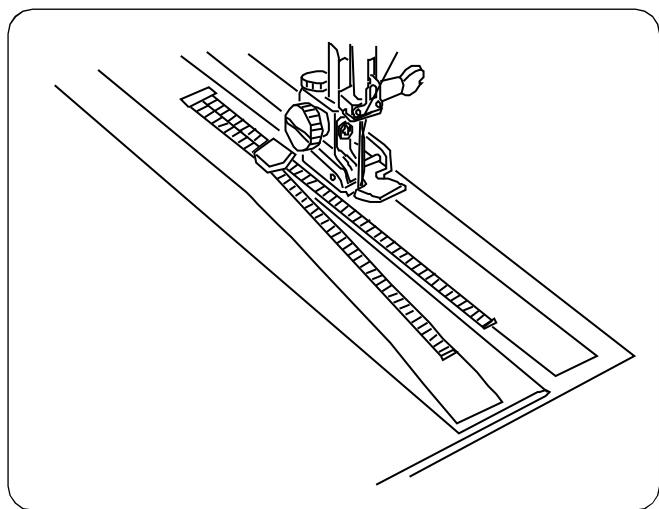
Open zipper and place it face down on the seam allowance. Teeth are on the seam line and zipper top is 1cm (3/8") from fabric top edge. Attach foot with left side pin. Baste zipper in place, sewing from bottom to top.
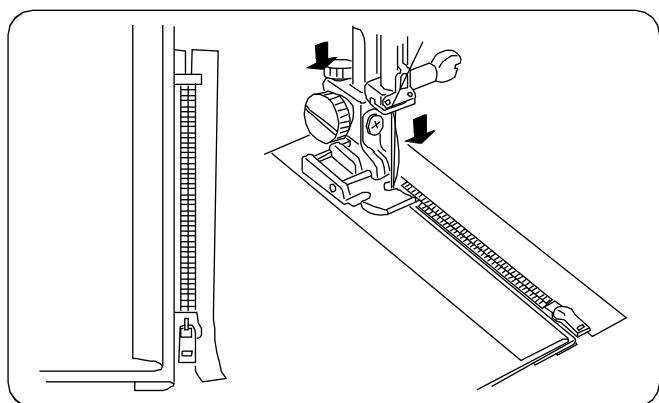
Close zipper. Turn zipper face up (right seam allowance forms a small fold at basting line) and smooth zipper teeth away from seam. Attach foot with right side pin. Reset straight stitch length to 2.2. Starting at the bottom, sew through the folded seam allowance and zipper tape.
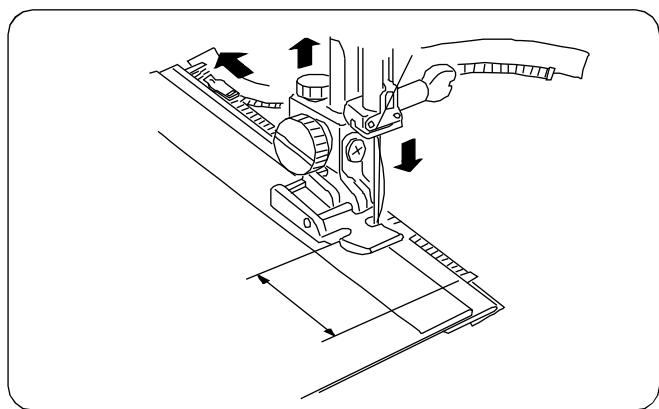
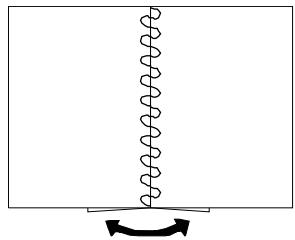
Stop just before the zipper foot reaches the slider on the zipper tape. Lower the needle slightly into the fabric. Raise the zipper foot and open the zipper. Lower the foot and stitch the remainder of the seam.
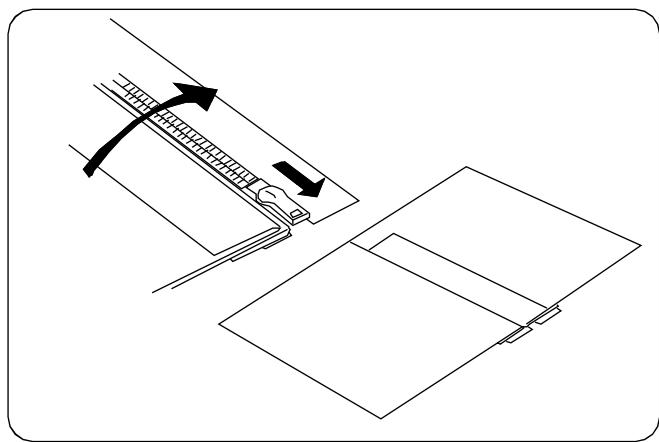
Close the zipper and spread the fabric flat with the right side facing up. Baste through the opened seam allowance and zipper tape.
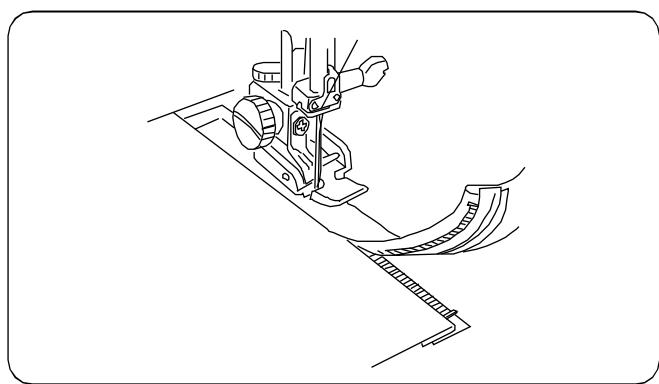
Move the zipper foot to the left side pin. Guide the edge of foot along the zipper teeth and stitch through the garment and zipper tape. Stop about 5 cm (2^ ) from the top of the zipper.
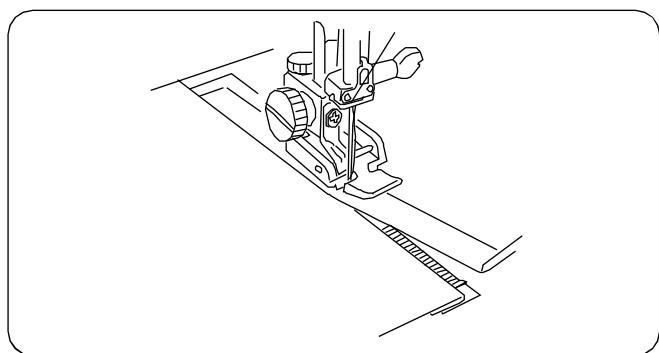
Slightly lower the needle into the fabric. Raise the foot, remove the basting stitches and open the zipper. Lower the foot and stitch the remainder of the seam, making sure the fold is even.
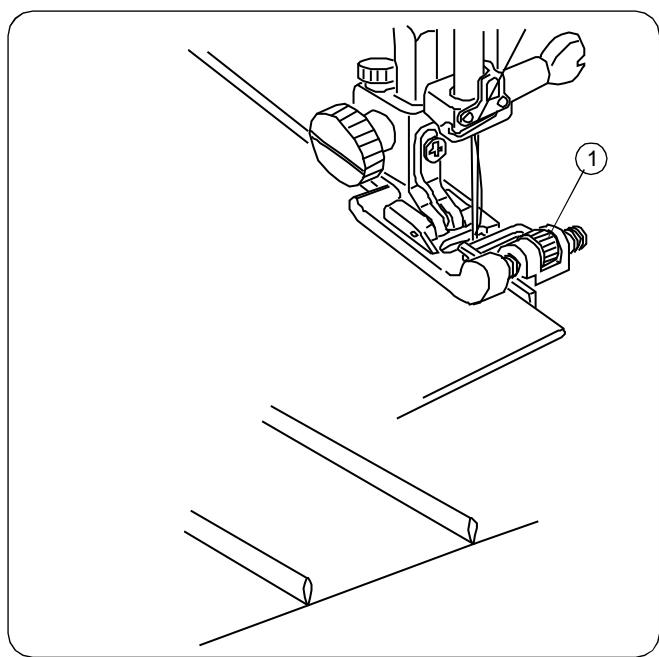
Pintucks
Pintucks should be added to your fabric before cutting out the pattern piece.
- Use a washable fabric marker and draw lines for pintucks on the fabric right side.
- Fold the fabric together on the first line with wrong sides together.
- Place folded fabric under presser foot against the blind hem foot guide. Decide how wide you want the pintucks and move the thumb nut ① to move the guide.
- Sew using the foot as a guide for the folded edge.
- Sew all pintucks. Remove fabric marker lines before pressing pintucks to one side.
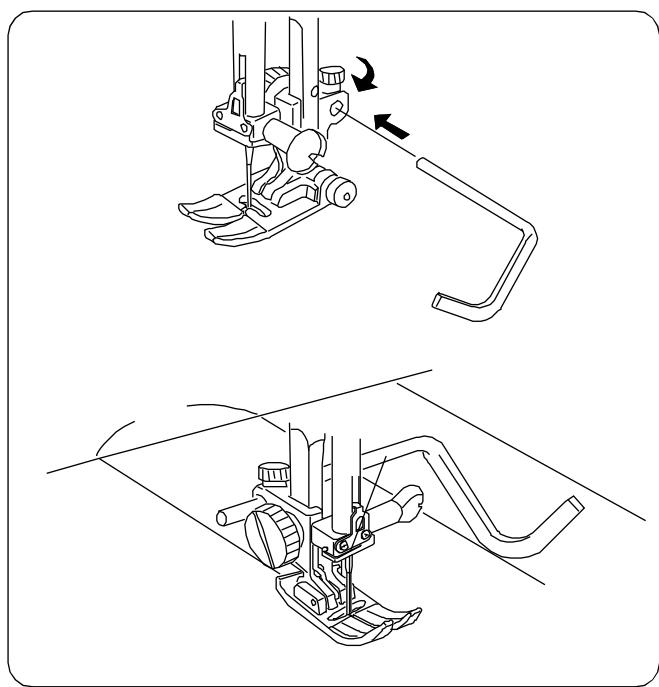
Quilt Guide
The quilt guide is helpful when sewing parallel, evenly spaced rows of stitching.
Loosen the quilt holding screw, slide the quilt guide in the opening until the desired width is set and tighten the screw. Sew; the quilt guide will lie over the previous row of stitching.
The quilt guide can also be used with the walking (even feed) foot, an optional accessory.

01
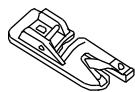
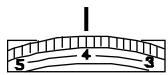
Rolled Hem (optional foot)
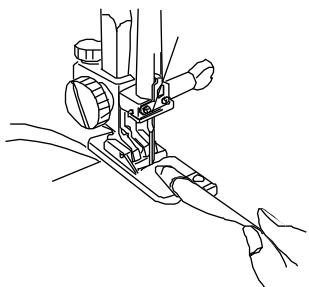
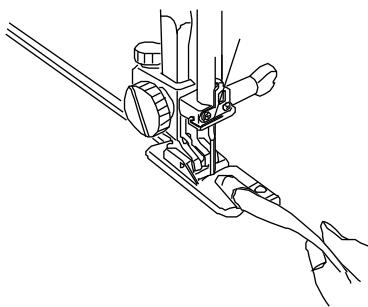
An easy, professional way to sew hems using the straight stitch. Recommended for fine, sheer fabrics used in bridal wear.
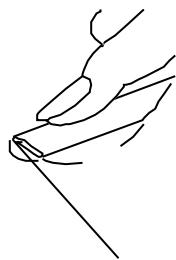
Make a double 3mm (1/8") fold approximately 8 cm (3") in length.
Lower needle into fabric at point where sewing is to begin. Lower presser foot. Sew 3 or 4 stitches while holding needle and bobbin threads.
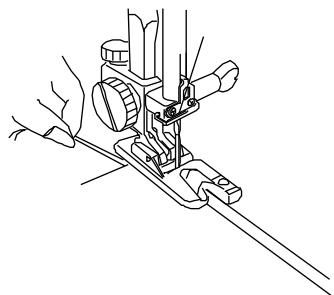
Lower needle into fabric and raise presser foot. Insert folded portion of fabric into curl of foot.
Lower presser foot; sew by lifting up the edge of fabric to keep it feeding smoothly.
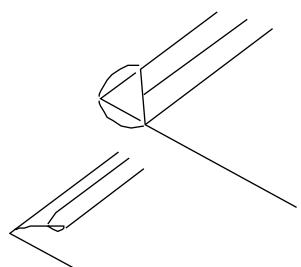
Trim about 6.5 ~mm (1/4") from corners to reduce bulk.
01
Twin Needle Hem
A twin needle hem is quick and easy. This is an excellent hemming method for knit fabrics because the bobbin thread zigzags, allowing the hem to stretch with the fabric. Be sure to use a stretch twin needle for knit fabrics.
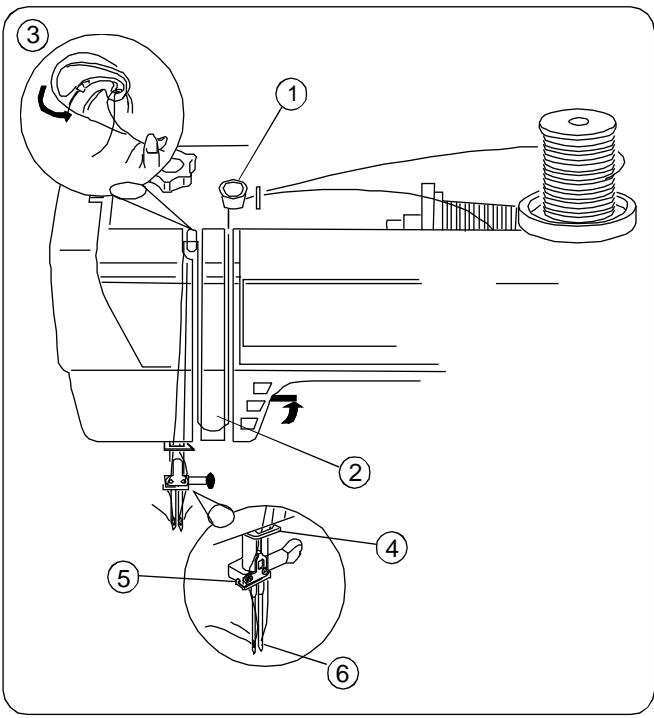
Turn off the power switch and insert a twin needle.
Insert the additional spool pin and put the spool pin felt and second spool on it. See page 17.
Threading the Machine
① - ③ Thread 1 through 3 in the same manner as single thread. See page 19.
④ Draw the threads down and slide them through the right side of the lower thread guide.
⑤ Slide one of the threads through the needle bar thread guide on the left and the other one on the right.
⑥ Thread the needles from front to back.
NOTE: The needle threads cannot be used with a twin needle.
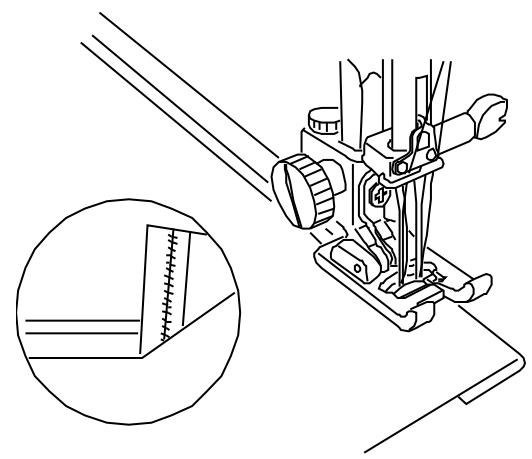
Fold the hem up desired amount and topstitch with the twin needle. Carefully trim away excess fabric using sharp scissors.
Remove twin needle. Set up machine for single needle sewing.

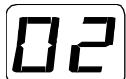
02

Zigzag Stitch
The zigzag stitch is a very versatile stitch. Simply change its width and length. Use the zigzag to finish raw seam edges, sew narrow hems, sew satin stitch appliques and create beautiful monograms.
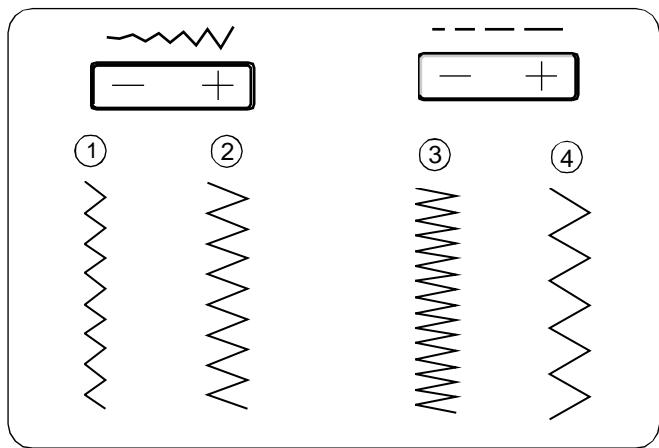
Adjusting Stitch Width and Length
Press the - or + side of the keys to change the stitch width and length.
① Narrower width (lower number)
② Wider width (higher number)
③ Shorter stitch (lower number)
④ Longer stitch (higher number)
02
Overcasting
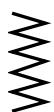
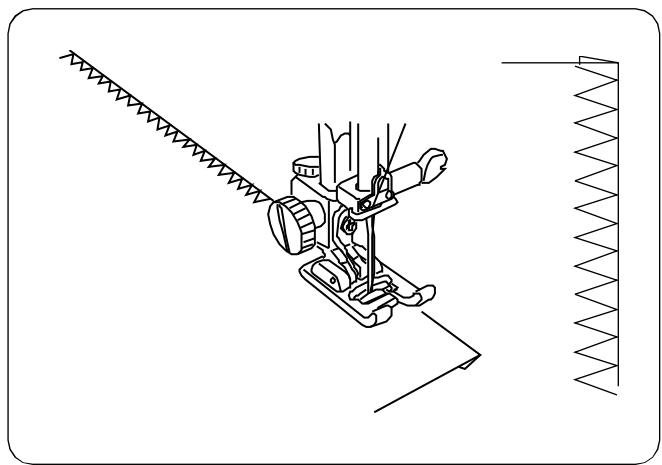
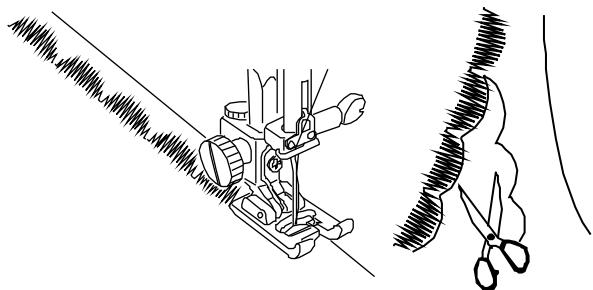
Simple zigzag stitching is used for finishing raw seam edges (overcasting) on most woven fabrics to prevent fabric from unraveling. This is the fastest way to finish an edge.
- Do not change the stitch width when using optional overlock foot C.
Place the fabric edge next to the black guide on the foot. Sew.
02
Whip and Roll Hem
This technique produces a beautiful edge on ruffles and hems. It should only be used for lightweight fabrics and is commonly used in heirloom sewing.
Decrease stitch width to 3.5 and stitch length to 0.8.
The fabric edge must be clean cut with no unraveling threads. Lay the fabric edge in the center of the foot. The zigzag will catch the edge on the left and clear the raw edge on the right, rolling the fabric.
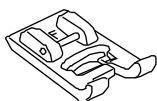
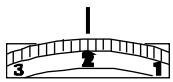
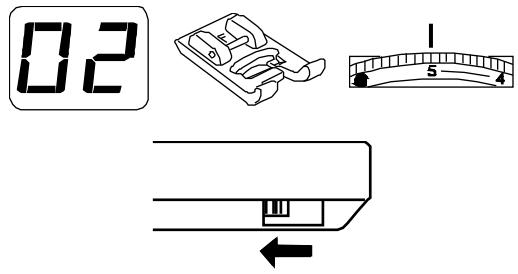
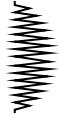
The zigzag stitch is commonly used for applique, monogramming, stems of flowers and petals. (A short zigzag stitch length creates the satin stitch.) Threads of 100% cotton, rayon or silk provide the best results.
- Apply stabilizer to the fabric for the stitch to form correctly.
Decrease stitch width to 3.5 and stitch length to 0.4.
02
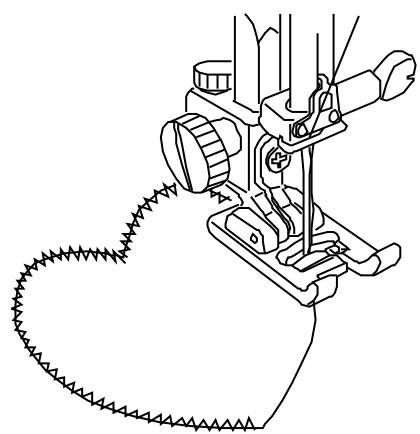
Applique Preparation
- Press fusible webbing to the wrong side of a lightweight fabric.
- Cut out design shape. Fuse design to main fabric.
- Sew design to fabric with the needle swinging off the applique.
- When you reach a place where you need to turn, lower the needle into the fabric at the outer edge of the turn. Raise the presser foot, turn fabric, lower the presser foot and continue sewing. You may need to set the foot pressure dial to 2.
02
How To Sew On a Button
Hand sewing buttons to a garment is very time-consuming. Sew them on in one quick, easy step.
Drop the feed dog. See page 7.
- Set the stitch width according to the position of the holes in the button.
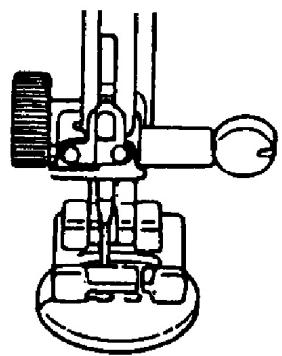
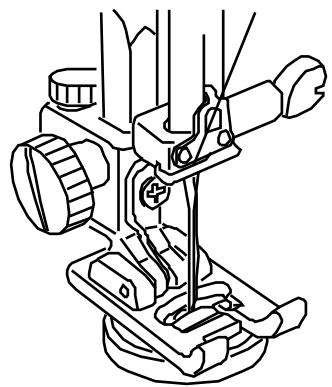
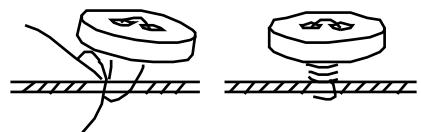
Mark button placement on fabric. Use washable glue or transparent tape to temporarily secure the button. Place the button and fabric under the presser foot. Match the holes in the button to the horizontal slot on the presser foot.
Turn the flywheel by hand until the needle is down inside the left hole of the button. Lower the presser foot.
Turn the flywheel by hand to position the needle above the right hole of the button. Press the key to adjust the needle over the right hole.
Stitch several times.
After you finish sewing, cut the thread leaving 10-15 cm (4-6") of thread at the button.
Pull the thread to the reverse side of the fabric and tie the threads.
Raise the feed dog after sewing on buttons.
NOTE: The optional Sewing on Button foot grips the button better and also allows you to create a thread shank. Simply insert a pin into hole on front of foot before sewing. After sewing, wrap thread tails to create shank.

3-Step Zigzag
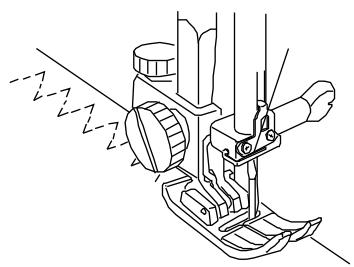
The 3-step zigzag (sometimes called a multiple zig-zag) is used to finish raw seam edges on synthetics and other fabrics that tend to pucker. This stitch gives a flatter edge finish than the regular zigzag and is excellent for darning and mending tears in fabric.
Place the fabric under the presser foot so the needle swings off the fabric to the right.

03
Mending a Tear
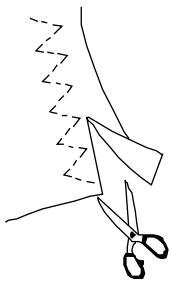
Pull torn edges together and fuse a piece of interfacing slightly larger than the tear to the wrong side of the garment.
Decrease stitch length to 0.6 - 0.8.
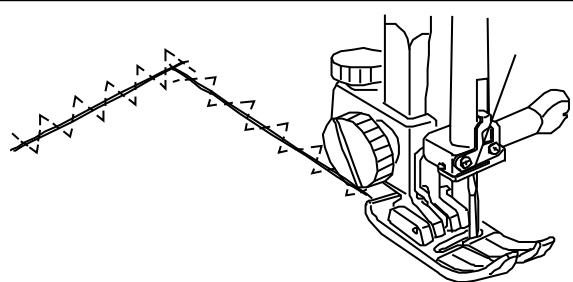
Begin sewing above the tear. Stitch down the middle, pulling edges together. Stop sewing just beyond end of tear. Depending on the tear, you might need to stitch area 2 or 3 times.
05
3
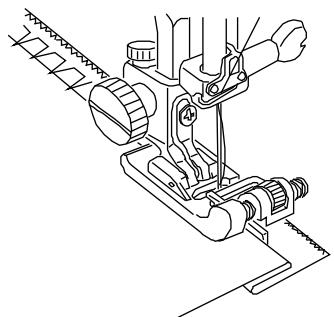
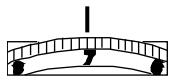
Blind Hem Stitches
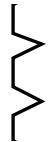
The woven blind hem is a great method of finishing a hemline or sleeve. Finish the raw hem edge with a zigzag or 3 step zigzag before sewing the blind hem.
Use the stretch blind hem on knit fabrics.
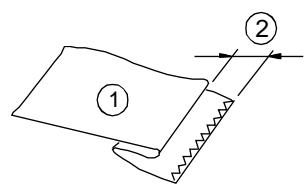
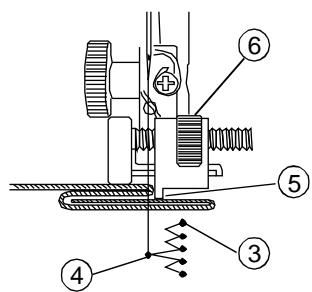
Fold up the hem allowance and press. Fold under the hem toward right side of garment. Leave a 6.5-10 mm (1/4" to 3/8") extension ② at the right
① Wrong side of fabric.
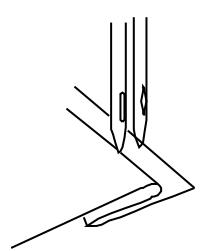
Position the fabric so the folded edge is to the left side of the guide ⑤ . Lower the presser foot. Make sure only the zigzag catches one or two fibers of the fold ④ .
NOTE: If you are using the stretch blind hem, only the widest zigzag catches one or two fibers.
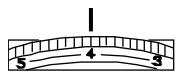
By turning the adjustment nut ⑥ , it is possible to move the guide to the right or left. (The narrow zig-zag ③ will be sewn on the single fabric layer.)
06


07 7
Shell Tuck
This is a pretty hem finish for lingerie and tricot fabrics. Can also be used for decorative rows of stitching.
Use a lightweight fabric such as tricot. Fold and stitch on the bias. Set the stitch width and length as you desire. You may need to tighten the top thread slightly. Allow the needle to just clear the folded edge of the fabric when it swings off the fabric to the right.
If you sew rows of shell stitches, space the rows at least 1.5cm (5/8") apart.
You can sew shell stitches in any direction on knits or soft silky wovens.
Box Stitch
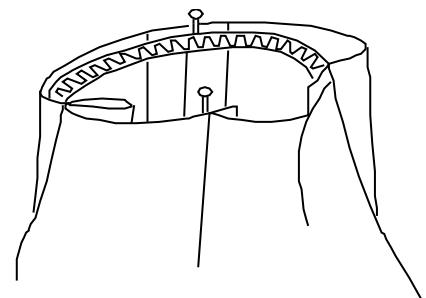
Use this stitch to attach elastic directly onto fabric without making an elastic casing.
- Mark the elastic into quarters and match these to the center front, center back and side seams.
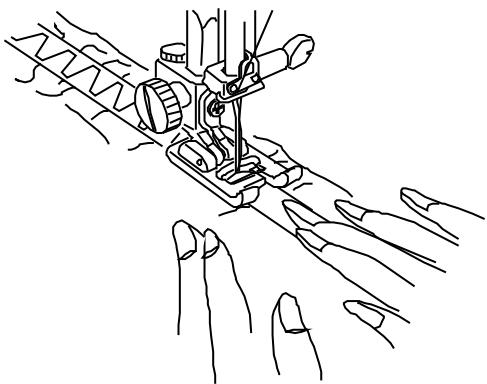
- Place the middle of the elastic under the center of the presser foot and stitch into place, making sure the elastic is evenly stretched.
NOTE: Use the optional Elastic Gatherer to eliminate manually stretching the elastic. See page 50.
08
1
Triple Seam
This strong, durable stitch is recommended where both elasticity and strength are needed. Because of its durability, once in place, this stitch is not easily removed. Use it to reinforce areas such as crotch and armhole seams or to construct items such as backpacks. This stitch can also be used for topstitching.
Elna invented this stitch in 1952.
Using a straight stitch (stitch length 4), baste a seam together. Verify the fit. Reset the machine for triple seam and sew.
09
1 1
Saddle Stitch
Similar to the Triple Seam, the long stitch length of the Saddle Stitch makes a lovely topstitch effect for suits, blazers, jumpers, jeans and linen napkins. Because of its configuration, once in place, this stitch is not easily removed.
Decide distance topstitching should be located from edge of fabric. Turn the adjustment nut to set this distance. Position the fabric against left side of guide. Lower the presser foot and sew.
10
Stretch Seam
A narrow stretch stitch that eliminates puckering on knit fabrics and bias seams. The seam can be pressed flat and opened.

11
Decorative Stretch Stitches
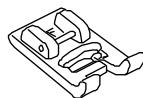
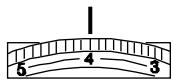
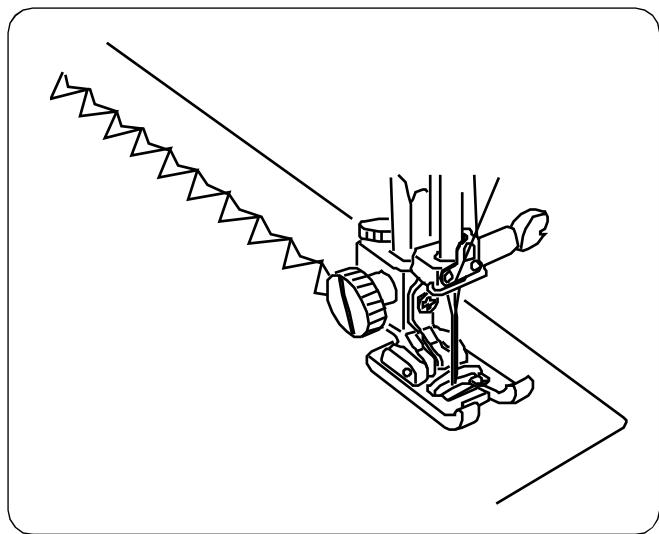
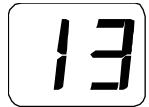
Choose a decorative stretch stitch for applying a hem to knit fabrics.
- Fold and press under hem allowance.
- Place the fabric under the presser foot. Lower the presser foot. Sew hem.
- Trim away any excess hem fabric.
13
F
Super Stretch Stitch
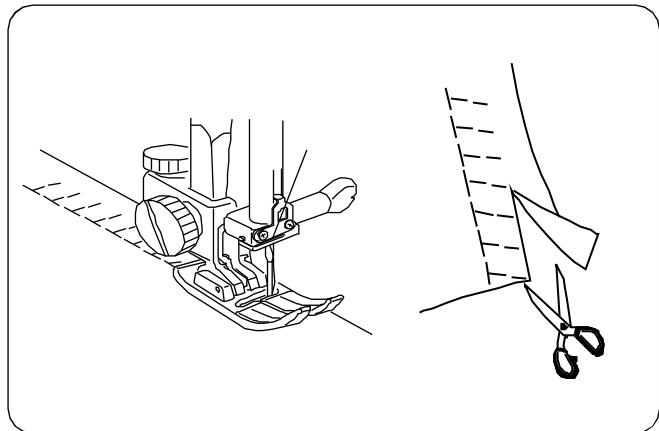
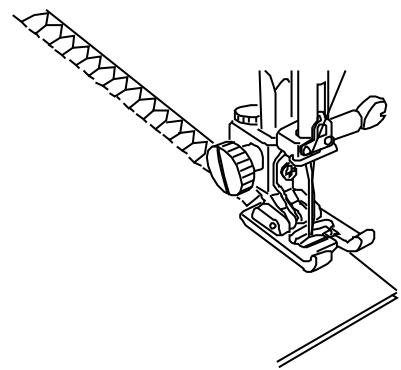
This stitch is recommended for sewing fabrics such as swimwear and stretch velour as it provides the greatest amount of stretchability and strength. Seams lie flat and do not lose their shape. Foot pressure may need to be changed to 2 for fabric to maintain its shape.
Place the fabric edges together under the presser foot. Trim away any excess seam allowance.

14

15
15
Super Overlock Stitch
This industrial inspired overlock stitch is excellent for assembling and finishing fabrics together in one step. Apply ribbing to knits and garment retains its shape.
Place the fabric edges together under the presser foot next to the right side edge of the presser foot.
Elna invented this stitch in 1982.
Double Overlock Stitch
This stitch finishes the edges of your seams similar to a commercial overlock machine stitch.
Place the fabric edges together under the presser foot. Trim away any excess seam allowance.
Elna invented this stitch in 1976.
①


(2)


(3)

19
(4)


16

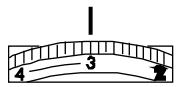
Buttonhole Variations
All buttonholes should use interfacing that is the same weight as the fabric. Interfacing is especially important when sewing on stretch fabrics.
① Classic Buttonhole
The most common buttonhole, found on blouses, shirts, pants, etc. It consists of a bartack at each end and a compact zigzag stitch along each side. Set the stitch width to narrow for lightweight fabrics and wide for heavyweight fabrics.
② Keyhole Buttonhole
Accommodates the shank found on large buttons used on heavy coats and jackets.
③ Jeans Buttonhole
Traditionally found on ready-to-wear jeans and other denim garments.
Stretch Buttonhole
Designed for non-woven fabrics such as knit and jersey. It provides a decorative touch.
Test sew the buttonhole on a sample swatch of the same fabric. Include the interfacing and any seam allowances that will be in the actual garment. This is very important to ensure the buttonhole style and fabric are compatible.
Select a buttonhole. Alter the buttonhole width to match the fabric and thread. See page 42.
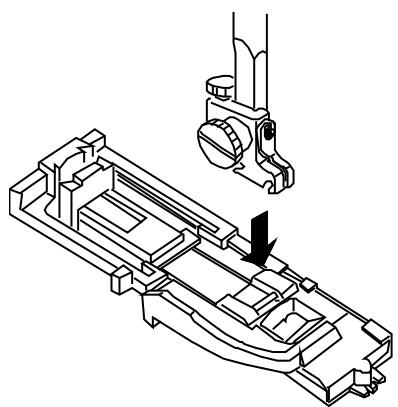
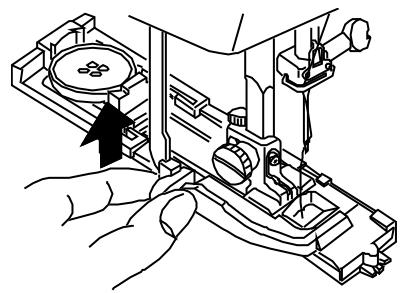
When attaching buttonhole foot, make sure the button opening is at the back of the foot.
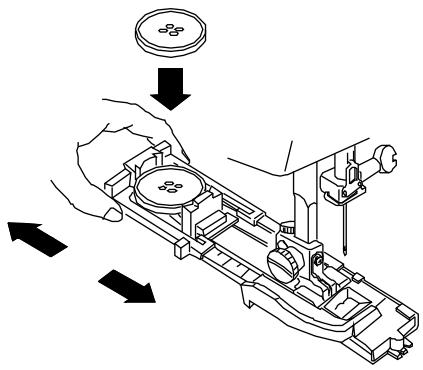
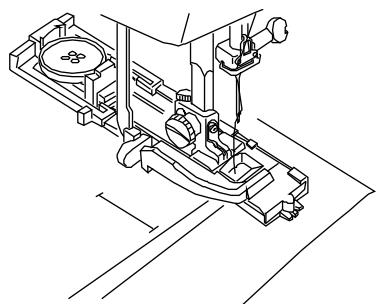
Extend the buttonholder to the back and place the button in it. Push the holder together tightly around the button.
Placing the button in the automatic buttonhole foot automatically sets the size of the buttonhole. The buttonholder on the foot adjusts for a button up to 2.5cm (1") in diameter.
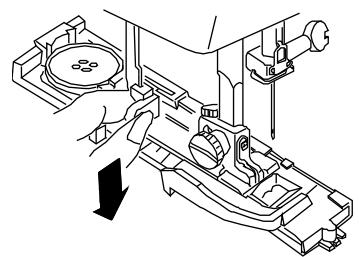
Pull the buttonhole lever down as far as it will go.
Mark the buttonhole area on the fabric. Place both threads to the left under the foot. Insert the garment under the foot and lower the needle at the starting point. Then lower the buttonhole foot.
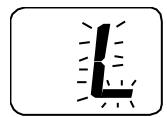
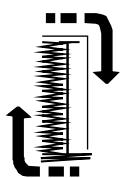
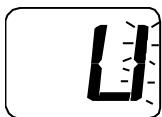
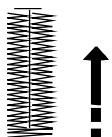

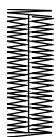
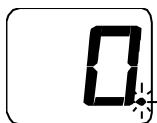

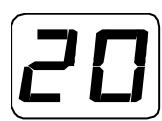
While sewing a buttonhole, the LED readout flashes which portion is currently being sewn.
A flashing “.” in the LED readout signals that the buttonhole is finished.
Raise the presser foot and the readout signal disappears.
NOTE: If presser foot is not raised and another stitch is selected, this warning message will appear.
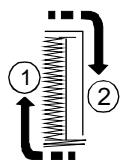
16 Classic Buttonhole
The buttonhole will automatically sew:
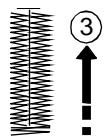
(1) the front bartack and zigzag on left side
② straight stitch on right side to front bartack
③ zigzag on right side
back bartack and stop
Variation - Reinforced Buttonhole
Suitable for heavyweight fabric. When Classic Buttonhole sewing is complete, do not lift up presser foot. Simply begin sewing again and sew over first buttonhole.
#17 Keyhole Buttonhole
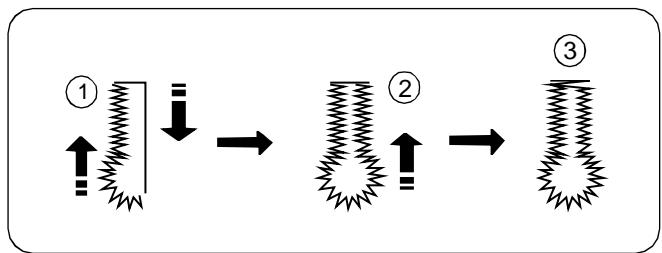
The buttonhole will automatically sew:
(1) the front left half of keyhole, zigzag on left side and straight stitch on right side to front
(2) front right half of keyhole and zigzag on right side
③ back bartack and stop
18 Jeans Buttonhole
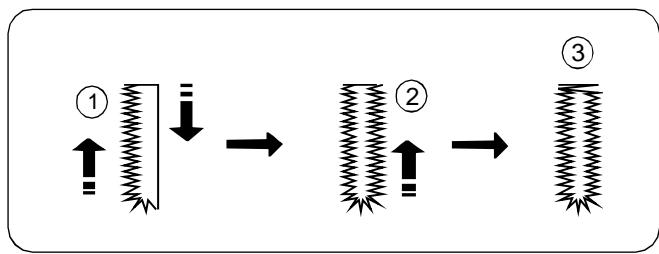
The buttonhole will automatically sew:
(1) the front left half of rounded end, zigzag on left side and straight stitch on right side to front
(2) front right half of rounded end and zigzag on right side
③ back bartack and stop
19 Stretch Buttonhole
The buttonhole will automatically sew:
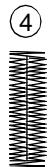
① straight stitch on left side backwards cross stitch forward on left side
② front bartack
③ straight stitch on right side backwards, back bartack, cross stitch forward on right side and stop
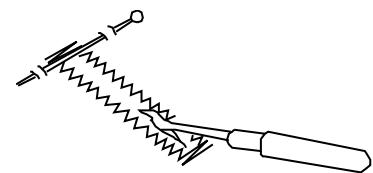

Remove the fabric and place a pin just inside the bartack at each end to prevent accidentally cutting bartacks. Cut buttonhole open with the seam ripper.
When buttonhole sewing is finished, push the buttonhole lever upward as far as it will go.
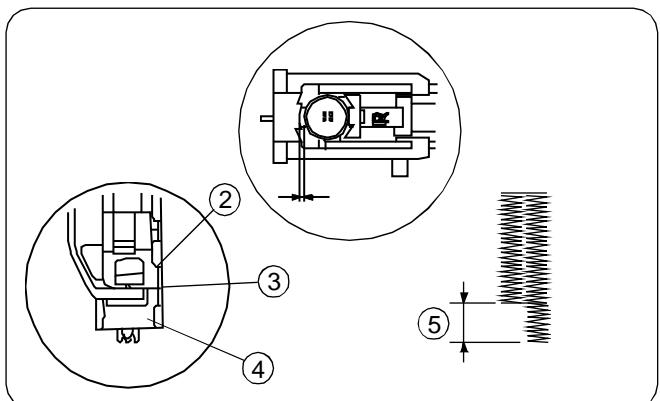
If the button is extremely thick and difficult to fit through the test buttonhole, you can lengthen the buttonhole by pulling the buttonholder on the foot back a little extra. The length of the hole will increase by that same amount.
① Buttonholder
② Slider
③ There should be no gap
④ Spring holder
⑤ Incorrect buttonhole
Make sure there is not a gap between the slider and the spring holder. If there is a gap, the sides of the buttonhole will be different lengths ⑤.
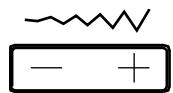
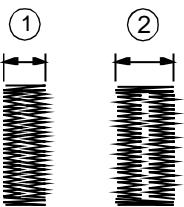
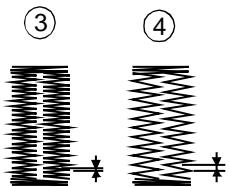
- How to Alter Buttonhole Stitch Width and Length
Press the - or + side of the keys to alter the buttonhole for different weights of fabric and thread.
① Narrower width
② Wider width
③ Shorter stitch
④ Longer stitch
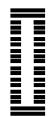
Alter Keyhole Buttonhole Stitch Length According to Fabric and Thread
0.3 Lightweight fabric
(for lawn and batiste)
0.4 Mediumweight fabric
(for gabardine, linen and wool)
0.8 Heavyweight fabric
(for coating and polar fleece)
16
16
Coreded Buttonhole
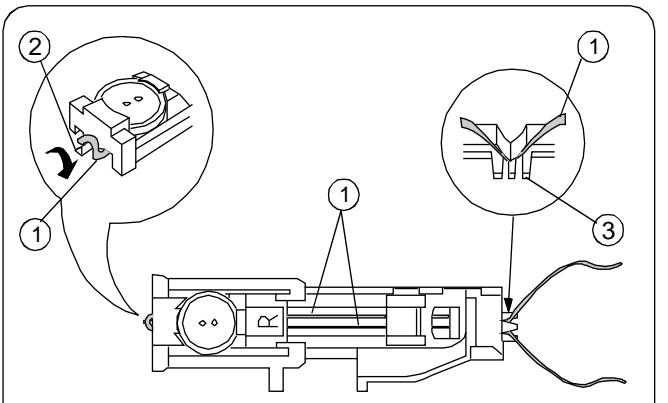
Cored buttonholes are found on coats and other garments that require extra strong buttonholes. The cording reinforces and accentuates the buttonhole.
Sew a corded buttonhole using the same procedure described on pages 39-42 for a classic buttonhole.
- Set the stitch width to match the thickness of the cording.
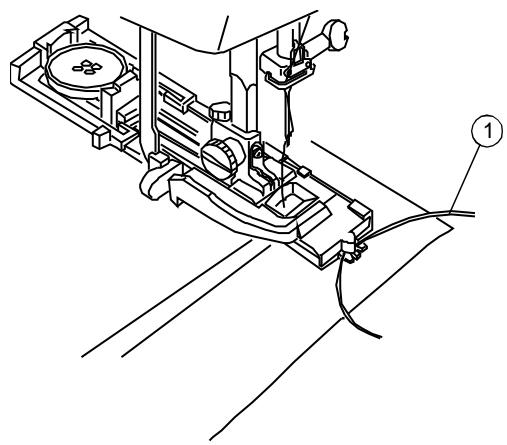
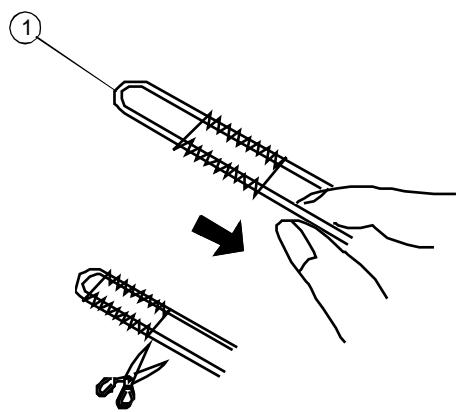
With the buttonhole foot raised, hook the filler cord ① on the spur ② at the back of the buttonhole foot. Bring the ends forward under the buttonhole foot.
Position the cord into the forks ③ on the front of the foot to hold the ends tight.
Lower the needle into the garment where the button-hole will start and lower the presser foot.
Press the foot control and slowly sew the buttonhole. Each side of the buttonhole and the bartacks will be sewn over the cord. Remove the fabric from the machine and cut only the sewing threads.
Pull the left end of the cord to tighten it. Thread the end through a darning needle, draw to the wrong side of the fabric and cut.
Cut open buttonhole.
20
1
(1)
(3)
(2)
(4)
(5)
Buttonhole Applique
A favorite method of applying small pieces of fabric to quilts for decoration.
Use fine embroidery thread (50 weight or finer) and needle appropriate to fabric. You may need to set the foot pressure dial to 2.
- In this type of applique, raw edges are folded under.
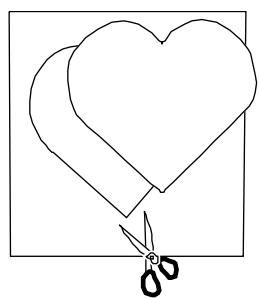
To prepare raw edge, first cut applique design out of paper.
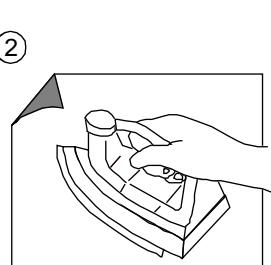
- Press fusible webbing to wrong side of applique fabric.
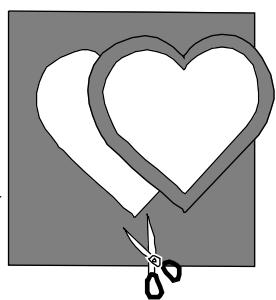
- Cut the fabric slightly larger than paper pattern.
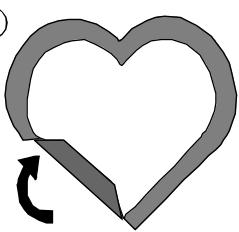
- Fold fabric under to match paper pattern size. Remove pattern. Press only the edge to form a perfectly shaped design.
NOTE: Clip curves where necessary.
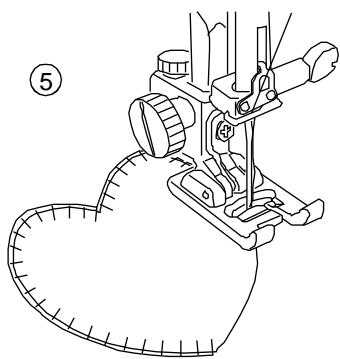
- Press applique in place and sew. Straight edge of the stitch is sewn next to folded edge of applique.
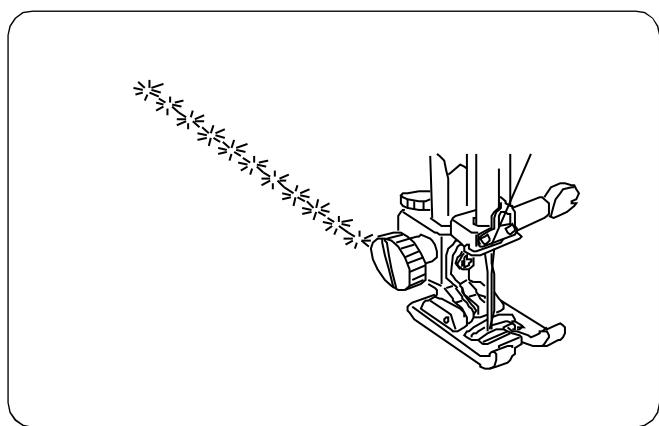
Fringing
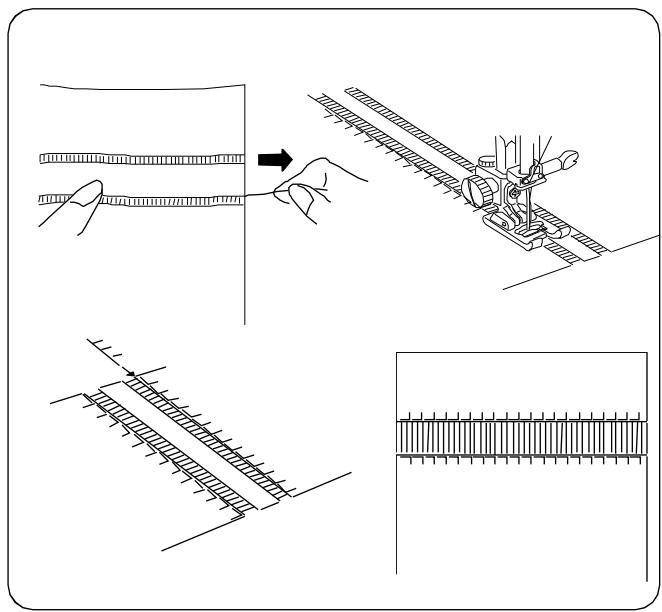
Fringing adds a special touch on table linens and shawls. Choose a firm, woven fabric like linen where threads can be removed easily.
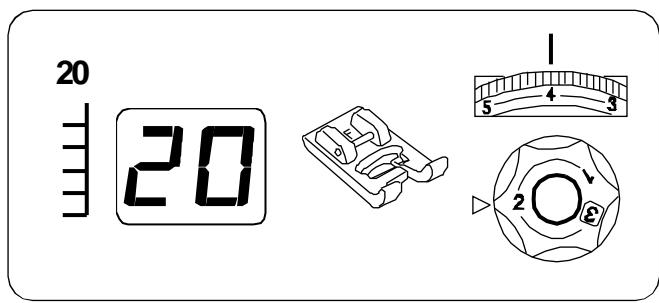
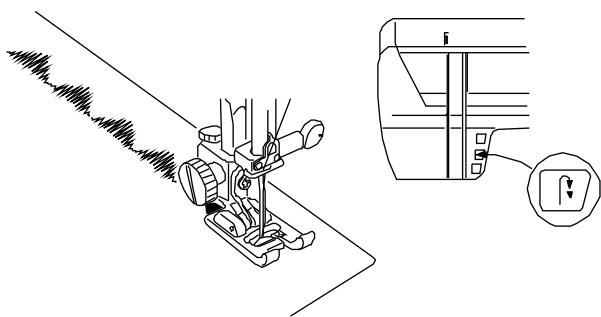
Carefully cut the fabric on grain. Remove a single yarn or thread where the fringing is to begin. Sew down the left side so the right hand stitches fall in the open space. Remove all excess yarn to create fringe.
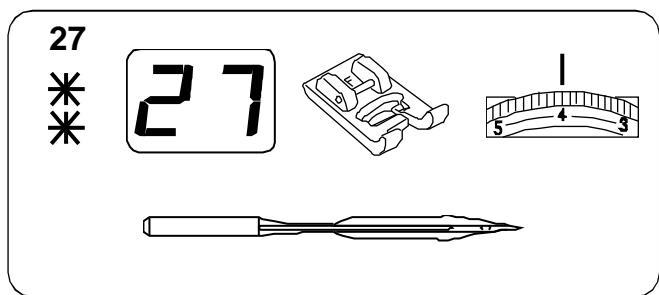
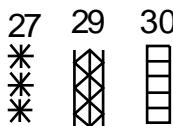
Stitch can also be used.
Hemstitches
Hemstitching, also known as French hand sewing, was traditionally only a hand sewn art. There are several stitches to choose from that will add an "old world charm". Best results require the use of linen, cotton or a blend of linen/cotton.
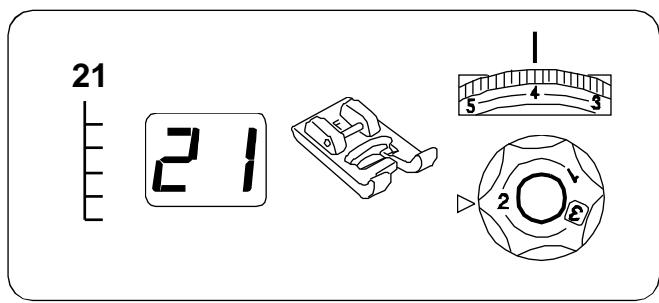
Thread machine, needle and bobbin with a fine cotton embroidery thread (50 weight or finer). Insert a universal needle size #110 or a wing needle. Use spray starch and press to stabilize fabric.
NOTE: Only insert a wing needle when sewing the stitches listed below. A wing needle is wider than a regular needle. Hand turn the flywheel a few times to ensure needle does not touch needle plate. If needle touches needle plate, narrow the stitch width.
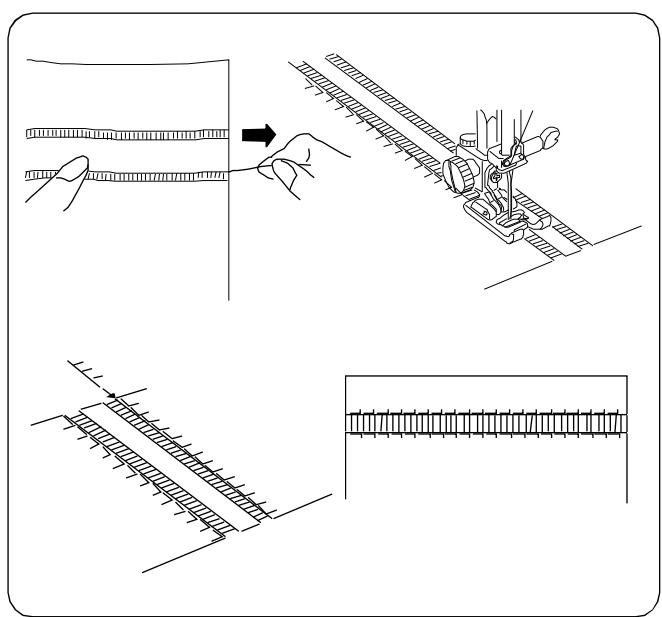
Draw design lines with a washable fabric marker. Sew slowly over design lines.
- Adjust fine tuning until needle precisely penetrates each repeat hole. See page 6.
Remove wing needle.
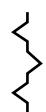
Drawn Work
Drawn work uses the same method as fringing. Choose a firm, woven fabric like linen where threads can be removed easily.
Carefully cut fabric on grain. Determine width of the drawn work and remove one yarn or fabric thread at each end.
Sew down right side, guiding fabric so left hand stitches fall in open space.
After finishing left side, turn the fabric around 180^ . Sew down other side.
Remove the yarn or fabric threads between the stitching.
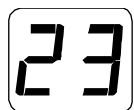
23
Picot Stitch
The picot stitch can be used to sew fabrics together "edge-to-edge".
- Fold and press under the seam allowance to wrong side of fabric on both fabric edges.
- With the fabric right side up, place the folded edges next to each other under the middle of the presser foot. Sew with the folded edges touching each other.
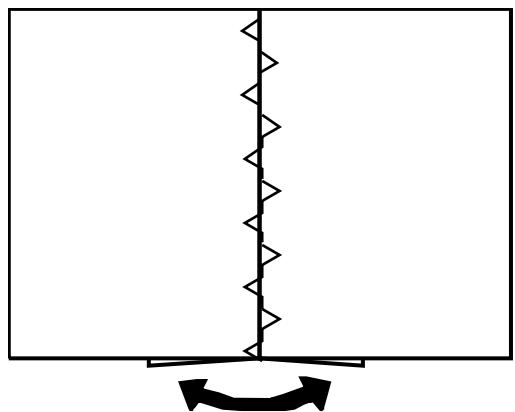
NOTE: Create fagoting (bridging), a technique seen in heirloom sewing, with the optional Fagoting (Bridging) Plate. Two folded edges are joined together by threads over an open area. See page 50.
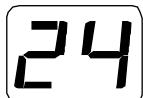
24
26

29
¥
米
¥
Patchwork
Sew a straight stitch seam and press seam allowance open. Sew patchwork stitch on right side of garment centering it over the seam.
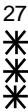
These stitches can also be used:
Twin Needle Decorative Stitches
Sew decorative stitches with a twin needle and two different needle thread colors.
Turn off power switch and insert twin needle. Thread machine. See page 29.
Decrease stitch width to 3.5 or less.
NOTE: Twin needles are available in many different sizes and widths. If you use a twin needle wider than 2.0mm , hand turn the flywheel to make sure the needles will not hit the foot before sewing.
Sew.
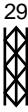
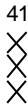
These stitches can also be used:
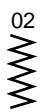
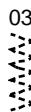
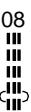


Single Pattern - Auto-Lock Key
It is possible to sew a single pattern for a decorative effect.
Place fabric and stabilizer under presser foot and lower presser foot. Begin sewing and immediately press key. Machine will complete the stitch, lockstitch and stop.
Position fabric for another pattern and repeat the process.
Use this process for any pattern.
32
32
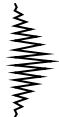
35
35

40
40

55

Scallop Edges
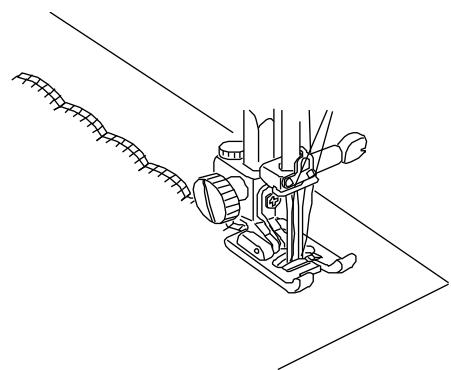
Scallop stitches can be used to attractively finish the edges of collars, pockets and placemats.
To edge a collar, place interfacing between upper and under collar and sew the scallop on the seam line.
After sewing, trim fabric close to stitching. Do not cut the scallops.
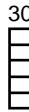
This stitch can also be used.
Complete Pattern - Auto-Lock Key
Choose any of the stitches 31-60 for decorative sewing.
- Remember to use stabilizer appropriate to the fabric.
Press key at end to complete the pattern and tie off stitches.
Combining Patterns
Add a decorative accent to your sewing. Express your creative talents by alternating stitches.
- Remember to use stabilizer appropriate to the fabric.
Sew two hearts; press key while sewing second heart.
Select and sew flower; press key while sewing flower.
Repeat process as desired.
NOTE: The key locks the stitches.
01

51
Smocking
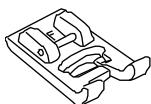
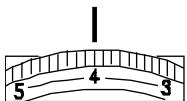
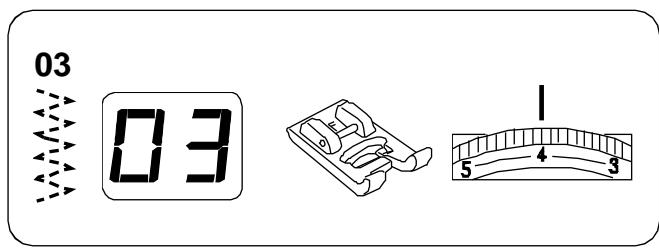
Smocking is a delicate, decorative treatment on children's clothing or women's blouses. Choose a soft, lightweight fabric such as batiste, gingham or Challis. Cut the fabric three times the finished width.
Increase stitch length to 5.0.
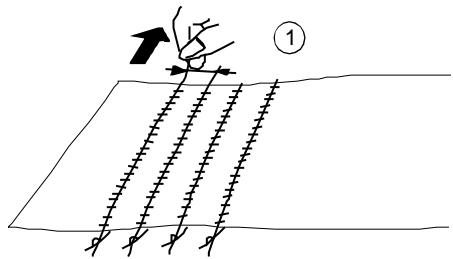
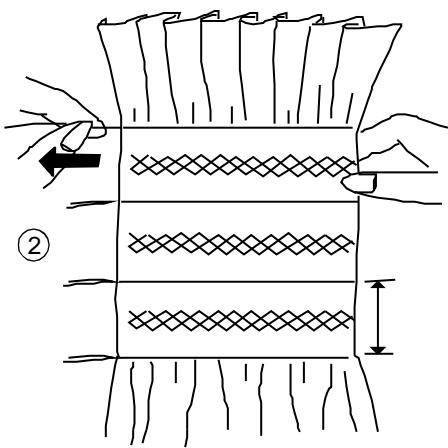
Sew rows of straight stitches about 1 cm (3/8") apart, across the area to be smocked. (A looser needle thread tension will make gathering easier.)
(1) Straight stitching lines – 1 cm (3/8") apart
Tie the threads along one edge. Pull the bobbin threads to distribute the gathers evenly. Secure the threads at the other end.
Sew smocking stitch between the straight stitches. (Pressure may need to be reduced.) Pull out the straight stitching lines.
② Smocking stitch - remove gathering
SECTION IV
Exclusive Optional Elna Accessories
Elastic Gatherer Plate
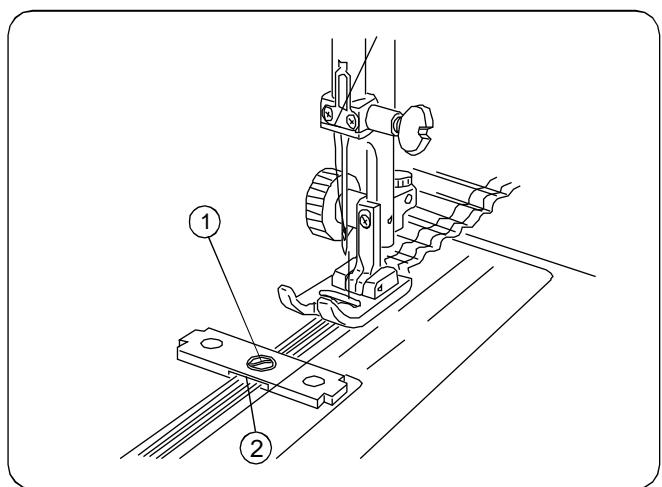
Apply elastic in one step without creating a casing. The elastic gatherer stretches the elastic as it is sewn to the fabric, a quick and easy method. Available in 3 sizes – 7 mm, 10 mm or 13 mm (1/4", 3/8" or 1/2").
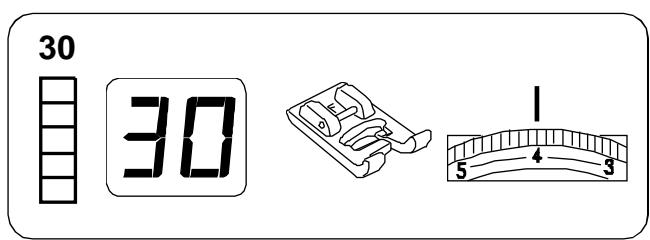
Increase stitch length to 3.0. Remove bobbin cover plate.
Loosen the adjusting screw ① on the elastic gatherer. Angle cut elastic end and insert elastic into slot ② . Pull elastic through slot until 4 ~cm - 5 ~cm ( 1 ~1 / 2" - 2" ) extends out the back. Tighten adjusting screw.
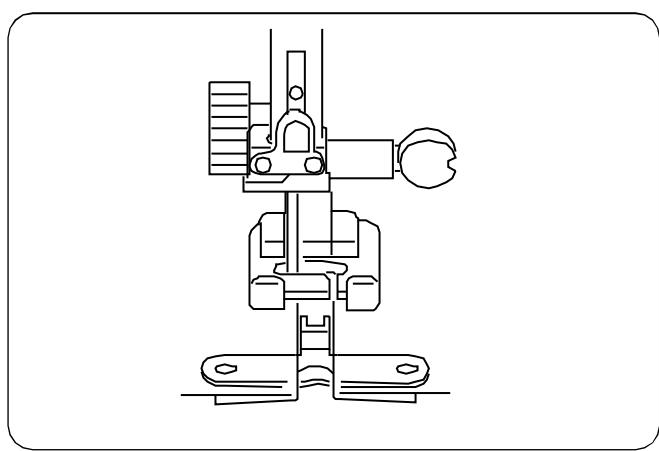
Attach elastic gatherer to machine.
Place scrap fabric under foot on top of elastic. Test sew.
Tighten or loosen adjusting screw as desired.
Fagoting (Bridging) Plate
Fagoting (bridging) is a technique seen in heirloom sewing. Two folded edges are joined together by threads over an open area. Use linen, cotton or blend of linen/cotton.
Remove the bobbin cover plate and attach the narrow fagoting plate.
Thread machine, needle and bobbin with a fine embroidery thread (50 weight or finer). Use spray starch to stabilize fabric.
Fold and press under seam allowance to wrong side of fabric.
Place folded fabric right side up on both sides of fag-oting plate. Sew slowly, guiding the fabrics against the fagoting plate. Adjust stitch width so needle catches folded edges.
SECTION V
Taking Care of Your Machine
Your Elna 6001 has been meticulously designed and manufactured to give you a lifetime of sewing pleasure. Do not store the machine in a high humidity area, near a heat radiator or in direct sunlight. The machine is self-lubricating, however, the area around the bobbin and hook must be cleaned each time the machine has had extensive use. Do not dismantle the machine further than explained on these pages. Clean the outside of the machine with a soft cloth and pure soap.
Cleaning the Bobbin Area
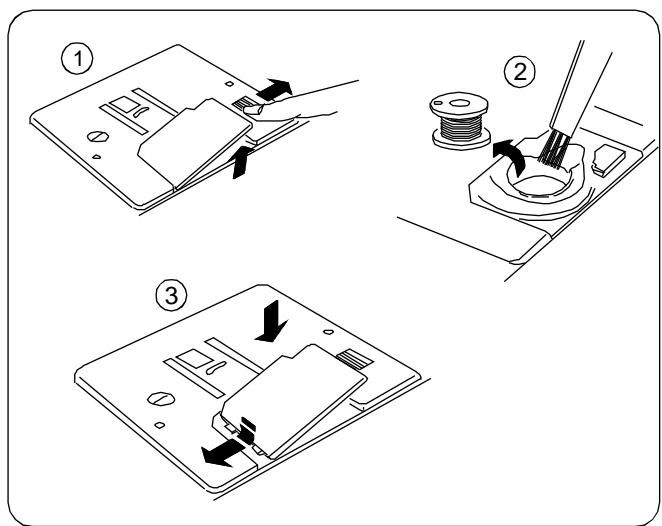
Loose threads and dust may cause puckered stitches and thread breakage during stitching. Check for lint buildup after each project is completed.
Press the key until the needle is raised. Unplug the machine before cleaning.
① Slide the bobbin cover plate release button to the right to remove the bobbin cover plate.
② Take out the bobbin; brush out dust and lint. (You can also use a small vacuum cleaner.)
③ Insert the bobbin and attach the bobbin cover plate.
Cleaning the Hook Area and Feed Dog
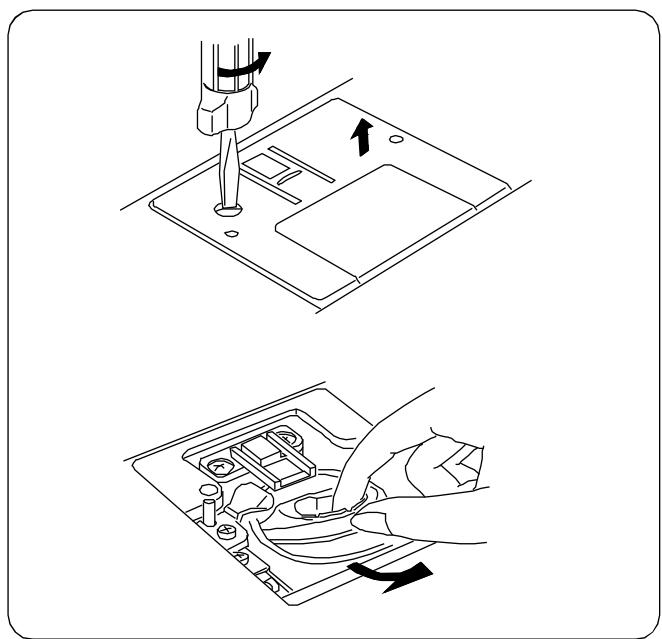
① Remove the presser foot, bobbin cover plate, needle and bobbin. Use the screwdriver supplied with the machine to remove the screw on the left side needle plate.
② Remove the needle plate. Lift up and remove the bobbin case.
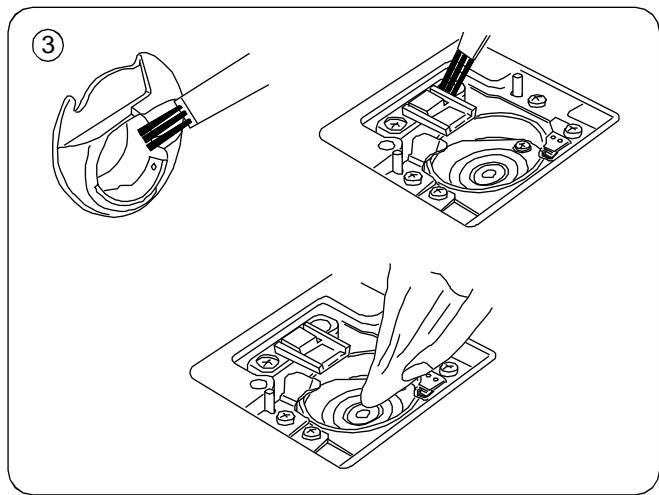
③ Clean the feed dog and hook area with the lint brush. Wipe out gently with soft, dry cloth. (You can also use a small vacuum cleaner.)
Replacing the Bobbin Case
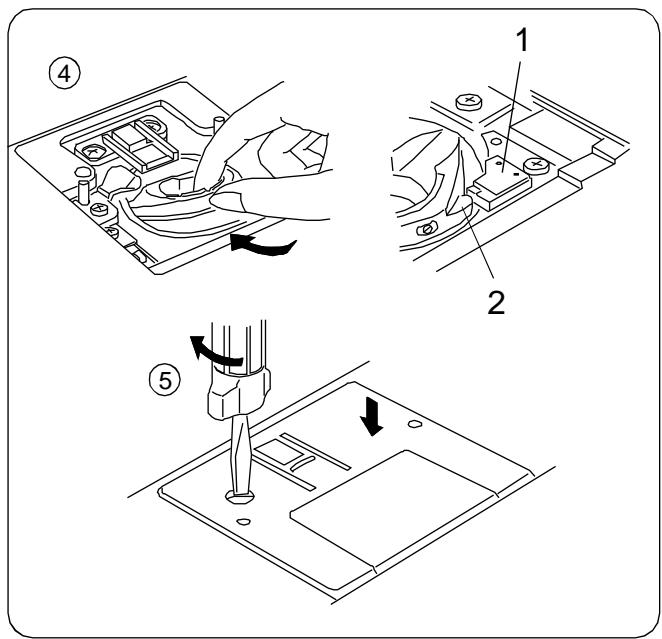
④ Insert the bobbin case so the knob fits next to the stopper in the hook area.
- Stopper
- Knob
⑤ Replace the needle plate, inserting the two needle plate guide pins into the holes in the needle plate. Replace the screw.
After cleaning, be sure to replace the needle, presser foot and bobbin.
Changing the Light Bulb
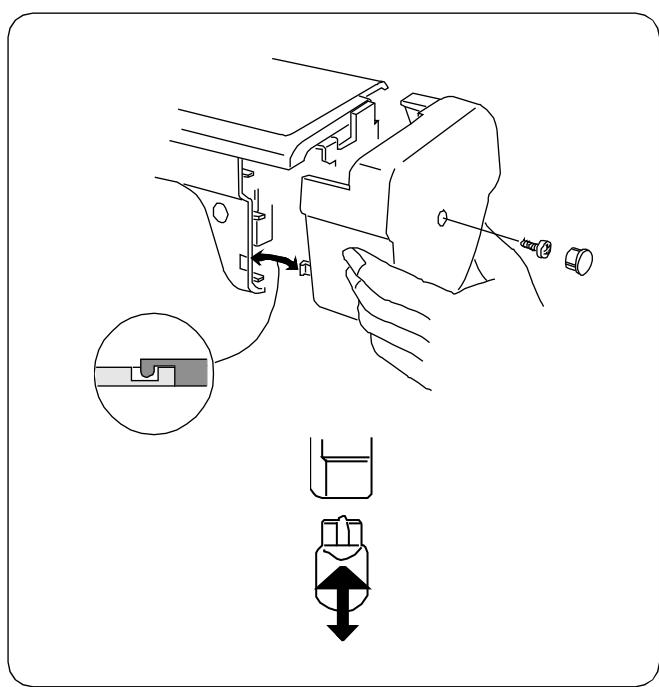
The sewing light is located behind the face plate.
Unplug the machine.
Remove screw button and screw. Pull away face plate.
Pull out light socket. Pull out light bulb. Push in light bulb with pins aligned to holes in light socket. Push in light socket.
Replace face plate, screw and screw button.
NOTE: Only use same type light bulb rated 12 Volts, 5 watts.
TROUBLESHOOTING
| Condition | Cause | See page(s) |
| Needle thread breaks | 1. The needle is not threaded properly. | 19 |
| 2. The needle thread tension is too tight. | 9 | |
| 3. The needle is bent or blunt. | 10 | |
| 4. The needle is not inserted correctly. | 10 | |
| 5. The needle thread and bobbin thread are not properly under (drawn to the back of) the presser foot when starting to sew. | 21 | |
| 6. The fabric is not moved to the back when sewing is finished. | 23 | |
| 7. The thread is either too heavy or too fine for the needle. | 10 | |
| Bobbin thread breaks | 1. The bobbin thread is not threaded correctly in the bobbin case. | 18 |
| 2. Lint has collected in the bobbin case. | 51 | |
| 3. The bobbin is damaged and does not turn smoothly. | Change bobbin. | |
| Needle breaks | 1. The needle is not inserted correctly. | 10 |
| 2. The needle is bent or blunt. | 10 | |
| 3. The needle clamp screw is loose. | 10 | |
| 4. The needle thread tension is too tight. | 9 | |
| 5. The fabric is not moved to the back when sewing is finished. | 23 | |
| 6. The needle is too fine for the fabric being sewn. | 10 | |
| Skipped stitches | 1. The needle is not inserted correctly. | 10 |
| 2. The needle is bent or blunt. | 10 | |
| 3. The needle and/or the thread are not suitable for the fabric being sewn. | 10 | |
| 4. A stretch needle is not being used for sewing stretch, very fine and synthetic fabrics. | 11 | |
| 5. The needle thread is not threaded properly. | 19 | |
| 6. The foot pressure dial is not adjusted correctly. | 7 | |
| 7. The wrong needle is being used. | 10 | |
| Seam puckering | 1. The needle thread tension is too tight. | 9 |
| 2. The machine is not threaded correctly. | 18, 19 | |
| 3. The needle is too large for the fabric being sewn. | 10 | |
| 4. The stitch length is too long for the fabric. | 15 | |
| 5. The foot pressure dial is not set correctly. | 7 | |
| Place lightweight tearaway stabilizer under lightweight fabrics. | ||
| Slipping fabric | 1. The foot pressure dial is not adjusted correctly. | 7 |
| 2. The correct presser foot is not being used. | 5 | |
| Fabric does not feed smoothly | 1. The feed dog is packed with lint. | 51 |
| 2. The pressure foot dial is not set correctly. | 7 | |
| 3. The stitches are too short. | 15 | |
| 4. The feed dog was not raised after being lowered. | 7 | |
| 5. The correct presser foot is not being used. | 5 | |
| Gathering | 1. The needle thread tension is too loose. | 9 |
| 2. The needle is either too large or too small for the thread. | 10 | |
| Machine does not work | 1. The machine is not plugged in. | 12 |
| 2. A thread is caught in the hook area. | 51 | |
| 3. The bobbin winder spindle is still in the winding position. | 17 | |
| Stitches are distorted | 1. The fine adjustment dial is not set properly. | 6 |
| 2. The correct presser foot is not being used. | 5 | |
| 3. The needle thread tension is too tight. | 9 | |
| 4. The stitch length is not suitable for the fabric being sewn. | 15 | |
| 5. Use interfacing for fine or stretch fabrics. | 37 | |
| Automatic but-tonhole stitches do not work | 1. The stitch length is not suitable for the fabric being sewn. | 42 |
| 2. Interfacing is not being used with fabrics. | 39 | |
| 3. There is a gap between the slider and spring holder. | 42 | |
| Noisy operation | 1. Threads have been caught in the hook area. | 51 |
| 2. Lint has built up in the bobbin holder or hook area. | 51 | |
| Machine stops and the message Lo ap-pears. | 1. Threads have been caught in the hook area. | 51 |
| 2. Lint has built up in the bobbin holder or hook area. | 51 | |
| 3. The machine is not threaded properly. | 18, 19 | |
| 4. The fabric is too heavy. | 10 | |
| Machine stops and the message E1 ap-pears. | 1. Machine needs servicing. | Contact your authorized Elna service center |
INDEX
A
Accessories 4
Accessory Storage 4
Applique 31,44
Auto-Lock Key 13,47,48
B
Blind Hem Stitches 34
Bobbin
Drawing Up Bobbin Thread 21
Inserting 18
Winding 16-17
Bobbin Case 52
BoxStitch 35
Bridging 46, 50
Button Sewing 32
Buttonholes 6,39-42
C
Cleaning
Bobbin Area 51
Feed Dog 51-52
Hook Area 51-52
Machine 51
Connecting Machine to Power Supply 12
Coreded Buttonhole 43
D
Double OverlockStitch 38
Drawn Work 46
E
Elastic 35
Elastic Gatherer 35, 50
Extension Table 4, 6
F
Fabric 10, 15, 23, 42
Face Plate 3
Fagoting 46,50
Feed Dog 7
Fine Tuning Adjustment 6, 45
Flywheel 3
Foot Control. 8
Foot Pressure Dial 3,7
Free Arm 6
Fringing 45
G
Gathering 24
H
Hems 28, 29, 31, 34, 37
Hemstitches 45
1
Indicator Lights 14
Interfacing 31, 33, 39, 48
K
Keys 3,13-15
L
LED Readout 13, 14
Light Bulbs. 1, 52
M
Mending a Tear 33
N
Needle Position 14
Needle Threader 3,20,29
Needles 10, 11
0
Oil 12
Overcasting 30
P
Part Names 3
Patchwork 47
Patterns
Combining 48
Completing 48
Single 47
PicotStitch 46
Pintucks 27
Plugs 12
Power/Light Switch 3,12
Presser Foot
Attaching and Removing 7
Clearance 8
Definitions 5
Q
Quilt Guide 27
R
Reverse Key. 14
Rolled Hem (optional foot) 28
s
SaddleStitch 36
Scallop Edges 48
Seam Allowance Lines 8
Shank 7
Shell Tuck 35
Smocking 49
Speed 8
Spool Pin 16, 17
Stabilizer 31, 39, 44, 47, 48
Stitch Charts 3
Stitch Length Key. 15, 30, 42
Stitch Selection Keys 15
Stitch Width Key. 14, 30, 42
StraightStitch 22
Stretch Seam 36
Stretch Stitches 37
Super Overlock Stitch 38
Super Stretch Stitch 37
T
Thread 10
ThreadCutter 3,23
Thread Tension 3,9
Threading 19
Three Step Zigzag 33
Triple Seam 36
Twin Needle 20, 29, 47
U
Up/Down Needle Key 13
W
Whip and Roll Hem 31
Wing Needle 20, 45
Z
ZigzagStitch 30
Zippers 25-26