
SF4390MCXK - Microwaves SMEG - Free user manual and instructions
Find the device manual for free SF4390MCXK SMEG in PDF.


| Product type | Built-in microwave |
| Brand | SMEG |
| Model | SF4390MCXK |
| Power supply | 220-240 V ~ 50/60 Hz |
| Maximum microwave power | 1000 W |
| Microwave power levels | 10 (100 W to 1000 W) |
| Cooking functions | Microwave, Grill, Convection (forced air), Turbo, Static, Combined (microwave + grill, microwave + fan forced, microwave + circular) |
| Special functions | Timed defrost, Defrost by weight (5 types), Reheating, Dough rising, Programmed cooking, Timer, Shabbat, Vapor Clean (assisted steam cleaning) |
| Control type | Rotary knobs and digital display |
| Display | Clock, function indicators, temperature level reached |
| Interior lighting | Manual or automatic lamp (eco) |
| Capacity | 40 L (estimated) |
| Cavity material | Enameled steel |
| Included accessories | Rack, glass dish, rack for dish |
| Safety | Automatic child lock, stop when door open |
| Cleaning | Vapor Clean (steam assisted), manual cleaning |
| Spare parts and repairability | Original parts available at authorized service centers |
| Installation | Built-in, requires an opening in the cabinet |
| Weight | Approximately 30 kg (estimated) |
Frequently Asked Questions - SF4390MCXK SMEG
User questions about SF4390MCXK SMEG
0 question about this device. Answer the ones you know or ask your own.
Ask a new question about this device
Download the instructions for your Microwaves in PDF format for free! Find your manual SF4390MCXK - SMEG and take your electronic device back in hand. On this page are published all the documents necessary for the use of your device. SF4390MCXK by SMEG.
USER MANUAL SF4390MCXK SMEG
1.1 General safety instructions 46
1.2 Instructions for using microwaves 47
1.3 Manufacturer liability 48
1.4 Appliance purpose 49
1.5 Identification plate 49
1.6 Disposal 49
1.7 This user manual 50
1.8 How to read the user manual 50
2 Description 51
2.1 General Description 51
2.2 Control panel 52
2.3 Other parts 52
2.4 Microwaves 53
2.5 Available accessories 53
3 Use 54
3.1 Instructions 54
3.2 First use 56
3.3 Using the accessories 56
3.4 Using the oven 57
3.5 Cooking functions 59
3.6 Special functions and automatic programs 69
3.7 Secondary menu 76
4 Cleaning and maintenance 79
4.1 Instructions 79
4.2 Cleaning the surfaces 79
4.3 Ordinary daily cleaning 79
4.4 Food stains or residues 79
4.5 Cleaning the door glazing 80
4.6 Cleaning the inside of the oven 80
4.7 Vapor Clean: Assisted oven cleaning (on some models only) 81
5 Installation 84
5.1 Electrical connection 84
5.2 Cable replacement 84
5.3 Positioning 85
1 Instructions
IMPORTANT SAFETY INSTRUCTIONS
READ CAREFULLY AND KEEP FOR FUTURE USE.
1.1 General safety instructions
Risk of personal injury
WARNING: If the door or the door seal is damaged, the oven must not be used until it has been repaired by a competent person.
WARNING: It is hazardous for anyone other than a competent person to carry out any service or repair operation which involves the removal of a cover which offers protection against exposure to microwave energy.
WARNING: Liquids and other foods must not be heated in sealed containers since they are liable to explode.
WARNING: During use the appliance and its accessible parts become very hot.
- Never touch the heating elements during use.
- Keep children under eight years of age at a safe distance if they are not constantly supervised.
- This appliance may be used by children aged at least 8 and by people of reduced physical and mental capacity, or lacking in experience in the use of electrical
appliances, as long they are supervised or instructed by adults who are responsible for their safety.
- Children must never play with the appliance.
- The appliance must never be cleaned by unsupervised children.
- Switch off the appliance immediately after use.
- If smoke is emitted, switch off or unplug the appliance and keep the door closed in order to stifle any flames.
- Never attempt to extinguish a flame or fire with water.
- Have qualified personnel carry out installation and assistance interventions according to the standards in force.
- Do not modify this appliance.
- Do not insert pointed metal objects (cutlery or utensils) into the slots in the appliance.
- Do not try to repair the appliance yourself or without the intervention of a qualified technician.
- If the power supply cable is damaged, contact technical support immediately and they will replace it.
Risk of damaging the appliance
- Do not use abrasive or corrosive detergents on glass parts (e.g. powder products, stain removers and metallic sponges).
- Use wooden or plastic utensils.
- Do not use a steam jet to clean the appliance.
- Do not obstruct ventilation openings and heat dispersal slots.
- Never leave the appliance unattended during cooking operations where fats or oils could be released.
- Do not use the appliance to heat rooms for any reason.
- Do not rest any weight or sit on the open door of the appliance.
- Take care that no objects are stuck in the doors.
1.2 Instructions for using microwaves
- Check the appliance visually during the cooking of foods in plastic containers or paper.
- Clean the appliance constantly and remove any food residue.
- In compliance with the provisions relating to electromagnetic compatibility the appliance belongs to group 2 and class B (EN 55011).
- This appliance complies with the
standards and directives currently in force concerning safety and electromagnetic compatibility. It is however recommended for pacemaker wearers to maintain a minimum distance of 20-30cm between the microwave when it is operating and the pacemaker. Consult the pacemaker manufacturer for more information.
- When using the microwave to heat or warm liquids there may be a delay during the boiling process. Pay attention when handling the container: if it is bumped then the liquid may abruptly spill or splash out of it. To avoid this danger, place a heat resistant plastic tablespoon into the container during the heating stage.
- Baby food should not be heated in sealed containers. Remove the cover or the teat (in the case of baby bottles). Always check the preparation's temperature once heating has completed, it should not be too high. For an even temperature and to avoid scalding stir or shake the contents.
- Do not use the microwave to dry food.
- Use the microwave only for the preparation of food for consumption. Other types of applications are strictly forbidden (e.g. drying clothes, warming
slippers, sponges, wet cloths or the like, dehydrating foods) because they can lead to the risk of injury or fire.
- Do not use the microwave to heat oils.
- Do not overheat foods or beverages containing alcohol.
- Do not heat eggs in their shells or whole hard boiled eggs; they may explode even after the heating process has completed.
- Before cooking food with a hard skin or peel (e.g. potatoes, apples, etc.) it is necessary to puncture the skin.
- Do not heat food contained within food packages.
- Do not use the microwave or combination functions when the oven is empty.
- Use cookware and utensils that are suitable for use in a microwave oven.
- Do not use aluminium containers for cooking food.
- Do not use dishes with metallic decorations (gold-plated or silver).
- The appliance operates in the 2.4GHz ISM band.
1.3 Manufacturer liability
The manufacturer declines all liability for damage to persons or property caused by:
- Use of the appliance other than the one envisaged;
- Non-observation of the user manual provisions;
- Tampering with any part of the appliance;
- Use of non-original spare parts.
1.4 Appliance purpose
-
This appliance is intended for cooking food in the home environment. Every other use is considered inappropriate. It cannot be used:
-
in employee kitchens, shops, offices and other working environments.
- in farms/agritourism establishments.
- by guests in hotels, motels and residential environments.
-
in bed and breakfast establishments.
-
The appliance is not designed to operate with external timers or with remote-control systems.
1.5 Identification plate
The identification plate bears the technical data, serial number and brand name of the appliance. Do not remove the identification plate for any reason.
1.6 Disposal

This appliance must be disposed of separately from other waste (Directives 2002/95/EC, 2002/
96/EC, 2003/108/EC). The appliance does not contain substances in quantities sufficient to be considered hazardous to health and the environment, in accordance with current European directives.

Power voltage Danger of electrocution
- Disconnect the main power supply.
- Disconnect the power cable from the electrical system.
To dispose of the appliance:
- Cut the power supply cable and remove it along with the plug (if present).
- Deliver the appliance to the appropriate recycling centre for electrical and electronic equipment waste, or return it to the retailer when purchasing an equivalent product, on a one for one basis.
Our appliances are packed in non-polluting and recyclable materials.
- Deliver the packing materials to the appropriate recycling centre.

Plastic packaging Danger of suffocation
- Do not leave the packaging or any part of it unattended.
- Do not let children play with the packaging plastic bags.
1.7 This user manual
This user manual is an integral part of the appliance and must therefore be kept in its entirety and within the user's reach for the whole working life of the appliance.
- Read this user manual carefully before using the appliance.
1.8 How to read the user manual
This user manual uses the following reading conventions:
Instructions

General information on this user manual, on safety and final disposal.
Description

Description of the appliance and its accessories.
Use

Information on the use of the appliance and its accessories, cooking advice.
Cleaning and maintenance

Information for proper cleaning and maintenance of the appliance.
Installation

Information for the qualified technician: Installation, operation and inspection.

Safety instructions

Information

Advice
-
Use instruction sequence.
-
Single use instruction.
2 Description
2.1 General Description
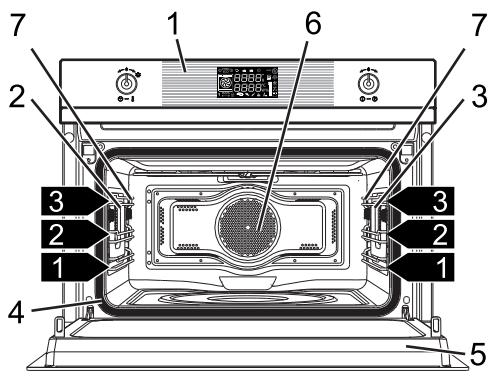
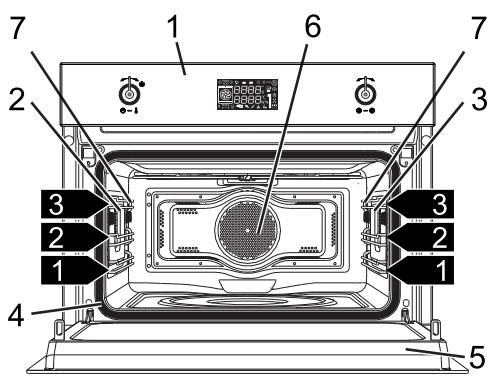
1 Control panel
2 LH Light bulb
3 RH Light bulb (on some models only)
4 Seal
5 Door
6 Oven fan
7 Rack/tray support frames
1,2,3... Frame shelf
2.2 Control panel
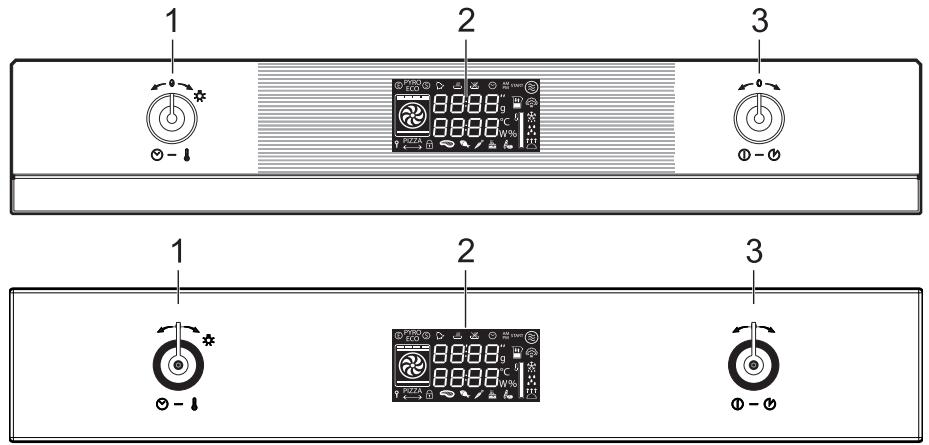
Temperature knob (1)
This knob is used to select:
- Microwave power level
- Cooking temperature
- Function's duration
- Programmed cooking procedures
Current time - Switching on or off of the internal lamp.
Display (2)
Displays the current time, the selected cooking function, power and temperature and any time set.
Function knob (3)
This knob can be used to:
- Turn the appliance on and off
- Select a function,
- Temporarily start or stop a function.
2.3 Other parts
Shelves
The appliance features shelves for positioning trays and racks at different heights. The insertion heights are indicated from the bottom upwards (see 2.1 General Description).
Cooling fan
The fan cools the oven and comes into operation during cooking.
The fan causes a steady outflow of air from above the door which may continue for a brief period of time even after the appliance has been turned off.
Interior lighting
The oven light comes on when the door is opened or any function is selected. To save energy, the lamp will remain on for one minute at the beginning of each cooking cycle (this feature can be disabled through the secondary menu).
Turn the temperature knob briefly to the right to activate or deactivate internal lighting.
2.4 Microwaves
The appliance is equipped with a microwave generator called a magnetron. The microwaves generated are evenly emitted into the oven compartment in order to reach the food and heat it.
Heating takes place through the process of friction between the molecules contained within the food (mainly water molecules), with the consequent generation of heat.
The heat generated directly inside the food leads to defrosting, re-heating or cooking in a shorter length of time compared to traditional cooking.
The use of suitable containers for microwave cooking allows the microwaves to reach the food in a uniform manner (see Materials suitable for microwaves).
2.5 Available accessories

Some models are not provided with all accessories.
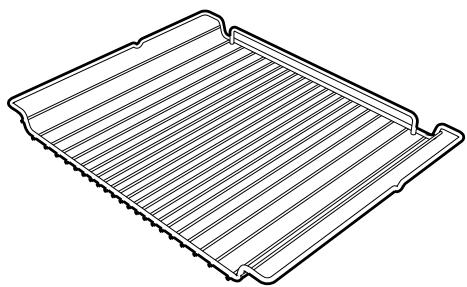
Rack
Useful for supporting containers with food during cooking.
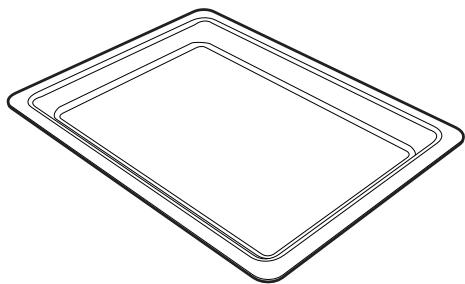
Glass dish
Useful for any type of cooking and collecting fat from foods resting on the rack above.
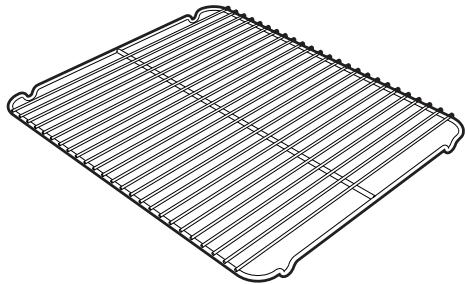
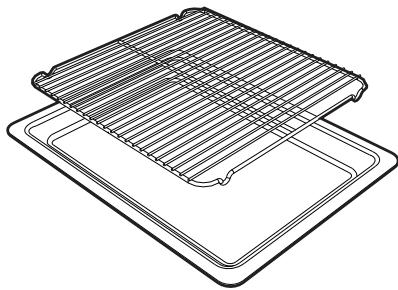
Tray rack
To be placed over the top of the oven tray; for cooking foods which may drip.

The oven accessories intended to come into contact with food are made of materials that comply with the provisions of current legislation.

Original supplied and optional accessories can be requested to Authorised Assistance Centres. Use only original accessories supplied by the manufacturer.
3 Use
3.1 Instructions

High temperature inside the oven during use
Danger of burns
- Keep the oven door closed during cooking.
- Protect your hands wearing heat resistant gloves when moving food inside the oven.
- Do not touch the heating elements inside the oven.
- Do not pour water directly onto very hot trays.
- Do not allow children to get near the oven when it is in operation.

High temperature inside the oven during use
Danger of fire or explosion
- Do not spray any spray products near the oven.
- Do not use or leave flammable materials near the oven.
- Do not use plastic kitchenware for cooking food (except with the microwave function).
- Do not put sealed tins or containers in the oven.
- Do not leave the oven unattended during cooking operations where fats or oils could be released.
- Remove all trays and racks which are not required during cooking.

Improper use Risk of damage to enamelled surfaces
- Do not cover the bottom of the oven cavity with aluminium or tin foil sheets.
- If you wish to use greaseproof paper, place it so that it will not interfere with the hot air circulation inside the oven.
- Do not bang or drag cookware over the glazed bottom of the oven compartment.
- Do not pour water directly onto very hot trays.
Materials suitable for microwaves
In general, in order for the all of the food to be reached, the materials used for microwave cooking must be transparent to microwave energy.
Below is a table of materials to use and those not to use:
MATERIALS TO USE:
Glass*
- Baking ware
- Glasses
Glass jars
Porcelain
Always remove the covers.
Ceramic
Plastic*
- Containers
- Plastic wrap
Only where suitable for microwave use.
Where film is used it must not come into contact with the food.
*only if heat-resistant
NOT TO BE USED
Metal
Aluminium foil
- Aluminium trays
Plates
Metal utensils
Freezer bags tie wraps
Wood
Crystal glasses
Paper
Risk of fire.
Expanded polystyrene containers
Risk of food contamination.
*only if heat-resistant

Dishes must be free of metal decorations.
Testing dishes

The microwave function can be used without any food inside the oven only for this test.
To check whether or not cookware is suitable for use with microwave cooking carry out this simple test:
- Remove all accessories from the oven compartment.
- Place the cookware to be tested into the oven compartment.
- Select the maximum power level (e.g. 1000W).
- Set a cooking time of 30 seconds.
- Start cooking.

Unsuitable cookware. Risk of damages to the appliance
-
If there is crackling or if sparks are emitted from the cookware then immediately terminate the test. In this instance the cookware is not suitable for microwave cooking.
-
At the end of the test the cookware must be either cold or slightly warm. If the cookware is hot then it should be considered as unsuitable for microwave use.
3.2 First use
- Remove any protective film from the outside or inside of the appliance, including accessories.
- Remove any labels (apart from the technical data plate) from the accessories and from the oven cavity.
- Remove and wash all the appliance accessories (see 4 Cleaning and maintenance).
- Heat the empty oven at maximum temperature (using the traditional functions) so as to remove any manufacturing residues.

For the first heating use a traditional function and not a microwave function.
3.3 Using the accessories
Racks and trays
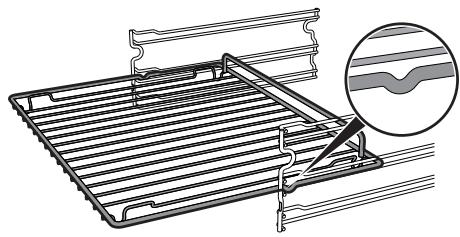
Racks and trays have to be inserted into the side guides until they come to a complete stop.
- The mechanical safety locks that prevent the rack from being taken out accidentally have to face downwards and towards the oven back.
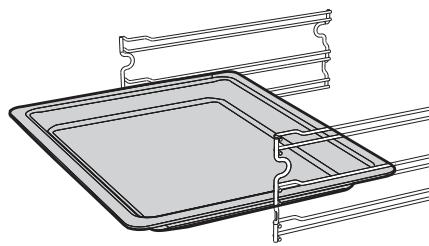

High temperature Danger of burns
- When using any of the microwave functions the rack can become very hot. Use heat-resistant gloves for handling.

Gently insert racks and trays into the oven until they come to a stop.

Clean the trays before using them for the first time to remove any residues left by the manufacturing process.
Tray rack
The tray rack has to be inserted into the tray. In this way fat can be collected separately from the food which is being cooked.
3.4 Using the oven
Display
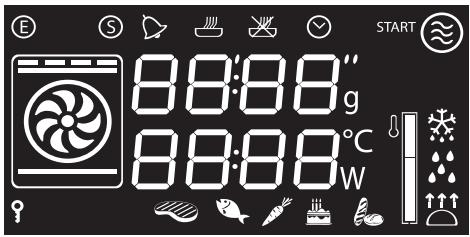

Clock indicator light

Minute minder timer indicator light

Timed cooking with delayed startcator light

Timed cooking indicator light

Child lock indicator light

Showroom indicator light

Eco logic indicator light

Microwave indicator light
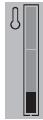
Temperature level reached
Operating modes
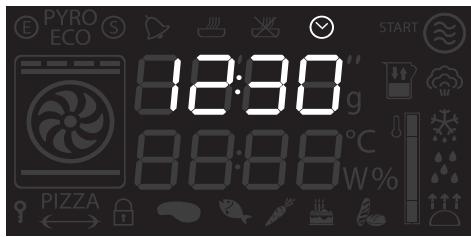
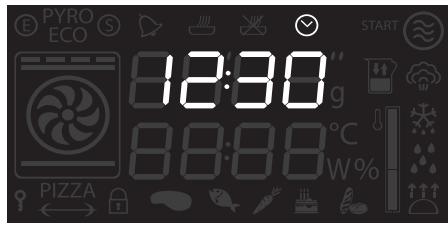
Stand-by: When no function is selected, the display shows the current time and the symbol .
ON: When any function starts the display shows the current settings such as temperature, duration, microwave power level and the temperature level reached.
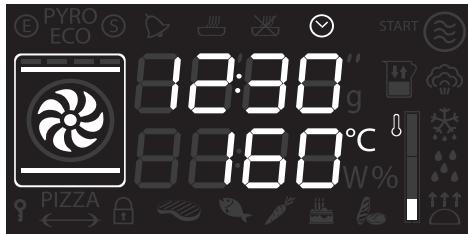
Each time the temperature knob is pressed during the operation of a function the parameters will be cycled through in the following order.
For each parameter the setting can be altered by turning the temperature knob to the right or left. Keep the knob turned to produce a faster parameter value increase or decrease.
If a microwave function is selected:

- Microwave power level.
- Function duration.
If a combination function is selected:

- Temperature.
- Function duration.
- Microwave power level.
If a traditional function is selected:

- Temperature
- Minute minder timer duration.
- Function duration.
- Programmed cooking duration (if timed cooking has been selected).
- Time display.
Setting the time
On the first use, or after a power failure, will be flashing on the appliance's display. To be able to start any cooking function, the current time must be set.
- Turn the temperature knob to set the hour displayed (to increase or a decrease more quickly keep the knob turned to the right or left).
- Press the temperature knob.
- Turn the temperature knob to set the minutes displayed (to increase or a decrease more quickly keep the knob turned to the right or left).
- To confirm the settings press the temperature knob.

It may become necessary to change the current time, for example for daylight saving time. From stand-by mode keep the temperature knob turned to the right or left until the hour value flashes.
It is not possible to change the time if the oven is ON.
3.5 Cooking functions
Microwave:
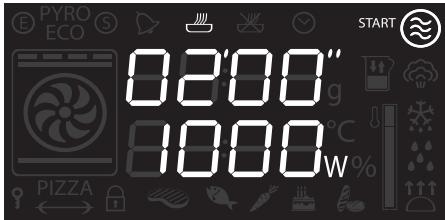
- Select the microwave function using the function knob.
- Press the temperature knob.
- Turn the temperature knob to change the cooking time (max 30 minutes).
- Press the temperature knob.
- Turn the temperature knob to change the power level from 100W to 1000W (see Microwave power levels).
- Press the function knob to start microwave cooking.

If the door is opened then cooking will stop. Once the door is closed press the function knob to resume cooking.

Press the function knob to temporarily stop the cooking function. Press it again to resume cooking.
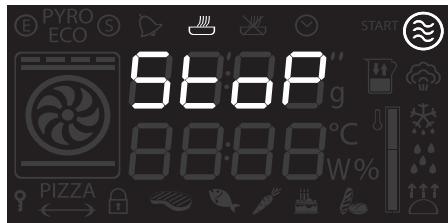
- At the end of the cooking time the display will indicate the word Stop.

Turn the temperature knob to set an additional cooking time. Press the function knob to start cooking.

To turn off the appliance press and hold the function knob.

Microwaves
Given that they penetrate directly into the food, microwaves allow cooking to take place in a very short period of time and with a considerable saving of energy. They are suitable for cooking without fat and also for defrosting and re-heating food while maintaining its original appearance and fragrance.
Microwave power levels
Below is a list of the power levels that can be selected:
| Power (W) | Useful for |
| 100 | Defrost food |
| 200 | |
| 300 | |
| 400 | Cooking meat or delicate cooking |
| 500 | |
| 600 | Re-heating and cooking food |
| 700 | |
| 800 | |
| 900 | Heating liquids |
| 1000 |
QUICK START microwave function

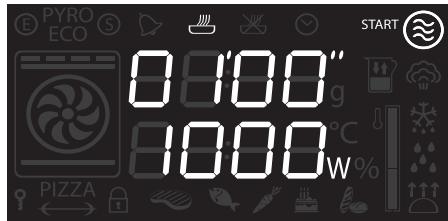
The QUICK START function allows the microwave to be started quickly. This is useful for heating small quantities of liquid or food.
- From stand-by mode press the function knob twice.
- The appliance will start the microwave oven with the default settings.
Combination
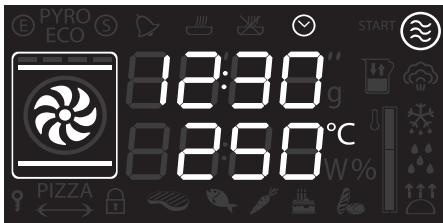

Combination cooking is a mix of traditional cooking and microwave operation. These functions are indicated by the switching on of a traditional function symbol together with the microwave function indicator light ≈
- Select a combination function using the function knob (see Display).
- Press the temperature knob.
- Turn the knob to set the temperature.
- Press the temperature knob.
- Turn the temperature knob to change the cooking time.
- Press the temperature knob.
- Turn the temperature knob to change the power level (from 100W to 700W).
- Press the function knob to start combination cooking.
Combination functions list

Microwave + Grill
The use of the grill results in perfect browning of the food's surface. Using the microwave on the other hand leads to rapid internal cooking of the food.

Microwave + Fan assisted
The operation of the fan, combined with traditional cooking, ensures consistent cooking even with complex recipes. Using the microwave on the other hand leads to rapid internal cooking of the food.

Microwave + Circulaire
For combination cooking of food in a short time thanks to the microwave action working together with hot air circulation.
Traditional cooking functions
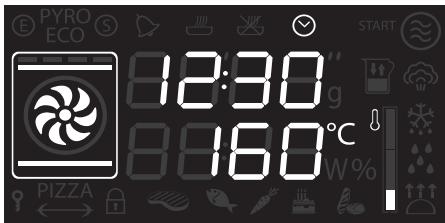
- Select a traditional cooking function using the function knob (see Display).
- If you want to change the default temperature then press the temperature knob.
- Turn the knob to set the temperature.
- Press the function knob to start the traditional cooking function.
Traditional functions list
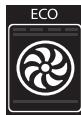
Eco
The combination of the fan and the circulaire heating element, in ECO mode, is particularly indicated for cooking on a single shelf, with reduced power consumption.

Static
As the heat comes from above and below at the same time, this system is particularly suitable for certain types of food. Traditional cooking, also known as static cooking, is suitable for cooking just one dish at a time. Perfect for all types of roasts, bread and cakes and in any case particularly suitable for fatty meats such as goose and duck.

Grill
The heat coming from the grill element gives perfect grilling results above all for thin and medium thickness meat and allows you to give the food an even browning at the end of the cooking. Perfect for sausages, spare ribs and bacon. This function enables large quantities of food, particularly meat, to be grilled evenly.

Fan assisted
The operation of the fan, combined with traditional cooking, ensures consistent cooking even with complex recipes. Perfect for biscuits and cakes, even when simultaneously cooked on several levels. (For multiple-level cooking, we recommend using the 1^st and 3^rd shelves).
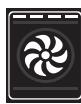
Fan with grill
The air produced by the fan softens the strong heatwave generated by the grill, grilling perfectly even very thick foods. Perfect for large cuts of meat (e.g. shin of pork).

Fan + bottom
The combination of the fan with just the lower heating element allows cooking to be completed more rapidly. This system is recommended for sterilising or for finishing off the cooking of foods which are already well-cooked on the surface, but not inside, which therefore need a little more heat. Perfect for any type of food.

Circulaire
The combination of the fan and the circulaire heating element (incorporated in the rear of the oven) allows you to cook different foods on several levels, as long as they need the same temperatures and type of cooking. Hot air circulation ensures instant and even distribution of heat. It will be possible, for instance, to cook fish, vegetables and biscuits simultaneously (on different levels) without odours and flavours mingling.

Turbo
The combination of fan assisted cooking and traditional cooking allows different foods to be cooked on several levels extremely quickly and efficiently, without odours and flavours mingling. Perfect for large volumes that call for intense cooking.
Pre-heating stage
With the combination and traditional functions cooking is preceded by a preheating stage allowing the oven to reach the cooking temperature more quickly.
This stage is indicated by the flashing of the temperature level reached indicator.
At the end of the preheating stage the temperature level reached indicator remains on and a buzzer sounds to indicate that food can be placed into the oven. The appliance will wait for
confirmation to proceed with the cooking (only for some functions); introduce the dish into the oven and press the function knob to proceed.

Cooking can be stopped at any time by pressing and holding the function knob for at least 3 seconds.

With the combination Microwave+Grill function, given the type of cooking and in order to cook more quickly preheating is not performed.
Minute minder (only for traditional cooking)

This function only activates the buzzer, without stopping cooking.

The minute minder can be activated both during cooking and when the appliance is in standby.
- Press the temperature knob once (twice if cooking is already in progress). The display shows 0000 and the indicator light flashes.
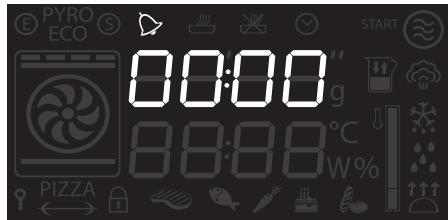
- Turn the knob to set the cooking time (from 1 minute up to 4 hours). After a few seconds, the indicator light stops flashing and the countdown starts.
- Select the required cooking function and wait for the buzzer to sound, indicating that the cooking time is over. The indicator light flashes.
- Turn the knob to select an additional minute minder. Or else press the temperature knob to stop the buzzer.
Timed cooking (only for traditional cooking)

Timed cooking is the function which allows a cooking operation to be started and then ended after a specific length of time set by the user.

Activation of timed cooking cancels any minute minder timer which may previously have been set.
- After selecting a cooking function and temperature, press the temperature knob three times. The display shows 00:00 and the indicator light flashes.
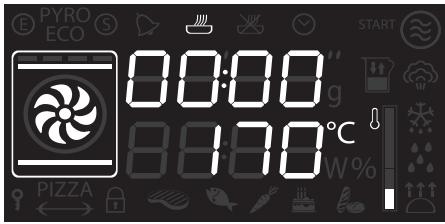
- Turn the temperature knob to the right or left to set the cooking time from 00:01 to 12:59. Keep the knob turned to produce a faster increase or decrease.
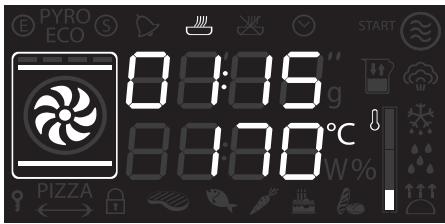
-
A few seconds after the required duration is set, the indicator light stops flashing and timed cooking starts.
-
At the end of the cooking time STOP appears on the display and a buzzer will sound that can be deactivated by pressing the temperature knob.
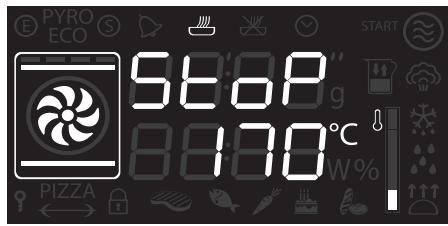

To select an additional timed cooking period turn the temperature knob to the right or left.

To extend the cooking time manually, press the temperature knob again. The appliance will resume its normal operation with the previously selected cooking settings.

To turn off the appliance press and hold the function knob.
Modifying the data set during timed cooking
During operation, it is possible to modify timed cooking duration:
- When the indicator light is steady and cooking is in progress inside the appliance, press the temperature knob twice. The indicator light will start flashing.
- Turn the temperature knob right or left to alter the pre-set cooking time.
Programmed cooking (only for traditional cooking)

Programmed cooking refers to the function that allows cooking to be stopped automatically at a time set by the user followed by the oven automatically turning itself off.
- After selecting a cooking function and temperature, press the temperature knob three times. The display shows 00:00 and the indicator light flashes.
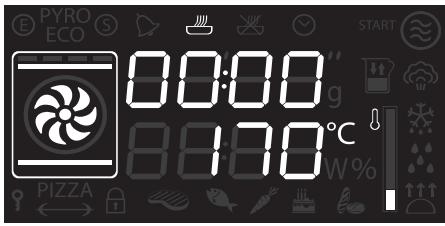
- Turn the knob to the right or left to set the cooking time from 00:01 to 12:59. Keep the knob turned to produce a faster increase or decrease.
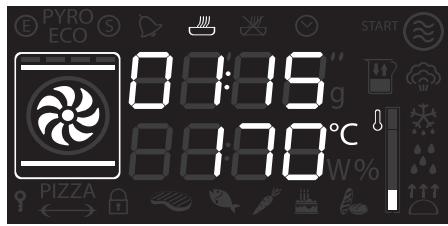
- Press the temperature knob a fourth time. The indicator light flashes. Turn the knob right or left to set the cooking end time.
- After a few seconds the indicator lights stop flashing. The appliance waits for the set start time.
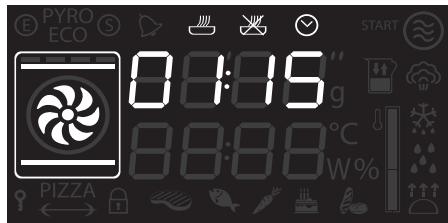
- When cooking has completed the word STOP appears on the display and a buzzer sounds which can be deactivated by pressing the temperature knob.
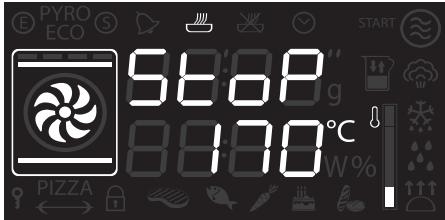

To extend the cooking time manually, press the temperature knob again. The appliance will resume its normal operation with the previously selected cooking settings.

To turn off the appliance press and hold the function knob.

For safety reasons, it is not possible to set the end of cooking time by itself without setting the cooking duration.
Modifying the data set during programmed cooking

After modifying the cooking duration, the end of cooking time must be re-set.
During operation, it is possible to modify programmed cooking duration:
- When the indicator lights are lit steadily and the appliance is waiting for cooking to start, press the temperature knob twice. The indicator light will start flashing.
- Turn the temperature knob right or left to alter the pre-set cooking time.
- Press the temperature knob again. The indicator light switches off and the indicator light starts flashing. The display shows the cooking end time.
- Turn the temperature knob right or left to delay the cooking end time.
- After a few seconds the indicator lights stop flashing and programmed cooking restarts its operation with the new settings.
Traditional cooking tips
General advice
- Use a fan assisted function to achieve consistent cooking at several levels.
- It is not possible to shorten cooking times by increasing the temperature (the food could be overcooked on the outside and undercooked on the inside).
Advice for cooking meat
- Cooking times vary according to the thickness and quality of the food and to consumer taste.
- Use a meat thermometer when roasting meat, or simply press on the roast with a spoon. If it is hard, it is ready; If not, it needs another few minutes cooking.
Advice for cooking with the Grill and the Fan with grill
- Meat can be grilled even when it is put into the cold oven or into the preheated oven if you wish to change the effect of the cooking.
- With the Fan with grill function, we recommend that you preheat the oven before grilling.
We recommend placing the food at the centre of the rack.
Advice for cooking desserts/pastries and biscuits
- Use dark metal moulds: They help to absorb the heat better.
- The temperature and the cooking time depend on the quality and consistency of the dough.
- To check whether the dessert is cooked right through: At the end of the cooking time, put a toothpick into the highest point of the dessert. If the dough does not stick to the toothpick, the dessert is cooked.
- If the dessert collapses when it comes out of the oven, on the next occasion reduce the set temperature by about 10^ C , selecting a longer cooking time if necessary.
To save energy
- Stop cooking a few minutes before the time normally used. Cooking will continue for the remaining minutes with the heat which has accumulated inside the oven.
- Reduce any opening of the door to a minimum to avoid heat dispersal.
- Keep the inside of the appliance clean at all times.
3.6 Special functions and automatic programs
Timed defrosting
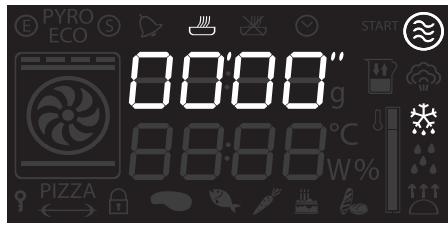

This function allows food to be defrosted by the microwave according to a selected period of time.
- Place the dish into the oven compartment (see "Turn" procedure).
- Use the function knob to select timed defrosting as indicated by the and symbols.
- Press the temperature knob to change the defrosting time.
- Turn the knob to set the defrosting time (from 5 minute up to 99 hours).
- Press the function knob to start defrosting.

If the selected defrost duration is more than 5 minutes then, for best results, the dish inside the oven compartment will need to be turned. See: "Turn" procedure.
- On completion the word Stop will be displayed.
Weight based defrosting
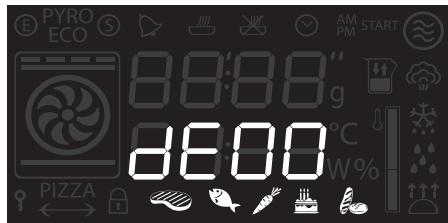

This function allows food to be microwave defrosted according to the weight and type of food to be defrosted.
- Place the dish into the oven compartment (see "Turn" procedure).
- Use the function knob to select weight based defrosting indicated by "dEOO" and lit up dish symbols.
- Turn the function knob to select the type of food to be defrosted.
- Turn the temperature knob to select the weight (in grams) of the food to be defrosted.
- Press the function knob to confirm the settings and start defrosting.

For best results during defrosting the dish inside the oven will need to be turned. See: "Turn" procedure.
- On completion the word Stop will be displayed.
Preset parameters:
| dE | Type | Weight (g) | Time (min) | |
| 01 | Meat | 1000 | 22 | |
| 02 | Fish | 300 | 5 | |
| 03 | Vegetables | 300 | 5 | |
| 04 | Desserts | 500 | 8 | |
| 05 | Bread | 500 | 11 | |
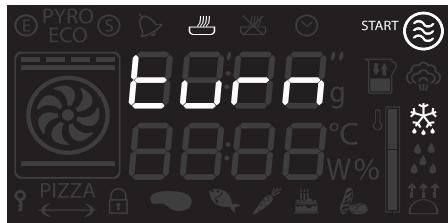
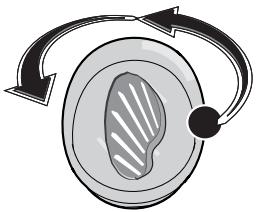
"Turn" procedure
For best defrosting results it is recommended, when necessary, to turn the dish inside the oven compartment.
- Put the dish in the oven placing it parallel to the door.
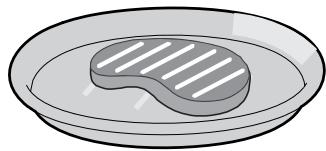
- When the word "Turn" is displayed it is necessary to turn the dish.
- Open the door and turn the dish 90^ .
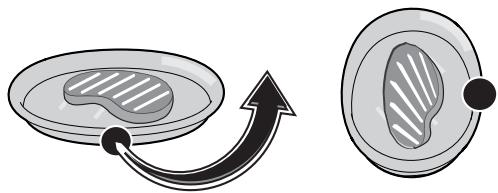

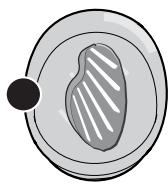
If dish rotation is not performed the appliance will wait for one minute and then automatically continue defrosting. As a reminder the word "Turn" will remain displayed beneath the countdown indication.
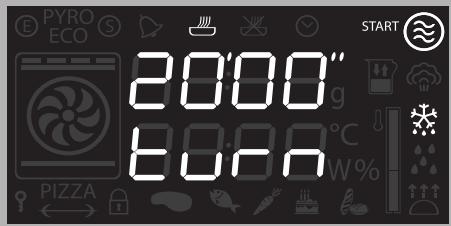
- Close the door and press the function knob to resume operation.
- If necessary the appliance will again ask for rotation of the dish. The word "Turn" will be displayed.
- For the second rotation the door will need to be opened and the dish turned by 180^ .
- Close the door and press the function knob to resume operation.
Proving
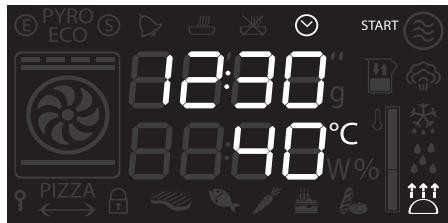

When using the proving function the temperature cannot be altered.

For successful proving, a container of water should be placed in the bottom of the oven.
- Place the dough to rise on the second level.
- Press the function knob to select and start proving.
Heating
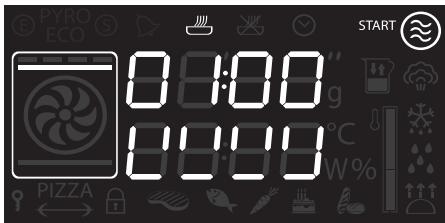

This function is for microwave reheating of food that has been previously cooked and stored in the refrigerator.
- Press the function knob to select the reheating function.
- Press the temperature knob.
- Turn the temperature knob to change the re-heating time.
- Press the function knob to confirm the settings and start re-heating.
Shabbat
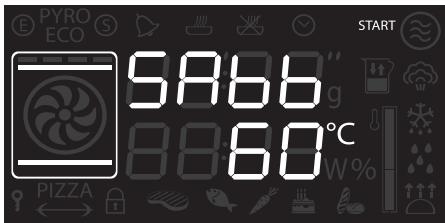

This function allows food to be cooked in accordance with the provisions of the Jewish religion day of rest.

This function results in the appliance operating in a particular way:
- The oven light remains turned off, any action such as opening the door or manually activating the oven does not turn the lamp on.
- The internal fan remains turned off.
- Knob illumination and audible prompts remain disabled.

After activating the Shabbat function the settings cannot be altered. Only the function knob remains active for turning the appliance off.
- Press the function knob to select the Shabbat function.
- Press the temperature knob.
- Turn the temperature knob to change the re-heating time.
- Press the function knob to confirm the settings and start the Shabbat function.
- Once completed press and hold the function knob down for at least 3 seconds to turn the appliance off.
Automatic programs
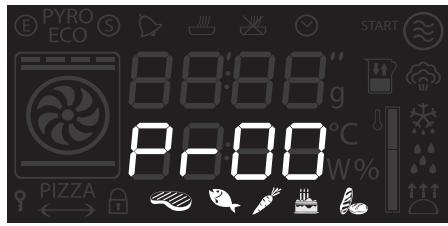
The automatic cooking programs are divided up according to the type of dish to be cooked.
- Press the function knob to select automatic cooking programs mode.
- Turn the function knob to select the preferred program (see FISH (06 - 07)).
Table of automatic programs

MEAT (01 - 05)
| Subcategory | Weight (g) | Level | Function | Temp. (°C) | Microwave (W) | Time (minutes) | |
| 01 | Roast beef | 1000 | 1 | Turbo | 200 | 300 | 70 |
| 02 | Pork loin | 1000 | 1 | Turbo | 190 | 300 | 60 |
| 03 | Lamb | 1000 | 1 | Turbo | 190 | 300 | 42 |
| 04 | Veal | 1000 | 1 | Turbo | 190 | 300 | 70 |
| 05 | Chicken | 1000 | 1 | Turbo | 200 | 300 | 50 |

FISH (06-07)
| Subcategory | Weight (g) | Level | Function | Temp. (°C) | Microwave (W) | Time (minutes) | |
| 06 | Fresh fish | 500 | 1 | Turbo | 160 | 300 | 30 |
| 07 | Frozen fish | 500 | 1 | Turbo | 160 | 300 | 45 |

VEGETABLES (08 - 10)
| Subcategory | Weight (g) | Level | Function | Temp. (°C) | Microwave (W) | Time (minutes) | |
| 08 | Grilling | 500 | 3 | Grill | 250 | - | 25 |
| 09 | Roast | 1000 | 2 | Static | 220 | 300 | 30 |
| 10 | Frozen French fries | 500 | 2 | Fan assisted | 220 | - | 13 |

DESSERTS (11 - 13)
| Subcategory | Weight (g) | Level | Function | Temp. (°C) | Microwave (W) | Time (minutes) | |
| 11 | Biscuits | 600 | 1 | Turbo | 160 | - | 18 |
| 12 | Muffins | 500 | 1 | Circulaire | 160 | - | 18 |
| 13 | Tart | 800 | 1 | Static | 170 | - | 40 |

BREAD - PIZZA - PASTA (14 -21)
| Subcategory | Weight (g) | Level | Function | Temp. (°C) | Microwave (W) | Time (minutes) | |
| 14 | Leavened bread | 1000 | 1 | Circulaire | 200 | - | 30 |
| 15 | Pan baked pizza | 1000 | 1 | Fan assisted | 250 | - | 7 |
| 16 | Frozen pizza | 300 | 1 | Turbo | 250 | 300 | 7 |
| 17 | Pasta bake | 200 | 1 | Static | 220 | - | 40 |
| 18 | Lasagne | 200 | 1 | Static | 230 | - | 35 |
| 19 | Frozen lasagne | 500 | 1 | Turbo | 190 | 900 | 14 |
| 20 | Quiche Lorraine | 1000 | 1 | Static | 200 | - | 40 |
| 21 | Frozen Quiche Lorraine | 500 | 1 | Turbo | 200 | 200 | 30 |
3.7 Secondary menu
The appliance also has a drop-down secondary menu allowing the user to:
- Activate or deactivate the Child Lock.
- Activate or deactivate Showroom mode (which disables all the heating elements so that only the control panel works).
- Activate or deactivate Low Power mode (Eco-Logic).
- Activate or deactivate Keep warm mode.
- Activate or deactivate internal light timed mode (Eco-Light).
With the appliance in Stand-By mode
- Activate the internal light by turning the temperature knob quickly.
- Press and hold the temperature knob down for at least 5 seconds.
- Turn the temperature knob right or left to change the setting status (ON/OFF).
- Press the temperature knob to move to the next mode.
Child Lock mode: This mode allows the appliance to lock the controls automatically after one minute of normal operation without any intervention from the user.
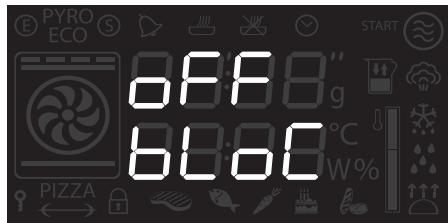
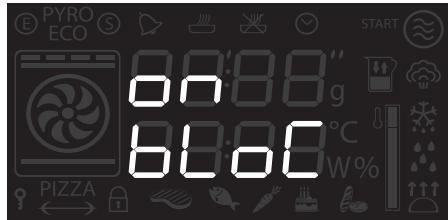
During normal operation it is indicated by the indicator light coming on.
To release the lock temporarily during cooking, hold the temperature knob down for 5 seconds. One minute after the last setting the lock will become active again.

Touching or varying the position of the temperature and function knobs, the display will show "bloc" for two seconds.

Even with the child lock mode activated the appliance can be turned off instantly by pressing the function knob for 3 seconds.
Showroom mode (for exhibitors only):
This mode allows the appliance to deactivate all heating elements, while keeping the control panel active.
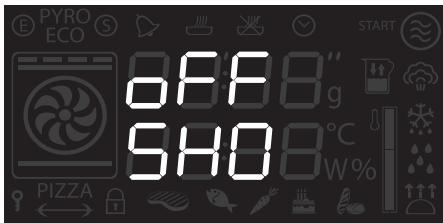
To use the appliance normally, set this mode to OFF.
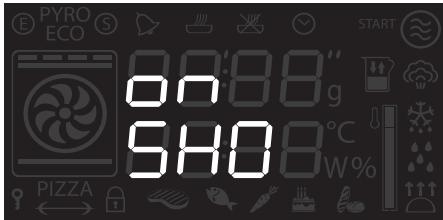

If the mode is active, the ⑤ indicator light lights up on the display.
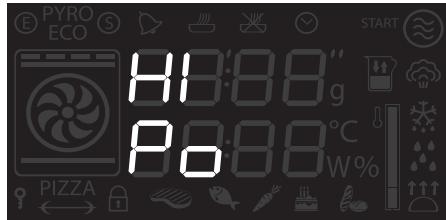
Low Power mode: This mode allows the appliance to limit the power used.
Suitable for simultaneous use with further home appliances.
HI: normal power.
LO: low power.
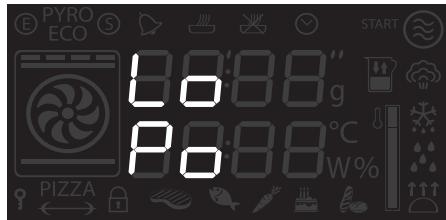

Activating low power mode means that preheating and cooking times may be extended.

If the mode is active, the ⑤ indicator light lights up on the display.
Keep warm mode:
In this mode, at the conclusion of the cooking cycle for which a duration was set (if not stopped manually), the appliance keeps freshly cooked food warm (at low temperatures) for around 1 hour.
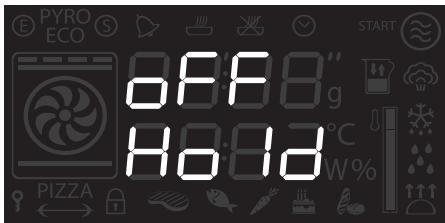
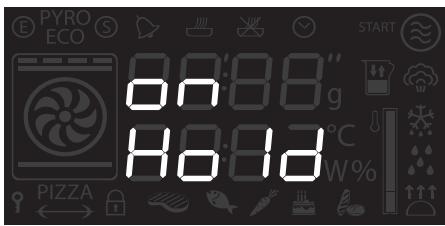
Internal lamp timed mode
For energy saving the internal lamp is switched off automatically one minute after cooking begins.
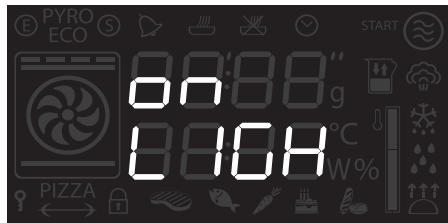
To prevent the appliance from automatically turning the internal lamp off turn this mode to OFF.
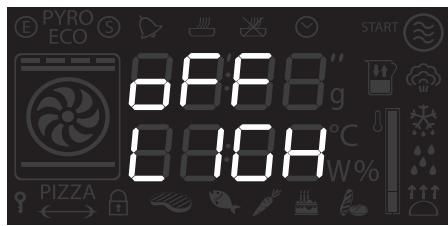

With both settings the manual on/off control is always available by turning the temperature knob to the right.
4 Cleaning and maintenance
4.1 Instructions

Improper use Risk of damage to surfaces
- Do not use steam jets to clean the appliance.
- Do not use cleaning products containing chlorine, ammonia or bleach on steel parts or parts with metallic finishes on the surface (e.g. anodizing, nickel- or chromium-plating).
- Do not use abrasive or corrosive detergents on glass parts (e.g. powder products, stain removers and metallic sponges).
- Do not use rough or abrasive materials or sharp metal scrapers.
- Failure to clean the oven could adversely affect the life of the appliance and pose a hazard.
Always remove food residues from the oven compartment.

If a lamp is damaged contact Technical support for a replacement. This fault will not affect the integrity of the appliance which can continue to be used.

High temperatures inside the oven after use Danger of burns
- Perform cleaning only after letting the appliance cool down.
4.2 Cleaning the surfaces
To keep the surfaces in good condition, they should be cleaned regularly after use. Let them cool first.
4.3 Ordinary daily cleaning
Always use only specific products that do not contain abrasives or chlorine-based acids.
Pour the product onto a damp cloth and wipe the surface, rinse thoroughly and dry with a soft cloth or a microfibre cloth.
4.4 Food stains or residues
Do not use metallic sponges or sharp scrapers as they will damage the surfaces. Use ordinary non-abrasive products with the aid of wooden or plastic utensils if necessary. Rinse thoroughly and dry with a soft cloth or a microfibre cloth.
Do not allow residues of sugary foods (such as jam) to set inside the oven. If left to set for too long, they might damage the enamel lining of the oven.
4.5 Cleaning the door glazing
The glass in the door should always be kept thoroughly clean. Use absorbent kitchen roll. In case of stubborn dirt, wash with a damp sponge and an ordinary detergent.

We recommend the use of cleaning products distributed by the manufacturer.
4.6 Cleaning the inside of the oven
For the best oven upkeep, clean it regularly after having allowed it to cool.
Take out all removable parts.
Clean the oven racks with warm water and non-abrasive detergent. Carefully rinse and dry damp parts.
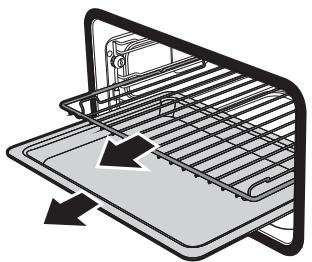

The oven should be operated at the maximum temperature for about 15-20 minutes after the use of specific products, to burn off the residues left inside the oven.

For easier cleaning, remove the door.
Removing racks/trays support frames
Removing the guide frames enables the sides to be cleaned more easily. This operation should be performed each time the automatic cleaning cycle is used (on some models only).
To remove the guide frames:
- Unscrew the two fastening pins of the frame
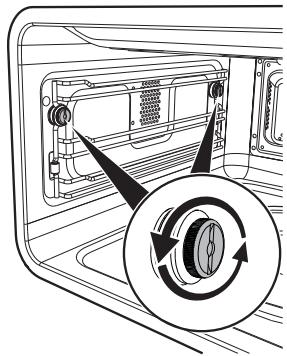
- Pull the frame towards the inside of the oven.
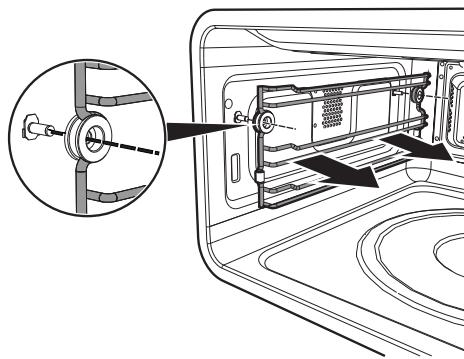
- When cleaning is complete, repeat the above procedures to put the guide frames back in. Pay attention to the spacer bushings which need to be inserted correctly into the frames.
Cleaning the top of the compartment
The appliance is equipped with a tilting grill element that allows for easy cleaning of the upper part of the oven compartment.
- Free the upper heating element by gently lifting it and rotating its retaining latch by 90 degrees.
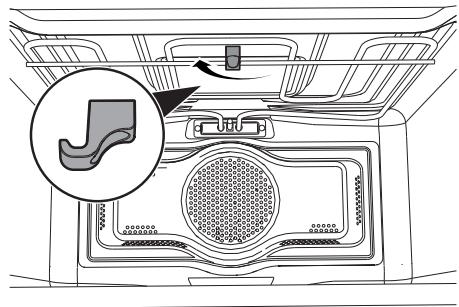
- Gently lower the heating element until it stops.
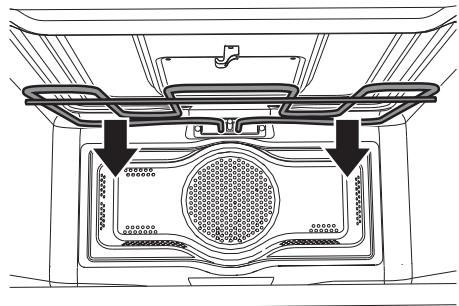

Improper use Risk of damages to the appliance
- Do not excessively flex the element during cleaning.
- When you have finished cleaning, place the heating element back in position and turn the retaining latch to lock it in place.
4.7 Vapor Clean: Assisted oven cleaning (on some models only)

Vapor Clean is an assisted cleaning procedure which facilitates the removal of dirt. Thanks to this process, it is possible to clean the inside of the oven very easily. The dirt residues are softened by the heat and water vapour for easier removal afterwards.

Improper use Risk of damage to surfaces
- Remove any food residues or large spills from previous cooking operations from the inside of the oven.
- Carry out assisted oven cleaning operations only when the oven is cold.
Preliminary operations
Before starting the Vapor Clean function:
- Completely remove all accessories from inside the oven. The upper guard can be left inside the oven.
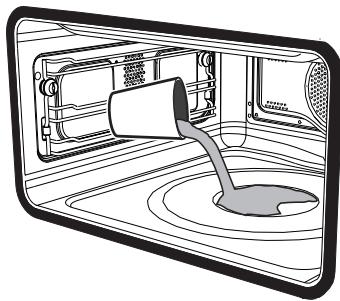
- Pour approx. 40 cl of water onto the floor of the oven. Make sure it does not overflow out of the cavity.

Cleaning and maintenance
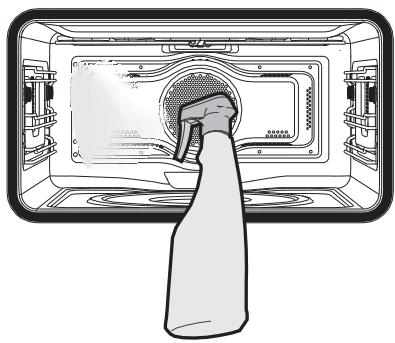
- Spray a water and washing up liquid solution inside the oven using a spray nozzle. Direct the spray against the side walls, upwards, downwards and towards the deflector.
- Close the door.

We recommend spraying approx. 20 times at the most.
Vapor Clean setting
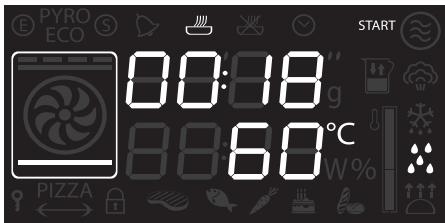

If the internal temperature is greater than that required for the Vapor clean function, the cycle will be stopped immediately and STOP will appear on the display. Let the appliance cool down before activating the assisted cleaning cycle.
- Select the symbol using the function knob.
- The duration and temperature of the cleaning cycle will appear on the display.
- Press the temperature knob to start the cycle.
- A buzzer will indicate the end of the Vapor Clean cycle.

The temperature and time parameters cannot be modified by the user.
End of the Vapor Clean cycle
- Open the door and wipe away the less stubborn dirt with a microfibre cloth.
- Use an anti-scratch sponge with brass filaments on tougher encrustations.
- In case of grease residues use specific oven cleaning products.
- Remove the water left inside the oven.
For improved hygiene and to avoid food being affected by any unpleasant odours, we recommend that the oven is dried using a fan assisted function at 160^ for approximately 10 minutes.

We recommend wearing rubber gloves for these operations.

For easier manual cleaning of the parts difficult to reach, we recommend removing the door.
- Check whether it has been set in "low power" mode (for further details see "Automatic programs").
If the door is opened during a fan assisted function, the fan stops:
- This is not a fault. It is a normal operation of the appliance, useful when cooking foods in order to avoid excessive heat escaping. When the door is closed, the oven will return to normal operation.

If the problem has not been resolved or in the case of other types of fault, contact your local technical support centre.

If other ERRx error messages are indicated: note down the error message, function and set temperature and contact your local technical support centre.
What to do if...
The display is completely off:
- Check the mains power supply.
- Check whether an omnipolar switch upstream of the appliance supply line is in the "ON" position.
The appliance does not heat up:
- Check whether it has been set in "showroom" mode (for further details see "Automatic programs").
The controls do not respond:
- Check whether it has been set in "child lock" mode (for further details see "Automatic programs").
The cooking times are longer than those indicated in the table:
5 Installation
5.1 Electrical connection

Power voltage Danger of electrocution
- Have the electrical connection performed by authorised technical personnel.
- The appliance must be connected to earth in compliance with electrical system safety standards.
- Disconnect the main power supply.
General information
Check the grid characteristics against the data indicated on the plate.
The identification plate bearing the technical data, serial number and brand name is visibly positioned on the appliance.
Do not remove this plate for any reason.
The appliance works at 220 - 240V^ .
Use a H05V2V2-F type three-core cable (3 x 1.5 mm² cable, referring to the cross section of the internal conductor).
Perform the ground connection using a wire that is 20mm longer than the other wires.
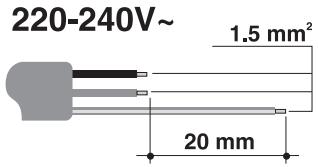
Fixed connection
Fit the power line with an omnipolar circuit breaker in compliance with installation regulations.
The circuit breaker should be located near the appliance and in an easily reachable position.
Connection with plug and socket
Make sure that the plug and socket are of the same type.
Avoid using adapters and shunts as these could cause overheating and a risk of burns.
5.2 Cable replacement

Power voltage Danger of electrocution
-
Disconnect the main power supply.
-
Unscrew the rear casing screws and remove the casing to access the terminal board.
- Replace the cable.
- Make sure that the cables (for the oven or any hob) follow the best route in order to avoid any contact with the appliance.
5.3 Positioning

Heavy appliance Danger of crush injuries
- Place the appliance into the piece of furniture with the aid of a second person.

Pressure on the open door Risk of damages to the appliance
- Never use the oven door to lever the appliance into place when fitting.
- Avoid exerting too much pressure on the oven door when open.

Heat production during appliance operation Risk of fire
- Check that the piece of furniture material is heat resistant.
- Check that the piece of furniture has the required slots.
- Do not install the appliance in a recess which can be closed with a door, or in a cupboard.
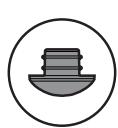
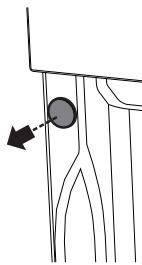
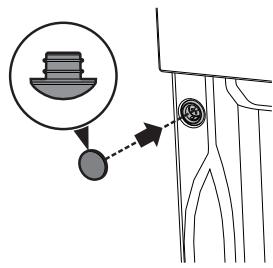
Fastening bushings
Remove the
bushing covers
inserted on the
oven front.
Mount the
applpliance into
the recess.
Secure the appliance to the piece of furniture using screws.
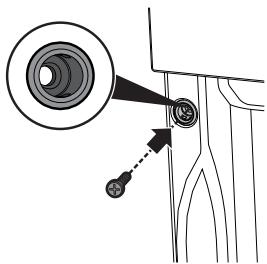
Cover the bushings with the covers removed previously.
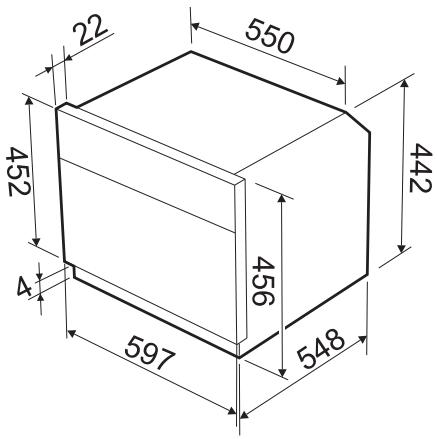
Appliance overall dimensions (mm)
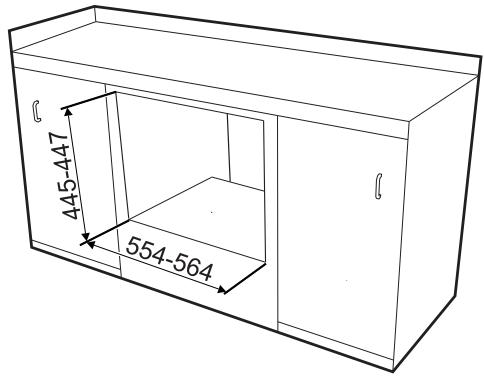
Mounting under worktops (mm)
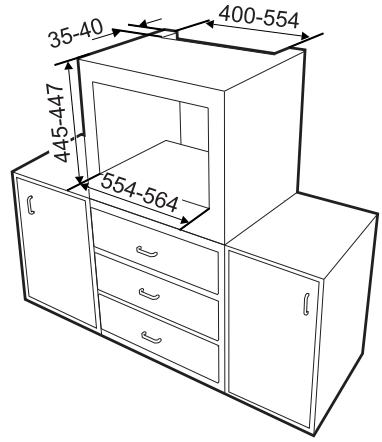
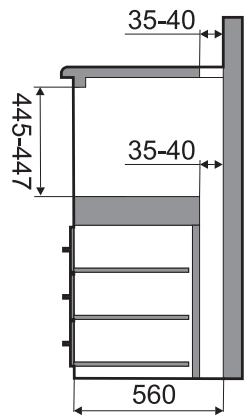
Mounting into a column (mm)
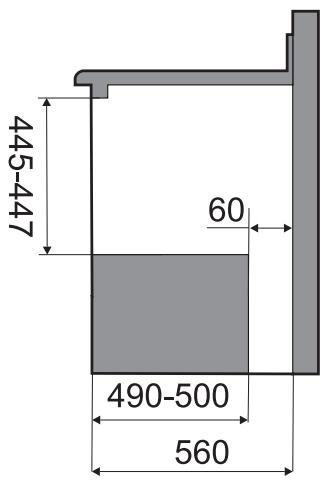

Make sure that the piece of furniture rear/bottom part has an opening of approx. 60~mm .

Make sure that the piece of furniture top/rear part has an opening approx. 35-40 mm deep.