
One+ R18AG4115 - Sander RYOBI - Free user manual and instructions
Find the device manual for free One+ R18AG4115 RYOBI in PDF.


| Product Type | Cordless Sander (Orbital) |
| Brand | RYOBI |
| Model | One+ R18AG4115 |
| Voltage | 18 V (One+ System) |
| Power Source | RYOBI One+ 18V Lithium-ion Battery (not included) |
| Pad Size | 125 mm (5 in) |
| Orbit Diameter | 2.4 mm |
| No Load Speed | 8,000 – 14,000 OPM (variable speed dial) |
| Dust Collection | Micro-filter dust canister + vacuum adapter port |
| Weight (without battery) | 1.5 kg |
| Weight (with battery) | Approx. 1.8 kg |
| Dimensions (L x W x H) | 300 x 150 x 150 mm |
| Sound Pressure Level | 80 dB(A) |
| Vibration Level | < 2.5 m/s² |
| Pad Attachment | Hook and loop (Velcro) |
| Variable Speed | Yes (dial control) |
| Ergonomic Grip | Overmolded rubber handle |
| Battery Compatibility | All RYOBI One+ 18V batteries (P108, P102, etc.) |
| Charger | Not included (use RYOBI One+ charger) |
| Included Accessories | Dust bag, hex key, side handle, 1 sanding disc |
| Warranty | 3 years limited |
| Maintenance | Clean dust filter regularly; replace pad when worn |
| Safety Features | Lock-off switch, dust-sealed switch, battery release tab |
Frequently Asked Questions - One+ R18AG4115 RYOBI
User questions about One+ R18AG4115 RYOBI
0 question about this device. Answer the ones you know or ask your own.
Ask a new question about this device
Download the instructions for your Sander in PDF format for free! Find your manual One+ R18AG4115 - RYOBI and take your electronic device back in hand. On this page are published all the documents necessary for the use of your device. One+ R18AG4115 by RYOBI.
USER MANUAL One+ R18AG4115 RYOBI
Cordless Angle Grinder
R18AG4115
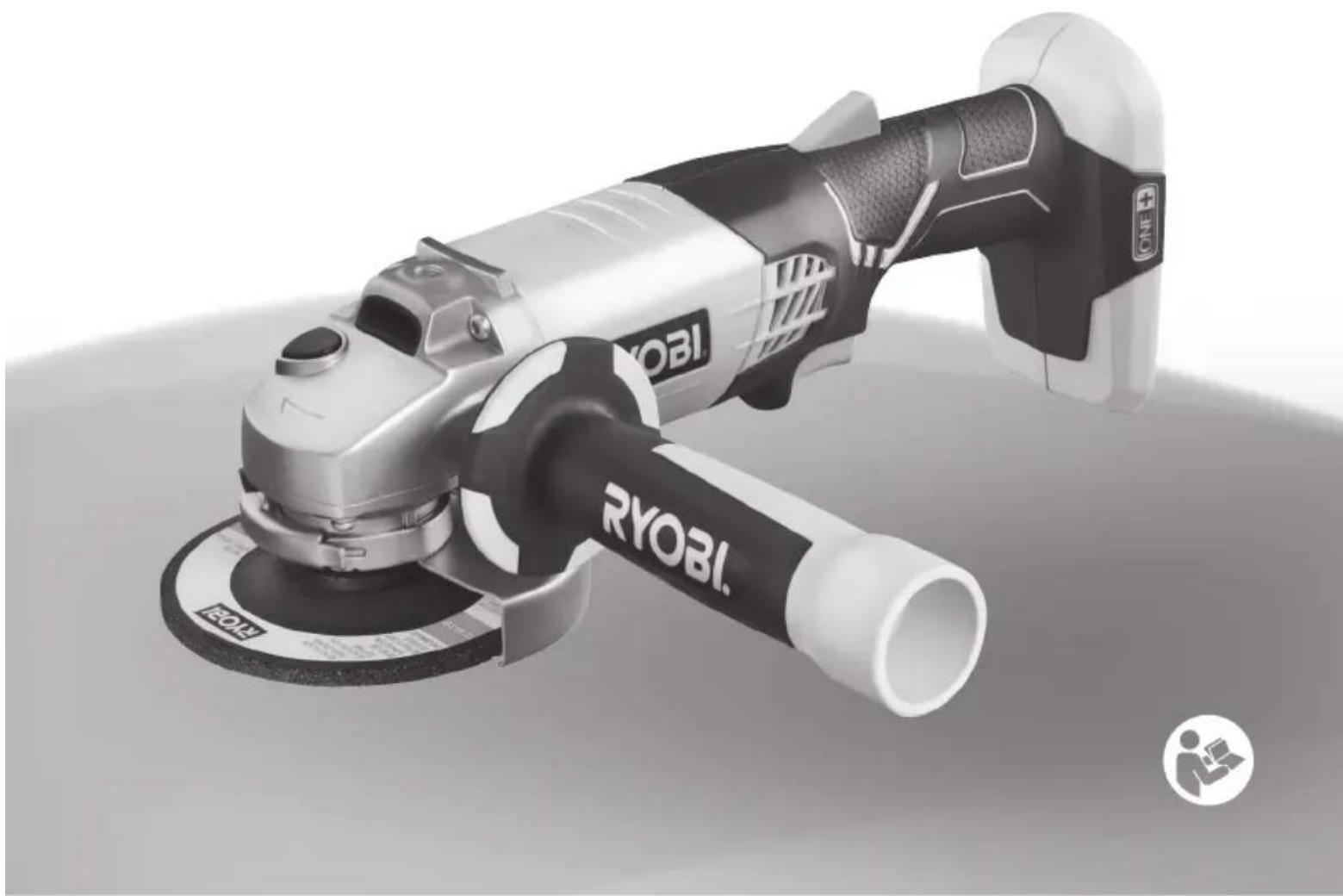
natural_image
Ryobil electric power tool with black and silver casing, mounted on a circular base (no visible text or symbols)Important!
It is essential that you read the instructions in this manual before operating this machine.
Subject to technical modifications.
GENERAL POWER TOOL SAFETY WARNINGS
WARNING
Read all safety warnings and all instructions. Failure to follow the warnings and instructions may result in electric shock, fire and/or serious injury.
Save all warnings and instructions for future reference.
The term “power tool” in the warnings refers to your mains-operated (corded) power tool or battery-operated (cordless) power tool.
1) WORK AREA SAFETY
a) Keep work area clean and well lit. Cluttered or dark areas invite accidents.
b) Do not operate power tools in explosive atmospheres, such as in the presence of flammable liquids, gases or dust. Power tools create sparks which may ignite the dust or fumes.
c) Keep children and bystanders away while operating a power tool. Distractions can cause you to lose control.
2) ELECTRICAL SAFETY
a) Power tool plugs must match the outlet. Never modify the plug in any way. Do not use any adapter plugs with earthed (grounded) power tools. Unmodified plugs and matching outlets will reduce risk of electric shock.
b) Avoid body contact with earthed or grounded surfaces, such as pipes, radiators, ranges and refrigerators. There is an increased risk of electric shock if your body is earthed or grounded.
c) Do not expose power tools to rain or wet conditions. Water entering a power tool will increase the risk of electric shock.
d) Do not abuse the cord. Never use the cord for carrying, pulling or unplugging the power tool. Keep cord away from heat, oil, sharp edges or moving parts. Damaged or entangled cords increase the risk of electric shock.
e) When operating a power tool outdoors, use an extension cord suitable for outdoor use. Use of a cord suitable for outdoor use reduces the risk of electric shock.
f) If operating a power tool in a damp location is unavoidable, use a residual current device (RCD) protected supply. Use of an RCD reduces the risk of electric shock.
3) PERSONAL SAFETY
a) Stay alert, watch what you are doing and use common sense when operating a power tool. Do not use a power tool while you are tired or under the influence of drugs, alcohol or medication. A moment of inattention while
operating power tools may result in serious personal injury.
b) Use personal protective equipment. Always wear eye protection. Protective equipment such as dust mask, non-skid safety shoes, hard hat or hearing protection used for appropriate conditions will reduce personal injuries.
c) Prevent unintentional starting. Ensure the switch is in the off-position before connecting to power source and/or battery pack, picking up or carrying the tool. Carrying power tools with your finger on the switch or energising power tools that have the switch on invites accidents.
d) Remove any adjusting key or wrench before turning the power tool on. A wrench or a key left attached to a rotating part of the power tool may result in personal injury.
e) Do not overreach. Keep proper footing and balance at all times. This enables better control of the power tool in unexpected situations.
f) Dress properly. Do not wear loose clothing or jewellery. Keep your hair, clothing and gloves away from moving parts. Loose clothes, jewellery or long hair can be caught in moving parts.
g) If devices are provided for the connection of dust extraction and collection facilities, ensure these are connected and properly used. Use of dust collection can reduce dust-related hazards.
4) POWER TOOL USE AND CARE
a) Do not force the power tool. Use the correct power tool for your application. The correct power tool will do the job better and safer at the rate for which it was designed.
b) Do not use the power tool if the switch does not turn it on and off. Any power tool that cannot be controlled with the switch is dangerous and must be repaired.
c) Disconnect the plug from the power source and/or the battery pack from the power tool before making any adjustments, changing accessories or storing power tools. Such preventive safety measures reduce the risk of starting the power tool accidentally.
d) Store idle power tools out of the reach of children and do not allow persons unfamiliar with the power tool or these instructions to operate the power tool. Power tools are dangerous in the hands of untrained users.
e) Maintain power tools. Check for misalignment or binding of moving parts, breakage of parts and any other condition that may affect the power tool's operation. If damaged, have the power tool repaired before use. Many accidents are caused by poorly maintained power tools.
f) Keep cutting tools sharp and clean. Properly maintained cutting tools with sharp cutting edges
are less likely to bind and are easier to control.
g) Use the power tool, accessories and tool bits etc, in accordance with these instructions, taking into account the working conditions and the work to be performed. Use of the power tool for operations different from those intended could result in a hazardous situation.
5) BATTERY TOOL USE AND CARE
a) Recharge only with the charger specified by the manufacturer. A charger that is suitable for one type of battery pack may create a risk of fire when used with another battery pack.
b) Use power tools only with specifically designated battery packs. Use of any other battery packs may create a risk of injury and fire.
c) When battery pack is not in use, keep it away from other metal objects, like paper clips, coins, keys, nails, screws or other small metal objects that can make a connection from one terminal to another. Shorting the battery terminals together may cause burns or a fire.
d) Under abusive conditions, liquid may be ejected from the battery; avoid contact. If contact accidentally occurs, flush with water. If liquid contacts eyes, additionally seek medical help. Liquid ejected from the battery may cause irritation or burns.
6) SERVICE
a) Have your power tool serviced by a qualified repair person using only identical replacement parts. This will ensure that the safety of the power tool is maintained.
SPECIAL SAFETY RULES
WARNING
The product is not intended for use by persons (including children) with reduced physical, sensory or mental capabilities, or lack of experience and knowledge, unless they have been given supervision or instruction concerning use of the product by a person responsible for their safety.
Children should be supervised to ensure that they do not play with the product.
Safety Warnings Common for Grinding Operations:
This power tool is intended to function as a grinder. Read all safety warnings, instructions, illustrations and specifications provided with this power tool. Failure to follow all instructions listed below may result in electric shock, fire and/or serious injury.
■ Operations such as sanding, wire brushing, polishing or cutting-off are not recommended to be performed with this power tool. Operations for which
the power tool was not designed may create a hazard and cause personal injury.
- Do not use accessories which are not specifically designed and recommended by the tool manufacturer. Just because the accessory can be attached to your power tool, it does not assure safe operation.
The rated speed of the accessory must be at least equal to the maximum speed marked on the power tool. Accessories running faster than their rated speed can break and fly apart. - The outside diameter and the thickness of your accessory must be within the capacity rating of your power tool. Incorrectly sized accessories cannot be adequately guarded or controlled.
The arbour size of wheels, flanges, backing pads or any other accessory must properly fit the spindle of the power tool. Accessories with arbour holes that do not match the mounting hardware of the power tool will run out of balance, vibrate excessively and may cause loss of control. - Do not use a damaged accessory. Before each use, inspect the accessory such as abrasive wheels for chips and cracks, backing pad for cracks, tear or excess wear, wire brush for loose or cracked wires. If power tool or accessory is dropped, inspect for damage or install an undamaged accessory. After inspecting and installing an accessory, position yourself and bystanders away from the plane of the rotating accessory and run the power tool at maximum no-load speed for one minute. Damaged accessories will normally break apart during this test time.
■ Wear personal protective equipment. Depending on application, use face shield, safety goggles or safety glasses. As appropriate, wear dust mask, hearing protectors, gloves and workshop apron capable of stopping small abrasive or workpiece fragments. The eye protection must be capable of stopping flying debris generated by various operations. The dust mask or respirator must be capable of filtrating particles generated by your operation. Prolonged exposure to high intensity noise may cause hearing loss. - Keep bystanders a safe distance away from work area. Anyone entering the work area must wear personal protective equipment. Fragments of workpiece or of a broken accessory may fly away and cause injury beyond immediate area of operation.
- Hold power tool by insulated gripping surfaces only, when performing an operation where the cutting tool may contact hidden wiring. Contact with a “live” wire will also make exposed metal parts of the power tool “live” and could give the operator an electric shock.
■ Position the cord clear of the spinning accessory. If you lose control, the cord may be cut or snagged and your hand or arm may be pulled into the spinning
accessory.
■ Never lay the power tool down until the accessory has come to a complete stop. The spinning accessory may grab the surface and pull the power tool out of your control.
- Do not run the power tool while carrying it at your side. Accidental contact with the spinning accessory could snag your clothing, pulling the accessory into your body.
- Regularly clean the power tool's air vents. The motor's fan will draw the dust inside the housing and excessive accumulation of powdered metal may cause electrical hazards.
- Do not operate the power tool near flammable materials. Sparks could ignite these materials.
- Do not use accessories that require liquid coolants. Using water or other liquid coolants may result in electrocution or shock.
Safety Warnings Specific for Grinding and Abrasive Cutting-Off Operations:
■ Use only wheel types that are recommended for your power tool and the specific guard designed for the selected wheel. Wheels for which the power tool was not designed cannot be adequately guarded and are unsafe.
The guard must be securely attached to the power tool and positioned for maximum safety, so the least amount of wheel is exposed towards the operator. The guard helps to protect operator from broken wheel fragments, accidental contact with wheel and sparks that could ignite clothing.
- Wheels must be used only for recommended applications. For example, do not grind with the side of cut-off wheel. Abrasive cut-off wheels are intended for peripheral grinding, side forces applied to these wheels may cause them to shatter.
■ Always use undamaged wheel flanges that are of correct size and shape for your selected wheel. Proper wheel flanges support the wheel, thus reducing the possibility of wheel breakage. Flanges for cut-off wheels may be different from grinding wheel flanges.
- Do not use worn down wheels from larger power tools. Wheel intended for larger power tool is not suitable for the higher speed of a smaller tool and may burst.
Kickback and related warnings
Kickback is a sudden reaction to a pinched or snagged rotating wheel, backing pad, brush or any other accessory. Pinching or snagging causes rapid stalling of the rotating accessory which in turn causes the uncontrolled power tool to be forced in the direction opposite of the accessory's rotation at the point of binding.
For example, if an abrasive wheel is snagged or pinched by the workpiece, the edge of the wheel that is entering into the pinch point can dig into the surface of the material causing the wheel to climb out or kick out. The wheel may either jump toward or away from the operator, depending on the direction of the wheel's movement at the point of pinching. Abrasive wheels may also break under these conditions.
Kickback is the result of power tool misuse and/or incorrect operating procedures or conditions and can be avoided by taking proper precautions as given below.
- Maintain a firm grip on the power tool and position your body and arm to allow you to resist kickback forces. Always use auxiliary handle, if provided, for maximum control over kickback or torque reaction during startup. The operator can control torque reactions or kickback forces, if proper precautions are taken.
■ Never place your hand near the rotating accessory. Accessory may kickback over your hand. - Do not position your body in the area where power tool will move if kickback occurs. Kickback will propel the tool in the direction opposite to the wheel's movement at the point of snagging.
■ Use special care when working corners, sharp edges, etc. Avoid bouncing and snagging the accessory. Corners, sharp edges or bouncing have a tendency to snag the rotating accessory and cause loss of control or kickback. - Do not attach a saw chain woodcarving blade or toothed saw blade. Such blades create frequent kickback and loss of control.
INTENDED USE
■ Grinding metal or stone.
Note: Use only recommended accessories. Instructions for safe use of accessories are included with the accessory.
MAINTENANCE
- When servicing, use only identical replacement parts. Use of any other parts may create a hazard or cause product damage.
- Avoid using solvents when cleaning plastic parts. Most plastics are susceptible to damage from various types of commercial solvents and may be damaged by their use. Use clean cloths to remove dirt, dust, oil, grease, etc.
■ Always wear safety goggles or safety glasses with side shields during power product operation or when blowing dust. If operation is dusty, also wear a dust mask.
■ To avoid serious personal injury, always remove the battery pack from the product when cleaning or performing any maintenance.
Do not at any time let brake fluids, gasoline, petroleum-based products, penetrating oils, etc., come in contact with plastic parts. Chemicals can damage, weaken or destroy plastic which may result in serious personal injury.
■ Only the parts shown on the parts list are intended to be repaired or replaced by the customer. All other parts
should be replaced at an authorized service center.
ENVIRONMENTAL PROTECTION
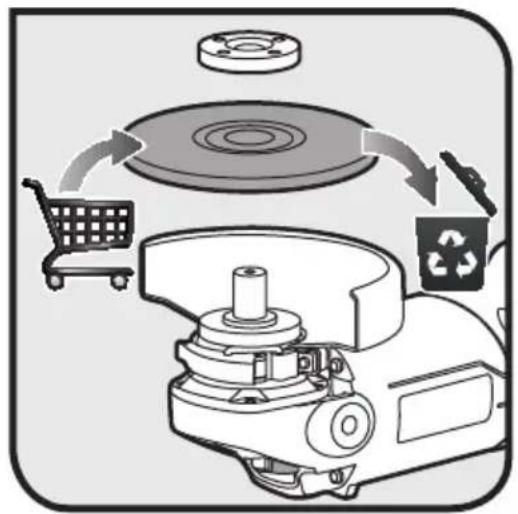
Recycle raw materials instead of disposing of as waste. The machine, accessories and packaging should be sorted for environmental-friendly recycling.
SYMBOLS

Safety alert

Please read the instructions carefully before starting the machine.

Wear ear protection

Wear eye protection

Wear dust mask

Wear safety hand gloves

Do not use chipped, cracked or defective grinding wheel
Waste electrical products should not be disposed of with household waste. Please recycle where facilities exist. Check with your Local Authority or retailer for recycling advice.
natural_image
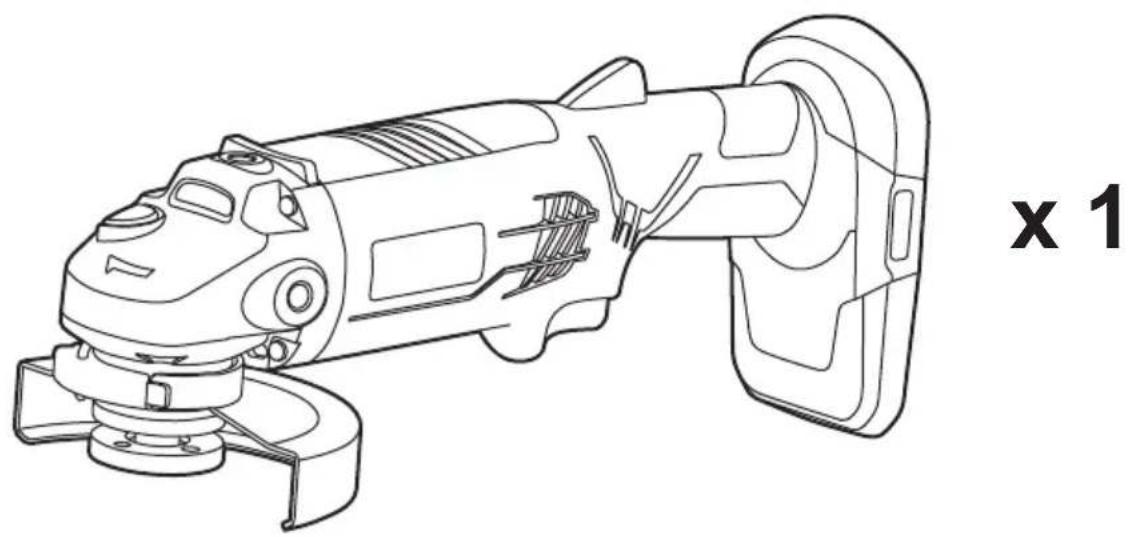
Line drawing of a mechanical power tool with no visible text or symbols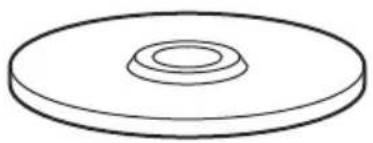
natural_image
Simple line drawing of a circular object with concentric rings (no text or symbols)x 1
natural_image
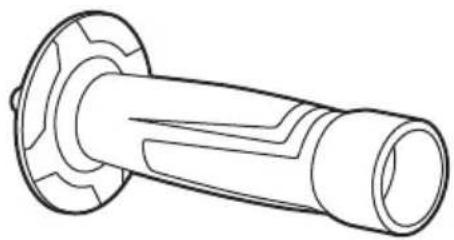
Line drawing of a mechanical component with flanged ends and a cylindrical shaft (no text or symbols)x 1
natural_image
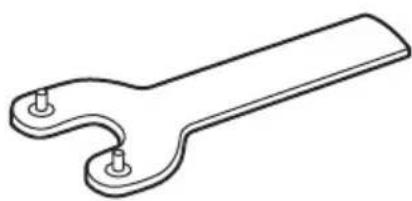
Line drawing of a mechanical wrench with two end points (no text or symbols)x 1


natural_image
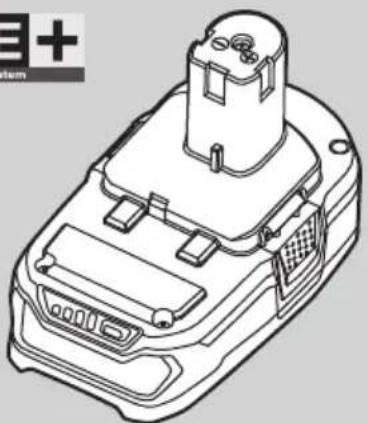
Technical line drawing of a battery pack with mounting holes and internal components (no text or symbols)1
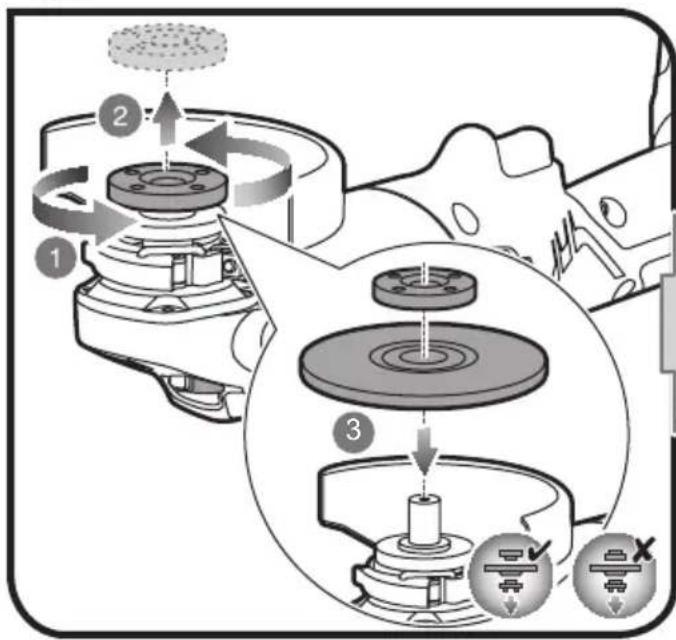
2
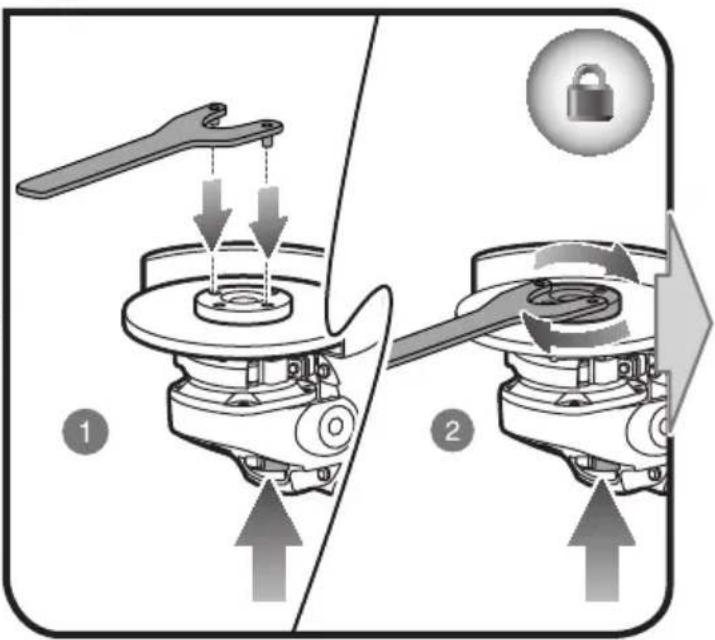
4
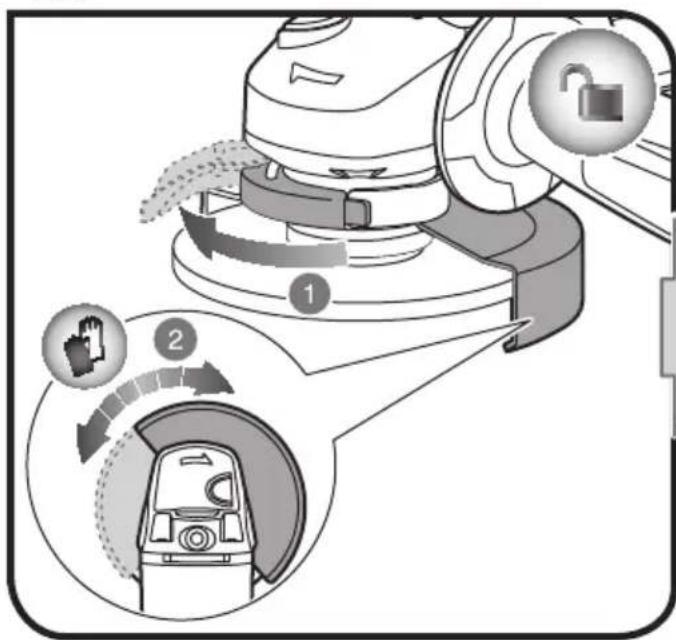
flowchart
graph TD
    A["Clean Air Input"] --> B{Check Valve}
    B -->|1| C["Close Air"]
    B -->|2| D["Close Air"]
    C --> E["Open Lock Icon"]
    D --> F["Hand icon with lock and hand icon"]
    style A fill:#f9f,stroke:#333
    style E fill:#ccf,stroke:#333
    style F fill:#cfc,stroke:#333
5
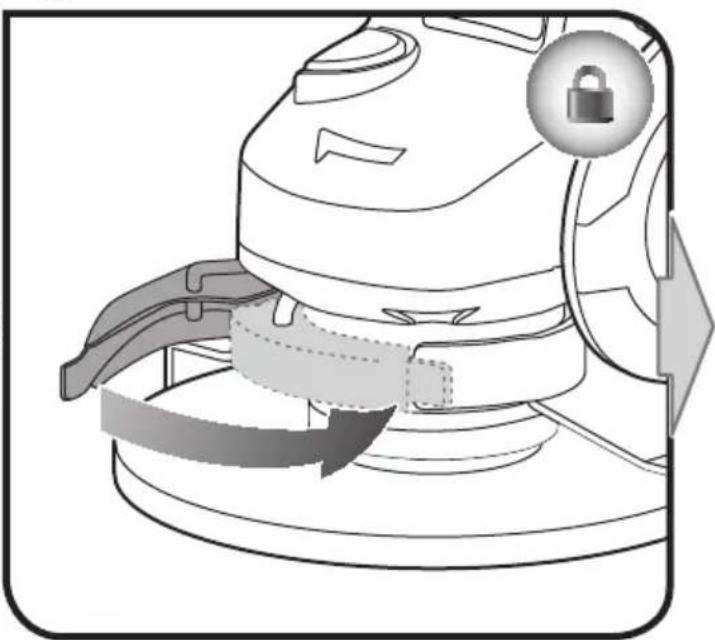
natural_image
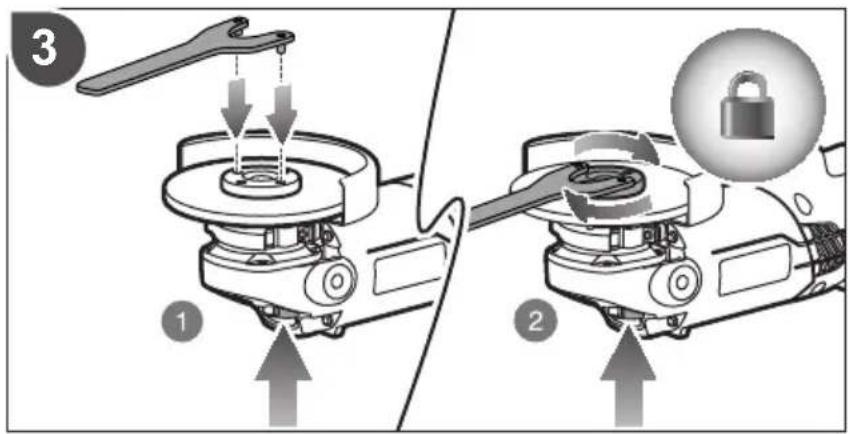
Diagram of a vacuum cleaner with a lock icon and directional arrows indicating motion (no text or symbols)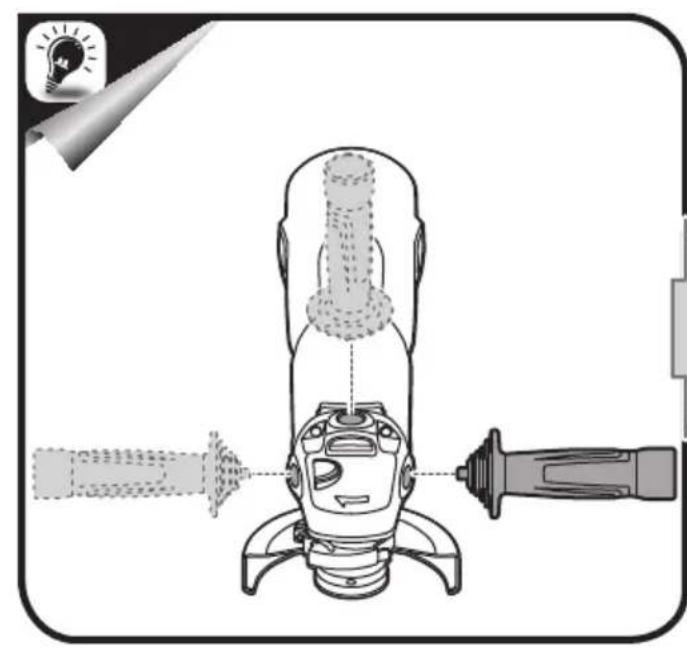
natural_image
Diagram of a rocket engine with internal components and a light bulb icon (no text or symbols)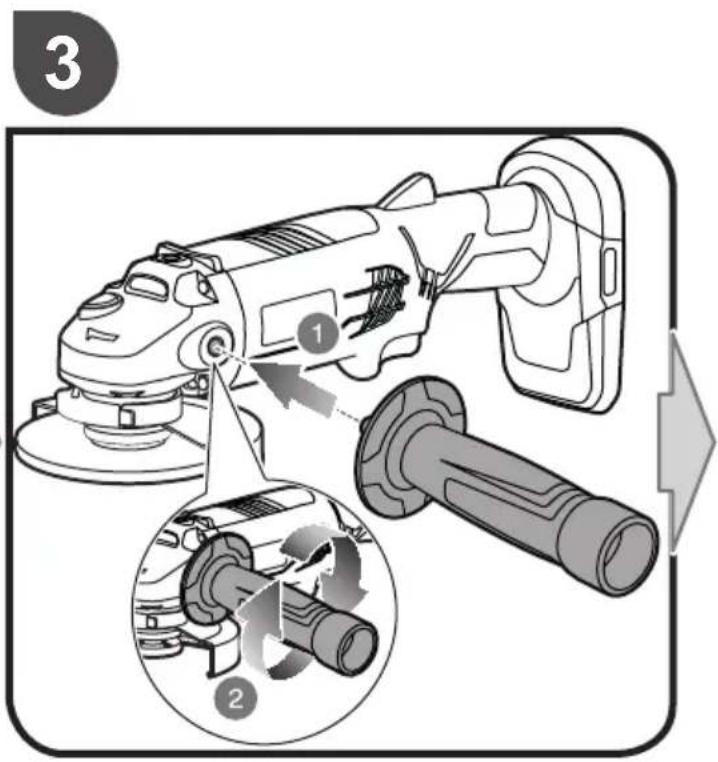
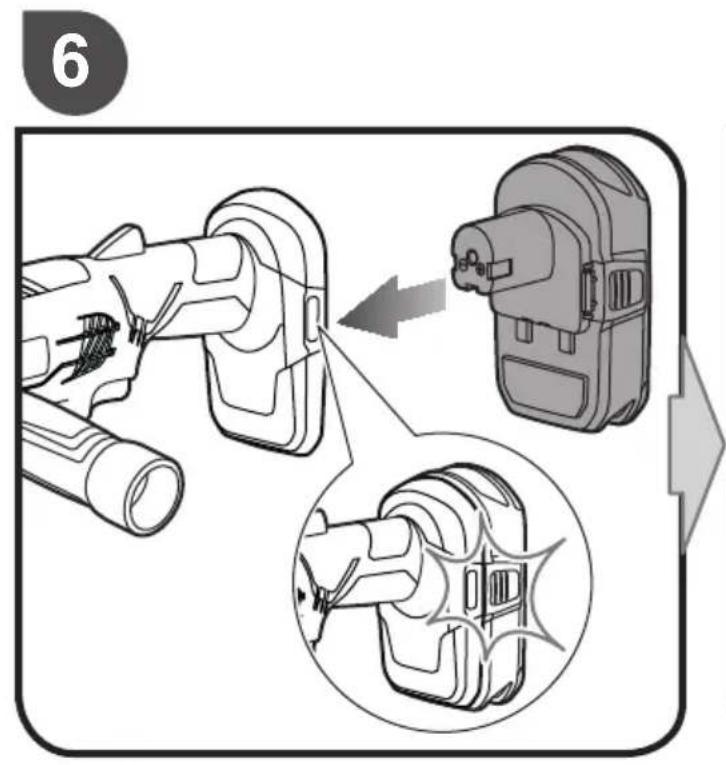
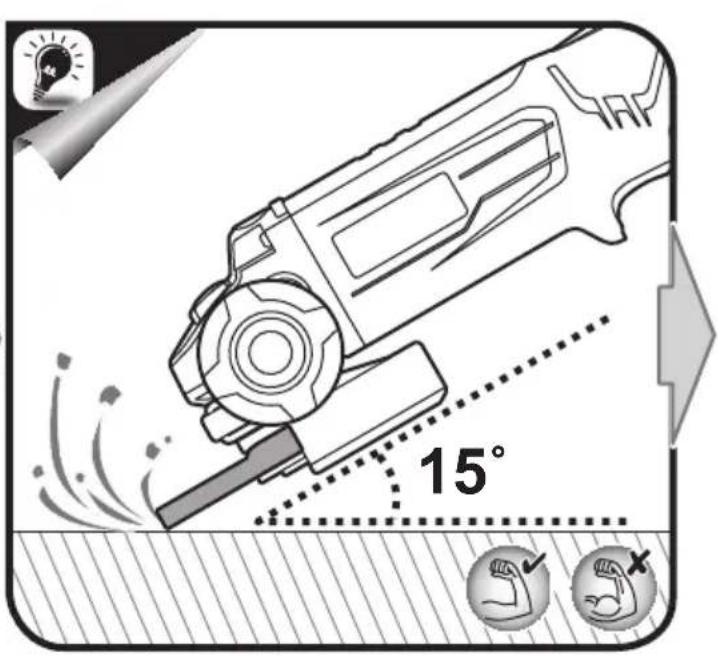
7
natural_image
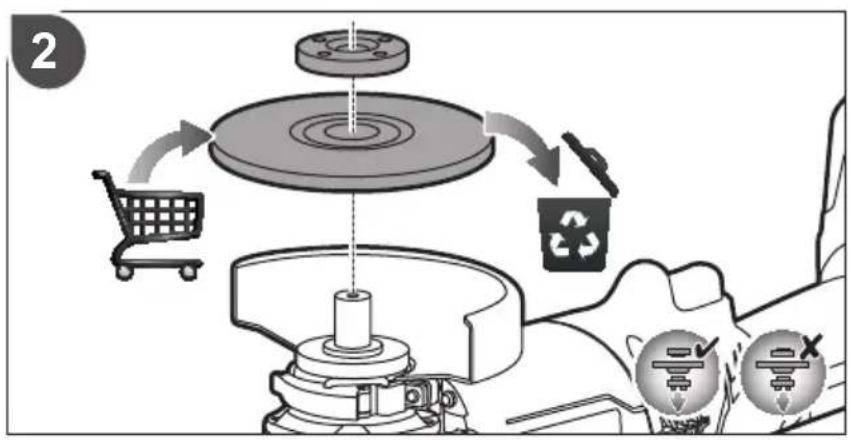
Diagram illustrating the process of a cleaning or recycling device with a shopping cart, disc, and recycling symbol (no text labels)

flowchart
graph TD
    A["Shopping Cart"] --> B["Recycle Bin"]
    B --> C["Recycle Bin"]
    C --> D["Recycle Bin"]
    D --> E["Recycle Bin"]
    E --> F["Recycle Bin"]
    F --> G["Recycle Bin"]
    G --> H["Recycle Bin"]
    H --> I["Recycle Bin"]
    I --> J["Recycle Bin"]
    J --> K["Recycle Bin"]
    K --> L["Recycle Bin"]
    L --> M["Recycle Bin"]
    M --> N["Recycle Bin"]
    N --> O["Recycle Bin"]
    O --> P["Recycle Bin"]
    P --> Q["Recycle Bin"]
    Q --> R["Recycle Bin"]
    R --> S["Recycle Bin"]
    S --> T["Recycle Bin"]
    T --> U["Recycle Bin"]
    U --> V["Recycle Bin"]
    V --> W["Recycle Bin"]
    W --> X["Recycle Bin"]
    X --> Y["Recycle Bin"]
PRODUCT SPECIFICATIONS
| Voltage 18 V | --- |
| No load speed 7,500 min | -1 |
| Spindle thread M14 | |
| Grinding wheel capacity 115 mm | |
| Weight 2.15 kg | |
| Thickness of grinding wheel 6 mm |
BATTERY AND CHARGER
| Compatible battery pack (not included) | Compatible charger (not included) | |
| Lithium-Ion BPL-1820 | BCL1418 | |
| BPL-1815 | ||
| BPL18202PK | ||
| RB18L13 | ||
| RB18L15 | ||
| RB18L26 | ||
| RB18L40 | ||
| RB18LL40 | ||
| Nickel Cadmium ABP1801G | BCL1418 | |
| ABP1802G | ||
| ABP-1813 | ||
| ABP-1815 | ||
| RB18N15 | ||
* for vehicles with 12V DC outlets

Techtronic Industries (Australia) Pty. Ltd.
Level 1,660 Doncaster Road
Doncaster, VIC 3108, Australia
Techtronic Industries New Zealand Ltd.
18-26 Amelia Earhart Avenue
Mangere, Auckland 2022, New Zealand


- Important!
- GENERAL POWER TOOL SAFETY WARNINGS
- WARNING
- Save all warnings and instructions for future reference.
- 1) WORK AREA SAFETY
- 2) ELECTRICAL SAFETY
- 3) PERSONAL SAFETY
- 4) POWER TOOL USE AND CARE
- 5) BATTERY TOOL USE AND CARE
- 6) SERVICE
- SPECIAL SAFETY RULES
- Safety Warnings Common for Grinding Operations:
- Safety Warnings Specific for Grinding and Abrasive Cutting-Off Operations:
- Kickback and related warnings
- INTENDED USE
- MAINTENANCE
- ENVIRONMENTAL PROTECTION
- SYMBOLS
Brand : RYOBI
Model : One+ R18AG4115
Category : Sander