
HTS3277 - Home Theater System PHILIPS - Free user manual and instructions
Find the device manual for free HTS3277 PHILIPS in PDF.


| Product Type | Home Theater System |
| Model Number | HTS3277 |
| Brand | Philips |
| Channel Configuration | 5.1 channels |
| Total Output Power (RMS) | 1000 W |
| Main Unit Dimensions (W x H x D) | 430 x 58 x 310 mm |
| Main Unit Weight | 3.5 kg |
| Front Speaker Dimensions (W x H x D) | 260 x 260 x 1100 mm |
| Front Speaker Weight (each) | 2.0 kg |
| Center Speaker Dimensions (W x H x D) | 435 x 85 x 65 mm |
| Center Speaker Weight | 1.2 kg |
| Surround Speaker Dimensions (W x H x D) | 260 x 260 x 1100 mm |
| Surround Speaker Weight (each) | 1.8 kg |
| Subwoofer Dimensions (W x H x D) | 230 x 350 x 310 mm |
| Subwoofer Weight | 5.5 kg |
| Power Consumption (Standby) | < 1 W |
| Power Consumption (Operation) | 110 W |
| Power Supply | AC 220-240 V, 50/60 Hz |
| Disc Playback Formats | DVD, DVD±R/RW, CD, CD-R/RW, DivX, MP3, JPEG |
| HDMI Output | 1 x HDMI with upscaling to 1080p |
| USB Input | USB 2.0 for media playback |
| FM Radio | Preset 20 stations |
| Cleaning Instructions | Wipe with a soft, dry cloth. Do not use solvents. |
| Safety Features | Auto power-off after 30 minutes of inactivity |
| Spare Parts Availability | Remote control, speakers available through Philips service |
Frequently Asked Questions - HTS3277 PHILIPS
User questions about HTS3277 PHILIPS
0 question about this device. Answer the ones you know or ask your own.
Ask a new question about this device
Download the instructions for your Home Theater System in PDF format for free! Find your manual HTS3277 - PHILIPS and take your electronic device back in hand. On this page are published all the documents necessary for the use of your device. HTS3277 by PHILIPS.
USER MANUAL HTS3277 PHILIPS
| Philips Consumer Lifestyle | |
| SGP 09-CE-HTS3376W/12 (report No.) | |
| EC DECLARATION OF CONFORMITY | |
| We, Philips Consumer Electronics (manufacturer's name) | |
| Philips, Glaslaan 2, 5616 JB Eindhoven, The Netherlands (manufacturer's address) | |
| declare under our responsibility that the electrical product: | |
| Philips HTS3376W/12 (name) | (type or model) |
| Home Theatre System with wireless (product description) | |
| to which this declaration relates is in conformity with the following standards: | |
| EN 60065 : 2002 + A1 : 2006 | |
| EN 55013 : 2001 + A1 : 2003 + A2 : 2006 | |
| EN 55020 : 2007 | |
| EN 61000-3-2 : 2006-04 | |
| EN 61000-3-3 : 1995-01 + A1 : 2001-06 + A2:2005-11 | |
| EN 300 328 V1.7.1 + EN 301 489-1 V1.6.1, 489-17 V1.2.1 | |
| EN 62311 : 2008 | |
| (title and/or number and date of issue of the standards) | |
| following the provisions of 2006/95/EC, 2004/108/EC, 2005/32/EC & RTTE 1999/5/EC directives and is produced by a manufacturing organisation on ISO 9000 level. | |
| Frank Dethier | |
| Eindhoven, 2ndJune 2009 (place, date) | Frank Dethier Innovation Lab Manager Philips Leuven (signature, name and function) |
| Philips Consumer Lifestyle | |
| SGP 09-CE-HTS3377W/12 (report No.) | |
| EC DECLARATION OF CONFORMITY | |
| We, Philips Consumer Electronics (manufacturer's name) | |
| Philips, Glaslaan 2, 5616 JB Eindhoven, The Netherlands (manufacturer's address) | |
| declare under our responsibility that the electrical product: | |
| Philips HTS3377W/12 (name) (type or model) | |
| Home Theatre System with wireless (product description) | |
| to which this declaration relates is in conformity with the following standards: | |
| EN 60065 : 2002 + A1 : 2006 | |
| EN 55013 : 2001 + A1 : 2003 + A2 : 2006 | |
| EN 55020 : 2007 | |
| EN 61000-3-2 : 2006-04 | |
| EN 61000-3-3 : 1995-01 + A1 : 2001-06 + A2:2005-11 | |
| EN 300 328 V1.7.1 + EN 301 489-1 V1.6.1, 489-17 V1.2.1 | |
| EN 62311 : 2008 (title and/or number and date of issue of the standards) | |
| following the provisions of 2006/95/EC, 2004/108/EC & RTTE 1999/5/EC directives and is produced by a manufacturing organisation on ISO 9000 level. | |
| Frank Dethier | |
| Eindhoven, 11thMarch 2009 (place, date) | Frank Dethier Innovation Lab Manager Philips Leuven (signature, name and function) |
Contents
1 Important 4
Safety and important notice 4
Trademark notice 5
2 Your product 7
Feature highlights 7
Product overview 8
3 Connect 10
Place the product 10
Connect video cables 11
Connect speaker cables to speakers 12
Connect speaker to speaker stand 12
Connect speakers and subwoofer 13
Connect rear speakers to wireless receiver 14
Connect radio antenna 14
Connect audio cables/other devices 14
Connect power cord 16
4 Get started 17
Insert the remote control batteries 17
Find the correct viewing channel 17
Select menu display language 18
Change speaker settings 18
Use Philips EasyLink 19
Select a play source 21
5 Play 22
Play a disc 22
Play video 22
Play music 25
Play photo 26
Play from USB device 27
Play from portable media player 28
Play from radio 28
6 Advanced features 30
Create MP3 audio files 30
7 Adjust sound 31
Control the volume 31
Select surround sound 31
Select a preset sound 31
8 Adjust settings 32
General setup 32
Audio setup 34
Video setup 35
Preferences
9 Additional Information 39
Update software 39
Care 39
10 Specifications 40
11 Troubleshooting 42
12 Glossary 44
1 Important
Safety and important notice

Warning
Risk of overheating! Never install the product in a confined space. Always leave a space of at least 4 inches around the product for ventilation. Ensure curtains or other objects never cover the ventilation slots on the product.
Never place the product, remote control or batteries near naked flames or other heat sources, including direct sunlight.
Only use this product indoors. Keep this product away from water, moisture and liquid-filled objects.
Never place this product on other electrical equipment.
Keep away from this product during lightning storms.
Where the mains plug or an appliance coupler is used as the disconnect device, the disconnect device shall remain readily operable.
Visible and invisible laser radiation when open. Avoid exposure to beam.
CE
This product is in compliance with the essential requirements and other relevant provisions of Directives 2006/95/EC (Low Voltage) and 2004/108/EC (EMC).
Hereby, Philips Consumer Lifestyle declares that this Home Theatre System HTS3377W, HTS3376W (CE 0560) is in compliance with the essential requirements and other relevant provisions of Directive 1999/5/EC.
Copyright

Be responsible. Respect copyrights.
This product incorporates copyright protection technology that is protected by method claims of certain U.S. patents and other intellectual property rights owned by Macrovision Corporation and other rights owners. Use of this copyright protection technology must be authorized by Macrovision Corporation, and is intended for home and other limited viewing uses only unless otherwise authorized by Macrovision Corporation. Reverse engineering or disassembly is prohibited.
Copyright in the U.K.
Recording and playback of material may require consent. See Copyright Act 1956 and The Performers' Protection Acts 1958 to 1972.
Mains fuse (UK only)
This product is fitted with an approved moulded plug. Should it become necessary to replace the mains fuse, this must be replaced with a fuse of the same value as indicated on the plug (example 10A).
1. Remove fuse cover and fuse. 2. The replacement fuse must comply with BS 1362 and have the ASTA approval mark. If the fuse is lost, contact your dealer in order to verify the correct type.
3. Refit the fuse cover.

Note
To conform to the EMC directive (2004/108/EC), the mains plug on this product must not be detached from the mains cord.
Disposal of your old product and batteries

Your product is designed and manufactured with high quality materials and components, which can be recycled and reused.
When this crossed-out wheeled bin symbol is attached to a product it means that the product is covered by the European Directive 2002/96/EC. Please inform yourself about the local separate collection system for electrical and electronic products.
Please act according to your local rules and do not dispose of your old products with your normal household waste.
Correct disposal of your old product helps to prevent potential negative consequences for the environment and human health.

Your product contains batteries covered by the European Directive 2006/66/EC, which cannot be disposed with normal household waste.
Please inform yourself about the local rules on separate collection of batteries because correct disposal helps to prevent negative consequences for the environmental and human health.
Trademark notice
Manufactured under license from Dolby Laboratories. Dolby, Pro Logic and the double-D symbol are trademarks of Dolby Laboratories.


DivX, DivX Ultra Certified, and associated logos are trademarks of DivX, Inc. and are used under license.
Official DivX® Ultra Certified product.
Plays all versions of DivX® video (including DivX® 6) with enhanced playback of DivX® media files and the DivX® Media Format.
Plays DivX® video with menus, subtitles and audio tracks.

Digital Surround
Manufactured under licence under U.S. Patent #s: 5,451,942; 5,956,674; 5,974,380; 5,978,762; 6,487,535 & other U.S. and worldwide patents issued & pending. DTS and DTS Digital Surround are registered trademarks and the DTS logos and Symbol are trademarks of DTS, Inc. © 1996-2008 DTS, Inc. All Rights Reserved.

ENERGY STAR and the ENERGY STAR mark are registered U.S. trademarks.
Windows Media and the Windows logo are trademarks, or registered trademarks of Microsoft Corporation in the United States and/or other countries.

HDMI, the HDMI logo, and High-Definition Multimedia Interface are trademarks or registered trademarks of HDMI Licensing LLC.

The USB-IF Logos are trademarks of Universal Serial Bus Implementers Forum, Inc.

Note
This equipment has been tested and found to comply with the limits for a Class B digital device, pursuant to Part 15 of the FCC Rules. These limits are designed to provide reasonable protection against harmful interference in a residential installation. This equipment generates, uses, and can radiate radio frequency energy and, if not installed and used in accordance with the instructions, may cause harmful interference to radio communications. However, there is no guarantee that interference will not occur in a particular installation.
If this equipment does cause harmful interference to radio or television reception, which can be determined by turning the equipment off and on, the user is encouraged to try to correct the interference by one or more of the following measures:
Reorient or relocate the receiving antenna.
Increase the separation between the equipment and receiver.
Connect the equipment into an outlet on a circuit different from that to which the receiver is connected.
Consult the dealer or an experienced radio/TV technician for help.
2 Your product
High speed USB 2.0 Link and MP3 link - Simply plug your USB device into the USB jack to play your MP3/WMA/JPEG/DivX files; or plug your portable media player into the MP3 LINK jack to enjoy music in superb sound quality.
Congratulations on your purchase, and welcome to Philips! To fully benefit from the support that Philips offers, register your product at www.philips.com/welcome.
Feature highlights
Video upscaling to 1080p
Enjoy watching discs in the highest picture quality available for your HDTV. This product offers full high-definition video playback up to 1080p resolution that provides a highly detailed picture and increased sharpness, delivering a more true-to-life picture for an amazing viewing experience.
Philips EasyLink
Your product supports Philips EasyLink, which uses the HDMI CEC (Consumer Electronics Control) protocol. EasyLink-compliant devices that are connected through HDMI connectors can be controlled by a single remote control.

Note
Philips does not guarantee 100% interoperability with all HDMI CEC devices.
Listen to rich uncompressed multi-channel surround sound
This Home Theatre System supports 5.1 channels of uncompressed audio that delivers a real-to-life sound experience as if you are listening to it live.
Sync the audio output with the video play Synchronise audio and video by delaying the audio output if the video signal sent to the TV is slower than the audio streams.
Create MP3 files
Convert your favourite audio tracks from an audio CD into MP3 format. The created MP3 files are saved in your USB device.
Screen Fit
View the movie in full screen display on any TV.
Region codes
You can play discs with the following region codes.
DVD region code Countries

Europe

Russia
Product overview
Main unit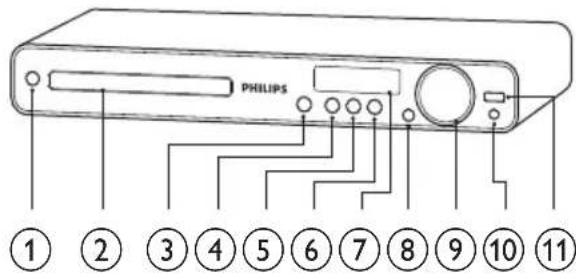
a Ⓧ (Standby-On)
Turns on the Home Theatre System or switches to standby mode.
b Disc compartment
(Open/Close)
Opens or closes the disc compartment.
▶ Id (Play/Pause)
Starts, pauses or resumes play. In radio mode, automatically tune radio stations during first-time setup.
■ e (Stop)
Stops play.
In radio mode, erases the current preset radio station.
f SOURCE
Selects a media to play or listen to audio from the connected device.
g Display panel
• Displays the current status or the disc information.
h IR sensor
• Detects signals from the remote control. Point the remote control at the IR sensor.
i VOL
• Increases or decreases volume.
j MP3 LINK
• Connects a portable audio player.
←k (USB)
• Connects a USB supported device.
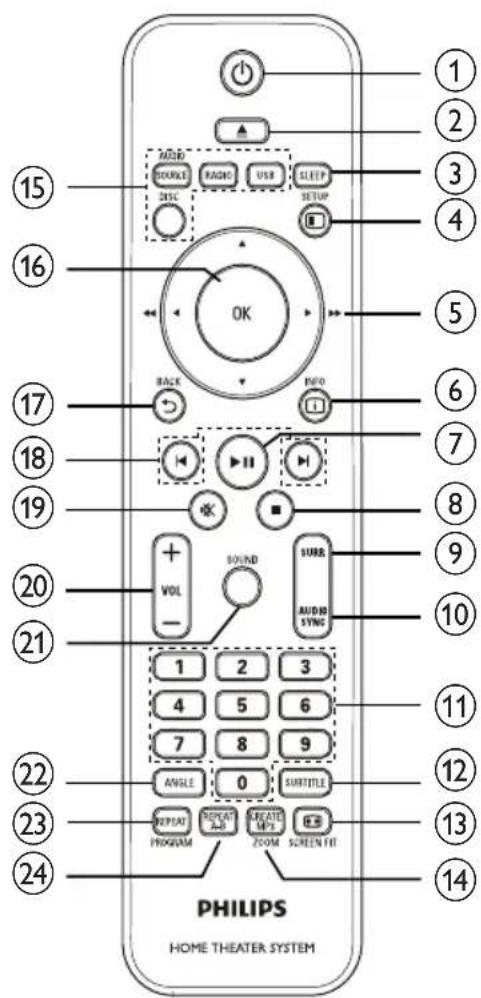
a Ⓧ (Standby-On)
• Turns on the Home Theatre System or switches to standby mode.
- When EasyLink is enabled, press and hold for at least three seconds to turn all connected HDMI CEC-compliant devices to standby.
▲ b Open/Close )
- Opens or closes the disc compartment.
c SLEEP
- Sets a delay after which the Home Theatre System switches to standby.
dSETUP
- Accesses or exits the setup menu.
▲e▶ (Navigation buttons)
• Navigates through the menus.
- Press left and right for fast backward or forward search.
• In radio mode, press up and down to tune the radio frequency.
• In radio mode, press left or right to start auto search.
if INFO
- For discs, displays information about the current status or the disc.
- For slideshows, displays a thumbnail view of photo files.
▶ lg ( Play/Pause )
• Starts, pauses or resumes play.
• In radio mode, automatically tune radio stations during first-time setup.
■ h (Stop)
- Stops playback.
• In radio mode, erases the current preset radio station.
i SURR (Surround Sound)
- Switches to supported surround sound or stereo sound.
j AUDIO SYNC
• Selects an audio language or channel.
- Press and hold to access the audio sync setting, then press VOL +/- to set the audio delay time.
k Numeric buttons
• Selects an item to play.
I SUBTITLE
• Selects a subtitle language for video.
m SCREEN FIT
• Fits the picture format to the TV screen.
n CREATE MP3/ZOOM
Accesses the menu to create MP3. Zooms in or out of the picture.
o Source buttons
• AUDIO SOURCE : Selects an audio out source.
• RADIO: Switches to FM radio.
• USB : Switches to the USB source.
• DISC : Switches to the disc source.
p OK
Confirms an entry or selection.
q BACK
Returns to a previous screen.
For DVD, goes to the title menu.
For VCD version 2.0 or SVCD with • PBC turned on, returns to the menu during playback.
◀/▶ ( Previous/Next )
- Skips to the previous or next title, chapter or track.
* s(Mute)
• Mutes or restores audio output.
t VOL +/-
• Increases or decreases volume.
u SOUND
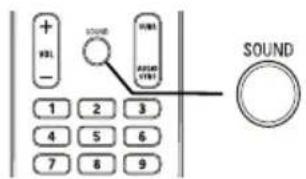
• Selects a predefined sound effect.
v ANGLE
- Displays video from different camera angles.
w REPEAT/PROGRAM
- Selects or turns off repeat or shuffle mode.
- In radio mode, resets the list of preset stations: press to manually reset; press and hold to automatically reset.
x REPEAT A-B
- Marks the section for repeat play or turns off repeat mode.
3 Connect
Make the following connections to use your Home Theatre System.
Basic connections:
Video
Speakers and subwoofer
- Wireless receiver (For HTS3377W, HTS3376W only)
- Power
Optional connections:
• Radio antenna Audio
- Audio from TV
• Audio from cable box/recorder/game console
- Other devices
- Portable media player
- USB device

Note
- Refer to the type plate at the back or bottom of the product for identification and supply ratings.
- Before you make or change any connections, ensure that all devices are disconnected from the socket.

Tip
- Different types of connectors can be used to connect this product, depending on availability and your needs. A comprehensive interactive guide to help you connect your product is available at www.connectivityguide.philips.com.
Place the product
Place the product where it cannot be pushed, pulled over, or knocked down.
Do not place it in an enclosed cabinet.
Make sure that you have full access to the power cord for easy disconnection of the product from the power supply.
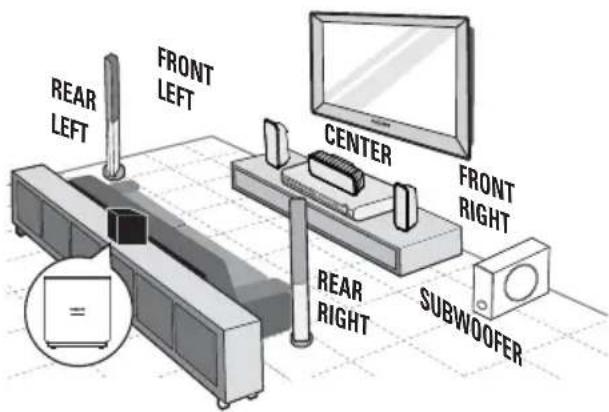
Wireless receiver is for HTS3377W, HTS3376W only.
1. Place this Home Theatre System near the TV. 2. Place the speakers system at normal listening ear-level and directly parallel to the listening area. 3. Place the subwoofer at the corner of the room or at least three feet away from the TV. 4. Place the wireless receiver (for HTS3377W, HTS3376W only) near the AC socket and in between the rear speakers. Position the wireless receiver (with Philips logo) directly parallel to the Home Theatre System.

Tip
To avoid magnetic interference or unwanted noise, never place this Home Theatre System too close to any radiation devices.
Connect video cables
Connect this Home Theatre System to a TV to view disc play. Select the best video connection that the TV can support.
• Option 1: Connect to the SCART jack - Option 2: Connect to the HDMI jack (for a HDMI, DVI or HDCP-compliant TV). - Option 3: Connect to the video (CVBS) jack (for a standard TV).

Note
- You must connect this Home Theatre System directly to a TV.
Option 1: Connect to the SCART jack
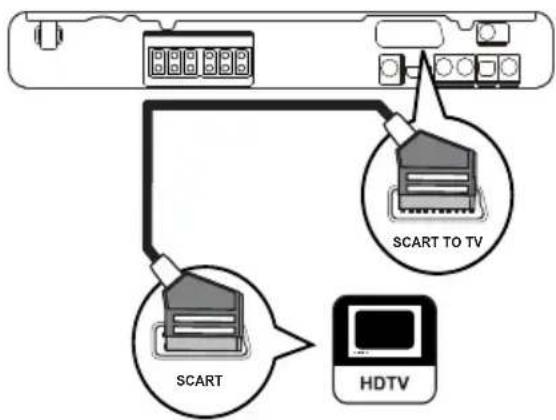
1 Connect a scart cable to the SCART TO TV jack on this Home Theatre System and the SCART input jack on the TV.

Note
- Scart connection allows TV's audio output through the speakers. Press AUDIO SOURCE repeatedly until 'SCART IN' is displayed on the display panel.
- This type of connection provides good picture quality.
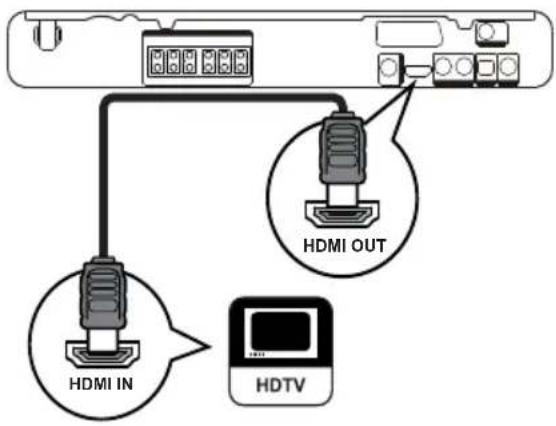
Option 2: Connect to the HDMI jack
English
1 Connect a HDMI cable (not supplied) to the HDMI OUT jack on this Home Theatre System and the HDMI input jack on the TV.

Note
If your device supports HDMI CEC, you can control compliant devices with a single remote control. (see 'Get started' > 'Use Philips EasyLink').

Tip
If the TV has a DVI connection only, connect via a HDMI/DVI adaptor. Connect an audio cable for sound output. You can optimise the video output. (see 'Adjust settings' > 'Video setup' > [HDMI Setup]). This type of connection provides the best picture quality.
Option 3: Connect to the Video (CVBS) jack
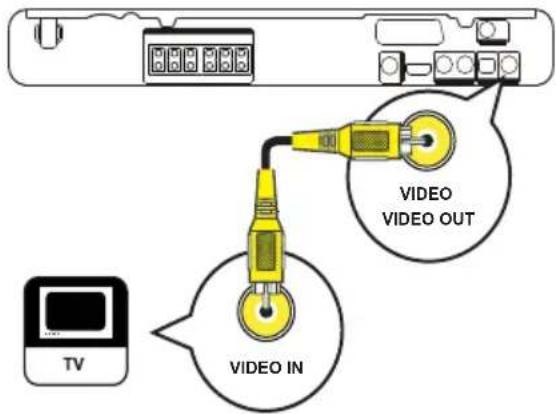
1 Connect a composite video cable (not supplied) to the VIDEO jack on this Home Theatre System and the VIDEO input jack on the TV.

Note
The video input jack on the TV might be • labelled as A/V IN, VIDEO IN, COMPOSITE or BASEBAND.
- This type of connection provides standard picture quality.
Connect speaker cables to speakers
For the rear speakers of HTS3277, HTS3377, HTS3376 and HTS3377W, HTS3376W only
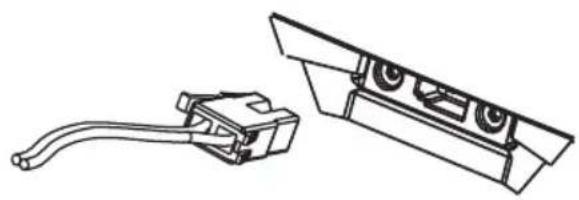
1 Connect the speaker cables to the matching colour jacks on the speakers (or speaker stands).
Connect speaker to speaker stand
For the rear speakers of HTS3277, HTS3377, HTS3376 and HTS3377W, HTS3376W only
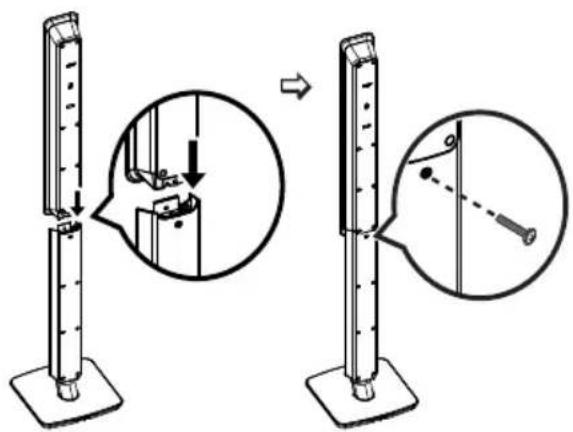
1 Attach the speakers to the speaker stands and secure the position with screws.
Connect speakers and subwoofer
For HTS3377W, HTS3376W only
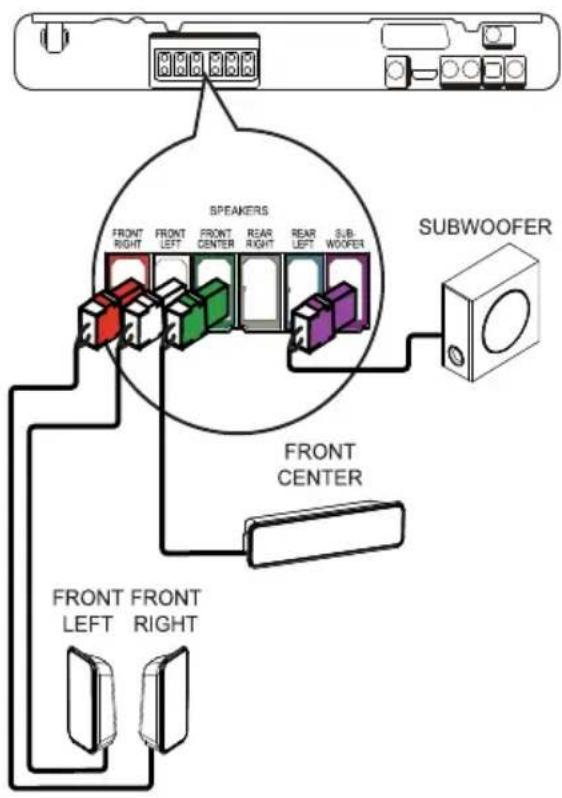
For HTS3377, HTS3376 and HTS3277. Different set of speakers for HTS3270, HTS3269 (see 'Specifications' > 'Speakers').
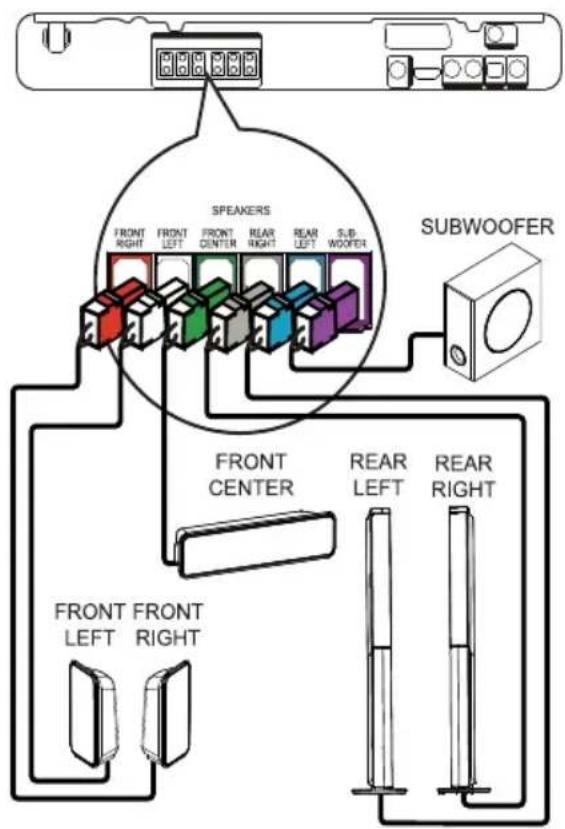
1 Connect the speakers and subwoofer to the matching jacks on this Home Theatre System.

Note
Ensure that the colours of the plugs and jacks are matched.
Connect rear speakers to wireless receiver
For the rear speakers of HTS3377W, HTS3376W only
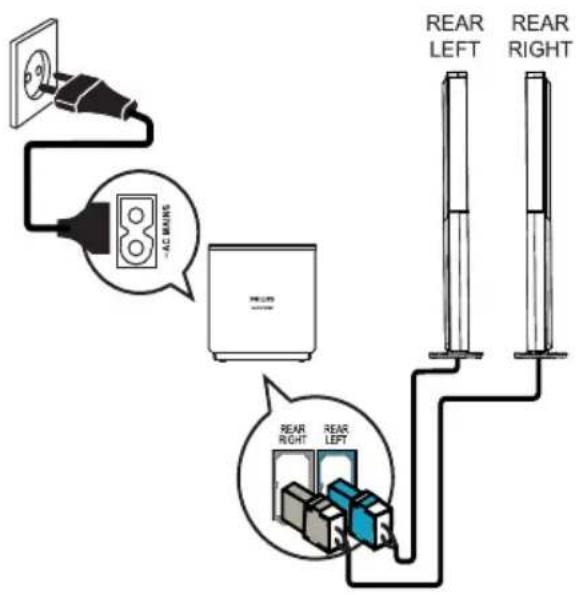
1 Connect the rear left and right speakers to the matching jacks at the bottom of the wireless receiver.
Connect radio antenna
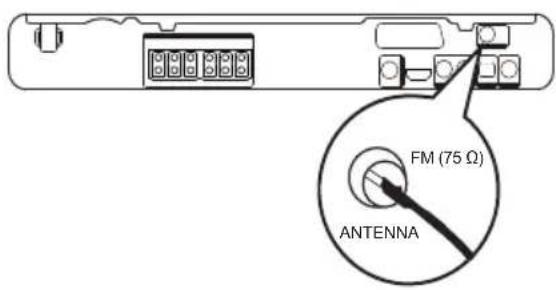
1 Connect the FM antenna to the FM75Ω jack on this Home Theatre System (for some models, this cable is already connected). 2 Extend the FM antenna and fix its ends to the wall.

Tip
For better FM stereo reception, connect to an external FM antenna.
Connect audio cables/other devices
Route the audio from other devices to this Home Theatre System to enjoy audio play with multi-channel surround capabilities.
Connect audio to TV
(also used for EasyLink control)
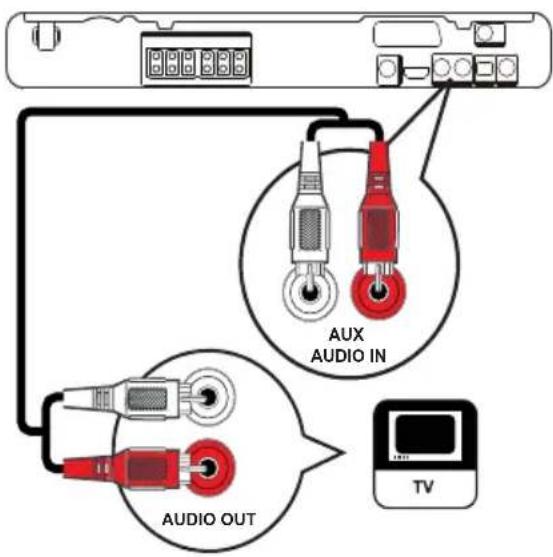
1 Connect the audio cables (not supplied) to the AUDIO IN-AUX jacks on the Home Theatre System and the AUDIO output jacks on the TV.

Note
To listen to the audio output from this connection, press AUDIO SOURCE repeatedly until 'AUX' is displayed on the display panel.
Connect audio from a cable box, recorder or games console
You can choose to connect to analogue or digital jacks depending on the device capabilities.
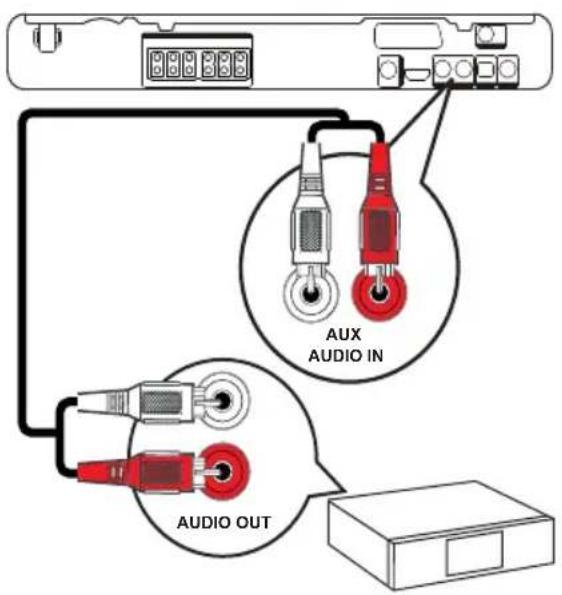
1 Connect the audio cables (not supplied) to the AUDIO IN-AUX jacks on the Home Theatre System and the AUDIO output jacks on the device.

Note
To listen to the audio output from this connection, press AUDIO SOURCE repeatedly until 'AUX' is displayed on the display panel.
Connect to coaxial jack
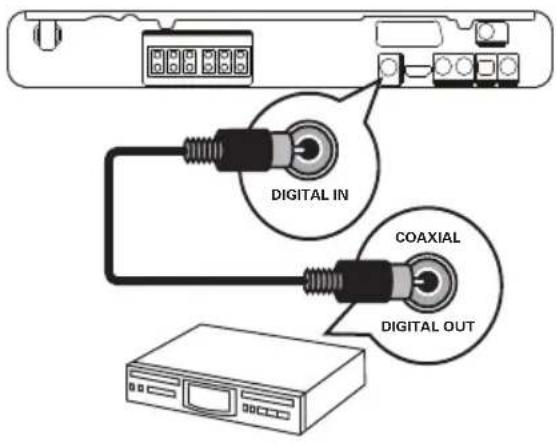
1 Connect a coaxial cable (not supplied) to the DIGITAL-IN-COAXIAL jack on this Home Theatre System and the COAXIAL/DIGITAL output jack on the device.

Note
To listen to the audio output from this connection, press AUDIO SOURCE repeatedly until 'COAX IN' is displayed on the display panel.
Connect to optical jack
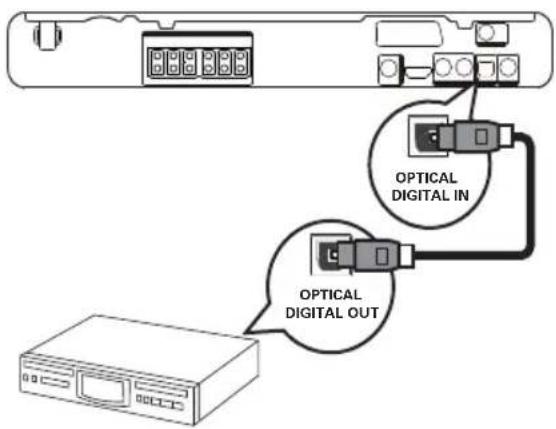
1 Connect an optical cable (not supplied) to the DIGITAL-IN-OPTICAL jack on this Home Theatre System and the OPTICAL/SPDIF output jack on the device.

Note
- To listen to the audio output from this connection, press AUDIO SOURCE repeatedly until 'OPTI IN' is displayed on the display panel.
Connect portable media player
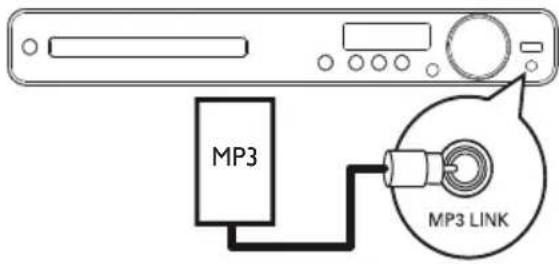
1 Connect a 3.5 mm stereo audio cable (not supplied) to the MP3 LINK jack on this Home Theatre System and the phone jack on the portable media player (such as MP3 player).

Note
- To listen to the audio output from this connection, press AUDIO SOURCE repeatedly until 'MP3 LINK' is displayed on the display panel.
Connect USB device
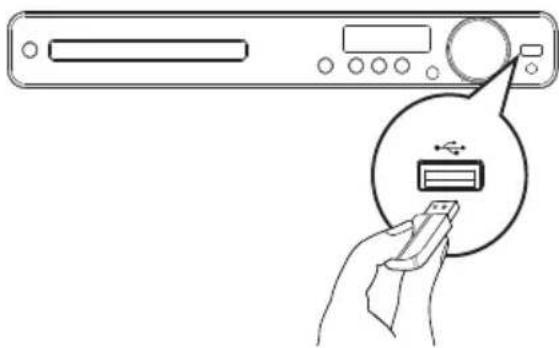
1 Connect the USB device to the USB jack on this Home Theatre System.

Note
This Home Theatre System can only play/view MP3, WMA, DivX (Ultra) or JPEG files that are stored on such devices.
- Press USB to access the content and play the files.
Connect power cord

Warning
Risk of product damage! Ensure that the power supply voltage corresponds to the voltage printed on the back or the underside of the product.
1 Connect the power cords from the Home Theatre System, wireless receiver and other devices to the power sockets when all the required connections are done.
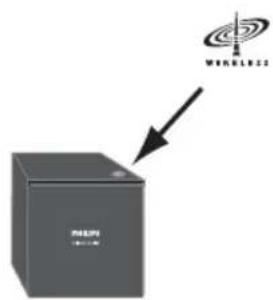
The wireless indicator on the wireless receiver lights up. (Only applicable for HTS3377W, HTS3376W)
The product is ready to be set up for use.

Note
- For optimum wireless reception, ensure that the wireless receiver is not obstructed by any objects.
4 Get started
Insert the remote control batteries
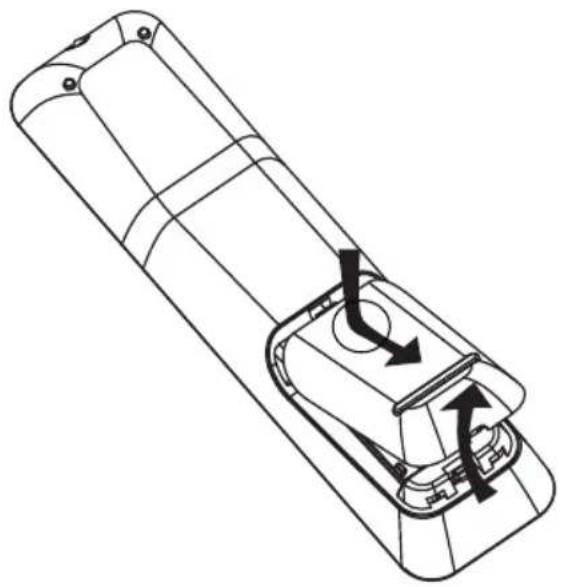
1 On the back of the remote control, slide the battery cover to remove it. 2 Insert the 2 supplied batteries (AAA). Be sure the + and - ends of the batteries line up with the markings inside the case. 3 Slide the cover back into position.

Note
- Do not mix batteries (old and new or carbon and alkaline, etc.).
- Remove batteries if they are exhausted or if the remote control is not to be used for a long time.
- Batteries contain chemical substances, they should be disposed of properly.
Control a play source
1 Press RADIO, USB or DISC button to select the source you wish to control.
2 Select the desired function (for example ◀, ▶).
Navigate through the menu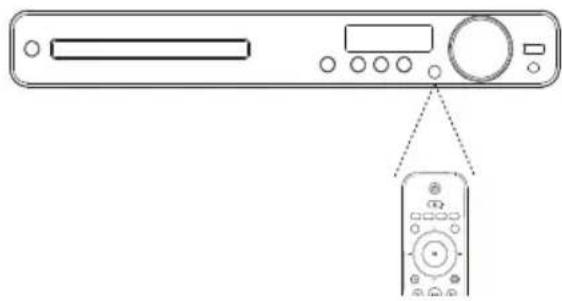
1 Point the remote control directly at the remote sensor on the Home Theatre System and select the desired function. 2 Press the following buttons on the remote control to navigate through the on-screen menus.
Button Action
| ▲▼ Move up or down | ||
| ◀▶ | Move left or right | |
| OK | Confirm a selection | |
| Enter numbers | ||
| 1 | 2 | 3 |
| 4 | 5 | 6 |
| 7 | 8 | 9 |
| 0 | ||
Find the correct viewing channel
1 Press to turn on this product.
2 Press DISC to switch to disc mode.
3 Turn on the TV and switch to the correct video-in channel in one of the following ways:
- Go to the lowest channel on your TV, then press the Channel Down button until you see the Philips screen.
- Press the SOURCE button repeatedly on the remote control of your TV.

Tip
The video-in channel is between the lowest and highest channels and may be called FRONT, A/V IN, VIDEO, HDMI etc. See the TV user manual on how to select the correct input on the TV.
Select menu display language

Note
Skip this setting if this product is connected to a HDMI CEC compliant TV. It switches automatically to the same OSD menu language as per your TV setting.
| General Setup | |
| EasyLink Setup | Auto |
| Disc Lock | English |
| Display Dim | Dansk |
| OSD Language | Nederlands |
| Screen Saver | Suomi |
| Sleep Timer | Français |
| DivX(R) VOD Code | Deutsch |
| Italiano | |
1 Press DISC.
2 Press SETUP.
» [General Setup] menu is displayed.
3 Press
4 Press ▲▼ to select [OSD Language] in the menu, then press ▶.
- The language options are different depending on your country or region. It may not correspond to the illustration shown here.
5 Press ▲▼ to select a language, then press OK.

Tip
You can set the default language for DVD disc menu (see 'Adjust settings' > 'Preferences' > [Disc Menu]).
Change speaker settings
Ideally, the distance between the listening position and all speakers should be the same. If not, adjust the speaker settings based on their distance from the listening position to achieve the best possible surround sound.
| Audio Setup | |
| Speakers Volume | |
| Speakers Delay | |
| HDMI Audio | |
| CD Upsampling | |
| Audio Sync | |
1 Press DISC.
2 Press SETUP. 3 Press ▼ to select [Audio Setup] in the menu, then press ▶.
If the speaker setup option is not accessible, press ■ twice before pressing SETUP.
To set the speakers level
1 Select [Speakers Volume] in the menu, then press ▶.
Speakers Volume Setup
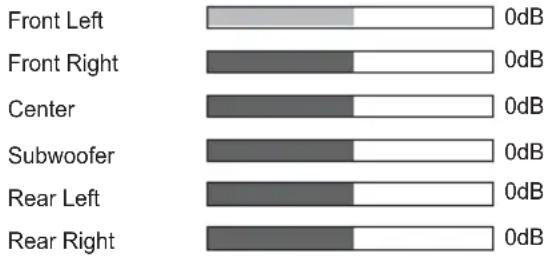
2 Press ◀▶ to change the volume level, then press OK.
The test tone is emitted from the » speaker.
- Repeat the above setting for other speakers until all speakers' output levels sound equally balanced.
• To exit the menu, press SETUP.
To set the output delay time (centre and rear speakers only)
1 Select [Speakers Delay] in the menu, then press ▶.
Speakers Distance Setup
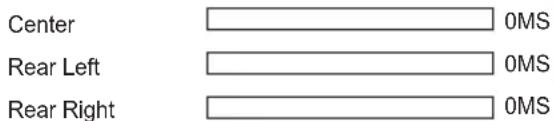
2 Press ◀▶ to set the delay time, then press OK.
Repeat the above setting for other speakers until the sound output from different speakers reaches the listening position at the same time.
To exit the menu, press SETUP.

Tip
- Set a longer delay time if the centre speaker or rear speaker is closer to the listening position than the front speaker.
- Allow 1 ms setting for every 1 foot distance between the speaker and the listening position.
Use Philips EasyLink
Your product supports Philips EasyLink, which uses the HDMI CEC (Consumer Electronics Control) protocol. EasyLink-compliant devices that are connected through HDMI connectors can be controlled by a single remote control.

Note
Philips does not guarantee 100% interoperability with all HDMI CEC devices.
1 Turn on the HDMI CEC operations on the TV and other connected devices. See TVs/devices manual for details. 2 You can now enjoy the following Philips EasyLink controls.
EasyLink
You can turn off or turn on all EasyLink features.
One-touch play
When you connect your product to devices that support one-touch play, you can control your product and the devices with one remote control. For example, when you press Play on your DVD remote control, your TV automatically switches to the correct channel to show the DVD content.
To enable One-touch play, a video disc must be placed in the disc compartment before operation.
One-touch standby
When you connect your product to devices that support one-touch standby, you can use your product remote control to switch your product and all connected HDMI devices to standby mode. You can perform one-touch standby using the remote control from any of the connected HDMI devices.
System audio control
When you connect your product to HDMI CEC-compliant devices, your product can switch automatically to play audio from the connected device.
To use one-touch audio, you must map the audio input from the connected device to your product.
You can use the remote control from the connected device to adjust the volume.
Audio Input Mapping
When you map the audio input correctly, this Home Theatre System switches to the audio from the played device automatically.
Map the devices to the audio inputs

Note
- Before you start, ensure that the audio output of the HDMI TV and other HDMI devices have been connected to the audio input jacks on this Home Theatre System.
| General Setup | |
| EasyLink Setup | EasyLink |
| Disc Lock | One Touch Play |
| Display Dim | One Touch Standby |
| OSD Language | System Audio Control |
| Screen Saver | Audio Input Mapping |
| Sleep Timer | |
| DivX(R) VOD Code | |
1 Press DISC.
2 Press Ⓐ SETUP.
» [General Setup] menu is displayed.
3 Press
4 Select [EasyLink Setup], then press ▶.
• [One Touch Play] and [One Touch Standby] functions are turned on by default in the factory.
5 Select [System Audio Control] > [On], then press OK to start scanning devices.
Once complete, the audio input mapping menu is displayed.
| Audio Input Mapping | |
| Scart In | ○ [TV] |
| Aux | ○ [DVD 3400] |
| Optical In | ○ other (Non-HDMI) |
| Coaxial In | |
For example, if the TV audio is connected to the AUX jack on this Home Theatre System, select [Aux] and map with the TV (brand name) at the right panel.
6 Select the audio input of this Home Theatre System that is used to connect to other HDMI devices (e.g. AUX, SCART IN), then press ▶.
7 Select the correct connected device, then press OK.
Repeat steps 5–7 to map other connected devices.
8 Press Ⓐ SETUP to exit the menu.
Select a play source
On the main unit
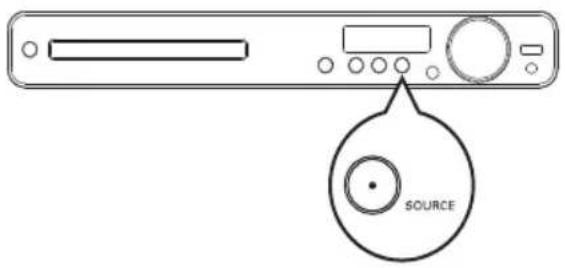
Press the SOURCE button repeatedly to select: DISC > USB > FM > SCART IN > AUX > COAX IN > OPTI IN > MP3 LINK > DISC ...
On the remote control
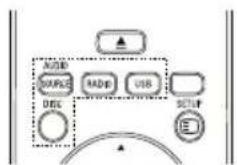
Press AUDIO SOURCE repeatedly to switch to the connected audio source:
| Display Device connected to | |
| AUX AUDIO IN-AUX sockets | |
| SCART IN SCART TO TV socket | |
| COAX IN | COAXIAL DIGITAL IN socket |
| OPTI IN | OPTICAL DIGITAL IN socket |
| MP3 LINK | MP3 LINK socket |
Press RADIO to switch to FM band.
Press USB to switch to USB mode.
Press DISC to switch to disc mode.
5 Play
Play a disc

Caution
Never place any objects other than discs into the disc compartment. Never touch the disc optical lens inside the disc compartment.
1 Press ▲ to open the disc compartment.
2 Insert a disc with its label facing up.
For a double-sided disc, load the side to play facing up.
3 Press ▲ to close the disc compartment and start disc play.
- To view disc play, turn on the TV to the correct viewing channel for this Home Theatre System. To stop disc play, press ■.

Note
- Check the types of discs supported. (see 'Specifications' > 'Playback media').
- If the password entry menu is displayed, enter the password before you can play the locked or restricted disc.
- If you pause or stop a disc for about 5 minutes, the screen saver activates. To deactivate the screen saver, press DISC.
- After you pause or stop a disc and no buttons are pressed within 15 minutes, this product automatically switches to standby mode.
Play video

Note
For video disc, playback always resumes from the point where it was last stopped. To start play from the beginning, press ▶ while the message is displayed.
Control video play
1 Play a title. 2 Use the remote control to control the title.
Button Action
| Starts, pauses or resumes playback. | |
| ■ | Stops play. |
| ▶ | Skips to the next title or chapter. |
| ◀ | Skips to the beginning of the current title or chapter. Press twice to jump to the previous title or chapter. |
| ◀◀ /▶◀ Searches fast-forward (right) or fast-backward (left). Press repeatedly to change the search speed.• In pause mode, slow motion backwards or forwards play. | |
| ▲ /▼ | Searches slow-forward (down) or slow-backward (up). Press repeatedly to change the search speed.• For VCD, only slow-forwards play is possible. |
Change video play
1 Play a title. 2 Use the remote control to change the video play.
| Button | Action |
| AUDIO SYNC | Selects an audio language or channel. |
| SUBTITLE | Selects a subtitle language for video. |
| REPEAT | Selects or turns off repeat or shuffle mode.Repeat options vary depending on the disc type.For VCDs, repeat play is only possible if the PBC mode is turned off. |
| ZOOM | Zooms in or out of the picture.To pan through the zoomed image, press the Navigation buttons . |
| INFO | Displays the current status or the disc information.You can change the video play options here without interrupting playback. |
| SCREEN FIT | Fits the picture format to the TV screen.You can watch the movie in full screen on TV. |

Note
- Some operations may not work with some discs. See the information accompanying the disc for details.
Access DVD menu
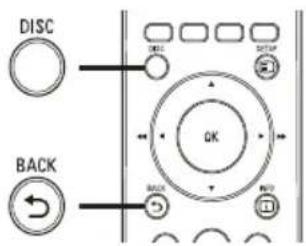
1 Press DISC to access disc main menu. 2 Select a play option, then press OK.
In some menus, press the • Numeric buttons to input your selection.
To return to the title menu during play, press BACK.
Access VCD menu or preview menu
The PBC (Playback Control) for VCD is activated by default in the factory. When you load a VCD, the contents menu is displayed.
1 Press ▲▼ to select a play option, then press OK to start play.
• If PBC is off, it skips the menu and starts play from the first title. - To return to the menu during play, press BACK (only possible if the PBC mode is on).
2 Press DISC to preview the contents of the disc.
• To exit the menu, press DISC.
Select Digest Type:
Track Digest
Disc Interval
Track Interval
3 Select a preview play option, then press OK
[Track Digest]
Plays the first few seconds of each track in a disc.
[Disc Interval]
Divides the total disc time by six and plays the first few seconds of these intervals.
[Track Interval]
Divides the current track by six and plays the first few seconds of these intervals.
This option is not available in stop mode.
![PHILIPS HTS3277 - [Track Interval] - 1](/content/2026/06/1277564/images/068f06996af9e4546cbf94f372875114a92cc6f67f617affe752c1aa569bdfab.jpg)
Tip
- You can change the PBC setting (see 'Adjust settings' > 'Preferences' > [PBC]).
Sync audio output with video play
If the video play is slower than the audio output (sound does not match with the pictures), you can delay the audio output to match the video.
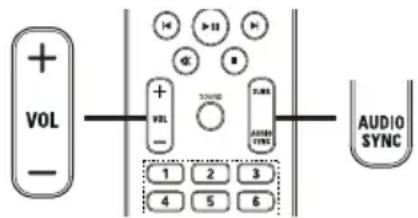
1 Press and hold AUDIO SYNC until 'AUDIO SYNC' is displayed. 2 Within five seconds, press VOL +/- to set the delay time for audio output.

Note
- If the volume control is not used within five seconds, it resumes normal volume control function.
Quick skip play to a specific time
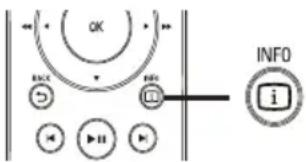
1 During play, press ⓘ INFO.
The disc status menu is displayed. »
2 Press ▲▼ to view information, then press OK.
• [TT Time] (title time) • [Ch Time] (chapter time) • [Disc Time] (disc time) • [Track Time] (track time)
3 Press the Numeric buttons to enter the time where you want to skip to, then press OK.

Note
- The options are different depending on the disc type.
Repeat play a specific section
1 During play, press REPEAT A-B where you want to set as the starting point. 2 Press REPEAT A-B again to set the ending point.
»Repeat play starts.
3 To cancel repeat play, press REPEAT A-B again.

Note
- The marked section for repeat play is only possible within a track/title.
View video play from different camera angles
1 During play, press 📄 INFO. » The disc status menu is displayed. 2 Select [Angle], then press ▶. 3 Press the Numeric buttons to select an angle, then press OK. » Play changes to the selected angle.

Note
- Applicable only to discs containing multi-angle scenes.
Play DivX® video
DivX video is a digital media format that retains high quality despite a high rate of compression. You can enjoy DivX video on this DivX® Certified product.
1 Insert a disc or USB that contains the DivX videos.
2 Press DISC or USB. » A contents menu is displayed. 3 Select a title to play, then press ▶II 4 Use the remote control to control the title.
| Button | Action |
| AUDIOSYNC | Selects an audio language or channel. |
| SUBTITLE | Selects a subtitle language for video. |
| ■ | Stops play.For DivX Ultra video, press this button again to display the contents menu. |
| INFO | Displays DivX Ultra video information. |

Note
You can only play DivX videos that were rented or purchased with the DivX registration code of this Home Theatre System (see 'Adjust settings' > 'General setup' > [DivX(R) VOD Code]). - You can play DivX video files of up to 4 GB. If the subtitle does not appear correctly, change the character set (see 'Adjust settings' > 'Preferences' > [DivX Subtitle]). This Home Theatre System can display up to 45 characters in the subtitle.
Play music
Control audio track play
1 Play a track. 2 Use the remote control to control the track.
| Button | Action |
| Starts, pauses or resumes playback. | |
| ■ | Stops play. |
| ▶I | Skips to the next track. |
| ◀ | Skips to the beginning of the current track. Press twice to jump to the previous track. |
| 1 2 34 5 67 8 90 | Selects an item to play. |
| ◀◀ /▶▶ | Searches fast-forward (right) or fast-backward (left). Press repeatedly to change the search speed.To change search speed, press this button repeatedly. |
| REPEAT | Selects or turns off repeat or shuffle mode. |
Play MP3/WMA music
MP3/WMA is a type of highly compressed audio file (files with .mp3 or .wma extensions).
1 Insert a disc or USB that contains the MP3/WMA music.
2 Press DISC or USB.
»A contents menu is displayed.
3 Select a folder, then press OK.
4 Select a track to play, then press ▶II.
- To return to the main menu, press ← BACK or press ▲ until the 'Previous' folder is selected, then press OK.

Note
- For a disc recorded in multiple sessions, only the first session is played.
- This product does not support MP3PRO audio format.
- If any special characters are present in the MP3 track name (ID3) or album name, it might not be displayed correctly on the screen because these characters are not supported.
- Some WMA files are protected by Digital Rights Management and cannot be played on this product.
- Folders/files that exceed the supported limit of this product will not be displayed or played.

Tip
- You can select the display of data contents, view folders or files (see 'Adjust settings' > 'Preferences' > [MP3/JPEG Display]).
Play photo
Play photo as slideshow
This product can play JPEG photos (files with .jpeg or .jpg extensions).
1 Insert a disc or USB that contains the JPEG photos.
2 Press DISC or USB.
Slideshow begins (for Kodak disc) or » a contents menu (for JPEG disc) is displayed.
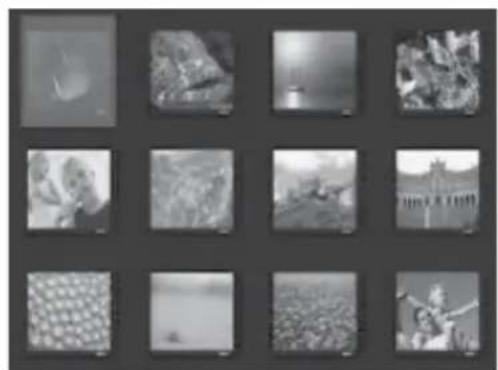
3 Select the folder/album you want to play. To preview the photos in the folder/album, press INFO.
◀ ▶ ▶
• To go to previous or next screen display, press ◀ /▶. • To select a photo, press the Navigation buttons. • To display the selected photo only, press OK.
4 Press ▶II to start slideshow play.
• To return to the menu, press BACK.

Note
- You may require more time to display the disc content on the TV due to the large number of songs/photos compiled onto one disc.
- If the JPEG photo is not recorded with an 'exif' type file, the actual thumbnail picture is not shown on the display. It is replaced by a 'blue mountain' thumbnail picture.
- This product can only display digital camera pictures according to the JPEG-EXIF format, typically used by almost all digital cameras. It cannot display Motion JPEG and pictures in formats other than JPEG or sound clips associated with pictures.
- Folders/files that exceed the supported limit of this product will not be displayed or played.
Control photo play
1 Play photo slideshow. 2 Use the remote control to control the photo.
| Button | Action |
| ◀ | Skips to the previous photo. |
| ▶ | Skips to the next photo. |
| ▲ | Rotates the photo clockwise. |
| ▼ | Rotates the photo anti-clockwise. |
| ZOOM | Zooms in or out of the picture.Play pause in zoom mode. |
| ■ | Stops play. |
Play musical slideshow
Play MP3/WMA music files and JPEG photo files simultaneously to create musical slideshow. The MP3/WMA and JPEG files must be stored on the same disc or USB device.
1 Play MP3/WMA music. 2 Navigate to the photo folder/album and press OK to start slideshow play. »Slideshow begins and continues till the end of the photo folder or album.
Audio continues to play until the end of the disc.
To stop slideshow play, press ■. To stop music play, press ■ again.
Play from USB device
This product plays/views MP3, WMA, DivX (Ultra) or JPEG files on the following USB devices:
digital camera that complies with the PTP standard • flash drive • memory card reader •
• HDD (external power source needed)
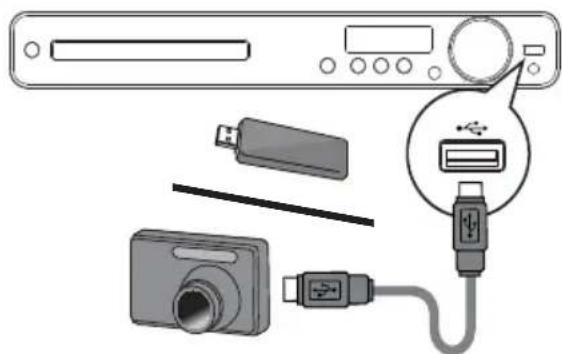
1 Connect a USB device to the ⇌ (USB) jack. 2 Press USB. »A contents menu is displayed. 3 Select a file to play, then press ▶II. »Play starts.
• To stop play, press ■ or remove the USB device.

Note
- If the device does not fit into the USB jack, connect it through a USB extension cable.
- If you connect a multiple USB card/device reader, only one card/device can be accessed.
Play from portable media player
Simply connect your portable media player (e.g. MP3 player) to this Home Theatre System to enjoy superb sound quality from your music collections.
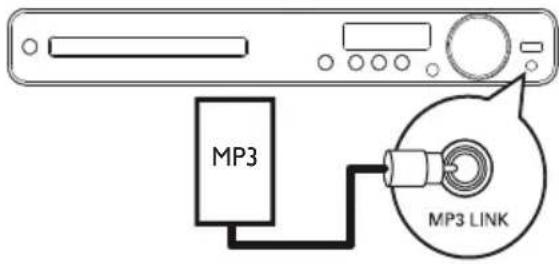
1 Connect a 3.5 mm stereo audio cable (not supplied) from the MP3 LINK jack on this Home Theatre System to the 'headphone' jack on the portable media player.
2 Press AUDIO SOURCE repeatedly until 'MP3 LINK' is displayed.
3 Start play on your portable media player. • To stop play, press STOP on the portable media player.

Note
Control playback is only possible on the portable media player.
- Stop play on the portable media player before you switch to other play media/source.
Play from radio
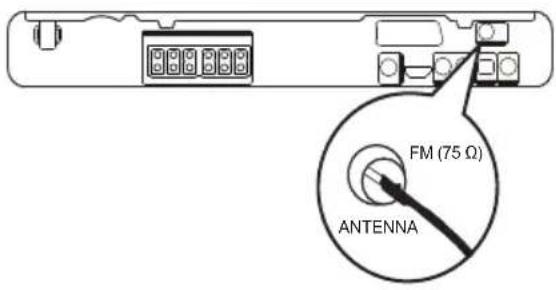
Check that the FM antenna has been connected to this Home Theatre System. If not, connect the supplied FM antenna to the FM75Ω jack and fix its ends to the wall.

Tip
For the best reception, place the antenna away from your TV and other sources of radiation. For even better reception of FM stereo, connect an external FM antenna (not supplied).
First time tuning
When you access radio mode for the first time, follow the instruction to install the radio stations.
1 Press RADIO. » 'AUTO INSTALL ... PRESS PLAY' is displayed.
2 Press
» All detected radio stations are stored.
» Once complete, it tunes to the first preset radio station.
• To stop auto tuning, press

Note
• This Home Theatre System can store up to a maximum of 40 radio stations. - If auto installation is not activated or less than 5 radio stations are stored, you will be prompted to install the radio stations again.
Listen to radio
1 Press RADIO. 2 Use the remote control to control the radio.
| Button | Action |
| ◀◀ | Selects a preset radio station. |
| ▲▼ | Tunes the radio frequency up or down. |
| ■ | Press and hold this button to erase the current radio station from the preset list.The preset number for other radio stations remain unchanged. |
Reinstall all the radio stations
1 Press RADIO.
2 Press and hold PROGRAM for more than 5 seconds.
»All previously stored radio stations are replaced.

Note
- Check the radio antenna connection if no stereo signal is detected or less than 5 stations are detected during radio installation.
Search and store radio stations individually
1 Press RADIO. 2 Press and hold TUNING +/-.
It starts searching until a radio station is detected.
3 Repeat step 2 until you tune to the radio station you wish to store.
To fine-tune the radio frequency, press ▲ /▼.
4 Press PROGRAM
The preset station number blinks. If no action is carried out within 20 seconds after the above step, it exits the preset mode.
5 Press ◀/▶ (or the Numeric buttons) to select a preset number to store. 6 Press PROGRAM to confirm.

Note
- If the FM radio station transmits RDS (Radio Data System) data, the name of the radio station is displayed.
6 Advanced features
Create MP3 audio files
You can convert audio CDs into MP3 audio files with this Home Theatre System. The created MP3 audio files are saved in your USB device.
| Option | Description |
| [Speed] | Selects the write-to-file speed. If [Normal] speed is selected, music play can be heard while creating the MP3 file. |
| [Bitrate] | Selects the quality level. Higher bitrate for better sound quality and bigger file size. Default setting is [128kbps]. |
| CREATE MP3 | |||
| OPTIONS | TRACK | ||
| Speed | Normal | Track01 | 04:14 |
| Bitrate | 128kbps | Track02 | 04:17 |
| Track03 | 03:58 | ||
| Track04 | 04:51 | ||
| Track05 | 03:53 | ||
| SUMMARY | Track06 | 04:09 | |
| Select Track | 0 | Track07 | 04:38 |
| Time | 00:00 | ||
| Start | Exit | Select All | Deselect All |
1 Insert an audio CD (CDDA/HDCD).
2 Connect the USB flash drive to the (USB) jack on this Home Theatre System. 3 During disc play, press CREATE MP3. 4 Select the conversion options in the [OPTIONS] panel, then press OK. 5 Press ▶ to access the [TRACK] panel.
6 Select the audio track, then press OK.
To select another track, repeat step 6.
To select all tracks, select [Select All] in the menu and press OK.
To deselect all tracks, select [Deselect all] in the menu and press OK.
7 Select [Start] in the menu to convert, then press OK.
Once complete, a new folder is created automatically in the USB device to store all the new MP3 files.
• To exit the menu, select [Exit] and press OK.

Note
- While you convert, do not press any buttons.
- DTS CDs and copy-protected CDs cannot be converted.
- Write-protected or password-protected USB devices cannot be used to store MP3 files.
7 Adjust sound
Select a preset sound
Control the volume
1 Press VOL +/- to increase or decrease the volume.
• To mute, press.
• To restore the volume, press ✗ again or press VOL + .
Select surround sound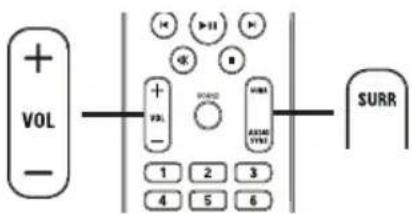
1 Press SURR repeatedly to select the best surround output that's available on the disc.
| Option | Description |
| 5 CH STEREO | Enhances the stereo channel output by duplicating the sound output to the centre and rear speakers. Ideal for party music. |
| MULTI-CHANNEL/DPLII | Multi-channel surround output: DTS (Digital Theatre Systems), Dolby Digital and Dolby Pro Logic II. |
| STEREO | Stereo sound from two front speakers. |
1 Press SOUND repeatedly to select the sound effect that is most suitable for the video or music you play.
| Video/Music | Description |
| ACTION / ROCK | Enhanced low and high range for great sounding movie effects and atmosphere. Great for action movies and rock/ pop music. |
| CONCERT / CLASSIC | Flat and pure sound mode. Ideal for listening to classical music and watching live concert disc. |
| DRAMA / JAZZ | Clear mid and high range. Recreates the atmosphere of a live club with the artist just in front of you. Good for jazz music and watching dramas. |
| SPORTS | Moderate mid range and surround effects for clear vocals and the atmosphere of a live sports venue. It is also ideal for video gaming. |
| NIGHT | Dynamically controlled sound mode suitable for watching movies at night or for nonintrusive background music. |
8 Adjust settings
You can customise various kinds of settings as you prefer. Refer to the following instructions to navigate through the setup menus.
| Symbol | Options |
| [General Setup] | |
| [Audio Setup] | |
| [Video Setup] | |
| [Preferences] |
| Note |
| • If the setup option is greyed out, it means the setting cannot be changed in the current state. |
| General Setup | |
| EasyLink Setup | |
| Disc Lock | |
| Display Dim | |
| OSD Language | |
| Screen Saver | |
| Sleep Timer | |
| DivX(R) VOD Code | |
1 Press Ⓐ SETUP.
» [General Setup] menu is displayed.
2 Press
3 Select an option, then press OK.
4 Select a setting, then press OK.
To return to the previous menu, press ← BACK.
To exit the menu, press • SETUP.

Note
See the explanations of the above options in • the following pages.
[EasyLink Setup] If this Home Theatre System is connected to HDMI CEC compliant TV/devices, all connected devices can respond to the following commands simultaneously:
| Option Description | |
| [EasyLink] | Turns off or on all EasyLink features.To disable this feature, select [Off]. |
| [One Touch Play] | When you press PLAY , the TV and Home Theatre System are turned on. Disc play starts if there is a disc in the Home Theatre System.To disable this feature, select [Off]. |
| [One Touch Standby] | When you press and hold STANDBY for at least three seconds, the Home Theatre System and all the HDMI CEC devices switch to standby simultaneously.To disable this feature, select [Off]. |
| [System Audio Control] | When you play audio that is routed from the connected devices, this Home Theatre System switches to the corresponding audio source automatically.To enable this feature, select [On]. Then proceed to [Audio Input Mapping] to scan and map all the connected devices. |
| [Audio Input Mapping] | When you map the audio input correctly, this Home Theatre System switches to the audio from the played device automatically. |

Note
You must turn on the HDMI CEC operations • on the TV/devices before you can enjoy the EasyLink controls. See the TV/devices manual for details.
Philips does not guarantee 100% • interoperability with all HDMI CEC compliant devices.
[Disc Lock]
Sets play restriction for a specific disc. Before you start, place the disc in the disc compartment (a maximum of 40 discs can be locked).
- [Lock] – Restricts access to the current disc. Once activated, a password is needed to unlock and play the disc. • [Unlock] – Plays all discs.
![PHILIPS HTS3277 - [Disc Lock] - 1](/content/2026/06/1277564/images/c393330bdc7b1f145b2a3655ad817468bbf00cfdffe77ed3acb3172dce2f305a.jpg)
Tip
You can set or change the password (see • 'Adjust settings' > 'Preferences' > [Password]).
[Display Dim]
Changes the brightness level of the display panel on this Home Theatre System.
• [100%] – Normal brightness. • [70%] – Medium brightness. • [40%] – Dimmest display.
[OSD Language]
Selects the default on-screen menu language.
[Screen Saver]
Turns off or on the screen saver mode. Helps to protect the TV screen from being damaged due to over exposure to a static image for too long.
- [On] – Sets the screen saver to appear after 5 minutes of inactivity (for example, in pause or stop mode).
- [Off] – Disable screen saver mode.
[Sleep Timer]
Switches to standby automatically after the preset time.
- [15 mins], [30 mins], [45 mins], [60 mins] – Selects the countdown time before the Home Theatre System switches to standby.
- [Off] – Disables sleep timer mode.
[DivX(R) VOD Code]
Displays the DivX® registration code.
![PHILIPS HTS3277 - [DivX(R) VOD Code] - 1](/content/2026/06/1277564/images/d938c0d3e24257fcd15343ebbba8b6f7eba4a5ea7492e882369737770e7beb81.jpg)
Tip
Enter this Home Theatre System DivX® registration code when you rent or purchase a video from www.divx.com/vod. The DivX videos rented or purchased through the DivX® VOD (Video On Demand) service can be played only on the device to which it is registered.
Audio setup
| Audio Setup | |
| Speakers Volume | |
| Speakers Delay | |
| HDMI Audio | |
| CD Upsampling | |
| Audio Sync | |
1 Press Ⓔ SETUP.
» [General Setup] menu is displayed.
2 Press ▼ to select [Audio Setup], then press ▶. 3 Select an option, then press OK. 4 Select a setting, then press OK.
• To return to the previous menu, press ➕ BACK.
• To exit the menu, press SETUP.

Note
• See the explanations of the above options in the following pages.
[Speakers Volume]
Sets the volume level of each speaker to get the ideal audio balance.
1) To start, press OK.
2) Select a speaker in the menu, then press
◀ to adjust the volume level.
3) Press OK to confirm and exit.
![PHILIPS HTS3277 - [Speakers Volume] - 1](/content/2026/06/1277564/images/b83c01f3c3398aea4d5f675324112d7e9c8d79b4cbba09b4b44556146addc42c.jpg)
Note
- The test tone is emitted from the speaker which you adjust.
[Speakers Delay]
Sets the delay time for the centre and rear speakers if they are placed closer to the listening position, so that the sound output from all speakers reaches the listening position at the same time.
1) To start, press OK. 2) Select a speaker in the menu, then press
◀ to set the delay time.
3) Press OK to confirm and exit.
![PHILIPS HTS3277 - [Speakers Delay] - 1](/content/2026/06/1277564/images/484f5b4c2b5751150c0acd95b87650d641146ee88ef4d34443469712d0f1c875.jpg)
Note
Allow 1 ms setting for every 1 foot distance between the speaker and the listening position.
[HDMI Audio]
Selects the HDMI audio setting when you connect this Home Theatre System and the TV with an HDMI cable.
- [On] – Allows audio output through the TV and the speaker system. If the audio format on the disc is not supported, it will be downmixed to two-channel sound (linear-PCM).
- [Off] – Disables audio output from the TV. The sound is only output through the speaker system.
[CD Upsampling]
Converts the music CD to a higher sampling rate using sophisticated digital signal processing for better sound quality.
• [Off] – Disables CD upsampling.
- [88.2kHz (X2)] – Converts the sampling rate of the CDs to twice as high as the original rate.
![PHILIPS HTS3277 - [CD Upsampling] - 1](/content/2026/06/1277564/images/6a639a52f7044b197bf6c65bf381658ddd81a3384b9c5ed433cefa83b94ef5b8.jpg)
Note
CD upsampling is only available in stereo mode.
[Audio Sync]
Sets the default delay time for audio output when you play a video disc.
1) To start, press OK. 2) Select a speaker delay in the menu, then press ◀▶ to set the delay time. 3) Press OK to confirm and exit.
Video setup
| Video Setup | |
| TV System | |
| TV Display | |
| Screen Fit | |
| Picture Setting | |
| HDMI Setup | |
| Closed Caption | |
1 Press ☐ SETUP. » [General Setup] menu is displayed.
2 Press ▼ to select [Video Setup], then press ▶.
3 Select an option, then press OK.
4 Select a setting, then press OK.
• To return to the previous menu, press ➔ BACK. • To exit the menu, press SETUP.

Note
- See the explanations of the above options in the following pages.
[TV System]
Changes this setting if the video does not appear correctly. By default, this setting matches the most common setting for TVs in your country.
• [PAL] – For PAL-system TV. • [NTSC] – For NTSC-system TV. • [Multi] – For TV that is compatible with both PAL and NTSC.
[TV Display]
Selects one of the following display formats:
4:3 Pan Scan (PS)![PHILIPS HTS3277 - [TV Display] - 1](/content/2026/06/1277564/images/7d8b9dcca0617840640c9c659aa6c8bb0538a9f4b507073af9c9ca3c28921946.jpg)
4:3 Letter Box (LB)![PHILIPS HTS3277 - [TV Display] - 2](/content/2026/06/1277564/images/fd3425a08e9d7a60a07d9a422773d14e7dd19eabc1912cea490fbfba023e6c2c.jpg)
16:9 (Wide Screen)![PHILIPS HTS3277 - [TV Display] - 3](/content/2026/06/1277564/images/2d93d41dbf8ff5516b9fe1fa3f7a8ec58f9ba7503e5d1de06e298f38ca36d6a8.jpg)
- [4:3 Pan Scan] – For 4:3 screen TV: full-height display with the trimmed sides.
- [4:3 Letter Box] – For 4:3 screen TV: wide-screen display with black bars on the top and bottom of the screen. • [16:9 Wide Screen] – For wide-screen TV: display ratio 16:9.
[Screen Fit]
Fits the picture format to the TV screen to enjoy watching disc play in full screen mode.
- [Select] – Displays various types of full screen format, press OK to select a suitable picture format that best fits to the TV screen.
- [Off] – Returns to normal screen display.
[Picture Setting]
Selects a predefined set of picture colour settings or customises the personal setting.
• [Standard] – Original colour setting. • [Bright] – Vibrant colour setting. • [Soft] – Warm colour setting. - [Personal] – Customises the colour setting. Set the level of brightness, contrast, sharpness/tint and colour saturation, then press OK.
[HDMI Setup]
Selects the HDMI video setting when you connect this Home Theatre System and the TV with a HDMI cable.
- [Wide Screen Format] – Defines the wide screen format for disc play.
| Option | Description |
| [Superwide] | Centre position of the screen is stretched less than the side. Applicable only to 720p and above video resolution settings. |
| [4:3 Pillar Box] | No stretching of the picture. Black bars are displayed on both sides of the screen. |
| [Off] | Picture is displayed according to the format of the disc. |
![PHILIPS HTS3277 - [HDMI Setup] - 1](/content/2026/06/1277564/images/ea0628256642915b760579eab54f4e41f695a32d4b04f39a159a711ad2ef6bd4.jpg)
Note
- This setting is only available if you have set the [TV Display] setting to [16:9 Wide Screen].
- [HDMI Video] – Selects the HDMI video output resolution that is compatible with your TV display capability.
| Option | Description |
| [Auto] | Detects and selects the best supported video resolution automatically. |
| [480i], [576i], [480p], [576p],[720p], [1080i],[1080p] | Selects a video resolution that is best supported by the TV. See the TV manual for details. |

Note
- If the setting is not compatible with your TV, a blank screen appears. Wait for 15 seconds for auto recovery or switch to its default mode as follows: 1) Press ▲. 2) Press ◀. 3) Press ZOOM.
[Closed Caption]
Turns off or on display captions.
- [On] – Shows the sound effects in subtitles. Applicable only to discs with Closed Caption information included and the TV supports this feature.
• [Off] – Disables closed caption.
Preferences

Note
Stop disc play before you can access [Preferences].
Preferences
| Audio | |
| Subtitle | |
| Disc Menu | |
| Parental | |
| PBC | |
| MP3/JPEG Display | |
| Password | |
| DivX Subtitle▼ |
1 Press Ⓐ SETUP.
» [General Setup] menu is displayed.
2 Press ▼ to select [Preferences], then press ▶. 3 Select an option, then press OK. 4 Select a setting, then press OK.
• To return to the previous menu, press ➕ BACK. • To exit the menu, press SETUP.

Note
- See the explanations of the above options in the following pages.
[Audio]
Selects the default audio language for disc play.
[Subtitle]
Selects the default subtitle language for disc play.
[Disc Menu]
Selects the language for the disc menu.
![PHILIPS HTS3277 - [Disc Menu] - 1](/content/2026/06/1277564/images/2bafc04c56271620acb3069d8f4486bba54c187f5999128e529f4fd46cb9b721.jpg)
Note
If the language you have set is not available on the disc, the disc uses its own default language.
- For some discs, the subtitle/audio language can only be changed from the disc menu.
To select the languages that are not listed in the menu, select [Others]. Then check the Language Code list at the back of this user manual and enter the respective 4-digit language code.
[Parental]
Restricts access to discs that are unsuitable for children. These types of discs must be recorded with ratings.
1) Press OK.
2) Select a rating level, then press OK.
3) Press the Numeric buttons to enter the password.
![PHILIPS HTS3277 - [Parental] - 1](/content/2026/06/1277564/images/a275becd52f7869b24e6db821f055a3e16eb0c2c3e0aee3ab3d8ce7c55a8fdfb.jpg)
Note
Rated discs above the level you set in [Parental] require a password to be played.
- The ratings are country-dependent. To allow all discs to play, select '8'.
- Some discs have ratings printed on them but are not recorded with ratings. This function has no effect on such discs.

Tip
- You can set or change the password (see 'Preferences' > [Password]).
[PBC]
Turns off or on the content menu of VCDs/SVCDs with PBC (playback control) feature.
- [On] - Displays index menu when you load a disc for play.
- [Off] - Skips the menu and starts play from the first title.
[MP3/JPEG Display]
Selects to display the folders or display all the files.
• [View Folders] – Displays the folders of MP3/WMA files. • [View Files] – Displays all the files.
[Password]
Sets or changes the password for locked discs and play restricted DVDs.
Change Password
Old Password
New Password
Confirm Password
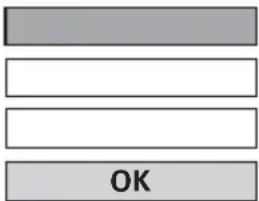
1) Press the Numeric buttons to enter '136900' or the last set password at [Old Password] field. 2) Enter the new password at [New Password] field. 3) Enter the new password again at [Confirm Password] field. 4) Press OK to exit the menu.

Note
If you forget the password, enter '136900' before you set a new password.
[DivX Subtitle]
Selects a character set that supports the DivX subtitle.
| [Standard] | English, Irish, Danish,Estonian, Finnish,French, German,Italian, Portuguese,Luxembourgish, Norwegian(Bokmål and Nynorsk),Spanish, Swedish, Turkish |
| [Central Europe] | Polish, Czech, Slovak,Albanian, Hungarian,Slovene, Croatian, Serbian(Latin script), Romanian |
| [Cyrillic] | Belarusian, Bulgarian,Ukrainian, Macedonian,Russian, Serbian |
| [Greek] Greek | |
| [Hebrew] Hebrew | |
| [Chinese(Simp)] Simplified Chinese | |
| [Korean] Korean | |
![PHILIPS HTS3277 - [DivX Subtitle] - 1](/content/2026/06/1277564/images/1c7e3ec6445797f8fb7c30cf7bbd17d54a20758ed6d9140c64a98697da821697.jpg)
Note
- Ensure that the subtitle file has the exact same file name as the movie file. If, for example, the file name of the movie is 'Movie.avi', then you will need to name the text file 'Movie.sub' or 'Movie.srt'.
[Version Info.]
Displays the software version of this Home Theatre System.
![PHILIPS HTS3277 - [Version Info.] - 1](/content/2026/06/1277564/images/090b4f84ba8042377da213b9879c6a190df2d5dc8ac1e6c154b9fa7cc9068933.jpg)
Tip
- This information is required when you want to find out if a newer software version is available at the Philips website that you may download and install on this Home Theatre System.
[Default]
Resets all the settings of this Home Theatre System to factory default, except for [Disc Lock], [Password] and [Parental] settings.
9 Additional Information
Update software
To check for new updates, compare the current software version of your Home Theatre System with the latest software version (if available) at the Philips website.
| Preferences | |
| Disc Menu | |
| Parental | |
| PBC | |
| MP3/JPEG Display | |
| Password | |
| DivX Subtitle | |
| Version Info. | |
| Default | |
1 Press SETUP. 2 Select [Preferences] > [Version Info.], then press OK.
3 Write down the version number, then press SETUP to exit the menu. 4 Go to www.philips.com/support to check the latest software version available for this Home Theatre System. 5 If the latest software version is higher than the software version of this Home Theatre System, download it and store it on a CD-R or USB flash drive.
6 Insert the CD-R or USB flash drive to this Home Theatre System.
7 Press DISC or USB, then follow the instructions on the TV to confirm update operation.
» Once software update is complete, this Home Theatre System turns off to standby automatically.

Note
Do not remove the CD-R or USB when software updating is in progress.
8 Disconnect the power cord for a few seconds and connect again to reboot the system.
Care

Caution
Never use solvents such as benzene, thinner, commercially available cleaners, or anti-static sprays intended for discs.
Clean discs
Wipe the disc with a microfibre cleaning cloth from the centre to the edge in a straight line movement.
Clean main unit screen
Wipe the screen surface with a microfibre cleaning cloth.
10 Specifications

Note
- Specification and design are subject to change without notice
Playback media
- DVD-Video, DVD+R/+RW, DVD-R/-RW, DVD+R DL, CD-R/CD-RW, Audio CD, Video CD/SVCD, Picture CD, MP3-CD, WMA-CD, DivX-CD, USB flash drive
Amplifier
• Total output power:
• HTS3270, HTS3277, HTS3269: 420 W RMS
• HTS3377, HTS3376: 1000 W RMS
• HTS3377W, HTS3376W: 1000 W RMS (wired, 6 x 167) 1000 W RMS (wireless, 10% tolerance)
• Frequency response: 40 Hz – 20 kHz
• Signal-to-noise ratio: > 60 dB (A-weighted)
- Input sensitivity:
- AUX: 400 mV
• SCART TO TV: 200 mV
• MP3 LINK: 250 mV
Disc
Laser Type: Semiconductor
• Disc diameter: 12 cm/8 cm
• Video decoding: MPEG1/MPEG2/DivX/DivX Ultra
• Video DAC: 12 bits, 108 MHz
• Signal system: PAL/NTSC
• Video S/N: 56 dB
• Audio DAC: 24 bits/96 kHz
• Frequency response:
• 4 Hz - 20 kHz (44.1 kHz)
• 4 Hz - 22 kHz (48 kHz)
• 4 Hz - 44 kHz (96 kHz)
PCM: IEC 60958
Dolby Digital: IEC 60958, IEC 61937
DTS: IEC 60958, IEC 61937
Radio
Tuning range: FM 87.5–108 MHz (50 kHz)
26 dB quieting sensitivity: FM 22 dBf
IF rejection ratio: FM 60 dB
Signal-to-noise ratio: FM 50 dB
Harmonic distortion: FM 3%
Frequency response: FM 180 Hz~10 kHz / ±6 dB
Stereo separation: FM 26 dB (1 kHz)
Stereo Threshold: FM 29 dB
USB
Compatibility: High Speed USB (2.0)
Class support: UMS (USB Mass Storage Class)
File system: FAT12, FAT16, FAT32
Main Unit
Power supply:
HTS3270, HTS3277, HTS3269: 110-240 V; ~50-60 Hz
HTS3377/W, HTS3376/W: 220-240V; ~50 Hz
Power consumption:
HTS3270, HTS3277, HTS3269: 80 W
HTS3377/W, HTS3376/W: 180 W
Standby power consumption: < 1 W
Dimensions (W x H x D):
HTS3270, HTS3377, HTS3376, HTS3277, HTS3269: 360 x 57 x 331 (mm)
HTS3377W, HTS3376W: 360 x 57 x 341 (mm)
• Weight:
• HTS3270, HTS3377, HTS3376, HTS3277, HTS3269: 2.87 kg
• HTS3377W, HTS3376W: 3.01 kg
Speakers
• System: full range satellite • Speaker impedance:
• HTS3270, HTS3277, HTS3269: 4 ohm (centre), 8 ohm (Front/Rear)
• HTS3377/W, HTS3376/W: 4 ohm (centre), 4 ohm (Front/Rear) • Speaker drivers: 3" full range
• Frequency response: 150 Hz – 20 kHz
• Dimensions (W x H x D):
- HTS3270, HTS3269: - Centre/Front/Rear: 100 x 100 x 75 (mm)
• HTS3377/W, HTS3376/W, HTS3277:
- Centre: 244 x 103 x 74 (mm)
- Front: 103 x 203 x 71 (mm)
- Rear: 262 x 1199 x 264 (mm)
Weight: •
• HTS3270:
- Centre: 0.66 kg
- Front: 0.39 kg
- Rear: 0.38 kg
• HTS3377, HTS3377W, HTS3277:
- Centre: 0.79 kg
- Front: 0.54 kg
- Rear: 3.38 kg
• HTS3376, HTS3376W:
- Centre: 0.85 kg
- Front: 0.58 kg
- Rear: 3.55 kg
HTS3269:
- Centre: 0.67 kg
- Front: 0.48 kg
- Rear: 0.45 kg
Subwoofer
Impedance: 4 ohm
Speaker drivers: 165 mm (6.5") woofer
Frequency response: 40 Hz – 150 Hz
Dimensions (W x H x D):
HTS3270, HTS3269: 123 x 310 x 369 (mm)
HTS3377/W, HTS3376/W, HTS3277: 163 × 363 × 369 (mm)
Weight:
HTS3270, HTS3269: 3.88 kg
HTS3377/W, HTS3376/W, HTS3277: 4.85 kg
Wireless receiver (For HTS3377W, HTS3376W only)
HTS3377/W, HTS3376/W, HTS3277:
4.85 kg
Wireless receiver (For HTS3377W, HTS3376W only)
Power Consumption: 50 W
Frequency Response: 6000 Hz • S/N Ratio: 60 dB (A-Weighted) • Input Sensitivity: 400-600 mV • Distortion: 1 % • Dimensions (W x H x D): 126 x 130.5 x 126 (mm) • Weight: 1.11 kg
Laser specification
Type: Semiconductor laser GaAlAs (CD) • Wavelength: 645–665 nm (DVD), 770–800 nm (CD) • Output power: 6 mW (DVD), 7 mW (VCD/CD) • Beam divergence: 60 degrees.
11 Troubleshooting

Warning
Risk of electric shock. Never remove the casing of the product.
To keep the warranty valid, never try to repair the product yourself.
If you have problems using this product, check the following points before you request service. If you still have a problem, register your product and get support at www.philips.com/welcome.
If you contact Philips, you will be asked for the model and serial number of your product. The model number and serial number are on the back or bottom of your product. Write the numbers here:
Model No.
Serial No.
Main unit
The buttons on this product do not work.
Disconnect this product from the socket for a few minutes, then connect again.
• See TV manual for correct video input channel selection. Change the TV channel until you see the DVD screen.
Press • D I S
- If you have changed the [TV Display] setting, switch back to default mode: 1) Press ▲ to open the disc compartment. 2)
Press ◀. 3) Press SUBTITLE.
No picture on HDMI connection.
Check if the HDMI cable is faulty. Replace a new HDMI cable.
- If this happens when you change the HDMI video resolution, you have to switch to its default mode: 1) Press ▲. 2) Press ◀. 3) Press ZOOM.
Sound
No sound.
• Make sure that the audio cables are connected and select the correct input source (for example, AUDIO SOURCE, USB) for the device you want to play.
No sound on HDMI connection.
- If the connected device is not HDCP-compliant or is only DVI-compatible, you cannot transmit sound through an HDMI connection. Use an analogue or digital audio connection.
• Make sure that the [HDMI Audio] setting is turned on.
No sound from TV programme.
- Connect an audio cable from the AUDIO input on this Home Theatre System to the AUDIO output on your TV. Then press AUDIO SOURCE repeatedly to select the corresponding audio input source.
No surround sound effect from the speakers.
- Press SURR to select a correct surround sound setting.
- If the Home Theatre System supports DTS playback, press AUDIO SYNC to select other audio track.
- Ensure that the source you are playing is recorded or broadcast in surround sound (Dolby Digital etc.). Sound cannot transmit through HDMI connection if the connected device is non-HDCP compliant or only DVI-compatible. Make an analogue or digital audio connection.
Play
DivX video files cannot be played.
• Make sure that the DivX file is encoded according to the 'Home Theatre Profile' with the DivX encoder. • Make sure that the DivX video file is complete.
The aspect ratio of the screen is not aligned with the TV display setting.
• The aspect ratio is fixed on the disc.
DivX subtitle does not display correctly.
- Ensure that the subtitle file name is the same as the movie file name.
- Select the correct character set: 1) Press SETUP. 2) Select [Preferences], then press ▶. 3) Select [DivX Subtitle], then press OK. 4) Select the character set that supports the subtitle.
The contents of the USB flash drive cannot be read.
- The USB flash drive format is not compatible with this Home Theatre System.
- Drive is formatted with a different file system which is not supported by this unit (e.g. NTFS). • Maximum size of memory supported is 160 GB.
No sound from the rear speakers and the indicator on the wireless receiver blinks continuously for more than one minute. (For HTS3377W, HTS3376W only)
- Ensure that all required connections are connected and carry out the following steps: 1) Press ▲. 2) Press Ⓐ INFO . A screen is displayed. 3) Press 1 , then press the SURR button within 5 seconds. 'PAIRING SUCCESS' is displayed. 4) If 'PAIRING FAIL' is displayed, repeat steps 1 to 3.
12 Glossary
A
Aspect ratio
Aspect ratio refers to the length to height ratio of TV screens. The ratio of a standard TV is 4:3, while the ratio of a high-definition or wide TV is 16:9. The letter box allows you to enjoy a picture with a wider perspective on a standard 4:3 screen.
D
DivX®
The DivX® codec is a patent-pending, MPEG-4 based video compression technology developed by DivX®, Inc. It can shrink the file size of digital video and still maintain high visual quality.
Dolby Digital
A surround sound system developed by Dolby Laboratories that contains up to six channels of digital audio (front left and right, surround left and right, centre and subwoofer.)
H
HDCP
High-bandwidth Digital Content Protection. This is a specification that provides a secure transmission of digital contents between different devices (to prevent unauthorised copyright.)
HDMI
High-Definition Multimedia Interface (HDMI) is a high-speed digital interface that can transmit uncompressed high definition video and digital multichannel audio. It delivers high quality picture and sound quality, completely free from noise. HDMI is fully backward-compatible with DVI.
As required by the HDMI standard, connecting to HDMI or DVI products without HDCP (High-bandwidth Digital Content Protection) will result in no Video or Audio output.
J
JPEG
A very common digital still picture format. A still-picture data compression system proposed by the Joint Photographic Expert Group, which causes only a small decrease in image quality in spite of its high compression ratio. Files are recognised by their file extension '.jpg' or '.jpeg'.
M
MP3
A file format with a sound data compression system. MP3 is the abbreviation of Motion Picture Experts Group 1 (or MPEG-1) Audio Layer 3. With the MP3 format, one CD-R or CD-RW can contain about 10 times more data than a regular CD.
MPEG
Motion Picture Experts Group. A collection of compression systems for digital audio and video.
P
PBC
Playback Control. A system where you navigate through a Video CD/Super VCD with on-screen menus that are recorded onto the disc. You can enjoy interactive playback and search.
PCM
Pulse Code Modulation. A digital audio encoding system.
Progressive scan
The progressive scan displays twice as many frames per second as an ordinary TV system. It offers higher picture resolution and quality.
W
WMA
Windows Media™ Audio. Refers to an audio compression technology developed by Microsoft Corporation. WMA data can be encoded with Windows Media player version 9 or Windows Media player for Windows XP. Files are recognized by their file extension '.wma.'
WMV
Windows Media Video. Refers to a video compression technology developed by Microsoft Corporation. WMV content can be encoded by using Windows Media® Encoder 9 series. Files are recognized by their file extension '.wmv'.
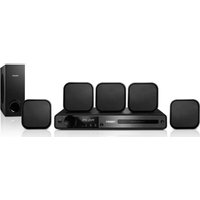

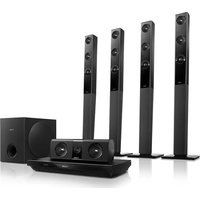
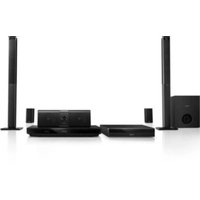

- CONTENTS
- IMPORTANT
- SAFETY AND IMPORTANT NOTICE
- WARNING
- CE
- COPYRIGHT
- BE RESPONSIBLE. RESPECT COPYRIGHTS
- MAINS FUSE (UK ONLY)
- NOTE
- TRADEMARK NOTICE
- YOUR PRODUCT
- FEATURE HIGHLIGHTS
- REGION CODES
- PRODUCT OVERVIEW
- C SLEEP
- DSETUP
- ▲E▶ (NAVIGATION BUTTONS)
- IF INFO
- LG ( PLAY/PAUSE )
- H (STOP)
- I SURR (SURROUND SOUND)
- J AUDIO SYNC
- K NUMERIC BUTTONS
- I SUBTITLE
- M SCREEN FIT
- N CREATE MP3/ZOOM
- O SOURCE BUTTONS
- P OK
- Q BACK
- ◀/▶ ( PREVIOUS/NEXT )
- S(MUTE)
- V ANGLE
- W REPEAT/PROGRAM
- X REPEAT A-B
- CONNECT
- TIP
- PLACE THE PRODUCT
- CONNECT VIDEO CABLES
- OPTION 1: CONNECT TO THE SCART JACK
- OPTION 2: CONNECT TO THE HDMI JACK
- CONNECT SPEAKER CABLES TO SPEAKERS
- CONNECT SPEAKER TO SPEAKER STAND
- CONNECT SPEAKERS AND SUBWOOFER
- CONNECT REAR SPEAKERS TO WIRELESS RECEIVER
- CONNECT RADIO ANTENNA
- CONNECT AUDIO CABLES/OTHER DEVICES
- CONNECT AUDIO TO TV
- CONNECT PORTABLE MEDIA PLAYER
- CONNECT USB DEVICE
- CONNECT POWER CORD
- GET STARTED
- INSERT THE REMOTE CONTROL BATTERIES
- CONTROL A PLAY SOURCE
- FIND THE CORRECT VIEWING CHANNEL
- SELECT MENU DISPLAY LANGUAGE
- CHANGE SPEAKER SETTINGS
- SPEAKERS VOLUME SETUP
- PRESS ◀▶ TO CHANGE THE VOLUME LEVEL, THEN PRESS OK
- SELECT [SPEAKERS DELAY] IN THE MENU, THEN PRESS
- SPEAKERS DISTANCE SETUP
- PRESS ◀▶ TO SET THE DELAY TIME, THEN PRESS OK
- USE PHILIPS EASYLINK
- EASYLINK
- ONE-TOUCH PLAY
- ONE-TOUCH STANDBY
- MAP THE DEVICES TO THE AUDIO INPUTS
- SELECT A PLAY SOURCE
- PLAY
- PLAY A DISC
- CAUTION
- PLAY VIDEO
- CONTROL VIDEO PLAY
- CHANGE VIDEO PLAY
- ACCESS DVD MENU
- ACCESS VCD MENU OR PREVIEW MENU
- [TRACK DIGEST]
- [DISC INTERVAL]
- [TRACK INTERVAL]
- SYNC AUDIO OUTPUT WITH VIDEO PLAY
- QUICK SKIP PLAY TO A SPECIFIC TIME
- REPEAT PLAY A SPECIFIC SECTION
- PLAY DIVX® VIDEO
- PLAY MUSIC
- CONTROL AUDIO TRACK PLAY
- PLAY MP3/WMA MUSIC
- PLAY PHOTO
- PLAY PHOTO AS SLIDESHOW
- CONTROL PHOTO PLAY
- PLAY MUSICAL SLIDESHOW
- PLAY FROM USB DEVICE
- PLAY FROM PORTABLE MEDIA PLAYER
- PLAY FROM RADIO
- FIRST TIME TUNING
- PRESS
- LISTEN TO RADIO
- REINSTALL ALL THE RADIO STATIONS
- SEARCH AND STORE RADIO STATIONS INDIVIDUALLY
- ADVANCED FEATURES
- CREATE MP3 AUDIO FILES
- ADJUST SOUND
- SELECT A PRESET SOUND
- CONTROL THE VOLUME
- ADJUST SETTINGS
- [DISC LOCK]
- [DISPLAY DIM]
- [OSD LANGUAGE]
- [SCREEN SAVER]
- [SLEEP TIMER]
- [DIVX(R) VOD CODE]
- AUDIO SETUP
- [SPEAKERS VOLUME]
- [SPEAKERS DELAY]
- [HDMI AUDIO]
- [CD UPSAMPLING]
- [AUDIO SYNC]
- VIDEO SETUP
- [TV SYSTEM]
- [TV DISPLAY]
- [SCREEN FIT]
- [PICTURE SETTING]
- [HDMI SETUP]
- [CLOSED CAPTION]
- PREFERENCES
- [AUDIO]
- [SUBTITLE]
- [DISC MENU]
- [PARENTAL]
- [PBC]
- [MP3/JPEG DISPLAY]
- [PASSWORD]
- CHANGE PASSWORD
- [DIVX SUBTITLE]
- [VERSION INFO.]
- [DEFAULT]
- ADDITIONAL INFORMATION
- UPDATE SOFTWARE
- CARE
- CLEAN DISCS
- SPECIFICATIONS
- PLAYBACK MEDIA
- AMPLIFIER
- DISC
- RADIO
- USB
- MAIN UNIT
- SPEAKERS
- SUBWOOFER
- LASER SPECIFICATION
- TROUBLESHOOTING
- SOUND
- GLOSSARY
- A
- D
- H
- J
- M
- P
- PBC
- PCM
- PROGRESSIVE SCAN
- W
- WMA
- WMV
Brand : PHILIPS
Model : HTS3277
Category : Home Theater System