GSTT1100 - Réchaud à charbon Stirling - Free user manual and instructions
Find the device manual for free GSTT1100 Stirling in PDF.


User questions about GSTT1100 Stirling
0 question about this device. Answer the ones you know or ask your own.
Ask a new question about this device
Download the instructions for your Réchaud à charbon in PDF format for free! Find your manual GSTT1100 - Stirling and take your electronic device back in hand. On this page are published all the documents necessary for the use of your device. GSTT1100 by Stirling.
USER MANUAL GSTT1100 Stirling
natural_image
Exterior view of a modern office building (no signage)Garment Steamer with Ironing Board
Model Number GSTT1100
INSTRUCTION MANUAL
Welcome
Congratulations on choosing to buy a STIRLING ^® product.
All products brought to you by STIRLING ^® are manufactured to the highest standards of performance and safety and, as part of our philosophy of customer service and satisfaction, are backed by our comprehensive 1 Year Warranty.
We hope you will enjoy using your purchase for many years to come.
Contents
02 Welcome
04 Warranty Details
05 General Safety Instructions
09 Product Overview
11 Getting Started
17 Instructions
23 FAQs & Troubleshooting Guide
24 Other Useful Information
27 Repair and Refurbished Goods or Parts Notice

text_image
ALDI
text_image
STIRLINGGarment Steamer with Ironing Board
Warranty Details
REGISTER YOUR PURCHASE AT www.aldi.com.au/en/about-aldi/product-registration/ TO KEEP UP-TO-DATE WITH IMPORTANT PRODUCT INFORMATION
The product is guaranteed to be free from defects in workmanship and parts for a period of 12 months from the date of purchase. Defects that occur within this warranty period, under normal use and care, will be repaired, replaced or refunded at our discretion. The benefits conferred by this warranty are in addition to all rights and remedies in respect of the product that the consumer has under the Competition and Consumer Act 2010 and similar state and territory laws.
Our goods come with guarantees that cannot be excluded under the Australian Consumer Law. You are entitled to a replacement or refund for a major failure and to compensation for any other reasonably foreseeable loss or damage. You are also entitled to have the goods repaired or replaced if the goods fail to be of acceptable quality and the failure does not amount to a major failure.
text_image
1 YEAR WARRANTYGeneral Safety Instructions
IMPORTANT SAFETY INSTRUCTIONS READ CAREFULLY AND KEEP FOR FUTURE REFERENCE
Read this manual thoroughly before first use, even if you are familiar with this type of product. The safety precautions enclosed herein reduce the risk of fire, electric shock and injury when correctly adhered to. Keep the manual in a safe place for future reference, along with the completed warranty card, purchase receipt and carton. If applicable, pass these instructions on to the next owner of the appliance.
Always follow basic safety precautions and accident prevention measures when using an electrical appliance, including the following:
Electrical safety and cord handling
• Voltage: Make sure your local outlet voltage and circuit frequency correspond to the voltage indicated on the appliance rating label and your outlet socket is
properly earthed. If this is not the case, do not use the appliance.
- Separate circuit: To reduce the likelihood of circuit overload, do not operate another high wattage appliance on the same circuit.
- WARNING: Do not immerse! Never immerse the cord, plug or appliance in water or other liquid, or expose the electrical connections to water or other liquid. Should liquids enter the housing, unplug the appliance from the power socket immediately and arrange for it to be repaired by a qualified technician.
- Protect from moisture: Do not use the appliance outdoors or expose it to humidity. Never use the appliance adjacent to water contained in a bath, shower, wash basin or other vessel. The proximity of moisture presents a danger, even when the appliance is switched off. Do not operate the appliance or touch the power cord or plug with wet hands.
- No extension cord: Always unwind the power cord fully before switching on and do not use an extension cord. If an extension cord is absolutely necessary, a 15A rated cord should be used. Cords rated for less amperage may overheat. Take care when arranging the cord so that it cannot be pulled or tripped over.
- Protect the power cord: Do not damage, kink or squash the power cord and protect it from sharp edges. Do not let the cord touch any hot surface, including the ironing/steaming surface. Unwind and straighten the cord before use, then arrange the cord in such a way that no one can step on it or trip over it.
- Damage: Do not use the appliance if it has been dropped, if there are visible signs of damage or if it is leaking. A damaged cord or plug must be replaced by the manufacturer or a qualified technician in order to avoid a hazard. In case of damage, please contact our after sales support centre.
General Safety Instructions (Cont.)
- Disconnect the appliance after every usage, before cleaning and before filling or emptying the water tank. To disconnect, turn the appliance off and remove the plug from the power socket. Pull only on the plug itself, not on the cable.
- Do not open: Never attempt to open the appliance yourself, or to replace the power cord. Only have the appliance repaired by an authorised technician, or contact our after sales support centre for advice.
- RCD: Unless your home is already fitted with a residual current device (safety switch), we recommend installing an RCD with a rated residual operating current not exceeding 30 mA to provide additional safety protection when using electrical appliances. See your electrician for professional advice.
Usage conditions and restrictions
- Domestic use only: This appliance is designed and intended for indoor household use only. It is not suitable for commercial, trade or outdoor use.
- Intended use: This appliance is intended exclusively for ironing and smoothing and removal of creases and wrinkles on garments and other home textiles. Do not use it for anything other than its intended purpose and only use it as described in this manual. All other use is deemed improper use.
- Common sense: These instructions are not intended to cover every possible condition and situation. As with any electrical household appliance, common sense and caution are therefore always recommended when assembling, operating and maintaining the unit.
- Assembly and accessories: Ensure that all parts are correctly assembled before use. Do not use any accessories with this appliance that are not supplied or specifically recommended. Improper use of accessories may result in the risk of fire, electric shock and/or injury to persons.
- Usage restriction: This appliance is not intended for use by persons (including children) with reduced physical, sensory or mental capabilities, or lack of experience and knowledge, unless they have been given supervision or instructions concerning use of the appliance by a person responsible for their safety.
- Children: This appliance is not a toy. Supervise children to ensure they do not play with the appliance. Close supervision is necessary when any appliance is used by or near children.
• Unattended: Do not leave the appliance unattended when connected to power. - Water usage: Only fill water into the tank; do not add scented substances, vinegar, descaling agents or any other additives into the water tank when using the appliance, as they can cause damage to the appliance. Do not add hot water to the tank. Only use cold water, preferably cold boiled water.
General Safety Instructions (Cont.)
- Water tank: The water tank must be filled before connecting the appliance to the power supply. The appliance must be disconnected from the power supply before emptying or refilling water.
- Filling aperture: Do not open the tank cap during use.
- Work area: Keep your work area well lit. Only use the appliance on a flat and stable surface where it is unlikely to be overturned.
- Positioning: To avoid scalding and/or scratching the iron soleplate, always rest the steam head/iron on the dedicated iron rest and place the product base on a flat and stable floor.
- Flammable materials: Do not operate or store the appliance in the vicinity of flammable or explosive materials.
- Safe usage: Keep openings clear. Do not block the holes of the steam head/iron. Do not point the appliance at people or animals when in use.
- Heat sources: Keep the appliance away from heat sources (radiator, oven etc.), direct sunlight, moisture and sharp edges.
- Brush installation/removal: To avoid scalding, always wear an insulated glove (or oven mitt) before attempting to install or remove the brush during use.
- WARNING: Do not steam clothes that are being worn! Never use the garment steamer on clothing that you are (or someone else is) wearing.
- Storage: Put the appliance away after every use to prevent anyone tripping over it. Before storage, let the appliance cool down for at least 30 minutes. Store the appliance in a cool, dry indoor area, out of reach of children.
- Cleaning: Only clean the housing with a soft, dry cloth. Do not use liquid or aerosol cleaners. Self-cleaning instructions for the steam system are provided on page 24.
CAUTION: Avoid harsh cleansers! Do not clean the appliance with solvents, alcohol or abrasive cleaning agents as these could cause damage to the garment steamer.
- Smoke: If you notice any smoke or fire coming out of the product, stop using it immediately and unplug the unit from the mains power supply to avoid a fire or electric shock. Contact our after sales support centre for assistance.
- Service: To reduce the risk of electric shock, do not disassemble or attempt to repair the appliance; take it to a qualified service person for examination and repair. Incorrect reassembly or repair could cause a risk of fire, electric shock, or injury to persons when the appliance is used.
General Safety Instructions (Cont.)
- Misuse: Improper use or installation may result in the risk of fire, electric shock and/or injury. We accept no responsibility for any eventual injury or damages caused by improper use or inappropriate handling, or by any other noncompliance with the instructions in this manual.
- CAUTION: Always check the care instructions! Should the care instructions in an item to be steamed forbid ironing [ ] do not use the garment steamer on it or you could cause permanent damage to the item.
CAUTION: HOT!
- Burns could occur from touching hot metal parts, hot water or steam. Use care when moving the appliance — there may be hot water in the tank.
- To reduce the risk of contact with hot water emitting from the steam vents, check the appliance before each use by holding it away from your body and operating the STEAM switch.
- Never hold your hand over the steam head/iron or touch hot metal parts.


WARNING: HOT SURFACES!
These symbols indicates that the appliance can become hot during use. Do not touch hot surfaces! Risk of burns! Keep the power cord away from hot parts.
WARNING: DANGER OF SCALDING!
This symbol indicates that the appliance emits hot steam during use. Exercise utmost care when using the appliance to avoid scalding. Always handle with care and warn other users of the potential danger.
Product Overview
Scope of delivery
Assembled garment steamer with ironing board (Fig. 1)
1 Hanger
2 Twin telescopic poles
3 Iron rest lock
4 Steam head
5 Steam switch
6 Insulated steam supply hose
7 Horizontal metal rod
8 Ironing board fixing lock
9 Wheels
10 Base
11 Ironing board leg support
12 Platform
13 Power switch
14 Water tank
15 Main steamer unit
16 Ironing board
Documentation (not shown)
Instruction manual Quick start guide Warranty certificate

text_image
supply hose rod ing lock leg support unit (not shown) e 16 15 14 13 12 11 1 2 3 4 5 6 7 8 9 10Product Overview (Cont.)
Individual parts and accessories (Fig. 2)
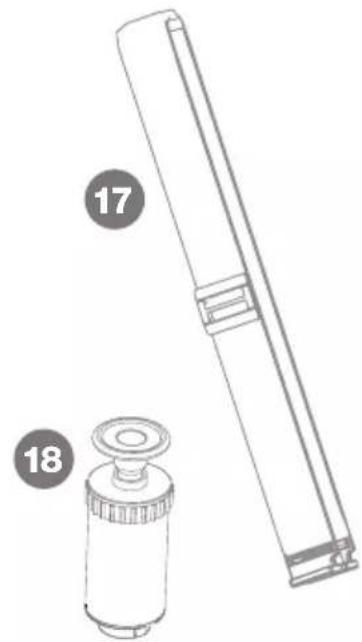
17 Poles
18 Pressure injector
19 Ironing board
20 Main steamer unit with water tank (the steam supply hose with steam head and the power cord are attached to this unit but these parts are not shown here)
21 Brush attachment
22 Steam defender attachment
23 Steam head rest
24 Hanger
25 Base
26 Measuring beaker
Shoulder strap (not pictured)
natural_image
Technical line drawing of a mechanical device with labeled parts (17 and 18), no readable text or symbols beyond labels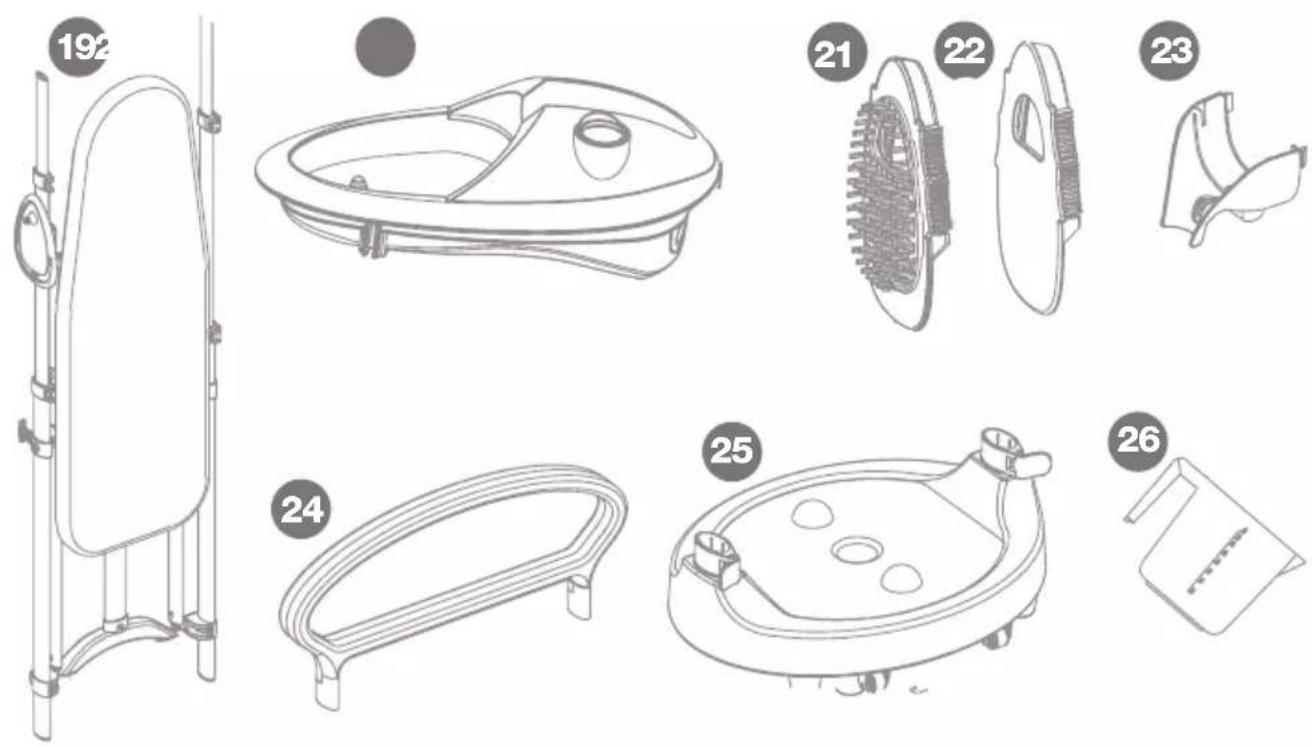
text_image
Technical diagram showing exploded view of various household appliances with numbered labelsNOTE: Due to continued product improvement, images and illustrations in this manual may vary slightly from the product purchased. All images in this manual are for reference purposes only. Parts are not necessarily pictured to scale.
Getting Started
Before first use
- Unpacking: This product has been packaged to protect it against transportation damage. Unpack the appliance and remove all promotional materials, stickers, protective films and packaging materials. Keep the original packaging carton and materials in a safe place. It will help prevent any damage if the product needs to be transported in the future, and you can use it to store the appliance when it is not in use. In the event that the packaging is to be disposed of, please recycle all packaging materials where possible.
Keep the packaging materials at least until you have made sure that you have unpacked all the parts listed on the parts lists on the previous pages.
- Safe packaging disposal: Plastic wrapping can be a suffocation hazard for babies and young children, so ensure all packaging materials are out of their reach and disposed of safely.
- Inspection: Unwind and straighten the power cord. Inspect the cord and plug for damage or wear before each use. Do not use the appliance if the appliance or its cord has been damaged or is not working properly. In case of damage, please contact our after sales support centre for advice.
- Instructions: Make sure you have read and understood all instructions and warnings in this manual. Refer to the product overview (pages 9–10) and parts lists to familiarise yourself with the product and identify all parts. Pay particular attention to the safety instructions on the previous pages.
- Assembly: Your new garment steamer with ironing board has been shipped partially assembled to reduce wastage of packaging material, paper cartons and weight. Assembly instructions are provided on the following pages.
WARNING: Do not connect the appliance to power until it is fully assembled.
- Before first use: Before using the appliance for the first time, and after prolonged periods of non-use, the water pressure may need to be adjusted. Instructions for this are provided on page 16.
WARNING!
Do not connect the appliance to the power supply until it is fully assembled.
Getting Started (Cont.)
Assembling the appliance
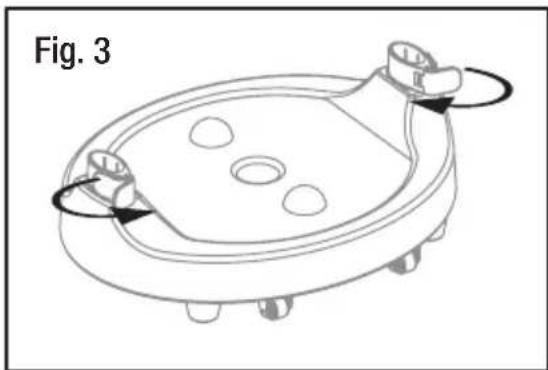
- Take the base out of the box and place it on a flat surface. Loosen the locks (Fig. 3).
- Take the ironing board out of the box. Insert the twin telescopic poles firmly into the holes on the base, as pictured (Fig. 4). Make sure the board and the base wheels are facing the same position. Tighten the locks.
natural_image
Technical line drawing of a mechanical component with circular features and two curved arms (no text or symbols)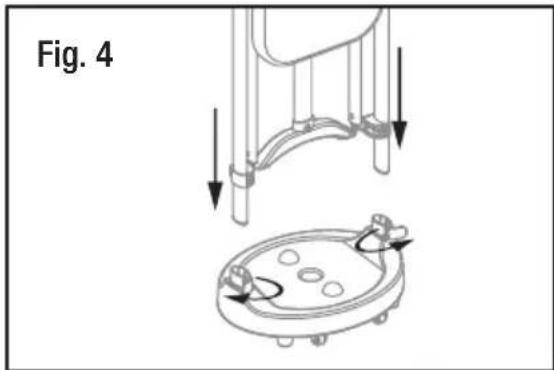
text_image
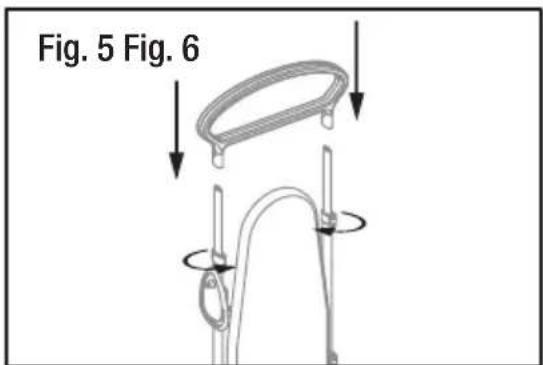
Fig. 4- Fix the hanger to the poles (Fig. 5). Loosen the pole locks — one at a time — and extend both parts to the appropriate height, then tighten the locks.
- Attach the steam head rest by slightly pressing it in place (Fig. 6).
text_image
Fig. 5 Fig. 6
natural_image
Technical line drawing showing a mechanical component with an arrow indicating direction (no text or symbols)- To attach the main steamer unit (with water tank) to the platform, rest it securely on the lug (wide metal hook) (Fig. 7).
- Put the steam hose through the guide(s), as pictured (Fig. 8).

text_image
Fig. 7 Fig. 8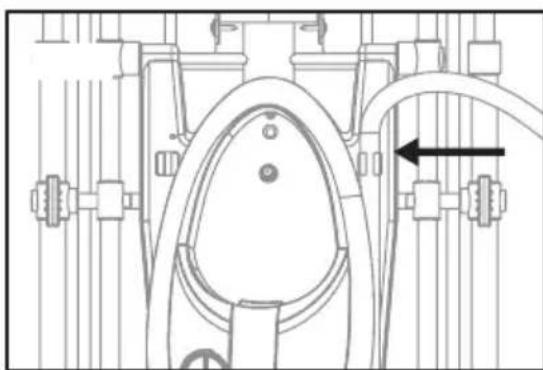
natural_image
Technical line drawing of a mechanical component with no visible text or symbolsGetting Started (Cont.)
Attaching accessories
The fabric brush or steam defender can be attached to the steam head. To avoid any injuries, make sure the appliance is off and the steam head is cool when you attempt to install or uninstall the brush or steam defender.
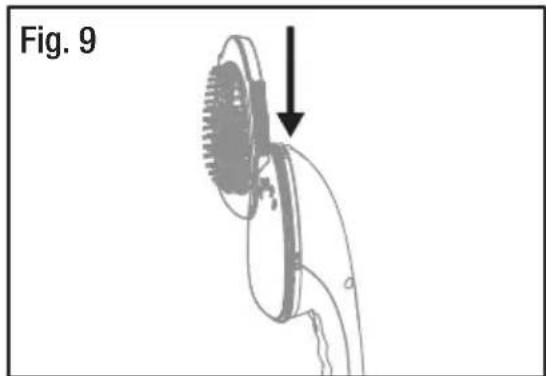
- To attach the fabric brush or steam defender to the soleplate of the steam head, push the respective part into place, as pictured (Fig. 9).
- The main steamer unit (with water tank) may also be used without the upright board structure. A shoulder strap is supplied for carrying it conveniently, thus allowing more freedom of movement. To attach the belt, insert the buckles into the slots at the sides of the unit, slightly pushing them into position (Fig. 10).
natural_image
Medical illustration of a surgical instrument with a labeled arrow pointing to a specific part (no text or symbols present)
text_image
Fig. 10Folding/unfolding the ironing board
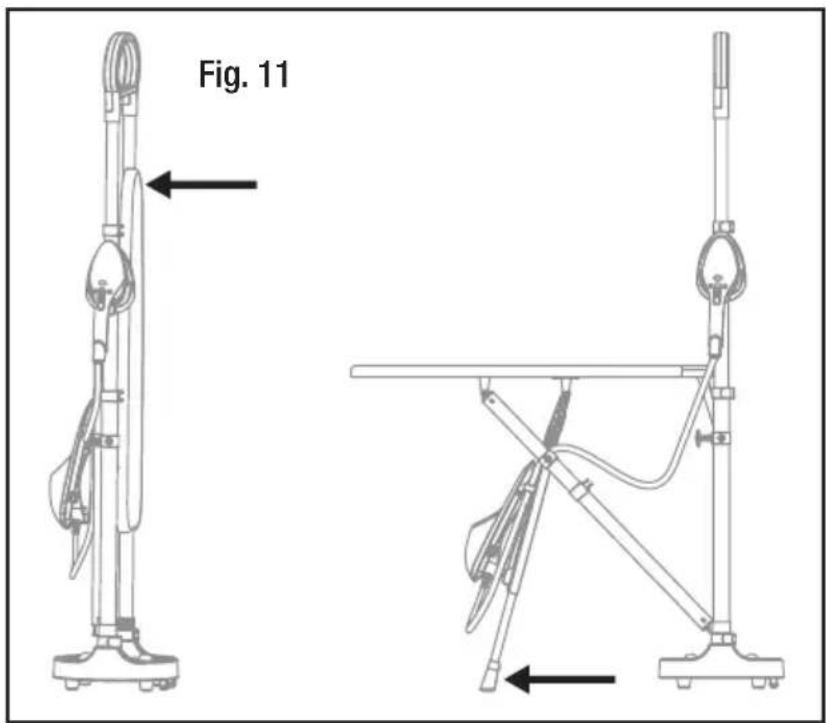
- Slightly pull the board to unfold. Then extend the front leg by gently pushing it out with your foot to the maximum level (Fig. 11).
text_image
Fig. 11Getting Started (Cont.)
-
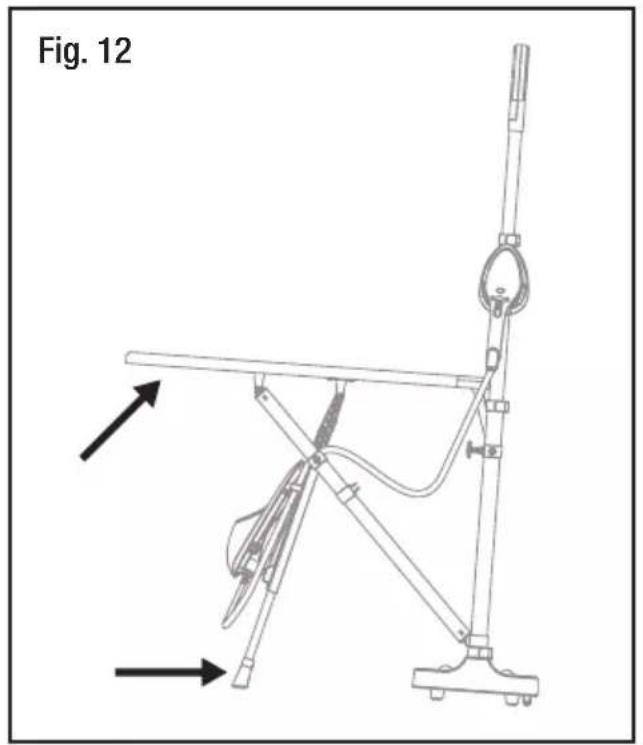
When folding, slightly lift the board, fold the leg, then fold the board with an upright force (Fig. 12). The plastic clips at the side of the poles must clip onto the horizontal metal rod.
-
Lean the board 15^ to let the wheels contact the floor, then roll it carefully to move the appliance (Fig. 13).
text_image
Fig. 12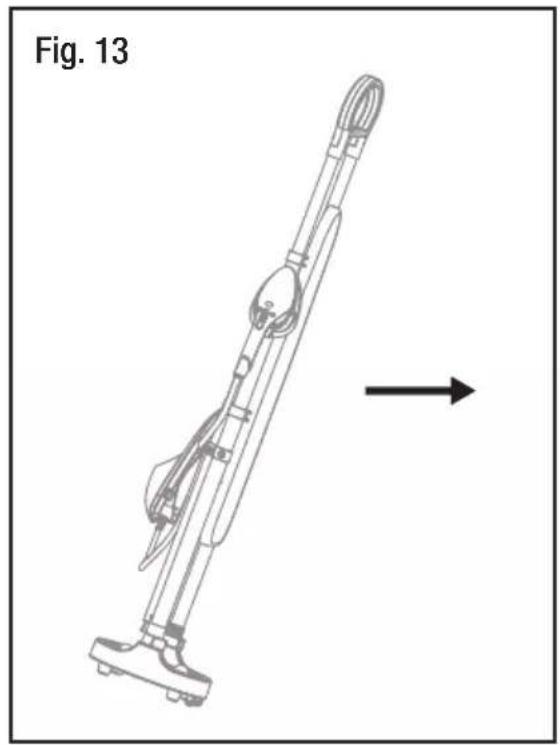
natural_image
Technical line drawing of a vacuum cleaner assembly with directional arrow (no text or symbols)Getting Started (Cont.)
Task-specific assembly hints
You can use your new garment steamer for steaming clothing or furnishings in vertical (hanging) position as well as for ironing items on the integrated ironing board. The steam head may be used for steaming garments, or without steam for dry-ironing. Basic operation principles are explained on the following pages.
Please check the hints below for specific assembly instructions pertinent to the different usage methods.
Assembling the appliance for horizontal steaming or ironing
- Attach the main steamer unit to the platform (with the water in the tank), making sure it rests securely on the lug (wide metal hook). Lead the insulated steam supply hose through the guides on the left and right hand side of the platform, then rest the steam head in the head support.
- To unfold the ironing board, pull it gently, then extend the front leg by pushing it out with your foot to the maximum level (see Fig. 11, page 13).
Assembling the appliance for vertical garment steaming
- Pull out the telescopic poles to the desired height, then fasten the locks securely. Hang the garment on the garment hanger at the top of the poles.
- Attach the main steamer unit to the platform (with water in the tank), making sure it rests securely on the lug (wide metal hook). If required, lead the insulated steam supply hose through the guides so you have a comfortable length to work with.
Assembling the appliance for vertical steaming of curtains, furnishings or larger items
- For more freedom of movement when steaming furnishings or larger items, you may want attach the shoulder strap to the main steamer unit (with water tank). Strap attachment instructions are provided on page 13 (Fig. 10).
- With the main unit detached from the upright board structure, you have more freedom to move, within cord reach, for steaming items that do not fit on the ironing board or garment hanger.
Getting Started (Cont.)
Adjusting the water pressure
The STIRLING garment steamer with ironing board is equipped with a pump, which creates the pressure to drive water to the boiler for steam production. For the pump to work properly, enough water must be inside the system. The appliance has left the production site with a certain amount of water inside the pump, but prolonged storage can deplete the amount of water required. This can happen during transport, on the shop or warehouse shelves, or at your home, when you have not used the appliance for some time.
IMPORTANT: We therefore recommend that you adjust the water pressure when first assembling the garment steamer and after every longer period (5–6 months) of non-use.
To adjust the water pressure, proceed as follows:
- Assemble the appliance and position it on a secure, level surface.
- Fill the water tank as described on page 17. Do not close the tank, leave it open.
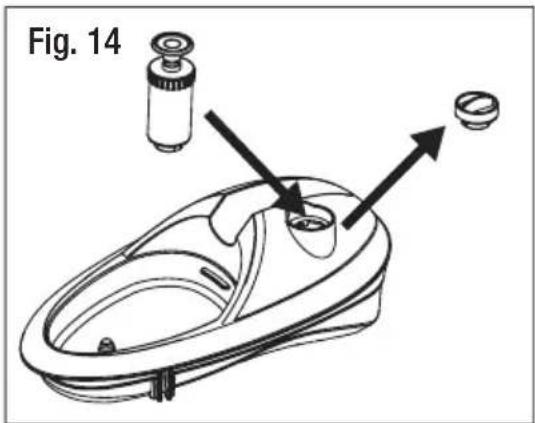
- Instead of the water tank cap, install the pressure injector in the opening of the water tank (Fig. 14).
- Plug in the appliance, switch the power on at the outlet, then set the power switch to the ON [I] setting (see Fig. 19, page 18).
- After 60 seconds, when the appliance is fully heated, push the STEAM switch forward and let it work. Then press down the pressure injector 3–4 times (Fig. 15).
- When steam is generating, power off the appliance. Remove the pressure injector and replace it with the water tank cap (Fig. 16), then restart the appliance.
NOTE: You can also use the pressure injector to push water into the pump manually if there is no steam output during use but the pump is working.
text_image
Fig. 14
text_image
Fig. 15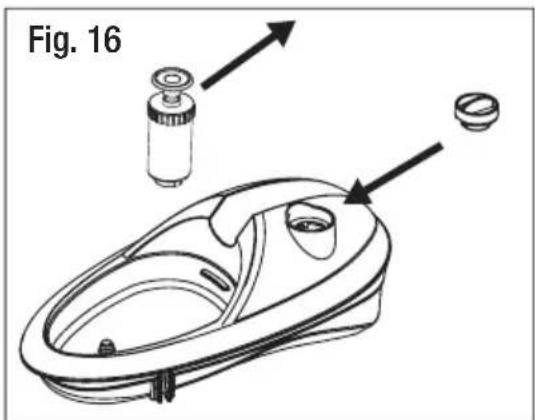
text_image
Fig. 16Water usage
IMPORTANT!
- Never fill the water tank with chemical substances, perfumes, vinegar, mineral water, starch, descaling agents, ironing aids, cleaning agents or liquids other than water when using the steam iron/garment steamer. These products may cause damage to the appliance.
- Before filling and refilling with water, always remove the plug from the mains power socket. Never refill the water tank while the appliance is connected to the electricity supply as there is a risk of electric shock.
NOTE: To extend the product life, we recommend using purified water: distilled, demineralised or cold, boiled water. (Tap water may be used if it is rated very soft in your locality. If you are unsure about the water hardness level in your area, please inquire at your local water services provider.)
Using the appliance
1. Filling the water tank
- Before resting the main steamer unit on the platform, fill the water tank.
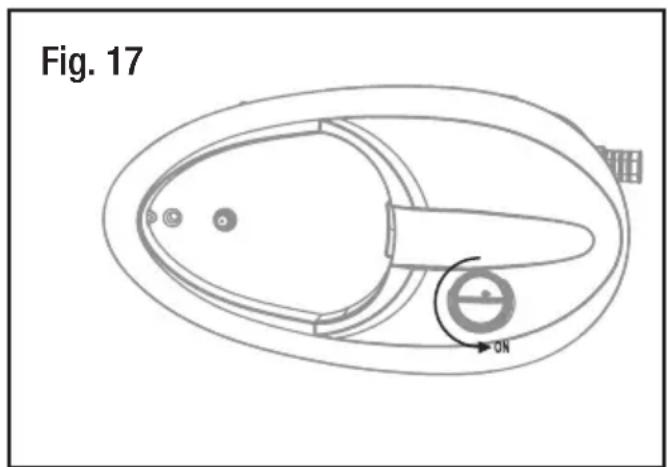
- Turn the cap of the water tank to open the filling aperture (Fig. 17).
- Using the supplied measuring beaker, fill 800 mL of cold water into the tank — purified or cold, boiled water is preferred (Fig. 18).
NOTE: Always add cold water to the water tank, hot water will damage the tank and the inside of the garment steamer. - Close the tank again and tighten the cap securely.
text_image
Fig. 17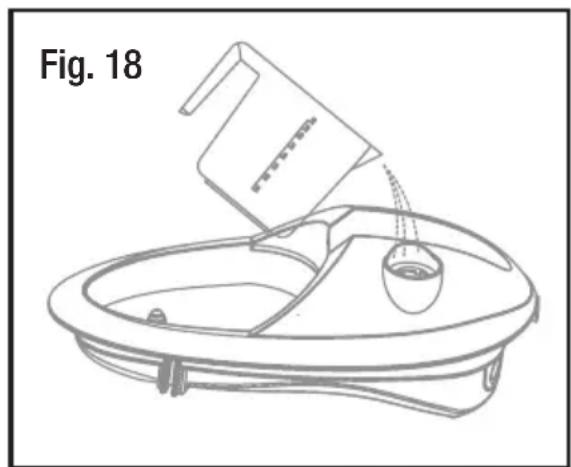
natural_image
Line drawing of a bowl with a spoon pouring liquid from a container (no text or symbols)Instructions (Cont.)
2. Electrical connection
- Make sure the POWER switch is in the OFF [O] position and the STEAM switch is pulled to the back (no steam).
- Insert the appliance plug into an appropriate 220–240 V\~ power outlet and switch on the power at the outlet.
- To start up the appliance, set the power switch to the ON [ I ] position (Fig. 19).
3. Steam production
- Let the appliance run for one minute, then push the STEAM switch forward to generate steam for steaming or steam-ironing your garments (Fig. 20).
- Pull back the STEAM switch to stop steam production.

text_image
Fig. 19 POWER switch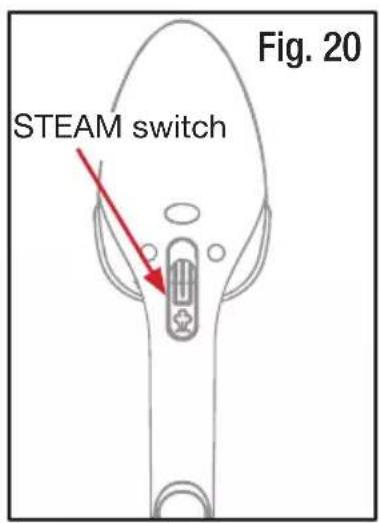
text_image
STEAM switch Fig. 20FIRST USE
- Before steam-ironing garments we recommend using the self-clean function. This will ensure all dust and potential remnants from the manufacturing process are removed from the water tank and steam system. Instructions for using the self-clean function are provided on page 24. Alternatively, use the appliance on an old rag until you are satisfied that only clean water steam is emitted from the holes on the soleplate.
- On the first heating up of the appliance, a small volume of vapours and/or odour may be generated, caused by production residues. This is completely normal and is not dangerous. Provide for sufficient ventilation, for example, open a window.
Instructions (Cont.)
Vertical steaming
- Prepare the appliance for vertical garment steaming, as described on page 15.
- Connect the appliance to your power supply. Set the power switch to the ON [I] position. Push the STEAM ☑ switch forward (Fig. 21). When the temperature light switches off, the steam is ready.
- Direct the steam away for a few seconds, then steam will be emitted continuously and you may start steaming your garment (Fig. 22).

text_image
Fig. 21 Push forward to release steam STEAM switch Pull back to stop steam
text_image
Fig. 22- With one hand pull the garment flat, then steam it from top to bottom. CAUTION: The steam is hot, take utmost care to avoid scalding!
- Hold the steam head upright and direct the steam towards the creases in the fabric.
- To remove stubborn creases from fabrics that may be ironed, place the sole-plate on the fabric and utilise its hot temperature together with the hot steam.
- When you have finished steaming the garment, pull the STEAM switch back to stop steam production. Place the steam head securely in the iron rest on the telescopic pole.
- Unplug the appliance.
CAUTION!
Steaming may leave your garment slightly damp, or create small wet spots. Always leave the steamed garment on a clothes hanger to cool down and fully dry before wearing it or putting it away.
Instructions (Cont.)
Horizontal (flat) ironing
- Place the garment on the ironing board.
- Prepare the appliance, as described on page 15.
- Connect the appliance to your power supply. Set the power switch to the ON [I] position. Push the STEAM switch forward (Fig. 21). When the temperature light switches off, the steam is ready.
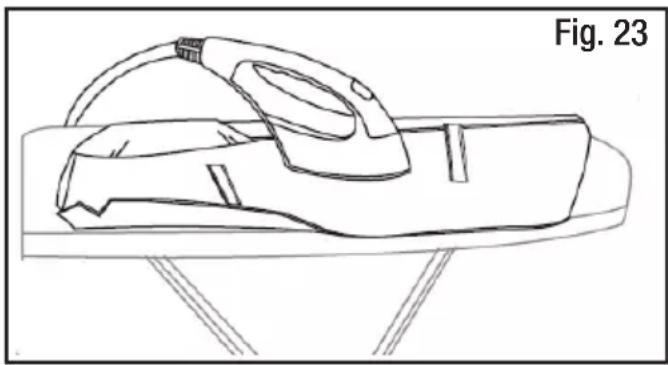
- Direct the steam away for a few seconds, then steam will be emitted continuously and you may start ironing. Guide the iron smoothly over the garment to remove creases and wrinkles (Fig. 23).
natural_image
Line drawing of a hand holding a small object on a flat surface, labeled 'Fig. 23' (no other text or symbols)- To steam-iron, keep the switch in the pushed forward (steam) position.
To dry-iron, pull the switch back to the dry-ironing position. The steam emission will stop.
To add a burst of steam when dry-ironing, push the switch forward briefly when the temperature light is off, then pull it back to stop steam production.
-
When you have finished ironing the garment, set the STEAM switch to dry ironing (if applicable) and place the iron back on the iron rest on the telescopic pole.
-
Unplug the appliance.
Instructions (Cont.)
Steam head accessories
The garment steamer comes with two accessories for the steam head, which improve its versatility for use with different types of fabric.
The fabric brush can be used when steaming thicker, heavier fabrics for faster results. The brush will help open up the weave of fabrics to improve steam penetration and help remove dust and lint. Use light pressure with the fabric brush and guide it from top to bottom over the garment, in direction of the nap or weave of the fabric.
The steam defender prevents the soleplate coming into direct contact with the fabric. You can use it to help release wrinkles on more heat-sensitive fabrics that may otherwise get burnt from the heat of the soleplate. But always try on an inconspicuous part of the garment first, for example, on an inside seam.
CAUTION!
Before attaching an accessory, make sure the appliance is switched off, disconnected from the power supply and has cooled down for safe handling.
To attach an accessory to the steam head, hold the accessory at the soleplate of the steam head and push it firmly onto the front part of the soleplate.
To use the steam head with an accessory, hold the steam head and guide it slowly over the garment with the brush bristles (or the steam defender surface) touching the garment.
CAUTION: The soleplate is hot, take utmost care to avoid scalding!
HEAT-SENSITIVE FABRICS
- Exercise caution when steaming or ironing heat-sensitive fabrics such as nylon, polyamide or other synthetic fibres. Do not touch such fabrics directly with the hot soleplate of the steam head/iron. Always use the steam defender attachment, and always check at a concealed part first (e.g., inside seam) to ensure that the hot steam will not cause any damage to the garment.
- Should the care instructions in the garment forbid ironing ☑ do not use the garment steamer on it, or you will risk causing permanent damage to the garment.
- Do not use the appliance on leather, velvet, impregnated furniture or steam-sensitive materials. If you do, the material/furniture could become damaged.
Instructions (Cont.)
Curtain and soft furnishing care
Creases and wrinkles can be removed from heat-resistant curtains and draperies. Always carry out a test first on a concealed part of the item. Hang the item over a pole, then follow the directions on page 19 for vertical steaming. When steaming furnishings in situ, please refer to page 13 for strap attachment instructions.
WARNING!
Please ensure that everyone who is using this appliance is well aware of the operating methods. Improper operation may result in hot water and scale residues being sprayed onto the items to be steamed, or causing scalding.
After use
When you have finished using the garment steamer, take the following steps to prepare it for storage.
- Place the steam head in the iron rest on the telescopic pole (Fig. 24: A).
- Make sure the STEAM switch is set to dry-ironing.
- Unplug the appliance from the power supply and allow the appliance to cool down before putting it into storage. Failure to let the appliance cool down can result in the risk of fire.
Storage
To fold up the ironing board, slightly lift the board, fold the leg, then fold the board with an upright force (see Fig. 12, page 14).
To move the appliance, lean the board 15^ to let the wheels contact the floor, then roll it carefully to its storage space (see Fig. 13, page 14).
Once you have moved the appliance, check and ensure it is standing upright and securely and all parts are correctly positioned (Fig. 24). You may wind the power cord around the hooks at the side of the upright structure (Fig. 24: B)
Store the appliance in a dry place, out of reach of children.
For longer-term storage we recommend you disassemble the appliance and store it in its original packaging, in a dry location, out of reach of children.

If you experience problems with your garment steamer, or it appears not to be operating correctly, check in the list below for answers to frequently asked questions. If none of the solutions offered helps you solve your problem, please contact our after sales support centre for advice using the details at the bottom of the page. Do not attempt to repair the appliance yourself!
| Table 2: Troubleshooting guide | ||
| Problem Possible cause Solution | ||
| The steam head ejects no or very little steam. | The supply of water in the tank is exhausted. | Fill the water tank with water. |
| The steam switch is not set to steam. | Set the steam switch to steam. | |
| Limescale is causing intermittent steaming. | Use the self-clean function to clean out the steam system (see page 24). | |
| The steam head does not heat up. The power light does not come on. | The appliance is not properly connected to mains power. | Insert the plug into a wall power socket and turn on the power to the outlet. Then set the steam switch to steam. |
| The product circuitry or fuse failed, or the power switch is broken. | Have your appliance repaired by an authorised repairer. | |
| Water is dripping from the holes in the soleplate. | The soleplate is not hot enough to produce steam. | Switch on the power switch, wait 50 seconds, then switch on the steam switch. |
| The low water alarm stopped working. | Limescale has built up which must be removed. | Use the self-clean function to clean out the steam system (see page 24). |
| Brown streaks are dripping from the holes in the soleplate. | Have you added anything to the water in the tank? | Only add water to the tank, no additives. |
| It stopped steaming during use but the pump is working. | The appliance will stop steaming when the pump is short of water. | Refill the tank, then use the pressure injector to push water into the pump manually. |
Other Useful Information
Cleaning and care
WARNING! Before cleaning the appliance housing, always switch off and unplug the appliance from the power supply. There is a risk of electric shock. Also ensure the appliance has cooled down and is safe to touch. There is a risk of scalding.
Cleaning the housing
If the appliance housing requires cleaning, wipe it with a soft, dry or slightly damp cloth and a mild, non-aggressive cleaning agent, if necessary.
CAUTION! Never use harsh cleansers. These can damage the surfaces.
Cleaning the steam system
The steam system inside the appliance requires regular cleaning, about every two to three weeks, to keep the system in good working order and remove any mineral deposits (limescale) left by water inside the appliance. The appliance is equipped with a self-cleaning system for this purpose.
To clean the steam system, proceed as follows:
- Set up the garment steamer near a sink. (Alternatively, keep a bucket close by.)
- Fill the water tank with water.
- Set the power switch to the ON [I] position. Push the STEAM switch forward.
- Set the switch at the underside of the main steamer unit to the ON position to start the self-cleaning function (Fig. 25).
- Hold the steam head over a sink (or bucket). Hot water, steam and scale particles will be flushed out of the steam holes at the bottom of the steam head (Fig. 26).
- The automatic self-cleaning cycle lasts approximately three to four minutes. When only clear water comes out of the steam holes, the cleaning process is finished.
- Set the switch at the underside of the main steamer unit to the OFF position. Pull the STEAM switch backward to stop the steam. Switch off the power switch.

text_image
Fig. 25 ON OFF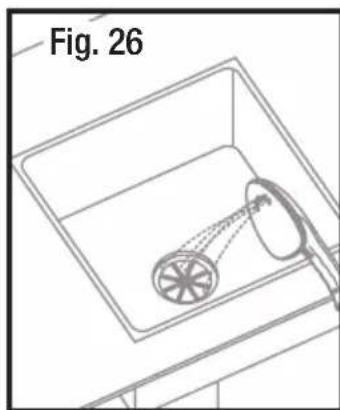
natural_image
Line drawing of a mechanical component inside a rectangular housing, with no visible text or symbolsOther Useful Information (Cont.)
Safety features
The appliance is equipped with two important safety features.
- A thermostat shuts off the power to the appliance when the boiler is overheating.
- If the thermostat fails, a fuse triggers when the boiler is overheating.
Service, repair and spare parts
If the appliance is damaged, do not attempt to repair it yourself. Do not disassemble or modify the appliance. If it requires repair or service, please contact our after sales support centre to arrange for examination or return of the product.
Our after sales support centre stocks the following spare parts for the garment steamer: brush attachment, steam defender attachment, head rest, measuring beaker, pressure injector. To purchase a part, call the centre on 1300 112 534 or email us at parts@tempo.org.
Technical specifications
| Model GSTT1100 | |
| Rated voltage / frequency 220–240 V~ / | 50–60 Hz |
| Motor power 1200 W | |
| Steam flow 25 g/min | |
| Water tank capacity 800 mL | |
| Steam generation time (approx.) 60 s | |
| Working time (approx.) 30 min | |
| Working environment requirements 5–50 °C (for indoor use) | |
| Dimensions, assembled (approx.) 1090 (L) x 470 (W) x 1800 (H) mm | |
| Weight (approx.) 9.3 kg | |
Other Useful Information (Cont.)
Compliance
This appliance has been fully tested and meets all requirements as set out by standards AS/NZS 60335.1 and AS/NZS 60335.2.3 and AS/NZS 60335.2.85.
The RCM Mark (Regulatory Compliance Mark) indicates that the product complies with the relevant guidelines of the ACMA as well as corresponding government requirements for the safety of electrical devices.
Responsible disposal
At the end of its working life, do not throw this appliance out with your household waste. Electrical and electronic products contain substances that can have a detrimental effect on the environment and human health if disposed of inappropriately. Observe any local regulations regarding the disposal of electrical consumer goods and dispose of it appropriately for recycling. Contact your local authorities for advice on recycling facilities in your area.

text_image
ALDI
STIRLING
Garment Steamer with Ironing Board
Repair and Refurbished Goods or Parts Notice
Unfortunately, from time to time, faulty products are manufactured which need to be returned to the supplier for repair.
Please be aware that if your product is capable of retaining user-generated data (such as files stored on a computer hard drive, telephone numbers stored on a mobile telephone, songs stored on a portable media player, games saved on a games console or files stored on a USB memory stick) during the process of repair, some or all of your stored data may be lost. We recommend you save this data elsewhere prior to sending the product for repair.
You should also be aware that rather than repairing goods, we may replace them with refurbished goods of the same type or use refurbished parts in the repair process.
Please be assured though, refurbished parts or replacements are only used where they meet ALDI's stringent quality specifications.
If at any time you feel your repair is being handled unsatisfactorily, you may escalate your complaint. Please telephone us on 1300 112 534 or write to us at:
Tempo (Aust) Pty Ltd ABN 70 106 100 252
PO BOX 6056 Frenchs Forest, Sydney, Australia NSW 2086
Email: info@tempo.org
Tempo Help Desk: 1300 112 534 (Aust)
(Operating Hours: Mon-Sat 09:00am to 06:00pm AEST)

text_image
1 YEAR WARRANTY
natural_image
Icon showing a person reading a book with an exclamation mark symbol (no text or numbers present)Please read the manual
It will help you get the best out of your product.
Still have questions?
Call after sales support
1300 112 534
Or visit www.tempo.org
Warranty returns
Should you for any reason need to return this product for a warranty claim, make sure to include all accessories with the product.
Product does not work?
If you encounter problems with this product, or if it fails to perform to your expectations, make sure to contact our After Sales Support Centre on 1300 112 534 for advice.
For an electronic copy of this manual, go to www.stirlingappliances.com.au and download a copy, or contact our after sales support centre.
Instruction Manual Revision Index
Version No Issue Date Description
V1.0 16 March 2021 Original release
V1.1 29 March 2021 Minor updates, pages 19, 25
V1.2 29 April 2021 Minor update, page 25