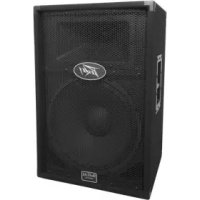
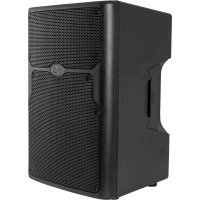
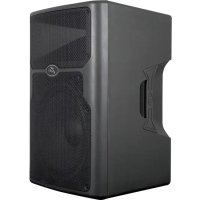
SP 118P - Speaker PEAVEY - Free user manual and instructions
Find the device manual for free SP 118P PEAVEY in PDF.


User questions about SP 118P PEAVEY
0 question about this device. Answer the ones you know or ask your own.
Ask a new question about this device
Download the instructions for your Speaker in PDF format for free! Find your manual SP 118P - PEAVEY and take your electronic device back in hand. On this page are published all the documents necessary for the use of your device. SP 118P by PEAVEY.
USER MANUAL SP 118P PEAVEY
Powered Speaker System

natural_image
Black rectangular speaker grille with mesh pattern and 'SP' logo on front panel (no text or symbols beyond logo)Product Specifications

FCC/ICES Compliancy Statement
This device complies with Part 15 of the FCC rules and Industry Canada license-exempt RSS Standard(s). Operation is subject to the following two conditions: (1) this device may not cause harmful interference, and (2) this device must accept any interference received, that may cause undesired operation.
Warning: Changes or modifications to the equipment not approved by Peavey Electronics Corp. can void the user's authority to use the equipment.
Note – This equipment has been tested and found to comply with the limits for a Class B digital device, pursuant to Part 15 of the FCC Rules. These limits are designed to provide reasonable protection against harmful interference in a residential installation. This equipment generates, uses, and can radiate radio frequency energy and, if not installed and used in accordance with the instructions, may cause harmful interference to radio communications. However, there is no guarantee that interference will not occur in a particular installation. If this equipment does cause harmful interference to radio or television reception, which can be determined by turning the equipment off and on, the user is encouraged to try and correct the interference by one or more of the following measures.
• Reorient or relocate the receiving antenna.
- Increase the separation between the equipment and receiver.
- Connect the equipment into an outlet on a circuit different from that to which the receiver is
ENGLISH
SP®118P
The Peavey ^® SP ^® 118P Sub is a compact vented powered subwoofer system utilizing a Peavey ^® exclusive Pro Rider ^™ 18” woofer, coupled to a power amplifier with 1,150 watts peak available power. The full-length black perforated steel grille provides protection and a professional appearance, along with the 4-way handles for transport. Multiple fly points are provided to allow overhead rigging.
Internal line-level crossover with two outputs, independently electrically buffered; one full-range thru output, and one high-pass output.
A threaded pole-mount system provides a sturdy and stable platform to mount a suitably equipped speaker system above the sub woofer. Either the SP^2P or the SP^4P two-way powered speakers are an excellent partner for the SP^*118P Sub
The SP* 118P Sub speaker system power amplifier providing the power is a low-distortion ultra-reliable fan-cooled unit providing 1,150W peak available power for the system. The power supply for the power amp is a switch mode type for low weight and high efficiency. The amplifier features our DDT™ compression, which virtually eliminates audible power amplifier clipping. Cooling is provided via a low-noise fan, for reliable operation under any conditions.
Input is via two channels of a combo female XLR and 1/4" TRS phone jack with balanced input to the preamp/EQ electronics, and a level control.
The internal speaker crossover and processor is implemented with a high-performance DSP system. Using 24 bit ADC's and DAC's operating at 96kHz , the 32 bit fixed point DSP processor provides all the filtering and EQ functions to allow the subwoofer to operate at it's best. DSP based limiting works in conjunction with the DDT compression to improve woofer reliability without intruding into the musical performance. An LCD display shows what functions or presets have been selected, these functions are selected via a push-to-select rotary knob.
A High-Pass output provides a buffered and balanced output signal for a satellite speaker to carry the high range of the music, via a male XLR jack.
Applications
The Peavey SP® 118P Sub has a variety of applications such as extending the bass performance of smaller full-range speaker systems used for sound reinforcement, public address, side fill system, karaoke or musical playback.
A typical signal source for the line-level inputs of the Peavey SP* 118P Sub would be a sound reinforcement mixing console (mixer) or the output from a CD player, MP3 player or tape deck. The high-pass filtered signal from SP* 118P Sub would then be sent to a full-range powered speaker system, easing the burden of deep bass from this speaker system.
Bottom Rear Panel

text_image
ON POWER FUSE 120V~ T100W/250V 220-240V~ T240W/250V FOR 220-240V OPERATION, FUSE MUST BE CHANGED TO 240W/250V 220-240V~ 120V~ FOR 220V OPERATION, FUSE MUST BE CHANGED TO 240W/250V CAN-ICES-335/9083-3/41 Consumo de energia 200Wh 4 Left on Rated or unmarked top level vertical protection. (For limited only) Apparent out resistance pad or insulatoric. (For lower only) Apparent small resistor pin/adjust setting. (For shorter only)ON-OFF SWITCH (1)
This rocker switch supplies AC power to the SP* 118P Sub when switched to the ON position. The ON position is with the top side of the switch pushed "in" or nearly flush with the rear panel
IEC POWER CORD CONNECTION (3)
This receptacle is for the IEC line cord (supplied) that provides AC power to the unit. It is very important that you ensure the SP°118P has the proper AC line voltage supplied. You can set the proper voltage for your SP°118P using the Voltage Selector switch (4) on the rear panel of the unit.
Please read this guide carefully to ensure your personal safety as well as the safety of your equipment. Never break off the ground pin on any equipment. It is provided for your safety. If the outlet used does not have a ground pin, a suitable grounding adapter should be used and the third wire should be grounded properly. To prevent the risk of shock or fire hazard, always be sure that the mixer and all other associated equipment are properly grounded.
VOLTAGE SELECTOR SWITCH (4)
The SP* 118P Sub has a voltage selector switch to allow switching between an input power voltage of 120VAC to a range from 220VAC to 240VAC, all at either 50 or 60 cycles per second (Hz). It should be set to the proper voltage for your country out of the box. However, world conditions are such that some areas have power line voltages differing from the voltage used by the majority of any given locale.
Be sure to check the position of the voltage selector switch to see that it matches the power line voltage used locally. If it does not match, then to change the voltage to the correct one, follow the steps outlined below.
Changing the Voltage Range of the SP\*118P
First, make sure the SP®118P is disconnected from the power line, and that the power switch (1) is in the OFF position.
Second, unscrew the screws holding the clear switch protector on the voltage selector switch (4) just a little, just enough to allow rotation of the clear switch protector. The screws DO NOT need to be unscrewed very far.
Third, rotate the clear plastic protector about 90 degrees to uncover the voltage selector switch. One side of the cover has a slot, the other just a hole, the side with the hole is the side that pivots.
Fourth, using a small flat blade screwdriver, push the red selector switch slide plate to the other side from where it was. The voltage that is now visible on the red slide plate is the one you have selected.

flowchart
graph TD
    A["Top Rear Panel"] --> B["SP*118P Sub POWERED SPEAKER"]
    B --> C["Advanced Digital Signal Processing A.D.S.P."]
    C --> D["Inputs"]
    C --> E["Outputs"]
    D --> F["Grid LIFT"]
    E --> G["DATA IN 3.5mm"]
    G --> H["OUTPUTS"]
    H --> I["Sub WOOFER PROCESSED"]
    I --> J["Push to Pin"]
    J --> K["7"]
    J --> L["12"]
    J --> M["10"]
    J --> N["13"]
NPUTS (5)
Two input channels are provided. The line-level input is of the medium impedance balanced type. The jack is a combo female XLR and 1/4" TRS connector. Sensitivity of this input is 0.42 volts for full output, when the MIC/LINE switch (7) is in the LINE position.
Channel 2 has a 3.5 mm input jack for mobile device signal sources.
GAIN CONTROLS (6), Present on both input Ch 1 and input Ch 2
Controls the gain or output level of the same numbered input channel. It is used to directly set the system output level for a given input signal.
HIGH PASS PROCESSED output jack (11)
Provides a filtered signal for use with full-range powered speaker systems like the SP* 2P or SP* 4P. Follow the instructions in the Setup Wizard in the SP* 118P Sub menu on the LCD screen using the Push-To-Select button for proper set-up and connections. Or see the section titled: "ALTERNATE METHOD OF CONNECTING A SATELLITE SPEAKER TO THE SUB".
LCD Display (12)
Provides a menu read-out manipulated and activated by the Push-To-Select button (13)
Push-To-Select button (13)
Rotary knob that allows the user to select and choose menu options on the LCD display screen (12). Pushing the button in till it detents makes a menu choice, selecting the action or option highlighted in the LCD screen.
Safety Information
Cautions
The unit must be disconnected from the AC power source before any work is done on it. Refer all servicing to qualified service personnel.
The back plate can become hot to the touch. Do not block or cover the fan or the exhaust louvers from ventilation. There must be a minimum of 4" of space behind the fan. Do not allow the airflow to be become blocked by objects such as curtains or drapes, thermal building insulation, etc. It is recommended that the rear of the SP ^® 118P Sub not be placed in a closed space or a space that has no fresh, cool airflow.
Be sure to keep the microphone away from the front of the speaker after connecting it to the input, and while setting the microphone level, or very loud feedback will occur! Damage to the system is likely if this occurs!
⚠️ DO NOT connect the inputs of the SP* 118P Sub to the output of a power amplifier. The inputs are meant to be driven from a line-level strength signal.
DO NOT remove the protective metal grille.
A
When first plugging in the AC cord, make sure the power switch is in the Off position, and then turn it On only once the power cord has been connected. Built-in muting will engage when the proper sequence of steps is taken.
Special Note for Permanent Installation
When installing the SP* 118P Sub, AC power runs will be used and a certified electrician should be consulted to be sure that all AC wiring complies with local codes and regulations. It is also advisable to use a cable clip properly affixed to the cabinet to strain relief the IEC power cord connected to the amplifier module at (3) so the power cord cannot be pulled out or vibrate loose.
Use of the SP\* 118P Sub Speaker Pole
The SP° 118P Sub has a threaded pole mount cup built-in so that the system can stand mount a full-range speaker on a supplied 1 3/8" (35mm) diameter stand pole with an M20 threaded end.
When using the speaker pole, be sure to follow these precautions:
A. The pole is rated for use with a speaker that is less than 32 inches high, and less than 60 lbs.
B. Always place the Sub on a flat, level and stable surface.
C. Try to route cables so that people will not trip over them, or tip the speaker over. Use of duct tape, cable channels or guards, or other appropriate tie-down/cover-up devices should be carefully considered and implemented.
D. When installing or de-installing the speaker on the pole, it is a good practice to have a helper if possible, it can be hard to "thread the needle" and mate the full-range speaker stand cup to the Sub pole while holding the full-range speaker system at arm's length.
E. When using Subs with poles outdoors, never attach banners or flags to the pole or the full-range speaker system, strong winds may cause the speaker to blow over. If there is a possibility of windy conditions, then it may be prudent to consider weighting or locking down the Sub to prevent the SP^ 118P Sub speaker system from being blown over.
Flying/Rigging Information
Caution: Before attempting to suspend this speaker, consult a certified structural engineer. Speaker can fall from improper suspension, resulting in serious injury and property damage. Do not suspend or mount any other product or device from this enclosure! Maximum enclosure angle 30^ . Use only the correct mating hardware. All associated rigging is the responsibility of others.
WARNING! (note to structural engineer)
NOTE: Use the correct type and grade of bolt into the mounting point inserts. The correct mounting bolt diameter and thread spacing are: M8, 1.25 mm per thread. Use of a metric grade 8.8 bolt or better is recommended.
The SP ^® 118P Sub mounting inserts are designed to be used in groups of three with the proper forged machinery eyebolts used
Hardware for Flying/Rigging the SP\*118P Sub
Eyebolts or bracket bolts should be M8 metric thread, 1.25 mm per thread.
Eyebolts and bracket bolts must conform to certain minimum strength criteria for safety reasons.
Unspecified cycbolts found at local hardware stores are not strong enough to maintain safety for overhead flying or rigging. Use only forged steel shoulder machinery eyebolts designed for rigging use, which adhere to the stated standards as outlined below.
Hardware Specifications
Forged shoulder machinery eyebolts should be an M8 size, 1.25 mm per thread, and must conform to DIN 580 or AST'M A489, for Germany, BGV-C1 is the relevant standard. Minimum shank length should be 20 mm. The eyebolts should be rated for a minimum of 450 lbs straight pull working load
Bolts used on custom mounting brackets must be certified to be a metric grade 8.8 or better.
If there are any questions regarding the proper hardware or practices for safe flying or rigging of the Peavey SP*118P Sub, contact a certified structural engineer, or consult with those local rigging companies who have trained and certified personnel.
Operation
Connecting a Signal to the SP\* 118P Sub
There are a variety of ways to input a signal to the SP ^4 118P Sub.
The inputs (5) provides either a balanced mic- or line-level input, allowing the use of a 1/4" TRS (ring-tip-sleeve) type phone plug or a male XLR plug.
Use of high quality, premium input cables is recommended for the SP^ 118P Sub, as these usually have better shielding and materials and will provide greater long-term reliability. The best option is a shielded balanced cable no longer than necessary to reach the SP^ 118P Sub. It is usually a good idea to leave some slack at the input to the SP^ 118P Sub and also to tape the cables down or run them under a cable guard to avoid anyone tripping over them or pulling the SP^ 118P Sub over when a speaker is mounted on the pole.
Gain Control Adjustment
The SP* 118P Sub is equipped with Gain controls (6) on the input to facilitate use in many different applications. With the Gain control adjusted fully clockwise, gain is at maximum and the input sensitivity is 0.42V RMS for full-rated output with the line level position of the Mic/Line switch (7). When driving the SP^118P Sub from a mixer, it may be advantageous to reduce the input sensitivity by turning the Gain control to the halfway point. The SP^118P Sub will now more closely match a typical power amp.
If the mixing board indicates clipping of its output signals, then all of the SP ^w 118P Sub's power capability is not being utilized cleanly. Clipping the signal before it gets to the SP ^z 118P Sub is not optimal. Reduce the mixer output level and turn up the Gain control/s on the SP ^z 118P Sub.
The amplifier in the SP* 118P Sub is equipped with DDT™ there is an indication on the rear panel LCD display (12) that reads "DDT" whenever the DDT compression system engages.
If the sound seems heavily compressed, check this indicator; if it is blinking more than occasionally, then the drive level from the mixer (or the Gain control on the SP* 118P Sub) needs to be reduced.
When first turning on the sound system, switch on all upstream electronics first, then the SP* 118P Sub with its Gain control fully counterclockwise (all the way down). Begin checking levels with the mixer output level controls all the way down, and bring them up slowly with the SP* 118P Sub Gain control/s set to the desired setting (one-third way up recommended to start).
It is not good practice to turn the Gain control/s on the SP* 118P Sub all the way up and then try to control level only from the mixer, this approach would tend to pick up excess noise. Best practice would be to run a "hot" signal from the mixer down the cable to the SP* 118P Sub, and then turn the SP* 118P Sub Gain control (6) up only
are set to Flat
To adjust the overall level of both the Sub and the satellite, use the SP* 118P Sub gain knob (6) to adjust the overall levels. Whatever relative levels exist between the Sub and the satellite speaker, will be maintained as the overall levels go up or come down with the Sub gain knob..
If the SP^2P is located in a different position than on top of the SP^118P Sub pole, then the polarity of the SP^* 2P may need to be changed for best results at the crossover region.
Setting the Levels Between the SP ^® 118P Sub and an SP ^® 4P Full-Range Speaker System
In order to set the levels of the subwoofer and the satellite full-range speaker to each other, you first set the SP* 118P Sub gain control (6) to the straight up detent position. Then the SP ^z 4P gain knob should be set to the following position for the following gain relationship:
10:00 clock face position (second dot to the left): Sub is hot by approx. 8 dB, above the nominal level of the SP ^4 P.
11 clock face position (first dot to the left): Sub is a little hot by approx. 4 dB, above the nominal level of the SP ^2 4P.
12:00 clock face position (straight up): Flat setting, SP* 118P Sub and SP* 4P equal output levels.
This setting will provide the most natural reproduction of vocals and acoustic instruments, when the EQ Presets are set to Flat.
These settings are for the SP* 4P set right next to the SP* 118P Sub, in the same plane as the Sub.
Setting the SP\* 118P Sub Controls for Use with Other Satellite Speakers
As per the above section, overall level is set by the SP® 118P Sub gain knob (6), and relative gain is set by the satellite speaker's gain or level knob.
For other speakers, several other adjustments may need to be made.
Speakers other than the SP* 2P/4P may need a polarity reversal to be made, preferably at the satellite speaker, rather than at the Sub.
Disconnecting AC Power to the SP° 118P Sub
We recommend that the Power switch (1) be used to turn the unit off first, and then the AC power cord can be removed, this minimizes stress to the power amplifiers and the transducers from turn-off transients. The power switch has an arc suppression capacitor to help during turn-off, and tends to make a clean disconnect from the AC power, while the power cord IEC connector can make intermittent contact before finally becoming fully disconnected, e.g., as when wiggling the cord.
DSP User Control Menu Operation
SP* 118P Sub DSP User Control Menu Operation
A two-line, 16-character per line LCD and a rotary push-to-select encoder make up the interface for this product.
The DSP processing control accessible by the user, consists of a 9-band graphic equalizer (GEQ), choice of output Polarity, selection of Bass Enhancement, and signal Delay. This is applied to the powered speaker system, and in some cases, to the processed output. The user can also select from a menu of preset Program EQ settings that are applied to the graphic equalizer and Bass Enhancer.
User interface:
Rotating the encoder takes the user thru the top level menu screens. These screens will display current information such as a Input Level meter, configuration and current user settings. Pressing the encoder on a top level screen will take the user to related selection screen(s) when relevant. The configuration screens play an important role in preparing the speakers for the intended application. The configuration screen comes up after the initialization screen when the speaker is powered on. If the configuration screen is not selected within 5 minutes the Input Level screen is displayed. The user can still select this screen at any time by rotating the edit knob. The configuration screens help the user set up the SP* 118P Sub system for optimal operation. By answering a couple of questions, the processor is configured and proper connections displayed. When complete, the user is returned to the main menu.
The LCD backlight will dim after 5-minutes without interface activity but returns to full brightness when the encoder is moved. When the backlight auto-dims, the display returns to the Input Level screen. This prevents inadvertent changes from occurring while reactivating the LCD backlight.
Configure?
Push Select This is an overview display that is not directly edited.
Entering the configuration menu directs the user how to properly set up and connect the system.
First Screen displayed after pushing Configure?
Crossover Sub to
Proc. Out:110 Hz
Rotate knob to select a different crossover frequency
110 Hz is the default selection, other choices are 100 Hz and 120 Hz.
Once selection made and the knob is pushed, next screen:
Connect Mixer to:
Sub input.
Push knob, next screen:
Sub Proc. Out to
Satellite Spkr
Push knob to go back to the main menu.
With the mixer output (sound source) connected to the subwoofer, all of the system adjustments will be made using the SP Sub DSP module. The User processing choices as in the SP* 2P/4P, such as the 9 band GEQ, will not be used, the SP* 2P/4P
should be in Flat mode.
The hi-pass filter on the SP^*2P / 4P is unchanged from its full range setting, because the Sub performs the crossover functions.
Program EQ: Displays current EQ selection (EDM preset is the default on 1st time power up)
Temperature: The temperature of the amplifier is monitored and display as long as it is in a safe operating range. If the temperature gets too high, it goes into protect mode which is displayed here and on the main Input Level screen.
Front LED: Set front baffle LED operation to:
On: When power on indication is selected, the LED is lit blue whenever the amplifiers are not shut down
Signal: When signal on indication is selected, the LED is lit blue whenever a signal is present at the input.
Off: The LED is turned off for all conditions..
Auto power off: Disable, 15, 30 or 60 minute delay.
Security Lock: A four digit security lock that can be engaged that will block editing of all parameters. If locked, entry of the access code will be required to allow temporary access for editing. It will automatically relock after 5 minutes of editing inactivity.
ALTERNATE METHOD OF CONNECTING A SATELLITE SPEAKER TO THE SUB
Instead of using the EQ presets in the Sub and feeding an equalized signal to the satellite speaker, and leaving the satellite speaker in a flat mode, the following settings could be used instead.
The signal source (mixer, etc.) will still connect to the SP* 118P Sub first, then a cable from the High-Pass Processed output jack would be connected to the satellite speaker input.
Then set the SP° 118P Sub for a Flat Preset, and use the Presets/EQ/Tone Controls on the satellite speaker to shape it's response and behavior.
This would mean not following the Set-up Wizard's instructions for the SP^# 2P, but it would provide a little more flexibility of satellite speaker EQ, and allow the SP^# 118P Sub response to be unaltered in its frequency response, and then use the relative level of the Sub as the means of tonal balance adjustment. Turn the satellite speaker gain or volume control down to increase the SP^# 118P Sub's apparent output level, and then turn the Sub's gain control up to get the overall gain back. To decrease the SP^# 118P Sub's apparent output level, turn the satellite speakers
Troubleshooting
No Output at All
First, make sure the unit has AC power and is turned ON. Make sure the LCD screen on the power amp module is illuminated.
If not, make certain the ON/OFF switch (1) is in the ON position and check the IEC power cord connection (3) by ensuring it is fully engaged and seated. Make certain the AC line cord is plugged into a working AC outlet. Finally, check the fuse (2). (See the Rear Panel: FUSE section, for safety instructions.)
Once assured your unit is getting AC power, check that the SP* 118P Sub is getting a signal. Temporarily disconnect the cable running to its inputs and connect it to some other device capable of reproducing the signal (i.e., a power amp and speaker). If this produces a signal, make sure that all Level controls being used have been turned up to a satisfactory level (one-third to halfway).
If the SP^118P Sub has been subjected to direct sunlight or excessive heat, the built-in thermal protection may have been triggered. If so, turn off the SP^118P Sub and let it cool for a sufficient amount of time.
If there is still no output, contact your authorized Peavey dealer or the Peavey International Service Center.
Hum or Buzz
If the SP* 118P Sub is producing a hum or buzz, this can be AC outlet related. Try plugging the SP* 118P Sub into a different AC outlet. Sometimes, if a different circuit (breaker) is used for the mixer and for the SP* 118P Sub, it can cause hum problems. Unless it is not practical, it is best to use the same wall outlet (breaker) to supply power to both the mixer and the powered speaker.
Ensure that shielded cables have been used to route the signal to the SP* 118P Sub input. If speaker cables with 1/4" plugs are used as input cables instead of shielded cables, they will be prone to hum or buzz.
Hum may be ground loop related. It may be helpful to lift the shield ground (Pin #1) on a balanced cable at the SP* 118P Sub end. Check any input changes carefully by first turning down the Level control, before plugging and unplugging cables, or lifting the shield ground at the speaker end.
Reduce the amount of any external (mixer, rack) EQ and see if that clears up the distortion.
If no external bass boost has been added, but there seems to be an excessive amount of bass boost (boominess, bass clipping), then you may want to try a different EQ Preset on the full-range satellite speaker used with the SP* 118P Sub, try the Flat or Acoustic or Country Preset. Using Presets with a lot of bass boost on the full-range satellite speaker can cause the sound to become boomy. Setting the level of the full-range satellite speaker too low will also tend to cause a boomy sounding bass or mid-bass.
Finally, realize that even though the SP ^2 118P Sub is a powerful and high output unit, it does ultimately have limits, and it may need additional powered Sub units to provide enough low frequency sound output. In this case, try turning the mixer levels down a little to see if that clears things up. If, after checking all the things listed to check and anything else you can think of to check safely, and the system still exhibits problems, carefully note all conditions and check with your Peavey dealer for advice.
Care and Maintenance
Your SP* 118P Sub is a sturdy and durable product and will provide years of reliable use if properly cared for. Use common sense and read the safety warnings to avoid hazardous operating conditions.
The unit must be disconnected from the AC power source before any work is done on it. Refer all servicing to qualified service personnel.
Sunlight/Heat
Avoid prolonged exposure to direct sunlight, as this may cause the unit to overheat and thermally shut off. Excessively hot operating conditions can also cause a thermal shutdown. Do not store in extremely hot or cold conditions or extremely high humidity. Always allow unit to come to room temperature before use.
Cleaning
Never clean the SP ^z 118P Sub while plugged in or turned ON! When the unit has been fully disconnected from AC power sources, use a dry cloth to remove soil or other dirt. Never use strong solvents on the SP ^ 118P Sub, as they could damage the cabinet. Do not allow ANY fluids to drip inside the SP ^ 118P Sub.
There shall be a Direct Thru (output) connector consisting of a male XLR jack.
The output of this jack shall be switchable between just Ch. 1 input and a Mix of Ch 1 and Ch 2. There shall be a filtered high-pass output providing a crossed over signal to a satellite speaker.
The system power amplifiers shall have an unfiltered frequency response of 20 Hz to 20 kHz which deviates no more than +1, -3 dB up to rated power, hum and noise better than 90 dB below rated power, and THD and IMD typically of less than 0.1%.
The woofer amplifier shall be capable of 575W continuous into a 8 ohm nominal load, and 1,150W peak available power, and incorporate signal compression and limiting.
The input signal shall be electronically divided into high frequencies and low frequencies by a Linkwitz-Riley fourth order slope line-level crossover, with crossover frequencies user selectable from 100 Hz, 110 Hz or 120 Hz. The low frequencies shall be processed to provide bass boost, subsonic filtering and overall response shaping, and the high frequencies shall be made available either flat or equalized for response-shaping via user selectable EQ presets.
The enclosure shall be constructed of 18 mm birch plywood with a textured black polyurethane coating. A pair of 4-way inset handles shall be incorporated on the sides of the cabinet, and four sturdy rubber feet for floor standing use.
A full-length powder-coated metal grille shall be provided for woofer protection. The cabinet shall incorporate a threaded pole mount for a pole to be used for a satellite speaker, and the threaded pole shall be included. The outside dimensions shall be: 26.38" (67.0 cm) tall x 22.84" (58.0 cm) wide x 24.38" (62.1 cm) deep, and the weight shall be 85 lbs. Power requirements shall be: 200 Watts nominal, 120 VAC, 50/60 Hz Domestic and 220-240 VAC, 50/60 Hz (Export). The loudspeaker system shall be called a Peavey® SP® 118P Sub.
Product Specifications
SPECIFICATIONS
Enclosure: Peavey® SP® 118 Sub
Frequency Response, 1 meter on-axis, swept-sine in anechoic
Environment (-6 dB):
43 Hz - 140 Hz
Usable low frequency limit (-10 dB point): 39 Hz
Power Amp Rating, Total Power Output:
1,150 watts peak available power
Continuous Power: 575 watts cont.
Sound Pressure Level, 1 Watt, 1 meter in anechoic environment: 97 dB SPL
Maximum Sound Pressure Level (1 meter):
125 dB SPL continuous
128 dB SPL peak
Transducer Complement:
One 18" Peavey* 1808-4 ALCP Pro Rider "woofer, 4" voice coil
Box Tuning Frequency:
39 Hz
Input Connections:
Two combo female XLR/1/4" phone jack providing balanced or unbalanced operation, and one 3.5 mm stereo media jack.
Enclosure Materials & Finish:
Textured black polyurethane painted enclosure with 18 mm Baltic Birch plywood, with a full-length, black powder coated perforated steel grille.
Mounting: 12) M8 Threaded Mounting Suspension Points (3 top, 3 bottom and 2 each side near the front and 2 on the rear near the top and bottom center). Four large rubber feet on bottom for floor use.
Dimensions (H x W x D)
26.38 in. x 22.84 in. x 24.50 in.
670 mm x 580 mm x 622 mm
Net Weight:
85 Lbs. (38.6 kg)
Mounting Provisions:
1 3/8" pole mount with M20 threaded pole for stand mounting a suitable speaker on top of the Sub, and four large rubber feet on bottom for floor use.
ELECTRONICS AND AMPLIFIER SPECIFICATIONS:
Electronic input impedance (nominal):
Balanced inputs: 10 k ohms line level sensitivity selected.
Unbalanced input: 5 k ohms, line level sensitivity selected.
Mic switch sensitivity Increase: 26 dB
Input Sensitivity for Full Output (Level full CW): 0.42V RMS
(Switch in LINE position)
Input Overload Point (Switch in LINE position): +14 dBV
Status Indicators: Front baffle LED is blue for power ON.
Rear panel LCD screen in Input Level mode, shows DDT activation by flashing "DDT" on the LCD screen, right
Power requirements of Peavey® SP® 118P Sub system (domestic): Nominal 200 watts, 120 VAC, 60 Hz
Fuse Type
For 120 VAC USE: International fuse classification T10AH 250V. In the USA, types GDC, GMC, 215, 218, and 477 cartridge-style 5 x 20 mm size time-delay fuses with a 10 amp 250V rating can be used.
For 220-240VAC USE: International fuse classification T5AH 250V. This is a cartridge style 5 x 20 mm size time-delay fuse with a 5 amp 250V rating.
Specifications subject to change without notice.

text_image
11.417 2.205 11.417 2.205 11.220 2.206
text_image
24.486 2.205
text_image
25.591 SP
text_image
2.205 4.961