UH5045 - Radio UNIDEN - Free user manual and instructions
Find the device manual for free UH5045 UNIDEN in PDF.


User questions about UH5045 UNIDEN
0 question about this device. Answer the ones you know or ask your own.
Ask a new question about this device
Download the instructions for your Radio in PDF format for free! Find your manual UH5045 - UNIDEN and take your electronic device back in hand. On this page are published all the documents necessary for the use of your device. UH5045 by UNIDEN.
USER MANUAL UH5045 UNIDEN
For more exciting new products please visit our website:
Australia: www.uniden.com.au
OWNER'S MANUAL
Introduction
Features 3
Preventive Maintenance 4 Troubleshooting 4
Controls / Connectors 5
Indicators 9
Included with Your UHF CB Transceiver 10
Optional Accessories 11
Slide Mount Bracket 12
Connecting the Microphone 14
Mounting the MIC Hanger 15
Operation
Turning on the Power 17
Setting the Volume 17
Setting the Manual Squelch 18
Setting the Auto Squelch 18 Monitor 19
Selecting a Channel 19
Programming the Instant Priority Channel 20
Recalling the Instant Channel 20 Transmitting 20
Call Function 20
Dual Watch 20
Using Repeater Channels 21
Operating the UHF CB Radio in Duplex Mode 22 Scanning
Open Scan (OS) Mode 23
Group Scan (GS) Mode 23 Priority Watch
Add/Remove Channels from SCAN Memory 24 50 RX Channels 25
Manual Programming 25
Deleting a programmed RX Channel frequency 25
Selecting the Call tone 26
Busy Channel Lockout 26
Roger Beep 27
Beep On/Off 27
CTCSS (Continuous Tone Coded Squelch System) 28
DCS (Digitally Coded Squelch) 28
Volume Sync 29
Backlight Colours 29
Backlight Brightness 30
LCD Contrast for Remote SPK/MIC 30
UHF CB Channel Guidelines 31
CTCSS & DCS Code List 34
Warranty 38
The Uniden UH5045 is designed to provide you with years of trouble free service. Its rugged components and materials are capable of withstanding harsh environments. Please read this Operating Manual carefully to ensure you gain the optimum performance of the unit.

NOTE
The citizen band radio service is licenced in Australia by ACMA Radio-communications (Citizen Band Radio Stations) Class Licence and in New Zealand by MBIE General User Licence for Citizen Band Radio and operation is subject to conditions contained in those licenses.
Features
• Narrow Band (NB) 80 Channel Radio*
• Transmission Power 5W
- 50 Programmable Receive channels (450 - 520MHz in 12.5khz steps)
• Built-in AVS Circuitry†
• LCD Display with Backlight
- LCD Backlight brightness control ("off", "01", "02", "03")
- Compact Size
• Signal Strength/ Power Meter
- Instant Channel Programming
• One touch Instant Channel recalling
• Dual Watch with Instant Channel
- Duplex Capability (from CH01 - CH08 and CH41 - CH48 per channel)
• Group Scan and Priority Channel Watch
- Open Scan
- Scan Channel Memory On/Off separately with Open Scan, Group Scan
• Rotary Channel Select
- Busy Channel Lock-out Function
• Roger Beep Function On/Off
• 5 Different Call Tones
• 38 Built-in CTCSS (Continuous Tone Coded Squelch System) and 104 additional DCS (Digital Coded Squelch) codes that are user selectable
• Volume Control with Power On/Off Push Switch
- Optional Remote LCD Speaker Microphone (Remote SPK/MIC) and Extension Cable
- Front and Rear MIC Jacks for increased mounting options
• Variable Squelch Level adjust or Auto Squelch with optional Remote SPK/MIC
* Refer to p.31 - p.33 for channel information
^ AVS - Automatic Volume Stabilizer detects and manages incoming audio to comparable levels.
Preventive Maintenance
The following system checks should be made every six to twelve months:
• Check the Standing Wave Ratio (SWR).
• Inspect the tightness of all electrical connections.
- Inspect the antenna coaxial cable for wear or breaks on the shielding.
- Inspect the tightness of all screws and other mounting hardware.
Troubleshooting
Should the unit malfunction or perform poorly, follow these procedures:
If the transceiver is completely inoperative: Check the power cord and fuse.
If there is trouble with receiving: Check the VOLUME control setting. Be sure the SQUELCH is adjusted properly. Possibly the radio is over-squelched.
If there is trouble with transmitting: Check that the transmission line (coaxial cable) is securely connected to the ANTENNA connector. Check that the antenna is fully extended for proper operation. Check that all transmission line (coaxial cable) connections are secure and free of corrosion.

NOTE
Blackening may occur on the Liquid Crystal Display if the UHF CB Radio or optional Remote SPK/MIC has been subjected to extreme high temperature (above 60°C). This is not a fault. Normal LCD operation resumes when the temperature stabilizes back to standard operating condition (0-55°C).
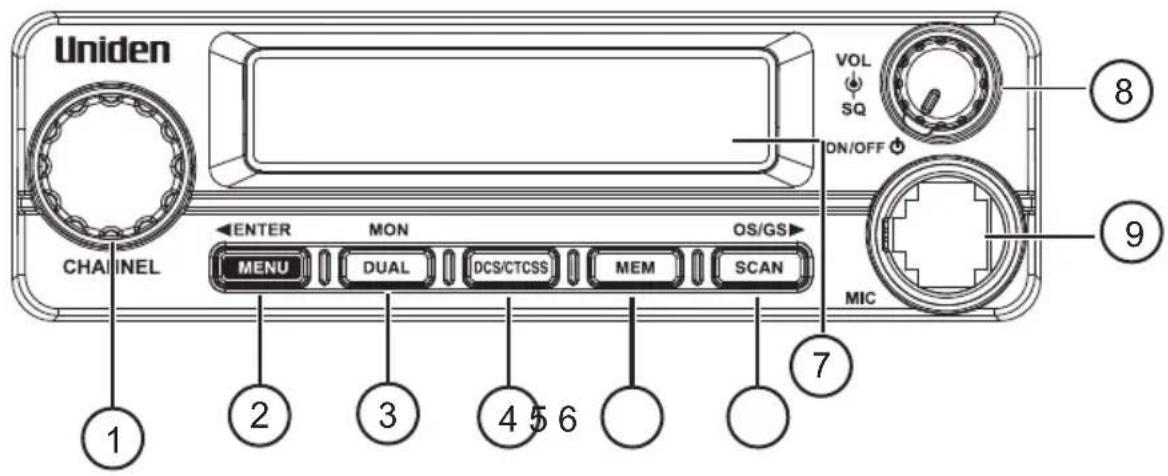
UH5045 Front View
text_image
Uniden VOL SQ ON/OFF CHANNEL ENTER MON OS/GS MENU DUAL DCS/CTCSS MEM SCAN MIC 1 2 3 4 5 6 7 8 9Controls and Connectors
1 Rotary CHANNEL Selector
2 MENU/ENTER - Menu and Select Button
3 DUAL - Dual Watch
MON - Monitor Button
4 DCS/CTCSS - DCS and CTCSS Tone Button
5 MEM - Memory Scan Channels
6 SCAN - Scan On/Off
OS/GS - Open or Group Scan
7 Liquid Crystal Display (LCD)
8 SQ - Rotary Squelch control
VOL - Rotary Volume control
ON/OFF - On/Off PUSH control
9 MIC - Front Microphone Jack
UH5045 Rear View

text_image
NC ACIT. DC 13.8V EXP.SP. 11 1312 14Connectors
11 Rear MIC Jack
12 UHF Antenna Connection
13 Power Input Connection (13.8VDC)
14 Ext. Speaker Jack
Standard Microphone

text_image
Uniden 15 16 17 21 30 31Controls and Connectors
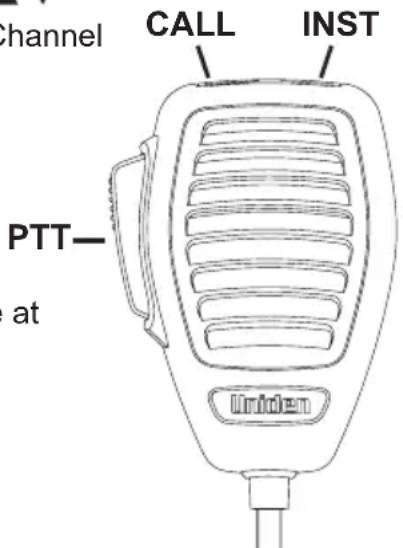
15 CALL - Call Tone Button
16 INST - Instant Channel Button
17 PTT - Push To Talk Button
21 MICROPHONE
30 RJ45 type plug
31 Front MIC Jack Cover
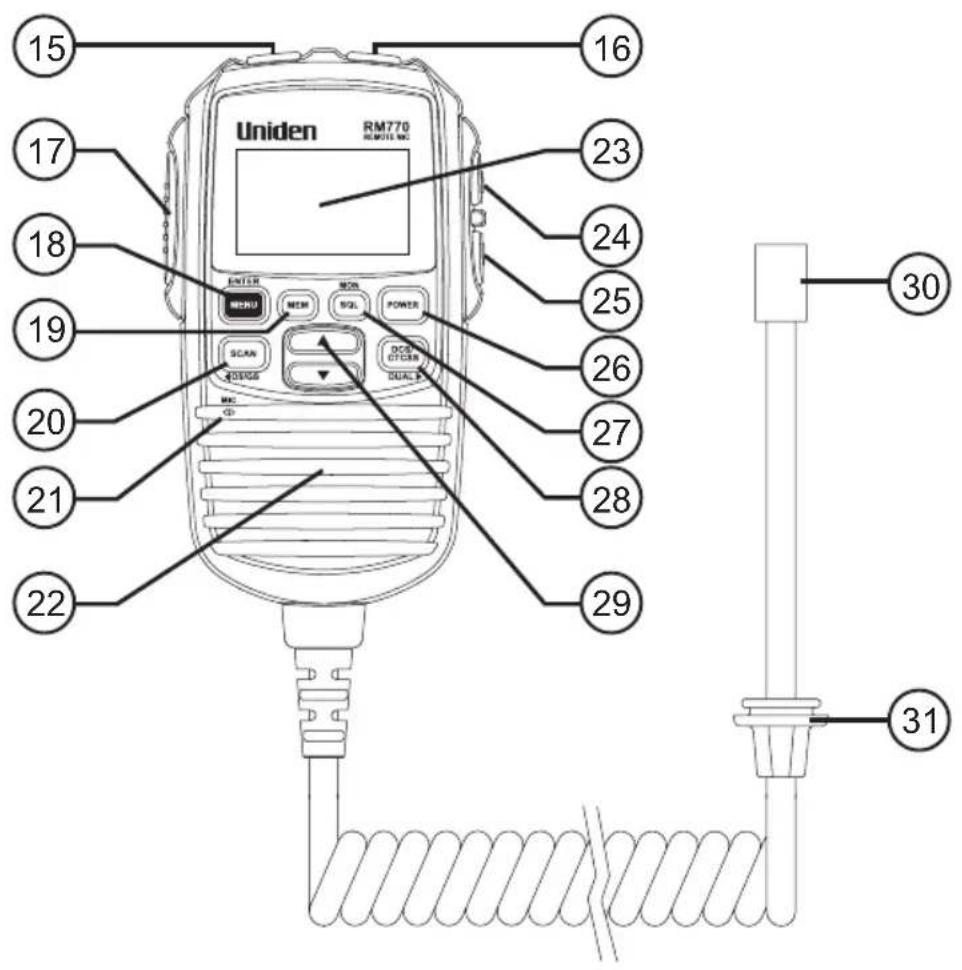
Remote LCD Speaker Microphone (Remote SPK/MIC) (Optional)
text_image
15 16 17 23 24 18 25 19 26 20 27 21 28 22 29 30 31 RM770 REMETER INC UNidenControls and Connectors
15 CALL - Call Tone Button
16 INST - Instant Channel Button
17 PTT - Push To Talk Button
18 MENU/ENTER - Menu and Select Button
19 MEM - Memory Scan Channel
20 SCAN - Scan Button
OS/GS - Open Scan/Group Scan
21 MICROPHONE
22 SPEAKER
23 Liquid Crystal Display (LCD)
24 VOL△ - Volume Up Button
25 VOL ▽ - Volume Down Button
26 POWER - Power ON/OFF Button
27 SQL - Auto Squelch
MON - Monitor Button
28 DCS/CTCSS -- DCS & CTCSS Button
DUAL - Dual Watch Button
29 ▲ Select Up and Down Buttons
30 RJ45 type plug
31 Front MIC Jack Cover
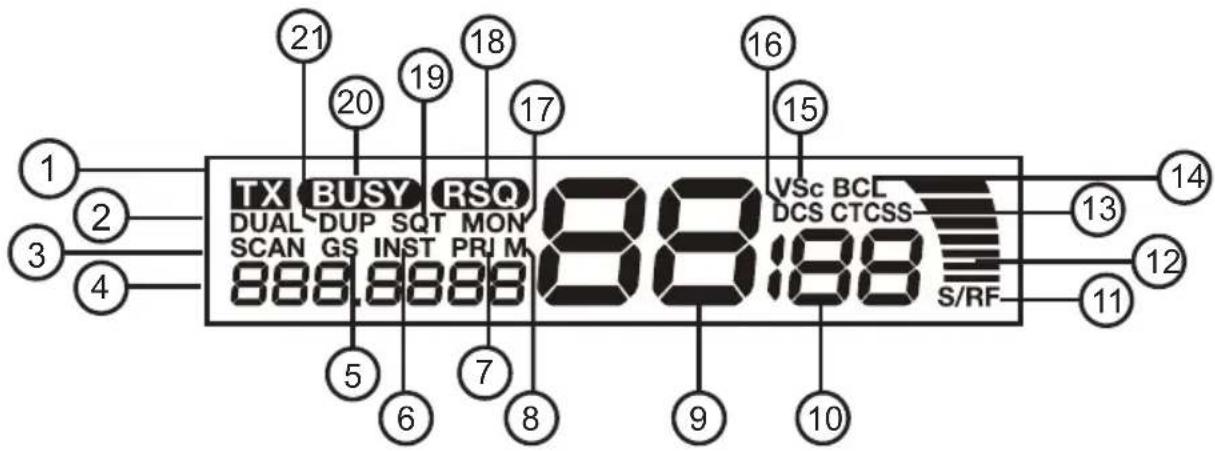
UH5045
text_image
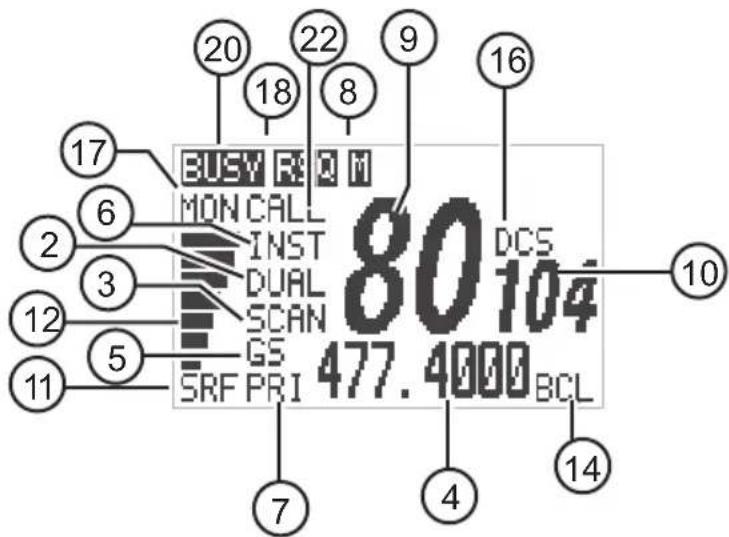
TX BUSY RSQ DUAL DUP SQT MON SCAN GS INST PRJ M 888.8888 88:88 VSc BCL DCS CTCSS- S/RF 14 13 12 11 10 9 8 7 6 5 4 3 2 1 16 15 17 18 19 20 21Optional Remote MIC LCD
text_image
BUSY R Q M MON CALL INST DUAL SCAN GS SRF PRI 477.4000 BCL DCS 104 16 9 8 18 20 17 2 6 3 12 5 11 7 4 14Indicators
- TX - Transmit
- DUAL - Dual Watch
- SCAN - Scan mode
- Channel Frequency
- GS - Group Scan
- INST - Instant Channel
- PRI - Priority Channel
- M - Channel in Memory
- Channel Number
- DCS/CTCSS Code Number
- S/RF-Receive Signal or Transmit
-
Signal Power Level
-
CTCSS -Continuous Tone Coded Squelch System
- BCL - Busy Channel Lockout
- VSc - Volume Synch
- DCS - Digital Coded Squelch
- MON - Monitor
- RSQ - Remote Mic Squelch
- SQT - Tight Squelch Level
- BUSY - Channel Active
- DUP - Duplex Channel
- CALL - Call Tone
Included with your UHF CB Transceiver
natural_image
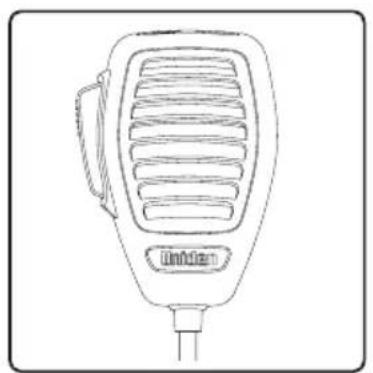
Line drawing of a vintage microphone with ventilation slots and a labeled button (no text or symbols on the device itself)Standard Microphone UHF CB Transceiver

text_image
Uniden® UH5045 UHF CB Transceiver Owner'S MANUALOwners Manual
natural_image
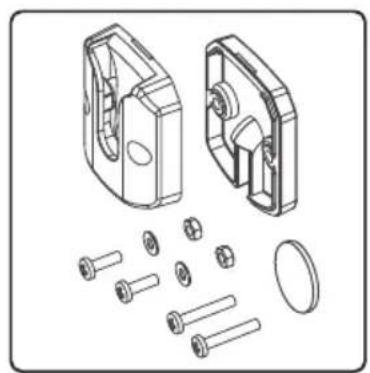
Technical line drawing of mechanical components including housing, bolts, and a ring (no text or symbols)Microphone Hanger with Screws/Washers and Microphone Jack Rubber Cover
natural_image
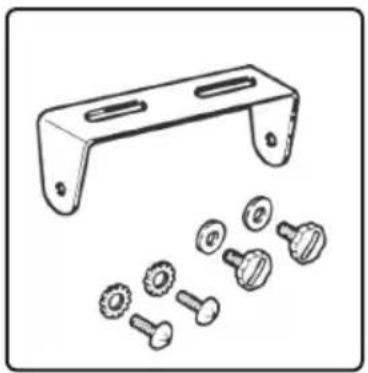
Technical line drawing of a metal bracket with multiple bolt holes and a separate view of the same components (no text or symbols)Mounting Bracket, Mounting Screws, Washer Stars And Screws
natural_image
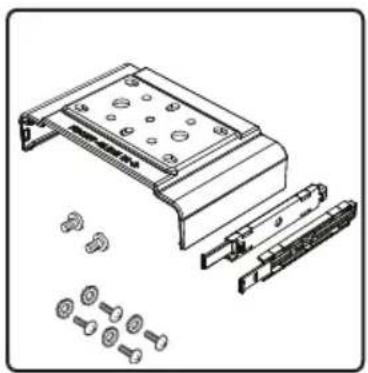
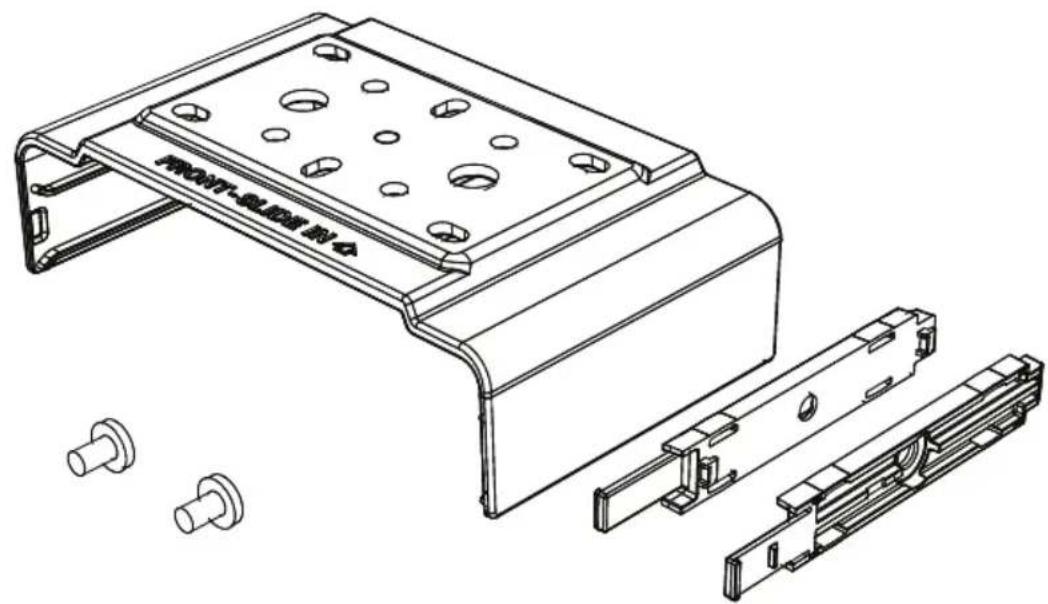
Technical line drawing of a mechanical assembly with bolts and connectors (no text or symbols)Slide Mount Bracket, Guide Rails and Screws
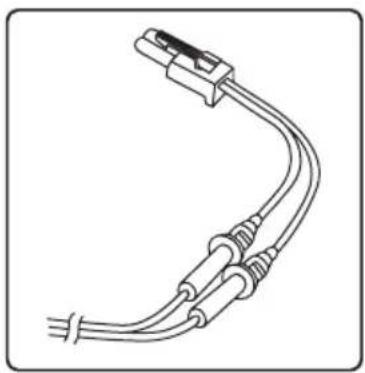
natural_image
Line drawing of a U-shaped electrical plug with three leads (no text or symbols)DC Power Cord with fuse
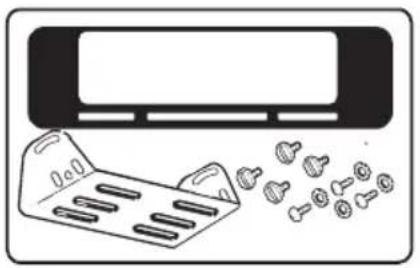
natural_image
Illustration of a medical device with a tray and scattered medical tools (no text or symbols)DIN Mounting Kit (DMK7740) for compact models
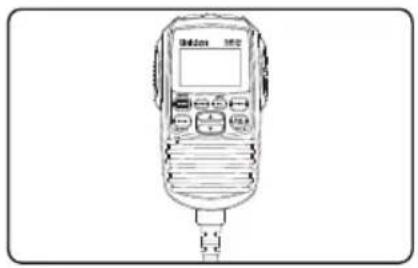
natural_image
Line drawing of a handheld electronic device with a digital display and connector (no text or symbols)Remote LCD Speaker Microphone (RM770)
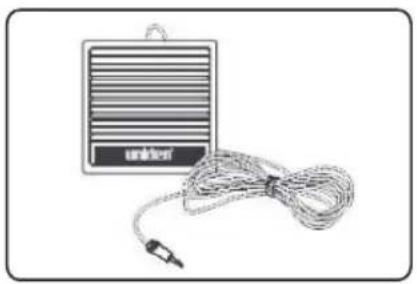
natural_image
Illustration of a portable electronic device with a coiled cable and a labeled component (no text or symbols on the device itself)External Speaker (MS100)
natural_image
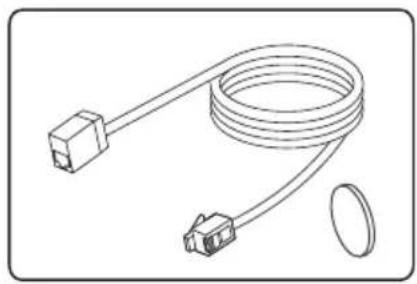
Line drawing of a coiled cable with two connectors and a circular ring (no text or symbols)Extension cable kit for Remote LCD Speaker Microphone (EC770) and Microphone Jack Rubber Cover
natural_image
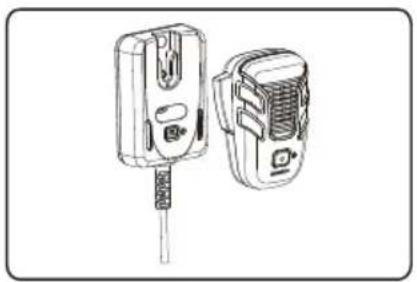
Line drawing of two electronic devices with ports and connectors (no text or symbols)DECT Wireless Speaker Microphone (MK800W)
How to attach Slide Mount Bracket?
When you unpack the box, ensure that you have the slide mount bracket, guide rails and the screws.
natural_image
Technical line drawing of a mechanical assembly with mounting holes and internal components (no text or symbols)Align the guide rails along the side of the base and insert them into the slots provided. Then use the screws to lock them securely in position.

natural_image
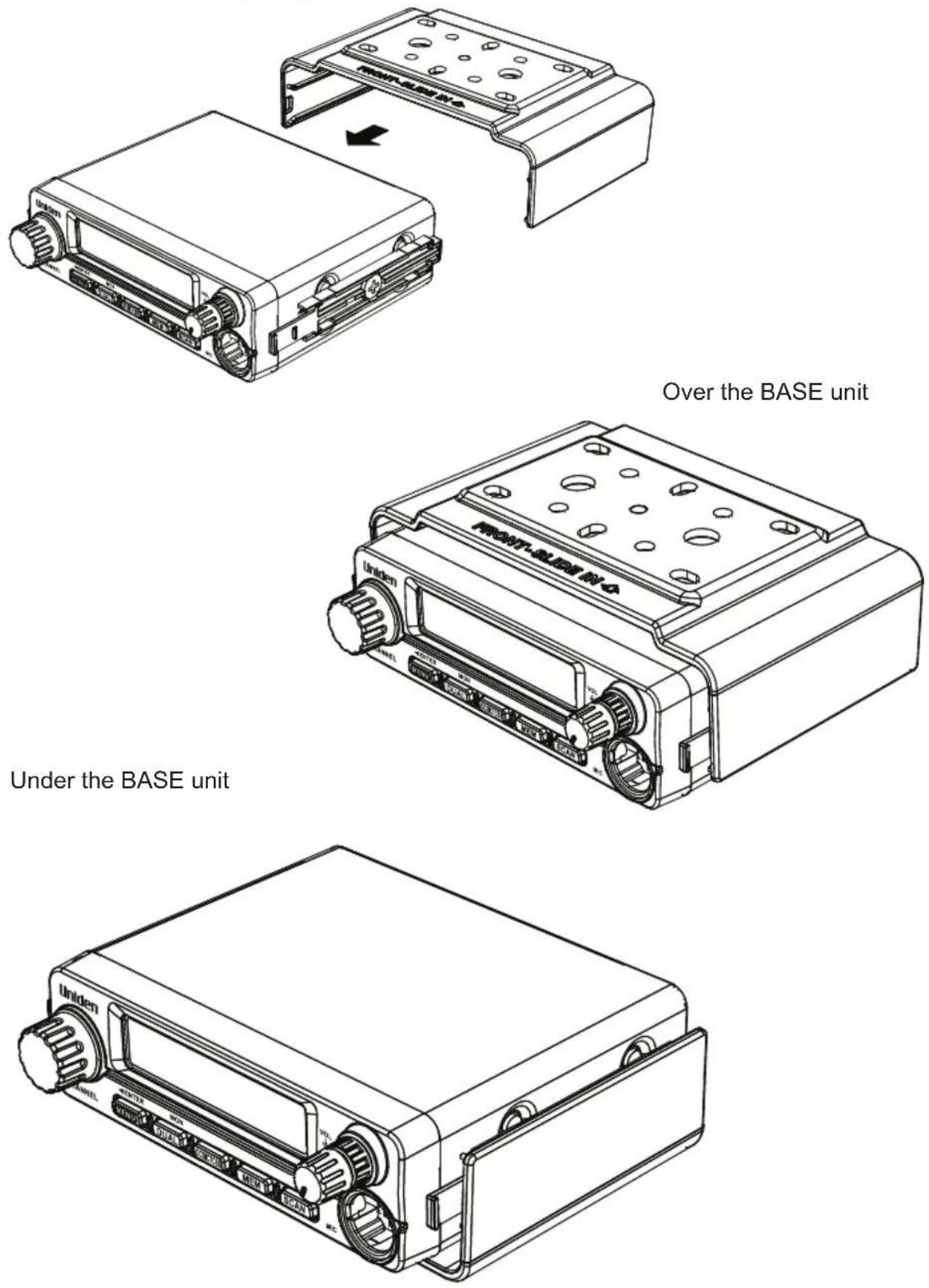
Technical line drawing of a device with labeled ports and components (no readable text or symbols)Slide the bracket along the guide rails to attach the bracket to the unit.
UH5045
text_image
VOL SQ ON/OFF OS/GS MEM SCAN MICFront MIC Jack
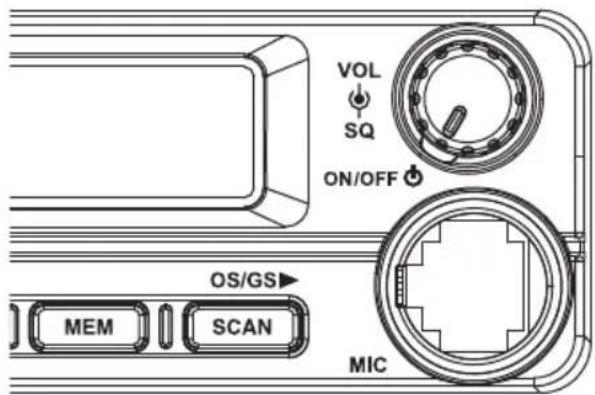
Push the MIC plug at the end of the microphone into the MIC jack until the connection locks into place. Gently tug the MIC cord to test that the connection is locked. Use the Front MIC Jack cover which is threaded onto the MIC cord to seal the MIC jack entry from dust.
Disconnecting the MIC from the Front MIC Jack
Pull away the threaded rubber collar and move it down along the cord. Using the flat blade of a screwdriver or similar object carefully press the lock tab at the left side of the MIC plug and push it to the right. At the same time tug on the MIC cord to draw back the MIC plug.
Rear MIC Jack
Use the Rear MIC Jack if the main base is mounted where a front MIC connection is intrusive or if you wish to use the Remote LCD Speaker MIC with an optional extension cable.
Peel the dust cover from the rear MIC jack. Push the MIC plug at the end of the microphone into the MIC jack until the connection locks into place. An optional 2m extension cable kit is available to enable mounting the main base in a hidden location.

NOTE
The Front and Rear MIC JACKs cannot be used at the same time.
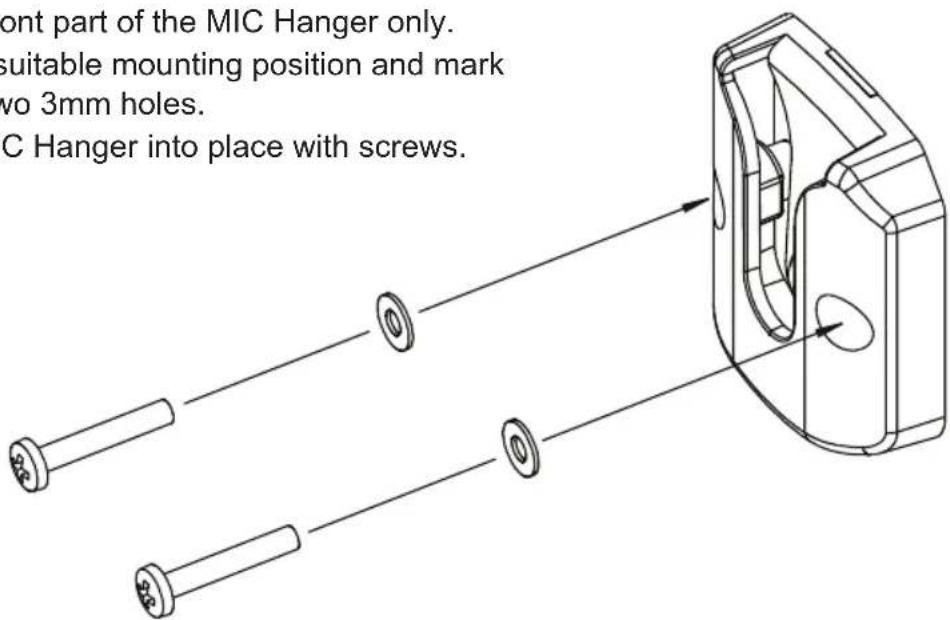
The Microphone Hanger comes in two parts. How and where you mount the MIC hanger will determine which parts to use.
Conventional Mounting with Screws
Use the front part of the MIC Hanger only.
Locate a suitable mounting position and mark and drill two 3mm holes.
Fix the MIC Hanger into place with screws.
text_image
Front part of the MIC Hanger only. suitable mounting position and mark two 3mm holes. MIC Hanger into place with screws.Conventional Mounting with Double Sided Tape (not supplied)
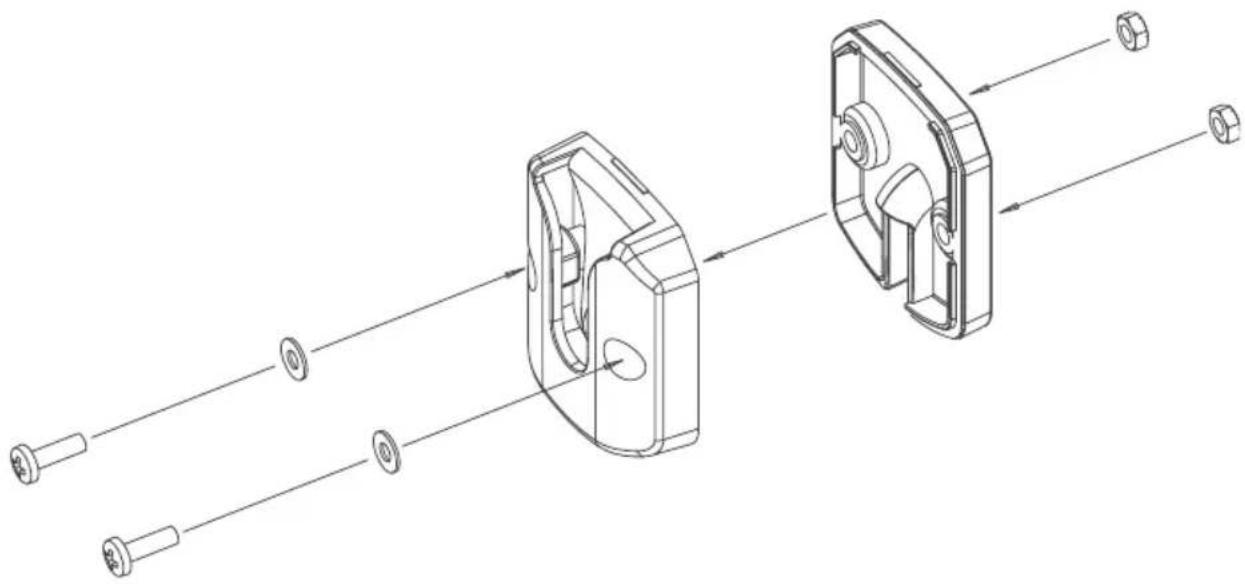
High quality Double-Sided tape can be found at good retail stores.
Secure the front and back pieces of the MIC Hanger using the supplied binding screws.
Locate a suitable mounting position.
Apply high quality Double-Sided tape onto the flat area of the MIC Hanger back piece and then press firmly to the mounting position.
natural_image
Exploded view diagram of a mechanical device showing internal components and assembly lines (no text or labels)Mounting the MIC Hanger for Remote SPK/MIC
text_image
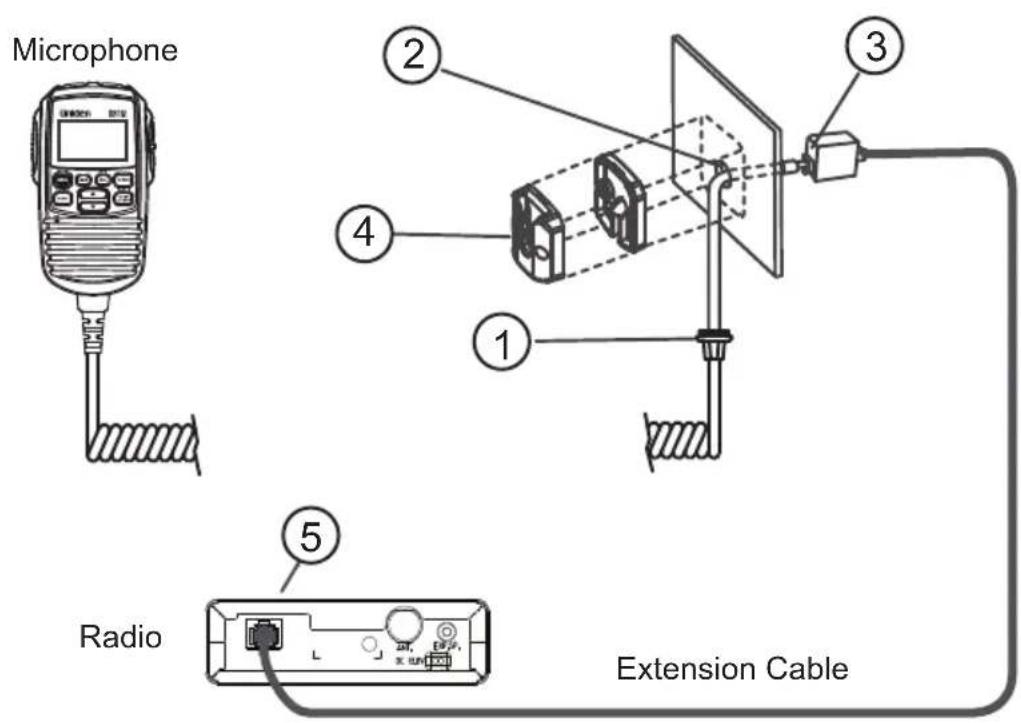
Microphone Radio Extension CableThe plug of the extension cable connects to the Radio. The socket end of the extension cable connects with the microphone plug.
- The rubber collar (dust cover) on the microphone cable is not required and can be cut away or pushed out of the way along the cable.
- Drill a 13mm hole at the MIC hanger location.
- Thread the microphone plug through the hole and connect with the extension cable.
- Mount the MIC Hanger over the hole and cable.
- At the Radio: Connect the extension cable plug to the rear MIC Jack. Fit the rubber bushing over the front MIC jack.
Turning on the Power
Press and hold the ON/OFF control at the base or the [POWER] button on the optionall Remote SPK/MIC.

text_image
Remote SPK/MIC. Uniden VOL SQ ON/OFF CHANNEL ENTER MON OS/GS MENU DUAL 0CS/CTS MEM SCAN MIC
text_image
Uniden RM770 RIMOTO MNC MENU MEM SQL POWER SCAN DCSI OTCSS DUAL MESetting the Volume
Turn the volume control at the base or press the volume ▲ on the side of the optional Remote SPK/MIC to adjust the volume. The base volume is composed of 42 steps and the optional Remote SPK/MIC is 7 steps.
See Volume Sync on page 27 to synchronize the volume control when the optional Remote SPK/MIC is connected.
Setting the Manual Squelch
Turn the outer ring of the SQ control at the base to adjust the Squelch.

NOTE
You must select a channel which is not in use before setting the SQUELCH control. (see p.19 for "Selecting a Channel").

text_image
Strong Signals Medium Signals Weak Signals NoiseThink of the squelch control as a gate. If you turn Squelch fully clockwise it raises the 'Squelch gate' so high that no signals get through.
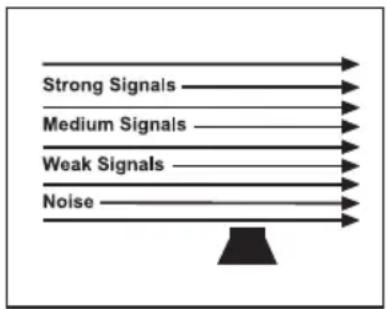
text_image
Strong Signals Medium Signals Weak Signals NoiseThink of the squelch control as a gate. If you turn Squelch fully clockwise it raises the 'Squelch gate' so high that no signals get through.
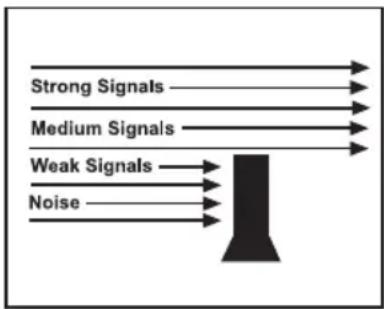
text_image
Strong Signals Medium Signals Weak Signals NoiseTo set the ‘Squelch Gate’ to the desired level, turn the squelch knob counterclockwise until you hear noise. Then carefully turn the Squelch knob clockwise until the noise fades. Now only strong signals get through.
Setting the Auto Squelch
The Auto Squelch feature is available only when the optional Remote SPK/MIC is connected. It has an Off setting and 3 preset squelch levels:
oFF - Auto Squelch OFF
1 - max sensitivity (min squelch)
2 - med sensitivity (med squelch)
3 - min sensitivity (max/tight squelch)
It requires no adjustment.

text_image
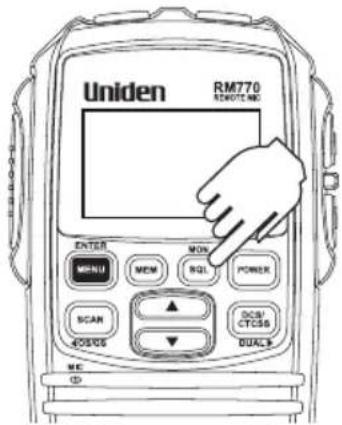
Uniden RM770 REMOTE ML ENTER MENU MEM MOM SOL POWER SCAN DC/DCG DCM CTCKS QUAL B MKI- Press [SQL/MON] on the Remote SPK/MIC. The squelch setting flashes.
- Rotate the channel knob at the base or press ▲▼on the Remote SPK/MIC to change the setting. RSQ icon displays when Auto Squelch is active. If tight squelch is selected SQT icon will also flash.
- Press [MENU/ENTER] to store the setting.
Monitor
Press and hold [DUAL/MON] at the base or [SQL/MON] on the optional Remote SPK/MIC to open the squelch and receive all weak signals. Press and hold [DUAL/MON] at the base or [SQL/MON] on the Remote SPK/MIC again to cancel.
text_image
Uniden RM770 REMOTE MC ENTER MENU MEM SQL POWER SCAN DCS/ CTCSS BUALS ME. ID
text_image
Uniden VOL SQ ON/OFF CHANNEL ENTER OS/GS MENU DUAL DCS/CTCSS MEM SCAN MICSelecting a Channel
Turn the Rotary Channel Selector at the base or press ▲▼ on the optional Remote SPK/MIC to select the desired channel.

text_image
Uniden RM770 MENU MENU SQL POWER SCAN POS/SS MS CD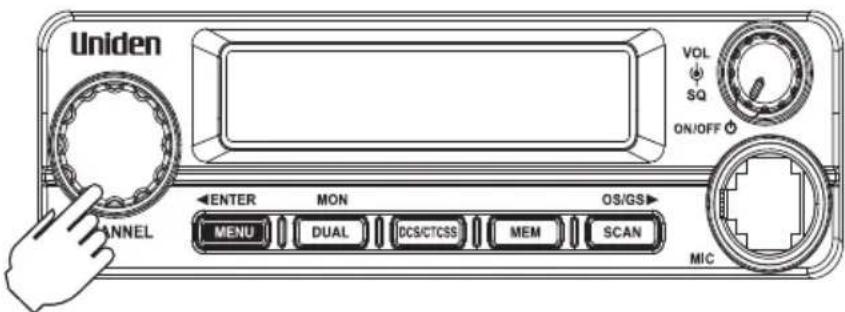
text_image
Uniden VOL SQ ON/OFF CHANNEL ENTER MON OS/GS MENU DUAL DCS/CTCSS MEM SCAN MIC
NOTE
For your reference a list of the available channels, corresponding frequencies and guidelines for their use is printed on page 31. For Australia, Channels 05 and 35 are reserved for Emergency Calls.
Programming the Instant Priority Channel
Turn the Rotary Channel Selector at the base or press ▲▼ on the optional Remote SPK/MIC to select the Priority Channel you prefer.
Press and hold [INST] button on the microphone for 3 seconds to store the new setting. INST icon appears.
Recalling the Instant Channel
Momentarily press the [INST] button on the microphone at any time to return to the Instant Channel.
Transmitting
The UHF CB Radio uses the UHF-CB Channels.
text_image
Channel CALL INST PTT— at Inliden
NOTE
For your reference a list of the available channels, corresponding frequencies and guidelines for their use and selection is printed on p.31 - p.33. For Australia, Channels 05 and 35 are reserved for Emergency Calls.
Select the desired channel. Press the microphone's [PTT] button and speak normally into the microphone. Hold it approx. 7cm from your mouth. Release the [PTT] button to end the transmission and listen for a reply.
Call Function
Press the microphone [CALL] Button. A three second ringing tone will be transmitted.
You may select from 5 types of tones (see p.26).

NOTE
Current regulations require calling tones to be restricted to one transmission per minute. If a second transmission is attempted within one minute then an error tone will sound.
DUAL Watch
Dual watch monitors the current channel and the Instant channel. (See Programming the Instant Priority Channel above).
Press [DUAL/MON] on the base or press and hold [DCS/CTCSS/DUAL] on the Remote SPK/MIC. DUAL icon appears and a short tone beep is heard.
To cancel DUAL Watch press [DUAL/MON] on the base or press and hold [DCS/CTCSS/DUAL] on the Remote SPK/MIC. DUAL icon disappears.
Using Repeater Channels
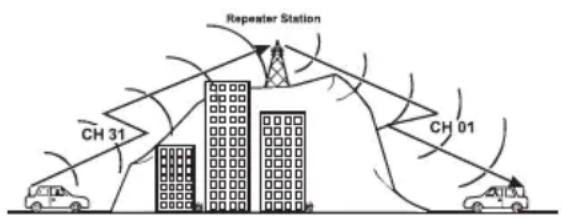
UHF CB repeaters are used to retransmit or relay your signal. Repeaters will extend the range of your radio and overcome the shielding effect caused by solid obstructions. In normal Simplex operation, your radio transmits on one particular frequency and receives on that same frequency.
If there is a barrier that partially blocks your transmitted signal, the probability of another radio receiving the signal is very slim. Hills, tall buildings, metallic structures,... etc tend to act as a screen between radios.

text_image
Normal Simplex Operation Transmitting on CH 31 No Signal being ReceivedStandard Operation without the aid of a Repeater Station.
text_image
Repeater Station CH 31 CH 01Operation with the aid of a Repeater Station (Duplex).
The signal coming from your radio is received by the Repeater Station and the re-transmitted at the same time on another channel. This operation is called “Duplexing”.
For example,
CH01 on Duplex Mode will Receive on CH01 but Transmit on CH31
CH02 on Duplex Mode will Receive on CH02 but Transmit on CH32 etc...
If you transmit on CH01 Duplex mode, you are actually transmitting on CH31 the repeater station down-coverts your signal and retransmits on CH01.
Operating the UHF CB Transceiver in Duplex Mode
For this example we are adopting CH01 as the channel being used in your area for repeater use.
-
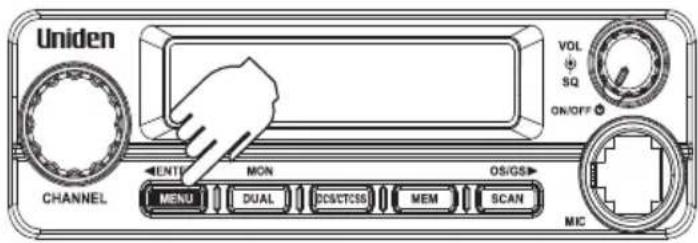
Press [MENU/ENTER]. The duplex setting flashes.
-
Turn the Rotary Channel Selector at the base or press ▲ on the Remote SPK/MIC to change the setting between ON (“r” for repeater channels 01 - 08 or “n” for repeater channels 41 - 48) or OFF.
-
Press [MENU/ENTER] to store the setting.
-
Press and hold [MENU/ENTER] to exit from the menu mode. Only channels 01 - 08 and 41 - 48 are available for Duplex.
text_image
Uniden VOL SQ ON/OFF CHANNEL ENTI MON OS/GS MENU DUAL DCS/CTCSS MEM SCAN MIC
Check with your local Retailer for information on available repeaters.
Scanning
The UHF CB Radio has a scanning feature that allows you to search for active channels automatically.
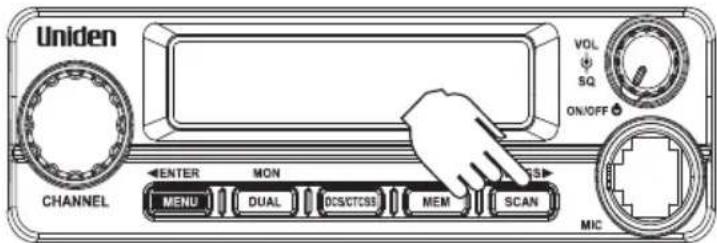
Furthermore, the UHF CB Radio is designed to have two types of scanning; Open Scanning (OS) and Group Scanning (GS), to give you flexibility and allow you to use the radio more effectively. Press [SCAN/OS/GS] and Scanning starts.
The SCAN icon appears. The scan direction can be changed at any time by rotating the channel selector left or right or pressing ▲▼ on the Remote SPK/MIC.
text_image
Uniden VOL SQ ON/OFF CHANNEL ENTER MON MENU DUAL OCS/CTS MEM SCAN MICOpen Scan (OS) Mode
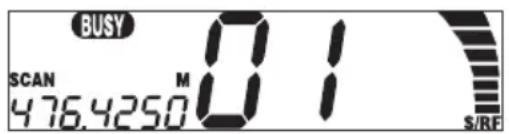
Allows continuous scanning of all selected channels. If an active channel is found, scanning will stop on that channel. If the received signal ceases, the unit will wait 3 seconds for the signal to return, otherwise scanning resumes.
text_image
BUSY SCAN M 476.4250 0:1 S/RFAfter transmission in scan mode, the unit will wait 20 seconds for the signal to return, otherwise scanning resumes.
To skip the active channel, turn the Rotary Channel Selector at the base or press ▲▼ on the Remote SPK/MIC momentarily. To deactivate SCAN, press [SCAN/OS/GS].

If SCAN is deactivated while on an active channel, the UHF CB Radio will stay on that active channel. If no channels are active, the UHF CB Radio will reinstate the starting channel.

OS Mode is indicated by the absence of the GS icon.
Group Scan (GS) Mode
Includes the accessory feature Priority Watch which allows you to monitor the Instant Priority Channel while scanning (see p.20 for setting Instant Priority Channel and p.24 to turn on Priority Watch).
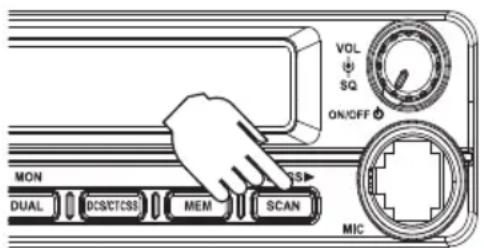
To use GS Mode Scanning, press and hold [SCAN/OS/GS]. GS icon appears on the display.
GS Scanning checks the Instant Priority Channel for activity regularly when Priority Watch is ON.
If the Priority Channel becomes active the radio will stay on that channel for as long as the signal is present. If the received signal ceases, Priority Scanning continues after 3 seconds.
text_image
MON DUAL DCS/CTS MEM SCAN VOL SQ ON/OFF MICIf scanning stops on a channel which is not a Priority Channel, UHF CB Radio will continue monitoring the Priority Channel for activity while listening to the active one. To deactivate SCAN, press the [SCAN/OS/GS] button.
Priority Watch
To switch Priority Watch On/Off;
-
Press [MENU/ENTER] two times. The Priority Watch setting flashes.
-
Turn the Rotary Channel Selector at the base or press ▲▼ on the Remote SPK/MIC to change the setting between ON or OFF.
-
Press [MENU/ENTER] to store the setting.
-
Press and hold [MENU/ENTER] to exit from the menu mode.

NOTE
If SCAN is deactivated while it is tuned to an active channel, the UHF CB Radio will stay on that active channel.
If none of the channels are active, the UHF CB Radio will reinstate the scan start channel.

NOTE
If OS/GS Scanning is initiated when there are no channels programmed in OS/GS memory, an error tone will be heard and scanning will not start (see Programming Scan Channels - below).
Add/Remove Channels from SCAN Memory
Select which Scanning Mode you wish to use - OS or GS.
Select the channel you want to store.
Press to [MEM] store. MEM icon appears and a short tone beep is heard.
To remove the channel from SCAN memory, press [MEM] once more.
The MEM icon disappears.

text_image
TER MON ENU DUAL DCS/CTS/SS MEM SCAN GS VOL SQ ON/OFF MIC50 RX Channels
The radio has 50 receive only channels (CH81 to CH130) which can be programmed with frequencies ranging from 450-520MHz (in 12.5kHz steps).
Manual Programming
Turn power off.
Press and hold [DUAL/MON] at the base or [SQL/MON] on the Remote SPK/MIC while turning power on (pressing power switch on the base or [POWER] on the Remote SPK/MIC).
The channel indicator flashes the lowest available empty channel. You may use the rotary channel selector at the base or ▲▼ on the Remote SPK/MIC to select another channel from CH81 - CH130.

text_image
Uniden VOL SQ ON/OFF CHANNEL ENTER N OS/GS MENU DUAL DCS/CTS/SS MEM SCAN MICPress [MEM]. The MHz digits
of the frequency indicator flashes. Turn the rotary channel selector at the base or press ▲▼ on the Remote SPK/MIC to select the desired MHz.
Press [◀/MENU/ENTER] and [SCAN/OS/GS/▶] at the base or [◀/OS/GS/SCAN] and [DCS/CTCSS/DUAL/▶] on the Remote SPK/MIC to change from the MHz digits to the kHz digits of the frequency, turn the rotary channel selector at the base or press ▲▼ on the Remote SPK/MIC to select the desired kHz.
When finished press [MEM]. The channel indicator flashes. Turn rotary channel selector at the base or press ▲ on the Remote SPK/MIC to select next channel for programming or press and hold [MENU/ENTER] to store setting.
A confirmation tone sounds. The channel is also entered into OS scan memory.
Deleting a programmed RX Channel frequency
Follow the steps in Manual Programming to enter a frequency for a desired channel. Select 000 for the MHz digits and then press [MEM]. Select another channel to edit or press and hold [MENU/ENTER] again to exit programming mode.
Selecting the Call tone
- Press [MENU/ENTER] three times. The call tone setting flashes.
- Turn the Rotary Channel Selector at the base or press ▲▼on the Remote
SPK/MIC to change the setting between 1, 2, 3, 4 and 5.

text_image
Uniden CHANNEL MON OS/GS MENU DUAL OS/CTS MEM SCAN- Press [MENU/ENTER] to store the setting.
- Press and hold [MENU/ENTER] to exit from the menu mode.

NOTE
If a button is not pressed within 10 seconds the UHF CB Radio will automatically exit the Menu Mode.
Busy Channel Lockout
If the channel is already in use, you can prevent the UHF CB Radio from transmitting. This is particularly important when using CTCSS/DCS.
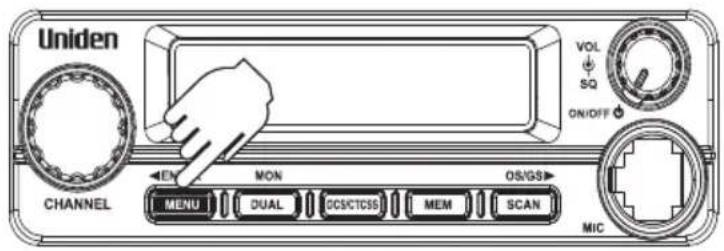
- Press [MENU/ENTER] four times. The BCL setting flashes.
- Turn the Rotary Channel Selector at the base or press ▲▼ on the Remote SPK/MIC to change the setting between ON or OFF.
- Press [MENU/ENTER] to store the setting.
- Press and hold [MENU/ENTER] to exit from the menu mode.

NOTE
text_image
Uniden VOL SQ ON/OFF CHANNEL MENU MON OS/GS DUAL GCS/CTS/SS MEM SCAN MICIf a button is not pressed within 10 seconds the UHF CB Radio will automatically exit the Menu Mode.
Roger Beep
-
Press [MENU/ENTER] five times. The roger beep setting flashes.
-
Turn the Rotary Channel Selector at the base or press ▲▼on the Remote SPK/MIC to change the setting between ON or OFF.
-
Press [MENU/ENTER] to store the setting.
-
Press and hold [MENU/ENTER] to exit from the menu mode.

text_image
Uniden VOL SQ ON/OFF CHANNEL MENU MON OS/GS DUAL DCS/CTS MEM SCAN MIC
NOTE
If a button is not pressed within 10 seconds the UHF CB Radio will automatically exit the Menu Mode.
Beep On/Off
-
Press [MENU/ENTER] six times. The Beep setting flashes.
-
Turn the Rotary Channel Selector at the base or press ▲ ▼ on the Remote SPK/MIC to change the setting between ON or OFF.
-
Press [MENU/ENTER] to store the setting.
-
Press and hold [MENU/ENTER] to exit from the menu mode.

text_image
Uniden VOL SQ ON/OFF CHANNEL EN MON OS/GS MENU DUAL DCS/CTCSS MEM SCAN MICCTCSS (Continuous Tone Coded Squelch System)
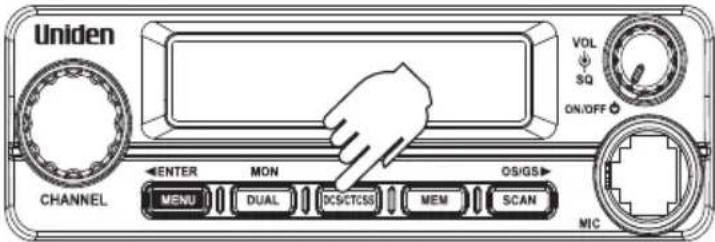
Turn the Rotary Channel Selector at the base or press ▲ on the Remote SPK/MIC the desired channel to use CTCSS. Press [DCS/CTCSS].
CTCSS icon appears.
Turn the Rotary Channel Selector at the base or press ▲▼ on the Remote SPK/MIC to select the desired CTCSS code 01 - 38.
text_image
Uniden VOL SQ ON/OFF CHANNEL ENTER MON OS/GS MENU DUAL DC/CTCSS MEM SCAN MICPress [DCS/CTCSS] once to store the new setting.
To turn off CTCSS (or DCS) select the oF code during setting.
DCS (Digitally Coded Squelch)
DCS is a digital extension of CTCSS. It provides 104 extra, digitally coded, squelch codes that follow after the 38 CTCSS codes. CTCSS 1-38, followed by DCS 1-104.
Follow the steps for setting a CTCSS code. Turn the Rotary Channel Selector at the base or press ▲▼ on the Remote SPK/MIC until the DCS codes appear. Press [DCS/CTCSS] to set. The DCS icon and code will display.
Volume Sync
- Press [MENU/ENTER] seven times. The volume sync setting flashes.
-
Turn the Rotary Channel Selector at the base or press ▲▼on the Remote SPK/MIC to change the volume sync on/off.
-
Press [MENU/ENTER] to store the setting.
-
Press and hold [MENU/ENTER] to exit from the menu mode.

text_image
Uniden VOL SQ ON/OFF CHANNEL ENT MON OS/GS MENU DUAL DCS/CTCSS MEM SCAN MIC
NOTE
- When volume sync function is active, the volume of base and Remote SPK/MIC are synchronized.
• Volume sync function can be used only when the optional Remote SPK/MIC is connected.
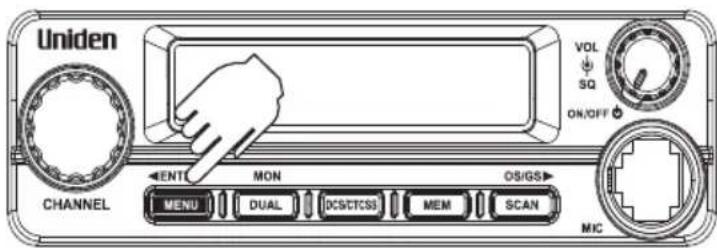
Backlight Colours
- Press [MENU] 8 times. The Backlight setting flashes.
- Turn the Channel Selector or press / to change the setting between Blue, Red, Purple(magenta), Green, Cyan, Yellow and Clear (white).
- Press [MENU] to store the setting.
- Press and hold [MENU] to exit from the menu mode.

NOTE
Backlight colour change is not available for the optional Remote SPK/MIC.
text_image
Uniden VOL SQ ON/OFF CHANNEL ENT MON OS/GS MENU DUAL DC/TCSS MEM SCAN MICBacklight Brightness
-
Press [MENU/ENTER] nine times. The Backlight setting flashes.
-
Turn the Rotary Channel Selector at the base or press ▲▼ on the Remote SPK/MIC to change the setting between OFF, 1(LO), 2(MID) and 3(HI) when standard MIC is connected, or OFF, 1(LO) and 2(HI) when Remote MIC is connected.
-
Press [MENU/ENTER] to store the setting.
-
Press and hold [MENU/ENTER] to exit from the menu mode.

text_image
Uniden VOL SQ ON/OFF CHANNEL ENT MON OS/GS MENU DUAL DC/CTCSS MEM SCAN MICLCD Contrast for Remote SPK/MIC
The LCD Contrast option becomes available only when the Remote SPK/MIC is connected.
-
Press [MENU/ENTER] ten times. The LCD Contrast setting flashes.
-
Turn the Rotary Channel Selector at the base or press ▲▼ on the Remote SPK/MIC to change the setting between 01 (low contrast) to 10 (high contrast).

text_image
Uniden VOL SQ ON/OFF CHANNEL ENT MON OS/GS MENU DUAL DCS/CTCSS MEM SCAN MIC-
Press [MENU/ENTER] to store the setting.
-
Press and hold [MENU/ENTER] to exit from the menu mode.

NOTE
The base LCD has a fixed contrast which cannot be changed.

Always listen on a channel (or observe the receive signal level meter) to ensure it is not already being used before transmitting.
Channels 5 and 35 are used for emergency channels.
CTCSS will not operate on these channels.
Please follow these guidelines for channel use in Australia:
- Channels 05 and 35 are Emergency Channels.
• Channel 11 is a Calling Channel. - Channels 22 and 23 are for telemetry and telecommand applications, channels 61, 62 and 63 are for future use and TX is inhibited on these channels.
General communication is accepted on all other channels with these guidelines:
- Channel 40 - road channel (Australia).
- Channels 01-08 (and 31-38), and Channels 41-48 (and 71-78) are repeater channels.

Important information - 80 Channel UHF-CB channel expansion
To provide all users additional channel capacity within the UHF-CB Band. The ACMA will change the majority of the current wideband 40 channel use to narrowband channel use. This allows for additional channels to be added, up to 80 Channels.
This simply means that the new narrowband radio you have purchased will have more channels than older radios. Please refer to the guidelines above and the channel chart for further channel information.
A list of currently authorised channels can also be obtained from the ACMA website in Australia and the MBIE website in New Zealand.
Interference / Poor Audio
When a new narrowband radio receives a signal from an older wideband radio the speech may sound loud - however the radio's built-in AVS (Automatic Volume Stabilizer) circuitry will detect and manage incoming audio to comparable levels.
Narrowband radios operating on CH41 - CH80 may encounter interference from a nearby wideband radios transmitting on high power on an adjacent channel (frequency).
When an older wideband radio receives a signal from a new narrowband radio the speech may sound quiet - the wideband radio user simply adjusts their radio volume for best performance.
The above situations are not a fault of the radio but a symptom of mixed wideband and narrowband radios in current use. It is expected that as older wideband radios are phased out this issue will be eliminated.
UHF-CB Channels and Frequencies
| CH No. | Simplex Mode Transmit / Receive Frequency (MHz) | Duplex Mode Transmit Frequency (MHz) | CH No. | Simplex Mode Transmit / Receive Frequency (MHz) |
| 1 476 | 425 477.175 (CH31) | 21 476.925 | ||
| 2 476 | 450 477.200 (CH32) | 22 476.950 (RX only) | ||
| 3 476 | 475 477.225 (CH33) | 23 476.975 (RX only) | ||
| 4 476 | 500 477.250 (CH34) | 24 477.000 | ||
| 5 476 | 525 477.275 (CH35) | 25 477.025 | ||
| 6 476 | 550 477.300 (CH36) | 26 477.050 | ||
| 7 476 | 575 477.325 (CH37) | 27 477.075 | ||
| 8 476 | 600 477.350 (CH38) | 28 477.100 | ||
| 9 476 | 625 29 477.125 | |||
| 10 476 | 650 30 477.150 | |||
| 11 476 | 675 31 477.175 | |||
| 12 476 | 700 32 477.200 | |||
| 13 476 | 725 33 477.225 | |||
| 14 476 | 750 34 477.250 | |||
| 15 476 | 775 35 477.275 | |||
| 16 476 | 800 36 477.300 | |||
| 17 476 | 825 37 477.325 | |||
| 18 476 | 850 38 477.350 | |||
| 19 476 | 875 39 477.375 | |||
| 20 476 | 900 40 477.400 |
UHF-CB Channels and Frequencies
| CH No. | Simplex Mode Transmit / Receive Frequency (MHz) | Duplex Mode Transmit Frequency (MHz) | CH No. | Simplex Mode Transmit / Receive Frequency (MHz) |
| 41 476.4375 477.1875 (CH 71) 61 | future use476.9375 (RX only) | |||
| 42 476.4625 477.2125 (CH 72) 62 | future use476.9625 (RX only) | |||
| 43 476.4875 477.2375 (CH 73) 63 | future use476.9875 (RX only) | |||
| 44 476.5125 477.2625 (CH 74) 64 477.0125 | ||||
| 45 476.5375 477.2875 (CH 75) 65 477.0375 | ||||
| 46 476.5625 477.3125 (CH 76) 66 477.0625 | ||||
| 47 476.5875 477.3375 (CH 77) 67 477.0875 | ||||
| 48 476.6125 477.3625 (CH 78) 68 477.1125 | ||||
| 49 476.6375 69 477.1375 | ||||
| 50 476.6625 70 477.1625 | ||||
| 51 476.6875 71 477.1875 | ||||
| 52 476.7125 72 477.2125 | ||||
| 53 476.7375 73 477.2375 | ||||
| 54 476.7625 74 477.2625 | ||||
| 55 476.7875 75 477.2875 | ||||
| 56 476.8125 76 477.3125 | ||||
| 57 476.8375 77 477.3375 | ||||
| 58 476.8625 78 477.3625 | ||||
| 59 476.8875 79 477.3875 | ||||
| 60 476.9125 80 477.4125 | ||||
CTCSS Codes and Frequencies
| Code No. | Frequency (Hz) | Code No. | Frequency (Hz) | |
| “oF” OFF | 20 | 131.8 | ||
| 1 | 67.0 | 21 | 136.5 | |
| 2 | 71.9 | 22 | 141.3 | |
| 3 | 74.4 | 23 | 146.2 | |
| 4 | 77.0 | 24 | 151.4 | |
| 5 | 79.7 | 25 | 156.7 | |
| 6 | 82.5 | 26 | 162.2 | |
| 7 | 85.4 | 27 | 167.9 | |
| 8 | 88.5 | 28 | 173.8 | |
| 9 | 91.5 | 29 | 179.9 | |
| 10 | 94.8 | 30 | 186.2 | |
| 11 | 97.4 | 31 | 192.8 | |
| 12 | 100.0 | 32 | 203.5 | |
| 13 | 103.5 | 33 | 210.7 | |
| 14 | 107.2 | 34 | 218.1 | |
| 15 | 110.9 | 35 | 225.7 | |
| 16 | 114.8 | 36 | 223.6 | |
| 17 | 118.8 | 37 | 241.8 | |
| 18 | 123.0 | 38 | 250.3 | |
| 19 | 127.3 |
| Code No. | DCS Code (Octal) | Code No. | DCS Code (Octal) | Code No. | DCS Code (Octal) |
| 1 023 36 | 223 71 445 | ||||
| 2 025 37 | 225 72 446 | ||||
| 3 026 38 | 226 73 452 | ||||
| 4 031 39 | 243 74 454 | ||||
| 5 032 40 | 244 75 455 | ||||
| 6 036 41 | 245 76 462 | ||||
| 7 043 42 | 246 77 464 | ||||
| 8 047 43 | 251 78 465 | ||||
| 9 051 44 | 252 79 466 | ||||
| 10 053 45 | 255 80 503 | ||||
| 11 054 46 | 261 81 506 | ||||
| 12 065 47 | 263 82 516 | ||||
| 13 071 48 | 265 83 523 | ||||
| 14 072 49 | 266 84 526 | ||||
| 15 073 50 | 271 85 532 | ||||
| 16 074 51 | 274 86 546 | ||||
| 17 114 52 | 306 87 565 | ||||
| 18 115 53 | 311 88 606 | ||||
| 19 116 54 | 315 89 612 | ||||
| 20 122 55 | 325 90 624 | ||||
| 21 125 56 | 331 91 627 | ||||
| 22 131 57 | 332 92 631 | ||||
| 23 132 58 | 343 93 632 | ||||
| 24 134 59 | 346 94 654 | ||||
| 25 143 60 | 351 95 662 | ||||
| 26 145 61 | 356 96 664 | ||||
| 27 152 62 | 364 97 703 | ||||
| 28 155 63 | 365 98 712 | ||||
| 29 156 64 | 371 99 723 | ||||
| 30 162 65 | 411 100 731 | ||||
| 31 165 66 | 412 101 732 | ||||
| 32 172 67 | 413 102 734 | ||||
| 33 174 68 | 423 103 743 | ||||
| 34 205 69 | 431 104 754 | ||||
| 35 212 70 | 432 |
UNIDEN UH5045 UHF CB Transceiver
IMPORTANT: Satisfactory evidence of the original purchase is required for warranty service
Please refer to our Uniden website for any details or warranty durations offered in addition to those contained below.
Warrantor: The warrantor is Uniden Australia Pty Limited ABN 58 001 865 498 ("Uniden Aust").
Terms of Warranty: Uniden Aust warrants to the original retail purchaser only that the UH5045 (“the Product”), will be free from defects in materials and craftsmanship for the duration of the warranty period, subject to the limitations and exclusions set out below.
Warranty period: This warranty to the original retail purchaser is only valid in the original country of purchase for a Product first purchased either in Australia or New Zealand and will expire, as indicated below, from the date of original retail sale.
| Product 5 Years | |
| Accessories 1 Year |
If a warranty claim is made, this warranty will not apply if the Product is found by Uniden to be:
(A) Damaged or not maintained in a reasonable manner or as recommended in the relevant Uniden Owner's Manual;
(B) Modified, altered or used as part of any conversion kits, subassemblies or any configurations not sold by Uniden Aust;
(C) Improperly installed contrary to instructions contained in the relevant Owner's Manual
(D) Repaired by someone other than an authorized Uniden Repair Agent in relation to a defect or malfunction covered by this warranty; or
(E) Used in conjunction with any equipment, parts or a system not manufactured by Uniden.
Parts Covered: This warranty covers the Product and included accessories.
User-generated Data: This warranty does not cover any claimed loss of or damage to user-generated data (including but without limitation phone numbers, addresses and images) that may be stored on your Product.
Statement of Remedy: If the Product is found not to conform to this warranty as stated above, the Warrantor, at its discretion, will either repair the defect or replace the Product without any charge for parts or service. This warranty does not include any reimbursement or payment of any consequential damages claimed to arise from a Product's failure to comply with the warranty.
Our goods come with guarantees that cannot be excluded under the Australian Consumer Law. You are entitled to a replacement or refund for a major failure and for compensation for any other reasonably foreseeable loss or damage. You are also entitled to have the goods repaired or replaced if the goods fail to be of acceptable quality and the failure does not amount to a major failure.
This warranty is in addition to and sits alongside your rights under either the COMPETITION AND CONSUMER ACT 2010 (Australia) or the CONSUMER GUARANTEES ACT (New Zealand) as the case may be, none of which can be excluded.
Procedure for obtaining warranty service: Depending on the country in which the Product was first purchased, if you believe that your Product does not conform with this warranty, you should deliver the Product, together with satisfactory evidence of your original purchase (such as a legible copy of the sales docket) to Uniden. Please refer to the Uniden website for address details. You should contact Uniden regarding any compensation that may be payable for your expenses incurred in making a warranty claim. Prior to delivery, we recommend that you make a backup copy of any phone numbers, images or other data stored on your Product, in case it is lost or damaged during warranty service.
UNIDEN AUSTRALIA PTY LTD
Phone: 1300 366 895
Email: custservice@uniden.com.au
THANK YOU FOR BUYING A UNIDEN PRODUCT.
Uniden®
© 2015 Uniden Australia Pty Limited. Printed in PRC. U01UT978ZZZ(0)