K404 - Smartphone KYOCERA - Free user manual and instructions
Find the device manual for free K404 KYOCERA in PDF.


User questions about K404 KYOCERA
0 question about this device. Answer the ones you know or ask your own.
Ask a new question about this device
Download the instructions for your Smartphone in PDF format for free! Find your manual K404 - KYOCERA and take your electronic device back in hand. On this page are published all the documents necessary for the use of your device. K404 by KYOCERA.
USER MANUAL K404 KYOCERA
Kyocera K404
user guide
User Guide for the Kyocera K404 Phones
This manual is based on the production version of the Kyocera K404 and K404a phones. Software changes may have occurred after this printing. Kyocera reserves the right to make changes in technical and product specifications without prior notice. The products and equipment described in this documentation are manufactured under license from QUALCOMM Incorporated under one or more of the following U.S. patents:
| 4,901,307 | 5,056,109 | 5,099,204 | 5,101,501 | 5,103,459 |
| 5,107,225 | 5,109,390 | 5,193,094 | 5,228,054 | 5,257,283 |
| 5,265,119 | 5,267,261 | 5,267,262 | 5,280,472 | 5,283,536 |
| 5,289,527 | 5,307,405 | 5,309,474 | 5,337,338 | 5,339,046 |
| 5,341,456 | 5,383,219 | 5,392,287 | 5,396,516 | D356,560 |
| 5,408,697 | 5,414,728 | 5,414,796 | 5,416,797 | 5,426,392 |
| 5,437,055 | D361,065 | 5,442,322 | 5,442,627 | 5,452,473 |
| 5,461,639 | 5,469,115 | 5,469,471 | 5,471,497 | 5,475,870 |
| 5,479,475 | 5,483,696 | 5,485,486 | 5,487 | 175 5,490,165 |
| 5,497,395 | 5,499,280 | 5,504,773 | 5,506,865 | 5,509,015 |
| 5,509,035 | 5,511,067 | 5,511,073 | 5,513,176 | 5,515,177 |
| 5,517,323 | 5,519,761 | 5,528,593 | 5,530,928 | 5,533,011 |
| 5,535,239 | 5,539,531 | 5,544,196 | 5,544,223 | 5,546,459 |
| 5,548,812 | 5,559,881 | 5,559,865 | 5,561,618 | 5,564,083 |
| 5,566,000 | 5,566,206 | 5,566,357 | 5,568,483 | 5,574,773 |
| 5,574,987 | D375,740 | 5,576,662 | 5,577,022 | 5,577,265 |
| D375,937 | 5,588,043 | D376,804 | 5,589,756 | 5,590,069 |
| 5,590,406 | 5,590,408 | 5,592,548 | 5,594,718 | 5,596,570 |
| 5,600,754 | 5,602,834 | 5,602,833 | 5,603,096 | 5,604,459 |
| 5,604,730 | 5,608,722 | 5,614,806 | 5,617,060 | 5,621,752 |
| 5,621,784 | 5,621,853 | 5,625,876 | 5,627,857 | 5,629,955 |
| 5,629,975 | 5,638,412 | 5,640,414 | 5,642,398 | 5,644,591 |
| 5,644,596 | 5,646,991 | 5,652,814 | 5,654,979 | 5,655,220 |
| 5,657,420 | 5,659,569 | 5,663,807 | 5,666,122 | 5,673,259 |
| 5,675,581 | 5,675,644 | 5,680,395 | 5,687,229 | D386,186 |
| 5,689,557 | 5,691,974 | 5,692,006 | 5,696,468 | 5,697,055 |
| 5,703,902 | 5,704,001 | 5,708,448 | 5,710,521 | 5,710,758 |
| 5,710,768 | 5,710,784 | 5,715,236 | 5,715,526 | 5,722,044 |
| 5,722,053 | 5,722,061 | 5,722,063 | 5,724,385 | 5,727,123 |
| 5,729,540 | 5,732,134 | 5,732,341 | 5,734,716 | 5,737,687 |
| 5,737,708 | 5,742,734 | D393,856 | 5,748,104 | 5,751,725 |
| 5,751,761 | 5,751,901 | 5,754,533 | 5,754,542 | 5,754,733 |
| 5,757,767 | 5,757,858 | 5,758,266 | 5,761,204 | 5,764,687 |
| 5,774,496 | 5,777,990 | 5,778,024 | 5,778,338 | 5,781,543 |
| 5,781,856 | 5,781,867 | 5,784,406 | 5,784,532 | 5,790,589 |
| 5,790,632 | 5,793,338 | D397,110 | 5,799,005 | 5,799,254 |
| 5,802,105 | 5,805,648 | 5,805,843 | 5,812,036 | 5,812,094 |
| 5,812,097 | 5,812,538 | 5,812,607 | 5,812,651 | 5,812,938 |
| 5,818,871 | 5,822,318 | 5,825,253 | 5,828,348 | 5,828,661 |
| 5,835,065 | 5,835,847 | 5,839,052 | 5,841,806 | 5,842,124 |
| 5,844,784 | 5,844,885 | 5,844,899 | 5,844,985 | 5,848,063 |
| 5,848,099 | 5,850,612 | 5,852,421 | 5,854,565 | 5,854,786 |
5,857,147 5,859,612 5,859,838 5,859,840 5,861,844 5,862,471 5,862,474 5,864,760 5,864,763 5,867,527 5,867,763 5,870,427 5,870,431 5,870,674 5,872,481 5,872,774 5,872,775 5,872,823 5,877,942 5,878,036 5,870,631 5,881,053 5,881,368 5,884,157 5,884,193 5,884,196 5,892,178 5,892,758 5,892,774 5,892,816 5,892,916 5,893,035 D407,701 5,898,920 5,903,554 5,903,862 D409,561 5,907,167 5,909,434 5,910,752 5,911,128 5,912,882 D410,893 5,914,950 5,915,235 5,917,708 5,917,811 5,917,812 5,917,837 5,920,284 D411,823 5,923,650 5,923,705 5,926,143 5,926,470 5,926,500 5,926,786 5,930,230 5,930,692 Other patents pending.
The Kyocera Wireless Corp. ("KWC") products described in this manual may include copyrighted KWC and third party software stored in semiconductor memories or other media. Laws in the United States and other countries preserve for KWC and third party software providers certain exclusive rights for copyrighted software, such as the exclusive rights to distribute or reproduce the copyrighted software. Accordingly, any copyrighted software contained in the KWC products may not be modified, reverse engineered, distributed or reproduced in any manner not permitted by law. Furthermore, the purchase of the KWC products shall not be deemed to grant either directly or by implication, estoppel, or otherwise, any license under the copyrights, patents or patent applications of KWC or any third party software provider, except for the normal, non-exclusive royalty-free license to use that arises by operation of law in the sale of a product.
Kyocera is a registered trademark of Kyocera Corporation. Brick Attack, Doodler, Mask, and Rave are trademarks of Kyocera Wireless Corp. QUALCOMM is a registered trademark of QUALCOMM Incorporated. Tetris is a registered trademark of Elorg Company LLC. eZiText is a registered trademark of Zi Corporation. Get It Now is a trademark of Verizon Wireless. All other trademarks are the property of their respective owners.
Copyright © 2004 Kyocera Wireless Corp. All rights reserved. Ringer Tones Copyright © 2000-2002 Kyocera Wireless Corp.
82-M8554-1EN, Rev. 002
FCC/IC Notice
This device complies with part 15 of the FCC rules. Operation is subject to the following two conditions: (1) This device may not cause harmful interference, and (2) this device must accept any interference received, including interference that may cause undesired operation. To maintain compliance with FCC RF exposure guidelines, if you wear a handset on your body, use the Kyocera Wireless Corp. (KWC) supplied and approved; Phone Case Model: TXLCC10042B; Belt Clip Model: TXLCC10047B; Sport Clip Model: TXLCC10045B Other accessories used with this device for body-worn operations must not contain any metallic components and must provide at least 22.5 mm separation distance including the antenna and the user's body.
THIS MODEL PHONE MEETS THE GOVERNMENT'S REQUIREMENTS FOR EXPOSURE TO RADIO WAVES.
Your wireless phone is a radio transmitter and receiver. It is designed and manufactured not to exceed the emission limits for exposure to radio frequency (RF) energy set by the Federal Communications Commission of the U.S. Government. These limits are part of comprehensive guidelines and establish permitted levels of RF energy for the general population. The guidelines are based on standards that were developed by independent scientific organizations through periodic and thorough evaluation of scientific studies. The standards include a substantial safety margin designed to assure the safety of all persons, regardless of age and health. The exposure standard for wireless mobile phones employs a unit of measurement known as the Specific Absorption Rate, or SAR. The SAR limit set by the FCC is 1.6 W/kg.* Tests for SAR are conducted using standard operating positions specified by the FCC with the phone transmitting at its highest certified power level in all tested frequency bands.
Although the SAR is determined at the highest certified power level, the actual SAR level of the phone while operating can be well below the maximum value. This is because the phone is designed to operate at multiple power levels so as to use only the power required to reach the network. In general, the closer you are to a wireless base station antenna, the lower the power output. Before a phone model is available for sale to the public, it must be tested and certified to the FCC that it does not exceed the limit established by the government-adopted requirement for safe exposure. The tests are performed in positions and locations (e.g., at the ear and worn on the body) as required by the FCC for each model. The highest SAR values for these model phones are:
Phone model: K404
AMPS mode - Head: 1.39 mW/kg;
Body-worn: 0.686 mW/kg
PCS mode -Head: 1.46 mW/kg;
Body-worn: 0.524 mW/kg
Phone model: K404a
AMPS/CDMA modes (Part 22) - Head: 1.37 W/kg;
Body-worn: 0.66 W/kg
PCS/CDMA mode (Part 24) - Head: 1.36 W/kg;
Body-worn: 0.47 W/kg
Body-worn measurements differ among phone models, depending upon availability of accessories and FCC requirements. The body-worn SAR values provided above were obtained by using Kyocera Wireless Corp. [KWC] supplied and approved; Phone Case Model: TXLCC10042B; Belt Clip Model: TXLCC10047B; Sport Clip Model: TXLCC10045B While there may be differences between the SAR levels of various phones and at various positions, they all meet the government requirement for safe exposure.
The FCC has granted an Equipment Authorization for this model phone with all reported SAR levels evaluated as in compliance with the FCC RF emission guidelines. SAR information on this model phone is on file with the FCC and can be found under the Display Grant section http://www.fcc.gov/oet/fccid after searching on the FCC ID:
Model: K404 FCC ID: OVFKWC-KE4X4
Model: K404a FCC ID: OVFKWC-K4X4
Additional information on SAR can be found on the Cellular Telecommunications and Internet Association (CTIA) web-site at http://www.wow-com.com.
* In the United States and Canada, the SAR limit for mobile phones used by the public is 1.6 watts/kg (W/kg) averaged over one gram of tissue. The standard incorporates a substantial margin of safety to give additional protection for the public and to account for any variations in measurements.
Caution
The user is cautioned that changes or modifications not expressly approved by the party responsible for compliance could void the warranty and user's authority to operate the equipment.
Optimize your phone's performance
Use the guidelines on page 1 to learn how to optimize the performance and life of your phone and battery.
Air bags
If your vehicle has an air bag, DO NOT place installed or portable phone equipment or other objects over the air bag or in the air bag deployment area. If equipment is not properly installed, you and your passengers risk serious injury.
Medical devices
Pacemakers—Warning to pacemaker wearers: Wireless phones, when in the 'on' position, have been shown to interfere with pacemakers. The phone should be kept at least six (6) inches away from the pacemaker to reduce risk.
The Health Industry Manufacturers Association and the wireless technology research community recommend that you follow these guidelines to minimize the potential for interference.
• Always keep the phone at least six inches (15 centimeters) away from your pacemaker when the phone is turned on.
- Do not carry your phone near your heart.
- Use the ear opposite the pacemaker.
- If you have any reason to suspect that interference is taking place, turn off your phone immediately.
Hearing aids—Some digital wireless phones may interfere with hearing aids. In the event of such interference, you may want to consult Verizon Wireless or call the customer service line to discuss alternatives.
Other medical devices—If you use any other personal medical device, consult the manufacturer of the device to determine if it is adequately shielded from external RF energy. Your physician may be able to help you obtain this information.
In health care facilities—Turn your phone off in health care facilities when instructed. Hospitals and health care facilities may be using equipment that is sensitive to external RF energy.
Potentially unsafe areas
Posted facilities—Turn your phone off in any facility when posted notices require you to do so.
Aircraft—FCC regulations prohibit using your phone on a plane that is in the air. Turn your phone off or switch it to Airplane mode (page 7) before boarding aircraft.
Vehicles—RF signals may affect improperly installed or inadequately shielded electronic systems in motor vehicles. Check with the manufacturer of the device to determine if it is adequately shielded from external RF energy.
Blasting areas—Turn off your phone where blasting is in progress. Observe restrictions, and follow any regulations or rules.
Potentially explosive atmospheres—Turn off your phone when you are in any area with a potentially explosive atmosphere. Obey all signs and instructions. Sparks in such areas could cause an explosion or fire, resulting in bodily injury or death. Areas with a potentially explosive atmosphere are often, but not always, clearly marked. They include:
- fueling areas such as gas stations
• below deck on boats - transfer or storage facilities for fuel or chemicals
- vehicles using liquefied petroleum gas, such as propane or butane
- areas where the air contains chemicals or particles such as grain, dust, or metal powders
- any other area where you would normally be advised to turn off your vehicle engine
Use with care
Use only in normal position (to ear). Avoid dropping, hitting, bending, or sitting on the phone.
Keep phone dry
If the phone gets wet, turn the power off immediately and contact your dealer. Water damage may not be covered under warranty.
Resetting the phone
If the screen seems frozen and the keypad does not respond to keypresses, reset the phone by completing the following steps:
- Remove the battery door.
- Remove and replace the battery.
If the problem persists, return the phone to the dealer for service.
Accessories
Use only Kyocera Wireless Corp. approved accessories with Kyocera Wireless Corp. phones. Use of any unauthorized accessories may be dangerous and will invalidate the phone warranty if said accessories cause damage or a defect to the phone. To shop online for a Hands-free Car Kit and other phone accessories, visit
www.kyocera-wireless.com/store. To order by phone, call (800) 349-4188 (U.S.A. only) or (858) 882-1410.
Radio Frequency (RF) energy
Your telephone is a radio transmitter and receiver. When it is on, it receives and sends out RF energy. The Verizon Wireless network controls the power of the RF signal. This power level can range from 0.006 to 0.6 watts.
In August 1996, the U.S. Federal Communications Commission (FCC) adopted RF exposure guidelines with safety levels for hand-held wireless phones. These guidelines are consistent with the safety standards previously set by both U.S. and international standards bodies in the following reports:
• ANSI C95.1 (American National Standards Institute, 1992)
• NCRP Report 86 (National Council on Radiation Protection and Measurements, 1986)
- ICNIRP (International Commission on Non-Ionizing Radiation Protection, 1996)
Your phone complies with the standards set by these reports and the FCC guidelines.
E911 Mandates
Where service is available, this handset complies with the Phase I and Phase II E911 Mandates issued by the FCC.
Battery and charger specifications
| Charger Input Output | ||
| CV90-60858-01 10 | 0-240 VAC 50/60 Hz 4.5 V, | 1.5 A |
| CV90-60859-1 120 | VAC 60 Hz 5.2 V, 400 mA | |
| Standard Battery CV90-K3040: 3.7 V / 900 mAh | ||
Customer support
The Verizon Wireless customer support department may be accessible directly from your phone when you dial a number such as *611 (check with Verizon Wireless). They can answer questions about your phone, phone bill, call coverage area, and specific features available to you, such as call forwarding or voicemail.
For questions about the phone features, refer to the materials provided with your phone, or visit www.kyocera-wireless.com.
For additional questions, you may contact the Kyocera Wireless Corp. Customer Care Center in any of the following ways:
• Web site: www.kyocera-wireless.com
- Email: phone-help@kyocera-wireless.com
Before requesting support, please try to reproduce and isolate the problem. When you contact the Customer Care Center, be ready to provide the following information:
- The name of your service provider: Verizon Wireless.
- The actual error message or problem you are experiencing.
- The steps you took to reproduce the problem.
- The phone's electronic serial number (ESN). To find the ESN select Menu → Phone Info.
Qualified service
If the problem with your phone persists, return the phone with all accessories and packaging to the dealer for qualified service.
Become a product evaluator
To participate in the testing and evaluation of Kyocera Wireless Corp. products, including cellular or PCS phones, visit beta.kyocera-wireless.com.

093 453 037
Kyocera Wireless Corp.
10300 Campus Point Drive, San Diego, CA 92121 U.S.A.
Visit us at www.kyocera-wireless.com
To purchase accessories, visit www.kyocera-wireless.com/store
CONTENTS
1 Getting Started.... 1
Charging the battery 1
Replacing the faceplate 2
Using menus 5
2 Making and Answering Calls ....6
Making a call 6
Silencing an incoming call ....6
Calling emergency services. 7
Speed dialing 9
Setting up voicemail 9
Locking the keypad 10
Understanding roaming....11
3 Entering Text and Symbols ..... 13
4 Storing Contacts 16
Saving a contact entry....16
Editing or erasing a contact .....17
Finding contact information .....18
5 Sending and Receiving
Text Messages .... 20
Sending text messages .....20
Retrieving text messages....23
Customizing message settings.....25
6 Customizing Your Phone 27
Silencing all sounds .....27
Choosing a different ringer....28
Adjusting volume 28
Using shortcuts .....29
Personalizing the screen 29
Creating a secure
environment. 31
Setting message alerts 32
Network settings....33
Data settings....33
Setting position location....34
7 Using Voice Recognition....35
Setting up voice dialing .....35
Calling/using voice tags 35
Using voice features with
hands-free car kits. 36
Training voice recognition. . . . . . . . . . . . . . . . . . . . 37
8 Using Tools 38
Scheduler 38
Alarm Clock. 38
Tip Calculator 39
Calculator 39
World Clock. 39
Timer. 40
Stopwatch 40
Flashlight 41
9 Media Gallery 42
Tetris 42
Brick Attack. 43
Doodler 43
My Sounds 44
My Pictures 44
Index 46
1 GETTING STARTED
Your phone comes with a removable lithium ion (LiIon) battery. Fully charge the battery before using the phone.
Installing the battery
-
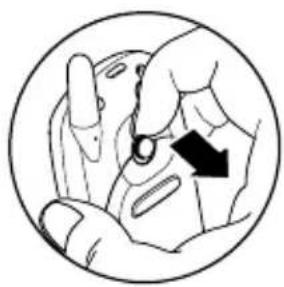
Hold the phone facing away from you.
-
Use your fingernail to pull the circular latch toward the bottom of the phone and pull the battery door away.
-
Place the battery in the phone casing with the metal contacts toward the top of the phone.
-
Place the battery door notches in the openings near the bottom of the phone.
-
Press the circular latch until it clicks.
natural_image
Illustration of a hand holding a small object with an arrow indicating direction (no text or symbols)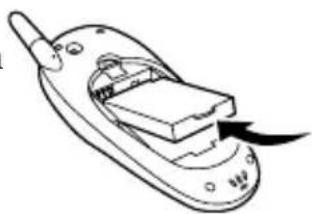
natural_image
Line drawing of a mechanical device with a handle and internal components (no text or symbols)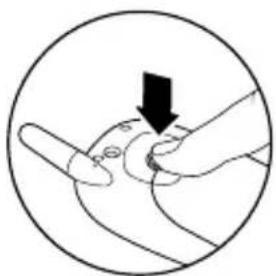
natural_image
Illustration of a hand holding a curved object with a black arrow pointing to it, enclosed in a circle (no text or symbols)Charging the battery
You must have at least a partial charge in the battery to make or receive calls.
To charge the battery, connect the AC adapter to the jack on the lower right side of the phone, then plug the adapter into a wall outlet.

The battery icon in the upper-right corner of the screen tells you whether the phone is:
- Charging (the icon is animated)
- Partially charged
- fully charged
Recharging the battery:=You can safely recharge the battery at any time, even if it has a partial charge.
Caring for the battery
General safety guidelines
- Do not take apart, puncture, or short-circuit the battery.
- If you have not used the battery for more than a month, recharge it before using your phone.
- Avoid exposing the battery to extreme temperatures, direct sunlight, or high humidity.
- Never dispose of any battery in or near a fire. It could explode.
Common causes of battery drain
- Playing games
• Using the Web - Keeping backlight on
- Operating in analog (A) mode. Your phone switches between modes to find the best signal. To set your phone to operate in a single mode, select Menu → Settings → Network → Digital or Analog.
- Operating in digital mode when far away from a base station or cell site.
- Using data cables or accessories, such as the Hands-free headset.
- Operating when no service is available, or service is available intermittently.
• High earpiece and ringer volume settings.
• Repeating sound, vibration, or lighted alerts.
Replacing the faceplate
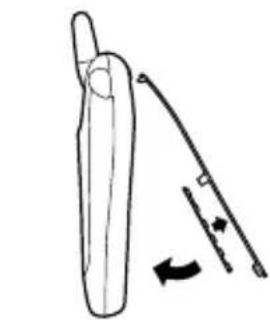
Your Kyocera K404 phone has a removable faceplate. To remove the faceplate and replace it with a new one:
- Place your thumbnail under the small lip at the bottom of the faceplate.
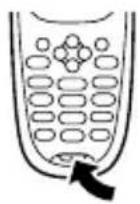
- Lift the faceplate away from the phone and remove the keypad.
- Lay the keypad inside the new faceplate, fitting the keys into the holes. Align the hinges at the top of the faceplate with the slots near the top of the phone.
- Lift the faceplate away from the phone and remove the keypad.
natural_image
Simple line drawing of a tool or device with an arrow indicating motion (no text or symbols)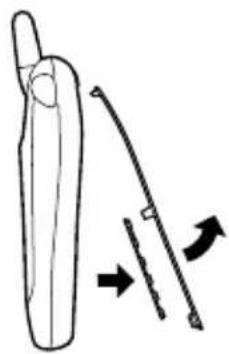
natural_image
Simple line drawing of a pen-like object with an arrow indicating direction (no text or symbols)- Press the faceplate at the bottom until it latches into place.
Performing basic functions
Turn the phone on:=Press 📂 and wait until the hourglass icon appears.
Turn the phone off:=Press and hold until the phone beeps or the screen goes blank.
Make a call: Enter the number and press
End a call:=Press(the red key).
Answer a call:=Press (the green key).
Access voicemail:=Press and hold and follow the system prompts. Contact Verizon Wireless for details about their voicemail system.
Verify your phone number:=Select Menu → Phone Info.
Silence the ringer: =Press then to answer.

Lock the keypad: Press and hold left
Access messages:=Press down.
Silence all sounds:=Press and hold right.
Access your shortcuts:=Press up.
Lock the keypad: Press left or press
Turn the flashlight on:=Press and hold ⊕ or select=Menu → Tools → Flashlight → Turn On.
Turn the flashlight off:=Release or select
Menu → Tools → Flashlight → Turn Off.
Understanding screen icons
These icons may appear on your phone's screen.

The phone is operating in IS2000 (1X) digital mode.

The phone is operating in IS95 digital mode.

The phone is operating in Analog (FM) mode.

The phone is receiving a signal. You can make and receive calls. Fewer bars indicate a weaker signal.

A call is in progress.

The phone is not receiving a signal. You cannot make or receive calls.

The phone is roaming outside of its home service area.

You have a text message, voicemail, or page. (Blinking icon indicates an urgent message, voicemail, or page.)

The battery is fully charged. The more black bars, the greater the charge.

The alarm clock is set.

The phone is in privacy mode or is accessing a secure Web site.

High-speed (3G) data service is available and active on your phone. Check with Verizon Wireless for availability.

(blinking) The phone is sending high-speed data.

(blinking) The phone is receiving high-speed data.

High-speed data service is available, but the phone is dormant.

The phone is at the home screen. To access the menus, press OK

Keyguard is on. The keypad is locked.

The phone is set to light up instead of ring.

The phone is set to vibrate or to vibrate and then ring.

Position location is set to Verizon Wireless and to emergency services.

Position location is set to emergency services only.
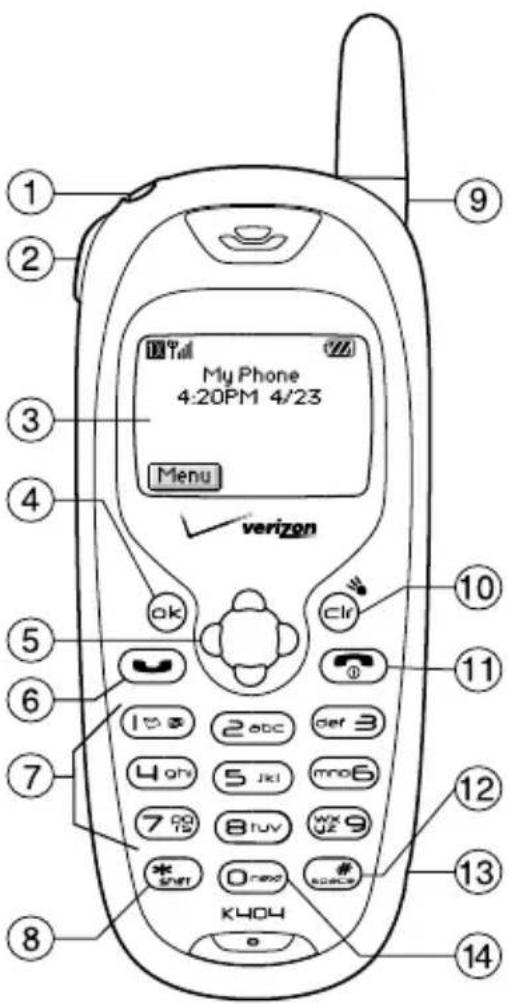
Getting to know your phone
① Flashlight=you can turn on by pressing, using a personal shortcut, or using the Tools menu.
② Jack for Hands-free Headset=only(sold separately)
③ Home screen. Press to select Menu.
④ OK key selects a menu item or option.
⑤ Navigation key scrolls through lists and positions cursor. Also accesses shortcuts from the home screen.
⑥ Send/Talk key starts or answers a call.
⑦ Keypad=for entering numbers, letters, or symbols.
⑧ * Shift key changes the text mode in text entry.
⑨ Antenna (does not extend).
⑩ Clear key erases the last character in text entry, returns to the previous menu, or turns on the flashlight.
⑪ End/Power key turns the phone on or off, ends a call, or returns you to the home screen.
⑫ Space # key enters a space during text entry.
13 Jack for Power Adapter (included).
⑭ 0 Next key cycles through word choices during text entry.
Warning: Inserting an accessory into the incorrect jack will damage the phone.
Using menus
The contents of the main menu are as follows:
Recent Calls
| Incoming Calls |
| Outgoing Calls |
| Missed Calls |
| Erase Lists |
Contacts
| View All |
| Add New |
| Find Name |
| Add Voice Dial |
| Speed Dial List |
| Voice Dial List |
| Business List |
| Personal List |
| Information |
Messages
| Voicemail | Silent Mode |
| Send New | Keyguard |
| InBox | Sounds |
| Net Alerts | Display |
| OutBox | Voice Services |
| Saved Msgs | Security |
| Erase Msgs | Call Information |
| Group Lists | Network |
| Msg Settings | Convenience |
Settings
| Silent Mode | Tetris |
| Keyguard | Brick Attack |
| Sounds | My Sounds |
| Display | My Pictures |
| Voice Services | Doodler |
| Security | Tools |
| Call Information | Scheduler |
| Network | Alarm Clock |
| Convenience | Tip Calculator |
| Msg Settings | Calculator |
| Accessories | World Clock* |
| Timer | |
| Stopwatch | |
| Flashlight |
Media Gallery
| Tetris | Your Phone Number |
| Brick Attack | SW Version |
| My Sounds | Factory Config |
| My Pictures | ESN |
| Doodler | Technology |
Tools
| Scheduler | ERI Version |
| Alarm Clock | Icon Key |
| Tip Calculator | (Scroll down to view information.) |
| Calculator | |
| World Clock* | |
| Timer | |
| Stopwatch | |
| Flashlight |
* Not available on all phones. Check with Verizon Wireless.
- From the home screen, press select Menu.
- Press left-right, up, or down to see menus.**
- Press to select a menu or menu item.
- Press up or down to view menu items.
- Press to back up a menu level.
- Press to return to the home screen.

**To change the way the menus appear, select Menu → Settings → Display → Main Menu View, then select either Graphic or List and press OK. In this guide, an arrow → tells you to select an option from a menu. For example, Menu → Settings means select Menu, then select the Settings option.
2 MAKING AND ANSWERING CALLS
Making a call
-
Make sure you are in an area where the signal can be received. Look for the symbol on the home screen. The more bars you see in the symbol, the clearer the reception. If there are no bars, try to move to where the reception is better.
-
Enter the phone number.
-
Press

- Press

Redialing a number
To redial the last number called, press twice. If you see a message prompting you to speak a name, press again.
Calling a saved number
If you have already saved a phone number, you can use the contacts list to find it quickly.
- Select Menu → Contacts → View All.
- Scroll down the list, find the contact you want, and press to dial the number.
For more about finding contact information, see page 18.
Tip: To call a saved number using your phone's voice recognition feature, see “Calling/using voice tags” on page 35.
Answering a call
When a call comes in, the phone rings, vibrates, or lights up (depending on your settings), and a dancing phone icon appears. The phone number of the caller also appears, if it is not a restricted number. If the number is stored in your Contacts directory, the contact name also appears.
• To answer the call, press

- If you do not wish to answer the call, select Silence and press ☐Silence mutes the ringer and sends the caller to voicemail if you do not pick up the call.
Silencing an incoming call
- To silence an incoming call quickly, press 📞. Then press 📞 to answer the call.
This action silences the current call only. The next call rings as normal.
Adjusting the volume during a call
- To adjust the earpiece volume during a call, press up or down.
Calling emergency services
Note: Regardless of your 3-digit emergency code (911, 999, 111, 000, etc.), your phone operates as described below.
- Dial your 3-digit emergency code and press 📋
You can call the code even if your phone is locked or your account is restricted. When you call, your phone enters Emergency mode. This enables the emergency service exclusive access to your phone to call you back, if necessary. To make or receive regular calls after dialing the code, you must exit this mode.
To exit Emergency mode
When you have completed the emergency call:
- Press to select Exit.
- Press again to confirm your choice.
Note: To determine who has access to your location, see “Setting position location” on page 34.
Using your phone in an airplane
Important: This feature is not available on all phones. Check with Verizon Wireless for availability.
While in an airplane, it is normally required that you turn off your mobile phone, because it emits RF signals that interfere with air traffic control. You can, however, keep your Kyocera K404 phone powered on if you set it to Airplane mode.
In Airplane mode, your phone will not emit RF signals. You cannot make or receive regular phone calls, send text messages, or use the Web, but you can play games, use the Scheduler, set the clock, and make emergency calls to designated emergency services.
To set Airplane mode
- Select Menu → Settings → Convenience → Airplane Mode.
- At the message, press OK
- Highlight an option and press OK
- Enabled—Activate Airplane mode.
- Disabled—Turn off Airplane Mode and return the phone to normal state.
Dealing with missed calls
When you have missed a call, “Missed Call” appears on your screen unless the caller leaves a voicemail.
- To view the caller's number or name, select Missed Calls. In the Recent Calls list, the missed call is indicated with a flashing 📄X
- Press or to clear the screen.
- If the caller left a voicemail message, select Call.
Setting missed call alerts
You can set an alert to beep every five minutes after you have missed a call.
- S e Menu Settings Sounds Missed Call Enabled.
- To turn off the alert when it rings, press or OK.
- To cancel the alert, select Menu → Settings → Sounds → Missed Call → Disabled.
Viewing recent call details
Details on the last 29 calls you made or received are stored in the Recent Calls list. You can get details on the caller's name and phone number, along with the time and length of the call. Icons indicate the types of calls in the list.

Outgoing call Forwarded call

Incoming call Three-way call

Missed call (flashing)
Viewing recent calls
- Select Menu → Recent Calls.
- Select a list: Incoming Calls, Outgoing Calls, Missed Calls, or Erase Lists.
-
Select a recent call item.
-
Select an option:
-
Time—Show the time of the call.
- Number—Show the caller's number (for an incoming call), or the number you called (for an outgoing call).
- Prepend—Place the cursor at the beginning of the phone number so you can add an area code, if you plan to save the number as a contact.
- Save New—Save the phone number as a contact.
- Add to—Add the phone number to a saved contact.
Note: If the phone number is classified as “secret,” you must enter your four-digit lock code to view or edit it. For information on the lock code, see “Changing your lock code” on page 31. To classify a phone number as secret, see “Saving a contact entry” on page 16.
Erasing recent calls
- Select Menu → Recent Calls → Erase Lists.
- Select an option: Incoming Calls, Outgoing Calls, Missed Calls, or Erase All.
- Press right and press OK to select Yes.
Speed dialing
Speed dialing allows you to quickly dial a stored phone number by entering a one- or two-digit speed dialing location number and pressing
Note: Before you can use speed dialing, you must save a phone number as a contact and assign a speed dial location to it.
- To save a phone number as a new contact and add a speed dial location, see “Saving a contact entry” on page 16.
- To add a speed dial location to a saved contact, see “Editing or erasing a contact” on page 17.
Using speed dialing
To call a contact that has a speed dial location:
- From the home screen, enter a one- or two-digit speed dialing location and press
1-Touch dialing
1-Touch dialing is the fastest way to speed dial a contact that has a speed dial location.
Note: You must (1) enable 1-Touch dialing on your phone and (2) have a speed dial location assigned to a contact. To assign a speed dial location to a contact, see the note under “Speed dialing” above.
Enabling 1-Touch dialing
-
Select Menu → Settings → Convenience → 1-Touch Dialing → Enabled.
-
Press .OK
Using 1-Touch dialing
To call a contact that has a speed dial location:
- From the home screen, press and hold a speed dialing location. If it is a two-digit location, press the first digit briefly, then press and hold the second digit. For example, if the speed dialing location is 15, press briefly, then press and hold Sjkl
Setting up voicemail
Before your phone can receive voicemail messages, you must set up a password and record a personal greeting with Verizon Wireless. When you have set up your voicemail, all unanswered calls to your phone are automatically transferred to voicemail, even if your phone is in use or turned off.
- From the home screen, press and hold
- Press to interrupt the notification.
- Follow the system prompts to create a password and record a greeting.

Note: If you are having trouble accessing your voicemail, contact Verizon Wireless.
Checking voicemail messages
When a voice message is received, your screen displays a notification: "New Message [x] Voicemail." This text remains for about five minutes. After that, look for the ☒ symbol at the top of your screen. The symbol flashes if the message is urgent.
If you see "New Message" on your screen
- Press OK to select Call. This initiates a call to your voicemail number.
- Follow the prompts to retrieve the message. For specific information on getting voicemail messages, contact Verizon Wireless.
If you see the symbol
- Press to initiate a call to your voicemail number.
- Follow the prompts to retrieve the message.
Note: You can set the phone to beep, light up, or play a tune every five minutes to remind you that you have voicemail.
Locking the keypad
The Keyguard locks your keypad to prevent accidental keypresses when the phone is turned on and a call is not in progress. You can still answer or silence an incoming call.
- To lock the keypad from the home screen, press left and hold.
- To unlock the keypad, press 12@2abc def3 in this order.
Changing the keyguard setting
- Select Menu → Settings → Keyguard.
- Highlight an option. You can set the phone to lock the keypad immediately, or automatically if no key is pressed after 30 seconds, 1 minute, or 5 minutes.
- Press to save.
Tracking calls
You can track the number and duration of calls made and received on your phone.
- Select Menu → Settings → Call Information.
-
Select a timer:
-
Home Calls—Tracks all calls made and received by your phone (in your home calling area) since this timer was last reset. To reset this timer, highlight Reset and press OK
- Roam Calls—Tracks all calls made and received by your phone (while roaming) since this timer was last reset. To reset this timer, highlight Reset and press OK
- Recent Calls—Tracks all calls made and received by your phone since this timer was last reset. To reset this timer, highlight Reset and press OK
- All Calls Timer—Tracks all calls made and received by your phone. This timer cannot be reset.
- Kbyte Counter—Tracks the kilobytes of data sent and received by your phone. It counts only SO 33 packet data. When the total reaches 999,999kb, the counters reset automatically. To reset this counter manually, highlight Reset and press OK
Timing your calls
You can set your phone to beep 10 seconds before each minute passes when you are on a call.
- S e Menu Settings Sounds Minute Alert Enabled.
Receiving data or faxes
Your phone may be able to receive certain data or faxes, depending on the system sending the information. You cannot receive voice calls while the phone is in data/fax mode. For more information, see “Data settings” on page 33.
Using a headset
If you are using a headset equipped with a button, press the button to answer or end a call. If the headset has no button, answer with and end with on your phone. Headsets are sold separately.
Understanding roaming
Controlling network roaming
You may force the phone into either digital or analog mode. This is useful if you are in an area that borders on digital service and the automatic feature is causing the phone to keep switching between modes.
-
Select Menu → Settings → Network → Digital/Analog.
-
Select an option and press

- Automatic automatically switches the phone between digital and analog.
- Analog only sets the phone to work in analog mode only.
- Analog call forces a call into analog mode for the duration of the next call.
- Digital only sets the phone to work in digital mode only.
Setting an alert for roaming
You can set your phone to alert you with beeps when you roam outside your home service area.
-
Select Menu → Settings → Network → Roam/Svc Alert.
-
Select an option and press

- When no svc alerts you with three tones decreasing in pitch when service is lost and three tones increasing in pitch when service is acquired again.
- Roam Change alerts you with two decreasing tones when roaming service is acquired and three increasing tones when home area service is acquired again.
- Any Change alerts you with three increasing tones if there is a change in roaming service or three decreasing tones if the phone loses service.
Setting the roam ringer
You can set a ringer to indicate when an incoming call will be subject to roaming charges.
- Select Menu → Settings → Sounds → Roam Ringer.
- Highlight Enabled and press=OK. You hear a sample of the ringer.
- Press= to set the ringer.
Setting Call Guard to avoid roaming calls
You can set your phone to warn you before you answer or place a call while roaming.
- S e Menu → Settings → Convenience → Call Guard → Call prompt.
The phone makes a distinctive ring to indicate an incoming call while you are roaming, and you must press to accept the call or to place a call while roaming.
3 ENTERING TEXT AND SYMBOLS
You can enter letters, numbers, and symbols in contacts, text messages, and your banner.
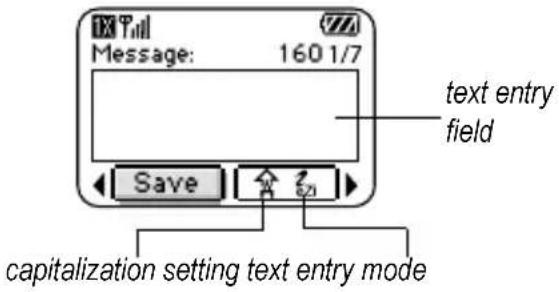
Understanding text entry screens
The current text entry mode (and capitalization setting, when applicable) are indicated by icons.
Text entry modes
There are four text entry modes:
1_23 Number mode
a_bc Normal text mode
eZi Rapid text entry mode
&?! Symbol mode
Note: The mode you start in depends on the task you are doing. For example, when entering a phone number, you're in number mode. When entering a name for a contact, you're in normal text mode.
Entering numbers
- To enter a number while in 12 de, press a number key once.
- To enter a number while in abc mode; press and hold a number key until the number appears on the screen.
a_bc Entering words letter by letter
Use normal text mode to enter letters.
- Press a key once for the first letter, twice for the second letter, and so on. If your phone is set to Spanish, accented letters are available.
- Wait for the cursor to move right and enter the next letter.
eZi Entering words quickly
When you press a series of keys using e-mode, e Zi checks its dictionary of common words and guesses at the word you are trying to spell.
-
For each letter of the word you want, press the key once. For example, to enter the word "any" press: 2abc → mnc8 → wx9.
-
If the word does not match what you want, press to look at other word matches.
-
When you see the word you want, press
&?! Entering symbols
While entering text, you can enter symbols by pressing 📂 until you see the symbol you want. Using this method, you have access to the following symbols:
. @ ? ! - , & : '
To access the full set of symbols:
- Press right to highlight the current mode and press to enter the menu.
- Select Symbols.
- Press down to view the list of symbols.
- Press the number key corresponding to the symbol you want.
Changing modes
Sometimes you need to change modes. For example, to enter numbers in an email address while in a node, you must change to
^123 mode, enter the numbers, and then change back to a mode to complete the address.
To change text entry modes, you can either:
- Press and hold *until the icon for the mode you want appears.
-0r-
- Press right to highlight the current text mode, press to enter the menu, then select a different mode.
Capitalization settings
Three capitalization settings are available in a_bc and e_m modes:
A Capitalize next letter
a Lowercase next letter
A Capitalize first letter of every word (in a contact) or sentence (in a text message)
If no icon appears, all letters are in lower case.
To change capitalization settings:
- Press until the icon for the setting you want appears.
Quick reference to text entry
This table gives general instructions for entering letters, numbers, and symbols.
| To... Do this... | |
| Enter a letter | Use a#ode and press a key until you see the letter you want. For more information, see page 13. |
| Enter a number | Use 12mode and press a key once to enter its number. For more options, see page 13. |
| Enter a symbol | Use a#ode and press until you find the symbol you want. See page 14. |
| Enter a space | Press # |
| Erase a character | Press OK |
| Erase all characters | Press and hold OK |
| Move the cursor right or left | Press up or down. |
| Change text entry modes | Press and hold * |
| Capitalize the next letter | In a#ode, press . Choose . A |
| Lowercase the next letter | In a#ode, press . Choose . a |
| Capitalize the first letter of each word | In a#ode, press . Choose . ^ |
| Highlight an option at the bottom of the screen | Press left or right. |
4 S TORING CONTACTS
Use your phone's Contacts directory to store information about a person or company.
Your phone can hold, on average, about 200 phone numbers.
Saving a contact entry
To save a contact, take these steps:
- From the home screen, enter the phone number you want to save.
Tip: Enter the area code with the phone number so that you can dial it from any service area.
Note: To save a contact without entering a phone number, select Menu → Contacts →
Add New, select an option, and skip to step 3.
-
Press OK to select Save New.
-
Enter a name for the contact. If you need to learn how to enter letters, see page 13.
-
Either save the contact now or assign options.
To save now, press OK to select Save. -or-
To assign options, press right twice, then press to select Options. Press up or down to highlight an option:
- Save—Save the information and return to the home screen.
- Assign Ringer or Unassign Ringer—Select or remove a ringer to identify an incoming call from this contact.
- Assign Picture or Unassign Picture—Select or remove a picture to identify an incoming call from this contact.
- Number Type—Select work, home, mobile, pager, or fax. The number type appears as an icon next to the number in the Contacts list.
- Add Voice Dial—Speak the name of the contact person for this number so that you can dial it using voice recognition (VR). For more information, see page 35.
- Speed Dialing—Select a speed dialing location from the list.
- Secret—Select Yes to lock the phone number. If a phone number is locked, you must enter your four-digit lock code (see page 31) to view or edit the number.
- Primary Number—Classify this number as the primary number for the contact.
- Classify Contact—Classify the contact as Personal or Business. (See page 28 to set the phone to ring differently for personal and business calls.)
- Press OK to select Save. A check mark and the word "Saved" appear.
Adding a code or extension
When you save the phone number of an automated service, you may include a pause where your phone would stop dialing; for example, where you would wait to dial an extension.
- Enter the first portion of the phone number.
- Press right to scroll through the options at the bottom of the screen.
- Press to select a type of pause.
- A Time Pause—Stops dialing for two seconds, then continues to dial.
- A Hard Pause—Stops dialing until you select Release.
- Enter the remaining numbers.
- Select Save New.
Editing or erasing a contact
To make changes to a contact, take these steps: (To erase all saved contacts, see page 32.)
- Select Menu → Contacts.
- Select View All or Find Name to find the contact you want to edit.
- Highlight the contact to edit and press .OK
- Select Options.
-
Highlight an option and press to select it:
-
Add New to add a number, address, or note.
-
Assign Ringer or Unassign Ringer to select or remove a ringer to identify an incoming call from this contact.
-
Assign Picture or Unassign Picture to select or remove a picture to identify an incoming call from this contact.
– Erase Contact to erase the entire contact. - Edit Name of the contact.
– Classify Contact as personal or business. -
Exit without making changes.
-
Enter the new information.
- Press OK to select Save, if necessary.
Editing a phone number
- Select Menu → Contacts.
- Select View All or Find Name to find the contact you want to edit.
- Highlight the contact to edit and press
- Press down to highlight the phone number you want to edit and press OK
-
Highlight an option for the phone number and press 📄K
-
Send Text Msg—Send a text message to the phone number you selected.
- View Number—See the phone number you selected.
- Add Voice Dial—Speak the name of the contact person for this number so that you can dial it using voice recognition (VR). For more information, see page 35.
-
Speed Dialing—Assign or remove the location you use to speed dial the number.
-
Edit Type—Assign a type: work, home, mobile, pager, or fax. The type icon appears next to the phone number in the Contacts list.
- Erase Number—Erase the number from the contact.
- Erase Voice Dial—Erase the voice dial name associated with the number.
- Edit Number—Change the phone number.
- Edit Voice Dial—Record a new voice dial name.
- Secret—Make the number secret so it does not appear on the screen until the lock code is entered. Secret numbers can be called without a lock code. (For more information, see “Restricting calls” on page 32.)
- Primary Number—Make this number the first one that shows up when you open the contact.
- Prepend—Move the cursor to the beginning of the number so you can add the area code.
-
Exit—Exit without making changes.
-
Enter the new information and follow the prompts.
-
Press OK to select Save, if necessary.
Finding contact information
To find a phone number or contact, either (1) search the Contacts directory, or (2) use Fast Find.
Searching the Contacts directory
- Select Menu → Contacts.
-
Select a search method:
-
View All—List all saved contacts.
- Find Name—Locate a specific name. Enter part of the contact name, then selecFind.
-
Speed Dial List, Voice Dial List, Business List, or Personal List—Select a contact from a list.
-
Scroll down until you find the name you want, then press OK
-
To call the contact, highlight the number and press 📁
- To display contact information, press OK
Setting Fast Find
With Fast Find, you press one or two keys to view close matches of the number you're looking for.
- From the home screen, select Menu → Settings → Convenience → Fast Find → Enabled.
Using Fast Find
-
From the home screen, press the keys corresponding to the letters of the name you want to find. A matching contact or speed dial entry appears. Press down to scroll through matching entries.
-
View the name you want, then press to call the number or press to view contact details.
Viewing contacts
The following icons may appear next to information in your Contact entries.

work

email address

home street addr


mobile Web page


pager note


fax
5 SENDING AND RECEIVING TEXT MESSAGES
This chapter describes how to send, receive, and erase text messages from your phone. For information on voicemail messages, see page 9.
Important: The features and menus described in this chapter may vary depending on services available in your area. In addition, usage charges may apply to each message. Check with Verizon Wireless.
Sending text messages
You can only send text messages to phones capable of receiving them, or to email addresses.
Writing a message
To send a text message to a single recipient:
- Select Menu → Messages → Send New.
- Choose a method to enter the recipient's phone number or email address:
- Select a saved number from the Recent List or Contacts List, or select a Group List you have created. For more about group lists, see page 25.
- Enter a New Address manually. (To learn how to enter text, see page 13.)
-
To add another recipient to this message, choose a method:
-
Press right twice to select Options. Then select Recent List, Contacts, or Group Lists.
- Enter a space or comma after the first number. Then enter another recipient manually.
Note: You can send a message to up to 10 contacts at once. The messages is sent one at a time, once to each addressee.
- When you are done entering addresses, highlightNext and press OK
- Enter the message. To learn how to enter text, see page 13. To add special features such as smiley faces, see “Including pictures, sounds, and prewritten text” on page 21.
Note: You may be charged for more than one message if your message exceeds a certain number of characters. For more information, see “Understanding appended messages” on page 22.
- When you have completed the message, press to select Send.
Including pictures, sounds, and prewritten text
You may include smiley faces, sounds, and prewritten messages in your text messages.
-
Create a text message and enter the addresses. (See page 20.)
-
Select Next to advance to the message text entry screen.
-
From the text entry screen, press right twice, select Options → Insert and select from the options:
- My Sounds—Add a sound or melody. Highlight one from the list and press to select Insert.
- My Pictures—Add a graphic you have received in a text message, created using Doodler, or downloaded to your phone. Press right or left to scroll through graphics and press to select Insert.
- Emoticons or Smileys—Select a smiley face icon. If the recipient's phone does not support the same technology as your phone, the icons appear to them in a simplified form. Tip: Press and hold to cycle through smileys while in the text entry screen. Highlight one and press to select Insert.
- AutoText or QuickText—Select a prewritten message. Highlight one from the list and press to select Insert. (To edit or create new prewritten messages, see page 26.)
- Contacts—Add information about a saved contact. Highlight the contact from the list and press to insert it.
- When you have completed the message, you can send it immediately or set sending options.
- To send it immediately, press select Send. - To set sending options, see the following procedure.
Setting sending options
When you are ready to send a message, you have several options for how and when you want the message to be received.
- Once you have completed the message, press
right to highlight Options and press OK Then choose from the list:
- Insert—Enhance your message with sounds, graphics, smiley faces, prewritten text, or contact information (if available from Verizon Wireless).
- Add Address—Return to the “To” screen to add another recipient without losing the message text. Enter the new address, then select Next to return to the message entry screen.
- Msg Receipt—Request to be notified once the message is received by your recipient.
-
Set Priority—Label the message as “Urgent.”
-
Callback Number—Include a callback number with the message to let the recipient know at what number they can call you back. Select Yes to include your own number, or Edit to enter a different number.
- Send Later—Schedule when to send the message.
- Save Message—Save the message in your Saved folder. This prevents the message from being deleted if you have activated AutoErase, and enables you to send the message to others.
-
Save QuickAuto or Save Quicktext—Save the message you have just entered as a prewritten message, then return to the message entry screen so you can send the message.
-
When you have finished setting options, press 📋 to return to the message window.
-
Highlight Send and press

Adding a signature
This setting allows you to create signature text. The signature does not appear in the message creation screen; however, the signature is included at the end of all outgoing messages.
To create a signature:
- Select Menu → Settings → Msg Settings → Signature.
-
Enter your signature in the text field.
-
Press to save the setting.
Note: The signature text is tallied by the character counter because the signature is included in the text field.
If you cannot send messages
You may not be able to send or receive messages if your phone's memory is nearly full, or if digital service is not available at the time. To free up memory, erase old messages. See “Erasing messages” on page 24.
Understanding appended messages
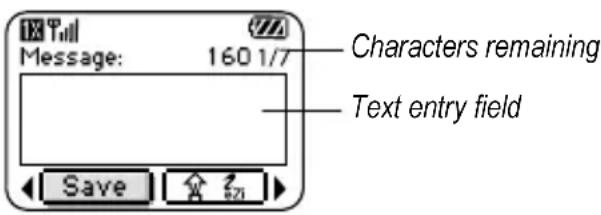
If you go over the character limit for a single message, the phone may automatically append an empty segment to your message to make space.
Important: Verizon Wireless charges you for each message segment.
When you start a message, the maximum character limit (“160” in the example) appears above the text entry screen. This number counts down as you enter characters, until it reaches 0. If you continue to enter text after this counter reaches 0, a message segment may be appended. If a segment is appended, a message appears on the phone screen.
Receiving incoming calls while creating messages
- If you don't wish to answer the call, select Ignore.
- To answer the call, press The message you were working on is saved in the Saved folder. To return to the message, select Menu → Messages → Saved Msgs and select it.
Viewing the OutBox
Your sent messages are automatically saved to the OutBox.
To view the OutBox:
-
Select Menu → Messages → OutBox.
-
Press up or down through the list of messages. One of the following symbols appears next to each message:

The message is pending and will be sent when possible. You can cancel delivery of the message.

The scheduled message will be sent at the scheduled time. You cannot cancel delivery of the message.

The message cannot be sent because service is not available. An alert appears on your phone if the message cannot be sent.

The scheduled message was sent and will be delivered as scheduled. You cannot cancel delivery of the message.
| √ | The message was received by the recipient you specified. |
| √ | The message was received and opened by the recipient you specified. (This symbol may not be available. Check with Verizon Wireless.) |
| The message was sent to more than one recipient. | |
| The message was never sent, or was not sent since last modified. You can cancel delivery of the message. |
Retrieving text messages
When a text message is received, your screen displays text similar to: "New message 1 Text Msg". This text remains for approximately five minutes. After that, look for the ☒ symbol at the top of your screen. The symbol flashes if the message is urgent.
If you see the "New Message" note
You can choose to:
- View the message—Press OK twice and scroll down.
- Ignore the message—Press right and press OK
- Clear the screen—Press
Note: If you receive a new message while you are reading a message, the one you are reading is replaced by the new one. You can find the older message in the InBox: SelectMenu → Messages → InBox.
If you see the symbol
If the ▶ symbol is blinking, the message is urgent.
-
Select Menu → Messages → InBox. A list of all your received messages appears. New, unread messages appear in bold.
-
Press up or down to scroll through the list of messages.
-
Press to read a message.
Reading the message
Note: Sounds embedded in text messages do not play if the phone is set to Silent Mode.
- If the text message is long, press down to view the entire message.
Note: Message length is limited by Verizon Wireless. An incoming message that exceeds the limit may be truncated.
-
When you are finished, you can Reply to the sender, Play the sound embedded in the message, Erase the message, Save the message to your Saved folder, or set additional Options for the message:
-
V i Sender information.
- Forward the message.
- Reply with Copy to reply to the message with a copy of the original attached.
-
Save Object(s), such as sound or pictures, from the message. (This option is available if the incoming message includes a graphic or sound.)
-
Save Contact to save the sender's phone number or email address in your Contacts list. (This option is available if a vCard is included in the message.)
- Save as AutoText or Save as QuickText to save the text from the message as prewritten text, which you can insert into other messages. Graphics and sound are not saved as part of AutoText or QuickText.
3. Select Done.
Note: The ☒ symbol indicates:
- A graphic did not come through. It may be too large or incorrectly formatted.
- An appended message is missing. (For more about appended messages, see page 22.)
Setting message alerts
You can set your phone to alert you of incoming text messages or pages. For more information, see "Setting message alerts" on page 32.
Erasing messages
It's a good idea to erase old messages, as messages take up memory in your phone.
You have the option of erasing text messages and pages as you send or read them, erasing them one at a time from the list in the OutBox or InBox, or erasing them all at once.
Erasing single messages
- Select Menu → Messages.
- Press down and press to select the type of text message you want to erase: InBox, OutBox, or Saved Msgs.
- Press to select the message to erase.
- Select Erase to erase the message. A notification appears: "Erase this message?"
- Select Yes to erase the message.
Note: You can erase a scheduled message from the OutBox, but you cannot cancel delivery of the message.
Erasing all messages
- Select Menu → Messages → Erase Msgs.
-
Press up or down and press to select an option:
-
InBox erases all messages in your InBox.
- OutBox erases all messages in your OutBox.
- Saved Folder erases all messages in your Saved folder.
-
All Messages erases all text messages in all folders listed above.
-
A notification appears: "Erase all messages?" Select Yes to erase messages or No to cancel.
Erasing messages automatically
Use this setting to automatically erase old messages from the InBox when memory is low.
-
Select Menu → Messages → Msg Settings → Auto-Erase.
-
Press to select Old InBox Msgs.
Customizing message settings
To make messaging easier, you can customize settings for sending and receiving messages.
Creating group lists
You can create and save a list of multiple recipients. Your Kyocera K404 phone stores five group lists with up to 10 recipients per list.
- Select Menu → Messages → Group Lists → Create New.
- Enter a name for the list. For help entering text, see page 13.
- Press to select Next.
-
To enter the first phone number or email address, select an option:
-
Recent List—Select numbers from your Recent List.
- New Address—Enter the phone number or email address yourself. To learn how to enter text, see page 13.
-
Contacts List—Select contacts from your phone book.
-
To enter the next address, enter a space or comma after the first number or email address. (If you insert a saved contact or a number from the Recent List, the phone inserts the comma automatically.) Then press right twice, select Options, and choose from the options.
-
When finished, press to select Done.
right and press

- To send a message to your new group, see “Sending text messages” on page 20.
Creating and editing prewritten messages (AutoText or QuickText)
Your phone comes with prewritten messages (called AutoText or QuickText), such as “Please call me,” which you can insert into the body of a text message. You can edit these messages and create new ones. Your phone stores up to 20 prewritten messages, with up to 100 characters per message.
-
Select Menu → Messages → Msg Settings → Edit AutoText or Edit QuickText.
-
To create a new pre-written message, highlight New AutoText or New QuickText and press OK
-0r-
To edit an existing pre-written message, highlight the message and press OK
- Enter or edit the text and press to select Done. For help entering text, see page 13.
Note: You can also save a message you are writing or an incoming message as AutoText or QuickText. For directions, see “Setting sending options” on page 21 or “Reading the message” on page 24.
Switching default text entry mode
You can set the default text entry mode to appear in message text entry screens.
- Select Menu → Messages → Msg Settings → Default Text.
- Select Normal Alpha or Rapid Mode.
For more information on text entry modes, see page 13.
The contents of the Settings menu are as follows.
Silent Mode
| Vibrate Only |
| Vibrate, Ring |
| Lights Only |
| Norm. Sounds |
Keyguard
Sounds
| Ringer Volume |
| Ringer Type |
| Business Ring |
| Personal Ring |
| Roam Ringer |
| Earpiece Volume |
| Key Volume |
| Key Length |
| Missed Call |
| Smart Sound |
| Minute Alert |
Display
| Backlighting |
| My Banner |
| Flashing Lights |
| Main Menu View |
| Screen Saver |
| Wallpaper |
| Color Themes |
| Auto-Hyphen |
| Language |
| Time Format |
| Contrast |
Voice Services
| Add Voice Dial |
| Erase Voice Dia |
| Voice Training |
| Voice Wake-Up |
| Voice Answer |
| Security |
| Lock Phone |
| Limit Calls |
| Lock Code |
| Erase Contacts |
| Emergency #'s |
Call Information
| Home Calls |
| Roam Calls |
| Recent Calls |
| All Calls Timer |
| Kbyte Counter |
Network
| Data/Fax Calls |
| Privacy Alert |
| Set Phone Line |
| Roam/Svc Alert |
| Roam Option |
| Digital/Analog |
| Location |
Convenience
| Airplane Mode* |
| Shortcut Key |
| Fast Find |
| 1-Touch Dialing |
| Call Guard |
Msg Settings
| Voicemail Num. |
| Alerts |
| Signature |
| Edit Autotext/Quicktext |
| Callback Number |
| Msg Receipt |
| Save to Outbox |
| Auto-Erase |
| Default Text |
| Accessories |
| Pwr Backlight |
| Headset Ring |
| Auto-Answer |
| TTY Device |
| Com Speed |
*May not be available on all phones
Silencing all sounds
Your phone is set to make sounds when you receive calls, press keys, navigate through menus, and receive alerts (such as new messages). You can silence all sounds and set the phone to vibrate or light up when you receive calls and alerts.
Setting the phone to vibrate or light up
-
Select Menu → Settings → Silent Mode.
-
Choose an option and press

- Vibrate Only causes the phone to vibrate for the duration of the incoming call or other alert. Appears.
- Vibrate, Ring causes the phone to vibrate for the first 10 seconds and then ring for the remainder of the incoming call or other alert. 📄 appears.
- Lights Only causes the phone to light up for the duration of the incoming call or other alert. Appears.
-
Norm. Sounds causes the phone to ring for the incoming call or alert (in effect, returns phone to a non-silent mode).
-
Press to return to the home screen.
Note: The phone rings when attached to an external power source (such as a charger), even if all sounds are silenced.
Shortcut to Vibrate Only mode
- From the home screen, press right and hold. 📄 appears.
Turning sounds back on
To restore all sounds to the phone:
- From the home screen, press right and hold. The for disappears.
Choosing a different ringer
Your Kyocera K404 phone has various ringers you can choose to use for incoming calls.
- Select Menu → Settings → Sounds → Ringer Type.
- Scroll down the list to hear the different ringers.
- Press to select a ringer from the list.
Specifying ringers for different callers
You can assign ringers that identify calls from different phone numbers saved in your Contacts directory.
- To assign a ringer to an individual contact, see page 16.
• To assign a ringer to a class of contacts:
a. Select Menu → Settings → Sounds.
b. Highlight Business Ring or Personal Ring and press OK
c. Select a ringer and press OK
Note: To classify a contact as Business or Personal, see page 16.
Importing additional ringers
You can import additional ringers into your Kyocera K404 phone using the Kyocera Phone Desktop software (sold separately). To purchase this software and other accessories, visit
www.kyocera-wireless.com/store.
You may be able to download ringers over-the-air. Check with Verizon Wireless for availability.
Adjusting volume
You can adjust the volume of the earpiece, the ringer, or the tones you hear when the keys are pressed.
Adjusting the earpiece volume
To adjust the earpiece volume manually during a call, press up or down to find a comfortable level.
Adjusting the ringer volume
This setting adjusts the volume for incoming calls as well as the Countdown Timer, Scheduler Alert, and Alarm Clock.
- Select Menu → Settings → Sounds → Ringer Volume.
- Press right to increase the volume, or left to decrease the volume.
Changing the key tones
You can change the volume and duration of the tones the phone makes when you press the keys. Select Menu → Settings → Sounds and choose Key Volume or Key Length.
Using shortcuts
From the home screen, you can access shortcuts by pressing in different directions.
Three shortcuts are automatically programmed into your phone (left locks the keypad, right silences all sounds, and down accesses your contacts). For the fourth direction (up), you can set a shortcut to one of the features of your phone.
Defining the "up" feature shortcut
- Select Menu → Settings → Convenience → Shortcut Key.
- Highlight the feature you want a shortcut to, and press Ⓞ to select it.
Using the up feature shortcut
• From the home screen, press and hold

Choosing a different language
Your phone may display alternative languages.
- Select Menu → Settings → Display → Language.
- Select a language, and press .OK
Personalizing the screen
Changing your banner
The banner is the personal label for your phone. It appears on the home screen above the time and date. The banner can be up to 14 characters long.
- Select Menu → Settings → Display → My Banner.
- Select Edit.
- Press to clear the screen.
- Enter your new text.
- Press to save.
Choosing a different menu view
You can change the appearance of the menus you see when you select Menu from the home screen.
-
Select Menu → Settings → Display → Main Menu View, then the option you want:
-
Press to return to the home screen.
Graphic List
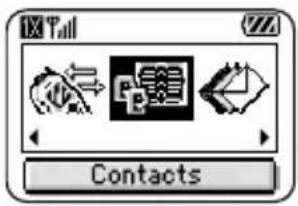
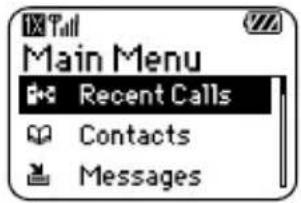
The next time you press OK, you see the menu view you selected.
Adjusting the backlighting
Your screen lights up during a call or when you press a key on the keypad. However, you can change when and how backlighting lights up.
- Select Menu → Settings → Display → Backlighting.
-
Select an option from the list:
-
5 seconds, 10 seconds, 30 seconds, or 1 minute—(Default) Turn backlighting on for 5, 10, or 30 seconds, or 1 minute, after your last keypress.
- 5 sec./in call, 10 sec./in call, 30 sec./in call, or 1 min/in call—Turn backlighting on for the duration of a call, and for 5, 10, or 30 seconds, or 1 minute, after your last keypress. (Note: These four settings drain the battery more quickly and reduce talk and standby times.)
Setting power backlighting
You can set backlighting to remain on when an external power source, such as the AC adapter, is used with the phone.
Note: Power backlighting may not be available with some accessories. Check with Verizon Wireless.
- Select Menu → Settings → Accessories → Pwr Backlight.
- Select Always On to keep backlighting on. (The battery charges more slowly when power backlighting is on.)
Setting backlighting to flash
You can set the backlighting on your phone to flash in a certain style when an incoming call is received. When this setting is activated, the lights flash even if you silence the ringer.
-
Select Menu → Settings → Display → Flashing Lights.
-
Select from Fast Flash, Slow Flash, or Heartbeat, or Rhythm. As you highlight the options, a sample of each flash is provided.
-
Press to select your option.
Caution:=A small percentage of users may be photo sensitive to flashing lights. In rare cases, exposure to flashing lights, under certain circumstances, may produce seizures. While such an event is not known to occur with mobile phone use, and the Kyocera K404 phone is designed to minimize the possibility of any such occurrence, those who believe they may be photo sensitive should not enable the Flashing Lights feature.
Changing the display contrast
- Select Menu → Settings → Display → Contrast.
- Press left or right to select the level of contrast you want.
Setting numbers to auto-hyphenate
Auto-hyphenation is a setting that automatically inserts hyphens into your phone numbers to be consistent with the U.S. dialing plan.
For example, 1-222-333-4444.
- S e Menu → Settings → Display → Auto-Hyphen → Enabled.
Selecting a screen saver
Screen savers work only from the home screen, and are activated 10 seconds after the last keypress. Incoming calls and alerts override screen savers.
- Select Menu → Settings → Display → Screen Saver.
- Highlight a screen saver and press . OK
- Press to return to the home screen and wait 10 seconds to view the screen saver you chose.
Selecting wallpaper
Wallpaper appears on the home screen when the phone is not in use.
- Select Menu → Settings → Display → Wallpaper.
-
Highlight a wallpaper design and press . OK
-
Press to return to the home screen and view the wallpaper you chose.
Selecting a color theme
You can select a color theme to display on your phone.
- Select Menu → Settings → Display → Color Themes.
- Highlight a color theme from the list and press OK
- Press to return to the home screen.
Choosing a different time/date format
- Select Menu → Settings → Display → Time Format.
- Highlight the option you want and press

Creating a secure environment
This section describes all the features involved in securing your phone and preventing access to personal information. All security features are shielded by a four-digit lock code.
Changing your lock code
The lock code is typically preset to 0000 or the last 4 digits of your phone number. To change your lock code, take these steps:
- Select Menu → Settings → Security.
- Enter your four-digit lock code and select Lock Code. A message appears: "Change Code?"
- Select Yes and enter a new four-digit code. Enter your new lock code again.
Locking your phone
When your phone is locked, you can call only emergency numbers or Verizon Wireless. You can still receive incoming calls.
- Select Menu → Settings → Security.
- Enter your four-digit lock code.
- Select Lock Phone.
-
Highlight an option:
-
Never—Does not lock the phone.
- On power up—Locks the phone every time you turn it on.
-
Now—Locks the phone immediately.
-
Press

Unlocking the phone
- From the home screen, press select Unlock.

- Enter your four-digit lock code.
Designating emergency numbers
The emergency numbers feature allows you to specify three personal phone numbers that can be called when the phone is locked.
- Select Menu → Settings → Security.
- Enter your four-digit lock code.
- Select Emergency #'s.
- Select an Unassigned slot.
Note: Enter the phone number, including the area code. Do not enter 1 before the area code.
- Press to select Done.
Notes:
- You can view these numbers only when being entered for the first time.
- You cannot edit these numbers.
- To make a call to an emergency number from a locked phone, you must dial the number (including area code) exactly as it was stored in Emergency Numbers.
Restricting calls
You can restrict the calls that can be made from your phone to only those that are saved in your Contacts.
- Select Menu → Settings → Security.
- Enter your four-digit lock code.
- Select Limit Calls.
- Select Limit Out.
Erasing all contacts
- Select Menu → Settings → Security.
- Enter your four-digit lock code.
- Select Erase Contacts.
- Select Yes to erase all contacts. A message appears: "Erase ALL contacts?"
- Select Yes to erase all contacts.
Setting message alerts
You can choose how you want to be alerted of incoming voicemail, pages, or text messages.
-
Select Menu → Settings → Msg Settings → Alerts.
-
Select the type of alert: Message Alert, Page Alert, or Voicemail Alert.
-
Press to select an option:
-
Vibrate, Vibe, remind, Beep, Beep, remind, HiYa!, HiYa! remind, Rock!, Rock! remind, Happy, or Happy remind—Set the phone to vibrate, beep, or play a tune when a new message is received.
- Options with remind—Set the phone to notify you once when a new message is received and then notify you again every five minutes. To stop a reminder alert, press OK to select Ignore.
- Disabled—Turn off message alerts.
Setting alerts for your headset
When a headset (sold separately) is attached to the phone, you can set alert sounds to originate from the headset.
- Select Menu → Settings → Accessories → Headset Ring.
- Select Out headset to have alerts originate from the headset.
Network settings
Switching between phone lines
Your phone can have two service accounts, or phone lines, associated with it. Each phone line has its own phone number. When you are using one line, you cannot receive calls from the other.
It would be as if the phone were “off” for that number. Your voicemail, however, still takes messages. All contacts and settings are shared for both lines.
Note: Before you can switch between phone lines, you must first establish a second phone line with Verizon Wireless. Once established, a second phone number becomes available in the menu for selection.
-
Select Menu → Settings → Network → Set Phone Line.
-
Select the other line and press

Data settings
Setting Com port speed
The Com Speed sets the data rate at which your phone connects to a laptop or PC, or at which it sends and receives over-the-air text messages.
- Select Menu → Settings → Accessories → Com Speed.
- Select the speed. The options are: 19.2 kbps, 115.2 kbps (default), 230.4 kbps.
Note: There may be a higher charge for making calls using high-speed data in areas where 1X service is available. Check with Verizon Wireless.
Setting the phone to receive data or faxes
Your phone may be able to receive certain data or faxes, depending on the system sending the information. To receive data or faxes, you must connect the phone to a laptop or PC and switch the phone from voice mode to data/fax mode.
Note: To purchase a cable, contact Verizon Wireless.
- Connect the phone to the laptop or PC. (See "Setting Com port speed.")
- Set the Com Speed.
- Select Menu → Settings → Network → Data/Fax Calls.
- Press to select an option:
— Voice only—Allow only voice calls.
- Fax next call or Data next call—Set the phone to fax mode or data mode for the next incoming call or the next 10 minutes.
— Fax until off or Data until off—Force the phone into fax mode or data mode until the phone is turned off.
Note: You cannot receive voice calls while the phone is in data/fax mode.
Connecting to a TTY/TDD device
You can connect the phone to a TTY device for the hearing impaired. Note: Enable TTY only when using the phone with a TTY device.
-
Connect the TTY device to the phone.
-
E


your keypad.
- Press

to select the TTY option.
Setting position location
This setting allows you to share your location information with network services other than emergency services (911, 999, 111, 000, etc.), in markets where service is implemented.
-
Select Menu → Settings → Network → Location.
-
If you see a message prompt, press to continue.

-
Select 911 Only or Location On.
-
911 Only (default) shares your position information only with emergency services when you call your 3-digit emergency code (911, 999, 111, 000, etc.).
- Location On shares your position information with the Verizon Wireless network, in addition to emergency services.
For information on emergency calls, see "Calling emergency services" on page 7.
7 USING VOICE RECOGNITION
Voice recognition allows you to make and answer calls by speaking commands into the phone's microphone.
Note: You cannot use voice recognition to end a call; you must press 📄
Setting up voice dialing
To make or receive calls using voice recognition (voice dialing), contacts must be saved and have associated voice commands, or voice tags.
Creating a voice tag for a contact
- Select Menu → Contacts → Add Voice Dial.
- Follow the voice prompts to record a name for the contact.
-
Highlight an option:
-
Add new—Save a new contact to go with the voice tag.
- Add to existing—Add the voice tag to a saved contact.
Viewing entries with voice tags
- Select Menu → Contacts → Voice Dial List. A list of all contacts with assigned voice tags appears.
Editing a voice tag
- Select Menu → Contacts → Voice Dial List.
- Highlight the contact you want to edit, and press OK to select it.
- Highlight the phone number and press OK
- Select Add Voice Dial, Edit Voice Dial, or Erase Voice Dial.
- Follow the prompts.
Calling/using voice tags
- If you haven't already done so, record a voice tag for the person you wish to call.
- From the home screen, press .The phone responds: "Say a name."
- Say the name of the person you want to call.
- If the name you said matches a contact in the Voice Dial List, the phone responds: "Calling (Name)." Remain silent to make the call, or say "No" to cancel.
Note: If the phone finds multiple voice tags that sound like the name you said, you are asked to verify which name you want to call. Say "Yes" when you hear the correct name. Say No" when you hear an incorrect name.
- When finished, press .You cannot end the call with a voice command.
Using voice features with hands-free car kits
You can use voice commands to make a phone call or to answer the phone only if your phone is connected to a professionally installed hands-free car kit (sold separately). To shop for accessories, contact Verizon Wireless.
Note: The following features apply only to professionally installed hands-free car kits unless noted.
Waking up the phone
If your phone is connected to a professionally installed hands-free car kit, you can use a voice command to activate the phone to make a phone call.
Note: Voice Wake-up does not work with Keyguard active.
To activate the Voice Wake-up setting:
-
Select Menu → Settings → Voice Services → Voice Wake-Up → With ext. pwr.
-
Select Menu → Settings → Keyguard → Disabled, then press OK
To wake up the phone:
-
Say "Wake Up" and listen for a tone.
-
Say “Wake Up” again until you hear two tones. If the phone does not recognize your “Wake up” command, see “Training voice recognition” on page 37.
Answering the phone
You can set the hands-free car kit to either (1) answer automatically or (2) ring until you press a key or answer using a voice command.
Answering automatically
To set your phone to answer automatically:
Note: This setting also works with the portable hands-free car kit.
- S e Menu Settings Accessories Auto-Answer After 5 secs.
Answering using voice commands
If Auto-Answer is turned off, you can use a voice command to answer an incoming call using the hands-free car kit.
To turn off Auto-Answer:
- S e Menu Settings Accessories Auto-Answer Disabled.
To activate the Voice Answer setting:
-
Select Menu → Settings → Voice Services → Voice Answer.
-
Highlight Enabled, then press OK.
-
Select Menu → Settings → Silent Mode → Norm. Sounds.
To answer a call:
When you receive an incoming call, the phone responds: “Incoming call, answer?” or “Incoming roam call, answer?” If the caller is recognized as a saved contact entry, then the phone says “Incoming call from (Name), answer?”
- S a y “Yes” or press any key except .
Ignoring an incoming call
To ignore an incoming call, do one of the following:
- S a y “ No” and press to silence the alert.
- Remain silent. The voice alert repeats twice and the phone rings once, then returns to the home screen.
Training voice recognition
If your phone is having trouble recognizing your voice, you can train it with the commands “Yes,” “No,” and “Wake up.”
- Select Menu → Settings → Voice Services.
- Select Voice Training.
- Read the message and press OK
- Select Train All.
- Follow the prompts for each word until training is complete.
Note: The “Wake up” command can only be used with a car kit or headset (both sold separately). See page 36.
1:2 Scheduler
The Scheduler allows you to schedule events and set reminder alerts.
Note: You cannot access Scheduler if your phone does not have a signal.
Adding an event
- Select Menu → Tools → Scheduler.
- For a day in this month, select View Day. Press left or right to scroll through days.
- For a day in a different month, select View Month. Press up or down to scroll through months, and right or left to scroll through days.
-
Press to add an event to a selected date.
-
Enter a name for the event and press .OK For help entering text, see page 13.
-
Set the event Start time, Duration, and Alarm and press OK
- Press up or down to select hour, minutes, and timing of the alarm. - Press def or right to move between fields.
- Add a note to the event and press , or press twice to finish.
Viewing, editing, or erasing an event
- Select Menu → Tools → Scheduler.
- Select View Day or View Month to find the event you want to view, edit, or erase.
- Press up, down, left, or right to highlight an event and press to select it.
- Press right and press OK to select Edit, Erase, or New. Follow the prompts.
- Press to return to the home screen or to return to scheduler options.
Alarm Clock
Use the Alarm Clock to set an alert for a specific time. The alert occurs only if the phone is on.
-
Select Menu → Tools → Alarm Clock → Set.
-
Press up or down to select an hour and minutes.
- Press left or right to switch between hours, minutes, and a.m./p.m.
-
Use the phone keypad to enter numbers.
-
Press OK to select Done and save the setting.
- When the alarm rings, select Off to turn off the alarm or Snooze to silence the alarm for 10 minutes.

Tip Calculator
The Tip Calculator helps you calculate how much tip to include on a bill.
- Select Menu → Tools → Tip Calculator.
- Enter the amount of your bill and press .OK
- Select the amount you want to include as a tip (10%, 15%, 18%, 20%, Other) and press Your total bill appears, including tip.
- If you want to split the bill, press right and press to select Split.
- Press to clear the default of 2 guests.
- Enter the number of guests and press .OK The amount each guest pays is calculated.

Calculator
Use the calculator for basic mathematical equations.
- Select Menu → Tools → Calculator.
- Use the keypad to enter numbers.
- Press to select mathematical operations.
$$ \begin{array}{l} = \text { equal } + \text { add x multiply } \ \div \quad \text { divide } - \text { subtract }. \quad \text { decimal point } \end{array} $$
C Clear all numbers entered and display a zero.
MR Display the value currently stored in memory.
M+ Add the displayed digit to the value stored in memory.
MC Clear the value currently stored in memory.
± Change the sign of the displayed number.
Clear one function or one digit from the screen. Hold down to clear all of the digits and operations and display a zero.
Exit the calculator and return to the home screen.
World Clock
Important: World Clock may not be available on your phone. Check with Verizon Wireless for availability.
The World Clock lets you check times in cities around the world in relation to local time, when service is available.
- Select Menu → Tools → World Clock. The World Clock menu appears. Your local time and date is on the first line, followed by your selected world city and that city's time and date.
- Select a city by pressing OK to select Cities. The Cities menu appears, showing 85 world cities in alphabetical order.
- Press up or down to scroll through the cities list. You can also use the number keys (2-9) to alphabetically tab through the list.
- Press to select a city, like Athens. The World Clock menu is displayed again, with Athens' time and date.
From the World Clock menu, you can also select Search to search by city or country.
-
Select Search from the World Clock menu.
-
Select your type of search.
-
Press search by City.
-
Press down, then press to search by Country.
-
If you search by City, the Find City screen appears.
a. Use number keys (2-9) to enter the letter(s) by which you want to search. For example, press 2 once to enter the letter A.
b. Select Search.
c. Cities beginning with A are displayed, like Anchorage, Athens, and Atlanta.
d. Use to move through the list, then press to select a city.
- If you search by Country, the Find Country screen appears.
a. Use number keys (2-9) to enter the letter(s) by which you want to search. For example, press 2 once to enter the letter A.
b. Press Search.
c. Countries beginning with A are displayed, like Afghanistan, Algeria, and Australia.
d. Use to move through the list, then press to select a country.
Timer
This timer counts down for a specified amount of time. It beeps when that amount of time has elapsed.
- Select Menu → Tools → Timer.
- Press to Set.
- Press up or down to set the hours, minutes, and seconds. To move the cursor, press left or right.
- Select Start to begin the countdown. Select Stop to pause the countdown.
- When the alarm rings, press to silence it.
Stopwatch
- Select Menu → Tools → Stopwatch.
- Select Start to have the stopwatch begin counting.
- Select Stop to stop counting.
- Select Reset to set the counter back to zero and begin counting again.
Press ☐ when finished.

Flashlight
The flashlight is located on the top-left corner of your phone, near the headset jack.
You can turn on the flashlight in three ways:
- From the home screen, press and hold ☑ The flashlight remains on until you release the key. -or-
- S e Menu c→ fTools → Flashlight → Turn On. The flashlight remains on for 15 minutes.
To turn it off, select Menu → Tools → Flashlight → Turn Off.
-0r-
- If the flashlight is defined as your shortcut, start at the home screen, then press and hold up. The flashlight remains on for 15 minutes.
To turn it off, press and hold up again. To define or change your shortcut, see “Defining the “up” feature shortcut” on page 29.
If you receive an incoming call alert while playing Tetris® or Brick Attack™, the game is paused and exited. You can return to play once the call alert ends. Games do not remain paused if the phone is turned off or loses power.
Note: Games are not available on all phones. Check with Verizon Wireless for availability.

Tetris
The goal of this game is to guide the falling blocks down the screen to create a solid horizontal row at the bottom. The game ends when the new block cannot enter the play field because the area is occupied by another block or obstacle.
- Select Menu → Media Gallery → Tetris.
- Select an option and press to select it.
- New Game initiates game play. To pause the game, press 📋 or . Pressing 📋 returns you to the menu where you can Continue Game to resume or choose from the other available options.
- Resume Saved returns you to the game you were last playing.
- Scoreboards displays the top five scores for the different game variations, including No Time Limit (default), Timed 2 Min, Timed 3 Min, Timed 5 Min., and Garbage.
- Settings to choose various settings for your Tetris game:
• Game Type—Choose type of game.
- Music—Choose when music will play with this game: Music Always, During Title, or No Music. (The No Music setting does not silence the sounds made when you press keys. To silence keys, see “Silencing all sounds” on page 27).
- Next Piece—Choose whether to show the next piece that will fall.
- Sound Effects—Choose to hear sound effects while playing the game.
• Starting Level—Choose a level of play.
Navigation: Use the following keys to guide the blocks down the screen:
To: Use:
| Rotate Counterclockwise | |
| Hard drop | |
| Move Left | |
| Rotate Clockwise | |
| Move Right | |
| Soft drop the tile | |
| Return to Tetris menu | |
| Pause |

Brick Attack
The goal of this game is to eliminate bricks arranged in levels. You send a moving ball upward using a paddle at the bottom of the screen.
-
Select Menu → Media Gallery → Brick Attack.
-
Press=OK=to select Yes at the prompt, "Turn off backlight to conserve battery?"
-
Press to select New.
- To pause the game, press ☐ then press ☑ to Resume.
- To move the paddle, press left or right.
- To exit the game, highlight Exit and press OK.

Doodler
You can create and save graphics on your phone.
-
Select Menu → Media Gallery → Doodler.
-
Wait 5 seconds for the intro screen to disappear, or press 📄 to clear it.
-
Select New Doodle to open the drawing screen:
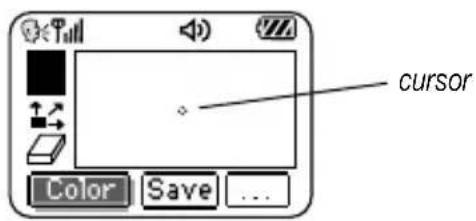
- Use keys 1–9 to move the cursor around the screen as indicated.
Note: Press 📄 bring the cursor back to center.
flowchart
graph TD
    A["1"] --> B["2"]
    B --> C["3"]
    C --> D["4"]
    D --> E["5"]
    E --> F["6"]
    F --> G["7"]
    G --> H["8"]
    H --> I["9"]
    I --> A
    style A fill:#f9f,stroke:#333
    style B fill:#f9f,stroke:#333
    style C fill:#f9f,stroke:#333
    style D fill:#f9f,stroke:#333
    style E fill:#f9f,stroke:#333
    style F fill:#f9f,stroke:#333
    style G fill:#f9f,stroke:#333
    style H fill:#f9f,stroke:#333
    style I fill:#f9f,stroke:#333
For more drawing tips, refer to the following sections.
Select a drawing color
-
Press ☐ left or right to highlight Color at the bottom of the screen. Press OK.
-
Highlight a color from the palette and press 🔒
Move cursor away from drawing
-
Press up or down to select , (Shortcut: Press
-
Press a number key to move the cursor. Note: To start drawing again, select a drawing color.
Clear screen
- Press

Erase part of drawing
-
Press up or down to select .
-
Press a number key to move the eraser.
Add a shape
-
Press ☐ left or right to select Add Shape.
-
Press . OK
-
Select a shape and press .OK
-
To modify the shape, press left or right to highlight an option and press OK. Options are Size, Rotate, and Move. (To move the shape, use keys 1–9.)
- Select Done.
Saving the doodle
It's a good idea to save the doodle while you are working on it. If you receive a call while creating an unsaved doodle, it is lost.
- Highlight Save and press ☐The image is saved in the My Pictures folder. Note: If you make changes to an existing doodle, you must save it with a different name.
Resuming a doodle
- To return to the last saved doodle you were working on, select Menu → Media Gallery → Doodler → Resume Doodle.
- To return to another saved doodle, select Menu → Media Gallery → Doodler → My Pictures.
My Sounds
Your phone contains preset sounds, which you can add to outgoing text messages. Check with Verizon Wireless for availability.
To access stored sounds:
- Select Menu → Media Gallery → My Sounds.
- Press up or down to scroll through the sounds.
-
Highlight an option and press to select it:
-
Play allows you to listen to the sound.
- Send opens a new message entry screen.
- Assign allows you to use the sound as a ringer on your phone.
- Delete erases the sound from your My Sounds list.
My Pictures
The My Pictures menu stores 25 graphics you have created using the Doodler™ or received via text messaging. It also includes predefined graphics for your use. Check with Verizon Wireless for availability.
Note: All downloaded graphics are also stored in the Screen Saver menu.
To view, edit, or erase graphics:
- Select Menu → Media Gallery → My Pictures.
- Press up or down to scroll through the graphics.
-
When you find the graphic you want, press to select it:
-
Send opens a new message entry screen.
-
Assign sets your graphic as a screen saver.
-
Edit takes you to the Doodler, where you can modify the graphic. You cannot edit predefined graphics.
- Delete erases the graphic from memory. The graphic is also erased from the Screen Saver menu. (You cannot delete predefined graphics that came with the phone.)
- Exit returns you to the home screen.
Saving memory
It's a good idea to erase old sounds and pictures, as they take up memory in your phone. To erase a sound or picture, select it and then select Delete.
INDEX
Numerics
1-Touch dialing, 9 911, 111, or 000 calls, 7
A
airplane, 7 Alarm Clock, 3, 38 alerts
for headsets, 33
for messages, 32
for missed calls, 8
analog mode, 3 auto-hyphenation, 31 AutoText, 21, 22, 26
B
backlighting, 30 banner, 29 battery, 1 blocking outgoing calls, 32 Brick Attack, 43
C
Calculator, 39 call counters, 10 callback number, 22 calling emergency numbers, 7 Com Port speed, 33 Contacts directory, 16 contrast, 31 countdown timer, 40
D
data/fax setup, 34 digital mode, 3 display contrast, 31
Doodler, 43
E
emergency calls from an airplane, 7 position location, 3, 34
emoticons, smileys, 21
erasing contact entries, 32 text messages, 24
F
Fast Find, 18 fax mode, 34 finding a saved phone number, 18 flashing lights, 30 Flashlight, 4, 41
G
games Brick Attack, 43 Doodler, 43 Tetris, 42
H
hands-free car kit answering using voice, 36 purchasing, v hands-free headset and phone ringer, 33 button, 11 jack, 4 purchasing, v hard pause, 17
|
icons, 3
InBox, 24
K
keyguard, 3, 10 keypad, locking, 10
L
language, 29 lights, 30 lights-only mode, 3, 27 set to flashing, 30 limiting calls out, 32 lock code, 31 locking keypad, 10 phone, 32
M
Media Gallery, 42 memory, saving, 24 menu view, 29
N
number mode, 13 number type, 16
0
OutBox, 23
P
phone book (Contacts directory), 16 phone numbers editing, 17 finding, 18 saving, 16 verifying your own, 3 phone, unlocking, 32
picture files, 44
portable hands-free car kit, 36
position location, 3, 34
prepend, 8, 18
Q
QuickText, 21, 22, 26
R
redialing a number, 6
resetting the phone, v
ringers
choosing types, 28
for different calls, 28
for roaming calls, 12
silencing, 3
volume, 29
roaming, 3
alerts, 11
controlling, 11
ringer, 12
S
saved phone numbers
editing, 17
finding, 18
Scheduler, 38
screen contrast, 31
screen icons, 3, 8, 13, 23, 27
screen savers, 31
secret contacts, 8, 16
security, 31
shortcuts, 29
silent mode, 3, 27
sound files, 44
speed dialing, 9
Stopwatch, 40
symbol mode, 14
T
Tetris, 42
text entry, 13
quick reference, 15
text messages, 20
erasing, 24
retrieving, 23
sending, 20
time format, 31
Timer, 40
timing calls, 10
Tip Calculator, 39
TTY/TDD, 34
U
unlocking the phone, 32
V
vibrate, 3, 27
Voice Answer, 36
voice dialing, 35
voicemail, 2, 9
volume
earpiece, 6, 28
key beep, 29
ringer, 29
W
World Clock, 39

KYOCERA
Kyocera Wireless Corp.
10300 Campus Point Drive
San Diego, California 92121 USA
www.kyocera-wireless.com
82-M8554-1EN, Rev. 002