LTOG50W12 - Stove Logik - Free user manual and instructions
Find the device manual for free LTOG50W12 Logik in PDF.


| Product Type | Gas Hob (Built-in) |
| Brand | Logik |
| Model | LTOG50W12 |
| Width | 50 cm |
| Depth | 50 cm |
| Height | 4.5 cm |
| Weight | 8 kg |
| Number of Burners | 4 |
| Power Source | Natural Gas or LPG (conversion kit included) |
| Ignition | Automatic electric ignition |
| Safety Features | Flame failure device on each burner |
| Control Knobs | Front-mounted, push-and-turn |
| Material | Stainless steel surface with enamel pan supports |
| Installation | Built-in, cut-out size 465 x 480 mm |
| Cleaning | Wipe with damp cloth, avoid abrasive cleaners |
| Spare Parts Availability | Burner caps, knobs, ignition parts available from manufacturer |
| Energy Efficiency | Class A (EU energy label) |
| Warranty | 2 years (parts and labor) |
Frequently Asked Questions - LTOG50W12 Logik
User questions about LTOG50W12 Logik
0 question about this device. Answer the ones you know or ask your own.
Ask a new question about this device
Download the instructions for your Stove in PDF format for free! Find your manual LTOG50W12 - Logik and take your electronic device back in hand. On this page are published all the documents necessary for the use of your device. LTOG50W12 by Logik.
USER MANUAL LTOG50W12 Logik
Freestanding Double Oven Gas Cooker
LTOG50W12
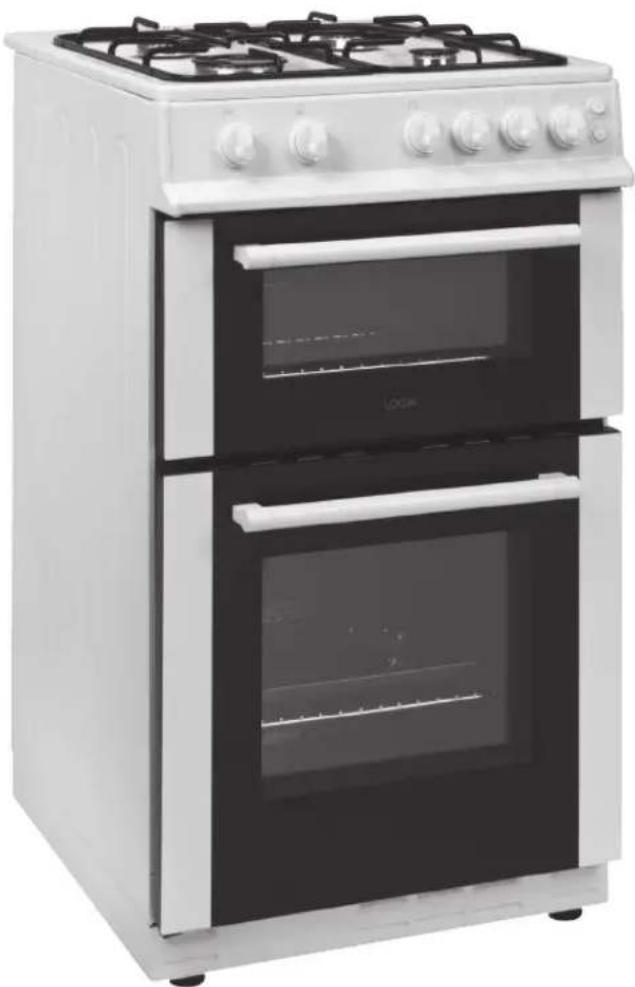
natural_image
Exterior view of a white double boiler with multiple cabinetry (no visible text or symbols)Image for indication only.

Contents
Safety Warnings....4
Unpacking....6
Installation....7
Adjusting the Feet 8
Moving the Cooker 8
Stability Bracket 8
Ventilation Requirements....9
Gas Installation....9
Installation and Service Regulations 9
Gas Connection....10
Installation Relevant to Natural Gas 10
Installation Relevant to Liquid Petroleum Gas (LPG)....10
To Connect the Gas Supply....10
Replacement of Burner Injectors 11
To Replace the Hob Injectors 11
Adjusting the Reduced Flame Position....11
To Replace the Grill Injector....12
To Replace the Oven Injector 12
Injector Size Table.... 13
Electrical Connection 14
Product Overview....15
Front View 15
Top View....15
Control Panel....16
Gas Burners....16
Before Using Your Cooker 16
Using the Hob Burners 17
Flame Failure Safety Feature....17
If the Burner Does Not Light....18
If the Flame Is Irregular....18
General Guidelines....19
Using the Oven 20
First Time Use of the Oven 20
Top Oven Control 20
Main Oven Control....20
Lighting the Oven Burner....20
Shelf Positions....21
Replacing the Anti-tilting Oven Shelf 21
Adjusting the Temperature....22
Preheating....22
Cooking....22
Cooking with the Grill 23
First Time Use....23
Lighting the Grill....23
Cooking....24
Cleaning Instructions....25
Cleaning the Outside of the Cooker 25
Cleaning the Oven Door Glass....25
Cleaning the Inside of Your Oven 26
Cleaning the Gas Hob 26
Hob Burner Parts and Pan Supports....26
Replacing the Hob Burner Parts....27
Hob Controls (Gas Taps) 27
Removing the Top Oven Door....28
Replacing the Oven Lamp 28
Energy Saving Tips and Energy Label 29
- Main Oven 29
- Hob 29
Product Fiche and Specifications 30
IMPORTANT SAFETY INSTRUCTIONS READ CAREFULLY AND KEEP FOR FUTURE REFERENCE
- This appliance must be installed by a qualified Gas Safe registered engineer. The manufacturer is not responsible for any damage caused by incorrect installation.
- Check whether there is any damage to the appliance after you have unpacked it. If any damage is found, do not use the appliance and contact the store where you purchased it.
- This appliance is for indoor domestic use only.
- This appliance is for cooking purposes only. It must not be used for other purposes, for example room heating.
- The cooker is fitted with a moulded mains plug. The mains plug must remain accessible or a switch providing full disconnection incorporated in the fixed wiring.
- If the mains cable gets damaged, it should be replaced by an authorized service agent or qualified electrician in order to avoid a hazard.
- The oven must be used in a well ventilated location and installed on flat/level ground.
- Only operate your appliance in a dry atmosphere.
- Keep the electrical cables of your other appliances away from hot areas; do not let them touch the appliance.
- Ensure that the appliance is switched off at the mains supply switch and allowed to completely cool down before cleaning, replacing the oven lamp or performing any maintenance to avoid the possibility of an electric shock or burns.
- The use of a gas cooking appliance results in the production of heat, moisture and products of combustion in the room in which it is installed. Ensure that the kitchen is well ventilated especially when the appliance is in use. Keep natural ventilation holes open or install a mechanical ventilation device (mechanical extractor hood).
Prolonged intensive use of the appliance may call for additional ventilation, for example opening of a window, or more effective ventilation, for example increasing the level of mechanical ventilation where present.
- This appliance can be used by children aged from 8 years and above and persons with reduced physical, sensory or mental capabilities or lack of experience and knowledge if they have been given supervision or instruction concerning use of the appliance in a safe way and understand the hazards involved.
- Cleaning and user maintenance shall not be made by children without supervision.
- Children should be supervised to ensure that they do not play with the appliance.
- During use the appliance becomes hot. Care should be taken to avoid touching the parts inside the oven or the hob burners/pan stands.
- The appliance and its accessible parts become hot during use. Young children should be kept away.
- Unattended cooking on a hob with fat or oil can be dangerous and may result in fire. NEVER try to extinguish a fire with water, but switch off the appliance and then cover the flame e.g. with a lid or a fire blanket.
- Danger of fire: Do not store items on the cooking surfaces.
- When the oven is hot never touch the oven glass or any other parts that get hot. Allow the oven to cool before touching these parts.
- Do not use harsh abrasives cleaners or sharp metal scrapers to clean the oven door glass since they can scratch the surface, which may result in the glass shattering.
- Before starting to use your appliance, keep curtains, tulle, paper or flammable materials away from your appliance.
- Do not keep combustible or flammable things in, on or near the appliance.
- Do not use steam cleaners for cleaning the appliance.
- Do not rest any items on the open door and do not let children climb on or stand on it.
• Take care when handling parts with glass, knocks, chips, heavy handling and dropping could cause the glass to shatter. - The glass doors use toughened glass and are designed to break into many ‘nugget’ size pieces if it breaks. These pieces will still have sharp edges, please handle broken glass with care.
- The appliance is not intended to be operated by means of an external timer or separate remote-control system.
- This appliance is not designed to be used with hob guards. Use of inappropriate hob guards can cause accidents.

Unpacking
Remove all packaging from the unit. Retain the packaging. If you dispose of it please do so according to local regulations.
The following items are included:
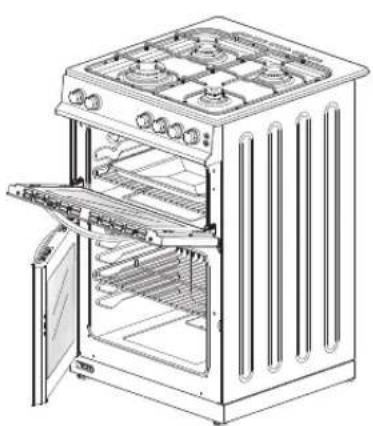
natural_image
Line drawing of an open oven with multiple grilles and ventilation grilles (no text or symbols)The Main Unit
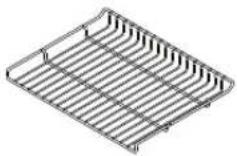
Oven Shelf x 3
To be used in the top oven and the main oven.
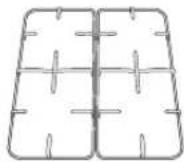
Pan Supports (Left/Right) × 2
natural_image
Technical illustration of a rack with metal grating and handle (no text or symbols)Grill Rack x 1
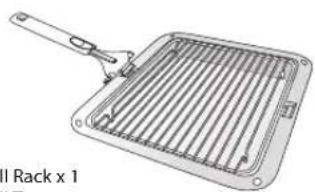
Grill Tray x 1
Grill Pan Handle x 1
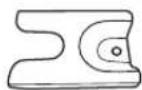
Stability Bracket x 1
LPG Conversion Kit:

LPG nozzles x 7
Large Burner
Standard Burner x 2
Small Burner
Oven Burner x 2
Grill Burner

Fibre Washer x 1
LPG Replacement Rating Plate Sticker x 1
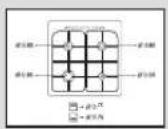
LPG Nozzle Installation Guide x 1
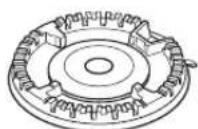
Large Burner Ring × 1
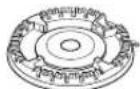
Standard Burner Ring × 2

Small Burner Ring × 1
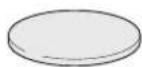
Large Burner Cap × 1
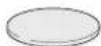
Standard Burner Cap × 2

Small Burner Cap × 1

If items are missing, or damaged please contact Partmaster (UK only).
Tel: 0344 800 3456 for assistance.
* All images are for indication only; please refer to your individual unit for actual item.

Installation

- The cooker must be installed by a competent and Gas Safe Registered Engineer (in the UK) and in compliance with local safety and building regulation safety standards.
- The cooker may be located in a kitchen, a kitchen/diner or bed-sitting room in accordance with the latest editions of BS6172, BS5440-2 and BS6891, but not in a room containing a bath or shower. Please refer to the local legislation/regulations to ensure location is permitted.
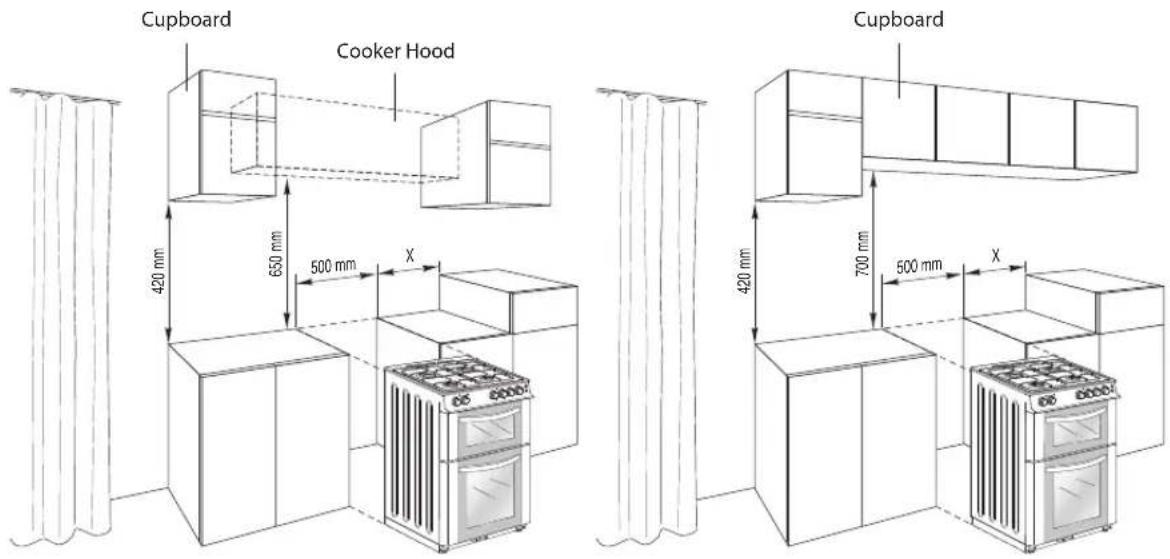
- If the cooker is installed adjacent to furniture which is higher than the gas hob, a gap of at least 100 mm must be left between the side of the cooker and the furniture unless non-combustible materials (ceramic tiles, metal backsplash etc.) are used which then allows this distance to be reduced to 20 mm.
- Prior to installation, ensure that the local distribution conditions (nature of the gas and gas pressure) and the adjustment of the appliance are compatible. The adjustment conditions for this appliance are stated on the label (or data plate).
- The furniture walls adjacent to the cooker must be made of heat resistant material (check with your furniture supplier). The veneered synthetic material and the glue used must be resistant to a temperature of 100^ C in order to avoid ungluing or deformations.
- Flammable materials such as curtains, wood, wallpaper etc. must not be fitted immediately behind the appliance or within 500 mm of the sides.
- Do not place next to a refrigerator.
- This cooker must NOT be placed on a pedestal or base.
- It is essential that the cooker is positioned as stated or freestanding ensuring the distances to flammable materials etc. are still observed.
- Any cooker hoods must be installed according to the requirements of the cooker hood instruction/installation manual but no less than 650 mm above the cooker.
- Any cupboards placed directly above the cooker must be no less than 700 mm.
text_image
Cupboard Cooker Hood 420 mm 650 mm 500 mm X Cupboard 420 mm 700 mm 500 mm X
For all dimensions marked "X", please refer to the information below:
X : 100mm for combustible materials 20mm for non-combustible materials.

Adjusting the Feet

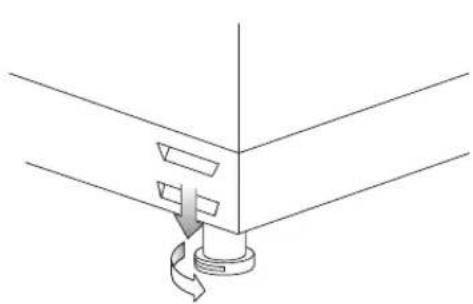
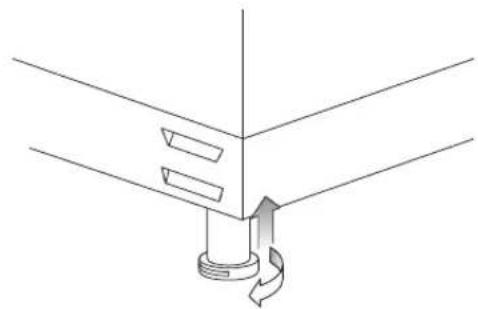
Using the fitted adjustable feet is MANDATORY. For safety reasons and to ensure adequate ventilation, the cooker chassis MUST NOT sit directly on the floor, a plinth, or other support surface.
Your appliance must be level before use. The cooker has 4 levelling feet which can be adjusted by hand. Turn the feet anti-clockwise to lower the level or clockwise to raise the level as shown below. It is possible to raise the product a maximum of 30 mm via the levelling feet.
natural_image
Pure technical diagram of a mechanical assembly with no text, numbers, or symbolsTo lower the cooker To raise the cooker
natural_image
Pure technical diagram of a mechanical assembly with no text, numbers, or symbols
Moving the Cooker

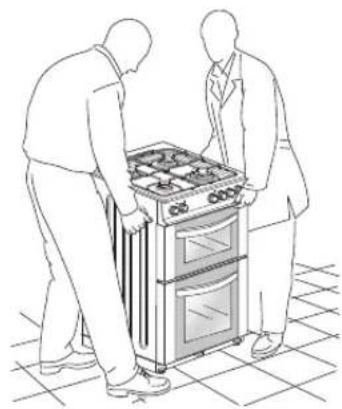
- Two people must always raise the cooker, as shown, to prevent damaging the adjustable feet.
- Do not lift the cooker by the door handles.
• DO NOT DRAG the cooker. Lift the feet clear of the floor.
The product must NOT be moved by dragging. The cooker must always be moved by lifting it up.
natural_image
Line drawing of two people assembling a large kitchen appliance on a tiled floor (no text or symbols)
Stability Bracket
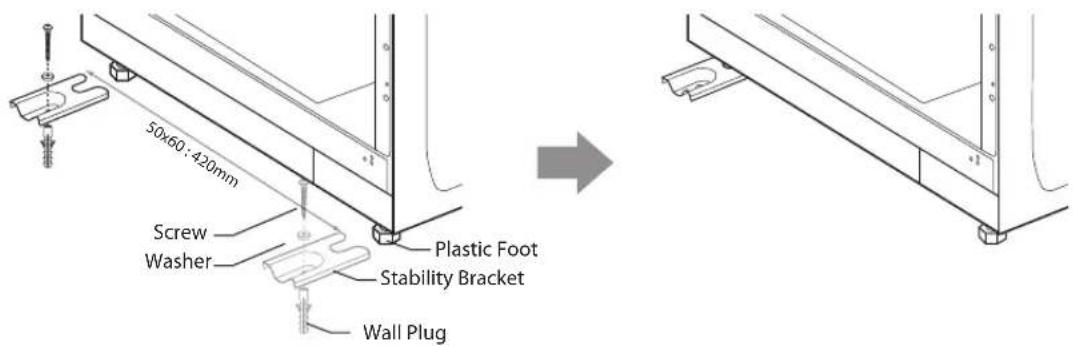
The supplied stability bracket or a recognized cooker stability device MUST be fitted.
text_image
50x60: 420mm Screw Washer Plastic Foot Stability Bracket Wall Plug8 * All images are for indication only; please refer to your individual unit for actual item.

Ventilation Requirements
This appliance is not connected to a combustion products evacuation device. It should be installed and connected in accordance with current installation regulations. Particular attention should be given to the relevant requirements regarding ventilation.
The appliance should be installed in a room or space with an air supply in accordance with the latest edition of BS5440-2. This appliance needs 2m^3/h air per Kw input
For rooms with a volume of less than 5m^3 — permanent ventilation of 100cm^2 free area will be required.
For rooms with a volume of between 5m^3 and 10m^3 a permanent ventilation of 50cm^2 free area will be required unless the room has a door which opens directly to the outside air in which case no permanent ventilation is required.
For rooms with a volume greater than 10m^3 — no permanent ventilation is required.

- Regardless of room size, all rooms containing the appliance must have direct access to the outside air via a window that opens or equivalent.
- Where there are other fuel burning appliances in the same room, the latest edition of BS 5440-2 should be consulted to determine the correct amount of free area ventilation requirements.

Gas Installation

This cooker uses and is ready to use NATURAL GAS only and cannot be used with any other gas without modification. This appliance is manufactured for conversion to LPG after fitting new injectors (supplied) and making adjustments. Refer to “replacement of burner injectors” section for details.

Installation and Service Regulations

This appliance must be installed and serviced only by a suitably qualified and Gas Safe Registered engineer, and in accordance with the current editions of the following standards and regulations or other locally applicable regulations:
• Gas Safety (Installation and Use) Regulations
• Building Regulations
• British Standards (BS 5440, BS 6172 and BS 6891)
• Regulations for Electrical Installation (BS 7671, (Latest Edition))

Gas Connection

- Only a suitably qualified and Gas Safe Registered Engineer may convert the appliance to a different gas type.
- When using Butane (G30) gas a supply pressure of 28 -30 mbar is required.
- When using Propane (G31) gas a supply pressure of 37 mbar is required.
- Flexible hoses must be manufactured in accordance with BS669 part 1 and be of the correct construction for the type of gas being used.
- Gas hoses designed for natural gas MUST NOT be used for supplying LPG gas (LPG gas hoses can be identified by a either a red band or stripe on the rubber outer coating of the hose).
- The hose should not be crushed or trapped or be in contact with sharp or abrasive edges. It should also not be subjected to corrosion by acidic cleansing agents.
The installation of the cooker to Natural Gas or LP Gas (using the LPG conversion kit supplied) must be carried out by a Gas Safe registered engineer. Installers must take account of the provisions of the relevant British Standards Code of Practice, the Gas Safety Regulations and the Building Regulations.
Note: It is recommended that the gas connection to the cooker is installed with a flexible connecting tube made to BS669.
Installation Relevant to Natural Gas
Installation to Natural Gas must conform to the Industry Standards, etc. The supply pressure for Natural Gas is 20 mbar.
Installation Relevant to Liquid Petroleum Gas (LPG)
This appliance must only be connected to LPG after the supplied LPG conversion kit has been fitted. The installation must conform to the relevant British Standards.
During gas connection and re-connection, a sealing material that is either
- PTFE tape approved to BS EN 751-3;
- Or jointing compound suitable for Natural Gas complying to BS 6956-5 or BS EN 751-1
should be used between connection surfaces.
natural_image
Diagram of a server rack with an inset showing a plug inserted into a socket (no text or symbols present)To Connect the Gas Supply
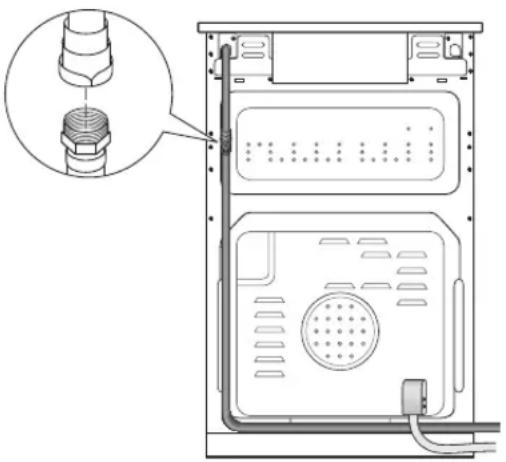
- Connect the gas supply to the gas inlet at the rear of the cooker. The gas hose must hang in a "U" shape behind the cooker.
- Undertake a full gas tightness test.
- To avoid damage to the appliance gas rail inlet pipe tighten the fittings using two suitable spanners.
- Using a suitable leak detection fluid solution check each gas connection one at a time by brushing the solution over the connection. The presence of bubbles will indicate a leak. If there is a leak, tighten the fitting and then recheck for leaks.

Do not use a naked flame to test for leaks.

Replacement of Burner Injectors

Only a suitably qualified and Gas Safe Registered Engineer may change the Hob Injectors. It is illegal to attempt to change the Hob Injectors yourself.
Select the injectors to be replaced according to the "Injector Size Table".
To Replace the Hob Injectors
- Turn off and isolate the Gas and Electric supplies to the cooker.
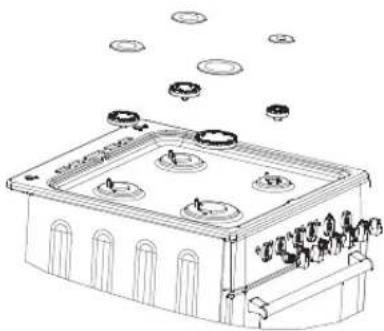
- Remove the burner ring and cap.
- Unscrew the injectors. For this, use a 7mm socket spanner.
- Replace the injector with the ones from the conversion set, with the corresponding diameters suitable to the type of gas that is going to be used, according to the information chart (which is also supplied in the conversion set).
natural_image
Line drawing of a rectangular container with circular wells and floating objects (no text or symbols)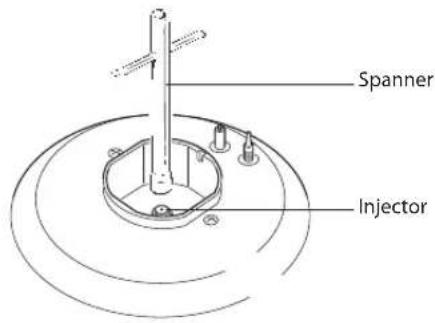
text_image
Spanner InjectorThe gas flow adjustment is made by turning a small screw on the control valves.
| From LPG to Natural Gas From Natural Gas to LPG | |
| Large Burner 1 turn counter-clockwise | Turn fully clockwise |
| Standard Burner 3/8 turn counter-clockwise | Turn fully clockwise |
| Small Burner 1/4 turn counter-clockwise | Turn fully clockwise |
Adjusting the Reduced Flame Position
The flame length in the minimum position is adjusted with a flat screw located on the side of the valve spindle under the hob controls. The screw must be loosened by (see table above) when changing from LPG to NG. In changing from NG to LPG, the same screw must be fully tightened clockwise. Make sure that the appliance is disconnected from the mains supply and the gas feed is on.
When the flame has a length of at least 4mm, the gas is well distributed. Make sure that the flame does not die out when passing from the maximum position to the minimum position. Create an artificial wind with your hand toward the flame to see if the flames are stable.
* All images are for indication only; please refer to your individual unit for actual item.
To Replace the Grill Injector
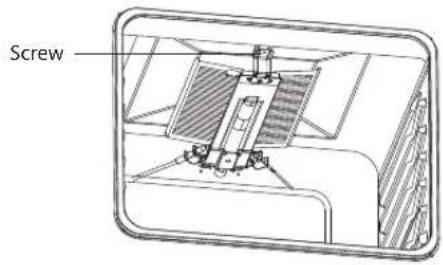
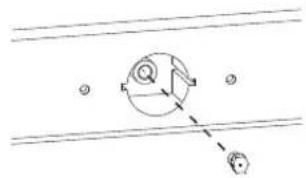
The grill injector can be accessed by removing the single screw on the tip of the burner (as shown). Remove the screw and pull the grill burner towards the front of the cooker, the injector will be revealed on the rear surface of the cavity.
text_image
ScrewRemove the injector with a 7mm spanner and replace the injector with the ones from the spare set, with corresponding diameters suitable to the type of gas that is going to be used, according to the information chart (which is also supplied in the gas conversion kit).
natural_image
Simple line drawing of a circular object with arrows and two small circles, connected by a dashed line (no text or symbols)To Replace the Oven Injector
The oven burner is fixed in its cradle by a single clip that is placed on the left-hand side of the burner. Pull the clip further left, and with your other hand, lift the burner up holding from the thermocouple/spark plug holder.
The injector is placed on the right side of the burner cradle.

text_image
clipRemove the injector with a 7mm spanner and replace the injector with the ones from the spare set, with corresponding diameters suitable to the type of gas that is going to be used, according to the information chart (which is also supplied in the gas conversion kit).

text_image
Injector
Injector Size Table
| Burner Injector Values According To The Gas Type. Destination: GB Gas Category II_2H3+ | LPG Natural Gas | |||
| G 30/3128-30/37 mBar | G 2020 mBar | |||
| Large Burner (Fast) | Injector mm 0.850 1.150 | |||
| Gas Flow(15°C and 1013mbar) | 218.13 gr/h 285.70 lt/h | |||
| Power kW 3.000 3.000 | ||||
| Standard Burner | Injector mm 0.650 0.970 | |||
| Gas Flow(15°C and 1013mbar) | 127.25 gr/h 166.66 lt/h | |||
| Power kW 1.750 1.750 | ||||
| Small Burner (Simmer) | Injector mm 0.500 0.720 | |||
| Gas Flow(15°C and 1013mbar) | 72.71 gr/h 95.24 lt/h | |||
| Power kW 1.000 1.000 | ||||
| Grill Burner | Injector mm 0.700 1.100 | |||
| Gas Flow(15°C and 1013mbar) | 152.70 gr/h 209.50 lt/h | |||
| Power kW 2.100 2.200 | ||||
| Top Oven Burner | Injector mm 0.750 1.150 | |||
| Gas Flow(15°C and 1013mbar) | 174.50 gr/h 228.60 lt/h | |||
| Power kW 2.400 2.400 | ||||
| Main Oven Burner | Injector mm 0.750 1.150 | |||
| Gas Flow(15°C and 1013mbar) | 174.50 gr/h 228.60 lt/h | |||
| Power kW 2.400 2.400 | ||||

- All intervention regarding installation maintenance and conversion of the appliance must be fulfilled with original factory parts.
- The manufacturer declines any liability if these correct parts are not used.

Electrical Connection
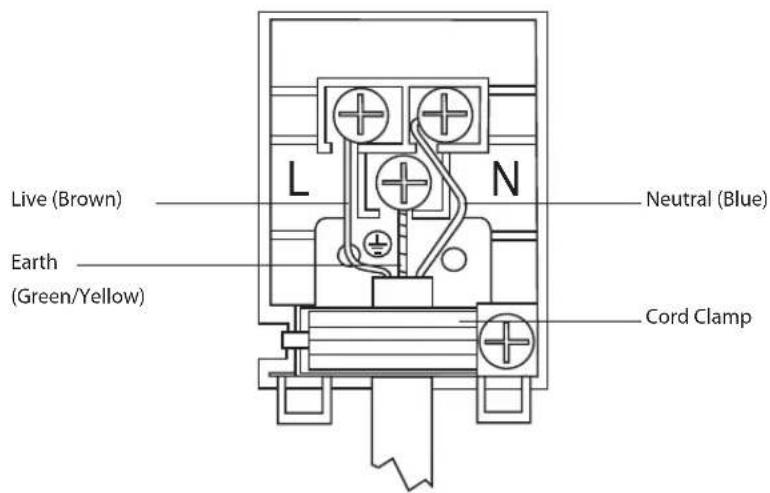
This cooker is fitted with a BS1363 moulded plug. The plug and socket must be accessible after installation, or an all-pole disconnection switch provided in the fixed wiring in accordance with the local wiring regulations.
If the installation requires any alterations to the domestic electric system, this must be performed by a qualified electrician.
The mains cable must be routed away from any hot parts.
If the mains cable is damaged, it must be replaced by the manufacturer, its service agent or similarly qualified persons in order to avoid a hazard.
text_image
Live (Brown) Earth (Green/Yellow) L N Neutral (Blue) Cord ClampFront View
text_image
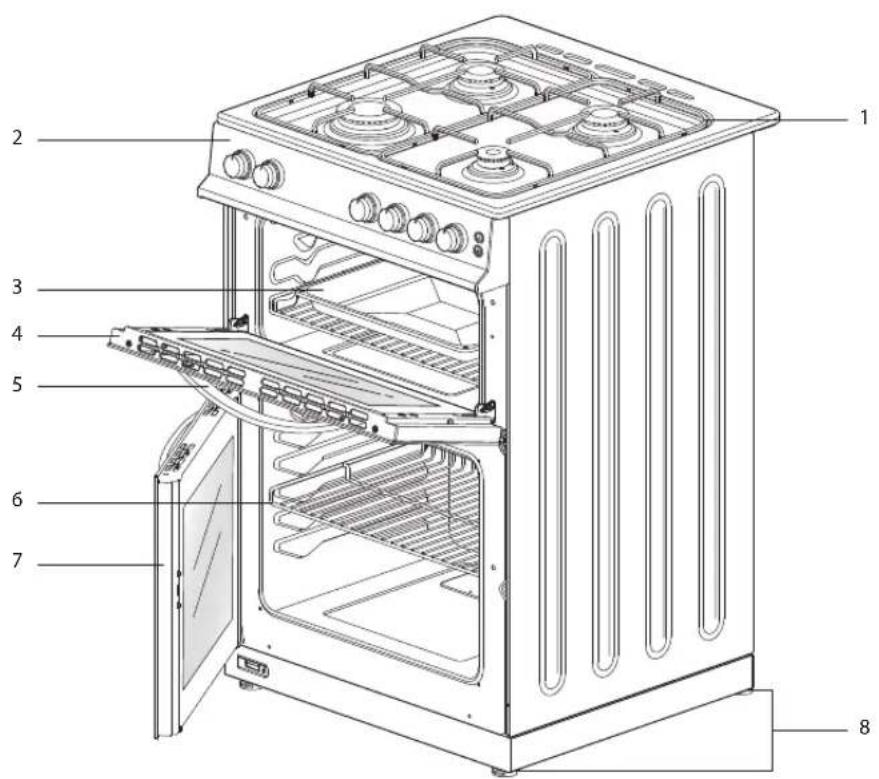
Labeled diagram of an oven with numbered parts for identification- Gas Hob
- Control Panel
- Grill Pan
-
Top Oven Door
-
Top Oven Door Handle
-
Oven Shelf
-
Main Oven Door
-
Adjustable Feet
Top View
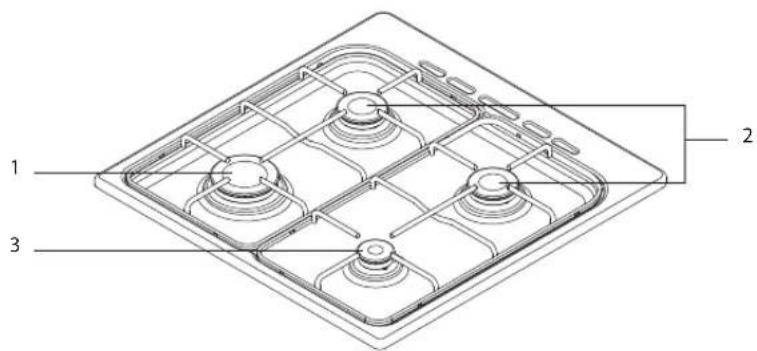
text_image
1 2 3- Large Burner (Fast)
-
Standard Burners
-
Small Burner (Simmer)
* All images are for indication only; please refer to your individual unit for actual item.
Control Panel
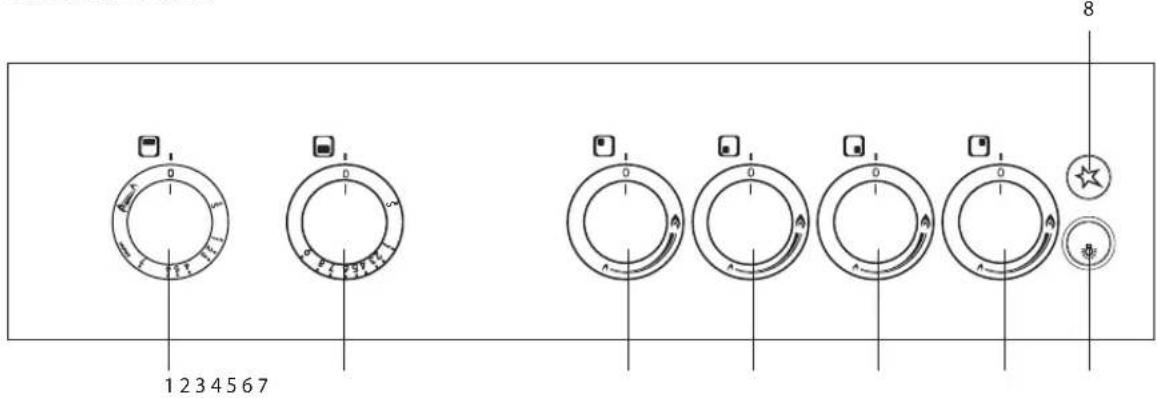
text_image
1234567 8- Top Oven Control
- Main Oven Control
- Rear Left Burner (Standard) Control
-
Front Left Burner (Large) Control
-
Front Right Burner (Small) Control
- Rear Right Burner (Standard) Control
- Oven Light Switch
- Ⓞ Ignition Switch
Gas Burners
The relevant controls adjust the flow of gas through each of the burners.
· 0 = OFF
- = Minimum Flame
• = Maximum Flame
You can cook at any heat setting between and but never between and the 0 position.
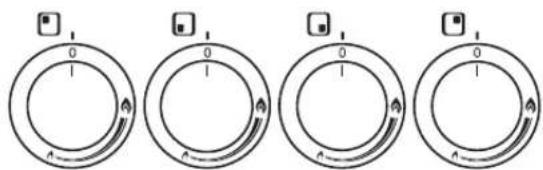
natural_image
Four identical circular diagrams with square indicators and directional arrows, no text or symbols present.
Before Using Your Cooker
Before using your new cooker, please:
- Read this instruction/installation manual, taking special note of the "Safety Warnings" section.
• Make sure all the controls are turned off. - Turn the mains power on.

- This appliance is for cooking purposes only. It must not be used for other purposes, for example room heating.
- The use of a gas cooking appliance results in the production of heat, moisture and products of combustion in the room in which it is installed. Ensure that the kitchen is well ventilated especially when the appliance is in use: keep natural ventilation holes open or install a mechanical ventilation device (mechanical extractor hood). Prolonged intensive use of the appliance may call for additional ventilation, for example opening of a window, or more effective ventilation, for example increasing the level of mechanical ventilation where present.
* All images are for indication only; please refer to your individual unit for actual item.

Using the Hob Burners
- Choose the control for the burner you want to use.
- Press the Ⓞ ignition switch and at the same time press and hold the burner control in and then turn it counter-clockwise to the maximum position. Release the Ⓞ Ignition switch only, once the burner is lit.
- Continue to hold the control in for approximately 10 seconds after the burner has lit. Releasing the control too soon will extinguish the flame due to the flame failure safety feature.
Manual Ignition (in case of electricity failure)
To ignite one of the burners, press and turn the control counter-clockwise so that the control is at its maximum position. Hold an ignition source (e.g. candle lighter, spark ignitor) close to the upper circumference of the burner. Move the ignition source away as soon as you see a stable flame. Continue holding the control in for approximately 10 seconds after the burner has lit. Releasing the control too soon will extinguish the flame due to the flame failure safety feature.
- The control has 3 positions: OFF (O), maximum and minimum After you have ignited the burner at the maximum position, you should adjust the flame length for cooking between the maximum and minimum flame positions. You must not cook with the control between the maximum and OFF (O) positions.
- After ignition, check the flames visually. If you see yellow tipped, lifted or unstable flames; turn the control off, and check the assembly (once the parts have cooled sufficiently) of the burner rings and caps. Also, make sure that no liquid has entered into the burner cups. If the burner flames go out accidentally, turn the burners off, and do not try to light them again for at least one minute (to allow the gas to disperse).
- When turning the hob off, turn the control in a clockwise direction so that the control shows 0 position in line with the marking on the control panel.

- If the burner does not light within 15 seconds, turn the control off and wait for at least one minute before trying again.
• After use, always turn the controls to the 0 position.
Flame Failure Safety Feature
The flame supervision device (FSD) probe cuts off the gas supply to the burner within one minute if the flame is extinguished. Gas will flow out of the burner until the FSD cools down and activates, so you may notice the smell of gas, this is normal.
If the flames are accidentally extinguished, turn off the burner and do not try to light it again for at least one minute (to allow the gas to disperse).
When lighting the burner, hold down the control for approximately 5 – 10 seconds after the burner has lit. Releasing the control too soon will extinguish the flame.
If the Burner Does Not Light
If the burner does not light, check that:
• The cooker is switched on at the mains supply to enable the ignition circuit to work.
• The gas is turned on.
- You have held in the control for at least 5 to 10 seconds.
• The ignitors are sparking. If the ignitors are not sparking, they may be dirty or wet. Clean them gently with a small nylon brush such as a toothbrush as shown.

Never operate the ignition without the burner parts in position. You may damage the electric ignition.
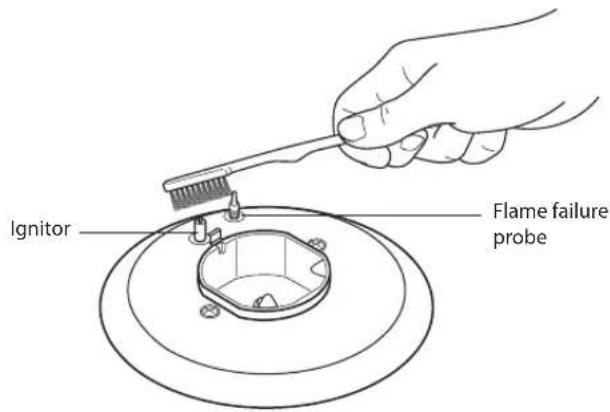
text_image
Ignitor Flame failure probeIf the Flame Is Irregular
If the flame is yellow or irregular, check that the burner parts, including the burner cap, are:
- Clean and dry.
- Positioned correctly. See 'Replacing the Burners'.
General Guidelines
To get the best out of your hob, follow these simple suggestions:
- Use saucepans with thick flat bottoms. Food in a saucepan with an uneven bottom will take longer to cook.
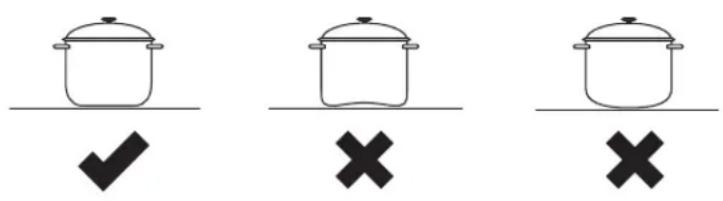
- Do not let large saucepans or frying pans overlap the edges of your hob as this can deflect heat onto your worktop and damage the surface.
• Always make sure saucepans are stable. Using very heavy saucepans may bend the trivet/pan support or deflect the flame.
• Always lift the cookware when removing from the hob, do not drag. - Always position pans over the centre of the cooking zone, and turn the handles to a safe position so they cannot be knocked, grabbed or positioned over a burner.
- When you need to boil, simmer or fry food, first set the temperature to the high position. Once the food is boiling, reduce the temperature to maintain a steady flow of heat to cook your food thoroughly. Doing this will reduce the cooking time.
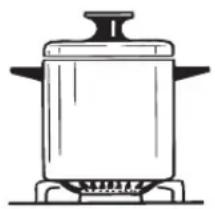
- Your cooker has burners of different diameters. The most economical way of using gas is to choose the correct size gas burners for your cooking pan size and to bring the flame to minimum position once the boiling point has been reached. It is recommended to always cover your cooking pan.
- In order to obtain maximum performance from the main burners, use saucepans with the following flat bottom diameters. Using smaller saucepans than the minimum dimensions stated below will cause energy loss.
- Saucepan sizes should be as per the table shown below.
| Burners Diameter Minimum Diameter Maximum Diameter | |
| Small (Simmer) 12 cm 18 cm | |
| Standard 14 cm 22 cm | |
| Large (Fast) 22 cm 26 cm |
natural_image
Line drawing of a cooking pot on a stove (no text or symbols)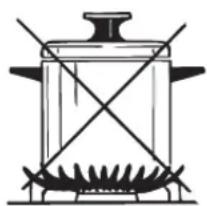
natural_image
Line drawing of a cooking pot with crossed panes and a side pan (no text or symbols)
Using the Oven
First Time Use of the Oven
Ensure that nothing has been left in the top oven and main oven and that the room is well ventilated.
Remove any insert cards or plastic bags. Before connecting the power, use a damp cloth to carefully wipe the inner cavity wall and housing. Clean all the detachable parts in hot, soapy water before using.
Heat the appliance on maximum (please refer to the "Lighting the Oven Burner" section), making sure the room is well ventilated as there may be a little smoke and odour. This is normal, and is due to the protective substance on the appliance which protects it during shipping from the factory. Switch the appliance off once the smoke and odour has stopped. This can take up to 30 minutes.
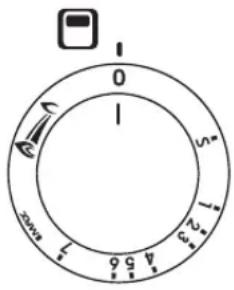
Top Oven Control
| Function Description | |
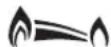 | Grill FunctionThis function is used for grilling. In order to grill, please use the grill pan supplied with your product. Top oven door must be kept open during this function. Top oven door must be kept open during this function. |
| S 1 2 3 4 5 67 MAX | Oven FunctionThis design spreads the heated air equally in the oven and it is suitable for cooking. |
Main Oven Control
| Function Description | |
| S 1 2 3 4 5 67 8 9 | Turn the control anti-clockwise to set to the relevant Gas Mark setting required.. |
text_image
0 1 2 3 4 5 6 7 8 9 10 11 12 13 14 15 16 17 18 19 20 21 22 23 24 25 26 27 28 29 30 31 32 33 34 35 36 37 38 39 40 41 42 43 44 45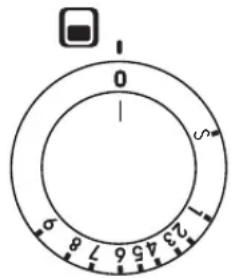
text_image
0 1 23 45 6 7 8 9 SLighting the Oven Burner
- Choose the oven burner you wish to light and open the door.
- Press the ⓐ Ignition switch and at the same time press and hold the main oven or top oven control in and then turn it counter-clockwise to the maximum position. Release the ⓐ Ignition switch only, once the burner is lit.
- Continue to hold the oven control in for approximately 10 seconds after the burner has lit. (You will see blue flames through the bottom burner grid.) Releasing the control too soon will extinguish the flame due to the flame failure safety feature.
Manual Ignition (in case of electricity failure)
To ignite the oven burner, press and turn the oven burner control counter-clockwise so that the control is at its maximum position. Hold an ignition source (e.g. candle lighter, spark ignitor) close to the hole just to the left of centre of the bottom of the oven. Move the ignition source away as soon as you see a stable flame.
Continue holding the control in for approximately 10 seconds after the burner has lit. Releasing the control too soon will extinguish the flame due to the flame failure safety feature.
-
After ignition, check the flames visually. If you see yellow tipped, lifted or unstable flames; turn the control off, and call a Gas Safe registered engineer (in the UK) to check the cooker. If the burner flames go out accidentally, turn the burners off, and do not try to light them again for at least 90 seconds (to allow the gas to disperse).
-
When turning the oven off, turn the control in a clockwise direction so that the control shows "0" position (off) in line with the marking on the control panel.

- If the oven burner does not light within 15 seconds, turn the control off and wait for at least one minute before trying again.
- To switch the oven burner off, turn the control clockwise to the "0" position.
- After use, always turn the oven controls to the "0" position.
Shelf Positions
-
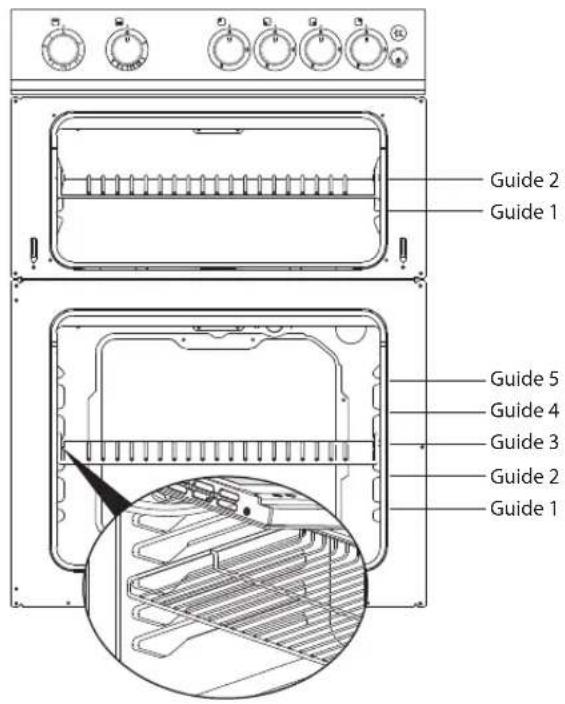
On the wall of the inner cavity there are 5 different shelf guide slots in main oven and 2 different shelf guide slots in top oven. You can place the shelf at different heights to achieve the best cooking performance depending on the heat of the heating elements and the size of food.
-
Always monitor the food during operation to ensure that you are not overcooking it.
-
For heavy food, use a baking pan rather than the oven shelf.

Accessible parts may become hot during use. Young children should be kept away.
text_image
Guide 2 Guide 1 Guide 5 Guide 4 Guide 3 Guide 2 Guide 1Replacing the Anti-tilting Oven Shelf
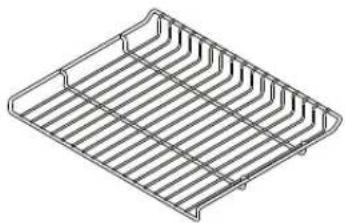
- Insert the shelf at an angle with the vertical section to the rear to clear the stops at either side of the guide slot. Once past this stop the shelf can be placed level again.
- To remove completely, angle the shelf upward so the shelf stop is cleared from the guide stop.
natural_image
Isometric line drawing of a rectangular metal tray with vertical slats (no text or symbols)* All images are for indication only; please refer to your individual unit for actual item.
Adjusting the Temperature
After you ignite the oven burner as explained before, you can adjust the temperature inside the oven as you require, using the numbers on the control: Larger numbers mean higher temperatures, while smaller numbers mean lower temperatures. Refer to the temperature table on the "Cooking" section for the approximate temperature references of those numbers. Do not operate the appliance between the OFF "0" position and the first temperature marker in the counter-clockwise direction. Always use the oven between the maximum and the minimum numbers.
The temperature at the centre of the oven corresponds with the selected gas mark and is slightly higher towards the top of the oven and slightly lower towards the bottom of the oven.
Preheating
When you need to preheat the oven, we recommend you do so for 10 minutes. For recipes needing high temperatures, e.g. bread, pastries, scones, soufflés etc., best results are achieved if the oven is preheated first. For best results when cooking frozen or cooked chilled ready meals always preheat the oven first, unless the cooking instructions advise you otherwise.
Cooking
- Ensure that food is placed centrally on the shelf and that there is sufficient room around the baking tray/dish to allow for maximum heat circulation.
- Stand dishes on a suitably sized baking tray on the shelf to prevent spillage onto the oven base and to help reduce cleaning.
- The material and finish of the baking tray and dishes used affect browning of the bottom of the food. Enamelware, dark, heavy or non-stick utensils increase browning of the bottom of the food. Shiny aluminium or polished steel trays reflect the heat away and give less browning of the bottom of the food.
- When cooking more than one dish in the oven, place dishes centrally on different shelves rather than cluster several dishes on one shelf, this will allow the heat to circulate freely for the best cooking results.
- If you are cooking more than one tray of similar items, for example cakes or biscuits, swap the trays during cooking or you can remove the top tray when the food is cooked and move the lower tray to the higher shelf to finish cooking.
- The thermostat settings detailed below are a guide only and refer to the temperature in the centre of the oven.
| Top Oven S 1 2 3 4 5 6 7 MAX | |||||||||
| Temperature in °C 100 | 140 150 | 160 180 | 190 200 | 220 240 | |||||
| Main Oven S 1 2 3 4 | 5 6 7 8 9 | |||||||||
| Temperature in °C 100 | 140 150 | 160 180 | 190 200 | 220 240 | 255 |
- If accurate temperatures are required then this should be checked using an oven thermometer available at most cookware shops.
- Do not place baking trays directly on the oven base as it interferes with the oven air circulation and can lead to burning of the food. Use the lower shelf position.
- During cooking, do not open the door unnecessarily as you will lose heat and your cooking results may change. Cooking times will be longer and energy use will be higher.
• Using cake tins when cooking cakes will give better results.

- During use, the outer and inner surfaces of the oven get hot. While opening the oven door, step back to avoid the hot steam coming out of the oven. There may be a risk of burns.
• Always use oven gloves to remove and replace food in the oven.

Cooking with the Grill
First Time Use
Before using the grill for the first time, heat the grill on maximum for 15 \~ 20 minutes. Ensure that the room is well ventilated as there may be a little smoke and odour upon initial start up (for about 10 mins). This is normal. It is due to the protective substance on the heating elements which protects the cooker from the effects of corrosion during shipping from the factory.
Lighting the Grill
- Press the Ⓐ Ignition switch and at the same time gently press and hold the top oven control in and then turn it clockwise to the grill "A" position. Release the ⒶIgnition switch once the burner is lit.
- Continue to hold the top oven control in for approximately 10 seconds after the burner has lit. (You will see blue flames on the top grill burner.) Releasing the control too soon will extinguish the flame due to the flame failure safety feature.
Manual Ignition (in case of electricity failure)
To ignite the grill burner, press and hold the top oven control in and then turn it clockwise to the grill "position. Hold an ignition source (e.g. candle lighter, spark ignitor) close to the burner. Move the ignition source away as soon as you see a stable flame. Continue holding the control in for approximately 10 seconds after the burner has lit. Releasing the control too soon will extinguish the flame due to the flame failure safety feature.
-
Do not operate the grill with the control set between “^ (small)” and the “0” position.
-
After ignition, check the flames visually. If you see yellow tipped, lifted or unstable flames; turn the control off, and call a Gas Safe registered Engineer (in UK) to check the cooker. If the burner flames go out accidentally, turn the burners off, and do not try to light them again for at least 90 seconds (to allow the gas to disperse).
-
When turning the grill off, turn the control in a counter-clockwise direction so that the control shows "0" position (off) in line with the marking on the control panel.

- If the burner does not light within 15 seconds, turn the control off and wait for at least one minute before trying again.
- To switch the burner off, turn the control counter-clockwise to the 0 position.
• After use, always turn the controls to the 0 position.
Cooking
The grill burner can be operated with the top oven door in two positions: completely open or partially open (30° park position). Do not use the grill with the door closed.

CAUTION: Accessible parts may be hot when the grill is in use. Young children should be kept away.
- The grill burner can be adjusted between the maximum and the minimum positions as indicated on the control. When turning the grill burner off, turn the control towards the "0" position. The control will need to be pushed in to turn off from the maximum position.
- Preheat the grill on a full setting for a few minutes before sealing steaks or toasting. The food should be turned over during cooking as required.
- Place an oven shelf in either guide slot 1 or 2 (cooking will be slower on slot 1). Ensure there is a minimum of 30 mm between the food and the grill burner, if not use the lower slot.

text_image
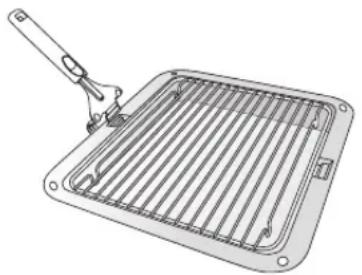
Guide 2 Guide 1- Using the handle, insert the grill pan and rack onto the oven shelf. The food to be cooked must be placed on the grill rack. The handle must be removed once the grill rack tray is in position. Check the food regularly to ensure you do not overcook it.
- The grill pan has a detachable handle. Ensure when using the grill pan handle that it is centralised and secure as shown below.
natural_image
Technical line drawing of a grating or rack device with a handle and mounting base (no text or symbols)
natural_image
Technical line drawing of a grater with handle and mounting holes (no text or symbols)- At the end of grilling, as in all other cooking processes; turn the control to the "0" position (off). Take the grill pan out by using the supplied handle and put the pan onto a safe place. Keep children away from the hot oven during and after grilling, until it has completely cooled down.

- Never cover the grill pan or grill rack with foil as this can lead to grill fires.
- Bread may catch fire if the toasting time is too long. Close supervision is necessary during toasting.
- During use this appliance becomes hot. Care should be taken to avoid touching hot surfaces, e.g. oven door.
- Do not leave the handle in position when grilling. If the handle is left in position when grilling, it will get very hot.

Cleaning Instructions

Before you start cleaning your cooker, please:
- Read the cleaning instructions and the 'Safety Warnings' sections.
- Turn the cooker off at the mains socket and disconnect the plug from the socket.
- Allow the cooker to completely cool down before cleaning.
- Do not use a steam cleaner.
-
Do not keep flammable substances in, on or near the cooker.
-
Wipe the oven clean after every use.
- Wipe up spills. Avoid leaving alkaline or acidic substances (such as lemon juice or vinegar) on the oven surfaces.
- Do not use cleaning products with a chlorine or acidic base.
- Never clean the interior part, panel, lid, trays and all other parts of the oven with tools like a hard brush, cleaning mesh or knife. Do not use abrasive, scratching agents and detergents.
• After cleaning the interior parts of the oven with a soapy cloth, rinse it and then dry thoroughly with a soft cloth. - Never use flammable agents like acid, thinner and gasoline when cleaning your oven.
- Do not wash any part of your oven in a dishwasher.
Cleaning the Outside of the Cooker
Wipe the outside surfaces often, using warm water and a mild household detergent. Any stainless steel parts may also be cleaned with a suitable cleaner.

- If you choose to use a commercial stainless steel cleaner, please read the label to make sure it does not contain chlorine compounds as these are corrosive and may damage the appearance of your cooker.
- Do not use abrasive cleaners, cloths or pads on the outside surfaces.
- Immediately wipe off any caustic cleaners if they are spilled onto the oven door handles.
Cleaning the Oven Door Glass
Do not use harsh abrasive cleaners or sharp metal scrapers to clean the oven door glass since they may scratch the surface, which could result in the glass shattering.

Take care when handling parts with glass, knocks, and chips; heavy handling and dropping could cause the glass to shatter.

natural_image
Illustration of a person opening a large oven with heat sinks and a gas stove (no text or symbols visible)Cleaning the Inside of Your Oven
- Do not use abrasive cleaners, cloths or pads to clean the enamel.
- Clean the enamel on the inside of the oven when it has cooled down, using household detergents or an ammonia-based cleaner. You may use an 'off the shelf' oven cleaner, if you carefully follow the manufacturers' instructions.
- The top oven door can be removed to allow easier access to the inside of your oven. (See "Removing the Top Oven Door" section)
- Wipe the cooker after every use with a soft cloth that has been dampened in soapy water. Wipe it again with a wet cloth and then dry it. Do not clean with dry or powder cleansers.
- Do not clean the cooker while the glass panels are hot.
- Clean the glass parts of the cooker with a glass cleaner which is designed to be used with cookers. Then rinse and then dry it with a dry cloth.
Cleaning the Gas Hob
| Maintenance Period Description | |
| Daily • Clean the gas hobs as per the cleaning instructions. | |
| Monthly | • Remove all burner parts, and clean using a non-abrasive detergent. Rinse in cold water, dry thoroughly, and replace.• Clean the ignitor and probe carefully, using a nylon brush such as a toothbrush. |
| Every year • Contact your local authorized gas Service Agent to perform a thorough check on all gas components on the gas cooker. | |
Hob Burner Parts and Pan Supports
- You can remove and clean these parts with hot soapy water or non-abrasive detergents. Clean spills regularly before they become burnt on. Do not wash these parts in a dishwasher.
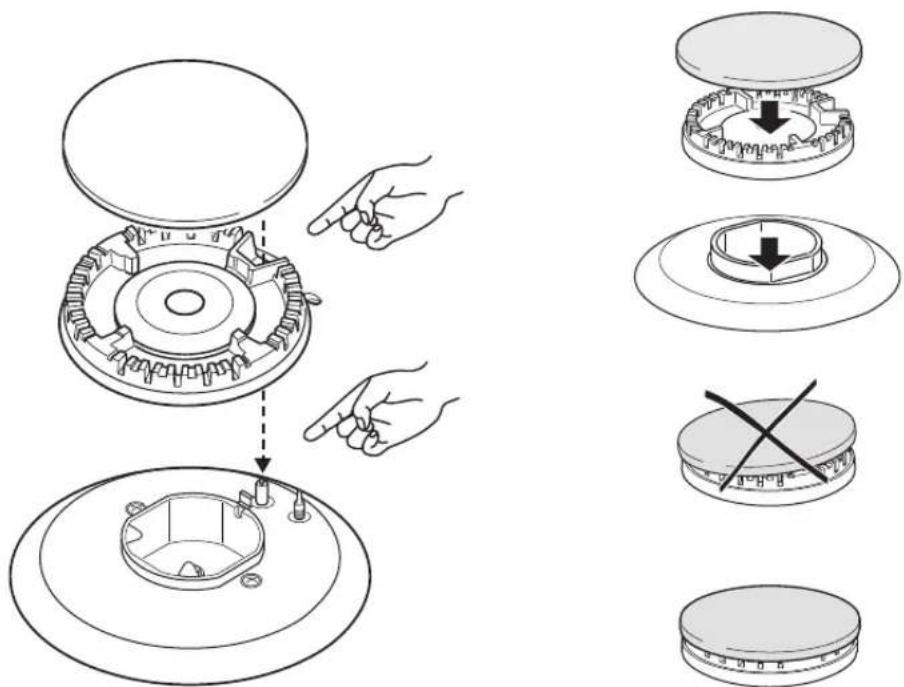
• After cleaning, check that the burner ring and burner caps are dry before replacing correctly. - It is very important to check that the burner ring and burner caps have been correctly positioned. Failure to do so can cause serious problems.

To avoid damage to the electric ignition NEVER light the hob when the burners are not in place.
Replacing the Hob Burner Parts
Check that:
• The ignitor is always clean to ensure trouble-free sparking.
- The probe is always clean to ensure correct operation of the safety valves.

Both the ignitor and probe must be very carefully cleaned using a toothbrush. When replacing the burner parts, ensure you do not damage the ignitor or temperature probes.
text_image
Technical diagram illustrating the step-by-step assembly of a mechanical component, showing hand positioning and disassembly with Chinese annotations.Burner Parts Replacing the burner parts

Hob Controls (Gas Taps)
If you have problems with the gas taps, call your Authorised Service Centre. These parts are NOT user serviceable.
* All images are for indication only; please refer to your individual unit for actual item.

Removing the Top Oven Door

- Ensure the door has cooled down.
• Take care when handling glass.
The top oven door can easily be removed as follows:
- Open the top oven door completely.
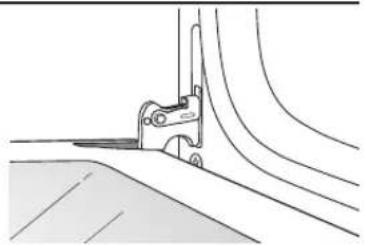
- The swivel retainers of the right hand and left hand hinges are hooked onto the metal bar above them. Lift the retainers as shown.
- Lift the top oven door slightly. The notch on the bottom of the hinge will disengage.
- Now pull the top oven door forwards off the appliance. Releasing both hinge sections from the slots.
To replace the door, repeat the above steps in reverse order.
natural_image
Technical line drawing of a mechanical clamp or bracket assembly (no text or symbols)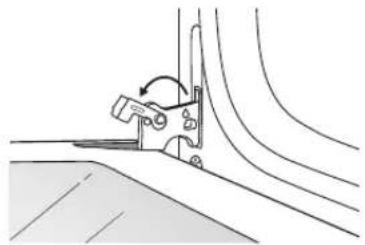
natural_image
Technical line drawing of a mechanical clamp or bracket assembly with curved lines indicating motion (no text or symbols)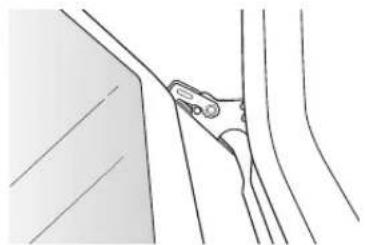
natural_image
Line drawing of a hand holding a small object near a vertical line (no text or symbols)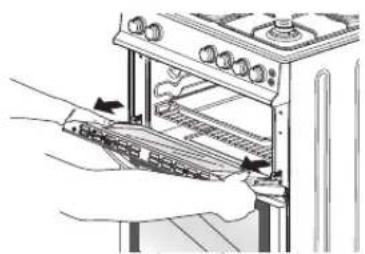
natural_image
Illustration of hands installing or adjusting a kitchen appliance panel with arrows indicating movement (no text or symbols present)
Replacing the Oven Lamp
Let the oven cavity cool down.
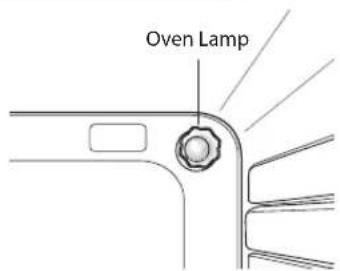
- Remove the protective cover.

Ensure that the cooker is switched off at the mains before replacing the lamp to avoid the possibility of an electric shock.
- Unscrew and replace the bulb with a new one suitable for high temperatures (300°C).
- Refit the protective cover.

Bulb specifications
230V\~50 Hz, 25W, E14
text_image
Oven Lamp* All images are for indication only; please refer to your individual unit for actual item.

Energy Saving Tips and Energy Label
Main Oven
• Cook the meals together, if possible.
- Keep the pre-heating time short.
- Do not elongate cooking time.
- Do not forget to turn off the oven at the end of cooking.
- Do not open the oven door during cooking.
Hob
- Use cookware that has a flat base.
- Use the correct sized cookware for the cooking zone being used.
• Use a lid on your cookware. - Minimize the amount of liquid or fat used.
- When liquids start boiling reduce the heat.
text_image
ENERG logrik-eriplex LOGIK LTOG50W12 A*** A** B C D B 5.94 M3cycle* 1.65 M3cycle* - M3cycle* - M3cycle* 35 L *ENRG facility portion with enhanced white rubber plastic cells 01/2014 ENRG OPEN Shares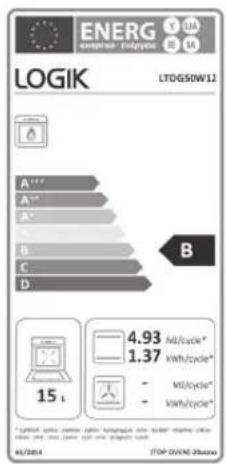
text_image
ENERG TOTA LOGIK LTOG50W12 A*** A** B C D 4.93 MWh/cycle* 1.37 MWh/cycle* - MWh/cycle* - MWh/cycle* 15 L ©2014 TOP OCEM 2024| Burner Output Power According to Gas Type | LPG Natural Gas | |
| G 30/3128-30/37 mBar | G 2020 mBar | |
| Large Burner (Fast) 3.00 kW 3.00 kW | ||
| Standard Burner 1.75 kW 1.75 kW | ||
| Small Burner (Small) 1.00 kW 1.00 kW | ||
| Grill Burner 2.10 kW 2.20 kW | ||
| Top Oven Burner 2.40 kW 2.40 kW | ||
| Main Oven Burner 2.40 kW 2.40 kW | ||

Product Fiche and Specifications
| Brand Logik | |
| Model LTOG50W13 | |
| Type of Oven Gas | |
| Mass 41.6 Kg | |
| Upper Cavity | |
| Energy Efficiency Index - Conventional 117.7 | |
| Energy Class B | |
| Energy Consumption (gas) - Conventional | 4.93 MJ/cycle1.37 kWh/cycle |
| Heat Source Gas | |
| Volume 15 litres | |
| Lower Cavity | |
| Energy Efficiency Index - Conventional 117.2 | |
| Energy Class B | |
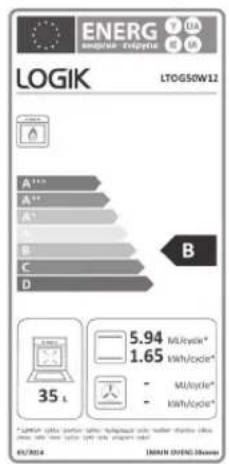
| Energy Consumption (gas) - Conventional | 5.94 MJ/cycle1.65 kWh/cycle |
| Heat Source Gas | |
| Volume 35 litres | |
| Number of cavities 2 | |
| This product complies with EN 15181 | |
| Overall Dimension (WxDxH) 500(W) x 600(D) x 900(H) mm | |
| Oven Lamp | 25 W, E14, 300°C |
| Supply Voltage | 230V - 240V~ 50 Hz |
| Total Consumption | 1171 l/h |
| Total Power | 12.3 kW |
| Hob | |
| Number of Cooking Zones (Hob) | 4 |
| Heating Zone(s) - Auxiliary | |
| Heating Technology | Gas |
| Energy Efficiency | N/A |
| Heating Zone(s) - Semi-Rapid x2 | |
| Heating Technology | Gas |
| Energy Efficiency | 59% |
| Heating Zone(s) - Rapid x1 | |
| Heating Technology | Gas |
| Energy Consumption | 57% |
| Energy Efficiency of Hob | 58.3% |
| The Hob complies with | EN 30-2-1 |
Features and specifications are subject to change without prior notice.

For general information about this appliance and handy hints and tips, please visit www.knowhow.com/knowledgebank or call 0344 5611234.

Visit Partmaster.co.uk today for the easiest way to buy electrical spares and accessories. With over 1 million spares and accessories available we can deliver direct to your door the very next day. Visit www.partmaster.co.uk or call 0344 800 3456 (UK customers only). Calls charged at National Rate.
The symbol on the product or its packaging indicates that this product must not be disposed of with your other household waste. Instead, it is your responsibility to dispose of your waste equipment by handing it over to a designated collection point for the recycling of waste electrical and electronic equipment. The separate collection and recycling of your waste equipment at the time of disposal will help conserve natural resources and ensure that it is recycled in a manner that protects human health and the environment.
For more information about where you can drop off your waste for recycling, please contact your local authority, or where you purchased your product.
DSG Retail Limited (Registered in England No. 504877) Maylands Avenue, Hemel Hempstead, Hertfordshire HP2 7TG. UK
IB_LTOG50W150126V4