
EC2800AOW - Freezer AEG-ELECTROLUX - Free user manual and instructions
Find the device manual for free EC2800AOW AEG-ELECTROLUX in PDF.



| Product type | Freezer |
| Brand | AEG-ELECTROLUX |
| Model | EC2800AOW |
| Dimensions (H x W x D) | 876 x 946 x 665 mm |
| Electrical supply | 230 V, 50 Hz, single phase |
| Recommended fuse | 10 A |
| Climate class | SN (10°C to 32°C), N (16°C to 32°C), ST (16°C to 38°C), T (16°C to 43°C) |
| Refrigerant | R600a (isobutane) |
| Rise time | 32 hours |
| Defrost type | Manual |
| Action Freeze function | Yes |
| High temperature alarm | Yes |
| Interior light | Yes |
| Bulb type | Specific for household appliances, max power indicated on the diffuser |
| Baskets included | Yes (additional baskets available as optional) |
| Lid gasket | Magnetic |
| Insulation | Polyurethane foam (contains flammable gases) |
| Recommended cleaning | Warm soapy water, no abrasive or caustic products |
| Child safety | Magnetic closure, door removal recommended when disposing |
| Installation | 5 cm space around, level and solid surface, do not expose to direct sunlight |
| Electrical connection | Earth connection mandatory, no extension cord or multi-socket adapter |
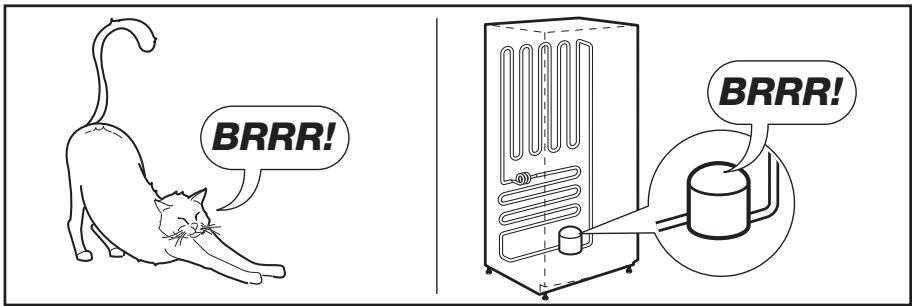
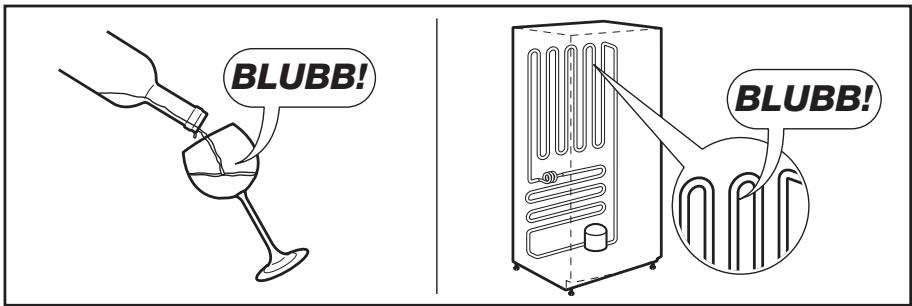
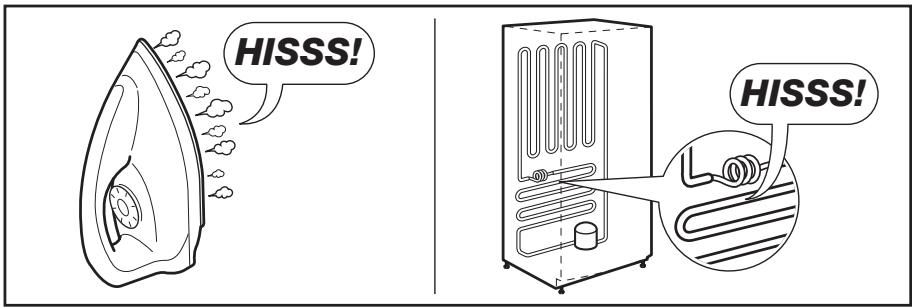
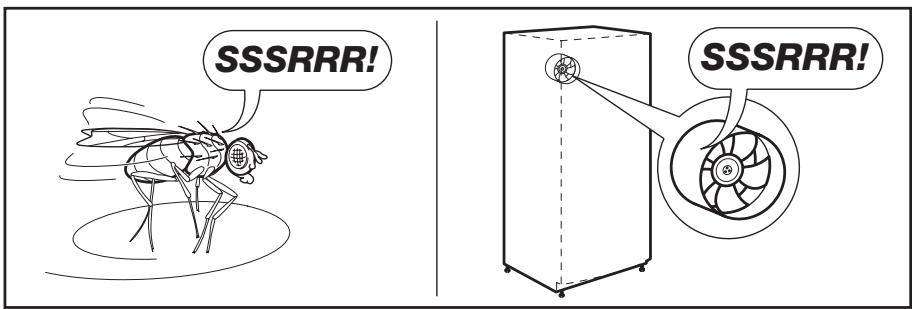
| Operating noises | Normal compressor and refrigeration circuit noises |
| Original spare parts | Available from after-sales service |
| Repairability | Only by a qualified professional with original parts |
Frequently Asked Questions - EC2800AOW AEG-ELECTROLUX
User questions about EC2800AOW AEG-ELECTROLUX
0 question about this device. Answer the ones you know or ask your own.
Ask a new question about this device
Download the instructions for your Freezer in PDF format for free! Find your manual EC2800AOW - AEG-ELECTROLUX and take your electronic device back in hand. On this page are published all the documents necessary for the use of your device. EC2800AOW by AEG-ELECTROLUX.
USER MANUAL EC2800AOW AEG-ELECTROLUX
SAFETY INFORMATION 3
PRODUCT DESCRIPTION 6
OPERATION 7
CONTROL PANEL 8
FIRSTUSE 9
DAILY USE 10
HELPFUL HINTS AND TIPS 12
CARE AND CLEANING 13
WHAT TO DO IF. 14
INSTALLATION 17
NOISES 18
TECHNICAL DATA 19
ENVIRONMENT CONCERNS 19
WE'RE THINKING OF YOU
Thank you for purchasing an Electrolux appliance. You've chosen a product that brings with it decades of professional experience and innovation. Ingenious and stylish, it has been designed with you in mind. So whenever you use it, you can be safe in the knowledge that you'll get great results every time.
Welcome to Electrolux.
Visit our website for:

Get usage advice, brochures, trouble shooter, service information: www.electrolux.com

Register your product for better service: www.electrolux.com/productregistration

Buy Accessories, Consumables and Original spare parts for your appliance: www.electrolux.com/shop
CUSTOMER CARE AND SERVICE
We recommend the use of original spare parts.
When contacting Service, ensure that you have the following data available.
The information can be found on the rating plate. Model, PNC, Serial Number.

Warning / Caution-Safety information

General information and tips

Environmental information
Subject to change without notice.

SAFETY INFORMATION
In the interest of your safety and to ensure the correct use, before installing and first using the appliance, read this user manual carefully, including its hints and warnings. To avoid unnecessary mistakes and accidents, it is important to ensure that all people using the appliance are thoroughly familiar with its operation and safety features. Save these instructions and make sure that they remain with the appliance if it is moved or sold, so that everyone using it through its life will be properly informed on appliance use and safety.
For the safety of life and property keep the precautions of these user's instructions as the manufacturer is not responsible for damages caused by omission.
CHILDREN AND VULNERABLE PEOPLE SAFETY
- This appliance is not intended for use by persons (including children) with reduced physical, sensory or mental capabilities, or lack of experience and knowledge, unless they have been given supervision or instruction concerning use of the appliance by a person responsible for their safety.
Children should be supervised to ensure that they do not play with the appliance.
- Keep all packaging well away from children. There is risk of suffocation.
- If you are discarding the appliance pull the plug out of the socket, cut the connection cable (as close to the appliance as you can) and remove the door to prevent playing children to suffer electric shock or to close themselves into it.
- If this appliance featuring magnetic door seals is to replace an older appliance having a spring lock (latch) on the door or lid, be sure to make that spring lock unusable before you discard the old appliance. This will prevent it from becoming a death trap for a child.
GENERAL SAFETY

WARNING!
Keep ventilation openings, in the appliance enclosure or in the built-in structure, clear of obstruction.
- The appliance is intended for keeping foodstuff and/or beverages in a normal household as explained in this instruction booklet.
- Do not use a mechanical device or any artificial means to speed up the thawing process.
- Do not use other electrical appliances (such as ice cream makers) inside of refrigerating appliances, unless they are approved for this purpose by the manufacturer.
- Do not damage the refrigerant circuit.
- The refrigerant isobutane (R600a) is contained within the refrigerant circuit of the appliance, a natural gas with a high level of environmental compatibility, which is nevertheless flammable.
During transportation and installation of the appliance, be certain that none of the components of the refrigerant circuit become damaged.
If the refrigerant circuit should become damaged:
- avoid open flames and sources of ignition
-
thoroughly ventilate the room in which the appliance is situated
-
It is dangerous to alter the specifications or modify this product in any way. Any damage to the cord may cause a short-circuit, fire and/or electric shock.

WARNING!
Any electrical component (power cord, plug, compressor) must be replaced by a certified service agent or qualified service personnel to avoid hazard.
- Power cord must not be lengthened.
- Make sure that the power plug is not squashed or damaged by the back of the appliance. A squashed or damaged power plug may overheat and cause a fire.
- Make sure that you can come to the mains plug of the appliance.
-
Do not pull the mains cable.
-
If the power plug socket is loose, do not insert the power plug. There is a risk of electric shock or fire.
-
You must not operate the appliance without the lamp cover (if foreseen) of interior lighting.
-
This appliance is heavy. Care should be taken when moving it.
- Do not remove nor touch items from the freezer compartment if your hands are damp/wet, as this could cause skin abrasions or frost/freezer burns.
- Avoid prolonged exposure of the appliance to direct sunlight.
- Bulb lamps (if foreseen) used in this appliance are special purpose lamps selected for household appliances use only. They are not suitable for household room illumination.
DAILY USE
- Do not put hot pot on the plastic parts in the appliance.
- Do not store flammable gas and liquid in the appliance, because they may explode.
- Do not place food products directly against the air outlet on the rear wall. (If the appliance is Frost Free)
- Frozen food must not be re-frozen once it has been thawed out.
- Store pre-packed frozen food in accordance with the frozen food manufacturer's instructions.
- Appliance's manufacturers storage recommendations should be strictly adhered to. Refer to relevant instructions.
- Do not place carbonated or fizzy drinks in the freezer compartment as it creates pressure on the container, which may cause it to explode, resulting in damage to the appliance.
- Ice lollies can cause frost burns if consumed straight from the appliance.
CARE AND CLEANING
- Before maintenance, switch off the appliance and disconnect the mains plug from the mains socket.
-
Do not clean the appliance with metal objects.
-
Do not use sharp objects to remove frost from the appliance. Use a plastic scraper.
INSTALLATION

For electrical connection carefully follow the instructions given in specific paragraph.
- Unpack the appliance and check if there are damages on it. Do not connect the appliance if it is damaged. Report possible damages immediately to the place you bought it. In that case retain packing.
- It is advisable to wait at least four hours before connecting the appliance to allow the oil to flow back in the compressor.
- Adequate air circulation should be around the appliance, lacking this leads to overheating. To achieve sufficient ventilation follow the instructions relevant to installation.
- The appliance must not be located close to radiators or cookers.
- Make sure that the mains plug is accessible after the installation of the appliance.
SERVICE
- Any electrical work required to do the servicing of the appliance should be carried out by a qualified electrician or competent person.
- This product must be serviced by an authorized Service Centre, and only genuine spare parts must be used.
ENVIRONMENT PROTECTION

This appliance does not contain gasses which could damage the ozone layer, in either its refrigerant circuit or insulation materials. The appliance shall not be discarded together with the urban refuse and rubbish. The insulation foam contains flammable gases: the appliance shall be disposed according to the applicable regulations to obtain from your local authorities. Avoid damaging the cooling unit, especially at the rear near the heat exchanger. The materials used on this appliance marked by the symbol are recyclable.
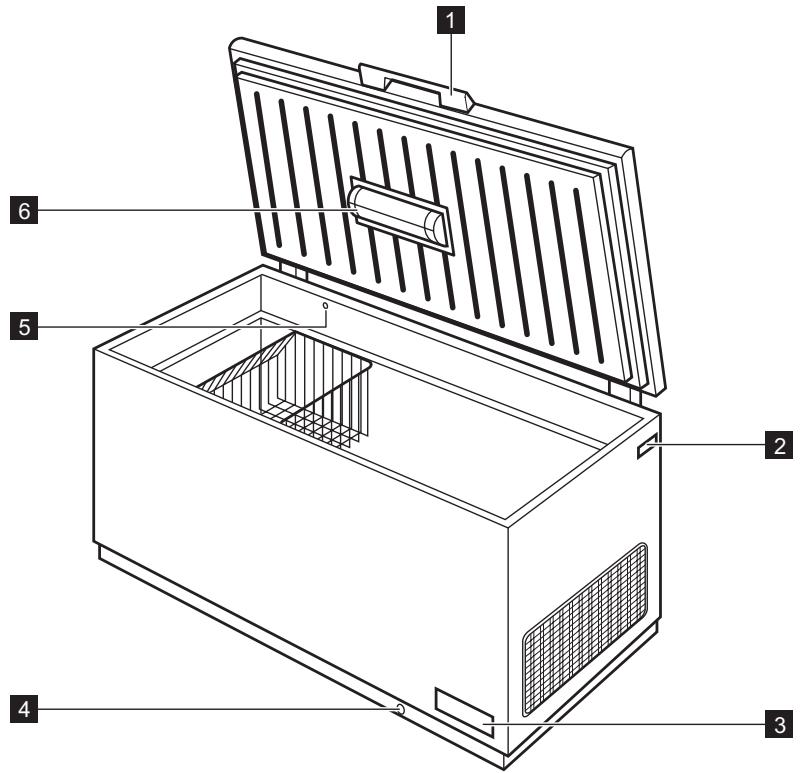
PRODUCT DESCRIPTION
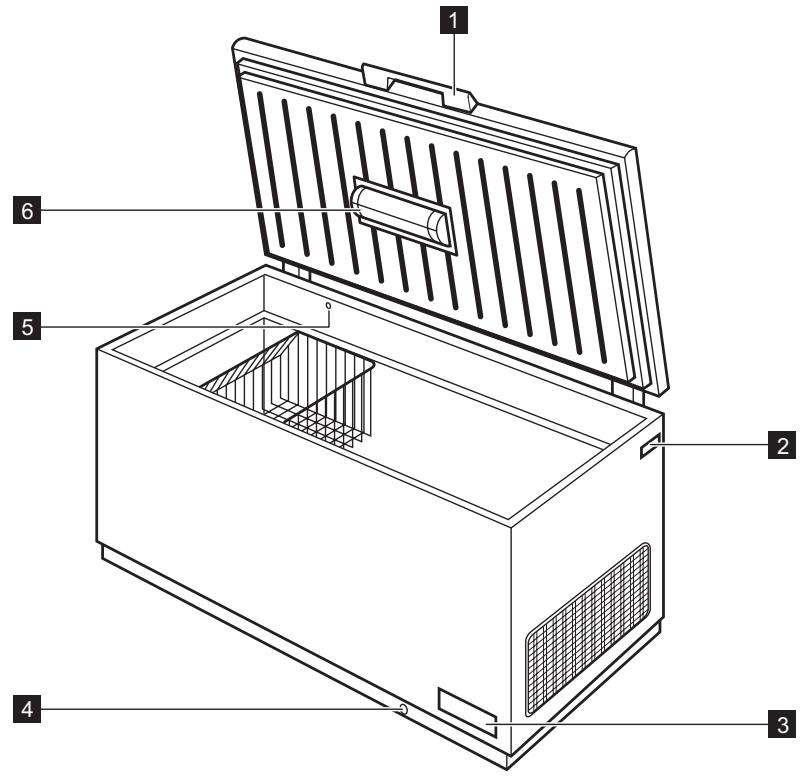
1 Lid handle
2 Rating plate
3 Control panel and temperature regulator
4 Defrost water drain
5 Valve:easy re-opening of lid
6 Light
OPERATION
SWITCHING ON
Insert the plug into the wall socket.
The pilot light will light up.
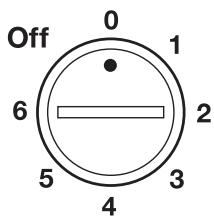
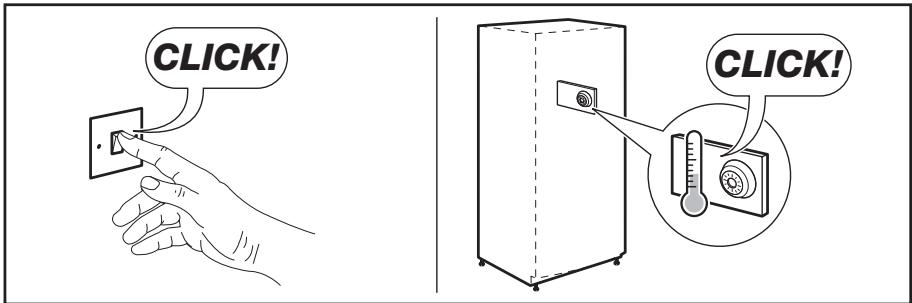
Turn the Temperature regulator clockwise to a medium setting.

If the temperature inside the appliance is too high the Alarm light will light up.
SWITCHING OFF
To switch off the appliance remove the main plug.
TEMPERATURE REGULATION
The temperature is automatically regulated.
To operate the appliance, proceed as follows:
- turn the Temperature regulator towards lower settings to obtain the minimum coldness.
- turn the Temperature regulator towards higher settings to obtain the maximum coldness.

A medium setting is generally the most suitable.
However, the exact setting should be chosen keeping in mind that the temperature inside the appliance depends on:
- room temperature
- how often the lid is opened
- the quantity of food stored
the location of the appliance.
CONTROL PANEL
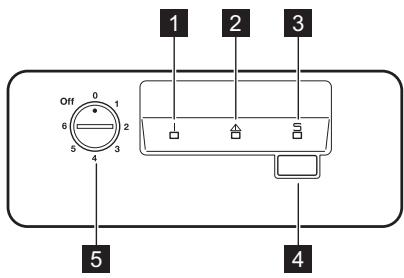
1 Pilot light
2 High temperature alarm light
3 Action Freeze light
4 Action Freeze switch
5 Temperature regulator
ACTION FREEZE FUNCTION
You can activate the Action Freeze function by pressing the Action Freeze switch.
The Action Freeze light will light up.
It is possible to deactivate the function at any time by pressing Action Freeze switch.
The Action Freeze light will switch off.
HIGH TEMPERATURE ALARM
An increase in the temperature in the freezer (for example due to an power failure) is indicated by switching on of the Alarm light During the alarm phase, don't place food inside the freezer.
When normal conditions are restored the Alarm light will switch off automatically.
FIRSTUSE
CLEANING THE INTERIOR
Before using the appliance for the first time, wash the interior and all internal accessories with lukewarm water and some neutral soap so as to remove the typical smell of a brand-new product, then dry thoroughly.

Do not use detergents or abrasive powders, as these will damage the finish.
DAILY USE
FREEZING FRESH FOOD
The freezer compartment is suitable for freezing fresh food and storing frozen and deep-frozen food for a long time.
To freeze fresh food activate the Action Freeze function at least 24 hours before placing the food to be frozen in the freezer compartment.
The maximum amount of food that can be frozen in 24 hours is specified on the rating plate
The freezing process lasts 24 hours: during this period do not add other food to be frozen.
STORAGE OF FROZEN FOOD
When first starting-up or after a period out of use, before putting the products in the compartment let the appliance run at least 2 hours on the higher settings.

In the event of accidental defrost-ing, for example due to a power failure, if the power has been off for longer than the value shown in the technical characteristics chart under "rising time", the defrosted food must be consumed quickly or cooked immediately and then refrozen (after cooling).
STORAGE BASKETS
OPENING AND CLOSING THE LID
As the lid is equipped with a tightly closing seal, it is not easy to reopen it shortly after closing (due to the vacuum formed inside). Wait a few minutes before reopening the appliance. The vacuum valve will help you to open the lid.

WARNING!
Never pull the handle with immense force.
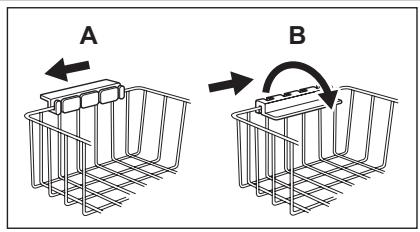
Hang the baskets on the upper edge of the freezer (A) or place them inside the freezer (B). Turn and fix the handles for these two positions as shown in the picture.
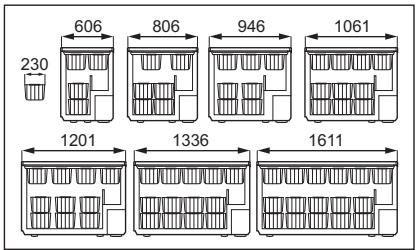
The baskets will slide into each other. The following pictures show how many baskets can be placed inside the various freezer models.
You can purchase additional baskets from your local Service Centre.
HELPFUL HINTS AND TIPS
HINTS FOR FREEZING
To help you make the most of the freezing process, here are some important hints:
- the maximum quantity of food which can be frozen in 24 hrs. is shown on the rating plate;
- the freezing process takes 24 hours. No further food to be frozen should be added during this period;
only freeze top quality, fresh and thoroughly cleaned, foodstuffs; - prepare food in small portions to enable it to be rapidly and completely frozen and to make it possible subsequently to thaw only the quantity required;
- wrap up the food in aluminium foil or polythene and make sure that the packages are airtight;
- do not allow fresh, unfrozen food to touch food which is already frozen, thus avoiding a rise in temperature of the latter:
- lean foods store better and longer than fatty ones; salt reduces the storage life of food:
- water ices, if consumed immediately after removal from the freezer compartment, can possibly cause the skin to be freeze burnt;
- it is advisable to show the freezing in date on each individual pack to enable you to keep tab of the storage time.
HINTS FOR STORAGE OF FROZEN FOOD
To obtain the best performance from this appliance, you should:
- make sure that the commercially frozen foodstuffs were adequately stored by the retailer;
- be sure that frozen foodstuffs are transferred from the foodstore to the freezer in the shortest possible time;
not open the lid frequently or leave it open longer than absolutely necessary. - Once defrosted, food deteriorates rapidly and cannot be refrozen.
- Do not exceed the storage period indicated by the food manufacturer.
CARE AND CLEANING

CAUTION!
Unplug the appliance before carrying out any maintenance operation.

This appliance contains hydrocarbons in its cooling unit; maintenance and recharging must therefore only be carried out by authorized technicians.
PERIODIC CLEANING
- Switch off the appliance.
- Disconnect the mains plug from the mains socket.
- Regularly clean the appliance and the accessories with warm water and neutral soap. Clean the lid seal carefully.
- Fully dry the appliance.
- Connect the mains plug to the mains socket.
- Switch on the appliance.

CAUTION!
Do not use detergents, abrasive products, highly perfumed cleaning products or wax polishes to clean the inner side of the appliance.
Prevent damage to the cooling system.

There is no need to clean the compressor area.
Many proprietary kitchen surface cleaners contain chemicals that can attack/damage the plastics used in this appliance. For this reason it is recommended that the outer casing of this appliance is only cleaned with warm water with a little washing-up liquid added.
DEFROSTING THE FREEZER
Defrost the freezer when the frost layer reaches a thickness of about 10-15 mm.
The best time to defrost the freezer when it contains no or only a little food.
To remove the frost, do these steps:
- Switch off the appliance.
-
Remove any stored food, wrap it in several layers of newspaper and put it in a cool place.
-
Leave the lid open, remove the plug from the defrost water drain and collect all defrost water on a tray. Use a scraper to remove ice quickly.
- When defrosting is completed, dry the interior thoroughly and refit the plug.
- Switch on the appliance.
- Set the temperature regulator to obtain the maximum coldness and run the appliance for two or three hours using this setting.
- Reload the previously removed food into the compartment.

Never use sharp metal tools to scrape off frost as you could damage the appliance. Do not use a mechanical device or any artificial means to speed up the thawing process other than those recommended by the manufacturer. A temperature rise of the frozen food packs, during defrosting, may shorten their safe storage life.
The amount of frost on the walls of the appliance will be increased by the high level of the outer environment humidity and if the frozen food is not wrapped properly.
PERIODS OF NON-OPERATION
When the appliance is not in use for long periods, take the following precautions:
- Switch off the appliance.
- Disconnect the mains plug from the mains socket.
- Remove all food.
- Defrost and clean the appliance and all accessories.
- Leave the lid open to prevent unpleasant smells.

If the cabinet will be kept on, ask somebody to check it once in a while to prevent the food inside from spoiling in case of a power failure.
WHAT TO DO IF...

CAUTION!
Before troubleshooting, disconnect the power supply.
Only a qualified electrician or competent person must do the troubleshooting that is not in this manual.

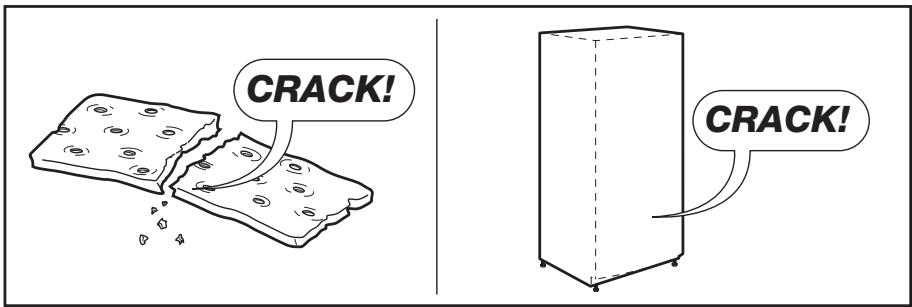
There are some sounds during normal use (compressor, refrigerant circulation).
| Problem | Possible cause | Solution |
| The appliance is noisy. | The appliance is not supported properly. | Check if the appliance stands stable (all the four feet should be on the floor). |
| The compressor operates continually. | The temperature is not set correctly. | Set a warmer temperature. |
| The lid has been opened too frequently. | Do not leave the lid open longer than necessary. | |
| The lid is not closed properly. | Check if the lid closes well and the gaskets are undamaged and clean. | |
| Large quantities of food to be frozen were put in at the same time. | Wait some hours and then check the temperature again. | |
| Food placed in the appliance was too warm. | Allow food to cool to room temperature before storing. | |
| The temperature of the room that contains the appliance is too high for efficient operation. | Try to reduce the temperature in the room where the appliance stands. | |
| The High temperature alarm light is on. | It is too warm inside the freezer. | Refer to "High Temperature Alarm". |
| The cabinet has been recently switched on and the temperature is still too high. | Refer to "High Temperature Alarm". | |
| There is too much frost and ice. | Products are not wrapped properly. | Wrap the products better. |
| The lid is not shut properly or do not close tightly. | Check if the lid closes well and the gaskets are undamaged and clean. | |
| The temperature is not set correctly. | Set a warmer temperature. | |
| The water drainage plug is not correctly positioned. | Position the water drainage plug in the correct way. | |
| The lid doesn't close completely. | There is excessive frost. | Eliminate excess frost. |
| The lid gaskets are dirty or sticky. | Clean the lid gaskets. | |
| Food packages are block- ing the lid. | Arrange the packages in the right way, see the sticker in the appliance. | |
| The lid is difficult to open. | The lid gaskets are dirty or sticky. | Clean the lid gaskets. |
| The valve is blocked. | Check the valve. | |
| The lamp does not work. | The lamp is defective. | Refer to "Replacing the lamp". |
| It is too warm in the freezer. | The temperature is not set correctly. | Set a lower temperature. |
| The lid does not close tightly or it is not shut properly. | Check if the lid closes well and the gasket is undamaged and clean. | |
| Before freezing the appliance was not precooled sufficiently. | Pre-cool the appliance for enough time. | |
| Large quantities of food to be frozen were put in at the same time. | Wait some hours and then check the temperature again. Next time insert smaller quantities of food to be frozen at any one time. | |
| Food placed in the appliance was too warm. | Allow food to cool to room temperature before storing. | |
| Products to be frozen are placed too closely to each other. | Place the products in a way so that cold air could circulate among them. | |
| The lid has been opened often. | Try to not open the lid often. | |
| The lid has been opened for a long time. | Do not leave the lid open longer than necessary. | |
| It is too cold inside the freezer. | The temperature is not set correctly. | Set a warmer temperature. |
| The appliance does not work at all. Nei- ther cooling nor lighting works. | Plug is not connected to the mains socket properly. | Connect the mains plug properly. |
| Power does not reach the appliance. | Try connecting another elec- trical device to the power outlet. | |
| The appliance is not switched on. | Switch on the appliance. | |
| There is no voltage in the mains socket (try to connect another appliance into it). | Call an electrician. | |
| CUSTOMER SERVICEIf your appliance is still not working properly after making the above checks, contact the nearest service centre.To obtain fast service, it is essential that when you apply for it you specify the model | and serial number of your appliance which can be found either on the guarantee certific- icate or on the rating plate located on the external right side of the appliance. | |
| REPLACING THE LAMP | ||
| 1. Disconnect the mains plug from the mains socket.2. Replace the used lamp with a new lamp of the same power and specifi-cally designed for household applian-ces. (the maximum power is shown on the lamp cover)3. Connect the mains plug to the mains socket.4. Open the lid. Make sure that the lamp comes on. |

WARNING!
Do not remove the lamp cover at the time of replacement.
Do not operate the freezer if the lamp cover is damaged or missing.
INSTALLATION
POSITIONING

WARNING!
If you are discarding an old appliance that has a lock or catch on the lid, you must ensure that it is made unusable to prevent young children being trapped inside.

The appliance shall have the plug accessible after installation.
This appliance can be installed in a dry, well ventilated indoor (garage or cellar), but for optimum performance install this appliance at a location where the ambient temperature corresponds to the climate class indicated on the rating plate of the appliance:
| Climate class | Ambient temperature |
| SN | +10°C to +32°C |
| N | +16°C to +32°C |
| ST | +16°C to +38°C |
| T | +16°C to +43°C |
ELECTRICAL CONNECTION
Before plugging in, ensure that the voltage and frequency shown on the rating plate correspond to your domestic power supply.
The appliance must be earthed. The power supply cable plug is provided with a contact for this purpose. If the domestic power supply socket is not earthed, connect the appliance to a separate earth in compliance with current regulations, consulting a qualified electrician.
The manufacturer declines all responsibility if the above safety precautions are not observed.
This appliance complies with the E.E.C. Directives.
VENTILATION REQUIREMENTS
-
Put the freezer in horizontal position on a firm surface. The cabinet must be on all four feet.
-
Make sure that the clearance between the appliance and rear wall is 5 cm.
- Make sure that the clearance between the appliance and the sides is 5cm . The airflow behind the appliance must be sufficient.
NOISES
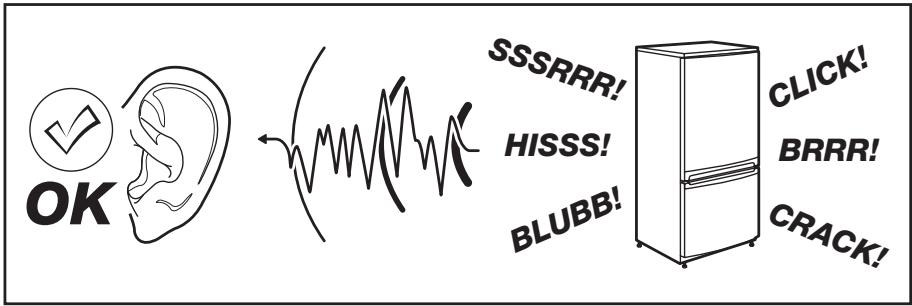
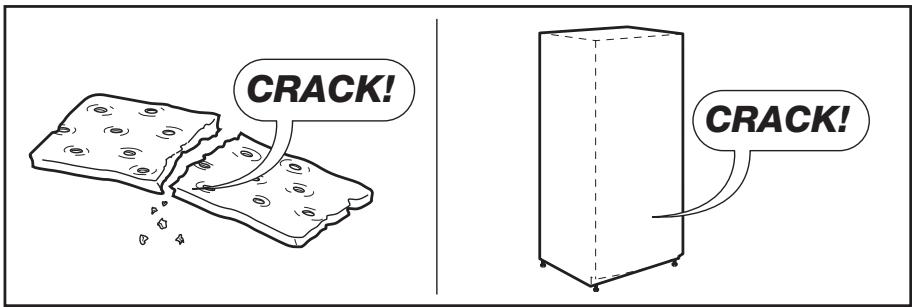
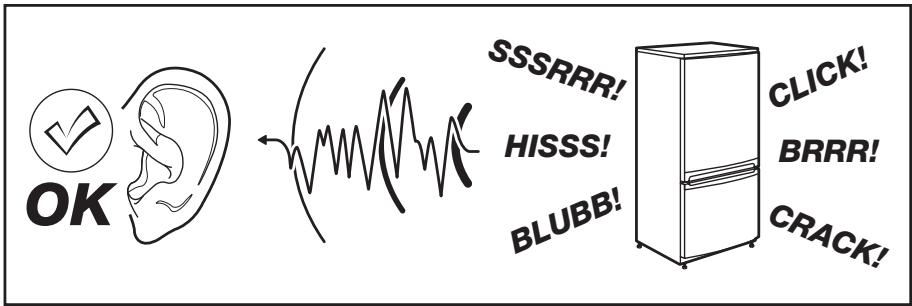
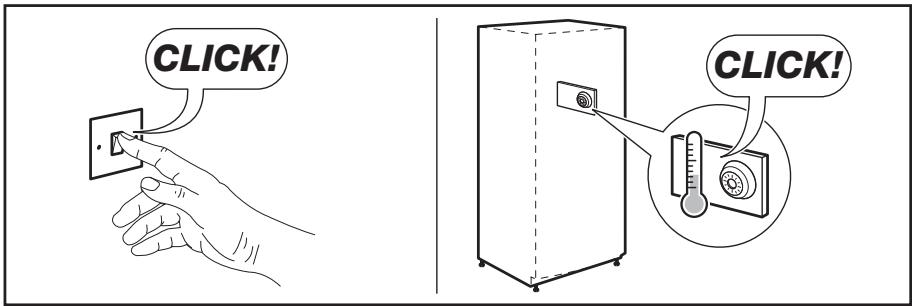
There are some sounds during normal running (compressor, refrigerant circulation).
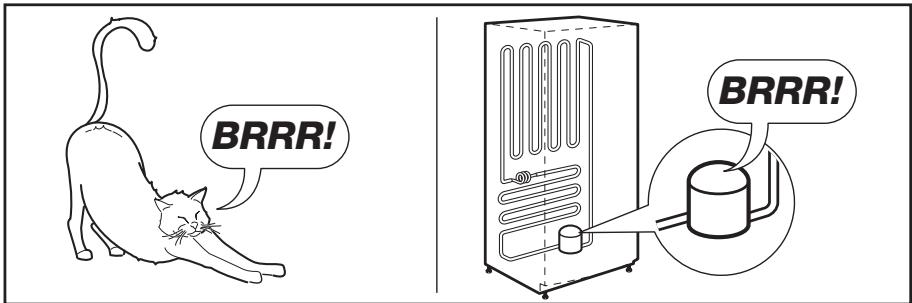
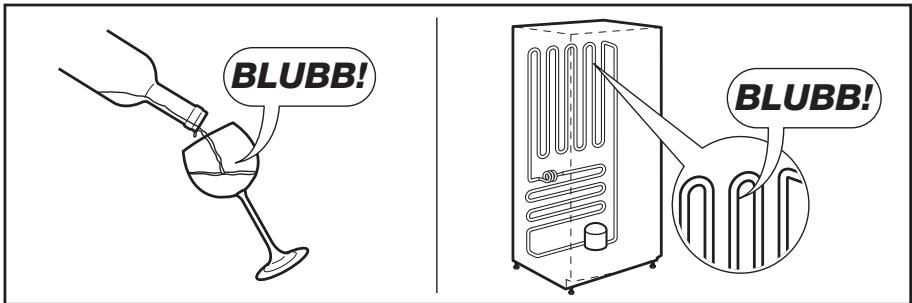
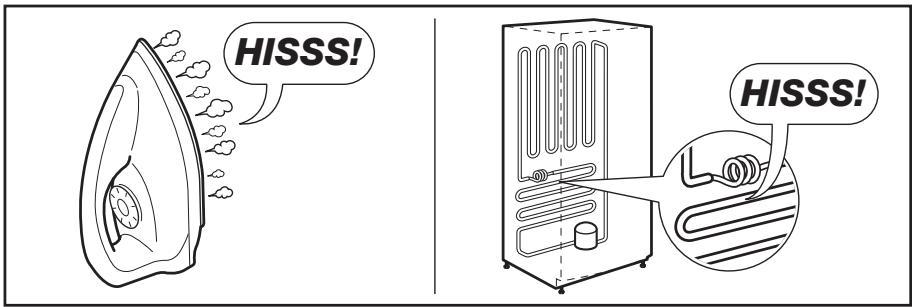
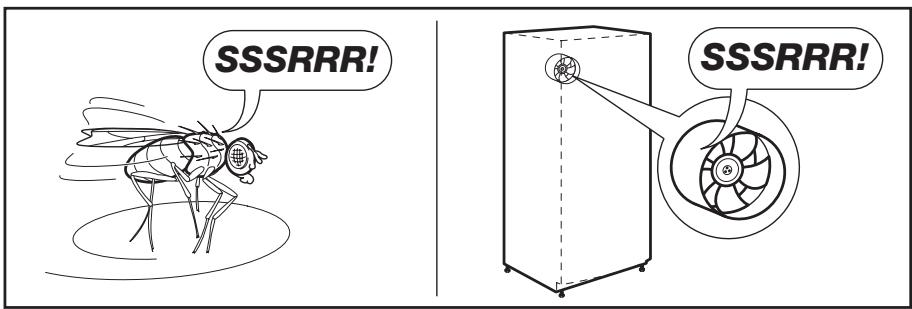
TECHNICAL DATA
| Dimensions | Height × Width × Depth (mm): | Further technical information are situated in the rating plate on the external right side of the appli- ance. |
| 876 × 946 × 665 | ||
| Rising Time | 32 hours |
ENVIRONMENT CONCERNS
Recycle the materials with the symbol
Put the packaging in applicable containers to recycle it.
Help protect the environment and human health and to recycle waste of electrical
and electronic appliances. Do not dispose appliances marked with the symbol with the household waste. Return the product to your local recycling facility or contact your municipal office.
SOMMAIRE
CONSIGNES DE SECURITE 21
DESCRIPTION DE L'APPAREIL 24
FONCTIONNEMENT 25
BANDEAU DE COMMANDE 26
PREMIÈRE UTILISATION 27
UTILISATION QUOTIDIENNE 28
CONSEILS UTILES 30
ENTRETIEN ET NETTOYAGE 31
EN CAS D'ANOMALIE DE FONCTIONNEMENT 33
INSTALLATION 37
BRUTS 38
CHARACTERISTIQUES TECHNIQUES 39
EN MATIÈRE DE PROTECTION DE L'ENVIRONNEMENT 39
NOUS PENSES À VOUS
www.electrolux.com/productregistration

ayopaoETEgaptnmuata,avalwioa kai yvnoia avtalaktkya i n oukeun oac:
www.electrolux.com/shop
YIIOZTHPIEH IENATQN KAI ZEPBI
Suviotatai n xpion yvniow avtaaaktkw.
Oav tikoivwveite me to eepbis,bebaowtheite on exe teiaoetua kokoua stoxieia.
Ta oToiexia auta tha ta pteite stnvy tivakiδa texvikwv xaaktnpiotikwv. MovTeLo, Kwδ. Tpoiovtoc (PNC), ApIθμoc σεipac.

PpoEoiOioN / PpOoXn - PAnpOpopieC aαρaλεiαc.

TENIKE Σ ΠΑHPOΦOPIE Σ I A THN AΣΦΑΛΕΙA

IPOEIAOIOIHsH
DiatnpieEeUeepa atto eumtobia ola ta avoiymuata aepiaouo TPOPIBnaTc oukeunnTnv ETOIXIAeVKn katakeun.
H ouakeun npoopiZeTai yia n quaIg npoiI /kai avauuktiKwv evos uvnioevou voikokupiou, oTsw eNyeitai oTo napov quaLabiO obnyiw.
Mn xnpaioTIOIEI nXavikc oakuec n aaaa texvnta mea yia tnv etitaxuvan ts diaika- iaas Eeayuato.
Mn xnpaiuottoiee alles nlektipkecs uokevcs (ottw tayomegaxavc) oTo eomegapekiyuktiKuv ouokewv, kTo av evai yekepiivev yia TO oKOTTO auto to To kataoekuaatn.
MnV Tpokaleite Znmu aTo Kukawu uKtikoU uypu.
To yuktiokioooboutavio (R600a) tou pteiexe- tai 0KUKwmu yuktikou uypou tnc ou- kkeunc, evai eva qusiok aepio me uynlo etti- TEOO TEPIbaovtikng oumbetaotntac, to OTIO, wotsoo, eivai EUΦAekTO.
Kata t n metapop kai eykataaotaon ts ou- okeun, Baeaiwthetai e ot dev tpokaleitai znmu a e kaveva eapntma tou kukawmuos uuktkou uypu.
Eav Tpokknte i Zmu a oTo Kukawu uKtikou uypu:
aTTOPOUYE TIS YUIVES FOYES KAI TIS TINVES avapalens
- i kaA to Xwpo oTov OTIOBpiaKE-TaI n OUskeUn
H OTIOA#NIOTe aALayn TwV TEXVIKwv XapakNTpiotIKWv n TPOITOToina autoTou TPOIOVTOc eivai ETIKIVOvn. EAV To KAwio UTOoTEI OTIOA#NIOTe Cmua, mtopei va TpokAnthe paXukkawma, TUPKAYia /kai nAekTPOATTNja.

IPOEIAOIOIH2H
TnV aTTOuyN KIVOUVW, navTKaTa- Oaon TwN NkETPIKOWEAPNTmuT W (KAWOIO TPOPOOOIAC, QIC, OUMTIeOTN) NTTEIvaYivetai ATIO TIOITOToinEvo AVITIPoOSWTIO n ATO KAATPTIOEvo TPOOWIKO ePBC.
- To kaawio tropooosiac dev npetie va Etniunkuvai.
- PpooEeT va nun ouvthetai na unuTo- stei znui a to pic tropofooiac sto triou mepoc tnc ouakueuc.Eav to qic tropofooiaac ouvthetai n uToaTe znui, evdextai va utephemuavte kai va Tpokalée i Tnpkayia.
- Beβaiωθeite οι ἐχετε προσβαοη ΘΟ φις Προφδοσαίας τής αὐκεύης.
- Mny tpaata To kaawio tropooociaac.
- Eav n nλeKtpiKn triCi eivai xaIapn, mnu EiaayaveTo qic. YIaPexi Kivouos nλeKtporanLxiac n tpokkanns TupKayiac.
- H oukeun dev pentei va xpoaioitoiietai xwpic to kalumu tou laumnpa (eav TpoBtetai) tou eotepikou wtoou.
H oukeun autn eivai bapiia. Aattatei tpo-oxn kat a n eapop a nC
Mnvaapaeite kai mny avyiciet eavtikeiyeva sto 0t aalao tns katayugns av ta xepia oac evai vtt/βpveva, kaoti mtopei va pokan- touv ekdpoc sto depma n kpuotaymuata.
ATopeuyetytnvnapatetaqevnek0eontnsouKkeuncSto aeeoo nlaikoc
Olaantipes (eav tpoBtovta) Tou xpnai-
muotiouvtar ae autiytn ouakeun eivai la
ttnpes EIOIKOU KOTOU,ETIYEVEOI yia xpno
movo e OIKIAKcS OUKeues. Deev iivai katalnn
loi ia qwiio oikiakwv xpwv.
KAOHMEPINH XPHSEH
Mny toTIOtheite Zeotc Kaatapoles Ota TIA-OTIKA ePn Tns oukeunc.
MnV puAaOSeTE eUpAeKTA aepia kai uypa otN oukeun ETEIOH mTIOpei va ekpayoUV.
MnV toTOtheTeIe TPOphia ATeuTHeiac 6EETaFm Ie TnV EoOa aepa oTo Tiow Toixwma. (Eav n Suokviv Frost Free.)
Ta kateyuueva tropiia dev tptetv a katauoxovtai kai nai apou antouyxthetav.
AtothkeuETa TpOoUKEuaaueva KATEuyuyeva TpOPIa OUmPwVa TE Onyiesou KaTaoKEuaTn YIA KATEUYMeVA TpOPIa.
Θa Tpétéi va tnpouvtaiauotnpa oiautáaeic aTOnkkeuansTwipapaokveaotwtns uOKEunc. AvatpeTe OTICxETIKeOs odnyies.
Mny toTIOtheTeIE avpakoUya TnTa OTOv katauuktn eoovdnioupeitai trio sto doxio, TO oTOIO uTPOei va ekpayi, tpokalwvtac Znmuic stn ouakeun.
TaTAYtA tUou SuIakyypavita mTOpE va TpokaTeouv Eykaumuata aTo payo eav kata- valwOouv ateueia cAto tn oukeun.
ΦPONTIΔA KAI KAΘΑPIΣΜΟΣ
Piiv ato tn ouvtipnana, atevepytoiane t n aukeun kai atouuvoeate to qic tropooboaia c ato tyn pici.
MnV kaOapiCte Tn OuaKeun με μeTaλiKa avTikεiμεva.
Mn xnpaioTIOeite aixnpa avtkeiEvva ia va aopaieite tov npo ato tn ouakeun. XnpaioTIOeite TlaoTkn foutpa.
EΓΚΑΤΑΣΤΑΣΗ
!
Tn ouoovou aokou O note TPOOeTKIa Tc oynie TOn Dovvta anvavtox npapaypao.
- Atouoakeuaote tn ouakeun kai elevetye av exei utootei znuec. Mn ouvdeete tn ouakeun eav exei utootei znui. Avapepete aoeaws evexoovec znuec oTo poc onou ayopaaute tn ouakeun. Ze autn tyn TEPiTTwO, qulaTe tn ouakeuaia.
Eivai oKoTIIMo va TEPiEvETe TouAixOTov TeOepi cWpe TPOTu OUVoeTe T OuaKEuI, WATE TO EALIO VA ETNIPTpeei KAI TAI OTO UUMTIIEOTn.
Oa IpTeIva UntapXeI ETTAPKn Kukloopopia Tou aepa yupw ato tn ouoku. DiaopopeTikA 0a Tpokn0ei utephemuavan. Tia Tnv EITIEuGg ETTAPKouc Kukloopipac aepa akoloutheta TIG OxETIKc odnyies Tns EyKatataaans.
H O uokueun 6ev npTei va toToBteiTai KovTa 6e oomega t KaIopipepn oouvoc.
Bεβaωθeite oti utapxé i eukoan tpóσaon σto φις tpoφodσiας μeτa tvv εykatáσtaon της Σομκeunς.
ΣEPBIS
Oi nEeKtpoLoyikEs epyaies Tnou aattouvTuia To epBis Tns oukeuhs Ta PpTeIva kTLeAouvTaAto ETTayevMaia nEeKtpoLyo n alLo EIdiko.
To Tpioov auto To TpETeV a EtiKEuaZetai aTIO EouaOIOIeVA Kevtpa SePBC, Evw 0 TpETeV aXpOIoTOIOUVTai mOvo yvna AvtalakTiká.
IPOSTAZIA TOY IEPIBA/ONTOZ

H ouakeun autn dev tepiexie aepia ta
otioia mtropouv va tpokalaeouv zmuia
oTtpuwa Tou oovtoc, eite oTO KU
ka uuktioku uypu n ta uovwtka
uikacns. H ouakeun de Ta TpETeiv a
attoppittetai paiz iE ta oikia k atoppipuijata. O apoc movwng tepieei EU
aepia: H ouakeun th TpETeiv a
attoppittetai oumpwva Teouc ixuovtec kavoviaouss Tou h aabete atto tic
totikce apxcs. Atopuyety va tpokale
eTe Zmu otnv uuktiikovadba, EIDiKa
OTo Tiow mepoc Kovta TOT evaalaktn
thetaptntac. Ta ulika TOnpaio
TIOuvtae autn tn ouakeun kai an
meiwovtai me to suubolo eivai avakkawoiua.
PPIIpaH IPOIONTO
1AaβnKaTakciou
2Iivakiδa Teχvikw ∩ āpaktniətikw
3 Pivakac xeiipotnpiwv kai putheta ts eepokaaia
ANAITHSEI EEAPEIEMOY
-
TOnToEeIToTe Tov KatauukTn O opCiOvTia ΘeON KAI Oe OTeepn EtniPavEia. O thalaooc TTpeTEI VA OTnpieTai KAI OTA Teoepa Tiobia.
-
Beβaiωθeite Θι n ατοσαηναμεσα Θη συακεύη και τον πιω τοίαο εἶλ 5 cm.
- Bebaowtei otn aototaon avaeaa ot n ouakeun kai ta tlaiv taunata evai 5 cm. H poaepa maw ato tn oukeun npetee va eivai etapknC.
OOPYBOI
Akooyvtai katioioi nxoikata tn diapkeia tns ka-vovikis leitoupyias (oumuieotns, kukloopopia uuktkoU uyou).
TEXNIKA XAPAKTHPIIKA
- WE'RE THINKING OF YOU
- Visit our website for:
- CUSTOMER CARE AND SERVICE
- SAFETY INFORMATION
- CHILDREN AND VULNERABLE PEOPLE SAFETY
- GENERAL SAFETY
- WARNING!
- DAILY USE
- CARE AND CLEANING
- INSTALLATION
- SERVICE
- ENVIRONMENT PROTECTION
- PRODUCT DESCRIPTION
- OPERATION
- SWITCHING ON
- SWITCHING OFF
- TEMPERATURE REGULATION
- CONTROL PANEL
- ACTION FREEZE FUNCTION
- HIGH TEMPERATURE ALARM
- FIRSTUSE
- CLEANING THE INTERIOR
- FREEZING FRESH FOOD
- STORAGE OF FROZEN FOOD
- STORAGE BASKETS
- OPENING AND CLOSING THE LID
- HELPFUL HINTS AND TIPS
- HINTS FOR FREEZING
- HINTS FOR STORAGE OF FROZEN FOOD
- CAUTION!
- PERIODIC CLEANING
- DEFROSTING THE FREEZER
- PERIODS OF NON-OPERATION
- WHAT TO DO IF...
- POSITIONING
- ELECTRICAL CONNECTION
- VENTILATION REQUIREMENTS
- NOISES
- TECHNICAL DATA
- ENVIRONMENT CONCERNS
- SOMMAIRE
- NOUS PENSES À VOUS
- YIIOZTHPIEH IENATQN KAI ZEPBI
- TENIKE Σ ΠΑHPOΦOPIE Σ I A THN AΣΦΑΛΕΙA
- IPOEIAOIOIHsH
- IPOEIAOIOIH2H
- KAOHMEPINH XPHSEH
- ΦPONTIΔA KAI KAΘΑPIΣΜΟΣ
- EΓΚΑΤΑΣΤΑΣΗ
- !
- ΣEPBIS
- IPOSTAZIA TOY IEPIBA/ONTOZ
- PPIIpaH IPOIONTO
- ANAITHSEI EEAPEIEMOY
- OOPYBOI
- TEXNIKA XAPAKTHPIIKA
Brand : AEG-ELECTROLUX
Model : EC2800AOW
Category : Freezer