
SBSL60W91S - Refrigerator AKAI - Free user manual and instructions
Find the device manual for free SBSL60W91S AKAI in PDF.


| Product Type | Side-by-Side Refrigerator |
| Brand | AKAI |
| Model | SBSL60W91S |
| Total Capacity | 580 Liters |
| Freezer Capacity | 180 Liters |
| Fridge Capacity | 400 Liters |
| Energy Class | E (EU 2021) |
| Annual Energy Consumption | 320 kWh/year |
| Climate Class | N-T (16°C to 43°C) |
| Noise Level | 42 dB(A) |
| Dimensions (HxWxD) | 185.5 x 91 x 70.5 cm |
| Weight | 85 kg |
| Power Supply | 220-240 V ~ 50 Hz |
| Frost Free Technology | Yes (No Frost) |
| Water Dispenser | External (plumbed) |
| Ice Maker | Automatic |
| LED Lighting | Yes |
| Display Type | Touch Control Panel |
| Holiday Mode | Yes |
| Door Alarm | Yes |
| Reversible Doors | No (Side-by-Side fixed orientation) |
| Shelves Material | Tempered Glass |
| Warranty | 2 years (parts and labor) |
Frequently Asked Questions - SBSL60W91S AKAI
User questions about SBSL60W91S AKAI
0 question about this device. Answer the ones you know or ask your own.
Ask a new question about this device
Download the instructions for your Refrigerator in PDF format for free! Find your manual SBSL60W91S - AKAI and take your electronic device back in hand. On this page are published all the documents necessary for the use of your device. SBSL60W91S by AKAI.
USER MANUAL SBSL60W91S AKAI
natural_image
Cartoon illustration of a distressed refrigerator with a surprised expression (no text or symbols)
natural_image
Cartoon illustration of a baby climbing inside a refrigerator (no text or symbols)MONTAGGIO PARTI
natural_image
Illustration of a smiling refrigerator with steam rising, accompanied by a small icon showing a TV (no text or symbols)①
natural_image
Cartoon illustration of a smiling refrigerator with arms and legs, standing on tiled floor (no text or symbols)②

natural_image
Cartoon illustration of a distressed refrigerator with steam and snowflakes around (no text or symbols)③

④
natural_image
Simple line drawing of a smiling face and a hand holding a clock (no text or symbols)PANNELLO DI CONTROLLO
flowchart
graph TD
    A["Room"] --> B["Function"]
    B --> C["Temperature"]
    C --> D["3s unlock"]
natural_image
Cartoon illustration of a steaming dish and a distressed refrigerator with a sad face (no text or symbols)MANOPOLA DI CONTROLLO

natural_image
Simple line drawing of a hand holding an apple over a sheet of apples (no text or symbols)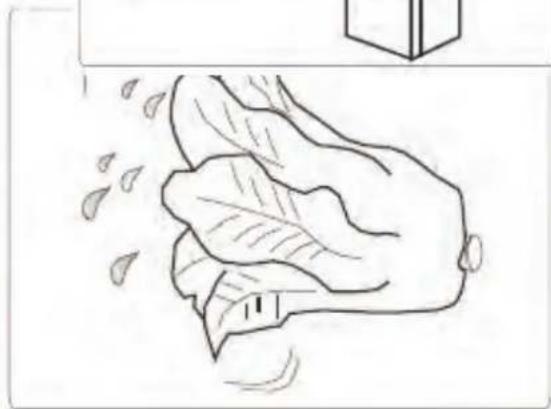
natural_image
Simple line drawing of a leaf being poured into a container with a cube above (no text or symbols)natural_image
Line drawing of a kitchen appliance with three plates on a tray (no text or symbols)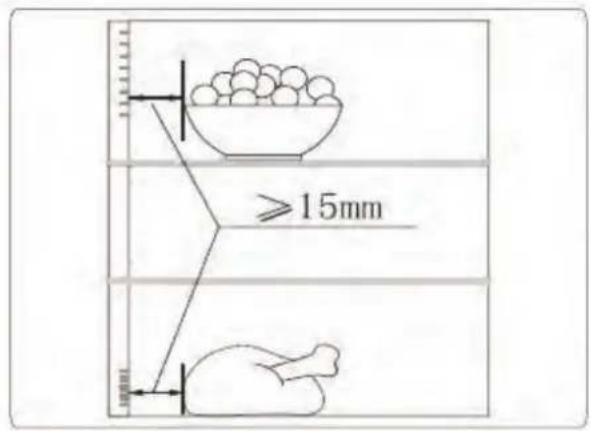
MANUTENZIONE
PULIZIA
natural_image
Illustration of a person cleaning a refrigerator with a jar nearby (no text or symbols)natural_image
Illustration of a refrigerator with a thermometer and a crossed-out box, no text or symbols presentPULIZIA CONTENITORE ACQUA
natural_image
Simple line drawing of a refrigerator with a smiling face and exhaust lines, next to an empty window (no text or symbols)LASCIARE L'ELETTRODOMESTICO SPENTO
1.) The appliance has to be unplugged after use and before carrying out user maintenance on the appliance.
2.) This appliance is not intended for use by persons (including children) with reduced physical, sensory or mental capabilities, or lack of experience and knowledge, unless they have been given supervision or instruction concerning use of the appliance by a person responsible for their safety.
3.)Children should be supervised to ensure that they do not play with the appliance.
4.) If the supply cord is damaged, it must be replaced by manufacturer, its service agent or similarly qualified persons in order to avoid a hazard.
5.) Save these instructions and be sure that they remain with the appliance if it is moved or sold, so that anyone, using it throughout its life, will be properly informed on usage and safety notices.
6.) Do not use mechanical devices or other means to accelerate the defrosting process, other than those recommend by the manufacturer.
7.) Do not damage the refrigerant circuit.
8.) Do not use electrical appliances inside the food storage compartments of the appliance, unless they are of the type recommended by the manufacturer.
9.) please abandon the refrigerator according to local regulators for it use flammable blowing gas.
10.) Keep ventilation openings, in the appliance enclosure or in the built-in structure, clear of obstruction.
11.) Do not store explosive substances such as aerosol cans with a flammable propellant in this appliance.
12.) This appliance is intended to be used in household and similar applications such as – staff kitchen areas in shops, offices and other working environments;
– farm houses and by clients in hotels, motels and other residential type environments;
– bed and breakfast type environments;
– catering and similar non-retail applications.
13.) When fresh food are introduced into food freezer compartment, the appliance should be set in operation in the fast freezing condition.
14.) This appliance can be used by children aged from 8 years and above and persons with reduced physical, sensory or mental capabilities or lack of experience and knowledge if they have been given supervision or instruction concerning use of the appliance in a safe way and understand the hazards involved. Children shall not play with the appliance.
Cleaning and user maintenance shall not be made by children without supervision.
WARNING: When positioning the appliance, ensure the supply cord is not trapped or damaged.
WARNING: Do not locate multiple portable socket-outlets or portable power supplies at the rear of the appliance.
REFRIGERATOR
If the refrigerant circuit should be damaged:
Avoid opening flames and sources of ignition.
Thoroughly ventilate the room in which the appliance is situated.
It is dangerous to modify this produce in any way.
CONTENTS
Safety Precaution
Parts
Placement
Operation Check
Food Storager
Maintenance
Trouble Shooting
Energy Saving Tips
SAFETY PRECAUTION
Please always follow the safety hint listed below:
The power supply for the unit should be exactly the same as described on the data sheet, and use the standard tri-prong socket.

The unit should be operated in the absence of flammable or explosive fumes. It is prohibited to put the flammable, acid or volatile goods in cabinet.

Please unplug the unit first when you replace the light bulb or repair the refrigerator.

natural_image
Cartoon illustration of a book character with a fishbowl above its head, showing a distressed expression (no text or symbols)Please unplug the unit immediately if you find any abnormal smell or smoke, and contact your local service center.
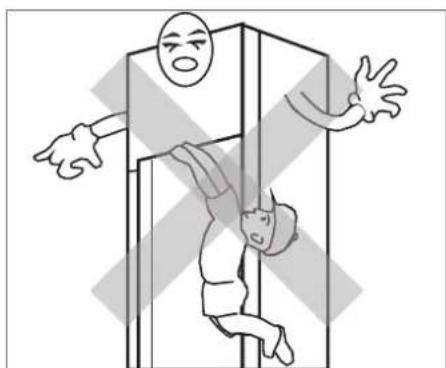
natural_image
Illustration of a person climbing a door while another person faces, with expressive gestures (no text or symbols)Hanging or sitting on the door is very dangerous, it may overturn the unit and subvert the goods in (or on) the refrigerator.
PARTS
Due to the production's improvement, the unit you purchased maybe different from below sketch.

Freezer Room Fridge Room
1 Glass Shelf
2 Multi-functional Pallet
3 Freezer Door
4 Freezer Door Racker
5 Upper Freezer Compartment Drawer
6 Lower Freezer Compartment Drawer
7 Glass Shelf
8 Fridge Door
9 Upper Balcony On Freezer Door
10 Crisper
PLACEMENT

natural_image
Illustration of a distressed refrigerator with a sad face and a warning sign (no text or symbols)①

natural_image
Cartoon illustration of a smiling refrigerator with arms and legs, standing on tiled floor (no text or symbols)②

natural_image
Illustration of a person standing beside a refrigerator with snowflakes in the background (no text or symbols)③
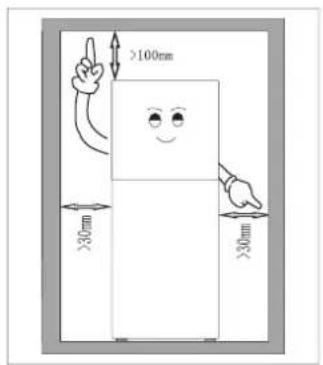
④
① The unit should be placed in a ventilated and dry environment. Do not put the unit in direct sunshine, and keep it as far as possible from heat sources.
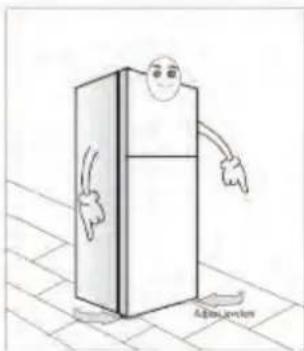
② The unit should be placed on flat and steady ground. Keep the unit level by adjusting the front leg levelers.
③ Don't put the unit in cold area.
④ There should be enough spare space around the unit as shown, to allow proper ventilation.
OPERATION CHECK
It may not work properly if being left at a temperature above or below the indicated rang for a long period.
| Climate class | Ambient temperature |
| SN +10°C | to +32°C |
| N | +16°C to +32°C |
| ST | +16°C to +38°C |
| T | +16°C to +43°C |
Make sure the unit has been placed properly and all instructions have been observed.

Adjust the control knob to the middle position, and then plug in the unit. After closing the door for several minutes, both side of cabinet becomes warm.
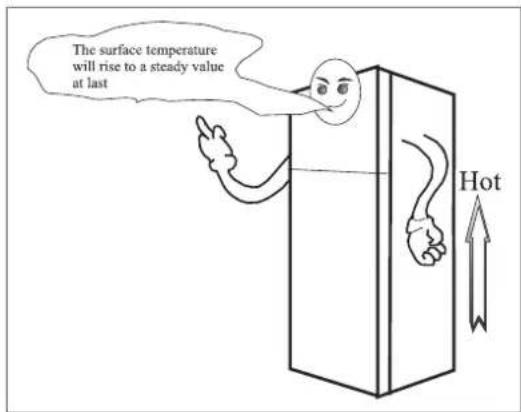
30 minutes later, open the freezer compartment door, feel the cold air, that means the unit works properly. After a period of time the thermostat will switch off & on automatically and set the compartments at the desired temperature.

natural_image
Simple line drawing of a smiling face and a clock with an upward arrow, no text or symbols presentCONTROL PANEL
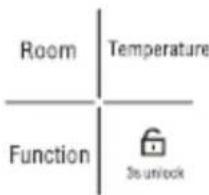
Use your appliance according to the following control regulations, your appliance has the corresponding functions as the control panels showed in the pictures below.
Keep long press "unlock" button for 3 seconds, then you can press other buttons for operating.
Touch the "room" button, the current room will flash, and then press the "room" button again, you can choose between the fridge rooms and freezer romms. If there is no operation for more than 5S, the default will be confirmed, then the settings take effect.
Touch the "Temperature" button, the temperature of compartment will increase and cycle.
Short press "function" button to select the different mode.
FRIDGE TEMPERATURE SETTING
Press the "room" button, select the fridge compartment, indicator flash;
Each time of press "temperature" key, the temperature rise and cycle as 2 3 8 OF 2 3 8 OF ,
no operation for 5S, display flash stopped, the settings take effect. OF means stopping cooling.
SMART CONTROL


FREEZER TEMPERATURE SETTING
Press the "room" button, select the freezer compartment, indicator flash;
Each time of press "temperature" key, the temperature rise and cycle as -25→……→-16→-15→-25→……→-16→-15,
no operation for 5S, display flash stopped, the settings take effect.
MODE DESCRIPTION
MODE SETTING
Press the "function" button, the current mode will flash; you can choose between smart, quick cooling, quick freeze, holiday and other four modes by pressing the "function" button; If there is no operation for more than 5S, the default will be confirmed, then the settings take effect; when you're setting the temperature, you'll exit this function freeze and the light indicator off.
SMART MODE
The refrigerator will adjust the temperature automatically according to the ambient temperature and the temperature inside the refrigerator, you don't have to choose the temperature by yourself, save your time and effort.
QUICK COOLING MODE
In this mode, the temperature of fridge comparment will reach set the temperature quickly, which will help to keep the food fresh. If you want to put much food in the refrigerator at once, please choose this mode.
QUICK FREEZE MODE
The food will be frozen in a short time. Note: This mode has a duration of 6 hours and a duration of 48 hours for both time modes to be chosen. When entering the quick freeze function normally, it defaults to a 6 hour quick time mode. If you need to enter the 48 hour quick-freezing function you also need to do the following: in the quick-freeze function has been effective, continue to hold the "function" key and "temperature" button for 5 seconds, enter the set frozen time selection, frozen temperature display area display the current freezing time (unit: hours), the remaining icons are not displayed; then press the "temperature" key to set the quick-freezing time, set the order of 48 6 48 6 cycles; 5s no key operation after the automatic lock confirmation or press the "unlock" button for 3 seconds, the settings take effect, and return to the normal state. Frozen mode takes effect immediately after you have finished setting, and automatically exits and returns to normal control when the quick freeze time is set.
HOLIDAY MODE
When you and your family intend to go on holiday, and no one at home, you can choose this mode. The fridge and freezer compartment will automatch the appropriate temperature in this mode.
FOOD STORAGE
The temperature in the fresh compartment is between 0\~10°C, although this lower temperature can limit the bacteria propagation, it is not suitable for a long period of food storage.
natural_image
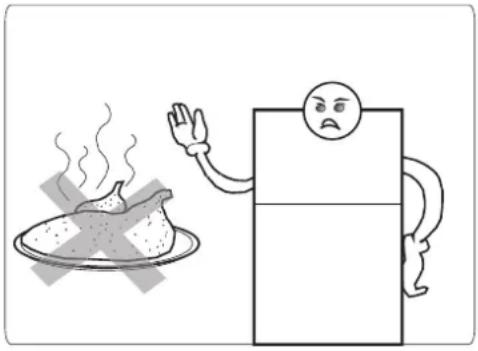
Cartoon illustration of a steaming dish next to a refrigerator with a sad face (no text or symbols)FRESH FOOD STORAGE
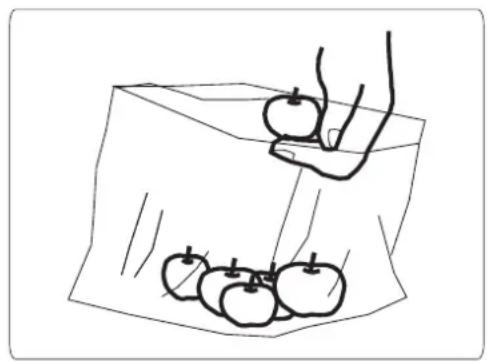
Cooked food should be cooled down to room temperature before putting into the refrigerator. It is better to put the food in a sealed bag before placing into the refrigerator.
In order to keep vegetables fresh in the crisper, any water should be removed first, otherwise the vegetables may spoil. If you put the vegetables in the bag, they may be stored for a longer period.
natural_image
Simple line drawing of a hand holding an apple above a stack of apples (no text or symbols)
natural_image
Line drawing of a leafy vegetable with leaves spilling out (no text or symbols)CONTROL KNOB
Is used to adjust the temperature of different compartment. User can adjust for desired temperature.
User can adjust the temperature of cooling by turn-control knob located at the back of the cooling zone cabinet. According to the above picture, the knob is used for controlling temperature of cooling. Temperature shall get lower if turning the knobs by clockwise sense while I get higher if anticlockwise.
FROZEN FOOD STORAGE
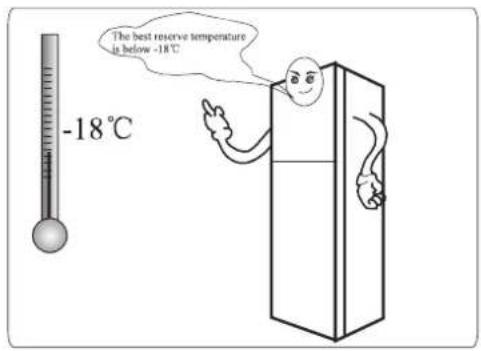
The temperature of the freezer is colder than -18^ . It is to store food to be kept for a long period.
After buying frozen food, please put it into the freezer compartment as soon as possible.
Any hot food must be cooled down to room temperature before it is put into the freezer.
Please don't put glass containers filed with liquid into the freezer compartment as the glass may break.
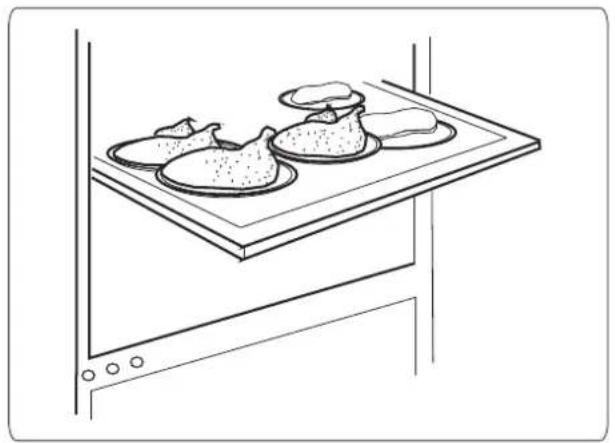
It is better to presort the foods before putting them into the freezer. Put the same kinds of food together to help to minimize the time to the freezer door opening when you take the food out, and helps to save energy.
The food should be put too close to the outlet or inlet of the airflow. It may affect the air circulation
natural_image
Line drawing of a kitchen appliance with plates and dish (no text or symbols)
MAINTENANCE
CLEANING
Always unplug the unit before cleaning.
The unit should be cleaning frequently both inside and outside using water and a little neutral detergent. Never use boiling water, harsh cleaning agents, acid, alkali or benzene etc.
This product must be serviced by an authorized service center, and only genuine spare parts must be used.
1). If the appliance is frost free.
2). If the appliance contains freezer compartment.
WATER PAN CLEANING
The water pan is located in the back of cabinet. Its function is to collect and evaporate the defrost water. Usually it doesn't need special care, but if you find some water overflow or odd smell, it may need to be checked and cleaned. Pull out the power cord first. Lift the water pan up a little, and then pull it straight out carefully.(Caution: make sure the discharge pipe is not too hot). After cleaning, refix the water pan into the original position. Make sure that the pipe is on the top of the water pan before you push it into the original
LEAVING THE NUIT SWITCHED OFF
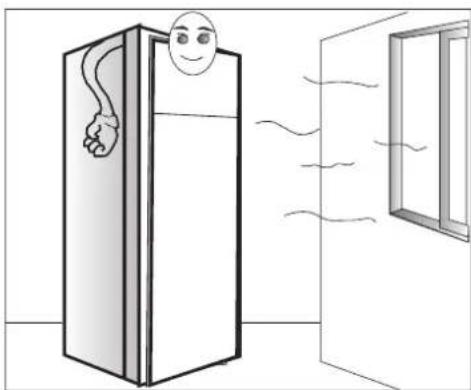
If the unit will be switched off for a long time, the plug should be pulled out, the clean the unit thoroughly. Ensure that the door cannot be fully closed (leaved a suitable gap), and place the unit in a well-ventilated area to avoid any odor.
REPLACING THE LED LIGHT
Warning: The LED light must not be replaced by the user! if the LED light is damaged, contact the customer helping for assistance. To replace the LED light, the below steps can be followed:
- Unplug your appliance.
- Remove light cover by pushing up and out.
3.Hold the LED cover with one hand while pressing the connector latch.

natural_image
Illustration of a smiling refrigerator with a hand cleaning it, next to a small jar (no text or symbols)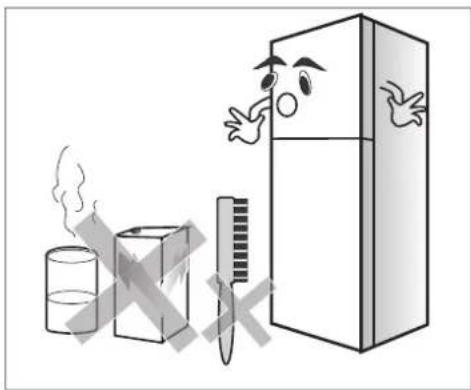
natural_image
Illustration of a refrigerator with a surprised face and a thermometer beside it, next to a steaming cup and a box (no text or symbols)
natural_image
Illustration of a smiling refrigerator with arms extending into the window, emitting steam (no text or symbols)TROUBLE SHOOTING:
If you experience a problem with your appliance or are concerned that the appliance is not functioning correctly, you can carry out some easy checks before calling for service, please see below.
Warning! Don't try to repair the appliance yourself. If the problem persists after you have made the checks mentioned below, contact a qualified electrician, authorized service engineer or the shop where you purchased the product.
| Problem | Possible cause & Solution |
| Appliance is not working correctly | Check whether the power cord is plugged into the power outlet properly. |
| Check the fuse or circuit of your power supply, replace if necessary. | |
| The ambient temperature is too low. Try setting the chamber temperature to a colder level to solve this problem. | |
| It is normal that the freezer is not operating during the automatic defrost cycle, or for a short time after the appliance is switched on to protect the compressor. | |
| Odours from the compartments | The interior may need to be cleaned |
| Some food, containers or wrapping cause odours. | |
| Noise from the appliance | The sounds below are quite normal:Compressor running noises.Air movement noise from the small fan motor in the freezer compartment or other compartments.Gurgling sound similar to water boiling.Popping noise during automatic defrosting.Clicking noise before the compressor starts. |
| Other unusual noises are due to the reasons below and may need you to check and take action:The cabinet is not level.The back of appliance touches the wall.Bottles or containers fallen or | |
| The motor runs continuously | It is normal to frequently hear the sound of the motor, it will need to run more when in following circumstances:Temperature setting is set colder than necessaryLarge quantity of warm food has recently been stored within the appliance.The temperature outside the appliance is too high.Doors are kept open too long or too often.After your installing the appliance or it has been switched off for a long time. |
| A layer of frost occurs in the compartment | Check that the air outlets are not blocked by food and ensure food is placed within the appliance to allow sufficient ventilation. Ensure that door is fully closed. To remove the frost, please refer to cleaning and care chapter. |
| Temperature inside is too warm | You may have left the doors open too long or too frequently; or the doors are kept open by some obstacle; or the appliance is located with insufficient clearance at the sides, back and top |
| Temperature inside is too cold | Increase the temperature by following the "Display controls" chapter. |
| Doors cant be closed easily | Check whether the top of the refrigerator is tilted back by 10-15mm to allow the doors to self close, or if something inside is preventing the doors from closing. |
| Water drips on the floor | The water pan (located at the rear bottom of the cabinet) may not be properly leveled, or the draining spout (located underneath the top of the compressor depot) may not be properly positioned to direct water into this pan, or the water spout is blocked. You may need to pull the refrigerator away from the wall to check the pan and spout. |
| The light is not working | ●The LED light may be damaged. Refer to replace LED lights in cleaning and care chapter.●The control system has disabled the lights due to the door being kept open too long, close and reopens the door to reactivate the lights. |
FAULT DISPLAY
Fault display shows as following under Fault mode:
| ERROR CODE | ERROR TYPE |
| UC | Communication failure or model mismatch |
| RS | Sensor failure (refrigerating chamber) |
| ES | Failure of ambient temperature sensor |
| FS | Sensor failure (freezing chamber) |
| Fd | Defrosting sensor failure |
| FF | Fan failure |
| FH | Defrosting failure |
ENERGRY SAVING TIPS
- The internal temperatures could be affected by such factors as the location of the refrigerating appliance, ambient temperature and the frequency of door opening, and, if appropriate, a warning that the setting of any temperature control device might have to be varied to allow for these factors;
- The food to be frozen is not to be placed in direct contact with food in storage and, if appropriate, that it could be necessary to reduce the quantity to be frozen if freezing every day is anticipated,)
- The placing of ice-tray(s) in order to achieve optimal ice-freezing;
- The fact that effervescent drinks should not be stored in food freezer compartments or cabinets or in low-temperature compartments or cabinets, and that some products such as water ices should not be consumed too cold;
- The need to not exceed the storage time(s) recommended by the food manufacturers for any kind of food and particularly for commercially quick-frozen food in food-freezer and frozen-food storage compartments or cabinets;
- The precautions necessary to prevent an undue rise in the temperature of the frozen food while defrosting the refrigerating appliance, such as wrapping the frozen food in several layers of newspaper;
- The fact that a rise in temperature of the frozen food during manual defrosting, maintenance or cleaning could shorten the storage life;
- Make sure the refrigerator is located away from any heat source (including ovens) and direct sunlight.
- Before storing hot foods, cool them to room temperature.
- Keep the door closed, reduce the opening frequency, and keep the opening time to a minimum.
- When defrosting frozen foods, you can put them into the fridge compartment, which will assist in refrigeration helping to reduce the energy used.
- Make sure the temperature sensor is not covered or blocked by food, an keep a good distance between foods.
Insurance
! Any warranty provided with this product does not cover loss of fridge/freezer content
Any claim for loss, damage, costs or expenses of an indirect or consequential nature including any economic loss or damage to foodstuffs or any other goods is excluded. We recommend that you inspect your fridge/freezer regularly to check that it is working correctly, losses can result from deterioration following breakdown or accidental failure of the appliance, fuses, plugs or public electricity supply, these can be covered by your standard home insurance or might require extra cover. Check with your insurance provider.
Important Note:
This appliance is marked according to the European directive 2002/96/EC on Waste Electrical and Electronic Equipment (WEEE). By ensuring this product is disposed of correctly, you will help prevent potential negative consequences for the environment and human health, which could otherwise be caused by inappropriate waste handling of this product.
The symbol on the product, or on the documents accompanying the product, the Crossed Out Wheelie Bin, indicates that this appliance may not be treated as household waste. Instead it shall be handed over to the applicable collection point for the recycling of electrical and electronic equipment.
Disposal must be carried out in accordance with local environmental regulations for waste disposal. For more detailed information about treatment, recovery and recycling of this product, please contact your local authority, your household waste disposal service or the retailer where you purchase dthe product.

We continuously try to improve our products for the benefit of our customers. For this reason we reserve the right to make changes to any product at any time, without notice.
Specification, picture and feature are subject to change without prior notice for purpose of product improvement.

- MONTAGGIO PARTI
- PANNELLO DI CONTROLLO
- MANOPOLA DI CONTROLLO
- MANUTENZIONE
- PULIZIA
- PULIZIA CONTENITORE ACQUA
- LASCIARE L'ELETTRODOMESTICO SPENTO
- REFRIGERATOR
- CONTENTS
- SAFETY PRECAUTION
- Please always follow the safety hint listed below:
- PARTS
- Freezer Room Fridge Room
- PLACEMENT
- OPERATION CHECK
- CONTROL PANEL
- FRIDGE TEMPERATURE SETTING
- FREEZER TEMPERATURE SETTING
- MODE DESCRIPTION
- MODE SETTING
- SMART MODE
- QUICK COOLING MODE
- QUICK FREEZE MODE
- HOLIDAY MODE
- FOOD STORAGE
- FRESH FOOD STORAGE
- CONTROL KNOB
- FROZEN FOOD STORAGE
- MAINTENANCE
- CLEANING
- WATER PAN CLEANING
- LEAVING THE NUIT SWITCHED OFF
- REPLACING THE LED LIGHT
- TROUBLE SHOOTING:
- FAULT DISPLAY
- ENERGRY SAVING TIPS
- Insurance
- ! Any warranty provided with this product does not cover loss of fridge/freezer content
- Important Note:
Brand : AKAI
Model : SBSL60W91S
Category : Refrigerator