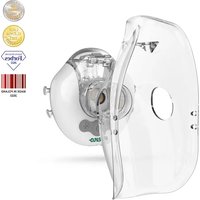
Vapore - Inhaler Neno - Free user manual and instructions
Find the device manual for free Vapore Neno in PDF.


| Product Type | Mesh Nebulizer |
| Brand | Neno |
| Model | Vapore (Air Mask II) |
| Dimensions (Main Unit with Container) | 7.25 x 6.75 x 5.05 cm |
| Weight | 72 g |
| Power Supply | DC 3.7 V, 750 mAh lithium-ion battery |
| Charging | USB cable (adapter not included, requires IEC 60601-1 compliant 5V/1A adapter) |
| Battery Life | Up to 60 minutes continuous use |
| Nebulization Rate | 0.15 - 0.90 ml/min (adjustable) |
| Particle Size (MMAD) | < 5 μm |
| Respirable Fraction | 65% |
| Drug Container Capacity | 6 ml (max fill line) |
| Dead Volume | ≤ 1 ml |
| Operating Modes | Constant and Variable (automatic rate cycling) |
| Automatic Shut-off | After 10 minutes of operation |
| Sound Level | ≤ 50 dB |
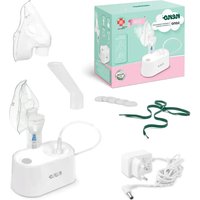
| Accessories Included | Adult mask, children's mask, infant mask, mouthpiece, silicone headband, USB cable, storage case |
| Materials | Plastic and stainless steel (main unit), silicone (mask/band) |
| Cleaning | Wash removable parts with warm water (<40°C) after each use; disinfect weekly with 3% hydrogen peroxide or 75% ethanol |
| Safety Features | Low battery and no-liquid indicators, automatic shut-off, leakage protection |
| Warranty | 24 months |
| Storage Conditions | Temperature -20°C to 55°C, humidity ≤80% RH, non-condensing |
Frequently Asked Questions - Vapore Neno
User questions about Vapore Neno
0 question about this device. Answer the ones you know or ask your own.
Ask a new question about this device
Download the instructions for your Inhaler in PDF format for free! Find your manual Vapore - Neno and take your electronic device back in hand. On this page are published all the documents necessary for the use of your device. Vapore by Neno.
USER MANUAL Vapore Neno
Table of contents
Spis treści
D
1
![graph LR A["Step 1: Initial mechanical component"] --> B["Step 2: Rotation arrow"] B --> C["Step 3: Insert syringe icon"] C --> D["Step 4: Final assembly with internal components"]](/content/2026/05/1102935/images/b817e92bab90cf9f4508c5c42c74b26e3a60e3b71c778fcd1f7a8acaf2926db1.jpg)
2

3

E



INSTRUKCJA OBSŁUGI
NENO VAPORE
Szanowny Kliencie,
Thank you for purchasing the Neno Vapore mesh nebulizer. The nebulizer is a medical device. Before using the product, please read the following instructions and keep it in case you need to use it again.
01. PRECAUTIONS
- Before use, make sure there is no visible damage to the device or accessories. Do not use the product if any component is damaged or missing.
- Use the product for nebulization only. Do not use the product for other purposes.
- The type, dosage and method of use of the drug should be consulted with your doctor and follow his instructions.
- Do not use the device with distilled water, oily substances and substances containing hyaluronic acid and essential oils.
- Water-soluble drugs containing alcohol and saline solutions are allowed for nebulization. The use of other drugs may cause bronchospasm.
- Before turning on the device, make sure that the medicine container is not empty.
- Do not pour more than 6ml of liquid into the medicine container.
- Do not immerse the main unit in water. The main unit should be dry after each use.
- If the unit is not used for a long time, clean and disinfect the medicine container and accessories before use.
- Clean the medicine container and accessories after each use.
- Do not touch the mesh with hard, sharp objects or fingers due to the risk of damage.
- Do not use accessories and spare parts other than those approved by the manufacturer.
- Nebulizer is intended for individual use. It is not recommended to use the device by more than one person.
- Before first use, charge the device for at least 30 minutes.
- Children and adults who are not able to operate the device independently should use it under the supervision of a guardian.
-
If you experience discomfort during use, stop using and consult a doctor.
-
Do not use the nebulizer in close mesh to heating devices or near an open flame.
- Keep the product and its packaging out of reach of children who could swallow small parts. If a child swallows small parts, consult a doctor immediately.
Contraindications:
- The product must not be used with drugs containing pentamidine.
- The device is prohibited for use by patients with pulmonary edema.
- The device is forbidden to be used by patients with a history of pulmonary infarction and those suffering from acute asthma.
- If the patient suffers from diabetes or other chronic disease, consult a doctor before use.
02. OPIS PRODUKTU
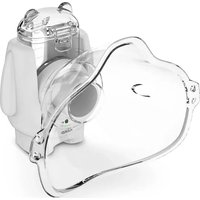
PATRZ RYS. A
- Medicine container lid
- Medicine container
- Spray nozzle
- Mesh membrane
- Power button
- Main unit
- Electrode contact pin
- USB charging port
- Adult mask
- Children's mask
- Infant mask
- Mouthpiece
- Silicone nebulizer band
03. INSTALLATION METHOD
- Remove the device, and all other accessories from the packaging.
- Charge the device for at least 30 minutes before first use.
- Before first use, clean, disinfect and dry all parts of the nebulizer according to section 05. CLEANING AND DISINFECTING.
- Install the medication container into the main unit. You will hear a "click" when the parts are properly assembled. SEE FIG. B. 1.
- Install the mask or mouthpiece on the spray head. SEE FIG. B. 2.
Power supply
- The nebulizer comes with a USB charging cable. The kit does not include a power adapter. Use an IEC 60601-1 compliant AC adapter (output: DC 5.0V
1.0A) for charging.
- When the device discharges, charge it with the cable. SEE FIG. C.
NOTE: Make sure the electrical outlet is working properly before charging.
Charging the battery
- When the battery is fully charged, the device can operate for up to 60 minutes.
- When the battery is detected to be low, the blue light will flash 5 times and then the device will turn off.
- While charging, the blue light blinks. A steady blue light indicates that the device is fully charged.
- To achieve the longest possible battery life, fully charge the battery at least once a month.
ATTENTION: Do not disassemble or repair the battery yourself.
04. USE OF THE DEVICE
1. Light notification
| Constant green light The device works in constant mode | |
| Green light with variable intensity The device works in variable mode | |
| Green light flashes 3 times Operating mode switched to variable mode | |
| Blue light flashes 5 times Low battery level, the device will turn off | |
| Orange light flashes 10 times No liquid in the medicine container, the device will turn off | |
| Blinking blue light Device is charging | |
| Steady blue light Device fully charged | |
| Green light flashes 10 times Device will turn off automatically after 10 minutes of operation | |
NOTE: If the drug container is filled and still the orange light flashes 10 times, press the power button to continue.
- Preparation: before use, clean, disinfect and dry the device and accessories according to 05. CLEANING AND DISINFECTION.
- Pouring the liquid: Open the medication container by lifting its lid upward. Then pour the liquid into the medicine container and close the lid. SEE FIG. D.1
NOTE: Leakage protection: when pouring the liquid into the medication container, be sure to fill it only to the marked maximum level (6 ml). The recommended amount of fluid is between 2 and 6 ml. Nebulization occurs only when the substance used for nebulization is in contact with the membrane mesh. If this
is not the case, nebulization stops automatically. Therefore, hold the device as vertically as possible during nebulization.
4. Nebulization
1) Attach the mask or mouthpiece. Press the power button to turn on the device and start nebulization.
2) Nebulization starts at a medium nebulization rate, which can be adjusted by pressing the "+" or "-" buttons.
3) The device has a variable mode, in which the nebulization rate automatically changes from maximum to minimum in 6 seconds. To switch to variable mode, hold down the power button for 3 seconds (the green light will flash 3 times). To switch back to constant mode, hold the power button for 3 seconds.
4) Before starting nebulization, lightly shake the device to mix the solution. Nebulization can be done in two ways: with a mouthpiece or with a mask. SEE FIGURE D.2
5) Slowly take a deep breath while inhaling the medicine contained in the mist produced by the nebulizer.
6) The nebulizer will automatically turn off after 10 minutes. If you want to continue using it, press the power button. Make sure there is enough liquid in the medicine container.
7) During nebulization, you can use the silicone band, which should be worn on the head by adjusting its size to suit your needs.
8) After nebulization, press the power button to turn off nebulization. Pour out the residual liquid from the medication container and disassemble the device SEE FIGURE D.3:
a) Pull out the medication container by pushing it out horizontally
b) Empty the drug container (do not reuse the residual fluid)
c) Unscrew the spray head (counterclockwise)
d) Remove the mesh membrane (without touching the mesh with your fingers).
NOTE: The fluid may begin to thicken and collect around the spray head or mesh membrane, which may adversely affect the performance of the nebulizer. If this happens, stop nebulization, disassemble the device, and then wipe off the residue with sterile gauze.
05. CLEANING AND DISINFECTION
Clean and disinfect the nebulizer components after each use, especially the drug container, mesh membrane, spray head, mask or mouthpiece. The following cleaning and disinfection methods are recommended:
Cleaning
Turn off the nebulizer during cleaning and do not connect it to the power source.
1) Soak the drug container, spray head, mesh membrane and mask or mouthpiece for about 5 minutes in clean, warm wadding (at a temperature of no more than 40° C).
2) Then wipe all components with clean and sterile gauze and let them dry completely.
3) Clean the main unit, including the electrode contacts, with damp sterile gauze. Allow it to dry completely.
4) Store all parts in a dry and clean place.
NOTE: The main unit should not be submerged in water.
NOTE: Masks and mouthpiece should not be placed in hot water.
Disinfection
1) Disinfection with hydrogen peroxide water
Disinfect the drug container, spray head, retinal membrane and mask or mouthpiece by placing them in 3% hydrogen peroxide water for about 10 minutes. After disinfection, rinse all parts with water, then wipe with clean and sterile gauze and allow to dry completely.
NOTE: Before using the hydrogen peroxide, read its leaflet or instruction manual. Do not immerse the nebulizer components in the hydrogen peroxide water for an extended period of time. Do not use strong oxidizing agents such as perchlorates or disinfectants that corrode metals, polymer compounds or polymers for disinfection.
2) Disinfection with ethanol
Place the drug container, spray head, retinal membrane and mask or mouthpiece in 75% medical ethanol for 10 minutes for disinfection. After disinfection, rinse all parts with water, then wipe with clean and sterile gauze and allow to dry completely.
NOTE: Disinfectant residue on nebulizer parts should be removed by wiping with sterile gauze, which will ensure safe use for a longer period of time. To avoid damaging the mesh membrane, do not touch the center of the membrane during cleaning or disinfection.
Drying
1) Gently shake the medicine container to remove residual water.
2) Allow all parts to dry completely for at least 4 hours.
3) Make sure all parts are completely dry, then place them in the included case. Undried parts can increase the risk of battery development.
06. STORAGE AND MAINTENANCE
Storage
1. Storage conditions:
a) Ambient temperature: -20°C - 55°C
b) Non-condensing relative humidity: ≤80% RH
c) Atmospheric pressure: 86 - 106 kPa
d) Other: non-corrosive gases, good ventilation, avoid high temperature, humidity and direct sunlight.
2. Storage instructions:
a) The device can be stored for 5 years under the conditions listed above.
b) The nebulizer should be immediately washed and disinfected after use, and the drug container and other accessories should be stored in the package after complete drying. Store in a dry and clean place. Bumps and shocks should be avoided.
Maintenance
1. Normal operating conditions:
a) Ambient temperature: 5°C - 40°C
b) Non-condensing relative humidity: ≤80% RH
c) Atmospheric pressure: 86 – 106 kPa
2. Maintenance instructions:
a) Use the nebulizer under normal conditions.
b) Do not use the nebulizer near heating devices and open flame. Do not use microwave ovens, ovens, fans, etc. to dry the nebulizer and accessories
c) Do not expose the nebulizer and accessories to corrosive liquids and gases.
d) Do not wrap the power cord around the device.
07. TROUBLESHOOTING
The device does not turn on:
- Check if the nebulizer is charged.
- Check that there is liquid in the medication container.
- Make sure the liquid is in contact with the diaphragm mesh by holding the device upright.
Poor nebulization:
- Check that the medication container has been filled with the right fluid, which should be water-soluble and non-corrosive.
- Check that the amount of fluid is sufficient.
- The mesh membrane may be clogged: pour 2 or 3 drops of white vinegar
into the drug container with 3-6ml of water, and then turn on nebulization without inhaling the mist. Clean the medicine container before the next nebulization.
The device shuts down or makes unusual sounds:
- Check if the amount of liquid in the medicine container is sufficient.
08. DISPOSAL
Do not dispose of batteries with municipal waste. Dispose of batteries according to local regulations for disposal of special materials (for example, to designated waste collection centers). The device is made of plastic and stainless steel. Make sure you dispose of the materials in accordance with applicable waste sorting laws.
09. SPECIFICATION
Power supply: DC 3.7
750mAh lithium-ion battery
Power consumption: <4.0W
Operating frequency: 130kHz ± 10kHz
Medicine container capacity: 6ml
MMAD particle size: <5μm
Nebulization rate: 0.15ml/min - 0.90ml/min
3 nebulization rate modes: yes
Respirable fraction: 65%
Dead volume: ≤ 1ml
Drug container capacity: 6ml
Operating mode: constant or variable (10 minute cycle)
Sound level: ≤50dB
Weight: 72g
Dimensions of main unit with drug container and diaphragm: 7.25x6.75x5.05cm
Cable length included: 100cm
The mean particle size in the nebulizer is measured in a 0.9% saline solution at 25° C and relative humidity of 59% R.H. The equivalent distribution curve for mist particle size in the said condition is as follows:
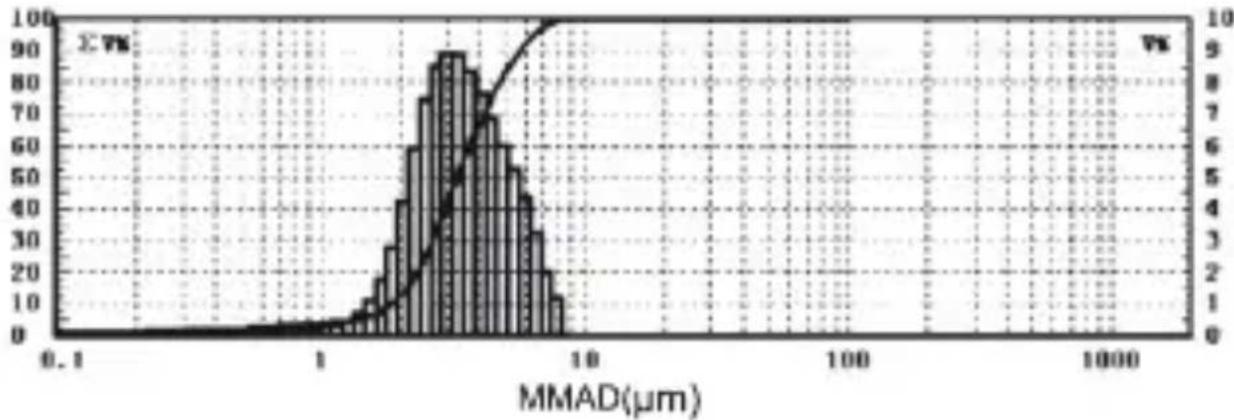
UWAGA: The horizontal axis is the particle size value. The value is a log distribution on. The left
verti cal axis is a cumulative ve size percentage corresponding to the increasing curve trend. The right verti cal axis is a percentage value of the secti on corresponding to the histogram.
10. SYMBOLS DESCRIPTION
SEE FIG. E
- Follow the instructions for use.
- Selecti ve waste collecti on.
- CE mark + identi fi cati on number of noti fi ed body.
- General order.
- Power butt on.
- Keep away from sunlight.
- Waterproof class.
- Delicate product.
- Protect from moisture.
- BF type elements.
- Cauti on, warning.
- Possibility of electric shock.
- Decrease in nebulizati on rate.
- Increase level of nebulizati on rate.
- Manufacturer.
- Batch number.
- Date of manufacture.
- Charging interface.
- Safety precautions.
- Authorized representati ve in the European Community.
- Medical device.
11. ELECTROMAGNETIC COMPATIBILITY
| The nebulizer meets the electromagnetic compatibility requirements of IEC60601-1-2. |
| The user should use the product in accordance with the accompanying information on electromagnetic compatibility. |
| Portable and mobile radio communication devices and some household appliances such as cell phone, intercom, microwave oven can affect the nebulizer's performance, so the nebulizer should be kept away from them during use. |
Information on electromagnetic compatibility
With the increase in the number of electronic devices such as PCs and cell phones, medical devices in use may be susceptible to electromagnetic interference from other devices. Electromagnetic interference can cause a medical device to malfunction and create a potentially dangerous situation.
In order to regulate EMC (electromagnetic compatibility) requirements to prevent dangerous situations for the product, IEC60601-1-2 was implemented. This standard specifies levels of immunity to electromagnetic interference, as well as maximum levels of electromagnetic interference emissions for medical devices.
| Guidance and Manufacturer's declaration-electromagnetic emissions | ||
| This device is intended for use in the electromagnetic environment specified below. The customer or the user of the device should assure that it is used in such environment | ||
| Electromagnetic emission IEC 60601-1-2 | ||
| Emissions test Compliance Electromagnetic environment-guidance | ||
| RF emissions CISPR 11 | Group 1 | This device uses RF energy only for its internal function. Therefore, its RF emissions are very low and are not likely to cause any interference in nearby electronic equipment. |
| RF emissions CISPR 11 Class B This device is suitable for use in allEstablishments, including domestic establishments and those directly connected to the public low-voltage power supply network that supplies buildings used for domestic purposes. | ||
| Harmonic emissionsIEC61000-3-2 | Class A | |
| Voltage fluctuations/flicker emissionsIEC61000-3-3 | Complies | |
| Guidance and Manufacturer's declaration-electromagnetic immunity | |||
| The device is intended for use in the electromagnetic environment specified below. The customer or the user of the device should assure that it is used in such an environment. | |||
| Immunity test IEC 60601 test level | Compliance level | Electromagnetic environ-ment - guidance | |
| Electrostatic discharge (ESD) IEC 61000-4-2 | ±6 kV contact; ±8kV air | ±6 kV contact; ±8kV air | Floors should be wood concrete or ceramic tile floors are covered with synthetic material, the relative humidity should be at least 30%. |
| Electrical fast tran-sient/ burst IEC61000-4-4 | +2 kV for power supply lines; ±1 kV for input/output lines | ±2 kV for power supply lines*1 | Mains power quality should be that of a typical commercial or hospital environment. |
| Surge IEC 61000-4-5 | ±1 kV line to line; ±2 kV line to earth | ±1 kV line to line; ±2 kV line to earth | Mains power quality should be that of a typical commercial or hospital environment. |
| Voltage dips, short interruptions, and voltage variations on power supply IEC61000-4-11 | <5% UT (>95% dip in UT) for half cycle | <5% UT (>95% dip in UT) for half cycle | The quality of the main power supply should correspond to a typical commercial or hospital environment. If the user requires continuous operation of the unit during mains power interrup-tions, it is recommended to power the unit from an uninterruptible power supply or battery. |
| <5% UT (>95% dip in UT) for one cycle | <5% UT (>95% dip in UT) for one cycle | ||
| 70% UT(30% dip in UT) for 25/30 cycles | 70% UT(30% dip in UT) for 25/30 cycles | ||
| <5% UT (>95% dip in UT) for 5/6 sec. | <5% UT (>95% dip in UT) for 5/6 sec. | ||
| Power frequency (50/60 Hz) magnetic field IEC 61000-4-8 | 3 A/m 3 A/m Power frequency | magnetic fields should be at levels characteristic of a typical location in a typical commercial or hospital environment. |
| Guidance and manufacturer's declaration -electromagnetic immunity | |||
| The device is intended for use in the electromagnetic environment specified below. The customer or the user of the device should assure that it is used in such an environment. | |||
| Immunity test | IEC60601 test level | Compliance level | Electromagnetic environment - guidance |
| Conducted RF IEC 61000-4-6 | 3 V/m150 kHz to 80 MHz | 3 V/m | Portable and mobile RF communications equipment should be used no dose to any part of this device, including cables, than the recommended separation distance calculated from the equation applicable to the frequency of the transmitter.Recommended separation distance d=1.2VP150 kHz to 80 MHzd=1.2VP 80 MHz to 800 MHzd=2.3 VP 800 MHz to 2.5GHz where P is the maximum output power rating of the transmitter n watts (W) according to the transmitter manufacturer and d is the recommended separation distance in metres(m). Field strengths from fixed RF transmitters, as determined by an electromagnetic site survey,*2) should be less than the compliance level in each frequency range.*3)Interference may occur in the vicinity of equipment marked with the following: |
| Radiated RF IEC 61000-4-3 | 3 V/m80 MHz to 2.5 GHz | 3 V/m | |
| NOTE 1: At 80 MHz and 800 MHz, the higher frequency range applies. NOTE 2: These guidelines may not apply in all situations. Electromagnetic propagation is affected by absorption and reflection from structures, objects and people. |
| Field strengths from fixed transmitters, such as base stations for radio cellular/cordless)telephones and land mobile radios, amateur radio AM and FM radio broadcast and TV broadcast cannot be predicted theoretically with accuracy. To assess the electromagnetic environment due to fixed RF transmitters, an electromagnetic site survey should be considered. If the measured field strength in the location in which the device is used exceeds the applicable RF compliance level above the device should be observed to verify Normal operation. If abnormal performance is observed, additional measures may be necessary, such as reorienting or relocating this device.Over the frequency range 150 kHz to 80 MHz, field strengths should be less than 3 V/m. |
| Recommended separation distances between portable and mobile RF communications equipment and the device | |||
| The device is intended for use in an electromagnetic environment n which radiated RF disturbances are controlled. The customer or the user of the device can help prevent electromagnetic interference by maintaining a minimum distance between portable and mobile RF communications equipment (transmitters)and the device as recommended below, according to the maximum output power of the communications equipment. | |||
| Rated maximum output power of transmitter (W) | Separation distance according to frequency of transmitter (m) | ||
| 150 kHz to 80 MHz d=1.2VP | 80 MHz to 800 MHz d=1.2 VP | 800 MHz to 2.5 GHz d=2.3 VP | |
| 0.01 0.12 0.12 0.23 | |||
| 0.1 0.38 0.38 0.73 | |||
| 1 1.2 1.2 2.3 | |||
| 10 3.8 3.8 7.3 | |||
| 100 12 12 23 | |||
For transmitters rated at a maximum output power not listed above, the recommended separation distance d in metres (m) can be estimated using the equation applicable to the frequency of the transmitter, where P is the maximum output power rating of the transmitter in watts (W) according to the transmitter manufacturer.
NOTE1: At 80 MHz and 800 MHz, the separation distance for the higher frequency range applies.
NOTE 2: These guidelines may not apply in all situations. Electromagnetic propagation is affected by absorption and reflection from structures, objects and people.
Precautions
1) In order to regulate the requirements for EMC with the aim to prevent unsafe product situations, the EN60601-1-2 standard has been implemented. The nebulizer Air Mask II conforms to the EN60601-1-2:2015 standard for both immunity and emissions
2) Portable and mobile RF communication equipment may affect the performance of the nebulizer, avoid strong electromagnetic interference when using, such as close to mobile phones, microwave ovens and so on.
12. WARRANTY
The product is covered by a 24-month warranty. The terms of the guarantee can be found at: https://neno.pl/gwarancja
Details, contact and service address can be found at: https://neno.pl/kontakt Specification and contents are subject to change without notice. We apologise for any inconvenience.
PL
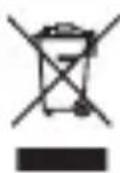
The crossed out trash can symbol indicates that unusable electrical or electronic devices, its accessories (such as power supplies, cords) or components (for example batteries, if included) cannot be disposed of alongside with household waste. In order to dispose of the devices or its components (for example, batteries) deliver the device to the collection point, where it will be accepted free of Disposal is subject to the recast version of the WEEE Directive 19/EU and the Directive on batteries and accumulators (2006/66 / oper disposal of the device prevents degradation of the natural ment. Information about the collection points of the facilities is by the competent local authorities. Incorrect disposal of waste is to penalties provided for by the law in force in the given area.

Room 1903, Building A, No. 9 Furong Road, Tantou Community, Songgang Subdistrict, Bao'an District, Shenzhen, 518104 Guangdong, China

KGK TREND Sp. z o.o.
Ujastek 5b, 31-752 Kraków, Polska.
Wyprodukowano w PRC
Importer:
KGK TREND Sp. z o. o.
Ujastek 5b, 31-752 Cracow, Poland.
Made in PRC
Model: Air Mask II




Version: 1.1
Date: 04.2024
neno®
- TABLE OF CONTENTS
- SPIS TREŚCI
- INSTRUKCJA OBSŁUGI
- NENO VAPORE
- PRECAUTIONS
- CONTRAINDICATIONS
- OPIS PRODUKTU
- PATRZ RYS. A
- INSTALLATION METHOD
- POWER SUPPLY
- CHARGING THE BATTERY
- USE OF THE DEVICE
- LIGHT NOTIFICATION
- NEBULIZATION
- CLEANING AND DISINFECTION
- CLEANING
- DISINFECTION
- DRYING
- STORAGE AND MAINTENANCE
- STORAGE
- STORAGE CONDITIONS
- STORAGE INSTRUCTIONS
- MAINTENANCE
- NORMAL OPERATING CONDITIONS
- MAINTENANCE INSTRUCTIONS
- TROUBLESHOOTING
- THE DEVICE DOES NOT TURN ON
- POOR NEBULIZATION
- THE DEVICE SHUTS DOWN OR MAKES UNUSUAL SOUNDS
- DISPOSAL
- SPECIFICATION
- SYMBOLS DESCRIPTION
- SEE FIG. E
- ELECTROMAGNETIC COMPATIBILITY
- INFORMATION ON ELECTROMAGNETIC COMPATIBILITY
- WARRANTY
- PL
- IMPORTER
- NENO®
Brand : Neno
Model : Vapore
Category : Inhaler