
NVR-4421 CSD - Freezer NEVIR - Free user manual and instructions
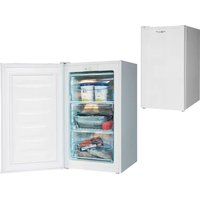
Find the device manual for free NVR-4421 CSD NEVIR in PDF.


| Product Type | Freezer |
| Brand | Nevir |
| Model | NVR-4421 CSD |
| Dimensions (H x W x D) | 143 x 55 x 61 cm |
| Net Weight | 52 kg |
| Energy Class | A+ |
| Annual Energy Consumption | 240 kWh |
| Total Net Capacity | 215 L |
| Freezing Capacity | 15 kg/24h |
| Temperature Range | -18°C |
| Defrost Type | Manual |
| Noise Level | 42 dB |
| Refrigerant | R600a |
| Climate Class | SN-T |
| Fast Freeze Function | Yes |
| Temperature Indicator | Red warning light |
| Door Lock | Yes |
| Handle Type | Recessed |
| Adjustable Feet | Yes |
| Power Supply | 220-240 V / 50 Hz |
| Power Cord Length | 1.5 m |
| Interior Light | No |
| Reversible Door | Yes |
Frequently Asked Questions - NVR-4421 CSD NEVIR
User questions about NVR-4421 CSD NEVIR
0 question about this device. Answer the ones you know or ask your own.
Ask a new question about this device
Download the instructions for your Freezer in PDF format for free! Find your manual NVR-4421 CSD - NEVIR and take your electronic device back in hand. On this page are published all the documents necessary for the use of your device. NVR-4421 CSD by NEVIR.
USER MANUAL NVR-4421 CSD NEVIR
natural_image
Line drawing of a simple refrigerator with lid and frontrest (no text or symbols)Thank you for having chosen this NEVIR product.
NEVIR products have been produced to think about the welfare of the consumer privileging the most raised standards of quality, functionality and assign. We are sure you will be happy with this appliance.
Your new appliance is designed exclusively for domestic use.
To ensure best use of your appliance, carefully read the instructions handbook which contains a description of the appliance and advice on storing and preserving food.
Keep this handbook for future reference and pass them on to whoever might acquire the appliance at a future date.
Before using the appliance
- After unpacking, make sure that the appliance is undamaged and that the door closes properly. Any damage must be reported to your dealer within 24 hours after delivery of the appliance.
- Wait at least two hours before switching the appliance on in order to ensure the refrigerant circuit is fully efficient.
- Installation of the appliance and electrical connections must be carried out by a qualified electrician, in accordance with the manufacturer's instructions and local safety regulations
- Clean the inside of the appliance before using it.
Special Instructions
If this appliance is to replace an old refrigerator with a lock, break or remove the lock as safety measure before storing it, to protect children while playing might lock them inside.
Old refrigerators and freezers contain insulation gases and refrigerant, which must be disposed of properly. Please ensure that the refrigeration tubing is not damaged.

Warning: This refrigerator contains isobutane (R600a); this refrigerant gas is CFC-free but combustible. When transporting, installing, cleaning and repairing the refrigerator, take care not to damage any parts of the refrigeration circuit to prevent the risk of gas leaks. In case of damage, do not use naked lights and ventilate the room containing the appliance appropriately.
Safety Precautions
The manufacturer declines all responsibility in case of failure to comply with the following precautions:
- Never put a damaged appliance into operation, if in doubt, contact your dealer.
- The appliance must be installed and connected to the electrical mains in full compliance with the instructions provided in the handbook. The electrical connection conditions must be as specified on the nameplate. The appliance's electrical safety is only guaranteed if the household electrical system is earthed in accordance with the relevant regulations.
- Make sure that all repairs and servicing are only carried out by a qualified technician. Always disconnect the appliance from the electrical mains in case of breakdown and maintenance, when changing light-bulbs or during cleaning. Never defrost using electrical devices or steam cleaners. Never remove frost or ice with sharp items, as this may cause irreparable damage to the walls of the refrigerator.
- Never attempt to move the refrigerator by pulling on the door or the handle.
- High-alcohol drinks must only be stored sealed and vertical. Never store liquids in cans or glass containers in the freezer compartment, especially if they contain added carbon dioxide. Never store products containing gases, flammable propellants or explosive substances in the freezer. There is always explosion hazard!
- The use of electrical appliances (such as ice-cream makers or whisks) inside the appliance is forbidden.
- To ensure the refrigerator operates correctly, never obstruct or cover the air ducts in any way.
- Never touch frozen products taken straight from the freezer or put them in your mouth. There is burn hazard due to the very low temperatures.
- Never eat or drink foods which look or smell strange.
- This appliance is not suitable for use by persons (including children) with reduced physical, sensory or mental capacity, or by those without experience or knowledge, unless they are supervised or instructed on the use of the appliance by a person responsible for their safety.
• Children must be supervised to ensure that they do not play with the appliance. - In case of electricity blackout, open the door(s) as little as possible. Once partly or completely thawed, frozen foods must not be re-frozen.
Intended use
This appliance is a compressor refrigerator, designed for the short-term storage of food in the main cabinet and long-term storage of food in the freezer compartment.
The unit is classified as Climate Class 'N' (normal.
This appliance is intended for domestic or similar applications, such as in:
– shops, offices and other similar working environments,
- agricultural areas,
– hotels, motels etc. and similar establishments,
– bed and breakfast type environments.
This appliance is not intended for commercial use, nor for use in the catering business or similar wholesale environments.

Warming: The manufacturer declines all responsibility for injury or damage caused by failure to comply with the above regulations or deriving from tampering with even just one part of the appliance and the use of non-original spare parts.
Installation and connection
Choosing the site
- Always place the refrigerator in a dry place with satisfactory ventilation. Never expose it to direct sunlight or install it outdoors. Depending on its climate class (stated on the nameplate inside the refrigerator compartment), the appliance can be used in different temperature conditions:
| Class Ambient temperature | |
| SN (Subnormal) from +10°C to +32°C | |
| N (Normal) from + 16°C to + 32°C | |
| ST (Subtropical) from + 18°C to + 38°C | |
| T (Tropical) from + 18°C to + 43°C |
- Never place the refrigerator close to heat sources. If this is unavoidable, a suitable insulating panel must be used to allow the appliance to function properly. Otherwise, place the appliance at least 3 cm from electric or gas cookers and at least 30 cm from combustion or radiation heating systems.
- To allow proper cooling of the condenser, the refrigerator must not be placed too close to the wall. If the refrigerator is installed underneath a wall cupboard, the distance between the two must be at least 5 cm.
- Take care not to scratch or damage the floor when installing the appliance on parquet or linoleum. If necessary, when positioning slide the refrigerator over pieces of wood or a mat to the point decided for connection to the electrical mains.
Positioning and levelling the appliance
Place the fridge on a stable and level floor. In case the floor is not perfectly level, use the two adjustable feet on the front part of the fridge. To ensure major stability, easier movement and a correct positioning of the product, two additional wheels are present at the rear. In any case
we recommend moving the fridge very carefully in order to avoid floor damage (especially in case of wooden floor).
Electrical connection
Before switching the refrigerator on for the first time, leave it vertical for at least two hours. Then connect the appliance's power supply lead to a mains socket with earth contact, installed in accordance with electrical safety regulations. The rated voltage and frequency are stated on the nameplate. The appliance must be connected to the electrical mains and earthed in compliance with the relevant regulations and requirements. The appliance is able to withstand short fluctuations in voltage of no more than 15% less or 10% more than the rated voltage stated on the nameplate. If the power supply lead has to be replaced, this operation must only be carried out by a qualified technician. The socket must be accessible after the appliance has been placed.
Product Description
| 1. Temperature Control 2. Side-out Drawers |
| 3. Bottom Sde-out Drawer 4. Adjustable Feet |
Before using for the first time
- Remove any exterior and interior packaging materials completely, including the adhesive strips.
- Before it is connected to the mains, the unit must be thoroughly checked for transport damage, including its power cord.
– Clean the unit as described in the section Maintenance and Cleaning. - To ensure proper functioning, wait for around 2 hours before connecting the unit and switching it on once it has been positioned.
- When the unit is first switched on, a slight smell may be noticed. However, this will disappear once the cooling process has begun.
Arranging foods inside the refrigerator compartment
- Arrange the foods on the various shelves, taking care that they have an airtight wrapping or cover. This precaution will:
- conserve foods' fragrance, moisture and freshness;
- prevent the cross-contamination of foods with different aromas and tastes;
- prevent the humidity level inside the refrigerator becoming too high because of the normal breathing of food (especially fresh fruit and vegetables). In some operating
conditions (rise in ambient temperature and humidity, more frequent opening of the door) this might cause condensation to form on the shelves.
- Use only containers approved for food storage. Always allow hot foods and drinks to cool to room temperature before placing them inside the refrigerator.
- Never store explosive substances in the appliance and only store high-alcohol drinks firmly sealed and vertical.
Setting and selecting the operating temperature
- The knob in the top right-hand corner of the refrigerator is used to set the operating temperature both in the refrigerator and in the freezer.
- When the knob is turned to 0 ("stop"), the appliance is switched off.
- The operating settings are from 1 to 7.
- There is no direct correspondence between the setting chosen and the temperature in the two sections of the appliance. Increasing the setting number reduces the temperature inside the appliance. Only use the highest settings (6-7) if absolutely necessary: with these settings, the temperatures inside the refrigerator compartment may be close to 0°C and electricity consumption will be higher. In normal operating conditions, a medium-low setting (2-3) is recommended. This will provide effective storage of the fresh foods in the refrigerator compartment and of the frozen foods in the freezer compartment.
Important: Changes in weather conditions (temperature and humidity) and the frequency with which the doors of the two separate compartments are opened may affect the refrigerator's operating temperatures.
Setting and selecting the freezer operating temperature
24 hours before freezing a large amount of fresh foods turn the thermostat to a setting between 5 and 7. After the 24 hours have passed, insert the fresh foods and turn the thermostat knob to the setting of your choice.

Important: Changes in weather conditions (temperature and humidity) and the frequency with which the door is opened affect the refrigerator's operating temperatures.
Freezing foods
- For proper storage and freezing, fruit and vegetables should be packed in portions of not more than 1 kg and meat and fish up to a max. of 2kg. Small packages of food freeze more quickly, giving better conservation of their nutrients and flavour, even after thawing and preparation.
- Use only freezer bags, aluminium film, food-approved polyethylene film and freezer containers. Do not use paper bags, non food-approved cellophane bags, shopping bags or used freezer bags.
- Pack foods in airtight packs and try to expel all the air. If using bags, close the packs with the elastic bands or plastic-coated wire strips provided.
- Always cool hot foods to room temperature before placing them in the freezer and do not allow frozen foods to touch fresh foods for freezing.
- Always mark packs with the date of freezing, quantity and type of food and make sure that foods are fresh and in good condition.
Storing frozen foods
- When purchasing frozen foods, always take care that the pack is not damaged, that the product is not past its sell-by date and that the thermometer of the freezer in which the products are displayed for sale does not show a temperature above -18°C. Also note the temperature advice, storage period and modes of consumption stated by the producer.
- Purchased foods should also be protected using suitable insulated containers during transportation to eliminate the risk of thawing. An increase in temperature might reduce their storage life and adversely affect their quality.
- Do not purchase frozen foods which are carrying too much frost; they might already have been thawed.
Thawing frozen foods
- Partially thawed foods should be eaten as soon as possible. Low temperatures preserve foods but they do not destroy the micro-organisms which are activated after thawing, which may cause the stored foods to deteriorate. If thawed foods smell and look normal, they can be cooked and if required re-frozen once they have cooled.
- Depending on their type and intended use, frozen foods can be thawed correctly at room temperature, in the refrigerator, in an electric oven (conventional or fan), or in a microwave oven using the relevant function.
Making ice-cubes
Fill the tray provided 2/3 full of water or any other liquid you wish to freeze. Place it in the freezer compartment, making sure that its bottom is dry so that it will not stick to the shelf of the compartment. To detach the ice-cubes, twist the tray slightly or place it under running water for a few seconds.
Maintenance and Cleaning
Defrosting the refrigerator compartment
The refrigerator compartment has automatic defrosting. During normal operation of the refrigerator, frost forms on its back wall when the compressor is working and dissolves when it is not in operation. When the compressor is not working, the frost which has built up on the
back wall melts and the water flows into the opening provided in the bottom of the body of the refrigerator. From here, it flows into the tray on the compressor, where it evaporates.

Warning: the amount of ice which forms on the back wall may vary with changes in weather conditions (temperature and humidity), the frequency with which the door is opened, the appliance's operating temperatures and the amount of fresh foods stored inside (especially fruit and vegetables).
Defrosting the freezer
The freezer compartment has to be defrosted manually. When the thickness of frost or ice on the shelves exceeds 2 cm, the freezer should be defrosted. A few hours before defrosting, use the knob provided to set the thermostat on 7 in order to further lower the temperature of the frozen foods. Then turn the knob to the 0 (stop) setting and disconnect the plug from the electrical mains. Remove the frozen foods from the freezer compartment and protect them from thawing while cleaning.
Cleaning the refrigerator
- Before cleaning, disconnect the plug from the electrical mains. Clean the outside using only water and a gentle liquid detergent or an ordinary detergent for washable surfaces (such as a window-cleaning product). Never use products containing abrasives or substances which may attack the lacquered or painted parts, acids or chemical solvents. Use a sponge or a soft cloth.
- Do not use steam cleaners to clean the inside;
- Remove the shelves and accessories, taking care not to apply excessive force when removing. Never wash removable plastic parts in the dishwasher; use only warm water and washing-up liquid or water and vinegar. Take care not to wet the electrical lighting components with water or detergents.
- Clean the gaskets with warm water and then dry.
- To allow the refrigerator to operate at full efficiency, periodically also clean the condenser on the rear with a brush or a vacuum cleaner.
• Also make a periodic check on the tray above the compressor, and clean it if necessary.
Switching off the refrigerator
If the refrigerator is to be out of use for some time, turn the thermostat knob to 0 (stop). Then empty the compartments, disconnect the appliance from the electrical mains, and once it has defrosted dry any residual moisture which has collected. Leave the door ajar to prevent the humidity and trapped air from creating unpleasant smells.
Replacing the refrigerator light bulb
Before changing the bulb, make sure that the light has not stopped working simply because the part inside the lamp socket has become loose. In all cases, whether you wish to check that the
socket is connected correctly or change the bulb, for safety reasons the plug must be removed from the power socket.
- Unplug the unit from the power supply.
- Remove the refrigerator light diffuser cover.
- Replace the light bulb with a new 10 watt (max) screw cap (SES) bulb.
- Assemble the light diffuser cover and after waiting 5 minutes plug the unit.
Troubleshooting Guide
Temperature inside the compartments is not low enough.
- Is food preventing the doors from closing properly?
• Is the thermostat setting correct? - Are the air circulation vents blocked?
Temperature inside the refrigerator compartment is too low.
• Is the thermostat setting correct?
The appliance is excessively noisy.
- Has the appliance been installed correctly?
- Are the pipes at the back touching or vibrating?
- It is normal to hear the noise of the refrigerant liquid in circulation.
The appliance is not working?
• Is there a power failure?
- Is the plug properly inserted in the socket?
- Has the fuse blown?
• Is the power cord damaged?
Water collects at the bottom of the refrigerator compartment.
• Is the thermostat setting correct?
• Is the defrost water drain blocked?
The inside light is not working.
Perform the checks for point 4, and then:
- Disconnect the appliance from the mains power supply.
• If necessary replace the bulb with a new one (220÷240V, 10 Watt).
Technical data
| MODEL NVR-4421 CSD | |
| RATED VOLTAGE 220-240 V~ | |
| RIATED CURRENT 0.60A | |
| RATED FREQUENCY | 50Hz |
| RIATED POWER 70W | |
| TOTAL VOLUME 84L | |
| CLIMATE TYPE | N/ST |
| REFRIGERANT | R600a(38g) |
| ENERGY CONSUMPTION | 176kWh/Year |
| FREEZING CAPACITY | 4.0kg/24h |
| PROTECTION AGAINST ELECTRICAL SHOCK | I |
| NET WEIGHT | 33kg |
| FOAM | CYCLOPENTANE |
| ENERGY CLASS A+ |
Declaration of Conformity
This appliance is intended for storing food and is manufactured in conformity with European Directives 90/128/EEC, 02/72/EEC and European regulation (EC) No. 1935/2004.

This product has been designed, manufactured and marked in compliance with:
- the safety objectives of Low voltage Directive 2006/95/EC;
- the protection requirements of EMC Directive 2004/108/EC;
- Materials intended to come into contact with foodstuffs Directive 2002/72/EC.
The electrical safety of the appliance is guaranteed only if it is connected to an efficient and approved earthing system.
Disposal – Environment policy
Packing

natural_image
Two black recycling symbols: one with a full cycle arrow, the other with a circular arrow (no text or labels)The packaging material is entirely recyclable, and marked with the recycling symbol. Follow local regulations for scrapping. Keep the packaging materials (plastic bags, polystyrene parts, etc.) out of reach of children, as they are potentially dangerous.
Disposal
The appliance is manufactured using recyclable material.
This appliance is marked according to the European directive 2002/96/EC on Waste Electrical and Electronic Equipment (WEEE).
By ensuring this product is disposed of correctly, you will help prevent potential negative consequences for the environment and human health, which could otherwise be caused by inappropriate waste handling of this product.

This symbol on the product, or on the documents accompanying the product, indicates that this appliance may not be treated as household waste. Instead it shall be handed over to the applicable collection point for the recycling of electrical and electronic equipment.
Before disposal, make the appliance unusable by cutting off the power cable and removing the doors and shelves so that children cannot easily climb inside the appliance.
Disposal must be carried out in accordance with local environmental regulations for waste disposal. Deliver the appliance immediately to an authorized dump; do not leave it unattended even for a few days, since it is potentially dangerous for children.
For more detailed information about treatment, recovery and recycling of this product, please contact your local city office, your household waste disposal service or the shop where you purchased the product.
Warranty Declaration
Insofar as claims filed for elimination of deficiencies (applicable laws) are being processed, these shall be handled via the contractual partners. In addition, the distributor provides the following manufacturer's warranty:
- For this device, the distributor grants a warranty period of 24 months, figured from the date of purchase from the dealer; this must be verified by the original receipt, or other similar documents, in accordance with pertinent, existing guidelines.
- Warranty claims shall be filed via a specialized dealer.
-
The voluntary warranty covers the rectification of any damage or deficiency that occurs during the warranty period and which is demonstrably due to material or production faults.
-
Not included in this voluntary warranty are damage and deficiencies resulting from incorrect connection, from improper handling, from non-observance of the programming instructions or instructions for use, or from force majeure. The voluntary warranty does not cover installation and programming work performed by the specialized dealer. In particular, no claim can be made for installation or programming work to be performed free of charge by the specialized dealer. The voluntary warranty does not cover deficiencies which have a negligible effect on the value or usability of the device. Further costs, such as for installation, transport and travel expenses are expressly excluded from the warranty.
- It is at the discretion of the distributor to replace the device with an identical one instead of performing repairs. Further claims for damage are not permissible. Any data stored in the device will be lost after repair work or replacement of the device.
- The voluntary warranty is nullified if changes are made to the product, or when the product is operated in a country for which it was not developed nor produced.
- Fulfilment of the voluntary warranty presupposes that the device has been packed complete and protected against breaking and impacts (if possible in the original packaging) and shipped with the warranty certificate from the specialized dealer.
- If testing reveals that there are no grounds for warranty claims, or that the product does not exhibit any deficiencies, the costs for repair work and testing shall be borne by the user. The distributor processing the claim arising from the voluntary warranty is authorized to charge these costs to the user.
- Services arising from the voluntary warranty affect neither an extension of the warranty period, nor do they mark the beginning of a new term for the voluntary warranty.
- Warranty claims according to applicable law filed by the end customer shall neither be excluded, nor restricted by this independent manufacturer's declaration.
The user is protected by the guarantee indicated in the Directive 1999/44/CE issue by the European Parliament on 1999, May 25.

WEEE (Waste of Electrical and Electronics Equipment): This symbol indicates that when the end-user wishes to discard this product, it must be sent to separate collection facilities for recovering and recycling. By separating these products from other household-type waste the volume of waste sent to incinerators or land fields is reduced and natural resources will thus be preserved. Besides that, waste batteries and / or accumulators must be removed prior to delivery of WEEE, through the separated collection channels provided for this purpose (distributors and/or facilities of Local Authorities)
In order to fulfill ruling UNE EN-60665, if flexible wire is damaged, it can only be replace or repair but a technical serviced recognized by Nevir S.A. because special tooling is required
Estimado cliente
natural_image
Two black recycling symbols: one with a recycling triangle and the other with a circular arrow (no text or labels)

- Before using the appliance
- Special Instructions
- Safety Precautions
- Intended use
- Installation and connection
- Choosing the site
- Positioning and levelling the appliance
- Electrical connection
- Product Description
- Before using for the first time
- Arranging foods inside the refrigerator compartment
- Setting and selecting the operating temperature
- Setting and selecting the freezer operating temperature
- Freezing foods
- Storing frozen foods
- Thawing frozen foods
- Making ice-cubes
- Maintenance and Cleaning
- Defrosting the refrigerator compartment
- Defrosting the freezer
- Cleaning the refrigerator
- Switching off the refrigerator
- Replacing the refrigerator light bulb
- Troubleshooting Guide
- Temperature inside the compartments is not low enough.
- Temperature inside the refrigerator compartment is too low.
- The appliance is excessively noisy.
- The appliance is not working?
- Water collects at the bottom of the refrigerator compartment.
- The inside light is not working.
- Technical data
- Declaration of Conformity
- Disposal – Environment policy
- Packing
- Disposal
- Warranty Declaration
- Estimado cliente
Brand : NEVIR
Model : NVR-4421 CSD
Category : Freezer