WT9+6 - Washing machine PKM - Free user manual and instructions
Find the device manual for free WT9+6 PKM in PDF.


| Product Type | Freestanding Washing Machine |
| Brand | PKM |
| Model | WT9+6 |
| Capacity | 9 kg |
| Maximum Spin Speed | 1200 rpm |
| Energy Class | A+ |
| Dimensions (H x W x D) | 85 cm x 60 cm x 55 cm |
| Weight | 65 kg |
| Power Supply | 220-240 V, 50 Hz |
| Programs | Cotton, Synthetics, Delicates, Wool, Quick Wash, Eco, Spin, Rinse |
| Features | Delay Start, Child Lock, Half Load Detection, Foam Control |
| Display | LED Digital Display |
| Door | Front Load, Left Hinge |
| Noise Level (Wash/Spin) | 58 dB / 75 dB |
| Water Consumption | 55 L per cycle |
| Electrical Consumption | 0.95 kWh per cycle |
| Maintenance | Clean detergent drawer monthly; clean filter regularly; descale every 3 months |
| Safety | Child lock, overflow protection, unbalanced load detection |
| Spare Parts | Available online; drum belt, motor brushes, pump filter |
| Repairability Index | 7.5 / 10 |
Frequently Asked Questions - WT9+6 PKM
User questions about WT9+6 PKM
0 question about this device. Answer the ones you know or ask your own.
Ask a new question about this device
Download the instructions for your Washing machine in PDF format for free! Find your manual WT9+6 - PKM and take your electronic device back in hand. On this page are published all the documents necessary for the use of your device. WT9+6 by PKM.
USER MANUAL WT9+6 PKM
natural_image
Front view of a white water washing machine with a circular vent and digital display (no visible text or symbols on the main body)Deutsch
Seite
2
English
Page
91
natural_image
Three technical diagrams showing a washing machine with mounting base and load, no text or symbols presentnatural_image
Technical line drawing of a mechanical component with labeled cross-section A (no text or symbols beyond basic geometry)A
text_image
Diagram showing a hand using a screwdriver to adjust a mechanical component labeled A and D, with directional arrows indicating movement.A
text_image
Diagram showing a hand using a screwdriver to interact with a device, labeled with point A and directional arrows.D
A
natural_image
Diagram of a container with internal components and an arrow labeled 'A' (no text or symbols beyond label)A
UNTERER GERÄTESCHUTZ
2.4 Nivellierung
natural_image
Line drawing of a front-loading washing machine with attached hoses and control panel (no text or symbols)natural_image
Illustration showing a mechanical component before and after assembly, with no visible text or symbols.natural_image
Line drawing of a washing machine with a large cord and a crossed-out black X symbol (no text or labels)natural_image
Line drawing of a washing machine with a large 'X' symbol crossed out, indicating no text or symbols present.natural_image
3D rendering of a white cylindrical device with two internal components and a base, no visible text or symbols(Abb. ähnlich)
natural_image
Diagram of a laboratory setup with a cylindrical container and a test tube, showing an arrow indicating a process or movement (no text or symbols present)natural_image
Technical illustration of a mechanical component with a hand holding a tool, showing cross-section and layered structure (no text or symbols)natural_image
Simple diagram showing a curved object with an arrow pointing to a circular feature labeled 'A' (no text or symbols beyond label)natural_image
Diagram showing a mechanical device with a lever and a labeled component 'C' (no text or symbols beyond label)natural_image
Diagram showing a curved surface with an arrow and a labeled component 'C' (no text or symbols beyond label)text_image
Diagram illustrating a procedure with labeled components A through F, showing hands operating a tool near a component.text_image
Diagram showing a hand holding a washer with labeled parts B and D, indicating a mechanical or electrical component adjustment.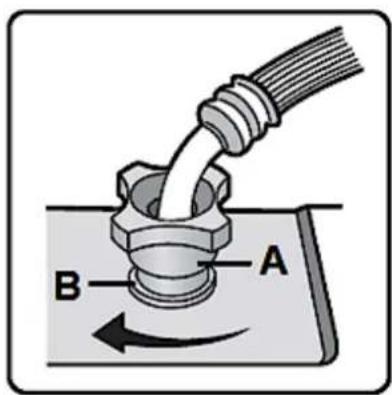
text_image
A BDear customer! We would like to thank you for purchasing a product from our wide range of domestic appliances. Read the complete instruction manual before you operate the appliance for the first time. Retain this instruction manual in a safe place for future reference. If you transfer the appliance to a third party, the instruction manual should be included.
Index
- Safety information....93
1.1 Signal words ......94
1.2 Safety instructions....95
- Installation 99
2.1 Scope of delivery....99
2.2 Unpacking / Site....100
2.3 Removing of the shipping bolts....101
2.4 Levelling....104
2.5 Installation of the bottom cover (noise reduction)....106
2.6 Connection of the water inlet hose....108
2.7 Connection of the water drain hose....110
2.8 Connection to the mains....113
- Description of the appliance....114
3.1 Washer-dryer 114
3.2 Control panel 115
- Operation....118
4.1 Before the first use....118
4.2 The washing and drying programmes....119
4.2.1 General textile care symbols....129
4.2.2 Weight of clothes: reference values....130
4.3 Programmes: available additional functions / options ....130
4.4 Setting and starting of a programme ....133
4.4.1 How to set and start a washing programme....133
4.4.2 How to set and start a drying or combined programme....134
4.4.3 Selection of the additional functions / options....137
4.5 Door Lock....144
4.6 End of a washing / drying programme....147
4.7 Selection of a new programme / function 148
4.8 Reload laundry 148
4.9 Unbalance protection....149
5. Instructions for proper use....150
5.1 Instructions for the washing of textiles....150
5.1.1 Detergent....150
5.1.2 Use of the dispenser....150
5.1.3 The different compartments of the dispenser....151
5.1.4 How to use detergents and additives....151
5.1.5 Preparation of the laundry....152
5.2 Instructions for the drying of textiles....153
- Environmental protection ....154
6.1 Environmental protection: disposal....154
6.2 Environmental protection: energy saving....154
- Cleaning and maintenance....154
7.1 Cleaning of the dispenser....156
7.2 Cleaning of the drain pump filter....157
7.3 Residual water drainage....159
7.4 Cleaning of the water inlet valve....160
7.5 Programme « DRUM CLEAN »......162
7.6 "Frozen" appliance....162
- Troubleshooting....163
8.1 Checklist....164
8.2 Error codes....166
- Technical data....169
- Waste management .... 170
- Guarantee conditions ....171

Do not dispose of this appliance together with your domestic waste. The appliance must be disposed of at a collecting centre for recyclable electric and electronic appliances. Do not remove the symbol from the appliance.
The figures in this instruction manual may differ in some details from the current design of your appliance. Nevertheless, follow the instructions in such a case. Delivery without content.
i Any modifications, which do not influence the functions of the appliance. shall remain reserved by the manufacturer.
i Please dispose of the packing with respect to your current local and municipal regulations.
The appliance you have purchased may be an enhanced version of the unit this manual was printed for. Nevertheless, the functions and operating conditions are identical. This manual is therefore still valid.
i Technical modifications as well as misprints shall remain reserved.
EC - DECLARATION OF CONFORMITY
★ The products, which are described in this instruction manual, comply with the harmonised regulations.
★ The relevant documents can be requested from the final retailer by the competent authorities.
1. Safety information
READ THE SAFETY INFORMATION AND SAFETY INSTRUCTIONS CAREFULLY BEFORE YOU OPERATE THE APPLIANCE FOR THE FIRST TIME.
All information included in those pages serve for the protection of the operator. If you ignore the safety instructions, you will endanger your health and life.
Store this manual in a safe place so you can use it whenever it is needed. Strictly observe the instructions to avoid damage to persons and property.
Check the technical periphery of the appliance! Do all wires and connections to the appliance work properly? Or are they time-worn and do not match the technical requirements of the appliance? A check-up of existing and newly-made connections must be done by an authorised professional. All connections and energy-leading components (incl. wires inside a wall) must be checked by a qualified professional. All modifications to the electrical mains to enable the installation of the appliance must be performed by a qualified professional.
i The appliance is intended for private use only.
i The appliance is intended for washing and drying laundry in a private household only.
i The appliance is intended for indoor-use only.
The appliance is not intended to be operated for commercial purposes, during camping and in public transport.
i Operate the appliance in accordance with its intended use only.
Do not allow anybody who is not familiar with this instruction manual to operate the appliance.
This appliance may be operated by children aged from 8 years and above as well as by persons with reduced physical, sensory and mental capabilities or lack of experience and knowledge if they are supervised or have been instructed concerning the safe use of the appliance and do comprehend the hazards involved. Children must not play with the appliance. Cleaning and user-maintenance must not be carried out by children unless they are supervised
MAKE SURE THAT THIS MANUAL IS AVAILABLE TO ANYONE USING THE APPLIANCE AND MAKE SURE THAT IT HAS BEEN READ AND UNDERSTOOD PRIOR TO USING THE DEVICE.

RISK OF FIRE!

Oil-affected items can ignite spontaneously when exposed to heat sources such as in a dryer. The items become warm, causing an oxidation reaction in the oil. Oxidation creates heat. If the heat cannot escape, the items can become hot enough to catch fire. Piling, stacking or storing oil-affected items can prevent heat from escaping and so create a fire hazard.
If it is unavoidable that fabrics which contain vegetable or cooking oil or have been contaminated by hair care products are placed in a dryer, they should be washed in hot water with extra detergent first - this will reduce, but not eliminate, the fire hazard.
1.1 Signal words
⚠️ DANGER! indicates a hazardous situation which, if ignored, will result in death or serious injury.
WARNING! indicates a hazardous situation which, if ignored, could result in death or serious injury.
CAUTION! indicates a hazardous situation which, if not avoided, may result in minor or moderate injury.
NOTICE! indicates possible damage to the appliance.
1.2 Safety instructions
DANGER!
To reduce the risk of electrocution.
- Non-compliance of the orders of this instruction manual will endanger the life and health of the operator and/or can result in damages to the appliance.
- All electrical work must be carried out by a qualified professional. Do not modify the energy supply. The connection must be carried out in accordance with the current local and legal regulations
- Do not connect the appliance to the mains if the appliance itself or the power cord or the plug are visibly damaged. RISK OF ELECTRIC SHOCK!
- The technical data of your energy supplier must meet the data on the model plate of the appliance.
- Do not modify the plug provided with the appliance, if it will not fit the outlet, have a proper outlet installed by a qualified electrician (not covered by the guarantee).
- Never try to repair the appliance yourself. Repairs carried out by unauthorised persons can cause serious damage. If the appliance does not operate properly, please contact the aftersales service or the shop you purchased the appliance at. ^27 Original spare parts should be used only. Original spare parts should be used only.
- Always check that the power cord is not placed under the appliance or damaged by moving the appliance.
- When the power cord is damaged, it must be replaced by the manufacturer or an authorised aftersales service or a qualified professional only.
- Never pull the power supply cable to unplug the appliance. Always use the power plug itself to unplug the appliance. RISK OF ELECTRIC SHOCK!
- Never touch the power plug, the power switch or other electrical components with wet or damp hands. RISK OF ELECTRIC SHOCK!
WARNING!
To reduce the risk of burns, electrocution, fire or injury to persons.
- Unplug the appliance after operation and turn off the water supply.
- Disconnect the appliance from the mains before you clean or maintain it.
- Operate the appliance with 220 \~ 230 V AC / 50 Hz only. Use a suitable safety-socket near of the appliance.
- The appliance must always be grounded and protected corresponding to the requirements of your local energy supplier. The main current circuit must be equipped with a safety shut-down device.
- All electrical work that may be necessary must be carried out by a qualified professional.
- After installation, the power plug and the safety socket must be always easily-accessible.
- In case of an event caused by a technical malfunction, disconnect the appliance from the mains (fuse box of your household power supply). Contact the aftersales service or the shop you purchased the appliance at. ^28
- Do not use adapters, multiple sockets and extension cords for connecting the appliance to the mains.
- The plug must be connected to the power cable properly.
- Do not bend the power cord.
- Remove possible dust accumulation at the power plug, at the safety power socket and at all plug connectors regularly. RISK OF FIRE!
- Keep the cord away from heated surfaces.
- Do not place any electrically-powered appliances on the appliance.
- Do not carry out any modifications to your appliance.
- The room the appliance is installed in must be dry and well-ventilated. When the appliance is installed, an easy access to all control elements is required.
- Do not install the appliance in rooms or at areas which contain flammable substances such as petrol, gas or paint. Do not put any laundry which is contaminated by such materials in or near of the appliance. RISK OF FIRE! RISK OF EXPLOSION!
- Use washer-suitable detergents only. Never use flammable, explosive or toxic detergents, e.g. petrol or alcohol.
- Do not install the appliance on a soft carpet or wooden floor.
- When any fuels or gases are set free near of the appliance: ➢ open all windows for proper ventilation.
➢ do not unplug the appliance and do not use the controls of the appliance.
➢ do not touch the appliance unless the gas has been discharged completely.
- otherwise sparks can occur. RISK OF FIRE!
-
Never use a steam cleaner to clean the appliance. The steam will cause serious damage to the electric components of the appliance. RISK OF ELECTRICAL SHOCK!
-
Do not install the appliance near of sources of heat.
- Do not put candles or cigarettes on the appliance.
- Do not install the appliance in a place where it can come in contact with rain or high levels of moisture. Otherwise, the electric components can be damaged.
- If you have used a stain removal agent before or when washing, operate the rinse-programme of your washer before you dry the relevant laundry in the appliance.
- Check before drying that there are no lighters or matches in your laundry.
- RISK OF FIRE! Do not dry the following items in the appliance as they store heat:
a. pillows, quilts, bedspreads
b. clothes and items which are soaked or splattered with fat, oil or any other flammable liquid.
c. clothes and items which have come into contact with volatile petroleum compounds.
d. items made of foam material or containing parts of foam material.
e. swimming caps and waterproof textiles.
f. rubberised items or clothes.
- Turn off the power before you install the appliance and before you connect it to the mains. RISK OF FATAL ELECTRIC SHOCK!
- Do not spray the appliance with water.
- The drained water can be very hot. RISK OF SCALDING!
- During operation the glass door of the appliance can become very hot. Keep children and pets away from the appliance during operation. RISK OF SCALDING! RISK OF BURNS!
- Children must not play with the appliance.
- Always supervise children if they are near the appliance.
- Check that children or pets have not get into the appliance before washing. Check the drum carefully before closing. RISK OF CHOKING HAZARD!
-
Only allow children to use the appliance without supervision, when adequate instructions have been given before so that the child is able to use the appliance in a safe way and understands the risks of improper use.
-
Strictly observe the instructions in chapter INSTALLATION.
CAUTION!
- Do not use any aggressive, abrasive and acrid detergents or sharpedged items to clean the appliance.
- Never fill water by hand into the appliance while operating.
- Before you open the door check, that the water is drained completely. Do not open the door if any water is visible.
NOTICE
- Do not force the door to close. When you cannot close the door easily, check the amount and position of the laundry.
- After end of operation, wait 3 minutes before you open the door.
- When you move the appliance, hold it at its base and lift it carefully. Keep the appliance in an upright position.
- Never use the door for moving the appliance as you will damage the hinges.
- The appliance must be transported and installed by at least two persons.
- Remove the complete packaging materials before initial operation. The appliance may be equipped with a transportation lock. Remove the transportation lock completely. When removing be very careful. Do not use any aggressive detergents to remove residues of the transportation lock.
- When you unpack the appliance, you should take note of the position of every part of the interior accessories in case you have to repack and transport it at a later point of time.
- Do not operate the appliance unless all components are installed properly.
- Do not stand or lean on the base, the drawers, the doors etc of the appliance.
- When you use fabric conditioner or a similar product, observe the information given on their packaging.
- Dry washer-proof fabrics only. Observe the information on the labels.
- Do not place any items liquid can escape from on the appliance as the liquid can damage the control panel.
- Metal-made items, e.g. keys, screws, coins etc., can damage the appliance. Check that your laundry is free of such items.
- Remove all fluffs before operating the appliance.
- Never dry unwashed laundry.
- Dry dryer-proof fabrics only. Observe the information on the labels.
-
Do not overload the appliance.
-
Do not put dripping-wet laundry in the appliance.
- The room temperature must be higher than +0 ^ C when operating the appliance, otherwise the normal operation of the appliance will be affected.
- Clean the appliance and its components regularly.
- The air vents of the appliance or its built-in structure (if the appliance is suitable for being built-in) must be completely open, unblocked and free of any kind of dirt.
- The rating plate must not be removed or made illegible, otherwise all terms of the warranty become invalid!
SAVE THESE INSTRUCTIONS.
★ The manufacturer and distributor are not responsible for any damage or injury in the event of failure to comply with these instructions.
2. Installation
⚠ WARNING! Remove the safety bolts before initial use (see chapter 2.3 REMOVING OF THE SHIPPING BOLTS); otherwise, the appliance may cause serious injury to persons and/or severe damage to the appliance.
IMPORTANT INFORMATION: the installation of this appliance must be carried out by a person who is experienced in such a work. ^29 The following instructions are intended for such a person. The manufacturer is not liable for any damage caused by improper installation.
2.1 Scope of delivery
| SCOPE OF DELIVERY / ACCESSORIES | |||
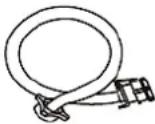 | 1x | WATER INLET HOSE | |
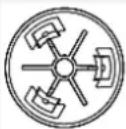 | 4x | CAPS | |
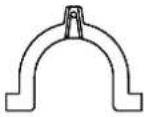 | 1x | HOLDER(water drain hose) | |
 | 1x^30 | BOTTOM COVERfor the washer - dryer(noise reduction) | |
 | 1x | INSTRUCTION MANUAL | |
Before initial operation, please check that all components are present and that they are not visibly damaged.
2.2 Unpacking / Site
- Unpack the appliance carefully. Dispose of the packaging as described in chapter waste management.
- Completely remove the transport-protection. Be very careful and do not use any aggressive or abrasive detergents to remove residuals of the transport-protection.
- Check that the appliance and the power cord are not damaged.
- Do not install the appliance in a bathroom or a place where it may come in contact with water or rain; otherwise, the insulation of the electrical system will be damaged. Do not install the appliance in a room where explosive or flammable gases are stored.
- Protect the appliance from direct sunlight.
- Install the appliance in a dry and well-ventilated place. The room temperature must be higher than 0^ C.
- The following minimum distances must be observed:
| Back ↔ wall | mind. 100 mm |
| Sides ↔ wall | mind. 100 mm |
- Install the appliance in a suitable position with an adequate distance from sources of heat and cold.
- Do not install the appliance on a carpet / fitted carpet.
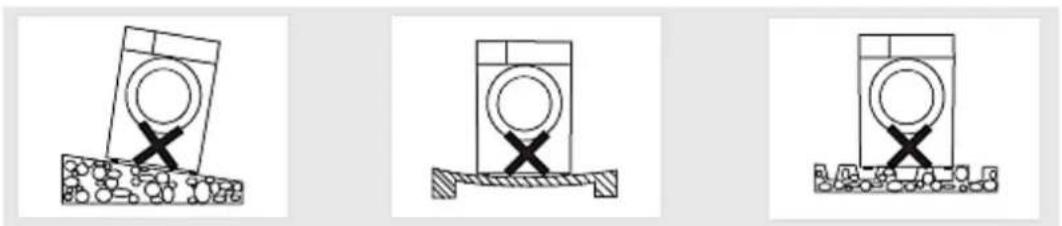
- Install the appliance on a level, dry and solid floor. Check the correct installation with a bubble level.
natural_image
Three technical diagrams showing a washing machine with cross symbols, mounted on a surface (no text or labels)- If you install the appliance on a wooden floor, you must also place it on a plywood panel (60.00*60.00 cm) at least 3.00 cm thick to distribute the weight of the appliance. Fix and secure the plywood panel properly to the wooden floor.
- All required installations for the electric and water supply must be carried out by a qualified professional.
- Connect the appliance to the mains properly.
- The nameplate is situated at the back of the appliance.
2.3 Removing of the shipping bolts
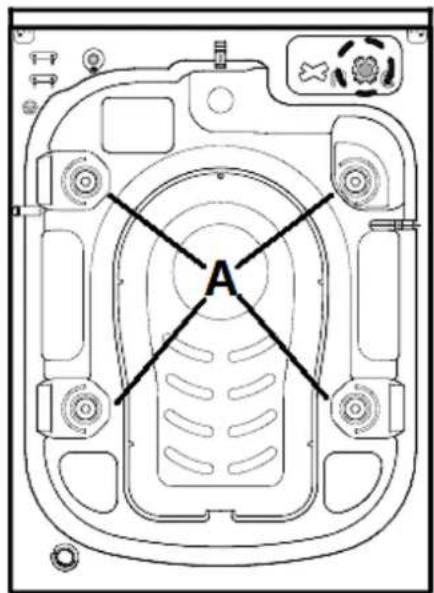
- The four shipping bolts (A) are on the back of the appliance; s. fig. below.
natural_image
Technical line drawing of a vehicle chassis with labeled components (no text or symbols)A
SHIPPING BOLTS
- Unscrew all shipping bolts approx. 30 mm out of the appliance using a spanner; s. fig. below / note the direction of the arrow. Do not unscrew the shipping bolts completely!
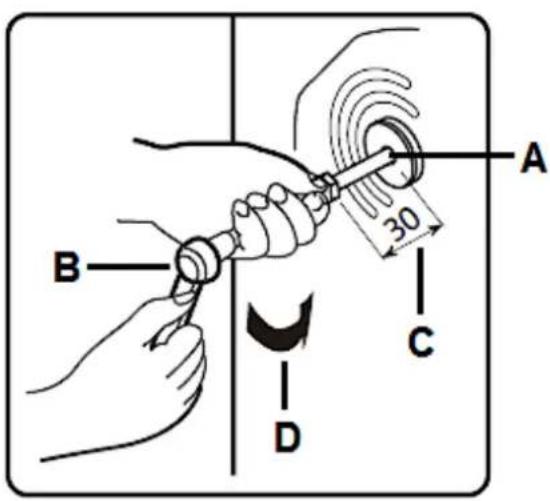
text_image
A 30 B C D| A | SHIPPING BOLTS |
| B | WRENCH |
| C | SHIPPING BOLTS: unscrew approx. 30 mm |
| D | NOTE THE DIRECTION OF THE ARROW (anti-clockwise) |
- Push the -30 mm unscrewed- shipping bolt horizontally in the direction of the arrow; s. fig. below. This will loosen the complete shipping bolt.
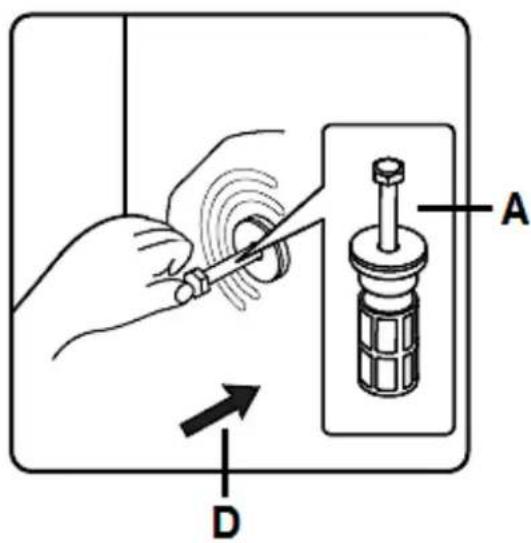
text_image
Diagram showing a hand using a screwdriver to adjust a mechanical component labeled A and D, with directional arrows indicating movement.| A | SHIPPING BOLT |
| D | NOTE THE DIRECTION OF THE ARROW |
- Pull the complete shipping bolt incl. rubber and plastic part out of the appliance carefully; s. fig. below / note the direction of the arrow.
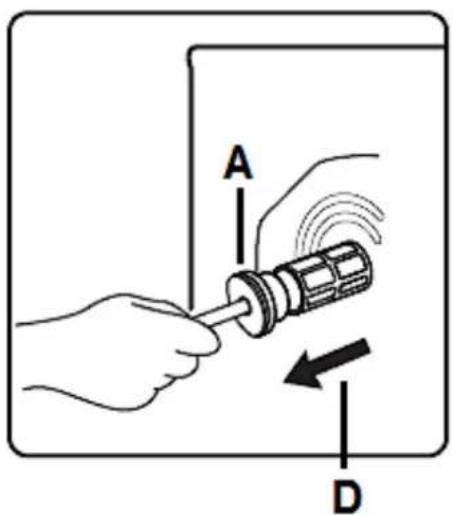
text_image
A D| A | SHIPPING BOLT |
| D | NOTE THE DIRECTION OF THE ARROW |
-
Remove all shipping bolts as described in steps 2 - 4.
-
Insert the four provided caps into the screw holes; s. fig. below / note the direction of the arrow.
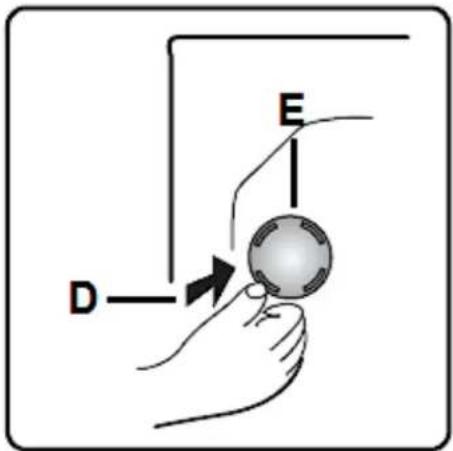
text_image
D E| D | NOTE THE DIRECTION OF THE ARROW |
| E | CAP |
- . Keep the shipping bolts and the wrench for future use.
IMPORTANT NOTE: Make sure that the lower equipment protection (if provided) has been removed completely before you use the appliance; otherwise, the normal operation of the appliance will be affected.
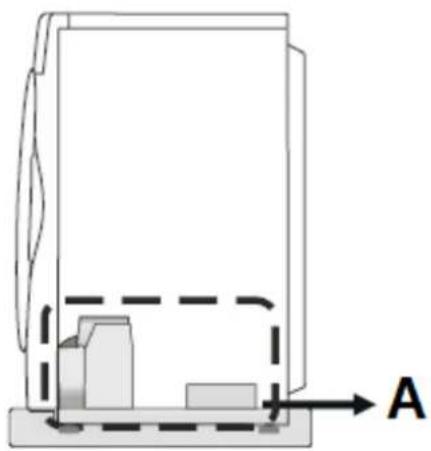
natural_image
Diagram of a mechanical or electrical component with labeled point A, showing internal structure and dashed boundary (no text or symbols beyond label)A
LOWER EQUIPMENT PROTECTION
2.4 Levelling
Allow adequate distance to the floor to avoid vibrations and noise.
If the appliance does not stand horizontally, adjust the 4 feet by turning them clockwise / anticlockwise until the appliance is level.
Do not put any blankets or ropes or piles of items on the floor. They could generate heat so that the appliance will not properly work.
-
Install the appliance on a flat and solid ground only.
-
Turn the adjustable feet for horizontal alignment.
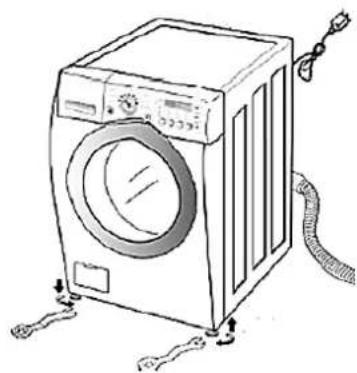
natural_image
Line drawing of a washing machine with attached tubing and control panel (no text or symbols)| a. Raise: clockwise. | 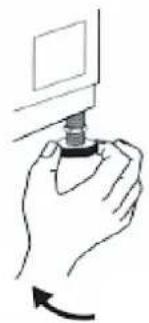 |
| b. Lower: anti-clockwise | 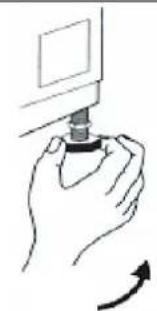 |
- NOTICE! While you adjust the feet, pay attention to the respective lock nut; s. below.
| a. How to release the lock nut: turn the lock nut clockwise; s. fig. on the right. | 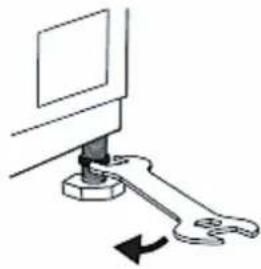 |
| b. How to tighten the lock nut: turn the lock nut anti-clockwise; s. fig. on the right. | 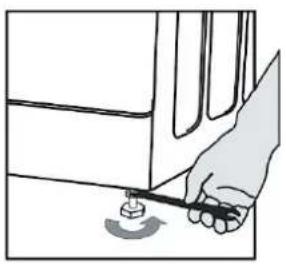 |
| c. Please note: The distance between the lock nut and the adjustable foot must not exceed 20 mm (2.0 cm)! | 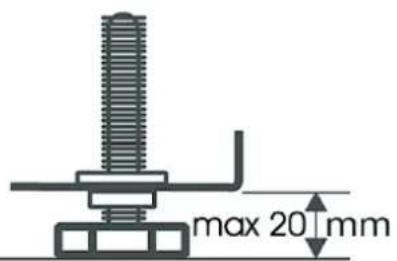 |
NOTICE! After you have levelled the appliance properly, always tighten the lock nuts again.
2.5 Installation of the bottom cover (noise reduction)
NOTICE! The installation of the bottom cover must be carried out by a person who is experienced in such work. ^31 The following instructions are intended for such a person. The manufacturer is not liable for any damage caused by improper installation. However, the appliance can be used without the bottom cover!
The bottom cover reduces the noise level of the appliance.
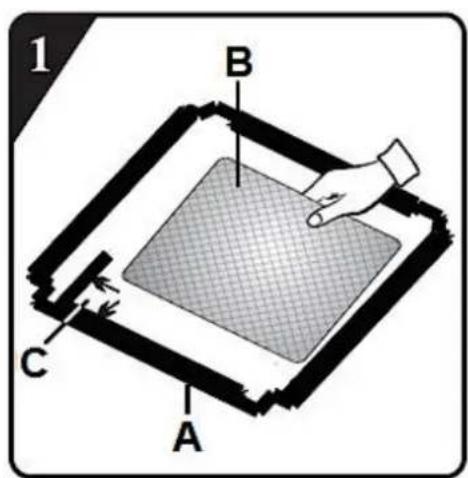
- Before you install the bottom cover, align the sound absorption wool (A) with the right-angled recess (B) of the bottom cover and insert it; see below, fig. 1.
This step is not necessary for appliances without sound absorption wool.
text_image
1 B C A| A | BOTTOM COVER |
| B | SOUND ABSORPTION WOOL |
| C | RIGHT ANGLE of the bottom cover BOTTOM COVER |
- Remove the surface paper of the double-sided adhesive tape (C) on the four sides of the bottom cover; s. below, fig. 2 / s. arrows.
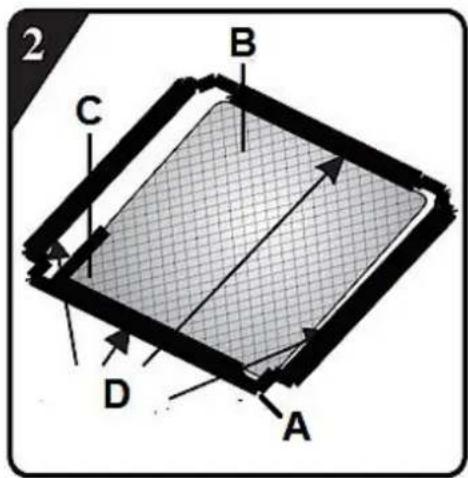
text_image
2 C B D A| A | BOTTOM COVER |
| B | SOUND ABSORPTION WOOL |
| C | RIGHT ANGLE of the bottom cover |
| D | DOUBLE-SIDED ADHESIVE TAPE |
-
Tilt the appliance to a 40-degree angle (E). The side of the bottom cover with the right-angled recess (C) must face the front of the unit, as shown in fig. 3 below.
-
Push the bottom cover (A) between the adjustable feet all the way back to the rear of the appliance as shown in fig. 3 below. Then insert the bottom cover (press it against the bottom of the appliance), making sure that it fits tightly and firmly against the bottom of the appliance.
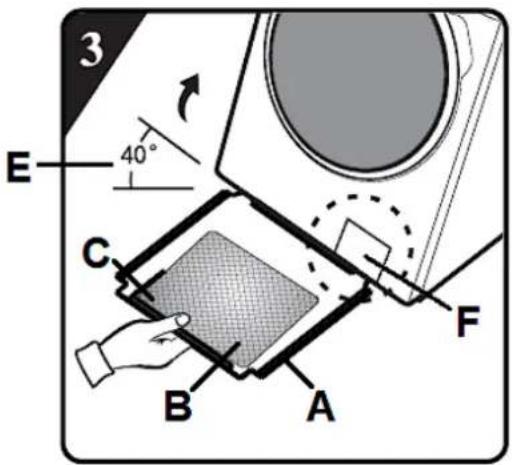
text_image
3 40° E C B A F| A | BOTTOM COVER |
| B | SOUND ABSORPTION WOOL |
| C | RIGHT ANGLE of the bottom cover |
E
40 DEGREE ANGLE
F
COVER of the drain pump filter
- Press the double-sided adhesive tape on the four sides on the bottom of the appliance (H) to fix the bottom cover to the bottom of the appliance firmly; see below, fig. 4.
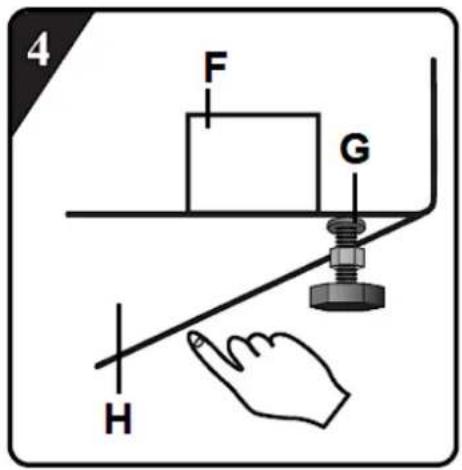
text_image
4 F G H| F | COVER of the drain pump filter |
| G | ADJUSTABLE FOOT |
| H | BOTTOM OF THE APPLIANCE:➢ press the adhesive tape of the bottom cover firmly in place. |
2.6 Connection of the water inlet hose
i The appliance must not be connected to the mixer tap of an unpressurised water heater.
Check the connections for leaks by turning the tap on completely.
If the water inlet hose is too short, replace it with a suitable length of a pressure-resistant water inlet hose (1000 kPa/min).
Check the water inlet hose regularly for brittleness and cracks and replace it if necessary.
Do not use a water connection the water of which is warmer than 50^ C.
| 1. Ensure that the rubber washer is in the valve connector; both ends ^32 / s. fig. on the right. | 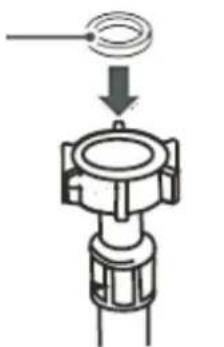 |
| 2. Attach the straight end of the water inlet hose to the appropriate water connection; s. fig. on the right. | 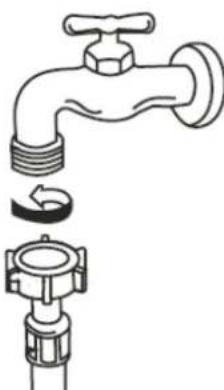 |
| 3. Put the other end of the water inlet hose into a bucket or into another suitable container (s. fig on the right) and open the water tap to flush foreign substances (e.g. dirt, sand, etc.) out of the water pipe and of the hose. Check the water temperature. | 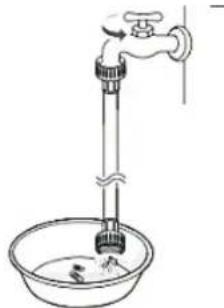 Fig. similar Fig. similar |
| 4. Ensure that the rubber washer ^33 is in the valve connector. Attach the curved end of the water inlet hose to the inlet valve of the washing machine / washer-dryer; s. fig. on the right / 1. Tighten the water inlet hose firmly (clockwise) to avoid leakage; s. fig. on the right / 2. | 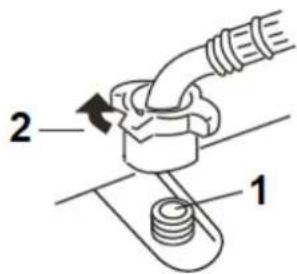 |
NOTICE! Do not overtighten the water inlet hose. Overtightening of the water inlet hose can damage the valves.
2.7 Connection of the water drain hose
The water drain hose must be installed at a height between 70 cm and 125 cm above the floor; s. below; fig. 1, 2 and 3.
The hose outlet must not be installed less than 70 cm above the floor.
i The hose outlet must not be installed higher than 125 cm above the floor.
If the water drainage hose is installed on the appliance (as shown in fig. below), disconnect it from the right bracket only (not from the other brackets); see fig. below.
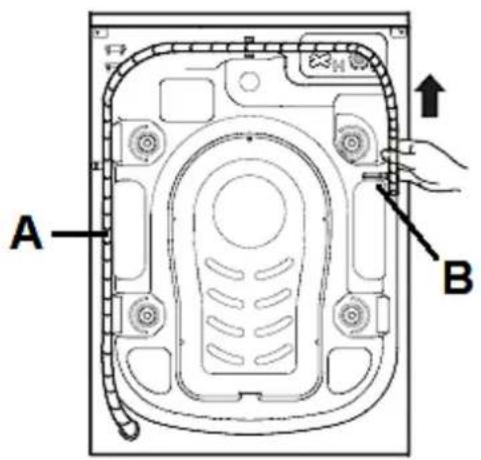
text_image
A BA
WATER DRAIN HOSE
B
RIGHT BRACKET
Use the holder of the water drain hose provided ^34 to hold the water drain hose in a curved position; s. fig. below.
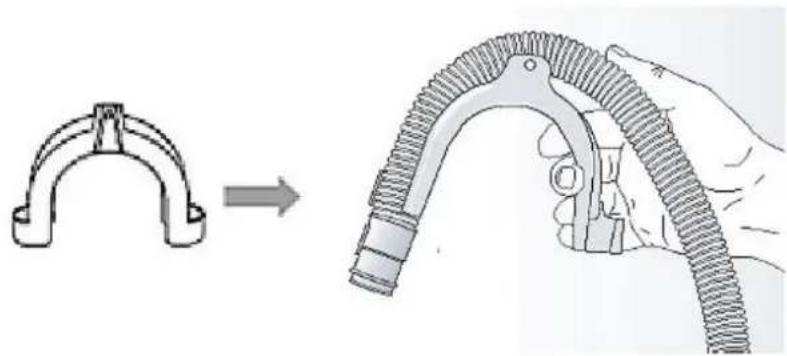
natural_image
Illustration showing a mechanical component before and after assembly, with no visible text or symbols.THE WATER DRAIN HOSE CAN BE INSTALLED IN DIFFERENT WAYS
(see below; fig. 1, 2 and 3):
FIG. 1
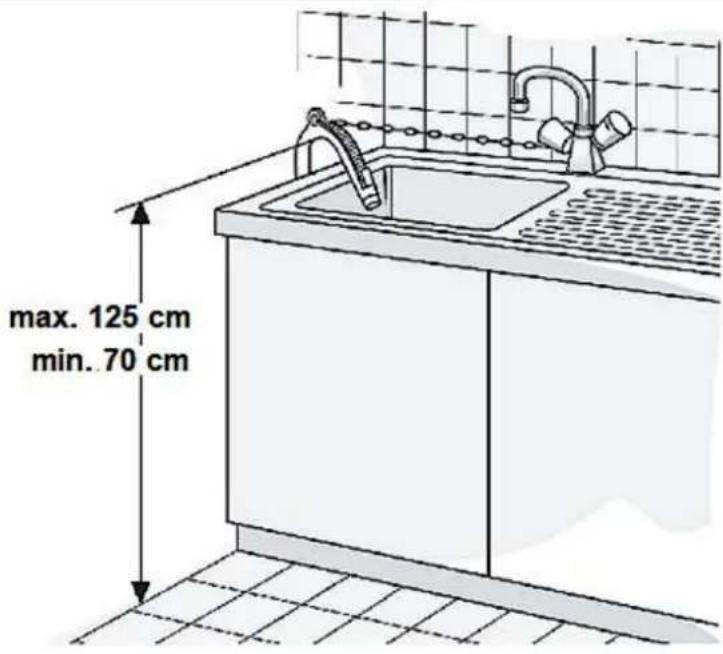
text_image
max. 125 cm min. 70 cmFIG. 2
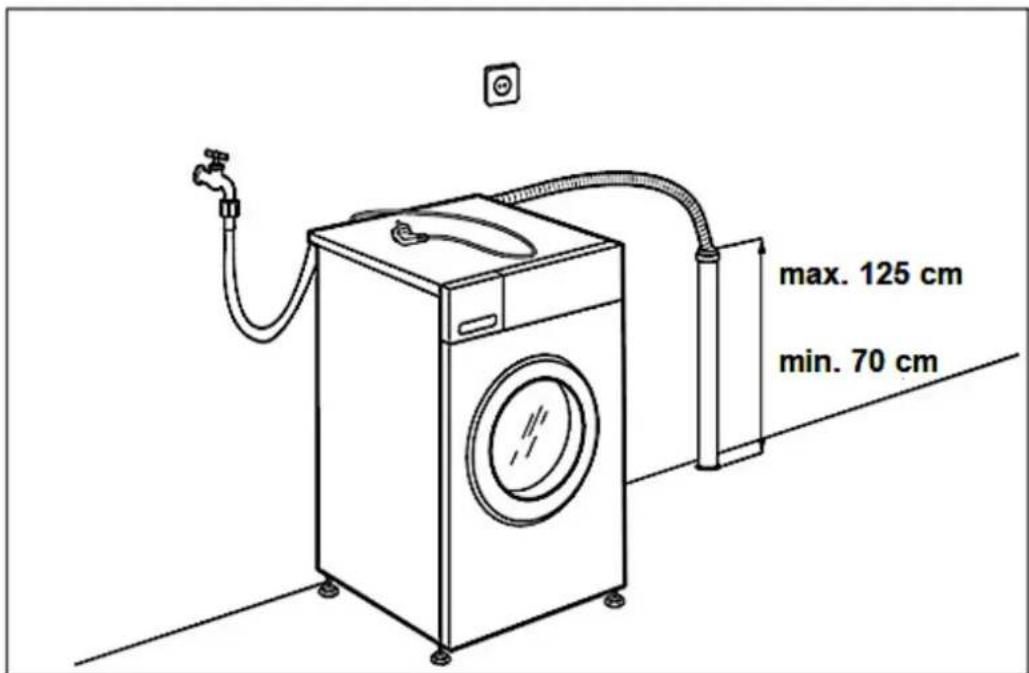
text_image
max. 125 cm min. 70 cmFIG. 3
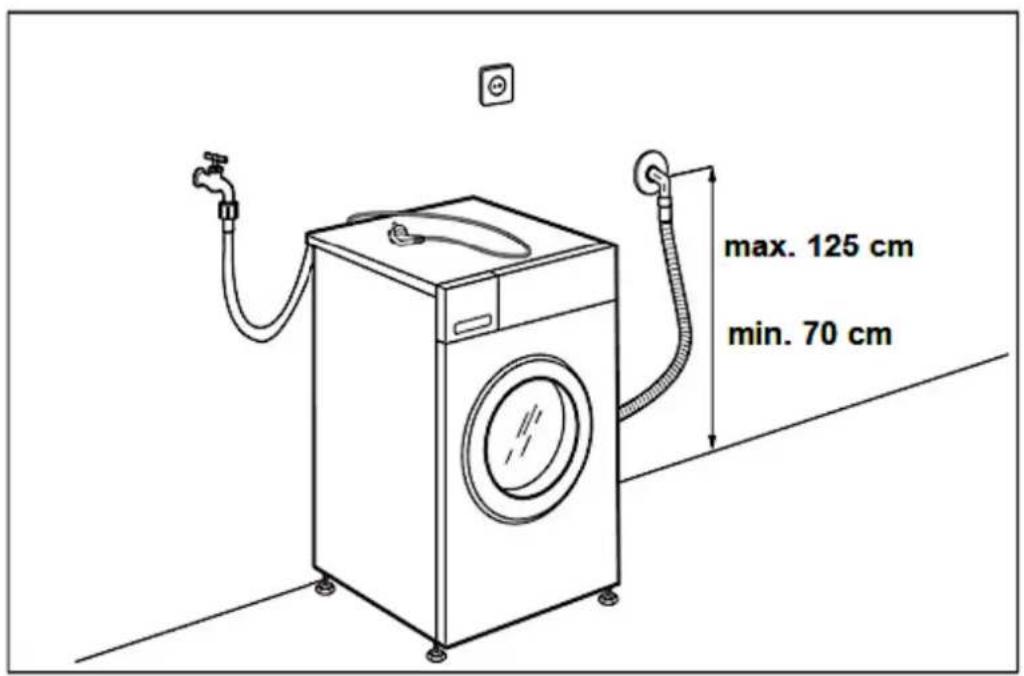
text_image
max. 125 cm min. 70 cmIMPORTAT NOTES!
If the appliance is connected to an integrated drainage system, make sure that it is equipped with a vent to prevent water from running in and out at the same time (siphon effect).
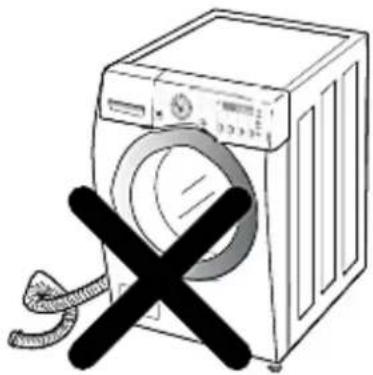
i Make sure that the water drain hose does not have any kinks.
Secure the water drain hose so that it cannot fall down. PLEASE NOTE: After the washing phase, the machine drains the hot water.
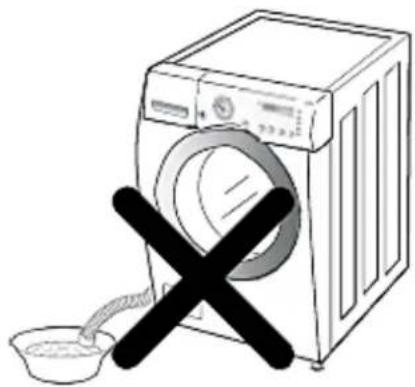
i A small hand wash basin is not suitable as a drain.
Use a water drain hose of the same type for extension and secure the connections with clamps. The maximum permitted length of the water drainage hose is 2.50 m.
natural_image
Line drawing of a washing machine with a black X symbol indicating no change or prohibition (no text or symbols present)The hose must not be twisted.
natural_image
Simple line drawing of a washing machine with a crossed-out black X symbol (no text or symbols present)The hose outlet must not be submerged into water.
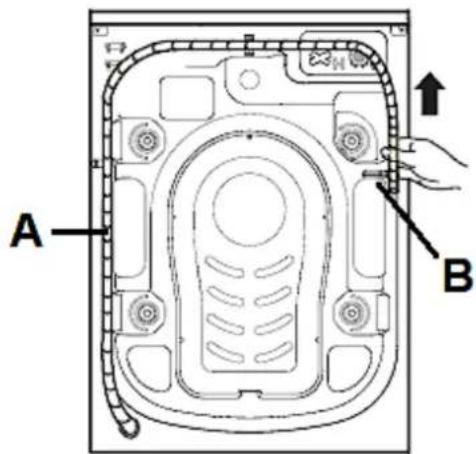
NOTICE! If the appliance is out of operation, fix the water drain hose (A) on the back of the appliance using the right bracket (B); s, fig. below. Do not remove the brackets!
text_image
A BA
WATER DRAIN HOSE
B
RIGHT BRACKET
2.8 Connection to the mains
⚠️ DANGER! Do not connect the appliance to the mains if the appliance itself or the power cord or the plug are visibly damaged. RISK OF ELECTRIC SHOCK!
⚠️ DANGER! Never touch the power plug, the power switch or other electrical components with wet or damp hands. RISK OF ELECTRIC SHOCK!
➢ Operate the appliance with 220 \~ 240 V AC / 50 Hz only.
The technical data of your energy supply must meet the data on the rating label. The main current circuit must be equipped with a safety shut-down device.
Do not use an extension cord, a socket board or a multi socket.
Do not modify the plug provided with the appliance, if it will not fit the outlet, have a proper outlet installed by a qualified electrician (not covered by the guarantee).
The plug must always be accessible after installation. Connect the appliance with the safety plug to a properly grounded and dedicated safety socket only. Use a safety socket to minimise any risk of electric shock.
3. Description of the appliance
⚠ WARNING! Remove the safety bolts before initial use (see chapter 2.3 REMOVING OF THE SHIPPING BOLTS); otherwise, the appliance may cause serious injury to persons and / or severe damage to the appliance.
3.1 Washer-dryer
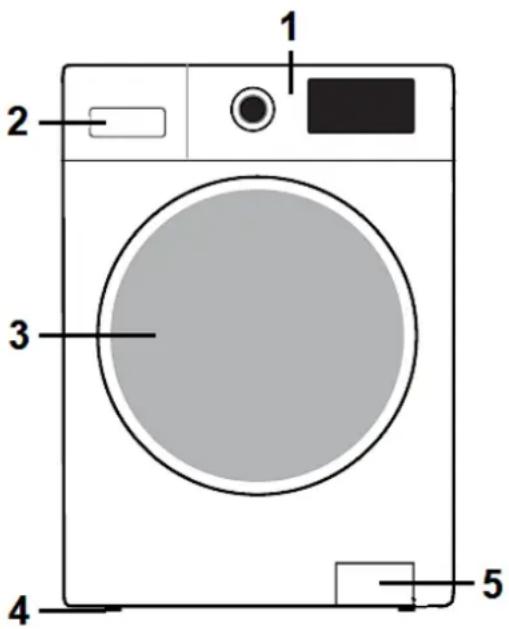
text_image
1 2 3 4 5Fig. similar: modifications are possible
1 CONTROL PANEL
| 2 | DETERGENT DISPENSER |
| 3 | DOOR of the appliance / Drum |
| 4 | ADJUSTABLE FEET |
| 5 | COVER of the drain pump filter / DRAIN PUMP FILTER |
3.2 Control panel
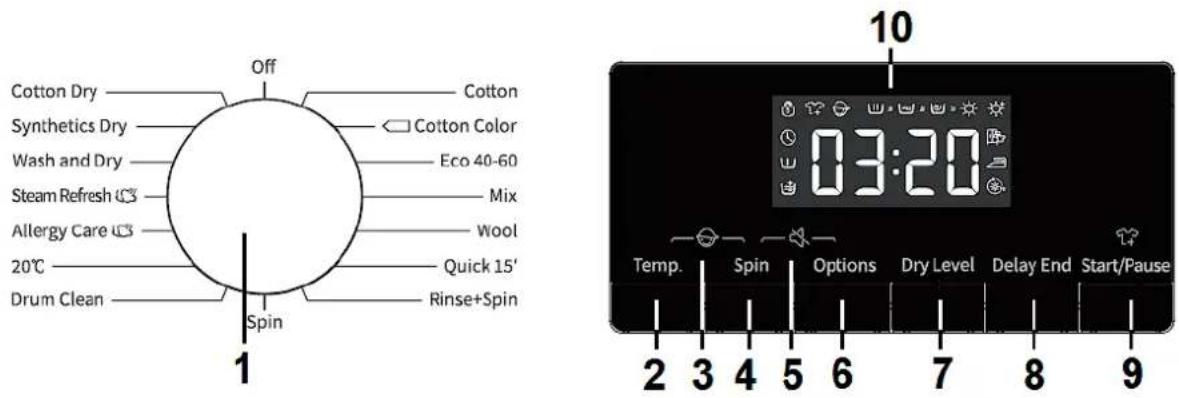
text_image
Cotton Dry Off Cotton Synthetics Dry ← Cotton Color Wash and Dry Eco 40-60 Steam Refresh Mix Allergy Care Wool 20°C Quick 15' Drum Clean Spin Rinse+Spin 1 10 03:20 Temp. Spin Options Dry Level Delay End Start/Pause 2 3 4 5 6 7 8 9Fig. similar: modifications are possible.
| OPERATING BUTTONS | |
| 1 | ROTARY KNOB for PROGRAMME SELECTION // « ON / OFF »➢ Rotary knob to select a WASHING / DRYING PROGRAMME according to fibre type and degree of soiling.➢ Switches on / off the appliance by selecting the desired programme. |
| 2 | « TEMP. » - BUTTON➢ Button to change the TEMPERATURE of a washing programme.➢ Press this button repeatedly to switch through the different temperatures.➢ See also chapter 4.4.3 SELECTION OF THE ADDITIONAL FUNCTIONS / OPTIONS.➢ In some washing programmes the settable temperature range is limited: depending on model. |
| 3 | « CHILD SAFETY LOCK » - BUTTON➢ Button to activate / deactivate of the CHILD SAFETY LOCK.➢ Press the « TEMP. » - BUTTON and the « SPIN » - BUTTON simultaneously to activate / deactivate the child safety lock.➢ See also chapter 4.4.3 SELECTION OF THE ADDITIONAL FUNCTIONS / OPTIONS. |
| 4 | « SPIN » - BUTTON➢ Button to select the SPIN SPEED of a washing cycle.➢ Press this button repeatedly to switch through the different speeds.➢ See also chapter 4.4.3 SELECTION OF THE ADDITIONAL FUNCTIONS / OPTIONS.➢ In some programmes the settable spin speed is limited: depending on model. |
| 5 | « ACOUSTIC SIGNAL » - BUTTON➢ Button to activate / deactivate of the ACOUSTIC SIGNALS.➢ Press the « SPIN » - BUTTON and the « DELAY END » - BUTTON simultaneously to activate / deactivate the acoustic signals.➢ See also chapter 4.4.3 SELECTION OF THE ADDITIONAL FUNCTIONS / OPTIONS. |
| 6 | « OPTIONS » - BUTTON➢ Button for the selection of extra washing functions (washing options); e. g. EXTRA RINSE, PRE-WASH.➢ Press this button repeatedly to switch through the different options.➢ See also chapter 4.4.3 SELECTION OF THE ADDITIONAL FUNCTIONS / OPTIONS. |
| 7 | « DRYING LEVEL » - BUTTON➢ Button for the selection of the drying level of a drying process.➢ Press this button repeatedly to switch through the different dry levels.➢ See also chapter 4.4.3 SELECTION OF THE ADDITIONAL FUNCTIONS / OPTIONS.➢ In some programmes the settable drying level is limited: depending on model. |
| 8 | « DELAY END. » - BUTTON➢ Button to set a DELAYED PROGRAMME START.➢ See also chapter 4.4.3 SELECTION OF THE ADDITIONAL FUNCTIONS / OPTIONS. |
| 9 | « START / PAUSE » - BUTTONTo start or pause operation; c. g. for reloading laundry. |
| 10 | DISPLAY➢ Indication of detailed information displaying the selected washing programme and other functions (spin speed, temperature, washing time, etc.). |
| INDICATORS OF THE DISPLAY | |
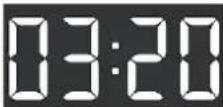 | INDICATOR « REMAINING TIME »The display indicates the remaining time of the current programme. |
 | OPERATIONAL STATUS INDICATOR « EXTRA RINSE »The additional washing function (option) « EXTRA RINSE » is activated. |
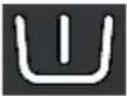 | OPERATIONAL STATUS INDICATOR « PRE-WASH »The additional washing function (option) « PRE-WASH » is activated. |
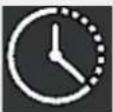 | OPERATIONAL STATUS INDICATOR « DELAY END »A DELAYED PROGRAMME START is activated. |
 | OPERATIONAL STATUS INDICATOR « DOOR LOCK »The door lock is activated. |
 | OPERATIONAL STATUS INDICATOR « RELOAD LAUNDRY LOCK »The programme is paused; you can reload laundry. |
 | OPERATIONAL STATUS INDICATOR « CHILD SAFETY LOCK »The child safety lock is activated. |
 | OPERATIONAL STATUS INDICATOR « MAIN WASH »This indicator shows the current programme progress: the MAIN WASH is currently running. |
 | OPERATIONAL STATUS INDICATOR « RINSE »This indicator shows the current programme progress: the RINSING CYCLE is currently running. |
 | OPERATIONAL STATUS INDICATOR « SPIN »This indicator shows the current programme progress: the SPIN PROGRAMME is currently running. |
 | OPERATIONAL STATUS INDICATOR « DRYING »This indicator shows the current programme progress: the DRYING PROGRAMME is currently running. |
 | OPERATIONAL STATUS INDICATOR « EXTRA DRY »The drying level « EXTRA DRY » is activated.This drying level is suitable for stowing the laundry or clothes directly after drying. |
 | OPERATIONAL STATUS INDICATOR « CUPBOARD DRY »The drying level « CUPBOARD DRY » is activated.This drying level is suitable for wearing the laundry or clothes immediately after drying. |
 | OPERATIONAL STATUS INDICATOR « IRON DRY »The drying level « IRONING DRY » is activated.This drying level is suitable for ironing the laundry or clothes after drying. |
 | OPERATIONAL STATUS INDICATOR « DRYING BY TIME »A time setting for the current dryer programme is set. |
4. Operation
4.1 Before the first use
To remove potential residues in the drum of the appliance caused by production, testing or transportation of the appliance, a complete wash cycle without laundry (quick washing programme) should always be started before the first regular wash cycle.
- Open the water tap
-
Close the door.
-
Set a quick washing programme (e.g. « QUICK 15' ») using the rotary knob. The appliance is now switched on and in STANDBY MODE.
- Press the « START / PAUSE » - BUTTON to start the programme.
- The door lock will be activated automatically. The operational status indicator of the door lock « goes on.
- When the programme is finished, the display indicates « END » and an acoustic signal sounds.
- The door lock is deactivated automatically after approx. 2 minutes. The operational status indicator of the door lock « goes off.
- When the programme is finished, always turn the ROTARY KNOB for the programme selection back to « OFF » to switch off the appliance completely; see also chapter 4.6 END OF A WASHING / DRYING PROGRAMME.
- Close the water tap.
4.2 The washing and drying programmes
NOTICE! Always observe the textile labels.
You can receive information about the symbols on the textile labels in chapter 4.4.1 GENERAL TEXTILE CARE SYMBOLS or on the webpage of your local consumer advice centre.
i Please also observe chapter 5. INSTRUCTIONS FOR PROPER USE et seq.
| COTTON | -- (cold) / 20 °C / 30 °C / 40 °C / 60 °C / 95 °CDEFAULT TEMPERATURE: '40 °C (1) | ||
| Material / degree of soiling | Programme for the washing of normally- and heavily-soiled laundry made of cotton, linen or cotton blends: c.g. terry towels, underwear, T-shirts, etc.Always observe the textile labels. | ||
| Detergent dispenser | PRE-WASH | MAIN WASH | SOFTENER |
| * | √ | * | |
| Max. load (W) | 9.0 kg | ||
| Max. load (W & D) | 6.0 kg | ||
| Max. rpm / spinning | 1400 rpm | ||
| Default spin speed (W) | 1000 rpm | ||
| Default spin speed (W & D) | 1400 rpm | ||
| Function: « DRYING » | √ | SETTABLE DRYING LEVELS: | |||
 |  |  |  | ||
DEFAULT DRYING LEVEL:  | |||||
| COTTON COLOUR | -- (cold) / 20 °C / 30 °C / 40 °C/ 60 °CDEFAULT TEMPERATURE: 40 °C (1) | |||
| Material / degree of soiling | Programme for the washing of lightly- and normally-soiled laundry made of cotton, linen or cotton blends.Wash textiles worn directly on the skin at 60 °C.Wash lightly soiled textiles at 40 °C.Always observe the textile labels. | |||
| Detergent dispenser | PRE-WASH* | MAIN WASH✓ | SOFTENER※ | |
| Max. load (W)Max. load (W & D) | 9.0 kg6.0 kg | |||
| Max. rpm / spinningDefault spin speed (W)Default spin speed (W & D) | 1400 rpm1400 rpm1400 rpm | |||
| Function: « DRYING » | √ | SETTABLE DRYING LEVELS:DEFAULT DRYING LEVEL: | ||
| Eco 40 - 60 | The temperature cannot be changed. | |||
| Material / degree of soiling | Programme for the washing of normally-soiled laundry made of cotton; 40 °C - 60 °C.Always observe the textile labels. | |||
| Detergent dispenser | PRE-WASH[IMAGE] | MAIN WASH[IMAGE] | SOFTENER[IMAGE]* | |
| Max. load (W) | 9.0 kg | |||
| Max. load (W & D) | 6.0 kg | |||
| Max. rpm / spinning | 1400 rpm | |||
| Default spin speed (W) | 1400 rpm | |||
| Default spin speed (W & D) | 1400 rpm | |||
| Function:« DRYING » | √ | SETTABLE DRYING LEVELS:    DEFAULT DRYING LEVEL: [IMAGE] DEFAULT DRYING LEVEL: [IMAGE] | ||
| MIX | -- (cold) / 20 °C / 30 °C / 40 °CDEFAULT TEMPERATURE: 40 °C (1) | ||||
| Material / degree of soiling | Programme for the washing of mixed loads of medium-soiled cotton and synthetic fibres.Always observe the textile labels. | ||||
| Detergent dispenser | PRE-WASH * | MAIN WASH ✓ | SOFTENER * | ||
| Max. load (W) | 5.0 kg | ||||
| Max. load (W & D) | 5.0 kg | ||||
| Max. rpm / spinning | 1400 rpm | ||||
| Default spin speed (W) | 1000 rpm | ||||
| Default spin speed (W & D) | 1400 rpm | ||||
| Function:« DRYING » | ✓ | SETTABLE DRYING LEVELS:    DEFAULT DRYING LEVEL: DEFAULT DRYING LEVEL:  | |||
| WOOL | -- (cold) / 20 °C / 30 °C / 40 °CDEFAULT TEMPERATURE: 40 °C (1) | |||
| Material / degree of soiling | Special programme for the washing of washer-safe wool.For washer-safe wool only.Always observe the textile labels.Remove the laundry immediately after the washing cycle is completed.Always wash light and dark clothes separately.The highest settable temperature of the wool programme is 40 °C. | |||
| Detergent dispenser | PRE-WASH W * | MAIN WASH W ✓ | SOFTENER ⊗ * | |
| Max. load (W)Max. load (W & D) | 2.0 kg- | |||
| Max. rpm / spinningDefault spin speed (W)Default spin speed (W & D) | 600 rpm (3)600 rpm- | |||
| Function:« DRYING » | - | SETTABLE DRYING LEVELS:-DEFAULT DRYING LEVEL: - | ||
| QUICK 15' | -- (cold) / 20 °C / 30 °C / 40 °CDEFAULT TEMPERATURE: 20 °C (1) | |||
| Material / degree of soiling | ➢ Special programme for the washing of rarely-used or newly-bought clothing.➢ High-speed wash cycle (approx. 15 min.).➢ Always observe the textile labels. | |||
| Detergent dispenser | PRE-WASH * | MAIN WASH ✓ | SOFTENER * | |
| Max. load (W)Max. load (W & D) | 1.0 kg- | |||
| Max. rpm / spinningDefault spin speed (W)Default spin speed (W & D) | 800 rpm (3)800 rpm- | |||
| Function:« DRYING » | - | SETTABLE DRYING LEVELS: -DEFAULT DRYING LEVEL: - | ||
| RINSE & SPIN | The temperature cannot be changed. DEFAULT TEMPERATURE: - | |||
| Material / degree of soiling | Programme for the removal of excess water and remaining washing agent from textiles.Do not use any additional washing agent.Always observe the textile labels. | |||
| Detergent dispenser | PRE-WASH | MAIN WASH | SOFTENER | |
| - | - | * | ||
| Max. load (W) | 9.0 kg | |||
| Max. load (W & D) | 6.0 kg | |||
| Max. rpm / spinning | 1400 rpm | |||
| Default spin speed (W) | 1000 rpm | |||
| Default spin speed (W & D) | 1400 rpm | |||
| Function: « DRYING » | √ | SETTABLE DRYING LEVELS: | ||
 |  |  | ||
 | ||||
| DEFAULT DRYING LEVEL: | ||||
| SPIN | The temperature cannot be changed. DEFAULT TEMPERATURE: - | ||
| Material / degree of soiling | Programme for the removal of excess water from textiles.You can set the spin speed manually.Always observe the textile labels. | ||
| Detergent dispenser | PRE-WASH↓↓- | MAIN WASH↓↓- | SOFTENER⊗- |
| Max. load (W) | 9.0 kg | ||
| Max. load (W & D) | 6.0 kg | ||
| Max. rpm / spinning | 1400 rpm | ||
| Default spin speed (W) | 1000 rpm | ||
| Default spin speed (W & D) | 1400 rpm | ||
| Function:« DRYING » | √ | SETTABLE DRYING LEVELS: DEFAULT DRYING LEVEL: DEFAULT DRYING LEVEL:  | |||
| COTTON DRY | DRYING PROGRAMME ONLY |
| Description | ➢Standard drying programme for the normal drying of laundry / textiles made of cotton, linen or cotton blend.➢Always observe the textile labels. |
| Max. load | 6.0 kg |
| Drying programme | SETTABLE DRYING LEVELS:    DEFAULT DRYING LEVEL: DEFAULT DRYING LEVEL:  |
| SYNTHETICS DRY | DRYING PROGRAMME ONLY | ||
| Description | ➤ Special drying programme for the drying of laundry / textiles made of synthetic fibres (polyester, polyacrylic, viscose, etc.).➤ Always observe the textile labels. | ||
| Max. load | 5.0 kg | ||
| Drying programme | SETTABLE DRYING LEVELS:    DEFAULT DRYING LEVEL: DEFAULT DRYING LEVEL:  | ||
| WASH & DRY | The washing temperature cannot be changed. | ||
| Material / degree of soiling | Programme for the washing (washable: 40 °C - 60 °C) and the drying of normally-soiled textiles.The default drying level (drying time setting) is suitable for stowing the laundry or clothes directly after drying.Always observe the textile labels. | ||
| Detergent dispenser | PRE-WASH * | MAIN WASH ✓ | SOFTENER * |
| Max. load (W)Max. load (W & D) | -6.0 kg | ||
| Max. rpm / spinningDefault spin speed (W)Default spin speed (W & D) | 1400 rpm-1400 rpm | ||
| Washing & drying programme | The drying level cannot be changed.Only drying time setting is possible. ^35 DEFAULT DRYING LEVEL: | ||
| STEAM REFRESH | DRYING / REFRESHING PROGRAMME ONLY | |||
| Description | ➢ Special drying programme for the refreshing of lightly-used clothes, etc.➢ Always observe the textile labels. | |||
| Max. load | 5.0 kg | |||
| Drying programme | The drying level cannot be changed.Only drying time setting is possible. ^36 DEFAULT DRYING LEVEL:  | |||
| ALLERGY CARE (4) | 40 °C / 60 °C / 95 °CDEFAULT TEMPERATURE: 60 °C (1) | |||
| Material / degree of soiling | This special programme is suitable for high-temperature and less fading textiles.This special programme is also suitable for baby clothes, underwear, etc.This special programme removes allergens such as pollen, mites and parasites from clothes / textiles and sterilises and disinfects them using high-temperature steam.Always observe the textile labels.WARNING! To avoid burns and scalds, do not touch the glass of the door or open the detergent compartment during operation! RISK OF BURNS! RISK OF SCALDING! | |||
| Detergent dispenser | PRE-WASH[IMAGE] | MAIN WASH[IMAGE] | SOFTENER[IMAGE]* | |
| Max. load (W)Max. load (W & D) | 4.0 kg4.0 kg | |||
| Max. rpm / spinningDefault spin speed (W)Default spin speed (W & D) | 1400 rpm1400 rpm1400 rpm | |||
| Function:« DRYING » | √ | SETTABLE DRYING LEVELS:    DEFAULT DRYING LEVEL: DEFAULT DRYING LEVEL:  | ||
| 20 °C | The temperature cannot be changed. DEFAULT TEMPERATURE: 20 °C (1) | |||
| Material / degree of soiling | Special programme for the washing of rarely-used or lightly-soiled textiles or delicates.This programme is energy saving.Always observe the textile labels. | |||
| Detergent dispenser | PRE-WASH * | MAIN WASH ✓ | SOFTENER * | |
| Max. load (W) | 9.0 kg | |||
| Max. load (W & D) | 6.0 kg | |||
| Max. rpm / spinning | 1400 rpm | |||
| Default spin speed (W) | 1000 rpm | |||
| Default spin speed (W & D) | 1400 rpm | |||
| Function: « DRYING » | ✓ | SETTABLE DRYING LEVELS:    DEFAULT DRYING LEVEL: DEFAULT DRYING LEVEL: | ||
| Drum Clean | The temperature cannot be changed. DEFAULT TEMPERATURE: 95 °C | |||
| Material / degree of soiling | ➢ For the removing of contaminations and bacterial residues which may accumulate in the appliance after some time, especially then when you mainly use low-temperature programmes.➢ For cleaning the drum, you can add a fair amount of chlorine bleach to the washing machine / washer - dryer; please always observe the instructions given by the manufacturer of the chlorine bleach.➢ Do not use any additional washing agent.➢ Do not wash any textiles / laundry when using this programme. | |||
| Detergent dispenser | PRE-WASH↓↓- | MAIN WASH↓↓- | SOFTENER⊗- | |
| Max. load (W) | 0.0 kg | |||
| Max. load (W & D) | 0.0 kg | |||
| Max. rpm / spinning | 800 rpm | |||
| Default spin speed (W) | 800 rpm | |||
| Default spin speed (W & D) | 800 rpm | |||
| Function:« DRYING » | √ | The drying level cannot be changed. | ||
 DEFAULT DRYING LEVEL: DEFAULT DRYING LEVEL: | ||||
| * | Additional functions (options). |
| √ | Detergent. |
| - | Selection disabled. |
| (W) | Washing |
| (W & D) | Washing & Drying |
| (1) | The suitable washing temperature is indicated on the textile labels of your garments. |
| (2) | It is possible that the current running time of the set washing programme is adjusted automatically (depending on the washing situation, load additionally selected functions, etc.) so that it may vary from the specified programme duration. |
| (3) | The spin speed is limited to 800 rpm or 600 rpm to protect your clothing and textiles. |
| (4) | The programme « ALLERGY CARE » is suitable for the sterilisation of colourfast clothes / textiles.⚠ WARNING! To avoid burns and scalds, do not touch the glass of the door or open the detergent compartment during operation! RISK OF BURNS! RISK OF SCALDING! |
The programme descriptions listed above are only recommendations, the user can select a suitable programme relevant to their needs.
NOTICE! As well as the washing programmes, the three drying programmes « COTTON DRY / SYNTHETICS DRY / STEAM REFRESH » and the function « DRY LEVEL » require an open water tap. Make sure that the water tap is open, even if you only want to dry laundry (e.g. hand wash).
4.2.1 General textile care symbols
 | Hard-wearing textiles | 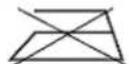 | Do not iron |
 | Easy-care textiles | 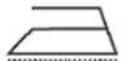 | Damp ironing only |
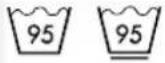 | Washable up to 95 °C | 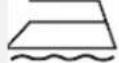 | Use intermediate layer |
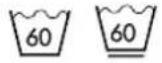 | Washable up to 60 °C |  | Do not wring out |
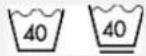 | Washable up to 40 °C |  | Do not dry clean |
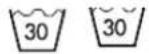 | Washable up to 30 °C |  | Drying: lying flat |
 | Hand wash only |  | Hang up dripping wet |
 | Dry cleaning only(professional cleaning) |  | Hang up wet |
 | Bleaching in cold waterallowed |  | Tumble drying:normal heat |
 | Do not bleach |  | Tumble drying:reduced heat |
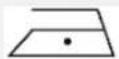 | Ironing up to max.100 °C |  | Do not tumble dry |
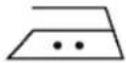 | Ironing up to max.150 °C |  | Line dry |
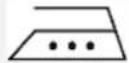 | Ironing up to max.200 °C |  | Dry cleaning withperchloride, lighterfluid, pure alcohol orR 113 only. |
 | Dry cleaning withparaffin, pure alcoholor R 113 only |  | Not machine-washable |
The textile care symbols above are examples only. Modifications are possible.
i The list above does not claim to be complete.
You can receive further information about the symbols on the textile labels on the webpage of your local consumer advice centre.
4.2.2 Weight of clothes: reference values
| CLOTHES | REFERENCE VALUE | CLOTHES | REFERENCE VALUE |
| Bathrobe | approx. 1600 g | Nightgown | approx. 265 g |
| Napkin | approx. 130 g | Lingerie | approx. 130 g |
| Quilt | approx. 930 g | Men's work shirt | approx. 800 g |
| Sheet | approx. 665 g | Men's Shirt | approx. 265 g |
| Pillow case | approx. 266 g | Pyjama | approx. 130 g |
| Tablecloth | approx. 330 g | Blouse | approx. 665 g |
| Terry towel | approx. 265 g | Men's Underpants | approx. 130 g |
i The reference values listed above are examples only. Modifications are possible.
i The list above does not claim to be complete.
4.3 Programmes: available additional functions / options
| PROGRAMME | AVAILABLE ADDITIONAL FUNCTIONS /OPTIONS |
| COTTON | ➢ Temperature setting: up to 95 °C max.➢ Delay end➢ Pre-wash➢ Extra rinse➢ Spin speed setting: up to 1400 rpm max.➢ Function « DRYING »: selection of the drying level➢ Reload laundry➢ Child safety lock➢ Activation / deactivation of the acoustic signals |
| COTTON COLOUR | Temperature setting: up to 60 °C max.Delay endExtra rinseSpin speed setting: up to 1400 rpm max.Function « DRYING »: selection of the drying levelReload laundryChild safety lockActivation / deactivation of the acoustic signals |
| ECO 40 - 60 | Delay endSpin speed setting: up to 1400 rpm max.Function « DRYING »: selection of the drying levelReload laundryChild safety lockActivation / deactivation of the acoustic signals |
| MIX | Temperature setting: up to 40 °C max.Delay endPre-washExtra rinseSpin speed setting: up to 1400 rpm max.Function « DRYING »: selection of the drying levelReload laundryChild safety lockActivation / deactivation of the acoustic signals |
| WOOL | Temperature setting: up to 40 °C max.Delay endExtra rinseSpin speed setting: up to 600 rpm max.Reload laundryChild safety lockActivation / deactivation of the acoustic signals |
| QUICK 15' | Temperature setting: up to 40 °C max.Delay endExtra rinseSpin speed setting: up to 800 rpm max.Reload laundryChild safety lockActivation / deactivation of the acoustic signals |
| RINSE & SPIN | ▸ Delay end▸ Extra rinse▸ Spin speed setting: up to 1400 rpm max.▸ Function « DRYING »: selection of the drying level▸ Reload laundry▸ Child safety lock▸ Activation / deactivation of the acoustic signals |
| SPIN | ▸ Delay end▸ Spin speed setting: up to 1400 rpm max.▸ Function « DRYING »: selection of the drying level▸ Reload laundry▸ Child safety lock▸ Activation / deactivation of the acoustic signals |
| COTTON DRY | ▸ Delay end▸ Function « DRYING »: selection of the drying level▸ Reload laundry▸ Child safety lock▸ Activation / deactivation of the acoustic signals |
| SYNTHETICS DRY | ▸ Delay end▸ Function « DRYING »: selection of the drying level▸ Reload laundry▸ Child safety lock▸ Activation / deactivation of the acoustic signals |
| WASH & DRY | ▸ Delay end▸ Spin speed setting: up to 1400 rpm max.▸ Reload laundry▸ Child safety lock▸ Activation / deactivation of the acoustic signals |
| STEAM REFRESH | ▸ Delay end▸ Function « DRYING »▸ Reload laundry▸ Child safety lock▸ Activation / deactivation of the acoustic signals |
| ALLERGY CARE | ▸ Temperature setting: up to 95 °C max.▸ Delay end▸ Pre-wash▸ Extra rinse▸ Spin speed setting: up to 1400 rpm max.▸ Function « DRYING »: selection of the drying level▸ Reload laundry▸ Child safety lock▸ Activation / deactivation of the acoustic signals |
| 20°C | ➢ Temperature setting: up to 20 °C max.➢ Delay end➢ Pre-wash➢ Extra rinse➢ Spin speed setting: up to 1400 rpm max.➢ Function « DRYING »: selection of the drying level➢ Reload laundry➢ Child safety lock➢ Activation / deactivation of the acoustic signals |
| DRUM CLEAN | ➢ Delay end➢ Function « DRYING »*➢ Reload laundry➢ Child safety lock➢ Activation / deactivation of the acoustic signals |
| * | Depending on model. |
4.4 Setting and starting of a programme
NOTICE! Do not overload the appliance. Always observe the maximum load for the individual programmes; see chapter 4.2 THE WASHING AND DRYING PROGRAMMES.
i After starting a programme, the display of the appliance briefly indicates « ---- ». This means: at the beginning of a programme, the appliance detects the weight of the laundry and adjusts the washing time automatically.
i It is also possible that the current running time of the set washing or drying programme is adjusted automatically (depending on the washing / drying situation, load additionally selected functions, etc.) so that it may vary from the specified programme duration.
4.4.1 How to set and start a washing programme
- Put the laundry to be washed in the drum.
- Fill the detergent(s) into the relevant sections of the dispenser according to the desired programme.
- Open the water tap.
-
Set a programme suitable for the laundry to be washed using the ROTARY KNOB. The appliance is now switched on and in STANDBY MODE.
-
The DISPLAY indicates the duration of the programme (hours : minutes) ^4 .
- Additionally to the selected programme, further functions such as temperature, spin speed, delay, etc. can be selected by pressing the corresponding buttons; s. chapter 4.4.3 SELECTION OF THE ADDITIONAL FUNCTIONS / OPTIONS.
- Press the « START / PAUSE » - BUTTON to start the set programme.
- The door lock will be activated automatically. The operational status indicator of the door lock « 📄 goes on.
- When the programme is finished, the display indicates « END » and an acoustic signal sounds (if the acoustic signals are activated).
- The door lock is deactivated automatically after approx. 2 minutes. The operational status indicator of the door lock « goes off.
- When the programme is finished, always turn the ROTARY KNOB for the programme selection back to « OFF » to switch off the appliance completely; see also chapter 4.6 END OF A WASHING / DRYING PROGRAMME.
It is possible that the current run time of the selected washing programme will be adjusted automatically so that it may vary from the washing time which is indicated on the display.
4.4.2 How to set and start a drying or combined programme
NOTICE! As well as the washing programmes, the three drying programmes « COTTON DRY / SYNTHETICS DRY / STEAM REFRESH » and the function « DRY LEVEL » require an open water tap. Make sure that the water tap is open, even if you only want to dry laundry (e.g. hand wash).
NOTICE! Strictly observe the different max. loads of the available washing, drying or combi programmes; s. chapter 4.2 THE WASHING AND DRYING PROGRAMMES. Do not overload the appliance (up to the max. specified load only!). A higher load can lead to inefficient washing and / or drying results.
IMPORTANT INFORMATION!
Do not dry the following items in your appliance:
net curtains, wool, materials with metal-made or metal parts
▶ nylon tights
➢ large pieces of laundry, e.g. anoraks
blankets, puffs, bedrolls, eiderdowns
➢ items made of foam material or containing parts of foam material
- Hand wash: select the programme « SPIN » and set the highest spin speed to spin the laundry and select the drying function using the « DRY LEVEL » - BUTTON. Set the desired drying level and start the programme.
If you combine a suitable washing programme with the drying function, the maximum drying level and the maximum spin speed are set automatically. ^38 You can set the drying time and the spin speed individually according to the respective programme.
Do not overload the appliance. If the laundry is not dry completely, split the laundry into two loads and dry them again.
To prevent burns, the appliance will reduce the temperature inside the drum before a drying programme ends. Do not stop the appliance during the cooling down period.
| WEIGHT OF THE LAUNDRY | ESTIMATED DRYING TIME IN MINUTES | ||
CUPBOARD DRY | IRON DRY | EXTRA DRY | |
| < 1.5 kg | 60 - 90 min. | 40 - 70 min. | 80 - 110 min. |
| 1.5 - 3.0 kg | 100 - 140 min. | 80 - 120 min. | 120 - 160 min. |
| 3.0 - 4.5 kg | 150 - 190 min. | 150 - 170 min. | 190 - 210 min. |
| 4.5 - 6.0 kg | 210 - 250 min | 190 - 230 min. | 230 - 270 min. |
HOW TO SET AND START A DRYING PROGRAMME
- Ensure that the laundry to be dried is suitable for drying in a tumble dryer. Always observe the textile labels!
- Put the laundry to be dried in the drum. Always observe the maximum load (depending on the type of laundry); s. chapter 4.2 THE WASHING AND DRYING PROGRAMMES et seq.
- Open the water tap!
- Set a suitable drying programme using the ROTARY KNOB: e.g. programme « COTTON DRY ».
- The appliance is now switched on and in STANDBY MODE.
-
The DISPLAY indicates the default duration of the programme (hours : minutes).
-
Press the « DRY LEVEL » - BUTTON repeatedly until the desired drying level (


is indicated on the display; see also chapter 4.4.3 SELECTIONAL FUNCTIONS / OPTIONS // FUNCTION: « DRY LEVEL ».
-
Press the « START / PAUSE » - BUTTON to start the set programme.
-
The door lock will be activated automatically. The operational status indicator of the door lock « 🔒 goes on.
-
When the programme is finished, the display indicates « END » and an acoustic signal sounds (if the acoustic signals are activated).
-
The door lock is deactivated automatically after approx. 2 minutes. The operational status indicator of the door lock « goes off.
-
When the programme is finished, always turn the ROTARY KNOB for the programme selection back to « OFF » to switch off the appliance completely; see also chapter 4.6 END OF A WASHING / DRYING PROGRAMME.
It is possible that the current run time of the selected drying programme will be adjusted automatically so that it may vary from the drying time which is indicated on the display.
HOW TO SET AND START A COMBINED PROGRAMME
- Put the laundry to be washed in the drum.
- Fill the detergent(s) into the relevant sections of the dispenser according to the desired programme.
- Open the water tap.
- Set a programme suitable for the laundry to be washed using the ROTARY KNOB: e.g. programme « COTTON ».
- The appliance is now switched on and in STANDBY MODE.
- The DISPLAY indicates the default duration of the programme (hours : minutes) ^39 .
-
Additionally to the selected programme, further functions such as temperature, spin speed, delay, etc. can be selected by pressing the corresponding buttons; s. chapter 4.4.3 SELECTION OF THE ADDITIONAL FUNCTIONS / OPTIONS.
-
Press the « DRY LEVEL » - BUTTON repeatedly until the desired drying level (


is indicated on the display; see also chapter 4.4.3 SELECTIONAL FUNCTIONS / OPTIONS // FUNCTION: « DRY LEVEL ».
-
Press the « START / PAUSE » - BUTTON to start the set programme.
-
The door lock will be activated automatically. The operational status indicator of the door lock « 📄 goes on.
-
When the programme is finished, the display indicates « END » and an acoustic signal sounds (if the acoustic signals are activated).
-
The door lock is deactivated automatically after approx. 2 minutes. The operational status indicator of the door lock « goes off.
-
When the programme is finished, always turn the ROTARY KNOB for the programme selection back to « OFF » to switch off the appliance completely; see also chapter 4.6 END OF A WASHING / DRYING PROGRAMME.
i It is possible that the current run time of the selected washing / drying programme will be adjusted automatically so that it may vary from the washing / drying time which is indicated on the display.
4.4.3 Selection of the additional functions / options
FOLLOWING ADDITIONAL FUNCTIONS / OPTIONS CAN BE SELECTED
-
Press the corresponding button(s) to select or to modify an additional function.
-
Press the corresponding button(s) once or repeatedly, until the indicator of the desired function or combination ^40 is displayed.
i If the selected programme cannot be combined with the desired functions, these functions cannot be selected or will be cancelled and the indicators switches off automatically.
FUNCTION « TEMP. » = SELECTION OF THE WASHING TEMPERATURE
The washing temperature of some washing programmes can be selected individually; up to the maximum allowed temperature of the selected programme.
◆ Each of the washing programmes contains a default temperature.
To set the temperature of a washing programme individually, press the «TEMP.» - BUTTON repeatedly until the desired washing temperature is indicated on the display.
i If no temperature is indicated « -- », the appliance washes with cold water.
i In some washing programmes the settable temperature range is limited; depending on model.
The «TEMP.» - function may not be available for all programmes; see also chapter 4.3 PROGRAMMES: AVAILABLE ADDITIONAL FUNCTIONS / OPTIONS.
If the selected programme cannot be combined with the desired functions, these functions cannot be selected or will be cancelled and the indicators switches off automatically.
FUNCTION « SPIN » = SELECTION OF THE SPIN SPEED
The spin speed of some washing programmes can be selected individually; up to the maximum permitted spin speed of the selected programme.
◆ Each of the washing programmes contains a default spin speed.
To set the spin speed of a washing programme individually, press the « SPIN » - BUTTON repeatedly until the desired spin speed is indicated on the display.
If spin speed « 0 » has been selected, the final spin speed will be cancelled. Before the programme ends, the appliance drains the water only.
In some washing programmes the settable spin speed is limited; depending on model.
The « SPIN » - FUNCTION may not be available for all programmes; see also chapter 4.3 PROGRAMMES: AVAILABLE ADDITIONAL FUNCTIONS / OPTIONS.
If the selected programme cannot be combined with the desired functions, these functions cannot be selected or will be cancelled and the indicators switches off automatically.
A pre-wash can be set for some washing programmes to increase the washing effect and remove stains; see also chapter 4.3 PROGRAMMES: AVAILABLE ADDITIONAL FUNCTIONS / OPTIONS.
A pre-wash before a wash programme is particularly suitable for heavily soiled textiles.
When you activate the « PRE-WASH » - FUNCTION, also remember to fill the pre-wash compartment of the detergent drawer «» with detergent; see also chapter 5.2 USE OF THE DISPENSER ff.
To activate the « PRE-WASH » - FUNCTION for a washing programme, press the « OPTIONS » - BUTTON repeatedly until the operational status indicator of the « PRE-WASH » - FUNCTION « 📊 » goes on.
The « PRE-WASH » - FUNCTION may not be available for all programmes; see also chapter 4.3 PROGRAMMES: AVAILABLE ADDITIONAL FUNCTIONS / OPTIONS.
i If the selected programme cannot be combined with the desired functions, these functions cannot be selected or will be cancelled and the indicators switches off automatically.
An extra rinse cycle can be set for some wash programmes: the appliance runs the normal rinse cycle of the set washing programme again before it starts the softening cycle. The running time of the washing programme increases accordingly.
To activate the « EXTRA RINSE » - FUNCTION for a washing programme, press the « OPTIONS » - BUTTON repeatedly until the operational status indicator of the « EXTRA RINSE » - FUNCTION « 📋 » goes on.
The « EXTRA RINSE » - FUNCTION may not be available for all programmes; see also chapter 4.3 PROGRAMMES: AVAILABLE ADDITIONAL FUNCTIONS / OPTIONS.
i If the selected programme cannot be combined with the desired functions, these functions cannot be selected or will be cancelled and the indicators switches off automatically.
FUNCTION: « DRY LEVEL » = ACTIVATION OF THE DRYING FUNCTION AND SELECTION OF THE DRY LEVELS.
For some drying programmes and for some washing programmes with selectable drying function (s. chapter 4.2 THE WASHING AND DRYING PROGRAMMES et seq.) the respective drying level or the function « DRYING BY TIME » can be set individually.
| SYMBOLS / OPERATIONAL STATUS INDICATOR OF THE DRYING LEVELS | |
 | « EXTRA DRY »➢ This drying level is suitable for stowing the laundry or clothes directly after drying. |
 | « CUPBOARD DRY »➢ This drying level is suitable for wearing the laundry or clothes immediately after drying. |
 | « IRON DRY »➢ This drying level is suitable for ironing the laundry or clothes after drying. |
 | « DRYING BY TIME »; description, s. below.➢ A time setting for the current dryer programme is set. |
HOW TO SET THE DRYING LEVELS « EXTRA DRY, CUPBOARD DRY AND IRON DRY »


To set the drying level for a washing / drying programme individually, press the « DRY LEVEL » - BUTTON repeatedly until the operational status indicator of the desired drying level ( ) , ) gles on
| WEIGHT OF THE LAUNDRY | ESTIMATED DRYING TIME IN MINUTES | ||
CUPBOARD DRY | IRON DRY | EXTRA DRY | |
| < 1.5 kg | 60 - 90 min. | 40 - 70 min. | 80 - 110 min. |
| 1.5 - 3.0 kg | 100 - 140 min. | 80 - 120 min. | 120 - 160 min. |
| 3.0 - 4.5 kg | 150 - 190 min. | 150 - 170 min. | 190 - 210 min. |
| 4.5 - 6.0 kg | 210 - 250 min | 190 - 230 min. | 230 - 270 min. |
HOW TO SET THE DRYING FUNCTION « DRYING BY TIME » → DRYING TIME IS ADJUSTED AUTOMATICALLY

- To set the drying level for a washing / drying programme individually, press the « DRY LEVEL » - BUTTON repeatedly until the operational status indicator of the drying function « DRYING BY TIME » goes on. Do not press the button any further.
- Start the programme using the « START / PAUSE » - BUTTON.
- After starting the set programme, the appliance detects the weight of the laundry and adjusts the drying time automatically.
HOW TO SET THE DRYING FUNCTION « DRYING BY TIME » → DRYING TIME IS ADJUSTED MANUALLY

- If you want to set an individual drying time for a programme, press the « DRY LEVEL » - BUTTON repeatedly until the operational status indicator of the drying function « does on.
- Keep pressing the « DRY LEVEL » - BUTTON repeatedly until the desired drying time (30 minutes / 1 hour / 1.5 hours / 2 hours / 3 hours or 4 hours) is indicated on the display.
- Start the programme using the « START / PAUSE » - BUTTON.
i Please set an appropriate drying time. If the drying time is too short, the laundry will not be dried completely.
In some washing programmes the settable drying levels are limited: see also chapter 4.2 THE WASHING AND DRYING PROGRAMMES ct seq.
The function « DRY LEVEL » may not be available for all programmes: see also chapter 4.2 THE WASHING AND DRYING PROGRAMMES et seq.
FUNCTION « DELAY END » = DELAYED PROGRAMME START
You can set a delayed programme start (washing and drying programmes).
Set the washing / drying programme and the desired additional functions and then activate the delayed programme start using the « DELAY END » - BUTTON.
i You can choose a delay period from 1 hours to 24 hours.
The delay period has to be longer than the duration of the washing / drying programme as the set delay time defines the end of the washing / drying programme. Example: if the duration of the set washing / drying programme is 02:58 h, the delay period must be set between 03:00 hours and 24:00 hours.
-
Set the washing programme using the rotary knob. Set the desired additional function using the corresponding buttons.
-
The appliance is switched on and in STANDBY MODE.
-
Press the « DELAY END » - BUTTON to activate the delayed programme start.
-
Then press the « DELAY END » - BUTTON repeatedly until the desired delay period (desired end of the washing programme in h) is indicated on the display.
i Each press of the « DELAY END » - BUTTON increases the delay period by one hour.
-
The programmable delay periods are from 1 hours (min.) to 24 hours (max.).
-
Press the « START / PAUSE » - BUTTON after you have set the delay period. The operational status indicator of the delayed programme start « 📄 » goes on. As soon as the count-down time has reached the starting time of the washing / drying programme, the programme starts and the display indicates the remaining washing / drying time. The operational status indicator of the delayed programme start « 📋 goes off.
To cancel the programmed delay period before pressing the « START / PAUSE » - BUTTON, set another programme using the rotary knob.
i If you wish to cancel the delayed programme start after pressing the « START / PAUSE » - BUTTON (but before the washing programme has started), you have to switch off the appliance using rotary knob (ON / OFF) ^41 .
i It is possible that the current run time of the selected washing / drying programme will be adjusted automatically so that it may vary from the washing / drying time which is indicated on the display.
The « DELAY END » - FUNCTION may not be available for all programmes; see also chapter 4.3 PROGRAMMES: AVAILABLE ADDITIONAL FUNCTIONS / OPTIONS.
FUNCTION « 😊 » = CHILD SAFETY LOCK (ON / OFF)
The appliance is equipped with a CHILD SAFETY LOCK.
The CHILD SAFETY LOCK serves to protect your children and disables all operating buttons and all settings of the rotary knop (except the setting « OFF »).
-
The appliance must be in operation.
-
Press and hold the «TEMP.» - BUTTON and the «SPIN» - BUTTON for 2 seconds simultaneously.
-
The operational status indicator of the CHILD SAFETY LOCK « 🍴 » goes on.
-
All operating buttons and all settings of the rotary knop (except the setting « OFF ») are locked.
AUTOMATIC DEACTIVATION OF THE CHILD SAFETY LOCK
- The child lock is deactivated automatically when
a) the washing programme is finished.
b) the appliance is switched off (rotary knob is on position « Off »).
-
The operational status indicator of the CHILD SAFETY LOCK « 🎨 » goes off.
-
All operating buttons and all settings of the rotary knop are released.
HOW TO DEACTIVATE THE CHILD SAFETY LOCK MANUALLY
-
The appliance must be in operation.
-
Press and hold the «TEMP.» - BUTTON and the «SPIN» - BUTTON for 2 seconds simultaneously.
-
The operational status indicator of the CHILD SAFETY LOCK « 📄 » goes off.
-
All operating buttons and all settings of the rotary knop are released.
FUNCTION « 📋 » = ACOUSTIC SIGNALS (ON/ OFF)
The appliance is equipped with acoustic signals; e.g. acoustic signal at the end of a washing programme.
❖ The acoustic signals can be activated or deactivated.
HOW TO DEACTIVATE THE ACOUSTIC SIGNALS
- The appliance must be switched on. You can deactivate the acoustic signals while the appliance is in operation, in PAUSE MODE or in STANDBY MODE.
- Press and hold the « SPIN. » - BUTTON and the « OPTIONS » - BUTTON for 2 seconds simultaneously.
- The display indicates « bEEp oFF ».
- The acoustic signals are deactivated.
HOW TO ACTIVATE THE ACOUSTIC SIGNALS
- The appliance must be switched on. You can activate the acoustic signals while the appliance is in operation, in PAUSE MODE or in STANDBY MODE.
- Press and hold the « SPIN. » - BUTTON and the « OPTIONS » - BUTTON for 2 seconds simultaneously.
- The display indicates « bEEp oN ».
- The acoustic signals are activated.
4.5 Door Lock
⚠️ WARNING! If you stop a running programme, the temperature of the water, the laundry and the drum can be very high. Be very careful while removing the laundry. RISK OF SCALDING! RISK OF BURNS!
i The appliance is equipped with an automatic door lock.
➢ After programme start, the door lock is activated automatically and the operational status indicator of the door lock « 📄 » goes on. The door is locked.
The door is always locked while a programme is running. It is not possible to open the door while the door lock indicator is on. To open the door by force can damage the appliance seriously.
HOW TO OPEN THE DOOR MANUALLY
- The door lock is activated. The operational status indicator of the door lock « 📄 is on.
- Press the « START / PAUSE » - BUTTON if you want to open the door; e. g. to reload laundry.
- If the running washing / drying programme permits the deactivation of the door lock, the operational status indicator of the door lock flashes ^42 ; requirements: the temperature in the washing drum is less than 50 °C and / or the current programme has not progressed too far.
- It is very important to check the water level and water temperature inside the drum before opening.
- The door lock is deactivated after approx. 2 minutes. The operational status indicator of the door lock « 📄 goes off.
- You can open the door.
OR
-
The door lock is activated. The operational status indicator of the door lock « 📄 is on.
-
Press the « START / PAUSE » - BUTTON.
-
If the requirements described in point 3 above are not fulfilled, the appliance does not permit the deactivation of the door lock. The operational status indicator of the door lock does not flash but is on continuously: « 🔒 ». The door cannot be opened.
-
In this case, turn the rotary knob for the programme selection to the position « OFF ». Leave the rotary knob in this position for at least 3 seconds to switch off the appliance and cancel all settings.
-
Set the programme « SPIN » using the rotary knob and set the spin speed to « 0 » using the « SPIN » - BUTTON; see also chapter 4.4.3 SELECTION OF THE ADDITIONAL FUNCTIONS / OPTIONS.
If spin speed « 0 » has been selected, the final spin speed will be cancelled. Before the programme ends, the appliance drains the water only.
-
Press the « START / PAUSE » - BUTTON to start the programme « SPIN ».
-
When the programme is finished, the display indicates « END » and an acoustic signal sounds.
-
The door lock is deactivated automatically after approx. 2 minutes. The operational status indicator of the door lock « goes off.
-
When the programme is finished, always turn the ROTARY KNOB for the programme selection back to « OFF » to switch off the appliance completely; see also chapter 4.6 END OF A WASHING / DRYING PROGRAMME.
- It is very important to check the water level and water temperature inside the drum before opening.
- You can open the door.
If the door lock will not be released and the door cannot be opened, the temperature inside the washing drum is more than 50 °C or the current washing / drying programme has progressed too far.
NOTICE! It is not possible to open the door while the door lock indicator is on. Do not open the door by force. To open the door by force can damage the appliance seriously. RISK OF DAMAGE!
NOTICE! Any damage to the appliance and / or the door caused by forcible opening of the door are not subject to the guarantee or the warranty!
NOTICE! If there is a lot of foam or water in the drum, open the door very carefully. Use a dry cloth to prevent foam and / or water from leaking out of the drum while the door of the appliance is opened.
HOW TO OPEN THE DOOR IN AN EMERGENCY ^43
In the event that the door cannot be opened normally, e.g. due to a power failure or other special circumstances, the door can be opened in an emergency.
- Never open the door as described below when the appliance operates normally.
- Before you open the door in an emergency, ensure that the drum has stopped, the water inside the drum has cooled down and the water level is below the laundry load. If the water level is above the laundry load, you must drain water first; either via the water drain pipe or by unscrewing the drain pump filter slowly; s. chapter 7.3 RESIDUAL WATER DRAINAGE.
- Open the cover (A) of the drain pump filter (B) -s. chapter 7.2 CLEANING / REMOVING OF THE DRAIN PUMP FILTER-and pull down the emergency lever (C) using a suitable tool; see fig. below.
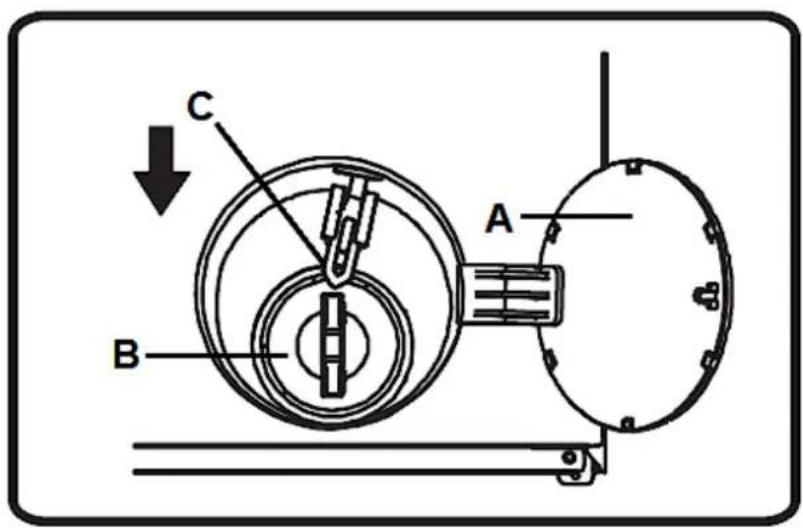
text_image
C A BFig. similar: fig. serve as an example only.
| A | COVER PANEL OF THE DRAIN PUMP FILTER |
| B | DRAIN PUMP FILTER |
| C | EMERGENCY LEVER to open the door ^45 |
4. The door can be open.
NOTICE! Never open the door as described above when the appliance operates normally.
NOTICE! Any damage to the appliance and / or the door caused by forcible opening of the door are not subject to the guarantee or the warranty!
4.6 End of a washing / drying programme
When a programme has ended, the display indicates « END ».
After 2 minutes without using any operating buttons, the appliance is switched off automatically. ^46
The door lock is deactivated after approx. 2 minutes.
i All drying programmes end with cooling down period.
- When the programme is finished, the display indicates « END » and an acoustic signal sounds.
- The door lock is deactivated automatically after approx. 2 minutes. The operational status indicator of the door lock « goes off.
- When the programme is finished, always turn the ROTARY KNOB for the programme selection back to « OFF » to switch off the appliance completely.
- Close the water tap.
- Open the door and remove the laundry.
- Leave the door and the detergent dispenser slightly opened, so the moisture can escape completely.
4.7 Selection of a new programme / function
You must switch off the appliance first to cancel the old settings and to be able to make new settings.
- During a washing / drying cycle, turn the rotary knob for the programme selection to the position « OFF ». Leave the rotary knob in this position for at least 3 seconds to switch off the appliance and cancel all settings.
- Set a new programme and new functions if desired.
- If needed, set a new spin speed.
- Please note: do not add more detergent.
- Press the « START / PAUSE » - BUTTON to start the new programme.
4.8 Reload laundry
⚠ WARNING! If you stop a running programme, the temperature of the water, the laundry and the drum can be very high. Be very careful while removing the laundry. RISK OF SCALDING! RISK OF BURNS!
i It is very important to check the water level and the temperature of the water in the washing drum before opening the door.
TO RELOAD LAUNDRY DURING A RUNNING PROGRAMME, PROCEED AS FOLLOWS.
-
Press the « START / PAUSE » - BUTTON once. The washing / drying cycle is interrupted.
-
If the running programme permits the deactivation of the door lock, the operational status indicator of the door lock flashes and the operational status
indicator of the function « RELOAD LAUNDRY 1+ » goes on; requirements: the temperature in the washing drum is less than 50 °C and / or the current washing / drying programme has not progressed too far.
-
The door lock is deactivated automatically after approx. 2 minutes. The operational status indicator of the door lock « goes off.
-
Open the door
- Reload the laundry and close the door.
- Press the « START / PAUSE » - BUTTON to reactivate the programme.
i If the door lock will not be released and the door cannot be opened, the temperature inside the washing drum is more than 50 °C or the current washing / drying programme has progressed too far.
NOTICE! It is not possible to open the door while the door lock indicator is on. Do not open the door by force. To open the door by force can damage the appliance seriously. RISK OF DAMAGE!
NOTICE! Any damage to the appliance and / or the door caused by forcible opening of the door are not subject to the guarantee or the warranty!
NOTICE! If there is a lot of foam or water in the drum, open the door very carefully. Use a dry cloth to prevent foam and / or water from leaking out of the drum while the door of the appliance is opened.
4.9 Unbalance protection
The appliance is equipped with an unbalance protection to avoid strong vibrations of the appliance during spinning.
Before starting spinning the appliance needs a certain period to space the laundry evenly.
If the laundry is not spaced evenly in the drum, the spin speed can be decreased ^47 to avoid strong vibrations of the appliance due to unbalance.
If the laundry load in the appliance is too low to reach a balance of the drum, the spin cycle may not start. Then you have to reload laundry; s. chapter 4.8 RELOAD LAUNDRY.
NOTICE! Always observe the textile labels.
5.1 Instructions for the washing of textiles
5.1.1 Detergent
Choose your detergent relevant to the laundry you wish to wash (cotton, wool, synthetic etc.), the temperature and the level of contamination; otherwise, a strong formation of bubbles may occur. Always observe the dosage instructions on the packaging of the detergent. Bleachers are alkaline and may damage your clothing. Use as less detergent as necessary. Powdery detergents may remain in your clothing, so rinse them thoroughly. If you use too much detergent or if the water-temperature is too low, the detergent will not dissolve completely; so residuals of the detergent may remain in the clothing, the hoses and the appliance itself. Customise the washing procedures relevant to the grade of contamination of the laundry, your local water hardness and the information given on the packaging of your detergent. For information about the water hardness, ask your local water supplier. Store your detergents in a safe and dry place out of the reach of children.
5.1.2 Use of the dispenser
Observe the dosage instructions on the packaging of the detergent. The proper dosage depends on:
▶ type and degree of soiling.
▶ quantity of the laundry.
i Half load: 3/4 of the detergent used for full load.
i Minimum load (approx. 1 kg): 1/2 of the detergent used for full load.
- Your water supplier will inform you about the water hardness of your water. Soft water requires less detergent than hard water.
If you use too much detergent, a strong formation of foam may occur which can reduce the efficiency of the appliance. If the appliance detects too much foam, it may prevent spinning.
Using an insufficient quantity of detergent can cause calcification of the heating system, the drum and the hoses.
5.1.3 The different compartments of the dispenser
The dispenser is separated in three compartments:
| THE PRE-WASH COMPARTMENT | |
| ▸ Detergent for Pre-wash. | |
| THE MAIN WASH COMPARTMENT | |
| ▸ Detergent for Main wash.➢ Stain removers.➢ Water softener (Water hardness class 4). | |
| THE SOFTENER COMPARTMENT | |
| ▸ Softeners.➢ Liquid starches.➢ fill up to MAX-mark only! | |
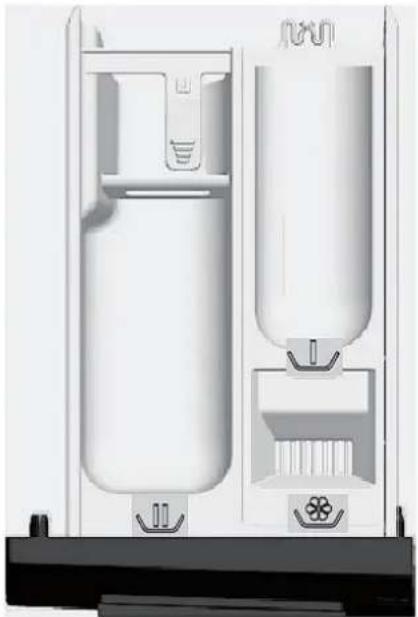
natural_image
3D rendering of a cylindrical water dispenser with two internal chambers and a base platform (no text or symbols visible)(fig. similar)
5.1.4 How to use detergents and additives
You can use liquid detergents for programmes including pre-wash (depending on model), but - in such a case - you have to use washing powder for main-wash.
Do not use any liquid detergent if you have selected the DELAY-function.
Use a laundry ball or bag ^48 to avoid dosing problems when using highly-concentrated detergents.
Only use descaling agents which are suitable to be used in a washer. Descaling agents can contain substances which will damage parts of the appliance.
Only use bleaching agents and dyes which are suitable to be used in a washer. bleaching agents and dyes can contain substances which will damage parts of the appliance.
➢ Never use solvents such as turpentine, petroleum ether etc.
WHEN YOU USE STARCH
- Only use starch which is suitable to be used in a washer.
- Wash the laundry using the desired programme.
- Prepare the starch relevant to the instructions of its packaging.
-
Select the PROGRAMME « RINSE & SPIN »and start it.
-
Pull the dispenser until you can see approx. 3 cm of the main-wash compartment.
- Pour the starch-solution into the main-wash compartment while the water is running into the dispenser.
- If some starch should have remained in the dispenser after programme end, clean the dispenser.
5.1.5 Preparation of the laundry
- Empty all pockets of each piece of your laundry.
- Classify the laundry relevant to the labels: cotton, blended fabric, synthetic, silk, wool, man-made fibres.
- Not suitable to be washed in a washer are:
a. ties, waistcoats, coats and clothes, which will shrink easily and clothing with components such as stickers, lace etc.
b. Crease-resistant clothing, clothing with imprints or lamination.
c. Crease-resistant silk, clothing with fur components, fur.
d. Clothing, which loose colour easily, c.g. gowns or traditional costumes.
e. Clothing contaminated with gas, petrol, paint thinner or alcohol etc.
f. Waterproof objects, e.g. skiing suits, sleeping bags, rain coats etc.
- Wash clothing of different size together; so you maximise the efficiency of the appliance.
- Wash delicate clothes separately. Select a gentle programme for silk and wool.
- Remove hooks and other fastening materials from curtains.
- Wash clothing with buttons or embroideries inside out.
- Close zippers, buttons and hooks. Tie loose ribbons.
- Wash clothing, which will release fluffs easily, separately and inside out.
- Put bras into pillow cases so they cannot damage the drum.
- Wash quite delicate and small clothing in wash bags (commercially available).
- When you wish to wash a single, large piece (e.g. a jacket or jeans), an imbalance in the drum may be generated. Always add 1 or 2 other pieces of laundry to ensure proper operation.
- Remove dust, mud and animal hair from the laundry.
- Wash baby-wear and clothes a baby may come in contact with separately to reduce the risk of infection. Increase the rinsing cycles to wash out the detergent completely if necessary.
- Do not leave any laundry in the washer for a longer period of time; otherwise, the laundry becomes musty and will mould.
5.2 Instructions for the drying of textiles
Do not dry the following items in your appliance:
➢ net curtains, wool, materials with metal-made or metal parts
▶ nylon tights
➢ large pieces of laundry, e.g. anoraks
blankets, puffs, bedrolls, eiderdowns
➢ items made of foam material or containing parts of foam material
Do not put open pillow cases into the appliance. Otherwise, small pieces of laundry can become entangled in them. Close all zips, press-studs and hooks and tie all belts and apron strings together. Sort your laundry according to the type of clothing/material and select the appropriate drying procedure.
Do not dry your clothes too long. This avoids creases and saves energy.
Do not dry dark-coloured clothes and light-coloured and fluffy items as towels at the same time.
The clothes must be spin-dried before you can put them in the appliance.
◆ Spin-dry easy-care items (e.g. shirts), too.
✿ Knitwear can shrink a bit while drying. Do not dry such clothes too long. We recommend you keep this shrinkage in mind when you buy knitwear so you may buy a suitable size then.
To avoid static charge after drying use a fabric softener when washing the laundry or a special softener suitable for dryers.
◆ Take your clothes out of the appliance when the drying process has ended.
If some items are still a little bit wet after drying, dry them again for at least 30 minutes. This may be required for some complex items, e.g. collars or bags.
- Button up pillowcases, close zippers, hooks and press studs. Tie all belts and long ribbons together to prevent the laundry from tangling. Close zippers, button up duvet covers and tie ties or ribbons together (e.g. from aprons). Fold items with two layers from inside to outside (e.g. cotton coated anoraks should have the cotton coated side on the outside) These materials dry better this way.
6.1 Environmental protection: disposal
Appliances bearing this symbol « 📄 » must not be disposed of together with household waste throughout the EU. To prevent potential damage to the environment or human health from uncontrolled waste disposal and to promote the sustainable reuse of material resources, responsibly supply the appliance to a recycling centre.
6.2 Environmental protection: energy saving
- Try to load the appliance up to its particular maximum capacity. Little loads are uneconomical.
- Modern detergents allow washing at lower washing temperatures (e.g. 20 °C). Use appropriate temperature settings to save energy.
To save energy during drying, select the highest possible spin speed for the respective washing programme.
Do not dry your clothes too long. This avoids creases and saves energy.
◆ Always select a drying programme according to the type of laundry and the required drying level required.
◆ Ensure that the installation room is well ventilated.
7. Cleaning and maintenance
⚠️ DANGER! Never touch the power plug, the power switch or other electrical components with wet or damp hands. RISK OF ELECTRIC SHOCK!
⚠ WARNING! Disconnect the appliance from the mains before cleaning and/or maintenance. RISK OF ELECTRIC SHOCK!
⚠ WARNING! Remove possible dust accumulation at the power plug, at the safety power socket and at all plug connectors regularly. RISK OF FIRE!
⚠️ CAUTION! Ensure before cleaning and maintenance that the water and the drum have cooled down completely. RISK OF SCALDING! RISK OF BURNS!
NOTICE! Clean the appliance and its components regularly.
Take off all rings and bracelets before cleaning or maintenance; otherwise, you will damage the surface or the drum of the appliance.
DETERGENTS
➢ Do not use any harsh, abrasive and aggressive detergents.
Do not use any abrasive detergents!
Do not use any organic detergents! ^49
Do not use essential oils!
▶ Never use solvents.
NOTICE! Any damage that is caused to the appliance by a cleaning product will not be fixed free of charge, even if the guarantee period of the appliance is still valid.
HOUSING
➢ Use a neutral, diluted detergent.
CONTROL PANEL
Use a damp cloth and a mild detergent suitable for the material only to clean the control panel.
➢ Never spray cleaner on the control panel directly; it can damage the control panel.
DRUM
Use a damp cloth and a mild detergent suitable for stainless steel only to clean the drum.
Remove all detergent residue and wipe the drum dry with a clean cloth.
Remove any rust, e.g. from metal-made objects in your laundry, immediately with a chlorine-free detergent.
▶ Never use wire wool.
DOOR / DOOR SEALS
Clean the door and the door seal after each washing / drying cycle using a soft cloth.
Remove any foreign objects which got stuck in the door seal immediately.
7.1 Cleaning of the dispenser
-
Pull the dispenser out of the appliance until you feel resistance.
-
Push the release lever (B) down carefully; s. fig. below, note the direction of the arrow. At the same time, pull the dispenser (A) out of the appliance carefully and remove it.
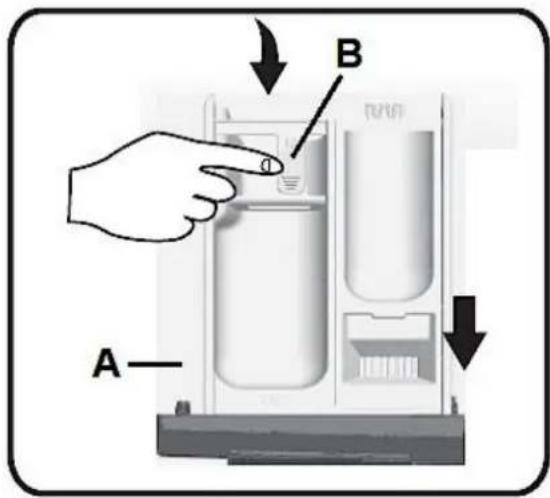
text_image
A B- Remove the siphon (C) from the fabric softener compartment (pull up carefully); s. fig. below.
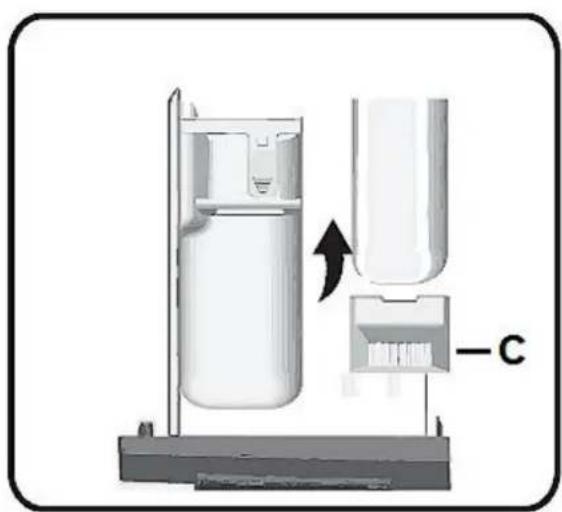
natural_image
Diagram of a mechanical device with a cylindrical component and a base, showing an arrow indicating motion or assembly (no text or symbols present)-
Clean all parts of the dispenser with warm water. You can also use a soft brush for cleaning.
-
Remove detergent residue from the inside of the drawer using a bottle brush; s. below.
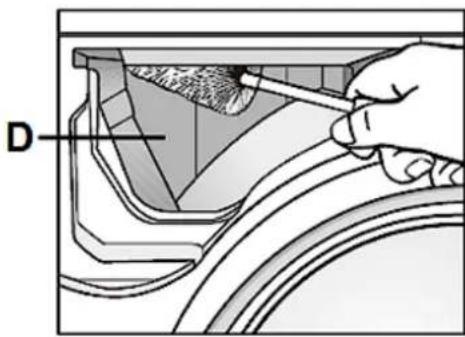
natural_image
Diagram of a hand using a tool to interact with a mechanical component, labeled D (no text or symbols present)- Reinsert the siphon in the fabric softener compartment properly.
- Reinsert the dispenser properly.
7.2 Cleaning of the drain pump filter
We strongly recommend to clean the drain pump filter regularly (at least every two month).
i You have to clean the drain pump filter if the appliance does not drain the water properly or does not run the spinning programme.
i You have to clean the drain pump filter if the pump is blocked by any foreign object (e.g. buttons, coins etc.).
⚠ WARNING! Do not clean the drain pump filter while the appliance is in operation! Switch off the appliance and disconnect it from the mains before.
⚠ WARNING! If there is hot water in the appliance, ensure before residual water drainage that the water has cooled down completely. RISK OF SCALDING! RISK OF BURNS!
-
Switch off the appliance and disconnect it from the mains.
-
Depending on model:
a) Insert a flathead screwdriver or a key into the small opening (B) of the bottom cover panel (A). Press the cover panel using a lot of force - but also being careful - downwards; s. fig. below.
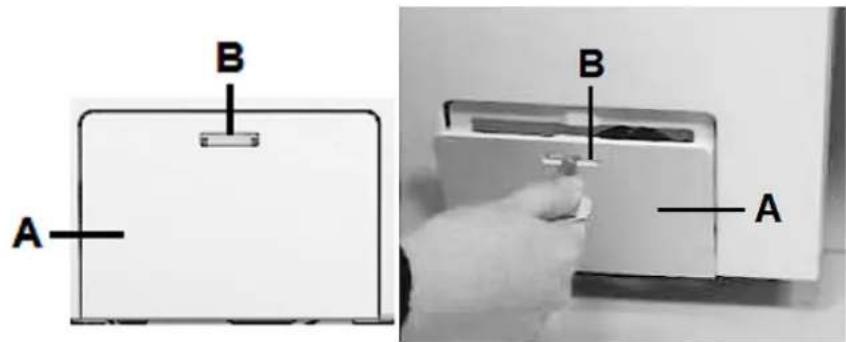
text_image
A B B AFig. similar: fig. serve as an example only.
b) Flap the cover panel downwards.
- Remove the cover panel. ^51
- Place a container in front of the opening.
- You have two options for draining the water from the appliance.
a) Drain the water using the water drain pipe; see also chapter 7.3 RESIDUAL WATER DRAINAGE.
b) Wait until the water has drained completely.
c) Unscrew the drain pump filter completely and remove it.
OR
a) Open the drain pump filter (C), but do not remove it completely. Rotate the drain pump filter (C) in anti-clockwise direction until the water begins to run; s. fig. below.
b) Wait until the water has drained completely.
c) Unscrew the drain pump filter completely and remove it.
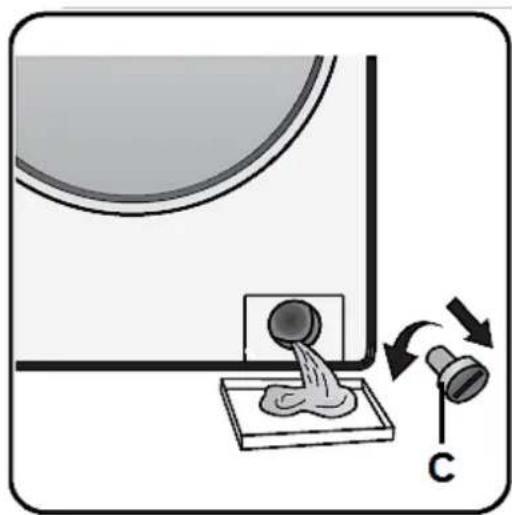
natural_image
Diagram showing a mechanical component with a curved arrow and a labeled component 'C' (no text or symbols beyond labels)Fig. similar: fig. serve as an example only.
-
Clean the drain pump filter carefully.
-
Depending on model, check that the pump rotor can move freely.
-
Insert the drain pump filter (C) and screw it in as far as possible in clockwise direction; s. fig. below.
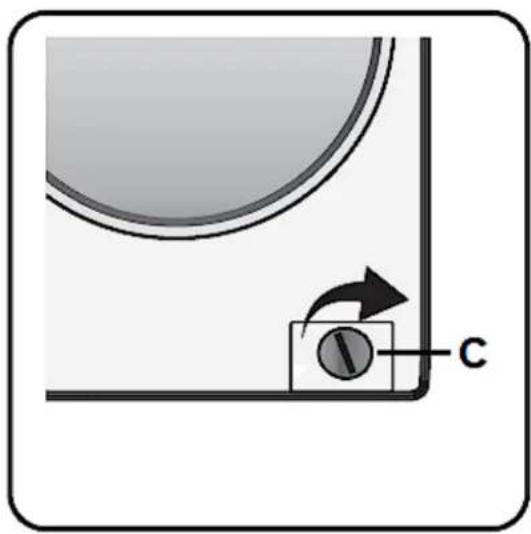
natural_image
Diagram showing a curved surface with an arrow and a labeled point 'C' (no text or symbols beyond the label)Fig. similar: fig. serve as an example only.
-
Check that the drain pump filter is installed properly.
-
Install the cover panel properly.
7.3 Residual water drainage
⚠ WARNING! Ensure before residual water drainage that the water has cooled down completely. RISK OF SCALDING! RISK OF BURNS!
HOW TO DRAIN THE RESIDUAL WATER VIA THE DRAIN PUMP FILTER
-
Switch off the appliance and disconnect it from the mains.
-
Remove the cover panel of the drain pump filter; s. chapter 7.2 CLEANING / REMOVING OF THE DRAIN PUMP FILTER.
-
Place a container in front of the opening.
-
Open the drain pump filter, but do not remove it completely. Rotate the drain pump filter in anti-clockwise direction until the water begins to run.
-
Wait until the water has drained completely.
-
Unscrew the drain pump filter completely and remove it.
-
Carefully tilt the appliance forward so the water can be drained.
-
Insert the drain pump filter and screw it in as far as possible in clockwise direction.
-
Check that the drain pump filter is installed properly.
-
Install the cover panel properly.
HOW TO DRAIN THE RESIDUAL WATER VIA THE WATER DRAIN PIPE ^52
-
Switch off the appliance and disconnect it from the mains.
-
Remove the cover panel (A) of the drain pump filter (C); s. fig. below.
-
Place a container (D) in front of the opening; s. fig. below.
-
Pull the water drain pipe (E) out of the appliance carefully; see fig. below.
-
Place the end of the water drain pipe (E) in the container (D): see fig. below.
-
Remove the plug (F) of the water drain pipe (turn carefully until it comes off the water drain pipe); see fig. below.
-
Wait until the water has drained off completely.
-
Reinstall the plug (F) of the water drain pipe (E) properly.
-
Fill the detergent dispenser with 1 litre of water. Check that the connection (water drain pipe - plug) is leakproof.
-
Push the water drain pipe (E) back into the appliance.
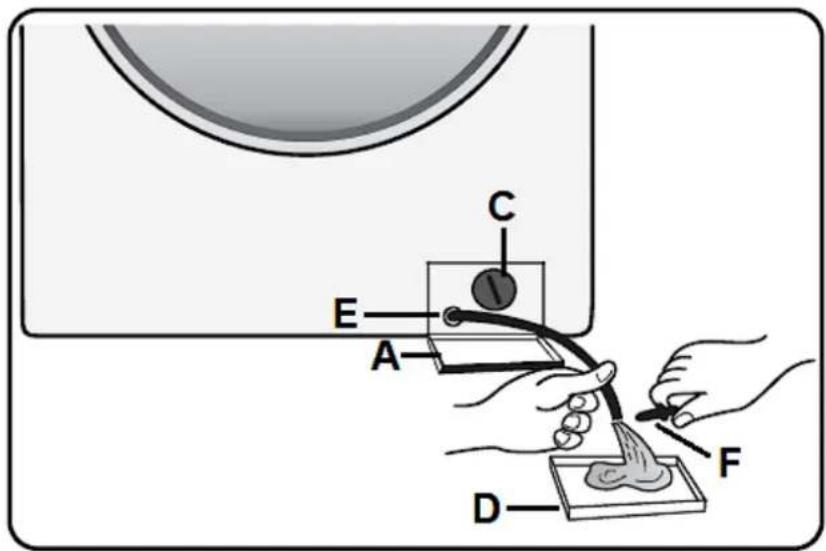
text_image
Diagram illustrating a procedure with labeled components A through F, showing hands operating a tool near a component.7.4 Cleaning of the water inlet valve
The water inlet valve should be cleaned at least once every six months.
The water inlet valve has to be cleaned, when it is not or improperly supplied with water with the tap opened.
-
Close the water tap.
-
Disconnect the appliance from the mains (unplug).
-
Remove the water inlet hose from the tap.
-
Clean the internal filter and reconnect the water inlet hose to the tap.
-
Remove the water inlet hose (A) from the washer - dryer (B / water inlet valve on the back of the appliance); s. fig. below.
-
Remove the filter (D) from the water valve (B) using a universal pliers (C); s. fig. below.
-
Clean the filter (D) using some water and a toothbrush (E); s. fig. below.
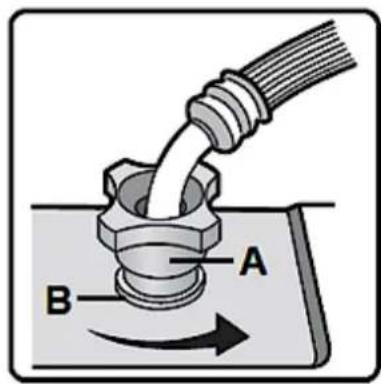
text_image
A B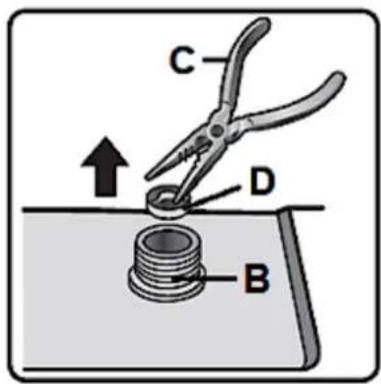
text_image
C D B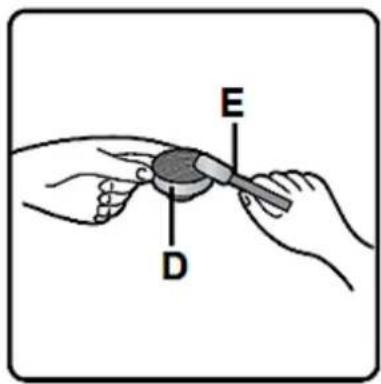
text_image
E DFig. similar: fig. serve as an example only.
-
Reinstall the filter (D) properly.
-
Reconnect the water inlet hose to the appliance again.
-
Open the tap and make sure that the connections (hose - tap / hose - appliance) are properly installed and watertight.
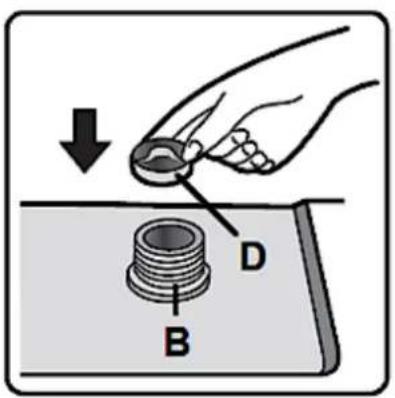
text_image
Diagram showing a hand holding a washer with labeled parts B and D, indicating a process step or procedure.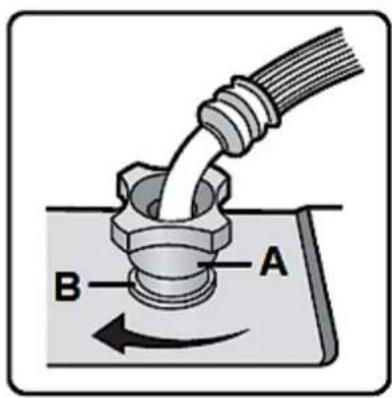
text_image
A BFig. similar: fig. serve as an example only.
- Contaminations and bacterial residues may accumulate in the drum and / or hoses of the appliance after some time, especially then you mainly use low temperature programmes.
i The drum should be cleaned at least once a month.
The programme « DRUM CLEAN » cleans the outside and inside of the drum.
You can add an adequate amount of chlorine bleach to the appliance to clean the drum (please always observe the instructions given by the manufacturer of the chlorine bleach).
i Do not use any additional washing agent.
Do not wash any textiles / laundry when using this programme.
HOW TO START THE PROGRAMME « DRUM CLEAN »
1 Open the tap.
2 Close the door of the appliance
3 Set the programme « DRUM CLEAN » using the ROTARY KNOB. The washing machine is now switched on and in STANDBY MODE.
4 Press the « START / PAUSE » - BUTTON to start the programme.
7.6 "Frozen" appliance
IF THE AMBIENT TEMPERATURE IS LOWER THAN 0 °C AND THE APPLIANCE HAS BEEN FROZEN, PROCEED AS DESCRIBED BELOW.
- Disconnect the appliance from the mains.
- Close the water tap.
- Wash the tap (A) with warm water (approx. 50 °C) so you can take the water inlet hose (C) off. You can also use a warm cloth (approx. 50 °C) at the connection point (B) between the water tap and the water inlet hose to loosen the water inlet hose; s. fig. below.
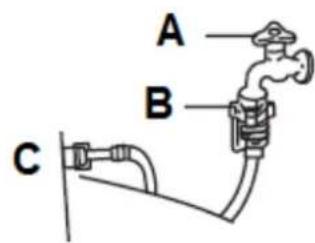
text_image
A B C- Remove the hose and immerse it in warm water (approx. 50 °C); s. fig. below.
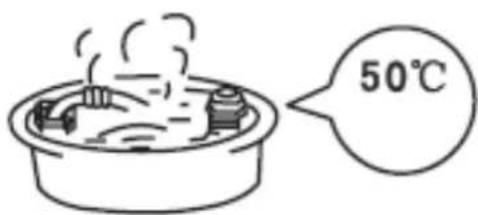
text_image
50°C- Pour warm water (2 - 3 litres / approx. 50 °C) into the drum and wait approx. 10 minutes; s. fig. below.
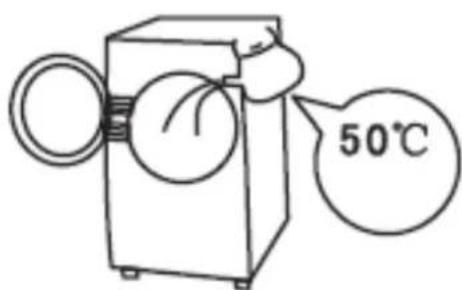
text_image
50°C-
Reconnect the water inlet hose to the tap and check, that the water inlet and the water drain works properly.
-
When you operate the appliance again, the ambient temperature must be higher than 0^ C.
8. Troubleshooting
⚠️ DANGER! Never try to repair the appliance yourself. Improper repairs or manipulating of the electric components of the appliance can endanger the life and health of the user. RISK OF ELECTRIC SHOCK! RISK OF FIRE!
8.1 Checklist
| MALFUNCTION | |
| POSSIBLE CAUSE(S) | MEASURE(S) |
| THE APPLIANCE DOES NOT WORK AT ALL. | |
| 1. The plug of the appliance is not connected to the socket.2. The plug has become loose.3. The socket is not supplied with energy.4. The fuse is switched off.5. The voltage is too low. | 1. Connect the appliance to the mains properly.2. Check the plug.3. Check the corresponding socket by connecting it with another appliance.4. Check the fuse box.5. Compare the data on the model plate with the data of your energy supplier. |
| THE SET PROGRAMME DOES NOT START. | |
| 1. Door is not closed properly.2. No water supply.3. START / PAUSE button is pressed.4. ON / OFF button^53 is not pressed. | 1. Close the door properly.2. Check the water supply.3. Check your settings.4. Press the ON / OFF button. |
| FAULTY HEATING. | |
| 1. Heater defective. | 1. The appliance can wash but not heat. Please contact your aftersales service immediately. |
| WATER LEAKAGE. | |
| 1. Connection of the hoses are not watertight.2. Drain pump / drain pump filter is blocked.3. Water drain hose is dirty. | 1. Check the hoses.2. Check the drain pump / drain pump filter.3. Clean the water drain hose. |
| INDICATORS / DISPLAY DO NOT WORK. | |
| 1. No energy supply.2. Circuit board damaged.3. Wiring harness damaged. | 1. Check the energy supply.2. Please contact your aftersales service.3. Check the wiring harness (please contact your aftersales service if necessary). |
| SOME DETERGENT REMAIN IN THE CONTAINER. | |
| 1. Accumulated, damp detergent. | 1. Clean the container.➢ Use liquid detergents.➢ Use detergents suitable for washers only. |
| UNSATISFACTORY WASHING RESULTS. | |
| 1. Heavily-contaminated laundry.2. Wrong amount of detergent. | 1. Select a suitable programme.2. Choose the proper amount of detergent (look at the information on the packaging of your detergent). |
| ABNORMAL NOISE / SEVERE VIBRATIONS | |
| 1. The shipping bolts are still in the appliance.2. The appliance is not installed and / or adjusted properly.3. Foreign objects are in the appliance.4. Load is too low.5. The laundry has accumulated at one side of the drum.6. Laundry which cannot be spaced is in the drum. | 1. Remove the shipping bolts.2. Install and / or adjust the appliance properly.3. Remove any foreign objects.4. Load the appliance properly.5. Space the laundry.6. Remove the pieces which cannot be spaced. |
| DRYING LEVEL HAS NOT BEEN REACHED / DRYING-TIME IS TOO LONG. | |
| 1. Selected programme is unsuitable.2. Load volume is too big. | 1. Select a drying programme suitable for the laundry to be dried.2. Reduce the load. |
| THE DRYING PERIOD ENDS SHORTLY AFTER THE START OF THE PROGRAMME. | |
| 1. Not enough clothes in the appliance. Clothes are too dry for the selected programme. | 1. Select a drying programme suitable for the laundry to be dried. |
If the appliance has a malfunction not listed in the table above, or if you have checked all items in the above table but the problem still exists, please contact the aftersales service.
8.2 Error codes
| ERROR CODE | POSSIBLE CAUSE(S) | MEASURE(S) |
| F 01Problems with the water inlet. | 1. Water tap closed.2. Water pressure too low.3. Water inlet hose is frozen.4. Filter is blocked. | 1. Open the water tap.2. Wait some time.3. Defrost the water inlet hose.4. Remove the filters and clean them. |
| F 03Problems with the water outlet. | 1. The « START / PAUSE » - button is pressed and the programme is paused.2. Water drain hose was installed too high.3. Water drain hose is frozen.4. Water drain hose is blocked.5. Water discharge is blocked.6. Drain pump filter is blocked. | 1. Press « START / PAUSE » - button again to reactivate the set programme.2. Max. height 125 cm.3. Defrost the water drain hose.4. Remove the blockage and clean the hose.5. Remove the blockage and clean the water discharge.6. Remove the drain pump filter and clean it. |
| F 04-F 98The display indicates one of the error codes above. | 1. Failure of the electronic module. | 1. Turn the rotary knob to position « OFF » for at least 3 seconds to switch off the appliance. Set a program; e.g. « SPIN ». When the display no longer indicates an error code, press the « START / PAUSE » - BUTTON to start the programme. i If the problem cannot be solved, switch off and unplug the appliance, close the water tap and contact the aftersales service. |
| F 24 | 1. Water level reaches overflow level. | 1. Turn the rotary knob to position « OFF » for at least 3 seconds to switch off the appliance. Set the programme « SPIN » (and Spin Speed = 0) to drain the water. You can start a new programme when the display no longer indicates an error code. i If the problem cannot be solved, switch off and unplug the appliance, close the water tap and contact the aftersales service. |
| F 13 | 1. Door lock problems. | 1. Start a programme for 20 seconds. Press the « START / PAUSE » - BUTTON and wait 2 minutes until the door lock is deactivated automatically. Open and close the door. When the display no longer indicates an error code, press the « START / PAUSE » - BUTTON to restart the programme. i If the problem cannot be solved, switch off and unplug the appliance, close the water tap and contact the aftersales service. |
| F 14 | 1. Door opening alarm. | 2. Press the « START / PAUSE »- BUTTON The appliance tries to open the door. The error code remains until the door lock is deactivated. Or turn the rotary knob to position « OFF » for at least 3 seconds to switch off the appliance. Start a programme. The error code goes off. |
| Unb | 1. Unbalance alarm: laundry in the drum is not distributed.2. Unbalance alarm: too little laundry. If the laundry load in the appliance is too low to reach a balance of the drum, the spin cycle may not start. Then you have to reload laundry. | 1. Turn the rotary knob to position « OFF » for at least 3 seconds to switch off the appliance. Open the appliance. Remove the laundry, shake it out and put it back into the drum. Set the programme « SPIN » and start the programme.iIf the problem cannot be solved, switch off and unplug the appliance, close the water tap and contact the aftersales service.2. Turn the rotary knob to position « OFF » for at least 3 seconds to switch off the appliance. Open the appliance. Reload laundry and start a programme.iIf the problem cannot be solved, switch off and unplug the appliance, close the water tap and contact the aftersales service. |
i If you have checked all items on the table above but the problem still exists, please contact the aftersales service.
TECHNICAL DATA*
| Type | Washer-dryer / free-standing |
| Control system | Electronic incl. display |
| Max load: washing | 10.0 kg |
| Max load: washing & drying | 6.0 kg |
| Energy efficiency class ^1 (W) | B |
| Energy efficiency class ^1 (W & D) | E |
| Annual energy consumption ^2 (W) | 56.00 kWh |
| Annual energy consumption ^2 (W & D) | 376.00 kWh |
| Energy consumption ^3 per washing cycle | 0.560 kWh |
| Energy consumption ^3 per washing & drying cycle | 3.760 kWh |
| Rated power input / off | 0.49 W |
| Rated power input / switched on | 0.49 W |
| Water consumption ^3 per washing cycle | 43 l |
| Water consumption ^3 per washing & drying cycle | 90 l |
| Spinning efficiency class ^6 | B |
| Max. spinning rotation | 1400 rpm |
| Residual moisture | 49 % |
| Programme time ^3 (W only) | 239 min. |
| Programme time ^4 (W only) | 170 min. |
| Programme time ^5 (W only) | 170 min. |
| Programme time ^3 (W & D) | 460 min. |
| Programme time ^4 (W & D) | 330 min. |
| Programme time ^5 (W & D) | - |
| Noise emission / spinning^3,7 | A / 71 dB(A) re 1 pW |
| Colour | White |
| Interior | Stainless steel |
| Motor | Inverter motor |
| Programmes | 15 |
| ECO programme | ✓ |
| Display | ✓ / LED |
| Unbalance protection | ✓ |
| Operation | Rotary knob / electronic buttons |
| Delayed programme start | ✓ / 1 - 24 h |
| Adjustable feet | ✓ |
| Child safety lock | ✓ |
| Dimensions H*W*D in cm | 84.50*59.50*61.10 |
| Weight net / gross | 69.50 kg / 73.50 kg |
◆ Technical modifications reserved.
| * | According to Regulation (EU) No. 2019/2014 |
| W /W & D | Washing / washing & drying |
| 1 | On a scale from A (highest efficiency) to G (lowest efficiency) according to the new EU standard. |
| 2 | Based on 100 standard-washing cycles. The actual energy and water consumption depend on the type and use of the appliance. |
| 3 | Standard programme ECO 40 - 60 / fully loaded. |
| 4 | Standard programme ECO 40 - 60 / partially loaded (half). |
| 5 | Standard programme ECO 40 - 60 / partially loaded (quarter). |
| 6 | From A (highest) to G (lowest). |
| 7 | From A (highest) to D (lowest). |
10. Waste management
- While unpacking, the packaging materials (polythene bags, polystyrene pieces, etc.) should be kept away from children and pets. CHOKING HAZARD!
- Old and unused appliances must be sent for disposal to the responsible recycling centre. Never expose to open flames.
- Before you dispose of an old appliance, render it inoperative. Unplug the appliance and cut off the entire power cord. Dispose of the power cord and the plug immediately.
- Remove the door completely so children are not able to get into the appliance as this endangers their lives!
- Dispose of any paper and cardboard into the corresponding containers.
- Dispose of any plastics into the corresponding containers.
- If suitable containers are not available at your residential area, dispose of these materials at a suitable municipal collection point for waste-recycling.
- Receive more detailed information from your retailer or your municipal facilities.
Materials marked with this symbol are recyclable.
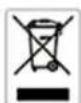
Please contact your local authorities to receive further information.
for large electric appliances; PKM GmbH & Co. KG, Neuer Wall 2, 47441 Moers
This appliance includes a 24-month guarantee for the consumer given by the manufacturer, dated from the day of purchase, referring to its flawless material-components and its faultless fabrication. The consumer is accredited with both the dues of the guarantee given by the manufacturer and the vendor's guarantees. These are not restricted to the manufacturer's guarantee.
Any guarantee claim has to be made immediately after the detection and within 24 months after the delivery to the first ultimate vendee. The guarantee claim has to be verified by the vendee by submitting a proof of purchase including the date of purchase and/or the date of delivery.
The guarantee does not establish any entitlement to withdraw from the purchase contract or for a price reduction. Replaced components or exchanged appliances demise to us as our property.
The guarantee claim does not cover:
- fragile components as plastic, glass or bulbs;
- minor modifications of the PKM-products concerning their authorised condition if they do not influence the utility value of the product;
- damage caused by handling errors or false operation;
- damage caused by aggressive environmental conditions, chemicals, detergents;
- damage caused by non-professional installation and haulage;
- damage caused by non common household use;
- damages which have been caused outside the appliance by a PKM-product unless a liability is forced by legal regulations.
The validity of the guarantee will be terminated if:
- the prescriptions of the installation and operation of the appliance are not observed.
- the appliance is repaired by a non-professional.
- the appliance is damaged by the vendor, the installer or a third party.
- the installation or the start-up is performed inappropriately.
- the maintenance is inadequately or incorrectly performed.
- the appliance is not used for its intended purpose.
- the appliance is damaged by force majeure or natural disasters, including, but with not being limited to fires or explosions.
The guarantee claims neither extend the guarantee period nor initiate a new guarantee period. The geographical scope of the guarantee is limited with respect to appliances, which are purchased and used in Germany, Austria, Belgium, Luxembourg and the Netherlands.
Aftersales service information on the leaflet inside this instruction manual.