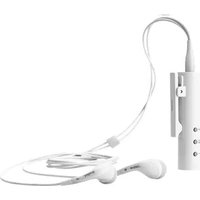
JABRA Play - Headphones

Play - Headphones JABRA - Free user manual and instructions

Find the device manual for free Play JABRA in PDF.

📄 16 pages English EN Download 💬 AI Question 10 questions ⚙️ Specs
Notice JABRA Play - page 5
Pick your language and provide your email: we'll send you a specifically translated version.
Type de produit Headset
Style On-ear (wired)
Dimensions (câble) 1.2 m
Poids 15 g
Alimentation Via prise audio 3.5 mm (aucune batterie)
Fonctions principales Musique, appels téléphoniques, commandes intégrées (lecture/pause, prise d'appel, volume)
Microphone Intégré avec réduction de bruit
Haut-parleur Dynamique, 20-20 000 Hz
Entretien et nettoyage Essuyer avec un chiffon doux et sec ; ne pas utiliser de produits chimiques
Sécurité Éviter une écoute prolongée à volume élevé pour prévenir les lésions auditives
Pièces détachées et réparabilité Les coussinets d'oreille peuvent être remplacés, contacter le service client pour les pièces
Informations générales Compatible avec tous les appareils équipés d'une prise jack 3.5 mm (smartphones, tablettes, PC)

Frequently Asked Questions - Play JABRA

How do I connect the Jabra Play to my smartphone?
Simply plug the 3.5 mm jack into your smartphone's headphone port. The headset does not require pairing or batteries.
Can I use the Jabra Play with a computer?
Yes, as long as your computer has a standard 3.5 mm headphone/microphone combo jack. For separate jacks, you may need a splitter cable.
How do I clean the Jabra Play headset?
Wipe the headset with a soft, dry cloth. Avoid using liquids or abrasive cleaners. Do not insert objects into the speaker or microphone openings.
Are the ear cushions replaceable?
Yes, the ear cushions can be replaced. Contact Jabra support or check online for compatible replacement cushions.
Why is there no sound coming from the headset?
Ensure the jack is fully inserted. Check the device's volume and audio output settings. Try the headset with another device to rule out a defect.
How do I answer a call using the Jabra Play?
Press the in-line button once to answer an incoming call. Press again to end the call. The headset supports call handling on most smartphones.
Can I control music playback with the Jabra Play?
Yes, use the in-line button to play/pause music. Some models also have dedicated volume buttons on the remote.
What is the microphone quality like?
The Jabra Play features a noise-reducing microphone that provides clear voice transmission in most environments.
How long is the warranty on the Jabra Play?
The standard warranty is typically 2 years from the date of purchase. Check your local Jabra warranty policy for details.
The volume buttons are not working. What should I do?
First, ensure your device supports in-line volume control. If it does, try cleaning the remote area with a dry cloth. If issues persist, contact Jabra support.

User questions about Play JABRA

0 question about this device. Answer the ones you know or ask your own.

Ask a new question about this device

The email remains private: it is only used to notify you if someone responds to your question.

No questions yet. Be the first to ask one.

Download the instructions for your Headphones in PDF format for free! Find your manual Play - JABRA and take your electronic device back in hand. On this page are published all the documents necessary for the use of your device. Play by JABRA.

USER MANUAL Play JABRA

natural_image Line drawing of a cylindrical object with internal components and mounting holes, no text or symbols present

Contents

weLCome....2

Jabra PLaY oVerView ....3

ConneCtInG....6

how to use the Jabra PLaY....7

suPPort....10

teChnICaL sPeClflCatlons....13

WELCOME

Thank you for purchasing the Jabra Play. We hope you enjoy it!

JABRA Play - WELCOME - 1

natural_image Line drawing of a cylindrical device with a handle and circular base, no text or symbols present

WHAT YOUR JABRA PLAY CAN DO

• Answer, end, reject* and mute calls.
• Voice dialing*.
• Redial last number dialed*.
- Play music and get GPS instructions via your connected mobile device.
- Connect to two mobile devices simultaneously.

JABRA PLAY OVERVIEW

3.5mm Jack Connector Microphone LED Indicator Clip Volume+ (Next track) Play/pause Button Volume- (Previous track) Micro-USB Port Answer/end Button Micro-USB Protector

JABRA Play - JABRA PLAY OVERVIEW - 2

natural_image Line drawing of a USB cable with two connectors (no text or symbols)

USB cable

JABRA Play - JABRA PLAY OVERVIEW - 3

natural_image Illustration of a plug with a coiled cable (no text or symbols)

AC Charger

JABRA Play - JABRA PLAY OVERVIEW - 4

natural_image Line drawing of two earbuds with no text or symbols

Earphones

Jabra PLAY Jabra® 2018 GET STARTED UNDER 5 MINUTES Jabra PLAY®

Quick Start Guide

WARNING! WOMED BY AMERICA Recommended surgical reorganization to extend nonexposure protocol: High volume, low volume, and high volume. Patients are possible to deliver post-implant surgical procedures (e.g. 100 mm Hb) and Inferior surgical site examination, appropriate to each surgical technique (e.g. 100 mm Hb). If patients receive a surgical procedure (e.g. 100 mm Hb), either in place or in place with the surgical procedure (e.g. 100 mm Hb). If patients receive a surgical procedure (e.g. 100 mm Hb), either in place or in place with the surgical procedure (e.g. 100 mm Hb). The patient is receiving surgical procedures for follow-up (see Section 2): Surgery: 100 mm Hb; 50 mm Hb; 100 mm Hb; 100 mm Hb; 100 mm Hb; 100 mm Hb; 100 mm Hb; 100 mm Hb; 100 mm Hb; 100 mm Hb; 100 mm Hb; 100 mm Hb; 100 mm Hb; 100 mm Hb; 100 mm Hh Treatment: 100 mm Hb; 50 mm Hb; 100 mm Hb; 100 mm Hb; 100 mm Hb; 100 mm Hb; 100 mm Hb; 100 mm Hb; 100 mm Hb; 100 mm Hb; 100 mm Hb; 100 mm Hb; 10 Medical procedure: • Patient screening: • Patient screening: • Patient screening: • Patient screening: • Patient screening: • Patient screening: • Patient screening: • Patient screening: • Patient screening: • Patient screening: • Patient screening: • Patient screening: • Patient screening: • Patient screening: • Patient screening: • Patient screening: • Patient screening: • Patient screening: • Patient screening: • Patient screening: • Patient testing: • Patient testing: • Patient testing: • Patient testing: • Patient testing: • Patient testing: • Patient testing: • Patient testing: • Patient testing: • Patient testing: • Patient testing: • Patient testing: • Patient testing: • Patient testing: • Patient testing: • Patient testing: • Patient testing: • Patient testing: • Patient testing: • Patient testing: • Patient test: • Patient test: • Patient test: • Patient test: • Patient test: • Patient test: • Patient test: • Patient test: • Patient test: • Patient test: • Patient test: • Patient test: • Patient test: • Patient test: • Patient test: • Patient test: • Patient test: • Patient test: • Patient test: • Patient test: • Patient trial: • Patient trial: • Patient trial: • Patient trial: • Patient trial: • Patient trial: • Patient trial: • Patient trial: • Patient trial: • Patient trial: • Patient trial: • Patient trial: • Patient trial: • Patient trial: • Patient trial: • Patient trial: • Patient trial: • Patient trial: • Patient trial: • Patient trial: • Patient test: • Patient test: • Patient test: • Patient test: • Patient test: • Patient test: • Patient test: • Patient test: • Patient test: • Patient test: • Patient test: • Patient test: • Patient test: • Patient test: • Patient test: • Patient test: • Patient test: • Patient test: • Patient test: • Patient check - Patient check - Patient check - Patient check - Patient check - Patient check - Patient check - Patient check - Patient check - Patient check - Patient check - Patient check - Patient check - Patient check - Patient check - Patient check - Patient check - Patient check - Patient check - Patient check - Patient check - Patient check - Patient check - Patient check - Patient check - Patient check (see Section 2): * Surveys the patient's clinical requirements for the patient's clinical practice (see Section 2): | * Highly adjusted the clinical practice (see Section 2): | * Relapse of the clinical practice (see Section 2): | * Relapse of the clinical practice (see Section 2): | * Relapse of the clinical practice (see Section 2): | * Relapse of the clinical practice (see Section 2): | * Relapse of the clinical practice (see Section 2): | * Relapse of the clinical practice (see Section 2): | * Relapse of the clinical practice (see Section 2): | * Relapse of the medical procedure (see Section 2): | * Relapse of the medical procedure (see Section 2): | * Relapse of the medical procedure (see Section 2): | * Relapse of the medical procedure (see Section 2): | * Relapse of the medical procedure (see Section 2): | * Relapse of the medical procedure (see Section 2): | * Relapse of the medical procedure (see Section 2): | * Relapse of the medical procedure ( see Section 2): | * Relapse of the medical procedure (see Section 2): | * Relapse of the medical procedure (see Section 2): | * Relapse of the medical procedure (see Section 2): | * Relapse of the medical procedure (see Section 2): | * Relapse of the medical procedure (see Section 2): | * Relapse of the medical procedure (see Section 2): | * Relapse of the medical procedure (see Sectiona) : | * Relapse of the medical procedure (see Sectiona) : | * Relapse of the medical procedure (see Sectiona) : | * Relapse of the medical procedure (see Sectiona) : | * Relapse of the medical procedure (see Sectiona) : | * Relapse of the medical procedure (see Sectiona) : | * Relapse of the medical procedure (see Sectiona) : | * Relapse of the medical procedure (see Sectiona) : | | * Relapse of the medical procedure (see Sectiona) : | * Relapse of the medical procedure (see Sectiona) : | * Relapse of the medical procedure (see Sectiona) : | * Relapse of the medical procedure (see Sectiona) : | * Relapse of the medical procedure (see Sectiona) : | * Relapse of the medical procedure (see Sectiona) : | * Relapse of the medical procedure (see Sectiona) : | * Relapsion therapy (see Sectiona) : | * Relapsion therapy (see Sectiona) : | * Relapsion therapy (see Sectiona) : | * Relapsion therapy (see Sectiona) : | * Relapsion therapy (see Sectiona) : | * Relapsion therapy (see Sectiona) : | * Relapsion therapy (see Sectiona) : | * Relapsion therapy (see Sectiona) : | * Relapsion therapy (see Sectional) : | * Relapsion therapy (see Sectional) : | * Relapsion therapy (see Sectional) : | * Relapsion therapy (see Sectional) : | * Relapsion therapy (see Sectional) : | * Relapsion therapy (see Sectional) : | * Relapsion therapy (see Sectional) : | * Relapsion therapy (see Sectional) : | * Relapsion therapy (see Sectional) : | | * Relapsion therapy (see Sectional) : | | * Relapsion therapy (see Sectional) : | | * Relapsion therapy (see Sectional) : | | * Relapsion therapy (see Sectional) : | | * Relapsion therapy (see Sectional) : | | * Relapsion therapy (see Sectional) : | | * Relapsion therapy (see Sectional) : | | * Relapsion therapy (see Sectional) * Relapsion therapy (see Sectional) * Relapsion therapy (see Sectional) * Relapsion therapy (see Sectional) * Relapsion therapy (see Sectional) * Relapsion therapy (see Sectional) * Relapsion therapy (see Sectional) * Relapsion therapy (see Sectional) * Relapsion therapy (see Sectional) * Relapsion therapy (see Sectional) * Relapsion therapy (see Sectional) - Relapsion therapy (see Sectiona) - Relapsion therapy (see Sectiona) - Relapsion therapy (see Sectiona) - Relapsion therapy (see Sectiona) - Relapsion therapy (see Sectiona) - Relapsion therapy (see Sectiona) - Relapsion therapy (see Sectiona) - Relapsion therapy (see Sectiona) - Relapsion therapy (see Sectiona) - Relapsion therapy (see Sectiona) - Relapsion therapy (see Sectional) - Relapsion therapy (see Sectional) - Relapsion therapy (see Sectional) - Relapsion therapy (see Sectional) - Relapsion therapy (see Sectional) - Relapsion therapy (see Sectional) - Relapsion therapy (see Sectional) - Relapsion therapy (see Sectional) - Relapsion therapy (see Sectional) - Relapsion therapy (see Sectional) - Relapsion therapy (see Sectiona) - Relapsion therapy (see Sectiona) - Relapsion therapy (see Sectiona) - Relapsion therapy (see Sectiona) - Relapsion therapy (see Sectiona) - Relapsion therapy (see Sectiona) - Relapsion therapy (see Sectiona) - Relapsion therapy (see Sectiona) - Relapsion therapy (see Sectiona) ■ Use relapsions will ensure safety ability to retain nonexposure conditions while using ■ Use relapsions must you be engaging in any activity that requires your full retention.

Warning Leaflet

WARRANTY Please refer to: The following person(s): American law enforcement committee (1) National Law Enforcement Committee of the United States (U.S. EPA) (2) National Law Enforcement Committee of the United States (U.S. EPA) (3) National Law Enforcement Committee of the United States (U.S. EPA) (4) National Law Enforcement Committee of the United States (U.S. EPA) (5) National Law Enforcement Committee of the United States (U.S. EPA) (6) National Law Enforcement Committee of the United States (U.S. EPA) (7) National Law Enforcement Committee of the United States (U.S. EPA) (8) National Law Enforcement Committee of the United States (U.S. EPA) (9) National Law Enforcement Committee of the United States (U.S. EPA) (10) National Law Enforcement Committee of the United States (U.S. EPA) (11) National Law Enforcement Committee of the United States (U.S. EPA) (12) National Law Enforcement Committee of the United States (U.S. EPA) (13) National Law Enforcement Committee of the United States (U.S. EPA) (14) National Law Enforcement Committee of the United States (U.S. EPA) (15) National Law Enforcement Committee of the United States (U.S. EPA) (16) National Law Enforcement Committee of the United States (U.S. EPA) (17) National Law Enforcement Committee of the United States (U.S. EPA) (18) National Law Enforcement Committee of the United States (U.S. EPA) (19) National Law Enforcement Committee of the United States (U.S. EPA) (20) National Law Enforcement Committee of the United States (U.S. EPA)

Warranty Leaflet

WEARING THE JABRA PLAY

The Jabra Play has two different wearing styles.

Around the neck

Create a loop using the headphone cables, and wear around the neck. Adjust the length of the cable by moving the clip on the wire either up or down.

JABRA Play - Around the neck - 1

natural_image Line drawing of a person wearing a medical device on their shoulder (no text or symbols)

Clip-on

Clip the Jabra Play to your clothing, using the clip-on attachment.

JABRA Play - Clip-on - 1

natural_image Line drawing of a person wearing a medical earpiece (no text or symbols)

TURN ON THE JABRA PLAY

Press and hold (4 secs) the Answer/end button to turn the Jabra Play on/off.

JABRA Play - TURN ON THE JABRA PLAY - 1

natural_image Line drawing of a hand holding a cylindrical object with two small circular features, no text or symbols present

CHARGING THE JABRA PLAY

Remove the micro-USB protector and plug the Jabra Play to a power supply using the charging adapter. It takes 2 hours to fully charge.

2 hrs

CONNECTING

FIRST TIME PAIRING

  1. Turn the Jabra Play on. (press and hold the Answer/end button for 4 seconds).
  2. Activate Bluetooth on your Mobile phone, and select Jabra Play. If asked for a PIN code enter 0000.

NOTE: After the Jabra Play and a mobile phone have been paired they will automatically connect whenever the Jabra Play is switched on, and the mobile phone has bluetooth activated and is within range (10 m).

JABRA Play - FIRST TIME PAIRING - 1

natural_image Diagram showing a smartphone connected to a cylindrical device with wireless signals and a speaker (no text or symbols present)

PAIRING WITH ANOTHER MOBILE PHONE

  1. Turn the Jabra Play off (press and hold the Answer/end button for 4 seconds).
  2. Press and hold the Answer/end button (6 secs) until the LED indicator flashes blue.
  3. Activate Bluetooth on your Mobile phone, and select Jabra Play. If asked for a PIN code enter 0000.
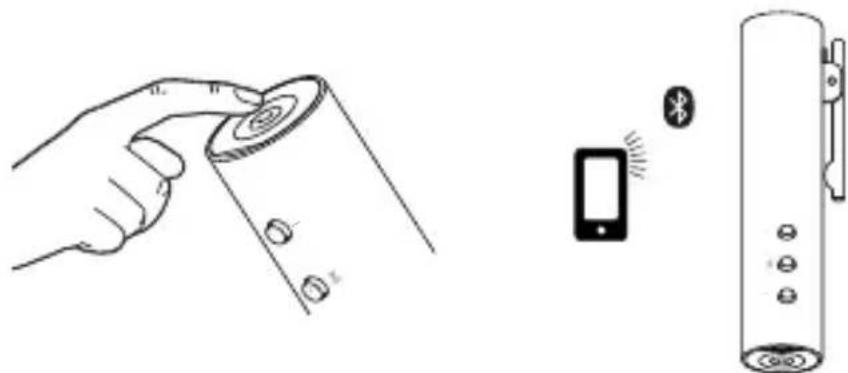
JABRA Play - PAIRING WITH ANOTHER MOBILE PHONE - 1

natural_image Illustration showing a hand holding a remote control panel, a smartphone with Bluetooth signal, and a cylindrical device (no text or symbols)

HOW TO USE THE JABRA PLAY

USING WITH YOUR MOBILE PHONE

3.5mm Jack Connector Microphone LED Indicator Clip Volume+ (Next track) Play/pause Button Volume- (Previous track) Answer/end Button Micro-USB Port Micro-USB Protector

On/offPress and hold (4 secs) the Answer/end button
Play/pause musicMusic played on your mobile phone will automatically transfer to the Jabra Play. To pause music, tap the Play/pause button, to resume music tap the Play/pause button again
Make callThe call will automatically transfer to the Jabra Play. If not, tap the Answer/end button
Answer call Tap theAnswer/end button
End call Tap theAnswer/end button
Reject callPress and hold (1 secs) the Answer/end button
JABRA Play - USING WITH YOUR MOBILE PHONE - 2Redial last number*Double-tap the Answer/end button
+ -Speaker volume up/down*Tap the Volume + or Volume - button
Mute/un-mute microphonePress both the Volume + button and Volume - buttons simultaneously
Skip music tracksPress and hold (2 secs) the Volume + or Volume - button

*Phone dependent

USING WITH TWO MOBILE PHONES

The Jabra PLAY can accept and handle calls from two mobile phones simultaneously.

End current call and answer incoming callTap the Answer/end button
Reject incoming callDouble-tap the Answer/end button
Put current call on hold and answer incoming callPress and hold (2 secs) the Answer/end button
Switch between held call and active callPress and hold (2 secs) the Answer/end button

WHAT THE LIGHTS MEAN

What you seeWhat it means
Power on
Power off
The Jabra Play is powered on, but not connected to a mobile phone (standby mode)
The Jabra Play is in pairing mode, and ready to connect
A mobile phone is Bluetooth connected to the Jabra Play
Incoming call
Active call
Battery is charging
Battery is fully charged
Low battery

SUPPORT

FAQ

Q I hear crackling noises

A Bluetooth is a radio technology that is sensitive to objects between the Jabra Play and the connected device. Ensure the Jabra Play and the connected device are within 33 feet (10 meters) of each other, with no major objects in the way (walls, etc.).

Q I cannot hear anything

A - Increase the speaker volume.

  • Ensure that the Jabra Play is paired to a device that is playing.
  • Make sure your phone is connected to the Jabra Play by tapping the Answer/end button.

Q I am having pairing problems

A You may have deleted your Jabra Play pairing connection to your mobile phone. Follow the pairing instructions again.

Q Will the Jabra Playsupport other Bluetooth equipment?

A The Jabra Play is designed to work with Bluetooth mobile phones. It can also support other Bluetooth devices that are compliant with Bluetooth version 1.1 or higher and support a headset, hands-free and/or advance audio distribution profile.

Q I cannot use Reject call or Redial

A These features require your mobile phone to support a hands-free profile. Refer to your mobile phone user manual for more details.

HOW TO CARE FOR YOUR JABRA PLAY

• Always store the Jabra Play with the power off and safely protected.
- Avoid storage at extreme temperatures (above 45^ C/113°F or below -10^ C/14°F). This can shorten battery life and may affect operation. High temperatures may also degrade performance.
- Do not expose the Jabra Play to rain or other liquids.

NEED MORE HELP

Web: www.jabra.com/play

E-mail:

Deutsch support.de@jabra.com

English support.uk@jabra.com

Español support.es@jabra.com

New Zealand support.nz@jabra.com

Singapore support.sg@jabra.com

Phone:

Belgique/Belgie +32 28080766

Danmark +45 69918794

United Kingdom +44 2033180070

Australia 1-800-738-521

China 800-858-0789

Japan 03-3242-8722

Singapore 800-101-2329

United States 1 (800) 327-2230

Canada 1 (800) 489-4199

International +45 35256540

TECHNICAL SPECIFICATIONS

Weight:

10.6 grams

Dimensions:

L 60.0 mm x W 18.8 mm x H 14.5 mm

Microphone:

4 mm Omni-directional microphone

14 dB +/- 3 dB

Speaker:

32 Ohm, 5 dB +/- 3 dB

Operating range:

Up to 10 m (33 ft)

Bluetooth version:

3.0

Paired devices:

Can be connected to two Bluetooth devices at the same time

Supported Bluetooth profiles:

Hands Free profile (v. 1.5), Headset profile (v. 1.2), A2DP (v. 1.2), AVRCP 1.4

Talk time:

Up to 6 hours

Standby time:

Up to 8 days

Charging time:

Approximately 2 hours

AC power supply:

100 - 240 V, 50 - 60 Hz

Charging plug dimensions:

5 pin micro-USB, L 5.0 mm x W 8.7 mm x H 2.4 mm

Operating temperature:

-10°C to 65°C (14°F to 149°F)

Storage temperature:

0^ C to 40^ C (32°F to 104°F)

Pairing passkey or PIN:

0000

Materials:

Polymethylmethacrylate, Acryl Butadiene Styrene

Warranty:

One year limited warranty

JABRA Play - Warranty: - 1

Dispose of the product according to local standards and regulations.

www.jabra.com/weee

Jabra®

YOU'RE ON

A BRAND BY

GN Netcom

© 2012 GN Netcom US, Inc. All rights reserved. Jabra® is a registered trademark of GN Netcom A/S. All other trademarks included herein are the property of their respective owners. The Bluetooth® word mark and logos are owned by the Bluetooth SIG, Inc. and any use of such marks by GN Netcom A/S is under license. (Design and specifications subject to change without notice).

© 2012 GN Netcom A/S. All rights reserved. Jabra® is a registered trademark of GN Netcom A/S. All other trademarks included herein are the property of their respective owners. The Bluetooth® word mark and logos are owned by the Bluetooth SIG, Inc. and any use of such marks by GN Netcom A/S is under license. (Design and specifications subject to change without notice).

Made in China

MODEL: OTE11

JABRA Play - YOU'RE ON - 1

JABRA Play - YOU'RE ON - 2

JABRA Play - YOU'RE ON - 3

Bluetooth

Manual assistant
Powered by Anthropic
Waiting for your message
Product information

Brand : JABRA

Model : Play

Category : Headphones