USER MANUAL RSC 0126 GW8 Goddess
NÁVOD K POUŽITÍ NÁVOD NA POUŽITIE INSTRUCTION MANUAL FELHASZNÁLÓI KÉZIKÖNYV
DOBRÉ ODVĚTRÁVÁNÍ
SÍTOVÝ KABEL
OCHRANA PŘED VLHKOSTÍ
OCHRANA PŘED TEPLEM
OCHRANA PŘED NEBEZPEČNÝMI MATERIÁLY
PŘEMISTOVÁNÍ
DOBRÉ VETRANIE
SIETOVÝ KÁBEL
OCHRANA PRED VLHKOSTÍ
OCHRANA PRED TEPLOM
OCHRANA PRED NEBEZPEČNÝMI MATERIÁLMI
PREMIESTOVANIE
1) Freezer compartment
2) Thermostate
3) Glass shelves
4) Crisper
5) Door balconies
6) Big door balconie
7) Feet
* Combination of drawers and shelves – see the pictures – corresponds to the most efficient use of the appliance.
2. CORRECT POSITIONING

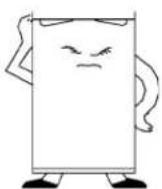
WELL VENTILATING
There is need of good ventilation around the refrigerator for easy dissipation of heat, high efficiency of refrigeration and low power consumption. For this purpose, sufficient clear space should be need around the refrigerator. Its back is at least 100mm away from the wall, its sides at least have a space of 100mm separately and the height from over its top is not less than 200mm. A clear space should be left to open its doors to 160°.
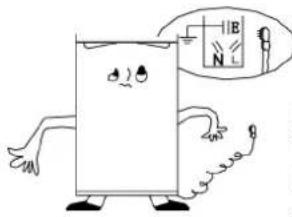
POWER SUPPLY
The refrigerator is only applied with power supply of single phase alternating current of (220 - 240) V\~/ 50Hz; If fluctuation of voltage in the district user is of so large that the voltage exceeds the above scope, for safety sake, be sure to apply a.c. automatic voltage regulator to the refrigerator. The refrigerator must employ a special power socket instead of common one with other electric appliances. Its plug must match the socket with ground wire.
POWER LINE CORD
The cord should be neither lengthened nor folded into coil during operation. Moreover, it is forbidden that cord is kept close onto the compressor at the back of the refrigerator, the surface temperature of which is quite high when operating. Touching with it would deactivate the insulation or cause leakage for electricity.
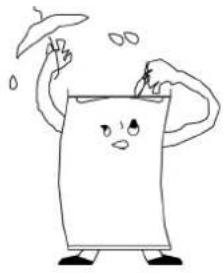
PROTECTION FROM MOISTURE
Avoiding placing the refrigerator in a place where heavy moisture is present so as to minimize possibility of rusty for its metal parts. Still more, the refrigerator is forbidden to be directly sprayed by water, otherwise, poor insulation and current leakage would occur.
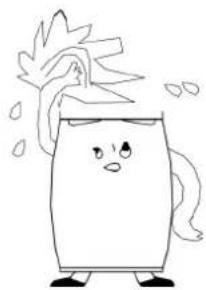
PROTECTION FROM HEAT
The refrigerator should be far away from any heat source or direct sunshine.
FIXING STABLE
Floor on which refrigerator will be placed must be flat and solid. It should not be laid on any soft material such as foam plastic, etc. If the refrigerator is not on the same level, adjust the screws suitably. The refrigerator should not be placed near anything which may echo.

KEEP AWAY FROM DANGER
It is inadvisable that the refrigerator is placed near any volatilizable or combustible such as gas, petrol, alcohol, lacquer and banana oil, etc. The above-mentioned objects can not be stored in the refrigerator.

MOVING
When fixed or moved, the refrigerator can not be set horizontally or declined to more than 45 or upside-down.
3. CAUTIONS
- It must be checked that the voltage used should be the same as the rated voltage before the refrigerator is used.
- Water contained in food or getting into air inside the refrigerator by opening doors may form a layer of frost inside, It will weaken the refrigerator when the frost is thick, Therefore you should defrost manually when the ice is thick. When defrosting, a pan is needed to put under the eva porator for taking the defrost water.
- If the supply cord of this appliance is damaged, it must only be replaced by a repair shop appointed by the manufacturer, because special purpose tools are required.
- Do not store bottled beverage in the freezing compartment, nor the food without packing.
- It is dangerous to alter the specifications or attempt to modify this products in any way
- When you change the bulb, or the refrigerator is not in use for long periods, disconnect it from the electricity supply.
- Do not allow children to tamper with the controls or play with the product.
- Wait for 5 minutes before restart the unit after the power supply blackout.
4. CHANGING THE REVERSIBLE DOOR
This refrigerator has been built with the door hinges on the right. If you wish to change the opening direction, follow the instruction below:
1 Uncrew the screws from the bottom bracket.Remove the foot from opposite side. Uncrew the screws from the bottom bracket.Remove the foot from opposite side. | 2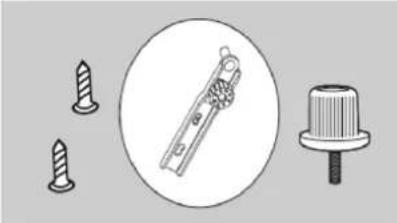 Machine screw /bottom bracket/foot. Machine screw /bottom bracket/foot. |
3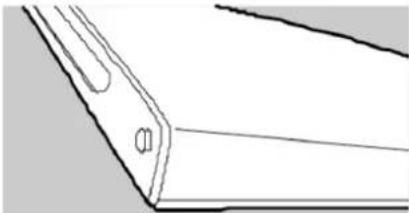 Slide the appliance door downward and more away from top hinge pin of the appliance. Slide the appliance door downward and more away from top hinge pin of the appliance. | 4 Uncrew the screws from top and replace on the other side. Uncrew the screws from top and replace on the other side. |
5 Screw the two screws to install the top on top right side of appliance. Slide the appliance door back on the top hinge. Making sure it is face up. Screw the two screws to install the top on top right side of appliance. Slide the appliance door back on the top hinge. Making sure it is face up. | 6 Screw the bottom hinge into place new side.Replace the other foot on the other side. Screw the bottom hinge into place new side.Replace the other foot on the other side. |
5. MAINTENANCE
CLEAN THE OUTSIDE USING A SOFT CLOTH
Prolonged disuse
1) Empty the refrigerator.
2) Disconnect the appliance from the power supply.
3) Defrost and clean the interior.
4) In the event of prolonged disuse, leave the door open to prevent the formation of mould, odours and oxidation.
5) Clean the appliance.
- Clean the inside of the low temperature compartment (where fitted) when defrosting.
- Periodically clean the inside of the refrigerator compartment with a sponge dampened in warm water and/or neutral detergent. Rinse and dry with a soft cloth.
- Do not use abrasive products. Do not use abrasive products, scourers, stain-removers e.g. acetone, trichloroethylene) or vinegar.
6. TROUBLESHOOTING
1) When the refrigerator does not work
- Check if there is a power failure.
- Check if the power plug is plugged into the power outlet.
- Check that the fuse has not blown.
2) When the refrigerator is cooling excessively
- The temperature control dial may be set too high.
- If you place foodstuffs containing a lot of moisture directly under the cool air outlets, they will freeze easily. This does not indicate a malfunction.
3) When the refrigerator is not cooling sufficiently
- The food may be packed too tightly together which will block the flow of cool air.
- You may have put something hot or a lot of foodstuffs into the refrigerator.
- The door may not have been closed properly.
- The door gaskets may be damaged.
- The refrigerator may not be ventilated.
- There may be insufficient clearance between the refrigerator and the surfaces
- Immediately both sides and above.
- The temperature control dial may not be set properly.
4) When the defrosting water overflows inside the refrigerator and onto the floor.
- Check that the drain pipe and the drain hose are not clogged.
- Check that the drain pan is housed properly.
5) When condensation form on the outside of the refrigerator.
- Condensation may form on the outside when the humidity is high such as during a wet season.
- This is the same result as the condensation formed when chilled water is poured into a glass. It does not, therefore, indicate a failure, wipe dry with a dry cloth.
6) When you hear a sound like water flowing.
- A sound like water flowing is the refrigerant flowing. It does not Indicate a malfunction.
7) When the cabinet's side panel heats up
- The side panel of the cabinet will heat up when the door is opened or closed frequently, when starting the unit and when the unit operates in summer with high ambient outside temperature, In such case, do not touch the panel, it results from the dissipation of the heat from inside the cabinet, and it does not mean that something is wrong with the refrigerator.
7. TECHNICAL SPECIFICATIONS
* For the detailed technical specifications, please refer to the nameplate at the back of the refrigerator.
* Specifications are subject to change without prior notice.
HOW TO SAVE ENERGY :
- Place the refrigerator in dry and colder place (never near the heating element!).
- Remove ice from the freezer compartment regularly, (if you don't have the No-frost system), as the thick layer of ice can rise the energy consumption by 75%.
- Keep the temperature in the refrigerator at +5 °C (fridge) and -18 °C (freezer). When you decrease the temperature by 1 °C, the energy consumption will rise by 6 % approx.
- Keep clear arrangement of food in the refrigerator – you will not have to keep the door opened for long time. Your energy consumption will not rise unnecessarily.
INFORMATION LETTER :
| Brand GODDESS | |
| Model RSC0126GW8 | |
| Type of appliance3) | 7 |
| Energy class(A - low consumption,G - high consumption) | A+ |
| Consumption for 365 days1) | 197 |
| Net capacity total (I) 175 | |
| thereof : fridge compartment (I) 153 | |
| thereof : freezer compartment (I) 22 | |
| Designation of freezer compartment * (***) | |
| Time of storage in caseof the power interruption (hrs) | 15 |
| Freezing capacity (kg/24 hrs) 2 | |
| Climatic class2) | ST |
| Noise level dB(A) 42 | |
1)
Consumption of energy in kWh/year, based on the results of the 24hrs-standard test.
Real consumption depends on the way of use and on the allocation of the appliance.
2)
SN : surrounding temp. from + 10°C to + 32°C
N : surrounding temp. from + 16°C to + 32°C
ST : surrounding temp. from + 16°C to + 38°C
T : surrounding temp. from + 16°C to + 43°C
(Attn.: if the refrigerator is located in ambient temperature out of the given range, may not function properly)
3)
3 = fridge with low-temperature compartments
4 = fridge with low-temp. compartments (*)
5 = fridge with low-temp. compartments (**)
7 = fridge with low-temp. compartments ( ** )
8 = freezer
For any further information, please write to: info@goddess.cz

WARNING: Do not use this product near water, in wet areas to avoid fire or injury of electric current. Always turn off the product when you don't use it or before a revision. There aren't any parts in this appliance which are reparable by consumer. Always appeal to a qualified authorized service. The product is under a dangerous tension.
Old electrical appliances, used batteries and accumulators disposal
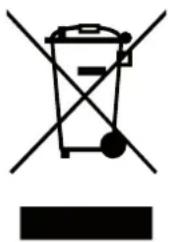
This symbol appearing on the product, on the product accessories or on the product packing means that the product must not be disposed as household waste. When the product/ battery durability is over, please, deliver the product or battery (if it is enclosed) to the respective collection point, where the electrical appliances or batteries will be recycled. The places, where the used electrical appliances are collected, exist in the European Union and in other European countries as well. By proper disposal of the product you can prevent possible
negative impact on environment and human health, which might otherwise occur as a consequence of improper manipulation with the product or battery/ accumulator. Recycling of materials contributes to protection of natural resources. Therefore, please, do not throw the old electrical appliances and batteries/ accumulators in the household waste. Information, where it is possible to leave the old electrical appliances for free, is provided at your local authority, at the store where you have bought the product. Information, where you can leave the batteries and accumulators for free, is provided to you at the store, at your local authority.
FONTOS BIZTONSÁGI ELŐÍRÁSOK

MEGFELELŐ SZELLÓZÉS
ELEKTROMOS VEZETÉK
VÉDELEM A NEDVESSÉGTÓL
VÉDELEM A HÔTÔL
MOZGATÁS


