
Grand Touring GT122 - Subwoofer JBL - Kostenlose Bedienungsanleitung
Finden Sie kostenlos die Bedienungsanleitung des Geräts Grand Touring GT122 JBL als PDF.


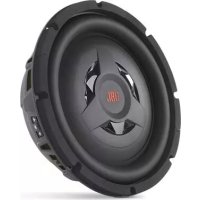
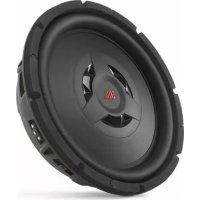
| Produkttyp | Subwoofer |
| Marke | JBL |
| Modell | Grand Touring GT122 |
| Spitzenbelastbarkeit | 280 Watt |
| Frequenzgang | 25 Hz - 3 kHz |
| Nennimpedanz | 4 Ohm |
| Einbautiefe | 13,3 cm (5 1/4 Zoll) |
| Einbauausschnitt | 28,26 cm (11 1/8 Zoll) |
| Magnetgewicht | 1,13 kg (40 oz) |
| Schwingspulengröße | 50,8 mm (2 Zoll) |
| Gehäuseempfehlungen | Geschlossen, Bassreflex, Isobarik (Details in Anleitung) |
| Thiele-Small-Parameter (GT122) | Fs: 33 Hz, Qts: 0,351, Vas: 3,57 cu. ft. |
| Besondere Merkmale | Erhältlich als Einzel- oder Doppelschwingspule (GT122D) |
| Lieferumfang | Subwoofer, Bedienungsanleitung |
| Garantie | 2 Jahre bei professioneller Installation, 1 Jahr bei Eigeninstallation |
| Wartung | Staub und Feuchtigkeit fernhalten; keine Reinigungsmittel verwenden |
Häufig gestellte Fragen - Grand Touring GT122 JBL
Benutzerfragen zu Grand Touring GT122 JBL
0 Frage zu diesem Gerät. Beantworten Sie die, die Sie kennen, oder stellen Sie Ihre eigene.
Eine neue Frage zu diesem Gerät stellen
Laden Sie die Anleitung für Ihr Subwoofer kostenlos im PDF-Format! Finden Sie Ihr Handbuch Grand Touring GT122 - JBL und nehmen Sie Ihr elektronisches Gerät wieder in die Hand. Auf dieser Seite sind alle Dokumente veröffentlicht, die für die Verwendung Ihres Geräts notwendig sind. Grand Touring GT122 von der Marke JBL.
BEDIENUNGSANLEITUNG Grand Touring GT122 JBL

GT122/GT122D

natural_image
Abstract geometric shapes with white triangular forms on black background (no text or symbols)GT122/GT122D SUBWOOFER OWNER'S MANUAL
JBL
JBL Consumer Products, Inc. 240 Crossways Park West Woodbury, NY 11797
8500 Balboa Blvd. Northridge, CA 91329
800 645 7484
GT1220M93
H A Harman International Company
JBL is continually engaged in research related to product improvement. As an ongoing expression of this philosophy, new materials, technologies, as well as improved production and design techniques, are often introduced into existing products without notice. For this reason, a current JBL product may differ in some respect from its published description, but will always equal or exceed the original design specifications unless otherwise indicated.
Suggested enclosures for the JBL GT122 subwoofer
| Enclosure Volume | Port Diameter | Port Length | Port Tuned Freq. | *-3dB Low Cutoff | **Internal Dimensions | |
| Rectangular BoxH x W x D | Wedge Shaped BoxH x W x D1 x D2 x F | |||||
| 1.5 cu. ft.(42") | 3" (76mm) | 5.7" (145mm) | 40Hz | 47Hz | 14.3" x 23.2" x 8.9"(363 x 589 x 226mm) | 12.5" x 20.3" x 15.5" x 7.8" x 14.7"(318 x 516 x 394 x 198 x 373mm) |
| dual 2" (51mm) | 5.6" (142mm) | |||||
| 2 cu. ft.(57") | 3" (76mm) | 4.8" (122mm) | 37Hz | 42Hz | 15.6" x 25.3" x 9.7"(396 x 643 x 246mm) | 13.6" x 22.1" x 16.9" x 8.4" x 16.0"(345 x 561 x 429 x 213 x 406mm) |
| dual 2" (51mm) | 4.7" (119mm) | |||||
| 2.5 cu. ft.(71") | 4" (102mm) | 7.6" (193mm) | 36Hz | 38Hz | 16.7" x 27.0" x 10.3"(424 x 686 x 262mm) | 14.6" x 23.6" x 18.1" x 9.0" x 17.2"(371 x 599 x 460 x 229 x 437mm) |
| dual 2" (51mm) | 3.8" (97mm) | |||||
| 3 cu. ft.(85") | 4" (102mm) | 6.9" (175mm) | 34Hz | 35Hz | 17.7" x 28.6" x 11.0"(450 x 726 x 279mm) | 15.4" x 25.0" x 19.1" x 9.6" x 18.2"(391 x 635 x 485 x 244 x 462mm) |
| dual 2" (51mm) | 3.4" (86mm) | |||||
| 1 cu. ft. Isobaric(21") | 3" (76mm) | 12" (305mm) | 37Hz | 42Hz | 12.8" x 20.7" x 7.9"(325 x 526 x 201mm) | 11.2" x 18.1" x 13.9" x 6.9" x 13.2"(284 x 460 x 353 x 175 x 335mm) |
| dual 2" (51mm) | 11" (279mm) | |||||
| 2 cu. ft. Isobaric(57") | 4" (102mm) | 11" (279mm) | 35Hz | 32Hz | 15.6" x 25.3" x 9.7"(394 x 643 x 246mm) | 13.6" x 22.1" x 16.9" x 8.5" x 16.0"(345 x 561 x 429 x 216 x 406mm) |
| dual 2" (51mm) | 5.5" (140mm) | |||||
*Frequency at which speaker's output begins to diminish when measured in an open air environment. Actual in-car response will yield a much lower -3dB point due to the effects of the car's interior. **Box dimensions are adjusted to allow for the volume displaced by the speaker and the port tubes. Enclosure volumes are net box volumes.
| Model | Peak Power Handling (Watts) | Freq. Resp. (Hz) | Mounting Depth (Top) | Mounting Cuttout | Magnet Weight | Voice Coil Size |
| GT122 | 280 | 25-3k | 514" (13.3 cm) | 1118" (28.26 cm) | 40 oz.(1.13kg) | 2" (50.8mm) |
Thiele/Small Parameters Fs: 33Hz Qts: .351 Vas: 3.57 cu. ft. (101/') Eff: .93% Pe: 125 w Xmax: .250" (6.35mm) Dia: 10.25" (360mm) Qes: .364 Oms: 9.3 Re: 2.95 Ohms Le: .784 mH Vd: 20.6 cu. in. (0.338/') Sd: 82.5 sq. in. (532cm²) Nom Z: 4.0 Ohms Min Z: 2.5 Ohms


Introduction
Thank you for choosing JBL's GT Series subwoofer to round out your mobile listening enjoyment with deep, well articulated bass. This speaker features the same rigorous craftsmanship and attention to detail that have made JBL home and professional studio speaker systems the audio standard for over 30 years.
This manual contains important information you'll need to begin using and enjoying your new subwoofer. Please take a moment to read through each section carefully before going any further.
A word about installation
Because of the unique mounting and enclosure requirements of a mobile subwoofer, we recommend that you have your new GT Series speaker professionally installed by an authorized JBL dealer. This product comes with a two-year warranty that is valid only if it is installed by an authorized JBL dealer. Should you decide to handle installation chores yourself, your GT Series subwoofer remains protected by a one-year warranty.
Before you begin
Remember to save your receipt. It serves as the necessary proof of purchase required for any and all warranty service. You may also need it later if it becomes necessary to file an insurance claim. It's also a good idea to hang on to all packing material which came with your subwoofer.
All products leave the factory only after undergoing rigorous inspection and testing. However, as you unpack your new subwoofer, inspect it thoroughly for any damage, seen or unseen, which may have occurred in shipping. If you detect a defect, cosmetic or otherwise, contact your authorized JBL dealer for service.
Important precautions
Some of these points may seem like common sense, but before any holes are cut in your car, please review this simple check list:
■ Make sure the speaker and/or any enclosure you may use to house it (see accompanying section on Enclosures) will physically fit where you intend to place it (i.e: trunk or rear deck). Be flexible here - remember, bass waves are non-directional, so the placement of your subwoofer is not critical, as long as it fits within the available space in your car.
■ Allow enough clearance between the speaker and its enclosure (if any) and moving parts within the car itself, such as torsion bars, trunk latches, etc.
- Your new subwoofer is extremely rugged and resilient, but it is still a good idea to mount it where water and grit cannot inadvertently splash on the diaphragm.
■ You are no doubt eager to get your new subwoofer hooked up and churning out deep, clean bass. However, we strongly urge you to test the entire audio system, including the subwoofer, at low volume before attempting final installation. This will allow you to check all components and pinpoint any problems that might arise.
■ WARNING! Fuel tanks come in all shapes and sizes and your's could be located directly under where you had planned to mount your new subwoofer. Cutting or piercing the fuel tank (or other wiring in the car's electrical system) could create a very real safety hazard. Please take the time to check your intended mounting area carefully to ensure that there is sufficient mounting depth and clearance.
■WARNING! Using the speaker or any of its mounting hardware as a drilling or cutting template is extremely dangerous and should not be attempted. Exercise caution when operating power tools, particularly in and around an automobile. Always wear proper eye protection.
■ CAUTION: Everything in a car, including speakers and wire, is subject to lots of wear and tear. That's why it's a good idea to make certain your speaker is protected from the elements and your wire runs are free and unconstricted. If necessary, use rubber grommets to shield wire from sharp or exposed metal edges.
IMPORTANT: Never cut or drill through any metal that is an integral part of the car's safety or structural support system. When in doubt, check with your mechanic. It's also advisable to vacuum up all metal filings before installation so that they won't be drawn to the speaker's magnet.
If you are at all uncertain about any of these warnings and precautions, please contact your authorized JBL dealer.
Choosing an enclosure for your new subwoofer
An enclosure can have a profound impact on the quality of sound any loudspeaker is capable of generating. That's why this owner's manual includes special information detailing Thiele/Small Parameters as well as precise guidelines for building an enclosure that can maximize the performance and efficiency of your new subwoofer. If for any reason you need further assistance, please call JBL's toll-free hot line at
1-800-645-7484 and our Technical Experts will be happy to assist you.
JBL GT woofers are designed to produce high quality sound in all of the installation configurations listed in the table below. Before grabbing your circular saw, take a moment to review the Enclosure Options table and determine which type of enclosure best matches the complexity of installation you desire with the available space in your car.
GT Subwoofer Enclosure Options – Basic Theory
| Cross-Section/Type | Description | Benefits | Disadvantages |
| The easiest way to install a woofer in a car is to mount it on a surface that will keep the speaker's front and back wave from canceling each other. A common practice is to mount the sub-woofer directly to the rear deck of a sedan or the cover of a hatchback. The rear deck or hatch-back cover should be reinforced with other materials (e.g. wood) to reduce vibrations. | ■ Simple installation | ■ Reduced power handling■ No control of frequency response | |
| Sealed | Building an airlight box for the subwoofer will allow for higher power handling and tighter bass response than free air application because the air inside the box will act as a damping force to control the woofer cone movement. The proper box volume for a desired frequency response can be calculated using the woofer's Thiele/Small parameters. | ■ Increased power handling■ Relatively easy to build■ More accurate bass than infinite bath■ Small error in box volume does not change response significantly | ■ Low frequency cutoff does not go as low as ported enclosure |
| Ported | JBL highly recommends the use of this type of enclosure. The sound waves generated by the rear of the woofer cone are vented through a tuned port that acts as a sound source to reinforce the sound waves produced by the front of the woofer cone. At the port tuning frequency very little movement from the woofer is needed to produce sound from the port. As a result, the port extends the low frequency response of the overall system. Recommended box sizes and port dimensions are listed on pages 2 & 7. | ■ Extended low frequency response■ More efficient than sealed enclosure■ Less distortion than sealed because very little cone reaction is needed to produce the same output | ■ Requires slightly larger enclosure than sealed system■ No damping below port tuning frequency |
| Isobaric | This system uses two woolers coupled electrically and mechanically to achieve better cone movement control. The main idea is to have both woofer cones always moving in the same direction and not against each other. The two woolers reinforce each other through push-pull action and reduce each other's tendency to keep vibrating after the electrical signal has ceased. This system can also be used with ported enclosures. Recommended box sizes are listed on pages 2 and 7. | ■ Less distortion■ Highly accurate bass■ Half size required for either ported or sealed enclosure | ■ Slightly more difficult to build for ported or sealed enclosure because more woolers are involved■ Less overall efficiency compared to single woofer system |
| Bandpass and Multi-Chamber Enclosures | Two basic types of bandpass enclosures are shown. These types of enclosures work on the same principle as a simple ported enclosure. In this case, however, the port becomes the sound source and the woofer is hidden inside the enclosure. The enclosure as so acts as an acoustic filter that attenuates the high frequencies produced by the woofer, reducing the need for complex networks. | ■ Less distortion | ■ Total enclosure is larger than a regular ported or sealed enclosure■ Proper port and chamber size is very critical for desired frequency response; very difficult to build and tune |
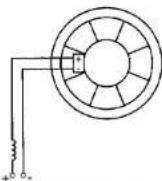
Wiring Diagrams
Single voice coil filter wiring diagram
Dual voice coil wiring
If you have purchased a JBL subwoofer equipped with dual voice coils, in order to ensure optimum performance, it is imperative that: A.) Both voice coils and B.) One of the wiring
schemes illustrated below, be utilized. Failure to follow these guidelines will result in substandard bass response, and that certainly is not why you purchased a JBL subwoofer.
Dual voice coil single speaker wiring diagrams
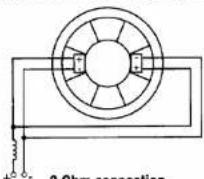
2 Ohm connection

*4 Ohm connection
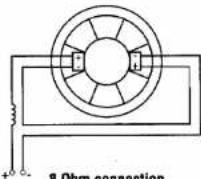
8 Ohm connection
Dual voice coil two speaker wiring diagrams

*2 Ohm connection

4 Ohm connection
*Note: We recommend both inputs of the woofer be driven by two separate channels of amplification (i.e. left channel of stereo amp to left terminals of the woofer and right channel of stereo amp to the right terminals). Do not connect just one set of woofer terminals as this alters the performance of the woofer.
a) The 4 Ohm single voice coil version of the GT woofers is recommended for applications which require one 4 Ohm driver powered by one channel of amplification. b) The 4 Ohm single voice coil version of the GT woofers is recommended for applications which require two drivers to present a total of 2 Ohms impedance to one channel of amplification. Simply drive one channel of amplification into two 4 Ohm woofers wired in parallel.
Passive low-pass filter chart
Below you will find a chart of the standard coil values you should use in creating a first order (6 dB/octave) low pass filter to achieve the cutoff frequencies indicated. Coil values are listed in milliHenries (mH) for subwoofers with a nominal
impedance of 2, 4 or 8 Ohms. The coils should be installed as shown in the Wiring Diagram section on page 5 of this manual. If you have questions or require additional information, please contact your authorized JBL dealer.
| Cutoff Frequency | 2 Ohms | Coil Values 4 Ohms | 8 Ohms |
| 150 | 2.0 mH | 4.0 mH | 8.0 mH |
| 100 | 3.0 mH | 6.0 mH | 12.0 mH |
| 80 | 4.0 mH | 8.0 mH | 16.0 mH |
| 60* | 6.0 mH | 12.0 mH | 24.0 mH |
*For larger enclosures.
Troubleshooting
| Problem | Cause/solution |
| No sound | ■ Check head unit or power amplifier for operation. ■ Check all signal connections. ■ Check all ground connections. ■ Check for any wires shorting together or to chassis metal. ■ Check subwoofer for open or short circuited voice coil with an Ohm meter. |
| Distorted scund at all volumes | ■ Check for bad speaker connections. ■ Check if distortion is heard through all speakers in system or just the subwoofers. ■ If distortion is heard through JBL subwoofer only, check if amplifier output is distorted and check for damaged woofer cone or mis-aligned voice coil (speaker makes scratchy sound as cone moves up and down). |
| Distorted sound at high volume only | ■ Check for loose mounting surface. ■ Inspect speaker for debris on the cone. ■ Inspect loudspeaker for damaged woofer cone or misaligned voice coil (speaker makes scratchy sound as cone moves up and down). ■ Amplifier clipping and over equalization (bass boost) can also cause distortion at high volumes. |
| Poor bass response | ■ Check wiring for correct polarity. ■ Check for unstable or loose mounting surface. ■ Check tone control or equalizer setting. ■ Make sure enclosure volume is correct and make sure ports are tuned properly. |
Suggested enclosures for the JBL GT122D subwoofer
| Enclosure Volume | Port Diameter | Port Length | Port Tuned Freq. | *-3dB Low Cutoff | **Internal Dimensions | |
| Rectangular BoxH x W x D | Wedge Shaped BoxH x W x D1 x D2 x F | |||||
| 1.5 cu. ft.(42") | 3" (76mm) | 7.6" (193mm) | 36Hz | 50Hz | 14.3" x 23.2" x 8.9"(363 x 589 x 226mm) | 12.5" x 20.3" x 15.5" x 7.8" x 14.7"(318 x 516 x 394 x 198 x 373mm) |
| dual 2" (51mm) | 7.3" (185mm) | |||||
| 2 cu. ft.(57") | 3" (76mm) | 5.6" (142mm) | 35Hz | 45Hz | 15.6" x 25.3" x 9.7"(396 x 643 x 246mm) | 13.6" x 22.1" x 16.9" x 8.4" x 16.0"(345 x 561 x 429 x 213 x 406mm) |
| dual 2" (51mm) | 5.5" (140mm) | |||||
| 2.5 cu. ft.(71") | 3" (76mm) | 3.7" (94mm) | 36Hz | 40Hz | 16.7" x 27.0" x 10.3"(424 x 686 x 262mm) | 14.6" x 23.6" x 18.1" x 9.0" x 17.2"(371 x 599 x 460 x 229 x 437mm) |
| dual 2" (51mm) | 3.8" (97mm) | |||||
| 3 cu. ft.(85") | 3" (76mm) | 3.3" (84mm) | 34Hz | 37Hz | 17.7" x 28.6" x 11.0"(450 x 726 x 279mm) | 15.4" x 25.0" x 19.1" x 9.6" x 18.2"(391 x 635 x 485 x 244 x 462mm) |
| dual 2" (51mm) | 3.4" (86mm) | |||||
| 1 cu. ft. Isobaric(21") | 3" (76mm) | 11" (279mm) | 38Hz | 44Hz | 12.8" x 20.7" x 7.9"(325 x 526 x 201mm) | 11.2" x 18.1" x 13.9" x 6.9" x 13.2"(284 x 460 x 353 x 175 x 335mm) |
| dual 2" (51mm) | 10.3" (262mm) | |||||
| 2 cu. ft. Isobaric(57") | 4" (102mm) | 11.8" (300mm) | 34Hz | 32Hz | 15.6" x 25.3" x 9.7"(394 x 643 x 246mm) | 13.6" x 22.1" x 16.9" x 8.5" x 16.0"(345 x 561 x 429 x 216 x 406mm) |
| dual 2" (51mm) | 5.9" (150mm) | |||||
*Frequency at which speaker's output begins to diminish when measured in an open air environment. Actual in-car response will yield a much lower -3dB point due to the effects of the car's interior. **Box dimensions are adjusted to allow for the volume displaced by the speaker and the port tubes. Enclosure volumes are net box volumes.
| Model | Peak Power Handling (Watts) | Freq. Resp. (Hz) | Mounting Depth (Top) | Mounting Cutout | Magnet Weight | Voice Coil Size |
| GT122D | 280 | 25-3k | 514" (13.3 cm) | 1112" (28.26 cm) | 40 oz.(1.13kg) | 2" (50.8mm) |
Thiele/Small Parameters Fs: 35Hz Qts: .422 Vas: 3.71 cu. ft. (105") Eft: .94% Pe: 125 w Xmax: .250" (6.35mm) Dia: 10.25" (260mm) Oes: 439 Qms: 11.36 Re: 2.95 Ohms*** Le: .735 mH*** Vd: 20.6 cu. in. (0.338") Sd: 82.5 sq. in. (532cm²) Nom Z: 4.0 Ohms*** Min Z: 3.2 Ohms*** ***each voice coil


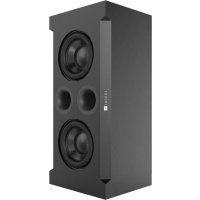
Marke : JBL
Modell : Grand Touring GT122
Kategorie : Subwoofer