
PL19-3 - Petit électroménager SMEG - Notice d'utilisation et mode d'emploi gratuit
Retrouvez gratuitement la notice de l'appareil PL19-3 SMEG au format PDF.


| Type de produit | Lave-vaisselle |
| Marque | SMEG |
| Modèle | PL19-3 |
| Dimensions (L x P x H) | 597-599 x 600 x 850-870 mm |
| Capacité | 14 couverts standard |
| Pression d'eau | 0,5 - 9 bar (50 - 900 kPa) |
| Alimentation électrique | Voir plaque signalétique |
| Programmes de lavage | 8 programmes : Super, Eco, Bio, Quotidien, Normal, Rapide, Délicat, Trempage |
| Fonctions spéciales | Demi-charge, Départ différé (1-12h), Séchage ECO, Voyants de sel et de liquide de rinçage |
| Système anti-fuite | Aquastop (sur certains modèles) |
| Adoucisseur d'eau | Réglable électroniquement (5 niveaux), capacité sel ~1,7 kg |
| Niveau sonore | Non spécifié |
| Classe énergétique | Non spécifié |
| Consommation d'eau | Variable selon programme, de 4 à 17 L |
| Consommation électrique | Variable selon programme, de 0,4 à 1,45 kWh |
| Entretien | Nettoyage régulier des filtres, bras de lavage, et joint de porte |
| Réparabilité | Réparations par technicien agréé uniquement |
FOIRE AUX QUESTIONS - PL19-3 SMEG
Questions des utilisateurs sur PL19-3 SMEG
0 question sur cet appareil. Repondez a celles que vous connaissez ou posez la votre.
Poser une nouvelle question sur cet appareil
Téléchargez la notice de votre Petit électroménager au format PDF gratuitement ! Retrouvez votre notice PL19-3 - SMEG et reprennez votre appareil électronique en main. Sur cette page sont publiés tous les documents nécessaires à l'utilisation de votre appareil PL19-3 de la marque SMEG.
MODE D'EMPLOI PL19-3 SMEG
- Consignes de sécurité et d'utilisation 28 2. Installation et raccordement 30
2.1 Raccordement à l'alimentation en eau 30 2.2 Raccordement électrique 31
3. Description des commandes 32
3.1 Panneau avant 32 3.2 Affichage des informations 32 3.3 Programmes de lavage 35
- Instructions d'utilisation 38
4.1 Utilisation de l'adoucisseur d'eau 38 4.2 Utilisation des distributeurs de produit de rinçage et de détergent 40 4.3 Avertissements et recommandations générales 42 4.4 Utilisation des paniers 43
- Nettoyage et entretien 46 5.1 Avertissements et recommandations générales 46
- Dépannage 49
Merci d'avoir choisi ce produit.
Nous vous conseillons de lire attentivement toutes les instructions contenues dans ce manuel, afin de comprendre comment utiliser votre lave-vaisselle en toute sécurité et correctement. Le manuel est divisé en paragraphes qui décrivent étape par étape les fonctions du lave-vaisselle, avec des instructions claires accompagnées d'illustrations détaillées. Des recommandations sont données pour l'utilisation correcte des paniers, des bras d'aspersion, des récipients, des filtres, des programmes de lavage et pour le fonctionnement des commandes. Suivez les procédures de nettoyage recommandées pour garantir que votre lave-vaisselle reste toujours en parfait état de fonctionnement. Ce manuel constitue une référence rapide et facile pour répondre à toutes vos questions concernant l'utilisation de votre nouveau lave-vaisselle.

INSTRUCTIONS D'INSTALLATION : elles sont destinées au technicien qualifié qui doit effectuer l'installation, le raccordement et les essais de l'appareil.
INSTRUCTIONS POUR L'UTILISATEUR : elles consistent en des recommandations pour l'utilisation de l'appareil, une description de ses commandes et des procédures correctes de nettoyage et d'entretien.
1. Consignes de sécurité et d'utilisation
CE MANUEL FAIT PARTIE INTÉGRANTE DE L'APPAREIL : IL DOIT TOUJOURS ÊTRE CONSERVÉ INTACT AVEC LE LAVE-VAISSELLE. AVANT D'UTILISER L'APPAREIL, LISEZ ATTENTIVEMENT TOUTES LES INSTRUCTIONS CONTENUES DANS CE MANUEL. L'INSTALLATION DOIT ÊTRE EFFECTUÉE PAR UN TECHNICIEN QUALIFIÉ, CONFORMÉMENT AUX RÈGLEMENTS EN VIGUEUR. CET APPAREIL EST DESTINÉ À UN USAGE DOMESTIQUE ET EST CONFORME AUX DIRECTIVES CEE 72/23, 89/336 (Y COMPRIS 92/31) ACTUELLEMENT EN VIGUEUR, Y COMPRIS LA PRÉVENTION ET L'ÉLIMINATION DES INTERFÉRENCES RADIOÉLECTRIQUES. L'APPAREIL EST CONÇU POUR L'USAGE SUIVANT : LAVAGE ET SÉCHAGE DE LA VAISSELLE ; TOUT AUTRE USAGE SERA CONSIDÉRÉ COMME IMPROPRE. LE FABRICANT DÉCLINE TOUTE RESPONSABILITÉ POUR LES USAGES AUTRES QUE CEUX DÉCRITS CI-DESSUS.
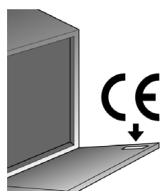
LA PLAQUE SIGNALÉTIQUE COMPORTANT LES DONNÉES TECHNIQUES, LE NUMÉRO DE SÉRIE ET LES MARQUAGES EST POSITIONNÉE DE MANIÈRE VISIBLE SUR LE BORD INTÉRIEUR DE LA PORTE. LA PLAQUE SIGNALÉTIQUE SUR LE BORD INTÉRIEUR DE LA PORTE NE DOIT JAMAIS ÊTRE RETIRÉE.
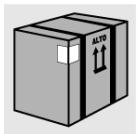
NE LAISSEZ PAS LES EMBALLAGES MIS AU REBUT SANS SURVEILLANCE DANS LA MAISON. SÉPAREZ LES DIFFÉRENTS MATÉRIAUX QUI COMPOSENT L'EMBALLAGE ET DÉPOSEZ-LES DANS LE CENTRE DE COLLECTE SÉLECTIVE LE PLUS PROCHE.
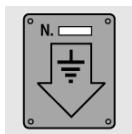
L'APPAREIL DOIT ÊTRE RELIÉ À LA TERRE CONFORMÉMENT AUX RÈGLEMENTS DE SÉCURITÉ ÉLECTRIQUE EN VIGUEUR. LE FABRICANT DÉCLINE TOUTE RESPONSABILITÉ EN CAS DE DOMMAGES AUX PERSONNES OU AUX BIENS RÉSULTANT DE L'ABSENCE DE MISE À LA TERRE DE L'APPAREIL OU D'UNE CONNEXION DE TERRE DÉFECTUEUSE.
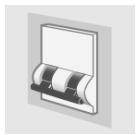
SI L'APPAREIL N'EST PAS ALIMENTÉ PAR UNE PRISE DE COURANT, IL EST NÉCESSAIRE D'INSTALLER UN INTERRUPTEUR D'ISOLEMENT AVEC UNE OUVERTURE DE CONTACT D'AU MOINS 3 MM.
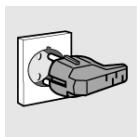
LA FICHE DU CORDON D'ALIMENTATION ET LA PRISE DE COURANT CORRESPONDANTE DOIVENT ÊTRE DU MÊME TYPE ET CONFORMES AUX RÈGLEMENTS EN VIGUEUR. VÉRIFIEZ QUE LA TENSION ET LA FRÉQUENCE DE L'ALIMENTATION ÉLECTRIQUE CORRESPONDENT AUX VALEURS INDIQUÉES SUR LA PLAQUE SIGNALÉTIQUE. ÉVITEZ D'UTILISER DES ADAPTATEURS OU DES CONNEXIONS EN DÉRIVATION. NE DÉBRANCHEZ JAMAIS L'APPAREIL EN TIRANT SUR LE CORDON D'ALIMENTATION.
- APRÈS L'INSTALLATION, LA FICHE DOIT RESTER ACCESSIBLE.
- EN CAS DE DOMMAGE AU CORDON D'ALIMENTATION, FAITES-LE REMPLACER PAR UN TECHNICIEN QUALIFIÉ.

SI L'APPAREIL EST INSTALLÉ SUR UN SOL MOQUETTÉ OU RECOUVERT, ASSUREZ-VOUS QUE LES OUVERTURES SUR SA PARTIE INFÉRIEURE NE SONT PAS OBSTRUÉES.
ÉTEIGNEZ TOUJOURS LE LAVE-VAISSELLE APRÈS CHAQUE UTILISATION POUR ÉVITER DE GASPILLER DE L'ÉLECTRICITÉ.

LES APPAREILS HORS D'USAGE DOIVENT ÊTRE RENDUS INUTILISABLES. COUPEZ LE CORDON D'ALIMENTATION APRÈS L'AVOIR DÉBRANCHÉ DE LA PRISE MURALE, ET RENDEZ SÛRS TOUS LES COMPOSANTS QUI POURRAIENT ÊTRE DANGEREUX POUR LES ENFANTS (VERROUS, PORTES, ETC.). L'APPAREIL DOIT ENSUITE ÊTRE DÉPOSÉ DANS UN CENTRE DE COLLECTE SÉLECTIVE.
EN CAS DE PANNE, DÉBRANCHEZ LE LAVE-VAISSELLE DE L'ALIMENTATION ÉLECTRIQUE ET FERMEZ LE ROBINET D'EAU. PUIS FAITES APPEL À UN TECHNICIEN QUALIFIÉ.
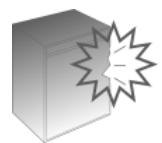
N'UTILISEZ PAS D'APPAREILS ENDOMMAGÉS PENDANT LE TRANSPORT ! EN CAS DE DOUTE, CONSULTEZ VOTRE REVENDEUR.

L'APPAREIL DOIT ÊTRE INSTALLÉ ET RACCORDÉ CONFORMÉMENT AUX INSTRUCTIONS FOURNIES PAR LE FABRICANT OU PAR UN TECHNICIEN QUALIFIÉ.
L'APPAREIL EST DESTINÉ À UN USAGE PAR DES ADULTES. NE LAISSEZ PAS LES ENFANTS S'APPROCHER OU JOUER AVEC LE LAVE-VAISSELLE. TENEZ LES ENFANTS ÉLOIGNÉS DES DÉTERGENTS ET DE LA PORTE OUVERTE DU LAVE-VAISSELLE. LES MATÉRIAUX D'EMBALLAGE (SACS EN PLASTIQUE, POLYSTYRÈNE, BARRES MÉTALLIQUES, ETC.) NE DOIVENT PAS ÊTRE LAISSÉS À LA PORTÉE DES ENFANTS.
TENEZ LES ENFANTS ÉLOIGNÉS DU LAVE-VAISSELLE OUVERT. L'APPAREIL PEUT CONTENIR DES RÉSIDUS DE DÉTERGENT QUI PEUVENT CAUSER DES DOMMAGES IRRÉVERSIBLES AUX YEUX, À LA BOUCHE ET À LA GORGE, AINSI QU'UNE MORT POSSIBLE PAR SUFFOCATION.
N'INTRODUISEZ PAS DE SOLVANTS TELS QUE L'ALCOOL OU LA TÉRÉBENTHINE QUI POURRAIENT PROVOQUER UNE EXPLOSION.
NE PAS CHARGER DE LA VAISSELLE SOUILLÉE DE CENDRES, DE CIRE OU DE PEINTURE.
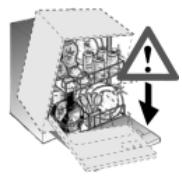
S'APPUYER OU S'ASSEOIR SUR LA PORTE DU LAVE-VAISSELLE LORSQU'ELLE EST OUVERTE PEUT PROVOQUER LE RENVERSEMENT DE L'APPAREIL, METTANT AINSI DES PERSONNES EN DANGER.
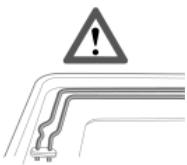
NE TOUCHEZ EN AUCUN CAS L'ÉLÉMENT CHAUFFANT IMMÉDIATEMENT APRÈS LA FIN D'UN PROGRAMME DE LAVAGE.
AVEC LE TEMPS, LES ÉLÉMENTS CHAUFFANTS DU LAVE-VAISSELLE PEUVENT CHANGER DE COULEUR, EN PARTIE OU EN TOTALITÉ. C'EST PARFAITEMENT NORMAL ET CELA N'AFFECTE EN RIEN LE FONCTIONNEMENT DE L'APPAREIL.

NE BUVEZ PAS LES RÉSIDUS D'EAU QUI PEUVENT ÊTRE PRÉSENTS À L'INTÉRIEUR DE LA VAISSELLE OU DU LAVE-VAISSELLE À LA FIN DU PROGRAMME DE LAVAGE ET AVANT LE CYCLE DE SÉCHAGE.
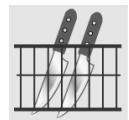
LES COUTEAUX OU AUTRES USTENSILES DE CUISINE À BOUT POINTU DOIVENT ÊTRE PLACÉS DANS LE PANIER À COUVERTS, LAME VERS LE BAS, OU POSÉS HORIZONTALEMENT DANS LE PANIER SUPÉRIEUR. FAITES ATTENTION À NE PAS VOUS COUPER ET ASSUREZ-VOUS QU'ILS NE DÉPASSENT PAS DU PANIER.
MODÈLES AVEC AQUASTOP
LE DISPOSITIF AQUASTOP PRÉVIENT LES INONDATIONS EN CAS DE FUITE D'EAU. LORSQUE LE DISPOSITIF AQUASTOP EST DÉCLENCHÉ, FAITES APPEL À UN TECHNICIEN QUALIFIÉ POUR IDENTIFIER ET RÉPARER LA PANNE.
SUR LES MODÈLES ÉQUIPÉS DU DISPOSITIF AQUASTOP, IL Y A UNE ÉLECTROVANNE À L'INTÉRIEUR DU TUYAU D'ARRIVÉE D'EAU. NE COUPEZ PAS LE TUYAU ET NE LAISSEZ PAS L'ÉLECTROVANNE TOMBER DANS L'EAU. EN CAS DE DOMMAGE AU TUYAU D'ARRIVÉE D'EAU, DÉBRANCHEZ L'APPAREIL DE L'ALIMENTATION ÉLECTRIQUE ET DE L'ALIMENTATION EN EAU.

IMMÉDIATEMENT APRÈS L'INSTALLATION DU LAVE-VAISSELLE, EFFECTUEZ UN TEST RAPIDE DE L'APPAREIL EN SUIVANT LES INSTRUCTIONS CI-DESSOUS. SI LE LAVE-VAISSELLE NE FONCTIONNE PAS CORRECTEMENT, DÉBRANCHEZ-LE DE L'ALIMENTATION ÉLECTRIQUE ET APPELEZ LE CENTRE DE SERVICE TECHNIQUE LE PLUS PROCHE.
NE TENTEZ PAS DE RÉPARER L'APPAREIL.

LE LAVE-VAISSELLE RÉPOND À TOUTES LES EXIGENCES ÉNONCÉES PAR LES RÈGLEMENTS EN VIGUEUR CONCERNANT LA SÉCURITÉ ET LES ÉQUIPEMENTS ÉLECTRIQUES. TOUT CONTRÔLE TECHNIQUE DOIT ÊTRE EFFECTUÉ EXCLUSIVEMENT PAR UN TECHNICIEN FORMÉ ET AGRÉÉ : LES RÉPARATIONS EFFECTUÉES PAR DES PERSONNES NON AUTORISÉES INVALIDERONT LA GARANTIE ET PRÉSENTERONT UN DANGER POTENTIEL POUR L'UTILISATEUR.
Le fabricant décline toute responsabilité pour les dommages aux personnes ou aux biens résultant du non-respect des précautions ci-dessus, de la modification d'un seul composant de l'appareil, ou de l'utilisation de pièces de rechange non d'origine.
2. Installation et raccordement
Retirez les supports en polystyrène du panier.
Placez l'appareil à l'endroit souhaité pour l'installation. L'arrière ou les côtés du lave-vaisselle peuvent être placés contre des murs ou d'autres éléments de mobilier.
Si le lave-vaisselle est installé près d'une source de chaleur, installez le panneau isolant spécial pour éviter la surchauffe et le dysfonctionnement de l'appareil.
Pour garantir la stabilité, installez les lave-vaisselles encastrables ou sous plan uniquement sous des plans de travail continus, et vissez-les aux meubles adjacents.
Pour faciliter l'installation, les tuyaux d'arrivée et de vidange peuvent être orientés dans n'importe quelle direction ; assurez-vous qu'ils ne sont pas pliés, écrasés ou trop tendus. Un trou d'au moins 8 cm de diamètre est nécessaire pour faire passer le câble d'alimentation et les tuyaux.
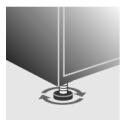
Mettez l'appareil de niveau sur le sol à l'aide de ses pieds réglables. Cette opération est essentielle pour garantir le bon fonctionnement du lave-vaisselle.

Certains modèles sont équipés d'un seul pied réglable à l'arrière, qui peut être ajusté en tournant la vis située sur la partie inférieure avant de l'appareil.
2.1 Raccordement à l'arrivée d'eau

Prévention du risque de colmatage ou de dommages : si le tuyau d'eau est neuf ou n'a pas été utilisé depuis longtemps, avant de le raccorder à l'arrivée d'eau, vérifiez que l'eau est claire et exempte d'impuretés, afin d'éviter d'endommager l'appareil.
Le lave-vaisselle doit toujours être raccordé au réseau d'eau avec des tuyaux neufs ; ne réutilisez jamais de vieux tuyaux ou des tuyaux déjà utilisés.
RACCORDEMENT À L'ARRIVÉE D'EAU
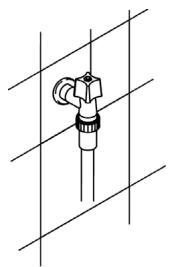
Raccordez le tuyau d'arrivée à une alimentation en eau froide avec un filetage gaz de 3/4, en insérant le filtre A fourni avec le lave-vaisselle.
Vissez fermement le tuyau à la main, puis terminez en serrant d'environ 1/4 de tour avec une pince. Sur les lave-vaisselles équipés du dispositif ACQUASTOP, le filtre est déjà installé à l'intérieur de la bague filetée.
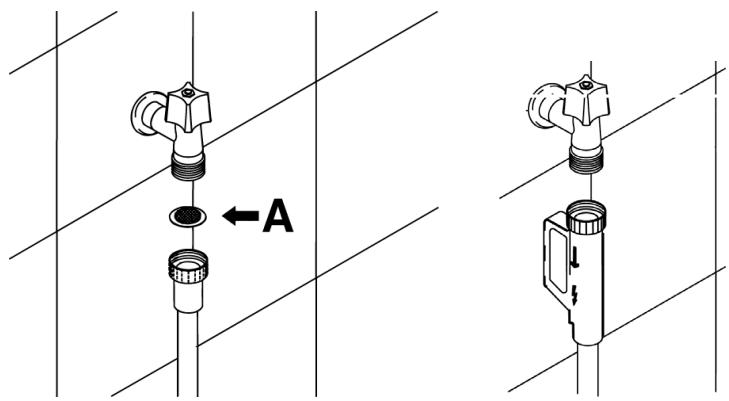
Le lave-vaisselle peut également être raccordé à une alimentation en eau chaude ne dépassant pas 60 °C. L'alimentation de l'appareil en eau chaude réduit le temps de lavage d'environ 20 minutes, mais diminue légèrement son efficacité. Effectuez le raccordement à l'alimentation en eau chaude domestique en suivant la même procédure que pour le raccordement à l'eau froide.
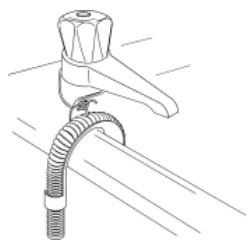
RACCORDEMENT À L'ÉVACUATION
Insérez le tuyau d'évacuation du lave-vaisselle dans un tuyau d'évacuation d'un diamètre d'au moins 4 cm, ou placez-le dans l'évier de la cuisine à l'aide du support en plastique fourni, en veillant à ne pas écraser ou plier excessivement le tuyau. Il est important d'empêcher le tuyau de se détacher et de tomber. À cette fin, le support en plastique est muni d'un trou pour l'attacher au mur ou au robinet d'eau.
L'extrémité libre doit être positionnée à une hauteur comprise entre 30 et 100 cm, et ne doit jamais être immergée dans l'eau.
Si un tuyau de vidange horizontal est utilisé (pour un maximum de 3 m), le tuyau de vidange peut être placé à une hauteur maximale de 85 cm du sol.

2.2 Connexion électrique
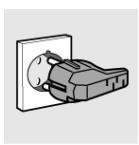
Branchez le cordon d'alimentation dans une prise électrique appropriée, conformément aux instructions du chapitre « 1. Consignes de sécurité et d'utilisation ».
3. Description des commandes
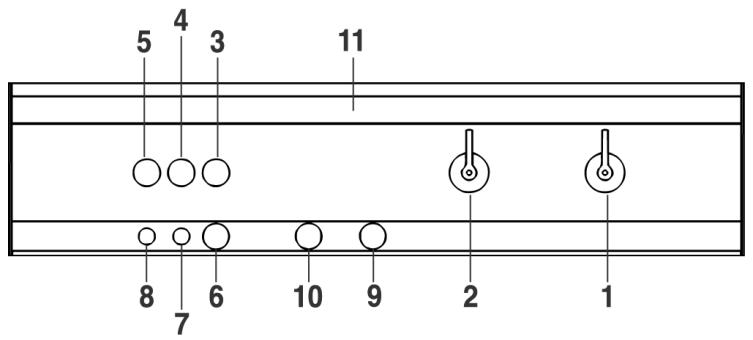
3.1 Panneau avant
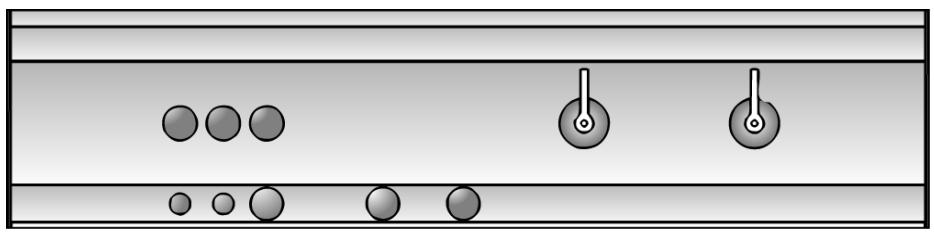
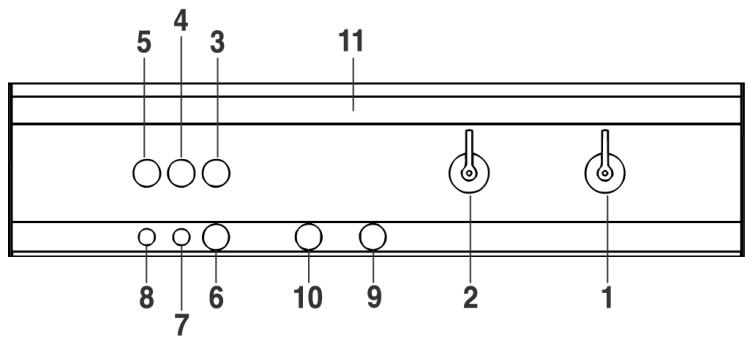
Toutes les commandes et tous les indicateurs du lave-vaisselle sont situés sur le panneau avant.
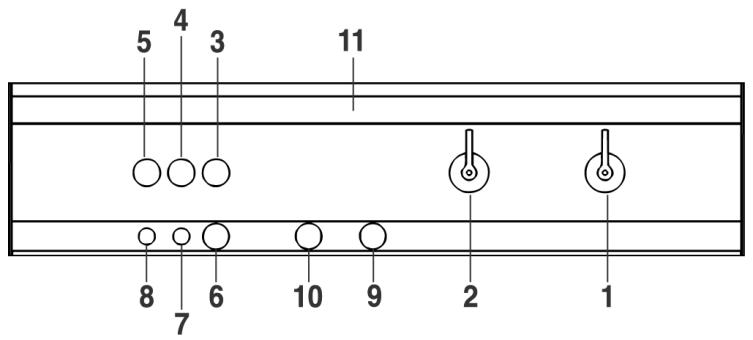
1 SÉLECTEUR DE PROGRAMME DE LAVAGE 2 SÉLECTEUR MARCHE/ARRÊT ET DÉPART DIFFÉRÉ 3 BOUTON DÉMARRAGE/ARRÊT 4 BOUTON DEMI-CHARGE 5 BOUTON CYCLE DE SÉCHAGE ÉCO (certains modèles uniquement) 6 AFFICHEUR D'INFORMATIONS 7 VOYANT DEMI-CHARGE 8 VOYANT CYCLE DE SÉCHAGE ÉCO (certains modèles uniquement) 9 VOYANT D'ALERTE SEL 10 VOYANT D'ALERTE LIQUIDE DE RINÇAGE 11 POIGNÉE DE PORTE ENCASTRÉE
3.2 Afficheur d'informations
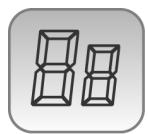
Le lave-vaisselle est équipé d'un AFFICHEUR pratique qui fournit des informations sur les fonctions programmées du lave-vaisselle.
RÉGLAGE DU PROGRAMME DE LAVAGE
Pour sélectionner le programme de lavage le plus adapté, reportez-vous au tableau ci-dessous qui indique le lavage recommandé en fonction du type de vaisselle et du degré de salissure.
Une fois le programme de lavage le plus adapté sélectionné à l'aide du tableau fourni, tournez le SÉLECTEUR DE PROGRAMME DE LAVAGE (1) pour régler le programme souhaité, en l'alignant sur le symbole ou le numéro d'identification.
| PROGRAM | PROGRAM SELECTION | ECO DRYING (OPTIONAL) | INFORMATION DISPLAY | DISHE TYPE AND DEGREE OF SOILING | QUANTITY DETERGENT | PROGRAM SEQUENCE | DURATION | CONSUMPTION | |||||
| PRE-WASH | WASH | COLD RINSE | HOT RINSE | DRYING | MINUTES (2) | WATER LITRES (1) | POWER Kwh (2) | ||||||
| SUPER | ECO | P8 | HEAVILY SOILED DISHES, POTS AND PANS WITH DRIED-ON RESIDUE | 10 - 25 | HOT | 70°C | 2 | YES | YES | 135' | 17 | 1,45 | |
| ECO | ECO | ECO | P7 | NORMALLY SOILED DISHES, POTS AND PANS WITH DRIED-ON RESIDUE | 30 | - | 55°C | 1 | YES | YES | 118' | 11 | 1,15 |
| (*) BIO EN 50242 (3) | BIO | ECO | P6 | SLIGHTLY SOILED DISHES, POTS AND PANS WITH DRIED-ON RESIDUE | 30 | COLD | 55°C | 1 | YES | YES | 160' (3) | 14 | 1,05 (3) |
| EVERYDAY | ECO | P5 | NORMALLY SOILED DISHES, POTS AND PANS WITHOUT DRIED-ON RESIDUE | 30 | - | 65°C | 1 | YES | YES | 100' | 11 | 1,20 | |
| NORMAL | ECO | P4 | NORMALLY SOILED DISHES, POTS AND PANS | 30 | COLD | 65°C | 1 | YES | YES | 104' | 14 | 1,25 | |
| QUICK (4) | - | P3 | SLIGHTLY SOILED DELICATE DISHES | 25 | - | 38°C | 1 | 1 | NO | 32' | 10 | 0,4 | |
| DELICATE | ECO | P2 | SLIGHTLY SOILED DISHES | 25 | - | 45°C | 1 | YES | YES | 78' | 10 | 0,9 | |
| SOAK (4) | - | P1 | DISHES, POTS AND PANS AWATING COMPLETION OF THE LOAD | - | COLD | - | 1 | - | NO | 18' | 4 | - | |
Ne lancez le programme de trempage qu'avec des demi-charges.
L'option DEMI-CHARGE (4) est disponible pour tous les programmes sauf le programme de trempage.
(*) Programme de référence selon la norme EN 50242. (-) Non présent. (1) Consommation électrique moyenne avec l'adoucisseur réglé sur le niveau 2. (2) La durée du cycle et la consommation électrique peuvent varier en fonction des températures de l'eau et de la pièce, ainsi que du type et de la quantité de vaisselle. (3) Avec la fonction SÉCHAGE ÉCO sélectionnée. (4) Pour ces programmes, la fonction SÉCHAGE ÉCO n'a aucun effet.
Dans les programmes contenant le symbole , l'option de cycle de séchage éco est disponible. Cette option active le système de ventilation qui permet de sécher la vaisselle à des températures plus basses (économie d'énergie). Avec cette option active, les durées des programmes sont plus longues (environ 50 minutes pour le programme BIO P6 ; environ 20 minutes pour tous les autres cycles).

Le cycle de lavage ne se déroulera pas si la porte du lave-vaisselle est laissée ouverte ou n'est pas correctement fermée.
MISE SOUS TENSION
Pour mettre l'appareil sous tension, tournez simplement le sélecteur MARCHE/ARRÊT (2) jusqu'à ce qu'il corresponde à la lettre I.
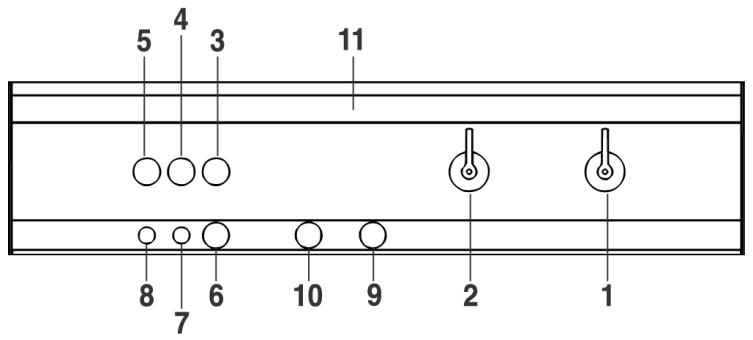
TABLEAU POUR LES ORGANISMES DE CERTIFICATION
| Reference standard | EN 50242 |
| Reference program | (*) Selector on P6 + ECO DRYING |
| Load | 14 place-settings |
| Type of detergent | B |
| Amount of detergent | 35 g |
| Rinse aid setting | Depending on the model 3/4 or 4/6 |
EN 50242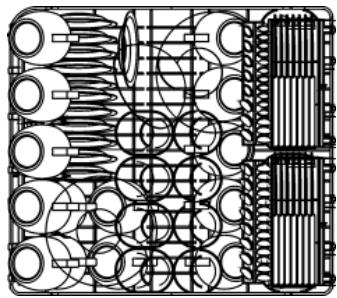
DÉSACTIVATION DU DISPOSITIF ACOUSTIQUE DE FIN DE CYCLE
Il est possible de désactiver la sonnerie du dispositif acoustique de début/fin de cycle.
Procédez comme suit :
- maintenez enfoncé le bouton DEMI-CHARGE (4) pendant quelques secondes jusqu'à ce que le symbole bS apparaisse sur l'AFFICHEUR D'INFORMATIONS (6) ;
- appuyez à nouveau sur le bouton DEMI-CHARGE (4) pour désactiver le dispositif acoustique (le symbole bN apparaît sur l'afficheur) ;
- appuyez deux fois sur le bouton DÉMARRAGE/ARRÊT (3) pour quitter le mode de configuration.
Pour réactiver le dispositif acoustique, répétez la procédure suivante :
- maintenez enfoncé le bouton DEMI-CHARGE (4) pendant quelques secondes jusqu'à ce que le symbole bN apparaisse sur l'AFFICHEUR D'INFORMATIONS (6) ;
- Appuyez à nouveau sur la touche DEMI-CHARGE (4) pour activer le dispositif acoustique (le symbole bS apparaît).
- Appuyez deux fois sur la touche MARCHE/ARRÊT (3) pour quitter le mode de réglage.
3.3 Programmes de lavage
Le lave-vaisselle est équipé d'un panneau de commande et d'un AFFICHEUR, décrits dans le chapitre "3. Description des commandes", à partir desquels il est possible d'effectuer toutes les opérations de mise sous tension, d'arrêt et de programmation.

Avant de démarrer un programme de lavage, assurez-vous que :
Le robinet d'arrivée d'eau est ouvert. La quantité correcte de détergent a été ajoutée dans le distributeur. Les paniers ont été correctement chargés. Les bras d'aspersion peuvent tourner librement et sans obstruction. La porte du lave-vaisselle est bien fermée.
FONCTION DEMI-CHARGE
Cette fonction est recommandée pour des charges allant jusqu'à 7 couverts, et réduit la consommation d'eau et d'électricité. Elle peut être sélectionnée à l'aide de la touche DEMI-CHARGE (4) et il existe trois options différentes :
1) Appuyer une fois sur la touche sélectionne le panier supérieur ; 2) appuyer une deuxième fois sur la touche sélectionne le panier inférieur ; 3) appuyer une troisième fois sur la touche revient à la fonction pleine charge.
Après avoir sélectionné le programme de lavage souhaité de la manière habituelle, choisissez l'une des trois options de chargement ci-dessus : sur l'AFFICHEUR (6), le voyant correspondant au panier sélectionné s'allume pendant 5 secondes, après quoi l'AFFICHEUR (6) revient à l'affichage du programme sélectionné. Pour vérifier à nouveau le panier actuellement sélectionné, appuyez simplement une fois sur la touche DEMI-CHARGE (4) avant de démarrer le programme.

Il est possible de placer un panier à couverts à l'intérieur du panier sélectionné pour le programme DEMI-CHARGE ; l'autre panier doit rester vide.
AVERTISSEMENT : ne chargez pas de vaisselle et de couverts dans le panier non sélectionné, car le jet d'eau n'atteindra que le panier sélectionné.
ANNULATION DU PROGRAMME EN COURS
Pour annuler le programme sélectionné, appuyez sur la touche MARCHE/ARRÊT (3) pendant quelques secondes, jusqu'à ce que le programme actif apparaisse sur l'AFFICHEUR (6). À ce stade, pour arrêter le programme en cours, appuyez simultanément sur la touche DEMI-CHARGE (4) et sur la touche MARCHE/ARRÊT (3). L'AFFICHEUR (6) affichera la lettre P suivie d'un tiret (P-) et le lave-vaisselle passera automatiquement à la fin du cycle.
CHANGEMENT DE PROGRAMME
Pour changer le programme, maintenez enfoncé le bouton START/STOP (3) pendant quelques secondes, puis sélectionnez le nouveau programme comme décrit précédemment dans les instructions ; appuyez à nouveau sur le bouton START/STOP (3) en le maintenant enfoncé pendant quelques secondes.
DÉPART DIFFÉRÉ
Le démarrage du programme peut être retardé de 1, 2, 4, 6, 8 ou 12 heures. Ainsi, il est possible de faire fonctionner le lave-vaisselle au moment le plus opportun.
Tournez le sélecteur DÉPART DIFFÉRÉ (2) jusqu'à ce qu'il soit aligné avec le nombre d'heures de retard souhaité avant le démarrage du programme.
Cette information apparaît automatiquement sur l'AFFICHEUR D'INFORMATIONS (6) également. Ensuite, procédez à la sélection du programme de la manière décrite précédemment : le lave-vaisselle effectuera immédiatement un cycle de prélavage, puis lancera automatiquement le compte à rebours du départ différé programmé ; l'AFFICHEUR D'INFORMATIONS (6) affichera le temps restant avant le démarrage du programme.

POUR ÉCONOMISER L'ÉNERGIE ! ... ET PROTÉGER L'ENVIRONNEMENT
Essayez toujours de faire fonctionner le lave-vaisselle avec une charge complète. - Ne lavez pas la vaisselle à l'eau courante. - Utilisez le programme de lavage le plus adapté à chaque type de charge. N'effectuez aucun prélavage. Si possible, raccordez le lave-vaisselle à une alimentation en eau chaude jusqu'à 60°C. - Si possible, désactivez le cycle de séchage et laissez la porte ouverte à la fin du cycle de lavage : l'air résiduel et la chaleur sécheront parfaitement la vaisselle.
POUR RÉDUIRE LA CONSOMMATION DE DÉTERGENT ! ... ET PROTÉGER L'ENVIRONNEMENT
Les phosphates contenus dans les détergents pour lave-vaisselle sont nocifs pour l'environnement. Pour éviter d'utiliser des quantités excessives de détergent et économiser l'électricité, observez les consignes suivantes :
- séparez les articles plus délicats des plats plus résistants aux détergents agressifs et aux températures élevées ;
- ne versez pas le détergent directement sur la vaisselle.
MISE EN MARCHE DU LAVE-VAISSELLE
Après avoir correctement effectué toutes les opérations précédentes, pour démarrer le lave-vaisselle, appuyez simplement sur le bouton START/STOP (3) pendant quelques secondes, jusqu'à ce que le signal sonore du cycle de démarrage retentisse. L'AFFICHEUR D'INFORMATIONS (6) affichera la durée du programme en minutes. La durée n'est qu'approximative, car elle dépend des conditions de lavage (quantité de vaisselle, température de l'eau, etc.) et est également mise à jour en continu au fur et à mesure du déroulement du programme de lavage.

L'AFFICHEUR D'INFORMATIONS (6) affiche la durée estimée du programme de lavage ; si elle dépasse 60 minutes, les heures et les minutes sont affichées en alternance.

S'il est nécessaire d'ouvrir la porte du lave-vaisselle pendant le cycle de lavage, il y aura un délai d'une minute avant que le programme puisse reprendre. Après avoir correctement fermé la porte, appuyez à nouveau sur le bouton START/STOP (3).
Cette opération peut affecter négativement le déroulement du cycle de lavage.
FIN DU CYCLE
La fin du cycle de lavage est signalée par une brève sonnerie et par le clignotement du programme sélectionné sur l'AFFICHEUR (6).
Avant de lancer un nouveau programme de lavage, il faut d'abord ouvrir la porte, puis la refermer, ou appuyer sur le bouton MARCHE/ARRÊT (3) pour "réinitialiser" l'afficheur et arrêter le clignotement.
RETRAIT DE LA VAISSELLE
À la fin du programme de lavage, attendez au moins 20 minutes avant de retirer la vaisselle, afin de la laisser refroidir. Pour éviter que des gouttes d'eau du panier supérieur ne tombent sur la vaisselle du panier inférieur, il est conseillé de vider d'abord le panier inférieur, puis le panier supérieur.
4. Instructions d'utilisation
Une fois le lave-vaisselle correctement installé, préparez-le à l'utilisation comme suit :
- Réglez le système d'adoucissement de l'eau ;
- Ajoutez le sel régénérant ;
- Ajoutez le produit de rinçage et la lessive.

4.1 Utilisation du système d'adoucissement de l'eau
La quantité de calcaire contenue dans l'eau (indice de dureté de l'eau) peut provoquer des taches blanchâtres sur la vaisselle sèche, qui ont tendance à devenir ternes avec le temps. Le lave-vaisselle est équipé d'un système d'adoucissement automatique qui utilise un sel régénérant spécial pour réduire la dureté de l'eau.
Le lave-vaisselle est réglé en usine pour un niveau de dureté de l'eau de 3 (dureté moyenne 41 - 60°dF - 24 - 31°dH).
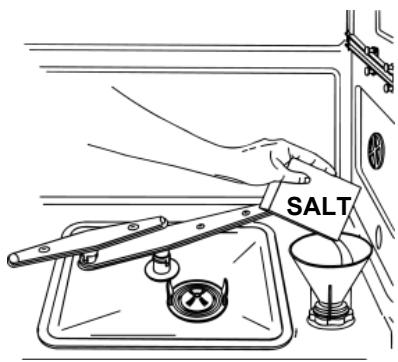
Lorsque vous utilisez une eau de dureté moyenne, le réservoir de sel régénérant doit être rempli après environ 20 cycles de lavage. Le réservoir de sel peut contenir environ 1.7Kg de sel en grains. Certains modèles sont équipés d'un indicateur optique de manque de sel. Sur ces modèles, le bouchon du réservoir de sel contient un flotteur vert qui descend à mesure que la concentration de sel dans l'eau diminue. Lorsque le flotteur vert n'est plus visible à travers le bouchon transparent, le réservoir doit être rempli de sel régénérant. Le réservoir est situé au fond du lave-vaisselle. Après avoir retiré le panier inférieur, dévissez le bouchon du réservoir de sel en le tournant dans le sens inverse des aiguilles d'une montre et versez le sel à l'aide de l'entonnoir fourni avec le lave-vaisselle. Avant de remettre le bouchon, retirez tout résidu de sel autour de l'ouverture.

- Lors de la première utilisation du lave-vaisselle, en plus du sel, il est également nécessaire d'ajouter un litre d'eau dans le réservoir. Chaque fois que le réservoir de sel est rempli, assurez-vous que le bouchon est bien fermé. Le mélange d'eau et de détergent ne doit jamais pénétrer dans le réservoir de sel, car cela compromettrait le fonctionnement du système de régénération. En cas de survenance de ce problème, la garantie sera invalidée.
- Utilisez uniquement du sel régénérant spécialement formulé pour les lave-vaisselle domestiques. Si vous utilisez des pastilles de sel, ne remplissez pas complètement le réservoir.
- N'utilisez pas de sel de table car il contient des substances insolubles qui, avec le temps, peuvent endommager le système d'adoucissement de l'eau.
- Si nécessaire, remplissez le réservoir de sel régénérant avant de démarrer le programme de lavage. Ainsi, l'excès de solution saline sera immédiatement éliminé par l'eau ; la présence prolongée d'eau salée à l'intérieur du réservoir peut entraîner de la corrosion.

Veillez à ne pas confondre les emballages de sel et de détergent ; l'ajout de détergent dans le réservoir de sel endommagerait le système d'adoucissement de l'eau.
RÉGLAGE DU SYSTÈME D'ADOUCISSEMENT DE L'EAU
Le lave-vaisselle est équipé d'un dispositif électronique permettant de régler le niveau d'adoucissement de l'eau en fonction de sa dureté. Pour régler le niveau d'adoucissement, procédez comme suit :
- Appuyez sur le bouton DEMI-CHARGE (4) pendant quelques secondes jusqu'à ce que le symbole bS apparaisse sur l'AFFICHEUR D'INFORMATIONS (6).
- Appuyez sur le bouton DÉMARRAGE/ARRÊT (3) pour accéder aux réglages de l'adoucissement de l'eau (le réglage actuel apparaît sur l'afficheur d'informations).
- Appuyez à nouveau sur le bouton DEMI-CHARGE (4) pour sélectionner le niveau de dureté souhaité (h1, h2... h5). Choisissez la valeur en vous référant au "Tableau de dureté de l'eau".
- Appuyez sur le bouton DÉMARRAGE/ARRÊT (3) pour quitter le mode de configuration.
TABLEAU DE DURETÉ DE L'EAU
| WATER HARDNESS | SETTING | |
| German Degrees (°dH) | French Degrees (°dF) | |
| 0 - 4 | 0 - 7 | .h 0 |
| 5 - 9 | 8 - 15 | .h 1 |
| 10 - 17 | 16 - 30 | .h 2 |
| 18 - 26 | 31 - 45 | .h 3 |
| 27 - 35 | 46 - 60 | .h 4 |
| 36 - 47 | 61 - 80 | .h 5 |
Contactez votre service des eaux local pour obtenir des informations sur la dureté de votre eau.
4.2 Utilisation des distributeurs de produit de rinçage et de détergent
Les distributeurs de détergent et de produit de rinçage sont situés sur la partie intérieure de la porte : le distributeur de détergent est à gauche, et le distributeur de produit de rinçage est à droite.
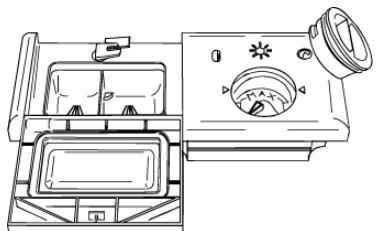

À l'exception du programme SOAK, il est nécessaire d'ajouter la quantité requise de détergent dans le distributeur de détergent avant chaque cycle de lavage. Le produit de rinçage, quant à lui, ne doit être ajouté que selon les besoins.

AJOUT DU PRODUIT DE RINÇAGE
Le produit de rinçage aide à sécher la vaisselle plus rapidement et prévient la formation de dépôts de calcaire et de taches ; il est ajouté automatiquement à l'eau pendant le cycle de rinçage final, à partir du réservoir situé sur le côté intérieur de la porte.
- Ouvrez la porte.
- Tournez le bouchon du réservoir d'un quart de tour dans le sens inverse des aiguilles d'une montre et retirez-le.
- Ajoutez le produit de rinçage jusqu'à ce que le réservoir soit plein (environ 140 cc). L'indicateur de niveau optique sur le côté du bouchon doit être complètement obscurci. Remplissez à nouveau le produit de rinçage lorsque l'indicateur de niveau optique redevient clair, ou lorsque le voyant de produit de rinçage s'allume.
- Replacez le couvercle et tournez-le dans le sens des aiguilles d'une montre.
- Utilisez un chiffon pour éliminer tout débordement de produit de rinçage qui pourrait entraîner la formation de mousse excessive.
RÉGLAGE DU DISTRIBUTEUR DE PRODUIT DE RINÇAGE
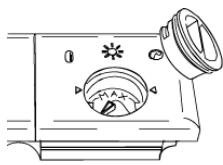
Le lave-vaisselle est réglé en usine pour une dureté d'eau moyenne. Cependant, il est possible de modifier le réglage en tournant le sélecteur du distributeur à la position souhaitée : la quantité de produit de rinçage distribuée est proportionnelle à la position du sélecteur.
Le réglage doit être augmenté lorsque la vaisselle lavée semble terne ou présente des taches circulaires.
- Pour ajuster le réglage du produit de rinçage, tournez le bouchon du distributeur d'un quart de tour dans le sens inverse des aiguilles d'une montre et retirez-le.
- Utilisez ensuite un tournevis pour faire tourner le sélecteur de produit de rinçage à la position souhaitée.
- Replacez le bouchon en le tournant dans le sens des aiguilles d'une montre.

- La quantité de produit de rinçage doit être augmentée si la vaisselle lavée semble terne ou présente des taches circulaires.
- Si, en revanche, les plats sont collants ou présentent des traces blanches, il est nécessaire de réduire le réglage du produit de rinçage.
AJOUT DU DÉTERGENT
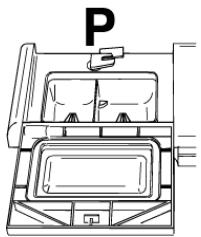
Pour ouvrir le couvercle du distributeur de détergent, appuyez légèrement sur le bouton P. Ajoutez le détergent et refermez soigneusement le couvercle.
Pendant le cycle de lavage, le distributeur s'ouvrira automatiquement.
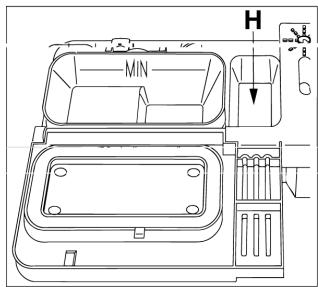


- Lorsqu'un programme SUPER est sélectionné, en plus de la dose normale de détergent, il est nécessaire d'ajouter une quantité supplémentaire dans le compartiment G ou H.
- Utilisez uniquement des détergents spécialement formulés pour les lave-vaisselle. Pour des résultats de lavage optimaux, il est important d'utiliser un détergent de bonne qualité.
- Les emballages de détergent doivent être scellés et stockés dans un endroit sec pour éviter la formation de grumeaux qui pourraient nuire aux résultats de lavage. Une fois ouverts, les emballages de détergent ne doivent pas être conservés trop longtemps, sinon le détergent perd de son efficacité.
- N'utilisez pas de détergents formulés pour le lavage de la vaisselle à la main, car ils produisent beaucoup de mousse et peuvent nuire au fonctionnement du lave-vaisselle.
- Ajoutez la bonne quantité de détergent. Une quantité insuffisante de détergent entraînera une élimination partielle de la saleté des plats, tandis qu'une quantité excessive est un gaspillage et n'améliore pas les résultats de lavage.
- Le marché propose des détergents liquides et en poudre avec des compositions chimiques différentes, qui peuvent contenir des phosphates, ou être sans phosphates mais contenir des enzymes naturelles.
- Les détergents contenant des phosphates sont plus efficaces contre la graisse et l'amidon à des températures supérieures à 60 °C.
- Les détergents enzymatiques, en revanche, sont également efficaces à des températures plus basses (de 40 à 55 °C) et sont plus facilement biodégradables. Avec les détergents enzymatiques, il est possible d'obtenir à basse température des résultats comparables à ceux qui ne peuvent être obtenus qu'à 65 °C avec les détergents traditionnels.
Pour la sauvegarde de l'environnement, nous recommandons l'utilisation de détergents sans phosphates et sans chlore.
- Il existe également des détergents en pastilles qui indiquent qu'aucun sel ni produit de rinçage n'est nécessaire. Dans certains cas, ces détergents peuvent ne pas donner de bons résultats, surtout avec des cycles de lavage courts et/ou à basse température.
Si des problèmes de performance (par exemple, un dépôt blanc sur la cuve ou la vaisselle, un séchage médiocre, de la saleté sur la vaisselle en fin de lavage) sont constatés, il est conseillé aux utilisateurs de revenir aux produits conventionnels (sel granulé, détergent en poudre et produit de rinçage liquide).
Cependant, veuillez noter qu'en revenant à l'utilisation de sel conventionnel, plusieurs cycles seront nécessaires avant que le système ne redevienne pleinement efficace, donc des traces de dépôt blanc peuvent encore être trouvées sur la cuve et la vaisselle. Si le problème persiste trop longtemps, contactez le service après-vente.
- Lors de l'utilisation de détergent sous forme de pastilles (gardez à l'esprit que nous recommandons l'utilisation de trois produits séparés : détergent, sel et produit de rinçage), placez les pastilles dans le panier à couverts. Le distributeur est conçu pour utiliser du détergent en poudre ou liquide et la porte ne s'ouvre pas complètement pendant le cycle de lavage. Cela signifie qu'une pastille n'est pas complètement dissoute (libérée), ce qui peut entraîner ce qui suit :
- pas assez de détergent libéré pendant le cycle, avec de mauvais résultats de lavage ;
- le détergent forme un bloc solide dans le distributeur et est libéré pendant le cycle de rinçage final.

L'introduction de détergent dans le distributeur de produit de rinçage, même sous forme liquide, endommagera le lave-vaisselle.
4.3 Avertissements et recommandations générales

Avant d'utiliser le lave-vaisselle pour la première fois, il est conseillé de lire les recommandations suivantes concernant les types de vaisselle à laver et leur chargement.
Il n'y a généralement aucune contrainte pour le lavage de la vaisselle domestique, mais dans certains cas, il est nécessaire de prendre en compte leurs caractéristiques.
Avant de charger la vaisselle dans les paniers, il est nécessaire de :
- retirer les gros restes d'aliments : par exemple, les os, les arêtes de poisson, etc., qui peuvent obstruer le filtre ou endommager la pompe de lavage.
- faire tremper les casseroles ou poêles avec des restes d'aliments brûlés au fond pour faciliter leur retrait, puis les charger dans le PANIER INFÉRIEUR.
Si vous ne lavez qu'une petite quantité de vaisselle, utilisez l'option "demi-charge" pour économiser de l'énergie et de l'eau. N'oubliez pas de ne charger que le panier sélectionné pour le programme demi-charge : l'autre panier doit rester vide.
Il n'est pas nécessaire de prélave la vaisselle à l'eau courante avant de la charger dans les paniers, car cela ne fait que gaspiller de l'eau.
Un chargement correct de la vaisselle contribue à garantir des résultats de lavage optimaux.
AVERTISSEMENT !
- Assurez-vous que la vaisselle est bien en place afin qu'elle ne puisse pas basculer ou obstruer la rotation des bras d'aspersion pendant le cycle de lavage.
- Ne placez pas de très petits objets dans les paniers, car ils pourraient tomber et obstruer les bras d'aspersion ou la pompe de lavage.
- Les récipients tels que les tasses, bols, verres et casseroles doivent toujours être chargés avec l'ouverture vers le bas et avec les cavités en angle, pour permettre à l'eau de s'écouler.
- Ne superposez pas la vaisselle et ne la placez pas de manière à ce qu'elle se recouvre mutuellement.
- Ne placez pas les verres trop près les uns des autres, car ils pourraient se heurter et se casser, ou il pourrait y avoir des taches aux points de contact.
ASSUREZ-VOUS que les articles à laver sont compatibles avec le lave-vaisselle.
Éléments non compatibles avec le lave-vaisselle :
Vaisselle en bois, casseroles ou poêles : elles peuvent être endommagées par les températures de lavage élevées. - Articles faits main : ils conviennent rarement au lavage en lave-vaisselle. Les températures d'eau relativement élevées et les détergents utilisés peuvent les endommager. - Vaisselle en plastique : la vaisselle en plastique résistant à la chaleur doit être lavée dans le panier supérieur. - Vaisselle et objets en cuivre, étain, zinc ou laiton : ils ont tendance à se tacher. Vaisselle en aluminium : les articles en aluminium anodisé peuvent perdre leur couleur. Argenterie : les articles en argent peuvent se tacher. - Verre et cristal : en général, les objets en verre et en cristal peuvent être lavés au lave-vaisselle. Cependant, certains types de verre et de cristal peuvent devenir ternes et perdre leur éclat après de nombreux lavages. Par conséquent, pour ces articles, nous recommandons d'utiliser le programme le moins agressif disponible. - Articles décorés : les objets décorés disponibles sur le marché résistent généralement au lavage en lave-vaisselle, bien que les couleurs puissent s'estomper après de nombreux lavages. En cas de doute sur la solidité des couleurs, il est conseillé de laver seulement quelques articles à la fois pendant environ un mois.
4.4 Utilisation des paniers
Le lave-vaisselle a une capacité de 14 couverts, y compris les plats de service.
PANIER INFÉRIEUR
Le panier inférieur reçoit toute la force du bras d'aspersion inférieur et doit donc être utilisé pour les articles les plus "résistants" avec un degré de salissure plus élevé. Tous les types et combinaisons de chargement sont autorisés, à condition que la vaisselle, les casseroles et les poêles soient disposées avec toutes les surfaces sales exposées aux jets d'eau provenant du bas.
Pour une utilisation optimale de l'espace, le panier inférieur est équipé de deux supports à assiettes qui peuvent être rabattus s'il n'y a pas d'assiettes à charger. Il dispose également d'un "support relevable" (avec un ou deux secteurs selon les modèles) pour les petites assiettes ; pour prendre les petites assiettes, il doit être positionné comme indiqué dans les illustrations.
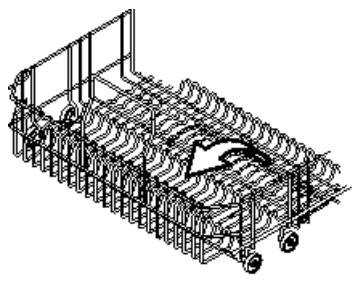
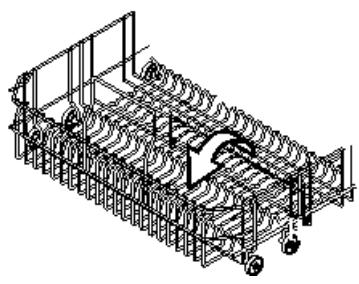
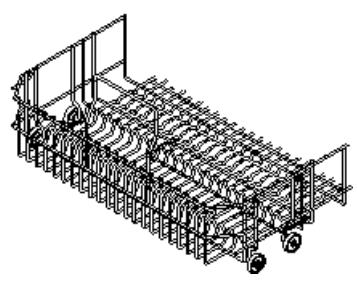
CHARGEMENT DU PANIER INFÉRIEUR
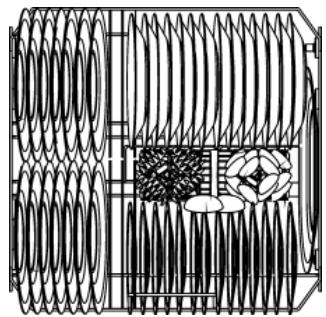
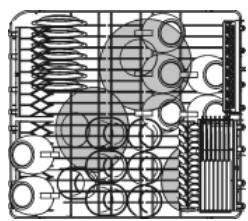
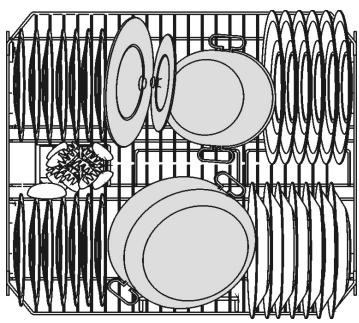
Chargez soigneusement les assiettes plates, les assiettes creuses, les assiettes à dessert et les plats de service, en les positionnant verticalement. Les casseroles, poêles et leurs couvercles doivent être chargés à l'envers. Lors du chargement des assiettes creuses et des bols à dessert, veillez à laisser un espace entre eux.
Exemples de chargement :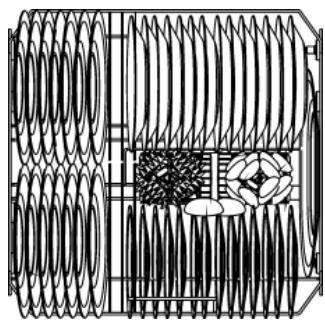
PANIER À COUVERTS
Les couverts doivent être disposés de manière ordonnée dans le panier, les manches vers le bas. Faites attention lors du chargement pour éviter les blessures causées par les lames des couteaux.
Le panier convient à tous les types de couverts, sauf ceux qui sont assez longs pour interférer avec le bras d'aspersion supérieur.
Les louches, les cuillères en bois et les couteaux de cuisine peuvent être placés dans le panier supérieur, en veillant à ce que les lames des couteaux ne dépassent pas du panier.
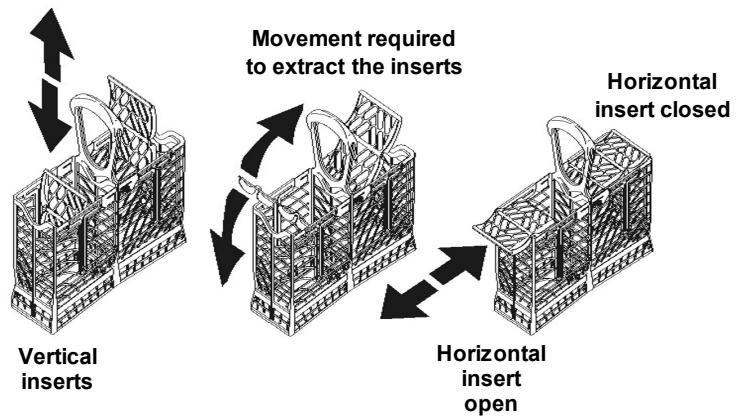
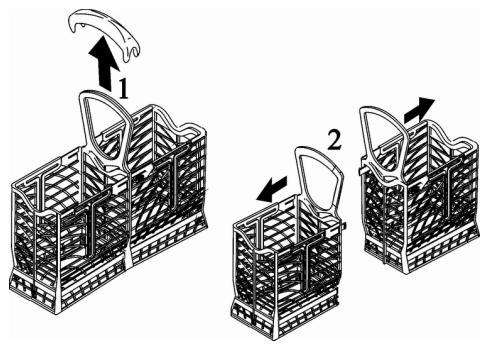
Le panier à couverts est équipé d'un système exclusif de supports relevables coulissants indépendants, offrant une série de combinaisons pour une utilisation optimale de l'espace disponible. Il peut également être séparé en deux parties, particulièrement utile lors d'un lavage à demi-charge (sur les modèles avec cette fonction).
PANIER SUPÉRIEUR
Il est recommandé de charger le panier supérieur avec des articles de petite ou moyenne taille, tels que des verres, des petites assiettes, des tasses à thé ou à café, des bols peu profonds et des objets légers en plastique résistant à la chaleur. Si le panier supérieur est utilisé dans la position la plus basse, il peut également contenir des plats de service, à condition qu'ils soient peu sales.
Le panier supérieur est équipé (à gauche) de deux supports en plastique qui peuvent être relevés pour faire de la place aux grands verres, comme les verres à pied.
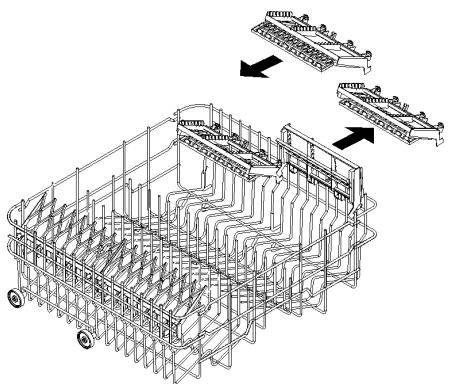
À droite, il y a deux supports à couverts conçus pour les couteaux et les cuillères à café ; lorsqu'ils ne sont pas utilisés, ils peuvent rester verticaux, fixés au panier.
Pour utiliser l'espace prévu pour les cuillères à café, retirez l'insert comme indiqué sur les illustrations.
CHARGEMENT DU PANIER SUPÉRIEUR
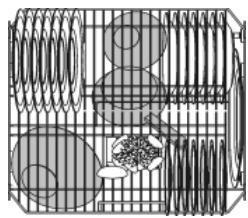
Chargez les assiettes face vers l'avant ; les tasses, bols, etc. doivent toujours être orientés vers le bas. Le côté gauche du panier peut être chargé avec deux couches de tasses et de verres. Le centre peut être rempli d'assiettes et d'assiettes à dessert, placées verticalement dans les supports prévus.
Exemples de chargement :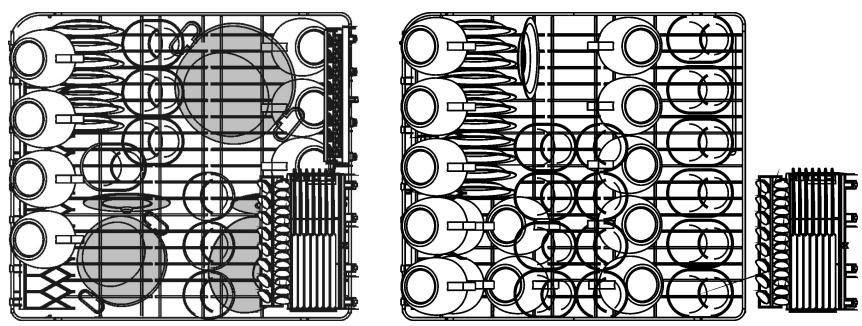
RÉGLAGE DU PANIER SUPÉRIEUR
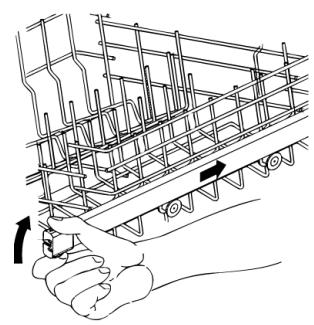
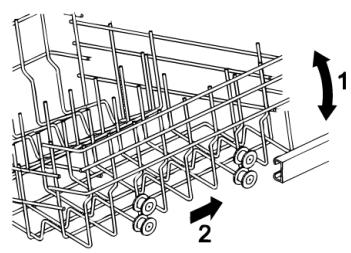
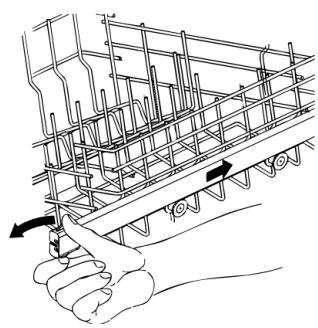
Le panier supérieur peut être réglé sur deux positions, selon les besoins de l'utilisateur et la hauteur des plats dans le panier inférieur. Procédez comme suit :
Version à extraction :
- tirez le guide du panier droit ;
- retirez la butée, en la libérant d'abord comme indiqué sur le schéma ; poussez le guide pour libérer les roues ;
- placez la paire de roues supérieure ou inférieure dans le guide, selon le réglage souhaité ; remettez la butée dans sa position d'origine.
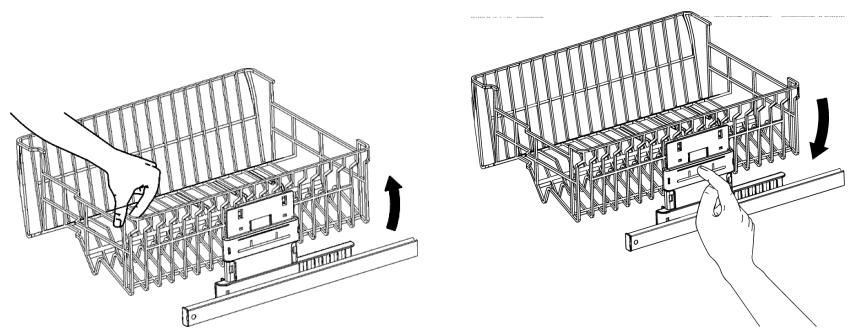
Version à bouton-poussoir :
- Tirez le panier jusqu'à sa position limite et tirez le côté droit vers le haut. Il est alors possible de charger des assiettes de plus grande taille dans le panier inférieur. Pour revenir à la position d'origine, sortez à nouveau le panier supérieur et appuyez sur le levier de déverrouillage.
5. Nettoyage et entretien
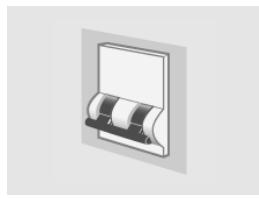
Avant toute intervention, débranchez toujours l'appareil de l'alimentation électrique.
5.1 Avertissements et recommandations générales
Évitez l'utilisation de détergents acides ou abrasifs.
Nettoyez régulièrement les surfaces extérieures et le joint de porte du lave-vaisselle avec un chiffon doux imbibé d'eau ou avec un détergent normal adapté aux surfaces peintes.
Nettoyez les joints de porte avec une éponge humide.
Périodiquement (une ou deux fois par an), il est conseillé de nettoyer la cuve et les joints avec un chiffon doux et de l'eau pour éliminer tout dépôt.
NETTOYAGE DU FILTRE D'ARRIVÉE D'EAU
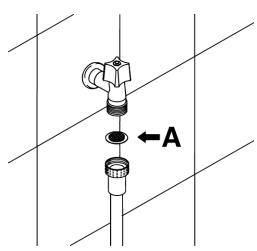
Le filtre d'arrivée d'eau A, situé à la sortie du robinet d'alimentation en eau, doit être nettoyé périodiquement.
Après avoir fermé le robinet d'arrivée d'eau, dévissez l'extrémité du tuyau d'arrivée d'eau, retirez le filtre A et nettoyez-le délicatement sous l'eau courante. Remontez le filtre A dans son logement et revissez soigneusement le tuyau d'arrivée d'eau en place.
NETTOYAGE DES BRAS D'ASPERSION
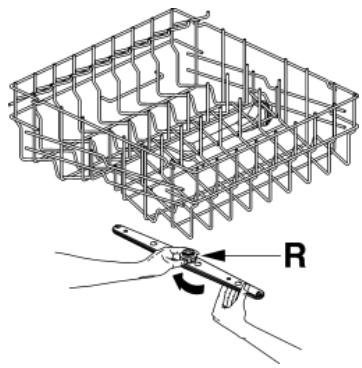
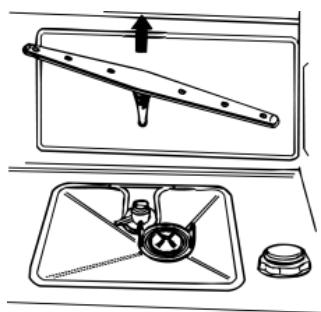
Les bras d'aspersion peuvent être facilement retirés pour le nettoyage périodique des buses, afin d'éviter tout colmatage. Lavez-les sous l'eau courante et replacez-les soigneusement dans leurs logements, en vérifiant que leur mouvement de rotation n'est en aucun cas entravé.
- Pour retirer le bras d'aspersion supérieur, dévissez la bague de verrouillage R.
- Pour retirer le bras d'aspersion inférieur, il suffit de le soulever en tirant par la partie centrale.
NETTOYAGE DU BRAS D'ASPERSION VERSION ORBITALE
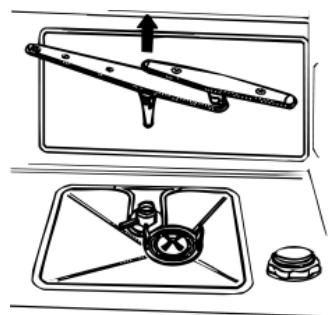
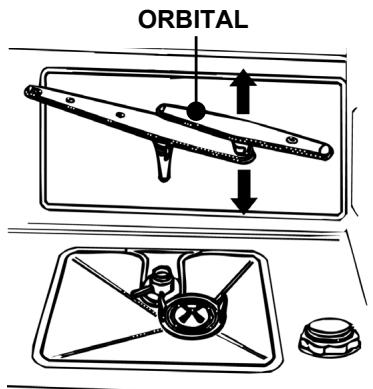
Pour retirer l'ensemble du bras d'aspersion ORBITAL, saisissez le bras le plus long et tirez l'unité ORBITAL vers le haut.
Lavez les bras sous un jet d'eau courante et replacez-les soigneusement sur leur siège.
Après le remontage, vérifiez que les bras d'aspersion tournent librement.
Sinon, vérifiez qu'ils ont été installés correctement.
NETTOYAGE DU BLOC FILTRANT
- Il est conseillé d'inspecter périodiquement le filtre central C et, si nécessaire, de le nettoyer. Pour retirer le filtre, saisissez les languettes, tournez-les dans le sens inverse des aiguilles d'une montre et soulevez vers le haut ;
- poussez le filtre central D par le dessous pour le retirer du micro-filtre :
- séparez les deux parties qui composent le filtre en plastique en appuyant sur le corps du filtre dans la zone indiquée par les flèches ;
- retirez le filtre central en le soulevant vers le haut.
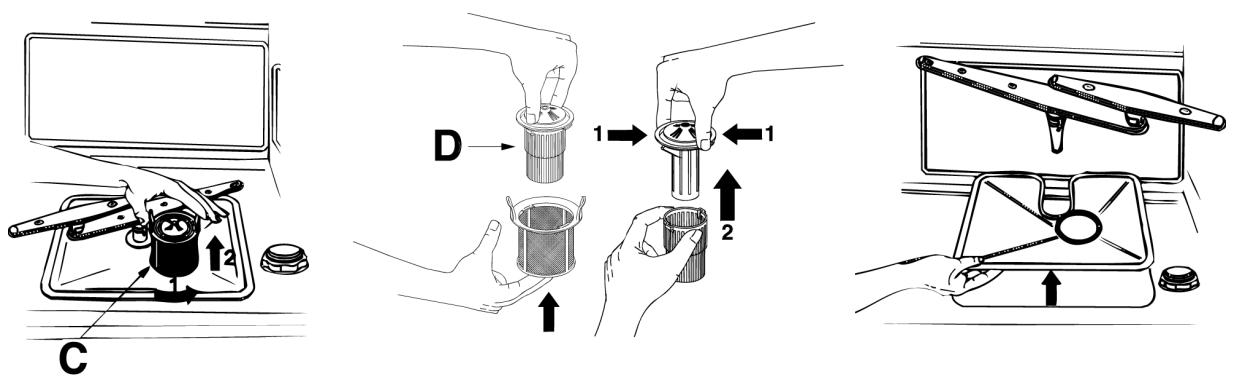

AVERTISSEMENTS GÉNÉRAUX ET RECOMMANDATIONS POUR UN ENTRETIEN CORRECT :
Les filtres doivent être nettoyés sous l'eau courante à l'aide d'une brosse dure. - Il est essentiel de nettoyer soigneusement les filtres conformément aux instructions ci-dessus : le lave-vaisselle ne peut pas fonctionner si les filtres sont obstrués. - Replacez soigneusement les filtres dans leurs sièges, afin d'éviter d'endommager la pompe de lavage.
INUTILISATION PROLONGÉE :
- Exécutez le programme de trempage deux fois de suite. Débranchez le cordon d'alimentation de la prise.
- Laissez la porte légèrement entrouverte, afin d'éviter la formation d'odeurs désagréables à l'intérieur de la cuve de lavage.
- Remplissez le distributeur de liquide de rinçage.
- Fermez le robinet d'arrivée d'eau.
AVANT DE METTRE EN MARCHE LE LAVE-VAISSELLE APRÈS UNE LONGUE PÉRIODE SANS UTILISATION :
- Vérifiez qu'il n'y a pas de dépôts de boue ou de rouille à l'intérieur du tuyau d'eau : s'il y en a, laissez couler l'eau du robinet d'arrivée pendant quelques minutes. Rebranchez la fiche d'alimentation dans la prise.
- Rebranchez le tuyau d'arrivée d'eau et ouvrez à nouveau le robinet.

DÉPANNAGE DES PROBLÈMES MINEURS
Dans certains cas, il est possible de remédier à des problèmes mineurs en suivant les instructions suivantes :
Si le programme ne démarre pas, vérifiez que :
- le lave-vaisselle est branché sur l'alimentation électrique ; il n'y a pas de panne de courant ; le robinet d'eau est ouvert ; la porte du lave-vaisselle est correctement fermée.
Si de l'eau reste à l'intérieur du lave-vaisselle, vérifiez que :
le tuyau de vidange n'est pas plié ; le siphon de vidange n'est pas obstrué ; les filtres du lave-vaisselle ne sont pas encrassés.
Si la vaisselle n'est pas nettoyée correctement, vérifiez que :
- la quantité de détergent ajoutée est correcte ; il y a du sel régénérant dans le réservoir spécial ; la vaisselle est chargée correctement ; le programme sélectionné est adapté aux types de vaisselle et à leur degré de salissure ; tous les filtres sont propres et correctement positionnés ; les buses des bras d'aspersion ne sont pas obstruées ; aucun objet ne gêne la rotation des bras d'aspersion.
Si la vaisselle ne sèche pas ou reste terne, vérifiez que :
il y a du liquide de rinçage dans le réservoir spécial ; le réglage du distributeur de liquide de rinçage est correct ; - le détergent utilisé est de bonne qualité et n'a pas perdu son efficacité (par exemple, en raison d'un stockage incorrect, avec la boîte laissée ouverte).
Si la vaisselle présente des traces de stries, des taches, etc., vérifiez que :
- le réglage du distributeur de liquide de rinçage n'est pas trop élevé.
S'il y a des traces visibles de rouille à l'intérieur de la cuve :
- la cuve est en acier, donc toute trace de rouille est due à des éléments extérieurs (fragments de rouille provenant des tuyaux d'eau, des casseroles, des couverts, etc.). Des produits spéciaux sont disponibles dans le commerce pour éliminer ces marques ;
- vérifiez que la quantité de détergent utilisée est correcte. Certains détergents peuvent être plus corrosifs que d'autres.
- vérifiez que le couvercle du réservoir de sel est bien fermé et que le réglage de l'adoucisseur d'eau est correct.

Si, après avoir suivi les instructions de dépannage ci-dessus, le problème persiste, appelez le centre de service après-vente le plus proche.
AVERTISSEMENT : toute opération effectuée sur l'appareil par des personnes non autorisées n'est pas couverte par la garantie et sera à la charge de l'utilisateur.
6. Dépannage
Le lave-vaisselle est équipé d'un système d'autodiagnostic capable de détecter et de signaler un certain nombre de pannes possibles.
En cas de panne ou de dysfonctionnement, avant d'appeler le service après-vente, nous vous suggérons de consulter d'abord le guide de dépannage ci-dessous.
Si le problème persiste même après avoir appliqué les solutions recommandées, appelez le service après-vente après avoir effectué les opérations suivantes :
- noter le message affiché par le système d'autodiagnostic ;
- débrancher le cordon d'alimentation de la prise ;
- fermer le robinet d'arrivée d'eau ;
TABLE DES DÉFAUTS DÉTECTÉS PAR LE SYSTÈME D'AUTODIAGNOSTIC
| FAULT | DESCRIPTION |
| E1 | The dishwasher's AQUASTOP anti-flooding system has been activated (only for models equipped with the device).To disable the AQUASTOP: switch off the dishwasher and then switch it back on again.The triggering of the AQUASTOP device indicates the presence of a water leak; immediately after resetting the dishwasher it is therefore necessary to call the authorised After-sales service centre. |
| E2 | The system for limiting the water level in the dishwasher has been triggered.To reset the appliance, reprogram the wash by opening and closing the door and then pressing the START/STOP (3) button again.If the problem persists, call the authorised technical service centre. |
| E3 | The dishwasher fails to heat the water.To reset the appliance, open and close the door.To determine the cause of this problem call the authorised technical service centre. |
| E5 | The dishwasher fails to draw water.Check that:• the water supply tap is open;• the filter in the water intake hose is not clogged;• the water intake hose is not kinked or bent;Turn the dishwasher off and then on again, then press the START/STOP (3) button again. If the problem is resolved the washing program will resume from where it was halted.If the fault persists, call the authorised technical service centre. |
| E6 | The dishwasher fails to drain.Check that:• the flexible drain hose is not kinked or obstructed;• the water drain pipe is not obstructed;• the dishwasher filter is not clogged;Turn the dishwasher off and then on again, and then press the START/STOP (3) button again. If the problem is resolved, the washing program will resume from where it was halted.Otherwise, if the fault persists, call the authorised technical service centre. |
| In the event of error codes not included in this table, call the Technical Service Centre. | |
| TECHNICAL DATA | |
| Width | 597 ÷ 599 mm |
| Depth measured flush with the outer edge of the control panel | Free standing: 600 mm |
| Height | from 850 mm to 870 mm |
| Capacity | 14 Standard place settings |
| Water supply pressure | min. 50 – max. 900 KPa (min. 0.5 – max. 9 bar) |
| Electrical characteristics | See rating plate |
1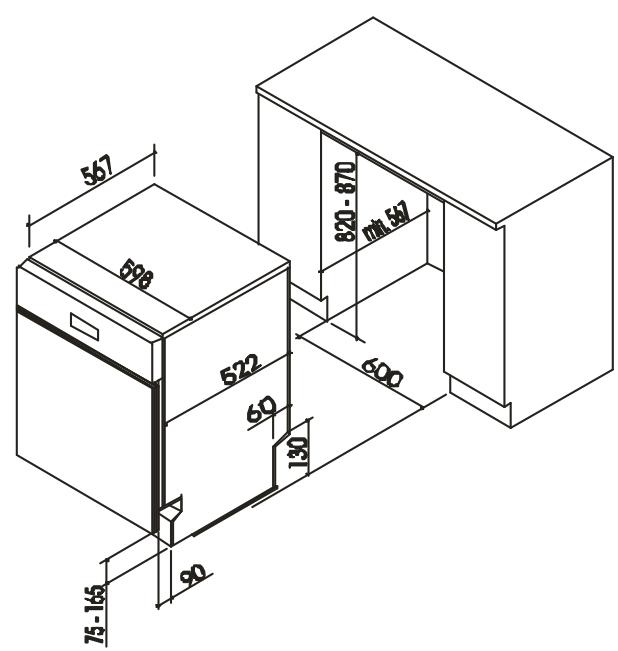
2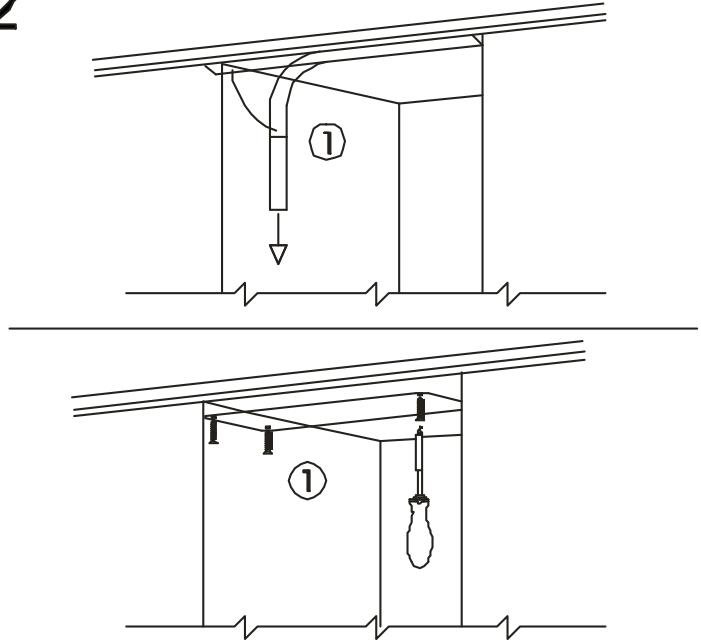
3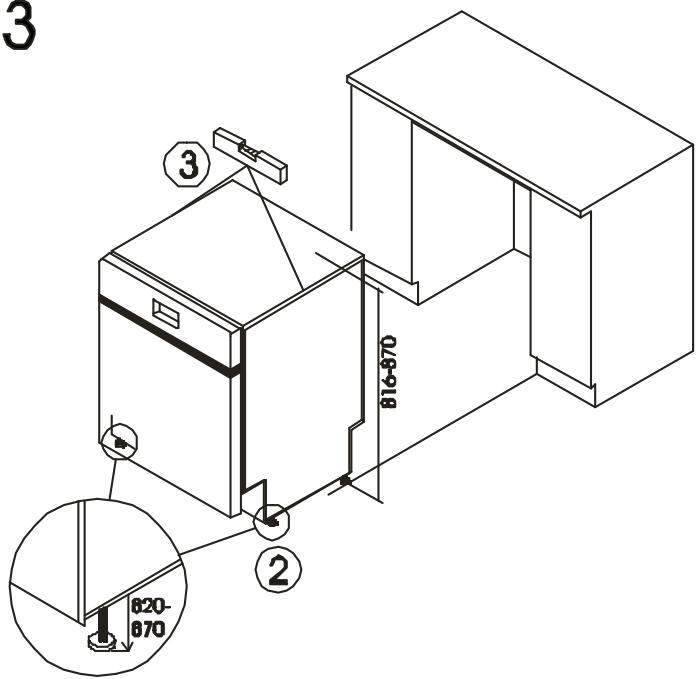
4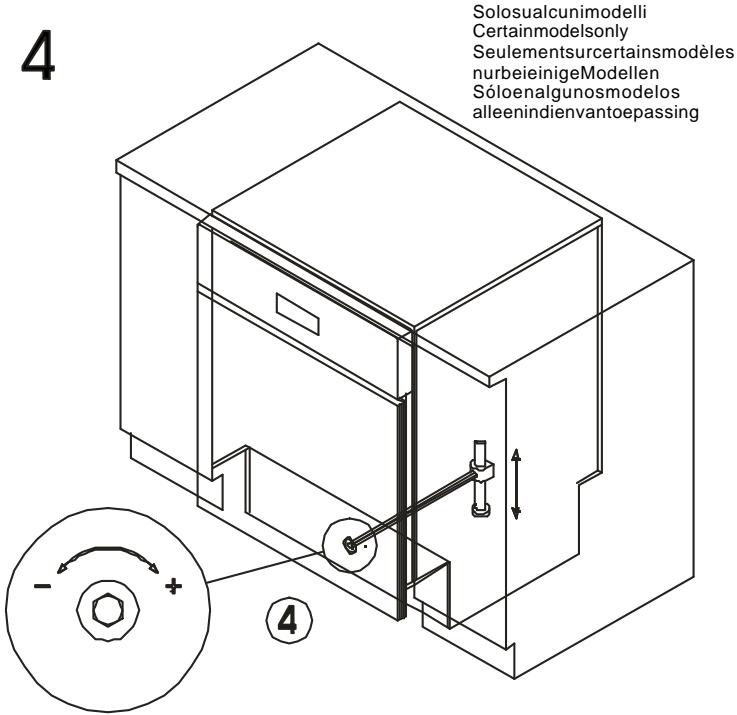
5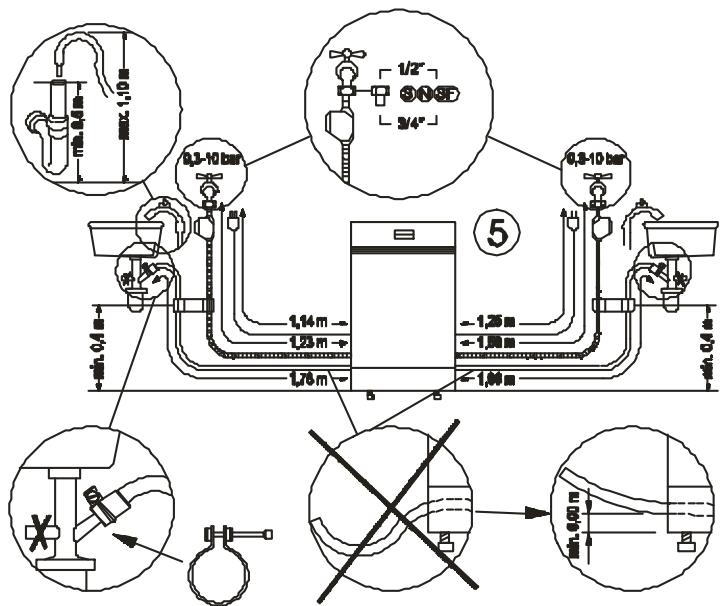
6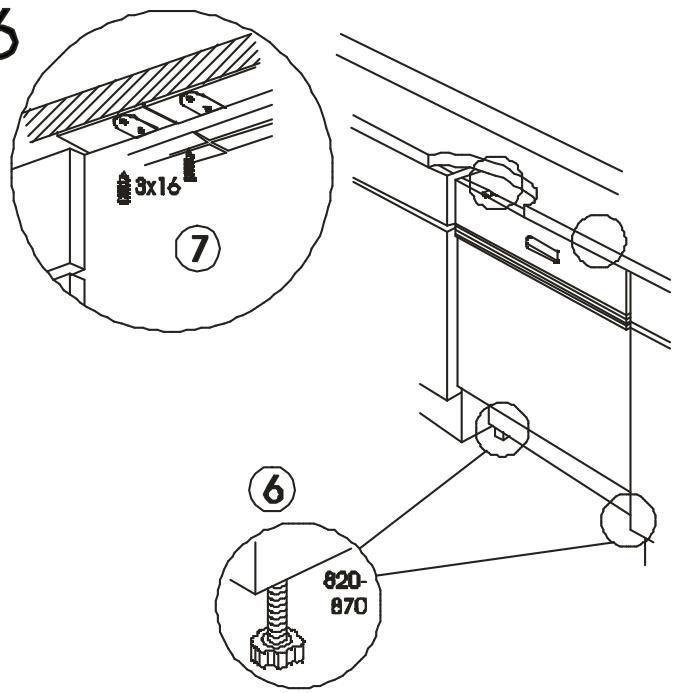
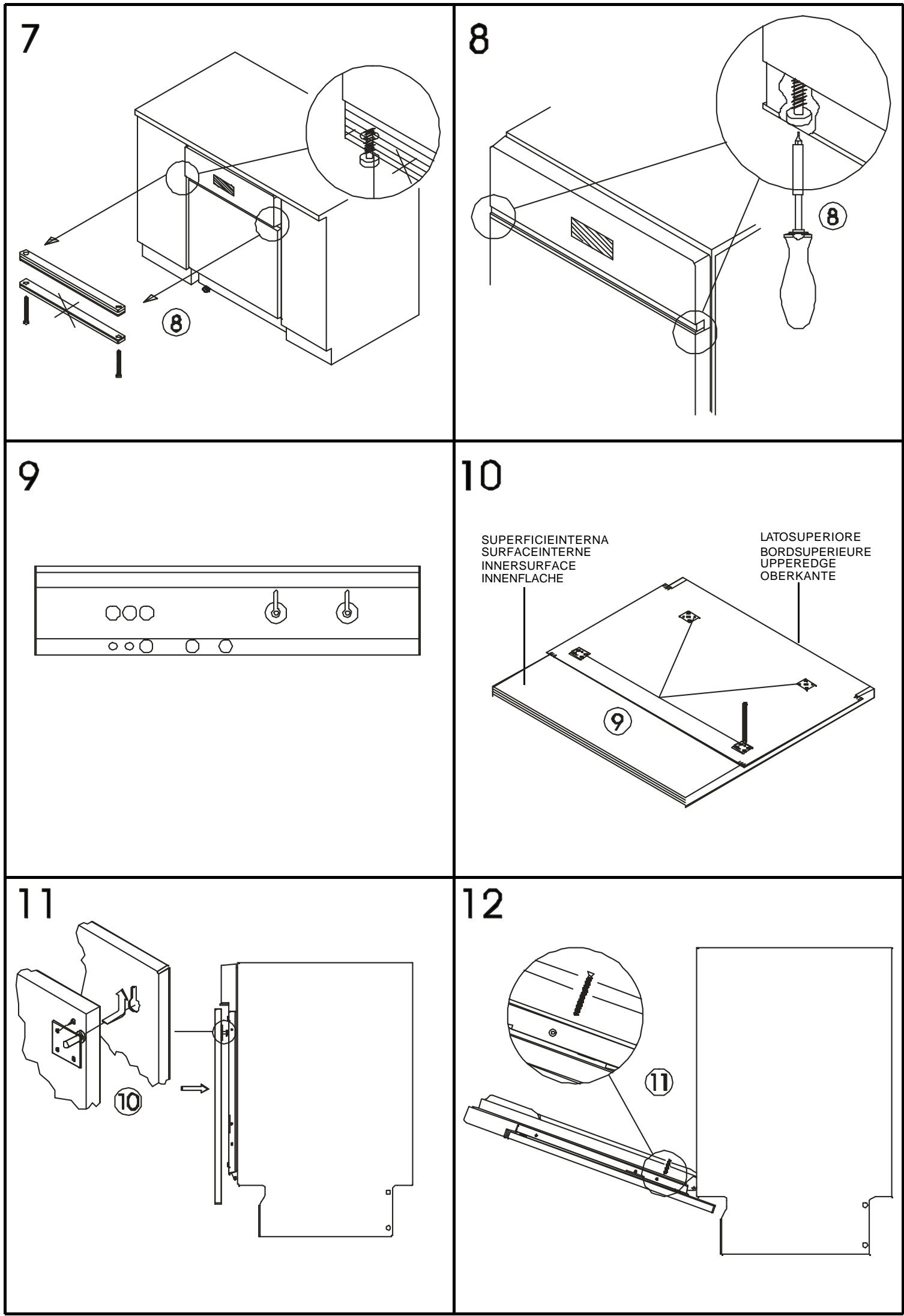
13 Certains modèles uniquement - Seulement sur certains modèles - Nur bei einigen Modellen - Solo en algunos modelos - Alleen in sommige uitvoeringen. Réglage de la vitesse et de la tension du ressort (12) - Couverture du trou à l'aide du bouchon fourni (13). Door spring adjustment device (12) - Covering of hole using cap provided (13). Réglage des ressorts de la porte (12) - Couverture du trou avec le bouchon fourni (13). Vorrichtung zur Einstellung der Spannung der Türfeder (12) - Abdeckung des Lochs mit dem mitgelieferten Stopfen (13).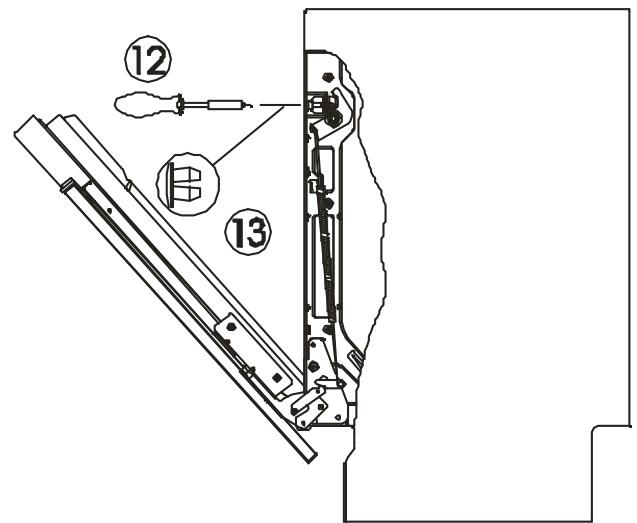
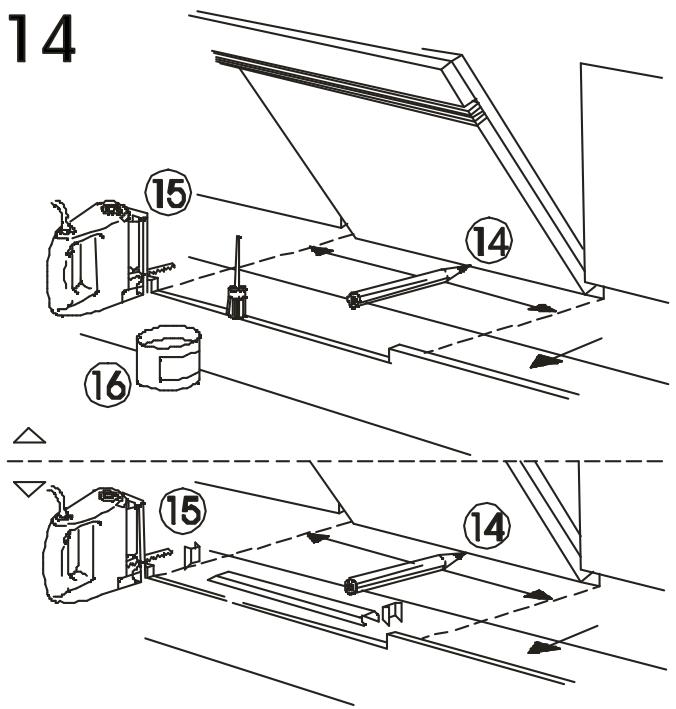
15
10


11

13

- CONSIGNES DE SÉCURITÉ ET D'UTILISATION
- MODÈLES AVEC AQUASTOP
- INSTALLATION ET RACCORDEMENT
- RACCORDEMENT À L'ARRIVÉE D'EAU
- RACCORDEMENT À L'ÉVACUATION
- CONNEXION ÉLECTRIQUE
- DESCRIPTION DES COMMANDES
- PANNEAU AVANT
- AFFICHEUR D'INFORMATIONS
- RÉGLAGE DU PROGRAMME DE LAVAGE
- MISE SOUS TENSION
- DÉSACTIVATION DU DISPOSITIF ACOUSTIQUE DE FIN DE CYCLE
- PROGRAMMES DE LAVAGE
- AVANT DE DÉMARRER UN PROGRAMME DE LAVAGE, ASSUREZ-VOUS QUE
- FONCTION DEMI-CHARGE
- ANNULATION DU PROGRAMME EN COURS
- CHANGEMENT DE PROGRAMME
- DÉPART DIFFÉRÉ
- POUR ÉCONOMISER L'ÉNERGIE ! ... ET PROTÉGER L'ENVIRONNEMENT
- POUR RÉDUIRE LA CONSOMMATION DE DÉTERGENT ! ... ET PROTÉGER L'ENVIRONNEMENT
- MISE EN MARCHE DU LAVE-VAISSELLE
- FIN DU CYCLE
- RETRAIT DE LA VAISSELLE
- INSTRUCTIONS D'UTILISATION
- UTILISATION DU SYSTÈME D'ADOUCISSEMENT DE L'EAU
- RÉGLAGE DU SYSTÈME D'ADOUCISSEMENT DE L'EAU
- UTILISATION DES DISTRIBUTEURS DE PRODUIT DE RINÇAGE ET DE DÉTERGENT
- AJOUT DU PRODUIT DE RINÇAGE
- RÉGLAGE DU DISTRIBUTEUR DE PRODUIT DE RINÇAGE
- AJOUT DU DÉTERGENT
- AVERTISSEMENTS ET RECOMMANDATIONS GÉNÉRALES
- UN CHARGEMENT CORRECT DE LA VAISSELLE CONTRIBUE À GARANTIR DES RÉSULTATS DE LAVAGE OPTIMAUX
- AVERTISSEMENT
- ASSUREZ-VOUS QUE LES ARTICLES À LAVER SONT COMPATIBLES AVEC LE LAVE-VAISSELLE
- ÉLÉMENTS NON COMPATIBLES AVEC LE LAVE-VAISSELLE
- UTILISATION DES PANIERS
- PANIER INFÉRIEUR
- CHARGEMENT DU PANIER INFÉRIEUR
- PANIER À COUVERTS
- PANIER SUPÉRIEUR
- CHARGEMENT DU PANIER SUPÉRIEUR
- RÉGLAGE DU PANIER SUPÉRIEUR
- VERSION À EXTRACTION
- VERSION À BOUTON-POUSSOIR
- NETTOYAGE ET ENTRETIEN
- NETTOYAGE DU FILTRE D'ARRIVÉE D'EAU
- NETTOYAGE DES BRAS D'ASPERSION
- NETTOYAGE DU BRAS D'ASPERSION VERSION ORBITALE
- NETTOYAGE DU BLOC FILTRANT
- AVERTISSEMENTS GÉNÉRAUX ET RECOMMANDATIONS POUR UN ENTRETIEN CORRECT
- INUTILISATION PROLONGÉE
- AVANT DE METTRE EN MARCHE LE LAVE-VAISSELLE APRÈS UNE LONGUE PÉRIODE SANS UTILISATION
- DÉPANNAGE DES PROBLÈMES MINEURS
- SI LE PROGRAMME NE DÉMARRE PAS, VÉRIFIEZ QUE
- SI DE L'EAU RESTE À L'INTÉRIEUR DU LAVE-VAISSELLE, VÉRIFIEZ QUE
- SI LA VAISSELLE N'EST PAS NETTOYÉE CORRECTEMENT, VÉRIFIEZ QUE
- SI LA VAISSELLE NE SÈCHE PAS OU RESTE TERNE, VÉRIFIEZ QUE
- SI LA VAISSELLE PRÉSENTE DES TRACES DE STRIES, DES TACHES, ETC., VÉRIFIEZ QUE
- S'IL Y A DES TRACES VISIBLES DE ROUILLE À L'INTÉRIEUR DE LA CUVE
- DÉPANNAGE
Marque : SMEG
Modèle : PL19-3
Catégorie : Petit électroménager