
FK244.4X - Réfrigérateur-congélateur AMICA - Notice d'utilisation et mode d'emploi gratuit
Retrouvez gratuitement la notice de l'appareil FK244.4X AMICA au format PDF.



| Type de produit | Réfrigérateur-congélateur |
| Marque | Amica |
| Modèle | FK244.4X |
| Classe climatique | SN (10°C à 32°C), N (16°C à 32°C), ST (16°C à 38°C), T (16°C à 43°C) |
| Alimentation électrique | 220-240 V, 50 Hz, 10 A |
| Réfrigérant | R600a (isobutane) |
| Fonctions principales | Régulation électronique de température, refroidissement rapide (Fast Cool), alarme de porte ouverte |
| Éclairage intérieur | Oui (ampoule) |
| Compartiment réfrigérateur | Clayettes en verre, bac à légumes, balconnets de porte |
| Compartiment congélateur | Tiroirs de congélation |
| Dégivrage réfrigérateur | Automatique |
| Dégivrage congélateur | Manuel (recommandé 1 à 2 fois par an) |
| Entretien et nettoyage | Utiliser un détergent doux et un chiffon, ne pas utiliser de produits abrasifs |
| Sécurité | Mise à la terre obligatoire, éviter les rallonges, ne pas obstruer les ouvertures de ventilation |
| Pièces détachées | Disponibles pendant 7 à 10 ans selon le type (conformément au règlement UE 2019/2019) |
| Réparabilité | Réparations par un service agréé uniquement |
| Installation | Surface plane et stable, distance minimale de 30 mm des sources de chaleur, 50 mm des fours encastrés |
| Température ambiante recommandée | 10°C à 43°C selon la classe climatique |
| Nombre d'étoiles du congélateur | 4 étoiles (****) : congélation et stockage à -18°C |
| Bruit en fonctionnement | Bruits normaux : expansion thermique, compresseur, circulation du réfrigérant |
FOIRE AUX QUESTIONS - FK244.4X AMICA
Questions des utilisateurs sur FK244.4X AMICA
0 question sur cet appareil. Repondez a celles que vous connaissez ou posez la votre.
Poser une nouvelle question sur cet appareil
Téléchargez la notice de votre Réfrigérateur-congélateur au format PDF gratuitement ! Retrouvez votre notice FK244.4X - AMICA et reprennez votre appareil électronique en main. Sur cette page sont publiés tous les documents nécessaires à l'utilisation de votre appareil FK244.4X de la marque AMICA.
MODE D'EMPLOI FK244.4X AMICA
INSTRUKCJA OBSŁUGI OPERATING INSTRUCTIONS
PL EN
Chłodziarko-zamrażarka / Refrigerator-freezer
FK244.4 / FK244.4X
PL - Spis tresci
WSKAZÓWKI DOTYCZACE BEZPIECZENSTWA 6 INSTALACJA I WARUNKI PRACY URZADZENIA 11
INSTALACJA PRZED PIERWSZYM URUCHOMIENIEM 11
MINIMALNE ODLEGLOSCI OD ZRODEC CIEPLA 11
PODLACZENIE ZASILANIA 12
ODLACZENIE OD ZASILANIA 12
KLASA KLIMATYCZNA 12
ROZPAKOWANIE 13 USUWANIE ZUZYTYCH URZADZEN 14
STEROWANIE 15
STEROWANIE URZADZENIEM 15
REGULACJA TEMPERATURE WEWNATRZ URZADZENIA 15
DODATKOWE INFORMACJE DOTYCZACE TEMPERATURE 15
OBSLUGA I FUNKCJE 16
PRZECHOWYWANIE PRODUKTów W CHŁODZIARCE I ZAMRAŽARCE 16
ZAMRAZANIE PRODUKTów** 16
JAK EKONOMICZNIE UZYTKOWAC LODOWK
PORADY PRAKTYCZE 18
CO OZNACZAJA GWIAZDKI? 18
PORADY PRAKTYCZE 19
PRODUKTY, KTORYCH NIE NALEZY PRZECHOWYWAC W LODOwCE 19
ODSZRANIANIE, MYCIE I KONSERWACJA 20
ODSZRANIANIE I MYCIE CHŁODZIARKI *** 20
ODSZRANIANIE I MYCIE ZAMRAZARKI** 20
ABY ODSZRONIC KOMORE ZAMRAZARKI, NALEZY** 21
AUTOMATYCZNE ODSZRANIANIE CHŁODZIARKI**** 21
AUTOMATYCZNE ODSZRANIANIE ZAMRAZARKI**** 21
MYCIE RECZNE KOMORY CHŁODZIARKI I ZAMRAŽARKI.**** 21
WYJMOWANIE I WKŁADANIE POŁEK* 21
WYJMOWANIE I WKŁADANIE BALKONIKA* 21
LOKALIZACJA USTEREK 22
GWARANCJA, OBSŁUGA POSPRZEDAźOWA 24
GWARANCJA 24
EN- Table of contents
GUIDELINES CONCERNING THE SAFETY OF USE 26 INSTALLATION AND OPERATING CONDITIONS OF THE APPLIANCE 31
INSTALLATION BEFORE USING THE APPLIANCE FOR THE FIRST TIME 31
MINIMUM DISTANCES FROM THE HEAT SOURCES 31
MAINS CONNECTION 32
DISCONNECTING THE MAINS 32
CLIMATE RANGE 32
UNPACKING 33 DISPOSAL OF OLD APPLIANCE 34
CONTROLS 35
APPLIANCE CONTROLS 35
ADJUST TEMPERATURE INSIDE THE APPLIANCE 35
ADDITIONAL INFORMATION ON THE TEMPERATURE 35
OPERATION AND FUNCTIONS 36
STORAGE OF FOOD IN THE FRIDGE-FREEZER 36
FREEZING FOOD** 36
USING THE REFRIGERATOR EFFICIENTLY 38
PRACTICAL EVERYDAY TIPS 38
UNDERSTANDING THE STARS 38
PRACTICAL TIPS 39
FOOD THAT SHOULD NOT BE STORED IN A REFRIGERATOR 39
DEFROSTING, WASHING AND MAINTENANCE 40
DEFROSTING THE FRIDGE*** 40
DEFROSTING THE FREEZER** 40
DEFROST THE FREEZER CHAMBER FOLLOWING STEPS:** 41
AUTOMATIC FRIDGE DEFROSTING*** 41
AUTOMATIC FRIDGE DEFROSTING*** 41
WASHING THE FRIDGE AND FREEZER CHAMBERS MANUALLY*** 41
TAKING OUT AND PUTTING IN THE SHELVES**** 41
TAKING OUT AND PUTTING IN THE DOOR SHELF* 41
TROUBLE-SHOOTING 42
WARRANTY AND AFTER SALES SERVICE 44
WARRANTY 44
Szanowy Kliencie
Od Dzić codzienne obłowźki stano są prostsze nitź kiedykolwiek. Urzadzenia Amica to połącenie wyjatkowejłąwość obstugi i doskonaść efektywność. Po przyȩzytaniu instruktów, obstugsa nie są problemem.
Sprzêt, kórgy opuscił fabrykę być dokladnie sprawdzo-ny przy zapakowaniem pod względem bezpiecz%-stwa i funkcjonalnosci na stanowiskach kontrolnych.
Prosmy Państwa o uwaźna lekture instrukcji obstugi przydary w nichej wskazówek uchroni Państwa przydniem nowe zachowac i przechowywać tak, aby są zawsze pod ręka.
Naleź doklądnie przyestrzegać instrukcji obstugi w celuunikacja nieszczęsliwych wypadkBow.
Z powazaniem
Amica
WSKAZÓWKI DOTYCZACE BEZPIECZENSTWA
- Urzadzenia to jest przyznaczone do stosowania w domu lub w obiektach, takich jak: kuchnia dla pracowników; w sklepach, biurach i innych srodo-wiskach pracy, korzystanie przyez klienów hoteli, moteli i innych placowej mieszkalnych, w wiejskich budynkach mieszkalnych, w obiektach noclegowych.
- Producent zastrzega sare mogliwość dokonywa-nia zmian niewpływojasych na dzialanie urzadze-nia.
- Niektóre zapisy w niniejszej instrukcji są ujedomolicense dla wyrobów chłodniczych rożnych typów, ({dla chłodziarki, chłodziarko-zamrażarki lub za-mrażarki). Informacja na temat rodzaju Twojugo urzadzenia znejduje sie w Karcie Produktu dofazzonej do wyrobu.
- Producent nie ponosi odpowiedzialnosci za szkodywynikfte z nieprzestrzeganiazasad umieszczonychw niniejszej instrukcj.
- Prosimy o zachowanie tej instrukcji w celu wykorzystania jej w przyszłosci lub przybekazania ewentualnemu nastepnemu uzytkownikow.
- Niniejszy sprezt nie jest przyznaczony do uzytkowania przyez osoby (w tym;dzieci) o ograniczonej zdolnosci fizycznej, czuciowej lub psychicznej oraz osoby o braku doswiadczenia lub znajomosci spreztu, chyba, zeODYwa sie to pod nadzorem lub zgodnie z instrukcja uzytkowania spreztu, przykaźanej przyez osoby odpowiadajace za ich bezpieczędwo.
- Naleźny zworocic szczególna uwage, aby z urzadzenia nie korzystały pozostawione bez opieki daneci. NieNSEy pozwalać im bawić są urzadzeniem. Nie wolno im siadać na elementach wysuwanych i zawieszȩć są drzewiach.
-
Urzadzenie pracuje prawidłowo w temperaturze otoczenia, która jest podana w karcie produktu. Nie naleź uzytkości jej w piwnicy, sieni, w nieogrzewanym domku letniskowyم jesenia i zima.
-
Podczas ustawiania, przysemuwania, podnoszenia nie naleź chwytać za uchwyty drzwi, ciagnać za skraplacz z tyfu lodówki oraz dotykać zespołukompresora.
- Urzadzenia nie nalewy przechylac o wiecej nz 40^ od pionu podczas transportu, przyenoszenia lubustawiania. Jeźeli tak sytuacja zaistniała wączenia urzadzenia要去 nastapić min. po 2 godzinach od.gojo ustawienia (rys.2).
- Prźed kaźda czynność „konserwacyjna sąȩzy wyłąc z wtyczkte z gniaźdka sieciowej. Nie sąȩzy ciąawnę za przyzewod, lecz chwytać za korpus wtyczki.
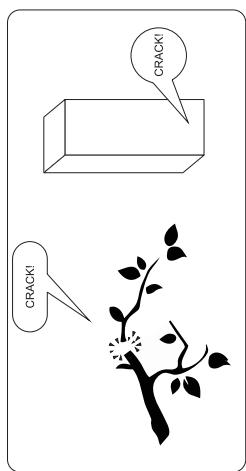
- Dzwiecki slyszalne jako trzaskanie lub pękanie są spowodowane przyrozszerzanie i kurczenie są czȩci na skutek zmian temperatury.
- Ze wźględu na bezpieczędwo nie nalewy naprawość urzadzenia we wąsonym zakresie. Naprawy, wykonywane przyez osoby nie posiadajść wymaganych kwalifikacje moga stanowania病毒感染 niebezpieczędwo dla uzytkownikia urzadzenia.
- Naleź wy przywietrzyć przyez kilka minut pomieszczenersie, w ktorym znajduje są urzadzenia (pomieszczenersie to musi miec przyznajmniej 4m^3 ; dla wyrobuz izobutanem/R600a) w przyypadku uszkodzenia ukradu chłodniczego.
- Produktów chość tylko czȩciowo rozmrożonych nie są za poponownie zamrażć.
- Napojów w'butelkach i puszkach, w szczególnosci napojów gazowanych dwutlenkiem wegla nie na-lezy przechowywać w komorze zamrażarki. Puszki i butelki moga popěkác.
- Nie brać doustroduktów zamrożonych bezpos省教育nio wyjetych z zamrazarki (lody, kostenki lodu, itp.), ich niska temperatura要去 spowodować dotkliwe odmrożenia.
UWAGA: Naleź uwaźć, aby nie uszkodzić obiegu chłodniczego, np. przyze nakłącie kanatów srodka chłodniczego w parowniku, złamanie rur. Wytryskujuczynik chłodniczy jest palny. W przyypadku dostania są do oczuNSE uciezy przyȩplukać je czysta woda i wezwac natychmiast lekarza. - Jeźeli przywośd zasilajść ulegnie uszkodzeniu, to
powinien byc wymieniony w specialistycznym za-kladzie naprawczym.
Urzejdenie s Foley do przechowywania zywnosci, nie uzywaj go do innych celow.
- Urzadzenia nalewy calkowicie odłaczyc od zasilania (poprzej wymiagniecie wtyczki z gniaźdka sieciowej) na czas wykonywania czynnosci takich jak czyszczenenie, konserwacja przyzmianajejca ustawienia.
To urzadzenie要去byc uzywane przez daneci w wieku 8 lat i starsze, przyez osoby o ograniczonej zdolnosci fizycznej, czuciowej lub psychicznej oraz osoby o braku doswiadczenia lub znajomość sprzȩtu, gdy są one nadzorowane lub zostymi poinstruowane na temat korzystania z urzadzenia w sposob bezpiecznych i znaja zagrożenia zwiazana z uzytkowaniem urzadzenia. Dzieci nie powinny bawic sie urzadzeniem. Czyszczenie i konserwacja urzadzenia nie pouinna byc wykonywania przyez daneci chyba ze ukończyty 8 lat i są nadzorowane przyez odpowiednia osobe.
W celu uzyskania wiekszej ilosci.), zamrazarce moza wyjac z nied szuflady i umieszczac Produktky bezposrednio na polkach. Nie ma to wptywu na charakterystykte termiczna, i mechanizcna wyrobu. Zadeklarowana pojemnosc zamrazarki została obliczona z wyjetymi szufladami.

OSTRZEJEZENIE: Zagrożenie poźarem / materiały palne
- Dzieci w wieku od 3 do 8 lat moga wiktadać i wyjmownikówć produkty z urzadzenia chłodniczego.
Aby uniknac zanieczyszczenia przywnosci nalezy przystrzegać nastepujacych zasad:
- Otwieranie drzwi na drulezcy czas要去 powodować znacznie podwyzszenia temperatury w komorach urzadzenia.
- Regularnie czyscić powierzchnie majęce kontakt z przywność oraz w zależnosci od wystepowania do
stepne instalacje odprowadzania wody.
- Przechowywać surowe.mięs o i ryby w odpowied-nich pojemnikach w chłodziarce,aby nie miały kontaktu z pozostafażzywnoscią iNie kapały z nich na innąźwywnosc.
- Dwugwiażdkowe komory zamrażarki są do przechowywnia wczesnej zamrożonej zywnosci, przechowywnia lub mrożenia lodów oraz zamrażania kostek lodu.
- Komory jedergowiazdkowe, dwugwiazdkowe i trzygwiezdkowe nie są do zamrażania swiejej zywnosci.
| Rodzaje komór | Docelo- wa tem- peratura przecho- wywania [°C] | Odpowiednia zzywność | |
| 1 | Chłodziarka | +2≤+8 | Jajka, gotowana zzywność, zapakowanza zzywność, owo- ce i warzywa, nabiał, ciasta, napoje i innate produkty nie nadajȩce są do zamrożenia. |
| 2 | Zamrażarka | ≤-18 | Owoce morza (ryby, krewetki, małe), produkty słod- kowodne oraz produkty mięsne (zalecane 3 miersiȩce, im dląszy czas przechowywania, tym mniej smaczny i odźwyczy jest produkt), odpowiednia na zamrożone Świeje produkty. |
| 3 | Zamrażarka | ≤-18 | Owoce morza (ryby, krewetki, małe), produkty słod- kowodne oraz produkty mięsne (zalecane 3 miersiȩce, im dląszy czas przechowywania, tym mniej smaczny i odźwyczy jest produkt), niedopowieiednia na mrożone Świeje produkty. |
| 4 | Zamrażarka | ≤-12 | Owoce morza (ryby, krewetki, małe), produkty słod- kowodne oraz produkty mięsne (zalecane 2 miersiȩce, im dląszy czas przechowywania, tym mniej smaczny i odźwyczy jest produkt), niedopowieiednia na mrożone Świeje produkty. |
| 5 | Zamrażarka | ≤-6 | Owoce morza (ryby, krewetki, małe), produkty słod- kowodne oraz produkty mięsne (zalecany 1 miersiȩce, im dląszy czas przechowywania, tym mniej smaczny i odźwyczy jest produkt), niedopowieiednia na mrożone Świeje produkty. |
| 6 | Komora bez- gwiazdkowa | -6≤0 | Świeza wieprzowina, wołowina, ryby, kurczak, niewtóre zapakowane przytetworzone produkty, itp. (zalecane spożycie tego samego dnia, njalepiej w piagu maksy- malnie 3DMI). Czeniawo zapakowane przytetworzone produkty (produkty nie nadajȩce są do zamrożenia) |
| 7 | Komora schłazania | 2≤+3 | Świeża/mrożona wieprzowina, wołowina, kurczak, produkty słodkowodne, itp. (7 dni poniȩzej 0°C, powyȩzej 0°C zalecane jest spoźycie unto samego dnia, sąlepiej maksymalnie w ciagu 2 dni). Owoce morza (poniȩzej 0°C przyez 15 dni, nieazoleca są przechowywnia w temperaturze powyȩzej 0°C) |
| 8 | Komora do przechowy-wania świeȩzejaturityność | 0≤+4 | Świeża wieprzowina, wołowina, ryby, kurczak, goto-wane produkty, itp. (zalecane spoźycie unto samego dnia, sąlepiej w ciagu maksymalnie 3 dni). |
| 9 | Komora do przechowywni-a nia wina | +5≤+20 | Czerwone, biała, musości wino itp. |
Uwaga: nalezy przechowywać produkty zgodnia z zapecaniami dla komór lub według temperatury przechowywania produktu.
- Jesli urzadzenie chłodnicze nie bedzie uzytkowane i puste przyez dlugi czas, naleź je wyłaczyc, rozmrozić, wymyc, wysuszyc i pozostawic z otwartymi drzwiami, aby uniknacgowstania pleśni wewnatrz.
- Czyszczenie dystrybutora wody (dla produktów z dystrybutorem wody): Wyczyscić zbiorniki na wode jesti nie były uzytkowane przyez 48 godzin; jesti wodaNie była spuszczana przyez 5 dni, wypłukość instalacja wodna podłączona do sieci wodociągowej.
- Minimalny okres, w którym dostępne są czȩci za-mienne niedźbudne do naprawy urzadzenia wynosi 7 lub 10 lat w zależnosci od rodzaju i przyznaczenia czȩci zamiennej i jest zgodny z Rozporzadzeniem Komisji (UE) 2019/2019.
Wykaz częsci zamiennych i procedura ich zama-wiania są dostepne na stronach internetowych producenta, importerera lub upowaźnionego przystawciela.
- Wieciej informaci o produktu znajduje są w unijnej Bazie Danych Produktów EPREL na stronie https://eprel.ec.europa.eu. Informacjaność uzyskać skanujac kod QR z etykiety energetycznej lub wpisujuc model wyrobu z etykiety energetycznej w wyszukiwarde EPREL https://eprel.ec.europa.eu/
INSTALLACJA I WARUNKI PRACY URZADZENIA
To urzadzenie chlodnicze nie jest przyznaczone do uzytku jako urzadzenie do zabadowy.
Instalacja przyd pierwszym uruchomieniem
- Naleź wyrbów rozkakowa, usunac taśmy klejace zabezmieczajace drzwi i wyposażenie. Ewentualne pozostawe resztki kleju sąna usunac delikatnym srodkiem myjacym
Styropianowych elementów opakowanie nie nalezy wyrzucac. W przypadku koniecznosci ponownego przywozenia, chłodziarko-zamrazarke nalezy zapakowej w elementy ze styropianu i folie oraz zabezpieczyc tasma klejac. - Wnetrze chłodziarki i zamrázarki oraz elementy wyposzazenia naleź y wymić letnia wódź dodatkiem pląnu do mycia naczn, a sątepnie wytrzech)i wysuszc.
- Chłodziarko-zamrażarke naleź ustawic na rownym, poziomym i stabilnym podłoź, w suchym, przywietrzonym i nienasławonecznionym pomieszczeni u dala od zródekciepła, takich jak kuchnia, grzejnik centralnégo ogrzewania, rura centralnégo ogrzewania, instalacja wodycieplej itp.
- Na powierzchniach zewétrznych wyrobu要去 znajdować sie folia ochronna, naleź y ja usunarć.
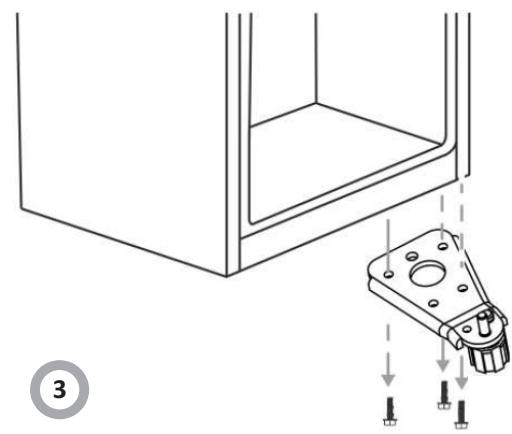
- Naleź yapiewnic ustawuminium wyrobu w poziomie, odpowiednio wkręcajac 2 regulowane noźki (Rys. 3).
Dla zapewnienia swobodnego otwierania drzwi, odlegostość pomiedź scianą bocznych wyrobu (od strony zawiasów drzwi), a scianą pomieszczenia przyxedstawiona jest na rysunku 5.* - Naleź yżadbać o odpwiednia wentreję pomieszczenia i swobodny obieg powietrza ze wsztockich stron urzadzenia (Rys. 6).*
Minimalne odlegostocki od zródei ciepla
- od kuchni elektrycznych, gazowych i innych - 30 mm,
- od pieców zasilanych'olejem lub węglem - 300 mm,
- od piekarników do zabudowy - 50 mm
Jeżeli nie jest możliwe zachowanie wyȩzej okreslonych odlegość naleź y zastosownik odpowiednia przyte izolacyjna
Uwaga:
Tylna sciana lodówki, a szczególnie skraplacz i innne elementy uładu chłodniczejno sie moga stykać sie z innymi elementami, które moga powodowej uszkodzenia, w szczególnosci (z rurá CO i doprowadzajęcawe).
- Niedopuszczalne jest jakiekolwiek manipulowanie czesciami agrega-tu. Nalezy zworcić szeczólna uwage, aby nie uszkodzic turki kapilarnej, widocznej we wędce na spreżarke. Rumka ta nieMZe boc doginana, prostowana ani zwijana.
- Uszkodzenia turki kapilarnej przyez uzytkownikaODBiera mu prawaj wynikajace z gwarancji (rys. 8).
- W'wybranych modelach uchwyt drzwi znajduje sie wewnatrz wyrobui nalezy go przykrecić wąsnym wkrétakiem.
Podłaczenia zasilania
- Przed podłaczeniem zaleca są ustawicPokretto regulatora temperatury na pozycje "OFF" lub inna powodujacja odłaczenia urzadzenia od zasilania (Patrz strona z opisem sterowania).
- Urzadzenie nalezy podłuczyc'do sieci pradu przyemienego 220-240V, 50Hz, poprzej sprawidłowo zastalowane gniazdko elektryczne, uziemione i zabezpieczone bezpiecznikiem 10 A.
- Uziemienie urzadzenia jest wymagane przypisami prawa. Producent zrzejka sie jakiejkolwiek odpowiedzialnosci z tytuł ewentualnych szkód, jakie moga poniesc osoby lub przydmioty na skutek niewypehnienia obowiazku nałozonego przyez ten przyopsis.
- Nie nalezy uzywacć (£aczników adaptacyjnych, gniazd wielokrotnych (rozdzielaczy), przydłuźaczy dwuzyłowych. Jesli zachodzi koniecznosc stosowania przydłuźacza,要去byc tylko przydłuźacz z kótkiem ochronnym,{jednogniazdowy posiadajcy atest bezpiecznejstwa VDE/GS.
- Jesli zostanie zastosowany przydłużacz (z kołkiem ochronnym, posiadajcy znak bezpiecznych), to.goi gniaźdo musi leźć w bezpiecznej odlegósci od zlewozymywaków iNie sąc narazone na zailewanie wodą i roznymi sciekami.
- Dane znajduja są na tabliczce znamionowej, umieszczonej na dole sciany wewnatrix komory chłodziarki**
Odlaczenie od zasilania
Nalezy zapewnić要去wość odączenia urzadzenia od sieci elektrycznej, poprzej wyłącie w tymczki lub w tymaczzenia w tymacznika dwubiegunowej (rys. 9).
Klasa klimatyczna
Informacja o klasie klimatycznej urzadzenia znajduje sie na tabliczeznamionowej. Wskazuje ona, w jakiej temperaturze otoczenia (tj. pomieszczenia, w którym pracuje) wyrob działa optymalnie (prawidłowo).
| Klasa klimatyczna | Dozwolona temperatura otoczenia | |
| SN | rozszerzona umiarkowana | Urzejdenie chłodnicze jest przyznaczone do uzytku w temperaturze otoczenia mieszczȩje są w zakresie od 10 °C do 32 °C |
| N | umiarkowana | Urzejdenie chłodnicze jest przyznaczone do uzytku w temperaturze otoczenia mieszczȩje są w zakresie od 16 °C do 32 °C |
| ST | subtropikalna | Urzejdenie chłodnicze jest przyznaczone do uzytku w temperaturze otoczenia mieszczȩje są w zakresie od 16 °C do 38 °C |
| T | tropikalna | Urzejdenie chłodnicze jest przyznaczone do uzytku w temperaturze otoczenia mieszczȩje są w zakresie od 16 °C do 43 °C |
ROZPAKOWANIE

Urzadzenia na czas transporte zostało zabezmieczone przydacznelem. Po rozpakowaniu urzadzenia prosiemy Państwa o usuniecie elementów opakowania w sposob niedzagrażajczyśrogowisku.
Wszystkie materiały zastosowane do
opakowania są niesztkodliwe dla srodkowiska naturalnego, w 100% nadaj są do odzysku i oznakowano je odpowiednim symbolem.
Uwaga! Materiały opakowaniowe(woreczki polietylenowe, kawałki styropianu itp.) sąȩzy w trakcie rozpakowywnia trzymać z dala od przyeci.
USUWANIE ZUZYTYCH URZADZEN

To urzadzenie jest oznaczone zgodnia z Dyrektywa Europejska 2012/19/UE oraz polska Ustawa o zuzytym spreść elektrycznym i elektronicznym symbolem przykreslonego kontenera na opdady. Takie oznakowanie informuje,źspręt ten, po okresie.go
uzytkowania, nie sąze byc umieszczany sącznie zinnymi oppadami pochodźacymi z gospodarstwa domowej.
Uzytkownik jest zobowiazany do oddania go prowadzącym zbieranie zuzytego sprzętu elektrycznych i elektronicznego. Prowadźcy zbieranie, w tym lokalne punkty zbiórki, sklepy oraz gminne Jednostki, tworza odpowiedni system umozliwiauxicy oddanie tego sprzȩtu.
Własciwe postępowanie ze zuzytym spreztem elektrycznym i elektronicznym przyczyna są do unikniecia szkodliwych dla zdrowia ludzi i srodkowiska naturnalné go konsekwenci,Dynikajacych z obecnosci skladników niebezpiecznych oraz niewlasciwogo składowania i przytetwarzania takiego spreźtu.
STEROWANIE
Sterowanie urzadzeniem
Panel sterowania jest przystawiony na rysunku 10, dla przypomnienia znajduje są on rownieź poniȩj:
FAST COOL
2
4
5
6
8
SET
Regulacja temperatury wewnątrz urzadzenia
Panel sterowania znajduje sie wewnatrz urzadzenia na gorny scianie komory chlodziarki. Umosciwiia on wybor temperature wg nastepujacej sekwencji: 2 -> 4 -> 5 -> 6 -> 8 lub aktywacje funkcjki szybkiego schladzania (Fast Cool). Zmiana ustawien nastepuje poprzej kolejne przyciansecia przycisku SET.
Pozycja 8 W urzadzeniu panuje najwyzsza temperatura (wewnatrix jest cieplej)
Pozycje 4 / 5 / 6 W urzadzeniu panujeŚrednia temperatura
Pozycja 2 W urzadzeniu panuje najnizsza temperatura (wewnatrix jest zimniej)
Funkcja szybkie chłodzenia (Fast Cool) - umozliwia szybkie schłodzenia produktow zywnosciowych przycki czemu dluzej zachowuja swiezosc. Funkcja wyłaczy sie automatyczne po 3 godzinach dzialania lub, gdy temperatura w komorze chłodziarki osiagnie 2^ . Funkcje mayna wyłaczywczesnej poprzej wybor zadanej temperatury przyciskiem SET.
Alarm otwartych drzwi chłodziarki: Jeźeli chłodziarka;będzie otwarta przyez dędzej niz 3 minuty, panel zacznie migac.
Uwaga:
Jeżeli poźycja 2, 5 lub 8 miga, oznacza to problem z urzadzeniem i naleźy skont⁺tawkość z serwisem produkta.
Dodatkowe informacja dotyczne temperatury
- Na temperature wewnatrz urzadzenia ma wplyw wiele czynników. UstawieniePokrettia zalezy miedzy innymi od temperatury otoczenia, stopnia naslionecznienia, czestotliwość otwiierania drzwi urzadzenia, ilosci zwywnosci. Ustawienie posredniePokrettaj jest w wiekszość przypadkB nowjbardziej optimalne.
- Nie nalezy zapelniać,komor przyd jej wychłodzeniem,trwa to około 4 h.
- Nie nalezy zmieniać nastawy temperatury z powodu zmiany pory roku. Wzrost temperatury otoczenia dostanie wykryty przy czujnik i spreźarka automatycznie dostanie uruchomionia, przy dłuszcy okres czasu w kelu utrzymania ustawionej we wnetrzu komór temperatury.
- Niewielkie zmieany temperatury są zjawiskiem normalnym i moga wystepowac na przykliad podczas przechowywania w chlodziarce duzych ilosci swiezych produktow lub gdy drzwi pozostaly otwarte przyezduszyy okres czasu. Nie bedzie to miały wplywu na produkty zwywnosciowe a temperatura szybko powróci do poziomuNSTawy.
OBSŁUGA I FUNKCJE
Przechowywanie produktów w chłodziarce i zamrażarce
- Produktty naleź umieszczć na talerzykach, w pojemnikach lub opakowane w folę spoźwywcza. Rozstawic rownomiernie na powierzchni połek.
- Naleź zworci uwage czy przywność nie dotyka sciany tylnej, sązei tak, wównas要去 spowodowej oszronienie lub zawilgocenie produktów.
- Nie naleź wstawiac do chłodziarki naczyn z goręcza zawartoscią.
- Produkty甾wo przyejmujace zapachy obce, jak masfo, mleko, ser biały oraz takie, które wydzielaja intensywny zapach, np. ryby, wedliny, sery - naleź yumieszczac na połkach opakowane w folie lub w szczelenie zamkiptych pojemnikach.
- Przechowywanie warzyw posiadajych duź iłość wody, spowoduje osadzanie są pary wodnej nad pojemnikami na warzywa; nie przyszkadza to prawidówemu funkcionowaniu chłodziarki.
- Przed wtozeniem do chlodziarki warzyw nalezy je dobrze osuszyc.
- Za duza ilość wilgoci skraca czas przechowywania warzyw, zwłaszczaja liSciastych.
- Naleź' przechowyacja warzywa nie myte. Mycie usuwa naturnalny ochrone, dlątego lepiej umyć warzywa bezposgcdnio przydło zymiem.
-
Zaleca sie uładanie produktów w koszach 1, 2, 3 do naturalnej granicy zădowania (Rys. 11a/ 11b).*
-
Opakowane produkty
- Półka parownika / połka
-
Naturăna granica załadunku
4.*** -
Dopuszczsa sie uładanie produktów na pólkach drucianych parownika zamrażarki.*
- Dopuszcza sie wysuniecie produktów na polce o 20-30 mm od naturańej granicy zajadunku.**
- Możliwe jest Usuniecie dolnégo kosza dla zȩwkszenia przyestrzeni załadunku i ułoźenie produktów w komorze na dnie do max. wysokość.
Zamražanie produktów**
- Zamrażać można praktycznia wszystkie artykuły spoźwywcze, z wyjatkiem jarzyn spoźwywnych w stanie surowym, np. zielonej salaty.
- Do zamřažania uzywa sie jedynie artykułow spożywczych o najwyź szej jakosci, podzielonych na porcie przyznaczone do jegnorazowej spożycia.
Produkty nalewy opakowej w materiały bez zapachu, odporne na przenikanie powietrza i wilgoci oraz niewrażliwe na tuszczte. Najlepszymi materiały są: woreczki, arkusze z folii polietylenowej, alumiowej. -
Opakowanie powinno byc szczelne i scisle przylegać do zamrożonych produktów. Nie naleź stosowej opakowan szklanych.
-
Swieje i ciepte artykuły spożywcze (w temperaturze otoczenia), wolzone w celu zamrożenia, nie powinny stykać są扭矩 z zamrożona zwywność.
- Zaleca sie, aby w ciagu doby nie wkładać do zamrażarki, jedernorazowo wiecej swiejeż zwywnosci niz podano w karcie produktu.
- Dla zachowania dobrej jakosci zamrażanych produktów zaleca sie przyegrupowaźajdujace są w srodkowej szufladzie zamrażarki mrożonki tak, abyNie stykały są z produktami jesteczneNie zamrożonyymi*.
Zalecamy zamrozone porcje przesunac na jegna strone szuflady zamrażania, a swieje porcje do zamrozenia, ulozyc po przyciwnej stronie maksymalnie dosuniete do sciany tylnej i bocznej szuflady. - Do zamrażania produktów uzywać przyestrzeni oznaczonej ***.
- Naleź yamyamietac, ze na temperaturew komorze zamrażarki maja wplyw miedzy innymi: temperatura otoczenia, stopien wypelnienia produktami zywnosciowymi, czestotliwość otwierania drzwí, nastawa termostatu
Gdyby po zamknieciu komory zamrażarki drzwiNie dawały sie natychmiast otworzyc z powrotem, radzimi poczekać 1 do 2 minut, az powstałe tam podcisinienie dostanie skompensowane.
Czas przechowywnia zamrożonych produktówazole od ich jakosci w stanie swiezym przydzwiercie, oraz od temperatury przechowywnia. Przy zachowaniu temperatury -18°C lub nieszzej zalecane są następujas okresy przechowywnia:
| Produkty | Miesiagy |
| Wołowina | 6-8 |
| Ciełcina | 3-6 |
| Podroby | 1-2 |
| Wieegrzowina | 3-6 |
| Drób | 6-8 |
| Jaja | 3-6 |
| Ryby | 3-6 |
| Warzywa | 10-12 |
| Owoce | 10-12 |
Komora szybkiego chłodzenia nie sązy do przechowywnia mrożonego Jedzenia. W komorze tej mayna wyttwarzać i przechowywoć Kosteni lodu.
Uwaga: Jeżeli urzadzenie nie posiada komory **, oznacza to, ze To urzadzenie chłodnicze nie jest odpowiednie na potrzeby zamrażania srodków spoźwywczych.
JAK EKONOMICNZIE UZYTKOWAC LODÓWKE
Porady praktyczne
- Nie umieszczacć lodówki ani zamrażarki w poplizu grzejników, piekarników lub narawać na bezposrednie dziatanie promieni stonecznych.
- Upewnić sie, ze otwory wentylacyjne nie są zakryte. Raz lub dwa razy do roku;naleź je oczyscić, odkurzyc.
Wybrać własciwa temperature: temperatura 6 do 8^ w lodówce oraz -18^ w zamrazarde jest wystarczajaca. - Podczas wyjazdu na urlop, naleź y zȩwęszyc temperatur w lodówce.
- Drzwi lodówki lub zamrażarki otwierać tylko, gdy jest to konieczne. Dobrze jest wiedzieć, jaka zywność jest przechowywna w lodówcie i dokladnie gdzie są znejduje. Niewykorzystane produkty sązy jak najszybciej schować z powrotem do lodówki lub zamrażarki zanim są nagrzej.
- Regularnie wycierac wnetrze lodowki sciereczka nasaczona tagodnym detergentem. Urzadzenia bez funkcji automatyczné rozmrażania, nalezy regularnie rozmrażć. Nie pozwolć na uformowanie sie warstwy szrōnu o grubosci powyȩj 10 mm.
- Uszczelke wokó drzwu utrzymywać w czystość, w przyciwnym wypadku drzwi nie są sie calkowicie domykać. Naleź zawsze wymienc uszkodzoną uszczelkie.
Co oznaczaja gwiazdki?

Temperatura nie wyźsa niz -6^ wystarcza do przechowania zamrożonej zwywnosci przyez okofo tydzien. Szuflady lub komory oznaczone jeder gwiazdka spotyka sie (najczesciej) w tańszych lodówkach.

W temperaturze poniżej -12°C möglich przechowywoć zwywność przy bez utraty, smaku. Nie jest ona wystarczajęca do zamrażania zwywności.

Głownie stosowane do zamrażania zywnosci w temperatu-rze poniȩjej -18°C. Pozwala na zamrozenia swieȩjez zywnosci o masie do 1 kg.

Tak oznaczone urzadzenie pozwala na przechowywanie zywnosci w temperaturze ponizej -18°C i zamrażanie wiekszych ilosci zywnosci.
Porady praktyczne
Ze wzgledu na naturalna cyrkulacja powietrza, w komorze lodówki wystepuja rożne strefy temperatur. Obszar najchłodniejszy znejduje sie bezposćrednio ponad szufladami na warzywa. W tej strefie naleź przyreachowywać delikatne i sąwo ps掾ce sie produkty jak:
- ryby, mieszó, drób,
- wédliny, gotowe potrawy,
- potrawy lub wypieki zawierajace jaja lub smietane,
- swieze ciasto, mieszanki ciast,
- pakowane warzywa i inną抽烟ă z yawnosc z etykieta nakazujăcă przychowywanie w temperaturze okło 4^ .
Najcieplej jest w gornej czeci drzwi. Tutaj najlepiej przyechowywa maslo i sery.
Produkty, których nie naleź przechowymić w lodówcie
Nie wszystkie produkty nadaj są do przechowywnia w lodówce. Nale-Za do nich:
-
owocé i warzywa wražliwe na niskie temperatury, jak na przykład banany, avocado, papaja, marakuja, bakláżany, papryka, pomidory i oqórkı,
-
owocniedojrzae,
-ziemniaki.
Uwaga:
Przykladowe rozmieszczenie produktów w urzadzeniu- Rys. 12.
Aby osiagnac najlepszy poziom konserwaczji zwywnosci przyzej jak najdłuszycy okres iuniknac jej marnowania, nalezy rozmiescić produkty jak po-kazano na Rys 12. Dodatkowo rysunek ten obrazuju Rozkjad szuflad, koszy i polek, który umożliwa majbardziej efektywne wykorzystanie energii przyzez urzadzenia chłodnicze.
Przechowywanie zywnosci w odpowiednich warunkach i temperaturze, wydluzy jej okres przydatnosci do spoźycia i zoptymalizuje zuźcie energii elektrycznej. Zakres odpowiednich temperatur powinien znajdować sie na opakowaniach lub etykietach produktów spoźyczych.
ODSZRANIANIE, MYCIE I KONSERWACJA
Uwaga: Do czyszczenia obudowy i czȩci plastikowych wyrobu nigdy nie uzywać Rozpuszczaliników oraz ostrych, sciernych srodków czyszczących (np. proszkówczy mleczek do czyszczenia)! Stosowac tylko delikatne srodki myacja w plynyie oraz miękkie szmatki. Nie uzywać gąbek.
Odszranianie i mycie chłodziarki ***
- Na scianie tylnej komory chłodziarki powstaje szron, który jest usu-wany automatycznie. W czasie odszraniania, wraz ze skroplinami, do otworu w rynience moga dostawac sie zanieczyszczenia. Może to spowodstawć zatrkanie otworu. W takim przypadku otwor naleź delikatnie przytekác przypeychaczem (Rys. 13).
- Urzadzenie pracujecyklicznie:chtodzi(wowczas na scianie tylnej osadza sie szron) natestepnie odszrania sie (krople spwywajp o scianie tylnej).
- Prźed przystapieniem do czyszczenia naleź bezwzględnia odźaczy urzadzenia od zasilania, poprzej wyjcie wyczki z gniaźdka sieciwogo, wymićzenia lub wykręcenie bezpiecznych. Nie wolno dopuści do tego, aby woda dosta są do panelu sterowania lub oświetzenia.
- Nie zălecamy stosowac sroków do rozmrażania w aerozolu. Moga one powodowac powstawanie mieszanin wybuchowych, zawierac Rozpuszczaliniki mogace uszkodzic plastikowej częsci urzadzenia, a nawet byc szkodliwe dla zdrowia.
- Nalezy zworci uwage, aby w miare mozliwoSci woda uzywana do mycia nie spwywa przyez otwor odplywowy do pojemnika odparowania.
- Caße urzadzenie z wyjatkiem uzczelki drzwi nalezy myc delikatnym detergentem. Uszczelę w drzewiach nalezy wyczyszcie czysta woda i wytrzech doSucha.
- Nálezy umyć recznie dokladnie wszychstkie elementy wyposzazenia (pojemniki na warzywa, balkoniki, polki szklane itp.).
Odszranianie i mycie zamrażarki**
- Odszranianie komory zamrażaniaazoleca sie połączyc z myciem wy-robu.
- Większe nagromadzenie są lodu na powierzchniach mrożych, utrudnia skutecznosć przydzenia i powoduje zȩkazone zuzycie energii elektrycznej.
Zalecamy Rozmrażać urzadzenia przyznajmiej raz lub dwa razy w roku. W razie Większego nagromadzenia są lodu, Rozmrażanie sąȩz przypegowadzać czȩciej. - Jesli w srodku znajduja sie produkty, to nalezy ustawic pokretto na pozycje max. na okofo 4 godziny przyd planowanym rozmrozeniem. Zapewni to moziwość przechowywania produktów w temperaturze otoczenia przyez dluszysz czas.
- Po wyjeciu zwywnośc z zamrażarki sąȩzy włość do miski, owinać kikkoma warstwami papieru gazetowej, zawiniać w koc i przechowy-) w chłodnym mistręc.
- Rozmrażanie 'zamrażarki powinno być przypegowadzone sąwiwie szybko. Dłuźsze przechowywanie produktów w temperaturze otoczenia, skraca czas ich przydatnosci do spoźycia.
Aby odszronić komoře zamražarki, naležy**
- Wyłaczy uradzemenie przy pomocy panelu sterowania, nastepnie wy-) ja wtyczke z gniaźdka.
- Otworźyc drzwī, wyjac produkty.
W zależnosci od modelu wysun kanalik odphywowy znajdujacy sie w dolnej czȩcki komory zamrażarki i podstaw naczynie. - Zostawic drzwi otwarte, przyspieszysy to proces rozmrażania. Dodatkowo moins umieść w komorze zamrażarki naczynie z gorąc (ale nie gotujacja sie) woda.
Wymyci wysuszyc wnetrze zamrażarki. - Uruchomicurzadzenie zgodnie z odpwiednim punktem instrukcji.
Automatyczne odszranianie chłodziarki****
Komora chłodziarki została wyposzażona w funkcje automatyczné odśrzaniania. Jednakźne na tylnej scianie komory chłodziarki sąstworycszron. Dzieje są tak zazwoczaj, gdy wiecie swiezych produktow spożywczych przyech owuje są w komorze chłodziarki.
Automatyczne odszranianie zamrażarki****
Komora zamrażarki została wyposzażona w funckcie automatyczné odśrzaniania (no-frost), Zywność jest zamrażana schłodzonymgowieczem obiegowym, a wilgoć z komory zamrażarki odpradowazana na zewnatrz. W rezultacie w zamrażarce nie tworzy sązbędne oblodzenia i szron a produkty nie przymarzaju do siebie.
Mycie ręczne komory chłodziarki i zamrażarki.****
Zaleca sie aby co najmnej raz do roku umyć komore chłodziarki i zamrażarki. Zapobiega to powstawaniu bakterii i nieprzyjemnych zapachów. Naleź wyłaczy caly wyrob, wymiąnac z komor produkty i umyć przy uzyciu wody z dodatkiem delikatnégo detergentu. Na koniec wytrzech komory szmatka.
Wyjmownikie wiktadanie potek*****
Unieszć i wysunęć polské, a nastepnie wsunarć do oporu tak, aby zatrzesć polski znalazść w wybraniu prowadnicy (Rys. 15).
Wyjmowanie i wiktadanie balkonika*****
Unieszć balkonik, wyjac i wsadzić od góry z powrotem w poźadne położenie (Rys. 16).
Uwaga: W zadnym wypadku do wnetrza zamražarki nie wolno wstawiać grzejnika elektrycznégo, nawiewowo, ani suszarki do włosów.
LOKALIZACJA USTEREK
| Objawy | Mozgliwe przyczyny | Sposob naprawy |
| Urzejdenie nie daneja | Przerwa w obwodzie insta-lacji elektrycznej | - sprawdzić,czy wtyczka jest wlożona prawidłowo do gniażda sieci zasilajȩcej - sprawdzić,czy kabel za-silajacy urzejdenia nie jest uszkodzony - sprawdzić,czy jest napié-cie w gniażdku podłacząć innne urzejdenie np. lampkę noc)—sprawdzić,czy urzejdenie jest wączone poprzej ustawienie termostatu na pozycji wiekszej od „OFF“ lub „0". |
| Nie daneja oswietlenie we-wnatrz komory | Zarówka jest poluzowana lub przypalona (W urzejdeniach z oswietleniem zarowym). | - sprawdzić punkt poprzejni „Uzejdenie nie daneja“ - dokrećić lub wymiencprzejdena zarowka (W urzejdeniach z oswietleniem zarowym). |
| Ciąła pracar urzejdenia | Zle ustawienie pokr服务质量 regulacyjngo | - przystawić poukrotno na niższa pozycje |
| Pozostawe przyczyny jak w pkt „Uzejdenie zbyt sąbo chodzi i/lub mrozi" | - sprawdzić wg ptk. po-przemnio „Uzejdenie zbyt sąbo chłodzi i/lub mrozi" | |
| W dolnej;cieffi chłodziarki gromadzi są woda | Otwór odpradowzenia wody jest niedrozny (dotczy urzejdeni z otworem do odpradowania skroplin) | - przyciesci odwr od-pływoy (patrz instrukcja obshalgi rozdziel - „Odszra-nianie chłodziarki") |
| Utrudniony obieg powietrza wewnatrz komory | - ułość produkty spoźwy-cze i pojemniki tak aby nit dotkafty tylnej scianychłodziarki | |
| Dzwymi noie pochodźocyte od normalnej prankurzej uzejdenia | Uzejdenie nie jest wypo-ziomowane | - wypoziomować urzejdenie |
| Uzejdenie styka są z meblami i/lub innymi przydetmiotami | - urzejdenie ustawić swo-bodnie tak,aby nit dotka-ć to innych przydetmiotów | |
| Zle ustawietenie pouręta regulacyjngo | - przystawić pouręto na wyȩSZa pozycje | |
| Temperatura otoczenia jest'' wieksza lub mniejsza od temperatur podanej w tabeli ze specyfikacja tech- niczną urzadzenia. | - urzadzenia przystosowane jest do pracy w tempera- turze, króra jest podana w tabeli ze specyfikacja techniczna urzadzenia. | |
| Urzadzenia stoi w-Originscu nasfonecznionym lub w poblizu zródeł ciepla | - zmienć przytie sice ustawie- nia urzadzenia wg. instruk- cji obstrugi | |
| Jednorazowy zaadunek dużę ilość cieplych pro- duktów | - poczekć do 72 godzin na wychłodzenia (zmrozenia) produktków i osiagnęcie źadnej temperatury we- wnatrz komory | |
| Urzadzenia zbyt sąbo chlo- dzi i/lub mrozi | Utrudniony obieg powietrza wewnatrz urzadzenia | - ułość produkty spożywo- cze i poljemniki tak aby nie dotykały tylnej sciany chłodziarki |
| Utrudniony obieg powietrza z tyło urzadzenia | - odsunność urzadzenia od sciany min. 30 mm | |
| Drzewicki chłodziarki/za- mrażarki są zbyt;cęsto otwierane i/lub za dlugo pozostajny otwarte | - zmirniejszyć czȩstotiwość otwierania drzw i/lub skró- cić czas, w krórym drzwi pozostajny otwarte | |
| Drzwi nie domykaju są | - produkty i poljemniki uło- źć tak aby nitrużniary zamykania drzwi | |
| KOMPresor rzadko są za引擎a | - sprawdzić,czy tempe- ratura otoczenia nie jest mniejsza niż zakres klasy klimatycznej | |
| Śle wędzona uszczelka drzwì | - wcisność uszczelkie |
W trakcie normalnéo uzytkowania spreşetu chlodniczego moga wystapić roźnégo rodzaju dzwieki, które nie majora zadnégo wptywu na poprawná pracę lodówki.
Dzwieki, ktoRe Iatwo usunac:
hałas, gdy lodówka nie stoi pionowo - wyregulować ustawienie przy pomocy wkrećanych noźek z przyd. Ewentualnie pod rolki z tyfu podłoźć miękki materiał, szczególniae gdy podłoga jest z plythek.
- ocieranie sie o sasiedni mebel - odsunac lodowke.
- skrzypienie szuflad lub połek - wyjac i ponownie włość szuflade lub połke.
dziwicki od dotykajacych sie butelek - odsunac butelki od siebie.
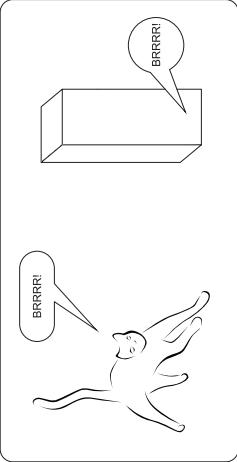
Dzwieki, które moga byc slyszalne podczas prawidowej eksploataci wiynikaja z pracy termostatu, sprežarki (załaczenia), ukladu chłodniciego (kurczenie i rozszerzanie materiały pod wptywem rożnic temperatur oraz przypeplwu czynnika chłodźego).
GWARANCJA, OBSŁUGA POSPRZEDAźOWA
Gwarancja
Świadczenia gwarancyjne wg karty gwarancyjnej. Producent nie odpo-wiada za jakiekolwiek szkody spowodOWane nieprawidlowym postepo-waniem z wyrobem.
Serwis
- Producent sprzetu sugeruje, by wszelkie naprawy i czynnosci regula-cyjne bywykonywane przyez Serwis Fabryczny lub Serwis Autoryzowany producenta. Ze wźgledu na bezpieczscreenwo nie naleźny naprawiac urzadzenia we wąsnych zakresie.
- Naprawy, wykonywane przyeosobyNie posiadajace wymaganych kwalifikacja moga stanowic powazne niebezpieczenstwo dla uzytkowska urzadzenia.
- Minimalny okres obowiazywania gwarancji na urzadzenie offerowane przy bez producenta, importerera lub upowaznionego przyedstawciela jest podany w karcie gwarancyjnej.
- Urzadzenia traci gwarancje wwyniku samowolnych adaptacioni, przyrobek, naruszenia plomb lub innych zabezmieczen sprzetu lub loro czesci oraz innych samowolnych ingerencji w sprzej niedzgodnych z instrukcja obstugi.
Zgloszenia naprawy oraz pomoc w razie usterki
Ježeli urzadzenie wymaga naprawy, naležy skontaktować sie z serwisem. Dane adresowe serwisu jak i kontaktowy numer Telefonu znajduje sie w karcie gwarancynej. Przedkontaktem naležy przygotowej numer seryNJy urzadzenia, znajduje sie on na tabliczce znamionowej. Dla wygody przypeisz go ponižej:

Oświadczenie producenta
Producent deklaruje niniejszym, ze wyrób ten speltnia zasadnicze wymagania wymienionych poniżej dyrektyw europejskich:
- dyrektywy niskonapieciowej 2014/35/UE
- dyrektywy kompatybilnosci elektromagnetycznej 2014/30/UE
- dyrektywy ekoprojektomania 2009/125/UE
- dyrektywy RoHS 2011/65/UE
i dlatego wyrób zostal oznakowany Cc oraz zostala wystawionla dla niedgo deklaracja zgodnosci udostepniana organom nadzorujacym rynek.
Dear customer,
From now on, your daily housework will be easier than ever before. Your appliance Amica is exceptionally easy to use and extremely efficient. After reading these Operating Instructions, operating the appliance will be easy.
Before being packaged and leaving the manufacturer, the appliance was thoroughly checked with regard to safety and functionality.
Before using the appliance, please carefully read these Operating Instructions. By following these instructions carefully you will be able to avoid any problems in using the appliance. It is important to keep these Operating Instructions and store them in a safe place so that they can be consulted at any time.
Follow these instructions carefully in order to avoid possible accidents.
Sincerely,
Amica
GUIDELINES CONCERNING THE SAFETY OF USE
- The appliance is intended for household use only.
- The manufacturer reserves the right to introduce changes which do not affect the operation of the appliance.
- Some provisions in this user manual are unified for refrigerating products of different types (for a refrigerator, refrigerator-freezer or freezer)
- The Manufacturer shall not be held liable for damage arising from the failure to observe the instructions contained in this manual.
- Keep this manual for future reference, or to pass it over to the next user.
- This appliance is not intended for use by persons (including children) with limited physical or mental capabilities and persons who lack experience or familiarity with the appliance.
- Do not allow children to use the appliance. Do not allow them to play with the appliance. They must not climb inside the drawers and swing on the doors.
- The appliance operates properly at the ambient temperature (see product fiche). Do not use it in the cellar, unheated summer cottage during autumn and winter.
- When placing, moving, lifting the appliance, do not hold the door handles, do not pull the condenser at the rear part of the refrigerator and do not touch the compressor unit.
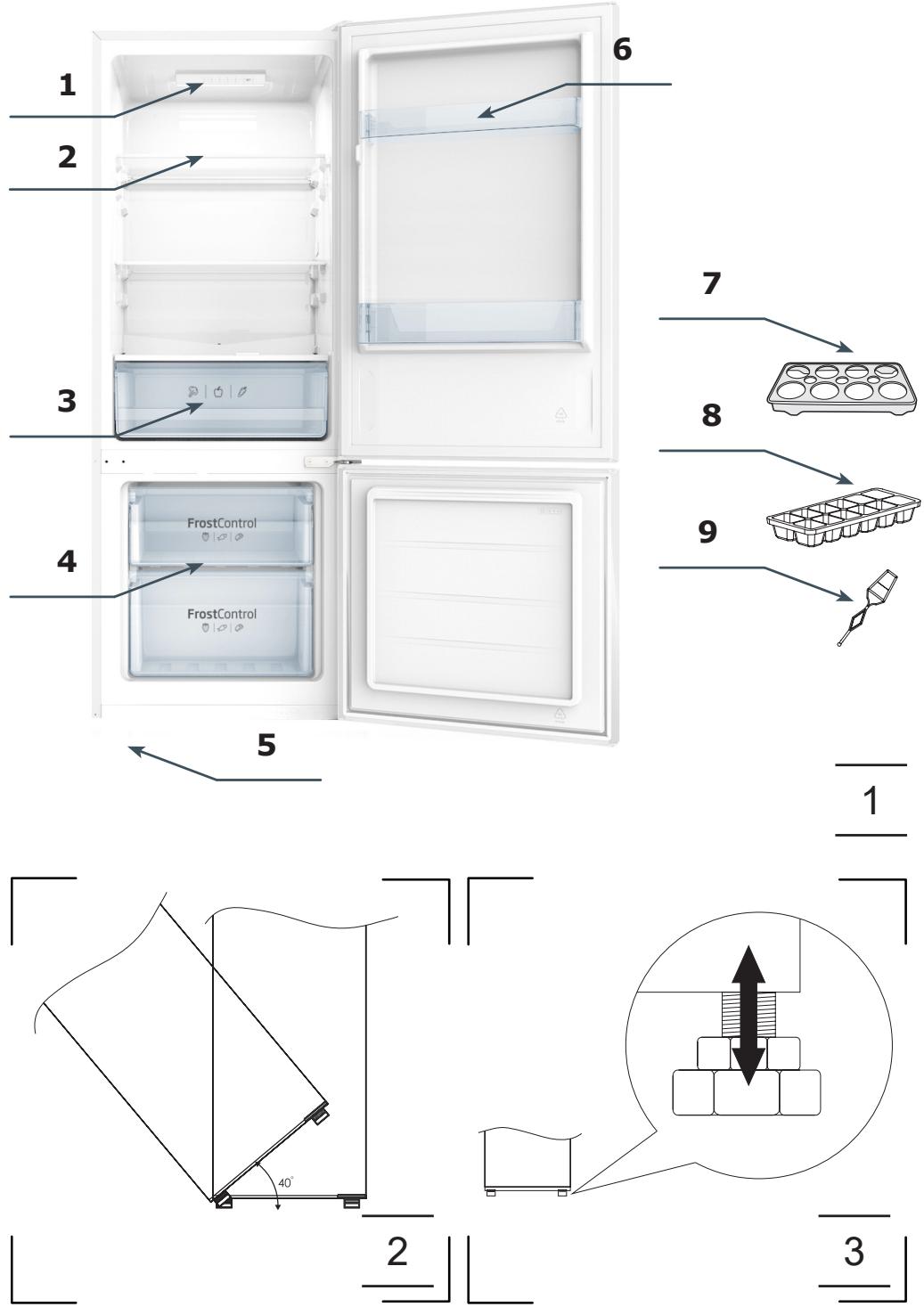
- When transporting, moving or positioning the fridge-freezer do not tilt it by more than 40^ from the vertical position. Should such a situation occur, the appliance should be switched on after minimum 2 hours from its replacement in the right position (fig.2).
- Pull the plug out from the mains socket before each
maintenance activity. Do not pull on the cord, but hold the body of the plug instead.
- The "cracking" sound, which the appliance may emit is caused by the expansion and contraction of parts as a result of temperature variations.
- For safety reasons do not repair the appliance yourself. Repairs carried out by persons who do not have the required qualifications may result in serious danger for the user of the appliance.
- Air the room in which the appliance is placed for a few minutes (the size of the room for a product containing isobuthane/R600a must be at least 4m^3 ) to avoid damage to the cooling system.
- Do not refreeze partly thawed products.
- Do not store beverages in bottles and cans, especially carbonated beverages, in the freezer chamber. The cans and the bottles may explode.
- Do not put frozen products, taken out directly from the freezer (lollies, ice cubes, etc.) into your mouth, their low temperature may cause severe frostbite.
- Make sure you do not damage the cooling system, by puncturing the refrigerant pipes in the evaporator or breaking the pipes. The refrigerant is flammable. If the refrigerant makes contact with the eyes, rinse them with clean water and call for medical assistance immediately.
- If the power wire gets broken, it should be replaced with a new one in a specialist repair shop.
- This appliance is intended for food storage, do not use it for other purposes.
- When performing activities, such as cleaning, maintenance or moving, the appliance must be completely disconnected from power supply (by pulling the plug out from the socket)
- This appliance can be used by children aged 8 years and older or by persons with physical, mental or sensory handicaps, or by those who are inexperienced or unfamiliar with the appliance, provided they are
supervised or have been instructed how to safely use the appliance and are familiar with risks associated with the use of the appliance. Ensure that children do not play with the appliance. Cleaning and maintenance of the appliance should not be performed by children unless they are 8 years or older and are supervised by a competent person.
WARNING: Do not use mechanical devices or other means to accelerate the defrosting process, other than those recommended by the manufacturer.
- WARNING: Do not use electrical appliances inside the food storage compartments of the appliance, unless they are of the type recommended by the manufacturer.
- If the socket does not match the refrigerator plug, it must be replaced by the manufacturer, its service agent or similar qualified persons in order to avoid a hazard.
- In order to obtain more space in the freezer, you can remove the drawers and place the food directly on the shelves. This has no effect on the product mechanical properties and cooling performance. Declared freezer capacity was calculated with the drawers removed.

WARNING: Risk of fire / flammable materials
Children aged from 3 to 8 years are allowed to load and unload refrigerating appliances.
WARNING: When positioning the appliance, ensure the supply cord is not trapped or damaged.
To avoid contamination of food, please respect the following instructions:
-
Opening the door for long periods can cause a significant increase of the temperature in the compartments of the appliance.
-
Clean regularly surfaces that can come in contact with food and accessible drainage systems.
- Store raw meat and fish in suitable containers in the refrigerator, so that it is not in contact with or drip onto other food.
- Two-star frozen-food compartments are suitable for storing pre-frozen food, storing or making ice-cream and making ice cubes.
- One-, two- and three-star compartments are not suitable for the freezing of fresh food
| Compartments TYPE | Target storage temp. [°C] | Appropriate food | |
| 1 | Fridge | +2≤+8 | Eggs, cooked food, packaged food, fruits and vegetables, dairy products, cakes, drinks and other foods are not suitable for freezing. |
| 2 | Freezer * * * * | ≤-18 | Seafood (fish, shrimp, shellfish), freshwater aquatic products and meat products (recommended for 3 months, the longer the storage time, the worse the taste and nutrition), suitable for frozen fresh food. |
| 3 | Freezer * * * | ≤-18 | Seafood (fish, shrimp, shellfish), freshwater aquatic products and meat products (recommended for 3 months, the longer the storage time, the worse the taste and nutrition), are not suitable for frozen fresh food. |
| 4 | Freezer * * | ≤-12 | Seafood (fish, shrimp, shellfish), freshwater aquatic products and meat products (recommended for 2 months, the longer the storage time, the worse the taste and nutrition), are not suitable for frozen fresh food |
| 5 | Freezer * | ≤-6 | Seafood (fish, shrimp, shellfish), freshwater aquatic products and meat products (recommended for 1 months, the longer the storage time, the worse the taste and nutrition), are not suitable for frozen fresh food. |
| 6 | 0-star compartment | -6≤0 | Fresh pork, beef, fish, chicken, some packaged processed foods, etc. (Recommended to eat within the same day, preferably no more than 3 days). Partially encapsulated processed foods (non-freezable foods) |
| 7 | Chill | 2≤+3 | Fresh/frozen pork, beef, chicken, freshwater aquatic products, etc.(7 days below 0°C and above 0°C is recommended for consumption within that day, preferably no more than 2 days). Seafood (less than 0 for 15 days, it is not recommended to store above 0°C) |
| 8 | Fresh Food | 0≤+4 | Fresh pork, beef, fish, chicken, cooked food, etc. (Recommended to eat within the same day, preferably no more than 3 days) |
| 9 | Wine | +5≤+20 | red wine,white wine,sparkling wine etc. |
- Note: please store different foods according to the compartments or target storage temperature of your purchased products.
- If the refrigerating appliance is left empty for long periods, switch off, defrost, clean, dry, and leave the door open to prevent mould developing within the appliance.
- Water dispenser cleaning (special for water dispenser products): Clean water tanks if they have not been used for 48h ; flush the water system connected to a water supply if water has not been drawn for 5 days.
- Pursuant to Commission Regulation (EU) 2019/2019, the minimum availability period for spare parts necessary to repair the appliance is 7 or 10 years depending on the type and purpose of the spare part.
- The list of spare parts and the ordering procedure are available on the websites of the manufacturer, importer or an authorized representative.
- For more information about the product, please refer to the EU EPREL Product Database at https://eprel.ec.europa.eu. For more information, please use your mobile device to scan the QR code on the energy label or enter the product model listed on the energy label in the EPREL search engine https://eprel.ec.europa.eu/
INSTALLATION AND OPERATING CONDITIONS OF THE APPLIANCE
This refrigeration appliance is not intended for use as a built-in appliance.
Installation before using the appliance for the first time
- Take the product out of the package, remove the scotch tape protecting the door and the equipment. Any remaining adhesive stains may be removed with a mild washing agent.
- Do not throw away the polystyrene elements of the packaging. If it is necessary to transport the fridge-freezer, pack it in the polystyrene elements and film as well as protect ing it with scotch tape
- Clean the interior surface of the fridge-freezer and the elements of the equipment with a washing agent dissolved in lukewarm water, then wipe it dry.
- Place the fridge-freezer on an even, flat and stable surface, in dry, aired and shaded room, far from the heat sources such as: oven, hob, central heating radiators, central heating pipes, hot water installation, etc.
- On the exterior surface of the product may be a protective foil, this foils should be removed.
- Make sure the appliance is placed in a horizontal position by screwing in the 2 adjustable front legs (fig. 3)
- To ensure that the door opens freely, the distance between the side of the appliance (on door hinges side) and the wall is shown on figure 5.*
- Ensure adequate ventilation of the room and free air circulation from all sides of the appliance (fig. 6).*
Minimum distances from the heat sources
- from the electric gas and other ovens - 30 mm,
from oil or coal fired ovens - 300 mm,
· from built-in ovens - 50 mm
If there is no possibility of ensuring the above-mentioned distances, provide an appropriate insulation board.
Warning:
- The rear wall of the refrigerator, in particular, the condenser and other elements of the cooling system must not contact other elements, which may damage them, (e.g. central heating pipes and the water supply pipes).
- It is forbidden to readjust or modify any parts of the unit. It is crucial not to damage the capillary tube visible in the compressor recess. The tube may not be bent, straightened or wound.
- If the capillary tube is damaged by the user the guarantee will be void (fig. 8).
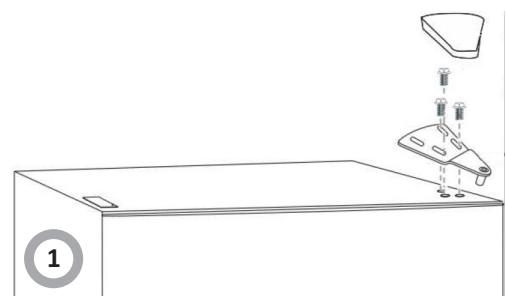
- In some models the handle is put into the appliance, You should screw it with Your own screwdriver,
Mains connection
- Prior to connection, it is recommended to set the temperature control knob to an "OFF" or other position that disconnects the appliance from the power supply (See page with the control description).
- This appliance should be connected to AC 220-240V 50Hz supply socket. The socket must be fitted properly, and must be supplied with an earthing conduit and a 10A fuse.
- It is a legal requirement that the appliance is properly earthed. The manufacturer will not be held liable for any damage or injury which may result from the failure to fulfil this requirement.
- Do not use adapters, multiple sockets and 'two-wire extension leads. If it is necessary to use the extension lead, it must be equipped with a protection ring and a single socket and must have a VDE/GS safety certificate.
- If an extension lead is used (with a protection ring and safety certificate), its socket must be located at a safe distance, away from the sinks, and must not be in a place where it could be flooded by water or waste water.
- See the type plate at the lower part of the internal wall of the appliance for detailed specifications**.
Disconnecting the mains
Make sure the appliance can be easily disconnected from the mains, either by pulling the plug out of the mains socket, or by switching the two-pole switch off (fig. 9).
Climate range
The information about the climate range of the appliance is provided on the rated plate. It indicates at which ambient temperature (that is, room temperature, in which the appliance is working) the operation of the appliance is optimal (proper).
| Climate class | Allowable ambient temperature | ||
| SN | Extended Temperate | This refrigeration appliance is intended for use at an ambient temperature ranging between 10°C and 32°C | |
| N | Temperate | This refrigeration appliance is intended for use at an ambient temperature ranging between 16 °C and 32°C | |
| ST | Subtropical | This refrigeration appliance is intended for use at an ambient temperature ranging between 16 °C and 38 °C | |
| T | Tropical | This refrigeration appliance is intended for use at an ambient temperature ranging between 16 °C and 43 °C | |
UNPACKING

During transportation, protective packaging was used to protect the appliance against any damage. After unpacking, please dispose of all elements of packaging in a way that will not cause damage to the environment.
All materials used for packaging the appliance are environmentally friendly; they are 100 % recyclable and are marked with the appropriate symbol.
Important! Packaging materials (bags, polyethylene, polystyrene, etc.) should be kept away from children during unpacking.
DISPOSAL OF OLD APPLIANCE

In accordance with European Directive 2012/19/EU and local legislation regarding used electrical and electronic goods, this appliance is marked with the symbol of the crossed-out waste container. This marking indicates that the appliance must not be disposed
of together with other household waste after it has been used.
The user is obliged to hand it over to waste collection centre collecting used electrical and electronic goods. The collectors, including local collection points, shops and local authority departments provide recycling schemes.
Proper handling of used electrical and electronic goods helps avoid environmental and health hazards resulting from the presence of dangerous components and the inappropriate storage and processing of such goods.
CONTROLS
Appliance controls
The control panel is shown in figure 10. For reference it is also shown below:
FAST COOL
2
4
5
6
8
SET
Adjust temperature inside the appliance
The control panel is located inside the appliance on the top wall of the refrigerator compartment. It allows you to select the temperature setting according to the following sequence: 2 4 5 6 8 or activate rapid cooling function (Fast Cool). You can change settings by consecutive pressing the SET button.
Setting 8 The highest temperature inside the appliance (warmer)
Settings 4 / 5 / 6 Medium temperature inside the appliance
Setting 2 The lowest temperature inside the appliance (cooler)
The Fast Cool function - enables rapid cooling of food products so they stay fresh longer. The function will be automatically disabled after 3 hours or when the temperature inside the refrigerator compartment reaches 2^ . The function may be disabled sooner by selecting the desired temperature with the SET button.
Refrigerator door opening alarm: When the refrigerator is open over 3 minutes, the panel starts blinking.
Note:
If the indicator light '2' or '5' or '8' gets flickering, it indicates that the refrigerator has broken down. Please contact the after- sale service
Additional information on the temperature
- The temperature inside the appliance is influenced by many factors. How you set the temperature control dial depends on the ambient temperature, sun exposure, how often you open the door and the amount of food stored. The middle setting of the dial is most optimal in most cases.
- Do not put food into the fridge freezer before it has reached its operating temperature, which takes minimum 4 hours.
- Do not change the temperature settings due to the change in the season of the year. The ambient temperature increase will be detected by the sensor and the compressor will be switched on automatically for a longer period of time in order to maintain the temperature set inside the chambers.
- The slight changes in temperature are perfectly normal and may occur, for instance during the storage of great quantities of fresh products in the fridge, or when the door is open for a longer period of time. This will not affect the condition of the stored foodstuff, and the temperature will quickly return to its set value.
OPERATION AND FUNCTIONS
Storage of food in the fridge-freezer
- The products should be placed on plates, in containers or packed in food wrap. Distribute them evenly over the shelves.
- If the food contacts the rear wall, it may cause frosting or wetting of the products.
- Do not put dishes with hot food into the fridge
- Products which absorb flavours easily such as butter, milk, white cheese and products with intense flavour, such as fish, smoked meat, hard cheese must be placed on shelves, packed in food wrap or in tightly sealed containers.
- The storage of vegetables containing significant quantities of water will cause the deposition of condensation on the vegetable containers, it does not impact on the proper functioning of the fridge.
- Before putting the 'vegetables' into the fridge, dry them well.
- Excessive moisture shortens the shelf life of vegetables, especially the leafed vegetables.
- Do not wash the vegetables before storing in the refrigerator. Washing removes the natural protection, therefore it is better to wash the vegetables directly before consumption.
-
It is recommended to place the products in freezer drawers 1, 2, 3^ up to natural loading capacity (Fig. 11a / 11b).*
-
Packed products
- Shelf
-
Natural loading capacity
4. -
Stacking of products on the freezer shelves is acceptable.
It is acceptable to place products beyond the natural loading capacity by 20-30 mm.* - In order to increase the loading capacity of the freezer chamber and allow the stacking of products on the freezer evaporator wire shelves up to maximum height it is possible to remove drawers 1 and 2.*
Freezing food**
- Practically all the food products, except for vegetables consumed raw, such as lettuce can be frozen.
- Only food products of the highest quality, divided into small portions for single use, should be frozen.
- Products should be packed in materials that are odourless, resistant to air and moisture penetration, and not susceptible to fat. Plastic bags, polyethylene and aluminium sheets are the best wrapping materials.
- The packaging should be tight and should stick to the frozen products. Do not use glass containers.
- Keep fresh and warm foodstuff at ambient temperature away from the products, which have already been frozen.
-
We advise you not to place more of fresh food at a time to the freezer per day (see table witch technical specification).
-
In order to maintain optimum quality of the frozen food, reorganise the food that is in the middle of the freezer, so that it does not touch the products that are not yet frozen.
- It is recommended that you move the already frozen products to one side and place the fresh products that are to be frozen on the opposite side, as close to the rear and side walls as possible.
To freezing products, use space marked ***. - Bear in mind that the temperature in the freezer is affected by several factors, including the ambient temperature and the quantity of food products in the chamber, the frequency of opening the door, the amount of frost in the freezer, and the thermostat setting.
- If you cannot open the freezer door immediately after closing it, allow 1-2 minutes for the negative pressure to compensate, and try again to open the door.
The storage time for frozen products depends on their quality before freezing when fresh, and on the storage temperature. The following storage periods are recommended when the temperature of -18^ or lower is maintained:
| Products | Months |
| Beef | 6-8 |
| Veal | 3-6 |
| Giblets | 1-2 |
| Pork | 3-6 |
| Poultry | 6-8 |
| Eggs | 3-6 |
| Fish | 3-6 |
| Vegetables | 10-12 |
| Fruit | 10-12 |
Do not store frozen food in rapid cooling chamber. Ice cubes can be prepared and stored in this chamber.
Note: If the appliance does not have a freezer compartment ( * ), it is not suitable for freezing foodstuffs.
USING THE REFRIGERATOR EFFICIENTLY
Practical everyday tips
- Do not place fridges or freezers next to radiators, heaters, stoves or in direct sunlight.
- Make sure that air vents are not covered up and clean the dust off them once or twice a year.
- Select the right temperature: 6 to 8^ C in your refrigerator and -18^ C in your freezer is sufficient.
- When on holiday, turn up the temperature in your fridge.
- Only open your fridge or freezer when necessary. It helps if you know what food each contains and where it is located. Return food to the fridge or freezer as soon as possible after you have used it so that it does not warm up too much.
- Wipe the inside of your fridge regularly with a cloth soaked in a mild detergent. Appliances which are not self-defrosting will require regular defrosting. Do not allow frost layers thicker than 10mm to form.
- Keep the seal around the door clean, otherwise it will not shut properly. Always replace broken seals.
Understanding the stars

Temperature is at least -6^ ; sufficient to store frozen food for about a week. Drawers or compartments marked with one star used to be a feature of (mostly) cheaper fridges.

Food can be stored at -12^ or below for 1-2 weeks without losing its taste. Not suitable for freezing food.

This rating is mainly used to store foods at -18^ or below. Can also be used to freeze up to 1 kilogram of fresh food.

This appliance is suitable for storing foods at -18^ or below and freezing larger quantities of fresh foods.
Practical tips
Due to the natural circulation of the air in the appliance, there are different temperature zones in the refrigerator chamber.
- The coldest area is directly above the vegetables drawers. Use this area for all delicate and highly perishable food e.g.:
- Fish, meat, poultry
- Sausage products, ready meals
- Dishes or baked goods containing eggs or cream
- Fresh dough, cake mixtures
- Pre-packed vegetable and other fresh food with a label stating it should be kept at a temperature of approx 4^ .
- The warmest area is in the top section of the door. Use this for storing butter and cheese.
Food that should not be stored in a refrigerator
- Not all food is suitable for storing in the refrigerator, particularly:
- Fruit and vegetables which are sensitive to cold, such as bananas, avocado, papaya, passion fruit, aubergines, peppers, tomatoes and cucumbers.
- Fruit which is not yet ripe
- Potatoes
Warning:
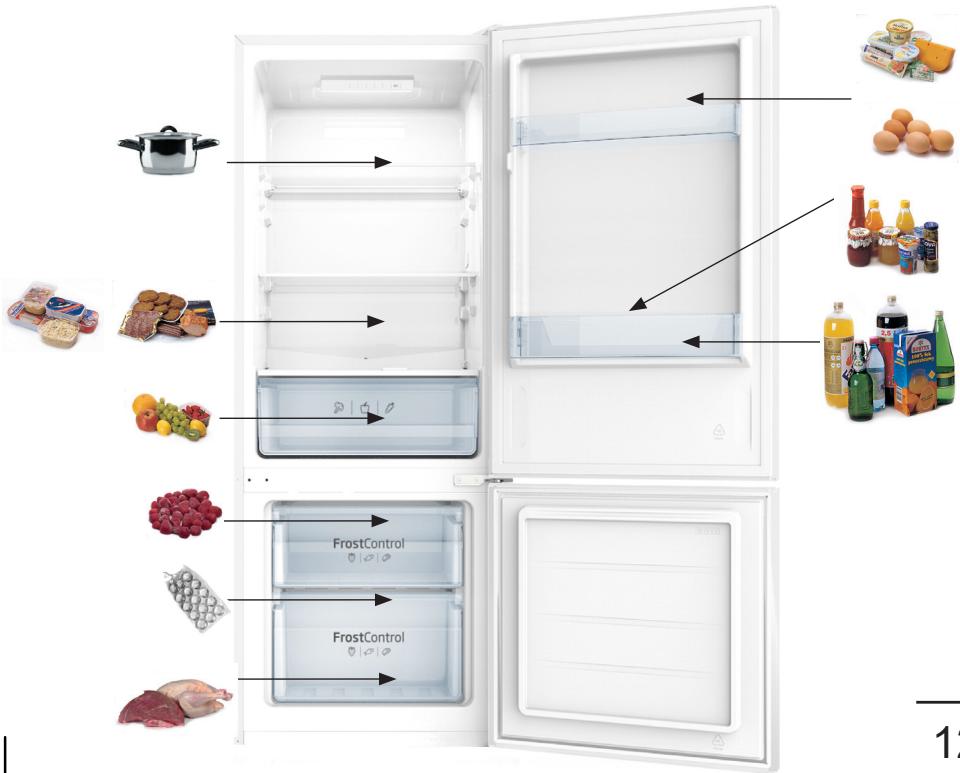
Example of storing the food - see figure 12.
To achieve the most effective food preservation for the longest possible time and to avoid wasting any food, position the products as shown in Figure 12. In addition, this figure illustrates the layout of drawers, baskets and shelves, which allows the most efficient use of energy.
Optimal temperature and storage conditions will extend product shelf life and optimize electricity consumption. Optimal storage temperature range should be stated on the food product packaging.
DEFROSTING, WASHING AND MAINTENANCE
Never clean the product's casing or plastic parts using solvents or strong, abrasive detergents (e.g. washing powders or creams)! Use mild liquid detergents and soft cloths only. Do not use sponges.
Defrosting the fridge***
- Frost settles on the rear wall of the fridge chamber. It is removed automatically. During the defrosting, the condensate, which contains contaminants may clog the opening in the through. Should it occur, carefully unclog the opening with the cleaning plug (fig. 13).
- The appliance operates in cycles: it refrigerates (then the frost settles on the rear wall), and defrosts (water flows down the rear wall)
- Disconnect the appliance from the mains before cleaning by removing the plug from the mains socket or switching off the fuse. Prevent water from penetrating the control panel or the light.
- Do not use defrosting aerosols. They may cause the formation of an explosive mixture, or contain solvents which may damage the plastic components of the appliance and even be harmful to health.
- Make sure the water used for cleaning does not flow into the evaporation container through the discharge opening.
- The whole appliance, except for the door gasket must be cleaned with a mild cleaning detergent. The door gasket should be cleaned with water and wiped dry.
- Wash all the accessories (vegetable containers, door shelves, glass shelves, etc.).
Defrosting the freezer**
It is recommended to combine defrosting the appliance with washing it.
- Excessive accumulation of ice on the freezing areas impairs the appliance's freezing capacity and increases the energy consumption.
- Defrost the appliance at least once or twice a year. In case of a higher ice build-up, defrosting must be carried out more frequently.
- If there is food in the freezer, set the knob to the max. position about 4 hours before the planned defrosting. This will ensure the possibility of storing the food at the ambient temperature for a longer time.
After taking the food out of the freezer, put it in a container, wrap it with several layers of paper, a blanket and store it at a cool place.
- The defrosting operation should last as short as possible. Long storage of food at the ambient temperature shortens their shelf life.
Defrost the freezer chamber following steps:\*\*
- Switch of the appliance using the control panel and pull the plug out from the socket..
- Open the door and remove the food from the freezer.
- Depending on the model, pull out the drainage tube located in the bottom of the freezer compartment and place a suitable vessel underneath.
- Leave the door open, this will speed up the defrost process. Additionally, a pot with hot water (not boiling) may be placed inside the freezer compartment.
- Wash the interior of the freezer and wipe it dry.
- Switch on the appliance as per the relevant point in the manual.
Automatic fridge defrosting\*\*\*\*
The fridge chamber has been equipped with an automatic defrosting function. However, frost may settle on the rear wall of the fridge chamber. This happens usually, when large quantities of fresh food products are stored in the fridge.
Automatic fridge defrosting\*\*\*\*
The freezer chamber has been equipped with an automatic defrosting function (no-frost). The food is frozen in the cooled circulation air, and the moisture from the freezer chamber is discharged outside. As a result, no ice and frost is produced in the freezer and the products do not freeze on each other.
Washing the fridge and freezer chambers manually\*\*\*\*
It is recommended to wash the fridge and freezer chambers at least once a year. This prevents the formation of bacteria and bad odours. Switch off the appliance, using button (1), remove the food from the chambers and wash them using water with a mild detergent. Then, wipe the chambers dry with a cloth.
Taking out and putting in the shelves*****
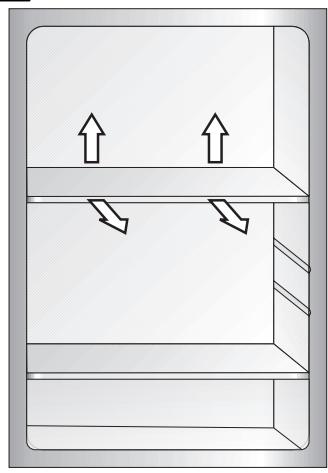
Slide the shelf out, then slide it in as much as possible so that its clamp could fit the guide groove (fig. 15).
Taking out and putting in the door shelf*****
Lift the door shelf, remove it and put it back from the top into its required position (fig. 16).
WARNING! You must not put an electric heater, a heating fan or a hair dryer into the freezer by any means.
** Applicable to appliances with a freezer compartment Not applicable to appliances with a Frost-free System.
Applicable to appliances with a refrigerator compartment Not applicable to appliances with a Frost-free System.
Applicable to appliances with a Frost-free System.
**** Does not apply to freezers
TROUBLE-SHOOTING
| Problems | Possible causes | Remedies |
| The appliance does not work | The electric circuit is disrupted | - check whether the plug is properly inserted into the socket - check whether the power cable of the appliance is not damaged - check whether there is voltage in the socket, by plugging another appliance, e.g. a night lamp - check whether the appliance is switched on by setting the thermostat to a position above 0. |
| The lighting inside the chamber does not work | The bulb is loose or fused (only appliances with bulb lightning type) | - fit the bulb correctly or replace it (see section above “Replacing the interior light bulb”) |
| The appliance works continuously | Incorrect setting of the adjustment knob | - reset the knob to a lower position |
| See. “Temperature inside the appliance is not low enough for description of other possible causes | See. “Temperature inside the appliance is not low enough for description of other possible remedies | |
| Water collects in the lower part of the appliance | The water discharge opening is clogged (depending on the model) | - clean the discharge opening (see the operating manual – chapter entitled “Defrosting the fridge”) |
| Internal air circulation obstructed | - place the food and containers in such a way as that they do not touch the rear wall of the fridge | |
| The appliance generates unusual noise | Incorrect levelling of the appliance | - level the appliance properly |
| The appliance is touching furniture and/or other objects | - place the appliance at a location that ensures proper clearances around it |
Problems
Possible causes
Remedies
| Incorrect setting of the adjustment knob | - reset the knob to a higher position | |
| The ambient temperature is higher or lower than the climate range from table with technical specification | - the appliance is adapted to operation in the climate range from table with technical specification. | |
| The appliance is located in a sunlit place or near heat sources | - move the appliance to another place. Observe the guidelines contained in the manual | |
| Too much warm food loaded at a time | - wait 72 hours until the food becomes cool (freezes) and the required temperature is reached inside the chamber | |
| Temperature inside the appliance is not low enough or too high | Internal air circulation obstructed | - place the food and con-tainers in such a way that they do not touch the rear wall of the fridge |
| The air circulation at the back of the appliance is obstructed | - move the appliance min. 30 mm away from the wall | |
| The door of the fridge/freezer is opened too often and/or remains open for too long | - reduce the frequency of opening the door and/or shorten the time when door remains open | |
| The door does not close completely | - place the food and con-tainers so that they would not interfere with door closed | |
| The compressor is switched on too rarely | - check whether the ambi-ent temperature is not lower than climate class | |
| Door gasket inserted incorrectly | - press the gasket in |
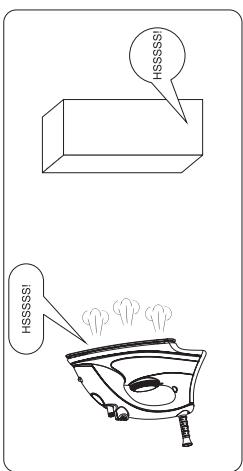
Certain sounds can be heard during normal use of the refrigerator, which do not affect its correct operation.
Sounds, which can be easily prevented:
- noise caused by the appliance which is not level - adjust the position with the adjustable turn-in front feet. Alternatively, place pads made of soft material under the rear rollers, especially when the appliance is placed on tiles.
touching the adjacent piece of furniture - move the refrigerator away. - creaking of the drawers or shelves - take out and put back the drawer or shelf.
sounds of clinking bottles - move bottles apart.
Sounds heard during normal use are mainly due to operation of the thermostat, compressor (switching on) and cooling system (thermal expansion and contraction of the radiator caused by flow of the cooling agent).
WARRANTY AND AFTER SALES SERVICE
Warranty
Warranty service as stated on the warranty card. The manufacturer shall not be held liable for any damage caused by improper use of the product.
Service
- The manufacturer recommends that all repairs and adjustments be carried out by the Factory Service Technician or the Manufacturer's Authorized Service Point. For safety reasons, repairs should be referred to professionals.
- Repairs carried out by unqualified persons may seriously endanger the appliance user.
- The minimum warranty period for the appliance offered by the manufacturer, importer or authorized representative is given in the warranty card.
- The warranty shall be void if you make any independent adaptations or alterations, tamper with seals or other appliance safety devices or its parts or interfere with the appliance contrary to operating instructions.
In the event of appliance malfunction, request assistance or repair.
If your appliance needs repair, please contact the service centre. Please see warranty card for address and contact details of our service centre. Before contacting us, please have ready the appliance serial number, which can be found on the identification sticker: For your convenience, please write it down below:

Manufacturer's Declaration
The manufacturer hereby declares that this product meets the requirements of the following European directives:
Low Voltage Directive 2014/35/EC
- Electromagnetic Compatibility (EMC) Directive 2014/30/EC
ErP Directive 2009/125/EC
- Directive RoHS 2011/65/EC
and has thus been marked with the CC and CA symbol and been issued with a declaration of compliance made available to market regulators.
| PL | EN | PL | EN | ||
| 1 | Panel sterowania | Control panel | Półka szklana | Glass shelf | 2 |
| 2 | Półka szklana | Glass shelf | Półka szklana nadpjemnikiem na warzywa | Shelf over the vegetab-le container | 1 |
| 3 | Pojemnik na wärzywa | Vegetable container | Pojemnik na warzywa | Vegetable container | 1 |
| 4 | Szuflada w zam-ražarce | Freezer drawer | Blakonik sredni | Medium door shelf | 2 |
| Balkonik dužy | Large door shelf | 1 | |||
| 5 | Nożki regulacyjne | Adjustable feet | Szuflada w zamražarce | Freezer drawer | 2 |
| 6 | Balkonik drzwì | Door shelf | Taca na dostki lodu | Ice cube tray | 1 |
| 7 | Taca na jajka | Egg tray | Tacka na jajka | Egg tray | 1 |
| 8 | Taca na dostki lodu | Ice cube tray | Przepychacz | Cleaning plug | 1 |
| 9 | Przepychacz | Cleaning plug |


FAST COOL
2
4
5
6
8
C
SET
15

16



e
SRRRR
5
CRACK
e

O












Amica S.A.
ul . Mickiewicza 52 / 64- 510 Wronki
tel. 67 25 46 100 / fax 67 25 40 320
www.amica.pl
Amica International GmbH
Lüdinghauser Str. 52
D-59387 Ascheberg
Tel: 0 25 93 - 95 67-0
www.amica-group.de
- INSTRUKCJA OBSŁUGI OPERATING INSTRUCTIONS
- PL - Spis tresci
- WSKAZÓWKI DOTYCZACE BEZPIECZENSTWA 6 INSTALACJA I WARUNKI PRACY URZADZENIA 11
- ROZPAKOWANIE 13 USUWANIE ZUZYTYCH URZADZEN 14
- STEROWANIE 15
- OBSLUGA I FUNKCJE 16
- JAK EKONOMICZNIE UZYTKOWAC LODOWK
- ODSZRANIANIE, MYCIE I KONSERWACJA 20
- LOKALIZACJA USTEREK 22
- GWARANCJA, OBSŁUGA POSPRZEDAźOWA 24
- EN- Table of contents
- GUIDELINES CONCERNING THE SAFETY OF USE 26 INSTALLATION AND OPERATING CONDITIONS OF THE APPLIANCE 31
- UNPACKING 33 DISPOSAL OF OLD APPLIANCE 34
- CONTROLS 35
- OPERATION AND FUNCTIONS 36
- USING THE REFRIGERATOR EFFICIENTLY 38
- DEFROSTING, WASHING AND MAINTENANCE 40
- TROUBLE-SHOOTING 42
- WARRANTY AND AFTER SALES SERVICE 44
- Szanowy Kliencie
- WSKAZÓWKI DOTYCZACE BEZPIECZENSTWA
- OSTRZEJEZENIE: Zagrożenie poźarem / materiały palne
- INSTALLACJA I WARUNKI PRACY URZADZENIA
- Instalacja przyd pierwszym uruchomieniem
- Minimalne odlegostocki od zródei ciepla
- Uwaga:
- Podłaczenia zasilania
- Odlaczenie od zasilania
- Klasa klimatyczna
- ROZPAKOWANIE
- USUWANIE ZUZYTYCH URZADZEN
- STEROWANIE
- Sterowanie urzadzeniem
- Regulacja temperatury wewnątrz urzadzenia
- Dodatkowe informacja dotyczne temperatury
- OBSŁUGA I FUNKCJE
- Przechowywanie produktów w chłodziarce i zamrażarce
- Zamražanie produktów**
- JAK EKONOMICNZIE UZYTKOWAC LODÓWKE
- Porady praktyczne
- Co oznaczaja gwiazdki?
- Produkty, których nie naleź przechowymić w lodówcie
- ODSZRANIANIE, MYCIE I KONSERWACJA
- Odszranianie i mycie chłodziarki ***
- Odszranianie i mycie zamrażarki**
- Aby odszronić komoře zamražarki, naležy**
- Automatyczne odszranianie chłodziarki****
- Automatyczne odszranianie zamrażarki****
- Mycie ręczne komory chłodziarki i zamrażarki.****
- Wyjmownikie wiktadanie potek*****
- Wyjmowanie i wiktadanie balkonika*****
- LOKALIZACJA USTEREK
- Dzwieki, ktoRe Iatwo usunac:
- GWARANCJA, OBSŁUGA POSPRZEDAźOWA
- Gwarancja
- Serwis
- Oświadczenie producenta
- Dear customer,
- GUIDELINES CONCERNING THE SAFETY OF USE
- WARNING: Risk of fire / flammable materials
- INSTALLATION AND OPERATING CONDITIONS OF THE APPLIANCE
- Installation before using the appliance for the first time
- Minimum distances from the heat sources
- Warning:
- Mains connection
- Disconnecting the mains
- Climate range
- UNPACKING
- DISPOSAL OF OLD APPLIANCE
- CONTROLS
- Appliance controls
- Adjust temperature inside the appliance
- Note:
- Additional information on the temperature
- OPERATION AND FUNCTIONS
- Storage of food in the fridge-freezer
- Freezing food**
- USING THE REFRIGERATOR EFFICIENTLY
- Practical everyday tips
- Understanding the stars
- Practical tips
- Food that should not be stored in a refrigerator
- DEFROSTING, WASHING AND MAINTENANCE
- Defrosting the fridge***
- Defrosting the freezer**
- Defrost the freezer chamber following steps:\*\*
- Automatic fridge defrosting\*\*\*\*
- Washing the fridge and freezer chambers manually\*\*\*\*
- Taking out and putting in the shelves*****
- Taking out and putting in the door shelf*****
- TROUBLE-SHOOTING
- Sounds, which can be easily prevented:
- WARRANTY AND AFTER SALES SERVICE
- Warranty
- Service
- Manufacturer's Declaration
Marque : AMICA
Modèle : FK244.4X
Catégorie : Réfrigérateur-congélateur