
MX33 - Carte mère AOPEN - Notice d'utilisation et mode d'emploi gratuit
Retrouvez gratuitement la notice de l'appareil MX33 AOPEN au format PDF.

| Type de produit | Carte mère |
| Marque | AOPEN |
| Modèle | MX33 |
| Format | ATX |
| Socket CPU | Socket 370 |
| Processeurs supportés | Intel Pentium III, Celeron (PPGA/FC-PGA) |
| Chipset | VIA Apollo PRO 133 (VT82C693A + VT82C686A) |
| Frequence du bus FSB | 66/100/133 MHz |
| Type de mémoire | SDRAM PC100/PC133 |
| Nombre de slots mémoire | 3 x DIMM 168 broches |
| Capacité mémoire maximale | 1,5 Go |
| Slot d'extension | 1 AGP 1X/2X, 5 PCI, 1 AMR |
| Audio intégré | AC97 with AD1885 CODEC |
| Connecteurs de stockage | 2 x IDE (ATA/33/66/100), 1 x FDD |
| Ports USB | 4 ports USB (2 arrière, 2 avant en option) |
| Ports série/parallèle | 2 x RS-232, 1 x LPT |
| Alimentation | ATX 20 broches |
| Dimensions approximatives | 305 mm x 244 mm (ATX standard) |
| Poids approximatif | 0,8 kg (emballé) |
| Fonctions spéciales | Wake on LAN, Wake on Modem, ACPI, Hardware Monitoring, Overclocking |
| Entretien et nettoyage | Débrancher l'alimentation avant toute intervention. Utiliser un chiffon doux et sec. Éviter les liquides. |
| Sécurité | Protection contre les surintensités et les surtensions. Fusibles réinitialisables. Protection d'écriture BIOS. |
| Pièces détachées et réparabilité | Les composants (condensateurs, connecteurs) sont soudés. La carte n'est pas conçue pour être réparée par l'utilisateur. Contacter le support technique. |
FOIRE AUX QUESTIONS - MX33 AOPEN
Questions des utilisateurs sur MX33 AOPEN
0 question sur cet appareil. Repondez a celles que vous connaissez ou posez la votre.
Poser une nouvelle question sur cet appareil
Téléchargez la notice de votre Carte mère au format PDF gratuitement ! Retrouvez votre notice MX33 - AOPEN et reprennez votre appareil électronique en main. Sur cette page sont publiés tous les documents nécessaires à l'utilisation de votre appareil MX33 de la marque AOPEN.
MODE D'EMPLOI MX33 AOPEN
MX33
Online Manual
DOC. NO.: MX33-OL-E0009A
What's in this manual
MX33 1
What's in this manual 2
Overview 9
You Must Notice 10
Before You Start 11
Quick Installation Procedure 12
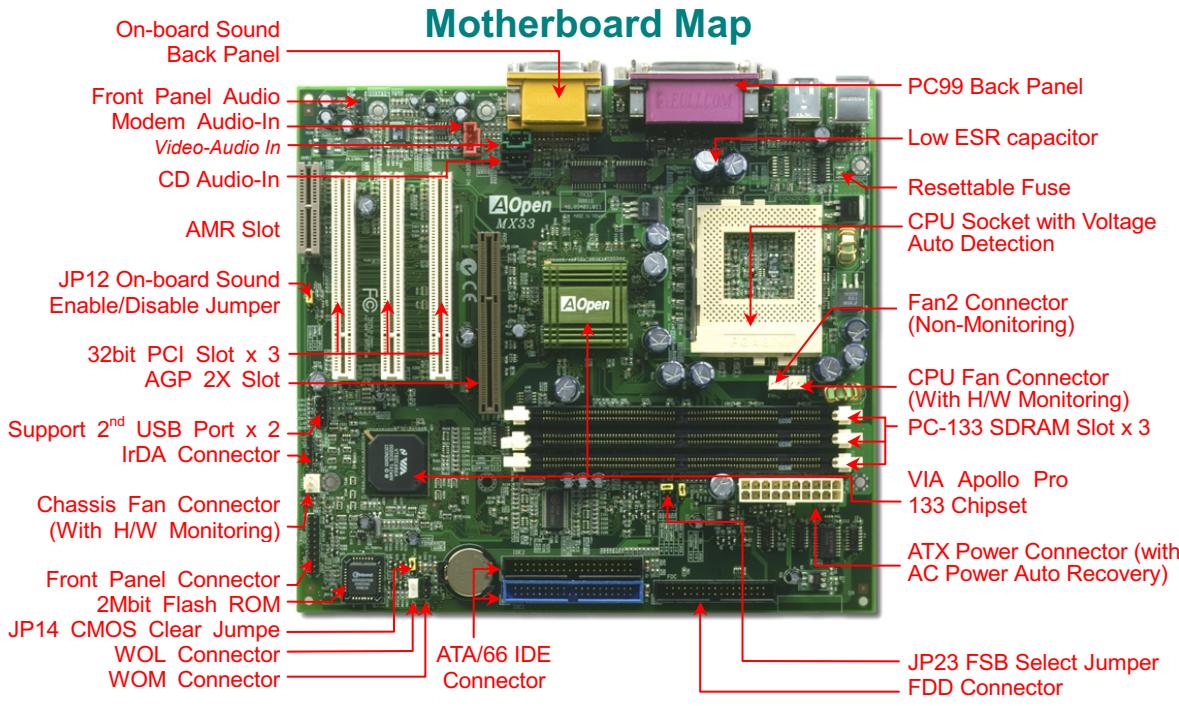
Motherboard Map. 13
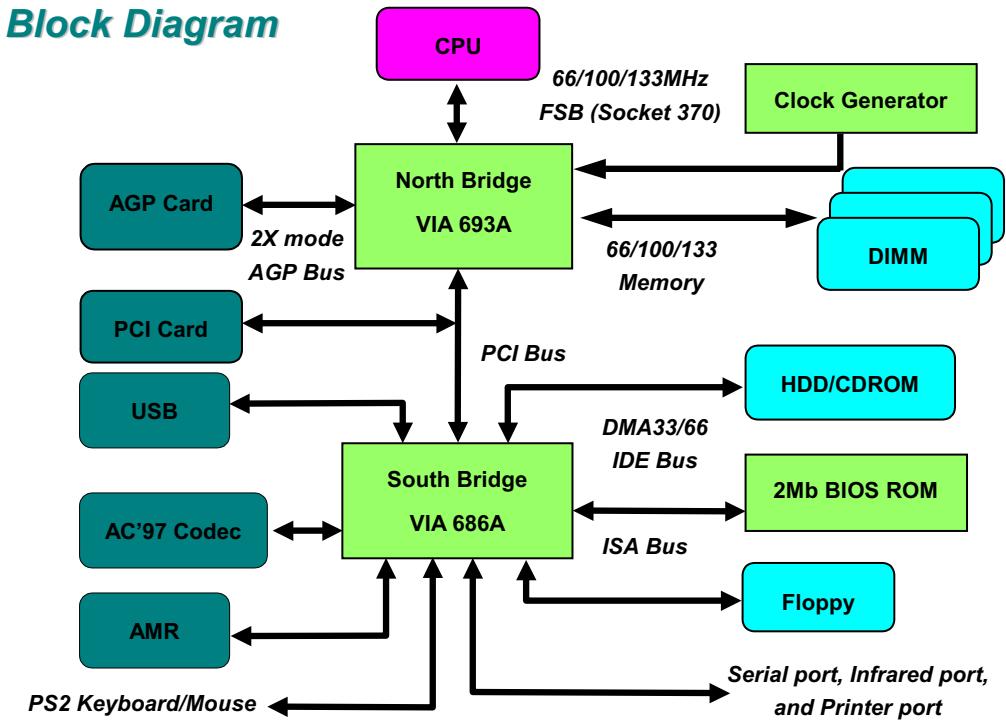
Block Diagram 14
Hardware 15
JP14 Clear CMOS. 16
CPU Installation 17
CPU Fan Connector. 18
JP23 FSB/PCI Clock Ratio 19
CPU Jumper-less Design 21
DIMM Socket 26
Front Panel Connector 28
ATX Power Connector 29
AC Power Auto Recovery 30
IDE and Floppy Connector 31
IrDA Connector 34
WOM (Zero Voltage Wake on Modem) 35
WOL (Wake on LAN) 38
PC99 Color Coded Back Panel 40
JP12 Enable/Disable Onboard Sound 41
Front Panel Audio (Optional) 42
CD Audio Connector 43
Modem Audio Connector 44
Video_Audio_IN Connector 45
Support 2^nd USB Ports 46
Battery-less and Long Life Design 47
Over-current Protection 48
Hardware Monitoring 50
Resettable Fuse 51
BIOS Write Protection 52
Year 2000 (Y2K) 53
Low ESR Capacitor 55
Layout (Frequency Isolation Wall) 57
Driver and Utility 58
Autorun Menu from Bonus CD Disc. 59
Installing Windows 95 60
Installing Windows 98 61
Installing Windows 98 SE & Windows2000 62
Installing VIA 4 in 1 Driver 63
64
65
ACPI Suspend to Hard Drive 66
AWARD BIOS 73
EnterBIOS Setup. 74
Change Language. 75
Standard CMOS Features Setup 76
AdvancedBIOSFeatures Setup. 82
Advanced Chipset Features Setup 91
Integrated Peripherals 101
Power Management Setup. 116
PNP/PCI Configuration Setup 129
PC Health Status 134
Frequency/Voltage Control 135
Load Setup Defaults. 138
Load Turbo Defaults 139
Set Password 140
Save & Exit Setup 141
Exit without Saving 142
BIOS Upgrade 143
Overclocking 145
Glossary 148
VGA Card & Hard Disk 147
AC97. 148
ACPI (Advanced Configuration & Power Interface) 148
AGP (Accelerated Graphic Port) 149
AMR (Audio/Modem Riser) 149
AOpen Bonus Pack CD. 149
APM 150
ATA/66 150
ATA/100 150
BIOS (Basic Input/Output System) 151
Bus Master IDE (DMA mode) 151
CODEC (Coding and Decoding) 151
DIMM (Dual In Line Memory Module) 152
ECC (Error Checking and Correction) 152
EDO (Extended Data Output) Memory 152
E^2 PROM (Electronic Erasable Programmable ROM) 153
EPROM (Erasable Programmable ROM) 153
EV6 Bus 153
FCC DoC (Declaration of Conformity) 154
FC-PGA 154
Flash ROM 154
FSB (Front Side Bus) Clock 155
^2 C Bus 155
P1394 155
Parity Bit 155
PBSRAM (Pipelined Burst SRAM) 156
PC100 DIMM 156
PC133 DIMM 156
PDF Format 157
PnP (Plug and Play) 157
POST (Power-On Self Test) 157
RDRAM (Rambus DRAM) 158
RIMM 158
SDRAM (Synchronous DRAM) 158
Shadow E^2 PROM 159
SIMM (Single In Line Memory Module) 159
SMBus (System Management Bus) 159
SPD (Serial Presence Detect) 160
Ultra DMA/33 160
USB (Universal Serial Bus) 160
VCM (Virtual Channel Memory) 161
ZIP file. 161
Troubleshooting 162
Product Registration 166
Technical Support. 168
Part Number and Serial Number 170
Overview
Thank you for choosing AOpen MX33. The MX33 is an Intel Socket 370 motherboard (M/B) based on the ATX form factor featuring the VIA Apollo PRO 133 chipset. As high performance chipset built in the M/B, the MX33 can support Intel® Socket 370 series Pentium III™ or PPGA/FC-PGA Celeron™ series processor and 66/100/133 CPU Front Side Bus (FSB). In the AGP performance, it supports AGP 1X/2X mode and pipelined spilt-transaction long burst transfer up to 533MB/sec. The maximum SDRAM memory size can be up to 1.5GB. The on-board AD1885 AC97 CODEC chip provides high performance and magic surround stereo sound to let people enjoy working with MX33. Now, enjoy all features from AOpen MX33.

You Must Notice

Adobe, the Adobe logo, Acrobat are trademarks of Adobe Systems Incorporated.
AMD, the AMD logo, Athlon and Duron are trademarks of Advanced Micro Devices, Inc.
Intel, the Intel logo, Intel Celeron, Pentium II, Pentium III are trademarks of Intel Corporation.
Microsoft, Windows, and Windows logo are either registered trademarks or trademarks of Microsoft Corporation in the United States and/or other countries.
All product and brand names used on this manual are used for identification purposes only and may be the registered trademarks of their respective owners.
All of the specifications and information contained in this manual are subject to change without notice. AOpen reserves the right to revise this publication and to make reasonable changes. AOpen assumes no responsibility for any errors or inaccuracies that may appear in this manual, including the products and software described in it.
This documentation is protected by copyright law. All rights are reserved.
No part of this document may be used or reproduced in any form or by any means, or stored in a database or retrieval system without prior written permission from AOpen Corporation.
Copyright © 1996-2000, AOpen Inc. All Rights Reserved.
Before You Start

This Online Manual will introduce to the user how this product is installed. All useful information will be described in later chapters. Please keep this manual carefully for future upgrades or system configuration changes. This Online Manual is saved in PDF format, we recommend using Adobe Acrobat Reader 4.0 for online viewing, it is included in Bonus CD disc or you can get free download from Adobe web site.
Although this Online Manual is optimized for screen viewing, it is still capable for hardcopy printing, you can print it by A4 paper size and set 2 pages per A4 sheet on your printer. To do so, choose File > Page Setup and follow the instruction of your printer driver.
Thanks for the help of saving our earth.
Quick Installation Procedure
This page gives you a quick procedure on how to install your system. Follow each step accordingly.
1 Installing CPU and Fan
2 Installing System Memory (DIMM)
3 Connecting Front Panel Cable
4 Connecting IDE and Floppy Cable
5 Connecting ATX Power Cable
6 Connecting Back Panel Cable
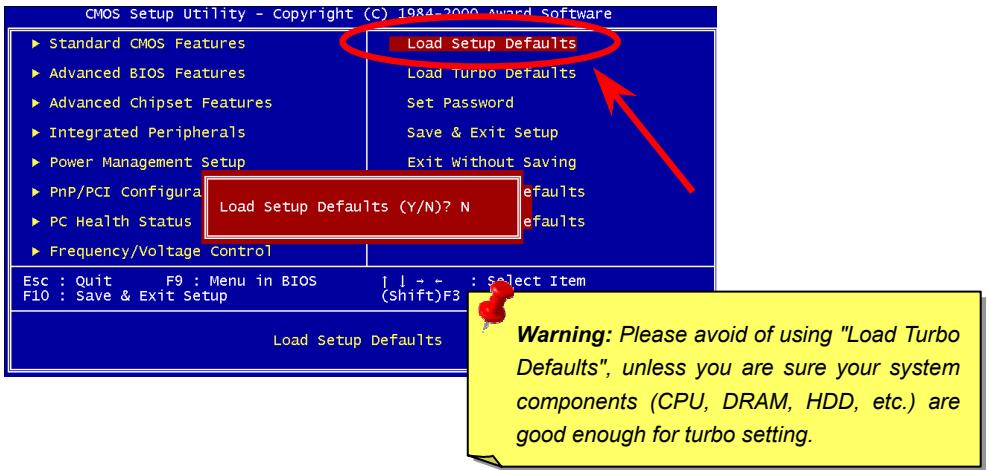
7 Power-on and Load BIOS Setup Default
8 Setting CPU Frequency
9Reboot
10 Installing Operating System (such as Windows 98)
11 Installing Driver and Utility
Hardware
This chapter describes jumpers, connectors and hardware devices of this motherboard.

Note: Electrostatic discharge (ESD) can damage your processor, disk drives, expansion boards, and other components. Always observe the following precautions before you install a system component.
- Do not remove a component from its protective packaging until you are ready to install it.
2.Wear a wrist ground strap and attach it to a metal part of the system unit before handling a component. If a wrist strap is not available, maintain contact with the system unit throughout any procedure requiring ESD protection.
JP14 Clear CMOS
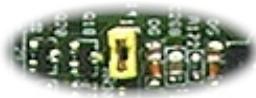
You can clear CMOS to restore system default setting. To clear the CMOS, follow the procedure below.
- Turn off the system and unplug the AC power.
- Remove ATX power cable from connector PWR2.
- Locate JP14 and short pins 2-3 for a few seconds.
- Return JP14 to its normal setting by shorting pins 1-2.
- Connect ATX power cable back to connector PWR2.

Tip: When should I Clear CMOS?
- Boot fail because of overclocking...
- Forget password...
- Troubleshooting...

Normal (Default)

Clear CMOS
CPU Installation
This motherboard supports Intel® Pentium III, Celeron, and VIA® Cyrix™ III Socket370 CPU. Be careful of CPU orientation when you plug it into CPU socket.
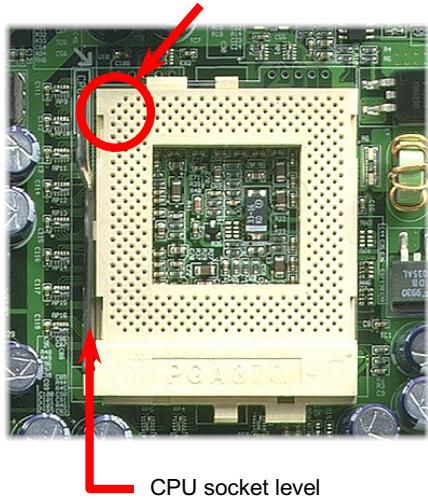
CPU Pin 1 and cut edge
- Pull up the CPU socket level and up to 90-degree angle.
- Locate Pin 1 in the socket and look for a (golden) cut edge on the CPU upper interface. Match Pin 1 and cut edge. Then insert the CPU into the socket.
- Press down the CPU socket level and finish CPU installation.
Note: If you do not match the CPU socket Pin 1 and CPU cut edge well, it may damage the CPU.
CPU Fan Connector
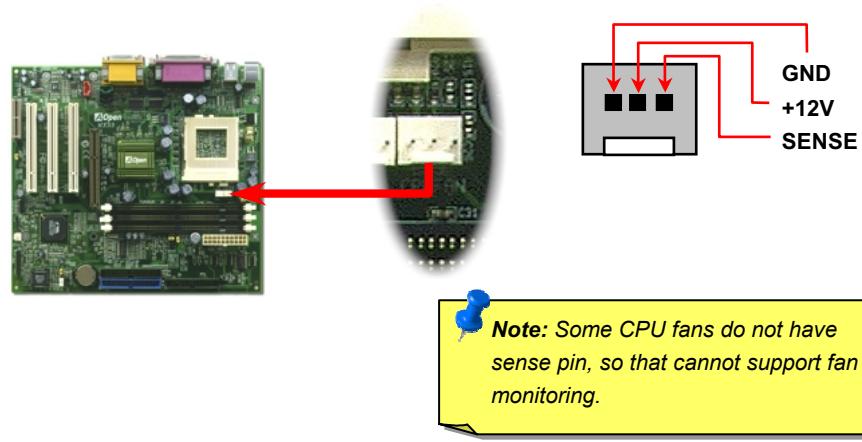
Plug in the fan cable to the 3-pin CPUFAN connector.
JP23 FSB/PCI Clock Ratio
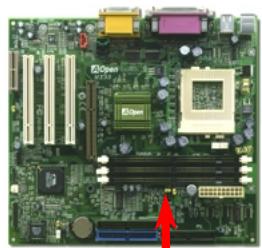
This jumper (JP23) is used to specify the relationship of PCI and FSB clock. Generally speaking, if you are not overclockers, we recommend set the jumper at the default setting.
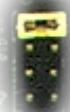
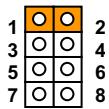
Auto (default)
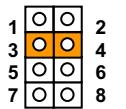
PCI=FSB/2 (133~150MHz)
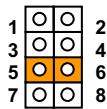
PCI=FSB/3 (100~124MHz)
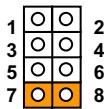
PCI=FSB/4
(66~83MHz)
PCI Clock = CPU FSB Clock / Clock Ratio
AGP Clock = PCI Clock x 2
| Clock Ratio | CPU (Host) | PCI | AGP | Memory |
| 2X | 66MHz | 33MHz | 66MHz | PCI x2 or x3 |
| 2X, overclocking | 75MHz | 37.5MHz | 75MHz | PCI x2 or x3 |
| 3X | 100MHz | 33MHz | 66MHz | PCI x2, x3 or x4 |
| 3X, overclocking | 112MHz | 37.3MHz | 74.6MH | PCI x2, x3 or x4 |
| 4X, | 133MHz | 33MHz | 88.6MH | PCI x3 or x4 |
| 4X, overclocking | 150MHz | 37.5MHz | 75MHz | PCI x3 or x4 |
Warning: VIA Apollo Pro 133 chipset supports maximum 133MHz FSB and 66MHz AGP clock, higher clock setting may cause serious system damage.
CPU Jumper-less Design
CPU VID signal and SMbus clock generator provide CPU voltage auto-detection and allows the user to set the CPU frequency through the BIOS setup, therefore no jumpers or switches are used. The correct CPU information is saved into the Shadow E^2PROM . With these technologies, the disadvantages of the Pentium based jumper-less designs are eliminated. There will be no worry of wrong CPU voltage detection and no need to re-open the housing in case of CMOS battery loss.
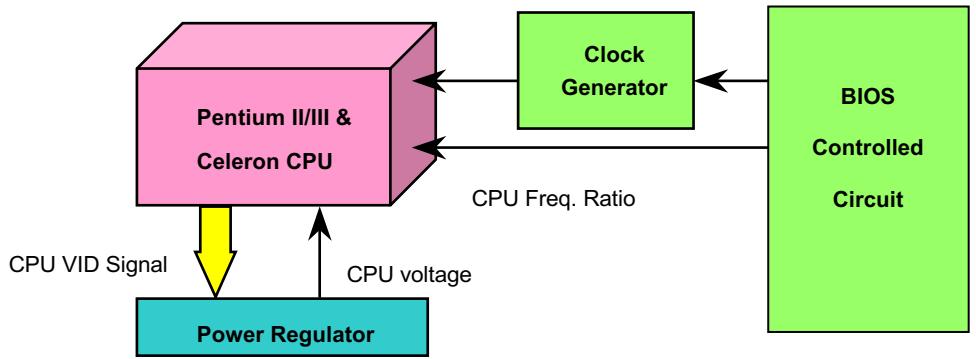
(Automatically generates CPU voltage)
Setting CPU Core Voltage
This motherboard supports CPU VID function. The CPU core voltage will be automatically detected and the range is from 1.3V to 3.5V. It is not necessary to set CPU Core Voltage.
Setting CPU Frequency
This motherboard is CPU jumper-less design, you can set CPU frequency through the BIOS setup. No jumpers or switches are needed.
BIOS Setup > Freqency/Voltage Control > CPU Speed Setting
CPU FSB
66.8, 68.5, 75, 83.3, 100, 103, 112, 117, 124, 129, 133.3, 138, 143, 148, 150MHz.
Warning: VIA Apollo Pro 133 chipset supports maximum 133MHz FSB and 66MHz AGP clock, higher clock setting may cause serious system damage.
Home
Tip: If your system hangs or fails to boot because of overclocking, simply use
Core Frequency = CPU FSB Clock * CPU Ratio
| CPU | CPU Core Frequencj | FSB Clock | Ratio |
| Celeron 300A | 300MHz | 66MHz | 4.5x |
| Celeron 366 | 366MHz | 66MHz | 5.5x |
| Celeron 366 | 366MHz | 66MHz | 5.5x |
| Celeron 400 | 400MHz | 66MHz | 6x |
| Celeron 433 | 433MHz | 66MHz | 6.5 |
| Celeron 466 | 466MHz | 66MHz | 7x |
| Celeron 500 | 500MHz | 66MHz | 7.5x |
| Celeron 533 | 533MHz | 66MHz | 8x |
| Celeron 566 | 566MHz | 66MHz | 8.5x |
| Celeron 600 | 600MHz | 66MHz | 9x |
| Pentium III 600E | 600MHz | 100MHz | 6x |
| Pentium III 650E | 650MHz | 100MHz | 6.5x |
| Pentium III 700E | 700MHz | 100MHz | 7x |
| Pentium III 750E | 750MHz | 100MHz | 7.5 |
| Pentium III 800E | 800MHz | 100MHz | 8x |
| Pentium III 850E | 850MHz | 100MHz | 8.5x |
| Pentium III 533EE | 533MHz | 133MHz | 4x |
| Pentium III 600EE | 600MHz | 133MHz | 4.5x |
| Pentium III 667EE | 667MHz | 133MHz | 5x |
| Pentium III 733EE | 733MHz | 133MHz | 5.5 |
| Pentium III 800EE | 800MHz | 133MHz | 6x |
| Pentium III 866EE | 866MHz | 133MHz | 6.5 |
| Pentium III 933EE | 933MHz | 133MHz | 7x |
DIMM Socket
This motherboard has three 168-pin DIMM sockets that allow you to install PC100 or PC133 memory up to 1.5GB. Only SDRAM is supported.
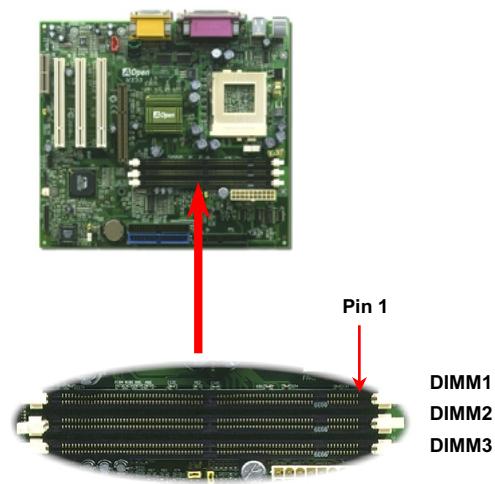

Tip: The driving capability of new generation chipset is limited due to the lack of a memory buffer (to improve performance). This makes DRAM chip count an important factor to take into consideration when you install DIMMs. Unfortunately, there is no way that the BIOS can identify the correct chip count, you need to calculate the chip count by yourself. The simple rule is: By visual inspection, use only DIMMs which are less than 16 chips.
DIMM can be single side or double side, it has 64 bit data and 2 or 4 clock signals. We strongly recommend choosing 4-clock SDRAM for its reliability

Tip: To identify 2-clock and 4-clock DIMM, you may check if there are traces connected to the golden finger pins 79 and 163 of the SDRAM. If there are traces, the SDRAM is probably 4-clock; otherwise, it is 2-clock.

Tip: To identify single-side or double-side DIMM, check golden finger pin 114 and pin 129. If there are traces connected to pin 114 and pin 129, the DIMM is probably double side; otherwise, it is single-side.
Front Panel Connector
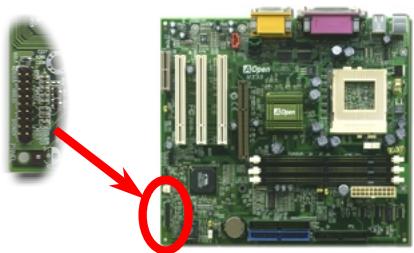
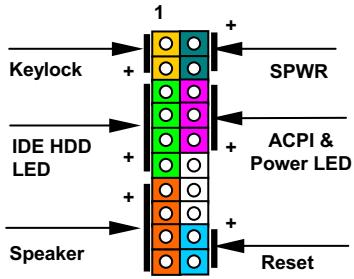
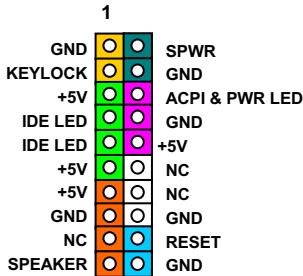
Attach the power LED, keylock, speaker, and reset switch connectors to the corresponding pins. If you enable "Suspend Mode" item in BIOS Setup, the ACPI & Power LED will keep flashing while the system is in suspend mode.
Locate the power switch cable from your ATX housing. It is 2-pin female connector from the housing front panel. Plug this connector to the soft-power switch connector marked SPWR.
ATX Power Connector
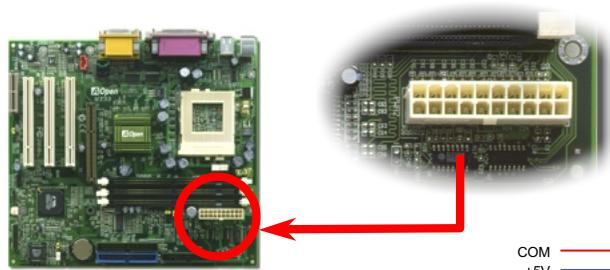
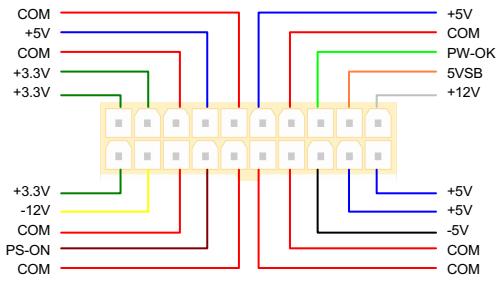
The ATX power supply uses 20-pin connector shown below. Make sure you plug in the right direction.
AC Power Auto Recovery
A traditional ATX system should remain at power off stage when AC power resumes from power failure. This design is inconvenient for a network server or workstation, without an UPS, that needs to keep power-on. This motherboard implements an AC Power Auto Recovery function to solve this problem. If BIOS Setup > Integrated Peripherals > AC PWR Auto Recovery is set to “Enabled” the system will automatically power-on after AC power resumes.
IDE and Floppy Connector
Connect 34-pin floppy cable and 40-pin ATA66 or ATA33 IDE cable to floppy connector FDC and IDE connector IDE1, IDE2. Pin1 of cable is normally marked with red color. Be careful of the pin1 orientation. Wrong orientation may cause system damage.
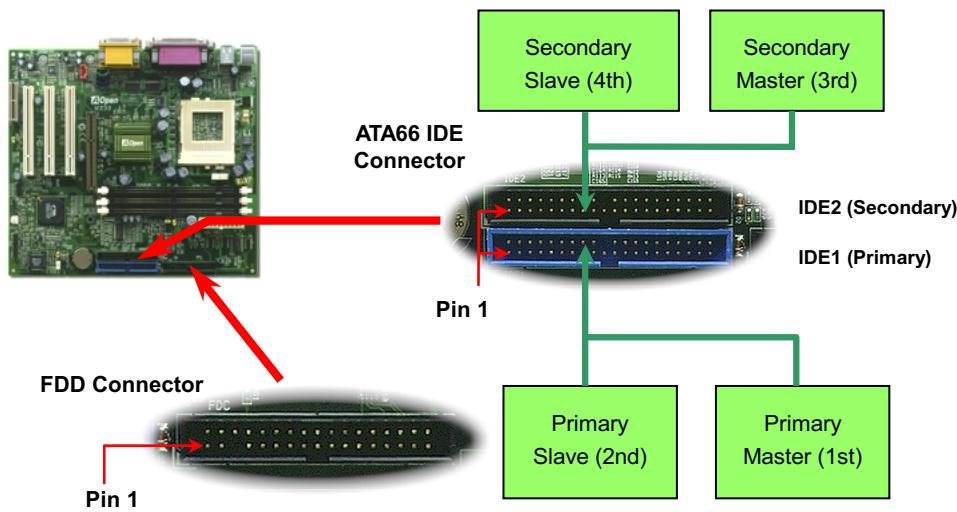
IDE1 is also known as the primary channel and IDE2 as the secondary channel. Each channel supports two IDE devices that make a total of four devices. In order to work together, the two devices on each channel must be set differently to master and slave mode. Either one can be the hard disk or the CDROM. The setting as master or slave mode depends on the jumper on your IDE device, so please refer to your hard disk and CDROM manual accordingly.
Warning: The specification of the IDE cable is a maximum of 46cm (18 inches), make sure your cable does not exceed this length.
Tip: For better signal quality, it is recommended to set the far end side device to master mode and follow the suggested sequence to install your new device. Please refer to above diagram.
This motherboard supports Ultra DMA/33 or Ultra DMA/66 mode. Following table lists the transfer rate of IDE PIO and DMA modes. The IDE bus is 16-bit, which means every transfer is two bytes.
| Mode | Clock per 33MHz PCI | Cloci Coun | Cycle Time | Data Transfer Rate |
| PIO mode 0 | 30ns | 20 | 600ns | (1/600ns) x 2byte = 3.3MB/s |
| PIO mode 1 | 30ns | 13 | 383ns | (1/383ns) x 2byte = 5.2MB/s |
| PIO mode 2 | 30ns | 8 | 240ns | (1/240ns) x 2byte = 8.3MB/s |
| PIO mode 3 | 30ns | 6 | 180ns | (1/180ns) x 2byte = 11.1MB/s |
| PIO mode 4 | 30ns | 4 | 120ns | (1/120ns) x 2byte = 16.6MB/s |
| DMA mode | 30ns | 16 | 480ns | (1/480ns) x 2byte = 4.16MB/s |
| DMA mode | 30ns | 5 | 150ns | (1/150ns) x 2byte = 13.3MB/s |
| DMA mode | 30ns | 4 | 120ns | (1/120ns) x 2byte = 16.6MB/s |
| UDMA/33 | 30ns | 4 | 120ns | (1/120ns) x 2byte x2 = 33MB/s |
| UDMA/66 | 30ns | 4 | 120ns | (1/120ns) x 2byte x4 = 66MB/s |

Note: ATA/66 uses both rising edge and falling edge but doubles UDMA/33 transfer rate. The data transfer rate is 4 times of the PIO mode 4 or DMA mode 2, 16.6MB/s x4 = 66MB/s. To use ATA/66, you need special ATA/66 IDE cable.
IrDA Connector
The IrDA connector can be configured to support wireless infrared module, with this module and application software such as Laplink or Windows 95 Direct Cable Connection, the user can transfer files to or from laptops, notebooks, PDA devices and printers. This connector supports HPSIR (115.2Kbps, 2 meters) and ASK-IR (56Kbps).
Install the infrared module onto the IrDA connector and enable the infrared function from BIOS Setup, UART Mode Select, make sure to have the correct orientation when you plug in the IrDA connector.
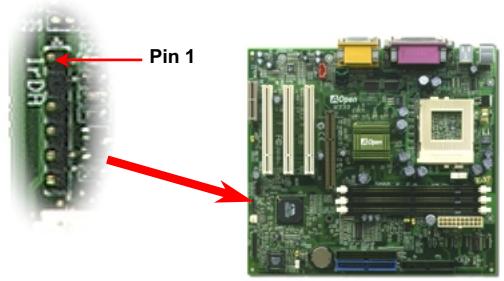

+5V
NC
IRRX
GND
IRTX
NC
WOM (Zero Voltage Wake on Modem)
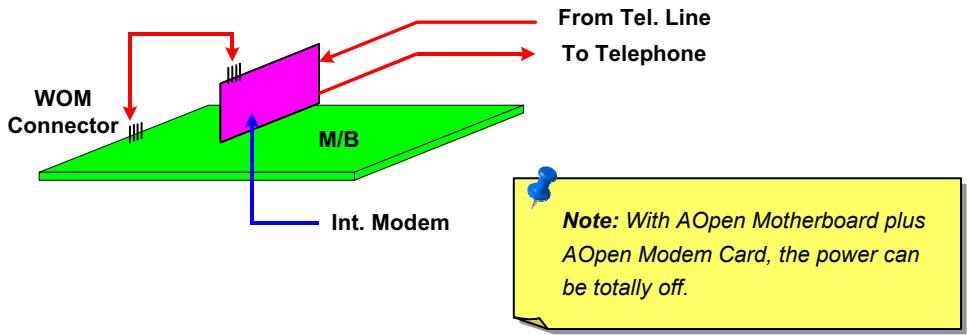
This motherboard implements special circuit to support Wake On Modem, both Internal modem card and external box modem are supported. Since Internal modem card consumes no power when system power is off, it is recommended to use an internal modem. To use internal modem, connect 4-pin cable from RING connector of modem card to the WOM connector on the motherboard.
1

+5V Standby

RING

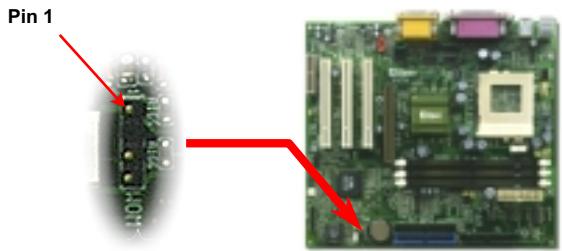
WOM by External BOX Modem
Traditional Green PC suspend mode does not really turn off the system power supply, it uses external box modem to trigger MB COM port and resume back to active.

WOM by Internal Modem Card
With the help of the ATX soft power On/Off, it is possible to have a system totally power off, and wakeup to automatically answer a phone call as an answering machine or to send/receive a fax. You may identify whether or not your system is in true power off mode by checking to see if the fan of your power supply is off. Both an external box modem and an internal modem card can be used to support Modem Wake Up, but if you use an external modem, you have to leave your box modem on.
WOL (Wake on LAN)
This feature is very similar as Wake On Modem, but it goes through local area network. To use Wake On LAN function, you must have a network card with chipset that supports this feature, and connect a cable from LAN card to motherboard WOL connector. The system identification information (probably IP address) is stored on network card and because there is a lot of traffic on the Ethernet, you need to install a network management software, such as ADM, for the checking of how to wake up the system. Note that, at least 600mA ATX standby current is required to support the LAN card for this function.
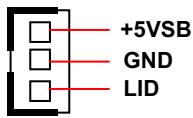
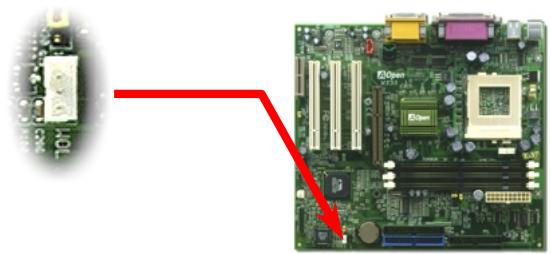
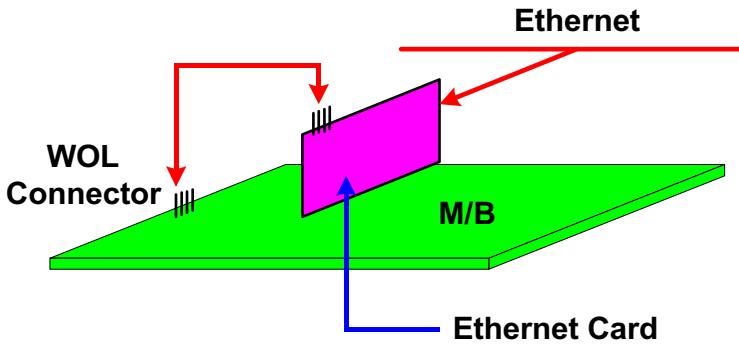
PC99 Color Coded Back Panel
The onboard I/O devices are PS/2 Keyboard, PS/2 Mouse, serial ports COM1 and COM2, Printer, four USB, AC97 sound and Game port. The view angle of drawing shown here is from the back panel of the housing.
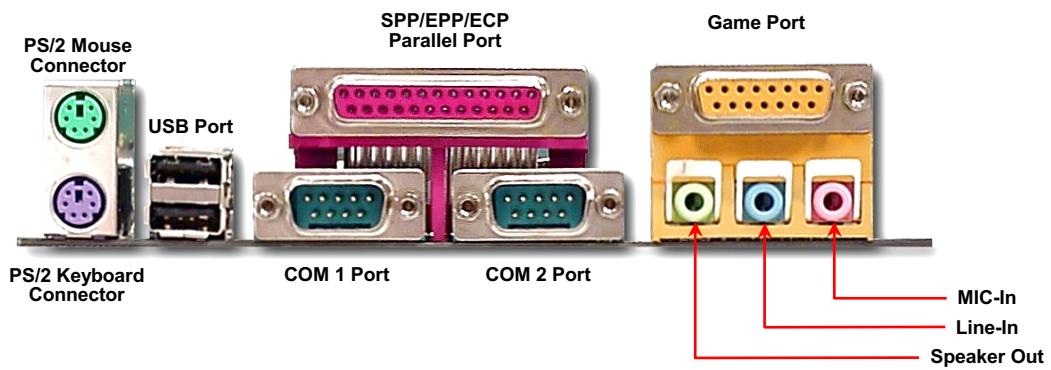
Speaker: To External Speaker, Earphone or Amplifier.
Line-In: From signal source such as CD/Tape player.
MIC: From Microphone
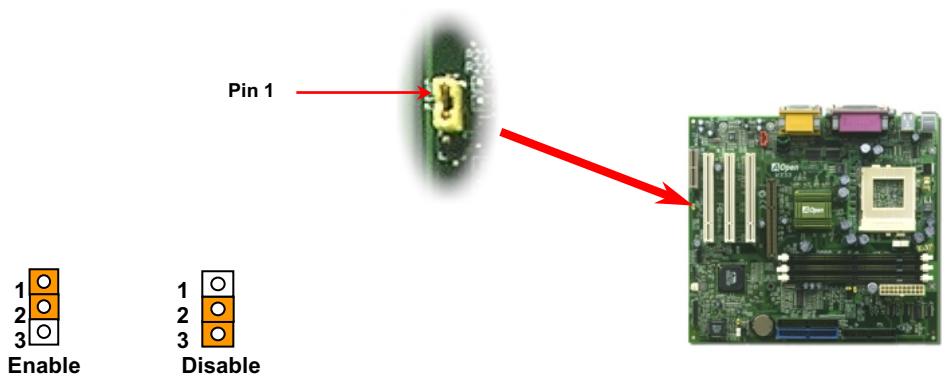
JP12 Enable/Disable Onboard Sound
This motherboard has AC97 sound onboard. JP12 is used to enable or disable onboard AD1885 CODEC chip. If you select Disable, you can use your preferred AMR sound card.
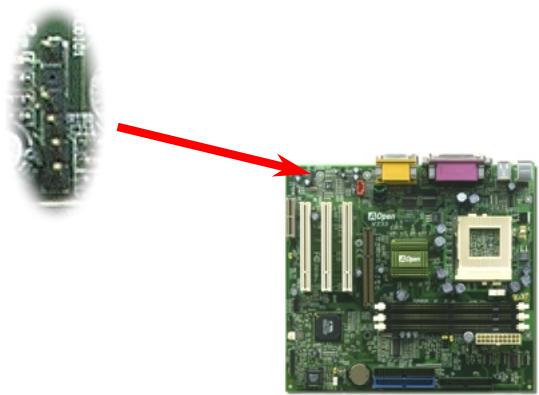
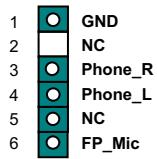
Front Panel Audio (Optional)
If the housing has been design with an audio port on the front panel, you'll be able to connect onboard audio to front panel through this connector.
CD Audio Connector
This black connector is used to connect CD Audio cable from CDROM or DVD drive to onboard sound.

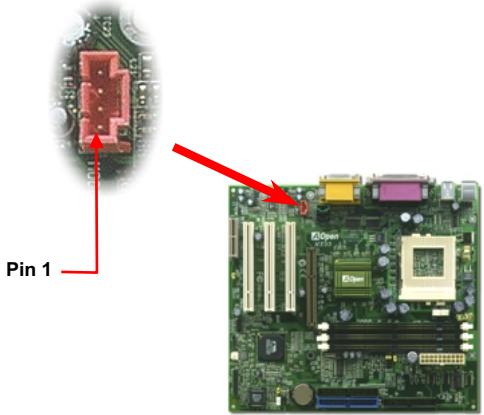
Modem Audio Connector
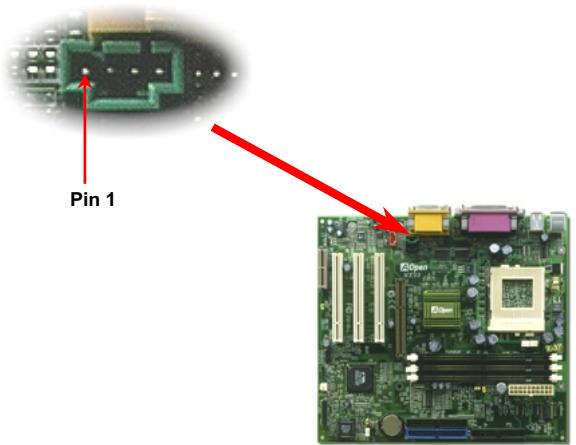
This connector is used to connect Mono In/MIC Out cable from internal modem card to onboard sound circuit. The pin 1-2 is Mono In, and the pin 3-4 is MIC Out. Please note that there is no standard for this kind of connector yet, only some internal modem cards implement this connector.
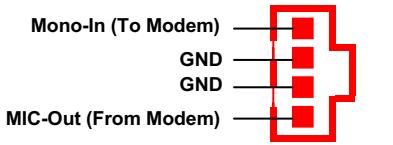
Modem Audio IN
Video_Audio_IN Connector
This green connector is used to connect MPEG Audio cable from MPEG card to onboard sound.
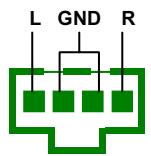
Video_Audio_IN
Support 2^nd USB Ports
This motherboard supports four USB ports. Two of them are on back panel connector, the other two are on the left-bottom area of this motherboard. With proper cable, you can connect them to front panel.
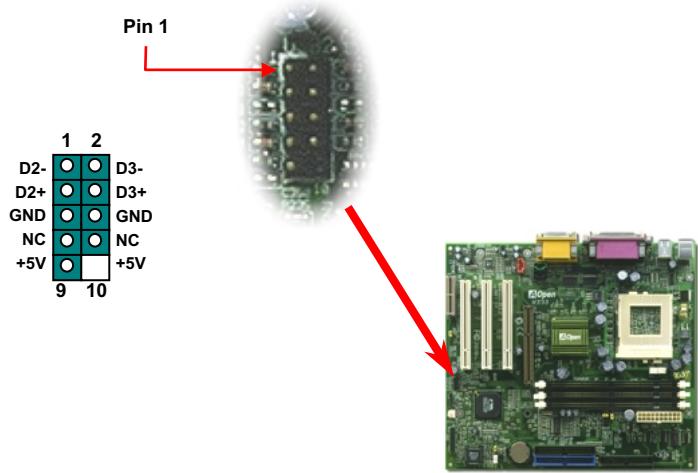
Battery-less and Long Life Design
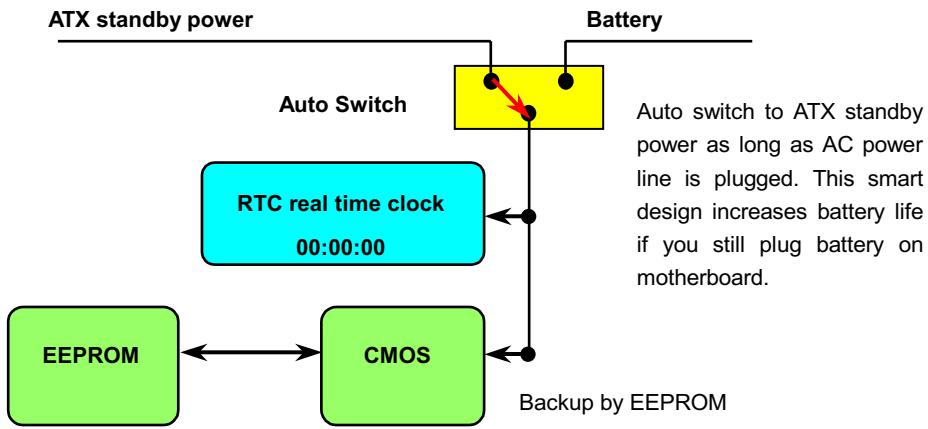
This Motherboard implements Shadow E^2 PROM and a special circuit that allows you to save your current CPU and CMOS Setup configurations without the need of a battery. The RTC (real time clock) can also keep running as long as the power cord is plugged. If you lose your CMOS data by accident, you can just reload the CMOS configurations from EEPROM and the system will recover as usual.
Over-current Protection
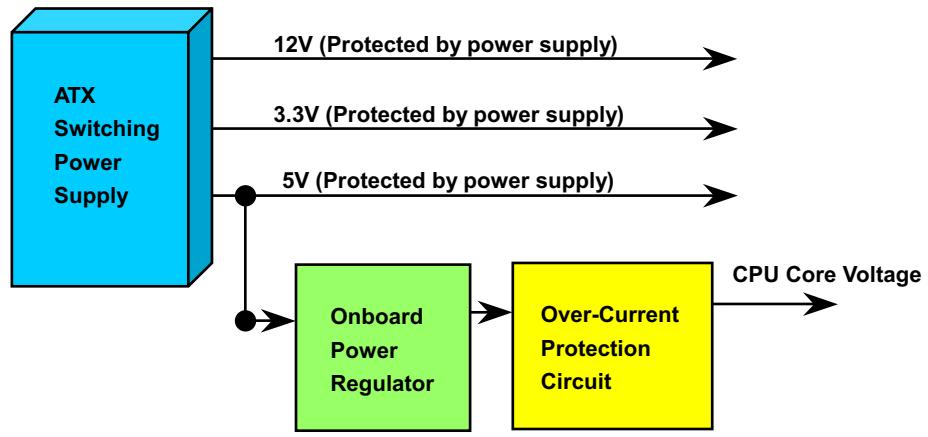
The Over Current Protection was very popular implemented on ATX 3.3V/5V/12V switching power supply. However, the new generation CPU uses different voltage that has regulator to transfer 5V to CPU voltage (for example, 2.0V), and makes 5V over current protection useless. This motherboard with switching regulator onboard supports CPU over-current protection, in conjunction with 3.3V/5V/12V power supply provides the full line over-current protection.

Note: Although we have implemented protection circuit try to prevent any human operating mistake, there is still certain risk that CPU, memory, HDD, add-on cards installed on this motherboard may be damaged because of component failure, human operating error or unknown nature reason.
AOpen cannot guaranty the protection circuit will always work perfectly.
Hardware Monitoring
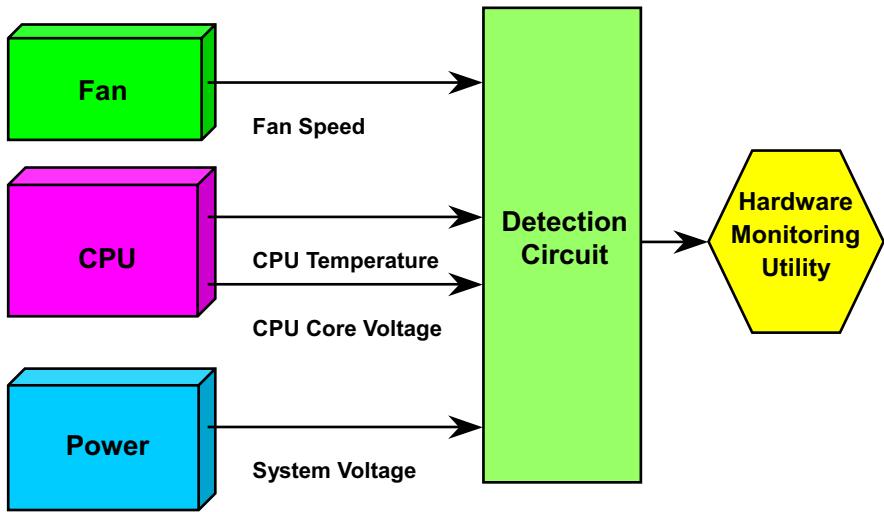
This motherboard implements a hardware monitoring system. As you turn on your system, this smart design will continue to monitor your system's working voltage, fan status and CPU temperature. If any of these system's status go wrong, there will be an alarm through the AOpen Hardware Monitoring Utility to warn the user.
Resettable Fuse
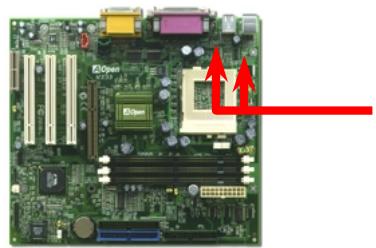
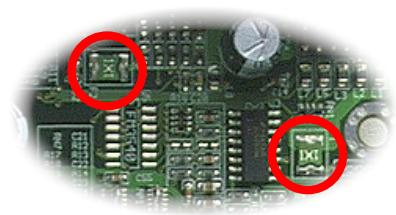
Traditional motherboard has fuse for Keyboard and USB port to prevent over-current or shortage. These fuses are soldered onboard that when it is broken (did the job to protect motherboard), user still cannot replace it and the motherboard is still malfunction.
With expensive Resettable Fuse, the motherboard can back to normal function after fuse did the protection job.
BIOS Write Protection
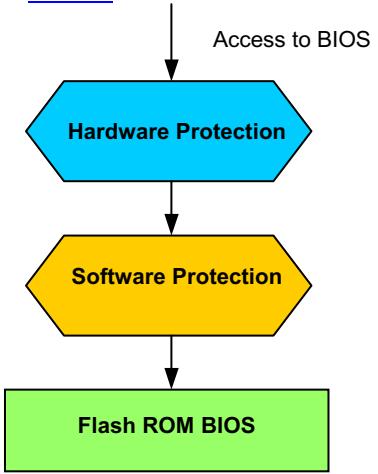
Recently, many viruses have been found that may destroy bios code and data area. This motherboard implements two layers firewall to protect from unauthorized writing to BIOS. One is hardware and the other is software.
Year 2000 (Y2K)
Y2K is basically a problem of the identification of year code. To save storage space, traditional software uses only two digits for year identification. For example, 98 for 1998 and 99 for 1999, but 00 will be confused with 1900 and 2000.
There is an RTC circuit (Real Time Clock) in conjunction with 128 bytes of CMOS RAM data in the chipset of the motherboard. The RTC has only two digits and the CMOS has another 2 digits. Unfortunately, this circuit's behavior is like this 1997 1998 1999 1900 , that means it may have the Y2K problem. Below is a diagram of how applications work with the OS, BIOS and RTC. In order to keep the best compatibility in the PC industry there is a rule that applications must call the OS to get services and OS must call the BIOS, and then only BIOS is allowed to access the hardware (RTC) directly.
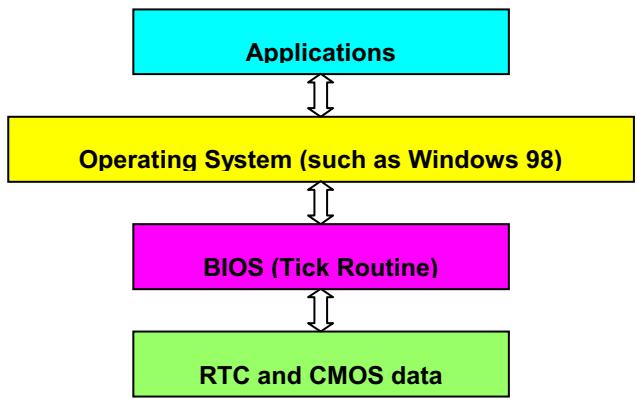
There is a Tick Routine (that goes live around every 50m sec) in the BIOS to keep record of date/time information. In general the BIOS, this Tick Routine does not update the CMOS every time because the CMOS is a very slow device which degrades system performance. The Tick Routine of the AOpen BIOS has 4 digits for year coding, as long as applications and the operating system follow the rule to get date/time information. There will be no Y2K problem (such as NSTL's test program). But unfortunately again, we found some test programs (such as Checkit 98) accesses RTC/CMOS directly. To ensure risk free operation, the AOpen BIOS team implemented a selection option in the CMOS setup, that allows Tick Routine to update the CMOS. The coding of this routine has been well taken care of for minimum system performance loss.
Low ESR Capacitor
The quality of low ESR capacitor (Low Equivalent Series Resistance) during high frequency operation is very important for stability of CPU power. The location of where to put these capacitors is another knowhow that requires experience and detail calculation.
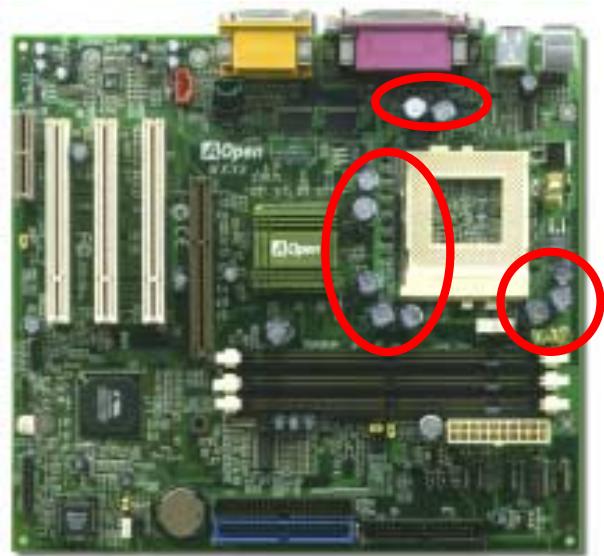
The power circuit of the CPU core voltage must be checked to ensure system stability for high speed CPUs (such as the new Pentium III, or when overclocking). A typical CPU core voltage is 2.0V, so a good design should control voltage between 1.860V and 2.140V. That is, the transient must be below 280mV. Below is a timing diagram captured by a Digital Storage Scope, it shows the voltage transient is only 143mv even when maximum 18A current is applied.
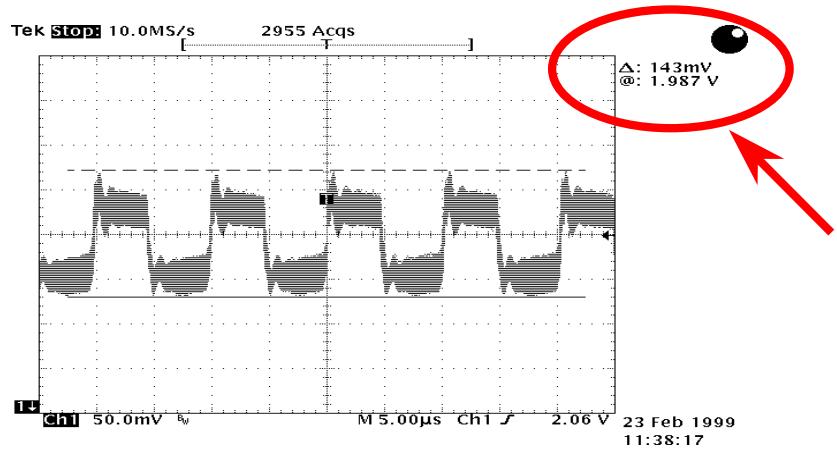
Note: This diagram for example only, it may not be exactly the same as this motherboard.
Layout (Frequency Isolation Wall)
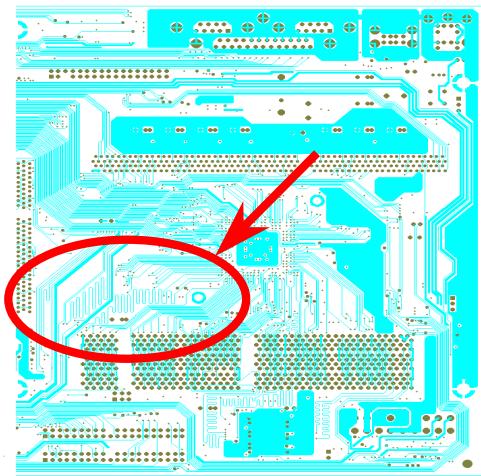
Note: This diagram for example only, it may not be exactly the same as this motherboard.
For high frequency operation, especially overclocking, layout is the most important factor to make sure chipset and CPU working in stable condition. The layout of this motherboard implements AOpen's unique design called " Frequency Isolation Wall". Separating each critical portion of motherboard into regions where each region operates in a same or similar frequency range to avoid crosstalk and frequency interference between each region's operations and condition. The trace length and route must be calculated carefully. For example, the clock trace must be equal length (not necessarily as short as possible) so that clock skew will be controlled within few a pico second (1 / 10^12Sec)
Driver and Utility
There are motherboard drivers and utilities included in AOpen Bonus CD disc. You don't need to install all of them in order to boot your system. But after you finish the hardware installation, you have to install your operation system first (such as Windows 98) before you can install any drivers or utilities. Please refer to your operation system's installation guide.
Note: Please follow recommended procedure to install Windows 95 and Windows 98.
Autorun Menu from Bonus CD Disc
You can use the autorun menu of Bonus CD disc. Choose the utility and driver and select model name
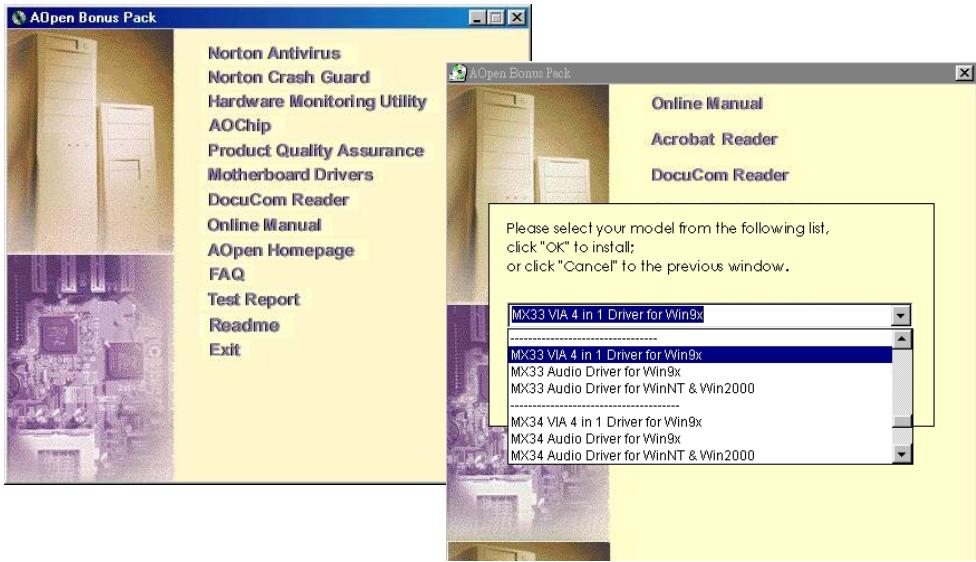
Installing Windows 95
- First, don't install any add-on card except AGP card.
- Install Windows 95 OSR2 v2.1, 1212 or 1214 version and later with USB support. Otherwise, you need to install USBSUPP.EXE.
- Install the VIA 4 in 1 driver, which includes VIA AGP Vxd driver, IRQ routing driver, and VIA chipset function registry program.
- Finally, Install other add-on cards and their drivers.
Installing Windows 98
- First, don't install any add-on card except AGP card.
- Enable USB Controller in BIOS Setup > Integrated Peripherals > OnChip USB, to make BIOS fully capable of controlling IRQ assignment.
- Install Window 98 into your system.
- Install the VIA 4 in 1 driver, which includes VIA AGP Vxd driver, IRQ routing driver, and VIA chipset function registry program.
- Finally, Install other add-on cards and their drivers.
Installing Windows 98 SE & Windows2000
If you are using Windows® 98 Second Edition or Windows2000, you do not need to install the 4-in-1 driver as the IRQ Routing Driver and the ACPI Registry are already incorporated into the operating system. Users with Windows® 98 SE may update the IDE Busmaster and AGP drivers by installing them individually.
Please refer to VIA Technologies Inc for latest version of 4 in 1 driver:
http://www.via.com/
http://www.via.com/drivers/4in1420.exe
Installing VIA 4 in 1 Driver
You can install the VIA 4 in 1 driver (IDE Bus master, VIA AGP, IRQ Routing Driver, VIA Registry) from the Bonus Pack CD disc autorun menu.
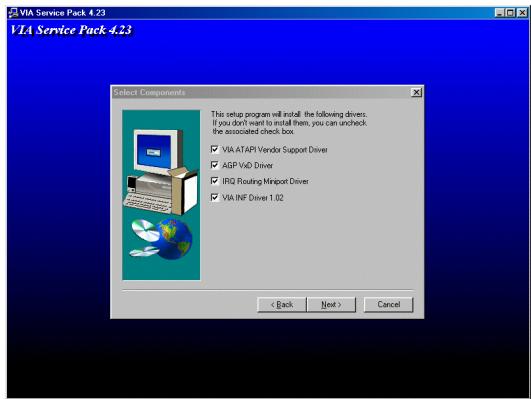

Note: Installing this Bus Master IDE driver may cause Suspend to Hard Drive failure.

Warning: If you want to uninstall the VIA AGP Vxd driver, please remove the AGP card driver first. Otherwise, the screen may go black at rebooting after the un-installation.
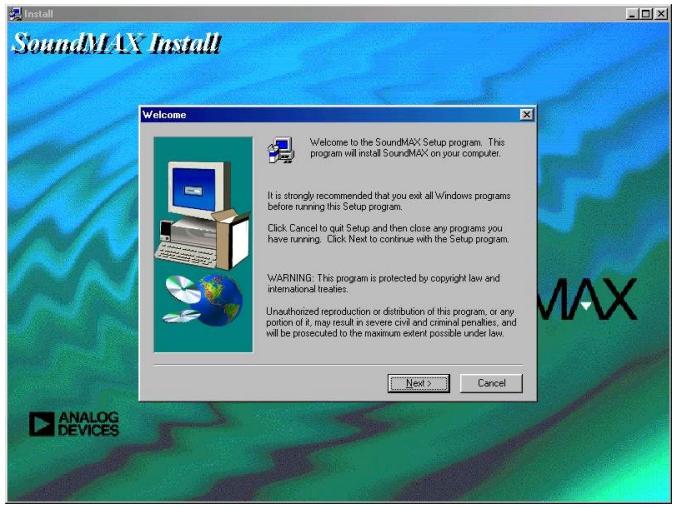
Installing Onboard Sound Driver
This motherboard comes with an AD 1885 AC97 CODEC and the sound controller is in VIA South Bridge chipset. You can find the audio driver from the Bonus Pack CD disc autorun menu.
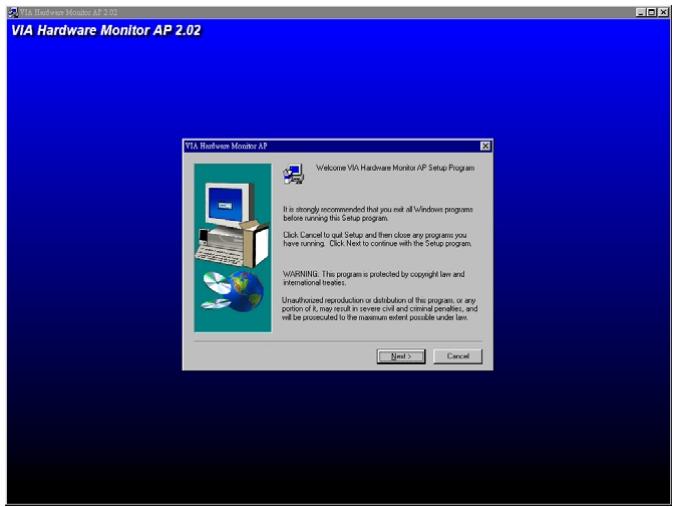
Installing Hardware Monitoring Utility
You can install Hardware Monitoring Utility to monitor CPU temperature, fans and system voltage. The hardware monitoring function is automatically implemented by the BIOS and utility software, no hardware installation is needed.
ACPI Suspend to Hard Drive
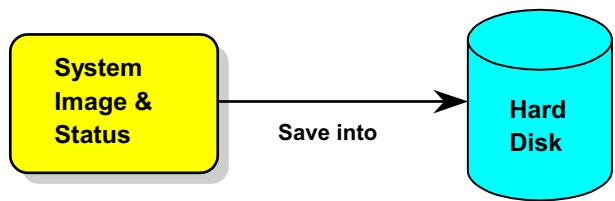
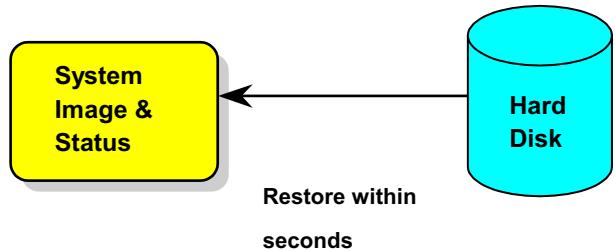
ACPI Suspend to Hard Drive is basically controlled by Windows operation system. It saves your current work (system status, memory and screen image) into hard disk, and then the system can be totally power off. Next time, when power is on, you can resume your original work directly from hard disk within few seconds without go through the Windows booting process and run your application again. If your memory is 64MB, normally, you need to reserve at least 64MB HDD space to save your memory image.
When go into Suspend:
When power-on next time:
System Requirement
- AOZVHDD.EXE 1.30b or later.
- Delete config.sys and autoexec.bat.
Fresh installation of Windows 98 on a new system
- Execute "Setup.exe /p j" to install Windows 98
- After Windows 98's installation is complete, go to the Control Panel > Power Management.
a. Set Power Schemes > System Standby to "Never".
b. Click on "Hibernate" and select "Enable Hibernate Support" then "Apply".
c. Click on the "Advanced" tab, you'll see "Hibernate" on "Power Buttons". Note that this option will only be seen after step b mentioned above has been completed, otherwise only "Standby" and "Shutdown" will be shown. Select "Hibernate" and "Apply".
- Clean boot into DOS and run AOZVHDD utility.
a. If you assign the whole disk to your Win 98 system (FAT 16 or FAT 32), please run "aozvhdd /c /file". Please remember sufficient free space has to be reserved in the disk, e.g. if you have 64 MB DRAM and 16 MB VGA card installed, the system needs at least 80 MB free space. The utility will locate the space automatically.
b. If you assign an individual partition for Win 98, please run "aozvhdd /c /partition". Of course, the system needs to provide unformatted an empty partition.
- Reboot system.
- You've already implemented ACPI Suspend to-Hard Drive. Click "Start > Shut Down > Standby" then the screen will go off immediately. And 1 minute or so will be taken for the system to save what's in the memory to the hard drive; the larger the memory size the longer this process will take.
Changing from APM to ACPI (Windows 98 only)
1. Run "Regedit.exe"
a. Go through the following path
HKEY_LOCAL_MACHINE
SOFTWARE
MICROSOFT
WINDOWS
CURRENT VERSION
DETECT
b. Select "ADD Binary" and name it as "ACPIOPTION".
c. Right click and select Modify, add "01" after "0000" to make it "0000 01".
d. Save changes.
- Select "Add New Hardware" under Control Panel. Allow Windows 98 to detect new hardware. (It will find "ACPI BIOS" and remove "Plug and Play BIOS")
- Reboot system.
- Clean boot into DOS and run "AOZVHDD.EXE /C /File"
Changing from ACPI to APM
1. Run "Regedit.exe"
a. Go through the following path
HKEY_LOCAL_MACHINE
SOFTWARE
MICROSOFT
WINDOWS
CURRENT VERSION
DETECT
ACPI OPTION
b. Right click and select "Modify, change "01" to "02" to make it "0000 02".

Tip: "02" means Windows 98 is ACPI acknowledged but the ACPI function is disabled.
c. Save changes.
- Select "Add New Hardware" under Control Panel. Allow Windows 98 to detect new hardware. (It will find "Plug and Play BIOS" and remove "ACPI BIOS")
- Reboot system.
- Run "Add New Hardware" again and it will find "Advanced Power Management Resource".
- Click "OK".
Tip: Currently we found only ATI 3D Rage Pro AGP card would support ACPI suspend to disk. Please refer to AOpen web site for latest update.

Note: Because the BIOS code is the most often changed part of the motherboard design, the BIOS information contained in this manual may be different with actual BIOS that come with your motherboard.
AWARD BIOS
System parameters can be modified by going into BIOS Setup menu, this menu allows you to configure the system parameters and save the configuration into the 128 bytes CMOS area, (normally in the RTC chip or in the main chipset). To enter to BIOS setup menu, press when POST (Power-On Self Test) screen is shown on your monitor.
Note: Because the BIOS code is the most often changed part of the motherboard design, the BIOS information contained in this manual may be different with actual BIOS that come with your motherboard.
Enter BIOS Setup

After you finish the setting of jumpers and connect correct cables. Power on and enter the BIOS Setup, press <Del> during POST (Power-On Self Test). Choose "Load Setup Defaults" for recommended optimal performance.
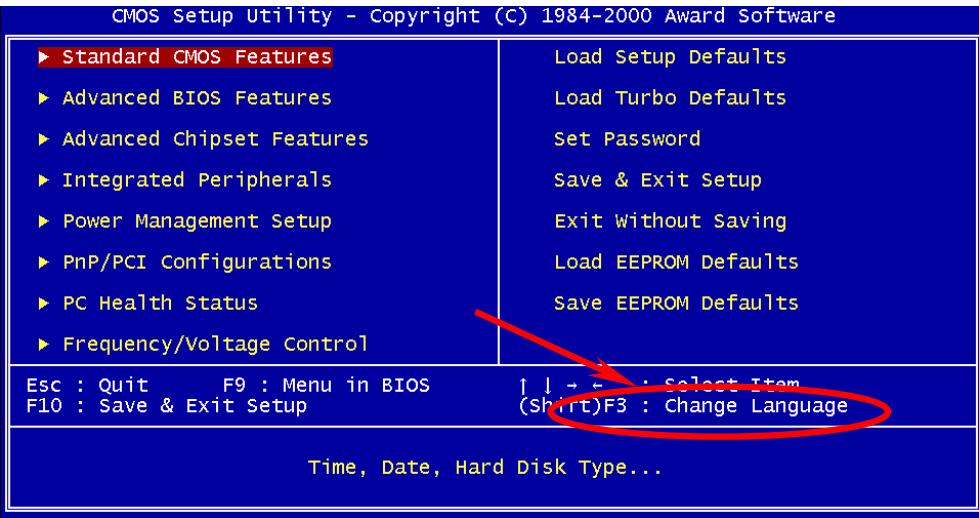
Change Language

You can change language by press <F3> . Depends on available BIOS space, the possible languages are English, German, Japanese and Chinese.
Standard CMOS Features Setup

The "Standard CMOS Setup" sets the basic system parameters such as the date, time, and the hard disk type. Use the arrow keys to highlight an item and

| CMOS Setup Utility - Copyright (C) 1984-2000 Award Software Standard CMOS Features | ||
| Date (mm:dd:yy) Time (hh:mm:ss) | Wed, Jul 12 2000 17 : 4 : 43 | Item Help |
| IDE Primary Master | Menu Level ▶ | |
| IDE Primary Slave | change the day, month, year and century | |
| IDE Secondary Master | ||
| IDE Secondary Slave | ||
| Drive A | 1.44M, 3.5 in. | |
| Drive B | None | |
| Video | EGA/VGA | |
| Halt On | All Errors | |
| Base Memory | 640K | |
| Extended Memory | 63488K | |
| Total Memory | 64512K | |


Standard CMOS > Date
To set the date, highlight the Date parameter. Press
Standard CMOS > Time
To set the time, highlight the Time parameter. Press <PgUp> or <PgDn> to set the current time in hour, minute, and second format. The time is based on the 24-hour military clock.
Standard CMOS > IDE HDD Auto-Detection
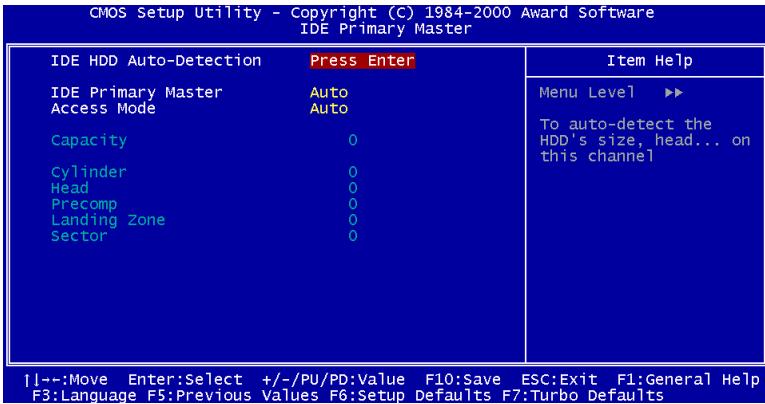
IDE HDD
Auto
Detection
This item lets the system to the HDD's size, head... on this channel.
Standard CMOS > IDE Primary Master/Slave & IDE Secondary Master/Slave
IDE Primary
& Slave
Master/ Slave
Auto (Default)
Manual
None
If you select "Manual", you need to fill in all remaining field, such as Access Mode, Capacity, Cylinder, Head, Precomp, Landing Zone and Sector on this selected item. If the item "Auto" is selected, only "Access Mode" can be set, the others will remain "0". And when the system boot up, system will detect the hard disk and configure it automatically. "None" means there is no device in the channel.
Standard CMOS > IDE Primary Master/Slave & IDE Secondary Master/Slave > Access Mode
Access Mode
Auto (Default)
CHS
LBA
Large
The enhanced IDE feature allows the system to use a hard disk with a capacity of more than 528MB. This is made possible through the Logical Block Address (LBA) mode translation. The LBA is now considered a standard feature of current IDE hard disk on the market because of its capability to support capacity larger than 528MB. Note that if a HDD is formatted with LBA On, it will not be able to boot with LBA Off.

Tip: For an IDE hard disk, we recommend that you use the "Auto" to enter the drive specifications automatically.
Standard CMOS > Drive A/Drive B
Drive A/Drive B
None
360KB 5.25"
1.2MB 5.25"
720KB 3.5"
1.44MB 3.5" (Default)
2.88MB 3.5"
These items select the floppy drive type. The available settings and types supported by the motherboard are listed to the left.
Standard CMOS > Video
Video
EGA/VGA (Default)
CGA40
CGA80
Mono
This item specifies the type of video card in use. The default setting is VGA/EGA. Since current PCs use VGA only, this function is almost useless and may be disregarded in the future.
Standard CMOS > Halt On
Halt On
No Errors
All Errors
(Default)
All, But Keyboard
All, But Diskette
All, But Disk/Key
This parameter enables you to control the system stops in case of Power-On Self Test (POST) error.
Advanced BIOS Features Setup
This screen appears when you select the option "BIOS Features Setup" from the main menu.
| CMOS Setup Utility - Copyright (C) 1984-2000 Award Software Advanced BIOS Features | ||
| Virus Warning | Disabled | Item Help |
| CPU Internal Cache | Enabled | Menu Level > |
| External Cache | Enabled | |
| CPU L2 Cache ECC Checking | Enabled | Allows you to choose the VIRUS warning feature for IDE Hard Disk boot sector protection. If this function is enabled and someone attempt to write data into this area, BIOS will show a warning message on screen and alarm beep |
| Processor Number Feature | Enabled | |
| Quick Power On Self Test | Enabled | |
| First Boot device | CDROM | |
| Second Boot device | A: | |
| Third Boot device | C: | |
| Boot other device | Enabled | |
| Swap Floppy Drive | Disabled | |
| Boot Up Floppy Seek | Disabled | |
| Boot Up NumLock Status | Off | |
| Typematic Rate Setting | Disabled | |
| X Typematic Rate (Chars/Sec) | 6 | |
| X Typematic Delay (Msec) | 250 | |
| Security Option | Setup | |
| OS Select For DRAM > 64MB | Non-OS2 | |
| Show Logo On Screen | Enabled | |
Advanced BIOS Features > Virus Warning
Virus Warning
Enabled
Disabled(Default)
Set this parameter to Enabled to activate the warning message. This feature protects the boot sector and partition table of your hard disk from virus intrusion. Any attempt during boot up to write to the boot sector of the hard disk drive stops the system and the following warning message appears on the screen. Run an anti-virus program to locate the problem.
!WARNING !
Disk Boot Sector is to be modified
Type "Y" to accept write, or "N" to abort write
Award Software, Inc.
Advanced BIOS Features > Internal Cache
Internal Cache
Enabled(Default)
Disabled
Enabling this parameter activates the CPU L1 cache.
Disabling the parameter slows down the system. Therefore, we recommend that you leave it enabled unless you are troubleshooting a problem.
Advanced BIOS Features > External Cache
External Cache
Enabled(Default)
Disabled
Enabling this parameter activates the CPU L2 cache.
Disabling the parameter slows down the system. Therefore, we recommend that you leave it enabled unless you are troubleshooting a problem.
Advanced BIOS Features > CPU L2 Cache ECC Checking
CPU L2 Cache ECC
Checking
Enabled(Default)
Disabled
This item lets you enable or disable L2 Cache ECC checking.
Advanced BIOS Features > Processor Number Feature
Processor Number
Feature
Enabled(Default)
Disabled
This item is used to enable or disable Pentium III CPU Number Feature.
Advanced BIOS Features > Quick Power On Self Test
Quick Power on
Self-Test
Enable(Default)
Disabled
This parameter speeds up POST by skipping some items that are normally checked.
Advanced BIOS Features > First/Second/Third Boot Device
First/Second/Third Boot Device
A (Second Boot Device Default);
LS-120; C (Third Boot Device Default);
SCSI; CDROM(First Boot Device Default);
D; E; F; ZIP; LAN; Disable
This parameter allows you to specify the system boot up search sequence. The hard disk ID are listed below:
C: Primary master
D: Primary slave
E: Secondary master
F: Secondary slave
Zip: IOMEGA ZIP Drive
Advanced BIOS Features > Boot other device
Boot other device
Enabled(Default)
Disabled
This item allows you to boot up the system from other bootable devices.
Advanced BIOS Features > Swap Floppy Drive
Swap Floppy Drive
Enabled
Disabled(Default)
This item allows you to swap floppy drives. For example, if you have two floppy drives (A and B), you can assign the first drive as drive B and the second drive as drive A or vice-versa.
Advanced BIOS Features > Boot Up Floppy Seek
Boot Up Floppy
Seek
Enabled
Disabled(Default)
This item can enable tests floppy drives to determine whether they have 40 or 80 tracks.
Advanced BIOS Features > Boot Up NumLock Status
Boot Up NumLock
Status
On
Off (Default)
Setting this parameter to On enables the numeric function of the numeric keypad. Set this parameter to Off to disregard the function. Disabling the numeric function allows you to use the numeric keypad for cursor control.
Advanced BIOS Feature > Typematic Rate Setting
Typematic Rate
Setting
Enabled
Disabled (Default)
This item lets keystrokes repeat at a rate determine by the keyboard controller. When you enable this function, the typematic rate and typematic delay will be selected.
Advanced BIOS Feature > Typematic Rate (Chars/Sec)
Typematic Rate
6(Default);8;10;12 15;20;24;30
This item lets you select the rate at which character repeats when you hold down a key.
Advanced BIOS Feature > Typematic Delay (Msec)
Typematic Delay
250(Default);500;
750;1000
This item lets you select the delay timing before keystroke begin to repeat.
Advanced BIOS Features > Security Option
Security Option
Setup (Default)
System
The System option limits access to both the System boot and BIOS setup. A prompt asking you to enter your password appears on the screen every time you boot the system.
The Setup option limits access only to BIOS setup.
To disable the security option, select Password Setting from the main menu, don't type anything and just press
Advanced BIOS Features > OS Select For DRAM > 64MB
OS Select For
DRAM > 64MB
OS2
Non-OS2(Default)
This item lets you select "OS/2 only" if you are running OS/2 operation system with greater than 64MB of RAM on the system.
Advanced BIOS Features > Show Logo On Screen
Show Logo On
Screen
Enabled(Default)
Disabled
This item lets you show or hide AOpen logo on the POST screen.
Advanced Chipset Features Setup
The "Chipset Features Setup" includes settings for the chipset dependent features. These features are related to system performance.
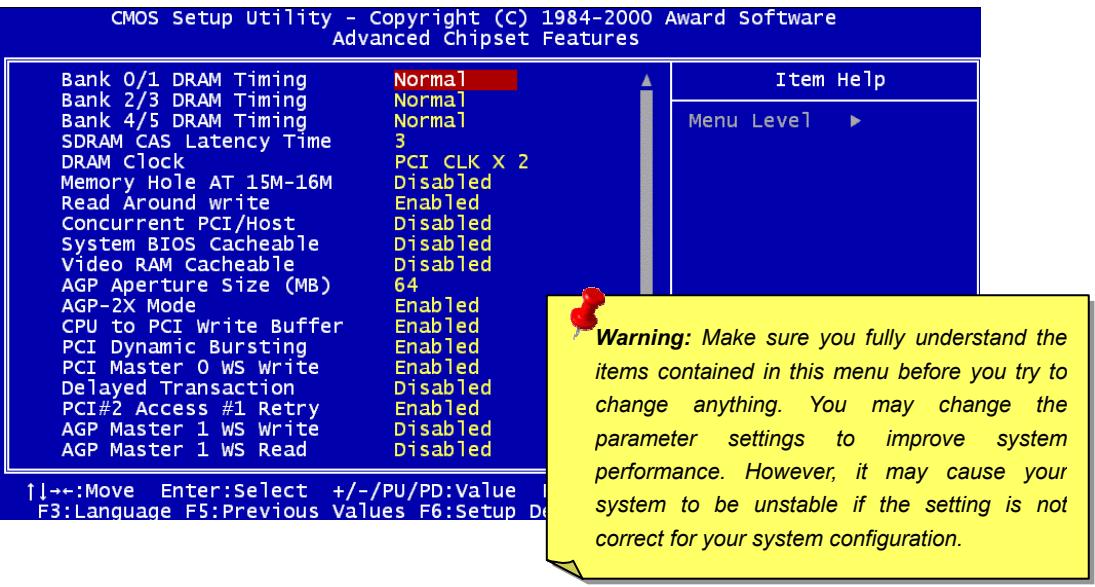
This page is the lower half of Advanced Chipset Features submenu.
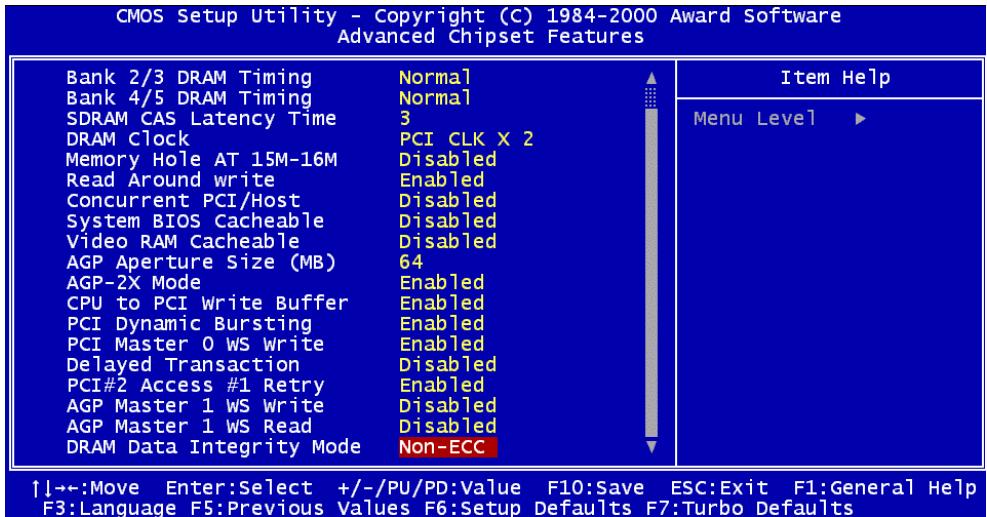
Advanced Chipset Features > Bank 0/1, 2/3, 4/5 DRAM Timing
Bank 0/1, 2/3, 4/5
DRAM Timing
SDRAM 10ns
SDRAM 8ns
Normal (Default)
Medium
Fast
Turbo
This item controls timing point for latching SDRAM data. We recommend you leave on the default setting value.
Advanced Chipset Features > SDRAM CAS Latency Time
SDRAM CAS Latency
Time
2(Default)
3
This option controls the latency between SDRAM read command and the time that the data actually becomes available. If you system has unstable problem, please change the setting from 2 to 3.
Advanced Chipset Features > DRAM Clock
DRAM Clock
PCI CLK x 2 (Default)
PCI CLK x 3
PCI LCK x 4 (Only for FSB=100 or 133)
This item allows you selecting DRAM working clock to PCI CLK x 2, PCI CLK x 3 or PCI CLK x 4.
PCI Clock = CPU FSB Clock / Clock Ratio
| CPU FSI (MHz) | PCI Clock (MHz) | BIOS Setting | DRAM Clock (MHz) |
| 66 | 33 | PCI CLK x 2 | 66 |
| PCI CLK x 3 | 100 | ||
| 100 | 33 | PCI CLK x 2 | 66 |
| PCI CLK x 3 | 100 | ||
| PCI CLK x 4 | 133 | ||
| 133 | 33 | PCI CLK x 2 | 66 |
| PCI CLK x 3 | 100 | ||
| PCI CLK x 4 | 133 |
Advanced Chipset Features > Memory Hole At 15M-16M
Memory Hole At 15M-16M
Enabled
Disabled (Default)
This option lets you reserve system memory area for special ISA cards. The chipset accesses code/data of these areas from the ISA bus directly. Normally, these areas are reserved for memory mapped I/O card.
Advanced Chipset Features > Read Around Write
Read Around Write
Enabled
Disabled (Default)
Leave on the default for SDRAM compatibility.
Advanced Chipset Features > Concurrent PCI/Host
Concurrent PCI/Host
Enabled
Disabled(Default)
This item can enable or disable the PCI to Host concurrency.
Advanced Chipset Features > System BIOS Cacheable
System BIOS cacheable
Enabled
Disabled(Default)
When set this item to "Enable", the contents of the F0000h system memory segment can be read from or written to cache memory. The contents of this memory segment are always copies from the BIOS ROM to system RAM for faster execution.
Advanced Chipset Features > Video RAM Cacheable
Video RAM Cacheable
Enabled
Disabled(Default)
If you set this item to enable, it allows caching of the video BIOS, resulting in better system performance. However, if any program writes to this memory area, a system error may result.
Advanced Chipset Features > AGP Aperture Size (MB)
AGP Aperture Size (MB)
4;8;16;32
64(Default); 128
This option specifies the amount of system memory that can be used by the Accelerated Graphic Port (AGP).
Advanced Chipset Features > AGP-2X Mode
AGP-2X Mode
Enabled(Default)
Disabled
If your AGP card supports 2x, select Enabled; otherwise, select Disabled.
Advanced Chipset Features > CPU To PCI Write Buffer
CPU to PCI Write
Buffer
Enabled(Default)
Disabled
This item lets you enable or disable CPU to PCI write buffer.
Advanced Chipset Features > PCI Dynamic Bursting
PCI Dynamic Bursting
Enabled(Default)
Disabled
If you enable the PCI dynamic bursting, it can increase data transferring performance.
Advanced Chipset Features > PCI Master 0 WS Write
PCI Master 0 WS
Write
Enabled(Default)
Disabled
This option allows you to enable PCI master writing the data with no waiting.
Advanced Chipset Features > PCI Dynamic Bursting
PCI Dynamic Bursting
Enabled
Disabled(Default)
This item lets you enable or disable PCI dynamic bursting function.
Advanced Chipset Features > Delayed Transaction
Delayed Transaction
Enabled
Disabled(Default)
This option can latches the ISA signal to increase the PCI to ISA data transferring performance.
Advanced Chipset Features > PCI#2 Access #1 Retry
PCI#2 Access #1
Retry
Enabled(Default)
Disabled
This item lets you enable or disable the PCI#2 sending a retry signal to request PCI#1 stopping the data transferring.
Advanced Chipset Features > AGP Master 1 WS Write
AGP Master 1 WS
Write
Enabled
Disabled(Default)
This item allows the AGP writes the texture data to the main memory directly.
Advanced Chipset Features > AGP Master 1 WS Read
AGP Master 1 WS
Read
Enabled
Disabled (Default)
This item allows the AGP reads the texture data to the main memory directly.
Advanced Chipset Features > DRAM Data Integrity Mode
DRAM Data Integrity
Mode
NON-ECC (Default)
ECC
This setting lets you enable or disable DRAM ECC function.
The ECC algorithm has the ability to detect double bit error
and automatically correct single bit error.
Integrated Peripherals
The following screen appears if you select the option "Integrated Peripherals" from the main menu. This option allows you to configure the I/O features.
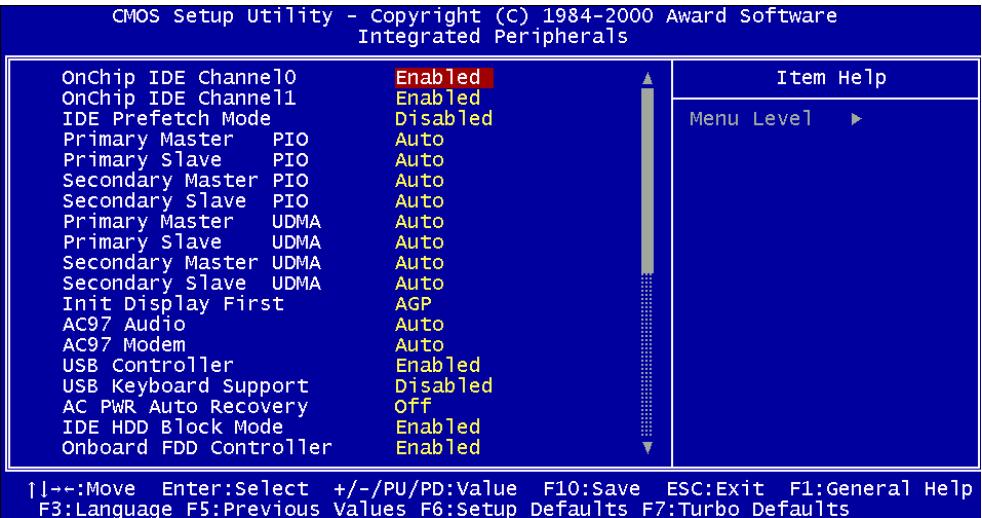
This page is the lower half of Integrated Peripherals menu.
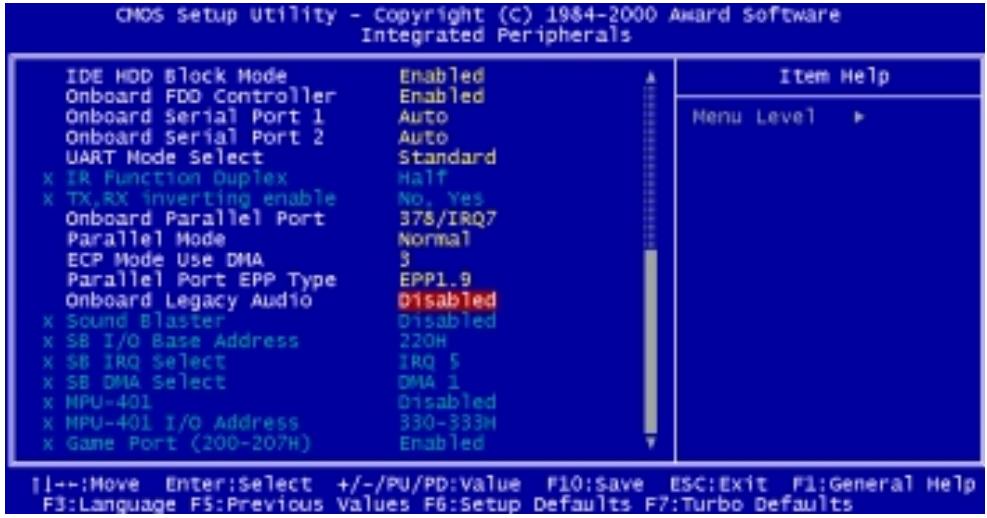
Integrated Peripherals > OnChip IDE 0/1 Channel
OnChip IDE
0/1Channel
Enabled(Default)
Disabled
This parameter lets you enable or disable the IDE device connected to the primary IDE connector.
Integrated Peripherals > IDE Prefetch Mode
IDE Prefetch Mode
Enabled
Disabled (Default)
This item is used to enable and disable IDE prefetch mode.
Integrated Peripherals > Primary Master/Slave PIO &
Secondary Master/Slave PIO
Primary Master/Slave
& Secondary
Master/Slave PIO
Auto (Default)
Mode1
Mode 2
Mode 3
Mode 4
Setting this item to Auto activates the HDD speed auto-detect function. The PIO mode specifies the data transfer rate of HDD. For example: mode 0 data transfer rate is 3.3MB/s, mode 1 is 5.2MB/s, mode 2 is 8.3MB/s, mode 3 is 11.1MB/s and mode 4 is 16.6MB/s. If your hard disk performance becomes unstable, you may manually try the slower mode.
Integrated Peripherals > Primary Master/Slave UDMA &
Secondary Master/Slave UDMA
Primary Master/Slave
& Secondary
Master/Slave UDMA
Auto (Default)
Disable
This item allows you to set the Ultra DMA/33 mode supported by the hard disk drive connected to your IDE connector.
Integrated Peripherals > Init Display First
Init Display First
PCI
AGP(Default)
If you installed a PCI VGA card and an AGP card at the same time, this item lets you decide which one is the initial display card.
Integrated Peripherals > AC 97 Audio
AC 97 Audio
Auto (Default)
Disable
This item can let system auto-detection or disable the on-board AC 97 Audio CODEC.
Integrated Peripherals > AC 97 Modem
AC 97 Modem
Auto (Default)
Disable
This item can let system auto-detection or disable the AC 97 modem function. If you disable it, a AMR modem card can't work properly.
Integrated Peripherals > USB Controller
USB Controller
Enabled(Default)
Disable
This item can let you enable or disable the USB controller.
Integrated Peripherals > USB Keyboard Support
USB Keyboard
Support
Enabled(Default)
Disable
This item lets you enable or disable the USB keyboard driver within the on-board BIOS. The keyboard driver simulates legacy keyboard command and let you use USB keyboard during POST or after boot if you don't have the USB driver in the operation system.

Note: You cannot use both USB driver and USB legacy keyboard at the same time. Disable "USB Keyboard Support" if you have USB driver in the operation system.
Integrated Peripherals > AC PWR Auto Recovery
AC PWR Auto Recovery
On
Off (Default)
Former Status
A traditional ATX system should remain at power off stage when AC power resume from power failure. This design is inconvenient for a network server or workstation, without an UPS, that needs to keep power-on. The system will remain power-off if you select "Off". Selecting "On" to enable system automatically power-on after power failure. If you select "Former Status", the system will power-on or power-off based on the last state.
Integrated Peripherals > IDE HDD Block Mode
IDE HDD Block Mode
Enabled(Default)
Disabled
If your IDE hard drive supports "Block Mode", you can select Enabled for automatic detection of the optimal number of block read/write per sector the drive can support.
Integrated Peripherals > Onboard FDD Controller
Onboard FDD
Controller
Enabled(Default)
Disabled
Setting this parameter to Enabled allows you to connect your floppy disk drives to the onboard floppy disk connector instead of a separate controller card. Change the setting to Disabled if you want to use a separate controller card.
Integrated Peripherals > Onboard Serial Port 1 & Port 2
Onboard Serial Port 1
& Port 2
Auto (Default)
3F8/IRQ4
2F8/IRQ3
3E8/IRQ4
2E8/IRQ3
Disabled
This item allows you to assign address and interrupt for the board serial port.
Note: If you are using network card, make sure that the IRQ do not conflict.
Integrated Peripherals > UART Mode Select
UART Mode Select
Standard (Default)
HPSIR
ASKIR
This item is configurable only if the "Onboard Serial Port 2" is enabled. This allows you to specify the mode of serial port2.
Standard
Sets serial port 2 to operate in normal mode. This is the default setting.
HPSIR
This setting allows infrared serial communication at a maximum baud rate of 115K baud.
ASKIR
This setting allows infrared serial communication at a maximum baud rate of 19.2K baud.
Integrated Peripherals > IR Function Duplex
IR Function Duplex
Half (Default)
Full
This item is used to select full duplex or half duplex of IR function. Normally, full duplex is faster, because it transmits data bi-direction at the same time.
Integrated Peripherals > RxD, TxD Active
RxD, TxD Active
No, Yes (Default)
Yes, No
Yes, Yes
No, No
This item is used to select RxD (Receive Data) and TxD (Transmit Data) mode for UART, for instance, IR device, modem, etc. Normally, we suggest you keep the default setting. Please see the documentation that comes with your device.
Integrated Peripherals > Onboard Parallel Port
Onboard Parallel Port
3BC/IRQ7
378/IRQ7(Default)
278/IRQ5
Disabled
This item controls the onboard parallel port address and interrupt.
Note: If you are using an I/O card with a parallel port, make sure that the addresses and IRQ do not conflict.
Integrated Peripherals > Parallel Mode
Parallel Mode
Normal (Default)
EPP
ECP
ECP/EPP
This item lets you set the parallel port mode. The mode options are Normal (SPP, Standard and Bidirection Parallel Port), EPP (Enhanced Parallel Port) and ECP (Extended Parallel Port).
SPP (Standard and Bidirection Parallel Port)
SPP is the IBM AT and PS/2 compatible mode.
EPP (Enhanced Parallel Port)
EPP enhances the parallel port throughput by directly writing/reading data to/from parallel port without latch.
ECP (Extended Parallel Port)
ECP supports DMA and RLE (Run Length Encoded) compression and decompression.
Integrated Peripherals > ECP Mode Use DMA
ECP Mode Use DMA
3(Default)
1
This item lets you set the DMA channel of ECP mode.
Integrated Peripherals > Parallel Port EPP Type
Parallel Port EPP
Type
EPP1.7
EPP1.9 (Default)
This item lets you select EPP mode protocol.
Integrated Peripherals >Onboard Legacy Audio
EPP Mode Select
Enabled(Default)
Disable
This item lets you enable or disable on-board audio legacy.
Integrated Peripherals > Sound Blaster
Sound Blaster
Enabled
Disabled(Default)
This motherboard has a Sound Blaster Pro compatible on-chip audio. This item should be set to Enabled under DOS mode.
Integrated Peripherals > SB I/O Base Address
SB I/O Base Address
220H (Default)
240H
260H
280H
This item lets you select the on-board audio I/O base address.
Integrated Peripherals > SB IRQ Select
SB IRQ Select
IRQ 5 (Default)
IRQ7
IRQ9
IRQ 10
This item lets you select the on-board audio IRQ
Integrated Peripherals > SB DMA Select
SB DMA Select
DMA 0; DMA 1
(Default); DMA 2;
DMA3
This item lets you select the on-board audio DMA.
Integrated Peripherals > MPU-401
MPU-401
Enabled
Disabled(Default)
This item can let you enable or disable the MPU-401 port compatible function.
Integrated Peripherals >MPU-401 I/O Address
MPU-401 I/O Address
330-333H (Default)
300-303H
310-313H
320-323H
This item lets you select the MIDI port I/O address.
Integrated Peripherals > Game Port (200-207H)
Game Port (200-207H)
Enabled(Default)
Disabled
This item lets you enable or disable the on-board game port function.
Power Management Setup
The Power Management Setup screen enables you to control the motherboard green features. See the following screen.
| CMOS Setup Utility - Copyright (C) 1984-2000 Award Software Power Management Setup | ||
| ACPI function | Enabled | Item Help |
| PM Timers | Press Enter | Menu Level |
| PM Control by APM | Yes | |
| Video off In Suspend | Suspend -> Off | |
| Video off Method | V/H SYNC+Blank | |
| MODEM Use IRQ | 3 | |
| Soft-Off by PWR-Button | Instant-off | |
| Wake Up Events | Press Enter | |
| ↑!←:Move Enter:Select +/-/PU/PD:Value F10:Save ESC:Exit F1:General Help F3:Language F5:Previous Values F6:Setup Defaults F7:Turbo Defaults | ||
Power Management > ACPI Function
ACPI Function
Enabled(Default)
Disabled
If your OS is ACPI enabled you have to set this item to Enabled, or there may be unexpected errors. If your OS is APM mode, you can remain the Disabled setting.
Power Management > PM Timers
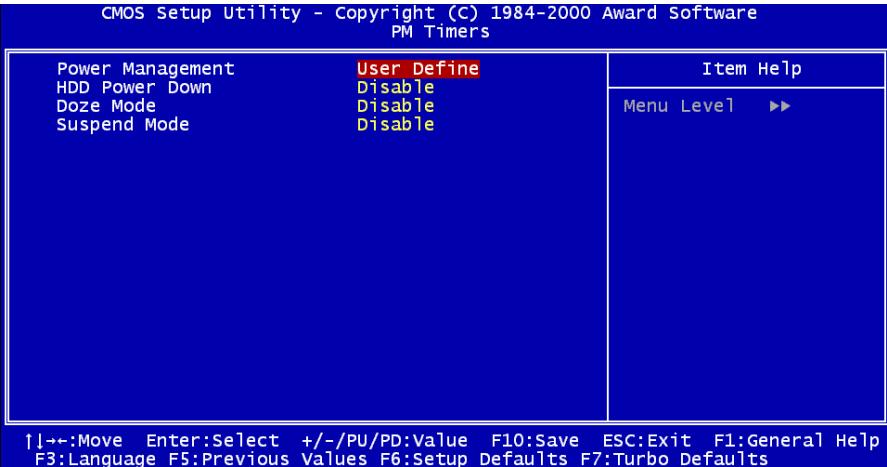
Power Management > PM Timers > Power Management
Power Management
Max Saving
Mix Saving
User Define (Default)
Disabled
This function allows you to set the default parameters of power-saving modes. Set to Disable to turn off power management function. Set to User Define to choose your own parameters.
| Mode | Doze | Suspend |
| Min Saving | 1 hour | 1 hour |
| Max Saving | 1 min | 1 min |
Power Management > PM Timers > HDD Power Down
HDD Power Down
Disabled (Default)
1min to 15 min
This option lets you specify the IDE HDD idle time before the device enters the power down state.
Power Management > Power Timers > Doze Mode
Doze Mode
Disabled(Default),1 min,2min,4min,8 min,12min,20min,30 min,40min,1hour
This item lets you set the period of time after which the system enters into Doze mode. The system activity (or event) is detected by monitoring the IRQ signals or other events (such as I/O).
Power Management > Power Timers > Suspend Mode
Suspend Mode
Disabled(Default),1 min,2min,4min,8 min,12min,20min,30 min,40min,1hour
This item lets you set the period of time after which the system enters into Suspend mode. The Suspend mode can be Power On Suspend or Suspend to Hard Drive, selected by "Suspend Mode Option".
Power Management > PM Controlled by APM
PM Controlled by APM
Yes (Default) No
If "Max Saving" is selected, you can turn on this item, transfer power management control to APM (Advanced Power Management) and enhance power saving function. For example, stop CPU internal clock.
Power Management > Video Off In Suspend
Video Off In Suspend
Suspend Off(Default)
All Modes Off
Always On
This item lets you to decide whether the video is off in the suspend mode.
Power Management > Video Off Method
Video Off Method
V/H SYNC + Blank (Default)
DPMS Support
Blank Screen
This determines the way that monitor is off. Blank Screen writes blanks to video buffer. V/H SYNC+Blank allows BIOS to control VSYNC and HSYNC signals. This function applies only for DPMS (Display Power Management Standard) monitor. The DPMS mode uses DPMS function provided by VGA card.
Power Management > Modem Use IRQ
Modem Use IRQ
3 (Default); 4; 5; 7; 9;
10; 11; NA
This item lets you set an IRQ for the modem.
Power Management > Soft-off By PWR-Button
Soft-off By PWR-Butto
Instant-Off (Default)
Delay 4 Sec
This is a specification of ACPI and supported by hardware. When Delay 4 sec is selected, the soft power switch on the front panel can be used to control power on, suspend and off. If the switch is pressed for less than 4 seconds during the system power-on, the system will go into suspend mode. If the switch is pressed for longer than 4 seconds, the system will be power-off. The default setting is Instant-Off. If Instant-Off is selected the soft power switch is only used to control power-on and power-off. Hence, there is no need to press it for 4 seconds and there is no suspend.
Power Management > Wake Up Events
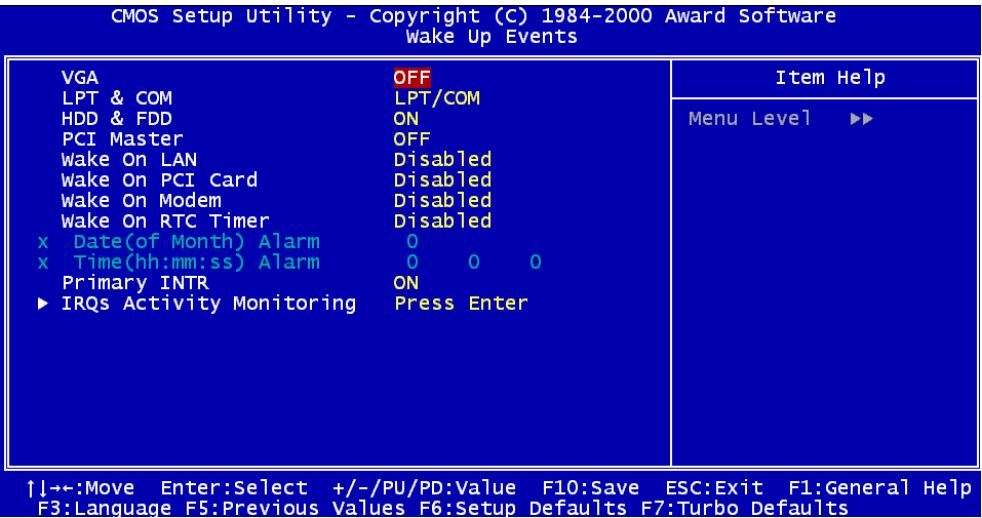
Power Management > Wake Up Events > VGA
VGA
Off(Default)
On
This item can enable or disable the detection of VGA activities for power down state transition.
Power Management > Wake Up Events > LPT/COM
LPT/COM
LPT/COM(Default)
NONE
LPT
COM
This item can enable or disable the detection of LPT/COM port activities for power down state transition.
Power Management > Wake Up Events > HDD/FDD
HDD/FDD
On (Default)
Off
This item can enable or disable the detection of HDD/FDD activities for power down state transition.
Power Management > Wake Up Events > PCI Master
PCI Master
Off(Default)
On
This item can enable or disable the detection of PCI Master activities for power down state transition.
Power Management > Wake Up Events > Wake On LAN
Wake On LAN
Disabled(Default)
Enabled
This item lets you specify enable or disable Wake On LAN function.
Power Management > Wake Up Events > Wake On PCI Card
Wake On PCI Card
Disabled(Default)
Enabled
This item lets you specify enable or disable Wake On PCI Card function.
Power Management > Wake Up Events > Wake On Modem
Wake On Modem
Disabled (Default)
Enabled
This item lets you specify enable or disable Wake On Modem function.
Power Management > Wake Up Events > Wake On RTC Timer
Wake On RTC Timer
Disabled (Default)
Enabled
This item lets you specify enable or disable Wake On RTC Timer function.
Power Management > Wake Up Events > Date ( of Month) Alarm
Date (of Month) Alarm
0 to 31
This item is displayed when you enable the "Wake On RTC Timer" option. Here you can specify what date you want to wake up the system. For example, setting to 15, the system will wake up on the 15^th day of every month.
Power Management > Wake Up Events > Time (hh:mm:ss) Alarm
Time (hh:mm:ss)
Alarm
hh:mm:ss
This item is displayed when you enable the RTC Wake Up Timer option. Here you can specify what time you want to wake up the system.
Power Management > Wake Up Events > Primary INTR
Primary INTR
On (Default)
Off
This item is used to enable or disable the detection of IRQ3-15 or NMI interrupt events for power down state transition. Normally, this is applied to network card.
Power Management > Wake Up Events > IRQs Activity Monitoring
| CMOS Setup Utility - Copyright (C) 1984-2000 Award Software IRQs Activity Monitoring | ||
| IRQ3 (COM 2) IRQ4 (COM 1) IRQ5 (LPT 2) IRQ6 (Floppy Disk) IRQ7 (LPT 1) IRQ8 (RTC Alarm) IRQ9 (IRQ2 Redir) IRQ10 (Reserved) IRQ11 (Reserved) IRQ12 (PS/2 Mouse) IRQ13 (Coprocessor) IRQ14 (Hard Disk) IRQ15 (Reserved) | Enabled | Item Help |
| Menu Level | ||
| ↑↓↔:Move Enter:Select +/-/PU/PD:Value F10:Save ESC:Exit F1:General Help F3:Language F5:Previous Values F6:Setup Defaults F7:Turbo Defaults | ||
IRQs Activity
Monitoring
IRQ3 (COM 2)
IRQ4 (COM 4)
IRQ5 (LPT 2)
IRQ6 (Floppy Disk)
IRQ7 (LPT 1)
IRQ8 (RTC Alarm)
IRQ9 (IRQ2 Redir)
IRQ10 (Reserved)
IRQ11 (Reserved)
IRQ12 (PS/2 Mouse)
IRQ13 (Coprocessor)
IRQ14 (Hard Disk)
IRQ15 (Reserved)
These items can enable or disable the detection of devices activities by IRQs for power down state transition.
PNP/PCI Configuration Setup
The PNP/PCI Configuration Setup allows you to configure the PCI devices installed in your system. The following screen appears if you select the option "PNP/PCI Configuration Setup" from the main menu.
| CMOS Setup Utility - Copyright (C) 1984-2000 Award Software PnP/PCI Configurations | ||
| PNP OS Installed Reset Configuration Data | No Disabled | Item Help |
| Resources Controlled By x IRQ Resources | Auto(ESCD) Press Enter | Menu Level Select Yes if you are using a Plug and Play capable operating system Select No if you need the BIOS to configure non-boot devices |
| PCI/VGA Palette Snoop Assign IRQ For VGA Assign IRQ For USB | Disabled Enabled Enabled | |
PNP/PCI Configuration > PnP OS Installed
PnP OS Installed
Yes
No (Default)
Normally, the PnP resources are allocated by BIOS during POST (Power-On Self Test). If you are using a PnP operating system (such as Windows 95), set this item to Yes to inform BIOS to configure only the resources needed for booting (VGA/IDE or SCSI). The rest of system resources will be allocated by PnP operating system.
PNP/PCI Configuration > Reset Configuration Data
Reset Configuration
Data
Enabled
Disabled(Default)
In case conflict occurs after you assign the IRQs or after you configure your system, you can enable this function, allow your system to automatically reset your configuration and reassign the IRQs, DMAs, and I/O address.
PNP/PCI Configuration > Resources Controlled By
Resources Controlled by
Auto (ESCD) (Default)
Manual
Setting this option to Manual allows you to individually assign the IRQs and DMAs to the ISA and PCI devices.
Set this to Auto to enable the auto-configuration function.
PNP/PCI Configuration > IRQ Resource
| CMOS Setup Utility - Copyright (C) 1984-2000 Award Software IRQ Resources | |||
| IRQ-3 assigned to PCI Device | Item Help | ||
| IRQ-4 assigned to PCI Device | Menu Level | ||
| IRQ-5 assigned to PCI Device | C≤, I-C≤, *-C≤, 3-C≤, <-C≤, E-C≤, N-C≤, W-C≤, -C≤, i-Legacy ISA for devices compliant with the original PC AT bus specification, PCI/ISA PnP for devices compliant with the Plug and Play standard whether designed for PCI or ISA bus architecture | ||
| IRQ-7 assigned to PCI Device | |||
| IRQ-9 assigned to PCI Device | |||
| IRQ-10 assigned to PCI Device | |||
| IRQ-11 assigned to PCI Device | |||
| IRQ-12 assigned to PCI Device | |||
| IRQ-14 assigned to PCI Device | |||
| IRQ-15 assigned to PCI Device | |||
PNP/PCI Configuration > IRQ Resource > IRQ 3, 4, 5, 7, 9, 10, 11, 12, 14, 15 assigned to
IRQ 3,4,5,7,9,10, 11,12,14,15 assigned to PCI Device (Default) Reserved
When resources are controlled manually, assign each system interrupt a type, depending on the type of device using the interrupt.
PNP/PCI Configuration > PCI/VGA Palette Snoop
PCI/VGA Palette Snoop
Enabled
Disabled (Default)
Enabling this item informs the PCI VGA card to keep silent (and to prevent conflict) when palette register is updated (i.e., accepts data without responding any communication signals). This is useful only when two display cards use the same palette address and plugged in the PCI bus at the same time (such as MPEG or Video capture card). In such case, PCI VGA is silent while MPEG/Video capture card is set to function normally.
PNP/PCI Configuration > Assign IRQ For VGA
Assign IRQ For VGA
Enabled(Default)
Disabled
In case conflict occurs after you assign the IRQs or after you configure your system, you can enable this function, allow your system to automatically reset your configuration and reassign the IRQs, DMAs, and I/O address.
PNP/PCI Configuration > Assign IRQs For USB
Assign IRQ For USB
Enabled(Default)
Disabled
In case conflict occurs after you assign the IRQs or after you configure your system, you can enable this function, allow your system to automatically reset your configuration and reassign the IRQs, DMAs, and I/O address.
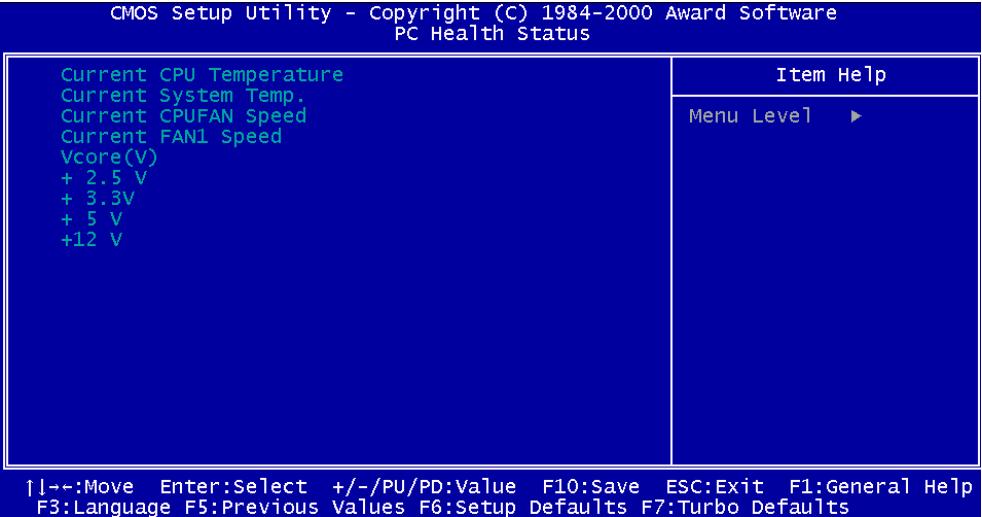
PC Health Status
As a hardware monitor chip built-in the VIA VT82C686A Super South Bridge, BIOS will automatically detect system health parameters such as CPU temperature, CPU fan speed, CPU voltage and voltage on the motherboard. Hence, from this data, the healthy status of system will be showed.
Frequency/Voltage Control
This option allows you to configure the CPU Front Side Bus (FSB) frequency and ratio.
| CMOS Setup Utility - Copyright (C) 1984-2000 Award Software Frequency/Voltage Control | ||
| CPU Speed Detected | 0 | |
| Clock Spread Spectrum | Enabled | |
| CPU Speed Setting | 66.8 x 2.0 = 133 | |
| Item Help | ||
| Menu Level >1. If CPU speed detected does not match the CPU speed setup. It is probably caused by the CPU has a fixed FSB clock or fixed clock ratio.2. If you fail to reboot the system, please press <Home>key first and then press Reset button at the same time. | ||
| |--:Move Enter:Select +/-/PU/PD:Value F10:Save ESC:Exit F1:General HelpF3:Language F5:Previous Values F6:Setup Defaults F7:Turbo Defaults | ||
Frequency/Voltage Control > CPU Speed Detected
CPU Speed Detected
This item provides you current CPU working frequency.
Frequency/Voltage Control > Clock Spread Spectrum
Clock Spread Spectrum
Enabled(Default)
Disabled
This item lets you enable or disable the spread spectrum modulate.
Frequency/Voltage Control > CPU Speed Setting
CPU Speed Setting
FSB clock:
66-83MHz
100-124MHz
133-150MHz
Ratio:
2-8
This item allows you modify the CPU FSB clock and ratio.
FSB x Ratio = CPU clock

Notes: If CPU speed detected does not match the CPU speed setup, it is probably caused by the CPU has a fixed FSB clock or ratio.

Warning: If you fail to reboot the system, please press
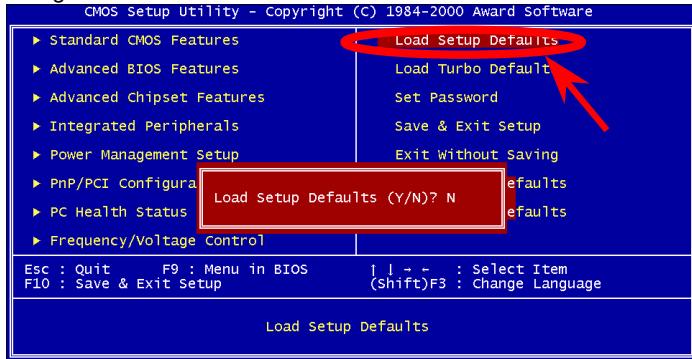
Load Setup Defaults
The "Load Setup Defaults" option loads optimized settings for optimum system performance. Optimal settings are relatively safer than the Turbo settings. All the product verification, compatibility/reliability test report and manufacture quality control are based on "Load Setup Defaults". We recommend use this settings for normal operation. "Load Setup Defaults" is not the slowest setting for this motherboard. If you need to verify an unstable problem, you may manually set the parameter in the "BIOS Features Setup" and "Chipset Features Setup" to get slowest and safer setting.
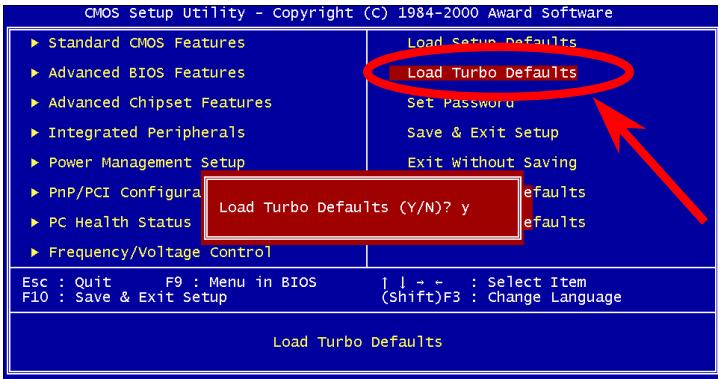
Load Turbo Defaults
The "Load Turbo Defaults" option gives better performance than "Load Setup Defaults". It is provided for the convenience of power user who wants to push the motherboard to get better performance. Turbo setting does not go though all the detail reliability and compatibility test, it is tested only with limited configuration and loading (for example, a system that contains only a VGA card and two DIMMs). Use Turbo setting only when you fully understand the items in Chipset Setup menu. The performance improvement of Turbo setting is normally around 3% to 5% , depending on the chipset and the application.
Set Password
Password prevents unauthorized use of your computer. If you set a password, the system prompts for the correct password before boot or access to Setup.
To set a password:
- At the prompt, type your password. Your password can be up to 8 alphanumeric characters. When you type the characters, they appear as asterisks on the password screen box.
- After typing the password, press.
- At the next prompt, re-type your password and press again to confirm the new password. After the password entry, the screen automatically reverts to the main screen.
To disable the password, just press
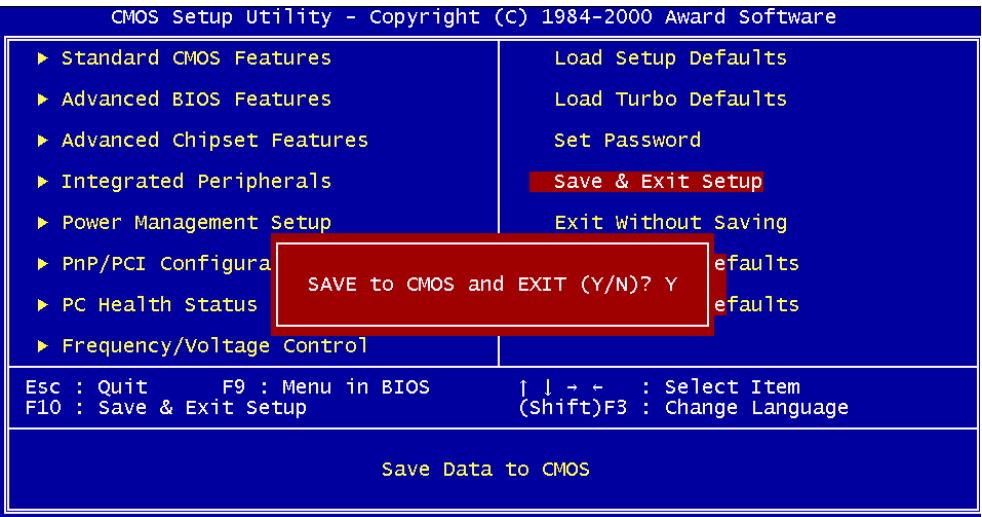
Save & Exit Setup
This function automatically saves all CMOS values before leaving Setup.
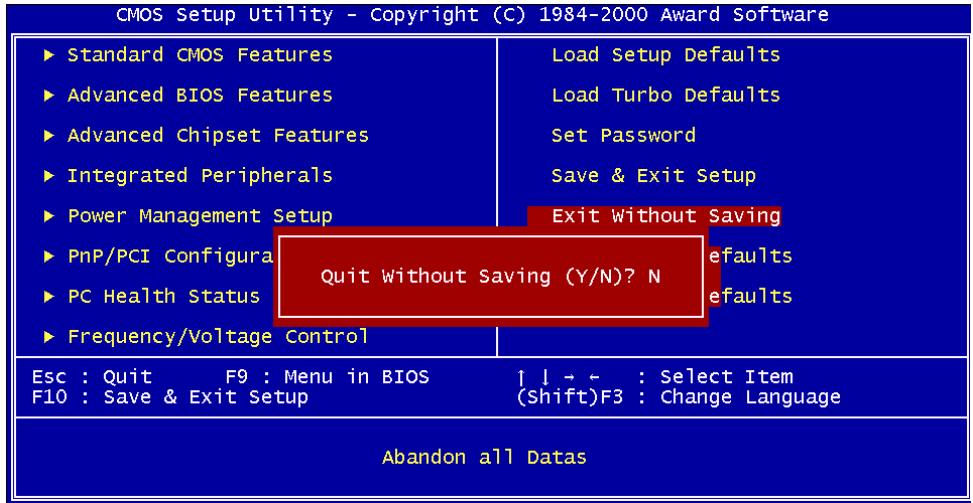
Exit without Saving
Use this function to exit Setup without saving the CMOS value changes. Do not use this option if you want to save the new configuration.
BIOS Upgrade
By flashing your motherboard, you agree to accept the possibility of BIOS flash failure. If you motherboard is working and is stable, and there are no major bugs that were fixed by a latter BIOS revision, we recommend that you DO NOT try to upgrade your BIOS.
By doing so, you are taking a risk of BIOS flash failure. If you indeed intent on upgrading, PLEASE BE SURE to use the right BIOS revision for the right motherboard model.
AOpen Easy Flash is a little different than traditional flash method. The BIOS binary file and flash routine are linked together and you simply run a single commend to complete the flash process.

Caution: AOpen Easy Flash BIOS programs are designed to be compatible with the Award BIOS. At the date of this note, AOpen Easy Flash BIOS programs are not available for AMI BIOS. AMI BIOS appears mostly only on old 486 boards and some early Pentium boards. Please be sure to view the README compressed inside the BIOS package before upgrading, and follow upgrade instructions carefully. This will minimize the chance of flash failures.
Below are the steps for easy flashing procedures: (applies for Award BIOS ONLY)
- Download new BIOS upgrade zipped file from AOpen's web site. For example, MX33102.ZIP.
- Run shareware PKUNZIP (http://www.pkware.com/) which supports miscellaneous operation systems to extract the binary BIOS file and the flash utility. Or Winzip (http://www.winzip.com/) in Windows environment.
- Save the unzipped file into a bootable floppy disk. For example, MX33102.BIN & MX33102.EXE
- Reboot the system to DOS mode without loading any memory handler (such as EMM386) or device driver. It needs around 520K free memory space.
- Execute A: MX33102 and the program will do the rest of it.
DO NOT turn off the power during FLASH PROCESS until you are asked to!!
Del
- Reboot system and press
to enter BIOS setup, Choose "Load Setup Defaults", then "Save & Exit Setup". Done!

Warning: The new BIOS upgrade will permanently replace your original BIOS's settings and PnP information when flashing. You may need to reconfigure your BIOS setting and re-install Win95/Win98 as well as your add-on cards, so that your system can go back to work as normal.
Overclocking
As a leading manufacturer in motherboard industry, AOpen always listens to what customers want and develop products to fit different user's requirements. Reliability, compatibility, leading technology and friendly features are our basic goals when designing motherboards. Other than above mentioned design criteria, there are power users who are always seeking to push the limitation of the system performance by overclocking which we call them "Overclocker".
This section is dedicated to Overclockers.
This high performance motherboard is designed for maximum 133MHz CPU bus clock. But it comes with clock generator of 150MHz when we design it to accommodate future CPU bus clock. Our lab test results shown that 150MHz is achievable when proper setting and qualified components were presented, we feel quite comfortable overclocking to 150MHz. Not only that, this motherboard has full-range (CPU core voltage) settings and an option to adjust CPU core voltage. The CPU clock ratio can be up to 8X, that supports almost all of Pentium II / Pentium III /Celeron CPUs in the future and provides flexibility for overclockers. For your reference, the following configurations are what we feel comfortable at 150MHz bus clock.
But not guaranty.


Warning: The design of this product follows CPU and chipset vendor's design guideline. Any attempts to push beyond product specification are not recommended and you are taking your own risk to damage your system or important data. Before doing overclocking, you must make sure your components are able to tolerate such abnormal setting, especially CPU, DRAMs, hard disks, and AGP VGA cards.

Tip: Note that overclocking may also cause thermal problem. Please make sure that the cooling fan and the heatsink were adequate to dissipate excessive heat that's generated by overclocking the CPU.
VGA Card & Hard Disk
VGA and HDD are key components for overclocking, for your reference, the following list are what have been successful overclocked in our lab. Please note that AOpen can not guaranty they can be successful overclocked again. Please check the Available Vendor List (AVL) by link to our official website.
VGA: http://www.aopen.com.tw/tech/report/overclk.mb/vga-oc.htm
HDD: http://www.aopen.com.tw/tech/report/overclk.mb/hdd-oc.htm
Glossary
AC97
Basically, AC97 specification separates sound/modem circuit to two parts, digital processor and a CODEC for analog I/O, they are linked by AC97 link bus. Since digital processor can be put into motherboard main chipset, the cost of sound/modem onboard solution can be reduced.
ACPI (Advanced Configuration & Power Interface)
ACPI is the power management specification of PC97 (1997). It intends to save more power by taking full control of power management to operating system and bypass BIOS. The chipset or super I/O chip needs to provide standard register interface to operating system (such as Windows 98). This is a bit similar as the PnP register interface. ACPI defines ATX momentary soft power switch to control the power state transition.
AGP (Accelerated Graphic Port)
AGP is a bus interface targeted for high-performance 3D graphic. AGP supports only memory read/write operation and single-master single-slave one-to-one only. AGP uses both rising and falling edge of the 66MHz clock, for 2X AGP, the data transfer rate is 66MHz× 4 byte × 2 = 528MB / s . AGP is now moving to 4X mode, 66MHz× 4 byte × 4 = 1056MB / s . AOpen is the first company to support 4X AGP motherboards by both AX6C (Intel 820) and MX64/AX64 (VIA 694x), started from Oct 1999.
AMR (Audio/Modem Riser)
The CODEC circuit of AC97 sound/modem solution can be put on motherboard or put on a riser card (AMR card) that connects to motherboard through AMR connector.
AOpen Bonus Pack CD
A disc bundled with AOpen motherboard product, there are motherboard drivers, Acrobat Reader for PDF online manual and other useful utilities.
APM
Unlike ACPI, BIOS controls most APM power management functions. AOpen Suspend to Hard Drive is a good example of APM power management.
ATA/66
ATA/66 uses both rising edge and falling edge but doubles UDMA/33 transfer rate. The data transfer rate is 4 times of the PIO mode 4 or DMA mode 2, 16.6MB/s x4 = 66MB/s. To use ATA/66, you need special ATA/66 IDE cable.
ATA/100
ATA/100 is a new IDE specification under developing. ATA/100 uses both rising edge and falling edge as ATA/66 but clock cycle time is reduced to 40ns. The data transfer rate is (1/40ns) x 2 bytes x 2 = 100MB/s. To use ATA/100, you need special 80-wire IDE cable, the same as ATA/66.
BIOS (Basic Input/Output System)
BIOS is a set of assembly routine/program that reside in EPROM or Flash ROM. BIOS controls Input/output devices and other hardware devices of motherboard. In general, to provide hardware independent portability, operation system and drivers is required to access BIOS without directly access hardware devices.
Bus Master IDE (DMA mode)
The traditional PIO (Programmable I/O) IDE requires the CPU to involve in all the activities of the IDE access including waiting for the mechanical events. To reduce the workload of the CPU, the bus master IDE device transfers data from/to memory without interrupting CPU, and releases CPU to operate concurrently while data is transferring between memory and IDE device. You need the bus master IDE driver and the bus master IDE HDD to support bus master IDE mode.
CODEC (Coding and Decoding)
Normally, CODEC means a circuit that can do digital to analog conversion and also the analog to digital conversion. It is part of AC97 sound/modem solution.
DIMM (Dual In Line Memory Module)
DIMM socket has total 168-pin and supports 64-bit data. It can be single or double side, the golden finger signals on each side of PCB are different, that is why it was called Dual In Line. Almost all DIMMs are made by SDRAM, which operate at 3.3V. Note that some old DIMMs are made by FPM/EDO and only operate at 5V. Do not confuse them with SDRAM DIMM.
ECC (Error Checking and Correction)
The ECC mode needs 8 ECC bits for 64-bit data. Each time memory is accessed, ECC bits are updated and checked by a special algorithm. The ECC algorithm has the ability to detect double-bit error and automatically correct single-bit error while parity mode can only detect single-bit error.
EDO (Extended Data Output) Memory
The EDO DRAM technology is actually very similar to FPM (Fast Page Mode). Unlike traditional FPM that tri-states the memory output data to start the pre-charge activity, EDO DRAM holds the memory data valid until the next memory access cycle, that is similar to pipeline effect and reduces one clock state.
E^2 PROM (Electronic Erasable Programmable ROM)
Also known as E^2PROM . Both E^2PROM and Flash ROM can be re-programmed by electronic signals, but the interface technology is different. Size of EEPROM is much smaller than flash ROM.
EPROM (Erasable Programmable ROM)
Traditional motherboard stores BIOS code in EPROM. EPROM can only be erased by ultra-violet (UV) light. If BIOS has to be upgraded, you need to remove EPROM from motherboard, clear by UV light, re-program, and then insert back.
EV6 Bus
EV6 Bus in the technology of Alpha processor from Digital Equipment Corporation. EV6 bus uses both rising and falling clock edge to transfer data, similar as DDR SDRAM or ATA/66 IDE bus.
EV6 Bus Speed = CPU external bus clock x 2.
For example, 200 MHz EV6 bus is actually using 100 MHz external bus clock, but the equivalent speed is 200 MHz.
FCC DoC (Declaration of Conformity)
The DoC is component certification standard of FCC EMI regulations. This standard allows DIY component (such as motherboard) to apply DoC label separately without a shielding of housing.
FC-PGA
FC means Flip Chip, FC-PGA is a new package of Intel for Pentium III CPU. It can plug into SKT370 socket, but require motherboard to add some signals on socket 370. That is, the motherboard needs to be redesigned. Intel is going to ship FC-PGA 370 CPU and phase out slot1 CPU.
Flash ROM
Flash ROM can be re-programmed by electronic signals. It is easier for BIOS to upgrade by a flash utility, but it is also easier to be infected by virus. Because of increase of new functions, BIOS size is increased from 64KB to 256KB (2M bit). AOpen AX5T is the first board to implement 256KB (2Mbit) Flash ROM. Now flash ROM size is moving to 4M bit on AX6C (Intel 820) and MX3W (Intel 810) motherboard.
FSB (Front Side Bus) Clock
FSB Clock means CPU external bus clock.
CPU internal clock = CPU FSB Clock x CPU Clock Ratio
I²C Bus
See SMBus.
P1394
P1394 (IEEE 1394) is a standard of high-speed serial peripheral bus. Unlike low or medium speed USB, P1394 supports 50 to 1000Mbit/s and can be used for video camera, disk and LAN.
Parity Bit
The parity mode uses 1 parity bit for each byte, normally it is even parity mode, that is, each time the memory data is updated, parity bit will be adjusted to have even count "1" for each byte. When next time, if memory is read with odd number of "1", the parity error is occurred and this is called single bit error detection.
PBSRAM (Pipelined Burst SRAM)
For Socket 7 CPU, one burst data read requires four QWord (Quad-word, 4 × 16 = 64 bits). PBSRAM only needs one address decoding time and automatically sends the remaining QWords to CPU according to a predefined sequence. Normally, it is 3-1-1-1, total 6 clocks, which is faster than asynchronous SRAM. PBSRAM is often used on L2 (level 2) cache of Socket 7 CPU. Slot 1 and Socket 370 CPU do not need PBSRAM.
PC100 DIMM
SDRAM DIMM that supports 100MHz CPU FSB bus clock.
PC133 DIMM
SDRAM DIMM that supports 133MHz CPU FSB bus clock.
PDF Format
A file format for electronic document, PDF format is independent from platform, you can read PDF file under Windows, Unix, Linux, Mac ... with different PDF reader. You can also read PDF file by web browser such as IE and Netscape, note that you need to install PDF plug-in first (Included in Acrobat Reader).
PnP (Plug and Play)
The PnP specification suggests a standard register interface for both BIOS and operating system (such as Windows 95). These registers are used by BIOS and operating system to configure system resource and prevent any conflicts. The IRQ/DMA/Memory will be automatically allocated by PnP BIOS or operating system. Currently, almost all the PCI cards and most ISA cards are already PnP compliant.
POST (Power-On Self Test)
The BIOS self test procedure after power-on, sometimes, it is the first or the second screen shown on your monitor during system boot.
RDRAM (Rambus DRAM)
Rambus is a memory technology that uses large burst mode data transfer. Theoretically, the data transfer should be high than SDRAM. RDRAM is cascaded in channel operation. For Intel 820, only one RDRAM channel is supported, 16-bit data per channel, and this channel may have maximum 32 RDRAM devices, no matter how many RIMM sockets.
RIMM
184-pin memory module that supports RDRAM memory technology. A RIMM memory module may contain up to maximum of 16 RDRAM devices.
SDRAM (Synchronous DRAM)
SDRAM is one of the DRAM technologies that allows DRAM to use the same clock as the CPU host bus (EDO and FPM are asynchronous and do not have clock signal). It is similar as PBSRAM to use burst mode transfer. SDRAM comes in 64-bit 168-pin DIMM and operates at 3.3V. AOpen is the first company to support dual-SDRAM DIMMs onboard (AP5V), from Q1 1996
Shadow E^2PROM
A memory space in Flash-ROM to simulate E^2PROM operation, AOpen motherboard uses Shadow E^2PROM for jumper-less and battery-less design.
SIMM (Single In Line Memory Module)
SIMM socket is only 72-pin, and is only single side. The golden finger signals on each side of PCB are identical. That is why it was called Single In Line. SIMM is made by FPM or EDO DRAM and supports 32-bit data. SIMM had been phased out on current motherboard design.
SMBus (System Management Bus)
SMBus is also called I2C bus. It is a two-wire bus developed for component communication (especially for semiconductor IC). For example, set clock of clock generator for jumper-less motherboard. The data transfer rate of SMBus is only 100Kbit/s, it allows one host to communicate with CPU and many masters and slaves to send/receive message.
SPD (Serial Presence Detect)
SPD is a small ROM or EEPROM device resided on the DIMM or RIMM. SPD stores memory module information such as DRAM timing and chip parameters. SPD can be used by BIOS to decide best timing for this DIMM or RIMM.
Ultra DMA/33
Unlike traditional PIO/DMA mode, which only uses the rising edge of IDE command signal to transfer data. UDMA/33 uses both rising edge and falling edge, the data transfer rate is double of the PIO mode 4 or DMA mode 2.
16.6MB/s x2 = 33MB/s
USB (Universal Serial Bus)
USB is a 4-pin serial peripheral bus that is capable of cascading low/medium speed peripherals (less than 10Mbit/s) such as keyboard, mouse, joystick, scanner, printer and modem. With USB, the traditional complex cables from back panel of your PC can be eliminated.
VCM (Virtual Channel Memory)
NEC's Virtual Channel Memory (VCM) is a new DRAM core architecture that dramatically improves the memory system's ability to service multimedia requirements. VCM increases memory bus efficiency and performance of any DRAM technology by providing a set of fast static registers between the memory core and I/O pins. Using VCM technology results in reduced data access latency and reduced power consumption.
ZIP file
A compressed file format to reduce file size. To unzip file, run shareware PKUNZIP (http://www.pkware.com/) for DOS and other operating system or WINZIP (http://www.winzip.com/) for windows environment.
Troubleshooting
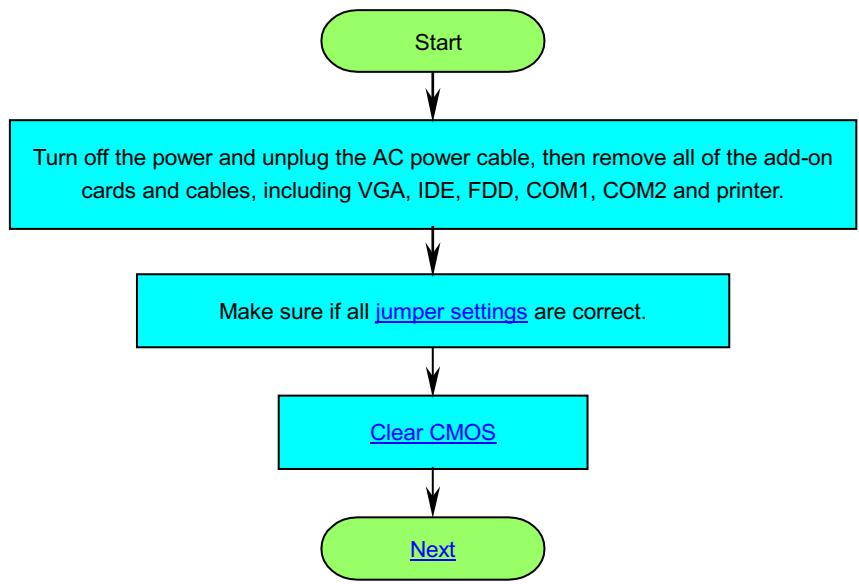
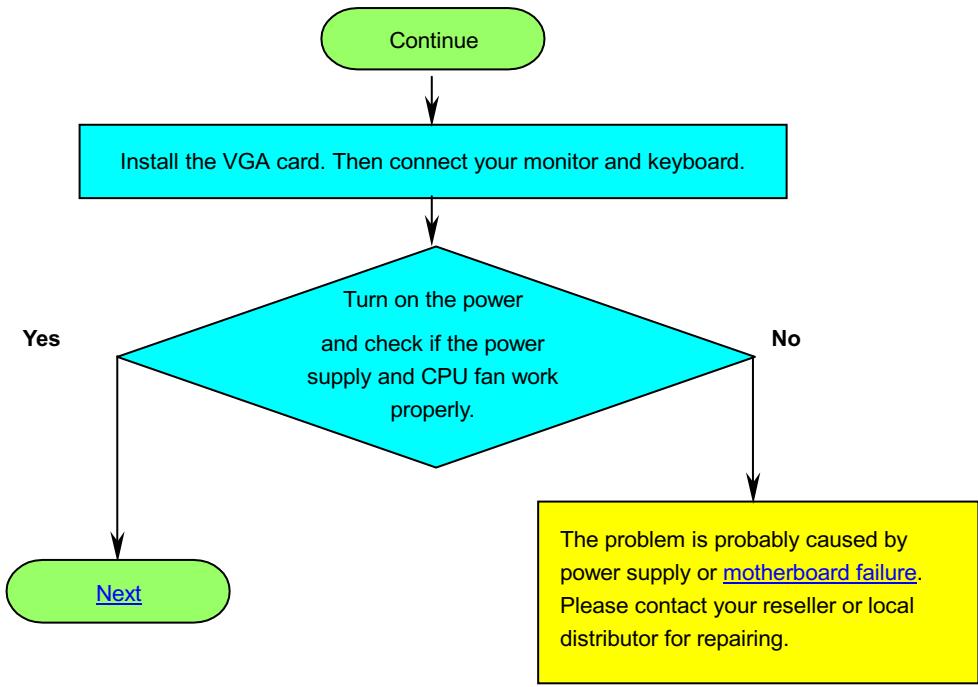
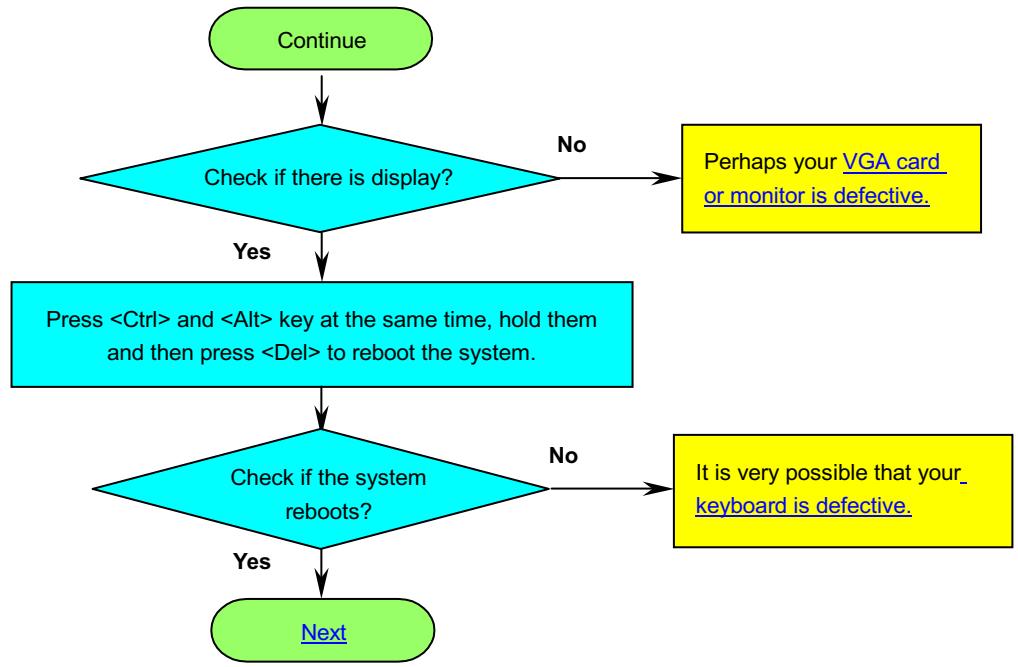
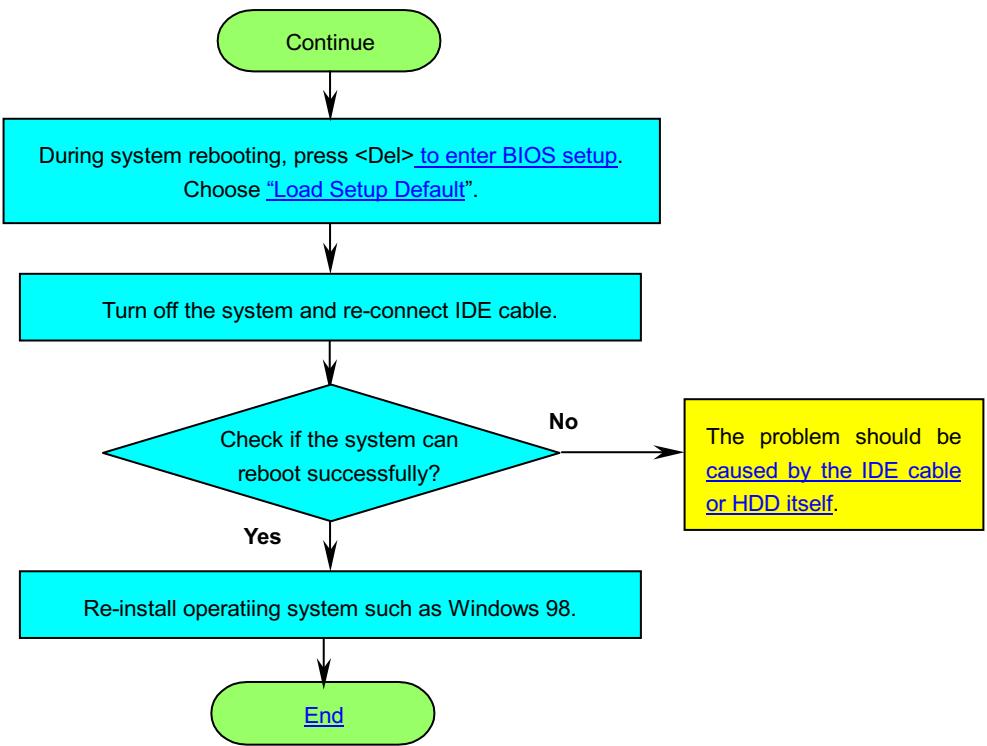
Club A Open


Product Registration
Thank you for choosing AOpen product. AOpen encourages you to spend few minutes in completing the following product registration. To register your product will ensure the high quality of services from AOpen. After the registration, you will:
- Have opportunities to play online slot machine and win a prize from AOpen by accumulating your bonuses for later prize exchange.
- Be upgraded to gold membership of Club AOpen program.
- Receive email notification about product safety alerts. Its purpose is to alert consumers quickly and conveniently when products contain technical issues.
- Receive email notification about latest product's announcements.
- Be able to personalize your AOpen web pages.
Receive e-mail notification about latest BIOS/Driver/Software release information. -
Have opportunities to participate special product promotional programs.
-
Enjoy higher service priority to receive technical assistance provided by AOpen specialists worldwide.
- Be able to join the discussions of web-based news groups.
AOpens makes sure that the information you provide is encrypted, so that it cannot be read or intercepted by other people or companies. Further, AOpens will not disclose any of information you submitted under any conditions. Please consult our online privacy policy for further information on our company policy.
Note: If registering products purchased from different dealers/retails and/or purchased on different dates, please submit a separate form for each product.

Technical Support
Dear Customer,
Thanks for choosing AOpen products. To provide the best and fastest service to our customer is our first priority. However, we receive numerous emails and phone-calls worldwide everyday, it is very hard for us to serve everyone on time. We recommend you follow the procedures below and seek help before contact us. With your help, we can then continue to provide the best quality service to more customers.
Thanks very much for your understanding!
AOpen Technical Supporting Team

Online Manual: Please check the manual carefully and make sure the jumper settings and installation procedure are correct.
http://www.aopen.com.tw/tech/download/manual/default.htm

Test Report: We recommend to choose board/card/device from the compatibility test reports for assembling your PC. http://www.aopen.com.tw/tech/report/default.htm

FAQ: The latest FAQ (Frequently Asked Questions) may contain a solution to your problem.
http://www.aopen.com.tw/tech/faq/default.htm

Download Software: Check out this table to get the latest updated BIOS/utility and drivers.
http://www.aopen.com.tw/tech/download/default.htm

News Group: Your problem probably had been answered by our support engineer or professional users on the news group.
http://www.aopen.com.tw/tech/newsgrp/default.htm

Contact Distributors/Resellers: We sell our products through resellers and integrators. They should know your system configuration very well and should be able to solve your problem more efficiently than us. After all, their attitude of service is an important reference for you if next time you want to buy something else from them.

Contact Us: Please prepare detail system configuration and error symptom before contacting us. The part number, serial number and BIOS version are also very helpful.
Part Number and Serial Number
The Part Number and Serial number are printed on bar code label. You can find this bar code label on the outside packing, on ISA/CPU slot or on component side of PCB. For example:
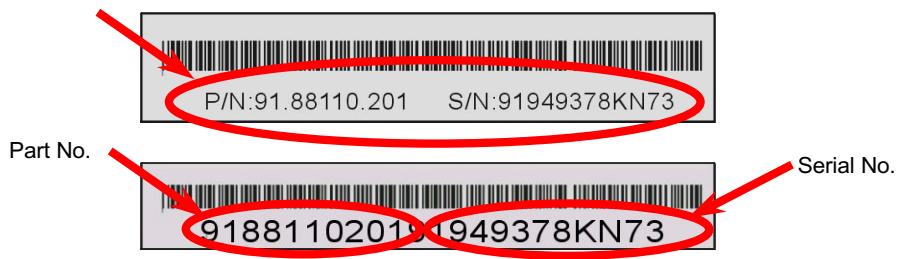
P/N: 91.88110.201 is part number, S/N: 91949378KN73 is serial number.
Web: http://www.aopen.com
Email : Send us email by going through the contact form below.
English http://www.aopen.com.tw/tech/contact/techusa.htm
Japanese http://aojp.aopen.com.tw/tech/contact/techjp.htm
Chinese http://w3.aopen.com.tw/tech/contact/techtw.htm
German http://www.aopencom.de/tech/contact/techde.htm
Simplified Chinese http://www.aopen.com.cn/tech/contact/techcn.htm
TEL:
USA 510-489-8928
Netherlands +31 73-645-9516
China (86) 755-375-3013
Taiwan (886) 2-2696-1333
Germany +49 (0) 2102-157-700
- MX33
- Online Manual
- What's in this manual
- MX33 1
- Overview 9
- Hardware 15
- Overclocking 145
- Glossary 148
- Overview
- You Must Notice
- Before You Start
- Quick Installation Procedure
- Hardware
- JP14 Clear CMOS
- CPU Installation
- CPU Fan Connector
- JP23 FSB/PCI Clock Ratio
- CPU Jumper-less Design
- Setting CPU Core Voltage
- Setting CPU Frequency
- DIMM Socket
- Front Panel Connector
- ATX Power Connector
- AC Power Auto Recovery
- IDE and Floppy Connector
- IrDA Connector
- WOM (Zero Voltage Wake on Modem)
- WOM by External BOX Modem
- WOM by Internal Modem Card
- WOL (Wake on LAN)
- PC99 Color Coded Back Panel
- JP12 Enable/Disable Onboard Sound
- Front Panel Audio (Optional)
- CD Audio Connector
- Modem Audio Connector
- Video_Audio_IN Connector
- Support 2nd USB Ports
- Battery-less and Long Life Design
- Over-current Protection
- Hardware Monitoring
- Resettable Fuse
- BIOS Write Protection
- Year 2000 (Y2K)
- Low ESR Capacitor
- Layout (Frequency Isolation Wall)
- Driver and Utility
- Autorun Menu from Bonus CD Disc
- Installing Windows 95
- Installing Windows 98
- Installing Windows 98 SE & Windows2000
- Installing VIA 4 in 1 Driver
- Installing Onboard Sound Driver
- Installing Hardware Monitoring Utility
- ACPI Suspend to Hard Drive
- System Requirement
- Fresh installation of Windows 98 on a new system
- Changing from APM to ACPI (Windows 98 only)
- Run "Regedit.exe"
- Changing from ACPI to APM
- AWARD BIOS
- Enter BIOS Setup
- Change Language
- Standard CMOS Features Setup
- Standard CMOS > Date
- Standard CMOS > Time
- Standard CMOS > IDE HDD Auto-Detection
- Standard CMOS > IDE Primary Master/Slave & IDE Secondary Master/Slave
- IDE Primary
- & Slave
- Master/ Slave
- Standard CMOS > IDE Primary Master/Slave & IDE Secondary Master/Slave > Access Mode
- Access Mode
- Standard CMOS > Drive A/Drive B
- Drive A/Drive B
- Standard CMOS > Video
- Video
- Standard CMOS > Halt On
- Halt On
- Advanced BIOS Features Setup
- Advanced BIOS Features > Virus Warning
- Virus Warning
- !WARNING !
- Advanced BIOS Features > Internal Cache
- Internal Cache
- Advanced BIOS Features > External Cache
- External Cache
- Advanced BIOS Features > CPU L2 Cache ECC Checking
- CPU L2 Cache ECC
- Checking
- Advanced BIOS Features > Processor Number Feature
- Processor Number
- Feature
- Advanced BIOS Features > Quick Power On Self Test
- Quick Power on
- Self-Test
- Advanced BIOS Features > First/Second/Third Boot Device
- First/Second/Third Boot Device
- Advanced BIOS Features > Boot other device
- Boot other device
- Advanced BIOS Features > Swap Floppy Drive
- Swap Floppy Drive
- Advanced BIOS Features > Boot Up Floppy Seek
- Boot Up Floppy
- Seek
- Advanced BIOS Features > Boot Up NumLock Status
- Boot Up NumLock
- Status
- Advanced BIOS Feature > Typematic Rate Setting
- Typematic Rate
- Setting
- Advanced BIOS Feature > Typematic Rate (Chars/Sec)
- Advanced BIOS Feature > Typematic Delay (Msec)
- Typematic Delay
- Advanced BIOS Features > Security Option
- Security Option
- Advanced BIOS Features > OS Select For DRAM > 64MB
- Advanced BIOS Features > Show Logo On Screen
- Show Logo On
- Screen
- Advanced Chipset Features Setup
- Advanced Chipset Features > Bank 0/1, 2/3, 4/5 DRAM Timing
- Advanced Chipset Features > SDRAM CAS Latency Time
- Advanced Chipset Features > DRAM Clock
- DRAM Clock
- Advanced Chipset Features > Memory Hole At 15M-16M
- Memory Hole At 15M-16M
- Advanced Chipset Features > Read Around Write
- Read Around Write
- Advanced Chipset Features > Concurrent PCI/Host
- Concurrent PCI/Host
- Advanced Chipset Features > System BIOS Cacheable
- System BIOS cacheable
- Advanced Chipset Features > Video RAM Cacheable
- Video RAM Cacheable
- Advanced Chipset Features > AGP Aperture Size (MB)
- AGP Aperture Size (MB)
- Advanced Chipset Features > AGP-2X Mode
- AGP-2X Mode
- Advanced Chipset Features > CPU To PCI Write Buffer
- CPU to PCI Write
- Buffer
- Advanced Chipset Features > PCI Dynamic Bursting
- PCI Dynamic Bursting
- Advanced Chipset Features > PCI Master 0 WS Write
- PCI Master 0 WS
- Write
- Advanced Chipset Features > Delayed Transaction
- Delayed Transaction
- Advanced Chipset Features > PCI#2 Access #1 Retry
- Advanced Chipset Features > AGP Master 1 WS Write
- Advanced Chipset Features > AGP Master 1 WS Read
- Advanced Chipset Features > DRAM Data Integrity Mode
- Integrated Peripherals
- Integrated Peripherals > OnChip IDE 0/1 Channel
- OnChip IDE
- 0/1Channel
- Integrated Peripherals > IDE Prefetch Mode
- IDE Prefetch Mode
- Integrated Peripherals > Primary Master/Slave PIO &
- Secondary Master/Slave PIO
- Primary Master/Slave
- & Secondary
- Master/Slave PIO
- Integrated Peripherals > Primary Master/Slave UDMA &
- Secondary Master/Slave UDMA
- Master/Slave UDMA
- Integrated Peripherals > Init Display First
- Init Display First
- Integrated Peripherals > AC 97 Audio
- AC 97 Audio
- Integrated Peripherals > AC 97 Modem
- AC 97 Modem
- Integrated Peripherals > USB Controller
- USB Controller
- Integrated Peripherals > USB Keyboard Support
- USB Keyboard
- Support
- Integrated Peripherals > AC PWR Auto Recovery
- AC PWR Auto Recovery
- Integrated Peripherals > IDE HDD Block Mode
- IDE HDD Block Mode
- Integrated Peripherals > Onboard FDD Controller
- Onboard FDD
- Controller
- Integrated Peripherals > Onboard Serial Port 1 & Port 2
- Onboard Serial Port 1
- & Port 2
- Integrated Peripherals > UART Mode Select
- UART Mode Select
- Standard
- HPSIR
- ASKIR
- Integrated Peripherals > IR Function Duplex
- IR Function Duplex
- Integrated Peripherals > RxD, TxD Active
- RxD, TxD Active
- Integrated Peripherals > Onboard Parallel Port
- Onboard Parallel Port
- Integrated Peripherals > Parallel Mode
- Parallel Mode
- SPP (Standard and Bidirection Parallel Port)
- EPP (Enhanced Parallel Port)
- ECP (Extended Parallel Port)
- Integrated Peripherals > ECP Mode Use DMA
- ECP Mode Use DMA
- Integrated Peripherals > Parallel Port EPP Type
- Parallel Port EPP
- Integrated Peripherals >Onboard Legacy Audio
- EPP Mode Select
- Integrated Peripherals > Sound Blaster
- Sound Blaster
- Integrated Peripherals > SB I/O Base Address
- SB I/O Base Address
- Integrated Peripherals > SB IRQ Select
- SB IRQ Select
- Integrated Peripherals > SB DMA Select
- SB DMA Select
- Integrated Peripherals > MPU-401
- MPU-401
- Integrated Peripherals >MPU-401 I/O Address
- MPU-401 I/O Address
- Integrated Peripherals > Game Port (200-207H)
- Game Port (200-207H)
- Power Management Setup
- Power Management > ACPI Function
- ACPI Function
- Power Management > PM Timers
- Power Management > PM Timers > Power Management
- Power Management
- Power Management > PM Timers > HDD Power Down
- HDD Power Down
- Power Management > Power Timers > Doze Mode
- Doze Mode
- Power Management > Power Timers > Suspend Mode
- Suspend Mode
- Power Management > PM Controlled by APM
- PM Controlled by APM
- Power Management > Video Off In Suspend
- Video Off In Suspend
- Power Management > Video Off Method
- Video Off Method
- Power Management > Modem Use IRQ
- Modem Use IRQ
- Power Management > Soft-off By PWR-Button
- Soft-off By PWR-Butto
- Power Management > Wake Up Events
- Power Management > Wake Up Events > VGA
- VGA
- Power Management > Wake Up Events > LPT/COM
- LPT/COM
- Power Management > Wake Up Events > HDD/FDD
- HDD/FDD
- Power Management > Wake Up Events > PCI Master
- PCI Master
- Power Management > Wake Up Events > Wake On LAN
- Wake On LAN
- Power Management > Wake Up Events > Wake On PCI Card
- Wake On PCI Card
- Power Management > Wake Up Events > Wake On Modem
- Wake On Modem
- Power Management > Wake Up Events > Wake On RTC Timer
- Wake On RTC Timer
- Power Management > Wake Up Events > Date ( of Month) Alarm
- Date (of Month) Alarm
- Power Management > Wake Up Events > Time (hh:mm:ss) Alarm
- Power Management > Wake Up Events > Primary INTR
- Power Management > Wake Up Events > IRQs Activity Monitoring
- IRQs Activity
- Monitoring
- PNP/PCI Configuration Setup
- PNP/PCI Configuration > PnP OS Installed
- PnP OS Installed
- PNP/PCI Configuration > Reset Configuration Data
- Reset Configuration
- PNP/PCI Configuration > Resources Controlled By
- Resources Controlled by
- PNP/PCI Configuration > IRQ Resource
- PNP/PCI Configuration > PCI/VGA Palette Snoop
- PCI/VGA Palette Snoop
- PNP/PCI Configuration > Assign IRQ For VGA
- Assign IRQ For VGA
- PNP/PCI Configuration > Assign IRQs For USB
- Assign IRQ For USB
- PC Health Status
- Frequency/Voltage Control
- Load Setup Defaults
- Load Turbo Defaults
- Set Password
- Save & Exit Setup
- Exit without Saving
- BIOS Upgrade
- DO NOT turn off the power during FLASH PROCESS until you are asked to!!
- Overclocking
- VGA Card & Hard Disk
- Glossary
- AC97
- ACPI (Advanced Configuration & Power Interface)
- AGP (Accelerated Graphic Port)
- AMR (Audio/Modem Riser)
- AOpen Bonus Pack CD
- APM
- ATA/66
- ATA/100
- BIOS (Basic Input/Output System)
- Bus Master IDE (DMA mode)
- CODEC (Coding and Decoding)
- DIMM (Dual In Line Memory Module)
- ECC (Error Checking and Correction)
- EDO (Extended Data Output) Memory
- E2 PROM (Electronic Erasable Programmable ROM)
- EPROM (Erasable Programmable ROM)
- EV6 Bus
- FCC DoC (Declaration of Conformity)
- FC-PGA
- Flash ROM
- FSB (Front Side Bus) Clock
- I²C Bus
- P1394
- Parity Bit
- PBSRAM (Pipelined Burst SRAM)
- PC100 DIMM
- PC133 DIMM
- PDF Format
- PnP (Plug and Play)
- POST (Power-On Self Test)
- RDRAM (Rambus DRAM)
- RIMM
- SDRAM (Synchronous DRAM)
- Shadow E2PROM
- SIMM (Single In Line Memory Module)
- SMBus (System Management Bus)
- SPD (Serial Presence Detect)
- Ultra DMA/33
- USB (Universal Serial Bus)
- VCM (Virtual Channel Memory)
- ZIP file
- Troubleshooting
- Product Registration
- Technical Support
- Part Number and Serial Number
- TEL:
Marque : AOPEN
Modèle : MX33
Catégorie : Carte mère