
JEC700B - Plaque de cuisson JUNO - Notice d'utilisation et mode d'emploi gratuit
Retrouvez gratuitement la notice de l'appareil JEC700B JUNO au format PDF.

| Type de produit | Plaque de cuisson vitrocéramique encastrable |
| Marque | JUNO |
| Modèle | JEC700B |
| Nombre de foyers | 4 |
| Foyers avant gauche | Foyer à détection de casserole 14,5 cm, 1,2 kW |
| Foyer arrière gauche | Foyer deux-anneaux 12/21 cm, 2,2 kW |
| Foyer avant droit | Foyer à détection de casserole 14,5 cm, 1,2 kW |
| Foyer arrière droit | Foyer zone de friture 17 x 26,5 cm, 2,3 kW |
| Puissance totale | Environ 6,9 kW |
| Alimentation | 230 V / 50 Hz |
| Niveaux de puissance | 9 (de 1 = faible à 9 = élevé) |
| Détection de casserole | Oui, électronique |
| Indicateur de chaleur résiduelle | Oui, pour chaque foyer |
| Matériau de la surface | Vitrocéramique |
| Nettoyage quotidien | Chiffon humide et un peu de liquide vaisselle |
| Nettoyage hebdomadaire | Sidol, Stahl-Fix ou WK-Top, puis rinçage à l'eau claire |
| Nettoyants à éviter | Abrasifs, nettoyants agressifs, vinaigre, jus de citron |
| Sécurité | Détection de casserole, arrêt automatique si pas de casserole après 10 min |
| Installation | Encastrable, à faire par un professionnel |
| Service client | JUNO, numéro de code produit requis (2 lettres + 12 chiffres) |
| Informations générales | Notice téléchargeable gratuitement au format PDF |
FOIRE AUX QUESTIONS - JEC700B JUNO
Questions des utilisateurs sur JEC700B JUNO
0 question sur cet appareil. Repondez a celles que vous connaissez ou posez la votre.
Poser une nouvelle question sur cet appareil
Téléchargez la notice de votre Plaque de cuisson au format PDF gratuitement ! Retrouvez votre notice JEC700B - JUNO et reprennez votre appareil électronique en main. Sur cette page sont publiés tous les documents nécessaires à l'utilisation de votre appareil JEC700B de la marque JUNO.
MODE D'EMPLOI JEC700B JUNO
Gebrauchsanweisung
Operating Instructions
Mode d'emploi
Einbau-Glaskeramik-Kochfeld
Build-in glass-ceramic cooking area
Plan de cuisson
vitrocéramique
encastrable
JEC 700

Your new appliance
This new appliance will make cooking easier for you and be a great source of joy to you.
To utilise your appliance's full range of technical features, please read through the operating instructions very carefully.
Keep the operating instructions in a safe place so that they are readily available for re-reading. Any subsequent owner will be glad to have the operating and installation instructions supplied.
The operating instructions are structured to familiarise you step by step with your new appliance.
The contents list gives you rapid access to everything worth knowing about your new appliance.
Finally, we wish you well with your new appliance and hope you have lots of fun using it to cook your food.
Contents
Important instructions
Environmentally friendly disposal of packaging and your old appliance 18
Connecting your appliance 18
Safety instructions
General 19
How to avoid damaging your appliance 19
Suitable cookware
The better the cookware, the better the cooking result 20
Operating the hotplates
Ceramic cooking area 21
Two-ring hotplate/frying zone 22
Electronic pan detection 23
Residual heat indicator - Caution: hot! 23
Your new cooking area 24
Cleaning and care
Ceramic cooking area 25
special types of soilage 25-27
What can be the matter if ... 28
Customer service 29/30
Important instructions
Environmentally friendly disposal of packaging and your old appliance
Packaging
As an environmentally conscious company, Juno has long been making a successful contribution to limiting the use of packaging materials to what is absolutely essential.
All packaging materials used for transport are environmentally compatible and recyclable. Wood parts are not chemically treated. Some 80 - 100% of the cardboard packaging is recycled paper. The foils are made of polyethylene (PE) and the packing of polystyrene (PS). The materials are pure hydrocarbon compounds and recyclable. Through appropriate treatment and reuse, raw materials can be saved and the volume of refuse reduced. You can give back the packaging to the dealer from whom you have bought your appliance.
Old appliance
Before disposing of your old appliance, you should remove the mains connection cable and render it unserviceable. Hand over your old appliance to a materials collection centre. Your local authority will give you its address.
Connecting the appliance
Installation and connection of the new appliance should only be performed by a franchised expert.
Please follow these instructions and the appliance installation instructions, since the warranty is otherwise voided if damage occurs.
This appliance complies with the radio interference suppression requirements of EC Directive 87/308/EC, EN 55014/DIN VDE 0875 Part 1 and EN 55011/DIN VDE 0875 Part 11 as well as, where necessary, with the standard relating to the retroactive effect of the mains supply EN 60555 Parts 1-3/DIN VDE 0838 Parts 1-3.
This appliance complies with the following EC Directives: - 72/23/EEC of 19.02.1973 - Low-Voltage Directive - 89/336/EEC of 03.05.1989 (including Amendment Directive 92/31/EEC) - EMC (Electromagnetic Compatibility) Directive.
Safety instructions
General
This appliance should only ever be used for the purpose for which it is intended, i.e. only for normal everyday household cooking of food.
While you are cooking food, the hob and oven door get hot. You should therefore basically keep small children well away.
Overheated fats and oils rapidly ignite. If you are cooking food in fat or oil (e.g. chipped potatoes), you are advised to remain in the vicinity.
Do not use the hotplates to heat your room.
Take care when connecting electrical appliances to plug sockets near the hob. Connection leads should not find their way on to hot hotplates/cooking zones.
The red-glowing heating of the cooking zones may extend beyond the edge of the marked zone depending on where it is viewed from.
If cracks, rents, or other flaws have occurred, the cooking area must be isolated from the mains supply by the device required on the fixed wiring side. Before doing that, you should turn all 4 hotplate switches to 0.
How to avoid damaging your appliance
To avoid damage to the ceramic cooking area, it should not be used as a storage area.
Do not place any hot cookware on the cooking area frame and do not cover the cooking area with protective oven foil, or else it could be damaged!
The ceramic cooking area (where featured) is extremely resistant, though not unbreakable. Any especially pointed and hard objects falling on to the cooking area may damage it.
For reasons of safety, never clean the appliance with a steam jet or high-pressure cleaner.
Never place any pot or pan lid on the hotplate (or you could injure yourself!).
Never place any aluminium foil or plastic container on the hotplate.
Never prepare any food in aluminium foil or plastic containers on the hotplate.
- When using special cookware (e.g. simmering pan, wok, etc.), please follow the manufacturer's instructions.
The better the cookware, the better the cooking result
You can tell good cookware by the pan base.
The base should be as thick and even as possible. It should also not be rough (as e.g. on cast-iron cookware), since it may then cause scratches when being moved about.
The pan base and hotplate must be of the same size. Please make sure that the cookware is properly placed on the hotplate.
The hotplates should always be clean, since soiled hotplates and pan bases not only damage the cooking area, but also increase power consumption.
Make use of the residual heat. Switch off the hotplate promptly before the end of cooking.
You will waste energy e.g. if ...
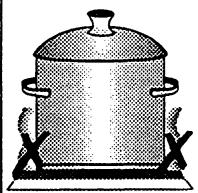
Pan too small
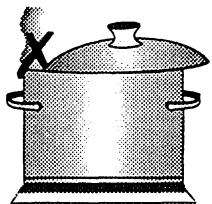
Pan lid not in place
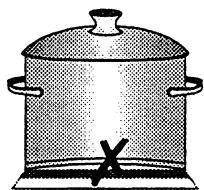
Pan base uneven
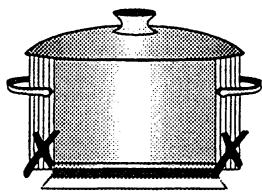
Pan too big (ceramic)
5.2
Cookware with plastic handles is not suitable for use in your oven.
When using special cookware, you must additionally follow the cookware manufacturer's instructions.
Using hight-speed cookware
Using high-speed cookware is especially energy-saving, particularly when you are preparing dishes with prolonged cooking times.
When using high-speed cookware to boil food, make sure that there is always a sufficient quantity of liquid in the pan.
If your pan boils dry, this may lead to overheating and possible damage to the pan base and hob.
Operating the hob
Ceramic hob
When you switch on the hob, it may briefly buzz. This is a feature of all ceramic hobs and in no way implies any loss of hob function or life.
Hotplate
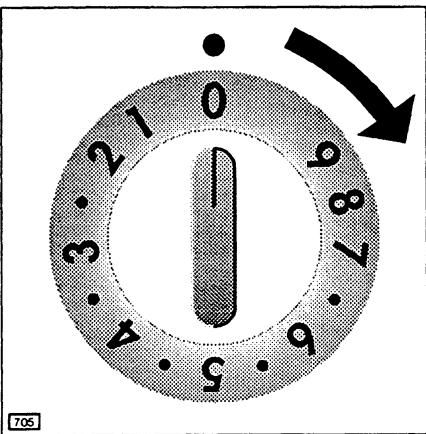
Using the switch on the cooker, you can set the heating power of the hotplate optionally in 9 stages:
1 = lowest power
9 = highest power
You can obtain further information in the cooker or switchbox operating instructions.
Operating the hob
Two-ring hotplate/frying zone
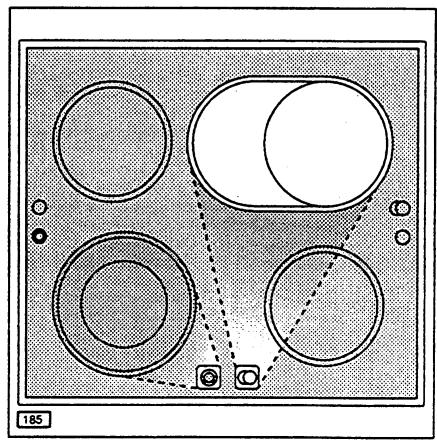
On the two-ring and frying zones, the heating area can be adapted to the cookware.
Switch on using the switch on the cooker. Combination of the two-ring hotplate/frying zone is by the respective touch switch (with pilot lamp) in the front region of the ceramic cooking area.
Electronic pan detection
Important: First place the pan on the hotplate and then switch on the hotplate.
Located under the hotplates of the ceramic hob are electronic sensors which detect:
whether even metal cookware is on the hotplate,
□ whether unsuitable (glass, ceramic) cookware is on the hotplate,
the pan base diameter (which should basically not be smaller than 12.0cm ).
Important note: The pan base diameter may be min. 2 cm smaller than the marked hot-plate size.
The small or large hotplate is automatically switched on depending on the pan size.
When purchasing cookware, please note its diameter, since the manufacturer usually indicates the upper edge diameter of cookware.
For non-metal cookware,
a too small cookware base diameter,
or if there is no cookware on the hotplate the residual heat indicator flashes.
The residual heat indicator goes out as soon as correct or suitable cookware is placed centrally on the hotplate.
Residual heat indicator - Caution: hot!
Each ceramic cooking area has coordinated with it, in front, a light signal which lights up when the cooking zone is hot.
When the cooking zone has cooled, the lamp goes out.
So long as the indicator remains lit, the residual heat can be utilised.
Your new cooking area
These instruction applies to the following cooking area design:
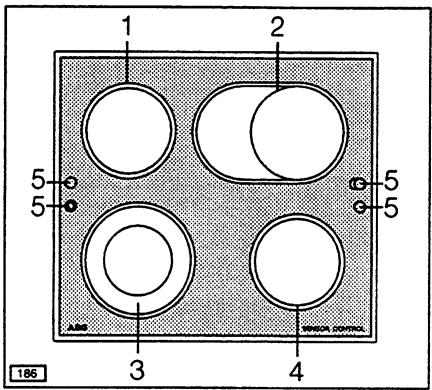
JEC 700
1 = Pan detection hotplate 14.5 cm dia, 1.2 kW
2 = Pan detection hotplate 17.0 cm dia. or frying zone 17.0 cm x 26.5 cm, 2.3 kW
3 = Pan detection two-ring hotplate 12.0 cm or 21.0 cm dia, 2.2 kW
4 = Pan detection hotplate 14.5 cm dia., 1.2 kW
5 = Residual heat indicator for each hotplate or pan detection indicator, flashes when cookware is missing or wrong
Cleaning and care
Ceramic hob
It is important to clean the hob after each use!
Never use any aggressive cleaners, such as e.g. coarse scouring agents or abrasive pan cleaners.
Always clean the hob when it is slightly soiled. To do this, use a damp cloth and a little washing-up liquid. Then wipe the hob dry with a clean cloth. No cleaner residues should remain on the surface.
Thoroughly clean the whole hob once per week. To do this, use "Sidol" stainless steel polish, "Stahl-Fix", or "WK-Top". Only use the recommended cleaners.
Then clean the whole hob thoroughly with clean water, and rub it dry with a clean cloth.
Please make sure that no cleaner residues remain on the surface, or your hob could be damaged!
Specific types of soilage
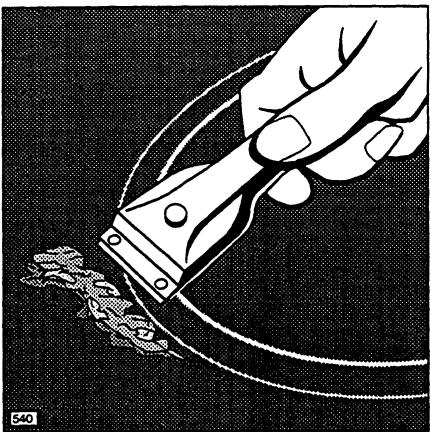
Food splashes due to boiling over
First soften them with a wet cloth and then remove the soilage residues with a glass or razor blade scraper. Take care when using, or you could injure yourself!
Then clean the hob with the cleaners described above.
Cleaning and care
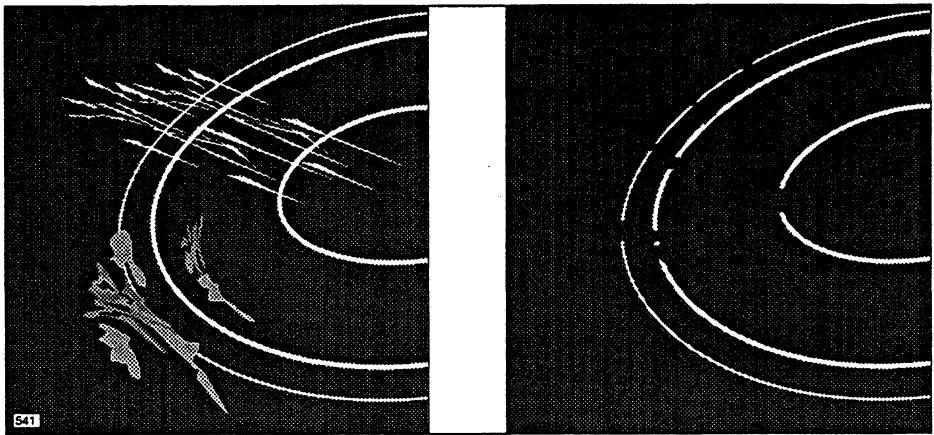
Burnt-on sugar or melted plastic should be removed immediately - when hot - with a glass scraper, or your hob could be damaged. Then clean the hob as normal.
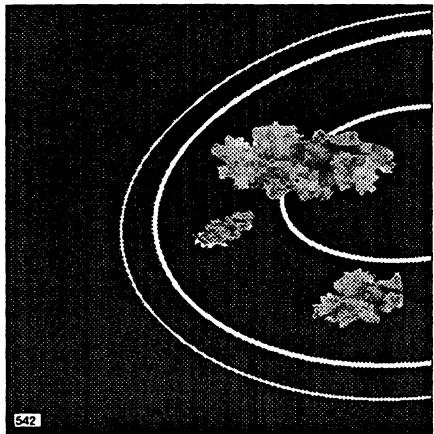
You can prevent damage due to sugar or sugary foods by caring for your hob with Collo-Profi or Cerafix.
Stains (lime stains, iridescent stains, metallic bloom-like discolorations (due to pan abrasion) formed during cooking) are best removed when the hob is still warm (not hot).
To do this, use the cleaners described above. You may well need to repeat the cleaning process.
Important note!
Never put vinegar, lemon juice, or lime-dissolving agents on the hob frame, or dull marks will otherwise arise.
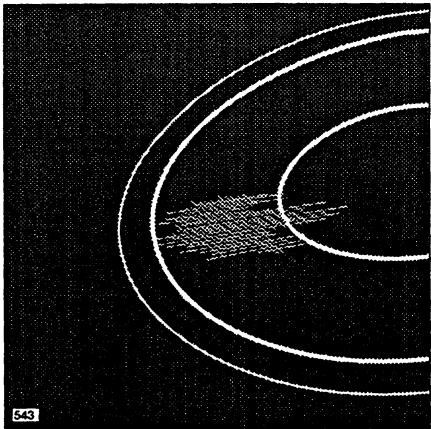
Sand grains which have fallen on to the hob may cause scratches if pans are slid over them.
Make sure therefore that no sand grains remain on the hob.
Loss of decor
The aggressive action of cleaners and abrasive pan bases causes the hob to lose its decor as time passes, and dull marks appear.
You can obtain suitable cleaners and cleansing agents as well as glass scrapers from the Juno customer service department.
What can be the matter if...
Hobs with pan detection
...does the residual heat indicator flash very quickly?
...the hob cannot be switched on despite a suitable cookware material?
The hotplate is overheating. Switch off the hotplate and let it cool.
If the cooled hotplate cannot be switched on, call the service centre.
Fault
Hotplate switched on, the residual heat indicator flashes.
The hotplate does not heat.
The hotplate switches on without a pan.
Possible cause
No or wrong cookware placed on the hotplate (glass, ceramic).
Wrong cookware base diameter.
No suitable cookware is placed on the switched-on hotplate within 10 minutes.
Pan is curved up or down. Pan base diameter is too small.
Pan is not centred.
There is some dirt lodged between pan and ceramic.
A metal object has found its way on the the cooking area.
Salt-containing liquid has boiled over.
Hints/remedy
Place correct cookware (material, base diameter) on the hotplate.
Turn hotplate switch to "0" setting, place cookware on the hotplate, and turn on the switch again.
Use pan with even base. Use larger pan.
Place pan properly on hotplate.
Please remove the dirt.
Remove. Caution: The object may be very hot.
Turn off the hotplate switch and remove salt water.
Customer service
Should you wish to call the service centre, the service engineer's visit cannot be made free of charge even during the warranty period. Juno electrical appliances comply with the valid safety specifications. Repairs to electrical appliances should only be performed by trained personnel. Improper repairs may seriously endanger the user.
When making your call, quote the code number. This code consists of 2 letters and the first 12 figures.
You will find the latter on the package or invoice or on the back of these operating instructions.
Your specifying this number enables the service department to make precise identification of the spare part required so that the appliance can be repaired at the service engineer's first visit without your having to pay extra costs for repeated journeys by the service engineer.
KD
Customer service
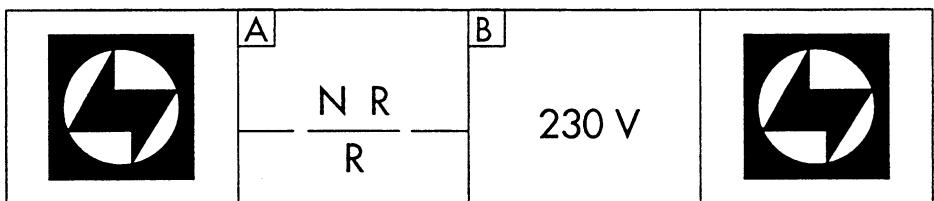
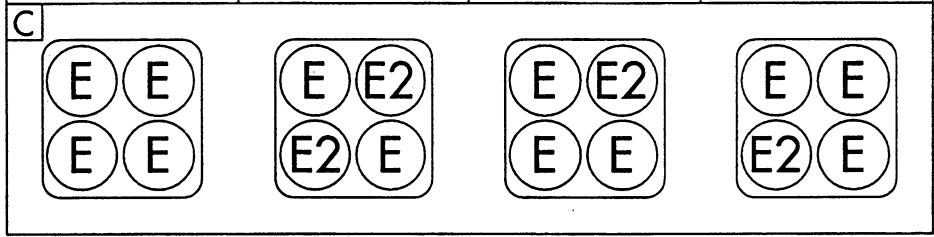
The ceramic cooking area should only ever be combined with a build-in cooker or switchbox of the matching connection system. A sticker on the cooker and hob tells you the allowable combinations.
Should you use other build-in cookers/switchboxes, the test mark approval awarded will be invalidated and any manufacturer's liability excluded.
Build-in cookers and build-in cooking areas are equipped with special plug systems. They should only ever be combined with appliances of the matching system. A sticker on the cooker and hob tells you the allowable combinations.
Please check:
Field A type of equipment with (R) or without (NR) a residual heat indicator
Field B the nominal voltage of the hob
Field C the cooking zones or hotplates: the type of equipment indicated on the hob sticker must agree with one illustration.
IMPORTANT NOTE!
To ensure safety and fault-free operation, hobs agreeing with the indications given in fields A, B, and C should only ever be connected.
- EINBAU-GLASKERAMIK-KOCHFELD
- YOUR NEW APPLIANCE
- CONTENTS
- IMPORTANT INSTRUCTIONS
- SAFETY INSTRUCTIONS
- SUITABLE COOKWARE
- OPERATING THE HOTPLATES
- CLEANING AND CARE
- ENVIRONMENTALLY FRIENDLY DISPOSAL OF PACKAGING AND YOUR OLD APPLIANCE
- PACKAGING
- OLD APPLIANCE
- CONNECTING THE APPLIANCE
- GENERAL
- HOW TO AVOID DAMAGING YOUR APPLIANCE
- THE BETTER THE COOKWARE, THE BETTER THE COOKING RESULT
- USING HIGHT-SPEED COOKWARE
- OPERATING THE HOB
- CERAMIC HOB
- HOTPLATE
- TWO-RING HOTPLATE/FRYING ZONE
- ELECTRONIC PAN DETECTION
- RESIDUAL HEAT INDICATOR - CAUTION: HOT
- YOUR NEW COOKING AREA
- SPECIFIC TYPES OF SOILAGE
- IMPORTANT NOTE
- LOSS OF DECOR
- WHAT CAN BE THE MATTER IF
- HOBS WITH PAN DETECTION
- FAULT
- POSSIBLE CAUSE
- HINTS/REMEDY
- CUSTOMER SERVICE
Marque : JUNO
Modèle : JEC700B
Catégorie : Plaque de cuisson