ELZG 1480 SP ELT EBH - Four encastrable JUNO - Notice d'utilisation et mode d'emploi gratuit
Retrouvez gratuitement la notice de l'appareil ELZG 1480 SP ELT EBH JUNO au format PDF.

| Type de produit | Four encastrable |
| Marque | JUNO |
| Modèle | ELZG 1480 SP ELT EBH |
| Alimentation électrique | 220-240 V |
| Fonctions de cuisson | Chaleur tournante, chaleur traditionnelle (haut+bas), gril, gril grande surface, chaleur tournante + gril, chaleur sole, décongélation, stérilisation |
| Température maximale | 250°C (gril jusqu'à 275°C) |
| Nombre de niveaux de grilles | 4 |
| Éclairage intérieur | Ampoule 40 W / 220 V (culot E14) |
| Filtre à graisse | Lavable, à insérer lors du rôtissage ou du gril |
| Porte amovible | Oui, pour faciliter le nettoyage |
| Nettoyage | Nettoyage manuel de l'intérieur avec détergent ; gril auto-nettoyant |
| Minuterie | Horloge analogique avec programmateur (selon version) |
| Sonde de cuisson | Accessoire optionnel (BT 74) |
| Sécurité | Déflecteur de chaleur pour cuisson porte ouverte ; verrouillage des commandes (non spécifié) |
| Pièces détachées disponibles | Ampoule, filtres à graisse, panneaux catalytiques (KAG 143), sonde de cuisson |
FOIRE AUX QUESTIONS - ELZG 1480 SP ELT EBH JUNO
Questions des utilisateurs sur ELZG 1480 SP ELT EBH JUNO
0 question sur cet appareil. Repondez a celles que vous connaissez ou posez la votre.
Poser une nouvelle question sur cet appareil
Téléchargez la notice de votre Four encastrable au format PDF gratuitement ! Retrouvez votre notice ELZG 1480 SP ELT EBH - JUNO et reprennez votre appareil électronique en main. Sur cette page sont publiés tous les documents nécessaires à l'utilisation de votre appareil ELZG 1480 SP ELT EBH de la marque JUNO.
MODE D'EMPLOI ELZG 1480 SP ELT EBH JUNO
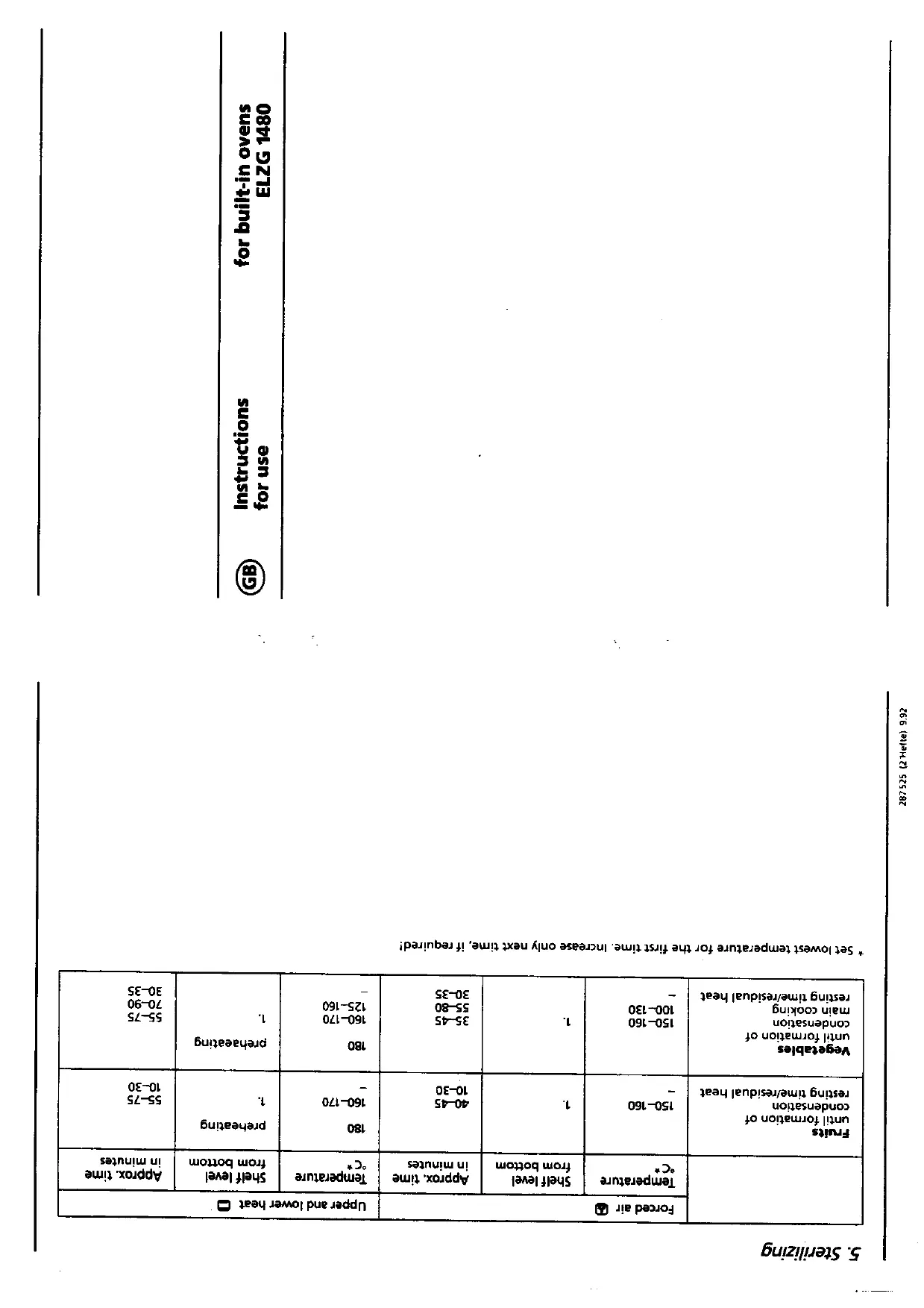
| GB | Instructions for use | for built-in ovens ELZG 1480 |
aannnnae aaeaae eaeae aeene aee
| SE-0E 06-0L SL-SS | 1 68888888888888888888888888888888888888888888888888888888888888888888888888888888888888888888888888888 | -091-5Z1 091-09L 08L | SE-0E 08-SS 5S-5E | 1 | -0E1-001 091-09L | 1 year |
| 0E-0L SL-SS | 1 68888888888888888888888888888888888888888888888888888888888888888888888888888888888888888 | 0E-0L 5S-0P | 1 | -091-09L | 1 year | |
| s### | ### | ### | ### | ### | ### | ### |
| ### | ### | ### | ### | ### | ### | ### |
| ### | ### | ### | ### | ### | ### | ### |
4. Grilling Table
Select grill symbol for Grilling of smaller quantities
and grill symbol for Grilling of bigger quantities
You can grill with the oven door closed as well as with the oven door open, the deflector plate, as described under "Grilling", must be used.
You can grill with the oven door closed as well as with the oven door open. When the oven door is open, the deflector plate, as described under "Grilling", must be used.
| Grill dish | Knob setting °C* | Shelf level from bottom | Approximate time in minutes per side |
| Meat | |||
| Rumpsteak, 200 g | 250–275 | 4. | 5-7 per side |
| Filet steak, approx. 2.5 cm thick | 250–275 | 4. | 5-7 per side |
| Double fillet steak | 250–275 | 4. | 10-15 per side |
| Pork fillet | 225–250 | 3. or 4. | 12-15 per side |
| Meat loaf | 225–250 | 4. | 6-8 per side |
| Sliced liver | 225–250 | 4. | 5-7 per side |
| Legs of poultry | 225–250 | 3. or 4. | 12-15 per side |
| Large cuts of meat | |||
| Roastbeef, 500 g | 210–230 | 3. | 15-20 per side |
| Roastbeef, 1 kg | 210–230 | 3. | 20-30 per side |
| Chicken, half | 200–230 | 3. | 15-20 per side |
| Fish | |||
| Mackerel | 150-170 | 3. | 6-10 per side |
| Herring | 210-250 | 3. | 5-8 per side |
| Fish fillet | 225-250 | 4. | 6-8 per side |
| Au gratin dishes | |||
| Welsh rarebit | 225-250 | 4. | 5-8 |
| French onion soup | 225-250 | 3. | 6-8 |
| Fruit and vegetables | |||
| Bananas, halved | 210-225 | 4. | 5-7 |
| Tomato rings | 225-250 | 4. | 6-8 |
- Set lowest temperature when grilling for the first time. Increase only next time, if required!
We suggest you read these instructions carefully. They will help you in operating your appliance correctly. This high-level quality appliance will give maximum performance results for many years if operated correctly.
Please read the instructions in the recipe book carefully. They are intended to supplement these operating instructions.
Contents
| Page | |
| Description of appliance | 2 |
| Safety tips | 3 |
| Control panel | 4 |
| Hotplates | 4-5 |
| Oven | 6 |
| Baking | 7-8 |
| Roasting | 9 |
| Use of the grill | 9-10 |
| Sterilization | 10 |
| Removing the oven door | 11 |
| Cleaning and care | 12 |
| What to do if... (something doesn't work) | 13 |
| Tables | |
| 1. Fan circulation temperatures and their uses | 14 |
| 2. Baking temperatures and times | 15 |
| 3. Roasting temperatures and times | 16 |
| 4. Grilling temperatures and times | 17 |
| 5. Sterilizing temperatures and times | 18 |
e 6666666666666666666666666666666666666666666
aenbnaeauaoaou-deapueaeauo saeaedrae 01 o aenrernadwneuiey eae yeaew aennsspeaeesnssseanrnnns
| Forced air or forced air and grill element | Roastingtime, hours/minutes** | Upper and bottom heat 0 | |||||
| x | TemperatureoC* | Shelf levelfrom bottom | TemperatureoC* | Shelf levelfrom bottom | |||
| MeatRoast without bone (1 kg) | x or x | 140-160 | 2. | 1:40-2:20 | 175-200 | 2. | |
| Roast with rind | x | 160-170 | 2. | 1:40-2:20 | 190-210 | 2. | |
| Roast beef (1 kg) | x | 150-170 | 2. | 1:00-1:30 | 190-210 | 2. | |
| Meat loaf (500 g mince) | x | 140-160 | 2. | 1:00-1:10 | 190-210 | 2. | |
| Roast with bone (1 kg) | x | 150-160 | 2. | 2:00-2:40 | 175-200 | 2. | |
| Roast chop withbone (1 kg) | x | 150-160 | 2. | 1:20-1:50 | 180-200 | 2. | |
| PoultryChicken (1 kg) | - | 160-180 | 2. | 1:00-1:30 | 190-210 | 2, or 3. | |
| Duck (1 1/2-2 kg) | - | 160-170 | 2. | 1:50-2:10 | 190-210 | 2. | |
| Goose (3-4 kg) | - | 140-160 | 2. | 2:30-3:00 | 180-200 | 2. | |
| FishBake up to 2 kg | x or x | 150-170 | 2 or 3. | 0:45-1:00 | 200-220 | 2, or 3. | |
| Steam up to 2 kg | x | 150-160 | 2. | 0:35-1:00 | 180-190 | 2. | |
| Cooking and roasting inclosed containersaccording to ingredients | x or x | 180-230 | 1 or 2. | 0:50-2:00 | 200-230 | 1, or 2. | |
| Browning | - | x | 230-250 | 3 or 4. | 0:15-0:30 | 250 | 3, or 4. |
| ThawingChickenBakingInstant dishes | x | - | 50 | 2 or 3. | 1:20-1:35 | - | - |
| x | - | 150-170 | 2 or 3. | 0:05-0:20 | - | - | |
| x | - | 150-170 | 2 or 3. | 0:30-0:50 | - | - | |
| Forced air or forced air and bottom heat | Baking time in minutes | Upper and bottom heat ☐ | |||||
| ☐ | ☐ | Temperature °C* | Shelf level from bottom | Temperature °C* | Shelf level from bottom | ||
| Cakes in moulds Deep dish cake Madeira type cakes Sponge fan Short pastry fan Cake with fruit topping Cottage cheese covering | x | - | 150-160 | 2. | 55-75 | 160-190 | 1. or 2. |
| x | - | 150-160 preheating | 2. | 60-80 | 160-170 preheating | 1. or 2. | |
| x | - | 150-160 | 2. | 30-45 | 160-180 | 1. or 2. | |
| x | - | 170-180 | 2. or 3. | 15-30 | 200-220 | 1. or 2. | |
| x | - | 160-170 | 2. or 3. | 45-60 | 180-210 | 1. or 2. | |
| x | - | 140-160 | 2. or 3. | 60-90 | 170-190 | 1. or 2. | |
| Shaped pastries Yeast plait Christmas fruit loaf Bread | x | - | 150-170 | 2. | 25-40 | 180-200 | 2. |
| x | - | 200 preheating | 2. | 45-70 | 250 preheating | 2. | |
| x | - | 150-160 preheating | 2. | 50-70 | 170-190 | 2. | |
| x | - | 180-200 | 2. | 30-45 | 230 preheating | 2. | |
| Cake baked on a tray Cake with try topping 1 tray 2 trays 3 trays Cake with moist topping 1 tray 2 trays Swiss roll | x | - | 160-180 | 3. | 40-55 | 180-200 | 2. or 3. |
| x | - | 150-170 | 2. and 4. | 40-60 | - | - | |
| x | - | 150-170 | 1:3:4. | 30-45 | 180-200 | 2. or 3. | |
| x | - | 150-170 preheating | 3. | 35-50 | - preheating | 2. | |
| x | - | 150-170 preheating | 2. or 4. | 10-20 | 190-210 | 2. | |
| Small cakes and pastries Viennese whirls Short pastry sponge Flaky pastry Choux pastry Meringues | x | - | 140-150 | 3. | 25-35 | preheating | 2. or 3. |
| x | - | 150-170 | 3. | 8-15 | 190-200 | 2. or 3. | |
| x | - | 150-170 | 3. | 10-20 | 190-200 | 2. or 3. | |
| x | - | 170-180 | 3. | 15-25 | 190-200 | 2. or 3. | |
| x | - | 170-180 | 3. | 20-30 | 190-210 | 2. or 3. | |
| x | - | 100-120 | 3. | 25-35 | 190-210 | 2. or 3. | |
aJeBuxeg 2
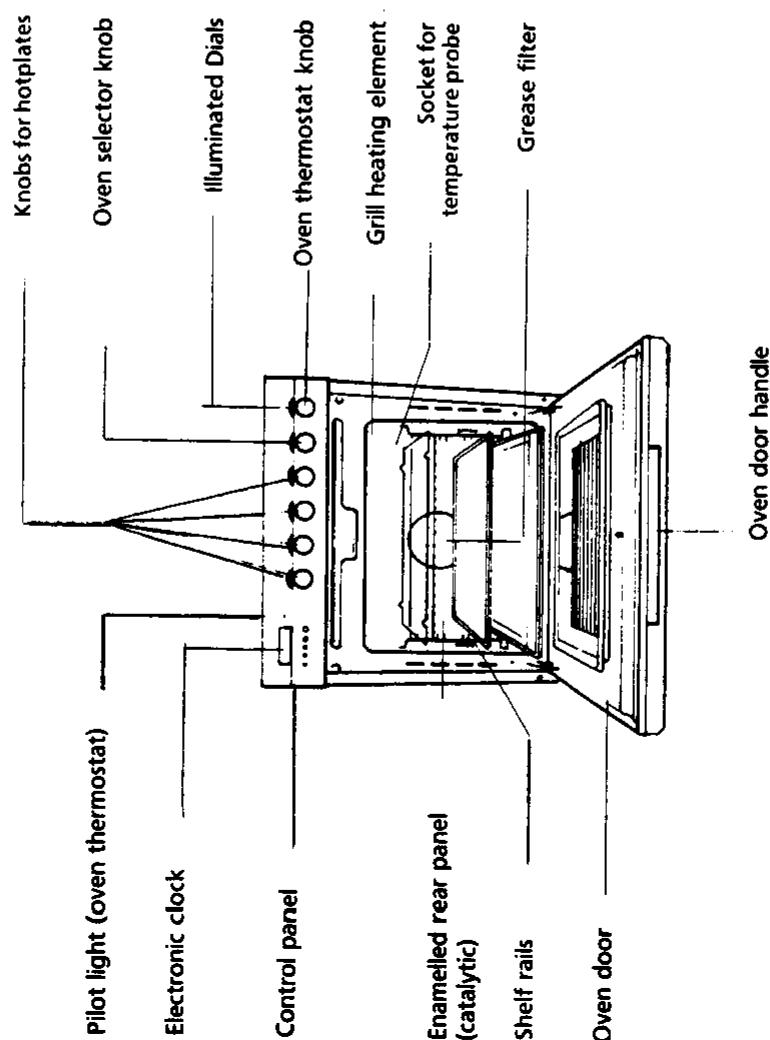
Description of the appliance
Tables
1. Circulating Air Temperatures
| Temperature range (℃) | Use |
| 0 | Defrosting e. g. poultry, gatteaux |
| 50-100 | Defrosting, keeping foods warm, plate warming |
| 100-120 | To prepare meringues |
| 140-150 | Souffles, casseroles |
| 150-170 | Biscuits, shortbread, sterilizing Defrosting pre-cooked frozen foods which need to be hot |
| 170-190 | Choux, puff, flaky pastry |
| 190-230 | Bread, pizza; high temperature pastries cooking in covered dishes |
| 230-250 | Au gratin dishes |
| 140-170 plus fan filter | Roasting of meat and fish (also deep-frozen) open on the rack or in shallow open dishes |
Users instructions
Important! For reasons of safety and correct function, the oven/switchboxes should only be combined with the hotplates/ cooking surfaces which are marked with the same symbol.
Electronic clock and thermometer
If your appliance is equipped with an electronic clock and a special thermometer to check whether dishes are done, read the additional instructions for clock and thermometer carefully.
Analog-clock
If your appliance is equipped with an analogclock with automatic setting, read the additional information carefully.
Before using the appliance for the first time
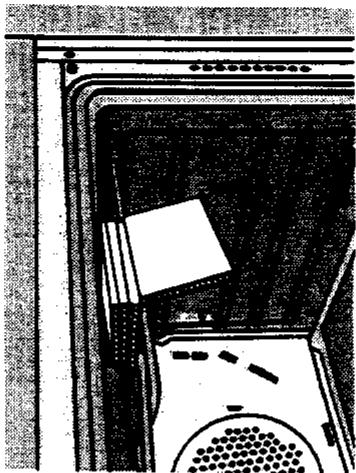
Important Information!
The heating elements for top heat as well as for the grill are secured against damages during transport by a locking device. It is absolutely necessary to remove this part before the oven is heated for the first time.
Hotplates
Before use, heat up the hotplates for approximately 3 to 5 minutes without utensils.
Glass ceramic hob
Information how to use the glass ceramic hob is given in the instructions for use packed with the ceramic hob.
Control panel
Function of the control knobs
#
Automatic Hotplates
Faults - what to do?
followed the instructions given in this booklet. Most probably the fault is caused by an oversight.
If you are unable to find the cause, you can contact our Service Division. In case of Service call, please state the model of your appliance which is indicated in the Service code of the plate framed in red.


Bottom, with the oven door open. If you specify the Service code, you will help Service in preparing the spare parts to repair your appliance during the first visit of the technician. You will save money for further visits.
Optional accessories
Faults - what to do?
Hotplates with Two Zones
(only with glass ceramic surfaces)
The knobs cannot be tur
For bringing to the correct boiling of frying temperature, select position 12. As soon as the desired temperature has been achieved change to continuous cooking. Please consult the recommendations in the setting chart.
Drip tray: FP 143
Code number: 81
This oven has been manufactured with the most advanced techniques and with a high quality material. In case of faults, check first if you have followed the instructions in this
Meat probe:BT 74 Code number:13/3
Catalytic panels: KAG 143
Catalytic panels: KAG 143
Oven illumination - Exchange of incadescent bulb
4. Setting knob for right front cooking area
6. Setting knob for oven temperature
Automatic boiling functions from setting 1 to setting 7. The power in the boiling range from 1 to 7 lies between approx. 4% and approx. 25% of total power. To start automatic boiling, select a setting between 1 and 7 depending on the amount and/or type of food to be cooked. Pull the knob outwards to the stop. This raises the power by a factor of 5, i.e. to between approx. 20% and approx. 100% of the total power. When the boiling time (approx. 9 minutes) has elapsed, the regulator switches the power back automatically to continue
Automatic boiling does not work in the frying range from 8-12, in order to avoid overheating the fat.
as the hot plates or oven are on. The red pilot light is for the oven. (see "red pilot light")
To exchange the incandescent bulb
glass cover in the oven (in the rear, on the right) can be screwed out. The oven is illuminated by a lamp with a heat resistance of 300^ , 40 Watt/220 Volts E 14.
change to continuous cooking . Please con the recommendations in the setting chartAutomatic fast boll/simmer cookingprocess
The automatic hotplates are located left
front and left back (ELZG) and only left front (EMZU). The knobs cannot be turned full circle. Turn left to return to "0". Automatic boiling functions from setting 1 to setting 7. The power in the boiling range
from 1 to 7 lies between approx. 4 % and approx. 25 % of total power. To start automatic boiling, select a setting between 1 and 7 depending on the amount and/or type of food to be cooked. Pull the knob outwards to the stop. This raises the power by a factor of 5, i.e. to between approx. 20 % and approx. 100 % of the total power. When the boiling time (approx. 9 minutes) has elapsed, the regulator switches the power back automatically to continue
Automatic boiling does not work in the frying range from 8-12, in order to avoid overheating the fat.
If the knob has been pulled out by mistake, or if automatic boiling is to be cancelled, turn the knob back to the 0 position. If the wrong setting has been chosen, this can be corrected simply by turning the knob to the correct position. The automatic boiling device adapts automatically to the new setting.
The left-hand hotplates can be increased in size by adding a second zone. This is done by turning the knob to the right until the stop is reached (i.e. beyond position 12). Then turn the knob to the desired position. For further operation, see hotplate with automatic boiling device.
Cleaning and care
Glass ceramic top Please observe the cleaning instructions in the operating instructions supplied with the top.
Hob
Food which has boiled over should always be removed immediately where possible. The enamelled hob is best cleaned with a soft cloth and grease-solvent domestic
cleaners not containing abrasive cleaning agend will damage the enamel.
Stainless steel tops are cleaned in the same manner as the ceramic ones. Use regular stainless steel cleaners available in shops.
Rings should be wiped over with a damp cloth. Very dirty rings should be cleaned with a damp cloth and liquid scouring agent or a domestic sponge with special coating. Each time after cleaning, cleaning agents should be removed from the ring and it should then be dried by turning on briefly. From time to time, apply a thin film of oil or preservative.
Control panel, knobs enamelled and anodised parts
Clean these parts with warm water and a soft cloth. Remove soiling as soon as possible. Dried soiling should be soaked first. Do not use harsh or abrasive cleaners.
Oven
Juices are acidity and may cause spots on the oven bottom if allowed to drip. These spots
may remain even after using special oven cleaners. So do not overload the baking tray when baking fruit cakes. Each time after becoming dirty the oven
luukewarm with hot, grease-solvent detergent solution. The tray guides can easily be removed to
permit thorough cleaning of the oven. Stubborn caked on deposits can be removed with special cleaning agents in accordance with instructions.
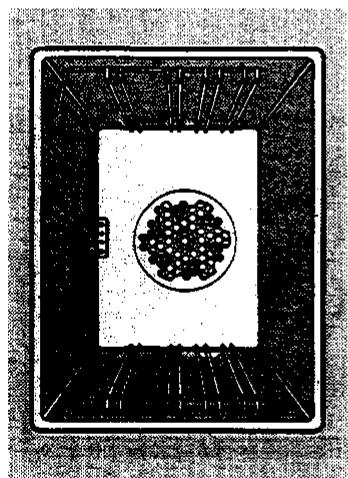
Tray Guide
To clean the oven thoroughly, remove the
Lift the front of the tray guide, unhinge and remove from side walls. Unhinge the back of the tray guide. Pull forward to remove. Insert tray guide in reverse order.
Reinserting tray guide
It is very important to rest the grill element on the top right-angle bends of the tray guide when reinserting.
Oven door window
It is best cleaned with a grease-solvent detergent or commercially available glass cleaner.
Grill element
This element is self-cleaning and requires no additional care.
Fan filter
The filter should be washed after use. Normally dirty: wash the filter in warm water with detergent.
very dirty. Wash the filter in warm concentrated solution of detergent.
Then rinse and dry carefully. The fan filter can also be was
dishwasher.
Cooking area setting table
| Setting | suitable for: |
| 12 | Boiling up large quantities of water. Boiling noodles |
| 11–12 | Frying chips. Fast frying meat, e.g. goulash |
| 10–11 | Frying, e.g. potato pancakes sirloin, steaks, cordon bleu |
| 9–10 | Frying meat, escalopes, chops, pancakes, rissoles |
| 8– 9 | Slow frying, sausages, liver eggs, fritters |
| 5– 7 | Boiling large quantities of food hot pots and soups |
| 4– 6 | Simmering potatoes. Cooking meat broth |
| 3– 5 | Simmering vegetables or stewing meat |
| 3– 5 | Cooking rice pudding |
| 2– 4 | Simmering rice and milk dishes. Simmering small quantities of potatoes or vegetables. Heating instant dishes |
| 1– 2 | Hollandaise sauce, souffle omelette. Keeping dishes warm. Melting butter, chocolate, gelantine |
| 0 | Residual heat, OFF setting |
Energy Saving
In almost all boiling and frying processes, the heat stored in the plate can be used up in the final 5 or 10 minutes. So don't forget to switch off in time!
The hotplates must be switched off, dry and cold before covers are placed over them.
Glass Ceramic Cooking Surface
Please read the instructions concerning this book.
cooking utensils in the booklet enclosed in the glass ceramic cooking surface.
Oven
Air circulation
The air is sucked from the opening on therear wall, it is then heated and circulated
inside the oven.
The circulation of air allows an even heat and simultaneous cooling of different foods. The
simultaneous cooking of different foods. Temperature required for cooking is lower
than that of traditional ovens with radiant
heat - see "Temperature selection".
open the door
Heat from top and from bottom
The top element is inside the oven and the
bottom element under the oven heat the oven with radiant heat.
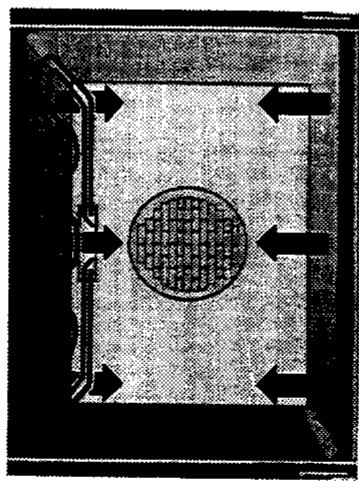
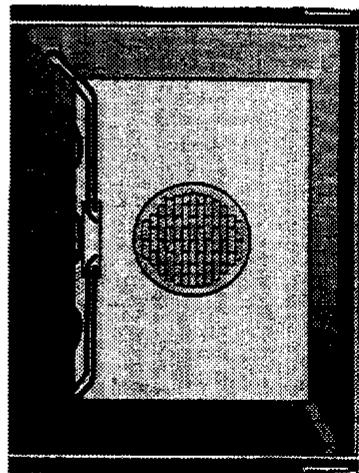
The grill heating element is built-in in
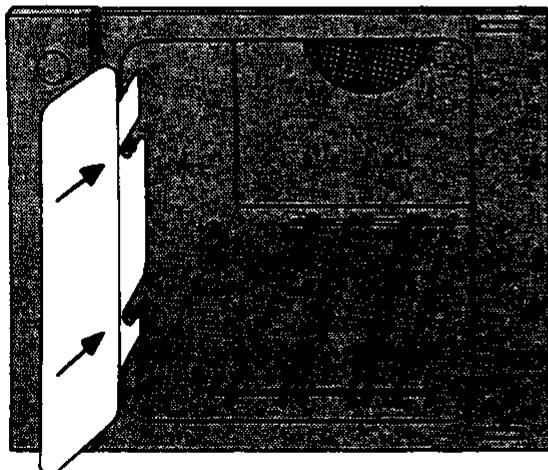
- lift the door until the lower hinge lever is freed
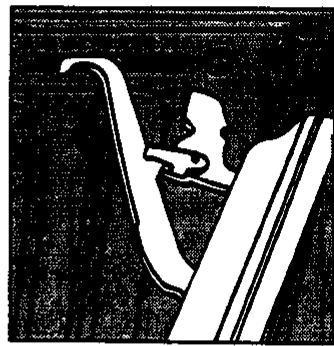
Pull out door, hinge levers leave slots
To remount the door, reverse the procedure.
Switching on and Pre-heating
Turn the selector knob for heating types
to the grill symbol 日 or 日 . Set the temperature knob 日 to the correct grill
For grill temperatures, refer to the grill chart.
We recommend that you select the lower of
the stated temperatures at first. If the fo
does not brown sufficiently or if grilling takes too long, the higher of the two temperatures should then be selected.
Table-Types of heating and temperature
In the following table we give the types of heating and the temperatures.
| Knob selecting tem- pera- ture | type of heating | |
| Off position | ● | 0 |
| Oven lamp | ● | ● |
| Heat from the top and from the bottom | ●-250 | ● |
| Grill | ●-275 | ● |
| Grill (large area) | ●-275 | ● |
| Forced air and grill | ●-250 | ● |
| Heat from the bottom | ●-250 | ● |
| Forced air and heat from the bottom | ●-250 | ● |
| Forced air | ●-250 | ● |
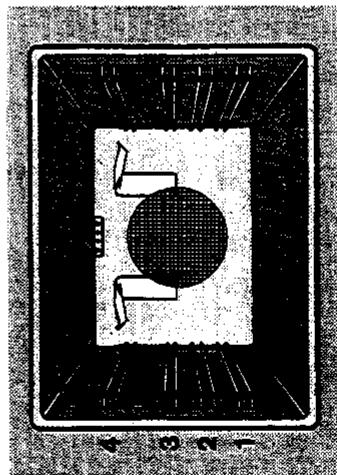
Grease filter
The grease filter protects the fan from
splashes which can be produced during
roasting or grilling.
We suggest you use this filter during roasting.
or grilling only.
Insert both hooks into the slots in the rear
wan of the oven
Oven operation
C
0
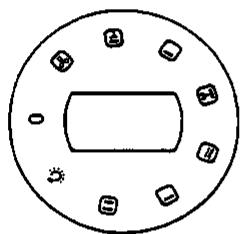
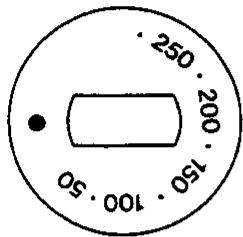
To operate the oven, turn the oven selector knob and the thermostat knob to the
positions required.
If any oven function is switched on, the fan (and so the cooling will)
The oven selector knob may be used as
The oven selector knob may be used as well to switch the oven on and off. It may be
turned in a clockwise or anti-clockwise
direction.
The thermostat knob selects the temperature required for cooking, by turning
temperature required for cooling, by turning it in a clock-wise direction. To switch the
thermostat off, turn the knob anti-clockwise
to the "●" position.
Important!
When using the grill with the oven door
open, it is necessary to insert the heat
deflector between cavity ceiling and grill element
element.
Do not place very fatty food near the grill
heating element. When grilling many times,
we suggest you clean the drip tray after each
use. When grinning, do not leave the oven unattended.
Do not place very fatty food near the grill
heating element. When grilling many times,
We suggest you clean the drip tray after each step. It's a bit challenging, but we don't have to leave the oven
use. When grinning, do not leave the oven unattended
Sterilization
To sterilize in the oven, only use appropriate containers.
Bottles and cans should not be sterilized in
the oven but in a suitable pan.
We suggest you sterilize meat, sauces, jams
and tomatoes in suitable containers.
Further details for sterilization see recipe
guide attached.
Bottles and caps should not be sterilized in
the oven but in a suitable pan.
We suggest you sterilize meat, sauces, jams and potatoes in suitable containers.
and tomatoes in suitable containers.
Further details for sterilization see recipe
guide attached.
positioned in the 1st runner from the
bottom.
Position the shelf according to the dimension and the type of food to be cooked.
Sterilization
To sterilize in the oven, only use appropriate
With almost all baking and roasting processes it is possible to make use of the residual heat of the oven 5-10 minutes before completion. Thus, you can switch to "●" during this time. Potatoes, rice or vegetables can be inserted in the oven at the same time as the meat.
For the choice of temperature for the individual types of heating, see oven chart.
Roasting
Important!
When roasting, the fan filter must be engaged in the back of the oven.
Roasting is possible in the following heating modes.
Oven rail: Roasting
The drip tray should be pushed onto the bottom rail, and the grid with the meat onto the second rail from the bottom.
Roasts in open or closed dishes should be placed on the centre of the grid. The grid should be pushed onto the bottom rail or the second rail from the bottom.
Please refer to the recipe book for more information on roasting and preparation of sauces.
This roasting thermometer can be ordered as special accessory from your stockist..
Use of the grill
The heating elements is built-in in the oven and cannot be removed. During the use of the grill, it is necessary to position the grease filter on the oven rear wall.
Put the fan filter into place on the back wall of the oven when grilling.
The grill has two use possibilities:
Grill 口 .. for small food quantities..
Large area grill 口 .. for large food quantities (eg.: full grid).
When grilling with large area grill place the food and shelf well under the grilling elements and not too far to the rear of cavity.
The grill or the large radiation grill may be used with the oven door open or closed.
When grilling, open the oven door to the first catch.
Wall rails
When baking with hot air and heat below 4 or heat above and below 5, dark baking tins are used.
With hot air heating, it is possible to bake on several levels at the same time. Observe the trays carefully. Remove the cakes from the oven when they are sufficiently browned. Depending on the kind of cake, the baking times can be increased by 5 to 15 minutes.
The oven is fitted with two guides on each side which can be removed. They allow the use of 4 baking trays and/or shelves and a drip tray. The baking trays, the shelves and the drip tray must be positioned properly in the guides to avoid tilting. To select the correct position, please refer to the table of temperatures and cooking times.
Shelf position to cook pastry:
Forced air position: Using only one baking tray, please position into 2nd or 3rd sliding rails from bottom.
To cook on two levels, use the 1st or the 3rd and 2nd or the 4th position from the bottom. Using three trays, please position into 1st, 3rd and 4th sliding rails.
Cake in moulds position shelf at 2nd sliding rails from bottom.
Forced air and heat from the bottom position : To get best results from the heat from the bottom, we suggest you use the 2nd position from the bottom.
Heat from the top and from the bottom position : Place shallow metal contain on the 2nd or 3rd position. Place deep containers on the 1st or 2nd position.
position. Place shallow metal containers on the 2nd or 3rd position. Place deep containers on the 1st or 2nd position.
For baking with hot air A, light and dark tins as well as glass, ceramic or other heat resistant materials can be used.
When baking with hot air and heat below or heat above and below, dark baking tins are used.
With hot air heating, it is possible to bake on several levels at the same time. Observe the trays carefully. Remove the cakes from the oven when they are sufficiently browned. Depending on the kind of cake, the baking times can be increased by 5 to 15 minutes.
The meat is well-brothed, select not all with grill. At a roasting temperature of 140 - 170^, the fat or juice dripping out of the meat only splashes slightly. The oven remains practically clean.
The circulation of the hot air means that turning and basting the roast is no longer required. According to taste however, it can be turned after about half the roasting time has elapsed. If desired, roasts remaining in the oven for longer periods can be basted with liquid.
If you wish to roast on the grid using heat from above or below, select a temperature of 180-200°C. Depending on the kind of meat, add 100-300 ml of water to the drip tray before roasting begins. If desired, some water can be added during roasting to keep the juice from the meat from burning. The roast is turned after about half the required time.
图
#
Fan with grill
For the choice of temperature for the individual types of heating, see chart for baking.
The roasting times stated in the chart may vary depending on the type, quality, size and centre temperature. Only meat and fish with a weight of over 1kg should be roasted or steamed in the oven.
We recommend hot air heating for
Roasting on the grid or on a flat plate. If the roast is to be well browned, select hot air with grill. At a roasting temperature of 140 - 170^ , the fat or juice dripping out of the meat only splashes slightly. The oven remains practically clean.
The circulation of the hot air means that turning and blasting the roast is no longer required. According to taste however, it can be turned after about half the roasting time has elapsed. If desired, roasts remaining in the oven for longer periods can be basted with liquid.
Baking Important
For baking th
Baking is possible in the following heating modes
图
Top and bottom heat
Fan with bottom heat