
ADVANTIX 2100 - Appareil photo argentique KODAK - Notice d'utilisation et mode d'emploi gratuit
Retrouvez gratuitement la notice de l'appareil ADVANTIX 2100 KODAK au format PDF.


| Type de produit | Appareil photo argentique Advanced Photo System (APS) |
| Marque | KODAK |
| Modèle | ADVANTIX 2100 |
| Film compatible | KODAK ADVANTIX Film pour tirages couleur (ISO 100, 200, 400, 800) |
| Objectif | Focale fixe 25 mm f/5,4, 3 éléments en verre hybride avec capuchon de protection |
| Viseur | Albada avec affichage des formats C, H, P |
| Sensibilité film | DXIX (ISO) 100, 200, 400 ou 800 pour films couleur |
| Flash intégré | KODAK SENSALITE™, automatique, portée selon ISO (100: 1,2-3,3 m ; 200: 1,2-4,6 m ; 400: 1,2-6,6 m) |
| Distance de mise au point | De 1,2 m à l'infini |
| Ouverture | f/10 en extérieur, f/5,4 avec flash |
| Obturateur | Électronique à 2 vitesses : 1/125 s (extérieur), 1/70 s (flash) |
| Alimentation | 2 piles alcalines AA |
| Dimensions (L x l x h) | 116,8 x 61,1 x 37,8 mm |
| Poids (sans film ni piles) | 150 g |
| Formats d'image | Classique (C), HDTV (H), Panoramique (P) |
| Fonctions spéciales | Retardateur 10 s, réduction d'yeux rouges, avancement/rembobinage automatique, indicateur de film (FSI), compteur de vues |
| Entretien et nettoyage | Nettoyer l'objectif avec un chiffon doux ; éviter l'humidité et les chocs |
| Sécurité | Garder les piles hors de portée des enfants ; ne pas démonter, recharger ou court-circuiter les piles |
| Pièces détachées et réparabilité | Contactez le service client KODAK pour les pièces détachées |
| Informations générales | Conforme à la partie 15 des règles FCC ; appareil numérique de classe B |
FOIRE AUX QUESTIONS - ADVANTIX 2100 KODAK
Questions des utilisateurs sur ADVANTIX 2100 KODAK
0 question sur cet appareil. Repondez a celles que vous connaissez ou posez la votre.
Poser une nouvelle question sur cet appareil
Téléchargez la notice de votre Appareil photo argentique au format PDF gratuitement ! Retrouvez votre notice ADVANTIX 2100 - KODAK et reprennez votre appareil électronique en main. Sur cette page sont publiés tous les documents nécessaires à l'utilisation de votre appareil ADVANTIX 2100 de la marque KODAK.
MODE D'EMPLOI ADVANTIX 2100 KODAK
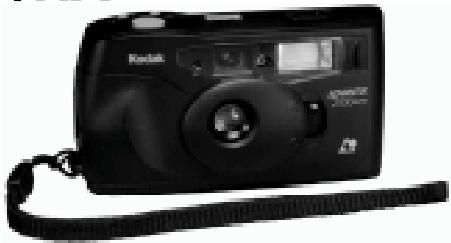
Kodak ADVANTiX
2100AUTO Camera
ADVANCED


Film Status Indicator (FSI)
A highlighted indicator advances from one symbol to another to identify the status of the film inside the cassette.
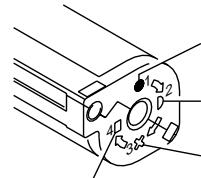
Unexposed
Partially
Exposed
Fully
Exposed
Processed Negatives
This device complies with part 15 of the FCC Rules. Operation is subject to the following two conditions: (1) This device may not cause harmful interference, and (2) this device must accept any interference received, including interference that may cause undesired operation.
NOTE: Your model camera has been tested and found to comply with the limits for a Class B digital device, pursuant to Part 15 of the FCC Rules. These limits provide reasonable protection against interference in residential use. The camera generates, uses and can radiate radio frequency energy and, if not used in accordance with the instructions, may cause interference to radio communications. There is no guarantee that interference will not occur. If this camera does cause interference to radio or television reception, which can be determined by turning the camera off and on, you may reduce the interference by the following:
Reorient or relocate the receiving antenna.
Increase the separation between the camera and the receiver.
- Consult the dealer or an experienced radio/television technician for help.
Changes or modifications not approved by the party responsible for compliance could void the user's authority to operate the equipment.

ADVANCED PHOTO SYSTEM
Certified

ADVANCED
Photofinishing
Service
Look for this logo to be certain the film you buy is made for this camera.
Look for this logo to select a certified photofinisher for developing your film and to assure that you get all the features of the Advanced Photo System.
LCD

(a)
LCD
(b)
(c)
This Class B digital apparatus meets all requirements of the Canadian Interference-Causing Equipment Regulations.
Welcome to the innovative world of the Advanced Photo System! And thank you for buying this KODAK ADVANTIX 2100 AUTO Camera.
Need help with your camera or more information about the new Advanced Photo System? Call Kodak (United States only) toll free from 8:00 a.m. to 8:00 p.m. (Eastern time) Monday through Friday at 1 (800) 242-2424. The toll free number (in Canada only) from 8:30 a.m. to 5:00 p.m. (Eastern time) Monday through Friday is 1 (800) 465-6325; please ask for ext. 36100.
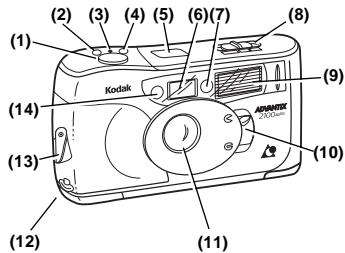
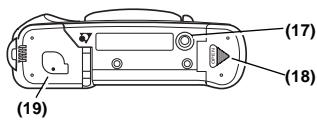
CAMERA IDENTIFICATION
See inside cover flaps of manual for camera diagrams.
(1) Shutter Button
(13) Film-Door Latch
(2) Red-Eye-Reduction Button
(14) Meter-Cell Window
(3) Rewind Button
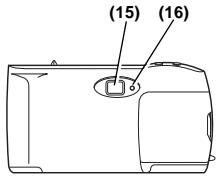
(15) Viewfinder Eyepiece
(4) Self-Timer Button
(16) Camera-/Flash-Ready Lamp
(5) LCD Panel
(17) Tripod Socket
(6) Viewfinder
(18) Battery Door
(7) Self-Timer/Red-EyeReduction Lamp
(19) Film Door
(8) Print-Size Selector
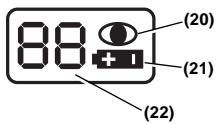
(20) Red-Eye-Reduction Indicator
(9) Flash
(21) Battery Symbol
(10) Lens-Cover Switch
(22) Picture Counter
(11) Lens
(12) Wrap Post
BATTERIES
This camera uses 2 AA-size alkaline batteries that supply power for all camera operations. The camera automatically turns off after approximately 3 minutes. You can resume power by pressing any one of the function buttons.
Low-Batteries Warning
It's time to replace the batteries when
the Battery Symbol (21) appears on the LCD Panel (5)
- the film doesn't prewind, or
the camera will not operate.
Battery Tips:
- Remember to keep spare batteries with you at all times.
- Read and follow all warnings and instructions supplied by the battery manufacturer.
- Keep batteries away from children.
- Do not attempt to disassemble, recharge or short circuit the batteries, or subject them to high temperature or fire.
- Store batteries in original packaging prior to use.
LOADING THE FILM
For excellent all-around results for indoor and outdoor picture-taking, use KODAK ADVANTIX 200-Speed Film.
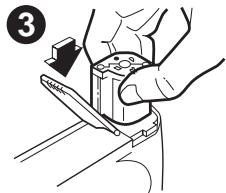
- Turn the Film-Door Latch (13) to the "open" position and insert the film cassette completely into the film chamber ③.
- Close the Film Door (19).
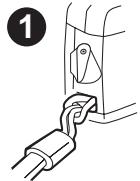
- Slide the Lens-Cover Switch (10) to the "open" position to uncover the lens 4 and to start the auto-film prewind. (If the lens-cover is already opened, press the shutter button to start the auto-film prewind.)
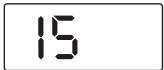
- After the film prewinds, the Picture Counter (22) on the LCD Panel (5) shows the number of exposures remaining (a).
NOTE: After you close the safety-interlock film door, you cannot open the film door until the film is completely rewound into the film cassette.
TAKING PICTURES
You can take Classic (C), HDTV (H), and Panoramic (P) pictures on the same film cassette (see following table for typical print sizes). Your photo-processing cost will be based on the format size(s) that you use to expose the film.
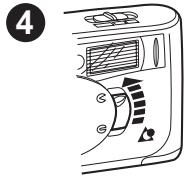
- Slide the Lens-Cover Switch (10) to uncover the Lens (11) and to turn the camera on ④.
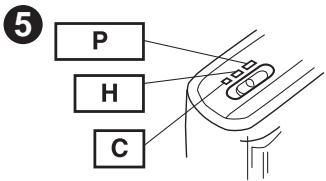
- Move the Print-Size Selector (8) to the desired format ⑤.
- Frame your subject inside the viewfinder marks within the Viewfinder Eyepiece (15) for C, H and P formats. For a sharp picture, stand at least 4 ft (1.2 m) from your subject.
- Partially depress the Shutter Button (1) so that the Camera-/Flash-Ready Lamp (16) glows green.
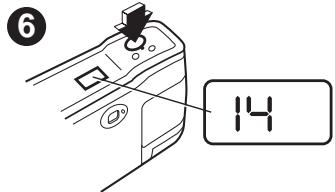
- Press the shutter button completely down to take the picture ⑥.
Typical Print Sizes (Formats)
C
| Classic | Group & Wide (HDTV) | Panoramic |
| 31/2 x 5" or 4 x 6" | 31/2 x 6" or 4 x 7" | 31/2 x 10" to 4 x 111/2" |
| (88.9 x 127 mm or 102 x 152 mm) | (88.9 x 152 mm or 102 x 178 mm) | (88.9 x 254 mm to 102 x 292.7 mm) |
Using the Self-Timer

- Place the camera on a firm support.
- Slide the Lens-Cover Switch (10) to uncover the Lens (11) and to turn the camera on 4.
- Frame your subject in the Viewfinder Eyepiece (15).
- Press the Self-Timer Button (4) and Shutter Button (1) at the same time. The Self-Timer Lamp (7) "blinks" for 10 seconds before the picture is taken.
NOTE: If you want to stop the self-timer operation before the picture is taken, close the lens cover.
Tips for Better Pictures
- Hold the camera steady when taking pictures.
- Keep your pictures simple. Move close enough to your subject so it fills the viewfinder but not closer than 4 ft (1.2 m).
- Take pictures at the subject's level. Kneel down to take pictures of children and pets.
- Hold your camera vertically to capture tall, narrow subjects, such as a waterfall, skyscraper, or single person.
- Add interest to your picture by framing it with a tree branch, window, or even the rails of a fence.
- Keep the sun behind you for best subject illumination.
TAKING FLASH PICTURES
In dim light, such as indoors or outdoors in heavy shade or on dark overcast days, you need flash. Your camera has a built-in flash which automatically fires when needed. Wait for the Camera- /Flash-Ready Lamp (16) to glow green, upon partially depressing the shutter button, before you take the picture.
Flash-to-Subject Distance
| ISO Film Speed | Flash-to-Subject Distance |
| 100 | 4 to 11 ft (1.2 to 3.3 m) |
| 200 | 4 to 15 ft (1.2 to 4.6 m) |
| 400 | 4 to 22 ft (1.2 to 6.6 m) |
Flash Tips
- Turn on room lights and have the subject face the lights to minimize red eyes in pictures.
- Stand at an angle to shiny surfaces like windows or mirrors to avoid flash reflection and bright spots in your pictures.
- Keep your fingers and other objects away from the picture-taking lens, flash, and meter-cell window to avoid dark or light pictures.
Using Red-Eye Reduction
This camera has an automatic flash that fires when you need it. To minimize red eyes in flash pictures, use the red-eye-reduction feature.
- Slide the Lens-Cover Switch (10) to uncover the Lens (11) and to turn the camera on 4.
- Press the Red-Eye- Reduction Button (2). Make sure the RedEye-Reduction Indicator (20) appears on the LCD Panel (5).
- Have your subject look directly at the Red-Eye-Reduction Lamp (7) located next to the lens.
- Press the Shutter Button (1) to take the picture.
NOTE: To exit from the red-eye-reduction mode, repress the red-eye-reduction button or turn the camera off by closing the lens cover.
UNLOADING THE FILM
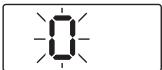
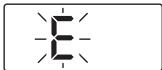
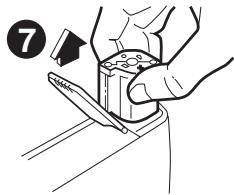
After you take the last picture on the film cassette, the film automatically starts to rewind. When the film is fully rewound, the Picture Counter (22) on the LCD Panel (5) displays a blinking "0" (b), and a blinking "E" (c) will appear when you remove the film from the camera.
IMPORTANT: Do not remove the film cassette from the camera until the motor stops and a blinking "0" appears on the LCD panel.
Using the Rewind Button
If you don't want to take pictures on the entire film cassette, you can automatically rewind the film by pressing the Rewind Button (3). Once you've used this feature, you cannot reload the same film cassette into the camera.
TROUBLESHOOTING
| What happened | Probable cause | Solution |
| Camera will not operate | There are no more pictures remaining | Remove the film |
| Batteries weak, dead, missing, or improperly inserted | Replace or reload the batteries | |
| Film does not advance or rewind | Batteries weak, dead, missing, or improperly inserted | Replace or reload the batteries |
| Film cassette does not fit completely into film chamber; film door does not close | Loaded exposed, partially exposed, or processed film into the camera | Load only unexposed film into the camera |
SPECIFICATIONS
Film Type: KODAK ADVANTIX Film for color prints; slide, chrome, or color reversal film not for use in this camera
Lens: Fixed-focus, 25mm f/5.4, 3-element glass hybrid with protective lens cover
Viewfinder: Albada with C, H, & P format display
Film-Speed Range: DXIX (ISO) 100, 200, 400 or 800 for color print films
Flash Unit: KODAK SENSALITE™ Flash
Focus Range: Daylight: 4 ft. (1.2 m) to infinity
Apertures: Daylight: f/10; flash: f/5.4
Shutter: 2-step electronic; daylight: 1/125 sec at f/10
Flash: 1/70 sec at f/5.4
Power Source: 2 AA-size alkaline batteries
Dimensions: Approx. 4.6 × 2.4 × 1.5 in. (116.8 x 61.1 x 37.8 mm)
Weight: Approx. 5.3 oz. (150 g) without film & batteries
For warranty purposes, please keep your sales receipt as proof of the date
Kodak, Sensalite, Advantix, and the Advanced Photo System symbol and logotype are trademarks.

Consumer Imaging
EASTMAN KODAK COMPANY
Rochester, NY 14650
Pt. No. 914 7539
CAT 885 5322
Minor Revision 12-96
Printed in U.S.A.