MODE D'EMPLOI FRS-2041IAL DAEWOO
Be sure to keep for safety !
Read this safety instructions thoroughly and carefully before using. Please keep this user guide at hand for future reference.
WARNING
Indicates the possibility of danger of death or serious injury
CAUTION
Indicates the possibility of risk of personal injury or material damage
Other Signs

DO NOT remove or disassemble!

NO.,DO NOT...

Be sure to unplug from receptacle(outlet/mains)!

Be sure to keep and follow!

Notice
If the supply cord is damaged, it must be replaced by the manufacturer or its service agent or a similary qualified person in order to avoid a hazard.
WARNING

Never let power cord be crushed by refrigerator itself or other (heavy) objects. Never bend power cord excessively.

Do not plug several appliances into same wall outlet (receptacle).
If cord is damaged or peeled, it can be a cause of fire and electric shock.
It can be a cause of overheating and/or fire. Use an exclusive grounding receptacle for the refrigerator.

Never hold the power cord or plug with wet hands.

Never use damaged power cord or plug, loose receptacle.
There is a risk of electric shock.
There is a risk of fire, electric shock or serious injury.

Be sure to ground. Check if your wall outlet is grounding (earthed) one.

Never unplug by pulling only the power cord wire. Always grip the plug firmly.
There is a risk of electric shock hazards.
WARNING

Let the cord from the plug outlet be directed Downwards.
If it directed up, the cord near the plug is bent and can be damaged, which can cause electric shock or fire.

Never let the power cord touch or pass over heating appliances.
Power cord can be damaged, resulting in a risk of electric shock hazards.

Never pour or spray water into the refrigerator (both interior and exterior).
Electric insulation gets weakened, resulting in a risk of electric shock hazards.

Do not let children hang on the refrigerator doors.
Refrigerator can fall and do harm to them.

Never repair or disassemble or amend refrigerator on your own
There is a risk of personal injury or damage to the refrigerator. It is recommended that any service be carried out by a qualified person.

Never use flammable gas, benzene, thinner, gasoline, spray etc. near the refrigerator.
There is a risk of fire, explosion and personal injury or damage.

Do not install refrigerator on a wet floor or in a place with much humidity moisture.
Electric insulation gets weakened, resulting in a risk of electric shock hazards.

Check if plug is loose from the wall outlet.
Electric insulation gets weakened, resulting in a risk of electric shock hazards.

Do not place containers with water or liquid on top of refrigerator.
Water can be poured into the refrigerator and can cause electric shock hazards or damage.

Do not move or remove compartment shelves/pockets while foods and containers are on them.
Hard container (of glass, metal etc.) can fall to hurt you and can break shelf glass and interior parts.

Never store any flammable gas or liquid in the refrigerator.

If a gas leak found near the refrigerator or in the kitchen, ventilate it immediately without touching power plug or refrigerator.
WARNING

Do not store medicine, academic research samples which require strict temperature control in the refrigerator.

Never insert fingers or hands into the bottom of refrigerator, especially into the bottom back.
You can be hurt by sharp metal edges or can receive an electric shock.

Do not change fuse or light bulb on your own. Call the service agent to change them.

When you find the power cord damaged or cut, call the service agent immediately.

When you get rid of your old refrigerator, be sure to remove the door packings first.
Children can be entrapped and suffocated in an abandoned refrigerator.
Leave it just a few days!" is very dangerous.
CAUTION

Be sure to unplug when the refrigerator is not used for a long time.

Never touch foods and containers especially of metal with wet hands in the freezer compartment.
You can be hurt by chillblains or cold bum.

Never eat any decayed or deteriorated food at all.
Foods stored too long in the refrigerator can be decayed or deteriorated.

Never place bottles and containers of glass in the freezer compartment.
Glass containers and bottles can be broken so can hurt you.

When moving the refrigerator (layed or tilted), more than 2 persons are required to hold it. (One to hold top back handles, the other, bottom holder.)
If other parts gripped, it is very dangerous and likely to slip.

- Be sure to turn up the wheel first before moving the refrigerator.
The wheels can damage or scratch the floor. If you move it a long distance, never forget to fasten the interior parts tightly with tapes.
The parts can shake to break each other.
Installation Guide
Read these safety instructions carefully before use and follow precautions for your safety.

Precautions in installation and power connection
To prevent fire, electric shock or leakage
Never install the refrigerator on a wet, watery floor or where water can easily gather.
Check the following before power connection.
Connect power plug only to a grounding wall receptacle (an earthed mains).
Do not plug refrigerator power together with other appliances to a same receptacle(socket).
Do not use an adapter plug or an extension cord.
Do not let power cord be crushed down by other (heavy) objects.
If you hear strange noise or strong chemical odor or find smog etc. from the refrigerator after power plugin, pull out the plug immediately and call the service.
Wait about 5 minutes before you plugin again in order to prevent any damage to the compressor and electrical devices of refrigerator.
Wait 2~3 hours until the inside gets cold enough after first power plugin, then store foods in.
(There can be some peculiar smell of plastic parts at initial operation of refrigerator after plugin.
The smell fades away as refrigerator works and doors are opened and closed.)

Precautions in use
To prevent personal injury, fire, electric shock etc. read this user guide carefully before use and keep it at hand for any reference.
Accessories
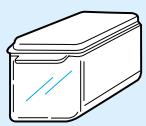
Egg case
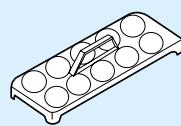
Egg cradle
User guide
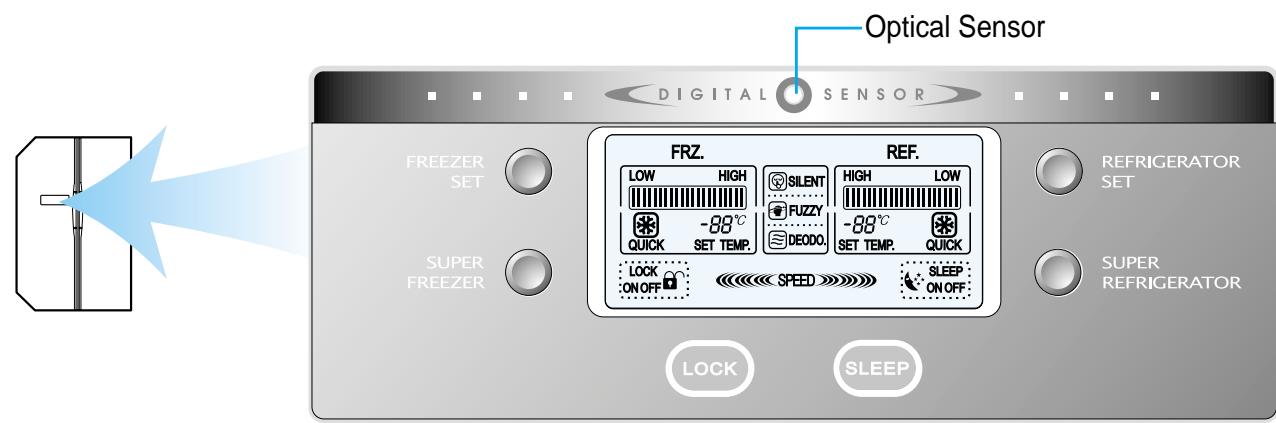
Control Panel
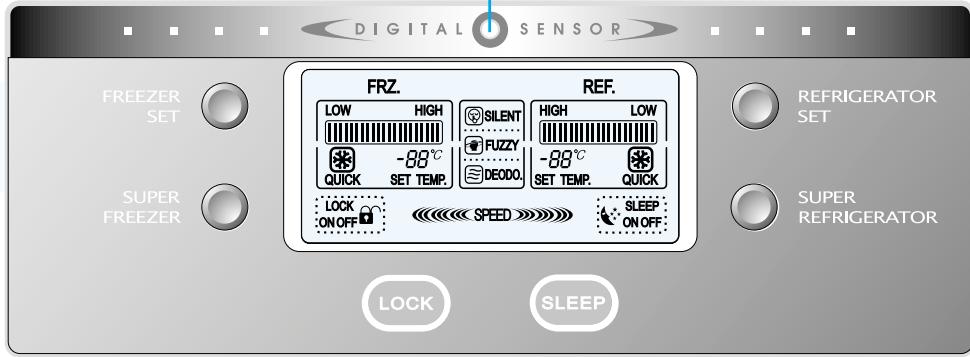

SILENT
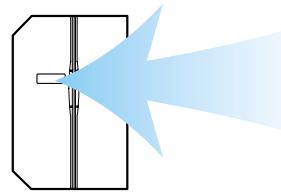
Optical Sensor in the top center of the panesensures the amount of light surrounding the refrigerator.
When it decides that it is dark (night), Silence Mode starts. Refrigerator works on in minimum operation condition, so it makes little or less working noise.
[Notice] Do not let the Optical Sensor be covered by memo sheet (Post-it) ect.

FUZZY
It shows that the digital control system is working the refrigerator. (The icon is always on while the refrigerator is working.)

DEODO
As long as the refrigerator is working deodorization is always on.

Children may push any button on the panel for fun, resulting in disorder of temperature and function of refrigerator. Press this button to lock out this case and to keep temperature and function setting.
Push Lock button again for more than a second to stop it.

If you fill the refrigerator with much foods or in case of frequent door openings, Speed Mode starts automatically to maintain optimal condition of temperature.

If you need total silence from the refrigerator just push sleep button. This mode works for maximum 12 hours and then it returns to the previously set mode.
When you want to stop the mode, just push the button again and it also returns to the previously set mode

Interior lights of refrigerator turn off when the doors are open for more than 10 minutes.
In case either freezer or refrigerator door is open for more than a minute, door alarm rings for 5 minutes with 1 minute interval.
LCD Background Light
The LCD light turns on in the following case to help you control the panel easily ;
When the refrigerator is plugged in
When you push a button (The background light turns on first, then button mode is activated.)
When you open the door
If you push a button when the backlight is off, only the backlight turns on and it does not affect any other button mode.
The LCD light turns off in the following case to save energy consumption ;
1 minute after power plug in
10 seconds after the door is closed
No other button is pushed for more than 1 minute after button selection
When you look at LCD display from side or down, not from front, the display (letters, icons and signs) can look faded or dim.
Temperature Control
When this refrigerator is first plugged in, the temperature mode is set to [Middle].
Freezer Compartment
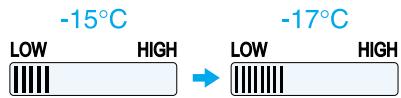
Push the FRZ SET. button and the setting temperature changes as the figure shows.
Sequential Temperature Change <<

Faster Freezing...
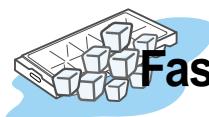
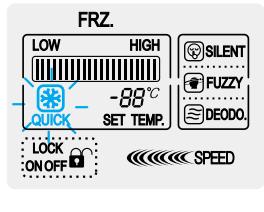
When you want faster freezing, push the SUPER FRZ. button, then 'QUICK' icon turns on and the mode starts. Just push the button once again when you want to stop the mode.
FREEZER SET

SUPER FREEZER
The inside temperature can varies according to door openings, amount of foods, surrounding temperature etc.
The mode ends automatically and it returns to the previously set mode.
For example) The refrigerator is working on [LOW Mode]. -->
[SUPER FRZ.] starts and ends. -->
Returns to [LOW Mode] again.
Refrigerator Compartment
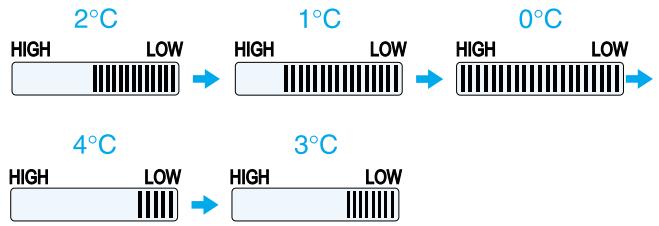
Push the REF SET. button and the setting temperature changes as the figure shows.
Sequential Temperature Change <<
Faster Cooling or Refrigeration
When you want faster refrigerating, push the SUPER REF. button, then "QUICK" icon turns on and the mode starts. Just push the button once again when you want to stop the mode.
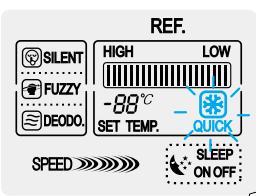

REFRIGERATOR SET

SUPER REFRIGERATOR
The inside temperature can varies according to door openings, amount of foods, surrounding temperature etc.
The mode ends automatically and it returns to the previously set mode.
For example) The refrigerator is working on [LOW Mode].
-> [SUPER REF.] starts and ends. ->
Returns to [LOW Mode] again.
Notice Foods in the refrigerator can be frozen if the ambient temperature of refrigerator is below 5
How to use interior parts
Vegetable Case & Chilled Case
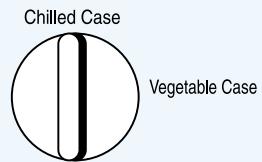
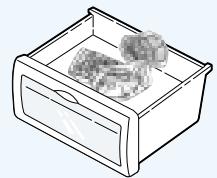
The first case or drawer of the refrigerator compartment can be used either as a vegetable case or as a chilled case for your convenience.
The temperature in the chilled case is somewhat lower than the vegetable one, so you can keep food more fresh.
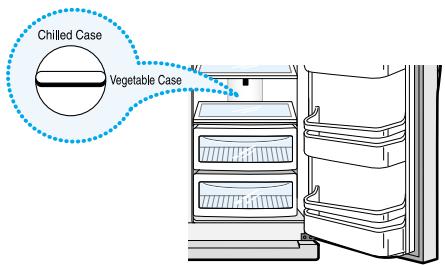

For Vegetable Case
For Chilled Case
Be sure to check the handle bar direction
If you store vegetables and fruits in the chilled room mode, they can be frozen.
If you store fish in the chilled room mode for a long time, it can deteriorate. Store it in the freezer compartment.
Do not place foods close to the cold air spout, for it can weaken cold air circulation.
Ice Cubes Maker
Pull out ice cubes maker and fill with pure water.
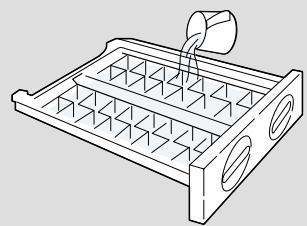
Do not pour water too much, for the ice cubes made get sticky and do not to separate easily.
Keep in mind not to go beyond the water line with an arrow mark when filling with water.
When ice cubes are ready, turn the handle clockwise to separate.
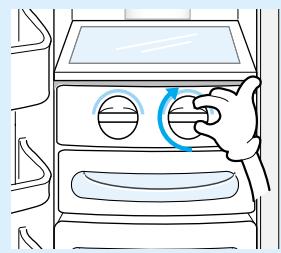
If ice cubes are not to fall easily, turn it to the end several times.
Do not turn the separation handle if the ice cubes are not ready, for they gets sticky on the ice tray and case.
Do not use ice cubes case to make big ice block, for it can be broken.
Pull out the case, clean and dry it if not used (for a long time).
Interior Parts
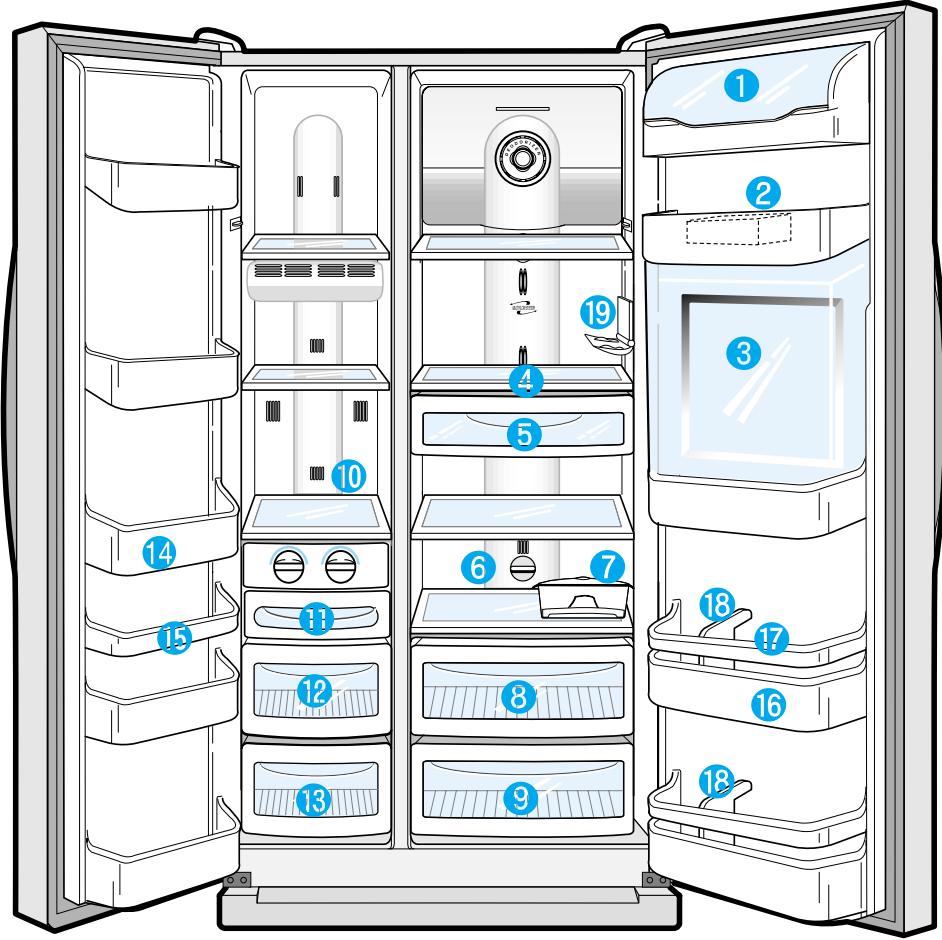
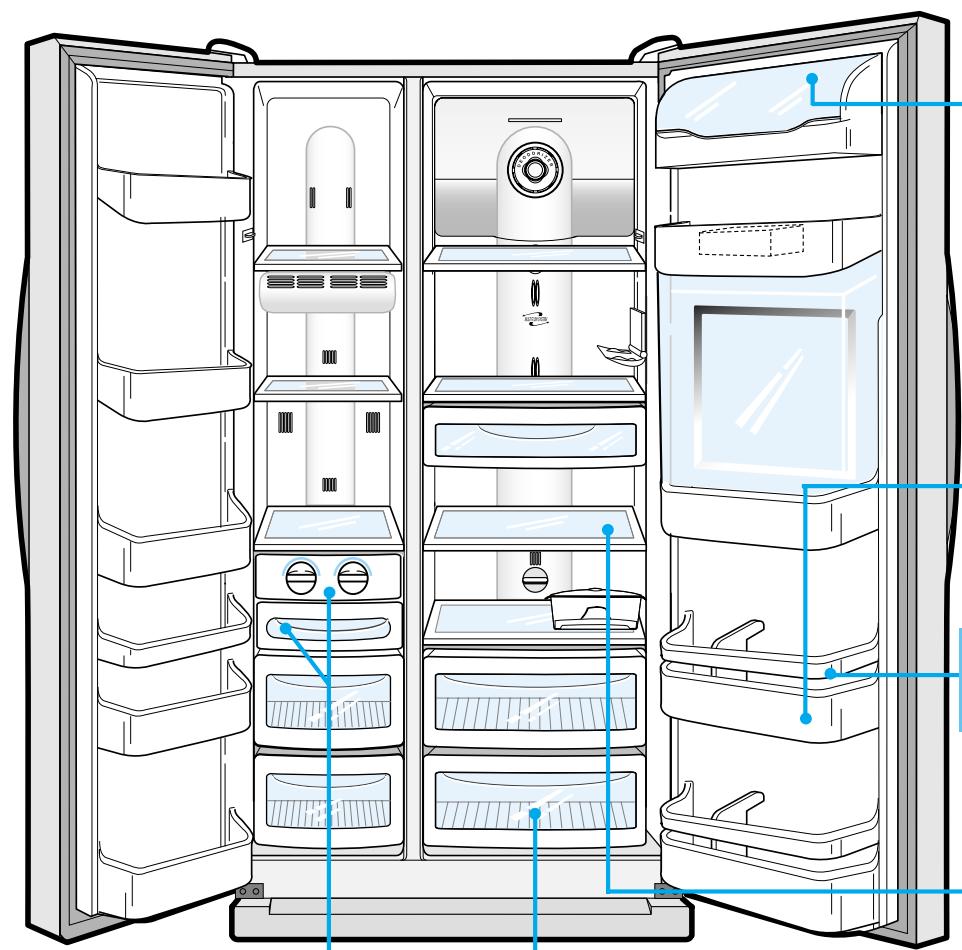
Dairy Pocket
For storing dairy products such as butter and cheese
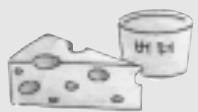
Small Pocket
For storing small packed foods
Refrigerator Shelf (tempered glass)
For storg common foods
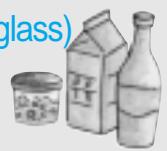
Refreshment Pocket
For frequently used cans, drink water, beverages
Chilled Case
For storing foods temporarily that is ready to cook (meat, fish...)
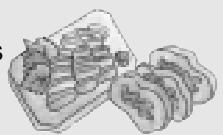
Switch Handle for Chilled Room or Vegetable
Do not touch or hold with wet hands foods (foods container) in the freezer compartment.
There is a risk of chilblains (cold burn)
Do not store medicine, academic research samples etc. in the refrigerator.
Do not store vegetables in the chilled room, for they can be frozen.

Egg case can be placed on a refrigerator shelf as you like.
Movable Egg Case
Place the case for your convenience.
(Do not use the case for storing ice cubes nor place in the freezer compartment.)
Vegetable Case & Chilled Case
Refer to page 7.
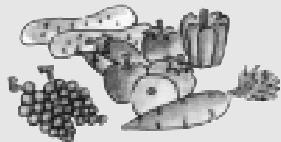
Fruit Case
For storing fruits
Freezer Shelf (tempered glass)
For storing frozen foods such as meat, fish, ice-cream...

Ice cubes maker & Ice cubes case
when the ice cubes are ready, turn the handle clockwise to separate. page 7.
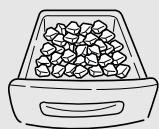
Drying Case of Freezer
for storing dried foods for so long (dried squid, dried anchovy etc.)
Meat case of Freezer
for storing meat, fish, chicken with foil cover or vinyl wrap
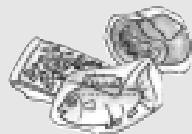
Freezer Pocket
for storing frozen foods
(Do not store ice cream or long stored foods on the top freezer pocket.)
Freezer Small Pocket
for storing small frozen foods
Refrigerator Pocket
for storing refrigerating foods, milk, juice, beer bottle etc.
Refrigerator Pocket Guide
to prevent (tall) foods on the pocket from falling
Bottle Guide
to retain tall bottles from sliding and falling
Wine Bottle Support
Food Storage Tips
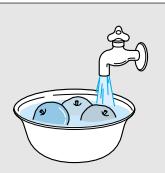
Wash foods before storing.
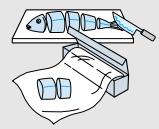
Divide and separate foods into smaller pieces as possible.
Place watery foods or foods with much moisture in front of shelves (close to door side).
If they are placed close to the cold air spout, they can be frozen.
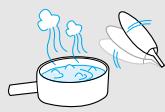
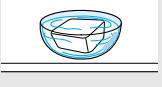
Warm or hot foods should be cooled down enough before storing to reduce power consumption and to enhance refrigeration performance.
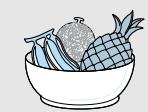
Be careful in storing such tropical fruit as bananas, pineapples, tomatoes, for they can easily be deteriorated in lower temperature.
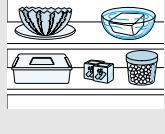
Keep enough space between the foods as possible. If too tight or too close, cold air circulation is hindered, resulting in poor refrigeration.
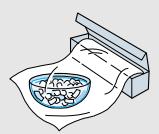
Never forget to cover or wrap foods to prevent odor of foods.
Pockets guide
Dairy Pocket
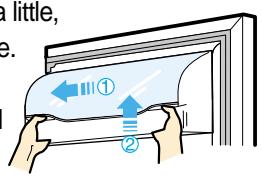
Diary Pocket Cover ; Open the cover a little, hold both ends and push left to remove.
Diary Pocket ; Hold both ends and pull upward to remove.
Freezer & Refrigerator Pockets
Hold both end and pull up. 4th and 5th pocket
Removing ; Remove Pocket
Guide first, then Pocket.
Replacing; Replace Pocket first, then Pocket Guide.

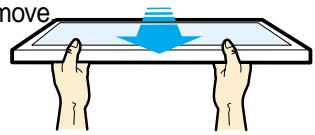
Freezer & Refrigerator Shelves
Open the doors fully, then pull the shelves forward to remove
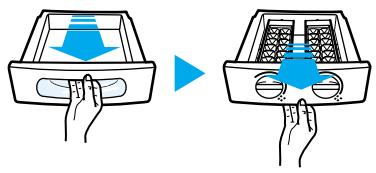
Ice cubes maker & Ice cubes case
Refer to page 7.
Note
Never use any other electrical appliances together in the inside of refrigerator for fear of electric shock or fire.

Notice
Clean the interior at least once a month for sanitary food storage, deodorization.
Be sure to unplug before cleaning or when not using for so long time.
In case a power failure is predicted, store no more foods, make ice block and place it on the top refrigerator shelf. It can keep the inside cool for about 2-3 hours. (Do not open the doors frequently ; minimize door openings.)
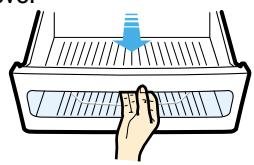
Vegetable Case & Fruit Case
Pull forward and lift up a little to remove.
How to Clean
Interior Parts
Use cloth with water and mild(neutral) detergent to clean.

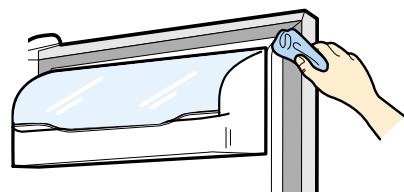
Door Packing
Use cloth with mild(neutral) detergent.
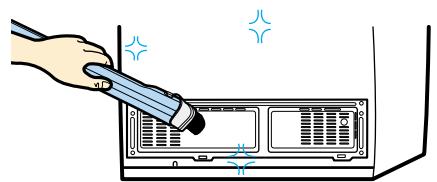
Back (Machine Room)
Remove dust on grill with a vacuum cleaner at least once a year.
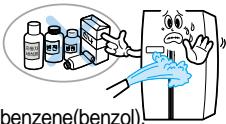
Notice
Never use gasoline(petrol), benzene(benzol)! ^ thinner etc., for they can damage the surfaces
How To change Interior Light Bulb
The lamp shall be replaced only by a service agent or similarly qualified person.
Change of Freezer Lights
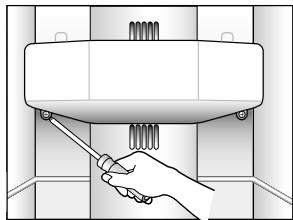
Remove screw caps bottom of light cover with a tiny tip screw driver.
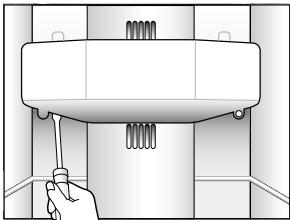
Remove 2 screws of light cover.
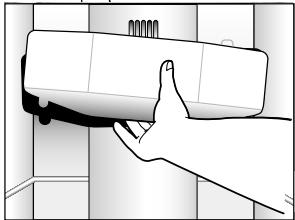
Hold the bottom of light cover and pull forward to remove.
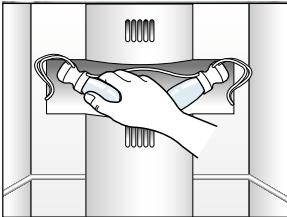
Change the light bulb. Follow the reverse order of disassembling after changing the light
Change of Refrigerator Lights
Refrigerator Top Lights
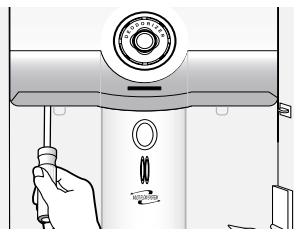
Remove screw caps bottom of light cover with a small tip screw driver.
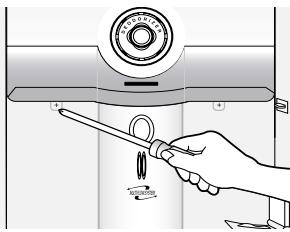
Remove screws of light cover.
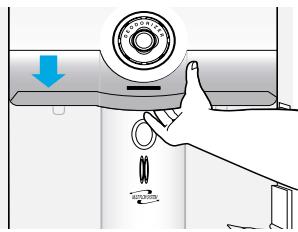
Hold the bottom of cover and pull forward to remove.
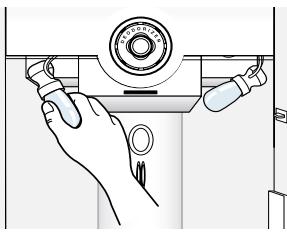
Change the light bulbs. Follow the reverse order of disassembling when assembling back.

Refrigerator Bottom Lights
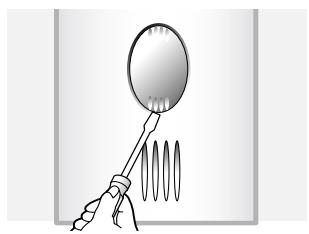
Snap out hte bottom hook of light cover with a flat tip screw driver.
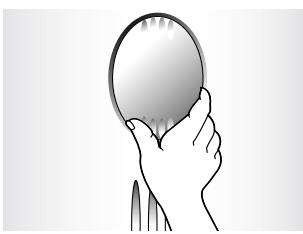
Hold down the light cover to pull out.
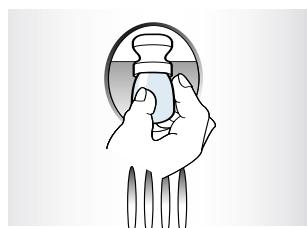
Change the light bulb. Follow the reverse order after changing the light.
Before You Call for Service…
Please check up the following troubleshooting tips before you call for service !
Problem
Checkup Point
Action
It never gets cold inside. Freezing & refrigerating is not so good.
Is the refrigerator unplugged?
Is the temperature set to [Low Mode]?
Is the refrigerator under direct sunlight or is any heat appliance placed near it?
Is the space between refrigerator back and the wall too close?
Plug the refrigerator.
Set the temperature mode to Middle or High. Move to a place where there is no direct sunlight, no heat appliances around.
Keep sufficient space (more than 10cm) between refrigerator back and the wall
Foods in the refrigerator get frozen.
Is temperature set to [Strong]?
Is surround temperature too low?
Is foods with much moisture stored close to the cold air spout?
Set the temperature to [Middle] or [Low].
Foods can be frozen if ambient temperature isbelow 5 . Move to a place where thetemperature is over 5 .
Place foods with moisture on the shelves close to the doors.
Strange sound from the refrigerator
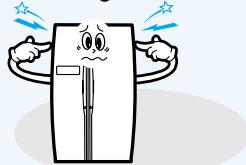
Is floor beneath the refrigerator uneven?
Is the space between refrigerator back and the wall too close?
Does other stuff touch the refrigerator?
Move the refrigerator to a level and even floor.
Keep sufficient space.
Remove any object a way which touches the refrigerator.
Odor or disgusting smell from the inside
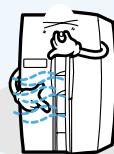
Is food stored uncovered or unwrapped?
Are the shelves and pockets stained with foods stuff ?
Is food stored too long?
Be sure to cover and wrap the foods.
Clean them regularly. Once smell gets soaked to those parts, it is not easy to remove.
Do not store foods for so long. Refrigerator is neither a perfect nor a permanent foods keeper.
Something strange? Don’t worry. Here is the answer.
| Case | Explanation |
| Heat
Door
is
sticky | Front and side of refrigerator
feels warm or hot. | Pipes (refrigerant vessel) are placed beneath the
surface to prevent moisture forming on it. |
| Doors are not to open easily. | When you close the door and then open again
immediately, the door is not easy to open. Warm air
rushes into the inside to make the pressure difference.
In this case wait for a minute, then it will open easily. |
| Strange
Sound | It sounds like water is flowing from the refrigerator. | When the compressor starts to run or stops, refrigerant which makes the inside cold flowing in the pipes can make such a sound.
Defrosted water can also make such a sound. (This refrigerator adopts an automatic defrosting system.) |
| Something cracking or click sound. | Inside parts shrink and/or expand due to temperature change ---When the inside gets cold or when the door is open ---such sound can be made. |
| Humming or buzz sound. | Compressor or fans for cold air circulation can make such working sound. (If the refrigerator is not level, the sound can be louder.) |
| Frost & Dew
Dew or frost on the wall and/or food container surface in the freezer and refrigerator compartment. | Frost and/or dew can be made in the following cases;
High temperature and/or high humidity around the refrigerator
When doors are open too long
Foods with much moisture are stored uncovered or unwrapped
You can see the same appearance when cold water is poured in a glass cup and dew is forming on the surface of it. |
| Dew on the interior lights cover | The light bulb radiates heat while it is on, so when doors are open too long, dew can form on the light cover due to temperature difference. |
| Dew on the cabinet surface | In case it is highly humid around the refrigerator, moisture in the air sticks to the surface to form the dew. |
Installation Preparation
Check if the refrigerator can pass a doorway or enter a door first.

Dimensions( including Door Handles)
(WidthDepthHeight) 928mm × 816mm × 1808mm
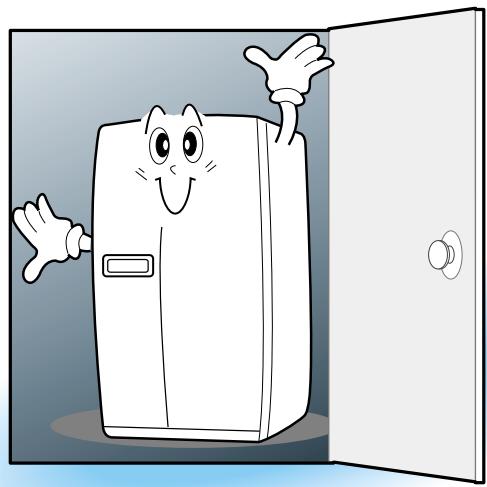

a suitable place to install.

Sufficient space from refrigerator back to the wall for free air ventilation
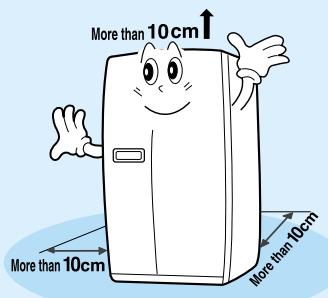
Avoid direct sunlight.
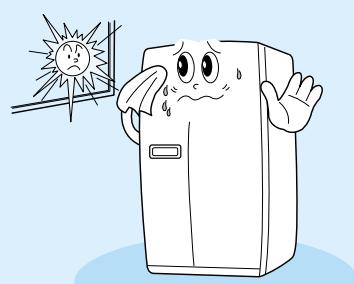
If the refrigerator can not enter the door, follow these steps.
Removing Freezer Door

Remove front bottom cover first, if it is attached.
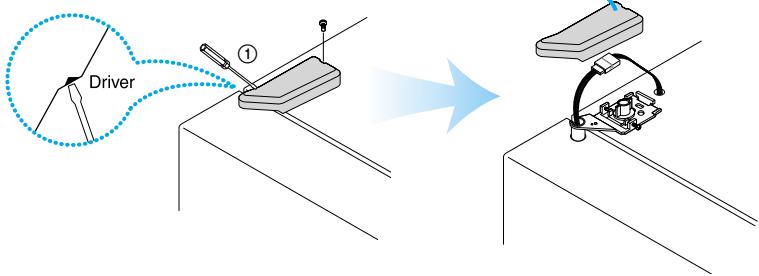
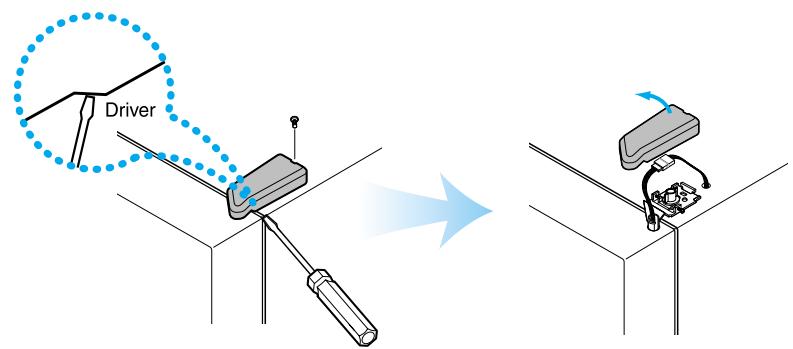
1 Unscrew top hinge cover with a screw driver. Insert a thin screw driver into the side groove of the cover to remove.

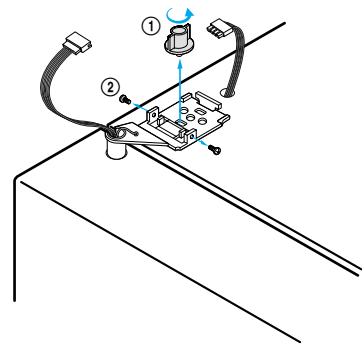
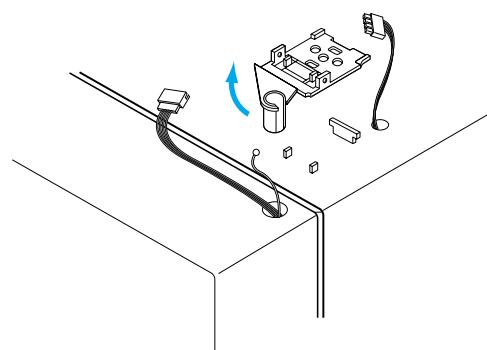
2 Turn top hinge fastener counterclockwise 3~4 times. (Just make it loose ; do not remove.) Disconnect the harness wires. Loosen hinge screws for several turn. (Just make them loose ; do not remove.)

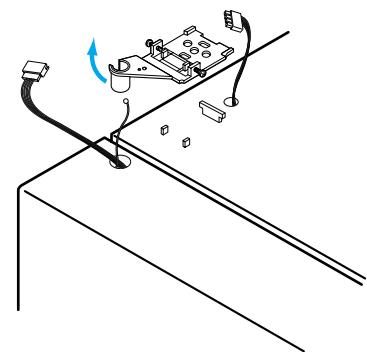
3 Lift up the front of hinge to remove. ( After the hinge is removed the door can fall down forward. Be careful !)

4 Lift the door straight up to remove.
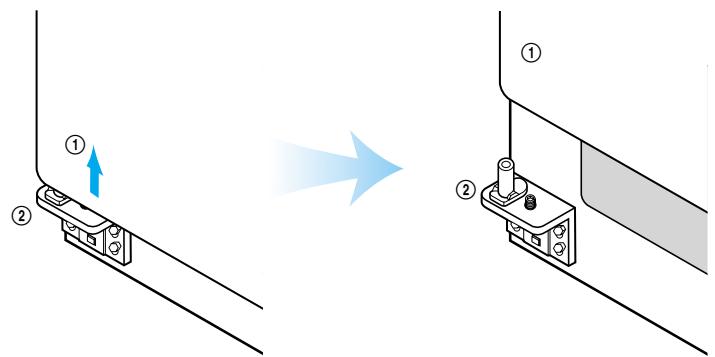
- Removing Refrigerator Door
1 Unscrew top hinge cover with a screw driver. Insert a thin screw driver into the side groove of the cover to remove.

2 Turn top hinge fastener counterclockwise 3~4 times. (Just make it loose; do not remove.) Disconnect harness wires. Loosen hinge screws for several turn. (Just make them loose; do not remove.)

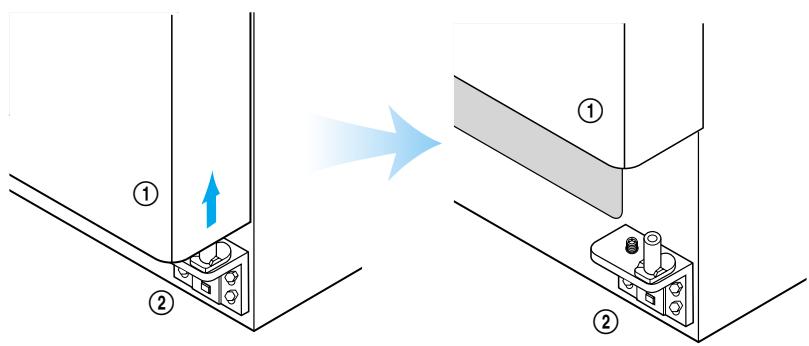
3 Lift up the front of hinge to remove. (After the hinge is removed the door can fall down forward. Be careful!)

4 Lift the door straight up to remove.

Replacing Freezer Door
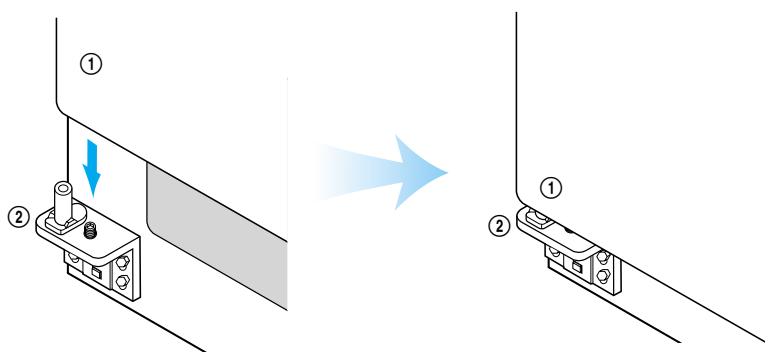
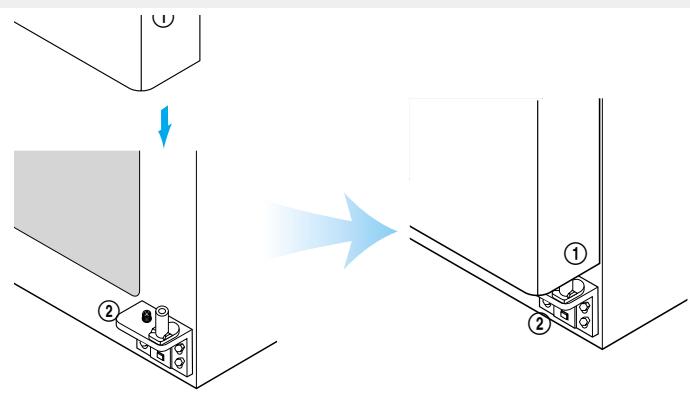
1 Insert the bottom hole of freezer door straight to the bottom hinge pin.

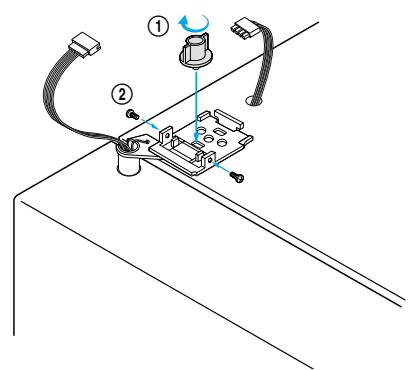
2 Let the top of door close to the cabinet and insert the top hinge pin to the top hole of freezer door.
( Insert the back of hinge to the groove of protrusion first, then front to the top hole of door.)

3 Turn the fastener clockwise several times. (Do not turn it to the end.)
Adjust the level of door and fasten the top hinge with 2 (left & right) screws.
Turn the hinge fastener tightly to the end.
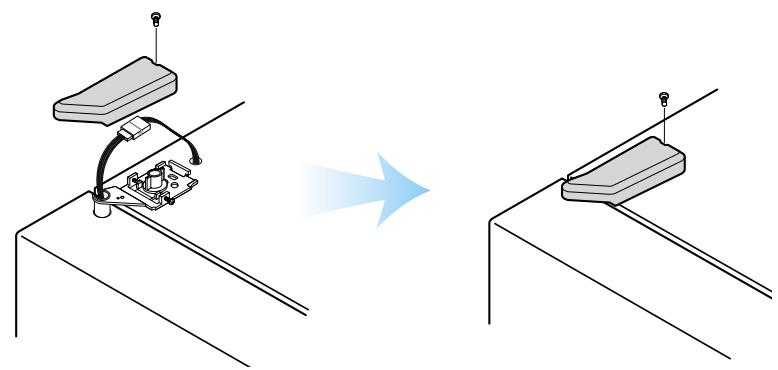
Connect harness wirings and screw ground wire.

4 Click and screw the top hinge cover.

Replacing Refrigerator Door
1 Insert the bottom hole of refrigerator door straight to the bottom hinge pin.

2 Let the top of door close to the cabinet and insert the top hinge pin to the top hole of freezer door.
( Insert the back of hinge to the groove of protrusion first, then front to the top hole of door.)

3 Turn the fastener clockwise several times. (Do not turn it to the end.)
Adjust the level of door and fasten the top hinge with 2 (left & right) screws.
Turn the hinge fastener tightly to the end.
Connect harness wirings and screw ground wire.
Click and screw the top hinge cover.
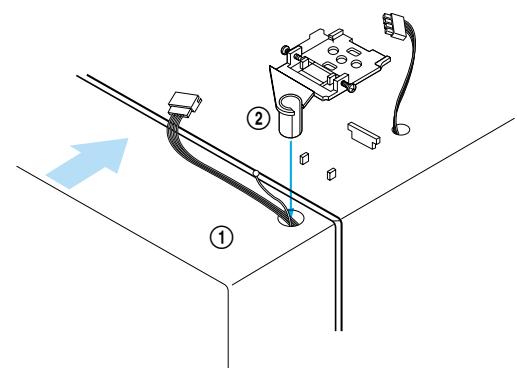
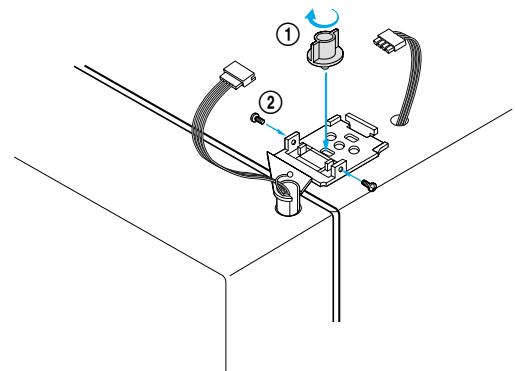
Refrigerator Leveling & Door Adjustment ( If needed.)
Refrigerator must be level in order to maintain optimal performance and desirable front appearance.
(If the floor beneath the refrigerator is uneven, freezer and refrigerator doors look unbalanced.)
- In case freezer door is lower than refrigerator door...

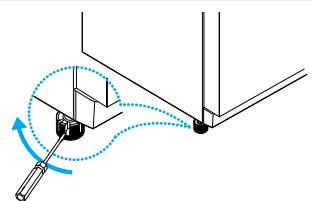
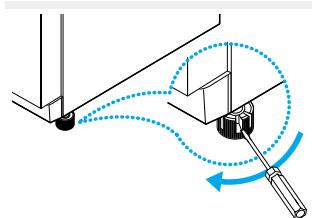
1 Insert a screw driver (flat tip) into a groove of the left wheel (bottom of freezer) and turn it clockwise until the door is balanced. (clockwise to raise freezer door; counterclockwise to lower) Unless the freezer door is balanced by step 1, then follow the next steps.

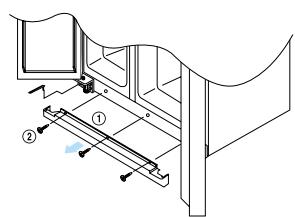
2 Open the doors, unscrew the front cover and remove, if it is attached.

3 Loosen 3 hinge bolts(1 on the left + 2 on the right) a little. (Do not unfasten them completely.) Insert a hexagonal wrench into the groove of adjusting nut and turn clockwise until the door is level.
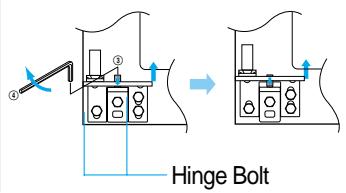
Once the door is balanced, fasten the hinge bolts tightly and screw the front cover.
In case refrigerator door is lower than freezer door...

1 Insert a screw driver (flat tip) into a groove of the right wheel (bottom of refrigerator) and turn it clockwise until the door is balanced. (clockwise to raise refrigerator door; counterclockwise to lower)
Unless the refrigerator door is balanced by step 1, then follow the next steps.

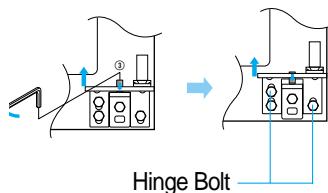
2 Loosen 3 hinge bolts(2 on the left + 1 on the right) a little. (Do not unfasten them completely.) Insert a hexagonal wrench into the groove of adjusting nut and turn clockwise until the door is level.
Once the door is balanced, fasten the hinge bolts tightly.

Front Cover
After installation and/or door leveling, fasten front cover with screws.(Remove the screws on the front bottom panel first. Click and screw the cover)

- The front of refrigerator needs to be higher just a little than the back for easy door closing, but if the wheel is raised too much for door balance, i.e. front of refrigerator is too higher than the back, it can be difficult to open the door.
Door gap adjusting
In case top and bottom gap of both doors are not the same, take the following steps to adjust. (gap beteen the top right edge of freezer door and top left of refrigerator door)
1 First unscrew and remove top hinge covers.
refer to page 16~17
2 Turn the hinge fastener counterclockwise 2~3 times just to loosen. (Do not remove the fastener.)
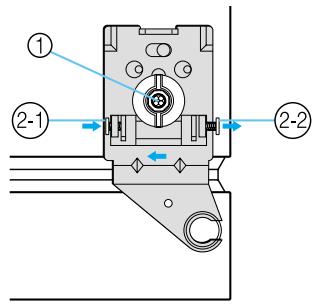
Adjustment of freezer door
Moving to the right
1) Loosen the left screw(2-2) enough. (Do not remove the screw.)
2) Turn the right screw(2-1) clockwise, then hinge and top of freezer door moves to the right.
3) Once the gap is adjusted, fasten the left screw(2-2) tightly.
Moving to the left
1) Loosen the right screw(2-1) enough. (Do not remove the screw.)
2) Turn the left screw(2-2) clockwise, then hinge and top of freezer door moves to the left.
3) Once the gap is adjusted, fasten the right screw(2-1) tightly.
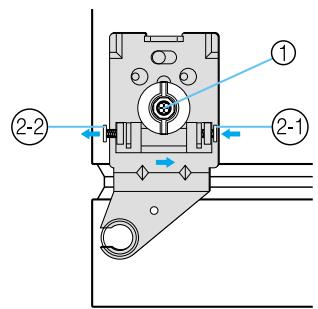
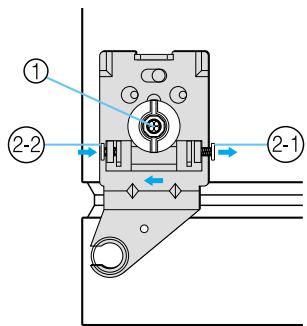
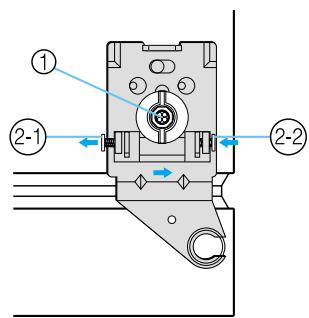
Adjustment of refrigerator door
Moving to the right
1) Loosen the left screw(2-1) enough. (Do not remove the screw.)
2) Turn the right screw(2-2) clockwise, then hinge and top of freezer door moves to the right.
3) Once the gap is adjusted, fasten the left screw(2-1) tightly.
Moving to the left
1) Loosen the right screw(2-2) enough. (Do not remove the screw.)
2) Turn the left screw(2-1) clockwise, then hinge and top of freezer door moves to the left.
3) Once the gap is adjusted, fasten the right screw(2-2) tightly.
USER GUIDE

CFC-Free
MODEL
FRS-2021IAL
FRS-2021WAL
FRS-2021EAL
FRS-2021CAL
FRS-2041IAL
FRS-2041WAL
FRS-2041EAL
FRS-2041CAL
CONTENTS
Be sure to keep for safety 1~3
Installation Guide 4
Control Panel 5
Temperature Control 6
How to use interior Parts 7~9
Care & Cleaning 10~11
How To change Interior Light Bulb ....12
Before You Call for Service... 13
Something strange?
Don't worry. Here is the answer 14
Installation Preparation 15
If the refrigerator can not enter
the door, follow these steps 16~19
Refrigerator Leveling &
Door Adjustment(if needed.) 20
Doorgap adjusting 21
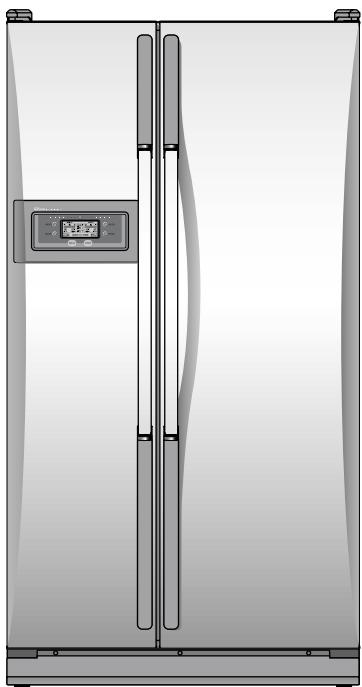
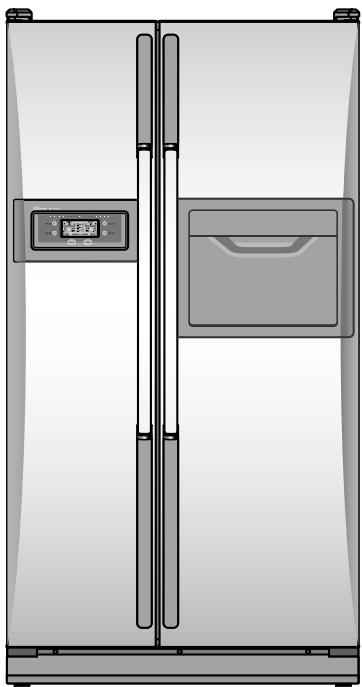
Read this user guide thoroughly and carefully before using for your safety and optimal performance of refrigerator.
Code: S201-11