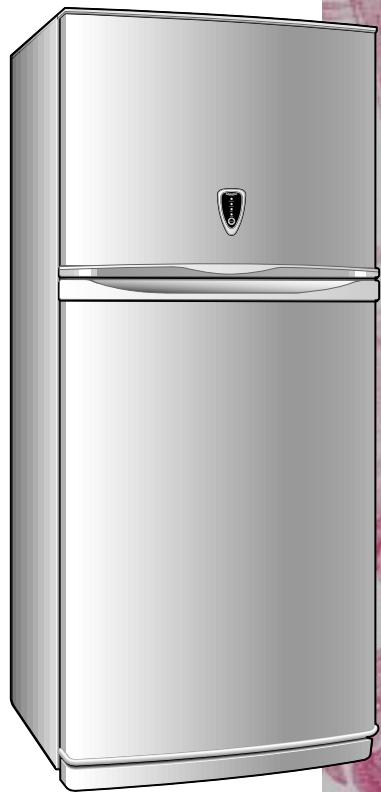
FR-4501N - Réfrigérateur DAEWOO - Notice d'utilisation et mode d'emploi gratuit
Retrouvez gratuitement la notice de l'appareil FR-4501N DAEWOO au format PDF.


| Intitulé | Description |
|---|---|
| Type de produit | Réfrigérateur combiné |
| Caractéristiques techniques principales | Réfrigérateur avec congélateur en bas, technologie de froid ventilé |
| Alimentation électrique | 220-240 V, 50 Hz |
| Dimensions approximatives | Hauteur : 177 cm, Largeur : 59,5 cm, Profondeur : 65 cm |
| Poids | Environ 70 kg |
| Capacité totale | 450 litres |
| Compatibilités | Compatible avec les accessoires de réfrigération standard |
| Type de batterie | Non applicable (réfrigérateur non portable) |
| Tension | 220-240 V |
| Puissance | Environ 150 W |
| Fonctions principales | Réfrigération, congélation, contrôle de température |
| Entretien et nettoyage | Nettoyage régulier des surfaces intérieures et extérieures, dégivrage du congélateur si nécessaire |
| Pièces détachées et réparabilité | Disponibilité de pièces détachées auprès des revendeurs agréés |
| Sécurité | Équipé d'un système de sécurité électrique, conforme aux normes de sécurité en vigueur |
| Informations générales utiles | Garantie de 2 ans, consommation énergétique classée A+ |
FOIRE AUX QUESTIONS - FR-4501N DAEWOO
Questions des utilisateurs sur FR-4501N DAEWOO
0 question sur cet appareil. Repondez a celles que vous connaissez ou posez la votre.
Poser une nouvelle question sur cet appareil
Téléchargez la notice de votre Réfrigérateur au format PDF gratuitement ! Retrouvez votre notice FR-4501N - DAEWOO et reprennez votre appareil électronique en main. Sur cette page sont publiés tous les documents nécessaires à l'utilisation de votre appareil FR-4501N de la marque DAEWOO.
MODE D'EMPLOI FR-4501N DAEWOO
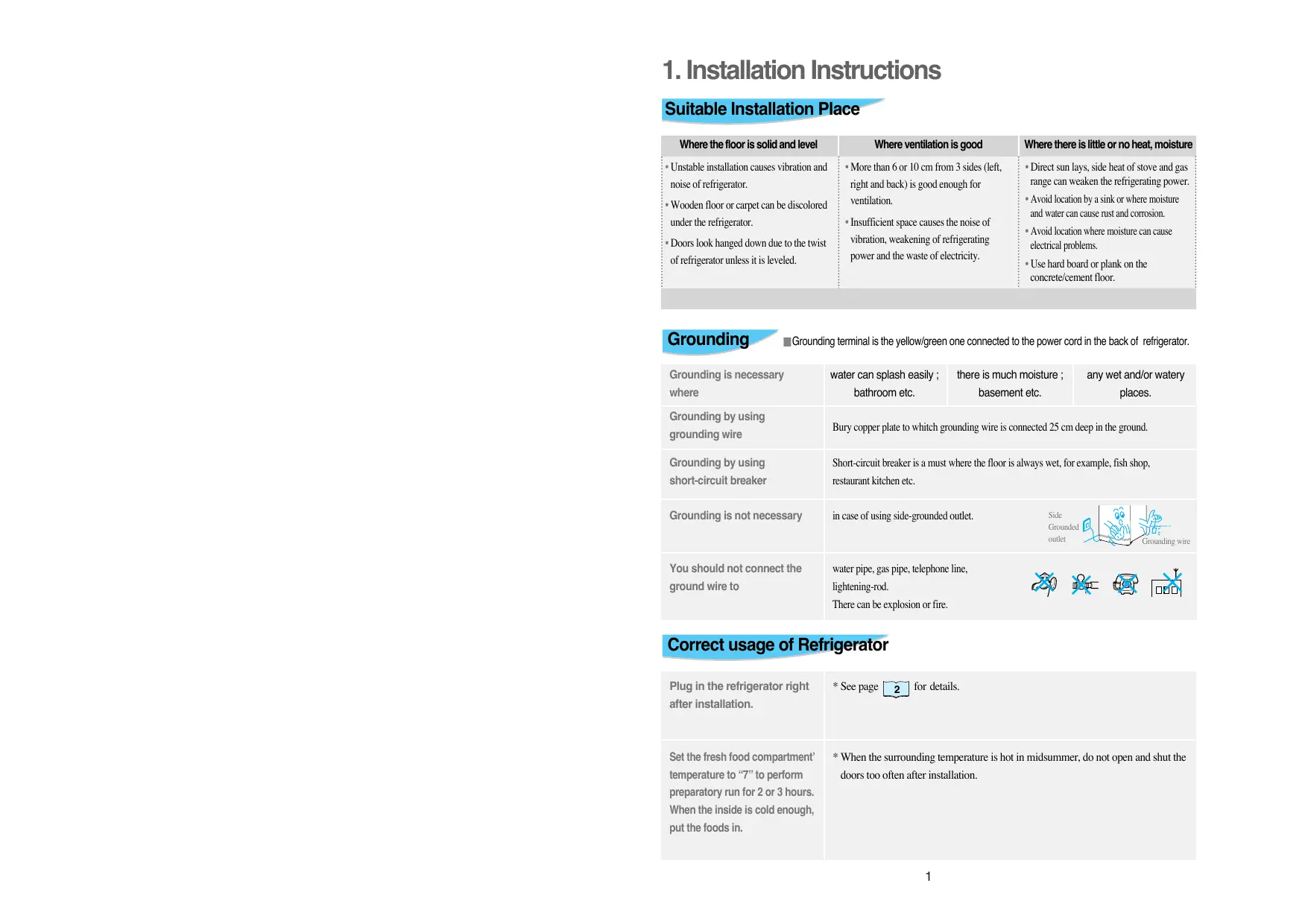
1. Installation Instructions
Suitable Installation Place
| Where the floor is solid and level | Where ventilation is good | Where there is little or no heat, moisture |
| ·Unstable installation causes vibration and noise of refrigerator. ·Wooden floor or carpet can be discolored under the refrigerator. ·Doors look hanged down due to the twist of refrigerator unless it is leveled. | ·More than 6 or 10 cm from 3 sides (left, right and back) is good enough for ventilation. ·Insufficient space causes the noise of vibration, weakening of refrigerating power and the waste of electricity. | ·Direct sun lays, side heat of stove and gas range can weaken the refrigerating power. ·Avoid location by a sink or where moisture and water can cause rust and corrosion. ·Avoid location where moisture can cause electrical problems. ·Use hard board or plank on the concrete/cement floor. |
Grounding
Grounding terminal is the yellow/green one connected to the power cord in the back of refrigerator.
| Grounding is necessary where | water can splash easily ; bathroom etc. | there is much moisture ; basement etc. | any wet and/or watery places. |
| Grounding by using grounding wire | Bury copper plate to which grounding wire is connected 25 cm deep in the ground. | ||
| Grounding by using short-circuit breaker | Short-circuit breaker is a must where the floor is always wet, for example, fish shop, restaurant kitchen etc. | ||
| Grounding is not necessary | in case of using side-grounded outlet. | Side Grounded outlet | Grounding wire |
| You should not connect the ground wire to | water pipe, gas pipe, telephone line, lightening-rod. There can be explosion or fire. | ||
Correct usage of Refrigerator
| Plug in the refrigerator right after installation. | * See page 2 for details. |
| Set the fresh food compartment' temperature to “7” to perform preparatory run for 2 or 3 hours. When the inside is cold enough, put the foods in. | * When the surrounding temperature is hot in midsummer, do not open and shut the doors too often after installation. |
2. Safety Instructions
WARNING
Improper use can cause physical damage - personal injury.
ATTENTION
Improper use can cause injury or material damage to the household

BE SURE TO KEEP

NO/NEVER

DO NOT DISASSEMBLE

DO NOT TOUCH

UNPLUG

GROUND
CAUTION:
- If the supply cord becomes damaged, it must be replaced by the manufacturer or its service agent or a similarly qualified person in order to avoid a hazard.
- The appliance is not intended for use by young children or infirm persons without supervision.
- Young children should be supervised to ensure that they do not play with the appliance.

WARNING
VENTILATION
In case of gas leak, ventilate the room instead of unplugging the refrigerator.
- Explosion or fire may happen.

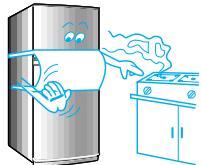
EXCLUSIVE POWER OUTLET
Use exclusive power outlet for the refrigerator only.
Several plugs in an outlet may cause fire.
Do not use a double outlet or extension cord.

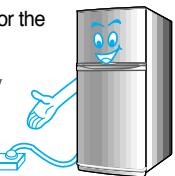
ATTENTION
Do not eat any frozen food immediately from the freezer compartment.
* It can get you cold-burns.

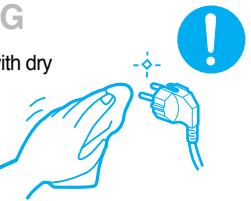
CLEAN PLUG
Unplug and clean it with dry cloth if dirty.
- Dusty and dirty
plug may cause fire.
NO
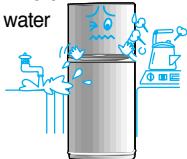
Never install the refrigerator where there is much moisture and water can splash.
- It can be a danger of short circuit or fire.

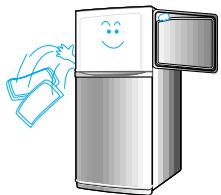
DISCARDING
When discarding the refrigerator, remove the door packing.
Children may be trapped inside it.

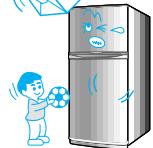
NO
Do not put heavy things or water contained tanks on top of refrigerator.
- It's dangerous when they fall down and fire by short circuit can happen.


WARNING
NO
Never install the refrigerator where there is much moisture and water can splash.
- It can be a danger of short circuit or fire.

NO
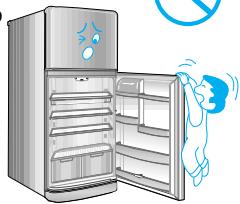
Do not allow children to hang on the doors.
The refrigerator may be tipped over to hurt children.

NEVERUSE
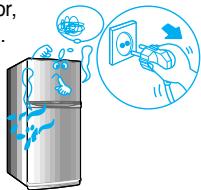
When you smell something strange, burning out of refrigerator, unplug it to stop running.
- It's very dangerous to keep the abnormal refrigerator running on and on.
NEVERUSE
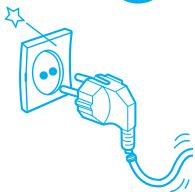
Never use plug if it is loose
- There can be electric shock or fire by short circuit.

NEVERUSE
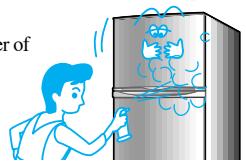
Never use any spray near the refrigerator.
It can cause danger of explosion.

NEVER EAT
Never eat deteriorated food stored too long in the refrigerator or in the out-of-order refrigerator.
- You can be food-poisoned.

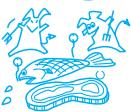
NEVER STORE
This refrigerator is for storing only foods.
- Do not store medicines, flammable things, and study sample, etc.

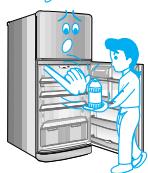
NEVER TOUCH
Do not use any sharp tools when cleaning the inside.
- The cooling system can be damaged or there may be electric shock.
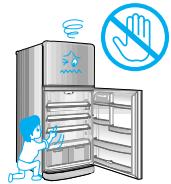
NEVER
DISASSEMBLE
Do not repair the refrigerator on your own.
- It can work abnormally and cause bigger trouble.
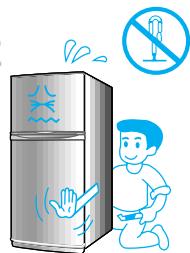
NEVER TOUCH
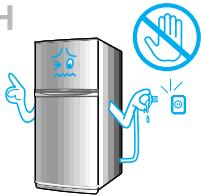
Do not pull and/or push the plug with wet hand.
- There can be danger of electric shock.

WARNING
UNPLUG
Unplug first when exchanging the bulb and/or cleaning the refrigerator.

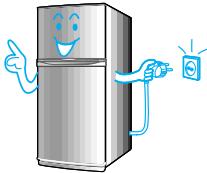
UNPLUG
If not using refrigerator for a long time, unplug and take all the foods out.
- In case of power failure, foods may decay and other accident (short circuit, fire etc.) can happen.
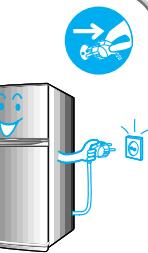
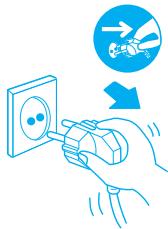
UNPLUG
Grip the whole plug body to pull when you unplug.
- Holding only the wire can cause electric spark or short circuit.
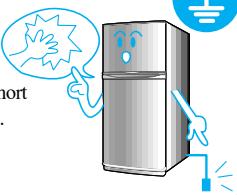
GROUNDING
Be sure to ground.
There is a danger of electric shock due to short circuit or mal-function.

WARNING
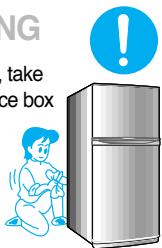
MOVING/ CARRYING
When you move the refrigerator, take all the foods out and empty the ice box and evaporation dish of water.
- Foods may be damaged and you can slip on watery floor.
MOVING / CARRYING
Lift the refrigerator up enough not to scratch a soft floor.
- Front and rear wheels under the refrigerator may scratch the floor.
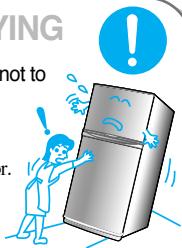
MOVING/ CARRYING
Grip two handle bars front bottom and formed handle top back of refrigerator.
Gripping other parts can be slippery and dangerous.
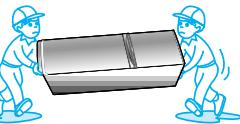
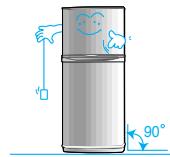
INSTALLATION
Place on a solid and level floor.
- Unstable installation causes distortion of cabinet and doors.


WARNING
DOOR HANDLES
Opening and shutting doors, hold door handles, not other part.
- Your fingers may be jammed to be hurt.


POWER FAILURE
In case of power failure, open and shut the doors as seldom as possible.
Cold air comes out and fresh storage, impossible.

DRIVE / RUN
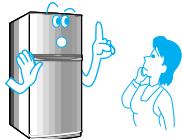
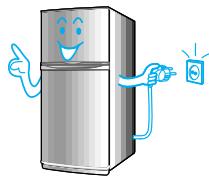
After you unplugged refrigerator, wait 5 minutes or more to plug in again.
- If you plug in again immediately, electric parts can be damaged.

ATTENTION
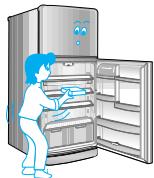
Foods should not protrude from shelves.
- They can fall down and/or be broken when opening the door.

DO NOT TOUCH
Do not touch cold surfaces of foods or food containers in the freezer compartment directly
- They are in the state of like frozen metal, so skin can adhere to these cold surfaces. (Especially when your hands are wet and damp.)

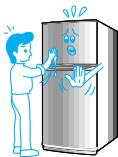
FOOD STORAGE
When you store foods in the pockets, push in to the pocket bottom.
Tall bottles may fall down or the pockets can be broken.
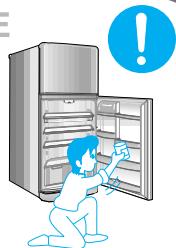

HANDOVER
Handling over this refrigerator, you'd better give user's guide together to him/her.
- New user may not know well how to use this refrigerator.
CAUTION
If there is water or oil on the floor around refrigerator, wipe it out.
There is danger of slipping over to be hurt.

FORBIDDEN
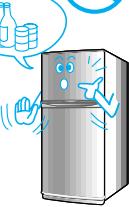
Do not store bottles, cans or canned food in the freezer compartment.
- They can be broken or exploded by expansion of freezing.
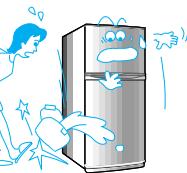


DO NOT TOUCH
Do not reach out your hands or legs under the refrigerator (when cleaning under the refrigerator.
- You can be hurt by rough edges and parts under the refrigerator.
3. Looks Out of Order, But, Not.
Before calling for service, check the followings.
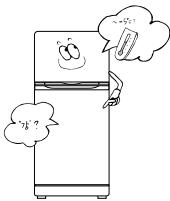
Foods freeze in the fresh food compartment
Has the temperature been on "7" continuously?
■ Is the temperature near refrigerator less than 5^ ?
Was moist foods such as vegetables placed just in front of the cold air duct?
Refrigerator never get cold.
■ Is there no power failure?
■ Is the mains play firmly secure.
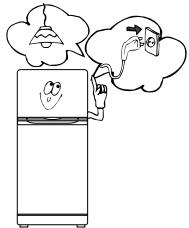
Refrigerator does not get cold enough.
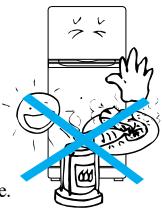
Has the temperature been on "1" continuously? Set the temperature to "4".
Has too hot food put in? Check food storage state.
■ Is the inside filled with too much food?
■ Is either door open or did you open and shut the doors too often?
■ Is there a gas range or a stove near the refrigerator? Is it in direct sun-light? Check the installation place.
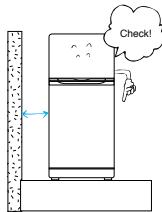
Refrigerator is noisy.
■ Is the floor firm and level or the refrigerator levelled well?
■ Is the back of refrigerator touching the wall?
Moisture collects inside.
Check if either door is open.
Did you leave the doors open too long or is moist food put with its lid off?
Moisture disappears naturally if doors are closed, but it's better to wipe it off with dry cloth.
Water is flowing out when moving the refrigerator.
Have you dried and emptied the evaporator dish?
Something smells.
Air ducts blocked with foods?
■ Is strong odoring food stored unwrapped? Check the food storage state.
* The vegetable cases are closed, so deodorizing is almost impossible.
Refrigerator Is Not Wrong or Out of Order In These Cases...
| Moisture is forming on cabinet surface ! | • Moisture can be formed during the rainy season or through continuous hot and humid days. Wipe out the surface with dry cloth. |
| It sounds water-flowing in the refrigerator. | • The sound can be heard when the compressor stops. When refrigerant to cools down, the system can make such a sound. |
| Doors are not opened easily. | • Such case happens when you open the door right after closing it. Do not try to force the doors to open; wait about 30 seconds or so. |
| Front feels warm. | • Front part of cabinet may feel warm because of the hot-pipe to prevent the forming of moisture. |
| Cracking sound comes out of the inside. | • When the parts inside shrink and expand due to temperature change, such sound can be heard. |
| Freezer compartment door is opened and shut slightly. | • When you shut the fresh food compartment door quickly, the freezer compartment door is opened and shut slightly of itself. That's because of the condensed air in the fresh food compartment run to the freezer compartment by closing the door. |
| Tiny frostwork forms inside of the fresh food compartment | • When the surrounding is hot and humid, if you open and shut the doors frequently such happens. When you store watery food unwrapped, such frostwork may form too. It's all because of the moist in the air clung to the inside. |
4. Installation of Grip Handle
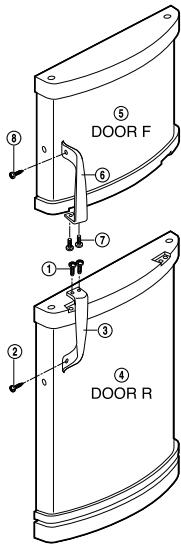
- OPEN DOOR R(4) and put the HANDLE R(3) on the left top of DOOR R (4).
- Then fasten HANDLE R (3) with two screws(1) on the left top of DOOR R(4) and with one screw(2) on the left side of DOOR R (4). (Screw(1) and screw(2) are different figure.)
- OPEN DOOR F(5) and put the HANDLE F(6) on the left bottom of DOOR F(5).
- Then fasten HANDLE F(6) with two screws(7) on the left bottom of DOOR F(5) and with one screw(8) on the left side of DOOR F(5). (Screw(7) and screw(8) are different figure.)
- HANDLE F(6) and HANDLE R(3) are not changeable.
5. Name of Each Part & Function
FREEZER COMPARTMENT SHELF
- Provided to make ice or store frozen food.
TEMPERATURE REGULATION LEVER OF FREEZER COMPARTMENT
Used when you want to regulate temperature of freezer compartment.
- Set the lever to which you want to choose temperature (LOW, MID, HIGH)
FRESH CASE
- Stores food at 0 2^ C to keep its own natural taste and nutrient.
f push the case backward completely, or it may touch the door to be broken.
fRIn case the wire shelves are installed, they do not include the Fresh case.
FRESH FOOD COMPARTMENT SHELF
Provided to store day to day food.
HIGH HUMIDITY VEGETABLE CASE
- It keeps vegetables fresh at optimal humidity.
FRONT COVER
- Don't let the children step on it for it can be broken.
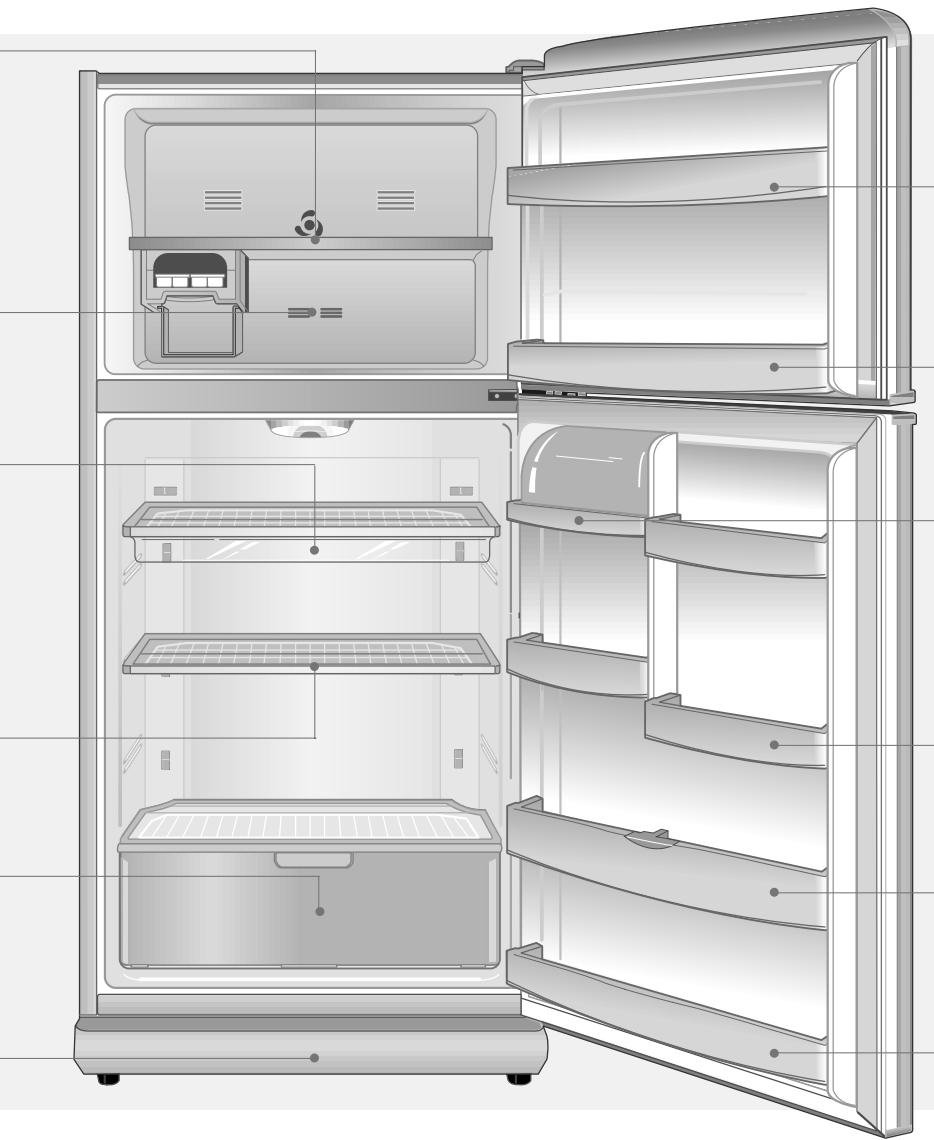
FREEZER COMPARTMENT POCKETS
- Use when storing dried fish, dumpling skin, red pepper powder beans, pizza, spices etc.
- Do not store bottled drinks or foods that will be kept for so long.
FRESH FOOD COMPARTMENT POCKETS
DAIRYPOCKET
- Storing eggs, cheese, etc.
SMALLPOCKET
- Storing short bottled food, packed drinks and spice containers, etc.
JUMBOPOCKET
- Storing big bottled drinks, juice, etc.
BOTTLEPOCKET
- Storing beer bottles, little bottled drinks, etc.
6. Freezer/Refrigerator department
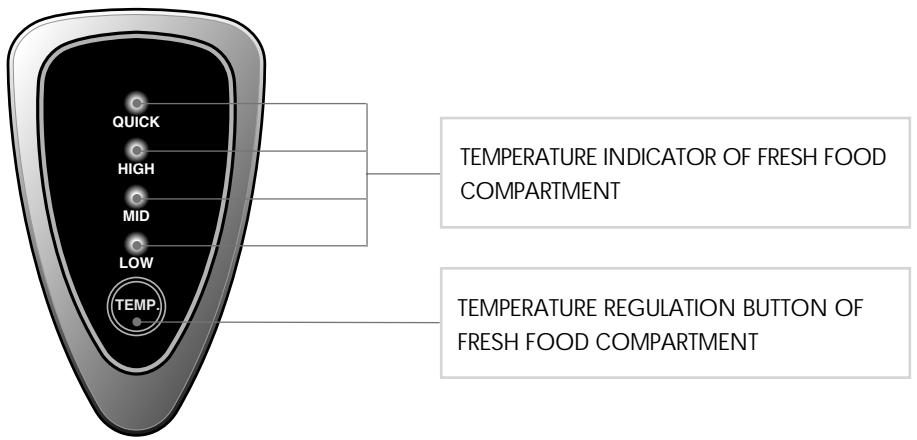
Temperature regulation of freezer/fresh food compartment
Press "TEMP" Button.
- Middle Mode ("MID" light up) starts when the refrigerator is first plugged in.
- By pressing this button, indicators change from "LOW" to "QUICK".
LOW-MID-HIGH-QUICK-LOW
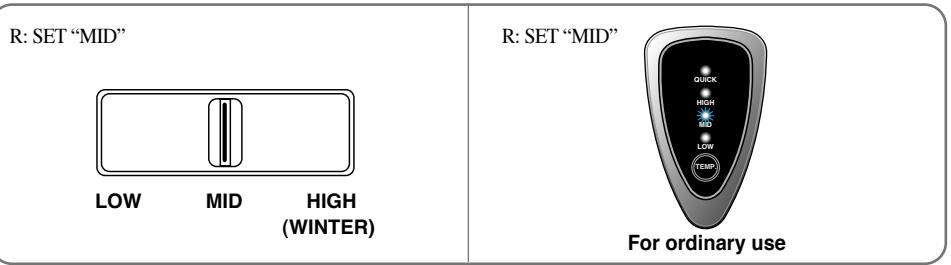
FOR ORDINARY USE.
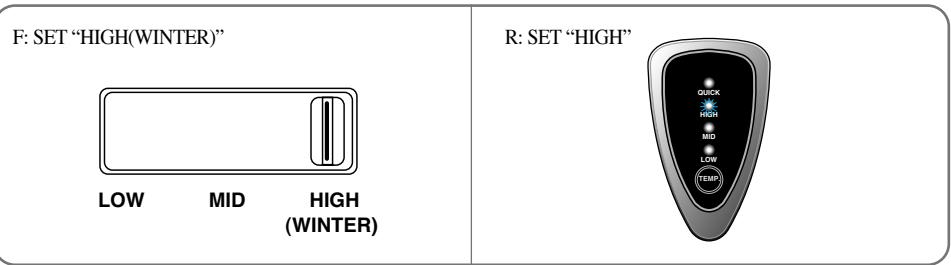
WHEN SURROUND TEMPERATURE IS UNDER 10^
7. Care & Cleaning
Before Cleaning
- When the outside(cabinet, door) is stained with cooking oil or dirt, wipe it out quickly.
- To keep the inside sanitary without odor or dirt, regular cleaning required at least once a month.
- Spills of cooking oil, butter etc. can cause the parts of plastics to crack.
In Cleaning
- Don't pour water to the refrigerator directly.
- Cleaning the inside, don't use chemical(alkaline) detergent, wax, gasoline, alcohol, benzen, thinner, hot(boiling) water, scrubber etc., cleaning the doors and cabinet, avoid solvent, abrasives, spray-on cleaners etc.
Instead, use soft cloth with dish washer and clean up with water, dry with a soft cloth.
After Cleaning
- See to the followings after cleaning. If something's wrong, call for service.
- Is the power cord peeled?
- Is the plug hot unusually?
- Did you plug in the outlet firmly?
8. Helpful Hints
When you replace the light bulbs
Light bulb of freezer compartment
- Unplug the refrigerator.
- Pull the light shield down forward, turn to take the bulb out.
- Replace it with the same size and type of bulb.
Light bulb of fresh food compartment
- Unplug the refrigerator.
2.Pull out the shelf. - Insert your finger into the groove under the light bulb and turn to take it out.
-
Replace it with the same size and type of bulb.
-
Call the service center when you get the bulbs or too hard for you to replace it.
In case of power failure
- Do not open and shut the doors, if possible, then no problem storing the food 2~3 hours long even in the midsummer.
In case of predicted power failure, do not store any more food and make as much ice as you can to put it on the upper shelf of fresh food compartment. The inside would be kept cold.
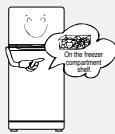
When not using for a long time
Clean the inside and leave the doors open for 2~3 days in order to prevent mold development or odor saturation.
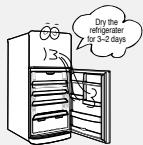
9. Efficient Storage of Foods
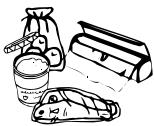
■ Be sure to wrap foods - fish, meat, etc. - to be stored in the freezer compartment to avoid odor.
Keep foods clean!
Be suWipe the packed foods, wash vegetables.
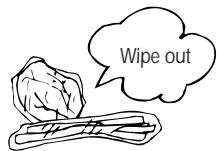
Wrap foods!
Make sure to wrap foods such as Kimchi and fish in order to prevent drying and odor.
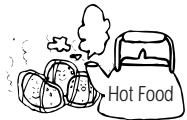
Cool down to room temperature!
If hot food is put in immediately, the temperature inside rises up, keeping foods fresh impossible, resulting in waste of electricity.
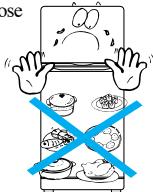
Do not fill the inside up!
Too much food will interfere with cold air circulation. Do not place watery food close to the cold air ducts.
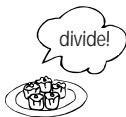
Divide foods into one-time serving!
- Dividing food into one-time serving and storage makes it easy to take out, enhancing refrigerating power. Frozen food can be thawed easily.
Open and shut doors quickly!
Frequent opening and shutting doors causes loss of cold air, waste of electricity weakening of refrigerating power.
DAEWOO
3D COOLING SYSTEM
REFRIGERATOR
FR-4501N
CONTENTS
- Installation Instructions 1
Suitable Installation Place 1
Grounding 1
Correct usage of Refrigerator 1 - Safety Instructions 2
- Looks Out of Order, But, Not.. 6
- Installation of Grip Handle
- Name of Each Part & Function 8
- Freezer/Refrigerator Department 10
7.Care & Cleaning. 11 - Helpful Hints 12
- Efficient Storage of Foods 12