
Medic T08 - Nebulizer Neno - Free user manual and instructions
Find the device manual for free Medic T08 Neno in PDF.


| Type | Compressor nebulizer |
| Brand | Neno |
| Model | Medic T08 |
| Dimensions (L x W x H) | 200 x 150 x 100 mm |
| Weight | 1.5 kg |
| Power Supply | AC 100-240V, 50/60Hz |
| Power Consumption | 15 W |
| Main Function | Aerosol therapy for respiratory conditions |
| Nebulization Rate | 0.3-0.5 mL/min |
| Particle Size (MMAD) | <5 µm |
| Reservoir Capacity | Max 8 mL |
| Noise Level | <60 dB |
| Operating Conditions | Temperature: 10-40°C, Humidity: 30-85% |
| Materials | Medical-grade plastic, silicone mask |
| Accessories Included | Adult mask, child mask, mouthpiece, air tube, filter |
| Maintenance | Clean after each use; replace filter every 3 months |
| Safety Features | Automatic shut-off, overheat protection, CE certified |
| Spare Parts Availability | Replacement masks, filters, tubing available |
| Warranty | 2 years |
| Intended Use | Home and clinical use for asthma, COPD, etc. |
Frequently Asked Questions - Medic T08 Neno
User questions about Medic T08 Neno
0 question about this device. Answer the ones you know or ask your own.
Ask a new question about this device
Download the instructions for your Nebulizer in PDF format for free! Find your manual Medic T08 - Neno and take your electronic device back in hand. On this page are published all the documents necessary for the use of your device. Medic T08 by Neno.
USER MANUAL Medic T08 Neno
Infrared thermometer

natural_image
White handheld electronic device with a circular button and 'MEMS' label (no additional text or symbols)


PL
INSTRUKCJA OBSŁUGI
Szanowny Kliencie,
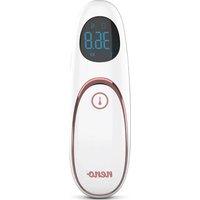
Thank you for choosing the Neno Medic T08. The device you have purchased is a non-contact thermometer that measures body temperature using an infrared light wave sensor. Please read the instructions below before use.
01. PRECAUTIONS
1. RELATED TO MEASUREMENT
- Do not self-diagnose and do not take treatment based on the measurements obtained. If you are concerned by the results obtained, consult your doctor.
- Sweat, hair, headgear etc. may underestimate the measured temperature. Ensure that the sensor does not cover the bare skin of the person being tested.
- Make sure the ear canal is clean and dry before measuring the temperature in the ear.
- After exercise, bathing or after a meal, wait 30 minutes before taking the temperature.
- Do not take a temperature measurement in an area where there is inflammation, trauma or post-operative changes, as this may affect the results obtained.
- After taking medication, wait 30 minutes before taking a temperature measurement.
- The temperature of the room in which the measurement is taken should be stable. Do not take measurements in rooms with high air flow, such as rooms cooled by fans or ventilation systems.
- If you take multiple measurements in a row, the measurements may differ slightly from each other. To achieve the most accurate result, it is recommended to take three measurements.
- Do not keep the thermometer near strong electrostatic fields or magnetic fields, which can cause measurement errors.
- The device is intended for personal use. To avoid infection, it is recommended to clean and disinfect the thermometer after each use. For more information, see „Cleaning and storage”.
2. PRODUCT-RELATED
- Do not use the non-contact thermometer in any way other than described in the instructions. The thermometer is suitable for both home and clinical use.
- Do not immerse the thermometer in water or other liquids. When cleaning the device, refer to the instructions under
„Cleaning and storage”.
- The thermometer should be stored in a dry, clean place away from sunlight. The thermometer works best at a temperature of 10-40°C and a humidity of 15-95%RH.
• Do not touch the thermometer sensor.
- Do not drop the product, disassemble the device into its original parts, or carry out repairs or modifications yourself.
- If problems occur, stop using the device and contact your dealer.
- Do not dispose of either the battery or the product in the container for mixed municipal waste. Comply with current regulations for the disposal of electronic equipment and batteries.
- If the device will not be used for a long period of time, remove the batteries to avoid the risk of damaging the thermometer.
- Do not insert new or partially used batteries into the device at the same time. This may damage the device.
- Infrared thermometers measure the temperature of the human body through the eardrum or forehead. They are intended for professional and domestic use. The thermometer can be used to measure temperature regardless of the age of the person being tested.
CAUTION: Keep the thermometer out of reach of children. Do not throw batteries into a fire. The thermometer is not a substitute for medical examination and advice.
02. SYMBOLS EXPLANATION
SEE FIG. A.1-A.10
- CE mark: Product meets EU requirements
- Medical device
- Manufacturer
- Authorised representative in the European Community
- Do not dispose of the product in the container for mixed municipal waste. Dispose of the product in accordance with the guidelines for the disposal of electronic devices of this type
- Device with BF type parts
- Follow the instructions for use
- Date of production
- Serial number
- Luminaires with condensation and droplet protection
03. PRODUCT DESCRIPTION
Purpose of the device
The non-contact thermometer is used to measure body temperature on the patient's forehead and, after removing the measuring pad, in the ear. The device is suitable for both home and clinical use as a medical device. It is recommended that an adult takes the measurement. The thermometer can be used to measure temperature regardless of the age of the person being measured. Do not use the thermometer if the ear is infected with an ear infection or abscess. The device has no side effects if used correctly.
Construction of the device: SEE FIG. B
- LED display
- Power and measurement button
- Infrared light wave sensor
- Probe cover - when the cover is removed, the thermometer will automatically switch to ear measurement mode. Similarly, when the sheath is placed on the device, the body temperature will be measured.
- Battery cover
Display: SEE FIG. C
- Temperature value
- Ear temperature mode
- Forehead temperature mode
- Low battery
- Temperature unit (°F)
- Temperature unit (°C)
04. USE OF THE DEVICE
1. Installing batteries:
The thermometer will automatically detect the power source when it starts up. If the battery level is low but sufficient for operation, the low battery symbol (FIG. C.4) will appear on the screen along with the measurement result. However, if the battery level is too low, the low battery symbol (FIG. C.4) will flash on the screen and the unit will automatically switch off after 8 seconds. The batteries must be replaced to continue use. To install the batteries, follow the steps below:
- Remove the battery cover.
- Insert two AAA batteries. Make sure the battery poles are turned the right way. At this point the product will start self-diagnosing and then be ready to start measuring.
- Replace the battery cover and close the housing.
NOTE: Incorrectly installed batteries can damage the thermometer. If the batteries or the device has signs of leakage or mould on it, stop using it immediately. Do not keep batteries near a fire. This could lead to an explosion.
Do not store batteries in rooms with high temperatures and humidity. To avoid short circuits, do not keep batteries and metal objects (such as coins and keys) near electrical equipment.
2. Preparation for measurement:
Follow the instructions below to ensure the most accurate temperature measurement:
- Before taking the measurement, brush the hair off the subject's forehead and clean the skin of sweat.
- If the test person's body temperature differs significantly from the temperature in the room where the measurement is taken, the test person should wait at least 5 minutes in the measurement room before taking the measurement.
-
A cold compress or other methods of cooling the forehead in people with a fever will mean that the measured temperature may be lower.
-
The temperature in the room where the measurement is taken should be stable. Do not take the measurement in rooms with high air flow, such as rooms cooled with fans or ventilation systems.
- The thermometer should be in the same room where the measurement is taken. If the thermometer has been brought in from another room, leave it in the measurement room for at least 20 minutes before taking the measurement.
• Do not expose the thermometer to strong sunlight.
3. Making a measurement:
• Ear temperature measurement:
Remove the probe cap (FIG. B.4) from the thermometer before taking a measurement. The thermometer will automatically change to the measurement mode when the cap is removed. Gently insert the probe into the ear canal and ensure that the subject does not feel any discomfort. The correct positioning of the probe is essential to obtain a correct measurement. Then press the measurement button gently. A beep indicates the end of the measurement. You can remove the thermometer from the ear canal and check the results.
CAUTION: Do not force the thermometer into the ear canal. Doing so may damage the ear canal. When taking the temperature of an adult, gently pull the ear up and back to make sure that the ear canal is straight, so that the temperature probe can receive infrared radiation from the eardrum. Be careful when taking the temperature of a child whose ear canal is small.
• Measurement of body temperature:
Make sure the probe cover is on. The thermometer automatically recognises the measurement mode. Aim the thermometer's sensor at the centre of the forehead of the person whose temperature you want to measure and apply it gently to the skin. Then press the measurement button gently. A beep indicates the end of the measurement. You can check the result.
4. Explanation of an alarm type
After each measurement, the result is displayed on the screen (FIG. B.1). In addition, an acoustic signal is triggered. This signal varies depending on the temperature altitude:
| Temperature range Type of alarm | |
| 32.0°C (89.6°F) ≤ T <37.5°C(99.5°F) | Long, single signal |
| 37.5°C (99.5°F) ≤ T <38.6°C(101.5°F) | Dual signal |
| 38.6°C (101.5°F) ≤ T ≤42.9°C(109.2°F) | Quadruple signal |
5. Change of measurement unit
When the unit is switched off, press and hold the measurement button. After approximately 8 seconds, the screen will display the active measurement unit. Do not release the measurement button. The temperature units will change automatically on the screen. When the selected unit appears, release the button and the unit will automatically go into standby.
05. ERROR MESSAGES

-
- too high a measured temperature, outside of the measuring range

-
- too low a measured temperature, outside of the measuring range

-
- operating temperature outside the range 10\~40°C - leave the thermometer in the measuring room where the temperature is between 10\~40°C for about 30 minutes

-
- low battery symbol appears on the display (FIG. C.4)- -change the batteries

-
- the low battery symbol (FIG. C.4) flashes on the display and the unit switches off automatically after 8 seconds - replace the batteries

-
- damage to the equipment - contact the service department
-
Blank screen:
• Dead batteries - replace batteries with new ones
- Batteries incorrectly installed - ensure battery terminals are facing the correct way
- Poor battery connection - ensure batteries are fitted correctly
- The display does not start despite the above instructions - contact the service department
06. CLEANING, STORAGE AND CALIBRATION
1. CLEANING
- The lens is the most delicate part of the thermometer. Do not touch or press the thermometer sensor. The lens must be clean and intact to ensure accurate readings.
- To clean the probe, gently wipe the probe surface with a cotton swab or soft cloth soaked in 75% isopropyl alcohol.
- To clean the thermometer, remove the batteries and then clean the ear tip, screen and casing with a soft dry cloth. If
the thermometer case is too dirty, wipe it with a soft cloth soaked in alcohol.
- Keep water away from the lens during the cleaning process. Otherwise the lens may be damaged. The lens may be scratched if cleaned with a hard object, which may cause inaccurate readings. Do not clean the thermometer with caustic cleaners. Do not immerse any part of the thermometer in liquid during the cleaning process and do not allow liquid to penetrate the thermometer.
2. STORAGE
The thermometer should be stored in a dry, clean place away from sunlight. The product is not a toy - keep out of the reach of children.
3. CALIBRATION
The thermometer was calibrated during the manufacturing process. No recalibration is required. If you have any questions about the accuracy of the data, please contact an authorised service centre.
07. TYPICAL HUMAN BODY TEMPERATURE
The human body is a complex, biological system and the range of temperature that can be considered, normal' largely depends on which part of the body we measure and on factors such as age, sex, colour or skin thickness. The human body temperature falls within a certain range, which can vary from person to person.
08. SPECIFICATION
Measurement location: forehead/ear | Measurement unit: degrees Celsius (°C) or degrees Farenhait (°F) | Operating temperature: 10.0 -40.0°C (50.0 - 104.0°F) | Storage temperature: -25.0 - 55.0°C (-13.0 - 131.0°F) | Measurement range: 32.0 - 42.9 °C (89.6 - 109.2 °F) | Measurement accuracy: ± 0.2 °C within 35.0 - 42.0 °C (± 0.4 °F within 95.0 - 107.6 °F); ± 0.3 °C (±0.5 °F) in the ranges 32.0 - 35 °C and 42.0 -42.9 °C (89.6 - 95 °F and 107.6 -109.2 °F) | Body reference location: oral cavity | Dimensions: 151 x 48 x 42 mm | Weight: 93 g (with batteries) | Batteries: 2x 1.5V AAA, DC 3V (included) | Display accuracy: 0.1°C/0.1°F | Clinical repeatability: ±0.3°C/0.5°F | Automatic switch-off: after approx. 8 seconds of inactivity.
09. WARRANTY CARD
Dear customer, thank you for purchasing our Neno Medic T08 thermometer. If you have any problems with the operation of the device under normal conditions, please contact an authorised service centre. Please keep your warranty card with you in case of repair.
The product comes with a 24-month guarantee. Warranty conditions can be found at: https://neno.pl/gwarancja
Details, contact and service address can be found at:
https://neno.pl/kontakt
Specifications and contents are subject to change without notice. We apologise for any inconvenience.
10. ELECTROMAGNETIC COMPATIBILITY
WARNING: Avoid placing this equipment near or stacked with other equipment as this may lead to malfunction. If it is necessary to use this equipment next to another, monitor that both are working properly.
WARNING: The use of accessories, transducers and cables other than those specified or supplied by the manufacturer of this equipment may result in increased electromagnetic emissions or reduced electromagnetic immunity of this equipment and lead to malfunctions.
WARNING: Portable radio communication equipment (including peripherals such as antenna cables and external antennas) should be used within 30 cm (12 inches) of any part of the medical equipment, including specified cables, provided by the manufacturer. Failure to do so may result in degradation of the performance of this equipment.
Table 1
| Declaration - electromagnetic emissions | ||
| The equipment is intended for use in the electromagnetic environment specified below. The user of the equipment should ensure that it is used in such an environment. | ||
| Emissions tests | Compatibility | Electromagnetic environment - guidance |
| RF emissionsCISPR 11 | Group 1 The device uses radio energy exclusively for its internal functions. Therefore, radio emissions are very low and should not cause interference to nearby electronic equipment. | |
| RF emissionsCISPR 11 | Class B The unit is suitable for use in all establishments, including house-holds and directly connected to the public low-voltage network that supplies buildings used for domestic purposes. | |
| Harmonic emissionsIEC 61000-3-2 | Class A | |
| Voltage fluctuations/flicker emissionsIEC 61000-3-3 | Compatible | |
Table 2
| Declaration - electromagnetic immunity | |||
| The device is intended for use in the electromagnetic environment specified below. The user of the equipment should ensure that it is used in such an environment. | |||
| Immunity tests | IEC 60601 test level | Level of compliance | Electromagnetic environment - guidance |
| Electrostatic discharge (ESD) IEC 61000-4-2 | ±8 kV contact ±2 kV, ±4 kV, ±8 kV, ±15 kV air | ±8 kV contact ±2 kV, ±4 kV, ±8 kV, ±15 kV air | Floors should be wooden, concrete or ceramic tiles. If the floors are covered with synthetic material, the relative humidity should be at least 30%. |
| High-speed electrical surges/pulses IEC 61000-4-4 | ±2 kV for the supply line ±1 kV for input/output line | ±2 kV for the supply line | The quality of the mains power supply should correspond to a typical commercial or hospital environment. |
| Surges IEC 61000-4-5 | ±1 kV differential mode ±2 kV common mode | ±1 kV differential mode | |
| Voltage drops, short-term interruptions and fluctuations on supply lines IEC 61000-4-11 | 0% UT; 0.5 cycle at 0°, 45°, 90°, 135°, 180°, 225°, 270° and 315°0% UT; 1 cycle i 70% UT; 25/30 cycles Single-phase: at 0°0% UT; 250/300 cycles | 0% UT; 0.5 cycle at 0°, 45°, 90°, 135°, 180°, 225°, 270° and 315°0% UT; 1 cycle i 70% UT; 25/30 cycles Single-phase: at 0°0% UT; 250/300 cycles | The quality of the mains power supply should correspond to a typical commercial or hospital environment. If the user requires continuous operation of the unit during power interruptions, it is recommended to power the unit from an uninterruptible power supply or a battery. |
| Supply frequency(50/60 Hz)magnetic fieldIEC 61000-4-8 | 30 A/m 30 A/m Power frequency | |
| magnetic fields should be at levels characteristic to a typical location in a typical commercial or hospital environment. | ||
NOTE: UT is the AC supply voltage before the test level is applied.
Table 3
| Declaration - electromagnetic immunity | |||
| Immunity tests | IEC 60601 test level | Level of compliance | Electromagnetic environment - guidance |
| Conducted radio wavesIEC 61000-4-6 | 3 V0.15 MHz to 80 MHz6 V in the ISM bands between 0.15 MHz and 80 MHz | 3 V0.15 MHz to 80 MHz6 V in the ISM bands between 0.15 MHz and 80 MHz | Portable and mobile radio communication equipment should not be used closer to any part of the equipment, including cables, than the recommended distance calculated from the equation appropriate to the transmitter frequency.Recommended distance d = [ 3.5V_1 ] d = [ 12V_1 ] d = [ 3.5E_1 ] 80 MHz to 800 MHz d = [ 7E_2 ] 800 MHz to 2.7 GHz where p is the maximum transmitter output power in watts (W) according to the transmitter manufacturer, and d is the recommended distance in metres (m).The field strength from fixed RF transmitters, as determined by the electromagnetic site survey, should be lower than the compliance level in each frequency band.Interference may occur in the vicinity of equipment marked with the following symbol: |
| Radiated radio wavesIEC 61000-4-3 | 10V/m80 MHz to 2.7 GHz385MHz--5785MHzOUTSIDE PORTRESISTANCE test specification for RF wireless communication devices (see Table 9 of IEC 60601-1-2:2014) | 10V/m80 MHz to 2.7 GHz385MHz--5785MHzOUTSIDE PORT RE-SISTANCE test specification for RF wireless communication devices (see Table 9 of IEC 60601-1-2:2014) | |
| NOTE: At 80 MHz and 800 MHz, the higher frequency range applies.NOTE: These guidelines may not apply in all situations. Electromagnetic radiation is affected by absorption and reflection by structures, objects and people. | |||
Table 4
| Recommended distances between portable and mobile RF communication equipment and the device | ||||
| The equipment is intended for use in an electromagnetic environment where RF interference is controlled. The user can help prevent electromagnetic interference by maintaining a minimum distance between portable and mobile RF communication equipment (transmitters) and the device, as recommended below, depending on the maximum output power of the communication equipment. | ||||
| Maxi-mum power rating of transmit-ter W | Distance depending on m transmitter frequency | |||
| 150 kHz to 80 MHz d = [ 3.5V_1 ] | 150 kHz to 80 MHz in the ISM and ama-teur bands d = [ 12V_2 ] | 80 MHz to 800 MHz d = [ 3.6E_1 ] | 800 MHz to 2.7 GHz d = [ 7E_2 ] | |
| 0,01 0,12 0,20 0,035 0,07 | ||||
| 0,1 0,38 0,63 0,11 0,22 | ||||
| 1 1,20 2,00 0,35 0,70 | ||||
| 10 3,80 6,32 1,10 2,21 | ||||
| 100 12,00 20,00 35,00 70,00 | ||||
| NOTE: For transmitters with a maximum output power not listed above, the recommended distance d in metres (m) can be estimated using the equation applicable to the transmitter frequency, where P is the maximum transmitter output power in watts (W) according to the transmitter manufacturer. | ||||
| NOTE: At 80 MHz and 800 MHz, the separation distance for the hi-gher frequency range applies. | ||||
| NOTE: These guidelines may not be applicable in all situations. The propagation of electromagnetic waves is affected by absorption and reflection from structures, objects and people. | ||||
PL

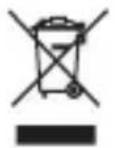
The crossed out trash can symbol indicates that unusable electrical or electronic devices, its accessories (such as power supplies, cords) or components (for example batteries, if included) cannot be disposed of alongside with household waste. In order to dispose of the devices or its components (for example, batteries) deliver the device to the collection point, where it will be accepted free of charge. Disposal is subject to the recast version of the WEEE Directive (2012/19/EU) and the Directive on batteries and accumulators (2006/66/EC). Proper disposal of the device prevents degradation of the natural environment. Information about the collection points of the facilities is issued by the competent local authorities. Incorrect disposal of waste is subject to penalties provided for by the law in force in the given area.
Model: FDIR-V9

No. 212 Yilong Road, Hexi Industrial Zone, Jinxia,
Changan Town, Dongguan, Guangdong Province,
523853, P.R. China

KGK TREND Sp. z o.o.
Ujastek 5b, 31-752 Kraków, Polska.
Wyprodukowano w PRC
Importer:
KGK TREND Sp. z o. o.
Ujastek 5b, 31-752 Cracow, Poland.
Made in PR
Version: 1.1
Date: 08.2024



1639

natural_image
Pure horizontal and vertical lines forming a symmetrical pattern (no text or symbols)
natural_image
Two vertical black lines on white background, no text or symbols presentneno®

- Infrared thermometer
- PL
- INSTRUKCJA OBSŁUGI
- PRECAUTIONS
- RELATED TO MEASUREMENT
- PRODUCT-RELATED
- SYMBOLS EXPLANATION
- SEE FIG. A.1-A.10
- PRODUCT DESCRIPTION
- Purpose of the device
- Construction of the device: SEE FIG. B
- Display: SEE FIG. C
- USE OF THE DEVICE
- Installing batteries:
- Preparation for measurement:
- Making a measurement:
- • Ear temperature measurement:
- • Measurement of body temperature:
- Explanation of an alarm type
- Change of measurement unit
- ERROR MESSAGES
- CLEANING, STORAGE AND CALIBRATION
- CLEANING
- STORAGE
- CALIBRATION
- TYPICAL HUMAN BODY TEMPERATURE
- SPECIFICATION
- WARRANTY CARD
- https://neno.pl/kontakt
- ELECTROMAGNETIC COMPATIBILITY
- Importer:
- neno®
Brand : Neno
Model : Medic T08
Category : Nebulizer