
TS1 130 - Refrigerator TEKA - Free user manual and instructions
Find the device manual for free TS1 130 TEKA in PDF.
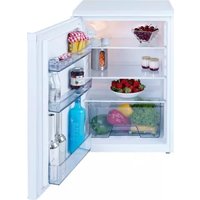


| Product Type | Freestanding Upright Refrigerator |
| Model | Teka TS1 130 |
| Brand | Teka |
| Total Capacity | Approx. 130 Liters |
| Dimensions (H x W x D) | Approx. 850 x 600 x 600 mm |
| Weight | Approx. 30 kg |
| Power Supply | 220-240 V, 50 Hz, 10 A |
| Energy Consumption | Low (specific value not stated) |
| Climate Class | N/ST (Normal to Subtropical) |
| Refrigerant | R600a (flammable) |
| Temperature Control | Thermostat knob with Off, Min (1), Med (3), Max (6) settings |
| Defrosting | Automatic defrost in refrigerator compartment |
| Interior Features | 1 glass shelf, 1 plastic pallet, 1 crisper, leveling leg |
| Door Reversibility | Yes, user-reversible (left or right) |
| Installation Clearances | 200 mm sides, 200 mm back, 300 mm top |
| Safety Features | Grounded plug, no extension cord recommended, child safety |
| Cleaning | Mild detergent, soft cloth; avoid abrasive cleaners |
| Disposal | Do not dispose with household waste; recycle per local regulations |
| Warranty | Standard manufacturer warranty (contact Teka) |
Frequently Asked Questions - TS1 130 TEKA
User questions about TS1 130 TEKA
0 question about this device. Answer the ones you know or ask your own.
Ask a new question about this device
Download the instructions for your Refrigerator in PDF format for free! Find your manual TS1 130 - TEKA and take your electronic device back in hand. On this page are published all the documents necessary for the use of your device. TS1 130 by TEKA.
USER MANUAL TS1 130 TEKA
INSTRUCTION MANUAL EN
Dear customer,
Thank you for purchasing this upright refrigerator. To ensure you get the best results from your new appliance, please take the time to read through the simple instructions in this booklet.
Please ensure that the packing material is disposed of in accordance with current environmental requirements.
When disposing of any refrigerator equipment, please contact your local waste disposal department for advice on safe disposal.
This appliance must only be used for its intended purpose.
CAUTION:
This appliance is not intended for use by young children or infirm persons without supervision.
Young children should be supervised to ensure that they do not play with the appliance.
General
This type of refrigerator is widely used in places such as hotels, offices, student dormitories, and homes. It is mostly suitable for preserving foods such as fruits and beverages. It offers the advantages of small size, lightweight, low electricity consumption, and ease of use.
Main configuration:

- 1. Thermostat 2. Glass shelf 3. Plastic pallet
4. Crisper 5. Leveler leg
UNPACKING YOUR REFRIGERATOR
WARNING: Use two or more people to move refrigerator.
Failure to do so can result in back or other injury.
- Remove tape and any labels from your refrigerator before using (except the rating label).
- To remove any remaining tape or glue, rub the area briskly with your thumb.
- Tape or glue residue can also be easily removed by rubbing a small amount of liquid dish soap over the adhesive with your fingers. Wipe with warm water and dry.
- Do not use sharp instruments, rubbing alcohol, flammable fluids, or abrasive cleaners to remove tape or glue. These products can damage the surface of your refrigerator.
- When moving the refrigerator, do not tilt the refrigerator beyond 45 degrees from upright position.
CLEANING BEFORE USE:
After you remove all of the packaging materials, (especially the foam between outside condenser and cabinet should be removed) clean the inside of your refrigerator before using it.
SPACE REQUIREMENTS
WARNING: Keep flammable materials and vapors, such as gasoline, away from refrigerator.
Failure to do so can result in death, explosion, fire or burns.
- To ensure proper ventilation for your refrigerator, allow for 200mm space on each side between walls, 200mm space between back of your refrigerator and the wall, and 300mm space between counter top and the roof or ceiling.
- If you are installing your refrigerator next to a fixed wall, leave sufficient space on the hinge side to allow for the door to swing open.
- Never install your refrigerator near heat source and direct sun shines.
ELECTRICAL REQUIREMENT
WARNING: DO NOT REMOVE GROUND PRONG.
DO NOT USE AN ADAPTOR.
DO NOT USE EXTENSION CORD.
Failure to follow these instructions can result in death, fire or electrical shock.
Before you move your refrigerator into its final location, it is important to make sure you have the proper electrical connection.
Recommended Earthing Method
A 220~240 Volt /50 Hz AC only 10 ampere fused and properly earthed electrical supply is required. It is recommended that a separate circuit serving only this appliance be provided. Use a receptacle which cannot be turned off with a switch or pull chain. Do not use an extension cord.
NOTE: Before performing any type of installation, disconnect the refrigerator from the electrical source. When you are finished,
connect the refrigerator to the electrical source and reset the control to the desired setting.
LEVELING
If the refrigerator is not leveled during installation. The doors may not close or seal properly, causing cooling, frost, or moisture problems. It is very important of the refrigerator to be level in order to function properly.
To level your refrigerator you may either turn the level leg clockwise to raise that side to the refrigerator or turn counter – clockwise to lower that side.
NOTE: Having someone push against the top of the refrigerator take some weight off the leveling leg. This makes it easier to adjust the leveling leg.
USE OF THE APPLIANCE
To obtain the best possible results from your refrigerator, it is important that you operate it properly.
Temperature Control
The temperature selector knob is located on the right-hand side wall of the refrigerator interior.
Setting "Off": Unit Off
Setting "Min" or "1": Less Cool Temperature
Setting "Med" or "3": Normal Operation (adequate for most situations)
Setting "Max" or "6": Coolest Temperature
◆ During high ambient temperatures, e.g., on hot summer days, it may be necessary to set the thermostat to the coolest setting (position "Max" or "6"). This may cause the compressor to run
continuously in order to maintain a low temperature in the cabinet.
◆ For the first time you install your refrigerator, set the thermostat knob at "Med" or "3".
Give your refrigerator time to cool down completely before adding food. It is best to wait 24 hours before adding food. The thermostat knob controls the temperature. When the thermostat control knob is set to OFF, the refrigerator will not be running.
Fresh Food Storage
Wrap or store food in the refrigerator in airtight and moisture-proof material. This prevents food odor and taste transfer throughout the refrigerator.
- Fruit – wash, let dry, and store in the refrigerator in plastic bags or crisper.
- Leafy vegetables – remove wrapping and trim or tear off bruised and discolored areas, wash in cold water, and drain. Place in a plastic bag or plastic container and store in the crisper.
- Fish – Use fresh fish the same day as
purchased.
- Meat – Store most meat in original wrapping as
long as it is airtight and moisture-proof.
Re-wrap if necessary.
- Leftovers – Cover leftovers with plastic wrap or aluminum foil.
Plastic containers with tight lids can also be used.
Defrosting
Refrigerator compartment –
Defrosting process is automatic by thermostat knob. Melted frost flows into drip tray and evaporates automatically.
Cleaning your refrigerator
Before you start to clean your refrigerator, remove the mains plug from the power supply.
Use a clean sponge or soft cloth and a mild detergent in warm water. Do not use abrasive or harsh cleaners.
Hand wash, rinse and dry all surfaces thoroughly.
Do not use cleaning waxes, concentrated detergents, bleaches or cleaners containing petroleum on plastics and rubber parts.
Never use paper towels, window sprays, scouring cleansers or flammable fluids on plastic parts as these can scratch or damage material.
Clean with a cloth soaked in this solution and then dry with a soft cloth.
PROLONGED OFF PERIODS
If the refrigerator is not in use for a long period of time, proceed as follows:
Disconnect the refrigerator from the main supply by removing the plug from the wall socket.
Clean and dry the inside as instructed under the heading of cleaning the refrigerator.
Leave the door open to prevent any unpleasant smells from building up while the refrigerator is not in use.
TROUBLESHOOTING
In case of malfunction, you can solve many common problems easily.
Your Refrigerator will not operate...Check if
-- The power supply cord is unplugged. -- The thermostat knob is set to OFF position.
The light does not work…Check if
-- The power supply cord is unplugged. -- A household fuse or circuit breaker has tripped. -- A light bulb is loose in the socket. -- A light bulb has burned out.
Food in the refrigerator compartment freezing…Check if
-- The thermostat knob is set too cold. -- The position of food stored touches the refrigerant power of refrigerator back wall.
Food in the refrigerator compartment is not cold... Check if
-- The air vents are blocked in the compartment. This prevents the movement of cold air. -- The door(s) are opened too often or do not close properly. -- A large amount of food has just been added to the refrigerator or refrigerator compartment. -- The position of the thermostat knob is adjusted too low.
Melted frost leaks over the compartment inside or on the floor... Check if
-- The drain-off mouth entrance is blocked. -- Evaporator pan is in place.
The refrigerator seems to make unusual noise... Check if
-- The refrigerator is leveled on the floor. -- The body of the refrigerator touches the wall. -- The drip tray is not placed properly.
There is interior moisture build-up... Check if
-- The air vents are blocked in the refrigerator. -- The door is opened often. -- The room is humid. -- The food is not packaged correctly. -- The control is not set correctly for the surrounding conditions.
The doors will not close completely... Check if
-- The shelves are out of position. -- The gaskets are dirty. -- The fridge is not level.
WARNING
1) WARNING – Keep ventilation openings, in the appliance enclosure or in the built-in structure, clear of obstruction. 2) WARNING – Do not use mechanical devices or other means to accelerate the defrosting process, other than those recommended by the manufacturer. 3) WARNING – Do not damage the refrigerant circuit.
4) WARNING – Do not use electrical appliances inside the food storage compartments of the appliance, unless they are of the type recommended by the manufacturer. 5) The appliance has to be unplugged after use and before carrying out user maintenance on the appliance. 6) This appliance is not intended for use by persons (including children) with reduced physical, sensory or mental capabilities, or lack of experience and knowledge, unless they have been given supervision or instruction concerning use of the appliance by a person responsible for their safety. 7) Children should be supervised to ensure that they do not play with the appliance. 8) If the supply cord is damaged, it must be replaced by the manufacturer, its service agent or similarly qualified persons in order to avoid a hazard. 9) Please abandon the refrigerator according to local regulations for it uses flammable blowing gas and refrigerant. 10) Please follow local regulations regarding disposal of the appliance for its flammable refrigerant and blowing gas. Before you scrap the appliance, please take off the doors to prevent children trapped.


Correct Disposal of this product
This marking indicates that this product should not be disposed with other household wastes throughout the EU. To prevent possible harm to the environment or human health from uncontrolled waste disposal, recycle it responsibly to promote the sustainable reuse of material resources. To return your used device, please use the return and collection systems or contact the retailer where the product was purchased. They can take this product for environmental safe recycling.
Refrigerator door install guidelines about swapping left&right (optional)
1. Disassemble the screws behind the fixed roof with a cross-slot screwdriver and remove the cover from the refrigerator.

2. Remove the screws fixing the top-hinge with a cross-slot screwdriver.

3. Replace the top-hinge, the door limit block, and the door bearing bush to the other side.
A. Replace the top-hinge.

B. Replace the door bearing bush and the limit block.

4. Disassemble the screws fixing the bottom-hinge with a cross-slot screwdriver and replace the hinge to the other side, then fix it with screws.
Note: The refrigerator incline angle should be less than 45 degrees.

5. Replace the leveler to the other side and adjust it to make sure the cabinet is level.

6. Set the door in the right position, fix the top-hinge, and then the roof cover.

Ensure the appliance is unplugged and empty.
Adjust the two leveling feet to their highest position.
We recommend you have someone to assist you.
NOTE:
To take the door off it is necessary to tilt the Appliance backward. You should rest the Appliance on something solid e.g. a chair just below the top panel.
Do not lay the Appliance completely flat as this may damage the coolant system.
DEAR CUSTOMER:
- Thermostat
- Glass shelf
- Plastic shelf
- Fruit and vegetable container
- Leveling foot
UNPACKING THE REFRIGERATOR
ATTENTION!
4)


- DEAR CUSTOMER
- CAUTION
- GENERAL
- MAIN CONFIGURATION
- UNPACKING YOUR REFRIGERATOR
- WARNING: USE TWO OR MORE PEOPLE TO MOVE REFRIGERATOR
- FAILURE TO DO SO CAN RESULT IN BACK OR OTHER INJURY
- CLEANING BEFORE USE
- SPACE REQUIREMENTS
- FAILURE TO DO SO CAN RESULT IN DEATH, EXPLOSION, FIRE OR BURNS
- ELECTRICAL REQUIREMENT
- WARNING: DO NOT REMOVE GROUND PRONG
- RECOMMENDED EARTHING METHOD
- LEVELING
- USE OF THE APPLIANCE
- TEMPERATURE CONTROL
- FRESH FOOD STORAGE
- DEFROSTING
- CLEANING YOUR REFRIGERATOR
- PROLONGED OFF PERIODS
- TROUBLESHOOTING
- THE REFRIGERATOR SEEMS TO MAKE UNUSUAL NOISE... CHECK IF
- THERE IS INTERIOR MOISTURE BUILD-UP... CHECK IF
- THE DOORS WILL NOT CLOSE COMPLETELY... CHECK IF
- WARNING
- CORRECT DISPOSAL OF THIS PRODUCT
- REFRIGERATOR DOOR INSTALL GUIDELINES ABOUT SWAPPING LEFT&RIGHT (OPTIONAL)
- NOTE
- UNPACKING THE REFRIGERATOR
- ATTENTION
Brand : TEKA
Model : TS1 130
Category : Refrigerator