
D914PWM19 - Washing machine DELONGHI - Free user manual and instructions
Find the device manual for free D914PWM19 DELONGHI in PDF.


| Product Type | Washing Machine |
| Brand | DeLonghi |
| Model | D914PWM19 |
| Dimensions (H x W x D) | 85 x 60 x 60 cm |
| Weight | 75 kg |
| Energy Class | A+++ |
| Capacity | 9 kg |
| Maximum Spin Speed | 1400 rpm |
| Number of Programs | 15 |
| Water Consumption per Cycle | 45 L |
| Energy Consumption per Cycle | 0.9 kWh |
| Noise Level (Wash/Spin) | 52 / 72 dB |
| Display | LED Digital |
| Drum Material | Stainless Steel |
| Delay Start | Yes (up to 24 hours) |
| Child Lock | Yes |
| Remaining Time Indicator | Yes |
| Adjustable Temperature | Yes (cold to 90°C) |
| Quick Wash Program | 15 min |
Frequently Asked Questions - D914PWM19 DELONGHI
User questions about D914PWM19 DELONGHI
0 question about this device. Answer the ones you know or ask your own.
Ask a new question about this device
Download the instructions for your Washing machine in PDF format for free! Find your manual D914PWM19 - DELONGHI and take your electronic device back in hand. On this page are published all the documents necessary for the use of your device. D914PWM19 by DELONGHI.
USER MANUAL D914PWM19 DELONGHI
7KG/8KG/9KG/10KG washing machine
GB
natural_image
Front view of a white washing machine with control panel and indicator lights (no visible text or symbols on the device itself)safety warnings 7
unpacking.... 14
installation.... 15
installing your washing machine.... 15
choosing the right location for your washing machine.... 15
moving and installing.... 16
removing the transit bolts 16
moving the washing machine from one location to another 16
hose and cable lengths 17
levelling the washing machine.... 17
water supply hose 17
connecting the water supply hose.... 18
water drain hose....18
connecting to the mains supply 19
product overview....20
the unit....20
the control panel (D714PWM19 / D814PWM19 / D914PWM19) 21
the control panel (D1014PWM19)....22
preparation....23
organising laundry 23
preparing laundry 23
adding detergent and softener 23
before first use.... 24
wash setting....25
standard washing 25
removing washing (once programme is finished).... 25
adding laundry during wash 25
selecting the programme (D714PWM19)....26
selecting the programme (D814PWM19)....27
selecting the programme (D914PWM19) 28
selecting the programme (D1014PWM19)....29
muting & turning on the sound 30
delay start the programme 30
important information 31
washing delicates (wool and silk programmes).... 31
adding delicate laundry items to the drum.... 31
which detergent to use 31
how to set the child lock 31
maintenance - cleaning the washing machine 32
cleaning the drum....32
cleaning the exterior of your washing machine 32
cleaning the detergent drawer....32
siphon plug 32
cleaning the door seal and window 32
cleaning the drain filter 33
preventing a frozen water supply hose.... 33
cleaning the filter net of the water supply hose 33
hints and tips 34
questions and answers.... 36
error codes 37
specifications (D714PWM19) 37
specifications (D814PWM19).... 37
specifications (D914PWM19) 38
specifications (D1014PWM19).... 38
product fiche (D714PWM19) 39
product fiche (D814PWM19).... 40
product fiche (D914PWM19).... 41
product fiche (D1014PWM19) 42
For your continued safety and to reduce the risk of injury or electric shock, please follow all the safety precautions listed below.
WARNING!
- If you will not be using the washing machine for a while such as when you go on holiday, disconnect the plug from the mains supply and turn off the water supply to the washing machine. This is particularly important if there is no drainage around the washing machine.
- If the water supply is left on, water pressure may build up and cause a leak.
General Use
- Transit bolts are used to transport the washing machine. You should remove these using a spanner or similar tool before you install the washing machine. If you do not, it will cause strong vibrations when the washing machine is spinning.
- Do not install your washing machine anywhere that is damp or exposed to the weather. If you do, it may cause an electric shock, fire, failure or deterioration.
- Do not pour water directly onto any part of the washing machine. It may cause a short circuit or electric shock.
- Keep burning objects such as candles or cigarettes, away from the washing machine. They may cause a fire or damage.
- Keep flammable substances well away from the washing machine – for example kerosene, gasoline, benzene, paint thinner and alcohol, or clothing soaked with these. They may cause an explosion or a fire.
- This washing machine is only suitable for washing textiles labelled ‘washing machine washable’.
- Do not connect the washing machine to hot water. The washing machine works with cold water only.
- Before you start using the washing machine, turn the tap on to check that the hose is properly connected. If it's not, there may be a water leak.
- Do not put too much laundry or detergent into the washing machine. It may cause issues with the washing machine or laundry.
- Be careful not to get your laundry caught in the door when you close it. This could cause a water leak or damage your laundry.
- This washing machine is for household (domestic) use only.
Power Source and Cable
- Use an independent household dedicated mains socket, rated at 10 Amp 220V to 240V AC. If the washing machine is plugged in with other appliances, it may overheat and cause a fire.
- Make sure the mains plug is pushed firmly into the socket. A loose connection may overheat and cause electrical shock or a fire.
- Check the mains lead and mains plug for any damage. If the mains cable is damaged, it must be replaced by the manufacturer, its service agent or similarly qualified persons in order to avoid a hazard.
- Unplug the mains lead when cleaning the washing machine.
- Do not touch the mains lead or mains plug with wet hands. It may cause an electric shock.
- Check the mains plug regularly for dirt. If dirt accumulates on the mains plug, it could cause a fire. To prevent this, unplug the cable and clean the mains plug with a dry rag.
- If you disconnect the mains plug, hold onto the mains plug not the cable. Pulling the cable may cause an electric shock or a fire.
- Do not use a mains plug adapter or extension cable. It may overheat and cause a fire.
- Make sure your home voltage matches the voltage displayed on the washing machine. If you are not sure, contact an electrician.
- The mains plug must remain accessible to allow disconnection or an all pole switch must be incorporated in the fixed wiring in accordance with the wiring regulations.
To Prevent Injury / Damage
- Do not climb on the washing machine. You may hurt yourself or damage the washing machine.
- When opening and closing the door ensure you keep fingers away from the door hinge, or this could lead to injury.
- Check your washing for objects such as nails, pins, coins, clips etc. They could damage your laundry or the washing machine.
- To prevent any large, heavy objects (e.g., buckles, large buttons, etc.) from hitting the glass door, turn your clothing inside out or remove the heavy objects. They could damage your laundry or the washing machine.
- Do not wash, rinse or spin water-proof sheets or clothing. These may cause vibration or washing machine failure during spin-drying, which could lead to injury, damage to the washing machine or damage due to water leaking.
-
Be careful when draining hot water or any detergent from the drum.
-
Do not dismantle, repair or modify the washing machine. The washing machine could malfunction and cause a fire or injury.
- This appliance can be used by children aged from 8 years and above and persons with reduced physical, sensory or mental capabilities or lack of experience and knowledge if they have been given supervision or instruction concerning use of the appliance in a safe way and understand the hazards involved. Children shall not play with the appliance. Cleaning and user maintenance shall not be made by children without supervision.
- Children should be supervised to ensure that they do not play with the appliance.
- Children of less than 3 years should be kept away unless continuously supervised.
- Do not touch the laundry inside the washing machine, until the drum has completely stopped. Even if the drum is spinning at low speed it can cause an injury. Take particular care of children in this respect.
- The appliance is to be connected to the water mains using the new hose-set supplied. Old hose-sets should not be reused.
- The ventilation openings in the base of the washing machine must not be obstructed by a carpet.
WARNING

IT IS HAZARDOUS FOR ANYONE OTHER THAN AUTHORISED SERVICE PERSONNEL TO CARRY OUT SERVICING OF REPAIRS WHICH INVOLVE THE REMOVAL OF COVERS.

TO AVOID THE RISK OF AN ELECTRICAL SHOCK DO NOT ATTEMPT REPAIRS YOURSELF.
Thank you for purchasing your new Washing Machine.
These operating instructions will help you use it properly and safely.
We recommend that you spend some time reading this installation/instruction manual in order that you fully understand all the operational features it offers.
Read all the safety instructions carefully before use and keep this installation/instruction manual for future reference.
unpacking
Remove all items from the packaging. Retain the packaging. If you dispose of it please do so according to local regulations.
The following items are included:
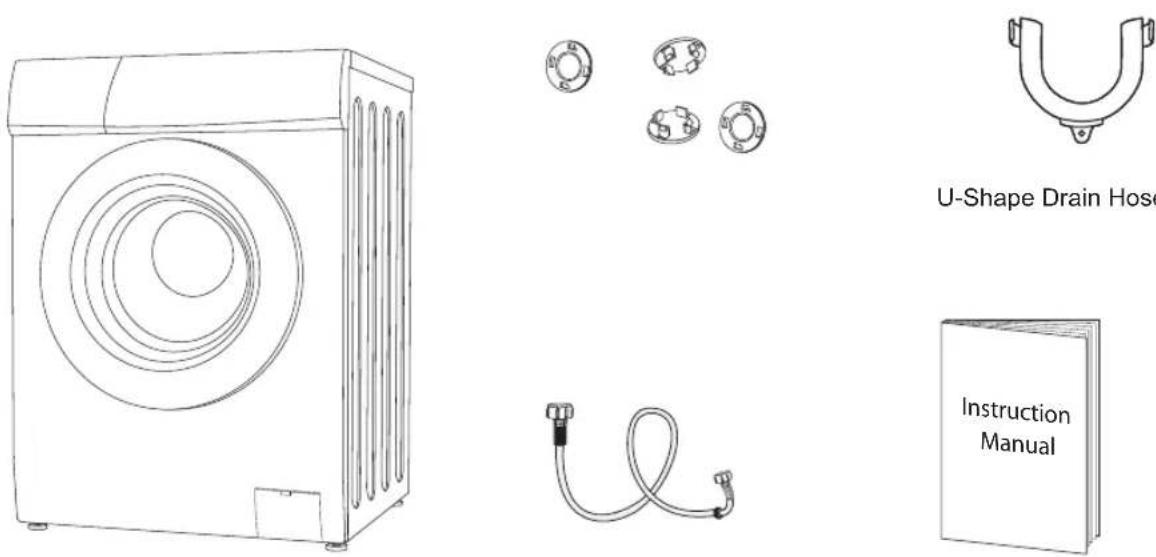
U-Shape Drain Hose HolderTransit Bolt C
The Main Unit Instruction Manual Water Supply Hose x 1
installing your washing machine
Please Read And Follow The Instructions Carefully.
- In addition to the instructions mentioned here, special regulations of the relevant water and power supply companies may apply. If in doubt, have the washing machine connected by a qualified technician.
- The washing machine is heavy - caution when lifting it. Do not lift by projecting components (e.g. washing machine door).
- Warning: Frozen hoses may tear/burst. Do not install washing machine in outdoor areas or where there is a risk of frost.
- Lay hoses and cables in such a way that there is no risk of tripping over them.

An additional space (approximately 120mm) is required at the rear of the washing machine. This is to allow enough space for the water hose and drain hose connections.
choosing the right location for your washing machine
- Make sure there's enough space for your washing machine.
• Install your washing machine on a flat, stable surface to avoid excessive vibrations and noise. - Don't install your washing machine in direct sunlight or in a place where temperatures can reach freezing.
x Sloping surface
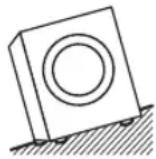
x Unstable x Bumpy
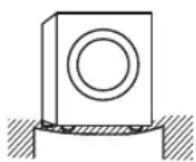
surface
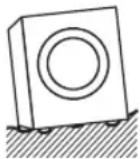

Two or more people are required to move the washing machine.
- The ventilation openings in the base of the washing machine must not be obstructed by carpet.
- Start by tilting the washing machine backwards.
- One person should stand behind it, holding the rear of the top panel. The other person should grip the bottom feet at the front.
- Check that you have all the required accessories for installation.
- We recommend that you entrust the installation of the washing machine to a qualified technician.
moving and installing
removing the transit bolts
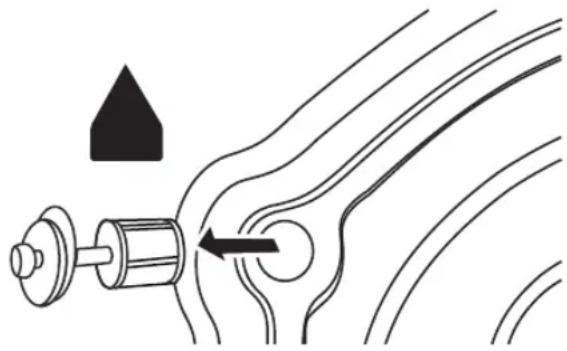
Four transit bolts keep the interior of the washing machine in place while it's being moved. They need to be removed before installation. Use a spanner (not supplied) and follow the instructions detailed below.

Don't run the washing machine without removing the transit bolts, as this can cause excessive vibrations and may damage your machine.
To remove the transit bolts:
- Use a spanner to loosen the four bolts. They are located at the rear of the washing machine.
- Pull the bolts out horizontally. Make sure the entire bolt is removed.
- Push the four cover caps (included with your accessories) into the respective bolt holes.
natural_image
Diagram of a mechanical component with directional arrows indicating motion or force (no text or symbols)
You'll need the transit bolts again if you move the washing machine, so make sure you keep them in a safe place.
moving the washing machine from one location to another
Before you move the washing machine:
- Shut off the tap and run the washing machine to drain the water. Drain any remaining water from the pump hose.
- Disconnect the mains cable.
- Attach the transit bolts.

Make sure to fix the transit bolts prior to moving the washing machine.
installation
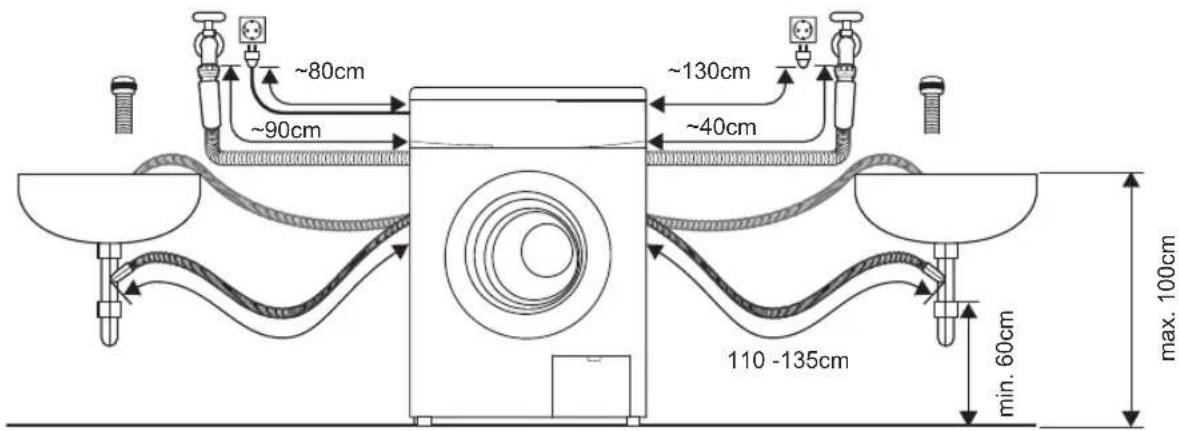
hose and cable lengths
How to connect from the left side How to connect from the right side
levelling the washing machine
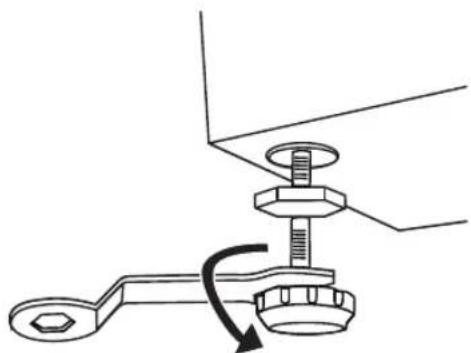
There are 4 levelling feet on the underside. They must be adjusted to make sure the washing machine is level.
- On each foot, loosen the lock ring by turning it clockwise.
- Adjust all four feet by rotating each upwards or downwards.
- Use a spirit level to ensure the washing machine is level.
- Tighten each lock ring by turning them anti-clockwise (towards the washing machine body).
Ensure all four lock rings are tightened securely. Check that the feet are still bolted to the washing machine - if they're unbolted, the washing machine will move around.
natural_image
Mechanical diagram showing a wrench connecting a nut to a bolt, with a curved arrow indicating rotation (no text or symbols present)water supply hose
Points to remember
- Follow the instructions in this section to avoid water leaks.
- Don't connect the hose to a combination tap.
- Don't twist, squash, modify or cut the hose.
- This machine is designed to connect to the cold water supply. Do not connect to the hot water supply.
- Use only the new water supply hose supplied. Old hose sets should not be reused.
connecting the water supply hose
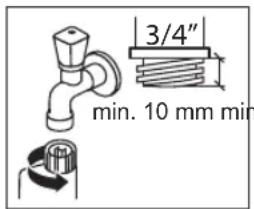
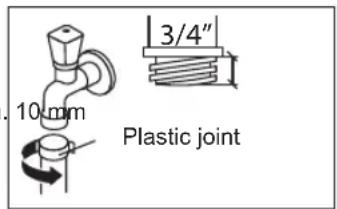
- To prevent leakage from the connection joints, ensure the rubber washer seals are fitted to each end of the water supply hose. Do not use without the seals in place.
- Fit the straight end of the water supply hose to the cold water tap.
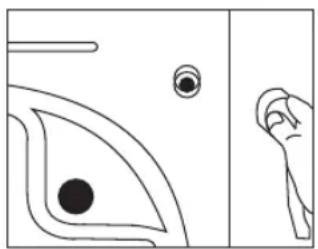
- Connect the angled end of the white headed hose to the water inlet valve on the machine. Hand tighten the plastic parts of the connections. If you are unsure, please call a qualified plumber for safer connections.
- Open the tap slowly and check that there are no leaks around the connection joints.
natural_image
Simple line drawing of a bird's head and neck with no text or symbolswater drain hose
Points to remember:
- Don't twist, pull out or bend the drain hose.
- Your washing machine should be no more than 85cm from the drain outlet.
- The water drain hose should be mounted at a height of minimum 60 cm, maximum 100 cm from the ground.
Draining to a sink or wash-basin
- Secure the drain hose in position, so it can't drop out of the basin.
- Don't block the basin's drain outlet, and make sure that the drainage through it is sufficient to prevent overflowing.
- Don't let the tip of the drain hose dip into the drained water, as this can cause the water to flow back into the washing machine.
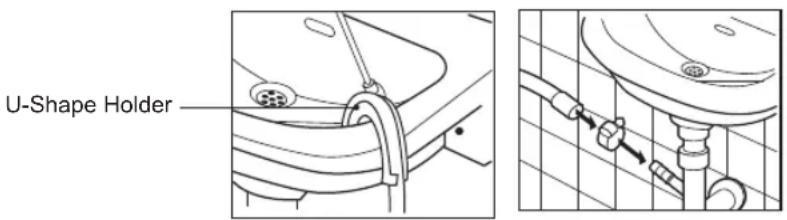
Draining to a wash-basin Draining to a drain hose

Before connecting to the waste pipe, make sure to check the waste pipe and remove any stopper or blockage inside, otherwise the unit may not be able to expel the waste water properly.
connecting to the mains supply
For your safety:
- Do not use a mains plug adapter or extension cable.
- If the mains cable or mains plug are damaged, stop using them and call a qualified technician for assistance.
- An earthed plug has been attached to the power cable of your washing machine. This plug must be inserted into an earthed socket capable of supplying 13 Amps. If you have no such sockets and fuses in your house, call a qualified electrician.
- The mains plug must remain accessible to allow disconnection or an all pole switch must be incorporated in the fixed wiring in accordance with the wiring rules.
Installation check list
By now, you should have installed the washing machine.
Let's go through the checklist to ensure that the installation has been done correctly!
| Questions Checkbox | ||
| Transit bolts - Have you removed them and attached the cover caps properly? | ||
| 4 levelling feet | Four Adjustable Feet - Are they bolted securely to the washing machine? | |
| Four Feet Cushions - Are they standing flat? | ||
| Power supply - Is the household dedicated mains socket rated for 220V - 240V AC and can supply 13 Amps? | ||
| Location - Is your washing machine on a flat, stable surface? | ||
| Water Supply Hose - Is it free from leaks and is the water supply normal? | ||
product overview
the unit
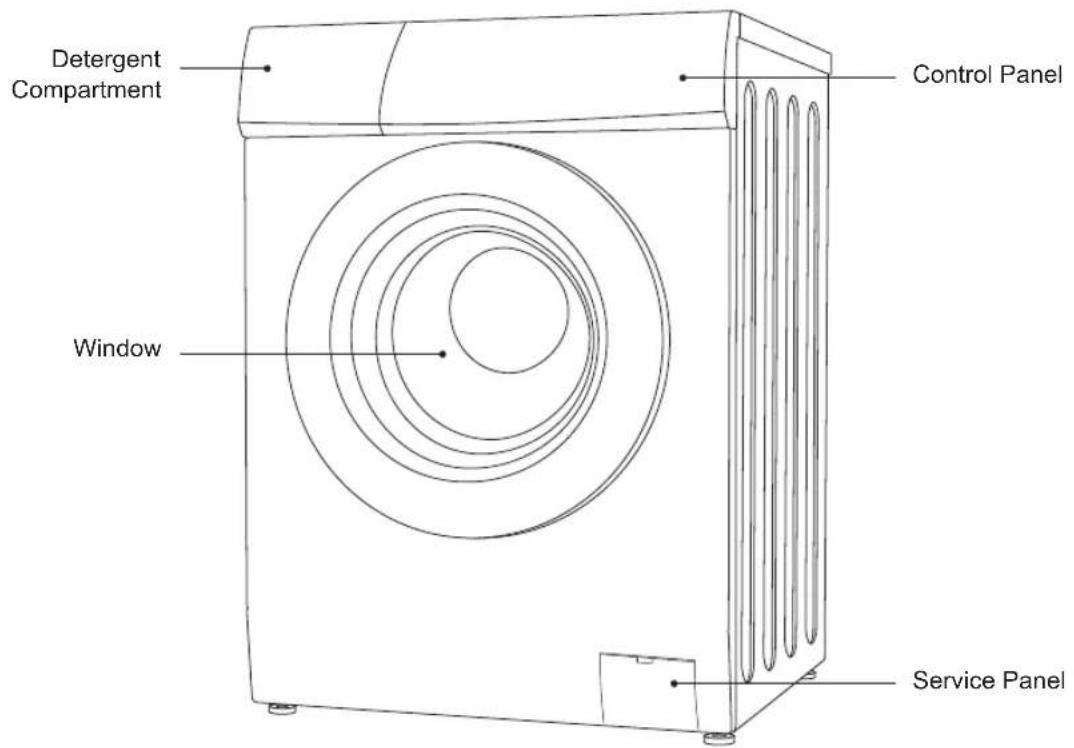
GB
the control panel (D714PWM19 / D814PWM19 / D914PWM19)
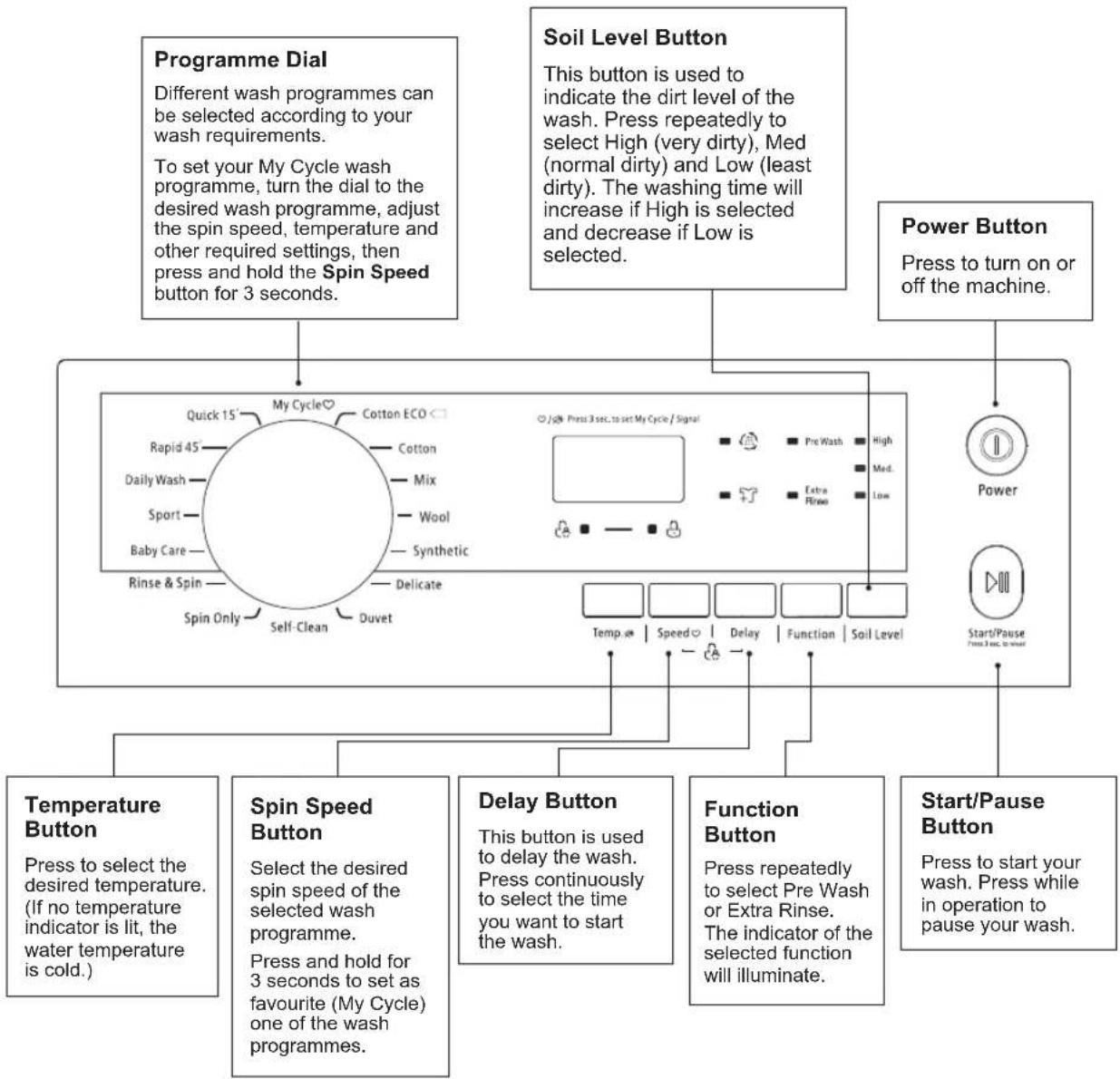
flowchart
graph TD
    A["Programme Dial"] --> B["Spin Speed button"]
    C["Soil Level Button"] --> D["Pre Wash"]
    C --> E["High"]
    C --> F["Med."]
    C --> G["Low"]
    H["Power Button"] --> I["Start/Pause Button"]
    J["Temperature Button"] --> K["Spin Speed Button"]
    L["Delay Button"] --> M["Function Button"]
    N["Start/Pause Button"] --> O["Action Button"]
    P["Programme Dial"] --> Q["Different wash programmes can be selected according to your wash requirements. To set your My Cycle wash programme, turn the dial to the desired wash programme, adjust the spin speed, temperature and other required settings, then press and hold the Spin Speed button for 3 seconds."]
    R["Soil Level Button"] --> S["This button is used to indicate the dirt level of the wash. Press repeatedly to select High (very dirty), Med (normal dirty) and Low (least dirty). The washing time will increase if High is selected and decrease if Low is selected."]
    T["Power Button"] --> U["Press to turn on or off the machine."]
    V["Temperature Button"] --> W["Press to select the desired temperature. (If no temperature indicator is lit, the water temperature is cold.)"]
    X["Delay Button"] --> Y["This button is used to delay the wash. Press continuously to select the time you want to start the wash."]
    Z["Function Button"] --> AA["Press repeatedly to select Pre Wash or Extra Rinse. The indicator of the selected function will illuminate."]
the control panel (D1014PWM19)

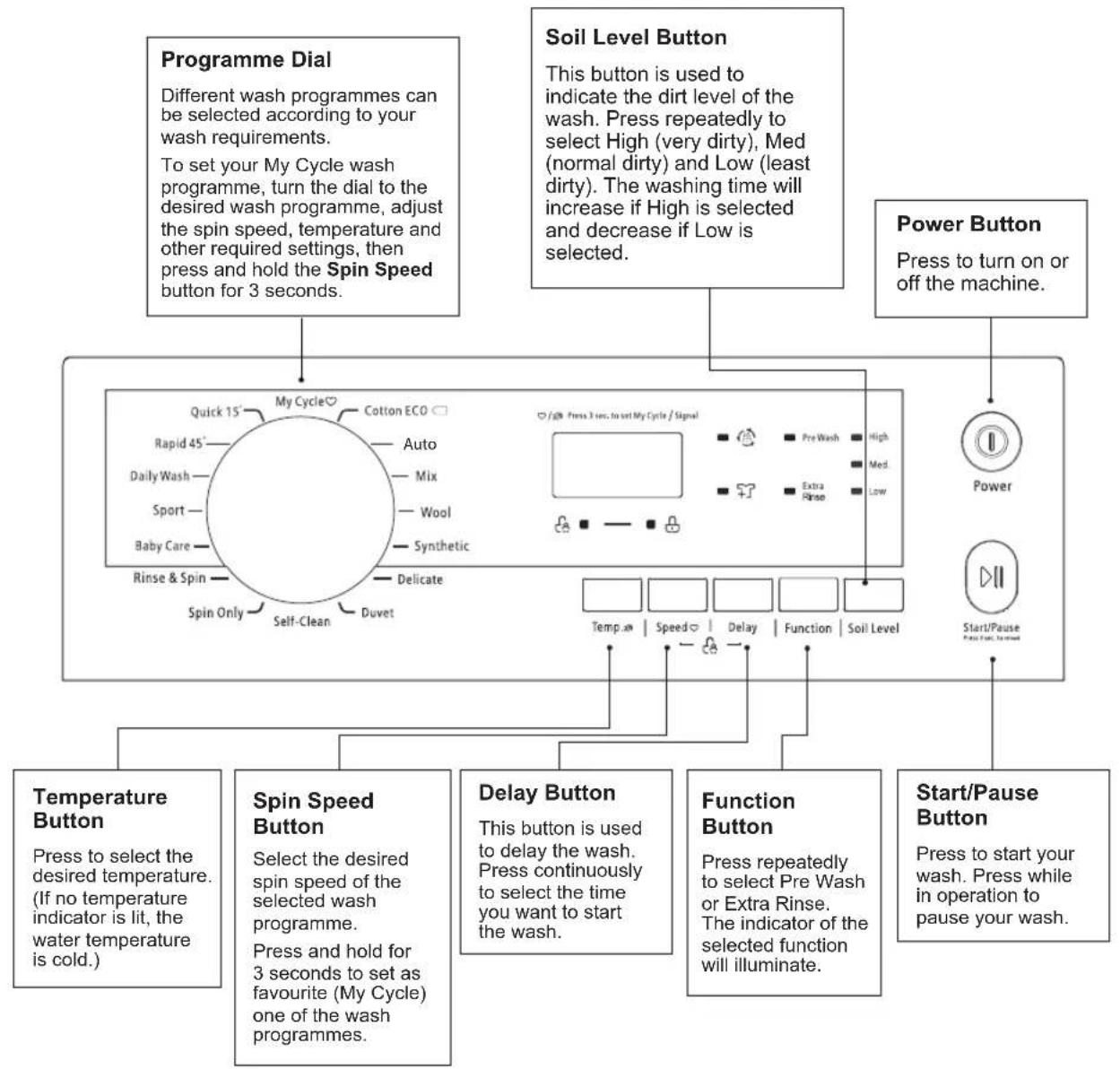
flowchart
graph TD
    A["Programme Dial"] --> B["Spin Speed button 3 seconds"]
    C["Soil Level Button"] --> D["Press 3 sec. to set My Cycle / Signal"]
    E["Power Button"] --> F["Press to turn on or off the machine"]
    G["Temperature Button"] --> H["Press to select the desired temperature. (If no temperature indicator is lit, the water temperature is cold.)"]
    I["Spin Speed Button"] --> J["Select the desired spin speed of the selected wash programme. Press and hold for 3 seconds to set as favourite (My Cycle) one of the wash programmes."]
    K["Delay Button"] --> L["This button is used to delay the wash. Press continuously to select the time you want to start the wash."]
    M["Function Button"] --> N["Press repeatedly to select Pre Wash or Extra Rinse. The indicator of the selected function will illuminate."]
    O["Start/Pause Button"] --> P["Press to start your wash. Press while in operation to pause your wash."]

- If you need to change a setting after the wash has started, turn the power OFF then ON again. Re-select the programme, spin speed and optional functions, and then press the Start / Pause button. (Ensure the Child Lock is off, otherwise the original programme will continue.)
- Water is poured into the washing machine to perform an inspection at the time of shipment from the factory, so there may be drops of water or condensation in the washing machine. This is not an indication of a malfunction.

- During initial start-up and use of the unit, there may be a slight smell while the motor is settling in. This is not a fault; this is normal operation.
- If the Easy Jet indicator lights up, it means water will spray on the machine window for 10 seconds before each wash cycle.
preparation
Read the following to understand how best to prepare your laundry for washing.
organising laundry
- Read the washing label on each garment to help you sort your washing into different loads.
- Sort the laundry by colour, type of fabric and by how soiled it is. This will help you choose the correct programme and temperature for each wash.
- Do not exceed the maximum load! See the programme selection table for the maximum load for the programme you require.
preparing laundry
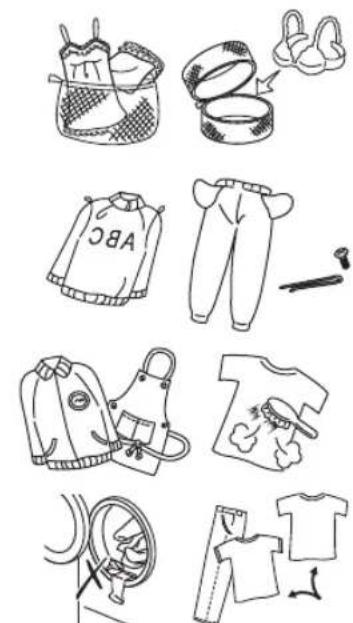
• Treat stains before washing.
- Some items should be put into a cleaning net before going into the washing machine, i.e. bras with metal wires, tights and lace clothing to prevent damage.
- Check that pockets do not contain any objects which may damage your clothes and the washing machine.
- Tie up any loose strings on laundry, close zippers and reverse clothing with zips inside out.
- To prevent any large, heavy objects (e.g., buckles, large buttons, etc.) from hitting the glass door, turn your clothing inside out, or remove the heavy objects. These could damage your laundry or the washing machine.
- Remove any surplus hair, animal fur, sand, and other materials with a brush before washing.
• If clothes have raised fabric turn them inside out.
• Clothes that are not colour fast should be washed separately.
- Insert your clothes into the washing machine. Close the washing machine door. Ensure that you do not trap any items of clothing between the loading door and the rubber seal.
natural_image
Illustration of various clothing and accessories including jackets, pants, t-shirts, and accessories (no text or symbols)adding detergent and softener
- Add detergent into the appropriate dispenser. It is recommended to use detergents produced for automatic washing machine. Follow the instructions or recommendations on the detergent packaging.
- Apply softener before you start washing.
- Apply detergent and softener according to the washing amount, the soiling level, the water hardness in your area and the manufacturer's instructions of these products.
- For standard washing, always put detergent in compartment II. If prewash is selected, also put some detergent in compartment I.
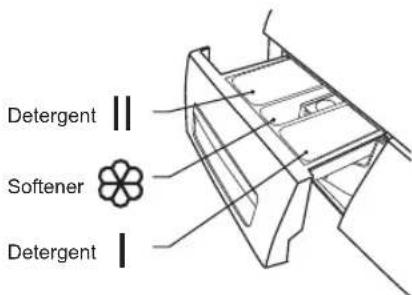
- Do not use the washing machine when the detergent drawer is removed. It may cause water leak or it may not work normally.
- If you forget to add detergent, you can drain the washing machine by running a drain only programme. Then you can add detergent and start the programme again. Detergent only reaches the drum when water flushes through the detergent drawer.
- To prevent powder detergent staying in the drawer, dry the inside of the drawer with a cloth. Make sure the powder isn't lumpy when you add it into the drawer.
- If the rinse cycle isn't removing all the detergent from your wash, use less detergent.
- Softener should not exceed the MAX level in the compartment.
- Wash out unused softener with a splash of water or a damp cloth after the programme has finished.
- You can use liquid detergents in all programmes.
GB

Dilute viscous fabric softener and fabric conditioner with water. Prevent blockage of the overflow.
before first use
Before washing your clothes for the first time, run a full wash programme first:
- Connect the machine to the mains power supply and the water supply.
- Put a small amount of detergent in the detergent drawer. Close the drawer.
- Press the Power button.
- Select a wash programme.
- Press the Start / Pause button.
wash setting
standard washing
-
Pull the door handle and put the laundry in the drum. (Refer to Preparation to sort your laundry before it goes into the drum.) Make sure no washing gets caught in the door.
-
Close the door and press the Power button.
-
Turn the Programme Selection Dial to select your wash programme.
-
Select the water temperature, spin speed and other functions if desired.
-
Press the Function button continuously to select other washing options. Other washing options are:
- prewash: to perform an extra wash before main wash
- extra rinse : to perform an extra rinse once
-
Press the Soil Level button repeatedly to select the dirt level of the wash.
-
Add detergent into the detergent drawer. The quantity of detergent will depend on the amount of laundry, the degree of soiling and the water hardness. Use the amount of detergent suggested on the packaging.
-
Press the Start / Pause button to start the washing.
-
The washing machine will sound when the programme is complete.

If the door is locked and you switched the washing machine off and then on - or if there's a power cut - it will stay locked for 1 minute.
removing washing (once programme is finished)

Door remains locked for 1 minute after wash stopped.
- Open the washing machine door and remove your washing.
- Remove any foreign objects to avoid risk of rusting.
- Leave the door and detergent drawer open so that residual water can evaporate.
adding laundry during wash
You can still add laundry into the unit while it is running a programme. Make sure to follow the procedures below in order to avoid being scalded by the hot water in the drum.
-
Press the Start/Pause button for 3 seconds.
-
Wait until the indicator is light up to signify you can add your laundry. For safety, you should still check if the drum has stopped rotating and if the door is unlocked.

The machine may not unlock the door for adding laundry when there is too much water or when the temperature is too high in the drum.
-
Open the door carefully, be alert of the hot water in the drum.
-
Add the laundry carefully into the drum and close the door.
-
Press the Start/Pause button to resume the programme.
selecting the programme (D714PWM19)
Here are the available programmes, additional functions and option settings.
Temperature can be selected separately for certain programmes.
| Load(kg) | Detergent Box | Default Temp.(°C) | Default Time (Min) | Default Speed (rpm) | |||
| Case I | Case II | Softener Case | |||||
| Cotton ECO 7.0 X | ● | O 30 58 | 800 | ||||
| Cotton 7.0 O | ● | O 40 16 | 60 1400 | ||||
| Mix 7.0 O | ● | O 40 73 | 1000 | ||||
| Wool 2.0 X | ● | O 40 66 | 400 | ||||
| Synthetic 3.5 O | ● | O 40 14 | 1200 | ||||
| Delicate 2.5 X | ● | O 30 60 | 600 | ||||
| Duvet 2.5 X | ● | O 40 80 | 800 | ||||
| Self-Clean - | X | X | X 90 | 81 400 | |||
| Spin Only | 7.0 | X | X | X | NA | 12 | 1000 |
| Rinse & Spin | 7.0 | X | X | O | NA | 31 | 1000 |
| Baby Care | 7.0 O | ● | O 30 80 | 1000 | |||
| Sport 3.5 O | ● | O 40 83 | 800 | ||||
| Daily Wash | 2.0 X | ● | O | Cold | 60 1000 | ||
| Rapid 45' | 2.0 X | ● | O | Cold | 45 800 | ||
| Quick 15' | 2.0 X | ● | O | Cold | 15 800 | ||
- Means must
O Means optional
X Means not necessary
The energy class is A+++
Energy test programme: Cotton ECO 60°C/40°C (under the highest speed; others as the default) Half load for 7.0kg machine: 3.5kg.
"Cotton ECO 60°/40°" are the standard washing programmes to which the information in the label and the fiche relates, and they are suitable to clean normally soiled cotton laundry and they are the most efficient programmes in terms of combined energy and water consumption for washing that type of cotton laundry, the actual water temperature may differ from the declared cycle temperature.
Note: The parameters in this table are only for user's reference. It is different from the normal time when using depending on the temperature and the load.

- Washing times depend on programme and temperature settings selected.
- Washing times may be longer if the laundry in the drum needs to be balanced. A single clothing or small load may result to the machine detecting it as an unbalanced load. Make sure to add more clothes in the small load or single clothing for the machine to wash and spin properly.
selecting the programme (D814PWM19)
Here are the available programmes, additional functions and option settings.
Temperature can be selected separately for certain programmes.
| Load(kg) | Detergent Box | Default Temp.(°C) | Default Time (Min) | Default Speed (rpm) | |||
| Case I | Case II | Softener Case | |||||
| Cotton ECO 8.0 | X | ● | O 30 58 | 800 | |||
| Cotton 8.0 O | ● | O 40 16 | 60 1400 | ||||
| Mix 8.0 O | ● | O 40 73 | 1000 | ||||
| Wool 2.0 X | ● | O 40 66 | 400 | ||||
| Synthetic 4.0 O | ● | O 40 14 | 1200 | ||||
| Delicate 2.5 X | ● | O 30 60 | 600 | ||||
| Duvet 2.5 X | ● | O 40 80 | 800 | ||||
| Self-Clean - | X | X | X 90 | 81 400 | |||
| Spin Only | 8.0 | X | X | X | NA | 12 | 1000 |
| Rinse & Spin | 8.0 | X | X | O | NA | 31 | 1000 |
| Baby Care | 8.0 O | ● | O 30 80 | 1000 | |||
| Sport 4.0 O | ● | O 40 83 | 800 | ||||
| Daily Wash | 2.0 X | ● | O | Cold | 60 1000 | ||
| Rapid 45' | 2.0 X | ● | O | Cold | 45 800 | ||
| Quick 15' | 2.0 X | ● | O | Cold | 15 800 | ||
- Means must
O Means optional
X Means not necessary
The energy class is A+++
Energy test programme: Cotton ECO 60°C/40°C (under the highest speed; others as the default)
Half load for 8.0kg machine: 4.0kg.
"Cotton ECO 60°/40°" are the standard washing programmes to which the information in the label and the fiche relates, and they are suitable to clean normally soiled cotton laundry and they are the most efficient programmes in terms of combined energy and water consumption for washing that type of cotton laundry, the actual water temperature may differ from the declared cycle temperature.
Note: The parameters in this table are only for user's reference. It is different from the normal time when using depending on the temperature and the load.

- Washing times depend on programme and temperature settings selected.
- Washing times may be longer if the laundry in the drum needs to be balanced. A single clothing or small load may result to the machine detecting it as an unbalanced load. Make sure to add more clothes in the small load or single clothing for the machine to wash and spin properly.
selecting the programme (D914PWM19)
Here are the available programmes, additional functions and option settings.
Temperature can be selected separately for certain programmes.
| Load(kg) | Detergent Box | Default Temp.(°C) | Default Time (Min) | Default Speed (rpm) | |||
| Case I | Case II | Softener Case | |||||
| Cotton ECO 9.0 X | ● | O 30 58 | 800 | ||||
| Cotton 9.0 O | ● | O 40 16 | 60 1400 | ||||
| Mix 9.0 O | ● | O 40 73 | 1000 | ||||
| Wool 2.0 X | ● | O 40 66 | 400 | ||||
| Synthetic 4.5 O | ● | O 40 14 | 1200 | ||||
| Delicate 2.5 X | ● | O 30 60 | 600 | ||||
| Duvet 2.5 X | ● | O 40 80 | 800 | ||||
| Self-Clean - | X | X | X 90 | 81 400 | |||
| Spin Only | 9.0 | X | X | X | NA | 12 | 1000 |
| Rinse & Spin | 9.0 | X | X | O | NA | 31 | 1000 |
| Baby Care | 9.0 O | ● | O 30 80 | 1000 | |||
| Sport 4.5 O | ● | O 40 83 | 800 | ||||
| Daily Wash | 2.0 X | ● | O | Cold | 60 1000 | ||
| Rapid 45' | 2.0 X | ● | O | Cold | 45 800 | ||
| Quick 15' | 2.0 X | ● | O | Cold | 15 800 | ||
- Means must
O Means optional
X Means not necessary
The energy class is A+++
Energy test programme: Cotton ECO 60°C/40°C (under the highest speed; others as the default) Half load for 9.0kg machine: 4.5kg.
"Cotton ECO 60°/40°" are the standard washing programmes to which the information in the label and the fiche relates, and they are suitable to clean normally soiled cotton laundry and they are the most efficient programmes in terms of combined energy and water consumption for washing that type of cotton laundry, the actual water temperature may differ from the declared cycle temperature.
Note: The parameters in this table are only for user's reference. It is different from the normal time when using depending on the temperature and the load.

- Washing times depend on programme and temperature settings selected.
- Washing times may be longer if the laundry in the drum needs to be balanced. A single clothing or small load may result to the machine detecting it as an unbalanced load. Make sure to add more clothes in the small load or single clothing for the machine to wash and spin properly.
selecting the programme (D1014PWM19)
Here are the available programmes, additional functions and option settings.
Temperature can be selected separately for certain programmes.
| Load(kg) | Detergent Box | Default Temp.(°C) | Default Time (Min) | Default Speed (rpm) | |||
| Case I | Case II | Softener Case | |||||
| Cotton ECO 10.0 X | ● | O 30 58 | 800 | ||||
| * Auto 10.0 O | ● | O ** 14 | 400 | ||||
| Mix 10.0 O | ● | O 40 73 | 1000 | ||||
| Wool 2.0 X | ● | O 40 66 | 400 | ||||
| Synthetic | 5.0 | O | ● | O 40 140 | 1200 | ||
| Delicate | 3.0 X | ● | O 30 60 | 600 | |||
| Duvet 2.5 X | ● | O 40 80 | 800 | ||||
| Self-Clean | - | X | X | X | 90 | 81 | 400 |
| Spin Only | 10.0 | X | X | X | NA | 12 | 1000 |
| Rinse & Spin | 10.0 | X | X | O | NA | 31 | 1000 |
| Baby Care | 10.0 O | ● | O 30 80 | 1000 | |||
| Sport 5.0 | O | ● | O 40 83 | 800 | |||
| Daily Wash | 2.0 X | ● | O Cold | 60 1000 | |||
| Rapid 45' | 2.0 X | ● | O Cold | 45 800 | |||
| Quick 15' | 2.0 X | ● | O Cold | 15 800 | |||
- Means must
O Means optional
X Means not necessary
The energy class is A+++
Energy test programme: Cotton ECO 60°C/40°C (under the highest speed; others as the default) Half load for 10.0kg machine: 5.0kg.
"Cotton ECO 60°/40°" are the standard washing programmes to which the information in the label and the fiche relates, and they are suitable to clean normally soiled cotton laundry and they are the most efficient programmes in terms of combined energy and water consumption for washing that type of cotton laundry, the actual water temperature may differ from the declared cycle temperature.
Note: The parameters in this table are only for user's reference. It is different from the normal time when using depending on the temperature and the load.
* (Only for D1014PWM19) When using Auto programme, the washing time will automatically adjust according to the weight of the load. The heavier the load, the longer the washing time, and vice versa.

- Washing times depend on programme and temperature settings selected.
- Washing times may be longer if the laundry in the drum needs to be balanced. A single clothing or small load may result to the machine detecting it as an unbalanced load. Make sure to add more clothes in the small load or single clothing for the machine to wash and spin properly.
| Delay Extra Rinse Prewash | ||
| Cotton ECO O X X | ||
| Cotton / Auto (only for D1014PWM19) | O O O | |
| Mix O O O | ||
| Wool O O X | ||
| Synthetic O O O | ||
| Delicate | O O X | |
| Duvet | O O X | |
| Self-Clean | O X X | |
| Spin Only | O X X | |
| Rinse & Spin | O X X | |
| Baby Care | O X O | |
| Sport | O O O | |
| Daily Wash | O O X | |
| Rapid 45' | O X X | |
| Quick 15' | O X X |
O Means optional
X Means not applicable
muting & turning on the sound
- The machine will beep when buttons are pressed.
- To mute the sound, press "Temp" for 3 seconds after starting the wash programme.
• To turn on the sound, press "Temp" again for 3 seconds.

The setting will be kept until the next programme.
delay start the programme
- Select a wash programme.
- Press the Delay button repeatedly to set the delay hours for the programme to start (0-24 hr).
- Press the Start/Pause button to confirm and commence the delay function.
To cancel the delay function:
• before the programme starts, press the Delay button repeatedly until 0 hr
• while the programme is running, press the Power button to Off.
important information
washing delicates (wool and silk programmes)
These programmes rock the drum gently for best results on delicate laundry.
- Silk laundry loads: 2kg or less
- Tips for Wool programme:
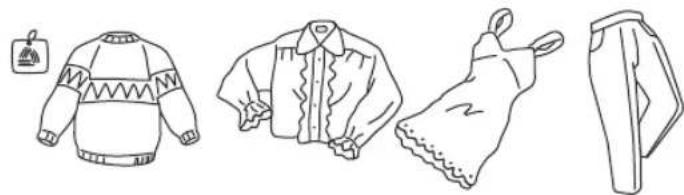
Approximate Weights:
- Wool sweater (400g)
- Silk blouse / under garment (200g)
- Trousers (400g)
natural_image
Line drawings of four different clothing items: sweater, jacket, dress, and trousers (no text or symbols)adding delicate laundry items to the drum
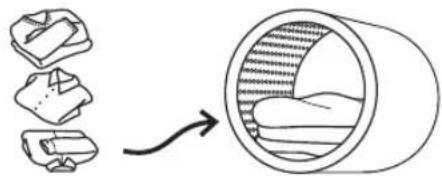
- Close zips and buttons.
- Add items one by one on top of each other.
- Don't overload the drum as it may cause excessive vibrations or damage the washing machine.
natural_image
Diagram showing a mechanical assembly transforming into a cylindrical component with internal layers (no text or symbols)which detergent to use
- For woolen items, use a mild liquid detergent. Other detergents may damage your woolen clothes.
- With wool or silk, you may need to use an extra rinse cycle to remove excess detergent from your clothes. This depends on the amount of detergent you use, and the amount of foam that develops in the main wash cycle.
how to set the child lock
The Child Lock prevents children from accidentally changing a wash programme.
- Switch on the washing machine.
- When the washing machine is operating, press and hold the Speed and Delay buttons at the same time for 3 seconds to set the child lock. The Child Lock icon will light to indicate that the child lock is active.
- If a function button is pressed while the child lock is active, the machine will beep to indicate that the child lock is active.
- To deactivate the child lock, press and hold the Speed and Delay buttons until the Child Lock icon disappears.

Your machine will deactivate the function buttons except the Power button when the child lock is activated.
maintenance - cleaning the washing machine

Always unplug the washing machine before cleaning.
cleaning the drum
Any rust left inside the drum by metal articles must be removed immediately with chlorine-free detergent. Never use steel wool.
This machine has a self-clean programme. You can put in the drum a proper amount of chlorine-free detergent for better cleaning result. When self-clean programme is running, washing of clothes is not allowed.

To prevent build-up of detergent residue, it is recommended to wash the appliance without any load or detergent once a month.
cleaning the exterior of your washing machine
- Clean the outside of your washing machine with a soft cloth and mild detergent such as kitchen detergent.
- Don't splash water over the washing machine.
- Do not use cream cleansers, thinners or products containing alcohol or kerosene.
cleaning the detergent drawer
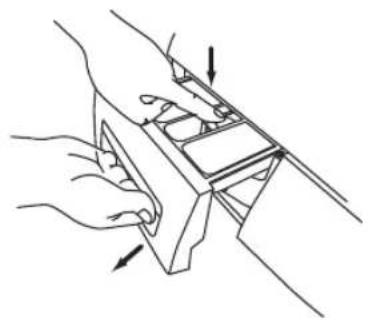
- Remove the detergent drawer by pulling and pressing gently on the rear centre part of the softener compartment.
- Wash out old detergent from the drawer with water. (Use a cloth to clean the washing machine.) Residue detergent soon builds up if you don't clean the drawer regularly, and can develop mould.
- Return drawer to original position.
natural_image
Line drawing of hands holding a small electronic device with arrows indicating motion (no text or symbols)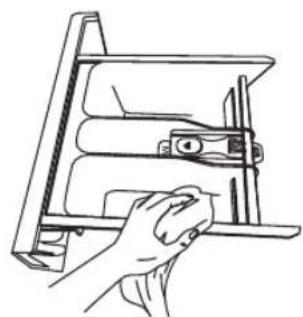
natural_image
Line drawing of a hand holding a small object through a mechanical device (no text or symbols)siphon plug
Pull out the detergent drawer. Remove the siphon plug and clean any residual softener thoroughly. Fit the cleaned siphon plug in its location. Check if it is fitted properly.
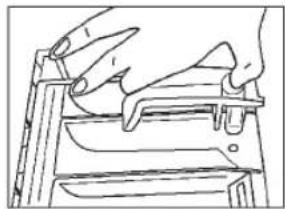
natural_image
Line drawing of a hand using a tool to lift a piece of wood (no text or symbols)cleaning the door seal and window
- Wipe the window and seal after each wash to remove lint and stains. If lint builds up, it can cause leaks.
- Remove any coins, buttons and other objects from the door seal after each wash.

Be careful not to burn yourself while cleaning the drain filter. Water draining from the filter compartment may be hot after a high temperature wash.
Before cleaning the drain filter, switch off and unplug the washing machine.
- Open the service panel by prying open with a flatbladed screwdriver. Place a suitable container under the service panel to catch the water.
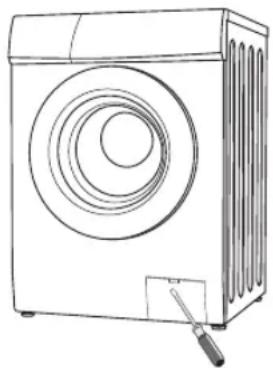
natural_image
Line drawing of a washing machine with a circular vent and side-mounted power outlet (no text or symbols)GB
- Carefully loosen the drain filter. Water may drain out - this is normal.
- Unscrew the filter to remove it.
- Remove any lint and debris before carefully replacing the filter.
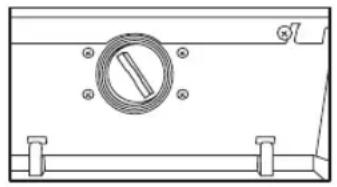
natural_image
Technical line drawing of a mechanical component with mounting holes and a circular feature (no text or symbols)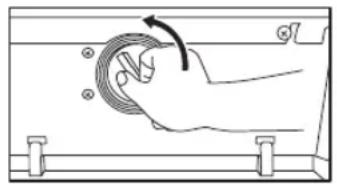
natural_image
Diagram of a hand pressing down on a curved object with a rotation arrow (no text or symbols)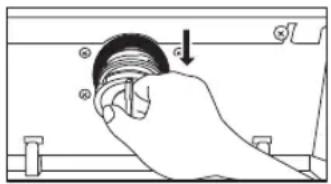
natural_image
Hand holding a circular component with a downward arrow, no visible text or symbols- Turn the filter clockwise to screw back into place. Close the service panel.
preventing a frozen water supply hose
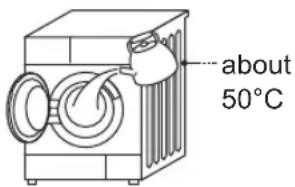
If your washing machine is delivered in freezing weather conditions, leave it at room temperature for 24 hours after you've set it up before using it. This ensures there's no ice blocking the water supply hose. If your water supply hose freezes, add 2 or 3 litres of warm water to the drum. Then run a "Drain" only programme.
cleaning the filter net of the water supply hose
- Turn the water supply off at the tap.
- Close the washing machine door and select "Drain" programme and press the Start / Pause button.
- When finished, turn the power off. Remove the water supply hose from the tap.
- Manually remove the filter net located on the tap side of the water supply hose and clean using a small brush (e.g. a toothbrush).
- Return the filter net to its original position.
- Re-connect the water supply hose to the tap and turn the tap back on, checking for leaks.
hints and tips
| Issues Solutions | |
| Buttons don't work. • Child lock is activated. Deactivate the child lock function.• The washing machine is operating a wash programme.• The Programme Dial was turned to a different programme. | |
| Door doesn't open. • Door lock may be active.• The water temperature or level could be too high. | |
| If you start a wrong programme accidentally. | If you need to change a setting after the wash has started, turn the power OFF then ON again. Re-select the programme, spin speed and optional functions, and then press the Start/Pause button.(Note: We suggest that you do not change the programme after the machine has been running for 3 minutes.) |
| Unusual odour. • Rubber parts and the motors may give off a smell when you first start using the washing machine, but this goes away over time.• You should wash the drum once a month. | |
| You can't see any water. This is normal: The water level is below the window. | |
| There's no water going into the washing machine. | • The water tap might be turned off.• The water hose or water-supply hose may be frozen.• Your water supply may be disrupted.• The water-supply valve filter may be clogged. |
| There's only a small amount of water. | • If you have paused the programme and you restart, the washing machine may drain some water.• Don't pour water in through the door. |
| Water adds up during washing. | This is normal: water is supplied automatically as the level lowers, and with heavy loads the water may fill up repeatedly. |
| The washing machine does not spin. | If a small load is in the washing machine, it may be detected as an unbalanced load and may stop spinning after a number of attempts. Make sure to add more clothes for the machine to spin properly. |
| There's no water going into the washing machine during rinse operation. | Before rinsing, the washing machine spins to drain water remaining from the wash. The water will fill up after that. |
| During the spin-dry, the drum stops and rotates several times. | This is normal. The washing machine has detected an unbalanced load and is trying to correct it. Make sure to add more clothes for the machine to spin properly. |
| Foam and water remain in the door or door seal. | Although foam and water may remain, it does not have any influence on the performance of a rinse. |
| Spin starting is repeated. This is normal. Although spin starting may be repeated, it is a function made to spin quietly. | |
| There's not much foam. • This can happen if you've put powder detergent directly into the drum – you must put it in the detergent drawer.The amount of foam can vary, depending on the temperature, level and softness of your water.You may not be using enough detergent.You may be using a reduced-foam type of detergent.Heavily soiled laundry can reduce the amount of foam.Larger loads of laundry can also reduce the amount of foam. | |
| There's a lot of foam. • The amount of foam can vary depending on the temperature, level and softness of your water.You may have used too much detergent.The type of detergent you use could cause excessive foam. | |
| Fabric softener overflows. • You may have exceeded the MAX level in the softener drawer.You may have spilt the liquid by closing the softener drawer too sharply. | |
| There's a residue of powder detergent at the end of the wash. | This can happen if you've put powder detergent directly into the drum – you must put it in the detergent drawer. |
| There's an unusual noise or vibration. | Check that there's no metal in the drum.Make sure the transit bolts used in transportation have been removed.Check that the washing machine feet have been levelled correctly.Check the washing machine is on a flat, stable surface. |
| There's a noise when the water drains away. | This is normal, it's the pump starting and stopping. |
| The electricity supply cuts out while the washing machine's on. | The washing machine will stop (do not open the door if the machine is full of water). When the power comes back on, the washing machine will continue the programme. |
| The water supply is disrupted. | When the water comes back on, it may be impure at first.You'll need to disconnect the water-supply hose and drain any impure water through the tap before using your washing machine again. Remember to re-connect the water supply hose first. |
| Excessive foam in the detergent drawer. | Press the Start/Pause button. Change the programme to the Rinse selection to manually rinse and drain the drum. Use the correct amount of detergent next time. |
questions and answers
GB
| Issues Reasons Solutions | ||
| Washing machine cannot start up | ·Check if the door is closed tightly.·Check if power plug is inserted well.·Check if water supply tap is opened.·Check if Start/Pause button is pressed.·Check if Power button is pressed. | |
| Door cannot be opened | ·Machine's safety protection design working. | ·Disconnect the power. |
| Heating fault | ·NTC is damaged and heating pipe is aging. | ·Can normally wash the clothes.·Only cannot wash with heating.·Contact the service centre promptly. |
| Water leakage | ·The connection between inlet pipe or outlet hose and tap or washing machine is not tight.·Drain pipe in the room is blocked. | ·Check and fasten water pipes.·Clean up outlet hose and ask a specialized person to repair it when necessary. |
| Water is overflowed from the bottom of the machine | ·The inlet pipe is not connected firmly.·Outlet hose has water leakage. | ·Fix the inlet pipe.·Replace the drain hose. |
| Indicator or display does not light | ·Power is disconnected.·PC board has problems.·Harness has connection problem. | ·Check if the power is shut down and power plug is connected correctly.·If not, please call up service line. |
| Detergent residues in the box | ·Washing powder is dampened and agglomerated. | ·Clean and wipe the box.·Use liquid detergents or change detergent. |
| Washing effects are not good | ·The clothes are too dirty.·Insufficient detergent quantity. | ·Select a proper procedure.·Add the proper detergent quantity according to the instructions in detergent package. |
| Abnormal noise Great vibration | ·Check if the fixing (bolts) have been removed.·Check if it is installed on solid and level floor.·Check if there are any metal articles inside.·Check if the legs in the washing machine are adjusted level. | |
error codes
| Display LED | Reason Solutions | |
| E10 | Inlet water problem while washing | ·Open the water tap, to check if the inlet hose is squashed or kinked, check if the filter in the inlet valve is blocked or not; check if the water pressure is too low. |
| E21 | Drain water problem while washing | ·Check if the drain pump is blocked. |
| E30 | Door lock problem | ·Check if the door of the washing machine is closed.·Check if the clothes are pinned by the door. |
| Others · Please call up the service line if there is any other problem. | ||
GB
specifications (D714PWM19)
| rated voltage and frequency 220 - 240V ~ 50 Hz | |
| rated power input 2000 W | |
| inlet water pressure 0.05 MPa - 1.00 MPa | |
| degree of protection against ingress of water | IPX4 |
| dimension 845mm (H) x 595mm (W) x 570mm (D) | |
Features and specifications are subject to change without prior notice.
specifications (D814PWM19)
| rated voltage and frequency 220 - 240V ~ 50 Hz | |
| rated power input 2000 W | |
| inlet water pressure 0.05 MPa - 1.00 MPa | |
| degree of protection against ingress of water | IPX4 |
| dimension 845mm (H) x 595mm (W) x 640mm (D) | |
Features and specifications are subject to change without prior notice.
specifications (D914PWM19)
| rated voltage and frequency 220 - 240V ~ 50 Hz | |
| rated power input 2000 W | |
| inlet water pressure 0.05 MPa - 1.00 MPa | |
| degree of protection against ingress of water | IPX4 |
| dimension 845mm (H) x 595mm (W) x 640mm (D) | |
Features and specifications are subject to change without prior notice.
GB
specifications (D1014PWM19)
| rated voltage and frequency 220 - 240V ~ 50 Hz | |
| rated power input 1950 W | |
| inlet water pressure 0.05 MPa - 1.00 MPa | |
| degree of protection against ingress of water | IPX4 |
| dimension 845mm (H) x 595mm (W) x 640mm (D) | |
Features and specifications are subject to change without prior notice.
product fiche (D714PWM19)
Brand: DēLonghi
Model: D714PWM19
Rated capacity: 7 kg
Energy efficiency class: A+++
EU Ecolabel: N/A
Energy consumption 174 kWh per year, based on 220 standard washing cycles for cotton programmes set at 60°C and 40°C at full and partial load, and the consumption of the low-power modes. Actual energy consumption will depend on how the appliance is used.
Energy consumption of the Standard Cotton 60° C programme at full load: 0.90 kWh Energy consumption of the Standard Cotton 60° C programme at partial load: 0.72 kWh Energy consumption of the Standard Cotton 40° C programme at partial load: 0.62 kWh
Off mode power consumption: 0.5 W
Left-on mode power consumption: 1.0 W
Water consumption is 10120 litres per year, based on 220 standard washing cycles for cotton programmes at 60°C and 40°C at full and partial load. Actual water consumption will depend on how the appliance is used.
Water consumption of the Standard Cotton 60° C programme at full load: 50 litres Water consumption of the Standard Cotton 60° C programme at partial load: 42 litres Water consumption of the Standard Cotton 40° C programme at partial load: 42 litres
Spin-drying efficiency class B on a scale from G (least efficient) to A (most efficient); this may be expressed by other means provided it is clear that the scale is from G (least efficient) to A (most efficient).
Maximum spin speed: 1400 rpm
Remaining moisture content of the Standard Cotton 60° C programme at full load: 50% Remaining moisture content of the Standard Cotton 60° C programme at partial load: 55% Remaining moisture content of the Standard Cotton 40° C programme at partial load: 55%
The ‘standard 60°C cotton programme’ and the ‘standard 40°C cotton programme’ are the standard washing programmes to which the information in the label and the fiche relates, that these programmes are suitable to clean normally soiled cotton laundry and that they are the most efficient programmes in terms of combined energy and water consumption.
Programme time of the Standard Cotton 60°C programme at full load: 226 minutes Programme time of the Standard Cotton 60°C programme at partial load: 226 minutes Programme time of the Standard Cotton 40°C programme at partial load: 208 minutes
Duration of the left-on mode: 1 minute
Airborne acoustical noise emissions (washing): 59 dB(A) re 1 pW Airborne acoustical noise emissions (spinning): 78 dB(A) re 1 pW
Mounting: Freestanding
product fiche (D814PWM19)
Brand: DēLonghi
Model: D814PWM19
Rated capacity: 8 kg
Energy efficiency class: A+++
EU Ecolabel: N/A
Energy consumption 196 kWh per year, based on 220 standard washing cycles for cotton programmes set at 60^ C and 40^ C at full and partial load, and the consumption of the low-power modes. Actual energy consumption will depend on how the appliance is used.
Energy consumption of the Standard Cotton 60° C programme at full load: 0.90 kWh
Energy consumption of the Standard Cotton 60° C programme at partial load: 0.88 kWh
Energy consumption of the Standard Cotton 40° C programme at partial load: 0.81 kWh
Off mode power consumption: 0.5 W
Left-on mode power consumption: 1.0 W
Water consumption is 11000 litres per year, based on 220 standard washing cycles for cotton programmes at 60°C and 40°C at full and partial load. Actual water consumption will depend on how the appliance is used.
Water consumption of the Standard Cotton 60° C programme at full load: 50 litres
Water consumption of the Standard Cotton 60° C programme at partial load: 47 litres
Water consumption of the Standard Cotton 40°C programme at partial load: 47 litres
Spin-drying efficiency class B on a scale from G (least efficient) to A (most efficient); this may be expressed by other means provided it is clear that the scale is from G (least efficient) to A (most efficient).
Maximum spin speed: 1400 rpm
Remaining moisture content of the Standard Cotton 60°C programme at full load: 50%
Remaining moisture content of the Standard Cotton 60° C programme at partial load: 55%
Remaining moisture content of the Standard Cotton 40° C programme at partial load: 55%
The ‘standard 60°C cotton programme’ and the ‘standard 40°C cotton programme’ are the standard washing programmes to which the information in the label and the fiche relates, that these programmes are suitable to clean normally soiled cotton laundry and that they are the most efficient programmes in terms of combined energy and water consumption.
Programme time of the Standard Cotton 60° C programme at full load: 224 minutes
Programme time of the Standard Cotton 60° C programme at partial load: 224 minutes
Programme time of the Standard Cotton 40° C programme at partial load: 213 minutes
Duration of the left-on mode: 1 minute
Airborne acoustical noise emissions (washing): 59 dB(A) re 1 pW
Airborne acoustical noise emissions (spinning): 78 dB(A) re 1 pW
Mounting: Freestanding
product fiche (D914PWM19)
Brand: DēLonghi
Model: D914PWM19
Rated capacity: 9 kg
Energy efficiency class: A+++
EU Ecolabel: N/A
Energy consumption 196 kWh per year, based on 220 standard washing cycles for cotton programmes set at 60^ C and 40^ C at full and partial load, and the consumption of the low-power modes. Actual energy consumption will depend on how the appliance is used.
Energy consumption of the Standard Cotton 60° C programme at full load: 0.91 kWh Energy consumption of the Standard Cotton 60° C programme at partial load: 0.91 kWh Energy consumption of the Standard Cotton 40° C programme at partial load: 0.77 kWh
Off mode power consumption: 0.5 W
Left-on mode power consumption: 1.0 W
Water consumption is 11880 litres per year, based on 220 standard washing cycles for cotton programmes at 60°C and 40°C at full and partial load. Actual water consumption will depend on how the appliance is used.
Water consumption of the Standard Cotton 60° C programme at full load: 57 litres Water consumption of the Standard Cotton 60° C programme at partial load: 51 litres Water consumption of the Standard Cotton 40° C programme at partial load: 51 litres
Spin-drying efficiency class B on a scale from G (least efficient) to A (most efficient); this may be expressed by other means provided it is clear that the scale is from G (least efficient) to A (most efficient).
Maximum spin speed: 1400 rpm
Remaining moisture content of the Standard Cotton 60° C programme at full load: 50% Remaining moisture content of the Standard Cotton 60° C programme at partial load: 55% Remaining moisture content of the Standard Cotton 40° C programme at partial load: 55%
The ‘standard 60°C cotton programme’ and the ‘standard 40°C cotton programme’ are the standard washing programmes to which the information in the label and the fiche relates, that these programmes are suitable to clean normally soiled cotton laundry and that they are the most efficient programmes in terms of combined energy and water consumption.
Programme time of the Standard Cotton 60°C programme at full load: 240 minutes Programme time of the Standard Cotton 60°C programme at partial load: 240 minutes Programme time of the Standard Cotton 40°C programme at partial load: 218 minutes
Duration of the left-on mode: 1 minute
Airborne acoustical noise emissions (washing): 54 dB(A) re 1 pW Airborne acoustical noise emissions (spinning): 77 dB(A) re 1 pW
Mounting: Freestanding
product fiche (D1014PWM19)
Brand: DēLonghi
Model: D1014PWM19
Rated capacity: 10 kg
Energy efficiency class: A+++
EU Ecolabel: N/A
Energy consumption 167 kWh per year, based on 220 standard washing cycles for cotton programmes set at 60^ C and 40^ C at full and partial load, and the consumption of the low-power modes. Actual energy consumption will depend on how the appliance is used.
Energy consumption of the Standard Cotton 60° C programme at full load: 0.78 kWh
Energy consumption of the Standard Cotton 60° C programme at partial load: 0.77 kWh
Energy consumption of the Standard Cotton 40° C programme at partial load: 0.65 kWh
Off mode power consumption: 0.5 W
Left-on mode power consumption: 1.0 W
Water consumption is 12100 litres per year, based on 220 standard washing cycles for cotton programmes at 60°C and 40°C at full and partial load. Actual water consumption will depend on how the appliance is used.
Water consumption of the Standard Cotton 60° C programme at full load: 59 litres
Water consumption of the Standard Cotton 60° C programme at partial load: 52 litres
Water consumption of the Standard Cotton 40°C programme at partial load: 52 litres
Spin-drying efficiency class B on a scale from G (least efficient) to A (most efficient); this may be expressed by other means provided it is clear that the scale is from G (least efficient) to A (most efficient).
Maximum spin speed: 1400 rpm
Remaining moisture content of the Standard Cotton 60°C programme at full load: 50%
Remaining moisture content of the Standard Cotton 60° C programme at partial load: 55%
Remaining moisture content of the Standard Cotton 40° C programme at partial load: 55%
The ‘standard 60°C cotton programme’ and the ‘standard 40°C cotton programme’ are the standard washing programmes to which the information in the label and the fiche relates, that these programmes are suitable to clean normally soiled cotton laundry and that they are the most efficient programmes in terms of combined energy and water consumption.
Programme time of the Standard Cotton 60° C programme at full load: 240 minutes
Programme time of the Standard Cotton 60° C programme at partial load: 240 minutes
Programme time of the Standard Cotton 40° C programme at partial load: 218 minutes
Duration of the left-on mode: 1 minute
Airborne acoustical noise emissions (washing): 54 dB(A) re 1 pW
Airborne acoustical noise emissions (spinning): 77 dB(A) re 1 pW
Mounting: Freestanding
natural_image
Line drawing of a washing machine with circular vent and side grilles (no text or symbols)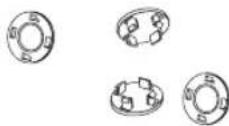
natural_image
Diagram of a mechanical or fluidic device with directional arrows indicating flow or movement (no text or symbols)
natural_image
Mechanical diagram showing a wrench and nut assembly with a curved arrow indicating rotation (no text or symbols)natural_image
Simple line drawing of a human eye and hand (no text or symbols)natural_image
Line drawing of a car interior showing a handle and seat (no text or symbols)natural_image
Pure diagram of a pipe connection with no text, numbers, or symbolsnatural_image
Line drawings of various clothing and accessories including a bag, patterned cloth, jeans, t-shirts, and accessories (no text or symbols)natural_image
Line drawings of four different clothing items: sweater, jacket, dress, and skirt (no text or symbols)natural_image
Diagram showing a cylindrical pipe with internal layered structure and an arrow indicating direction (no text or symbols)natural_image
Line drawing of hands holding a device with arrows indicating motion (no text or symbols)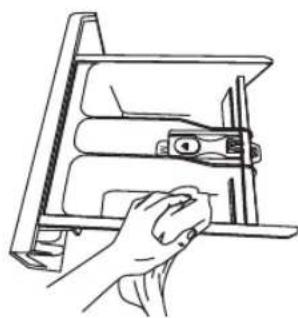
natural_image
Line drawing of a hand holding a small object through a mechanical device (no text or symbols)ταπα σιφονιου
natural_image
Line drawing of a hand using a tool to lift or lift a wooden plank (no text or symbols)natural_image
Line drawing of a washing machine with circular vent and side-mounted button (no text or symbols)natural_image
Technical line drawing of a mechanical component with mounting holes and a circular feature (no text or symbols)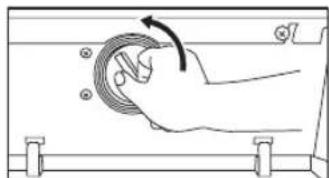
natural_image
Diagram of a hand pressing down on a curved surface with a rotation arrow (no text or symbols)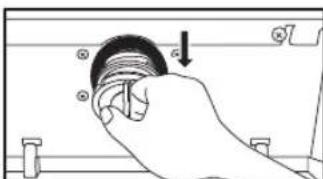
natural_image
Hand holding a circular component with a downward arrow, no visible text or symbolsThe symbol on the product or its packaging indicates that this product must not be disposed of with your other household waste. Instead, it is your responsibility to dispose of your waste equipment by handing it over to a designated collection point for the recycling of waste electrical and electronic equipment. The separate collection and recycling of your waste equipment at the time of disposal will help conserve natural resources and ensure that it is recycled in a manner that protects human health and the environment.
For more information about where you can drop off your waste for recycling, please contact your local authority, or where you purchased your product.
GR
DSG Retail Ireland Ltd (259460)
3rd Floor Office Suite,
Omni Park SC, Santry, Dublin 9, Republic of Ireland
THΛΕΦΩΝΟ ΕΠΙΚΟΙΝΩΝΙΑΣ SERVICE : 210 2899999
ΦΟΡΜΑ ΕΠΙΚΟΙΝΩΝΙΑΣ SERVICE: https://www.kotsovolos.gr/site/contact.jsp
Web Site: www.kotsovolos.gr
- maintenance - cleaning the washing machine 32
- hints and tips 34
- questions and answers.... 36
- specifications (D714PWM19) 37
- WARNING!
- General Use
- Power Source and Cable
- To Prevent Injury / Damage
- WARNING
- Thank you for purchasing your new Washing Machine.
- unpacking
- installing your washing machine
- Please Read And Follow The Instructions Carefully.
- choosing the right location for your washing machine
- moving and installing
- removing the transit bolts
- To remove the transit bolts:
- moving the washing machine from one location to another
- installation
- hose and cable lengths
- levelling the washing machine
- water supply hose
- Points to remember
- connecting the water supply hose
- water drain hose
- Points to remember:
- Draining to a sink or wash-basin
- connecting to the mains supply
- For your safety:
- Installation check list
- product overview
- the unit
- the control panel (D714PWM19 / D814PWM19 / D914PWM19)
- the control panel (D1014PWM19)
- preparation
- organising laundry
- preparing laundry
- adding detergent and softener
- GB
- before first use
- wash setting
- standard washing
- removing washing (once programme is finished)
- adding laundry during wash
- selecting the programme (D714PWM19)
- selecting the programme (D814PWM19)
- selecting the programme (D914PWM19)
- selecting the programme (D1014PWM19)
- muting & turning on the sound
- delay start the programme
- important information
- washing delicates (wool and silk programmes)
- adding delicate laundry items to the drum
- which detergent to use
- how to set the child lock
- maintenance - cleaning the washing machine
- cleaning the drum
- cleaning the exterior of your washing machine
- cleaning the detergent drawer
- siphon plug
- cleaning the door seal and window
- preventing a frozen water supply hose
- cleaning the filter net of the water supply hose
- hints and tips
- questions and answers
- error codes
- specifications (D714PWM19)
- specifications (D814PWM19)
- specifications (D914PWM19)
- specifications (D1014PWM19)
- product fiche (D714PWM19)
- product fiche (D814PWM19)
- product fiche (D914PWM19)
- product fiche (D1014PWM19)
- ταπα σιφονιου
- GR
Brand : DELONGHI
Model : D914PWM19
Category : Washing machine