
Custom - Hearing aid SIEMENS - Free user manual and instructions
Find the device manual for free Custom SIEMENS in PDF.


| Product Type | Custom Hearing Aid |
| Brand | Siemens |
| Model | Custom |
| Form Factor | Completely-in-Canal (CIC) or In-the-Canal (ITC) |
| Dimensions | Approximately 10-15 mm length |
| Weight | Approximately 3 grams each |
| Power Source | Zinc-air battery, size 312 |
| Battery Life | 5-7 days under normal use |
| Volume Control | User-adjustable volume wheel or programmable |
| Key Features | Digital noise reduction, feedback cancellation, directional microphones, multiple listening programs |
| Maintenance | Daily cleaning with soft dry cloth; use drying box overnight; replace battery as needed |
| Safety | Keep away from moisture and extreme heat; not for children under 36 months |
| Spare Parts | Batteries, wax guards, filters |
| Repairability | Repairs by qualified technician; warranty may cover defects |
| Color | Skin-toned (beige) or custom colors |
| Water Resistance | IP22 (protected against dripping water) |
Frequently Asked Questions - Custom SIEMENS
User questions about Custom SIEMENS
0 question about this device. Answer the ones you know or ask your own.
Ask a new question about this device
Download the instructions for your Hearing aid in PDF format for free! Find your manual Custom - SIEMENS and take your electronic device back in hand. On this page are published all the documents necessary for the use of your device. Custom by SIEMENS.
USER MANUAL Custom SIEMENS
natural_image
Collection of brown electronic devices with various internal components, no visible text or symbolsCustominstruments
User Guide
www.bestsound-technology.co.uk
Content
Welcome
4
Your hearing instruments 5
Getting to know your hearing instruments 5
Components and names 6
Controls 8
Settings 10
Battery size 12
Service information 13
Batteries
14
Replacing batteries 14
Daily use 16
Turning on and off 16
Inserting 18
Removing 19
Adjusting the volume 20
Changing the hearing program 21
Using two hearing instruments 22
On the phone 23
Telephone program 23
Automatic program switch (AutoPhone) 23
Audio induction loops 26
Telecoil program and remote control 27
2 Content
Maintenance and care 28
Cleaning 28
Drying 29
Storage 29
Troubleshooting 30
Important information 32
Intended use 32
Explanation of symbols 32
Transport and storage conditions 32
Disposal information 33
Technical information 33
Conformance information 35
Important safety information 36
Personal safety 36
Product safety 38
Tinnitus noiser 39
Country-specific information 43
Welcome
You have chosen one of our hearing instruments, a reliable partner to accompany you through everyday life. Like everything new, it will take you a little while to become familiar with it.
This document, along with support from your Hearing Care Professional, will help you. You will quickly come to appreciate the advantages and greater quality of life your hearing instrument offers.

CAUTION
Read this user guide thoroughly and completely and follow the safety information in this document to avoid damage or injury.
To benefit most from your hearing instrument, wear it daily and all day long. Especially after longer periods of living with hearing loss, a dedicated hearing training is recommended - with a Hearing Care Professional or at home.
Your hearing instruments
Getting to know your hearing instruments
It is recommended to familiarize yourself with your new hearing instruments. With the instruments in your hand try using the controls and note their location on the instrument. This will make it easier for you to feel and press the controls while wearing the hearing instruments.

If you have problems pressing the controls of your hearing instruments while wearing them, you can ask your Hearing Care Professional about a remote control option.
Components and names
This user guide describes several types of hearing instruments. Use the following pictures to identify the type of hearing instrument that you use.
Note that the push button, the volume control wheel and the vent are individually positioned on your hearing instrument to best suit your ear.
ITE (In The Ear)
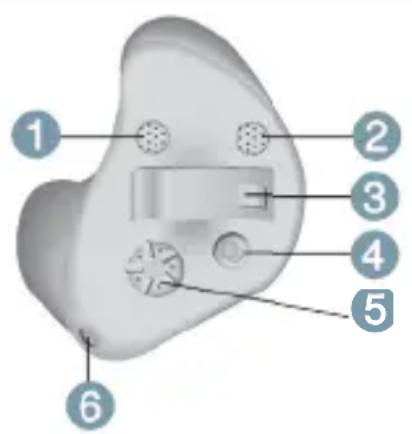
1 Microphone
② Second microphone (optional)
③ Battery compartment
4 Push button (optional)
⑤ Volume control wheel (optional)
6 Vent
ITC (In The Canal) with controls
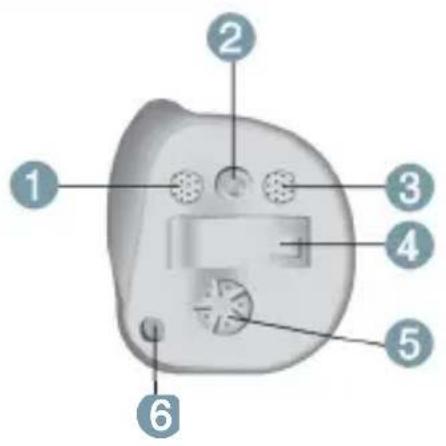
1 Microphone
② Push button (optional)
③ Second microphone (optional)
4 Battery compartment
⑤ Volume control wheel (optional)
⑥ Vent
ITC (In The Canal) without controls

1 Vent
② Battery compartment
3 Microphone
QC (Completely In the Canal)
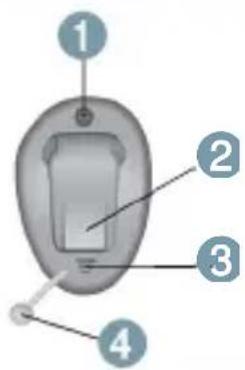
1 Vent
② Battery compartment
③ Microphone
4 Removal cord (optional)
Controls
With the controls you can, for example, adjust the volume or switch hearing programs. Your hearing instruments either have a push button, a volume control wheel - or no control at all.
The Hearing Care Professional has assigned your desired functions to the push button.

Ask your Hearing Care Professional to mark your controls and their functions on the following pages.
| Control Left Right | ||
| Push button |  |  |
| Volume control wheel |  |  |
| No control |  |  |

You can also use a remote control.
Pushbutton
| Function Left Right | ||||
 |  |  |  | |
| Program change |  |  | ||
| Volume up |  |  | ||
| Volume down |  |  | ||
| Standby/turn on | ||||
 press briefly, press 2 seconds press briefly, press 2 seconds | ||||
Volume control wheel
| Function | ||
| Volume up Rotate wheel forward. |  | |
| Volume down Rotate wheel backward | 1. |  |
Settings

Ask your Hearing Care Professional to mark your individual settings on the following pages.
| Hearing programs |
| 1 |
| 2 |
| 3 |
| 4 |
| 5 |
| 6 |
| Read more in section "Changing the hearing program". |
Features

Power-on delay enables whistle-free insertion of hearing instruments.
Read more in section "Turning on and off".

e2e wireless enables simultaneous control of both hearing instruments.
Read more in section "Using two hearing instruments".

AutoPhone automatically switches to the telephone program when the telephone receiver approaches the ear.
Read more in section "On the phone".

A telecoil is built into the instrument, so it can connect with audio induction loops.
Read more in section "Audio induction loops".
Accessories

Remote control Audio streamer
Batterysize
Batteries

Non-rechargeable (size 10)

Non-rechargeable (size 312)

Non-rechargeable (size 13)
Service information
Serial numbers
Left:
Right:
Service dates
1:
2:
3:
4:
5:
6:
Your Hearing Care Professional
Date of purchase:
Batteries
When the battery is low the sound becomes weaker or you will hear an alert signal. It depends on the battery type how long you have until you have to replace the battery.
Replacingbatteries
Remove empty batteries immediately and dispose of according to local regulations.

Remember to have your replacement batteries with you at all times.
Removing:
Open the battery compartment.
The battery falls out when the compartment is completely open.

natural_image
Illustration of a hand holding a small mechanical component with a blue arrow indicating rotation (no text or symbols)Inserting:
Remove the protective film from the new battery.
Insert the battery.
Make sure the "+" symbols on the battery and compartment are aligned.
Carefully close the battery compartment. If you feel resistance, the battery is not inserted correctly.
Do not attempt to close the battery compartment by force. It can be damaged.

Daily use
Turning on and off
You have several options to turn your hearing instruments on or off.
Via battery compartment:
Turning on: Close the battery compartment.
The default volume and hearing program are set.
Turning off: Open the battery compartment.
Via push button:
Turning on or off: Press the push button for 2 seconds. Refer to section "Controls" for your personal settings.
After turning on, the previously used volume and hearing program are set.
Via remote control:
Follow the instructions in the remote control's user guide.
After turning on, the previously used volume and hearing program are set.

- When wearing the hearing instruments, an optional signal can indicate when an instrument is turned on or off.
■ Remove the batteries if the hearing instruments are not used for several days.
When the power-on delay is activated, the hearing instruments turn on after a delay of several seconds.
During this time you can insert the hearing instruments without experiencing unpleasant whistling.
The "power-on delay" can be activated by your Hearing Care Professional.
Inserting
Carefully push the hearing instrument into the ear canal.
Twist it slightly until it sits well.
Open and close your mouth to avoid accumulation of air in the ear canal.

natural_image
Illustration of a human ear with a blue medical device inserted into the ear area (no text or symbols)i
- Insert the right hearing instrument with the right hand and the left hearing instrument with the left hand.
If you have problems inserting the hearing instrument, use the other hand to gently pull your earlobe downwards. This opens the ear canal and eases insertion of the hearing instrument.
Removing

NOTICE
Never pull on the battery compartment door or volume control wheel to remove the hearing instrument. This could damage your hearing instrument.
▶ Push lightly on the back of your ear to loosen the hearing instrument.
If your hearing instrument is equipped with a removal cord, remove the hearing instrument by pulling the removal cord towards the back of your head.
For all other hearing instruments: Grip the hearing instrument in the ear canal with two fingers and pull it carefully out.
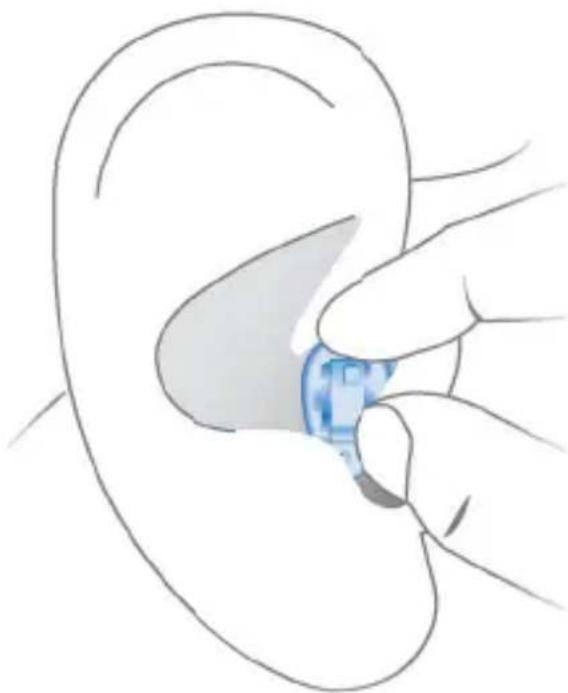
natural_image
Illustration of a hand inserting a blue medical device into an ear (no text or symbols)Clean and dry your hearing instruments after usage. Read more in section "Maintenance and care".
Adjusting the volume
Your hearing instruments automatically adjust the volume to the listening situation.
If you prefer manual volume adjustment, rotate the volume control wheel, press the push button briefly, or use a remote control.
Refer to section "Controls" for your personal settings.
Changing the hearing program
Hearing programs change the characteristics of the sound coming through the hearing instrument. They help you to select the optimal setup for every listening situation. An optional signal can indicate the change of the hearing program.
To change the hearing program, press the push button briefly or use a remote control.
Refer to section "Controls" and to section "Settings" for your personal settings and for a list of your hearing programs.

If the AutoPhone function is activated, the hearing program switches automatically to a telephone program when the telephone receiver is close to the ear.
Read more in section "On the phone".
Using two hearing instruments
Very rarely does hearing loss occur in only one ear, therefore the use of two instruments ensures that you are improving your hearing in all situations allowing you to better participate in your daily life.
When controlling two instruments you have the following options to, for example, change the hearing program:
- You can control each hearing instrument separately.
- You can control both hearing instruments simultaneously.
Your Hearing Care Professional has to activate the "e2e wireless" function, enabling both hearing instruments to exchange information. You can then use either a remote control or the user controls on either of your instruments for the desired function e.g. volume change.
The control elements of both instruments can even be set differently – thus offering you the degree of control you really need.
On the phone
When you are on the phone, turn the receiver slightly so that the ear is not completely covered.
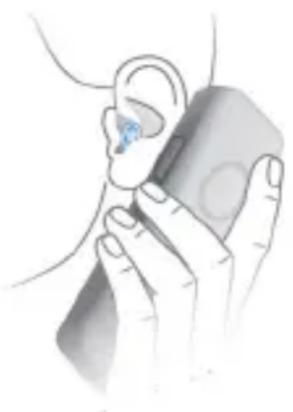
natural_image
Illustration of a hand holding an ear with a blue earplifier (no text or symbols)Telephoneprogram
You may prefer a certain volume when using the phone. Ask your Hearing Care Professional to configure a telephone program.
Switch to the telephone program whenever you are on the phone or use the automatic program switch.
Whether a telephone program or the automatic program switch are configured for your hearing instrument is listed in section "Settings".
Automatic program switch (AutoPhone)
Your hearing instrument can automatically select the telephone program when you hold the telephone receiver close to the ear. When you end the phone call, the previously used program is activated.
If you want to use this function, ask your Hearing Care Professional to do the following:
■ Activate the AutoPhone function.
- Check the telephone receiver's magnetic field.
For the automatic program switch, your hearing instrument detects the telephone receiver's magnetic field. Not all telephones produce a magnetic field strong enough to activate the AutoPhone function. In this case, you can use the Siemens AutoPhone magnet, which is available as an accessory, and attach it to the telephone receiver.

NOTICE
See the AutoPhone magnet user guide for instructions on how to position the magnet.
Use the approved AutoPhone magnet only. Ask your Hearing Care Professional for this accessory.

NOTICE
Magnets can disturb electrical devices and delete stored data.
Keep magnets away from computers, monitors, television sets, storage media and other electronic equipment/devices.

WARNING
Risk of affecting life support systems!
Use a magnet only when it is a safe distance away from life support systems, such as pacemakers or magnetic valves. For example, the safe distance between pacemaker and magnet should be at least 10 cm (4 inches).
Audio induction loops
Many telephones as well as public places like theatres offer the audio signal (music and speech) via an audio induction loop. With this system, your hearing instruments can directly receive the desired signal – without distracting noise in the environment.
You can usually recognize audio induction loop systems by certain signs.

natural_image
Blue square icon with a white hearing curve and a T symbol (no text or numbers)Whether a telecoil is built into your hearing instrument is listed in section "Settings". If a telecoil is built in, you have the following options.
Ask your Hearing Care Professional to configure a telecoil program.
Switch to the telecoil program whenever you are in a place with an audio induction loop.
Whether the telecoil program is configured for your hearing instrument is listed in section "Settings".
Telecoil program and remote control

NOTICE
For instruments with wireless connectivity:
When the telecoil program is active, the remote control may cause a pulsing noise.
Use the remote control with a distance greater than 10 cm (4 inches).
Maintenance and care
The hearing instruments are so robust that they will function reliably for years. It is, however, important that you take care of your instruments and observe a few basic rules, which will soon become habit.
Cleaning
For hygiene reasons and to maintain functionality, clean your hearing instruments daily.

NOTICE
Do not put your hearing instruments in water.

natural_image
Black faucet symbol with red diagonal line indicating no water or pollution (no text or numbers present)Clean your hearing instruments with a soft, dry tissue.
Be careful not to damage the wax protection when cleaning the hearing instruments. The wax protection prevents earwax from entering the hearing instruments.
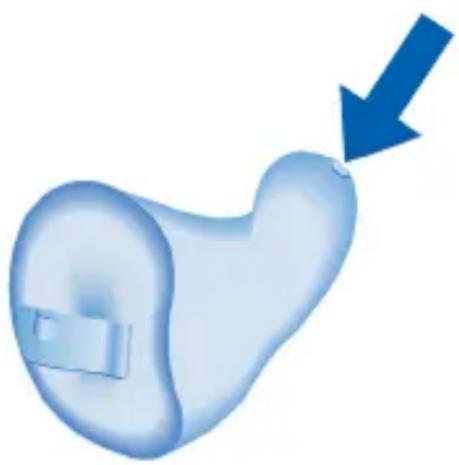
natural_image
Blue 3D icon of a stylized helmet with a blue arrow pointing downward (no text or symbols)▶ Ask your Hearing Care Professional for recommended cleaning products, special care sets and further information on how to keep your hearing instruments in good condition.
For a more thorough professional cleaning, take your instruments to your Hearing Care Professional.
Your Hearing Care Professional can clean or exchange the following parts, if they are soiled:
- Wax protection
- Microphone protection (windscreen)
Drying
Dry your hearing instruments overnight.
▶ Ask your Hearing Care Professional for recommended drying products.
Storage
During longer periods of non-use, store your hearing instruments with open battery compartment (and batteries removed) in a drying system in order to prevent the penetration of moisture.
Troubleshooting
Problem and possible solutions
Sound is weak.
■ Increase the volume.
Gently close the battery compartment completely.
■ Clean the hearing instrument.
- Replace the empty battery.
- Ask your Hearing Care Professional to exchange the wax protection and/or the microphone cover.
Hearing instrument emits whistling sounds.
■ Reinsert the hearing instrument until it fits securely.
■ Decrease the volume.
■ Clean the hearing instrument.
Sound is distorted.
■ Decrease the volume.
- Replace the empty battery.
■ Clean the hearing instrument.
- Ask your Hearing Care Professional to exchange the wax protection and/or the microphone cover.
Hearing instrument emits signal tones.
- Replace the empty battery.
Problem and possible solutions
Hearing instrument does not work.
■ Turn the hearing instrument on.
Gently close the battery compartment completely.
- Replace the empty battery.
■ Make sure the battery is inserted correctly.
■ Power-on delay is active. Wait several seconds and check again.
Consult your Hearing Care Professional if you encounter further problems.
Importantinformation
Intendeduse
Hearing instruments are intended to improve the hearing of hearing impaired persons. Diagnosis and prescription of a hearing instrument must be performed by hearing health specialists, e.g. acousticians, audiologists or ENT doctors.

Use the hearing instruments and accessories only as described in this user guide.
Explanation of symbols

Points out a situation that could lead to serious, moderate, or minor injuries.

Indicates possible property damage.

Advice and tips on how to handle your device better.
Transport and storage conditions
During extended periods of transport and storage, please observe the following conditions:
| Storage Transport | ||
| Temperature 10 to 40 °C -20 to 60 °C | ||
| Relative humidity 10 to 80 % 5 to 90 % | ||
| Air pressure 700 to 1050 hPa 200 to 1200 hPa | ||
| For other parts, such as batteries, other conditions may apply. | ||
Disposalinformation
Within the European Union, the marked equipment is covered by "Directive 2002/96/EC of the European Parliament and of the Council of 27 January 2003 on waste electrical and electronic equipment."
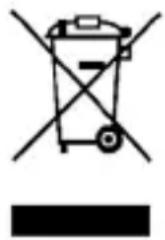
natural_image
Symbol of a trash bin with crossed lines indicating no waste or discharge (no text or labels)Amended by "Directive 2003/108/EC" (WEEE).

NOTICE
Recycle hearing instruments, accessories and packaging according to national regulations.

NOTICE
To avoid environmental pollution, do not throw batteries into household trash.
Recycle or dispose of batteries according to national regulations or return them to your Hearing Care Professional.
Technicalinformation
Insio micon, Orion custom, Sirion custom,
Nitro micon custom
FCC ID: SGI-WL002ITE
IC: 267AB-WL002
Operating frequencies: F_c=3.28 MHz

N14203 (EMC and radio communications compliance
label Australia)
This Class B digital apparatus complies with Canadian ICES-003.
Changes or modifications made to this equipment not expressly approved by Sivantos GmbH for compliance may void the FCC authorization to operate this equipment.
FCC compliance
This device complies with Part 15 of the FCC Rules and with RSS-210 of Industry Canada.
Operation is subject to the following conditions:
■ this device may not cause harmful interference, and
■ this device must accept any interference received, including interference that may cause undesired operation.
This equipment has been tested and found to comply with the limits for a Class B digital device, pursuant to Part 15 of the FCC Rules. These limits are designed to provide reasonable protection against harmful interference in a residential installation. This equipment generates, uses and can radiate radio frequency energy and, if not installed and used in accordance with the instructions, may cause harmful interference to radio communications.
However, there is no guarantee that interference will not occur in a particular installation. If this equipment does cause harmful interference to radio or television reception, which can be determined by turning the equipment off and on, the user is encouraged to try to correct the interference by one or more of the following measures:
■ Reorient or relocate the receiving antenna.
- Increase the separation between the equipment and receiver.
■ Connect the equipment to an outlet on a circuit different from that to which the receiver is connected.
- Consult the dealer or an experienced radio/TV technician for help.
Conformanceinformation
With the CE marking Sivantos confirms compliance with the European Directive 93/42/EEC concerning medical devices.

For the products with e2e wireless 2.0 Sivantos additionally confirms compliance with the European Directive 99/5/EC (R&TTE) concerning radio and telecommunications terminal equipment.
Important safety information
Personal safety

WARNING
Risk of affecting electronic equipment!
In areas where the use of electronics or wireless devices are restricted, verify if your device has to be turned off.

WARNING
Risk of impairing the residual hearing of the user.
Use only hearing instruments that have been fitted especially for your needs.

WARNING
Risk of injury!
Do not use obviously damaged devices and return them to point of sale.

WARNING
Risk of explosion!
Do not use your hearing instruments in explosive atmospheres (e. g. in mining areas).

WARNING
Choking hazard!
Your hearing instruments contain small parts which can be swallowed.
Keep hearing instruments, batteries and accessories out of reach of children and mentally disabled persons.
If parts have been swallowed consult a physician or hospital immediately.

We offer special hearing instruments for the fitting of infants and small children.
Ask your Hearing Care Professional for further information.
Product safety

NOTICE
Leaking batteries damage the hearing instruments.
▶ Turn the hearing instruments off when not in use to preserve the battery.
Remove batteries when the instruments are not in use for a prolonged period of time.

NOTICE
Protect your hearing instruments from extreme heat. Do not expose them to direct sunlight.

NOTICE
Do not dry your hearing instruments in the microwave oven.

NOTICE
Different types of strong radiation, e. g. during X-ray or MRI head examinations, may damage hearing instruments.
Do not wear the hearing instruments during these or similar procedures.
Weaker radiation, e. g. from radio equipment or airport security, does not damage the hearing instruments.

NOTICE
Protect your hearing instruments from high humidity. Do not wear them in the shower or when you apply make-up, perfume, aftershave, hairspray or suntan lotion.
Only for two instruments or the use of a remote control:

In some countries restrictions for the usage of wireless equipment exist.
Refer to local authorities for further information.

NOTICE
Your hearing instruments are designed to comply with international standards on electromagnetic compatibility but interference with nearby electronic devices could occur. In this case, move away from the source of interference.
Tinnitus noiser
Your hearing instrument may be equipped with a tinnitus noiser. The use of the tinnitus noiser should be only on the advice and in consultation with your Hearing Care Professional.

WARNING
Risk of further impairment to the user's hearing health.
There are some potential concerns associated with the use of any sound generating tinnitus therapy device. Discontinue use and seek medical evaluation if any of the following conditions occur:
▶ chronic skin irritation on, near, or around the site of device placement.
unusual side effects (e.g. dizziness, nausea, headaches, heart palpitations).
perceived decrease in auditory function (e.g. decreased loudness, speech not as clear).

WARNING
Risk of further impairment to the user's hearing health.
The volume of the tinnitus noiser can be set to a level which could lead to permanent hearing damage when used for a prolonged period of time.
The tinnitus noiser should never be used at uncomfortable levels.
For Hearing Care Professionals:
The target population is primarily the adult population over 21 years of age. The patient may have some control of the level or volume of the signal and the patient should discuss this adjustment as well as his or her comfort level and sound of the signal with their Hearing Care Professional.

WARNING
Risk of further impairment to the user's hearing health.
The volume of the tinnitus noiser can be set to a level which could lead to permanent hearing damage when used for a prolonged period of time.
Should the tinnitus noiser be set to such a level in the hearing instrument, advise the user of the maximum amount of time per day he or she should use the tinnitus noiser.
For example, occupational safety guidelines restrict continuous noise exposure of 80 dBA SPL to 8 hours per day.
The tinnitus noiser should never be used at uncomfortable levels.

WARNING
Risk of further impairment to the user's hearing health.
A Hearing Care Professional should advise a prospective tinnitus noiser user to consult promptly with a licensed physician (preferably an ear specialist) before using the tinnitus noiser if the Hearing Care Professional determines through inquiry, actual observation, or review or any other available information concerning the prospective user that the prospective user has any of the following conditions:
Visible congenital or traumatic deformity of the ear.
History of active drainage from the ear within the previous 90 days.
History of sudden or rapidly progressive hearing loss within the previous 90 days.
Acute or chronic dizziness.
▶ Unilateral hearing loss of sudden or recent onset within the previous 90 days.
Country-specific information
Manufactured by Sivantos GmbH under Trademark License of Siemens AG.
United Kingdom
Sivantos Limited
Platinum House
Sussex Manor Business Park
Gatwick Road
Crawley, West Sussex RH10 9NH
Phone +44 (0) 1293 423700

Legal Manufacturer
Sivantos GmbH
Henri-Dunant-Strasse 100
91058 Erlangen
Germany
Phone +49 9131 308 0
Document No. A91SAT-02037-99T03-7600 EN
Order/Item No. 108 213 20 | Master Rev03, 09.2013
© Siemens AG, 06.2015 | JN7466 | Printed in the UK
- Custominstruments
- Content
- Your hearing instruments 5
- Daily use 16
- On the phone 23
- Audio induction loops 26
- Content
- Maintenance and care 28
- Important information 32
- Important safety information 36
- Country-specific information 43
- Welcome
- CAUTION
- Your hearing instruments
- Getting to know your hearing instruments
- Components and names
- ITC (In The Canal) with controls
- ITC (In The Canal) without controls
- QC (Completely In the Canal)
- Controls
- Settings
- Features
- Accessories
- Batterysize
- Batteries
- Service information
- Replacingbatteries
- Inserting:
- Daily use
- Turning on and off
- Inserting
- i
- Removing
- NOTICE
- Adjusting the volume
- Changing the hearing program
- Using two hearing instruments
- On the phone
- Telephoneprogram
- Automatic program switch (AutoPhone)
- WARNING
- Audio induction loops
- Telecoil program and remote control
- Maintenance and care
- Cleaning
- Drying
- Storage
- Troubleshooting
- Problem and possible solutions
- Sound is weak.
- Hearing instrument emits whistling sounds.
- Sound is distorted.
- Hearing instrument emits signal tones.
- Importantinformation
- Intendeduse
- Explanation of symbols
- Transport and storage conditions
- Disposalinformation
- Technicalinformation
- N14203 (EMC and radio communications compliance
- label Australia)
- FCC compliance
- Conformanceinformation
- Important safety information
- Personal safety
- Product safety
- Tinnitus noiser
- Country-specific information
- United Kingdom
- Legal Manufacturer
Brand : SIEMENS
Model : Custom
Category : Hearing aid