
PTL 1772 DNBI - Refrigerator Philco - Free user manual and instructions
Find the device manual for free PTL 1772 DNBI Philco in PDF.


| Product Type | Built-in Refrigerator |
| Brand | Philco |
| Model | PTL 1772 DNBI |
| Overall Dimensions (H x W x D) | 1785 x 540 x 550 mm |
| Total Volume | 304 L |
| Energy Efficiency Class | D |
| Annual Energy Consumption | 90 kWh/a |
| Climate Class | SN, N, ST, T (10 °C to 43 °C) |
| Noise Emission | 35 dB(A) re 1 pW, Class B |
| Defrost Type | Automatic (air-cooling) |
| Refrigerant | R600a (isobutane, flammable) |
| Light Source | LED, Energy Class F |
| Power Supply | 220-240 V ~ 50 Hz |
| Temperature Settings | 8°C, 4°C, 2°C, Super Cool |
| Door Open Alarm | Yes, after 120 seconds |
| Door Reversibility | Yes (user-reversible with tools) |
| Installation Type | Built-in with ventilation requirements |
| Cleaning Recommendation | Soft cloth with baking soda solution; do not use abrasives |
| Spare Parts Availability | Original spare parts for 7-10 years (depending on component) |
| Guarantee | 24 months |
| Weight (approx.) | 60 kg (estimated) |
Frequently Asked Questions - PTL 1772 DNBI Philco
User questions about PTL 1772 DNBI Philco
0 question about this device. Answer the ones you know or ask your own.
Ask a new question about this device
Download the instructions for your Refrigerator in PDF format for free! Find your manual PTL 1772 DNBI - Philco and take your electronic device back in hand. On this page are published all the documents necessary for the use of your device. PTL 1772 DNBI by Philco.
USER MANUAL PTL 1772 DNBI Philco
Famous for Quality the World Over
PTL 1772 DNBI
Dear customer,
Thank you for buying a PHILCO brand product. So that your appliance serves you well, please read all the instructions in this user's manual.
CONTENTS
PART 1: SAFETY INFORMATION....2
1.1 Meanings of safety warning symbols 12
1.2 Electricity related warnings....12
1.3Warnings for using....13
1.4Warnings for placement....14
1.5Warnings for energy....15
1.6 Warnings for disposal ....15
PART 2: PROPER USE OF THE REFRIGERATOR....16
2.1 Placement....16
2.2 Installation in cabinet 18
2.3 Door Right-Left Change....21
2.4 Changing the light....24
2.5 Starting 24
2.6 Energy saving tips....25
PART 3: STRUCTURE AND FUNCTIONS....26
3.1 Key components....26
3.2 Functions....27
PART 4: MAINTENANCE AND CARE OF THE REFRIGERATOR....29
4.1 Overall cleaning....29
4.2 Defrosting 30
4.3 Out of operation....30
PART 5: TROUBLESHOOTING....31
PART 6: PRODUCT INFORMATION SHEET ......33
This appliance has been tested in accordance with the directives in force in the European Union. This appliance conforms to the relevant safety provisions for electrical appliances in force in the European Union.

FOR YOUR SAFETY AND CORRECT USAGE, BEFORE INSTALLING AND FIRST USING THE APPLIANCE,READ THIS USER MANUAL CAREFULLY, INCLUDING ITS HINTS AND WARNINGS. TO AVOID UNNECESSARY MISTAKES AND ACCIDENTS,IT IS IMPORTANT TO MAKE SURE THAT ALL PEOPLE USING THE APPLIANCE ARE THOROUGHLY FAMILIAR WITH ITS OPERATION AND SAFETY FEATURES. SAVE THESE INSTRUCTIONS AND BE SURE THAT THEY REMAIN WITH THE APPLIANCE IF IT IS MOVED OR SOLD,SO THAT ANYONE USING IT THROUGHOUT ITS LIFE,WILL BE PROPERLY INFORMED ON ITS USAGE AND SAFETY NOTICES. FOR THE SAFETY OF LIFE AND PROPERTY,KEEP THE PRECAUTIONS OF THESE USER'S INSTRUCTIONS AS THE MANUFACTURER IS NOT RESPONSIBLE FOR DAMAGES CAUSED BY OMISSION.
- THIS APPLIANCE CAN BE USED BY CHILDREN AGED FROM 8 YEARS AND ABOVE AND PERSONS WITH REDUCED PHYSICAL, SENSORY OR MENTAL CAPABILITIES OR LACK OF EXPERIENCE AND KNOWLEDGE IF THEY HAVE BEEN GIVEN SUPERVISION OR INSTRUCTION CONCERNING USE OF THE APPLIANCE IN A SAFE WAY AND UNDERSTAND THE HAZARDS INVOLVED.
- CHILDREN AGED FROM 3 TO 8 YEARS ARE ALLOWED TO LOAD AND UNLOAD REFRIGERATING APPLIANCES.
- CHILDREN SHALL NOT PLAY WITH THE APPLIANCE.
-
CLEANING AND USER MAINTENANCE CANNOT BE PERFORMED BY CHILDREN WITHOUT SUPERVISION.
-
IF THE SUPPLY CABLE GETS DAMAGED, HAVE IT REPLACED BY A SPECIALIZED SERVICE CENTER IN ORDER TO AVOID DANGEROUS SITUATIONS. IT IS PROHIBITED TO USE THE APPLIANCE WHEN THE SUPPLY CABLE IS DAMAGED.
- WARNING: THE VENTILATION OPENINGS IN THE APPLIANCE HOUSING OR IN ITS CONSTRUCTION MUST BE KEPT FREE.
- WARNING: DO NOT USE MECHANICAL DEVICES OR OTHER MEANS TO ACCELERATE THE DEFROSTING PROCESS,OTHER THAN THOSE RECOMMENDED BY THE MANUFACTURER.
- WARNING: DO NOT DAMAGE THE REFRIGERANT CIRCUIT.
- WARNING: DO NOT USE ELECTRICAL APPLIANCES INSIDE THE FOOD STORAGE COMPARTMENTS OF THE APPLIANCE, UNLESS THEY ARE OF THE TYPE RECOMMENDED BY THE MANUFACTURER.
- WARNING: DO NOT STORE EXPLOSIVE SUBSTANCES SUCH AS AEROSOL CANS WITH A FLAMMABLE PROPELLANT IN THIS APPLIANCE.
ISO 7000-1701 MARK (2004-01) LABELS MEDIA UNDER PRESSURE.
THIS APPLIANCE IS INTENDED TO BE USED IN HOUSEHOLDS AND SIMILAR PREMISES, SUCH AS:
- KITCHENETTES IN SHOPS, OFFICES AND OTHER WORKPLACES;
- APPLIANCES USED BY GUESTS IN HOTELS, MOTELS, AND OTHER ACCOMMODATION FACILITIES;
- APPLIANCES USED IN BED-AND-BREAKFAST FACILITIES;
- APPLIANCES USED IN CATERING AND OTHER SIMILAR NON-VENDING ENVIRONMENTS.
- CAUTION: THE APPLIANCE MUST BE FASTENED IN ACCORDANCE WITH THE MANUAL TO PREVENT DANGER CAUSED BY ITS INSTABILITY.
CONTAINS COOLING GAS ISOBUTANE
R600a
REFRIGERANT
THE REFRIGERANT ISOBUTENE (R600a) IS CONTAINED WITHIN THE REFRIGERANT CIRCUIT OF THE APPLIANCE, A NATURAL GAS WITH A HIGH LEVEL OF ENVIRONMENTAL COMPATIBILITY, WHICH IS NEVERTHELESS FLAMMABLE. DURING TRANSPORTATION AND INSTALLATION OF THE APPLIANCE, ENSURE THAT NONE OF THE COMPONENTS OF THE REFRIGERANT CIRCUIT BECOMES DAMAGED. THE REFRIGERANT (R600a) IS FLAMMABLE.
- WARNING — REFRIGERATORS CONTAIN REFRIGERANT AND GASES IN THE INSULATION. REFRIGERANT AND GASES MUST BE DISPOSED OF PROFESSIONALLY AS THEY MAY CAUSE EYE INJURIES OR IGNITION. ENSURE THAT TUBING OF THE REFRIGERANT CIRCUIT IS NOT DAMAGE PRIOR TO PROPER DISPOSAL.
THE SYMBOL △ IS A WARNING AND INDICATES THE REFRIGERANT AND INSULATION BLOWING GAS ARE FLAMMABLE.
WARNING : RISK OF FIRE / FLAMMABLE MATERIALS
IF THE REFRIGERANT CIRCUIT SHOULD BE DAMAGED:
- AVOID OPENING FLAMES AND SOURCES OF IGNITION.
- THOROUGHLY VENTILATE THE ROOM IN WHICH THE APPLIANCE IS SITUATED.
IT IS DANGEROUS TO ALTER THE SPECIFICATIONS OR MODIFY THIS PRODUCT IN ANY WAY.
ANY DAMAGE TO THE CORD MAY CAUSE A SHORT CIRCUIT, FIRE, AND/OR ELECTRIC SHOCK.
- CAUTION: WHEN PLACING THE APPLIANCE IT MUST BE ENSURED THAT THE SUPPLY CORD DOES NOT GET CAUGHT OR DAMAGED.
- CAUTION: DO NOT PLACE PORTABLE MULTIPLE SOCKET-OUTLETS OR PORTABLE EXTENSION CABLES TO THE REAR SIDE OF THE APPLIANCE.
CONTACT THE SERVICE CENTRE FOR REPAIRS OR LIGHTING REPLACEMENT.
- OPENING THE DOOR FOR LONGED PERIODS OF TIME CAN CAUSE A SIGNIFICANT INCREASE IN TEMPERATURE WITHIN THE APPLIANCE.
- SURFACES THAT MAY COME INTO CONTACT WITH FOOD AND ACCESSIBLE DRAINAGE SYSTEMS SHOULD BE CLEANED REGULARLY.
- IN THE REFRIGERATOR, RAW MEAT AND FISH MUST BE STORED IN APPROPRIATE PACKAGING SO THAT THEY DON'T COME INTO CONTACT WITH OTHER FOOD OR DRIP ONTO IT.
- TWO STAR FREEZER COMPARTMENTS ARE SUITABLE FOR STORING PRE-FROZEN FOODS, FOR STORING OR PRODUCTION OF ICE CREAM AND FOR PRODUCTION OF ICE CUBES.
- ONE, TWO AND THREE STAR COMPARTMENTS ARE NOT SUITABLE FOR FREEZING FRESH FOOD.
IF THE COOLING APPLIANCE IS LEFT EMPTY FOR A LONGER PERIOD OF TIME, IT SHOULD BE SWITCHED OFF, DEFROSTED, CLEANED AND DRIED AND THE DOOR SHOULD BE LEFT OPEN TO PREVENT MOULD FROM FORMING INSIDE THE APPLIANCE.

ELECTRICAL SAFETY
- THE POWER CORD MUST NOT BE LENGTHENED.
- MAKE SURE THAT THE POWER PLUG IS NOT CRUSHED OR DAMAGED.
A CRUSHED OR DAMAGED POWER PLUG MAY OVERHEAT AND CAUSE A FIRE. - MAKE SURE THAT YOU CAN ACCESS THE MAIN PLUG OF THE APPLIANCE.
- DO NOT PULL THE MAIN CABLE.
- IF THE POWER PLUG SOCKET IS LOOSE, DO NOT INSERT THE POWER PLUG. THERE IS A RISK OF ELECTRIC SHOCK OR FIRE.
- YOU MUST NOT OPERATE THE APPLIANCE WITHOUT THE INTERIOR LIGHTING LAMP COVER.
- THE FRIDGE IS ONLY APPLIED WITH POWER SUPPLY OF SINGLE PHASE ALTERNATING CURRENT OF 220\~240V/50HZ. IF FLUCTUATION OF VOLTAGE IN THE DISTRICT OF USER IS SO LARGE THAT THE VOLTAGE EXCEEDS THE ABOVE SCOPE, FOR SAFETY SAKE, BE SURE TO APPLY A.C. AUTOMATIC VOLTAGE REGULATOR OF MORE THAN 350W TO THE FRIDGE.
THE FRIDGE MUST EMPLOY A SPECIAL POWER SOCKET INSTEAD OF COMMON ONE WITH OTHER ELECTRIC APPLIANCES. ITS PLUG MUST MATCH THE SOCKET WITH GROUND WIRE.
DAILY USE
- DO NOT STORE FLAMMABLE GAS OR LIQUIDS IN THE APPLIANCE, THERE IS A RISK OF AN EXPLOSION.
- DO NOT OPERATE ANY ELECTRICAL APPLIANCES IN THE APPLIANCE (E.G. ELECTRIC ICE CREAM MAKERS, MIXERS ETC.).
- WHEN UNPLUGGING ALWAYS PULL THE PLUG FROM THE MAINS SOCKET,DO NOT PULL ON THE CABLE.
- DO NOT PLACE HOT ITEMS NEAR THE PLASTIC COMPONENTS OF THIS APPLIANCE.
- DO NOT PLACE FOOD PRODUCTS DIRECTLY AGAINST THE AIR OUTLET ON THE REAR WALL.
- STORE PRE-PACKED FROZEN FOOD IN ACCORDANCE WITH THE FROZEN FOOD MANUFACTURE'S INSTRUCTIONS.
- THE APPLIANCES MANUFACTURES STORAGE RECOMMENDATIONS SHOULD BE STRICTLY ADHERED TO. REFER TO RELEVANT INSTRUCTIONS FOR STORAGE.
- DO NOT PLACE CARBONATED OR FIZZY DRINKS IN THE FREEZER COMPARTMENT AS IT CREATES PRESSURE ON THE CONTAINER, WHICH MAY CAUSE IT TO EXPLODE, RESULTING IN DAMAGE TO THE APPLIANCE.
- FROZEN FOOD CAN CAUSE FROST BURNS IF CONSUMED STRAIGHT FROM THE FREEZER COMPARTMENT.
- DO NOT PLACE THE APPLIANCE IN DIRECT SUNLIGHT.
-
KEEP BURNING CANDLES, LAMPS AND OTHER ITEMS WITH NAKED FLAMES AWAY FROM THE APPLIANCE SO THAT DO NOT SET THE APPLIANCE ON FIRE.
-
THE APPLIANCE IS INTENDED FOR KEEPING FOOD STUFF AND/OR BEVERAGES IN NORMAL HOUSEHOLD AS EXPLAINED IN THIS INSTRUCTION BOOKLET. YOU SHOULD TAKE CARE WHEN MOVE IT AS THE APPLIANCE IS HEAVY.
- DO NOT REMOVE OR TOUCH ITEMS FROM THE FREEZER COMPARTMENT IF YOUR HANDS ARE DAMP/WET, AS THIS COULD CAUSE SKIN ABRASIONS OR FROST/FREEZER BURNS.
- NEVER USE THE BASE,DRAWERS,DOORS ETC. TO STAND ON OR AS SUPPORTS.
- FROZEN FOOD MUST NOT BE REFROZEN ONCE IT HAS BEEN THAWED OUT.
- DO NOT CONSUME ICE POPSICLES OR ICE CUBES STRAIGHT FROM THE FREEZER AS THIS CAN CAUSE FREEZER BURN TO THE MOUTH AND LIPS.
- TO AVOID ITEMS FALLING AND CAUSING INJURY OR DAMAGE TO THE APPLIANCE,DO NOT OVERLOAD THE DOOR RACKS OR PUT TOO MUCH FOOD IN THE CRISPER DRAWERS.
INSTALLATION IMPORTANT!
- FOR ELECTRICAL CONNECTION CAREFULLY, FOLLOW THE INSTRUCTIONS GIVEN IN THIS MANUAL. UNPACK THE APPLIANCE AND CHECK IF THERE ARE DAMAGES ON IT.
- DO NOT CONNECT THE APPLIANCE IF IT IS DAMAGED. REPORT POSSIBLE DAMAGES IMMEDIATELY TO THE PLACE YOU BOUGHT IT. IN THIS CASE RETAIN PACKING.
- IT IS ADVISABLE TO WAIT AT LEAST FOUR HOURS BEFORE CONNECTING THE APPLIANCE TO ALLOW THE OIL TO FLOW BACK IN THE COMPRESSOR.
- ADEQUATE AIR CIRCULATION SHOULD BE AROUND THE APPLIANCE, LACKING THIS LEADS TO OVERHEATING. TO ACHIEVE SUFFICIENT VENTILATION, FOLLOW THE INSTRUCTIONS RELEVANT TO INSTALLATION.
- WHEREVER POSSIBLE THE BACK OF THE PRODUCT SHOULD NOT BE TOO CLOSE TO A WALL TO AVOID TOUCHING OR CATCHING WARM PARTS (COMPRESSOR, CONDENSER) TO PREVENT THE RISK OF A FIRE, FOLLOW THE INSTRUCTIONS RELEVANT TO INSTALLATION.
- THE APPLIANCE MUST NOT BE LOCATE CLOSE TO RADIATORS OR COOKERS.
- MAKE SURE THAT THE MAINS PLUG IS ACCESSIBLE AFTER THE INSTALLATION OF THE APPLIANCE.
- PLACE ALL PACKAGING MATERIALS OUT OF THE REACH OF CHILDREN, THERE IS A RISK OF SUFFOCATION.
-
THE INTERIOR OF YOUR REFRIGERATOR / FREEZER MAY SMELL BEFORE FIRST USE. THIS IS NORMAL. THE ODOR DISAPPEARS AS SOON AS THE APPLIANCE STARTS TO COOL / FREEZE.
-
BEFORE CONNECTING THE REFRIGERATOR I FREEZER, MAKE SURE THAT THE MAINS VOLTAGE CORRESPONDS TO THE REQUIREMENTS FOR CONNECTING THE REFRIGERATOR / FREEZER. IF IN DOUBT, CONSULT A QUALIFIED ELECTRICIAN.
- THE APPLIANCE MUST BE CONNECTED TO A SOCKET WITH THE APPROPRIATE VOLTAGE AND A CORRECTLY INSTALLED FUSE SOCKET.
- THE REFRIGERATOR I FREEZER MUST NOT BE PLACED OUTDOORS OR EXPOSED TO RAIN.
- THE REFRIGERATOR I FREEZER MUST BE LOCATED AT LEAST 50CM FROM HEATERS, ELECTRIC OVENS, GAS OVENS, ETC.
- IF THE REFRIGERATOR WITH FREEZER IS LOCATED NEXT TO THE FREEZER, THERE MUST BE A MIN. 2CM SPACING.
- DO NOT PLACE HEAVY OBJECTS ON THE REFRIGERATOR / FREEZER, DO NOT COVER IT.
- ABOVE THE FRIDGE / FREEZER THERE MUST BE A MIN. 100 - 150 MM FREE SPACE.
- THIS APPLIANCE IS MADE FOR DOMESTIC USE AND IS ONLY SUITABLE FOR COOLING / FREEZING FOOD. NOT SUITABLE FOR COMMERCIAL USE AND / OR STORAGE OF SUBSTANCES OTHER THAN FOOD. THE MANUFACTURER IS NOT LIABLE FOR ANY LOSSES CAUSED BY IMPROPER USE OF THE APPLIANCE.
1.1 Meanings of safety warning symbols
 Prohibition symbol Prohibition symbol | This is a prohibition symbol.Any incompliance with instructions marked with this symbol may result in damage to the product or endanger the personal safety of the user. |
 Warning symbol Warning symbol | This is a warning symbol.It is required to operate in strict observance of instructions marked with this symbol; or otherwise damage to the product or personal injury may be caused. |
 Note symbol Note symbol | This is a cautioning symbol.Instructions marked with this symbol require special caution.Insufficient caution may result in slight or moderate injury,or damage to the product. |
This manual contains lots of important safety information which shall be observed by the users.
1.2 Electricity related warnings
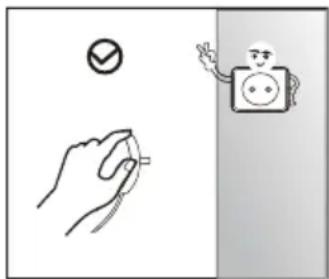
- Do not pull the power cord when pulling the power plug of the refrigerator.
Please firmly grasp the plug and pull out it from the socket directly.
• To ensure safe use, do not damage the power cord or use the power cord when it is damaged or worn.
natural_image
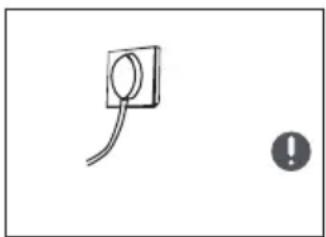
Simple line drawing of a plug with a cable and an exclamation mark (no text or symbols)- Please use a dedicated power socket and the power socket shall not be shared with other electrical appliances.
• The power plug should be firmly contacted with the socket or else fires might be caused. - Please ensure that the grounding electrode of the power socket is equipped with a reliable grounding line.

natural_image
Simple line drawing of a room interior with a window and cabinet, no text or symbols present- Please turn off the valve of the leaking gas and then open the doors and windows in case of leakage of gas and other flammable gases.
- Do not unplug the refrigerator and other electrical appliances considering that spark may cause a fire.

natural_image
Simple line drawing of a refrigerator with a top-mounted appliance and a hanging door (no text or symbols)- Do not use electrical appliances on the top of the appliance, unless they are of the type recommended by the manufacturer.
1.3 Warnings for using
natural_image
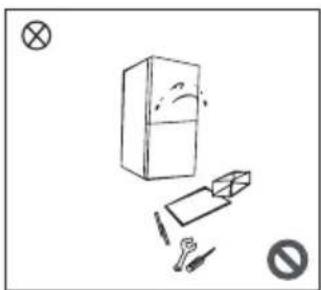
Simple line drawing of a refrigerator with a sad face, next to a box and tools (no text or symbols)- Do not arbitrarily disassemble or reconstruct the refrigerator, nor damage the refrigerant circuit; maintenance of the appliance must be conducted by a specialist
- Damaged power cord must be replaced by the manufacturer, its maintenance department or related professionals in order to avoid danger.
natural_image
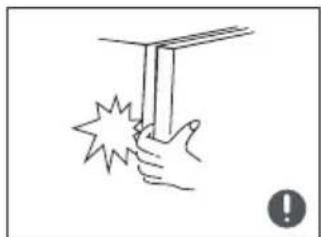
Simple line drawing of a hand holding a vertical object with a starburst effect, no text or symbols present.- The gaps between refrigerator doors and between doors and refrigerator body are small, be noted not to put your hand in these areas to prevent from squeezing the finger. Please be gentle when close the refrigerator door to avoid falling articles.
- Do not pick foods or containers with wet hands in the freezing chamber when the refrigerator is running, especially metal containers in order to avoid frostbite.

natural_image
Line drawing of a child hanging from an open refrigerator with no text or symbols- Do not allow any child to get into or climb the refrigerator; otherwise suffocation or falling injury of the child may be caused.
natural_image
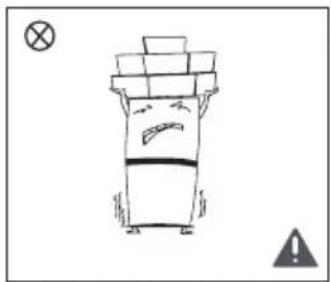
Cartoon illustration of a distressed, anthropomorphic object with a frowning face and a warning symbol (no text or labels)- Do not place heavy objects on the top of the refrigerator considering that objectives may fall when close or open the door, and accidental injuries might be caused.
1.4 Warnings for placement
natural_image
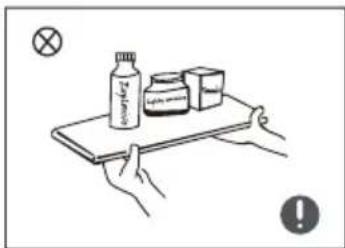
Illustration of a hand holding a tray with a bottle, a jar, and a box, with a crossed-out cross symbol (no text or labels)- Do not put flammable, explosive, volatile and highly corrosive items in the refrigerator to prevent damages to the product or fire accidents.
- Do not place flammable items near the refrigerator to avoid fires.

- The refrigerator is intended for household use, such as storage of foods; it shall not be used for other purposes, such as storage of blood, drugs or biological products, etc.

- Do not store beer, beverage or other fluid contained in bottles or enclosed containers in the freezing chamber of the refrigerator; or otherwise the bottles or enclosed containers may crack due to freezing to cause damages.
1.5 Warnings for energy
Warnings for energy
1) Refrigerating appliances might not operate consistently (possibility of defrosting of contents or temperature becoming too warm in the frozen food compartment) when sited for an extended period of time below the cold end of the range of temperatures for which the refrigerating appliance is designed.
2) The fact that effervescent drinks should not be stored in food freezer compartments or cabinets or in low-temperature compartments or cabinets, and that some products such as water ices should not be consumed too cold;
3) The need to not exceed the storage time(s) recommended by the food manufacturers for any kind of food and particularly for commercially quick-frozen food in food-freezer and frozen-food storage compartments or cabinets:
4) The precautions necessary to prevent an undue rise in the temperature of the frozen food while defrosting the refrigerating appliance, such as wrapping the frozen food in several layers of newspaper.
5) The fact that a rise in temperature of the frozen food during manual defrosting, maintenance or cleaning could shorten the storage life.
1.6 Warnings for disposal

Refrigerant and cyclopentane foaming material used for the refrigerator are flammable. Therefore, when the refrigerator is scrapped, it shall be kept away from any fire source and be recovered by a special recovering company with corresponding qualification other than be disposed by combustion, so as to prevent damage to the environment or any other harm.

When the refrigerator is scrapped, disassemble the doors, and remove gasket of door and shelves; put the doors and shelves in a proper place, so as to prevent trapping of any child.

Correct Disposal of this product:
This marking indicates that this product should not be disposed with other household wastes throughout the EU. To prevent possible harm to the environment or human health from uncontrolled waste disposal, recycle it responsibly to promote the sustainable reuse of material resources. To return your used device, please use the return and collection systems or contact the retailer where the product was purchased. They can take this product for environmental safe recycling.
PART 2: PROPER USE OF THE REFRIGERATOR
2.1 Placement
natural_image
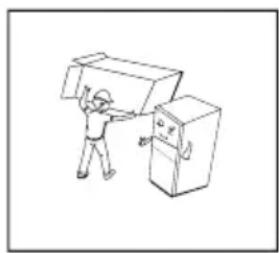
Simple line drawing of a person pushing a cardboard box next to an refrigerator (no text or symbols)- Before use, remove all packing materials, including bottom cushions, foam pads and tapes inside of the refrigerator; tear off the protective film on the doors and the refrigerator body.

natural_image
Simple line drawing of a refrigerator with a sad face, a potted plant, and sun symbols (no text or labels)- Keep away from heat and avoid direct sunlight. Do not place the freezer in moist or watery places to prevent rust or reduction of insulating effect.
- Do not spray or wash the refrigerator; do not put the refrigerator in moist places easy to be splashed with water so as not to affect the electrical insulation properties of the refrigerator.

natural_image
Simple line drawing of a refrigerator and a door (no text or symbols)- The refrigerator is placed in a well-ventilated indoor place; the ground shall be flat, and sturdy (rotate left or right to adjust the wheel for leveling if unstable).
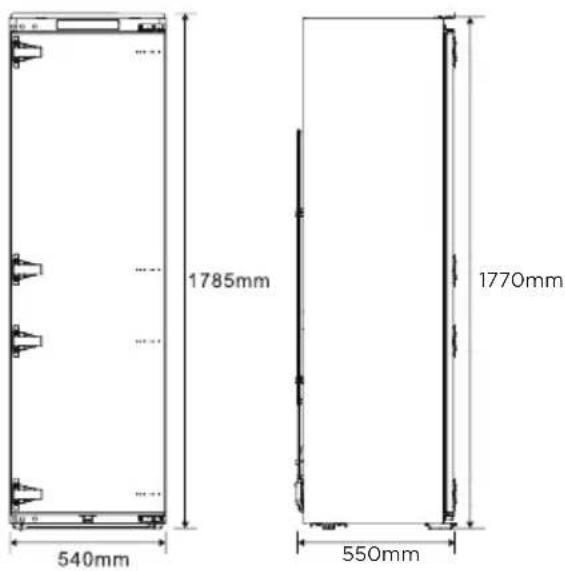
• Outer cabinet dimensions, please refer to shown as the left picture

- Spare enough space for convenient opening of the doors and drawers.

Precautions before installation:
Information in the Instruction Manual is only for reference. The physical product may differ. Before installation and adjusting of accessories, it shall be ensured that the refrigerator is disconnected from power.
2.2 Installation in cabinet
- Cabinet size requirement.

The skirting board and back of the cabinet shall be provided with a through heat dissipation channel
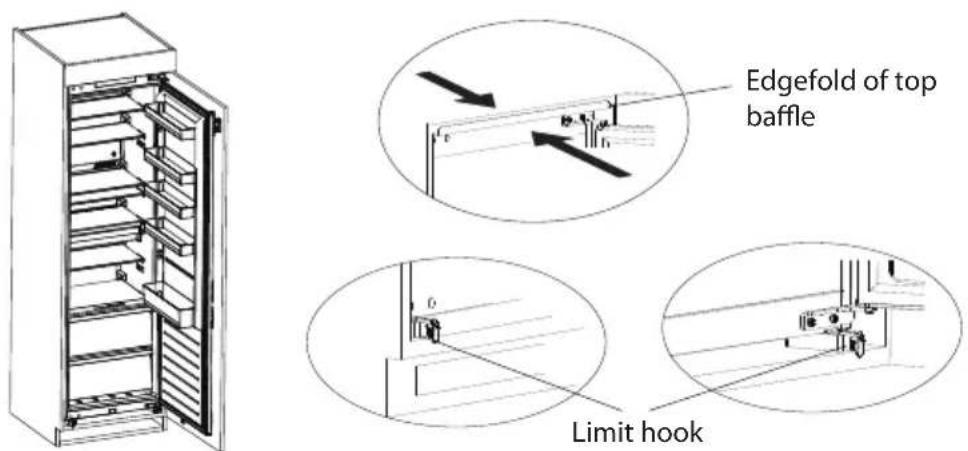
- Push the refrigerator into the cabinet and adjust it to make sure the edge fold of top baffle completely touch the top edge of the cabinet, and the limit hook of supporting leg completely touch the bottom edge of the cabinet.
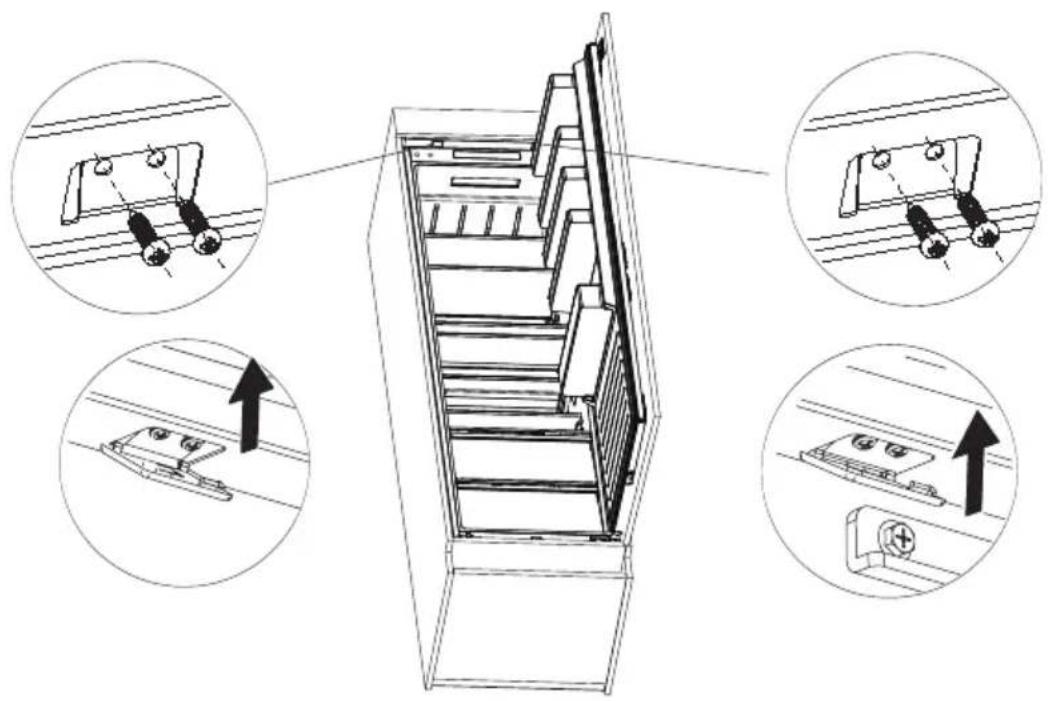
• Fix the supporting leg with screws, then install the screw caps.

• Fix the top baffle to the top of the cabinet inner with screws, then install the screw caps.
- Open the door of cabinet the maximum angle, and open the door of the refrigerator to the corresponding position. Sliding the block to make sure inner edge align with the door edge of refrigerator, then fix the block to the door of cabinet with screw and install screw caps.

natural_image
Technical line drawing of an open refrigerator with internal compartments and close-up insets showing internal components (no text or symbols)• Take out the sealing ship from accessory bag, and press it in the gap between the cabinet and the refrigerator. Installation is completed.

2.3 Door Right-Left Change
| List of tools to be provided by the user | |||
 | Cross screwdriver |  | Putty knife thin-blade screwdriver |
 | 5/16" socket and ratchet |  | Masking tape |
1) Power off the refrigerator, and remove all objects from the door trays.
2) Remove the upper hinge and hole caps of refrigerator door.

3) Remove the refrigerator door, the bottom hinge and the hole cover.

4) Exchange the R: bottom hinge and R: upper hinge, then install them according to below steps, and install the top hole caps.
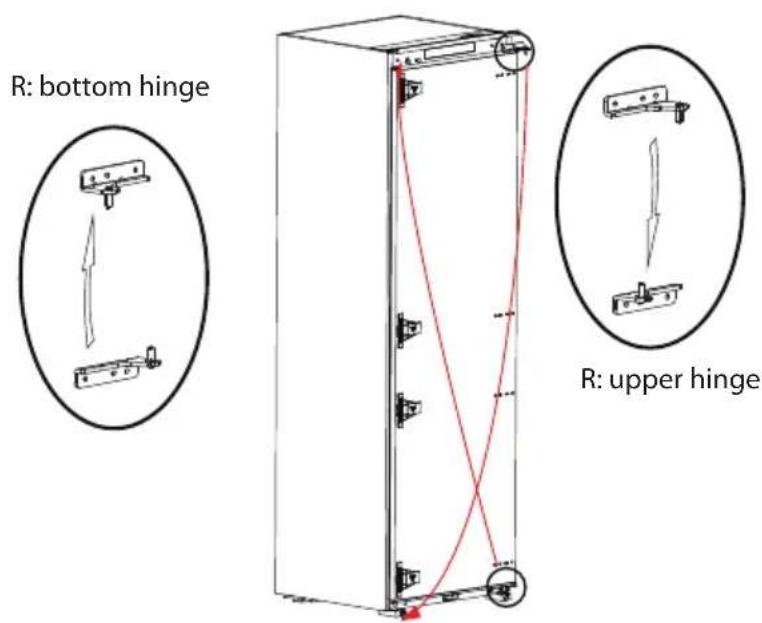
5) Remove the two fixed blocks of refrigerator door and rotate them for 180^ , and install them on other side of refrigerator door.

6) The picture after completion is shown as below

natural_image
Line drawing of a rectangular industrial cabinet or enclosure with mounting brackets and side panels (no text or symbols)(The picture above is only for reference. The actual configuration will depend on the physical product or statement by the distributor)
2.4 Changing the light
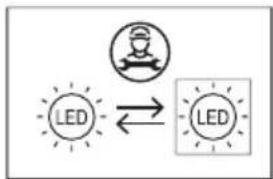
- Any replacement or maintenance of the LED lamps is intended to be made by the manufacturer, its service agent or similar qualified person.
flowchart
graph LR
    A["Person Icon"] --> B["LED"]
    B <--> C["LED"]
Light source in this product is replaceable only by qualified engineers.
 | 1. Please take out the plug before removal. | 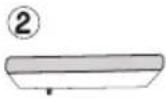 | 2. Remove the lampshade with a screwdriver. |
 | 3. Take down the lamp panel. | 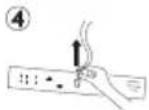 | 4. Remove the connection terminal. |
2.5 Starting
natural_image
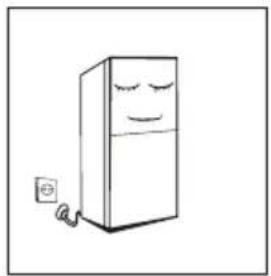
Simple line drawing of a smiling refrigerator with a power outlet (no text or symbols)- After transportation, please let the product stay for more than 2 hours before turning on the power, otherwise it will lead to a decrease in cooling capacity or a damage to the product.
- Before putting any fresh or frozen foods, the refrigerator shall have run for 2-3 hours, or for above 4 hours in summer when the ambient temperature is high.
- Please pull out the plug in case of power failure or cleaning. Do not connect the freezer to power supply within five minutes to prevent damages to the compressor due to successive starts.
2.6 Energy saving tips
- The appliance should be located in the coolest area of the room, away from heat producing appliances or heating ducts, and out of the direct sunlight.
- Let hot foods cool to room temperature before placing in the appliance. Overloading the appliance forces the compressor to run longer. Foods that freeze too slowly may lose quality, or spoil.
- Be sure to wrap foods properly, and wipe containers dry before placing them in the appliance.
This cuts down on frost build-up inside the appliance.
• Appliance storage bin should not be lined with aluminum foil, wax paper, or paper toweling.
Liners interfere with cold air circulation, making the appliance less efficient. - Organize and label food to reduce door openings and extended searches. Remove as many items as needed at one time, and close the door as soon as possible.
PART 3: STRUCTURE AND FUNCTIONS
3.1 Key components

( The picture above is only for reference. The actual configuration Will depend on the physical product or statement by the distributor )
Refrigerating chamber
- The Refrigerating Chamber is suitable for storage of a variety of fruits, vegetables, beverages and other food consumed in the short term, suggested storage time 3 days to 5 days.
• Cooking foods shall not be put in the refrigerating chamber until cooled to room temperature.
• Foods are recommended to be sealed up before putting into the refrigerator.
• The glass shelves can be adjusted up or down for a reasonable amount of storage space and easy use.
Drawers, food boxes, shelves, etc. placed according to the position in the picture above are the most energy efficient.
Note: Storage of too much food during operation after the initial connection to power may adversely affect the freezing effect of the refrigerator. Foods stored shall not block the air outlet; or otherwise the freezing effect will also be adversely affected.
This refrigerating appliance is not suitable for freezing foodstuffs
3.2 Functions

(The picture above is only for reference. The actual configuration Will depend on the physical product or statement by the distributor)
1) Key
A. Standby button
B. Temperature setting button
2) Temperature icons
1: 8^ C
2: 4^ C
3: 2^ C
4: Super cool
3) Display
1) When powering on for the first time, the display will be displayed for 3 seconds, while the startup bell will ring, and then the display will enter normal operation;
(The temperature of the refrigerator is set at 2 gear which mean 4^ when it is powered on for the first time).
2) Display the fault code when there is a fault (cyclic display); Display the set temperature of the refrigeration room when there is no trouble.
3) When the refrigerated door is closed to open, the display board is bright, and it will be extinguished within 30 seconds after the door is closed;
Display board off state, press any key, display board light, and then can be adjusted operation.
| Fault Code Fault Description | |
| LED1\LED2 Light blinking Refrigerator temperature sensor circuit | |
| LED1\LED3 Light blinking Refrigerator defrost sensor | |
| LED2\LED4 Light blinking Commcardfault | |
| LED1\LED4 Light blinking Ambient temperature sensor | |
4) Gear setting
Every time you press the button, the gear will change once. After setting the gear for 15 seconds, the refrigerator will run according to the set value.
Gear adjustment is:

flowchart
graph LR
    A["setting 1 setting 2 setting 3 setting 4"] --> B["→"]
    B --> C["→"]
Recommended setting temperature: refrigerator room 4°C;
5) Lock and unlock
No lock or unlock function.
The setting takes effect 15 seconds after no operation.
6) Operation of door opening prompt and alarm control
When the refrigerator door is opened and the door is open for 120 seconds, the buzzer will alarm until the refrigerator door is closed. Or press any key to cancel the buzzer alarm.
7) Standby mode
Hold down the standby button for 10 seconds to enter the standby mode. All loads are off and the display goes off.
In standby mode, hold down the standby button for 10 seconds to restore normal control.
8) Super cool mode
Mode entry:
Under refrigerator mode , press the button TEMP. until the icon lighten
Mode exit:
During Super cool mode, it will exit this mode automatically after running for 360 minutes or temperature setting or mode setting.
PART 4: MAINTENANCE AND CARE OF THE REFRIGERATOR
4.1 Overall cleaning
- Dusts behind the refrigerator and on the ground shall be timely cleaned to improve the cooling effect and energy saving.
- Check the door gasket regularly to make sure there are no debris. Clean the door gasket with a soft cloth dampened with soapy water or diluted detergent.
• The interior of the refrigerator should be cleaned regularly to avoid odor. - Please turn off the power before cleaning interior, remove all foods, drinks .shelves, drawers, etc.
- Use a soft cloth or sponge to clean the inside of the refrigerator, with two tablespoons of baking soda and a quart of warm water. Then rinse with water and wipe clean. After cleaning, open the door and let it dry naturally before turning on the power.
- For areas that are difficult to clean in the refrigerator (such as narrow sandwiches, gaps or corners), it is recommended to wipe them regularly with a soft rag, soft brush, etc. and when necessary, combined with some auxiliary tools (such as thin sticks) to ensure no contaminants or bacterial accumulation in these areas.
- Do not use soap, detergent, scrub powder, spray cleaner, etc., as these may cause odors in the interior of the refrigerator or contaminated food.
- Clean the bottle frame, shelves and drawers with a soft cloth dampened with soapy water or diluted detergent. Dry with a soft cloth or dry naturally.
- Wipe the outer surface of the refrigerator with a soft cloth dampened with soapy water, detergent,etc., and then wipe dry.
- Do not use hard brushes, clean steel balls, wire brushes, abrasives (such as toothpastes), organic solvents (such as alcohol, acetone, banana oil, etc.), boiling water, acid or alkaline items, which may damage the fridge surface and interior. Boiling water and organic solvents such as benzene may deform or damage plastic parts.
- Do not rinse directly with water or other liquids during cleaning to avoid short circuits or affect electrical insulation after immersion.

natural_image
Illustration of various household items including a gas vial, alcohol spray bottle, teapot, and no-smoking symbol (no text or labels)
Please unplug the refrigerator for defrost and cleaning.
4.2 Defrosting
- The refrigerator is made based on the air-cooling principle and thus has automatic defrosting function. Frost formed due to change of season or temperature may also be manually removed by disconnection of the appliance from power supply or by wiping with a dry towel.
4.3 Out of operation
- Power failure: In case of power failure, even if it is in summer, foods inside the appliance can be kept for several hours; during the power failure, the times of door opening shall be reduced, and no more fresh food shall be put into the appliance.
- Long-time nonuse: The appliance shall be unplugged and then cleaned; then the doors are left open to prevent odor.
- Moving: Before the refrigerator is moved, take all objects inside out, fix the glass partitions, vegetable holder, freezing chamber drawers and etc. with tape, and tighten the leveling feet; close the doors and fix them with tape. During moving, the appliance shall not be laid upside down or horizontally, or be vibrated; the inclination during movement shall be no more than 45°.

The appliance shall run continuously once it is started. Generally, the operation of the appliance shall not be interrupted; otherwise the service life may be impaired
PART 5: TROUBLESHOOTING
You may try to solve the following simple problems by yourself. If them cannot be solved, please contact the after-sales department.
| Failed operation | Check whether the appliance is connected to power or whether the plug is in well contactCheck whether the voltage is too lowCheck whether there is a power failure or partial circuits have tripped |
| Odor | Odorous foods shall be tightly wrappedCheck whether there is any rotten foodClean the inside of the refrigerator |
| Long-time operation of the compressor | Long operation of the refrigerator is normal in summer when the ambient temperature is highIt is not suggestible having too much food in the appliance at the same timeFood shall get cool before being put into the applianceThe doors are opened too frequently |
| Light fails to get lit | Check whether the refrigerator is connected to power supply and whether the illuminating light is damaged |
| Doors cannot be properly closed | The door is stuck by food packages.Too much food is placedThe refrigerator is tilted |
| Loud noise | Check whether the floor is level and whether the refrigerator is placed stablyCheck whether accessories are placed at proper locations |
| Door seal fails to be tight | Remove foreign matters on the door sealHeat the door seal and then cool it for restoration (or blow it with an electrical drier or use a hot towel for heating) |
| Water pan overflows | There is too much food in the chamber or food stored contains too much water,resulting in heavy defrostingThe doors are not closed properly, resulting in frosting due to entry of air and increased water due to defrosting |
| Hot housing | Heat dissipation of the built-in condenser via the housing, which is normalWhen housing becomes hot due to high ambient temperature, storage of too much food or shutdown of the compressor is shut down, provide sound ventilation to facilitate heat dissipation |
| Surface condensation | Condensation on the exterior surface and door seals of the refrigerator is normal when the ambient humidity is too high. Just wipe the condensate with a clean towel. |
| Abnormal noise | Buzz: The compressor may produce buzzes during operation, and the buzzes are loud particularly upon start or stop. This is normal.Creak: Refrigerant flowing inside of the appliance may produce creak, which is normal. |
Table 1 Climate classes
| Class | Symbol Ambient temperature range °C |
| Extended temperate | SN + 10 to + 32 |
| Temperature | N + 16 to + 32 |
| Subtropical | ST + 16 to + 38 |
| Tropical | T + 16 to + 43 |
Extended temperate: 'this refrigerating appliance is intended to be used at ambient temperatures ranging from 10 °C to 32 °C';
temperate: 'this refrigerating appliance is intended to be used at ambient temperatures ranging from 16 °C to 32 °C';
Subtropical: 'this refrigerating appliance is intended to be used at ambient temperatures ranging from 16 °C to 38 °C';
Tropical: 'this refrigerating appliance is intended to be used at ambient temperatures ranging from 16 °C to 43 °C';
Dear customer
- If you want to return or replace the product, please contact the store where you buy.
(Remember to bring the purchase invoice)
- If your product breaks down which needs to repair, please contact after-sales service provider.
Telephone:
Email address:
PART 6: PRODUCT INFORMATION SHEET
Product Information Sheet PHILCO  | |||||
| COMMISSION DELEGATED REGULATION (EU) 2019/2016 with regard to energy labelling of refrigerating appliances | |||||
| Supplier's name or trademark: PHILCO | |||||
| Supplier's address: PHILCO, U Sanitasu 1621, 25101 Ríčany, CZ | |||||
| Model identifier: PTL 1772 DNBI | |||||
| Type of refrigerating appliance: | |||||
| Low-noise appliance: No Design type: built-in | |||||
| Wine storage appliance: No Other refrigerating appliance: Yes | |||||
| General product parameters: | |||||
| Parameter Value Parameter Value | |||||
| Overall dimensions (millimetre) | Height 1 785 | Total volume (dm3 or l) 304 | |||
| 540 | |||||
| Depth | 550 | ||||
| Energy efficiency Index (EEI) | 79 | Energy efficiency class* | D | ||
| Airborne acoustical noise emissions (dB(A) re 1 pW) | 35 | Airborne acoustical noise emission class | B | ||
| Annual energy consumption (kWh/a) | 90 | Climate class: | extended temperate, temperate, subtropical, tropical | ||
| Minimum ambient temperature (°C), for which the refrigerating appliance is suitable | 10 | Maximum ambient temperature (°C), for which the refrigerating appliance is suitable | 43 | ||
| Winter setting | No | ||||
| Compartment Parameters: | |||||
| Compartment type | Compartment parameters and values | ||||
| Compartment volume (dm3 or l) | Recommended temperature setting for optimized food storage (°C) These settings shall not contradict the storage conditions set out in Annex IV, Table 3 | Freezing capacity (kg/24h) | Defrosting type (auto-defrost=A, manual defrost=M) | ||
| Pantry | No | - | - | - | - |
| Wine storage | No | - | - | - | - |
| Cellar No - - - - | |||||
| Fresh food Yes 304.0 4 - A | |||||
| Chill No - - - - | |||||
| 0-star or ice-making | No - - - - | ||||
| 1-star No - - - - | |||||
| 2-star No - - - - | |||||
| 3-star No - - - - | |||||
| 4-star No - - - - | |||||
| 2-star section No - - - - | |||||
| Variable temperature compartment | - - - - - | ||||
| For 4-star compartments | |||||
| Fast freeze facility No | |||||
| Light source parameters: | |||||
| Type of light source LED | |||||
| Energy efficiency class | F | ||||
| Minimum duration of the guarantee offered by the manufacturer: 24 months | |||||
| Additional information: | |||||
| Weblink to the manufacturer's website, where the information in point 4(a) Annex of Commission Regulation (EU) 2019/2019 is found: https://www.fastcr.cz | |||||
TECHNICAL INFORMATION
Technical information can be found on the type plate on the inside of the appliance and on the energy label. The QR code, on the supplied energy label, contains a link to register the appliance in the EU Eprel database. Keep the energy label, the instructions for use, together with other documents supplied with the device.
TESTING INFORMATION
The delivered device is in accordance with Ecodesign a EN 62552-1:2020, EN 62552-2:2020, EN 62552-3:2020 EN 60704-1:2021 EN 60704-2-14:2013+A11:2015+A1:2019. Air access requirements for proper operation of the device, the minimum distance from the wall and the dimensions of the device are part of this manual. If you have any further questions, please contact the manufacturer.
CUSTOMER CARE AND SERVICE
Always use original spare parts.
Model name and serial number can be found on the rating plate. Position of rating plate can be changed without notice.
The original spare parts for some specific components are available for a minimum of 7 or 10 years, based on the type of component, from the placing on the market of the last unit of the model.
When contacting our authorized service, have the model designation, serial number and defect description available.
To download documents, visit www.philco.cz.
To report a defect and obtain additional service information, visit https://philco.cz/podpora-a-servis.
Subject to change without notice.
INSTRUCTIONS AND INFORMATION REGARDING THE DISPOSAL OF USED PACKAGING MATERIALS
Dispose of packaging material at a public waste disposal site.
DISPOSAL OF USED ELECTRICAL AND ELECTRONIC APPLIANCES
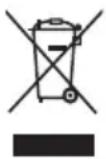
The meaning of the symbol on the product, its accessory or packaging indicates that this product shall not be treated as household waste. Please, dispose of this product at your applicable collection point for the recycling of electrical & electronic equipment waste. Alternatively in some states of the European Union or other European states you may return your products to your local retailer when buying an equivalent new product. The correct disposal of this product will help save valuable natural resources and help in preventing the potential negative impact on the environment and human health, which could be caused as a result of improper liquidation of waste. Please ask your local authorities or the nearest waste collection centre for further details. The improper disposal of this type of waste may fall subject to national regulations for fines.
For business entities in the European Union
If you wish to dispose of an electrical or electronic device, request the necessary information from your seller or supplier.
Disposal in other countries outside the European Union
If you wish to dispose of this product, request the necessary information about the correct disposal method from local government departments or from your seller.

This product meets all the basic EU regulation requirements that relate to it.
Changes to the text, design and technical specifications may occur without prior notice and we reserve the right to make these changes.
The English version of the manual is a translation of the original operating manual, which is in Czech.
CHLADNIČKA
NÁVOD K POUŽITÍ
PHILCO

Famous for Quality the World Over
PTL 1772 DNBI
Vážený zákazníku,
natural_image
Simple line drawing of a plug with a circular socket and a warning symbol (no text or labels)natural_image
Simple line drawing of a room interior with a window and furniture (no text or symbols)natural_image
Line drawing of a refrigerator with a top-mounted appliance and a hanging door (no text or symbols)natural_image
Simple line drawing of a refrigerator with a sad face, next to a box and tools (no text or symbols)natural_image
Simple line drawing of a hand holding a vertical object with a starburst effect, no text or symbols present.natural_image
Line drawing of a person inside an open refrigerator with no text or symbolsnatural_image
Simple line drawing of a distressed object with a sad face and a warning symbol (no text or labels)natural_image
Illustration of a hand holding a tray with a bottle, a jar, and a box, with a crossed-out cross symbol (no text or labels)natural_image
Simple line drawing of a person carrying a large box next to an appliance (no text or symbols)natural_image
Simple line drawing of a refrigerator with a sad face, sun, and potted plant (no text or symbols)natural_image
Simple line drawing of a smiling refrigerator next to a wall-mounted refrigerator (no text or symbols)natural_image
Technical line drawing of an open refrigerator with internal compartments and close-up insets showing internal components (no text or symbols)natural_image
Line drawing of a rectangular industrial cabinet or enclosure with mounting brackets and side panels (no text or symbols)natural_image
Simple line drawing of a smiling refrigerator with a power outlet (no text or symbols)Famous for Quality the World Over
PTL 1772 DNBI
Vážený zákazník,
natural_image
Simple line drawing of a plug with a cable and an exclamation mark (no text or symbols)natural_image
Simple line drawing of a room interior with a window and a door, no text or symbols presentnatural_image
Simple line drawing of a refrigerator with a top-mounted appliance and a hanging door (no text or symbols)natural_image
Simple line drawing of a refrigerator with a sad face, next to a box, tools, and a magnifying glass (no text or symbols)natural_image
Simple line drawing of a hand holding a book with a starburst effect, no text or symbols presentnatural_image
Line drawing of a child hanging from an open refrigerator with no text or symbolsnatural_image
Simple line drawing of a distressed, anthropomorphic object with a cross and warning symbol (no text or labels)natural_image
Simple line drawing of a person carrying a large box next to an appliance (no text or symbols)natural_image
Simple line drawing of a refrigerator with a sad face, sun, and potted plant (no text or symbols)natural_image
Simple line drawing of a smiling refrigerator next to a wall-mounted door (no text or symbols)natural_image
Technical line drawing of an open refrigerator with internal compartments and close-up insets showing internal components (no text or symbols)natural_image
Simple line drawing of a mechanical device inside an oval frame, showing a lever and handle (no text or symbols)
natural_image
Technical line drawing of a vertical cabinet with red curved lines indicating internal components (no text or symbols)
natural_image
Simple line drawing of a knife inserted into a clip inside an oval frame (no text or symbols)R: horný záves
5) Demontujte dva pevné bloky dvierok spotrebiča a otočte ich o 180° a nainštalujte ich na druhú stranu dvierok spotrebiča.

natural_image
Line drawing of a rectangular industrial cabinet or enclosure with mounting brackets and side panels (no text or symbols)natural_image
Simple line drawing of a smiling refrigerator with a power outlet (no text or symbols)- CONTENTS
- PART 1: SAFETY INFORMATION....2
- PART 2: PROPER USE OF THE REFRIGERATOR....16
- PART 3: STRUCTURE AND FUNCTIONS....26
- PART 4: MAINTENANCE AND CARE OF THE REFRIGERATOR....29
- PART 5: TROUBLESHOOTING....31
- PART 6: PRODUCT INFORMATION SHEET ......33
- R600a
- REFRIGERANT
- WARNING : RISK OF FIRE / FLAMMABLE MATERIALS
- ELECTRICAL SAFETY
- DAILY USE
- INSTALLATION IMPORTANT!
- Meanings of safety warning symbols
- Electricity related warnings
- Warnings for using
- Warnings for placement
- Warnings for energy
- Warnings for energy
- Warnings for disposal
- PART 2: PROPER USE OF THE REFRIGERATOR
- Placement
- Installation in cabinet
- Door Right-Left Change
- Changing the light
- Starting
- Energy saving tips
- PART 3: STRUCTURE AND FUNCTIONS
- Key components
- Refrigerating chamber
- Functions
- 1) Key
- 2) Temperature icons
- 3) Display
- 4) Gear setting
- 5) Lock and unlock
- 6) Operation of door opening prompt and alarm control
- 7) Standby mode
- 8) Super cool mode
- PART 4: MAINTENANCE AND CARE OF THE REFRIGERATOR
- Overall cleaning
- Defrosting
- Out of operation
- PART 5: TROUBLESHOOTING
- Dear customer
- PART 6: PRODUCT INFORMATION SHEET
- TECHNICAL INFORMATION
- TESTING INFORMATION
- CUSTOMER CARE AND SERVICE
- INSTRUCTIONS AND INFORMATION REGARDING THE DISPOSAL OF USED PACKAGING MATERIALS
- DISPOSAL OF USED ELECTRICAL AND ELECTRONIC APPLIANCES
- For business entities in the European Union
- Disposal in other countries outside the European Union
- CHLADNIČKA
- NÁVOD K POUŽITÍ
- PHILCO
Brand : Philco
Model : PTL 1772 DNBI
Category : Refrigerator