
AKL 536 - Microwaves IGNIS - Free user manual and instructions
Find the device manual for free AKL 536 IGNIS in PDF.


| Product Type | Microwave |
| Brand | Ignis |
| Model | AKL 536 |
| Dimensions (W x H x D) | 48.5 x 28.5 x 35.0 cm |
| Weight | 12.5 kg |
| Power Supply | 230 V, 50 Hz |
| Power Consumption | 1200 W |
| Microwave Power | 800 W |
| Capacity | 20 L |
| Functions | Defrost, Auto Cook, Express Cooking, Timer, Clock |
| Control Type | Rotary knobs and push buttons |
| Display | LED |
| Safety Features | Child lock, Door safety interlock |
| Interior Material | Stainless steel |
| Cleaning | Wipe interior with damp cloth; do not use abrasive cleaners |
| Spare Parts | Available through authorized service centers |
| User Manual | Downloadable from notice-facile.com |
Frequently Asked Questions - AKL 536 IGNIS
User questions about AKL 536 IGNIS
0 question about this device. Answer the ones you know or ask your own.
Ask a new question about this device
Download the instructions for your Microwaves in PDF format for free! Find your manual AKL 536 - IGNIS and take your electronic device back in hand. On this page are published all the documents necessary for the use of your device. AKL 536 by IGNIS.
USER MANUAL AKL 536 IGNIS
Electrical connection
Prior to connecting, check that the voltage on the rating plate corresponds to the voltage in your home.
The earthing of this appliance is compulsory by law. The manufacturer will accept no responsibility for injury to persons or damage to objects arising from the non-observance of this requirement.

WARNING!
THIS APPLIANCE MUST BE EARTHED!

Before you operate the oven
Please read the instructions and guarantee information and keep for future reference.
Please complete the guarantee card and send to our Service Department.
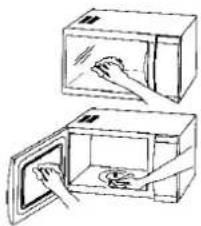
Make sure that the appliance is not damaged. Check that the oven door closes firmly against the door support and that the internal door seal is not damaged. Empty the oven and clean inside it with a soft, damp cloth.
natural_image
Two hand-drawn diagrams showing a microwave oven with lid and lid removed, no text or symbols present.Place the oven on a stable, even surface that is strong enough to hold the oven and the food utensils you put in it. The control side of the unit is the heavy side. Use care when handling.
Place the oven at a distance from other heating sources. The cooling air, which is taken in by the oven, must not exceed 35^ C temperature. For sufficient ventilation there must be a space of at least 10 cm above the oven.
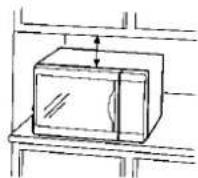
The ventilation openings on the oven must not be covered. Blocking the air intake or exhaust vents may cause damage to the oven and poor cooking results. Make sure the microwave oven feet are in place to ensure proper airflow.
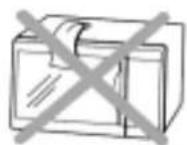
The oven can be operated only if the oven door is firmly closed.
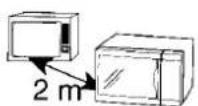
Poor television reception and radio interference may result if the oven is located close to a TV, radio or aerial.
The packaging material is recyclable and marked with the symbol for recycling ⚙.
Do not operate this appliance if it has a damaged mains cord or plug, if it is not working properly, or if it has been damaged or dropped. Electrical shock, fire or other hazards may result.
Do not immerse the mains cord or plug in water. Keep the cord away from hot surfaces.
Do not let the mains cord hang over edge of table or counter.
Do not store or use this appliance outdoors. Do not use this product near a kitchen sink, in a wet basement, or near a swimming pool, or similar.
Do not use the cavity for storage purposes. Do not leave paper products, cooking utensils, or food in the cavity when not in use.
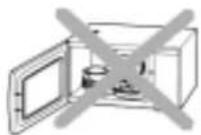
Never lean on the door or allow a child to swing on it when the door is open. Injury could result.
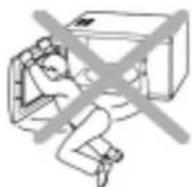

WARNING!
The appliance should not be operated without food in the oven when using microwaves. Operation in this manner is likely to damage the appliance.
If you practice operating the oven, put a glass of water inside. The water will absorb the microwave energy and the oven will not be damaged.
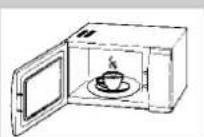
Important when using your microwave oven
Do not heat, store or use flammable materials in or near the oven. Fumes can create a fire hazard or explosion.
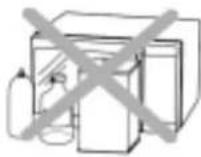
Do not use your microwave oven for cooking or reheating whole eggs with or without shell since they may explode.
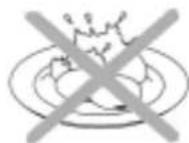
Use this appliance only for its intended use as described in this manual.
Do not use corrosive chemicals or vapours in this appliance. This type of oven is specifically designed to heat or cook food. It is not designed for industrial or laboratory use.
Do not over-cook food. Fire could result.
Do not use your microwave oven for drying textiles, paper, spices, herbs, wood, flowers, fruit or other combustible materials. Fire could result.
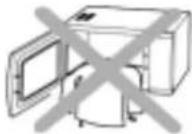
Do not leave the oven unattended, especially when using paper, plastic or other combustible materials in the cooking process. Paper can char or burn, and some plastics can melt if used when heating foods. As with any appliance, close supervision is necessary when used by children.
Remove wire twist-ties from paper or plastic bags before placing bag in the oven.
If material inside the oven should ignite, keep oven door closed, turn the oven off and disconnect the power cord or shut off power at the fuse or circuit breaker panel.
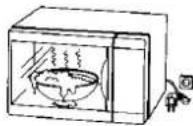
When heating liquids, e.g. beverages or water in your microwave oven, overheating the liquid beyond boiling point can occur without evidence of bubbling. This could result in a sudden boil over of the hot liquid.
To prevent this possibility the following steps should be taken:
- Avoid using straight-sided containers with narrow necks.
- Stir the liquid before placing the container in the oven and let the teaspoon remain in the container.
- After heating, allow to stand for a short time, stirring again before carefully removing the container from the oven.
WARNING!
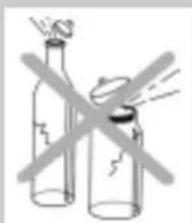
Do not use your microwave oven for heating food or liquids in airtight sealed containers. The pressure increases and may cause damage when opening or may explode.
natural_image
Two glass bottles with a crossed-out black-and-white symbol, no text or labels present.Some foods which have a low water content e.g. oil, chocolate and some pastries with sweet fillings, must be heated carefully.
Do not use your microwave oven for deep frying, because you cannot control the oil temperature.
One of the major advantages of microwave ovens is the short cooking time. Therefore, do not exceed recommended times for cooking or re-heating food.
Always refer to a microwave cookbook for details, especially if cooking or reheating food that contains alcohol.
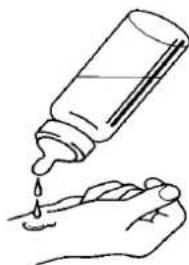
After heating baby food or liquids in a baby bottle or in a baby food jar, always stir and check the temperature before serving. This will ensure that the heat is evenly distributed and the risk of scalding or burns can be avoided. Ensure the Lid and the Teat are removed before heating!
natural_image
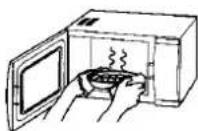
Line drawing of a hand holding a bottle with liquid being poured into the cup (no text or symbols)Use hot pads. Microwave energy does not heat containers, but the hot food does. Use oven mitts when touching containers, oven parts, and pan after cooking to prevent burns.
Control panel and symbol description
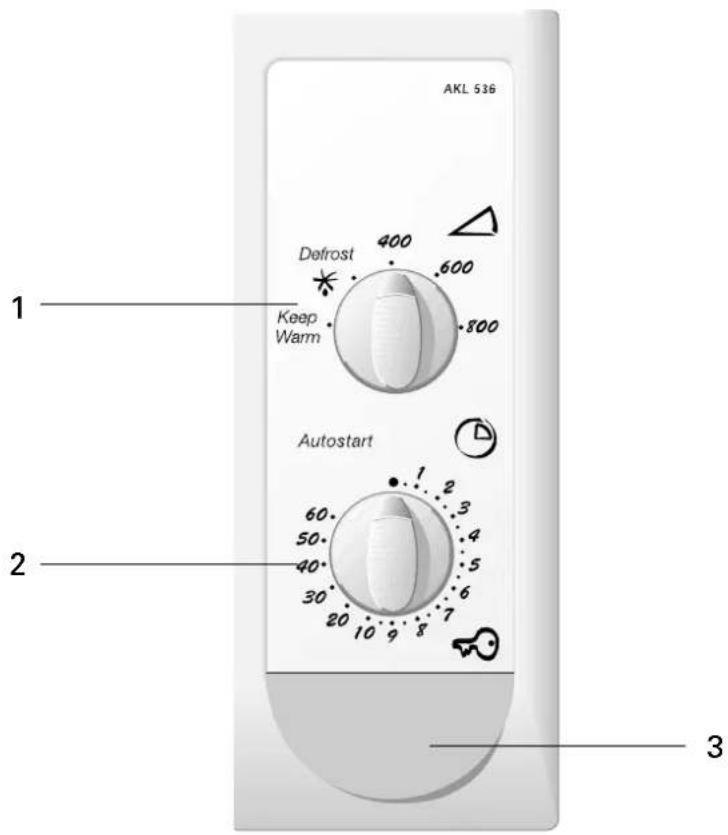
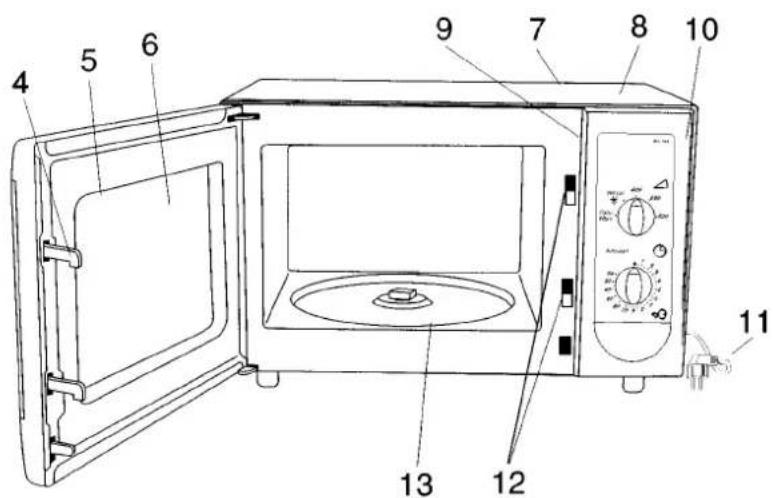
1 Power knob. Use this knob to set the desired power level.
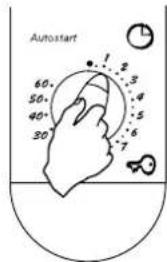
2Timer knob. 0 - 60 minutes. Use this knob to set the cooking time.
3Open door
4Door latches
5Door seal
6Door glass
7Ventilation openings
8Cabinet
9Service code
10Control panel
11Mains cord
12Door locks
13Roller Cross Locator

Cooking time symbol

Microwave symbol

Defrost symbol

Acoustic signal
Standard accessories
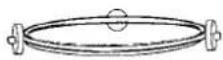
Turn table support
Use the Turn table support under the Glass Turn-table. Never put other utensils than the Glass Turn-table directly on the Turn table support. The Turn table support may be cleaned in dishwashers.
* Fit the Turn table support on its locator in the oven.
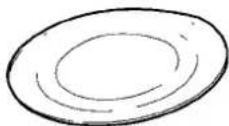
Glass turn-table
Use the Glass Turn-table with all cooking methods. The Glass Turn-table collects the dripping juices and food particles that otherwise would stain and soil the interior of the oven. The Glass Turn-table may be a dishwashers.
* Place the Glass Turn-table on the Turn table support.
Time and power
How to use time and power
- Turn the POWER knob to select a desired Power level.
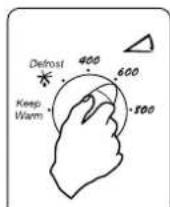
- Turn the TIMER knob until the required time is indicated.
* The Cooking process begins.
* The Cavity lamp lights up.
* The Fan operates.
Note:
Both Time and Power are possible to change during cooking.

When the cooking time has elapsed an acoustic signal sounds and the cooking process is switched off.
How to set times less than 1 minute
- Turn the TIMER knob until the required time is indicated.
* The Cooking process begins.
* The Cavity lamp lights up.
* The Fan operates.
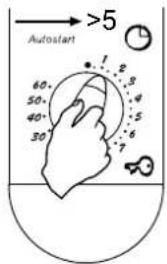
- Turn the TIMER knob back to the desired time.
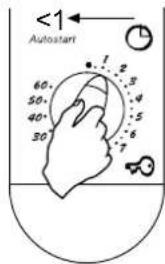

When the cooking time has elapsed an acoustic signal sounds and the cooking process is switched off.
Cooking interruption
To interrupt the cooking process:
If you wish to check, stir or turn the food just open the door and the cooking process automatically stops.
To restart the cooking process:
Close the door. The oven starts automatically.
Note: The cooking process continues from where it was interrupted.
If you don't want to continue cooking:
Remove the food, turn the TIMER knob to "0" and close the door.
If you don't interrupt the cooking process:
When the cooking process is finished an acoustic signal sounds and the cooking process is switched off.

Note:
It is possible to change both time and power during cooking.
How to choose power level?
800 W
-- Fast reheat of beverages, water, clear soups, coffee, tea or other food with a high water content. If the food contains egg or cream choose a lower power.
-- To be used for cooking of vegetables, fish, meat etc.
600 W
-- To be used when cooking dishes which cannot be stirred, e.g.: gratins.
-- To be used when more careful cooking is required e.g. high protein sauces, cheese and egg dishes and to finish cooking casseroles.
400 W
-- To be used when simmering stews and cooking fish-based dishes.
Defrost
-- To be used for manual defrosting.
Keep warm
-- Keep warm. To be used for softening butter, cheese and ice cream.
Working with microwaves
Microwaves - what are they?
Microwaves are like TV waves or light waves. You cannot see them, but you can see their effect.
Just like ordinary daylight passes through glass, clear plastic and air, the microwaves have the ability to go through materials like paper, glass, porcelain, plastic and air.
These materials do not contain water or metal and will consequently not be heated up by the microwaves. The microwaves are
reflected by metal in the same way as light is reflected by a mirror.
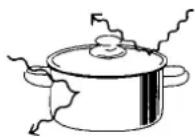
Microwaves are absorbed by water, oil and fat. The water, oil and fat molecules are exited by microwaves and rub against each other, just like when you rub your hands quickly against each other and heat is produced. The speed of rubbing determines the temperature. Microwave energy is not hot. It simply causes the food to make its own heat.
Food always contains water. When we heat the food with microwaves the water molecules in the food are excited and heat is produced. The microwaves reach into the food and at the same time enters the food from all directions.
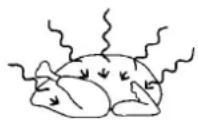
Microwave heating
That's why the food is heated so rapidly.
You save time when cooking with a microwave oven. You usually also save energy, especially when cooking small amounts of food.
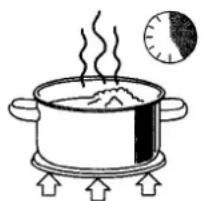
If you boil fish in a sauce-pan with water, the electrical energy must first heat the hot-plate. The heat must transfer from the hot-plate to the sauce-pan and from the sauce-pan to the water which then will heat the fish.
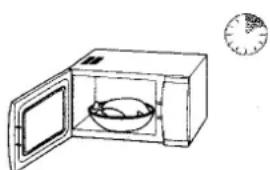
In a microwave oven the electrical energy is converted to microwaves and almost all of the microwave energy is then converted to heat inside the food
When we heat food with infra waves (Grill or hot air), in a normal oven, the heat is applied on the surface of the food and then conducts (transfers) to the centre of the food. Food has a rather poor ability to conduct heat and it therefore takes a long time to heat the food.
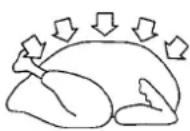
Grill heating
natural_image
Illustration of a cooking pot with steam rising, showing a time dial and upward arrows (no text or symbols)Cook time 20 - 25 min.
natural_image
Line drawing of a microwave oven with an open door and a circular dial on the right (no text or symbols)Cook time 10 min.
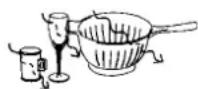
Utensils and cooking containers used in a microwave oven should be of a material that allows microwaves to pass freely through them. Generally this means that you should cook in either (paper), plastic, glass or ceramic.
Utensils made of china and ceramic are excellent to use in your microwave oven. Most types of glass are also very good. Lead crystal glass can crack and should therefore, not be used. Coloured glass or glass with decorations shall be avoided since metal e.g. gold, might be part of the decoration and such decorations will be damaged.
Plastics and paper can also be used, provided they can withstand the temperature of the heated food. For cooking only use plastics, which will withstand a temperature of over 120^ C. Some plastic materials, e.g. melamine, will be heated by the microwaves, and be damaged.
Round or oval shapes give the most even cooking. Square or rectangular containers may over-cook foods in the corners because more energy is absorbed there. Shallow containers give more even cooking results.
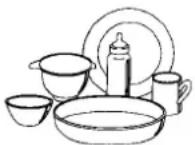
Suitable
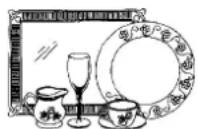
Not suitable
Metal containers, e.g. saucepans or frying pans should not be used in microwave ovens.
Microwaves cannot penetrate metal. They will bounce off any metal object in the oven just as they bounce off the metal walls of the oven and cause "arcing", a phenomenon that resembles lightning.
Small pieces of aluminium foil can be used, but only to shield the areas that would over-cook (e.g. for covering chicken wings, leg tips and fish tails) but the foil must not touch the side of the oven as arcing (damage) may occur.
| Material Microvawe | cooking |
| Glass (general) Yes (1)Glass (heat resistant) YesGlass-ceramic and ceramic (heat resistant) Yes (1)Earthenware YesChina (heat resistant) YesPlastic (general) Yes (2)Plastic (heat resistant) Yes (2)Aluminium foil containers / aluminium foil Yes (3)Metal (pots, Pans, etc.) NoPaper Yes | |
| 1. Without metal parts or metal trims.2. Some plastics are heat-proof only to certain temperatures.3. It is possible to use aluminium foil to shield delicate areas of food(this prevents over-cooking). | |
- Without metal parts or metal trims.
- Some plastics are heat-proof only to certain temperatures.
- It is possible to use aluminium foil to shield delicate areas of food (this prevents over-cooking).
To find out if a certain container is suitable, the following simple test can be made:
Place the empty container and a glass of water inside the microwave oven. The water is needed because the oven must not be operated empty or with empty
containers. Let the oven work on full power for one minute.
A suitable container will only be lukewarm.
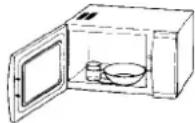

CAUTION!
There are a number of accessories available on the market. Before you buy, make sure they are suitable for microwave use.
When you put food in the microwave oven, make sure that food, food supports or covering do not come in direct contact with any of the internal walls or the ceiling of the cavity.
Aluminium foil containers and microwaves
It is now possible to use disposable aluminium foil containers in this new generation of microwave ovens, providing these simple rules are followed:
* Always remove foil-laminated fibre board lid from the container before heating, otherwise oven damage can occur.
* Only undamaged foil containers may be used.
* Aluminium foil containers with a height exceeding 3 cm should be avoided and the container must be at least 2/3 full.
* There must be a minimum of 1 cm between the aluminium foil container and the walls of the oven, to avoid sparking.
* Aluminium foil containers should always be used singly in a microwave oven, and placed on the glass turn-table provided.
* Follow the instructions provided by the food producer to ensure thorough heating of the food product throughout.
* If you are using a foil container for self produced foods they may take longer to heat than when using plastic, glass, porcelain or paper containers. Always ensure the food is piping hot (minimum 72 °C) before serving.
A useful tip is to place the foil container in a heat resisting glass or plastic bowl, adding some hot water (not more than 1 cm deep) to provide heating for the foil container base. Stir if appropriate or let the food stand for 2-3 minutes after heating, to assist heat distribution within the container.
Hints
Points to remember when defrosting manually
* The shape of the package alters the defrosting time. Shallow rectangular packets defrost more quickly than a deep block.
* Separate pieces as they begin to defrost; free-flow slices defrost more easily.
* Shield areas of food with small pieces of foil if they start to become warm. Wooden toothpicks may be used to hold the foil in place.
* When defrosting, it is better to under-thaw the food slightly and allow the process to finish during the standing time.
The amount of food
The more food you want to prepare the longer it takes. A rule of thumb is that double amount of food requires almost double the time. If one potato takes four minutes to cook, approximately seven minutes are required to cook two potatoes.
Moisture content:
Because microwaves are attracted to moisture, cooking time will vary according to water content. Naturally moist foods such as vegetables, fish and poultry will cook quickly and evenly; drier foods such as rice or dried beans require added moisture for microwave cooking.
Condensation:
Humidity and moisture in foods will sometimes cause condensation on the walls of the oven or inside the door. This is normal with cooking. Generally, covered foods will cause less condensation than uncovered foods.
Sugar:
When cooking foods with a high sugar or fat content, such as Christmas pudding, mince pies and fruit cake follow the recommended cooking instructions carefully. Exceeding the recommended cooking times may result in burning of the food and damage to the oven.
Releasing pressure in foods
Several foods are tightly covered by a skin or membrane. These foods should be pricked with a fork or cocktail stick to relieve the pressure and to prevent bursting, as steam builds-up within them during cooking. This applies to jacket potatoes, potatoes, chicken livers, sausages, egg yolks and some fruits.
Standing time
Always allow the food to stand for some time after using the oven. Standing time after defrosting, cooking/reheating always improves the result since the temperature will then be evenly distributed through out the food.
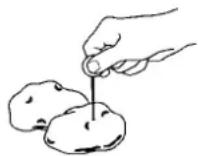
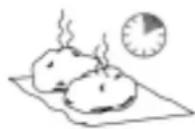
In a microwave oven foods continue to cook even when the microwave energy is turned off. They are no longer cooked by microwaves, but they are still being cooked by the conduction of the high residual heat to the centre of the food. The length of the standing time depends on the volume and density of the food. Sometimes it can be as short as the time it takes you to remove the food from the oven and take it to the serving table. However, with larger, denser foods, the standing time may be as long as 10 minutes. The food will finish cooking during this time.
Arranging food
The best results are achieved if the food is evenly distributed on the plate. This is done in several ways in microwave cooking to give more even cooking results.
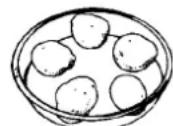
If you are cooking several items of the same food such as jacket potatoes, place them in a ring pattern for uniform cooking.
When cooking foods of uneven shapes or thickness, place the smaller or thinner area of the food towards the centre of the dish where it will be heated last.
Uneven foods such as fish should be arranged in the oven with the tails to the centre.
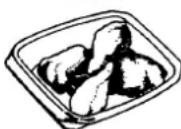
If you are saving a meal in the refrigerator or "plating" a meal for reheating, arrange the thicker, denser foods to the outside of the plate and the thinner or less dense foods in the middle.
Place thin slices of meat on top of each other or interlace them.
Thicker slices such as meat loaf and sausages have to be placed close to each other.
Gravy or sauce should be reheated in a separate container.
Choose a tall, narrow container rather than a low and wide container. When reheating gravy, sauce or soup, do not fill the container more than 2/3.
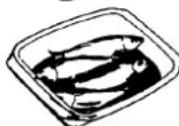
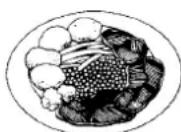
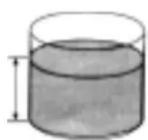
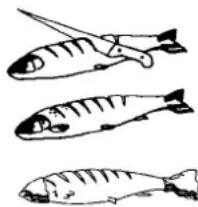
When you cook or reheat whole fish, score the skin - this prevents cracking.
Shield the tail and head with small pieces of foil to prevent over-cooking but ensure the foil does not touch the sides of the oven.
natural_image
Line drawings of three fish, one cut with a knife, two partially cut (no text or symbols)Composition of the food
Food with a lot of fat and sugar will be heated faster than food containing a lot of water. Fat and sugar will also reach a higher temperature than water in the cooking process.
The more dense the food, the longer it takes to heat. "Very dense" food like meat takes longer time to reheat than lighter, more porous food like bread.
Size and shape
Smaller pieces of food will cook faster than larger pieces and uniform pieces of food cook more evenly than irregularly shaped foods. To ensure even cooking, cut all pieces of food into similar sizes and shapes.
Stirring, turning of foods during cooking
Stirring and turning of foods are techniques used in conventional as well as in microwave cooking to distribute the heat quickly to the centre of the dish and avoids over-cooking at the outer edges of the food. turning foods is especially important here because it allows for more even cooking. As in conventional cooking, foods such as roasts need to be elevated so they are not allowed to steam in their own juices.
COOKING CHART
| Food Power level Cooking time | ||
| BEEF | ||
| 1 lb (500g) ground beef 800 W 3-5 minutes | ||
| 1 lb (500g) meatballs 800 W 9-12 minutes | ||
| 1 lb (500g) hamburgers 800 W 4-5 minutes | ||
| 1 lb (500g) meat loaf 800 W 15-20 minutes | ||
| Steaks 800 W 2-4 minutes per lb (500g) | ||
| PORK | ||
| Bacon 800 W 1/2-3/4 minute per slice | ||
| 1/2 lb (225g) pork sausages, raw 800 W 2-4 minutes | ||
| Pork chops 800 W 10-12 minutes per lb (500g) | ||
| Pork roast 800 W 10-12 minutes per lb (500g) | ||
| LAMB | ||
| Roast leg or shoulder 600 W/800 W 8-10 minutes per lb (500g) | ||
| VEAL | ||
| Roast shoulder 600 W/800 W 9-10 minutes per lb (500g) | ||
| Lamb/veal cutlets/chops (3-4 pieces) 800 W 6-8 minutes | ||
| POULTRY | ||
| Chicken pieces 800 W 2-3 minutes per lb (500g) | ||
| Whole chicken | 800 W 9-10 minutes per lb (500g) | |
| Stewing, cut up | 600 W 12-14 minutes per lb (500g) | |
| Turkey breasts | 600 W 8-9 minutes per lb (500g) | |
| FISH | ||
| 1 lb (500g) fillet/steaks | 800 W 7-9 minutes | |
| 1 lb (500g) whole fish | 800 W 7-9 minutes | |
| EGGS | ||
| Scrambled | 800 W 1-2 minutes per egg | |
| Poached | 800 W 1-2 minutes per egg | |
| Omelette | 800 W 3/4-1 1/2 minute to melt butter1-2 minute per egg | |
| Custard (8x8 in) (20x20 cm) | 600 W 15-19 minutes | |
| VEGETABLES | ||
| Vegetables (1-2 lb) (500-1000g)water: 1/4 cup | 800 W 8-16 minutes | |
| Potatoes (1 lb) (500g) baked | 800 W 8-12 minutes | |
| Corn-on-the-cob- fresh in husk 2- frozen 2 | 800 W 5-5 1/2 minutes800 W 4-6 minutes | |
| CEREAL | ||
| 1/2 cup quick oatmeal, water: 1 cup | 800 W 1-2 minutes | |
| 1/2 cup long cooking oatmeal, water: 1 cup | 800 W 3-4 minutes | |
| 1/2 cup cornmeal, water: 2 cups | 800 W 2-3 minutes | |
| CAKES | ||
| Carrot cake (10x6 in) (25 cm x 15 cm) | 800 W 9-12 minutes | |
| Basic butter or chocolatecake 8-1/2 in (21 cm) round dish | 800 W 5-6 minutes | |
| Ring cake | 800 W 5-5 1/2 minutes | |
| Cupcakes (6) | 400 W 2-2 1/2 minutes | |
| Bar cookies 8 in (20 cm) square dish | 600 W 3-6 minutes | |
| SOUP/BEVERAGE | ||
| 1 cup water based | 800 W 1-2 minutes | |
| 1 cup milk based | 600 W 1-2 minutes | |
DEFROSTING CHART
| Food Recommended Time Suggestions | ||
| MEAT | ||
| 1 pack bacon 2-3 1/2 minutes Leave packages unopened when defrosting. Microwave till foods can be separated. | ||
| Frankfurters 2-3 1/2 minutes per lb (500g) " | ||
| Spare-ribs 5-6 minutes per lb (500g) " | ||
| Ground meat 6-8 minutes per lb (500g) Turn over after half of defrosting time. | ||
| Roast beef 4-6 minutes per lb (500g) Unwrap roast and place in cooking dish. Defrost till half of defrosting time and turn it over. Stand for ten minutes. | ||
| Pork 7-9 minutes per lb (500g) " | ||
| Lamb 7-9 minutes per lb (500g) " | ||
| Steaks, chops and cutlets 3-6 minutes per lb (500g) Separate pieces after half of defrosting time. | ||
| Sausages 3-4 minutes per lb (500g) Turn over after half of defrosting time. | ||
| POULTRY | ||
| 1 whole chicken | ||
| (2 1/2-3 1/2 lb) | ||
| (1 1/4-1 1/2 kg) 13-16 minutes Place wrapped whole bird in oven when defrosting. | ||
| Turkey | 6-8 minutes per lb (500g) " | |
| Chicken pieces 4-6 minutes per lb (500g) Separate during half of defrosting time. Stand to complete defrosting. | ||
| Turkey parts | 6-8 minutes per lb (500g) " | |
| FISH AND SEAFOOD | ||
| 1 lb (500g) fillets | 6-7 minutes | Leave package unopened when defrosting. Stand in cold water to separate. |
| 1 lb (500g) steaks | 1-2 minutes | No manipulation. |
| 8-10 oz (225-280g) whole fish | 2-4 minutes | Place fish in cooking dish. Turn over once half way through defrosting time. Rinse cavity of fish with cold water. |
| 1 lb (500g) small pieces of seafood, e.g. shellfish, shrimps, crab meat, oysters, etc. 4-6 minutes | Break-up after half of defrosting time. | |
| 6-9 oz (170-255g) lobster tails | 4-6 minutes | No manipulation. |
| 1 1/2 lb (750g) whole lobster or crab | 12-13 minutes Turn over after half of defrosting time. | |
| BREAD AND CAKES | ||
| 7 oz-1 lb (190-500g) bread, buns, rolls | 1-3 minutes | |
| Doughnuts 1/4 minute each | ||
| 12-17 oz (340-482g) pound cake/coffee cake, frosted, cream filled, or topped | 1-3 minutes | |
| 17-19 oz (482-539g) cheesecake | 3-5 minutes | |
| 8 in (20 cm) fruit or nut pie | 6-7 minutes | |
| 14 oz (395g) cream or custard pie | 1-2 minutes | |
| Cup cakes | 1/4-3/4 minute | |
| VEGETABLES | ||
| Vegetables are preferably cooked from frozen. Add 1-2 tablespoons of water. | ||
RE-HEATING CHART
| Food | Power level | Cooking time | |
| 1 serving | Plate of food | 800 W | 2-3 minutes |
| 1-2 servings | Saucy main dish | 800 W | 7-9 minutes |
| 2-4 servings | Thick meat slices, such as hamburgers, meat loaf slices | 800 W | 3-5 minutes |
| 2-3 servings | Thin meat slices, such as beef, ham, pork, turkey | 600 W | 2-3 minutes |
| 2-3 | Chicken pieces | 600 W | 3-4 minutes |
| 2 servings | Casserole | 600 W | 9-12 minutes |
| 2 servings | Vegetables | 800 W | 3-4 minutes |
| 1-2 ears | Corn-on-the-cob | 800 W | 3-4 minutes |
| 2-3 | Rolls | 800 W | 3/4-1 minute |
| 1 | Whole pie | 800 W | 3-7 minutes |
| 1-2 slices | Pie | 800 W | 1-2 minutes |
| 3-4 | Sausages | 800 W | 1-2 minutes |
| 4 | Hot dogs | 800 W | 1-2 minutes |
Maintenance
Cleaning is the only maintenance normally required. It must be carried out with the microwave oven disconnected.
Do not use metal scouring pads on the inside of the oven cavity. They will scratch the surface.
natural_image
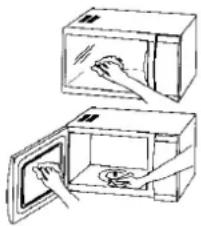
Two hand-drawn diagrams showing a door opening and a lid being placed inside, with no text or symbols present.For stubborn soil, boil a cup of water in the oven for 2 or 3 minutes. Steam will soften the soil.
Odours inside the oven can be eliminated by placing a cup of water with lemon juice added into the oven and boiling the mixture.
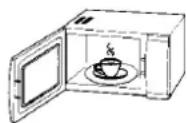
At regular intervals, especially if spillovers have occurred, remove the turn-table and wipe clean the base of the oven. This oven is designed to operate with the turn-table in place.
Do not operate the microwave oven when the turn-table is removed for cleaning.
Use a mild detergent, water and a soft cloth to clean the interior surfaces, front and rear of the door and the door opening.
Do not allow grease or food particles to build up around the door.
WARNING!
The door seals and the door seal areas must be regularly inspected for damage. If these areas are damaged the appliance should not be operated until it has been repaired by a trained service technician.
Abrasive cleansers, steel-wool pads, gritty wash cloths, etc., can damage the control panel, and the interior and exterior oven surfaces. Use a sponge with a mild detergent or a paper towel with spray glass cleaner. Apply spray glass cleaner to a paper towel.
Do not spray directly on the oven.
Service
If the oven does not work, do not make a service call until you have made the following checks:
* The Turn-table and turn-table support are in place.
* The Plug is properly inserted in the wall socket.
* The Door is properly closed.
* Check your Fuses and make sure that there is power available.
* Wait for 10 minutes and then try to operate the oven once more.
This is to avoid unnecessary calls for which you will be charged. When calling for Service, please give the serial number and type number of the oven (see Service label).
Important:
If the mains cord needs replacing it should be replaced by the original mains cord which is available via our service organisation. The mains cord must only be replaced by a trained service technician.
⚠ WARNING!
Service only to be carried out by a trained service technician. It is dangerous for anyone other than a trained service technician to perform repair service.
If you need service
Whirlpool has a national network of authorised engineers and authorised service companies. Whirlpool service technicians are trained to fulfil the product warranty and provide after - warranty service, anywhere in Europe. To locate the authorised Whirlpool service company in your area, call your local dealer or look in your telephone directory under:
Appliance - household - major, service & repair
- See: Whirlpool Appliances or Authorised Whirlpool Service
(Example: XYZ Service Co.)
Technical specifications
| Type number AKL 536 | |
| Supply voltage 230-240 V/50 Hz | |
| Power consumption 1330 W | |
| Fuse 16 A | |
| Microwave power (acc. to IEC705. 1000 g water) | |
| Full power 800 W | |
| Timer Mechanical | |
| Dimensions: LxWxH | |
| Outer dimensions: 298x492x390 | |
| Oven compartment: 190x300x297,7 | |
Electrical connection
FOR THE REPUBLIC OF IRELAND ONLY
The information given in respect of Great Britain will frequently apply, but a third type of plug and socket is also used, the 2-pin, side earth type. In this case, the wire which is coloured GREEN AND YELLOW MUST BE CONNECTED TO THE EARTH contact and the other two wires to the pins, irrespective of colour. The supply to the socket must be fitted with a 16 Amp fuse.
For replacement fuse covers please consult your guarantee card for the address of your local Service Centre. Please state the colour of the plug insert.
WARNING!
THIS APPLIANCE MUST BE EARTHED!

Electrical connection
FOR GREAT BRITAIN ONLY
Prior to connecting, check that the voltage on the rating plate corresponds to the voltage in your home. Then follow the appropriate procedure for wiring.
The earthing of this appliance is compulsory by law. The manufacturer will accept no responsibility for injury to persons or damage to objects arising from the non-observance of this requirement.
WARNING!
THIS APPLIANCE MUST BE EARTHED!

MOULDED PLUGS For Great Britain only
This appliance is fitted with a B.S. 1363A 13 Amp fused plug. To change a fuse in this type of plug proceed as follows:
- Remove the fuse cover (A) and the fuse (B).
- Fit a replacement fuse which should be a BS 1362 13A.A.S.T.A. item (B).
Important:
* The fuse cover must be refitted when changing a fuse.
* In the event of a fuse cover being misplaced, the plug must not be used until a correct replacement is fitted.
* Please ensure that the replacement fuse cover is of the same colour as the insert or, as the colour embossed in words on the base of the plug.
For replacement fuse covers please contact your local electrical store.
Please state the colour of the plug insert.
If the fitted plug is not suitable for your socket outlets, it must be disposed of in order to avoid a shock hazard.
A suitable alternative plug should then be fitted to the cable.
A suitable plug should be fitted to the mains cable. If a 13 Amp plug is to be fitted, then a 13 Amp fuse should be used in the plug.
Important:
The wires of the mains lead fitted to this appliance are coloured in accordance with the following code:
As the colours of the wires in the mains lead fitted to this appliance may not correspond with the coloured markings identifying the terminals in the plug, proceed as follows:
The wire which is coloured GREEN AND YELLOW must be connected to the terminal in the plug which is marked with the letter "E" or by the earth symbol ± or coloured GREEN or GREEN AND YELLOW.
The wire which is coloured BLUE must be connected to the terminal which is marked with the letter "N" or coloured BLACK.
The wire which is coloured BROWN must be connected to the terminal which is marked with the letter "L" or coloured RED.
If the terminals in the plug are unmarked or you are in any doubt as to the correct connections, consult a qualified electrician.
N.B. We recommend the use of a good quality plug.