
VFD 10911 A+G - Refrigerator VESTFROST - Free user manual and instructions
Find the device manual for free VFD 10911 A+G VESTFROST in PDF.
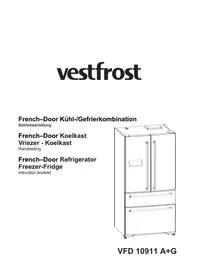


| Product Type | French Door Refrigerator-Freezer |
| Brand | VESTFROST |
| Model | VFD 10911 A+G |
| Energy Class | A+ |
| Energy Consumption | 1.325 kWh/24h (483 kWh/year) |
| Total Net Volume | 529 L |
| Cooler Net Volume | 362 L |
| Freezer Net Volume | 167 L |
| Freezing Capacity | 20 kg/24h |
| Climate Class | T/N (16°C - 43°C) |
| Noise Level | 45 dB(A) |
| Dimensions (H x W x D) | 1850 x 910 x 763 mm |
| Weight | 151.8 kg |
| Total Power | 247 W |
| Voltage / Frequency | 220-240 V / 50 Hz |
| Refrigerant | R600a |
| Cooling Technology | Frost Free with fan |
| Display Type | Touch electronic control panel |
| Door Material | Anti-fingerprint stainless steel |
| Interior Light | Gradual LED illumination |
| Special Functions | ECO mode, Holiday mode, Quick Freeze, Quick Cool, Beverage Cooling, Child Lock, Screensaver, Night Sensor |
| Chiller Compartment | Self-closing, telescopic rail, 0°C option |
| Warranty | 10 years (parts availability) |
Frequently Asked Questions - VFD 10911 A+G VESTFROST
User questions about VFD 10911 A+G VESTFROST
0 question about this device. Answer the ones you know or ask your own.
Ask a new question about this device
Download the instructions for your Refrigerator in PDF format for free! Find your manual VFD 10911 A+G - VESTFROST and take your electronic device back in hand. On this page are published all the documents necessary for the use of your device. VFD 10911 A+G by VESTFROST.
USER MANUAL VFD 10911 A+G VESTFROST
French-Door Refrigerator Freezer-Fridge
Instruction booklet
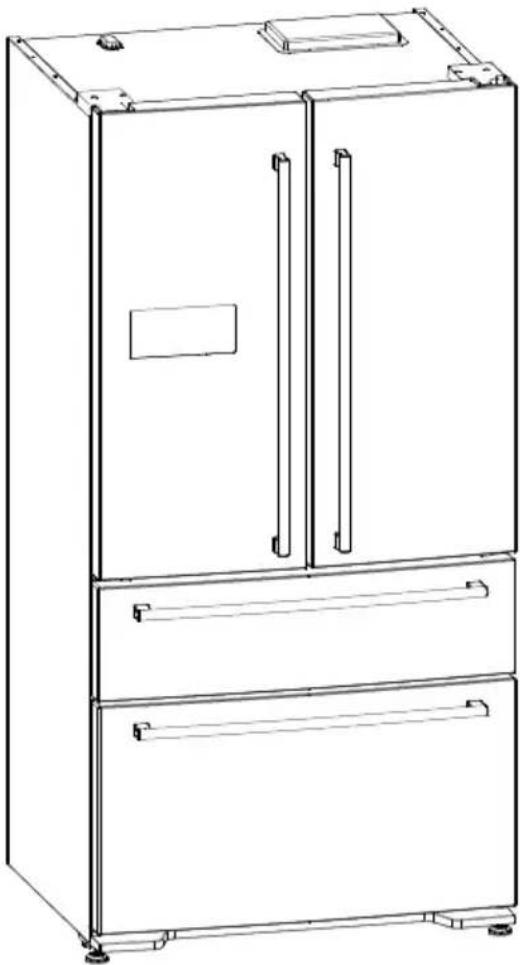
VFD 10911 A+G
Compressor noise: After your refrigerator's doors are opened and closed, a short sound may be heard due to pressure difference. This is normal.
BEFORE USING YOUR REFRIGERATOR
BEFORE USING YOUR REFRIGERATOR

Cleaning the evaporation tray
PART 6. BEFORE CALLING AFTER-SALES SERVICE
Warnings:
General features of your appliance
- When the doors are in the closed position, please check if there are any gaps between the door gasket and the body. If there are any gaps, please fix it.
- When the freezer door is closed, there will be a vacuum. Do not force to open the door again immediately. Please wait until the pressure is stabilized.
- Thanks to the patented trizbar design, the risk of fracture due to misuse by users, which is common for competing manufacturers, has been eliminated.
- Air circulation of the cooler and freezer compartments are not mixed with other compartments thanks to new Frost Free technology. By this smart solution, no odor passes through compartments, and vegetables remain fresh for longer periods.
- The fan ensuring energy efficiency maintains air circulation by running independently even if the compressor does not run. Thus, a uniform and balanced air circulation is created between cooler shelves.
- Hidden LEDs and hidden air conduit holes have given the cooler an aesthetic appearance.
- Through specific air conduit design, fans give the cooler cold air from multiple outlets on all shelf levels.
- By special patented application, display edges and corners form a smooth surface against the door and ensure a perfect aesthetic appearance. Thanks to touch-operated electronic instrument panel, temperature controls can be carried out easily and an even view is ensured aesthetically.
- A LED application that lights on gradually instead of sudden flashing is available in interior body illumination. The LEDs light up to 100% brightness within a few seconds after the door is opened.
- Telescopic rail used in chiller compartment ensures that the chiller operates easily and quietly.
- In order to avoid the chiller from slamming the door when it stays open, a self-closing function has been provided to the chiller. This function has eliminated the risk of staying open for the chiller.
- Anti-finger inox doors never leave fingerprints thanks to a special sheet layer coated over stainless door sheet.
Index
General features of your appliance ....59
BEFORE USING YOUR FRIDGE 62
1.1 General warnings ......62 1.2 Old and out-of-order fridges 64 1.3 Safety warnings....64 1.4 Installing and Operating your Fridge 65 1.5 Before Operating your Fridge 66 1.6 General information about new FROST FREE Technology......67
USE OF APPLIANCE 68
2.1 Introducing parts....68 2.2 Technical information....70 2.3 Electronic display and usage....71 2.3.1 Beverage cooling (QDRINK)....72 2.3.2 Economic mode (ECO)....72 2.3.3 Holiday mode (H)....72 2.3.4 Quick freezing (SF SUPERFREEZE)....72 2.3.5 Quick cooling (SC SUPERCOOL)....72 2.3.6 Cooler (COOLER)....72 2.3.7 Freezer 72 2.3.8 Child lock (Key Symbol)....73 2.3.9 Screensaver (SCREEN SAVER) 73 2.3.10 Night sensor (NIGHT SENSOR)....73 2.3.11 Dealer Demo mode....73 2.3.12 Alarm....73 2.3.13 Compartment On-Off mode ....73 2.4 Warnings about Temperature Adjustments....74 2.5 Accessories 74 2.5.1 Icebox 74 2.5.2 Vegetable Bowl and Chiller (Breakfast) 75
PLACING THE FOOD....77
3.1 Cooler Compartment 77 3.2 Deep-Freeze Compartments....78
CLEANING & MAINTENANCE....82
4.1 Replacing LED lights used for illumination 82
SHIPMENT AND REPOSITIONING....83
BEFORE CALLING SERVICE....84
6.1 Recommendations for Energy Saving 86
1.1 General warnings
WARNING: Keep ventilation openings, in the appliance enclosure or in the built-in structure, clear of obstruction.
WARNING: Do not use mechanical devices or other means to accelerate the defrosting process, other than those recommended by the manufacturer.
WARNING: Do not use electrical appliances inside the food storage compartments of the appliance, unless they are of the type recommended by the manufacturer.
WARNING: Do not damage the refrigerant circuit.
WARNING: To avoid a hazard due to the instability of the appliance, it must be fixed in accordance with the instructions.
- If your appliance uses R600 as a refrigerant – you can learn this information from the label on the cooler - you should be careful during shipment and installation to prevent your appliance's cooler elements from being damaged. Although R600a is an environmentally friendly and natural gas, as it is explosive, in case of a leakage to be occurred due to a damage in the cooler elements move your fridge from open flame or heat sources and ventilate the room where the appliance is located for a few minutes.
- While carrying and positioning the fridge, do not give damage to the cooler gas circuit.
- Do not store explosive substances such as aerosol cans with a flammable propellant in this appliance.
- This appliance is intended to be used in household and similar applications such as;
- staff kitchen areas in shops, offices and other working environments;
- farm houses and by clients in hotels, motels and other residential type environments;
- bed and breakfast type environments;
- catering and similar non-retail applications.
BEFORE USING YOUR FRIDGE
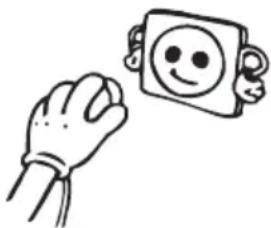
- If the socket does not match the refrigerator plug, it must be replaced by the manufacturer, its service agent or similar qualified persons in order to avoid a hazard.
- This appliance is not intended for use by persons (including children) with reduced physical, sensory or mental capabilities, or lack of experience and knowledge, unless they have been given supervision or instruction concerning use of the appliance by a person responsible for their safety. Children should be supervised to ensure that they do not play with the appliance.
- A specially grounded plug has been connected to the power cable of your refrigerator. This plug should be used with a specially grounded socket of 16 amperes. If there is no such socket in your house, please have it installed by an authorized electrician.
- This appliance can be used by children aged from 8 years and above and persons with reduced physical, sensory or mental capabilities or lack of experience and knowledge if they have been given supervision or instruction concerning use of the appliance in a safe way and understand the hazard involved. Children shall not play with the appliance. Cleaning and user maintenance shall not be made by children without supervision.
- If the supply cord is damaged, it must be replaced by the manufacturer, its service agent or similar qualified persons in order to avoid a hazard.
BEFORE USING YOUR FRIDGE
1.2 Old and out-of-order fridges
- If your old fridge has a lock, break or remove the lock before discarding it, because children may get trapped inside it and may cause an accident.
- Old fridges and freezers contain insulation material and refrigerant with CFC. Therefore, take care not to harm the environment when you are discarding your old fridges.
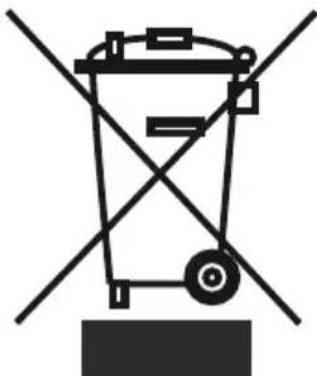
Please ask your municipal authority about the disposal of the WEEE for reuse, recycling, and recovery purposes.
Notes:
- Please read the instruction manual carefully before installing and using your appliance. We are not responsible for damage caused by misuse.
- Follow all instructions on your appliance and in the instruction manual, and keep this manual in a safe place to resolve any problems that may occur in the future.
- This appliance is produced for household use and can only be used in the home and for the specified purposes. It is not suitable for commercial or common use. Such use will void the appliance's warranty, and our company will not be responsible for any losses that may occur.
- This appliance is produced for household use and is only suitable for cooling/storing food. It is not suitable for commercial or common use and/or for storing substances other than food. Our company is not responsible for any losses that may occur in the contrary case.
1.3 Safety warnings
- Do not use multiple receptacles or extension cords.
- Do not plug in damaged, torn, or old plugs.
- Do not pull, bend, or damage the cord.
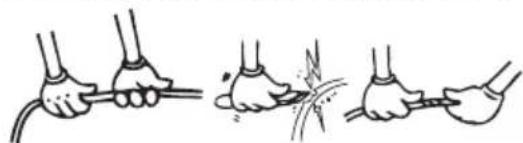
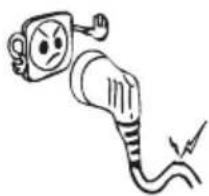
- If your supply cord is damaged, it should be replaced by an authorized service to avoid any danger.
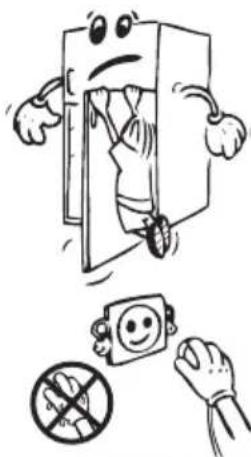
- This appliance is designed for use by adults; do not allow children to play with the appliance or let them hang over the door.
- Do not break or scrape the ice with a sharp object like a knife or similar.
BEFORE USING YOUR FRIDGE
- Do not plug in or unplug the plug from the receptacle with wet hands to prevent electrocution!
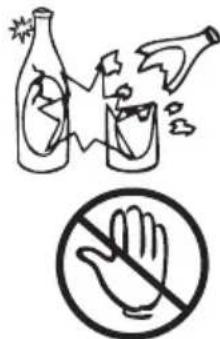
- Do not place glass bottles or beverage cans in the freezer department. Bottles or cans may explode.
- Do not place explosive or flammable material in your fridge for your safety. Place drinks with higher alcohol amount vertically and by closing their necks tightly in the fridge department.
- When taking ice made in the freezer department, do not touch it, ice may cause iceburns and/or cuts.
- Do not touch frozen goods with wet hands! Do not eat ice-cream and ice cubes immediately after you take them out of the freezer department!
- Do not re-freeze the frozen goods after being melted. This may cause health issues like food poisoning.
• Fix the accessories in the fridge during transportation to prevent damage to accessories
1.4 Installing and Operating your Fridge

Before starting to use your fridge, you should pay attention to the following points.
- Operating voltage for your fridge is 220-240 V at 50Hz.
- CAUTION! Never replace any electrical parts inside the refrigerator. In cases requiring replacement, contact Authorized Technical Service.
• We do not take the responsibility of the damages that occur due to ungrounded usage.
- Place your fridge in a place that it would not be exposed to direct sunlight.
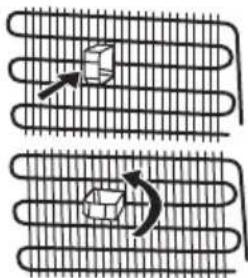
• Install the distance adjustment plastic (the part with black vanes at the rear) by turning it 90° as shown in the figure to prevent the condenser from touching the wall.
- Your appliance should be at least 50 cm away from stoves, ovens and heater cores, and should be at least 5 cm away from electrical ovens.
- It should never be used outdoors or left under the rain.
- When your fridge is placed next to a deep freezer, there should be at least 2 cm between them to prevent humidity on the outer surface.
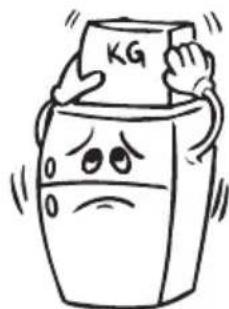
- Do not place anything on your fridge, and install your fridge in a suitable place so that at least 15 cm is available on the upper side.
BEFORE USING YOUR FRIDGE
- The adjustable front legs should stabilize in an appropriate height to allow your fridge operate in a stable and proper way. You can adjust the legs by turning them clockwise (or in the opposite direction). This should be done before placing food in the fridge.
- Before using your fridge, wipe all parts with warm water added with a tea spoonful of sodium bicarbonate, and then rinse with clean water and dry. Place all parts after cleaning.
- No carpets, rugs, etc. which may obstruct air circulation should be laid under the refrigerator.
1.5 Before Operating your Fridge
- When it is operated for the first time or after transportation, keep your fridge in the upright position for 3 hours and plug it on to allow efficient operation. Otherwise, you may damage the compressor.
- Your fridge may have a smell when it is operated for the first time; the smell will fade away when your fridge starts to cool.
BEFORE USING YOUR FRIDGE

1.6 General information about new FROST FREE Technology
New Frost Free fridges differ from other static fridges in their operating principle.
In normal fridges, the humidity entering the fridge in the door openings and the humidity of the food causes freezing in the freezer compartment. To defrost the snow and ice in the freezer department, you should turn off the fridge, take the food that needs to be kept in a constant temperature off the fridge, and remove the ice gathered in the freezer department periodically.
The situation in the freezer compartment is completely different in Frost Free fridges. Dry and cool air is blown through the freezer compartments via fan. Cold air dispersed homogeneously between the shelves cools all your food equally and uniformly, thus prevents humidity and freezing. The freezer compartment is cooled by statically. The air is distributed homogeneously between the racks in the cooling section with the fan, and all your foods can be cooled evenly and properly.
As there is no air passage between the sections, the smells on the two different parts of your refrigerator do not mix.
Therefore, your new frost-free fridge allows ease of use, besides its huge volume and stylish appearance.
![graph LR A["Blue arrow"] --> B["Blow cold air"] C["Red arrow"] --> D["Returning hot air"]](/content/2026/05/823040/images/7a90b17ff099ef8973524944cddd54ba0b1ba39c05065f5b9afc5a5445cd034c.jpg)
![graph TD A["Central Chamber"] --> B["Top Panel"] A --> C["Bottom Panel"] D["Left Panel"] --> E["Top Panel"] D --> F["Bottom Panel"] G["Red Arrow"] --> H["Blue Arrow"] I["Blue Arrow"] --> J["Blue Arrow"] style A fill:#99ccff,stroke:#333 style B fill:#99ccff,stroke:#333 style C fill:#99ccff,stroke:#33…](/content/2026/05/823040/images/8fc932e941e3f408cc8c73afb222f50083b62860780a59ac181264e90e377331.jpg)
PART 2. USE OF APPLIANCE
2.1 Introducing parts
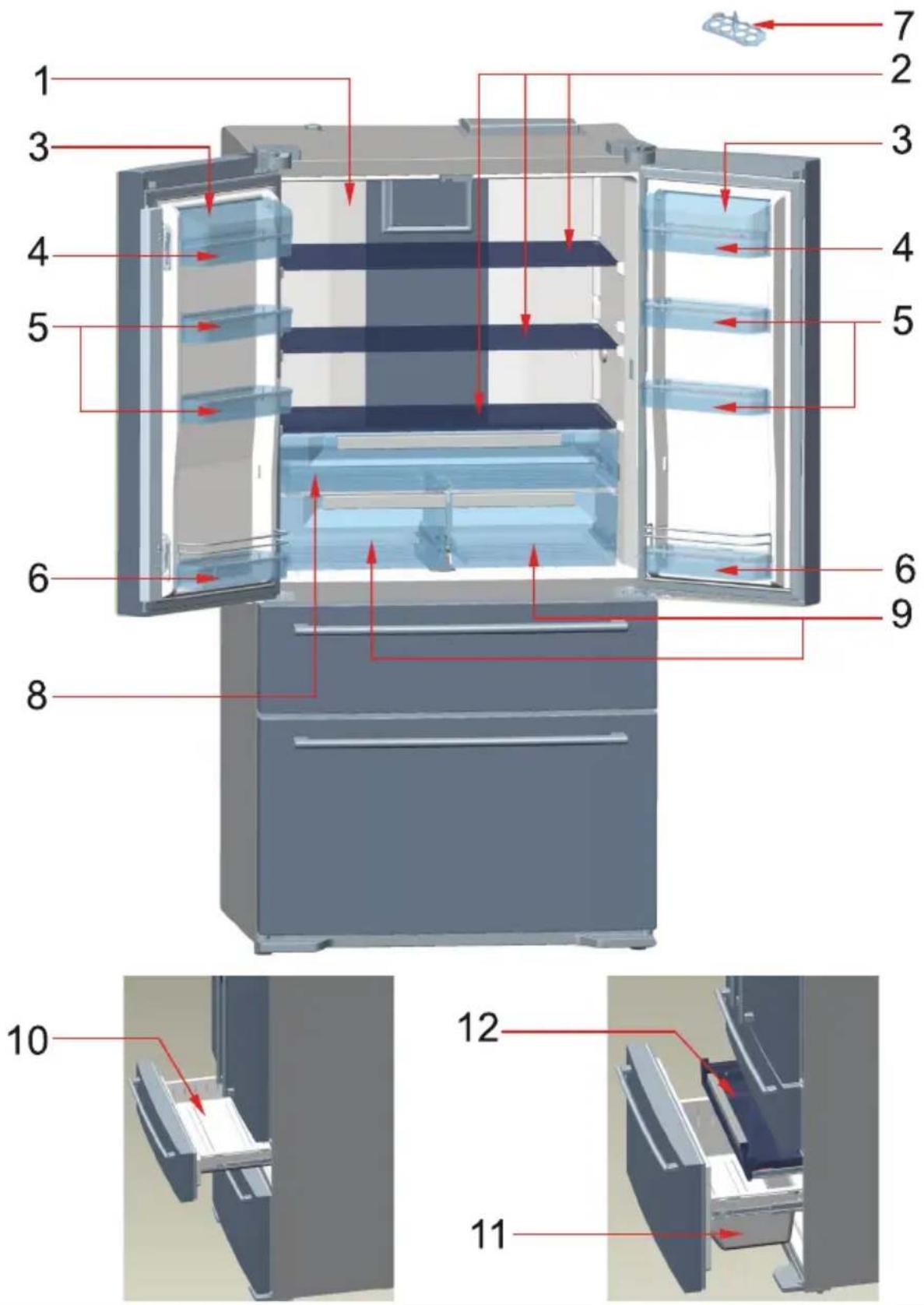
The purpose of this presentation is to inform you about the parts of your appliance. The parts may vary depending on the model of the appliance.
USE OF APPLIANCE
1) Cooler Compartment 2) Fridge compartment shelves 3) Cheese-Butter shelf covers 4) Cheese, butter shelf 5) Door shelves 6) Door bottle shelves 7) Eggcups 8) Chiller (breakfast) compartment 9) Crispers 10) Freezer top basket 11) Freezer bottom basket 12) Freezer hidden basket
The purpose of this presentation is to inform you about the parts of your appliance. The parts may vary depending on the model of the appliance.
USE OF APPLIANCE
2.2 Technical information
| Brand VESTFROST | |
| Model name VFD 10911 A+G | |
| Energy class A + | |
| Energy consumption | 1,325 (kW / hour) / 483 (kW / year)(Real consumption depends on where and how the appliance is used.) |
| Total Net volume 529 lt | |
| Cooler compartment Net volume 362 | It |
| Freezer compartment Net volume 167 | It |
| Star Class | (-18°C or colder) |
| Freezing Capacity 20 kg / 24 hours | |
| Climate Class T / N (16 | °C - 43 °C) |
| Noise level 45 dB(A) | |
| (H) Height 1850 mm | |
| (W) Width 910 mm | |
| (D) Depth 763 mm | |
| Weight 151,8 kg | |
| Total Power 247 W | |
| Electric input | 220-240 V / 50 Hz |
| Refrigerant type | R600a |
Conformity Information
- Tropical Class is defined for the environment temperatures between 16°C and 43°C in accordance with the TS EN ISO 15502 Standards.
- The appliance is designed in compliance with the EN15502, IEC60335-1 / IEC60335-2-24, 2004/108/EC standards.
USE OF APPLIANCE
2.3 Electronic display and usage
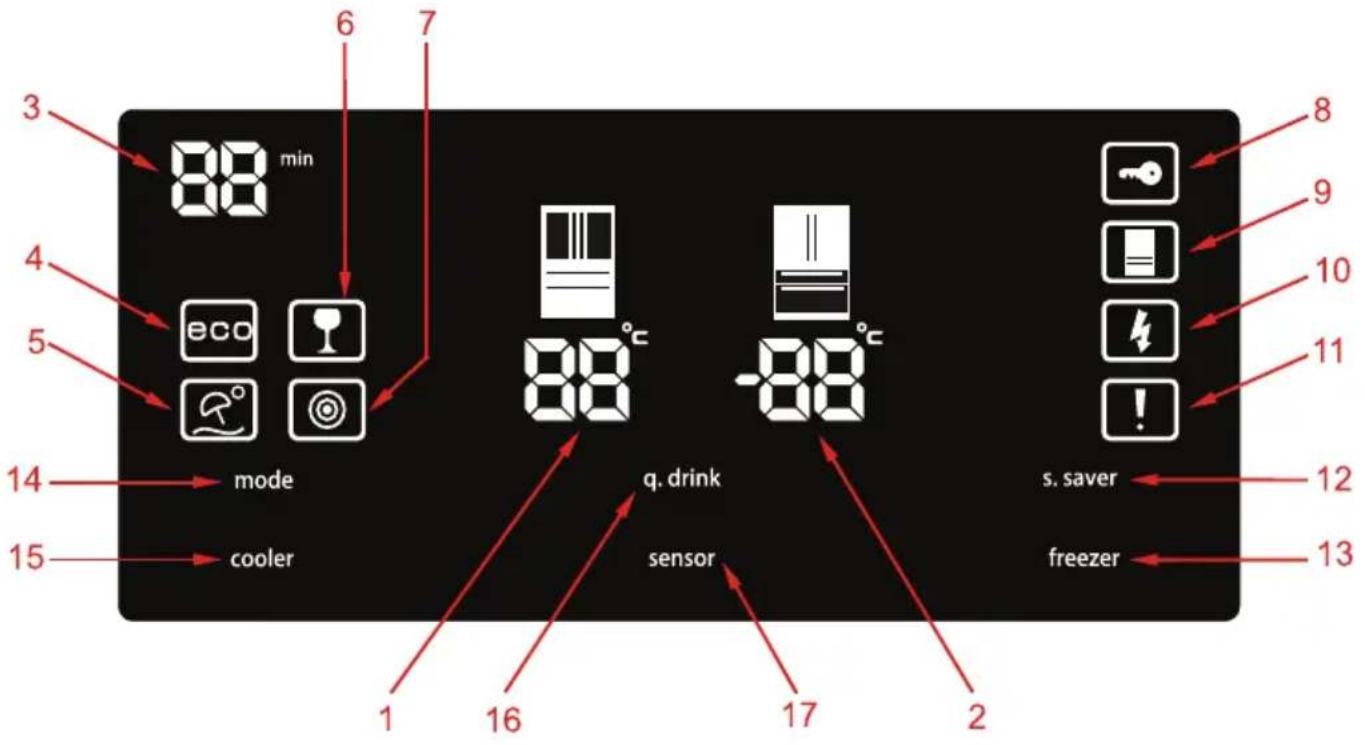
- Fridge Compartment Temperature indicator
- Freezer Compartment Temperature indicator
- Qdrink alarm counter
- Economy mode
- Holiday mode
- Qdrink light
- Night sensor indicator
- Child lock
- Dealer-Demo mode
- Low voltage warning
- Alarm
- Screensaver button
- Freezer
- Mode button
- Cooler
- Qdrink mode
- Night sensor button
The values on the screen indicate temperature values specified by the consumer.
USE OF APPLIANCE
2.3.1 Beverage cooling (QDRINK)
Press the [q.drink] button to activate beverage cooling mode. Each press increments the time by 5 minutes, up to 30 minutes, then it returns to zero. You can view the time zone you want to set on the "Qdrink alarm counter" section. Qdrink mode only lets the refrigerator release an audible alert after a specific period.

Important: It should not be confused with cooling.
You must adjust the time according to the temperature of the bottles before you put them in the freezer compartment. For example, you can set the time as "5 minutes" in the beginning. After this time, if the cooling is insufficient, you might set another 5 or 10 minutes. While using this mode, you must check the temperature of the bottles regularly. When the bottles are cool enough, you must take them out of the appliance. If you forget bottles in Q.DRINK mode, bottles may explode.
2.3.2 Economic mode (ECO)
It ensures that your refrigerator runs within ideal temperatures. To activate "ECO" mode, press the [mode] button until the "eco and e" light is on.
2.3.3 Holiday mode (H)
It is represented by an umbrella and sun. If you will go on holiday for a long time during which you will not use the cooler compartment, you may activate this mode. To switch the appliance to holiday mode, press the [mode] button until the "holiday symbol and H" light comes on.
2.3.4 Quick freezing (SF SUPERFREEZE)
Press and hold the Freezer button until "sf" appears on the display. Once "sf" is shown, release the button and a beep will sound, confirming the mode is selected. This mode is for quickly freezing prepared meals or large quantities of food. Quick freezing mode will automatically deactivate after 24 hours or when the freezer compartment temperature sensor detects sufficient cooling.
2.3.5 Quick Cooling (SC SUPERCOOL)
Press and hold the Cooler button until "sc" appears on the display. Once "sc" is shown, release the button and a beep will sound, confirming the mode is selected. This mode is for quickly cooling prepared meals or large quantities of food. Quick cooling mode will automatically cancel after 4 to 6 hours, depending on the ambient temperature, or when the cooler compartment reaches a sufficiently low temperature.
2.3.6 Cooler (COOLER)
This is used to set the temperature of the cooler compartment. By pressing the [cooler] button, you can set the cooler temperature to 2, 3, 4, 5, 6, 7, or 8 degrees Celsius.
2.3.7 Freezer
This is used to set the temperature of the freezer compartment. By pressing the [freezer] button, you can set the freezer temperature to -16, -17, -18, -19, -20, -21, -22, -23, or -24 degrees Celsius.
USE OF APPLIANCE
2.3.8 Child Lock (Key Symbol)
To activate the child lock, press and hold the [cooler] and [freezer] buttons simultaneously for 5 seconds. When the child lock is active, other buttons are deactivated, preventing changes to your settings. To deactivate the child lock, press and hold the [cooler] and [freezer] buttons simultaneously for 5 seconds again.
2.3.9 Screensaver (SCREEN SAVER)
This function is activated by pressing the [s.saver] button for 3 seconds. It saves energy by turning off the lights on the digital indicator panel. To deactivate this mode, press the [s.saver] button again for 3 seconds.
2.3.10 Night Sensor (NIGHT SENSOR)
This function is activated by pressing the night sensor [mode] and [s.saver] buttons for 3 seconds. When there is sufficient ambient light, the refrigerator's lights will turn off, saving energy.
2.3.11 Dealer Demo mode
It is a mode used by service and not related to the use of refrigerator.
2.3.12 Alarm

Once an alarm light comes on, you should contact a service.
If you press [s.saver] button when there is an alarm and an exclamation mark on the display, the alarm sound will turn off, however the exclamation mark will stay on the digital indicator panel until error is fixed.
2.3.13 Compartment On-Off mode
You can wholly cancel compartment you do not need or want by checking through indicator panel.
In order to turn off the cooler, hold [mode] and [cooler] buttons pressed simultaneously for 5 seconds, and all figures indicating the part turned off will disappear on the digital indicator panel.
In order to reactivate the turned-off compartment, use the same combination of buttons.
USE OF APPLIANCE
2.4 Warnings about Temperature Adjustments
- Your temperature adjustments will not be deleted when an energy breakdown occurs.
- It is not recommended that you operate your fridge in environments colder than 10°C in terms of its efficiency.
- Temperature adjustments should be made according to the frequency of door openings, the quantity of food kept inside the fridge and ambient temperature of the place of your fridge.
- Your fridge should be operated up to 24 hours according to the ambient temperature without interruption after being plugged in to be completely cooled. Do not open doors of your fridge frequently and do not place much food inside it in this period.
- A 5 minute delaying function is applied to prevent damage to the compressor of your fridge, when you take the plug off and then plug it on again to operate it or when an energy breakdown occurs. Your fridge will start to operate normally after 5 minutes.
- Your fridge is designed to operate in the ambient temperature intervals stated in the standards, according to the climate class stated on the information label. We do not recommend operating your fridge outside the stated temperature limits in terms of cooling effectiveness.
| Climate Class | Ambient temperature oC |
| T 16 to | 43°C |
| ST 16 to | 38°C |
| N 16 to | 32°C |
| SN 10 to | 32°C |
Note: If the ambient temperature is higher than 38°C, the compartment temperature cannot be set to -22°C, -23°C, or -24°C. It can only be set to -16°C, -17°C, -18°C, -19°C, -20°C, or -21°C.
2.5 Accessories
2.5.1 Icebox
- Fill 3/4 of the icebox with water and insert it.
- You can take ice after approximately 2 hours. You can remove the icebox to serve.
(Applies to refrigerators with this feature.)
Note: When placing the icebox after filling with water, make sure you position it horizontally without tilting. Otherwise, water inside the icebox may spill onto the basket.
USE OF APPLIANCE
2.5.2 Vegetable Bowl and Chiller (Breakfast)
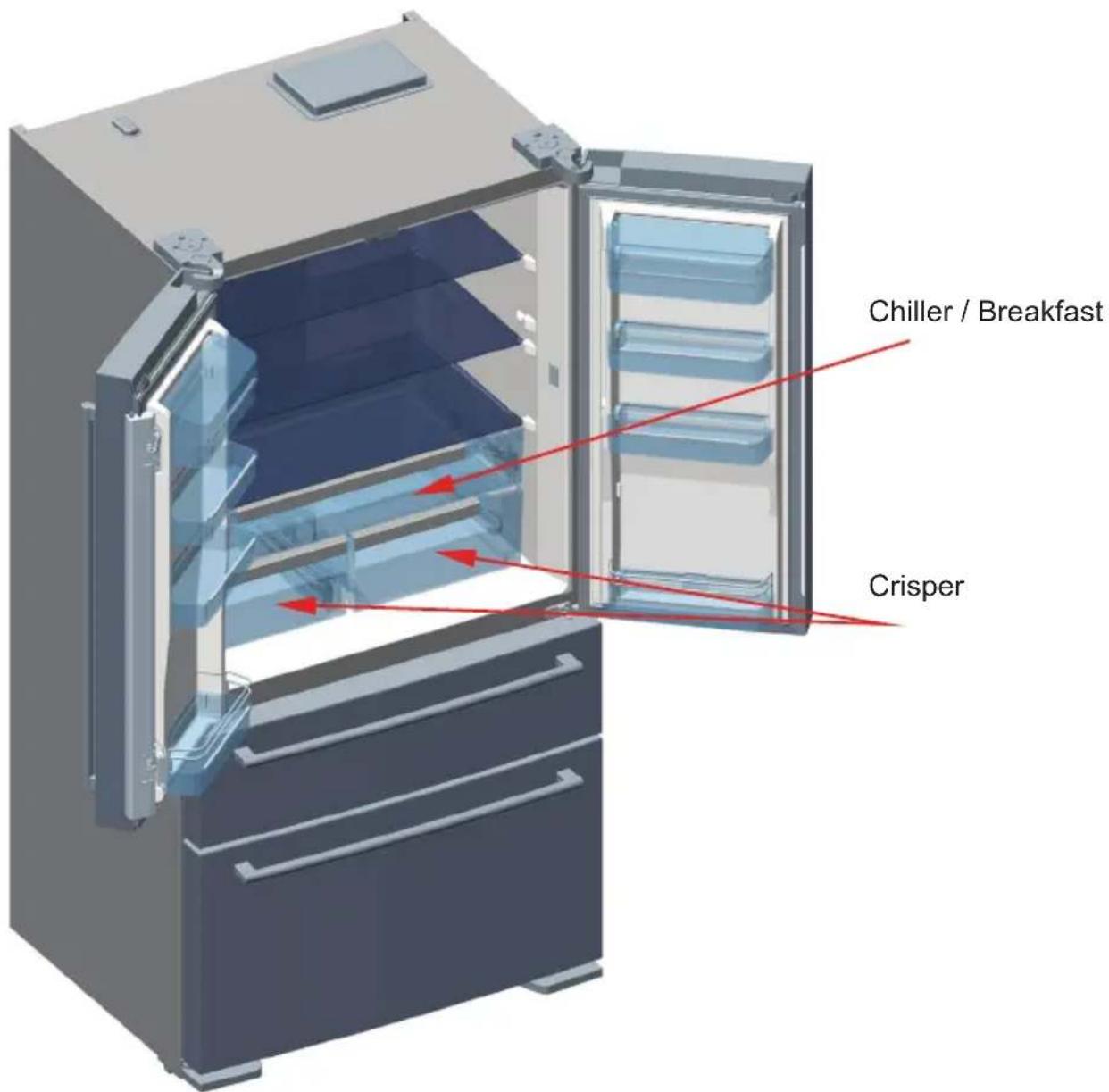
Chiller / Breakfast
When this compartment is used as a 0°C compartment (chiller), it ensures that your food is preserved at 0°C. You can keep frozen foods that you take out of the deepfreeze compartment to defrost them, or you can keep meats and cleaned fish (in plastic bags or packets) that you will use within 1-2 days without needing to freeze them.
Note: Water freezes at 0°C, but foods containing salt or sugar may freeze at lower temperatures.
! Please do not put food you would like to freeze or iceboxes in this compartment.
USE OF APPLIANCE
2.5.3 CRISPER AIR SETTING BUTTON
Turn the air adjustment knob between the crisper and chiller to the open position when the crisper is excessively filled. This adjusts the air intake into the crisper, keeping food fresh for a longer period.
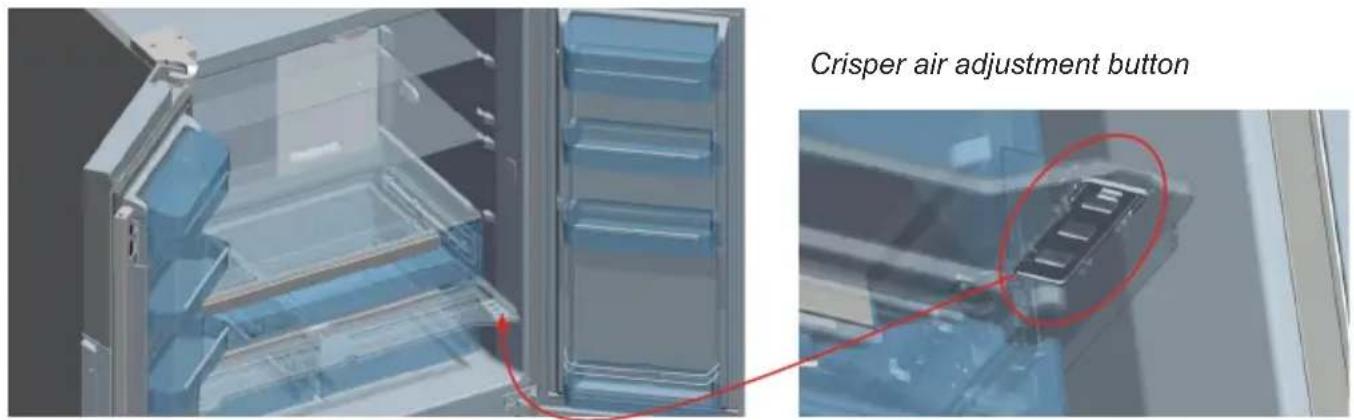
Visual and text descriptions in the accessories section may vary depending on the model of your appliance.
PART 3. PLACING THE FOOD
3.1 Cooler Compartment
- Under normal operating conditions, it is sufficient to set the cooler compartment temperature to +4 / +6 °C.
- To avoid frosting, humidification, and odor, food should be placed in the fridge in closed containers or covered with appropriate material.
- Hot food and beverages should be cooled to room temperature before being placed in the fridge.
- Vegetables and fruits can be placed in the crisper without packaging.
Important Note:

- Cover liquids and stews when placing them in the fridge. Otherwise, the humidity inside the fridge increases, causing the fridge to work harder. Covering food and beverages also helps preserve their taste and flavor.
- Potatoes, onions, and garlic should not be kept in the fridge.
Some suggestions for placing and storing food in the fridge compartment are provided below.
| Food Storing time | Where to place in the fridge department | |
| Vegetables and fruits: 1 week | Vegetable bin (without being wrapped) | |
| Meat and fish 2 - 3 Days | Wrapped in plastic foil or bags or in a meat container (on the glass shelf) | |
| Fresh cheese 3 - 4 Days In special door shelf | ||
| Butter and Margarine 1 week In special door shelf | ||
| Bottled products Milk and Yoghurt | Until the expiry date recommended by the producer | In special door shelf |
| Eggs 1 month In the egg shelf | ||
| Cooked food All shelves |
PLACING THE FOOD
3.2 Deep-Freeze Compartments
- The freezer compartment is used for storing frozen foods for a long time or for producing ice.
- If you leave the door of the freezer open for a long time, frosting will appear on the lower stage of the freezer. Thus, air circulation will be obstructed. To avoid this, first unplug the cord and wait until it thaws. After the ice melts, you should clean the freezer.
- You can remove baskets, covers, etc. to increase the storage volume of the freezer. • The volume specified on the product label shows the value without baskets, covers, etc.

IMPORTANT
Please never refreeze frozen food after thawing it.
It may be hazardous to your health as it may lead to food poisoning.
- Do not place hot food in the freezer before cooling it. This may cause other frozen food in the freezer to decay.
- When buying frozen food, make sure that it was frozen under appropriate conditions and that its package is not torn.
- If there is humidification on the package of frozen food and a smelly odor, the food may have been stored under inappropriate conditions beforehand and may have decayed. Do not buy such food.
- Storing time for frozen food may differ according to ambient temperature, frequency of door openings, thermostat adjustments, type of food, and the time between buying the food and placing it in the freezer. Always follow the instructions on the package and do not exceed the storing period.
- Note: If frozen food taken out of the freezer of the refrigerator is placed into the bottom compartment one day before, it helps the refrigerator by preserving its temperature there, so energy will be saved. If you put the material in the deep freeze in an open area, energy loss occurs.
Some spices in cooked food (aniseed, basil, dill, vinegar, spice mix, ginger, garlic, onion, mustard, thyme, marjoram, black pepper, bologna sausage, etc.) may have a foul taste when stored for a long time. Therefore, frozen food should be spiced just a little, or spice should be added after the food is thawed.
The storing time for the food depends on the oil used. Margarines, veal fat, olive oil, and butter are suitable; peanut oil and lard are not suitable.
Cooked food in liquid form should be frozen in plastic containers; other food should be frozen wrapped in plastic foil or in plastic bags.
Some suggestions on the placing and storing of your food in the freezer compartment are provided on pages 79, 80, and 81.
PLACING THE FOOD
| Meat and fish Preparation | Storing time (month) | Thawing time in room temperature (hours)-hour- | |
| Steak Wrapping in a foil 6-10 1-2 | |||
| Lamb meat Wrapping in a foil 6-8 1-2 | |||
| Veal roast Wrapping in a foil 6-10 1-2 | |||
| Veal cubes In small pieces 6-10 1-2 | |||
| Lamb cubes In pieces 4-8 2-3 | |||
| Minced meat | In packages without using spices | 1-3 2-3 | |
| Giblets (pieces) In pieces 1-3 1-2 | |||
| Bologna sausage/salami | Should be packaged even if it has membrane | Until it is defrosted | |
| Chicken and turkey Wrapping in a foil 7-8 10-12 | |||
| Goose and Duck Wrapping in a foil 4-8 10 | |||
| Deer, Rabbit, Wild Boar | In 2.5 kg portions and as fillets | 9-12 | 10-12 |
| Fresshwater fishes (Salmon, Carp, Crane, Siluroidea) | After cleaning the bowels and scales of the fish, wash and dry it; and if necessary, cut the tail and head. | 2 | Until it is thawed completely |
| Lean fish; bass, turbot, flounder | 4-8 | Until it is thawed completely | |
| Fatty fishes (Tunny, Mackarel, bluefish, anchovy) | 2-4 | Until it is thawed completely | |
| Shellfish | Cleaned and in bags | 4-6 | Until it is thawed completely |
| Caviar | In its package, aluminium or plastic container | 2-3 | Until it is thawed completely |
| Snail | In salty water, aluminum or plastic container | 3 | Until it is thawed completely |
Note: Frozen meat should be cooked as fresh meat after being thawed. If the meat is not cooked after being thawed, it should never be frozen again.
PLACING THE FOOD
| Vegetables and Fruits | Preparation Storing time | Thawing time in room temperature (hours) -hour- | |
| Cauliflower | Take the leaves apart, cut the heart into pieces, and leave it in water with a little lemon juice for a while | 10 - 12 | It can be used as frozen |
| String beans and beans | Wash and cut to small pieces | 10 - 13 | It can be used as frozen |
| Beans Hull and wash | 12 | It can be used as frozen | |
| Mushroom and asparagus | Wash and cut to small pieces | 6 - 9 | It can be used as frozen |
| Cabbage Cleaned 6 | 8 2 | ||
| Eggplant | Cut to pieces of 2cm after washing | 10 - 12 | Separate them from one another |
| Corn | Clean and pack with its stem or as sweet corn | 12 | It can be used as frozen |
| Carrot Clean and cut | to slices 12 | It can be used as frozen | |
| Pepper | Cut the stem, cut into two pieces and remove the core | 8 - 10 | It can be used as frozen |
| Spinach Washed 6 | 9 2 | ||
| Apple and pear Peel | and slice 8 - 10 (In Fridge) | 5 | |
| Apricot and Peach | Cut into two pieces and remove the stone | 4 - 6 | (In Fridge) 4 |
| Strawberry and Blackberry | Wash and hull 8 - 12 | 2 | |
| Cooked fruits | Adding 10 % of sugar in the container | 12 | 4 |
| Plum, cherry, sourberry | Wash and hull the stems | 8 - 12 | 5 - 7 |
PLACING THE FOOD
| Dairy Products Pastry | Preparation | Storing time (months) | Storing Conditions | ||
| Packet (Homogenize) Milk | In its own packet 2 - 3 | Pure Milk – In its own packet | |||
| Cheese-excluding white cheese | In slices 6 - 8 | Original package may be used for short storing period. It should be wrapped in foil for longer periods. | |||
| Butter, margarine In its package 6 | |||||
| Eggs (*) | Albumen 10 - 12 | 30 gr of it is equal to a yolk. | In closed container | ||
| Egg mixture (Albumen – yolk) | Mixed completely, you may add a pinch of salt or sugar to prevent thickening | 10 | 50 gr of it is equal to a yolk. | ||
| Yolk | Mixed completely, you may add a pinch of salt or sugar to prevent thickening | 8 - 10 | 20 gr of it is equal to a yolk. | ||
(*) Should never be frozen with its shell. Albumen and yolk should be frozen individually or completely mixed.
| Storing time (month) | Thawing time in room temperature (hours) | Thawing time in oven (minutes) | |
| Bread 4 - 6 2 - 3 4-5 | (220-225 °C) | ||
| Biscuits 3 - 6 1 - 1,5 | 5-8 (190-200 °C) | ||
| Pastry 1 - 3 2 - 3 5- | 10 (200-225 °C) | ||
| Pie 1 - 1,5 3 - 4 5-8 | (190-200 °C) | ||
| Phyllo dough 2 - 3 | - 1,5 5-8 (190-200 °C) | ||
| Pizza 2 - 3 2 - 4 15-2 | 0 (200 °C) |
PART 4. CLEANING & MAINTENANCE

Make sure to unplug the fridge before starting to clean it.
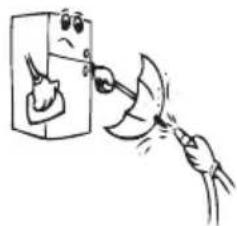
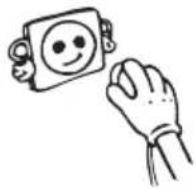
- Do not wash your fridge by pouring water.
- You can wipe the inner and outer sides of your appliance with a soft cloth or a sponge using warm and soapy water.
- Remove the parts individually and clean with soapy water. Do not wash in washing machine.
- Never use flammable, explosive or corrosive material like thinner, gas, acid for cleaning.
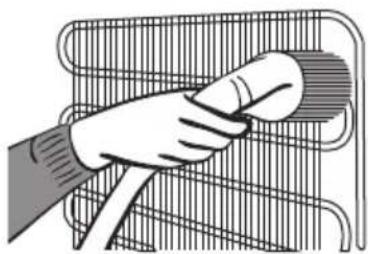
- The condenser (the back part with black wings) should be cleaned using a vacuum cleaner or a dry brush at least once a year. This will help your freezer to operate more efficiently and will enable you to save energy.
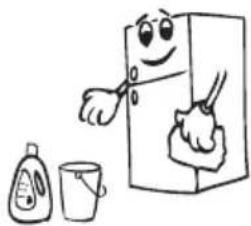
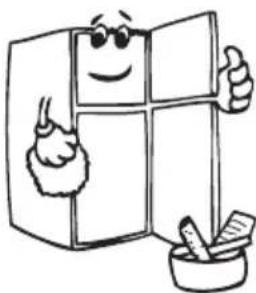
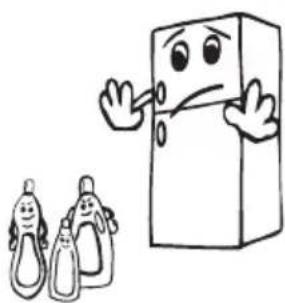
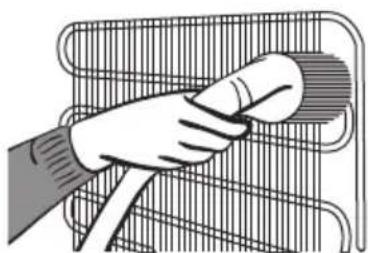
Cleaning evaporation bowl
- Your fridge defrosts automatically. Water produced by defrosting flows to evaporating container passing through water collecting groove, and vaporizes here by itself.
4.1 Replacing LED lights used for illumination
For replacing LED lights used for illumination, contact an authorized service.
PART 5. SHIPMENT AND REPOSITIONING
- Original package and foam may be kept for re-transportation (optionally).
- You should fasten your fridge with thick package, bands or strong cords and follow the instructions for transportation on the package for re-transportation.
- Remove movable parts (shelves, accessories, vegetable bins etc.) or fix them into the fridge against shocks using bands during re-positioning and transportation.
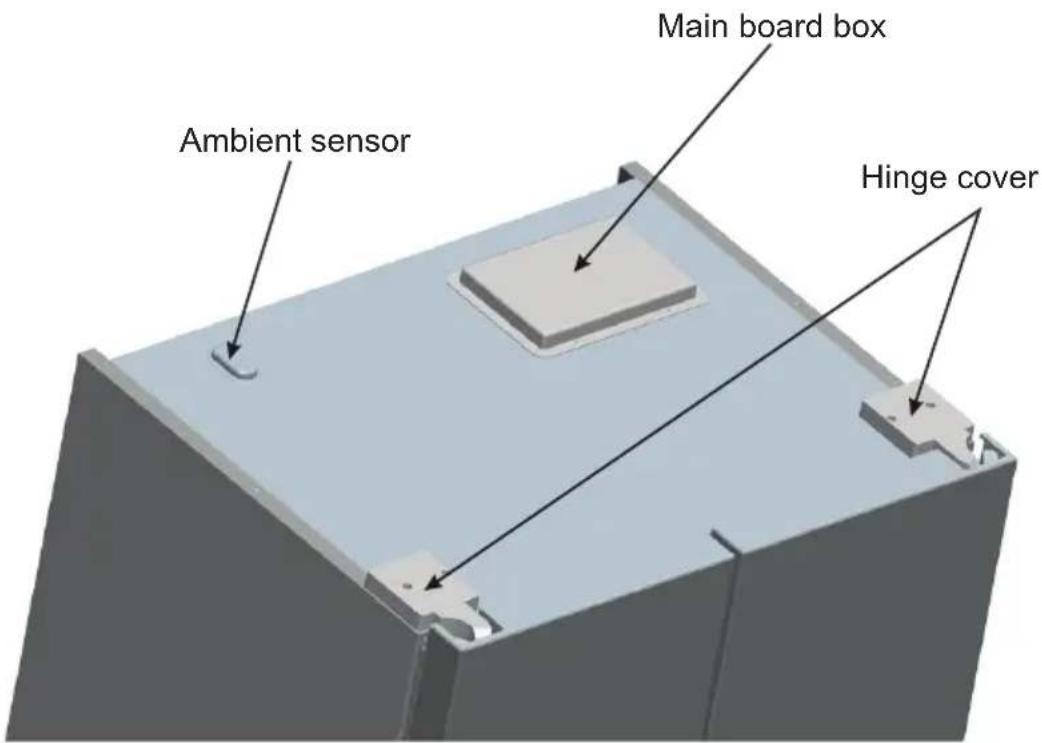
- An ambient sensor, main board and hinge covers are available on your refrigerator. During cleaning, make sure no fluid enters this area.

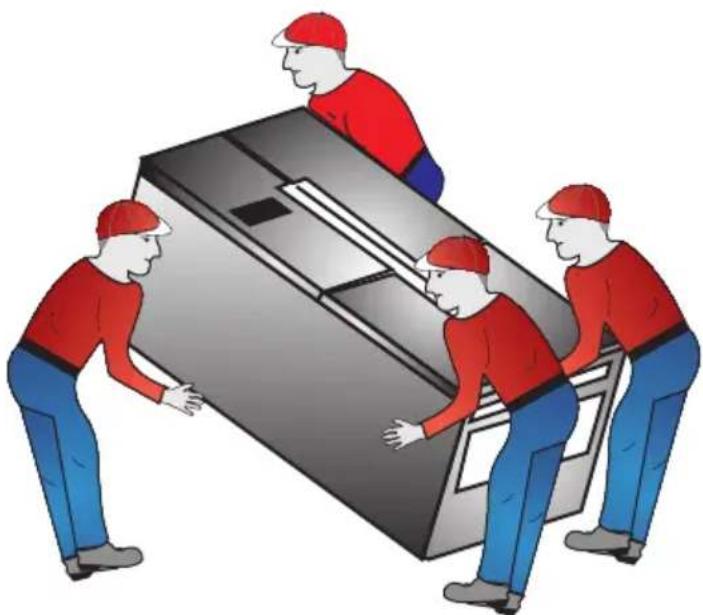
Carry your refrigerator with 4 people as indicated in the figure.
Check Warnings;
Your fridge warns you if the temperatures for cooler and freezer are in improper levels or when a problem occurs in the appliance. You can see these warnings on the indicator display.
| ERROR DISPLAY | ERROR TYPE REMARK DO'S | ||
 and audible warning and audible warning | Error warning | One or more equipment of the product has been deactivated or there is cooling problem. | Contact a service as soon as possible. |
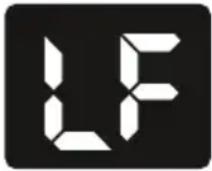 | Freezer department is not cold enough | May arise due to long-period energy cut-off or failure of cooling equipment. | 1. In case of melted product in compartment, do not refill and consume up as soon as possible.2. Until temperature of compartment returns to normal (warning disappears), operate in a lower temperature or in Super Freeze Mode.3. Do not place fresh food in compartment unless this warning disappears. |
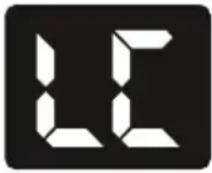 | Freezer department is not cold enough | Cooler has lost its ideal temperature. | 1. Until temperature of compartment returns to normal (warning disappears), operate in a lower temperature or in Super Cool Mode.2. Do not open door until this error disappears. |
| [WWWC] | Cooler compartment is overcool. | Our product in cooler compartment are in risk of freezing. | 1. If Super Cool is active, cancel it.2. Operate under lower setting value. |
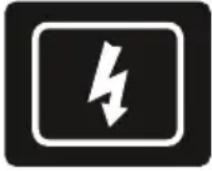 | Mains voltage has decreased under 170V. | This is not an error, it is intended for warning and precaution.When mains voltage restores to normal value, the warning will disappear. | - |
BEFORE CALLING SERVICE
Check Warnings;
If your fridge is not operating;
• Is there any electrical faults? • Is your appliance plugged? - Is the fuse of the receptacle that the plug is plugged or the main fuse blown? - Is there any fault in the socket? Examine this by plugging your fridge into a socket outlet which you are sure that is working.
If your fridge is operating too loudly
Normal Noises;
Cracking (ice cracking) noise:
• During automatic defrosting. - When the appliance is cooled or warmed (due to expansion of appliance material).
Short cracking: Heard when the thermostat switches the compressor on/off.
Valve sound: Ticking sound is normal when your refrigerator runs. This sound is released from a valve behind your refrigerator.
Vacuuming sound: After your refrigerator's doors are opened and closed, a short sound may be heard due to pressure difference. That is normal exactly.
Normal motor noise: This noise means that the compressor operates normally. Compressor may cause more noise for a short time when it is activated.
Bubbling noise and splash: This noise is caused by the flow of the refrigerant in the tubes of the system.
Water flow noise: Normal flow noise of water flowing to the evaporation container during defrosting. This noise can be heard during defrosting.
Air blow noise: Normal fan noise. This noise can be heard in Frost Free fridge during normal operation of the system due to the circulation of air.
If humidity builds up inside the fridge;
- Are all food packed properly? Are the containers dried before placing them in the fridge?
- Are the fridge doors opened frequently? Humidity of the room gets in the fridge when the doors are opened. Humidity build up will be faster when you open the doors more frequently, especially if the humidity of the room is high.
If the doors are not opened and closed properly;
- Do the food packages prevent closing of the door?
- Are the door compartments, shelves and drawers placed properly?
- Are door joints broken or torn? • Is your fridge on a level surface?
BEFORE CALLING SERVICE
IMPORTANT NOTES:

- After sudden power breakdowns or after unplugging the appliance, the thermal protector will cut off the power of the compressor temporarily because the gas in the cooling system is not stabilized yet. Your fridge will start after 4 or 5 minutes; there is nothing to worry about.
- If you will not use your fridge for a long time (e.g., in summer holidays), unplug it. After defrosting, clean your fridge and leave the door open to prevent humidity and smell.
- If the problem persists after you have followed all the instructions above, please consult the nearest Authorized Service.
- The appliance you bought is designed for home type use and can be used only at home and for the stated purposes. It is not suitable for commercial or common use. If the consumer uses the appliance in a way that does not comply with these features, we emphasize that the producer and the dealer shall not be responsible for any repair and failure within the guarantee period.
- The lifetime of your appliance stated and declared by the Consumer Protection and Market Surveillance General Directorate under T.R. Ministry of Customs and Ministry (the period for retaining parts required for the proper functioning of the appliance) is 10 years.
6.1 Recommendations for Energy Saving
- Place your appliance in a cool and well-ventilated room, avoid placing it towards direct sunlight or near heat radiators (radiator, oven, etc.). Otherwise, use an insulation plate.
- Allow hot food and drinks to cool down outside the appliance.
- Place frozen food in the refrigerator for thawing. When frozen food is thawed, its lower temperature will help the refrigerator cool down. Thus, energy will be saved. Putting frozen food outside will cause waste of energy.
- When putting drinks and homemade food into the refrigerator, make sure that they are in an enclosed bowl. Otherwise, humidity in the appliance will rise. This will make operation time longer. Preserving drinks and homemade food in enclosed bowls will also avoid deterioration of odours and tastes.
- When putting drinks and food in the refrigerator, leave the door of the appliance open for as short a time as possible.
- Keep compartments with different temperature values in the appliance closed (crisper, chiller compartment, etc.).
- Door gasket should be clean and flexible. Replace old gaskets.
- Night sensor in active mode will lead to energy saving.
- FRENCH-DOOR REFRIGERATOR FREEZER-FRIDGE
- BEFORE USING YOUR REFRIGERATOR
- CLEANING THE EVAPORATION TRAY
- PART 6. BEFORE CALLING AFTER-SALES SERVICE
- WARNINGS
- GENERAL FEATURES OF YOUR APPLIANCE
- INDEX
- BEFORE USING YOUR FRIDGE
- USE OF APPLIANCE
- PLACING THE FOOD
- CLEANING & MAINTENANCE
- SHIPMENT AND REPOSITIONING
- BEFORE CALLING SERVICE
- GENERAL WARNINGS
- OLD AND OUT-OF-ORDER FRIDGES
- NOTES
- SAFETY WARNINGS
- INSTALLING AND OPERATING YOUR FRIDGE
- BEFORE OPERATING YOUR FRIDGE
- GENERAL INFORMATION ABOUT NEW FROST FREE TECHNOLOGY
- PART 2. USE OF APPLIANCE
- INTRODUCING PARTS
- TECHNICAL INFORMATION
- CONFORMITY INFORMATION
- ELECTRONIC DISPLAY AND USAGE
- BEVERAGE COOLING (QDRINK)
- ECONOMIC MODE (ECO)
- HOLIDAY MODE (H)
- QUICK FREEZING (SF SUPERFREEZE)
- QUICK COOLING (SC SUPERCOOL)
- COOLER (COOLER)
- FREEZER
- CHILD LOCK (KEY SYMBOL)
- SCREENSAVER (SCREEN SAVER)
- NIGHT SENSOR (NIGHT SENSOR)
- DEALER DEMO MODE
- ALARM
- COMPARTMENT ON-OFF MODE
- WARNINGS ABOUT TEMPERATURE ADJUSTMENTS
- ACCESSORIES
- ICEBOX
- VEGETABLE BOWL AND CHILLER (BREAKFAST)
- CHILLER / BREAKFAST
- CRISPER AIR SETTING BUTTON
- PART 3. PLACING THE FOOD
- COOLER COMPARTMENT
- IMPORTANT NOTE
- DEEP-FREEZE COMPARTMENTS
- IMPORTANT
- PART 4. CLEANING & MAINTENANCE
- CLEANING EVAPORATION BOWL
- REPLACING LED LIGHTS USED FOR ILLUMINATION
- PART 5. SHIPMENT AND REPOSITIONING
- CHECK WARNINGS
- IF YOUR FRIDGE IS NOT OPERATING
- IF YOUR FRIDGE IS OPERATING TOO LOUDLY
- NORMAL NOISES
- CRACKING (ICE CRACKING) NOISE
- IF HUMIDITY BUILDS UP INSIDE THE FRIDGE
- IF THE DOORS ARE NOT OPENED AND CLOSED PROPERLY
- IMPORTANT NOTES
- RECOMMENDATIONS FOR ENERGY SAVING
Brand : VESTFROST
Model : VFD 10911 A+G
Category : Refrigerator