
250W 1/3 Sheet FS250 - Sander AEG - Free user manual and instructions
Find the device manual for free 250W 1/3 Sheet FS250 AEG in PDF.


| Brand | AEG |
| Model | 250W 1/3 Sheet FS250 |
| Product Type | Orbital Sander |
| Power Rating | 250 W |
| Sheet Size | 1/3 sheet (approx. 90 x 187 mm) |
| No-Load Speed | 12000 - 24000 orbits/min (depending on model variant) |
| Orbit Diameter | 1.6 mm |
| Dust Extraction | Integrated dust bag or external vacuum adapter |
| Voltage | 230 V ~ 50 Hz |
| Weight | 1.2 kg |
| Dimensions (L x W x H) | 280 x 120 x 130 mm |
| Protection Class | II (double insulated) |
| Power Cord Length | 2.5 m |
| Sound Pressure Level (LpA) | 82 dB(A) (uncertainty K=3 dB) |
| Vibration Level (ah) | 5.0 m/s² (uncertainty K=1.5 m/s²) |
| Sandpaper Attachment | Clamp system |
| Maintenance | Clean dust bag and ventilation slots regularly; replace carbon brushes when worn |
| Safety Features | Lock-off switch, spindle lock for paper changes |
| Included Accessories | 1 sanding sheet, dust bag, manual |
Frequently Asked Questions - 250W 1/3 Sheet FS250 AEG
User questions about 250W 1/3 Sheet FS250 AEG
0 question about this device. Answer the ones you know or ask your own.
Ask a new question about this device
Download the instructions for your Sander in PDF format for free! Find your manual 250W 1/3 Sheet FS250 - AEG and take your electronic device back in hand. On this page are published all the documents necessary for the use of your device. 250W 1/3 Sheet FS250 by AEG.
USER MANUAL 250W 1/3 Sheet FS250 AEG
Original instructions
Important!
It is essential that you read the instructions in this manual before assembling, operating and maintaining the product.
Subject to technical modifications.
Technical Data, Safety Instructions, Specified Conditions of Use, Declaration of Conformity, Mains connection, Maintenance, Symbols
Please read and save these instructions!
English

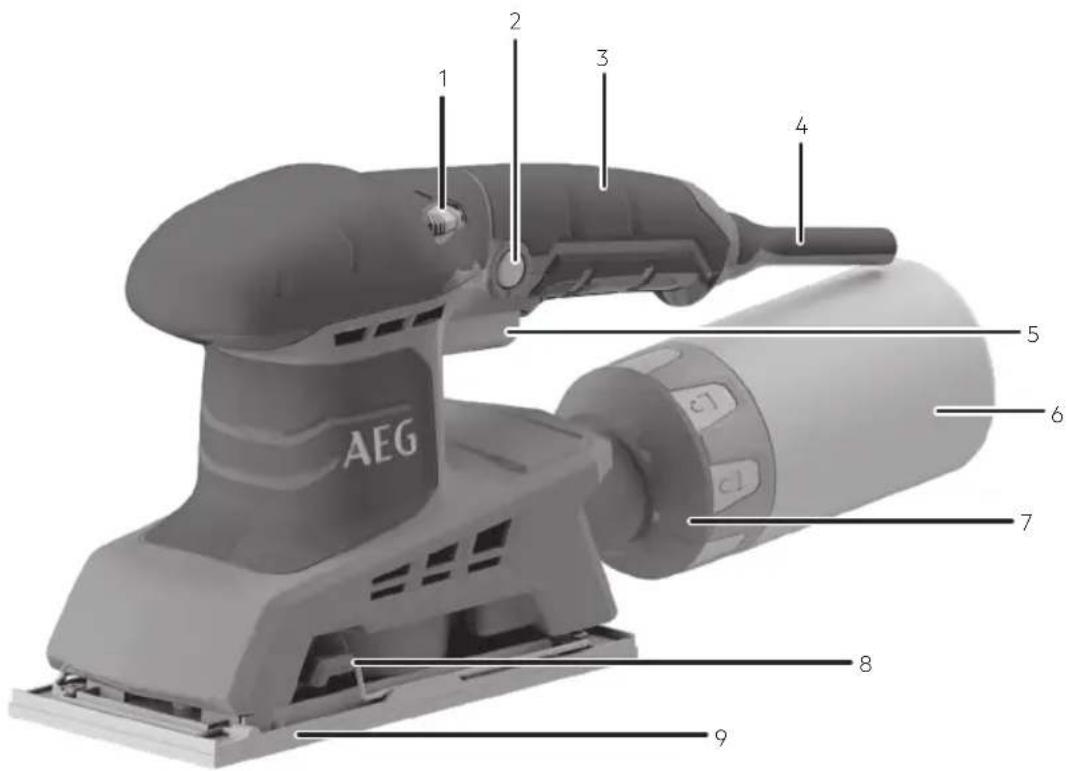
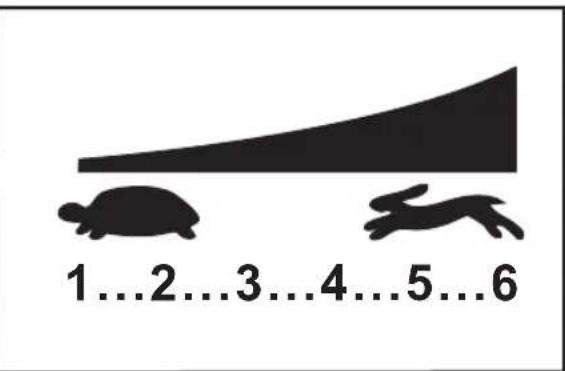
- Variable speed control selector
- Lock-on button
- Handle, insulated gripping surface
- Power cord
- Switch trigger
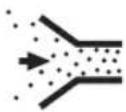
- Dust collection
- Exhaust port (outer: ø37 mm, inner: ø31.7 mm)
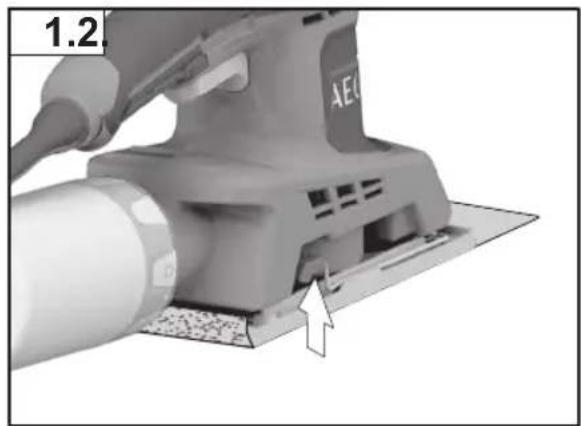
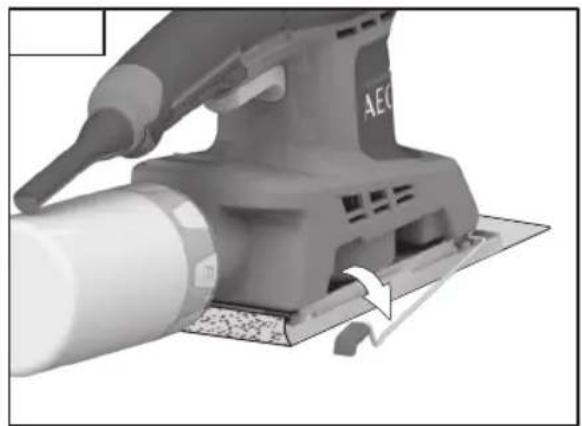
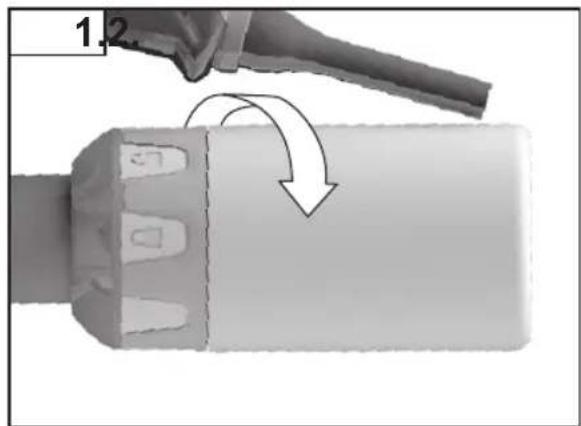
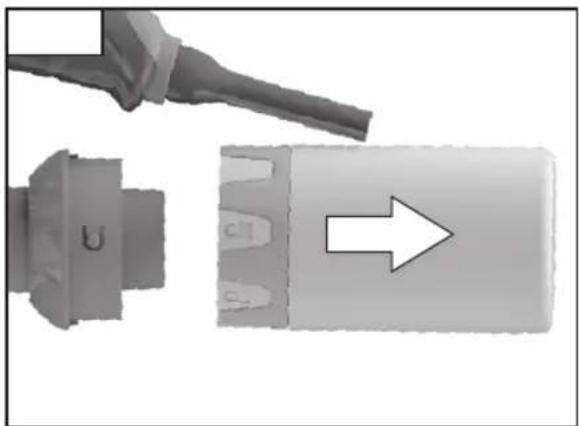
- Paper clamp
- Sanding pad
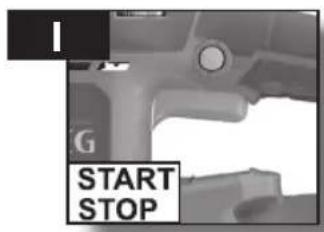
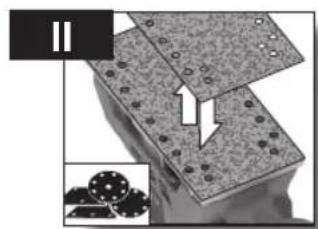
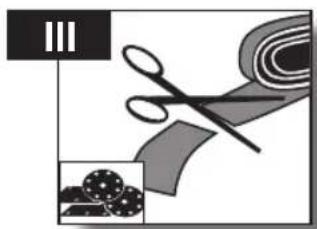
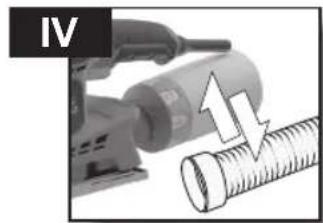

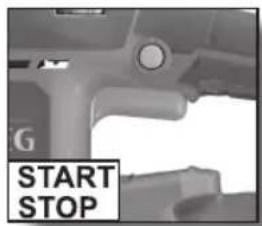
START STOP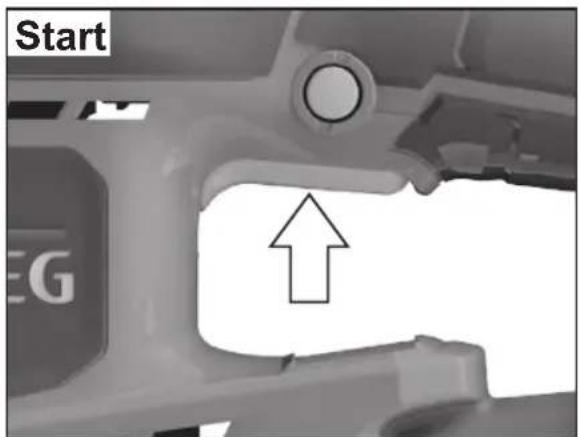
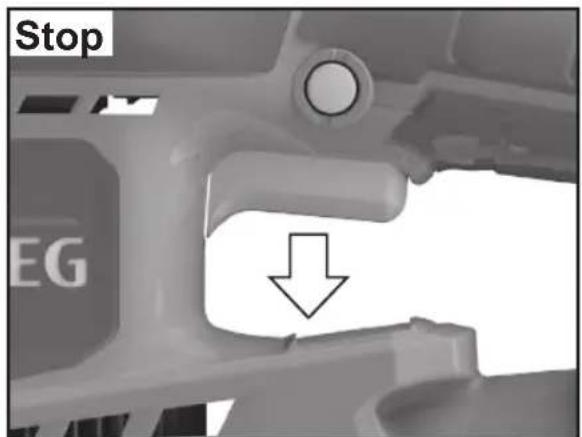
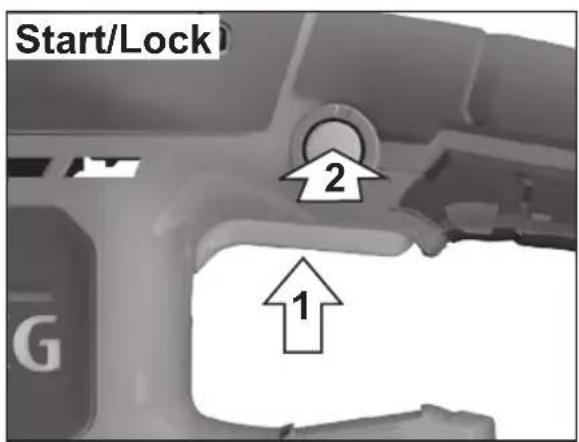
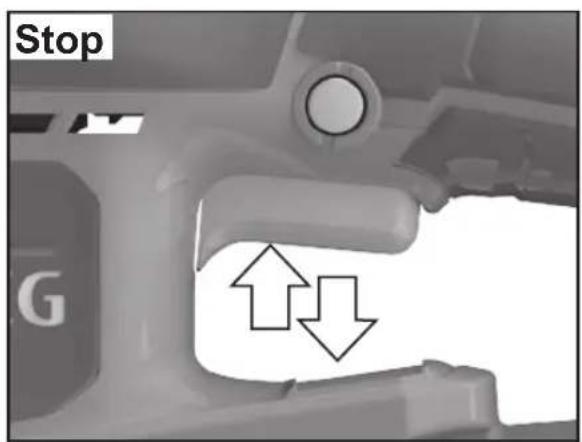
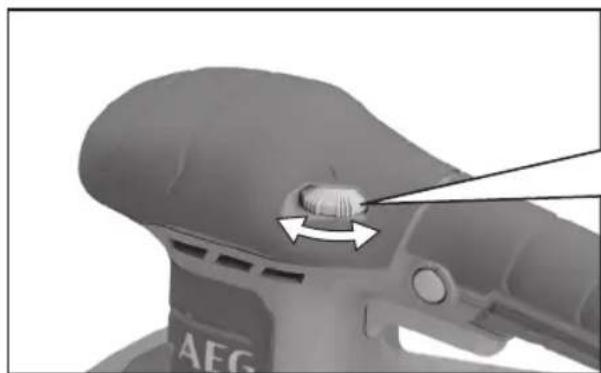




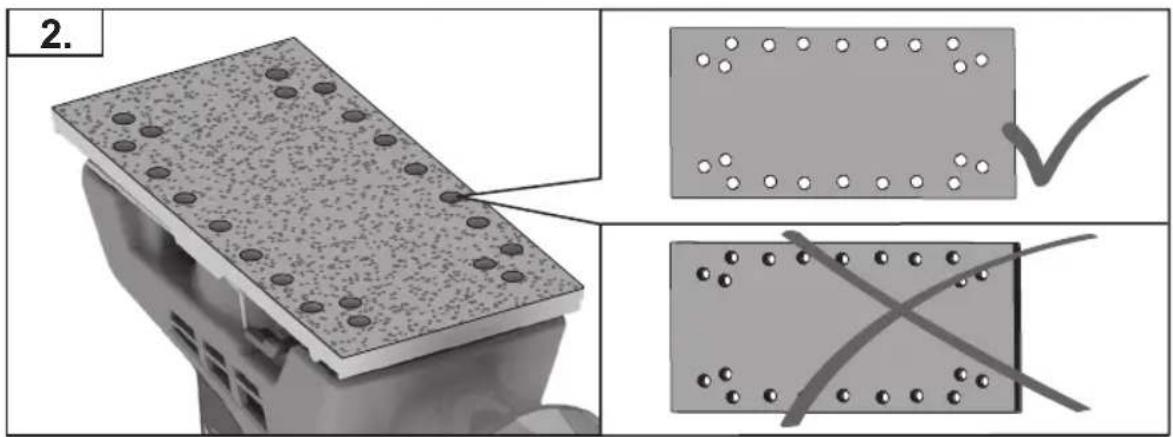
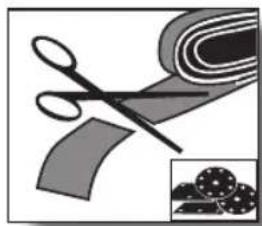

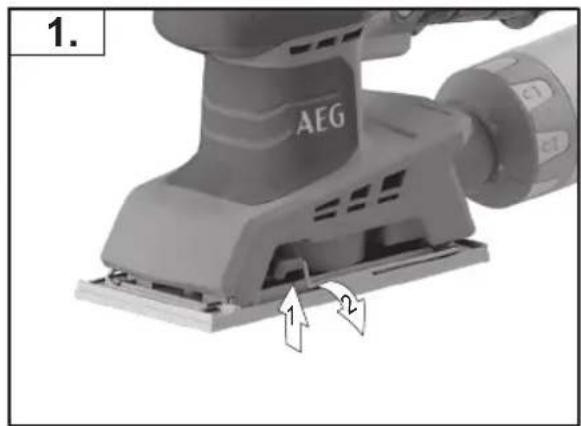
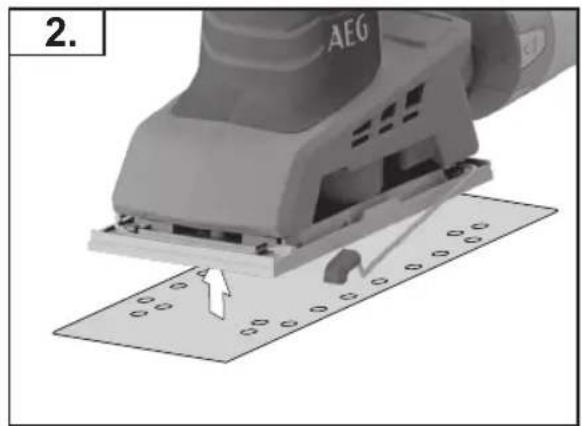
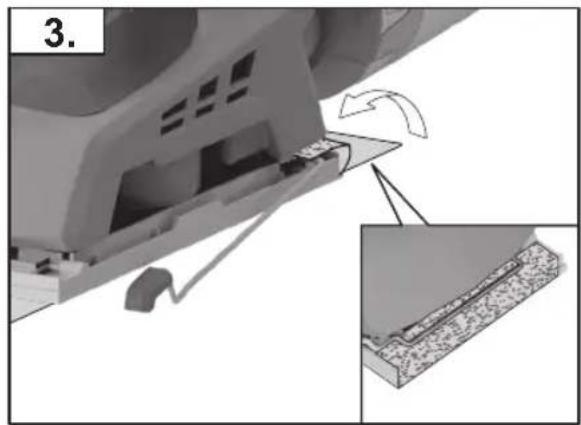
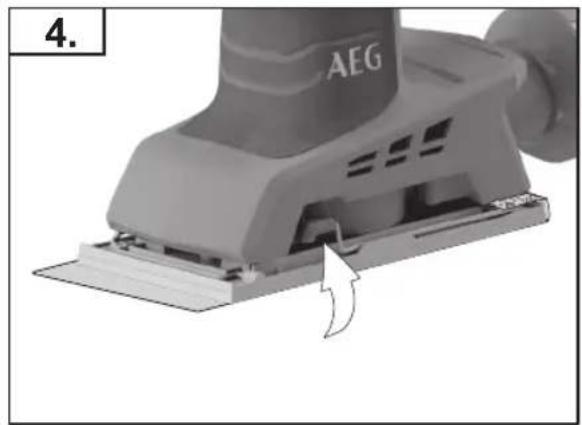
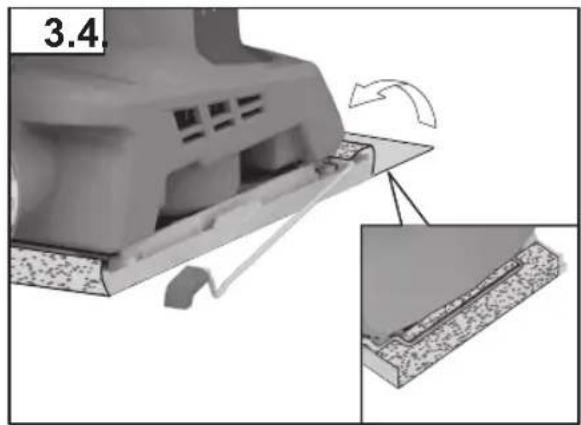
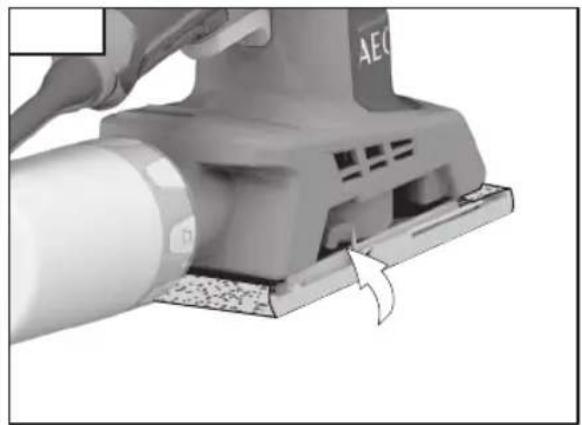
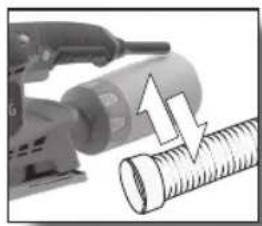
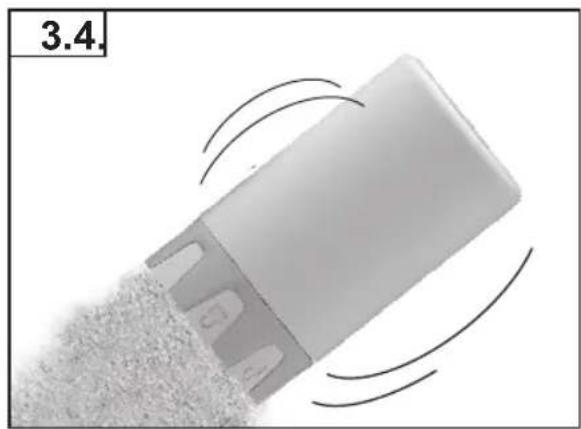
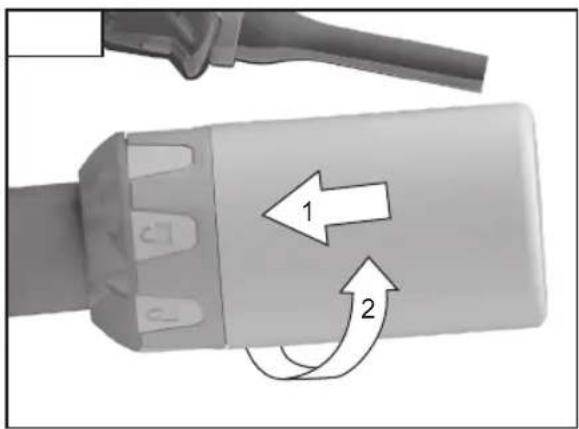
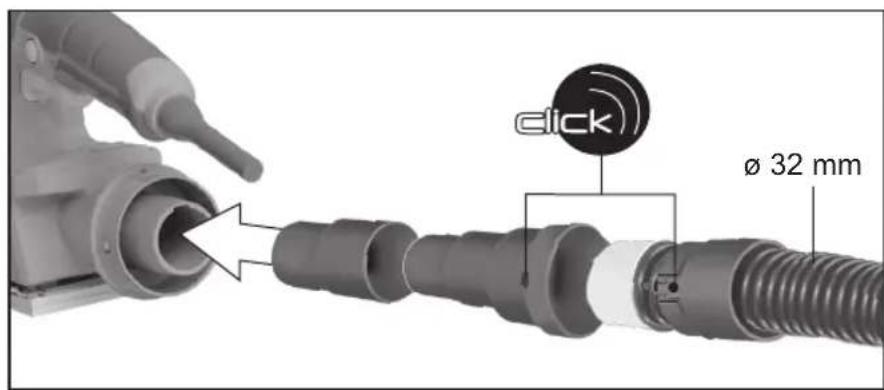



TECHNICAL DATA
| 1/3 Sheet Sander FS250 | |
| Rated wattage 250 WInput voltage 220-240VNo-load speed 6000-12000 minOrbital travel diameter 2.0 mmDimensions of grinding plate 90 x 187 mmWeight according EPTA-Procedure 01/2014 | 50Hz -1 1.8 kg |
| Noise information | |
| Measured values determined according to EN 62841. Typically, the A-weighted noise levels of the tool are:Sound pressure level (Uncertainty K=3dB(A)) 76 dB (A)Sound power level (Uncertainty K=3dB(A)) 87 dB (A)Wear ear protectors! | |
| Vibration information | |
| Vibration total values (triaxial vector sum) determined according to EN 62841.Vibration emission value an Uncertainty K= 1.5 m/s | 5.5 m/ s2 2 |

WARNING!
The vibration emission level given in this information sheet has been measured in accordance with a standardised test given in EN 62841 and may be used to compare one tool with another. It may be used for a preliminary assessment of exposure.
The declared vibration emission level represents the main applications of the tool. However if the tool is used for different applications, with different accessories or poorly maintained, the vibration emission may differ. This may significantly increase the exposure level over the total working period.
An estimation of the level of exposure to vibration should also take into account the times when the tool is switched off or when it is running but not actually doing the job. This may significantly reduce the exposure level over the total working period.
Identify additional safety measures to protect the operator from the effects of vibration such as: maintain the tool and the accessories, keep the hands warm, organisation of work patterns.

WARNING!
Read all safety warnings, instructions, illustrations and specifications provided with this power tool.
Failure to follow all instructions listed below may result in electric shock, fire and/or serious injury.
Save all warnings and instructions for future reference.

SANDER SAFETY WARNINGS
Clamp workpiece with a clamping device.
Unclamped workpieces can cause severe injury and damage. Do not hold the material you are sanding by hand.
Do not use sanding paper larger than needed. Extra paper extending beyond the sanding pad can also cause serious lacerations.
Wear ear protectors. Exposure to noise can cause hearing loss.
Additional Safety and Working Instructions
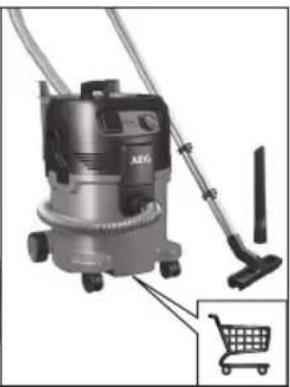
The dust produced when using this tool may be harmful to health. Do not inhale the dust. Use a dust absorption system and wear a suitable dust protection mask. Remove deposited dust thoroughly, e.g. with a vacuum cleaner.
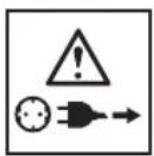
Always disconnect the plug from the socket before carrying out any work on the product.
Only plug-in when the product is switched off.
Before use, check product, cable, and plug for any damages or material fatigue. Repairs should only be carried out by authorised service agents.
Do not machine any materials that present a danger to health (e.g. asbestos).
Keep mains lead clear from working range of the product. Always lead the cable away behind you.
When working in walls ceiling, or floor, take care to avoid electric cables and gas or waterpipes.
Switch the product off immediately if the insertion tool stalls! Do not switch the product on again while the insertion tool is stalled, as doing so could trigger a sudden recoil with a high reactive force. Determine why the insertion tool stalled and rectify this, paying heed to the safety instructions.
Possible causes can be:
- it is tilted in the workpiece to be machined ● breakage of the material to be used ● the power tool is overloaded
Do not reach into the product while it is running.
The insertion tool may become hot during use.
WARNING! Danger of burns
- when changing tools
- when setting the product down
Chips and splinters must not be removed while the product is running.
SPECIFIED CONDITIONS OF USE
The sheet sander can be used for sanding wood, plastics and metal.
The product is suitable only for dry sanding.
Do not use the product in any other way as stated for normal use.
RESIDUAL RISKS
Even when the product is used as prescribed, it is still impossible to completely eliminate certain residual risk factors. The following hazards may arise and the operator should pay special attention to avoid the following:
Injury caused by dust
- Using the product will produce considerable amount of dust and fine particles. Use the dust collection device or connect a dust extraction vacuum when operating the product. Wear dust masks containing filters appropriate to the materials being worked on. Ensure adequate workplace ventilation. Do not eat, drink, or smoke in the work area. Only operate on materials which are specified in the Intended use section. Do not operate on materials (e.g., asbestos) which present a health hazard.
Injury caused by noise and vibration
- Wear ear protection during the sanding operation. Do not operate the product for long periods of time. See "Risk reduction".

RISK REDUCTION
It has been reported that vibrations from handheld tools may contribute to a condition called Raynaud's Syndrome in certain individuals. Symptoms may include tingling, numbness and blanching of the fingers, usually apparent upon exposure to cold. Hereditary factors, exposure to cold and dampness, diet, smoking and work practices are all thought to contribute to the development of these symptoms. There are measures that can be taken by the operator to possibly reduce the effects of vibration:
- Keep your body warm in cold weather. When operating the unit wear gloves to keep the hands and wrists warm. It is reported that cold weather is a major factor contributing to Raynaud's Syndrome. ● After each period of operation, exercise to increase blood circulation.
- Take frequent work breaks. Limit the amount of exposure per day.
If you experience any of the symptoms of this condition, immediately discontinue use and see your doctor about these symptoms.
WARNING! Injuries may be caused or aggravated by prolonged use of a tool. When using any tool for prolonged periods, ensure you take regular breaks.
MAINS CONNECTION
Connect only to single-phase AC system voltage as indicated on the rating plate. It is also possible to connect to sockets without an earthing contact as the design conforms to safety class II.
Appliances used at many different locations including wet room and open air must be connected via a residual current device (FI, RCD, PRCD) of 30mA or less.
Do not let any metal parts enter the airing slots - danger of short circuit!
MAINTENANCE
The ventilation slots of the product must be kept clear at all times.
If the power supply cord is damaged, it must be replaced only by the manufacturer or by an authorised service centre to avoid a safety hazard. Contact authorised service centre.
Use only AEG accessories and spare parts. Should components need to be replaced which have not been described, please contact one of our AEG service agents (see our list of guarantee/service addresses).
If needed, an exploded view of the tool can be ordered. Please state the product type printed as well as the six-digit No. on the label and order the drawing at your local service agents or directly at:
Techtronic Industries Australia Pty Ltd
PO Box 1065
Mount Waverley VIC 3149
Tel. no. 1300 234 797
Australia
Techtronic Industries N.Z. Limited
PO Box 12-806
Penrose AUCKLAND 1642
Tel. no. 0800 234 797 (0800 AEGPWR)
New Zealand
SYMBOLS

Please read the instructions carefully before starting the product.

CAUTION! WARNING! DANGER!

Always disconnect the plug from the socket before carrying out any work on the product.

Do not use force.

Accessory - Not included in standard equipment, available as an accessory.

Do not dispose of electric tools together with household waste material. Electric tools and electronic equipment that have reached the end of their life must be collected separately and returned to an environmentally compatible recycling facility.

Class II tool. Tool in which protection against electric shock does not rely on basic insulation only, but in which additional safety precautions, such as double insulation or reinforced insulation, are provided. There being no provision for protective earthing or reliance upon installation conditions.

Always wear goggles when using the product.

Wear ear protectors.

Wear a suitable dust protection mask.

Wear gloves.

Regulatory Compliance Mark (RCM). Product meets applicable regulatory requirements.


AEG
www.aegpowertools.com.au
www.aegpowertools.co.nz
Techtronic Industries Australia Pty Ltd
31 Gilby Road, Mount Waverley,
VIC, 3149, Australia
Techtronic Industries N.Z. Limited
Unit C, 70 Business Parade South,
Highbrook, Auckland 2013, New Zealand
AEG is a registered trademark used under
license from AB Electrolux (publ).
Brand : AEG
Model : 250W 1/3 Sheet FS250
Category : Sander